
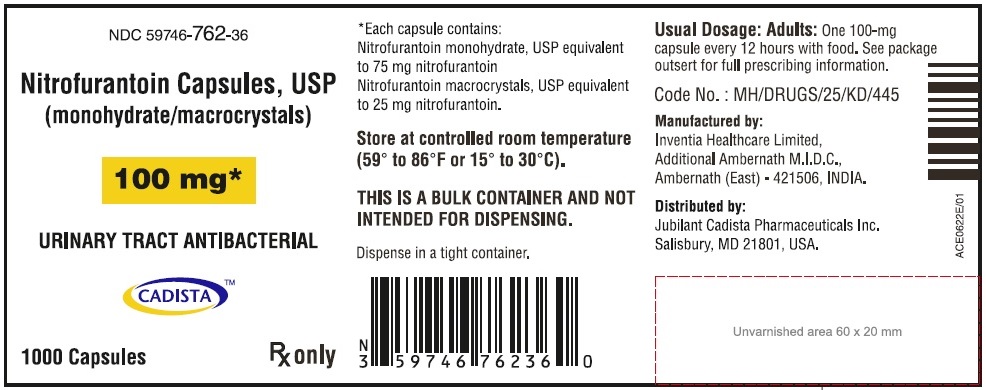
NITROFURANTOIN (monohydrate/macrocrystals) 75 mg; 25 mg Capsule, 1,000-count
🆔 Identity & classification
Where does this data come from?
🏷️ RxNorm drug class
This medicine belongs to the Nitrofuran Antibacterial class.
Where does this data come from?
🏭 Manufacturer & labeler
Where does this data come from?
🩺 Clinical
Patient education
Supplement & herbal interactions
Where does this data come from?
Ask a licensed pharmacist directly — free, answered by our team.
💊 What it looks like
Where does this data come from?
🧪 Inactive Ingredients / Excipients
Inactive ingredients, also called excipients, are components of the drug product other than the active ingredient. They may include fillers, dyes, coatings, preservatives, flavors, or other formulation ingredients.
💡 Tap an ingredient (hover on desktop) to see what it is and why it’s used.
-
UNII HHT01ZNK31
Carbomer Homopolymer Type B is a synthetic polymer made from acrylic acid. It absorbs water and forms a gel, so it's used in medicines as a thickener, suspending agent, and to help create a smooth texture in creams, gels, and lotions.
-
UNII 35SW5USQ3G
A synthetic yellow dye used to color medicines. It helps make tablets, capsules, and liquids visually distinct so patients can easily identify their medication.
-
UNII H3R47K3TBD
FD&C Blue No. 1 is a synthetic blue dye approved for use in foods and medicines. It serves as a colorant to give the medication its distinctive appearance and help with product identification.
-
UNII WZB9127XOA
A synthetic red dye used to color medications and make them easier to identify. It serves as a colorant in tablets, capsules, and liquid formulations.
-
UNII 2G86QN327L
Gelatin is a protein derived from animal collagen, commonly used in medicines as a gelling agent and capsule material. It helps create soft or hard capsule shells that hold and release medication, and can also thicken liquid formulations.
-
UNII ND2M416302
Isopropyl alcohol is a clear liquid solvent derived from petroleum. In medicines, it dissolves active ingredients and other components, helps the product flow smoothly, and aids in sterilization during manufacturing.
-
UNII EWQ57Q8I5X
Lactose monohydrate is a natural sugar derived from milk. It serves as a filler and binder in tablets and capsules, helping create the proper size, texture, and consistency of the medicine.
-
UNII 70097M6I30
Magnesium stearate is a salt made from magnesium and stearic acid, a fatty substance. It's used in tablets and capsules as a lubricant and glidant to help ingredients flow smoothly during manufacturing and prevent sticking.
-
UNII 3OWL53L36A
A natural sugar alcohol derived from seaweed or synthesized in the lab. It's used as a filler to add bulk, a sweetener in sugar-free formulas, and a disintegrant to help tablets break apart in the stomach.
-
UNII U725QWY32X
Povidone K30 is a synthetic polymer made from petroleum. It acts as a binder to hold tablet ingredients together and as a disintegrant to help the tablet break apart in the stomach so the medicine can be absorbed.
-
UNII RDH86HJV5Z
Povidone K90 is a synthetic polymer made from a chemical called vinyl pyrrolidone. It acts as a binder to hold pill ingredients together and as a dispersant to help the medicine break down and dissolve properly in your body.
-
UNII 368GB5141J
A detergent and foaming agent derived from coconut or palm oil. In medications, it helps break down and mix oil and water-based ingredients, aids in tablet disintegration, and improves how the drug dissolves and spreads in the mouth or digestive system.
-
UNII O8232NY3SJ
A plant-based carbohydrate derived from corn kernels. It acts as a filler to add bulk, a binder to hold ingredients together, and a disintegrant to help the tablet break apart in your stomach for absorption.
-
UNII 7SEV7J4R1U
A powder made from a naturally occurring mineral. In medicines, talc works as a glidant and anti-caking agent, helping tablets and capsules flow smoothly during manufacturing and preventing clumping.
-
UNII 15FIX9V2JP
Titanium dioxide is a bright white mineral powder commonly used as a colorant and opacifying agent. It makes pills and tablets white or lighter in color and helps make coatings non-transparent.
15 inactive ingredients listed in the exact product block matched to this NDC.
Where does this data come from?
ingredient classCode="IACT" elements from the exact product block matched by this NDC. Label-section narrative from DailyMed / the openFDA label index is shown separately when available.Inactive ingredient FAQ
Are inactive ingredients the same for every manufacturer?
Why might an inactive ingredient be missing?
Can inactive ingredients matter?
💲 Pricing
A drug doesn't have one price. Each row is a different public payment system, and none is what you'd pay at the counter — that depends on your insurance. The ⓘ on each row explains what it measures.
| Price system | Per each | Per package |
|---|---|---|
| Retail pharmacies payNADAC · weekly | Not in the retail survey — common for institutional, discontinued, or low-volume packs. | |
| Medicaid paysCMS SDUD · 12 mo | No recent Medicaid claims on file for this NDC — rare and low-volume NDCs are suppressed in the public data. | |
| Medicare drug plans payPart D · Q2 2026 | $0.6443 | $644.30 / 1000 capsules |
Where does this data come from?
🔁 Therapeutic equivalents
| Product | Labeler | Pack | NADAC/unit | TE | Status | Price vs. this |
|---|---|---|---|---|---|---|
| Nitrofurantoin (monohydrate/macrocrystals) 75 mg/1; 25 mg 00185-0122-01 | Sandoz | 100 capsules | $0.298 | AB | Availability likely | — |
| Nitrofurantoin (monohydrate/macrocrystals) 75 mg/1; 25 mg 00904-7571-61 | Major | 100 capsules | $0.298 | AB | Availability likely | — |
| Nitrofurantoin 25 mg/1; 75 mg 13811-0719-10 | Trigen | 100 capsules | $0.298 | AB | Availability likely | — |
| Nitrofurantoin 100 mg 42571-0393-01 | Micro | 100 capsules | $0.298 | AB | Availability likely | — |
| Nitrofurantoin Monohydrate/ Macrocrystalline 25 mg/1; 75 mg 47781-0303-01 | Alvogen | 100 capsules | $0.298 | AB | Availability likely | — |
| nitrofurantoin (monohydrate/macrocrystals) 25 mg/1; 75 mg 65862-0929-01 | Aurobindo | 100 capsules | $0.298 | — | Availability likely | — |
| Nitrofurantoin (monohydrate/macrocrystals) 75 mg/1; 25 mg 68001-0606-00 | BluePoint | 100 capsules | $0.298 | AB | Availability likely | — |
| Nitrofurantoin (monohydrate/macrocrystals) 75 mg/1; 25 mg 70756-0404-11 | Lifestar | 100 capsules | $0.298 | AB | Availability likely | — |
| Nitrofurantoin (monohydrate/macrocrystals) 75 mg/1; 25 mg 72603-0196-01 | NorthStar | 100 capsules | $0.298 | AB | Availability likely | — |
| Nitrofurantoin (monohydrate/macrocrystals) 75 mg/1; 25 mg 65162-0478-10 | Amneal | 100 capsules | $0.518 | — | FDA listed | — |
| NITROFURANTOIN (monohydrate/macrocrystals) 75 mg/1; 25 mg 00615-8531-10 | NCS | 10 capsules | — | AB | FDA listed | — |
| Nitrofurantoin (monohydrate/macrocrystals) 75 mg/1; 25 mg 42708-0178-28 | QPharma, | 28 capsules | — | AB | FDA listed | — |
| NITROFURANTOIN (monohydrate/macrocrystals) 75 mg/1; 25 mg 42708-0184-28 | QPharma, | 28 capsules | — | AB | FDA listed | — |
| Nitrofurantoin 75 mg/1; 25 mg 50090-6664-00 | A-S | 14 capsules | — | AB | FDA listed | — |
| Nitrofurantoin 75 mg/1; 25 mg 50090-6750-01 | A-S | 10 capsules | — | AB | FDA listed | — |
| Macrobid 25 mg/1; 75 mg 52427-0285-01 | Almatica | 100 capsules | — | AB | FDA listed | — |
| Nitrofurantoin Mono 75 mg/1; 25 mg 54348-0849-06 | PharmPak, | 6 capsules | — | AB | FDA listed | — |
| NITROFURANTOIN (monohydrate/macrocrystals) 75 mg/1; 25 mgthis 59746-0762-36 | Jubilant | 1000 capsules | — | AB | FDA listed | — |
| Nitrofurantoin (monohydrate/macrocrystals) 75 mg/1; 25 mg 60760-0194-14 | St. | 14 capsules | — | AB | FDA listed | — |
| Nitrofurantoin 25 mg/1; 75 mg 60760-0853-14 | St. | 14 capsules | — | AB | FDA listed | — |
| Nitrofurantoin Monohydrate Macrocrystalline 25 mg/1; 75 mg 61919-0021-02 | Direct_Rx | 2 capsules | — | AB | FDA listed | — |
| Nitrofurantoin Monohydrate/ Macrocrystalline 25 mg/1; 75 mg 63187-0263-10 | Proficient | 10 capsules | — | AB | FDA listed | — |
| Nitrofurantoin (monohydrate/macrocrystals) 75 mg/1; 25 mg 63187-0995-10 | Proficient | 10 capsules | — | AB | FDA listed | — |
| Nitrofurantoin (monohydrate/macrocrystals) 75 mg/1; 25 mg 63629-1748-00 | Bryant | 6 capsules | — | AB | FDA listed | — |
| Nitrofurantoin 25 mg/1; 75 mg 63629-2464-01 | Bryant | 100 capsules | — | AB | FDA listed | — |
| Nitrofurantoin (monohydrate/macrocrystals) 75 mg/1; 25 mg 67046-1198-03 | Coupler | 30 capsules | — | AB | FDA listed | — |
| Nitrofurantoin (monohydrate/macrocrystals) 75 mg/1; 25 mg 67046-1271-03 | Coupler | 30 capsules | — | AB | FDA listed | — |
| Nitrofurantoin 25 mg/1; 75 mg 67296-1442-01 | Redpharm | 10 capsules | — | AB | Discontinued | — |
| Nitrofurantoin (monohydrate/macrocrystals) 75 mg/1; 25 mg 67296-2105-01 | Redpharm | 14 capsules | — | AB | FDA listed | — |
| NITROFURANTOIN (monohydrate/macrocrystals) 75 mg/1; 25 mg 67296-2180-01 | Redpharm | 10 capsules | — | AB | FDA listed | — |
| Nitrofurantoin 75 mg/1; 25 mg 68071-3569-02 | NuCare | 20 capsules | — | AB | FDA listed | — |
| Nitrofurantoin (monohydrate/macrocrystals) 75 mg/1; 25 mg 68071-3593-02 | NuCare | 2 capsules | — | AB | FDA listed | — |
| Nitrofurantoin (monohydrate/macrocrystals) 75 mg/1; 25 mg 68071-4367-02 | NuCare | 20 capsules | — | AB | FDA listed | — |
| Nitrofurantoin (monohydrate/macrocrystals) 75 mg/1; 25 mg 68071-4428-02 | NuCare | 2 capsules | — | AB | FDA listed | — |
| Nitrofurantoin 25 mg/1; 75 mg 68788-8258-00 | Preferred | 10 capsules | — | AB | FDA listed | — |
| Nitrofurantoin (monohydrate/macrocrystals) 75 mg/1; 25 mg 68788-8571-00 | Preferred | 10 capsules | — | AB | FDA listed | — |
| Nitrofurantoin Monohydrate/ Macrocrystalline 25 mg/1; 75 mg 70518-0265-00 | REMEDYREPACK | 30 capsules | — | AB | Discontinued | — |
| Nitrofurantoin (monohydrate/macrocrystals) 75 mg/1; 25 mg 70518-1087-02 | REMEDYREPACK | 30 capsules | — | AB | Discontinued | — |
| Macrobid 25 mg/1; 75 mg 70518-2531-00 | REMEDYREPACK | 10 capsules | — | AB | FDA listed | — |
| Nitrofurantoin 25 mg/1; 75 mg 70518-3717-00 | REMEDYREPACK | 14 capsules | — | AB | FDA listed | — |
| Nitrofurantoin (monohydrate/macrocrystals) 75 mg/1; 25 mg 70518-4026-00 | REMEDYREPACK | 10 capsules | — | AB | FDA listed | — |
| Nitrofurantoin (monohydrate/macrocrystals) 75 mg/1; 25 mg 70518-4358-00 | REMEDYREPACK | 30 capsules | — | AB | FDA listed | — |
| Nitrofurantoin 25 mg/1; 75 mg 71205-0852-00 | Proficient | 100 capsules | — | AB | FDA listed | — |
| Nitrofurantoin 25 mg/1; 75 mg 71335-2255-01 | Bryant | 40 capsules | — | AB | FDA listed | — |
| Nitrofurantoin 25 mg/1; 75 mg 71335-2320-00 | Bryant | 6 capsules | — | AB | FDA listed | — |
| Nitrofurantoin (monohydrate/macrocrystals) 75 mg/1; 25 mg 71335-2377-00 | Bryant | 6 capsules | — | AB | FDA listed | — |
| Nitrofurantoin 25 mg/1; 75 mg 71335-2914-01 | Bryant | 100 capsules | — | AB | FDA listed | — |
| Nitrofurantoin 25 mg/1; 75 mg 72162-1262-01 | Bryant | 100 capsules | — | AB | FDA listed | — |
| Nitrofurantoin 25 mg/1; 75 mg 72162-2615-01 | Bryant | 100 capsules | — | AB | FDA listed | — |
| Nitrofurantoin 25 mg/1; 75 mg 72189-0179-10 | Directrx | 10 capsules | — | AB | FDA listed | — |
| Nitrofurantoin Monohydrate/Macrocrystal 75 mg/1; 25 mg 72189-0395-14 | Direct_Rx | 14 capsules | — | AB | FDA listed | — |
| Nitrofurantoin (monohydrate/macrocrystals) 75 mg/1; 25 mg 72789-0234-10 | PD-Rx | 10 capsules | — | AB | FDA listed | — |
| Nitrofurantoin (monohydrate/macrocrystals) 75 mg/1; 25 mg 72789-0242-06 | PD-Rx | 6 capsules | — | AB | FDA listed | — |
| Nitrofurantoin 25 mg/1; 75 mg 72789-0386-06 | PD-Rx | 6 capsules | — | AB | FDA listed | — |
| Nitrofurantoin 25 mg/1; 75 mg 72789-0387-10 | PD-Rx | 10 capsules | — | AB | FDA listed | — |
| Nitrofurantoin (monohydrate/macrocrystals) 75 mg/1; 25 mg 76420-0195-01 | Asclemed | 100 capsules | — | AB | FDA listed | — |
| NITROFURANTOIN (monohydrate/macrocrystals) 75 mg/1; 25 mg 76420-0884-00 | Asclemed | 1000 capsules | — | AB | FDA listed | — |
| Nitrofurantoin (Monohydrate/Macrocrystals) 25 mg/1; 75 mg 82619-0147-01 | Creekwood | 100 capsules | — | AB | FDA listed | — |
| Nitrofurantoin (monohydrate/macrocrystals) 75 mg/1; 25 mg 82804-0115-10 | Proficient | 10 capsules | — | AB | FDA listed | — |
| Nitrofurantoin (monohydrate/macrocrystals) 75 mg/1; 25 mg 82868-0012-10 | Northwind | 10 capsules | — | AB | FDA listed | — |
| NITROFURANTOIN (monohydrate/macrocrystals) 75 mg/1; 25 mg 82868-0065-10 | Northwind | 10 capsules | — | AB | FDA listed | — |
| Nitrofurantoin 75 mg/1; 25 mg 50090-6769-01 | A-S | 10 capsules | — | AB | Discontinued | — |
Where does this data come from?
⏳ Availability & generic status
This product is an FDA-approved generic. Other versions of the same drug are listed under Therapeutic equivalents, least expensive first.
Where does this data come from?
💊 Medicaid utilization by pack size
📦 Packaging — all sizes for this product
| Package NDC | Description | Per unit | Per pack | Marketing start | Status |
|---|---|---|---|---|---|
| 59746-0762-01 | 100 CAPSULE in 1 BOTTLE (59746-762-01) | $0.2978 / ea | $29.78 | 2022-02-22 | Active |
| 59746-0762-36 You're viewing this | 1000 CAPSULE in 1 BOTTLE (59746-762-36) | — | — | 2022-02-22 | Active |
| 59746-0762-06 | 100 CAPSULE in 1 BOTTLE (59746-762-06) | $0.2978 / ea | $29.78 | 2024-08-07 | Active |
| 59746-0762-15 | 1000 CAPSULE in 1 BOTTLE (59746-762-15) | — | — | 2024-08-07 | Active |
This pack shows little to no recent Medicaid volume — the 100 capsules pack carries most fills. See all packs ↓
Pack size FAQ
What quantity is in NDC 59746-0762-36?
What is the difference between NDC 59746-0762-36 and NDC 59746-0762-01?
What NDC number is used to bill for this package of NITROFURANTOIN (monohydrate/macrocrystals) 75 mg; 25 mg Capsule?
Prices are the latest CMS NADAC pharmacy acquisition cost per NDC; per-pack figures are per-unit × pack quantity, shown only when the pack is denominated in the same measure NADAC prices.
🧭 About this NDC listing & data coverage
What data is (and isn’t) available for this NDC — tap to expand
| NDC identity (package / product / labeler codes) | ✓ Available |
| Labeler | ✓ Available |
| Product & package description | ✓ Available |
| Marketing category & status | ✓ Available |
| Active ingredient / dosage form / route | ✓ Available |
| FDA label (SPL via DailyMed) | ✓ Available |
| Package photos | ✓ Available |
| Inactive ingredients (structured) | ✓ Available |
| NADAC pharmacy acquisition price (CMS) | — Not published for this NDC CMS publishes NADAC only for NDCs reported in its retail-pharmacy survey. |
| Orange Book / therapeutic-equivalence data | ✓ Available |
| HCPCS J-code billing crosswalk | — Not published for this NDC Most self-administered / retail products have no J-code — that is normal. |
| Medicaid utilization (CMS SDUD) | — Not published for this NDC CMS reports utilization only for NDCs with Medicaid claims above its privacy threshold. |
Questions about this listing
Why is there no price listed?
Is the NDC printed on the package the same as the 11-digit billing NDC?
What do the three segments of this NDC mean?
Is this package still being marketed?
Does this product come in other package sizes?
Who lists this product with the FDA?
Do I need a prescription for this product?
Where does this data come from?
📄 Full prescribing information FDA SPL
🎯 Indications and Usage ▾
INDICATIONS AND USAGE Nitrofurantoin capsules (monohydrate/macrocrystals) are indicated only for the treatment of acute uncomplicated urinary tract infections (acute cystitis) caused by susceptible strains of Escherichia coli or Staphylococcus saprophyticus. Nitrofurantoin is not indicated for the treatment of pyelonephritis or perinephric abscesses. To reduce the development of drug-resistant bacteria and maintain the effectiveness of nitrofurantoin capsule (monohydrate/macrocrystals) and other antibacterial drugs, nitrofurantoin capsule (monohydrate/macrocrystals) should be used only to treat or prevent infections that are proven or strongly suspected to be caused by susceptible bacteria.
When culture and susceptibility information are available, they should be considered in selecting or modifying antibacterial therapy. In the absence of such data, local epidemiology and susceptibility patterns may contribute to the empiric selection of therapy. Nitrofurantoins lack the broader tissue distribution of other therapeutic agents approved for urinary tract infections.
Consequently, many patients who are treated with nitrofurantoin capsules (monohydrate/macrocrystals) are predisposed to persistence or reappearance of bacteriuria. (See CLINICAL STUDIES. ) Urine specimens for culture and susceptibility testing should be obtained before and after completion of therapy. If persistence or reappearance of bacteriuria occurs after treatment with nitrofurantoin capsules (monohydrate/macrocrystals) other therapeutic agents with broader tissue distribution should be selected.
In considering the use of nitrofurantoin capsules (monohydrate/macrocrystals), lower eradication rates should be balanced against the increased potential for systemic toxicity and for the development of antimicrobial resistance when agents with broader tissue distribution are utilized.
⏱️ Dosage and Administration ▾
DOSAGE AND ADMINISTRATION Nitrofurantoin capsules (monohydrate/macrocrystals), should be taken with food. Adults and Pediatric Patients Over 12 Years: One 100 mg capsule every 12 hours for Seven days.
⛔ Contraindications ▾
CONTRAINDICATIONS Anuria, oliguria, or significant impairment of renal function (creatinine clearance under 60 mL per minute or clinically significant elevated serum creatinine) are contraindications. Treatment of this type of patient carries an increased risk of toxicity because of impaired excretion of the drug. Because of the possibility of hemolytic anemia due to immature erythrocyte enzyme systems (glutathione instability), the drug is contraindicated in pregnant patients at term (38 to 42 weeks gestation), during labor and delivery, or when the onset of labor is imminent.
For the same reason, the drug is contraindicated in neonates under one month of age. Nitrofurantoin capsules (monohydrate/macrocrystals) are contraindicated in patients with a previous history of cholestatic jaundice/hepatic dysfunction associated with nitrofurantoin. Nitrofurantoin capsules (monohydrate/macrocrystals) are also contraindicated in those patients with known hypersensitivity to nitrofurantoin.
⚠️ Warnings ▾
WARNINGS Pulmonary reactions: ACUTE, SUBACUTE, OR CHRONIC PULMONARY REACTIONS HAVE BEEN OBSERVED IN PATIENTS TREATED WITH NITROFURANTOIN. IF THESE REACTIONS OCCUR, NITROFURANTOIN SHOULD BE DISCONTINUED AND APPROPRIATE MEASURES TAKEN. REPORTS HAVE CITED PULMONARY REACTIONS AS A CONTRIBUTING CAUSE OF DEATH.
CHRONIC PULMONARY REACTIONS (DIFFUSE INTERSTITIAL PNEUMONITIS OR PULMONARY FIBROSIS, OR BOTH) CAN DEVELOP INSIDIOUSLY. THESE REACTIONS OCCUR RARELY AND GENERALLY IN PATIENTS RECEIVING THERAPY FOR SIX MONTHS OR LONGER. CLOSE MONITORING OF THE PULMONARY CONDITION OF PATIENTS RECEIVING LONG-TERM THERAPY IS WARRANTED AND REQUIRES THAT THE BENEFITS OF THERAPY BE WEIGHED AGAINST POTENTIAL RISKS.
(SEE RESPIRATORY REACTIONS.) Hepatotoxicity: Hepatic reactions, including hepatitis, cholestatic jaundice, chronic active hepatitis, and hepatic necrosis, occur rarely. Fatalities have been reported. The onset of chronic active hepatitis may be insidious, and patients should be monitored periodically for changes in biochemical tests that would indicate liver injury.
If hepatitis occurs, the drug should be withdrawn immediately and appropriate measures should be taken. Neuropathy: Peripheral neuropathy, which may become severe or irreversible, has occurred. Fatalities have been reported.
Conditions such as renal impairment (creatinine clearance under 60 mL per minute or clinically significant elevated serum creatinine), anemia, diabetes mellitus, electrolyte imbalance, Vitamin B deficiency, and debilitating disease may enhance the occurrence of peripheral neuropathy. Patients receiving long-term therapy should be monitored periodically for changes in renal function. Optic neuritis has been reported rarely in postmarketing experience with nitrofurantoin formulations.
Hemolytic anemia: Cases of hemolytic anemia of the primaquine-sensitivity type have been induced by nitrofurantoin. Hemolysis appears to be linked to a glucose-6-phosphate-dehydrogenase deficiency in the red blood cells of the affected patients. This deficiency is found in 10 percent of Blacks and a small percentage of ethnic groups of Mediterranean and Near-Eastern origin.
Hemolysis is an indication for discontinuing nitrofurantoin; hemolysis ceases when the drug is withdrawn. Clostridium difficile- associated diarrhea: Clostridium difficile associated diarrhea (CDAD) has been reported with use of nearly all antibacterial agents, including nitrofurantoin and may range in severity from mild diarrhea to fatal colitis. Treatment with antibacterial agents alters the normal flora of the colon leading to overgrowth of C. difficile .
C. difficile produces toxins A and B which contribute to the development of CDAD. Hypertoxin producing strains of C. difficile cause increased morbidity and mortality, as these infections can be refractory to antimicrobial therapy and may require colectomy. CDAD must be considered in all patients who present with diarrhea following antibiotic use.
Careful medical history is necessary since CDAD has been reported to occur over two months after the administration of antibacterial agents. If CDAD is suspected or confirmed, ongoing antibiotic use not directed against C. difficile may need to be discontinued. Appropriate fluid and electrolyte management, protein supplementation, antibiotic treatment of C. difficile , and surgical evaluation should be instituted as clinically indicated.
🤒 Adverse Reactions ▾
ADVERSE REACTIONS In clinical trials of nitrofurantoin, the most frequent clinical adverse events that were reported as possibly or probably drug-related were nausea (8%), headache (6%), and flatulence (1.5%). Additional clinical adverse events reported as possibly or probably drug-related occurred in less than 1% of patients studied and are listed below within each body system in order of decreasing frequency: Gastrointestinal: Diarrhea, dyspepsia, abdominal pain, constipation, emesis Neurologic: Dizziness, drowsiness, amblyopia Respiratory: Acute pulmonary hypersensitivity reaction (see WARNINGS ) Allergic: Pruritus, urticaria Dermatologic: Alopecia Miscellaneous: Fever, chills, malaise The following additional clinical adverse events have been reported with the use of nitrofurantoin: Gastrointestinal: Sialadenitis, pancreatitis.
There have been sporadic reports of pseudomembranous colitis with the use of nitrofurantoin. The onset of pseudomembranous colitis symptoms may occur during or after antimicrobial treatment. (See WARNINGS .) Neurologic: Peripheral neuropathy, which may become severe or irreversible, has occurred.
Fatalities have been reported. Conditions such as renal impairment (creatinine clearance under 60 mL per minute or clinically significant elevated serum creatinine), anemia, diabetes mellitus, electrolyte imbalance, vitamin B deficiency, and debilitating diseases may increase the possibility of peripheral neuropathy. (See WARNINGS .) Asthenia, vertigo, and nystagmus also have been reported with the use of nitrofurantoin.
Benign intracranial hypertension (pseudotumor cerebri), confusion, depression, optic neuritis, and psychotic reactions have been reported rarely. Bulging fontanels, as a sign of benign intracranial hypertension in infants, have been reported rarely. Respiratory: CHRONIC, SUBACUTE, OR ACUTE PULMONARY HYPERSENSITIVITY REACTIONS MAY OCCUR WITH THE USE OF NITROFURANTOIN.
CHRONIC PULMONARY REACTIONS GENERALLY OCCUR IN PATIENTS WHO HAVE RECEIVED CONTINUOUS TREATMENT FOR SIX MONTHS OR LONGER. MALAISE, DYSPNEA ON EXERTION, COUGH, AND ALTERED PULMONARY FUNCTION ARE COMMON MANIFESTATIONS WHICH CAN OCCUR INSIDIOUSLY. RADIOLOGIC AND HISTOLOGIC FINDINGS OF DIFFUSE INTERSTITIAL PNEUMONITIS OR FIBROSIS, OR BOTH, ARE ALSO COMMON MANIFESTATIONS OF THE CHRONIC PULMONARY REACTION.
FEVER IS RARELY PROMINENT. THE SEVERITY OF CHRONIC PULMONARY REACTIONS AND THEIR DEGREE OF RESOLUTION APPEAR TO BE RELATED TO THE DURATION OF THERAPY AFTER THE FIRST CLINICAL SIGNS APPEAR. PULMONARY FUNCTION MAY BE IMPAIRED PERMANENTLY, EVEN AFTER CESSATION OF THERAPY.
THE RISK IS GREATER WHEN CHRONIC PULMONARY REACTIONS ARE NOT RECOGNIZED EARLY. In subacute pulmonary reactions, fever and eosinophilia occur less often than in the acute form. Upon cessation of therapy, recovery may require several months.
If the symptoms are not recognized as being drug-related and nitrofurantoin therapy is not stopped, the symptoms may become more severe. Acute pulmonary reactions are commonly manifested by fever, chills, cough, chest pain, dyspnea, pulmonary infiltration with consolidation or pleural effusion on x-ray, and eosinophilia. Acute reactions usually occur within the first week of treatment and are reversible with cessation of therapy.
Resolution often is dramatic. (See WARNINGS .) Changes in EKG (e.g., non-specific ST/T wave changes, bundle branch block) have been reported in association with pulmonary reactions. Cyanosis has been reported rarely.
Hepatic: Hepatic reactions, including hepatitis, cholestatic jaundice, chronic active hepatitis, and hepatic necrosis, occur rarely. (See WARNINGS .) Allergic: Lupus-like syndrome associated with pulmonary reaction to nitrofurantoin has been reported. Also, angioedema; maculopapular, erythematous, or eczematous eruptions; anaphylaxis; arthralgia; myalgia; drug fever; chills; and vasculitis (sometimes associated with pulmonary reactions) have been reported.
Hypersensitivity reactions represent t…
🆘 Overdosage ▾
OVERDOSAGE Occasional incidents of acute overdosage of nitrofurantoin have not resulted in any specific symptoms other than vomiting. Induction of emesis is recommended. There is no specific antidote, but a high fluid intake should be maintained to promote urinary excretion of the drug. Nitrofurantoin is dialyzable.
🧬 Clinical Pharmacology ▾
CLINICAL PHARMACOLOGY Each nitrofurantoin capsule (monohydrate/macrocrystals) contains two forms of nitrofurantoin. Twenty-five percent is macrocrystalline nitrofurantoin, which has slower dissolution and absorption than nitrofurantoin monohydrate. The remaining 75% is nitrofurantoin monohydrate contained in a powder blend which, upon exposure to gastric and intestinal fluids, forms a gel matrix that releases nitrofurantoin over time.
Based on urinary pharmacokinetic data, the extent and rate of urinary excretion of nitrofurantoin from the 100 mg nitrofurantoin capsules (monohydrate/macrocrystals) are similar to those of the 50 mg or 100 mg nitrofurantoin macrocrystals capsule. Approximately 20% to 25% of a single dose of nitrofurantoin is recovered from the urine unchanged over 24 hours. Plasma nitrofurantoin concentrations after a single oral dose of the 100 mg nitrofurantoin capsules (monohydrate/macrocrystals) are low, with peak levels usually less than 1 mcg/mL.
Nitrofurantoin is highly soluble in urine, to which it may impart a brown color. When nitrofurantoin capsule (monohydrate/macrocrystals) is administered with food, the bioavailability of nitrofurantoin is increased by approximately 40%. MICROBIOLOGY Nitrofurantoin is a nitrofuran antimicrobial agent with activity against certain Gram-positive and Gram-negative bacteria.
Mechanism of Action The mechanism of the antimicrobial action of nitrofurantoin is unusual among antibacterials. Nitrofurantoin is reduced by bacterial flavoproteins to reactive intermediates which inactivate or alter bacterial ribosomal proteins and other macromolecules. As a result of such inactivations, the vital biochemical processes of protein synthesis, aerobic energy metabolism, DNA synthesis, RNA synthesis, and cell wall synthesis are inhibited.
Nitrofurantoin is bactericidal in urine at therapeutic doses. The broad-based nature of this mode of action may explain the lack of acquired bacterial resistance to nitrofurantoin, as the necessary multiple and simultaneous mutations of the target macromolecules would likely be lethal to the bacteria. Interactions with Other Antibiotics Antagonism has been demonstrated in-vitro between nitrofurantoin and quinolone antimicrobials.
The clinical significance of this finding is unknown. Development of Resistance Development of resistance to nitrofurantoin has not been a significant problem since its introduction in 1953. Cross-resistance with antibiotics and sulfonamides has not been observed, and transferable resistance is, at most, a very rare phenomenon.
Nitrofurantoin has been shown to be active against most strains of the following bacteria both in-vitro and in clinical infections (see INDICATIONS AND USAGE ). Aerobic and facultative Gram-positive microorganisms: Staphylococcus saprophyticus Aerobic and facultative Gram-negative microorganisms: Escherichia coli At least 90 percent of the following microorganisms exhibit an in-vitro minimum inhibitory concentration (MIC) less than or equal to the susceptible breakpoint for nitrofurantoin. However, the efficacy of nitrofurantoin in treating clinical infections due to these microorganisms has not been established in adequate and well-controlled trials.
Aerobic and facultative Gram-positive microorganisms: Coagulase-negative staphylococci (including Staphylococcus epidermidis ) Enterococcus faecalis Staphylococcus aureus Streptococcus agalactiae Group D streptococci Viridans group streptococci Aerobic and facultative Gram-negative microorganisms: Citrobacter amalonaticus Citrobacter diversus Citrobacter freundii Klebsiella oxytoca Klebsiella ozaenae Nitrofurantoin is not active against most strains of Proteus species or Serratia species. It has no activity against Pseudomonas species.
Susceptibility Testing: For specific information regarding susceptibility test interpretive criteria and associated test methods and quality control standards recognized by FDA for this drug, please see: https://www.fda.g…
📦 How Supplied / Storage and Handling ▾
HOW SUPPLIED Nitrofurantoin capsules, USP (monohydrate/macrocrystals), 100 mg, are supplied as a Light yellow to yellow powder blend and yellow colored tablet filled in the hard gelatin capsule shell size '1' with black cap imprinted '100' and yellow colored body imprinted '102'. NDC 59746-762-01 bottle of 100 NDC 59746-762-36 bottle of 1000 Store at controlled room temperature (59° to 86°F or 15° to 30°C). Rx Only
📋 Description ▾
DESCRIPTION Nitrofurantoin is an antibacterial agent specific for urinary tract infections. Nitrofurantoin capsule, USP (monohydrate/macrocrystals) is a hard gelatin capsule. Each capsule contains the equivalent of 100 mg of nitrofurantoin in the form of 25 mg of nitrofurantoin macrocrystals, USP and 75 mg of nitrofurantoin monohydrate, USP.
The chemical name of nitrofurantoin macrocrystals,USP is 1-[[[5-nitro-2-furanyl]methylene] amino]-2,4-imidazolidinedione. The chemical structure is the following: Molecular Weight: 238.16 The chemical name of nitrofurantoin monohydrate, USP is 1-[[[5-nitro-2-furanyl]methylene] amino]-2,4- imidazolidinedione monohydrate. The chemical structure is the following: Molecular Weight: 256.17 Inactive Ingredients: Each capsule contains carbomer homopolymer type B (carbopol 974P ), corn starch, D & C Yellow No.
10, FD & C Blue No. 1, FD & C Red No. 40, gelatin, isopropyl alcohol, lactose monohydrate, magnesium stearate, mannitol, povidone K30, povidone K90, sodium lauryl sulphate, talc, and titanium dioxide.
USP Dissolution Test is pending. Image Image