
cilostazol 50 mg Tablet, 30-count — NDC 60505-2521-3 (Billing 60505-2521-03)
This is a package of 30 tablets of cilostazol 50 mg Tablet from Apotex Corp., marketed since Oct 2011 and currently FDA-listed.
NDC database record
One package, one record: these facts belong to NDC 60505-2521-3 alone.
- Record
- FDA NDC Directory package listing · Human prescription drug
- Code segments
- 60505 labeler · 2521 product · 3 package
- Package marketed since
- Oct 18, 2011
- Sample package
- No — commercial package
- Listing certified through
- Dec 31, 2027
- Barcode (UPC)
- 0360505252213
- FDA record last changed
- Sep 24, 2026
Identity & classification
Regulatory identifiers FDA, NLM and CMS codes for this package
Drug-database identifiers Medi-Span GPI and First Databank GCN / HICL / AHFS classification
- GSN (GCN sequence number): 037979
- GCN: 08603
- HICL (First Databank): 017433
- AHFS class code: 20:12.18.00
- RxCUI (RxNorm): 242461
Where does this data come from?
- FDA openFDA NDC Directory · synced Oct 8, 2026
- FDA label on DailyMed · label index refreshed Oct 8, 2026
- RxNorm (NLM RxNav) · catalog refreshed Oct 1, 2026
- Medi-Span GPI (licensed)
- First Databank (licensed) · refreshed Oct 8, 2026
RxNorm drug class
This medicine belongs to the Phosphodiesterase 3 Inhibitor class.
Where does this data come from?
- RxClass (NLM) · catalog refreshed Oct 1, 2026
Clinical
- It's used to ease the leg pain and cramping of intermittent claudication, which comes on when you walk. The aim is to help you walk farther before symptoms start.
- Take it by mouth twice a day, at least 30 minutes before or 2 hours after breakfast and dinner. Be patient, because it can take 2 to 4 weeks to notice a change and up to 12 weeks f...
- Headache, diarrhea, loose or abnormal stools, palpitations and dizziness are the most common. Headache is the main reason people stop it. Let your doctor know if they bother you or...
- Anyone with heart failure of any severity should not take it. It's also not for people allergic to it. Tell me if you have heart disease, a bleeding problem or liver problems.
Patient education
Supplement & herbal interactions
Some supplements/herbs that may interact with Cilostazol — tap one for details:
Where does this data come from?
- MedlinePlus (NLM) · refreshed Oct 8, 2026
- FDA label on DailyMed · label index refreshed Oct 8, 2026
Ask a licensed pharmacist directly — free, answered by our team.
Pricing
A drug doesn't have one price. Each row is a different public payment system, and none is what you'd pay at the counter — that depends on your insurance. The ⓘ on each row explains what it measures.
| Price system | Per each | Per package |
|---|---|---|
| Retail pharmacies payNADAC · weekly | Not in the retail survey — common for institutional, discontinued, or low-volume packs. | |
| Medicaid paysCMS SDUD · 12 mo | No recent Medicaid claims on file for this NDC — rare and low-volume NDCs are suppressed in the public data. | |
| Medicare drug plans payPart D · Q2 2026 | $0.2316 | $6.95 / 30 tablets |
Where does this data come from?
- CMS NADAC weekly file
- CMS ASP pricing files · refreshed Sep 20, 2026
- CMS Medicaid State Drug Utilization Data · refreshed Oct 8, 2026
- CMS Part D plan pricing files · refreshed Sep 24, 2026
- VA National Acquisition Center price file
Packaging — all sizes for this product
| Package NDC | Description | Per unit | Per pack | Marketing start | Marketing end | Status |
|---|---|---|---|---|---|---|
| 60505-2521-01 60505-2521-1 Main listing | 60 TABLET in 1 BOTTLE | $0.1304 / ea | $7.82 | 2011-10-18 | — | Active |
| 60505-2521-03 You're viewing this | 30 TABLET in 1 BOTTLE | — | — | 2011-10-18 | — | Active |
| 60505-2521-08 60505-2521-8 | 1000 TABLET in 1 BOTTLE | — | — | 2011-10-18 | — | Active |
You're viewing the smallest of 3 pack sizes for this product.
This pack shows little to no recent Medicaid volume — the 60 tablets pack carries most fills. See all packs ↓
Pack size FAQ
What quantity is in this package?
How does this package differ from NDC 60505-2521-01?
What NDC number is used to bill for this package of cilostazol 50 mg Tablet?
Prices are the latest CMS NADAC pharmacy acquisition cost per NDC; per-pack figures are per-unit × pack quantity, shown only when the pack is denominated in the same measure NADAC prices.
Therapeutic equivalents
| Product | Labeler | Pack | NADAC/unit | TE | Status | Price vs. this |
|---|---|---|---|---|---|---|
| Cilostazol 50 mg 00093-2065-06 | Teva | 60 tablets | $0.130 | AB | Availability likely | — |
| cilostazol 50 mg 50268-0176-15 | AvPAK | 50 tablets | $0.130 | AB | Availability likely | — |
| Cilostazol 50 mg 70436-0156-06 | Slate | 60 tablets | $0.130 | AB | Availability likely | — |
| cilostazol 50 mgthis 60505-2521-03 | Apotex | 30 tablets | — | AB | FDA listed | — |
| Cilostazol 50 mg 62135-0983-60 | Chartwell | 60 tablets | — | — | FDA listed | — |
| Cilostazol 50 mg 63629-8796-01 | Bryant | 60 tablets | — | AB | FDA listed | — |
| Cilostazol 50 mg 72189-0116-60 | direct | 60 tablets | — | AB | FDA listed | — |
Where does this data come from?
- FDA openFDA NDC Directory · synced Oct 8, 2026
- FDA Orange Book · refreshed Oct 3, 2026
- CMS NADAC weekly file
Availability & generic status
This product is an FDA-approved generic. Other versions of the same drug are listed under Therapeutic equivalents, least expensive first.
Where does this data come from?
- FDA Orange Book · refreshed Oct 3, 2026
What it looks like
Where does this data come from?
- FDA label on DailyMed · label index refreshed Oct 8, 2026
Inactive Ingredients / Excipients
Inactive ingredients, also called excipients, are components of the drug product other than the active ingredient. They may include fillers, dyes, coatings, preservatives, flavors, or other formulation ingredients.
🧪 Avoiding an ingredient? See Cilostazol inactive ingredients by manufacturer: every current product's list side by side, so you can ask your pharmacy for the version that does not list it.
💡 Tap an ingredient (hover on desktop) to see what it is and why it’s used.
-
UNII M28OL1HH48
Croscarmellose sodium is a plant-based substance derived from cellulose. It acts as a disintegrant, helping tablets and capsules break down quickly in the digestive system so the medicine can be absorbed.
-
UNII 70097M6I30
Magnesium stearate is a salt made from magnesium and stearic acid, a fatty substance. It's used in tablets and capsules as a lubricant and glidant to help ingredients flow smoothly during manufacturing and prevent sticking.
-
UNII ETJ7Z6XBU4
Silicon dioxide is a naturally occurring mineral used as a glidant and anti-caking agent. It helps powder ingredients flow smoothly and prevents clumping during manufacturing and storage.
-
UNII O8232NY3SJ
A plant-based carbohydrate derived from corn kernels. It acts as a filler to add bulk, a binder to hold ingredients together, and a disintegrant to help the tablet break apart in your stomach for absorption.
4 inactive ingredients listed in the exact product block matched to this NDC.
Where does this data come from?
ingredient classCode="IACT" elements from the exact product block matched by this NDC. Label-section narrative from DailyMed / the openFDA label index is shown separately when available.- FDA label on DailyMed · label index refreshed Oct 8, 2026
- FDA openFDA NDC Directory · synced Oct 8, 2026
Inactive ingredient FAQ
Are inactive ingredients the same for every manufacturer?
Why might an inactive ingredient be missing?
Can inactive ingredients matter?
Manufacturer & labeler
More NDCs from Apotex Corp. labeler code 60505
- Midodrine Hydrochloride 2.5 mg Tablet NDC 60505-1320-1
- Midodrine Hydrochloride 5 mg Tablet NDC 60505-1321-1
- Pravastatin Sodium 80 mg Tablet NDC 60505-1323-1
- Midodrine Hydrochloride 10 mg Tablet NDC 60505-1325-1
- Leflunomide 10 mg Tablet NDC 60505-2502-1
- Leflunomide 20 mg Tablet NDC 60505-2503-1
- cilostazol 100 mg Tablet NDC 60505-2522-1
- Modafinil 100 mg Tablet NDC 60505-2526-1
- Modafinil 200 mg Tablet NDC 60505-2527-1
- ziprasidone hydrochloride Ziprasidone HCl 20 mg Capsule NDC 60505-2528-6
- ziprasidone hydrochloride Ziprasidone HCl 40 mg Capsule NDC 60505-2529-6
- ziprasidone hydrochloride Ziprasidone HCl 60 mg Capsule NDC 60505-2530-6
Where does this data come from?
- FDA openFDA NDC Directory · synced Oct 8, 2026
- Drugs@FDA
Full prescribing information FDA SPL
🚨 Boxed Warning ▾
WARNING: CONTRAINDICATED IN HEART FAILURE PATIENTS Cilostazol tablets are contraindicated in patients with heart failure of any severity. Cilostazol and several of its metabolites are inhibitors of phosphodiesterase III. Several drugs with this pharmacologic effect have caused decreased survival compared to placebo in patients with class III-IV heart failure [see Contraindications ( 4 )] .
WARNING: CONTRAINDICATED IN HEART FAILURE PATIENTS See full prescribing information for complete boxed warning. Cilostazol tablets is contraindicated in patients with heart failure of any severity. Cilostazol and several of its metabolites are inhibitors of phosphodiesterase III.
Several drugs with the pharmacologic effect have caused decreased survival compared to placebo patients with class III-IV heart failure. (4)
🎯 Indications and Usage ▾
1 INDICATIONS AND USAGE Cilostazol tablets are indicated for the reduction of symptoms of intermittent claudication, as demonstrated by an increased walking distance. Cilostazol is a phosphodiesterase III inhibitor (PDE III inhibitor) indicated for the reduction of symptoms of intermittent claudication, as demonstrated by an increased walking distance ( 1 )
⏱️ Dosage and Administration ▾
2 DOSAGE AND ADMINISTRATION The recommended dosage of cilostazol is 100 mg twice daily taken at least half an hour before or two hours after breakfast and dinner ( 2.1 ) Reduce the dose to 50 mg twice daily when coadministered with CYP3A4 inhibitors such as ketoconazole, itraconazole, erythromycin, and diltiazem, or CYP2C19 inhibitors such as ticlopidine, fluconazole, and omeprazole ( 2.2 )
2.1Recommended dosage The recommended dosage of cilostazol is 100 mg twice daily taken at least half an hour before or two hours after breakfast and dinner. Patients may respond as early as 2 to 4 weeks after the initiation of therapy, but treatment for up to 12 weeks may be needed before a beneficial effect is experienced. If symptoms are unimproved after 3 months, discontinue cilostazol.
2.2Dose Reduction with CYP3A4 and CYP2C19 Inhibitors Reduce dose to 50 mg twice daily when coadministered with strong or moderate inhibitors of CYP3A4 (e.g., ketoconazole, itraconazole, erythromycin, and diltiazem) or inhibitors of CYP2C19 (e.g., ticlopidine, fluconazole, and omeprazole) [see Drug Interactions ( 7.1 )] .
💊 Dosage Forms and Strengths ▾
3 DOSAGE FORMS AND STRENGTHS Cilostazol tablets, USP 50 mg are white, round, flat-faced, bevelled-edge tablets, engraved "APO" on one side and "CIL" over "50" on the other side. Cilostazol tablets, USP 100 mg tablets are white, round, flat-faced, bevelled-edge tablets, engraved "APO" on one side and "CIL" over "100" on the other side. Tablets: 50 mg and 100 mg ( 3 )
⛔ Contraindications ▾
4 CONTRAINDICATIONS Cilostazol is contraindicated in patients with: Heart failure of any severity: Cilostazol and several of its metabolites are inhibitors of phosphodiesterase III. Several drugs with this pharmacologic effect have caused decreased survival compared to placebo in patients with class III-IV heart failure. Hypersensitivity to cilostazol or any components of cilostazol tablets (e.g., anaphylaxis, angioedema) Heart failure of any severity ( 4 ) Hypersensitivity to cilostazol or any components of cilostazol tablets ( 4 )
⚠️ Warnings and Cautions ▾
5 WARNINGS AND PRECAUTIONS Risks of tachycardia, palpitation, tachyarrhythmia or hypotension. Risks of exacerbations of angina pectoris or myocardial infarction in patients with a history of ischemic heart disease ( 5.2 ) Left ventricular outflow tract obstruction has been reported in patients with sigmoid shaped interventricular septum ( 5.1 ) Risks of thrombocytopenia or leukopenia progressing to agranulocytosis-monitor platelets and white blood cell counts ( 5.3 ) Avoid use in patients with hemostatic disorders or active pathologic bleeding ( 5.4 )
5.1Tachycardia Cilostazol may induce tachycardia, palpitation, tachyarrhythmia or hypotension. The increase in heart rate associated with cilostazol is approximately 5 to 7 bpm. Patients with a history of ischemic heart disease may be at risk for exacerbations of angina pectoris or myocardial infarction.
5.2Left Ventricular Outflow Tract Obstruction Left ventricular outflow tract obstruction has been reported in patients with sigmoid shaped interventricular septum. Monitor patients for the development of a new systolic murmur or cardiac symptoms after starting cilostazol.
5.3Hematologic Adverse Reactions Cases of thrombocytopenia or leukopenia progressing to agranulocytosis when cilostazol was not immediately discontinued have been reported. Agranulocytosis is reversible on discontinuation of cilostazol. Monitor platelets and white blood cell counts periodically.
5.4Hemostatic Disorders or Active Pathologic Bleeding Cilostazol inhibits platelet aggregation in a reversible manner. Cilostazol has not been studied in patients with hemostatic disorders or active pathologic bleeding. Avoid use of cilostazol tablets in these patients.
🤒 Adverse Reactions ▾
6 ADVERSE REACTIONS The following adverse reactions are discussed in greater detail in other sections of the labeling: Patients with Heart Failure [see Boxed Warning] Tachycardia [see Warnings and Precautions ( 5.1 )] Left Ventricular Outflow Tract Obstruction [see Warnings and Precautions ( 5.2 )] Hematologic Adverse Reactions [see Warnings and Precautions ( 5.3 )] Hemostatic Disorders or Active Pathologic Bleeding [see Warnings and Precautions ( 5.4 )] Most common adverse reactions greater than or equal to 2% and at least twice that for placebo in patients on 100 mg twice daily are headache, diarrhea, abnormal stools, and palpitation ( 6.1 ) To report SUSPECTED ADVERSE REACTIONS, contact Apotex Corp. at 1-800-706-5575 or FDA at 1-800-FDA-1088 or www.fda.gov/medwatch.
6.1Clinical Trials Experience Because clinical trials are conducted under widely varying conditions, adverse reaction rates observed in the clinical trials of a drug cannot be directly compared to rates in the clinical trials of another drug and may not reflect the rates observed in practice. Adverse reactions were assessed in eight placebo-controlled clinical trials involving patients exposed to either 50 or 100 mg twice daily cilostazol tablets (n=1301) or placebo (n=973), with a median treatment duration of 127 days for patients on cilostazol tablets and 134 days for patients on placebo.
The most frequent adverse reaction resulting in discontinuation of therapy in more than 3% of patients treated with cilostazol tablets was headache [50 mg twice daily (1.3%), 100 mg twice daily (3.5%) and placebo (0.3%)]. Other frequent causes of discontinuation included palpitation and diarrhea, both 1.1% for cilostazol tablets (all doses) versus 0.1% for placebo. The most common adverse reactions, occurring in at least 2% of patients treated with cilostazol tablets 50 or 100 mg twice daily, are shown in Table 1.
Table 1: Most Common Adverse Reactions in Patients on cilostazol tablets 50 or 100 mg Twice Daily (Incidence at least 2% and Occurring More Frequently (≥ 2%) in the 100 mg Twice Daily Group than on Placebo) Adverse Reactions Placebo (N=973) Cilostazol tablets 50 mg twice daily (N=303) Cilostazol tablets 100 mg twice daily (N=998) Headache 14% 27% 34% Diarrhea 7% 12% 19% Abnormal stools 4% 12% 15% Palpitation 1% 5% 10% Dizziness 6% 9% 10% Pharyngitis 7% 7% 10% Infection 8% 14% 10% Peripheral edema 4% 9% 7% Rhinitis 5% 12% 7% Dyspepsia 4% 6% 6% Abdominal pain 3% 4% 5% Tachycardia 1% 4% 4% Less frequent clinical significant adverse reactions (less than 2%) that were experienced by patients treated with cilostazol 50 mg twice daily or 100 mg twice daily in the eight controlled clinical trials and that occurred at a frequency in the 100 mg twice daily group greater than in the placebo group are listed below.
Body as a whole: fever, generalized edema, malaise Cardiovascular: atrial fibrillation, heart failure, myocardial infarction, nodal arrhythmia, supraventricular tachycardia, ventricular extrasystoles, ventricular tachycardia Digestive: anorexia, melena Hematologic and Lymphatic: anemia Metabolic and Nutritional: increased creatinine, hyperuricemia Nervous: insomnia Respiratory: epistaxis Skin and Appendages: urticaria Special Senses: conjunctivitis, retinal hemorrhage, tinnitus Urogenital: urinary frequency
6.2Postmarketing Experience The following adverse reactions have been identified during post-approval use of cilostazol tablets. Because these reactions are reported voluntarily from a population of an unknown size, it is not always possible to reliably estimate their frequency or establish a causal relationship to drug exposure. Blood and lymphatic system disorders: Aplastic anemia, granulocytopenia, pancytopenia, bleeding tendency Cardiac disorders: Torsade de pointes and QTc prolongation in patients with cardiac disorders (e.g. complete atrioventricular block, heart failure; and bradyarrythmia), angina pectoris.
Gastrointestinal disorders: Gastrointestinal he… [Excerpted — this section continues on DailyMed.]
🔄 Drug Interactions ▾
7 DRUG INTERACTIONS Strong and moderate CYP3A4 and CYP2C19 inhibitors: Increase exposure to cilostazol. Reduce cilostazol tablets dose ( 2.2 , 7.1 )
7.1Inhibitors of CYP3A4 or CYP2C19 Inhibitors of CYP3A4 Coadministration of strong (e.g., ketoconazole) and moderate (e.g., erythromycin, diltiazem and grapefruit juice) CYP3A4 inhibitors can increase exposure to cilostazol. Reduce cilostazol dose to 50 mg twice daily when coadministered with strong or moderate inhibitors of CYP3A4 [see Dosage and Administration ( 2.2 ) and Clinical Pharmacology ( 12.3 )]. Inhibitors of CYP2C19 Coadministration with CYP2C19 inhibitors (e.g., omeprazole) increases systemic exposure of cilostazol active metabolites.
Reduce cilostazol dose to 50 mg twice daily when coadministered with strong or moderate inhibitors of CYP2C19 [see Dosage and Administration ( 2.2 ) and Clinical Pharmacology ( 12.3 )].
👥 Use in Specific Populations ▾
8 USE IN SPECIFIC POPULATIONS
8.1Pregnancy Teratogenic Effects Pregnancy Category C. Cilostazol has been shown to be teratogenic in rats at doses that are greater than 5-times the human MRHD on a body surface area basis. There are no adequate and well-controlled studies in pregnant women.
In a rat developmental toxicity study, oral administration of 1000 mg cilostazol/kg/day was associated with decreased fetal weights, and increased incidences of cardiovascular, renal, and skeletal anomalies (ventricular septal, aortic arch and subclavian artery abnormalities, renal pelvic dilation, 14 th rib, and retarded ossification). At this dose, systemic exposure to unbound cilostazol in nonpregnant rats was about 5 times the exposure in humans given the MRHD. Increased incidences of ventricular septal defect and retarded ossification were also noted at 150 mg/kg/day (5 times the MRHD on a systemic exposure basis).
In a rabbit developmental toxicity study, an increased incidence of retardation of ossification of the sternum was seen at doses as low as 150 mg/kg/day. In nonpregnant rabbits given 150 mg/kg/day, exposure to unbound cilostazol was considerably lower than that seen in humans given the MRHD, and exposure to 3,4-dehydro- cilostazol was barely detectable. When cilostazol was administered to rats during late pregnancy and lactation, an increased incidence of stillborn and decreased birth weights of offspring was seen at doses of 150 mg/kg/day (5 times the MRHD on a systemic exposure basis).
8.3Nursing Mothers Transfer of cilostazol into milk has been reported in rats. Because many drugs are excreted in human milk and because of the potential for serious adverse reactions in nursing infants from cilostazol, discontinue nursing or discontinue cilostazol.
8.4Pediatric Use Safety and effectiveness of cilostazol in pediatric patients have not been established.
8.5Geriatric Use Of the total number of subjects (n = 2,274) in clinical studies of cilostazol, 56 percent were 65 years old and over, while 16 percent were 75 years old and over. No overall differences in safety or effectiveness were observed between these subjects and younger subjects, and other reported clinical experience has not identified differences in responses between the elderly and younger patients, but greater sensitivity of some older individuals cannot be excluded. Pharmacokinetic studies have not disclosed any age-related effects on the absorption, distribution, metabolism, and elimination of cilostazol and its metabolites.
8.6Hepatic Impairment No dose adjustment is required in patients with mild hepatic impairment. Patients with moderate or severe hepatic impairment have not been studied in clinical trials and dosing recommendations cannot be provided [see Clinical Pharmacology ( 12.3 )].
8.7Renal Impairment No dose adjustment is required in patients with renal impairment. Patients on dialysis have not been studied, but, it is unlikely that cilostazol can be removed efficiently by dialysis because of its high protein binding (95 to 98%) [see Clinical Pharmacology ( 12.3 )].
🆘 Overdosage ▾
10 OVERDOSAGE Information on acute overdosage with cilostazol in humans is limited. The signs and symptoms of an acute overdose can be anticipated to be those of excessive pharmacologic effect: severe headache, diarrhea, hypotension, tachycardia, and possibly cardiac arrhythmias. The patient should be carefully observed and given supportive treatment.
Since cilostazol is highly protein-bound, it is unlikely that it can be efficiently removed by hemodialysis or peritoneal dialysis. The oral LD 50 of cilostazol is greater than 5 g per kg in mice and rats and greater than 2 g per kg in dogs.
🧬 Clinical Pharmacology ▾
12 CLINICAL PHARMACOLOGY
12.1Mechanism of Action Cilostazol and several of its metabolites inhibit phosphodiesterase III activity and suppress cAMP degradation with a resultant increase in cAMP in platelets and blood vessels, leading to inhibition of platelet aggregation and vasodilation, respectively. Cilostazol reversibly inhibits platelet aggregation induced by a variety of stimuli, including thrombin, ADP, collagen, arachidonic acid, epinephrine, and shear stress. Cardiovascular effects: Cilostazol affects both vascular beds and cardiovascular function.
It produces heterogeneous dilation of vascular beds, with greater dilation in femoral beds than in vertebral, carotid or superior mesenteric arteries. Renal arteries were not responsive to the effects of cilostazol. In dogs or cynomolgus monkeys, cilostazol increased heart rate, myocardial contractile force, and coronary blood flow as well as ventricular automaticity, as would be expected for a PDE III inhibitor.
Left ventricular contractility was increased at doses required to inhibit platelet aggregation. A-V conduction was accelerated. In humans, heart rate increased in a dose-proportional manner by a mean of 5.1 and 7.4 beats per minute in patients treated with 50 and 100 mg twice daily, respectively.
12.2Pharmacodynamics Cilostazol’s effects on platelet aggregation were evaluated in both healthy subjects and in patients with stable symptoms of cerebral thrombosis, cerebral embolism, transient ischemic attack, or cerebral arteriosclerosis over a range of doses from 50 mg every day to 100 mg three times a day. Cilostazol significantly inhibited platelet aggregation in a dose-dependent manner. The effects were observed as early as 3 hours post-dose and lasted up to 12 hours following a single dose.
Following chronic administration and withdrawal of cilostazol, the effects on platelet aggregation began to subside 48 hours after withdrawal and returned to baseline by 96 hours with no rebound effect. A cilostazol dosage of 100 mg twice daily consistently inhibited platelet aggregation induced with arachidonic acid, collagen and adenosine diphosphate (ADP). Bleeding time was not affected by cilostazol administration.
Effects on circulating plasma lipids have been examined in patients taking cilostazol. After 12 weeks, as compared to placebo, cilostazol 100 mg twice daily produced a reduction in triglycerides of 29.3 mg/dL (15%) and an increase in HDL-cholesterol of 4.0 mg/dL (≅ 10%). Drug Interactions Aspirin Short-term (less than or equal to 4 days) coadministration of aspirin with cilostazol increased the inhibition of ADP- induced ex vivo platelet aggregation by 22% to 37% when compared to either aspirin or cilostazol alone.
Short-term (less than or equal to 4 days) coadministration of aspirin with cilostazol increased the inhibition of arachidonic acid-induced ex vivo platelet aggregation by 20% compared to cilostazol alone and by 48% compared to aspirin alone. However, short- term coadministration of aspirin with cilostazol had no clinically significant impact on PT, aPTT, or bleeding time compared to aspirin alone. Effects of long-term coadministration in the general population are unknown.
In eight randomized, placebo-controlled, double-blind clinical trials, aspirin was coadministered with cilostazol to 201 patients. The most frequent doses and mean durations of aspirin therapy were 75 to 81 mg daily for 137 days (107 patients) and 325 mg daily for 54 days (85 patients). There was no apparent increase in frequency of hemorrhagic adverse effects in patients taking cilostazol and aspirin compared to patients taking placebo and equivalent doses of aspirin.
Warfarin Cilostazol did not inhibit the pharmacologic effects (PT, aPTT, bleeding time, or platelet aggregation) of R- and S- warfarin after a single 25-mg dose of warfarin. The effect of concomitant multiple dosing of warfarin and cilostazol on the pharmacodynamics of both drugs is unknown.
12.3Pharmacokinetics Cil… [Excerpted — this section continues on DailyMed.]
📦 How Supplied / Storage and Handling ▾
16 HOW SUPPLIED/STORAGE AND HANDLING
16.1How supplied Cilostazol tablets, USP are supplied as 50 mg and 100 mg tablets. Cilostazol tablets, USP 50 mg are white, round, flat-faced, bevelled-edge tablets, engraved "APO" on one side and "CIL" over "50" on the other side. They are supplied as follows: Bottles of 30 NDC 60505-2521-3 Bottles of 60 NDC 60505-2521-1 Bottles of 1,000 NDC 60505-2521-8 Cilostazol tablets, USP 100 mg tablets are white, round, flat-faced, bevelled-edge tablets, engraved "APO" on one side and "CIL" over "100" on the other side.
They are supplied as follows: Bottles of 30 NDC 60505-2522-3 Bottles of 60 NDC 60505-2522-1 Bottles of 1,000 NDC 60505-2522-8
16.2Storage and handling Store cilostazol tablets at 25°C (77°F); excursions permitted from 15°C to 30°C (59°F to 86°F) [See USP Controlled Room Temperature].
📋 Description ▾
11 DESCRIPTION Cilostazol is a quinolinone derivative that inhibits cellular phosphodiesterase (more specific for phosphodiesterase III). The empirical formula of cilostazol is C 20 H 27 N 5 O 2 , and its molecular weight is 369.47. Cilostazol is 6-[4-(1-cyclohexyl-1 H -tetrazol-5-yl) butoxy]-3,4-dihydro-2(1 H )-quinolinone, CAS-73963-72-1.
The structural formula is: Cilostazol occurs as white to off-white crystals or as a crystalline powder that is slightly soluble in methanol and ethanol, and is practically insoluble in water,
0.1 N HCl, and
0.1N NaOH. Cilostazol tablets, USP for oral administration are available in 50 mg and 100 mg round, white tablets. Each tablet, in addition to the active ingredient, contains the following inactive ingredients: corn starch, croscarmellose sodium, magnesium stearate, and silicon dioxide. Meets USP Dissolution Test 2
💬 Information for Patients ▾
17 PATIENT COUNSELING INFORMATION Advise the patient to read the FDA-approved patient labeling (Patient Information) Advise the patient: to take cilostazol tablets at least one-half hour before or two hours after food. to discuss with their doctor before taking any CYP3A4 or CYP2C19 inhibitors (e.g., omeprazole). that the beneficial effects of cilostazol tablets on the symptoms of intermittent claudication may not be immediate. Although the patient may experience benefit in 2 to 4 weeks after initiation of therapy, treatment for up to 12 weeks may be required before a beneficial effect is experienced.
Discontinue cilostazol tablets if symptoms do not improve after 3 months. APOTEX INC. CILOSTAZOL TABLETS, USP 50 mg and 100 mg.
Manufactured by Manufactured for Apotex Inc. Apotex Corp. Toronto, Ontario Weston, Florida Canada M9L 1T9 33326 Revised: May 2017 Rev.
09
💬 Patient Medication Information ▾
PATIENT INFORMATION Cilostazol Tablets, USP (sye loe' sta zol) for oral use 50 mg and 100 mg Read this Patient Information leaflet before you start taking cilostazol tablets and each time you get a refill. There may be new information. This information does not take the place of talking to your doctor about your medical condition or your treatment.
What is the most important information I should know about cilostazol tablets? Cilostazol tablets can cause serious side effects: Cilostazol tablets stops a protein called phosphodiesterase III from working. Other similar drugs which affect this protein may cause death if you already have heart problems, called class 3 to 4 (III-IV) heart failure.
Do not take cilostazol tablets if you have heart failure of any kind. What are cilostazol tablets? Cilostazol tablets is a prescription medicine used to reduce the symptoms of intermittent claudication and can increase your ability to walk further distances.
It is not known if cilostazol tablets is safe and effective for use in children. How does cilostazol tablets work? Improvement in symptoms may occur as soon as 2 weeks, but could take up to 12 weeks.
Who should not take cilostazol tablets? Do not take cilostazol tablets if you: have heart problems (heart failure) are allergic to cilostazol or any of the ingredients in cilostazol tablets. See the end of this leaflet for a complete list of ingredients in cilostazol tablets.
Tell your doctor before taking this medicine if you have any of these conditions. What should I tell my doctor before taking cilostazol tablets? Before you take cilostazol tablets, tell your doctor if you: drink grapefruit juice.
Taking cilostazol tablets and drinking grapefruit juice can increase the amount of cilostazol tablets causing side effects. have any other medical conditions. are pregnant or planning to become pregnant. It is not known if cilostazol tablets will harm your unborn baby. are breastfeeding or planning to breastfeed. It is not known if cilostazol tablets passes into your breast milk.
You and your doctor should decide if you will take cilostazol tablets or breastfeed. You should not do both. Tell your doctor about all the medicines you take, including prescription and over-the-counter medicines, vitamins and herbal supplements.
Ask your doctor for a list of these medicines if you are not sure. You can ask your pharmacist for a list of medicines that interact with cilostazol tablets. Know the medicines you take.
Keep a list of them to show to your doctor and pharmacist when you get a new medicine. How should I take cilostazol tablets? Take cilostazol tablets exactly as your doctor tells you to take it.
Your doctor will tell you how much cilostazol tablets to take and when to take it. Your doctor may change your dose if needed. Take cilostazol tablets 30 minutes before you eat or 2 hours after you eat.
What are the possible side effects of cilostazol tablets? Cilostazol tablets may cause serious side effects, including: heart problems. Taking cilostazol tablets may cause you to have heart problems, including a fast heart beat, palpitations, irregular heartbeat, and low blood pressure.
See "What is the most important information I should know about cilostazol tablets?" severe allergic reactions (anaphylaxis, angioedema). Call your doctor or go to the nearest emergency room right away if you have any of the following signs or symptoms of a severe allergic reaction: hives swelling of your face, lips, mouth, or tongue trouble breathing or wheezing dizziness changes in your blood cell counts (thrombocytopenia or leukopenia). Your doctor should do blood tests to check your blood cell counts while you take cilostazol tablets.
The most common side effects of cilostazol tablets include: headache abnormal stools diarrhea Tell your doctor if you have any side effect that bothers you or does not go away. These are not all the possible side effects of cilostazol tablets. For more information, ask your doctor or… [Excerpted — this section continues on DailyMed.]
🔬 Clinical Studies ▾
14 CLINICAL STUDIES The ability of cilostazol to improve walking distance in patients with stable intermittent claudication was studied in eight, randomized, placebo-controlled, double-blind trials of 12 to 24 weeks’ duration involving 2,274 patients using dosages of 50 mg twice daily (n=303), 100 mg twice daily (n=998), and placebo (n=973). Efficacy was determined primarily by the change in maximal walking distance from baseline (compared to change on placebo) on one of several standardized exercise treadmill tests.
Compared to patients treated with placebo, patients treated with cilostazol 50 or 100 mg twice daily experienced statistically significant improvements in walking distances both for the distance before the onset of claudication pain and the distance before exercise-limiting symptoms supervened (maximal walking distance). The effect of cilostazol on walking distance was seen as early as the first on-therapy observation point of two or four weeks. Figure 2 depicts the percent mean improvement in maximal walking distance, at study end for each of the eight studies.
Figure 2: Percent Mean Improvement in Maximal Walking Distance at Study End for the Eight Randomized, Double-Blind, Placebo-Controlled Clinical Trials Across the eight clinical trials, the range of improvement in maximal walking distance in patients treated with cilostazol 100 mg twice daily, expressed as the change from baseline, was 28% to 100%. The corresponding changes in the placebo group were –10% to 41%. The Walking Impairment Questionnaire, which was administered in six of the eight clinical trials, assesses the impact of a therapeutic intervention on walking ability.
In a pooled analysis of the six trials, patients treated with either cilostazol 100 mg twice daily or 50 mg twice daily reported improvements in their walking speed and walking distance as compared to placebo. Improvements in walking performance were seen in the various subpopulations evaluated, including those defined by gender, smoking status, diabetes mellitus, duration of peripheral artery disease, age, and concomitant use of beta blockers or calcium channel blockers. Cilostazol has not been studied in patients with rapidly progressing claudication or in patients with leg pain at rest, ischemic leg ulcers, or gangrene.
Its long-term effects on limb preservation and hospitalization have not been evaluated. A randomized, double-blind, placebo-controlled Phase IV study was conducted to assess the long-term effects of cilostazol, with respect to mortality and safety, in 1,439 patients with intermittent claudication and no heart failure. The trial stopped early due to enrollment difficulties and a lower than expected overall death rate.
With respect to mortality, the observed 36-month Kaplan-Meier event rate for deaths on study drug with a median time on study drug of 18 months was 5.6% (95% CI of 2.8 to 8.4 %) on cilostazol and 6.8% (95% CI of 1.9 to 11.5 %) on placebo. These data appear to be sufficient to exclude a 75% increase in the risk of mortality on cilostazol, which was the a priori study hypothesis.
🧪 Nonclinical Toxicology ▾
13 NONCLINICAL TOXICOLOGY
13.1Carcinogenesis, Mutagenesis, Impairment of Fertility Dietary administration of cilostazol to male and female rats and mice for up to 104 weeks, at doses up to 500 mg/kg/day in rats and 1000 mg/kg/day in mice, revealed no evidence of carcinogenic potential. The maximum doses administered in both rat and mouse studies were, on a systemic exposure basis, less than the human exposure at the MRHD of the drug. Cilostazol tested negative in bacterial gene mutation, bacterial DNA repair, mammalian cell gene mutation, and mouse in vivo bone marrow chromosomal aberration assays.
It was, however, associated with a significant increase in chromosomal aberrations in the in vitro Chinese Hamster Ovary Cell assay. In female mice, cilostazol caused a reversible contraceptive effect at a dose (300 mg/kg) that was approximately 7.4-fold greater than the Maximum Recommended Human Dose (MRHD) on a body surface area basis. These findings have not been demonstrated in other animal species.
Cilostazol did not affect fertility or mating performance of male and female rats at doses as high as 1000 mg/kg/day. At this dose, systemic exposures (AUCs) to unbound cilostazol were less than 1.5 times in males, and about 5 times in females, the exposure in humans at the MRHD.
13.2Animal Toxicology and/or Pharmacology Repeated oral administration of cilostazol to dogs (30 or more mg/kg/day for 52 weeks, 150 or more mg/kg/day for 13 weeks, and 450 mg/kg/day for 2 weeks), produced cardiovascular lesions that included endocardial hemorrhage, hemosiderin deposition and fibrosis in the left ventricle, hemorrhage in the right atrial wall, hemorrhage and necrosis of the smooth muscle in the wall of the coronary artery, intimal thickening of the coronary artery, and coronary arteritis and periarteritis.
At the lowest dose associated with cardiovascular lesions in the 52-week study, systemic exposure (AUC) to unbound cilostazol was less than that seen in humans at the maximum recommended human dose (MRHD) of 100 mg twice daily. Similar lesions have been reported in dogs following the administration of other positive inotropic agents (including PDE III inhibitors) and/or vasodilating agents. No cardiovascular lesions were seen in rats following 5 or 13 weeks of administration of cilostazol at doses up to 1500 mg/kg/day.
At this dose, systemic exposures (AUCs) to unbound cilostazol were only about 1.5 and 5 times (male and female rats, respectively) the exposure seen in humans at the MRHD. Cardiovascular lesions were also not seen in rats following 52 weeks of administration of cilostazol at doses up to 150 mg/kg/day. At this dose, systemic exposures (AUCs) to unbound cilostazol were about 0.5 and 5 times (male and female rats, respectively) the exposure in humans at the MRHD.
In female rats, cilostazol AUCs were similar at 150 and 1500 mg/kg/day. Cardiovascular lesions were also not observed in monkeys after oral administration of cilostazol for 13 weeks at doses up to 1800 mg/kg/day. While this dose of cilostazol produced pharmacologic effects in monkeys, plasma cilostazol levels were less than those seen in humans given the MRHD, and those seen in dogs given doses associated with cardiovascular lesions.
📄 Recent Major Changes ▾
RECENT MAJOR CHANGES SECTION Warnings and Precautions, Left Ventricular Outflow Obstruction ( 5.2 ) 05/2017
📄 Package Label / Principal Display Panel ▾
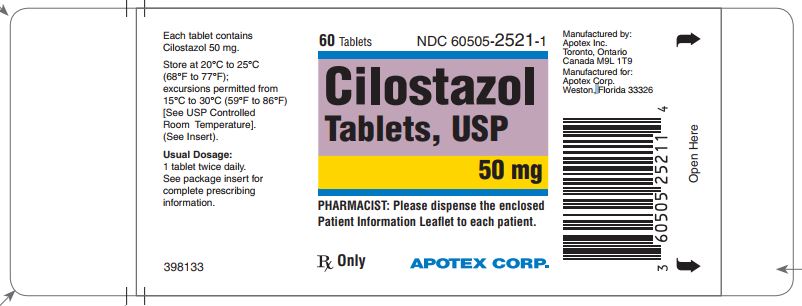
PRINCIPAL DISPLAY PANEL for 50 mg Representative sample of labeling (see HOW SUPPLIED section of complete listing): APOTEX CORP. NDC 60505-2521-1 Cilostazol Tablets, USP 50 mg Rx 60 count
PRINCIPAL DISPLAY PANEL for 100 mg Representative sample of labeling (see HOW SUPPLIED section of complete listing): APOTEX CORP. NDC 60505-2522-1 Cilostazol Tablets, USP 100 mg Rx 60 count
Medicaid utilization by pack size
Medicare Part D spend CMS · PART D · 2026 (Q1)
About this NDC listing & data coverage
What data is (and isn’t) available for this NDC — tap to expand
| NDC identity (package / product / labeler codes) | ✓ Available |
| Labeler | ✓ Available |
| Product & package description | ✓ Available |
| Marketing category & status | ✓ Available |
| Active ingredient / dosage form / route | ✓ Available |
| FDA label (SPL via DailyMed) | ✓ Available |
| Package photos | ✓ Available |
| Inactive ingredients (structured) | ✓ Available |
| NADAC pharmacy acquisition price (CMS) | — Not published for this NDC CMS publishes NADAC only for NDCs reported in its retail-pharmacy survey. |
| Orange Book / therapeutic-equivalence data | ✓ Available |
| HCPCS J-code billing crosswalk | — Not published for this NDC Most self-administered / retail products have no J-code — that is normal. |
| Medicaid utilization (CMS SDUD) | — Not published for this NDC CMS reports utilization only for NDCs with Medicaid claims above its privacy threshold. |