
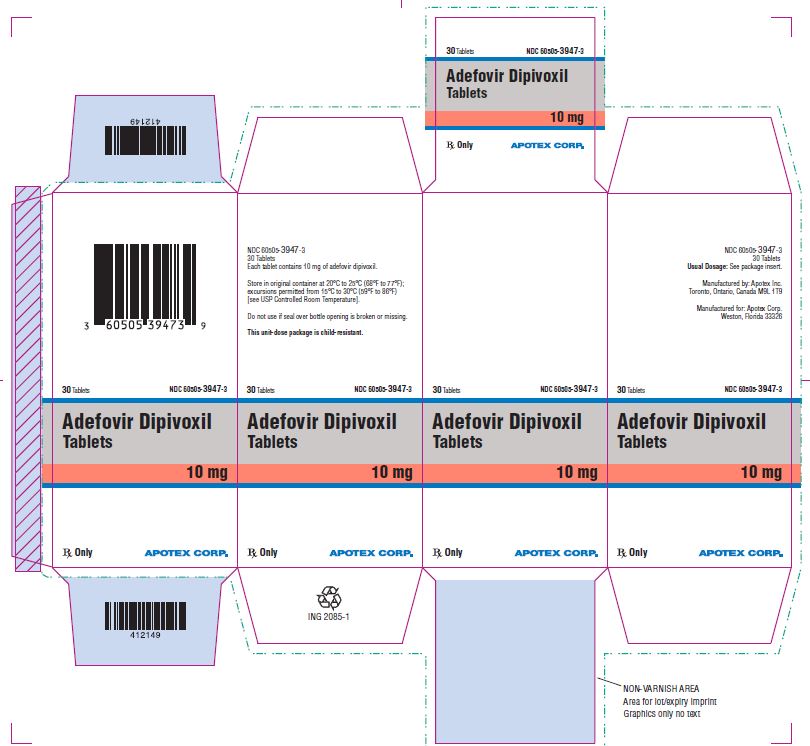
Adefovir dipivoxil 10 mg Tablet, 30-count — NDC 60505-3947-3 (Billing 60505-3947-03)
This is a package of 30 tablets of Adefovir dipivoxil 10 mg Tablet from Apotex Corp., marketed since Sep 2018 and currently FDA-listed, this package's marketing is listed to end Nov 2026; retail pharmacies pay about $21.73 per tablet (NADAC). It is this product's only package size.
NDC database record
One package, one record: these facts belong to NDC 60505-3947-3 alone.
- Record
- FDA NDC Directory package listing · Human prescription drug
- Code segments
- 60505 labeler · 3947 product · 3 package
- Package marketed since
- Sep 25, 2018
- Package marketing ended
- Nov 30, 2026
- Sample package
- No — commercial package
- Billing quantity
- 30 EA per package
- Barcode (UPC)
- 0360505394739
- Medicaid fills, this package
- 16 prescriptions in the last four reported quarters
- FDA record last changed
- Jul 24, 2026
Identity & classification
Regulatory identifiers FDA, NLM and CMS codes for this package
Drug-database identifiers Medi-Span GPI and First Databank GCN / HICL / AHFS classification
- GSN (GCN sequence number): 050937
- GCN: 18264
- GPI-14 (Medi-Span): 12352015100320
- HICL (First Databank): 024270
- AHFS class code: 08:18.32.00
- RxCUI (RxNorm): 881341
Where does this data come from?
- FDA openFDA NDC Directory · synced Oct 1, 2026
- FDA label on DailyMed · label index refreshed Oct 6, 2026
- RxNorm (NLM RxNav) · catalog refreshed Oct 1, 2026
- Medi-Span GPI (licensed)
- First Databank (licensed) · refreshed Oct 1, 2026
RxNorm drug class
This medicine belongs to the Hepatitis B Virus Nucleoside Analog Reverse Transcriptase Inhibitor class.
Where does this data come from?
- RxClass (NLM) · catalog refreshed Oct 1, 2026
Clinical
Adefovir is used to treat chronic (long-term) hepatitis B infection (swelling of the liver caused by a virus) in adults and children 12 years of age and older. Adefovir is in a class of medications called nucleotide analogs. It works by decreasing the amount of hepatitis B virus (HBV) in the body. Adefovir will not cure hepatitis B and may not prevent complications of chronic hepatitis B such as cirrhosis of the liver or liver cancer. Adefovir may not prevent the spread of hepatitis B to other people.
Read the full MedlinePlus article ↗- Adefovir treats chronic hepatitis B in people 12 and older. It helps control the virus when it is actively multiplying and your liver is showing signs of inflammation or damage. Yo...
- You take one tablet by mouth once a day, with or without food. If your kidneys work less well, your doctor may space the doses out. Follow your prescriber's directions and the phar...
- No, please don't stop on your own. Hepatitis can flare up, sometimes severely, after stopping. Your doctor will want to monitor your liver for several months if treatment ends.
- Some people feel tired or get headaches, stomach pain, nausea, gas or diarrhea. Call your doctor for yellow skin or eyes, dark urine, bone or muscle pain, severe stomach pain, or c...
Patient education
Supplement & herbal interactions
Where does this data come from?
- MedlinePlus (NLM) · refreshed Oct 1, 2026
- FDA label on DailyMed · label index refreshed Oct 6, 2026
Ask a licensed pharmacist directly — free, answered by our team.
Pricing
A drug doesn't have one price. Each row is a different public payment system, and none is what you'd pay at the counter — that depends on your insurance. The ⓘ on each row explains what it measures.
| Price system | Per ea | Per package |
|---|---|---|
| Retail pharmacies payNADAC · weekly | $21.731 | $651.94 / 30 tablets |
| Medicaid paysCMS SDUD · 12 mo | $22.11 | $663.36 / 30 tablets |
| Medicare drug plans payPart D · Q2 2026 | $25.54 | $766.20 / 30 tablets |
Where does this data come from?
- CMS NADAC weekly file · file of Sep 30, 2026
- CMS ASP pricing files · refreshed Sep 20, 2026
- CMS Medicaid State Drug Utilization Data · through Q1 2026
- CMS Part D plan pricing files · refreshed Sep 24, 2026
- VA National Acquisition Center price file
Packaging — all sizes for this product
| Package NDC | Description | Marketing start | Marketing end | Status |
|---|---|---|---|---|
| 60505-3947-03 You're viewing this Main listing | 1 BOTTLE in 1 CARTON / 30 TABLET in 1 BOTTLE | 2018-09-25 | Nov 30, 2026 | Active |
Therapeutic equivalents
| Product | Labeler | Pack | NADAC/unit | TE | Status | Price vs. this |
|---|---|---|---|---|---|---|
| Adefovir Dipivoxil 10 mg 42794-0003-08 | Sigmapharm | 30 tablets | $21.731 | AB | Availability likely | — |
| Adefovir dipivoxil 10 mgthis 60505-3947-03 | Apotex | 30 tablets | $21.731 | AB | Availability likely | — |
Where does this data come from?
- FDA openFDA NDC Directory · synced Oct 1, 2026
- FDA Orange Book · refreshed Oct 3, 2026
- CMS NADAC weekly file · file of Sep 30, 2026
Availability & generic status
This product is an FDA-approved generic. Other versions of the same drug are listed under Therapeutic equivalents, least expensive first.
Where does this data come from?
- FDA Orange Book · refreshed Oct 3, 2026
What it looks like
Where does this data come from?
- FDA label on DailyMed · label index refreshed Oct 6, 2026
Inactive Ingredients / Excipients
Inactive ingredients, also called excipients, are components of the drug product other than the active ingredient. They may include fillers, dyes, coatings, preservatives, flavors, or other formulation ingredients.
🧪 Avoiding an ingredient? See Adefovir inactive ingredients by manufacturer: every current product's list side by side, so you can ask your pharmacy for the version that does not list it.
💡 Tap an ingredient (hover on desktop) to see what it is and why it’s used.
-
UNII M28OL1HH48
Croscarmellose sodium is a plant-based substance derived from cellulose. It acts as a disintegrant, helping tablets and capsules break down quickly in the digestive system so the medicine can be absorbed.
-
UNII EWQ57Q8I5X
Lactose monohydrate is a natural sugar derived from milk. It serves as a filler and binder in tablets and capsules, helping create the proper size, texture, and consistency of the medicine.
-
UNII 70097M6I30
Magnesium stearate is a salt made from magnesium and stearic acid, a fatty substance. It's used in tablets and capsules as a lubricant and glidant to help ingredients flow smoothly during manufacturing and prevent sticking.
-
UNII O8232NY3SJ
A plant-based carbohydrate derived from corn kernels. It acts as a filler to add bulk, a binder to hold ingredients together, and a disintegrant to help the tablet break apart in your stomach for absorption.
-
UNII 7SEV7J4R1U
A powder made from a naturally occurring mineral. In medicines, talc works as a glidant and anti-caking agent, helping tablets and capsules flow smoothly during manufacturing and preventing clumping.
5 inactive ingredients listed in the exact product block matched to this NDC.
Where does this data come from?
ingredient classCode="IACT" elements from the exact product block matched by this NDC. Label-section narrative from DailyMed / the openFDA label index is shown separately when available.- FDA label on DailyMed · label index refreshed Oct 6, 2026
- FDA openFDA NDC Directory · synced Oct 1, 2026
Inactive ingredient FAQ
Are inactive ingredients the same for every manufacturer?
Why might an inactive ingredient be missing?
Can inactive ingredients matter?
Manufacturer & labeler
More NDCs from Apotex Corp. labeler code 60505
- Tetrabenazine 12.5 mg Tablet NDC 60505-3882-7
- Tetrabenazine 25 mg Tablet NDC 60505-3883-7
- Guanfacine extended-release 1 mg Tablet, Extended Release NDC 60505-3927-1
- Guanfacine extended-release 2 mg Tablet, Extended Release NDC 60505-3928-1
- Guanfacine extended-release 3 mg Tablet, Extended Release NDC 60505-3929-1
- Guanfacine extended-release 4 mg Tablet, Extended Release NDC 60505-3930-1
- Omeprazole 20 mg Capsule, Delayed Release NDC 60505-3952-3
- clopidogrel bisulfate 75 mg Tablet, Film Coated NDC 60505-3992-3
- Ibandronate Sodium 150 mg Tablet, Film Coated NDC 60505-4003-8
- Icosapent Ethyl 1 g Capsule NDC 60505-4033-1
- Oxcarbazepine 150 mg Tablet, Extended Release NDC 60505-4128-5
- Oxcarbazepine 300 mg Tablet, Extended Release NDC 60505-4129-5
Where does this data come from?
- FDA openFDA NDC Directory · synced Oct 1, 2026
- Drugs@FDA
Full prescribing information FDA SPL
🚨 Boxed Warning ▾
WARNING: SEVERE ACUTE EXACERBATIONS OF HEPATITIS, NEPHROTOXICITY, HIV RESISTANCE, LACTIC ACIDOSIS AND SEVERE HEPATOMEGALY WITH STEATOSIS Severe acute exacerbations of hepatitis have been reported in patients who have discontinued anti-Hepatitis B therapy including adefovir dipivoxil tablets. Hepatic function should be monitored closely with both clinical and laboratory follow-up for at least several months in patients who discontinue anti-Hepatitis B therapy. If appropriate, resumption of anti-Hepatitis B therapy may be warranted [See Warnings and Precautions (5.
1 ) ]. In patients at risk of or having underlying renal dysfunction, chronic administration of adefovir dipivoxil tablets may result in nephrotoxicity. These patients should be monitored closely for renal function and may require dose adjustment [See Warnings and Precautions (5.
2 ) and Dosage and Administration (2.2) ] . HIV resistance may emerge in chronic hepatitis B patients with unrecognized or untreated Human Immunodeficiency Virus (HIV) infection treated with anti-hepatitis B therapies, such as therapy with adefovir dipivoxil tablets, that may have activity against HIV [See Warnings and Precautions (5. 3 ) ] .
Lactic acidosis and severe hepatomegaly with steatosis, including fatal cases, have been reported with the use of nucleoside analogs alone or in combination with other antiretrovirals [See Warnings and Precautions (5. 4 ) ] . WARNING: SEVERE ACUTE EXACERBATIONS OF HEPATITIS, NEPHROTOXICITY, HIV RESISTANCE, LACTIC ACIDOSIS AND SEVERE HEPATOMEGALY WITH STEATOSIS See full prescribing information for complete boxed warning .
Severe acute exacerbations of hepatitis may occur in patients who discontinue adefovir dipivoxil tablets. Monitor hepatic function closely in these patients. ( 5.1 ) Chronic use of adefovir dipivoxil tablets may result in nephrotoxicity in patients at risk of renal dysfunction or having underlying renal dysfunction.
Monitor renal function closely in these patients. Dose adjustment may be required. ( 5.2 ) HIV resistance may emerge in chronic hepatitis B patients with unrecognized or untreated HIV infection.
( 5.3 ) Lactic acidosis and severe hepatomegaly with steatosis, including fatal cases, have been reported with the use of nucleoside analogues. ( 5.4 )
🎯 Indications and Usage ▾
1 INDICATIONS AND USAGE Adefovir dipivoxil tablets are indicated for the treatment of chronic hepatitis B in patients 12 years of age and older with evidence of active viral replication and either evidence of persistent elevations in serum aminotransferases (ALT or AST) or histologically active disease. This indication is based on histological, virological, biochemical, and serological responses in adult patients with HBeAg+ and HBeAg- chronic hepatitis B with compensated liver function, and with clinical evidence of lamivudine-resistant hepatitis B virus with either compensated or decompensated liver function.
For patients 12 to less than 18 years of age, the indication is based on virological and biochemical responses in patients with HBeAg+ chronic hepatitis B virus infection with compensated liver function. Adefovir dipivoxil tablets are a nucleotide analogue indicated for the treatment of chronic hepatitis B in patients 12 years of age and older. ( 1 )
⏱️ Dosage and Administration ▾
2 DOSAGE AND ADMINISTRATION One tablet containing 10 mg adefovir dipivoxil once daily orally with or without food. ( 2.1 ) Dose adjustment in renal impairment for adults ( 2.2 ) Creatinine Clearance (mL/min) Creatinine clearance calculated by Cockcroft-Gault method using lean or ideal body weight. Greater than or equal to 50 30 to 49 10 to 29 Hemodialysis Patients Recommended dose and dosing interval 10 mg every 24 hours 10 mg every 48 hours 10 mg every 72 hours 10 mg every 7 days following dialysis No dose recommendations for ( 2.1 ): Non-hemodialysis patients with creatinine clearance less than 10 mL per minute.
Adolescent patients with renal impairment.
2.1Chronic Hepatitis B The recommended dose of adefovir dipivoxil tablets in chronic hepatitis B patients for patients 12 years of age and older with adequate renal function is 10 mg, once daily, taken orally, without regard to food. The optimal duration of treatment is unknown. Adefovir dipivoxil tablets are not recommended for use in children less than 12 years of age.
2.2Dose Adjustment in Renal Impairment Significantly increased drug exposures were seen when adefovir dipivoxil tablets were administered to adult patients with renal impairment [See Warnings and Precautions (5.2) and Clinical Pharmacology (12.3) ] . Therefore, the dosing interval of adefovir dipivoxil tablets should be adjusted in adult patients with baseline creatinine clearance less than 50 mL per minute using the following suggested guidelines (See Table 1 ). The safety and effectiveness of these dosing interval adjustment guidelines have not been clinically evaluated.
Additionally, it is important to note that these guidelines were derived from data in patients with pre-existing renal impairment at baseline. They may not be appropriate for patients in whom renal insufficiency evolves during treatment with adefovir dipivoxil tablets. Therefore, clinical response to treatment and renal function should be closely monitored in these patients.
Table 1 Dosing Interval Adjustment of Adefovir Dipivoxil Tablets in Adult Patients with Renal Impairment Creatinine Clearance (mL/min) Creatinine clearance calculated by Cockcroft-Gault method using lean or ideal body weight. Greater than or equal to 50 30 to 49 10 to 29 Hemodialysis Patients Recommended dose and dosing interval 10 mg every 24 hours 10 mg every 48 hours 10 mg every 72 hours 10 mg every 7 days following dialysis The pharmacokinetics of adefovir have not been evaluated in non-hemodialysis patients with creatinine clearance less than 10 mL per minute; therefore, no dosing recommendation is available for these patients.
No clinical data are available to make dosing recommendations in adolescent patients with renal insufficiency [See Warnings and Precautions (5.2) ].
💊 Dosage Forms and Strengths ▾
3 DOSAGE FORMS AND STRENGTHS Adefovir Dipivoxil Tablets are white to off-white, round, flat-faced bevelled edge tablets, engraved “APO” on one side, “A10” on the other side. Tablets: 10 mg ( 3 )
⛔ Contraindications ▾
4 CONTRAINDICATIONS Adefovir dipivoxil tablets are contraindicated in patients with previously demonstrated hypersensitivity to any of the components of the product. Adefovir dipivoxil tablets are contraindicated in patients with previously demonstrated hypersensitivity to any of the components of the product. ( 4 )
⚠️ Warnings and Cautions ▾
5 WARNINGS AND PRECAUTIONS Severe acute exacerbations of hepatitis: Monitor hepatic function closely at repeated intervals for at least several months in patients who discontinue adefovir dipivoxil. ( 5.1 ) Nephrotoxicity: Monitor renal function during therapy for all patients, particularly those with pre-existing or other risks for renal impairment. Dose adjustment may be required.
( 5.2 ) HIV Resistance: Offer HIV testing to all patients prior to initiating adefovir dipivoxil. Untreated HIV may result in HIV resistance. ( 5.3 ) Lactic acidosis and severe hepatomegaly with steatosis: If suspected, suspend treatment.
( 5.4 ) Coadministration with Other Products: Do not administer adefovir dipivoxil concurrently with VIREAD ® or other tenofovir-containing products. ( 5.5 ) Clinical Resistance: For patients with lamivudine-resistant HBV use adefovir dipivoxil in combination with lamivudine. For all patients, consider modifying treatment in case serum HBV DNA remains above 1000 copies/mL with continued treatment.
( 5.6 )
5.1Exacerbation of Hepatitis after Discontinuation of Treatment Severe acute exacerbation of hepatitis has been reported in patients who have discontinued anti-hepatitis B therapy, including therapy with adefovir dipivoxil. Hepatic function should be monitored at repeated intervals with both clinical and laboratory follow-up for at least several months in patients who discontinue adefovir dipivoxil. If appropriate, resumption of anti-hepatitis B therapy may be warranted.
In clinical trials of adefovir dipivoxil, exacerbations of hepatitis (ALT elevations 10 times the upper limit of normal or greater) occurred in up to 25% of patients after discontinuation of adefovir dipivoxil. These events were identified in studies GS-98-437 and GS-98-438 (N=492). Most of these events occurred within 12 weeks of drug discontinuation.
These exacerbations generally occurred in the absence of HBeAg seroconversion, and presented as serum ALT elevations in addition to re-emergence of viral replication. In the HBeAg-positive and HBeAg-negative studies in patients with compensated liver function, the exacerbations were not generally accompanied by hepatic decompensation. However, patients with advanced liver disease or cirrhosis may be at higher risk for hepatic decompensation.
Although most events appear to have been self-limited or resolved with re-initiation of treatment, severe hepatitis exacerbations, including fatalities, have been reported. Therefore, patients should be closely monitored after stopping treatment.
5.2Nephrotoxicity Nephrotoxicity characterized by a delayed onset of gradual increases in serum creatinine and decreases in serum phosphorus was historically shown to be the treatment-limiting toxicity of adefovir dipivoxil therapy at substantially higher doses in HIV-infected patients (60 and 120 mg daily) and in chronic hepatitis B patients (30 mg daily). Chronic administration of adefovir dipivoxil (10 mg once daily) may result in delayed nephrotoxicity. The overall risk of nephrotoxicity in patients with adequate renal function is low.
However, this is of special importance in patients at risk of or having underlying renal dysfunction and patients taking concomitant nephrotoxic agents such as cyclosporine, tacrolimus, aminoglycosides, vancomycin and non-steroidal anti-inflammatory drugs [See Adverse Reactions (6.2) and Clinical Pharmacology (12.3) ]. It is recommended that creatinine clearance is calculated in all patients prior to initiating therapy with adefovir dipivoxil. It is important to monitor renal function for all patients during treatment with adefovir dipivoxil, particularly for those with pre-existing or other risks for renal impairment.
Patients with renal insufficiency at baseline or during treatment may require dose adjustment [See Dosage and Administration (2.2) ]. The risks and benefits of adefovir dipivoxil treatment should be carefully evaluated prior to discontinuing adefovir dipivoxil in a p… [Excerpted — this section continues on DailyMed.]
🤒 Adverse Reactions ▾
6 ADVERSE REACTIONS The following adverse reactions are discussed in other sections of the labeling: Severe acute exacerbations of Hepatitis [ S ee Boxed Warning , Warnings and Precautions (5.1) ] Nephrotoxicity [See Boxed Warning , Warnings and Precautions (5.2) ] Most common adverse reaction (incidence greater than 5%) in compensated liver disease patients were asthenia, headache, abdominal pain and nausea. ( 6.1 ) The most common adverse reaction in pre- and post- transplantation lamivudine-resistant liver disease patients was increased creatinine.
( 6.2 ) To report SUSPECTED ADVERSE REACTIONS, contact Apotex Corp. at 1-800-706-5575or FDA at 1-800-FDA-1088 or www.fda.gov/medwatch.
6.1Clinical Trials Experience Because clinical trials are conducted under widely varying conditions, adverse reaction rates observed in the clinical trials of a drug cannot be directly compared to rates in the clinical trials of another drug and may not reflect the rates observed in practice. Clinical and laboratory evidence of exacerbations of hepatitis have occurred after discontinuation of treatment with adefovir dipivoxil. Adverse reactions to adefovir dipivoxil identified from placebo-controlled and open label studies include the following: asthenia, headache, abdominal pain, diarrhea, nausea, dyspepsia, flatulence, increased creatinine, and hypophosphatemia.
The incidence of these adverse reactions in studies 437 and 438, where 522 patients with chronic hepatitis B and compensated liver disease received double-blind treatment with adefovir dipivoxil (N=294) or placebo (N=228) for 48 weeks is presented in Table 2. Patients who received open-label adefovir dipivoxil for up to 240 weeks in Study 438 reported adverse reactions similar in nature and severity to those reported in the first 48 weeks. Table 2 Adverse Reactions (Grades 1 to 4) Reported in ≥3% of All Adefovir Dipivoxil-Treated Patients in Pooled Studies 437 to 438 Studies (0 to 48 Weeks) In these studies, the overall incidence of adverse reactions with adefovir dipivoxil was similar to that reported with placebo.
The incidence of adverse reactions is derived from treatment-related events as identified by the study investigators. Adverse Reaction Adefovir Dipivoxil 10 mg (N=294) Placebo (N=228) Asthenia 13% 14% Headache 9% 10% Abdominal Pain 9% 11% Nausea 5% 8% Flatulence 4% 4% Diarrhea 3% 4% Dyspepsia 3% 2% No patients treated with adefovir dipivoxil developed a confirmed serum creatinine increase greater than or equal to 0.5 mg/dL from baseline or a confirmed phosphorus decrease to 2 mg/dL or less by Week 48. By Week 96, 2% of adefovir dipivoxil-treated patients, by Kaplan-Meier estimate, had increases in serum creatinine greater than or equal to 0.5 mg/dL from baseline (no placebo-controlled results were available for comparison beyond Week 48).
For patients who chose to continue adefovir dipivoxil for up to 240 weeks in Study 438, 4 of 125 patients (3%) had a confirmed increase of 0.5 mg/dL from baseline. The creatinine elevation resolved in 1 patient who permanently discontinued treatment and remained stable in 3 patients who continued treatment. For 65 patients who chose to continue adefovir dipivoxil for up to 240 weeks in Study 437, 6 had a confirmed increase in serum creatinine of greater than or equal to 0.5 mg/dL from baseline with 2 patients discontinuing from the study due to the elevated serum creatinine concentration.
See Adverse Reactions (6.2) for changes in serum creatinine in patients with underlying renal insufficiency at baseline.
6.2Special Risk Patients Pre- and Post-Liver Transplantation Patients Additional adverse reactions observed from an open-label study (Study 435) in pre- and post-liver transplantation patients with chronic hepatitis B and lamivudine-resistant hepatitis B administered adefovir dipivoxil once daily for up to 203 weeks include: abnormal renal function, renal failure, vomiting, rash, and pruritus. Changes in renal function occurred in pre-a… [Excerpted — this section continues on DailyMed.]
🔄 Drug Interactions ▾
7 DRUG INTERACTIONS Since adefovir is eliminated by the kidney, coadministration of adefovir dipivoxil with drugs that reduce renal function or compete for active tubular secretion may increase serum concentrations of either adefovir and/or these coadministered drugs [See Clinical Pharmacology ( 12.3) ]. Patients should be monitored closely for adverse events when adefovir dipivoxil is coadministered with drugs that are excreted renally or with other drugs known to affect renal function [ See Warnings and Precautions (5.2) ] .
Adefovir dipivoxil should not be administered in combination with VIREAD [ See Warnings and Precautions (5.5)] . Coadministration with drugs that reduce renal function or compete for active tubular secretion may increase serum concentrations of adefovir or the coadministered drug. Monitor for adefovir dipivoxil associated adverse events.
( 7 )
👥 Use in Specific Populations ▾
8 USE IN SPECIFIC POPULATIONS • Pediatrics: Not recommended in children less than 12 years of age. ( 2.1 , 8.4 , 14.4 ) Renal Impairment: Dose adjustment may be required. ( 2.2 )
8.1Pregnancy Pregnancy Exposure Registry There is a pregnancy exposure registry that monitors pregnancy outcomes in women exposed to adefovir dipivoxil during pregnancy. Healthcare providers are encouraged to register patients by calling the Antiretroviral Pregnancy Registry (APR) at 1-800-258- 4263. Risk Summary Prospective pregnancy data from the APR are not sufficient to adequately assess the risk of birth defects, miscarriage or adverse maternal or fetal outcomes.
Adefovir disoproxil (ADV) use during pregnancy has been evaluated in a limited number of individuals reported to the APR and the number of exposures to adefovir is insufficient to make a risk assessment compared to a reference population. The estimated background rate for major birth defects is 2.7% in the U.S. reference population of the Metropolitan Atlanta Congenital Defects Program (MACDP). The estimated rate of miscarriage is not reported in the APR.
All pregnancies have a background risk of birth defect, loss, or other adverse outcomes. The estimated background rate of miscarriage in the U.S. general population is 15–20%. In animal reproduction studies with oral ADV, no adverse developmental effects were observed at exposures (C max ) 23 times higher in rats and 40 times higher in rabbits than those at the recommended human dose (RHD) of adefovir dipivoxil (see Data).
Data Animal Data In an embryo-fetal development study, ADV was administered orally to pregnant rabbits (at 1, 5, or 20 mg/kg/day) during organogenesis (on gestation day 6 through 18). No adverse developmental effects were observed at up to the highest dose tested, at systemic exposure (C max ) 40 times that in humans at the RHD of adefovir dipivoxil. In a pre/post-natal development study, ADV was administered orally to pregnant rats (at 2.5, 10, or 40 mg/kg/day) from organogenesis, through late gestation, delivery, and lactation (gestation day 7 to lactation/postpartum day 20).
Reduced body weight of the offspring due to maternal toxicity was observed at systemic exposure 23 times that in humans at the RHD of adefovir dipivoxil. In an embryo-fetal development study, ADV was administered intravenously to pregnant rats (at 2.5, 10, and 20 mg/kg/day) during organogenesis (gestation day 6 through 15). Embryo-fetal toxicity including malformations (anasarca, depressed eye bulge, umbilical hernia and kinked tail) and skeletal variations (reduction of ossified metacarpal bones, increases in thoracic vertebrae and decreases in lumbar vertebrae) occurred at systemic exposure (Cmax) 38 times that in humans at the RHD of adefovir dipivoxil.
No adverse developmental effects were observed at an exposure (Cmax) 12 times that in humans at the RHD of adefovir dipivoxil.
8.2Lactation Risk Summary It is not known whether adefovir is present in human breast milk, affects human milk production, or has effects on the breastfed infant. The developmental and health benefits of breastfeeding should be considered along with the mother’s clinical need for adefovir dipivoxil and any potential adverse effects on the breastfed infant from adefovir dipivoxil or from the underlying maternal condition.
8.4Pediatric Use Pediatric patients 12 to less than 18 years : The safety, efficacy, and pharmacokinetics of adefovir dipivoxil in pediatric patients (aged 12 to less than 18 years) were evaluated in a double-blind, randomized, placebo-controlled study (GS-US-103-518, Study 518) in 83 pediatric patients with chronic hepatitis B and compensated liver disease. The proportion of patients treated with adefovir dipivoxil who achieved the primary efficacy endpoint of serum HBV DNA less than 1,000 copies/mL and normal ALT levels at the end of 48 weeks blinded treatment was significantly greater (23%) when compared to placebo-treated patients (0%) [ S ee C… [Excerpted — this section continues on DailyMed.]
🤰 Pregnancy ▾
8.1Pregnancy Pregnancy Exposure Registry There is a pregnancy exposure registry that monitors pregnancy outcomes in women exposed to adefovir dipivoxil during pregnancy. Healthcare providers are encouraged to register patients by calling the Antiretroviral Pregnancy Registry (APR) at 1-800-258- 4263. Risk Summary Prospective pregnancy data from the APR are not sufficient to adequately assess the risk of birth defects, miscarriage or adverse maternal or fetal outcomes.
Adefovir disoproxil (ADV) use during pregnancy has been evaluated in a limited number of individuals reported to the APR and the number of exposures to adefovir is insufficient to make a risk assessment compared to a reference population. The estimated background rate for major birth defects is 2.7% in the U.S. reference population of the Metropolitan Atlanta Congenital Defects Program (MACDP). The estimated rate of miscarriage is not reported in the APR.
All pregnancies have a background risk of birth defect, loss, or other adverse outcomes. The estimated background rate of miscarriage in the U.S. general population is 15–20%. In animal reproduction studies with oral ADV, no adverse developmental effects were observed at exposures (C max ) 23 times higher in rats and 40 times higher in rabbits than those at the recommended human dose (RHD) of adefovir dipivoxil (see Data).
Data Animal Data In an embryo-fetal development study, ADV was administered orally to pregnant rabbits (at 1, 5, or 20 mg/kg/day) during organogenesis (on gestation day 6 through 18). No adverse developmental effects were observed at up to the highest dose tested, at systemic exposure (C max ) 40 times that in humans at the RHD of adefovir dipivoxil. In a pre/post-natal development study, ADV was administered orally to pregnant rats (at 2.5, 10, or 40 mg/kg/day) from organogenesis, through late gestation, delivery, and lactation (gestation day 7 to lactation/postpartum day 20).
Reduced body weight of the offspring due to maternal toxicity was observed at systemic exposure 23 times that in humans at the RHD of adefovir dipivoxil. In an embryo-fetal development study, ADV was administered intravenously to pregnant rats (at 2.5, 10, and 20 mg/kg/day) during organogenesis (gestation day 6 through 15). Embryo-fetal toxicity including malformations (anasarca, depressed eye bulge, umbilical hernia and kinked tail) and skeletal variations (reduction of ossified metacarpal bones, increases in thoracic vertebrae and decreases in lumbar vertebrae) occurred at systemic exposure (Cmax) 38 times that in humans at the RHD of adefovir dipivoxil.
No adverse developmental effects were observed at an exposure (Cmax) 12 times that in humans at the RHD of adefovir dipivoxil.
🧒 Pediatric Use ▾
8.4Pediatric Use Pediatric patients 12 to less than 18 years : The safety, efficacy, and pharmacokinetics of adefovir dipivoxil in pediatric patients (aged 12 to less than 18 years) were evaluated in a double-blind, randomized, placebo-controlled study (GS-US-103-518, Study 518) in 83 pediatric patients with chronic hepatitis B and compensated liver disease. The proportion of patients treated with adefovir dipivoxil who achieved the primary efficacy endpoint of serum HBV DNA less than 1,000 copies/mL and normal ALT levels at the end of 48 weeks blinded treatment was significantly greater (23%) when compared to placebo-treated patients (0%) [ S ee Clinical Studies ( 14.4) , Dosage a nd Administration ( 2) and Adverse Reactions ( 6.3) ] .
Pediatric patients 2 to less than 12 years : Patients 2 to less than 12 years of age were also evaluated in Study 518. The efficacy of adefovir dipivoxil was not significantly different from placebo in patients less than 12 years of age. Adefovir dipivoxil tablets are not recommended for use in children below 12 years of age.
🧓 Geriatric Use ▾
8.5Geriatric Use Clinical studies of adefovir dipivoxil did not include sufficient numbers of patients aged 65 and over to determine whether they respond differently from younger patients. In general, caution should be exercised when prescribing to elderly patients since they have greater frequency of decreased renal or cardiac function due to concomitant disease or other drug therapy.
🆘 Overdosage ▾
10 OVERDOSAGE Doses of adefovir dipivoxil 500 mg daily for 2 weeks and 250 mg daily for 12 weeks have been associated with gastrointestinal side effects. If overdose occurs the patient must be monitored for evidence of toxicity, and standard supportive treatment applied as necessary. Following a 10 mg single dose of adefovir dipivoxil, a four-hour hemodialysis session removed approximately 35% of the adefovir dose.
🧬 Clinical Pharmacology ▾
12 CLINICAL PHARMACOLOGY
12.1Mechanism of Action Adefovir is an antiviral drug [See Microbiology ( 12.4 )].
12.3Pharmacokinetics Adult Subjects The pharmacokinetics of adefovir have been evaluated in healthy volunteers and patients with chronic hepatitis B. Adefovir pharmacokinetics are similar between these populations. Absorption Adefovir dipivoxil is a diester prodrug of the active moiety adefovir.
Based on a cross study comparison, the approximate oral bioavailability of adefovir from adefovir dipivoxil is 59%. Following oral administration of a 10 mg single dose of adefovir dipivoxil to chronic hepatitis B patients (N=14), the peak adefovir plasma concentration (C max ) was 18.4 ± 6.26 ng/mL (mean ± SD) and occurred between 0.58 and 4.00 hours (median = 1.75 hours) post dose. The adefovir area under the plasma concentration-time curve (AUC 0–∞ ) was 220 ± 70.0 ng•h/mL.
Plasma adefovir concentrations declined in a biexponential manner with a terminal elimination half-life of 7.48 ± 1.65 hours. The pharmacokinetics of adefovir in subjects with adequate renal function were not affected by once daily dosing of 10 mg adefovir dipivoxil over seven days. The impact of long-term once daily administration of 10 mg adefovir dipivoxil on adefovir pharmacokinetics has not been evaluated.
Effects of Food on Oral Absorption Adefovir exposure was unaffected when a 10 mg single dose of adefovir dipivoxil was administered with food (an approximately 1000 kcal high-fat meal). Adefovir dipivoxil may be taken without regard to food. Distribution In vitro binding of adefovir to human plasma or human serum proteins is less than or equal to 4% over the adefovir concentration range of 0.1 to 25 microg/mL.
The volume of distribution at steady-state following intravenous administration of 1.0 or 3.0 mg/kg/day is 392 ± 75 and 352 ± 9 mL/kg, respectively. Metabolism and Elimination Following oral administration, adefovir dipivoxil is rapidly converted to adefovir. Forty-five percent of the dose is recovered as adefovir in the urine over 24 hours at steady state following 10 mg oral doses of adefovir dipivoxil.
Adefovir is renally excreted by a combination of glomerular filtration and active tubular secretion [See Drug Interactions ( 7) and Clinical Pharmacology ( 12.3) ]. Assessment of Drug Interactions Adefovir dipivoxil is rapidly converted to adefovir in vivo . At concentrations substantially higher (greater than 4000-fold) than those observed in vivo , adefovir did not inhibit any of the common human CYP450 enzymes, CYP1A2, CYP2C9, CYP2C19, CYP2D6, and CYP3A4.
Adefovir is not a substrate for these enzymes. However, the potential for adefovir to induce CYP450 enzymes is unknown. Based on the results of these in vitro experiments and the renal elimination pathway of adefovir, the potential for CYP450 mediated interactions involving adefovir as an inhibitor or substrate with other medicinal products is low.
The pharmacokinetics of adefovir have been evaluated in healthy adult volunteers following multiple dose administration of adefovir dipivoxil (10 mg once daily) in combination with lamivudine (100 mg once daily) (N=18), trimethoprim/sulfamethoxazole (160/800 mg twice daily) (N=18), acetaminophen (1000 mg four times daily) (N=20), ibuprofen (800 mg three times daily) (N=18), and enteric coated didanosine (400 mg) (N=21). The pharmacokinetics of adefovir have also been evaluated in post-liver transplantation patients following multiple dose administration of adefovir dipivoxil (10 mg once daily) in combination with tacrolimus (N=16).
The pharmacokinetics of adefovir have been evaluated in healthy volunteers following single dose pegylated interferon α-2a (PEG-IFN) (180 microg) (N=15). Adefovir did not alter the pharmacokinetics of lamivudine, trimethoprim/sulfamethoxazole, acetaminophen, ibuprofen, enteric coated didanosine (didanosine EC), or tacrolimus. The evaluation of the effect of adefovir on the pharmacokinetics of pegylated interferon α-… [Excerpted — this section continues on DailyMed.]
🧬 Mechanism of Action ▾
12.1Mechanism of Action Adefovir is an antiviral drug [See Microbiology ( 12.4 )].
📦 How Supplied / Storage and Handling ▾
16 HOW SUPPLIED / STORAGE AND HANDLING Adefovir Dipivoxil Tablets are white to off-white, round, flat-faced bevelled edge tablets, engraved “APO” on one side, “A10” on the other side. They are supplied as follows: Bottles of 30s (NDC-60505-3947-3) Store in original container at 20°C to 25°C (68°F to 77°F); excursions permitted from 15°C to 30°C (59°F to 86°F) [see USP Controlled Room Temperature]. Do not use if seal over bottle opening is broken or missing.
📦 Storage and Handling ▾
Store in original container at 20°C to 25°C (68°F to 77°F); excursions permitted from 15°C to 30°C (59°F to 86°F) [see USP Controlled Room Temperature]. Do not use if seal over bottle opening is broken or missing.
📋 Description ▾
11 DESCRIPTION Adefovir dipivoxil is a diester prodrug of adefovir. Adefovir is an acyclic nucleotide analog with activity against human hepatitis B virus (HBV). The chemical name of adefovir dipivoxil is 9-[2-[[bis[(pivaloyloxy)methoxy]-phosphinyl]-methoxy]ethyl]adenine.
It has a molecular formula of C 20 H 32 N 5 O 8 P, a molecular weight of 501.47 g/mol and the following structural formula: Adefovir dipivoxil is a white to off-white powder with an aqueous solubility of 19 mg/mL at pH 2.0 and 0.4 mg/mL at pH 7.2. It has an octanol/aqueous phosphate buffer (pH 7) partition coefficient (log p) of 1.91. Adefovir dipivoxil tablets are for oral administration.
Each tablet contains 10 mg of adefovir dipivoxil and the following inactive ingredients: croscarmellose sodium, lactose monohydrate, magnesium stearate, starch and talc. adefovir-dipivoxil
💬 Information for Patients ▾
17 PATIENT COUNSELING INFORMATION Advise the patient to read the FDA-approved patient labeling (Patient Information). Inform patients of the potential risks and benefits of adefovir dipivoxil tablets and of alternative modes of therapy. Instruct patients to: Follow a regular dosing schedule to avoid missing doses.
Immediately report any severe abdominal pain, muscle pain, yellowing of the eyes, dark urine, pale stools, and/or loss in appetite. Inform their doctor or pharmacist if they develop any unusual symptom(s), or if any known symptom persists or worsens. Advise patients that: The optimal duration of adefovir dipivoxil tablets treatment and the relationship between treatment response and long-term outcomes such as hepatocellular carcinoma or decompensated cirrhosis are not known.
Patients should not discontinue adefovir dipivoxil tablets without first informing their physician [See Warnings and Precautions ( 5.1 )]. Routine laboratory monitoring and follow-up with a physician is important during adefovir dipivoxil therapy. Obtaining HIV antibody testing prior to starting adefovir dipivoxil tablets is important [See Warnings and Precautions ( 5.3 )].
Adefovir dipivoxil tablets should not be administered concurrently with ATRIPLA or COMPLERA or STRIBILD or TRUVADA or VIREAD [See Warnings and Precautions ( 5.5 )]. Lamivudine-resistant patients should use adefovir dipivoxil tablets in combination with lamivudine and not as adefovir dipivoxil tablets monotherapy [See Warnings and Precautions. ( 5.6 )].
Inform patients that there is an antiretroviral pregnancy registry to monitor fetal outcomes of pregnant women exposed to adefovir dipivoxil [see Use in Specific Populations ( 8.1 )].
🧬 Pharmacokinetics ▾
12.3Pharmacokinetics Adult Subjects The pharmacokinetics of adefovir have been evaluated in healthy volunteers and patients with chronic hepatitis B. Adefovir pharmacokinetics are similar between these populations. Absorption Adefovir dipivoxil is a diester prodrug of the active moiety adefovir.
Based on a cross study comparison, the approximate oral bioavailability of adefovir from adefovir dipivoxil is 59%. Following oral administration of a 10 mg single dose of adefovir dipivoxil to chronic hepatitis B patients (N=14), the peak adefovir plasma concentration (C max ) was 18.4 ± 6.26 ng/mL (mean ± SD) and occurred between 0.58 and 4.00 hours (median = 1.75 hours) post dose. The adefovir area under the plasma concentration-time curve (AUC 0–∞ ) was 220 ± 70.0 ng•h/mL.
Plasma adefovir concentrations declined in a biexponential manner with a terminal elimination half-life of 7.48 ± 1.65 hours. The pharmacokinetics of adefovir in subjects with adequate renal function were not affected by once daily dosing of 10 mg adefovir dipivoxil over seven days. The impact of long-term once daily administration of 10 mg adefovir dipivoxil on adefovir pharmacokinetics has not been evaluated.
Effects of Food on Oral Absorption Adefovir exposure was unaffected when a 10 mg single dose of adefovir dipivoxil was administered with food (an approximately 1000 kcal high-fat meal). Adefovir dipivoxil may be taken without regard to food. Distribution In vitro binding of adefovir to human plasma or human serum proteins is less than or equal to 4% over the adefovir concentration range of 0.1 to 25 microg/mL.
The volume of distribution at steady-state following intravenous administration of 1.0 or 3.0 mg/kg/day is 392 ± 75 and 352 ± 9 mL/kg, respectively. Metabolism and Elimination Following oral administration, adefovir dipivoxil is rapidly converted to adefovir. Forty-five percent of the dose is recovered as adefovir in the urine over 24 hours at steady state following 10 mg oral doses of adefovir dipivoxil.
Adefovir is renally excreted by a combination of glomerular filtration and active tubular secretion [See Drug Interactions ( 7) and Clinical Pharmacology ( 12.3) ]. Assessment of Drug Interactions Adefovir dipivoxil is rapidly converted to adefovir in vivo . At concentrations substantially higher (greater than 4000-fold) than those observed in vivo , adefovir did not inhibit any of the common human CYP450 enzymes, CYP1A2, CYP2C9, CYP2C19, CYP2D6, and CYP3A4.
Adefovir is not a substrate for these enzymes. However, the potential for adefovir to induce CYP450 enzymes is unknown. Based on the results of these in vitro experiments and the renal elimination pathway of adefovir, the potential for CYP450 mediated interactions involving adefovir as an inhibitor or substrate with other medicinal products is low.
The pharmacokinetics of adefovir have been evaluated in healthy adult volunteers following multiple dose administration of adefovir dipivoxil (10 mg once daily) in combination with lamivudine (100 mg once daily) (N=18), trimethoprim/sulfamethoxazole (160/800 mg twice daily) (N=18), acetaminophen (1000 mg four times daily) (N=20), ibuprofen (800 mg three times daily) (N=18), and enteric coated didanosine (400 mg) (N=21). The pharmacokinetics of adefovir have also been evaluated in post-liver transplantation patients following multiple dose administration of adefovir dipivoxil (10 mg once daily) in combination with tacrolimus (N=16).
The pharmacokinetics of adefovir have been evaluated in healthy volunteers following single dose pegylated interferon α-2a (PEG-IFN) (180 microg) (N=15). Adefovir did not alter the pharmacokinetics of lamivudine, trimethoprim/sulfamethoxazole, acetaminophen, ibuprofen, enteric coated didanosine (didanosine EC), or tacrolimus. The evaluation of the effect of adefovir on the pharmacokinetics of pegylated interferon α-2a was inconclusive due to the high variability of pegylated interferon alpha-2a.
The pharmacokinetics of ade… [Excerpted — this section continues on DailyMed.]
🔬 Clinical Studies ▾
14 CLINICAL STUDIES
14.1Studies 437 and 438 (Pivotal Studies) HBeAg-Positive Chronic Hepatitis B Study 437 was a randomized, double-blind, placebo-controlled, three-arm study in patients with HBeAg-positive chronic hepatitis B that allowed for a comparison between placebo and adefovir dipivoxil. The median age of patients was 33 years. Seventy-four percent were male, 59% were Asian, 36% were Caucasian, and 24% had prior interferon-α treatment.
At baseline, patients had a median total Knodell Histology Activity Index (HAI) score of 10, a median serum HBV DNA level as measured by the Roche Amplicor Monitor polymerase chain reaction (PCR) assay (LLOQ = 1000 copies/mL) of 8.36 log 10 copies/mL and a median ALT level of 2.3 times the upper limit of normal. HBeAg-Negative (Anti-HBe Positive/HBV DNA Positive) Chronic Hepatitis B Study 438 was a randomized, double-blind, placebo-controlled study in patients who were HBeAg-negative at screening, and anti-HBe positive.
The median age of patients was 46 years. Eighty-three percent were male, 66% were Caucasian, 30% were Asian and 41% had prior interferon-α treatment. At baseline, the median total Knodell HAI score was 10, the median serum HBV DNA level as measured by the Roche Amplicor Monitor PCR assay (LLOQ = 1000 copies/mL) was 7.08 log 10 copies/mL, and the median ALT was 2.3 times the upper limit of normal.
The primary efficacy endpoint in both studies was histological improvement at Week 48; results of which are shown in Table 4. Table 4 Histological Response at Week 48 Intent-to-Treat population (patients with ≥1 dose of study drug) with assessable baseline biopsies. Study 437 Study 438 Adefovir Dipivoxil 10 mg (N=168) Placebo (N=161) Adefovir Dipivoxil 10 mg (N=121) Placebo (N=57) Improvement Histological improvement defined as ≥2 point decrease in the Knodell necro-inflammatory score with no worsening of the Knodell fibrosis score.
53% 25% 64% 35% No Improvement 37% 67% 29% 63% Missing/Unassessable Data 10% 7% 7% 2% Table 5 illustrates the changes in Ishak Fibrosis Score by treatment group. Table 5 Changes in Ishak Fibrosis Score at Week 48 Study 437 Study 438 Number of Adequate Biopsy Pairs Adefovir Dipivoxil 10 mg (N=152) Placebo (N=149) Adefovir Dipivoxil 10 mg (N=113) Placebo (N=56) Ishak Fibrosis Score Improved Change of 1 point or more in Ishak Fibrosis Score. 34% 19% 34% 14% Unchanged 55% 60% 62% 50% Worsened 11% 21% 4% 36% At Week 48, improvement was seen with respect to mean change in serum HBV DNA (log 10 copies/mL), normalization of ALT, and HBeAg seroconversion as compared to placebo in patients receiving adefovir dipivoxil (Table 6).
Table 6 Change in Serum HBV DNA, ALT Normalization, and HBeAg Seroconversion at Week 48 Study 437 Study 438 Adefovir Dipivoxil 10 mg (N=171) Placebo (N=167) Adefovir Dipivoxil 10 mg (N=123) Placebo (N=61) Mean change ± SD in serum HBV DNA from baseline (log 10 copies/mL) –3.57 ± 1.64 –0.98 ± 1.32 –3.65 ± 1.14 –1.32 ±
1.25ALT normalization 48% 16% 72% 29% HBeAg seroconversion 12% 6% NA Patients with HBeAg-negative disease cannot undergo HBeAg seroconversion. NA Treatment Beyond 48 Weeks In Study 437, continued treatment with adefovir dipivoxil to 72 weeks resulted in continued maintenance of mean reductions in serum HBV DNA observed at Week 48. An increase in the proportion of patients with ALT normalization was also observed in Study 437.
The effect of continued treatment with adefovir dipivoxil on seroconversion is unknown. In Study 438, patients who received adefovir dipivoxil during the first 48 weeks were re-randomized in a blinded manner to continue on adefovir dipivoxil or receive placebo for an additional 48 weeks. At Week 96, 50 of 70 (71%) of patients who continued treatment with adefovir dipivoxil had undetectable HBV DNA levels (less than 1000 copies/mL), and 47 of 64 (73%) of patients had ALT normalization .
HBV DNA and ALT levels returned towards baseline in most patients who stopped treatment with adefovir dipivoxil. Fro… [Excerpted — this section continues on DailyMed.]
🧪 Nonclinical Toxicology ▾
13 NONCLINICAL TOXICOLOGY
13.1Carcinogenesis, Mutagenesis, Impairment of Fertility Long-term oral carcinogenicity studies of adefovir dipivoxil in mice and rats were carried out at exposures up to approximately 10 times (mice) and 4 times (rats) those observed in humans at the therapeutic dose for HBV infection. In both mouse and rat studies, adefovir dipivoxil was negative for carcinogenic findings. Adefovir dipivoxil was mutagenic in the in vitro mouse lymphoma cell assay (with or without metabolic activation).
Adefovir induced chromosomal aberrations in the in vitro human peripheral blood lymphocyte assay without metabolic activation. Adefovir dipivoxil was not clastogenic in the in vivo mouse micronucleus assay and adefovir was not mutagenic in the Ames bacterial reverse mutation assay using S. typhimurium and E. coli strains in the presence or absence of metabolic activation. In reproductive toxicology studies, no evidence of impaired fertility was seen in male or female rats at systemic exposure approximately 19 times that achieved in humans at the therapeutic dose.
13.2Animal Toxicology and/or Pharmacology Renal tubular nephropathy characterized by histological alterations and/or increases in BUN and serum creatinine was the primary dose-limiting toxicity associated with administration of adefovir dipivoxil in animals. Nephrotoxicity was observed in animals at systemic exposures approximately 3 to 10 times higher than those in humans at the recommended therapeutic dose of 10 mg/day.
📄 Carcinogenesis, Mutagenesis, Impairment of Fertility ▾
13.1Carcinogenesis, Mutagenesis, Impairment of Fertility Long-term oral carcinogenicity studies of adefovir dipivoxil in mice and rats were carried out at exposures up to approximately 10 times (mice) and 4 times (rats) those observed in humans at the therapeutic dose for HBV infection. In both mouse and rat studies, adefovir dipivoxil was negative for carcinogenic findings. Adefovir dipivoxil was mutagenic in the in vitro mouse lymphoma cell assay (with or without metabolic activation).
Adefovir induced chromosomal aberrations in the in vitro human peripheral blood lymphocyte assay without metabolic activation. Adefovir dipivoxil was not clastogenic in the in vivo mouse micronucleus assay and adefovir was not mutagenic in the Ames bacterial reverse mutation assay using S. typhimurium and E. coli strains in the presence or absence of metabolic activation. In reproductive toxicology studies, no evidence of impaired fertility was seen in male or female rats at systemic exposure approximately 19 times that achieved in humans at the therapeutic dose.
📄 Patient Package Insert ▾
PATIENT INFORMATION Adefovir Dipivoxil Tablets (a def’ oh vir dye" piv ox’ il) Read this Patient Information before you start taking adefovir dipivoxil tablets and each time you get a refill. There may be new information. This information does not take the place of talking with your doctor about your medical condition or your treatment.
What is the most important information I should know about adefovir dipivoxil tablets? Adefovir dipivoxil tablets can cause serious side effects, including: Worsening of hepatitis B infection. Your hepatitis B (HBV) infection may become worse (flare-up) if you take adefovir dipivoxil tablets and then stop taking it.
A “flare-up” is when your HBV infection suddenly returns in a worse way than before. Do not run out of adefovir dipivoxil tablets. Refill your prescription or talk to your doctor before your adefovir dipivoxil tablets is all gone.
Do not stop taking adefovir dipivoxil tablets without first talking with your doctor. If you stop taking adefovir dipivoxil tablets, your doctor will need to check your health often and do blood tests regularly to check your HBV infection for at least several months. Adefovir dipivoxil tablets may cause severe kidney problem .
Severe kidney problems can happen in anyone who takes adefovir dipivoxil tablets, but certain people may have a higher risk of severe kidney problems with adefovir dipivoxil tablets, including: people who already have kidney problems or are at an increased risk for kidney problems, and people who take certain medicines that can cause kidney problems. Ask your doctor whether any of the medicines you currently take can cause kidney problems. Your doctor should do blood tests to check your kidney function during treatment with adefovir dipivoxil tablets.
If you have kidney problems before you start taking adefovir dipivoxil tablets your doctor may change your dose of adefovir dipivoxil tablets. If you develop kidney problems during treatment, your doctor may need to change your dose of adefovir dipivoxil tablets or may stop your treatment. HIV resistance.
Your doctor may test you for HIV-1 infection before your start adefovir dipivoxil tablets. If you have both HBV and HIV-1 and you only take adefovir dipivoxil tablets, the HIV-1 virus may develop resistance and become harder to treat. Build-up of acid in your blood (lactic acidosis).
Lactic acidosis can happen in some people who take adefovir dipivoxil tablets. Lactic acidosis is a serious medical emergency that can lead to death. Call your doctor right away if you get any of the following symptoms which could be signs of lactic acidosis: feel very weak or tired unusual (not normal) muscle pain trouble breathing stomach pain with nausea and vomiting feel cold, especially in your arms and legs feel dizzy or lightheaded have a fast or irregular heartbeat Severe liver problems.
In rare cases, severe liver problems can happen that lead to death. Call your doctor right away if you get any of the following signs or symptoms of liver problems. your skin or the white part of your eyes turns yellow (jaundice). dark or “tea-colored” urine light-colored stools (bowel movements) nausea loss of appetite for several days or longer pain, aching, or tenderness on the right side of your stomach-area You may be more likely to get lactic acidosis or serious liver problems if you are female, are very overweight (obese), or have been taking nucleoside analog medicines for a long time.
What are adefovir dipivoxil tablets? Adefovir dipivoxil tablets are a medicine used to treat people 12 years of age and older with chronic (long-lasting) infections with active hepatitis B virus. Adefovir dipivoxil tablets is not for use in children under 12 years of age.
Adefovir dipivoxil tablets may lower the amount of hepatitis B virus (HBV) in your body. Adefovir dipivoxil tablets may improve the condition of your liver. Who should not take adefovir dipivoxil tablets?
Do not take adefovir dipivoxil tablets if you are all… [Excerpted — this section continues on DailyMed.]
📄 Package Label / Principal Display Panel ▾
PACKAGE LABEL - PRINCIPAL DISPLAY PANEL - 10MG LABEL APOTEX CORP. NDC 60505-3947-3 Adefovir Dipivoxil Tablets, 10 mg 30 tablets R x only
PACKAGE LABEL - PRINCIPAL DISPLAY PANEL - 10MG CARTON APOTEX CORP. NDC 60505-3947-3 Adefovir Dipivoxil Tablets, 10 mg 30 tablets Rx only