
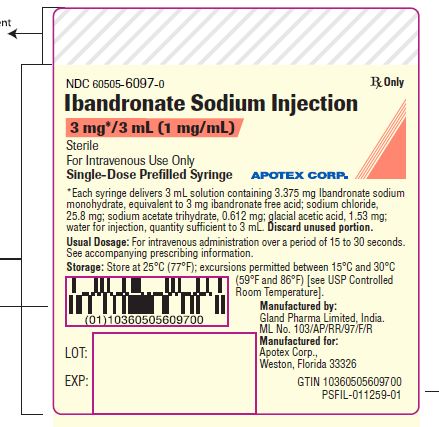
Ibandronate Sodium 3 mg/3mL Injection — NDC 60505-6097-0 (Billing 60505-6097-00)
This is a package of Ibandronate Sodium 3 mg/3mL Injection from Apotex Corp., marketed since Jan 2016 and currently FDA-listed; retail pharmacies pay about $52.65 per mL (NADAC). It is this product's only package size.
NDC database record
One package, one record: these facts belong to NDC 60505-6097-0 alone.
- Record
- FDA NDC Directory package listing · Human prescription drug
- Code segments
- 60505 labeler · 6097 product · 0 package
- Package marketed since
- Jan 13, 2016
- Sample package
- No — commercial package
- Listing certified through
- Dec 31, 2027
- Barcode (UPC-A, from the NDC)
- 3 6050560970 3
- FDA record last changed
- Jul 24, 2026
Identity & classification
Regulatory identifiers FDA, NLM and CMS codes for this package
Drug-database identifiers Medi-Span GPI and First Databank GCN / HICL / AHFS classification
- GSN (GCN sequence number): 060257
- GCN: 26368
- GPI-14 (Medi-Span): 30042048102030
- HICL (First Databank): 017291
- AHFS class code: 92:24.00.00
- RxCUI (RxNorm): 904952
Where does this data come from?
- FDA openFDA NDC Directory · synced Oct 1, 2026
- FDA label on DailyMed · label index refreshed Oct 6, 2026
- RxNorm (NLM RxNav) · catalog refreshed Oct 1, 2026
- Medi-Span GPI (licensed)
- First Databank (licensed) · refreshed Oct 1, 2026
RxNorm drug class
This medicine belongs to the Bisphosphonate class.
Where does this data come from?
- RxClass (NLM) · catalog refreshed Oct 1, 2026
Clinical
Ibandronate injection is used to treat osteoporosis (a condition in which the bones become thin and weak and break easily) in women who have undergone menopause (''change of life;'' end of menstrual periods). Ibandronate is in a class of medications called bisphosphonates. It works by preventing bone breakdown and increasing bone density (thickness).
Read the full MedlinePlus article ↗- It treats osteoporosis in women after menopause. The tablets can also help prevent it. It strengthens bone and lowers the chance of spine fractures.
- Take it once a month on the same date, first thing in the morning. Swallow it whole with a full glass of plain water, then wait at least 60 minutes before eating, drinking or takin...
- Not at the same time. Calcium, antacids, iron and magnesium can block absorption. Take ibandronate first, and wait at least 60 minutes before them.
- Can I take my calcium or antacid with it?
Patient education
Supplement & herbal interactions
Where does this data come from?
- MedlinePlus (NLM) · refreshed Oct 1, 2026
- FDA label on DailyMed · label index refreshed Oct 6, 2026
Ask a licensed pharmacist directly — free, answered by our team.
Pricing
A drug doesn't have one price. Each row is a different public payment system, and none is what you'd pay at the counter — that depends on your insurance. The ⓘ on each row explains what it measures.
| Price system | Per mL | Per package |
|---|---|---|
| Retail pharmacies payNADAC · weekly | $52.648 | $157.94 / 3 ml |
| Medicaid paysCMS SDUD · 12 mo | No recent Medicaid claims on file for this NDC — rare and low-volume NDCs are suppressed in the public data. | |
| Medicare drug plans payPart D · quarterly | No Part D plan price is available for this NDC in our data. | |
| Medicare Part B allowsASP · J1740 | $45.154 / J1740 unit | — |
Where does this data come from?
- CMS NADAC weekly file · file of Sep 30, 2026
- CMS ASP pricing files · refreshed Sep 20, 2026
- CMS Medicaid State Drug Utilization Data · refreshed Oct 7, 2026
- CMS Part D plan pricing files · refreshed Sep 24, 2026
- VA National Acquisition Center price file
Billing & reimbursement
Where does this data come from?
- CMS ASP NDC-HCPCS crosswalk · refreshed Sep 22, 2026
- DMEPDAC NDC-HCPCS crosswalk
- openFDA NSDE billing units · refreshed Oct 7, 2026
Packaging — all sizes for this product
| Package NDC | Description | Marketing start | Marketing end | Status |
|---|---|---|---|---|
| 60505-6097-00 You're viewing this Main listing | 1 SYRINGE, GLASS in 1 CARTON / 3 mL in 1 SYRINGE, GLASS | 2016-01-13 | — | Active |
Therapeutic equivalents
| Product | Labeler | Pack | NADAC/unit | TE | Status | Price vs. this |
|---|---|---|---|---|---|---|
| Ibandronate Sodium 3 mg/3mL 55150-0191-83 | Eugia | 1 syringe | $52.648 | AP | Availability likely | — |
| Ibandronate Sodium 3 mg/3mLthis 60505-6097-00 | Apotex | 1 syringe | $52.648 | AP | Availability likely | — |
| Ibandronate Sodium 3 mg/3mL 62756-0218-40 | Sun | 1 vial | — | — | FDA listed | — |
Where does this data come from?
- FDA openFDA NDC Directory · synced Oct 1, 2026
- FDA Orange Book · refreshed Oct 3, 2026
- CMS NADAC weekly file · file of Sep 30, 2026
Availability & generic status
This product is an FDA-approved generic. Other versions of the same drug are listed under Therapeutic equivalents, least expensive first.
Where does this data come from?
- FDA Orange Book · refreshed Oct 3, 2026
Inactive Ingredients / Excipients
Inactive ingredients, also called excipients, are components of the drug product other than the active ingredient. They may include fillers, dyes, coatings, preservatives, flavors, or other formulation ingredients.
🧪 Avoiding an ingredient? See Ibandronate inactive ingredients by manufacturer: every current product's list side by side, so you can ask your pharmacy for the version that does not list it.
💡 Tap an ingredient (hover on desktop) to see what it is and why it’s used.
-
UNII Q40Q9N063P
Acetic acid is a weak organic acid commonly used in medicines as a buffer and pH adjuster. It helps maintain the proper acidity level to ensure the drug remains stable and effective in its formulation.
-
UNII 4550K0SC9B
Sodium acetate is a salt derived from acetic acid. It acts as a buffer to help maintain the medicine's pH stability and may serve as a preservative or solubilizer in liquid formulations.
-
UNII 451W47IQ8X
Sodium chloride is common table salt. It's used in medicines as a buffer to maintain proper pH, as a filler to add bulk, or to adjust the osmotic balance in liquid formulations.
-
UNII 059QF0KO0R
Water is a liquid solvent that dissolves and mixes ingredients together in liquid medicines, syrups, and injections. It helps distribute the active drug evenly throughout the product.
4 inactive ingredients listed in the exact product block matched to this NDC.
Where does this data come from?
ingredient classCode="IACT" elements from the exact product block matched by this NDC. Label-section narrative from DailyMed / the openFDA label index is shown separately when available.- FDA label on DailyMed · label index refreshed Oct 6, 2026
- FDA openFDA NDC Directory · synced Oct 1, 2026
Inactive ingredient FAQ
Are inactive ingredients the same for every manufacturer?
Why might an inactive ingredient be missing?
Can inactive ingredients matter?
Manufacturer & labeler
More NDCs from Apotex Corp. labeler code 60505
- Ceftaroline Fosamil 400 mg/20mL Injection, Powder, Lyophilized, For Solution NDC 60505-4946-1
- Ceftaroline Fosamil 600 mg/20mL Injection, Powder, Lyophilized, For Solution NDC 60505-4947-1
- acyclovir 400 mg Tablet NDC 60505-5306-1
- acyclovir 800 mg Tablet NDC 60505-5307-1
- Bortezomib 3.5 mg Injection, Powder, Lyophilized, For Solution NDC 60505-6050-4
- Pemetrexed 750 mg/30mL Injection, Powder, Lyophilized, For Solution NDC 60505-6068-0
- Tigecycline 50 mg/5mL Injection, Powder, Lyophilized, For Solution NDC 60505-6098-1
- Regadenoson .08 mg/mL Injection, Solution NDC 60505-6116-0
- Ceftaroline Fosamil 400 mg/20mL Injection, Powder, Lyophilized, For Solution NDC 60505-6124-1
- Ceftaroline Fosamil 600 mg/20mL Injection, Powder, Lyophilized, For Solution NDC 60505-6125-1
- Irinotecan Hydrochloride 20 mg/mL Injection, Solution NDC 60505-6128-0
- Budesonide 32 ug Spray, Metered NDC 60505-6129-2
Where does this data come from?
- FDA openFDA NDC Directory · synced Oct 1, 2026
- Drugs@FDA
Full prescribing information FDA SPL
🎯 Indications and Usage ▾
1 INDICATIONS AND USAGE Ibandronate sodium injection is a bisphosphonate indicated for the treatment of osteoporosis in postmenopausal women. ( 1.1 ) Limitations of Use Optimal duration of use has not been determined. For patients at low-risk for fracture, consider drug discontinuation after 3 to 5 years of use ( 1.2 )
1.1Treatment of Postmenopausal Osteoporosis Ibandronate sodium Injection is indicated for the treatment of osteoporosis in postmenopausal women. In postmenopausal women with osteoporosis, ibandronate sodium injection increases bone mineral density (BMD) and reduces the incidence of vertebral fractures [see Clinical Studies (14) ] .
1.2Important Limitations of Use The safety and effectiveness of ibandronate sodium injection for the treatment of osteoporosis are based on clinical data of one year duration. The optimal duration of use has not been determined. All patients on bisphosphonate therapy should have the need for continued therapy re-evaluated on a periodic basis.
Patients at low-risk for fracture should be considered for drug discontinuation after 3 to 5 years of use. Patients who discontinue therapy should have their risk for fracture re-evaluated periodically.
⏱️ Dosage and Administration ▾
2 DOSAGE AND ADMINISTRATION 3 mg every 3 months administered intravenously over a period of 15 to 30 seconds ( 2.2 ) Dosing Instructions: Only administer intravenously by a health care professional. ( 2.1 ) Do not mix with calcium-containing solutions or other intravenously administered drugs. ( 2.1 ) Do not administer more frequently than once every 3 months.
( 2.2 ) Instruct patients to take supplemental calcium and vitamin D if dietary intake is inadequate.
2.1Important Administration Instructions Ibandronate sodium Injection must be administered intravenously only by a health care professional. Care must be taken not to administer intra-arterially or paravenously as this could lead to tissue damage [see Warnings and Precautions (5.4) ] . Appropriate medical support and monitoring measures should be readily available when ibandronate sodium injection is administered.
If anaphylactic or other severe hypersensitivity/allergic reactions occur, immediately discontinue the injection and initiate appropriate treatment [see Warnings and Precautions (5.2) ]. Visually inspect the liquid in the prefilled syringe for particulate matter and discoloration before administration. Do not use prefilled syringes with particulate matter or discoloration.
Administer only with the enclosed needle. Discard any unused portion. Do not mix with calcium-containing solutions or other intravenously administered drugs.
Prefilled syringes are for single-dose only.
2.2Dosage Information The recommended dose of ibandronate sodium injection for the treatment of postmenopausal osteoporosis is 3 mg every 3 months administered intravenously over a period of 15 to 30 seconds. Do not administer more frequently than once every 3 months.
2.3Laboratory Testing and Oral Examination Prior to Administration Prior to administration of each dose obtain a serum creatinine [see Warnings and Precautions (5.3) ] . Given that bisphosphonates have been associated with osteonecrosis of the jaw (ONJ), perform a routine oral examination prior to administration of ibandronate sodium injection.
2.4Calcium and Vitamin D Supplementation Instruct patients to take supplemental calcium and vitamin D if their dietary intake is inadequate. [see Warnings and Precautions (5.1) ] .
2.5Dosing After Missed Dose If the dose is missed, administer as soon as it can be re-scheduled. Thereafter, ibandronate sodium injection should be scheduled every 3 months from the date of the last injection.
2.6Dosage Modifications in Patients with Renal Impairment Do not administer to patients with severe renal impairment (creatinine clearance less than 30 mL/minute) [see Warnings and Precautions (5.3) and Clinical Pharmacology (12.3) ] . No dose adjustment is necessary for patients with mild or moderate renal impairment (creatinine clearance greater than or equal to 30 mL/min) [see Clinical Pharmacology (12.3) ] .
💊 Dosage Forms and Strengths ▾
3 DOSAGE FORMS AND STRENGTHS Ibandronate sodium Injection is supplied as a kit containing: a 3 mg/3 mL (1 mg/mL) single-dose prefilled syringe. a 25-gauge, 3/4 inch needle with wings, needle-stick protection device, and a 9 cm plastic tubing for attachment Ibandronate sodium Injection is supplied as a kit containing: a 3 mg/3 mL (1 mg/mL) single-dose prefilled syringe. a 25-gauge, 3/4 inch needle with wings, needle-stick protection device, and a 9 cm plastic tubing for attachment ( 3 )
⛔ Contraindications ▾
4 CONTRAINDICATIONS Ibandronate sodium is contraindicated in patients with the following conditions: Hypocalcemia [see Warnings and Precautions (5.1) ] Known hypersensitivity to ibandronate sodium injection or to any of its excipients. Cases of anaphylaxis, including fatal events, have been reported. [ see Warnings and Precautions (5.2) , Adverse Reactions (6.2) ] Hypocalcemia ( 4 ) Hypersensitivity to ibandronate sodium injection ( 4 )
⚠️ Warnings and Cautions ▾
5 WARNINGS AND PRECAUTIONS Hypocalcemia can worsen. Correct hypocalcemia prior to use. Adequately supplement patients with calcium and vitamin D ( 5.1 ) Anaphylaxis , including fatal events, has been reported.
( 5.2 ) Renal Toxicity may be greater in patients with underlying renal impairment. Do not administer ibandronate sodium injection to patients with severe renal impairment (creatinine clearance less than 30 mL/min). Monitor serum creatinine prior to each dose.
( 5.3 ) Tissue Damage with Inappropriate Drug Administration can occur. Do not administer ibandronate sodium injection intra-arterially or paravenously. ( 5.4 ) Osteonecrosis of the jaw (ONJ) has been reported.
( 5.5 ) Severe Bone, Joint, and/or Muscle Pain may occur, consider discontinuing use if symptoms occur. ( 5.6 ) Atypical Fractures Including Femoral Fractures have been reported. Patients with new thigh or groin pain should be evaluated to rule out a femoral fracture.
Risk/benefit of continuing bisphosphonate therapy should be re-evaluated in these patients and interruption of bisphosphonate therapy should be considered (5.7)
5.1Hypocalcemia and Mineral Metabolism Ibandronate sodium Injection may cause a decrease in serum calcium values. Treat hypocalcemia, hypovitaminosis D, and other disturbances of bone and mineral metabolism before starting ibandronate sodium injection therapy. Adequate intake of calcium and vitamin D is important in all patients. It is recommended that patients receive supplemental calcium and vitamin D if dietary intake is inadequate.
5.2Anaphylactic Reaction Cases of anaphylaxis, including fatal events, have been reported in patients treated with ibandronate sodium injection . Appropriate medical support and monitoring measures should be readily available when ibandronate sodium injection is administered. If anaphylactic or other severe h ypersensitivity/allergic reactions occur, immediately discontinue the injection and initiate appropriate treatment.
5.3Renal Impairment Treatment with intraveno us bisphosphonates has been associated with renal toxicity manifested as deterioration in renal function and acute renal failure. Although no cases of acute renal failure were observed in controlled clinical trials in which intravenous ibandronate sodium was administered as a 15- to 30-second bolus, acute renal failure has been reported postmarketing. Do not administer ibandronate sodium injection to patients with severe renal impairment (creatinine clearance less than 30 mL/min).
Obtain s erum creatinine prior to each ibandronate sodium injection. After ibandronate sodium injection, assess renal function, as clinically appropriate, in patients with concomitant diseases or ta king medications that have the potential for adverse effects on the kidney. Ibandronate sodium Injection should be withheld in patients with renal deterioration.
5.4Tissue Damage Related to Inappropriate Drug Administration Ibandronate sodium Injection must only be administered intravenously. Care must be taken not to administer ibandronate sodium injection intra-arterially or paravenously as this could lead to tissue damage. Do not administer ibandronate sodium injection by any other route of administration.
The safety and efficacy of ibandronate sodium injection following non-intravenous routes of administration have not been established.
5.5Osteonecrosis of the Jaw Osteonecrosis of the jaw (ONJ) has been reported in patients treated with bisphosphonates, including ibandronate sodium injection. Most cases have been in cancer patients treated with intravenous bisphosphonates undergoing dental procedures. Some cases have occurred in patients with postmenopausal osteoporosis treated with either oral or intravenous bisphosphonates.
A routine oral examination should be performed by the prescriber prior to initiation of bisphosphonate treatment. Consider a dental examination with appropriate preventive dentistry prior to treatment with bisphosphonates in patients with a… [Excerpted — this section continues on DailyMed.]
🤒 Adverse Reactions ▾
6 ADVERSE REACTIONS The following clinically significant adverse drug reactions are described elsewhere in the labeling: Hypocalcemia and Mineral Metabolism [ see Warnings and Precautions (5.1) ] Anaphylactic Reaction [ see Warnings and Precautions (5.2) ] Renal Impairment [ see Warnings and Precautions (5.3) ] Tissue Damage Related to Inappropriate Drug Administration [ see Warnings and Precautions (5.4) ] Osteonecrosis of the Jaw [ see Warnings and Precautions (5.5) ] Musculoskeletal [ see Warnings and Precautions (5.6) ] Atypical Fractures Including Femoral Fractures [ see Warnings and Precautions (5.7) ] The most frequently reported adverse reactions (>5%) are arthralgia, back pain, and abdominal pain.
( 6.1 ) To report SUSPECTED ADVERSE REACTIONS, contact Apotex Corp. at 1-800-706-5575 or FDA at 1-800-FDA-1088 or www.fda.gov/medwatch .
6.1Clinical Trials Experience Because clinical trials are conducted under widely varying conditions, adverse reaction rates observed in the clinical trials of a drug cannot be directly compared to rates in the clinical trials of another drug and may not reflect the rates observed in practice. Quarterly Intravenous Injection – In a 1-year, double-blind, multicenter study comparing ibandronate sodium injection administered intravenously as 3 mg every 3 months to ibandronate sodium tablets 2.5 mg (ibandronate) daily oral tablet in women with postmenopausal osteoporosis, the overall safety and tolerability profiles of the two dosing regimens were similar.
The incidence of serious adverse reactions was 8.0% in the ibandronate sodium tablets 2.5 mg (ibandronate) daily group and 7.5% in the ibandronate sodium injection 3 mg once every 3 months group. The percentage of patients who withdrew from treatment due to adverse reactions was approximately 6.7% in the ibandronate sodium tablets 2.5 mg (ibandronate) daily group and 8.5% in the ibandronate sodium injection 3 mg every 3 months group. Table 1 lists the adverse reactions reported in greater than 2% of patients.
Table 1 Adverse Reactions With an Incidence of at Least 2% in Patients Treated with Ibandronate sodium Injection (3 mg once every 3 months) or Ibandronate sodium Tablets 2.5 mg (ibandronate) Daily Oral Tablet Body System/Adverse Reaction Ibandronate sodium Tablets 2.5 mg (ibandronate) Daily (Oral) % (n=465) Ibandronate sodium 3 mg every 3 months (Intravenous) % (n=469) Infections and Infestations Influenza 8 5 Nasopharyngitis 6 3 Cystitis 3 2 Gastroenteritis 3 2 Urinary Tract Infection 3 3 Bronchitis 3 2 Upper Respiratory Tract Infection 3 1 Gastrointestinal Disorders Abdominal Pain Combination of abdominal pain and abdominal pain upper 6 5 Dyspepsia 4 4 Nausea 4 2 Constipation 4 3 Diarrhea 2 3 Gastritis 2 2 Musculoskeletal and Connective Tissue Disorders Arthralgia 9 10 Back Pain 8 7 Localized Osteoarthritis 2 2 Pain in Extremity 2 3 Myalgia 1 3 Nervous System Disorders Dizziness 3 2 Headache 3 4 Psychiatric Disorders Insomnia 3 1 Depression 2 1 General Disorders and Administration Site Conditions Influenza-like Illness Combination of influenza-like illness and acute phase reaction 1 5 Fatigue 1 3 Skin and Subcutaneous Tissue Disorders Rash Combination of rash, rash pruritic, rash macular, dermatitis, dermatitis allergic, exanthema, erythema, rash papular, rash generalized, dermatitis medicamentosa, rash erythematous 3 2 Acute Phase Reaction-like Events Symptoms consistent with acute phase reaction (APR) have been reported with intravenous bisphosphonate use.
The overall incidence of patients with APR-like events was higher in the intravenous treatment group (4% in the ibandronate sodium tablets 2.5 mg (ibandronate) daily oral tablet group vs. 10% in the ibandronate sodium injection 3 mg once every 3 months group). These incidence rates are based upon reporting of any of 33 potential APR-like symptoms within 3 days of an intravenous dose and lasting 7 days or less.
In most cases, no specific treatment was required and the symptoms subsi… [Excerpted — this section continues on DailyMed.]
🔄 Drug Interactions ▾
7 DRUG INTERACTIONS
7.1Melphalan/Prednisolone Intravenous ibandronate (6 mg) did not interact with intravenous melphalan (10 mg/m 2 ) or oral prednisolone (60 mg/m 2 ) [see Clinical Pharmacology (12.3) ] .
7.2Tamoxifen There was no interaction between oral 30 mg tamoxifen and intravenous 2 mg ibandronate [see Clinical Pharmacology (12.3) ] .
7.3Bone Imaging Agents Bisphosphonates are known to interfere with the use of bone-imaging agents. Specific studies with ibandronate sodium have not been performed.
👥 Use in Specific Populations ▾
8 USE IN SPECIFIC POPULATIONS
8.1Pregnancy Risk Summary Ibandronate sodium is not indicated for use in women of reproductive potential. There are no data with ibandronate sodium use in pregnant women to inform any drug-associated risks. In reproductive toxicity studies in the rat, ibandronate sodium caused obstruction of labor, with maternal periparturient mortality, pup loss and reduced pup weight at greater than or equal to 2 times human exposure at the recommended human intravenous dose of 3 mg.
Abnormal pup odontogeny was observed at greater than or equal to 18 times human exposure. In rats dosed during pregnancy, kidney developmental toxicity occurred in offspring at greater than or equal to 47 times human exposure. Also, fetal weight and pup growth were reduced at greater than or equal to 5 times human exposure.
In reproductive studies in the rabbit, ibandronate sodium caused maternal mortality, reduced maternal body weight gain, decreased litter size due to increased resorption rate, and decreased fetal weight at 19 times the recommended human dose ( see Data ). Data Animal Data In pregnant rats given intravenous doses producing greater than or equal to 2 times human exposure from Day 17 post-coitum until Day 20 post-partum, ibandronate treatment resulted in dystocia, maternal mortality, and early postnatal pup loss in all dose groups.
Reduced body weight at birth was observed at greater than or equal to 4 times the human exposure. Pups exhibited abnormal odontogeny that decreased food consumption and body weight gain at greater than or equal to 18 times human exposure. Periparturient mortality has also been observed with other bisphosphonates and appears to be a class effect related to inhibition of skeletal calcium mobilization resulting in hypocalcemia and dystocia.
Exposure of pregnant rats during the period of organogenesis resulted in an increased fetal incidence of RPU (renal pelvis ureter) syndrome at an intravenous dose producing greater than or equal to 47 times human exposure. In this spontaneous delivery study, dystocia was counteracted by perinatal calcium supplementation. In rat studies with intravenous dosing during gestation, fetal weight and pup growth were reduced at doses producing greater than or equal to 5 times human exposure.
In pregnant rabbits given intravenous doses during the period of organogenesis, maternal mortality, reduced maternal body weight gain, decreased litter size due to increased resorption rate, and decreased fetal weight were observed at 19 times the recommended human intravenous dose. Exposure multiples for the rat studies were calculated using human exposure at the recommended intravenous dose of 3 mg every 3 months and were based on cumulative area under the curve (AUC) comparison. Exposure multiples for the rabbit study were calculated for the recommended human intravenous dose of 3 mg every 3 months and were based on cumulative dose/[body surface area] comparison.
Doses in pregnant animals were 0.05, 0.1, 0.15, 0.3, 0.5 or 1 mg/kg/day in rats, and 0.03, 0.07, or 0.2 mg/kg/day in rabbits.
8.2Lactation Risk Summary Ibandronate sodium is not indicated for use in women of reproductive potential. There is no information on the presence of ibandronate in human milk, the effects of ibandronate on the breastfed infant, or the effects of ibandronate on milk production. Ibandronate is present in rat milk (see Data).
The clinical relevance of this data is unclear. Data Animal Data In lactating rats treated with intravenous doses of 0.08 mg/kg, ibandronate was present in breast milk at concentrations of 8.1 to 0.4 ng/mL from 2 to 24 hours after dose administration. Concentrations in milk averaged 1.5 times plasma concentrations.
8.4Pediatric Use Safety and effectiveness of ibandronate sodium injection in pediatric patients have not been established.
8.5Geriatric Use Of the patients receiving ibandronate sodium injection 3 mg every 3 months for 1 year, 51% were over 65 years of age… [Excerpted — this section continues on DailyMed.]
🤰 Pregnancy ▾
8.1Pregnancy Risk Summary Ibandronate sodium is not indicated for use in women of reproductive potential. There are no data with ibandronate sodium use in pregnant women to inform any drug-associated risks. In reproductive toxicity studies in the rat, ibandronate sodium caused obstruction of labor, with maternal periparturient mortality, pup loss and reduced pup weight at greater than or equal to 2 times human exposure at the recommended human intravenous dose of 3 mg.
Abnormal pup odontogeny was observed at greater than or equal to 18 times human exposure. In rats dosed during pregnancy, kidney developmental toxicity occurred in offspring at greater than or equal to 47 times human exposure. Also, fetal weight and pup growth were reduced at greater than or equal to 5 times human exposure.
In reproductive studies in the rabbit, ibandronate sodium caused maternal mortality, reduced maternal body weight gain, decreased litter size due to increased resorption rate, and decreased fetal weight at 19 times the recommended human dose ( see Data ). Data Animal Data In pregnant rats given intravenous doses producing greater than or equal to 2 times human exposure from Day 17 post-coitum until Day 20 post-partum, ibandronate treatment resulted in dystocia, maternal mortality, and early postnatal pup loss in all dose groups.
Reduced body weight at birth was observed at greater than or equal to 4 times the human exposure. Pups exhibited abnormal odontogeny that decreased food consumption and body weight gain at greater than or equal to 18 times human exposure. Periparturient mortality has also been observed with other bisphosphonates and appears to be a class effect related to inhibition of skeletal calcium mobilization resulting in hypocalcemia and dystocia.
Exposure of pregnant rats during the period of organogenesis resulted in an increased fetal incidence of RPU (renal pelvis ureter) syndrome at an intravenous dose producing greater than or equal to 47 times human exposure. In this spontaneous delivery study, dystocia was counteracted by perinatal calcium supplementation. In rat studies with intravenous dosing during gestation, fetal weight and pup growth were reduced at doses producing greater than or equal to 5 times human exposure.
In pregnant rabbits given intravenous doses during the period of organogenesis, maternal mortality, reduced maternal body weight gain, decreased litter size due to increased resorption rate, and decreased fetal weight were observed at 19 times the recommended human intravenous dose. Exposure multiples for the rat studies were calculated using human exposure at the recommended intravenous dose of 3 mg every 3 months and were based on cumulative area under the curve (AUC) comparison. Exposure multiples for the rabbit study were calculated for the recommended human intravenous dose of 3 mg every 3 months and were based on cumulative dose/[body surface area] comparison.
Doses in pregnant animals were 0.05, 0.1, 0.15, 0.3, 0.5 or 1 mg/kg/day in rats, and 0.03, 0.07, or 0.2 mg/kg/day in rabbits.
🧒 Pediatric Use ▾
8.4Pediatric Use Safety and effectiveness of ibandronate sodium injection in pediatric patients have not been established.
🧓 Geriatric Use ▾
8.5Geriatric Use Of the patients receiving ibandronate sodium injection 3 mg every 3 months for 1 year, 51% were over 65 years of age. No overall differences in effectiveness or safety were observed between these patients and younger patients, but greater sensitivity in some older individuals cannot be ruled out.
🆘 Overdosage ▾
10 OVERDOSAGE No cases of overdose were reported in premarketing studies with ibandronate sodium injection. Overdosage with intravenous bisphosphonates may result in hypocalcemia, hypophosphatemia, and hypomagnesemia. Clinically relevant reductions in serum levels of calcium, phosphorus, and magnesium should be corrected by intravenous administration of calcium gluconate, potassium or sodium phosphate, and magnesium sulfate, respectively.
Dialysis would not be beneficial unless it is administered within 2 hours following the overdose.
🧬 Clinical Pharmacology ▾
12 CLINICAL PHARMACOLOGY
12.1Mechanism of Action The action of ibandronate on bone is based on its affinity for hydroxyapatite, which is part of the mineral matrix of bone. Ibandronate inhibits osteoclast activity and reduces bone resorption and turnover. In postmenopausal women, it reduces the elevated rate of bone turnover, leading to, on average, a net gain in bone mass.
12.2Pharmacodynamics In studies of postmenopausal women, ibandronate sodium injection at doses of 0.5 mg to 3 mg produced biochemical changes indicative of inhibition of bone resorption, including decreases of biochemical markers of bone collagen degradation (cross-linked C-telopeptide of Type I collagen [CTX]). Changes in markers of bone formation (osteocalcin) were observed later than changes in resorption markers, as expected, due to the coupled nature of bone resorption and formation. Year 1 results from an efficacy and safety study comparing ibandronate sodium injection 3 mg every 3 months and ibandronate sodium tablets 2.5 mg (ibandronate) daily oral tablet demonstrated that both dosing regimens significantly suppressed serum CTX levels at Months 3, 6, and 12.
The median pre-dose or trough serum CTX levels in the intent-to-treat population reached a nadir of 57% (ibandronate sodium injection) and 62% (ibandronate sodium tablets 2.5 mg (ibandronate) below baseline values by Month 6, and remained stable at Month 12 of treatment.
12.3Pharmacokinetics Distribution Area under the serum ibandronate concentrations versus time curve increases in a dose proportional manner after administration of 2 mg to 6 mg by intravenous injection. After administration, ibandronate either rapidly binds to bone or is excreted into urine. In humans, the apparent terminal volume of distribution is at least 90 L, and the amount of dose removed from the circulation into the bone is estimated to be 40% to 50% of the circulating dose.
In one study, in vitro protein binding in human serum was approximately 86% over an ibandronate concentration range of 20 to 2,000 ng/mL (approximate range of maximum serum ibandronate concentrations upon intravenous bolus administration). Metabolism There is no evidence that ibandronate is metabolized in humans. Ibandronate does not inhibit human P450 1A2, 2A6, 2C9, 2C19, 2D6, 2E1, and 3A4 isozymes in vitro .
Ibandronate does not undergo hepatic metabolism and does not inhibit the hepatic cytochrome P450 system. Ibandronate is eliminated by renal excretion. Based on a rat study, the ibandronate secretory pathway does not appear to include known acidic or basic transport systems involved in the excretion of other drugs.
Elimination The portion of ibandronate that is not removed from the circulation via bone absorption is eliminated unchanged by the kidney (approximately 50% to 60% of the administered intravenous dose). The plasma elimination of ibandronate is multiphasic. Its renal clearance and distribution into bone accounts for a rapid and early decline in plasma concentrations, reaching 10% of C max within 3 or 8 hours after intravenous or oral administration, respectively.
This is followed by a slower clearance phase as ibandronate redistributes back into the blood from bone. The observed apparent terminal half-life for ibandronate is generally dependent on the dose studied and on assay sensitivity. The observed apparent terminal half-life for intravenous 2 and 4 mg ibandronate after 2 hours of infusion ranges from 4.6 to 15.3 hours and 5 to 25.5 hours, respectively.
Following intravenous administration, total clearance of ibandronate is low, with average values in the range 84 to 160 mL/min. Renal clearance (about 60 mL/min in healthy postmenopausal women) accounts for 50% to 60% of total clearance and is related to creatinine clearance. The difference between the apparent total and renal clearances likely reflects bone uptake of the drug.
Pharmacokinetics in Specific Populations Pediatrics The pharmacokinetics of ibandronate have not been s… [Excerpted — this section continues on DailyMed.]
🧬 Mechanism of Action ▾
12.1Mechanism of Action The action of ibandronate on bone is based on its affinity for hydroxyapatite, which is part of the mineral matrix of bone. Ibandronate inhibits osteoclast activity and reduces bone resorption and turnover. In postmenopausal women, it reduces the elevated rate of bone turnover, leading to, on average, a net gain in bone mass.
📦 How Supplied / Storage and Handling ▾
16 HOW SUPPLIED/STORAGE AND HANDLING
16.1How Supplied Ibandronate sodium Injection is supplied as a kit containing a 3 mg/3 mL (1 mg/mL) single-dose, clear glass, 5 mL (5 cc) prefilled syringe, a 25-gauge, 3/4 inch needle with wings, needle-stick protection device, and a 9 cm plastic tubing for attachment (NDC 60505-6097-0).
16.2Storage and Handling Store at 25°C (77°F); excursions permitted between 15°C and 30°C (59°F and 86°F) [see USP Controlled Room Temperature].
📦 Storage and Handling ▾
16.2Storage and Handling Store at 25°C (77°F); excursions permitted between 15°C and 30°C (59°F and 86°F) [see USP Controlled Room Temperature].
📋 Description ▾
11 DESCRIPTION Ibandronate sodium is a nitrogen-containing bisphosphonate that inhibits osteoclast-mediated bone resorption. The chemical name for ibandronate sodium is 1-Hydroxy-3-(methylpentylamino) propylidene]bisphosphonic acid sodium salt. Monohydrate with the molecular formula C 9 H 22 NO 7 P 2 Na•H 2 O and a molecular weight of 359.21.
Ibandronate sodium is a white- to off-white powder. It is freely soluble in water and practically insoluble in organic solvents. Ibandronate sodium has the following structural formula: Ibandronate sodium Injection is intended for intravenous administration only.
Ibandronate sodium Injection is available as a sterile, clear, colorless, ready-to-use solution in a prefilled syringe that delivers 3.375 mg of ibandronate monosodium salt monohydrate in 3 mL of solution, equivalent to a dose of 3 mg ibandronate free acid. Inactive ingredients include sodium chloride, glacial acetic acid, sodium acetate trihydrate and water for injection. Glacial acetic acid and sodium acetate trihydrate are used to adjust pH.
Chemical Structure
💬 Information for Patients ▾
17 PATIENT COUNSELING INFORMATION "See FDA-approved patient labeling (Medication Guide) " Inform patients that ibandronate sodium injection must be administered intravenously by a health care professional. Patients should be instructed to read the Medication Guide carefully before ibandronate sodium injection is administered and to re-read it each time the prescription is renewed because it contains important information the patient should know about ibandronate sodium injection. Inform patients that ibandronate sodium injection is administered once every 3 months.
If the dose is missed, the injection should be administered as soon as it can be rescheduled. Thereafter, injections should be scheduled every 3 months from the date of the last injection. Do not administer ibandronate sodium injection more frequently than once every 3 months.
Inform patients that they should take supplemental calcium and vitamin D if their dietary intake is inadequate [see Warnings and Precautions (5.1) ] . Inform patients ibandronate sodium injection should not be administered to patients with creatinine clearance less than 30 mL/min. A serum creatinine should be measured prior to each dose [see Warnings and Precautions (5.3) ] .
Inform patients that the most common side effects of ibandronate sodium include arthralgia, back pain, hypertension, and abdominal pain. Flu-like symptoms (acute phase reaction) may occur within 3 days following infusion, and usually subside within 24 to 48 hours without specific therapy. Inform patients that there have been reports of persistent pain and/or a non-healing sore of the mouth or jaw, primarily in patients treated with bisphosphonates for other illnesses.
If they experience these symptoms, they should inform their physician or dentist. Inform patients that severe bone, joint, and/or muscle pain have been reported in patients taking bisphosphonates, including ibandronate sodium. Patients should report severe symptoms if they develop.
Inform patients that atypical femur fractures in patients on bisphosphonate therapy have been reported. Patients should report new thigh or groin pain and undergo evaluation to rule out a femoral fracture. Manufactured by Manufactured for Gland Pharma Limited, Apotex Corp.
India Weston, Florida M.L.No.103/AP/RR/97/F/R 33326 Rev. 6
💬 Medication Guide ▾
MEDICATION GUIDE MEDICATION GUIDE Ibandronate sodium Injection for intravenous use (eye" ban droe' nate soe' dee um) Read the Medication Guide that comes with ibandronate sodium injection before you start taking it and each time you get a refill. There may be new information. This Medication Guide does not take the place of talking with your doctor about your medical condition or treatment.
Talk to your doctor if you have any questions about ibandronate sodium injection. What is the most important information I should know about ibandronate sodium injection? Ibandronate sodium Injection is given in your vein (intravenously) and only given by a healthcare provider.
Do not give ibandronate sodium injection to yourself. Ibandronate sodium Injection may cause serious side effects including: Low calcium levels in your blood (hypocalcemia) Severe allergic reaction (anaphylactic reaction) Severe kidney problems Severe jaw bone problems (osteonecrosis) Bone, joint or muscle pain Unusual bone fractures including thigh bone fractures 1. Low calcium levels in your blood (hypocalcemia).
Ibandronate sodium may lower the calcium levels in your blood. If you have low blood calcium before you start taking ibandronate sodium, it may get worse during treatment. Your low blood calcium must be treated before you receive ibandronate sodium.
Most people with low blood calcium levels do not have symptoms, but some people may have symptoms. Call your doctor right away if you have symptoms of low blood calcium such as: Spasms, twitches, or cramps in your muscles Numbness or tingling in your fingers, toes, or around your mouth Your doctor may prescribe calcium and vitamin D to help prevent low calcium levels in your blood, while you receive ibandronate sodium injection. Take calcium and vitamin D as your doctor tells you to.
2. Severe allergic reactions. Some people who received ibandronate sodium injection had severe allergic reactions (anaphylactic reactions) that led to death.
Get medical help right away if you have any of the symptoms of a serious allergic reaction such as: Swelling of your face, lips, mouth or tongue Trouble breathing Wheezing Severe itching Skin rash, redness or swelling Dizziness or fainting Fast heartbeat or pounding in your chest Sweating 3. Severe kidney problems. Severe kidney problems, including kidney failure, may happen when you receive ibandronate sodium.
Your doctor should do blood tests to check your kidneys before you receive each dose of ibandronate sodium. 4. Severe jaw bone problems (osteonecrosis).
Severe jaw bone problems may happen when you receive ibandronate sodium. Your doctor may examine your mouth before you start ibandronate sodium. Your doctor may tell you to see your dentist before you start ibandronate sodium.
It is important for you to practice good mouth care during treatment with ibandronate sodium. 5. Bone, joint, or muscle pain.
Some people who receive ibandronate sodium develop severe bone, joint, or muscle pain. 6. Unusual breaks in thigh and other bones.
Some people have had unusual bone breaks, including thigh bone, when taking ibandronate sodium injection. A break in the thigh bone can feel like a new pain in your hip, groin, or thigh. People taking ibandronate sodium injection can also have breaks in other bones.
Call your doctor right away if you have any of these side effects. What is Ibandronate sodium Injection? Ibandronate sodium Injection is a prescription medicine used to treat osteoporosis in women after menopause.
Ibandronate sodium Injection helps increase bone mass and helps reduce the chance of having a spinal fracture (break). It is not known how long i bandronate sodium injection works for the treatment of osteoporosis. You should see your doctor regularly to determine if i bandronate sodium injection is still right for you.
It is not known if i bandronate sodium injection is safe and effective in children. Who should not receive I bandronate sodium Injection ? Do not receive i… [Excerpted — this section continues on DailyMed.]
🍼 Nursing Mothers ▾
8.2Lactation Risk Summary Ibandronate sodium is not indicated for use in women of reproductive potential. There is no information on the presence of ibandronate in human milk, the effects of ibandronate on the breastfed infant, or the effects of ibandronate on milk production. Ibandronate is present in rat milk (see Data).
The clinical relevance of this data is unclear. Data Animal Data In lactating rats treated with intravenous doses of 0.08 mg/kg, ibandronate was present in breast milk at concentrations of 8.1 to 0.4 ng/mL from 2 to 24 hours after dose administration. Concentrations in milk averaged 1.5 times plasma concentrations.
🧬 Pharmacokinetics ▾
12.3Pharmacokinetics Distribution Area under the serum ibandronate concentrations versus time curve increases in a dose proportional manner after administration of 2 mg to 6 mg by intravenous injection. After administration, ibandronate either rapidly binds to bone or is excreted into urine. In humans, the apparent terminal volume of distribution is at least 90 L, and the amount of dose removed from the circulation into the bone is estimated to be 40% to 50% of the circulating dose.
In one study, in vitro protein binding in human serum was approximately 86% over an ibandronate concentration range of 20 to 2,000 ng/mL (approximate range of maximum serum ibandronate concentrations upon intravenous bolus administration). Metabolism There is no evidence that ibandronate is metabolized in humans. Ibandronate does not inhibit human P450 1A2, 2A6, 2C9, 2C19, 2D6, 2E1, and 3A4 isozymes in vitro .
Ibandronate does not undergo hepatic metabolism and does not inhibit the hepatic cytochrome P450 system. Ibandronate is eliminated by renal excretion. Based on a rat study, the ibandronate secretory pathway does not appear to include known acidic or basic transport systems involved in the excretion of other drugs.
Elimination The portion of ibandronate that is not removed from the circulation via bone absorption is eliminated unchanged by the kidney (approximately 50% to 60% of the administered intravenous dose). The plasma elimination of ibandronate is multiphasic. Its renal clearance and distribution into bone accounts for a rapid and early decline in plasma concentrations, reaching 10% of C max within 3 or 8 hours after intravenous or oral administration, respectively.
This is followed by a slower clearance phase as ibandronate redistributes back into the blood from bone. The observed apparent terminal half-life for ibandronate is generally dependent on the dose studied and on assay sensitivity. The observed apparent terminal half-life for intravenous 2 and 4 mg ibandronate after 2 hours of infusion ranges from 4.6 to 15.3 hours and 5 to 25.5 hours, respectively.
Following intravenous administration, total clearance of ibandronate is low, with average values in the range 84 to 160 mL/min. Renal clearance (about 60 mL/min in healthy postmenopausal women) accounts for 50% to 60% of total clearance and is related to creatinine clearance. The difference between the apparent total and renal clearances likely reflects bone uptake of the drug.
Pharmacokinetics in Specific Populations Pediatrics The pharmacokinetics of ibandronate have not been studied in patients less than 18 years of age. Gender The pharmacokinetics of ibandronate are similar in both men and women. Geriatric Since ibandronate is not known to be metabolized, the only difference in ibandronate elimination for geriatric patients versus younger patients is expected to relate to progressive age-related changes in renal function [ see Use in Specific Populations (8.5) ] .
Race Pharmacokinetic differences due to race have not been studied. Renal Impairment Renal clearance of ibandronate in patients with various degrees of renal impairment is linearly related to creatinine clearance (CLcr). Following a single dose of 0.5 mg ibandronate by intravenous administration, patients with creatinine clearance 40 to 70 mL/min had 55% higher exposure (AUC ∞ ) than the exposure observed in patients with creatinine clearance higher than 90 mL/min.
Patients with severe renal impairment (creatinine clearance below 30 mL/min) had more than a two-fold increase in exposure compared to the exposure for patients with creatinine clearance equal to or higher than 80 mL/min [see Dosage and Administration (2.6) and Use in Specific Populations (8.6) ] . Hepatic Impairment No studies have been performed to assess the pharmacokinetics of ibandronate in patients with hepatic impairment since ibandronate is not metabolized in the human liver. Drug Interaction Melphalan/Prednisolone A pharmacokinetic interaction st… [Excerpted — this section continues on DailyMed.]
🧬 Pharmacodynamics ▾
12.2Pharmacodynamics In studies of postmenopausal women, ibandronate sodium injection at doses of 0.5 mg to 3 mg produced biochemical changes indicative of inhibition of bone resorption, including decreases of biochemical markers of bone collagen degradation (cross-linked C-telopeptide of Type I collagen [CTX]). Changes in markers of bone formation (osteocalcin) were observed later than changes in resorption markers, as expected, due to the coupled nature of bone resorption and formation. Year 1 results from an efficacy and safety study comparing ibandronate sodium injection 3 mg every 3 months and ibandronate sodium tablets 2.5 mg (ibandronate) daily oral tablet demonstrated that both dosing regimens significantly suppressed serum CTX levels at Months 3, 6, and 12.
The median pre-dose or trough serum CTX levels in the intent-to-treat population reached a nadir of 57% (ibandronate sodium injection) and 62% (ibandronate sodium tablets 2.5 mg (ibandronate) below baseline values by Month 6, and remained stable at Month 12 of treatment.
🔬 Clinical Studies ▾
14 CLINICAL STUDIES
14.1Treatment of Postmenopausal Osteoporosis Quarterly Intravenous Injection The effectiveness and safety of ibandronate sodium injection 3 mg once every 3 months were demonstrated in a randomized, double-blind, multinational, noninferiority study in 1358 women with postmenopausal osteoporosis (L2 to L4 lumbar spine BMD, T-score below -2.5 SD at baseline). The control group received ibandronate sodium tablets 2.5 mg (ibandronate) daily oral tablets. The primary efficacy parameter was the relative change from baseline to 1 year of treatment in lumbar spine BMD, which was compared between the intravenous injection and the daily oral treatment groups.
All patients received 400 international units vitamin D and 500 mg calcium supplementation per day. Effect on BMD In the intent-to-treat (ITT) efficacy analysis, the least-squares mean increase at 1 year in lumbar spine BMD in patients (n=429) treated with ibandronate sodium injection 3 mg once every 3 months (4.5%) was statistically superior to that in patients (n=434) treated with daily oral tablets (3.5%). The mean difference between groups was 1.1% (95% confidence interval: 0.5%, 1.6%; p<0.001; see Figure 1 ).
The mean increase from baseline in total hip BMD at 1 year was 2.1% in the ibandronate sodium injection 3 mg once every 3 months group and 1.5% in the ibandronate sodium tablets 2.5 mg (ibandronate) daily oral tablet group. Consistently higher BMD increases at the femoral neck and trochanter were also observed following ibandronate sodium injection 3 mg once every 3 months compared to ibandronate sodium tablets 2.5 mg (ibandronate) daily oral tablet. Figure 1 Mean Percent Change (95% Confidence Interval) from Baseline in Lumbar Spine BMD at One Year in Patients Treated with Ibandronate sodium Tablets 2.5 mg (ibandronate) Daily Oral Tablet or Ibandronate sodium Injection 3 mg Once Every 3 Months figure1.jpg Bone Histology The histological analysis of bone biopsies after 22 months of treatment with 3 mg intravenous ibandronate every 3 months (n=30) or 23 months of treatment with 2 mg intravenous ibandronate every 2 months (n=27) in women with postmenopausal osteoporosis showed bone of normal quality and no indication of a mineralization defect.
Daily Oral Tablets The effectiveness and safety of ibandronate sodium tablets 2.5 mg (ibandronate) daily oral tablets were demonstrated in a randomized, double-blind, placebo-controlled, multinational study (Treatment Study) of 2946 women aged 55 to 80 years, who were on average 21 years postmenopause, who had a lumbar spine BMD 2 to 5 SD below the premenopausal mean (T-score) in at least one vertebra [L1 to L4], and who had one to four prevalent vertebral fractures. Ibandronate sodium was evaluated at oral doses of 2.5 mg daily and 20 mg intermittently.
The main outcome measure was the occurrence of new radiographically diagnosed, vertebral fractures after 3 years of treatment. The diagnosis of an incident vertebral fracture was based on both qualitative diagnosis by the radiologist and quantitative morphometric criterion. The morphometric criterion required the dual occurrence of two events: a relative height ratio or relative height reduction in a vertebral body of at least 20%, together with at least a 4 mm absolute decrease in height.
All women received 400 international units vitamin D and 500 mg calcium supplementation per day. Effect on Vertebral Fracture Ibandronate sodium tablets 2.5 mg (ibandronate) daily oral tablet significantly reduced the incidence of new vertebral fractures compared to placebo. Over the course of the 3-year study, the risk for new vertebral fracture was 9.6% in the placebo-treated women and 4.7% in the women treated with ibandronate sodium tablets 2.5 mg (ibandronate) daily oral tablet (p<0.001) (see Table 3 ).
Table 3 Effect of Ibandronate sodium Tablets 2.5 mg (ibandronate) Daily Oral Tablet on the Incidence of Vertebral Fracture in the 3-Year Osteoporosis Treatment Study* Propor… [Excerpted — this section continues on DailyMed.]
🧪 Nonclinical Toxicology ▾
13 NONCLINICAL TOXICOLOGY
13.1Carcinogenesis, Mutagenesis, Impairment of Fertility Carcinogenesis In a 104-week carcinogenicity study, doses of 3, 7, or 15 mg/kg/day were administered by oral gavage to Wistar rats (systemic exposures in males and females up to 3 and 1 times, respectively, human exposure). There were no significant drug-related tumor findings in male or female rats. In a 78-week carcinogenicity study, doses of 5, 20, or 40 mg/kg/day were administered by oral gavage to NMRI mice (exposures in males and females up to 96 and 14 times, respectively, human exposure).
There were no significant drug-related tumor findings in male or female mice. In a 90-week carcinogenicity study, doses of 5, 20, or 80 mg/kg/day were administered in the drinking water to NMRI mice. A dose-related increased incidence of adrenal subcapsular adenoma/carcinoma was observed in female mice, which was statistically significant at 80 mg/kg/day (32 to 51 times human exposure).
The relevance of these findings to humans is unknown. Exposure multiples comparing human and rodent doses were calculated using human exposure at the recommended intravenous dose of 3 mg every 3 months, based on cumulative AUC comparison. Mutagenesis There was no evidence for a mutagenic or clastogenic potential of ibandronate in the following assays: in vitr o bacterial mutagenesis assay in Salmonella typhimurium and Escherichia coli (Ames test), mammalian cell mutagenesis assay in Chinese hamster V79 cells, and chromosomal aberration test in human peripheral lymphocytes, each with and without metabolic activation.
Ibandronate was not genotoxic in the in vivo mouse micronucleus tests for chromosomal damage. Impairment of Fertility In female rats treated from 14 days prior to mating through gestation, decreases in fertility, corpora lutea and implantation sites, and increased preimplantation loss were observed at an intravenous dose of 1.2 mg/kg/day (117 times human exposure). In male rats treated for 28 days prior to mating, a decrease in sperm production and altered sperm morphology were observed at intravenous doses greater than or equal to 0.3 mg/kg/day (greater than or equal to 40 times human exposure).
Exposure multiples comparing human and rat doses were calculated using human exposure at the recommended intravenous dose of 3 mg every 3 months, based on cumulative AUC comparison.
13.2Animal Pharmacology Animal studies have shown that ibandronate is an inhibitor of osteoclast-mediated bone resorption. In the Schenk assay in growing rats, ibandronate inhibited bone resorption and increased bone volume, based on histologic examination of the tibial metaphyses. There was no evidence of impaired mineralization at the highest dose of 5 mg/kg/day (subcutaneously), which is 1,000 times the lowest antiresorptive dose of 0.005 mg/kg/day in this model, and 5,000 times the optimal antiresorptive dose of 0.001 mg/kg/day in the aged ovariectomized rat.
This indicates that ibandronate sodium injection administered at a therapeutic dose is unlikely to induce osteomalacia. Long-term daily or intermittent administration of ibandronate to ovariectomized rats or monkeys was associated with suppression of bone turnover and increases in bone mass. Vertebral BMD, trabecular density, and biomechanical strength were increased dose-dependently in rats and monkeys, at doses up to 8 to 4 times the human intravenous dose of 3 mg every 3 months, based on cumulative dose normalized for body surface area (mg/m 2 ) and area under the curve (AUC) comparison, respectively.
Ibandronate maintained the positive correlation between bone mass and strength at the ulna and femoral neck. New bone formed in the presence of ibandronate had normal histologic structure and did not show mineralization defects.
📄 Carcinogenesis, Mutagenesis, Impairment of Fertility ▾
13.1Carcinogenesis, Mutagenesis, Impairment of Fertility Carcinogenesis In a 104-week carcinogenicity study, doses of 3, 7, or 15 mg/kg/day were administered by oral gavage to Wistar rats (systemic exposures in males and females up to 3 and 1 times, respectively, human exposure). There were no significant drug-related tumor findings in male or female rats. In a 78-week carcinogenicity study, doses of 5, 20, or 40 mg/kg/day were administered by oral gavage to NMRI mice (exposures in males and females up to 96 and 14 times, respectively, human exposure).
There were no significant drug-related tumor findings in male or female mice. In a 90-week carcinogenicity study, doses of 5, 20, or 80 mg/kg/day were administered in the drinking water to NMRI mice. A dose-related increased incidence of adrenal subcapsular adenoma/carcinoma was observed in female mice, which was statistically significant at 80 mg/kg/day (32 to 51 times human exposure).
The relevance of these findings to humans is unknown. Exposure multiples comparing human and rodent doses were calculated using human exposure at the recommended intravenous dose of 3 mg every 3 months, based on cumulative AUC comparison. Mutagenesis There was no evidence for a mutagenic or clastogenic potential of ibandronate in the following assays: in vitr o bacterial mutagenesis assay in Salmonella typhimurium and Escherichia coli (Ames test), mammalian cell mutagenesis assay in Chinese hamster V79 cells, and chromosomal aberration test in human peripheral lymphocytes, each with and without metabolic activation.
Ibandronate was not genotoxic in the in vivo mouse micronucleus tests for chromosomal damage. Impairment of Fertility In female rats treated from 14 days prior to mating through gestation, decreases in fertility, corpora lutea and implantation sites, and increased preimplantation loss were observed at an intravenous dose of 1.2 mg/kg/day (117 times human exposure). In male rats treated for 28 days prior to mating, a decrease in sperm production and altered sperm morphology were observed at intravenous doses greater than or equal to 0.3 mg/kg/day (greater than or equal to 40 times human exposure).
Exposure multiples comparing human and rat doses were calculated using human exposure at the recommended intravenous dose of 3 mg every 3 months, based on cumulative AUC comparison.
Carcinogenesis In a 104-week carcinogenicity study, doses of 3, 7, or 15 mg/kg/day were administered by oral gavage to Wistar rats (systemic exposures in males and females up to 3 and 1 times, respectively, human exposure). There were no significant drug-related tumor findings in male or female rats. In a 78-week carcinogenicity study, doses of 5, 20, or 40 mg/kg/day were administered by oral gavage to NMRI mice (exposures in males and females up to 96 and 14 times, respectively, human exposure).
There were no significant drug-related tumor findings in male or female mice. In a 90-week carcinogenicity study, doses of 5, 20, or 80 mg/kg/day were administered in the drinking water to NMRI mice. A dose-related increased incidence of adrenal subcapsular adenoma/carcinoma was observed in female mice, which was statistically significant at 80 mg/kg/day (32 to 51 times human exposure).
The relevance of these findings to humans is unknown. Exposure multiples comparing human and rodent doses were calculated using human exposure at the recommended intravenous dose of 3 mg every 3 months, based on cumulative AUC comparison.
Mutagenesis There was no evidence for a mutagenic or clastogenic potential of ibandronate in the following assays: in vitr o bacterial mutagenesis assay in Salmonella typhimurium and Escherichia coli (Ames test), mammalian cell mutagenesis assay in Chinese hamster V79 cells, and chromosomal aberration test in human peripheral lymphocytes, each with and without metabolic activation. Ibandronate was not genotoxic in the in vivo mouse micronucleus tests for chromosomal damage.
Impairment of Fertility In… [Excerpted — this section continues on DailyMed.]
📄 Recent Major Changes ▾
RECENT MAJOR CHANGES Warnings and Precautions, Atypical Fractures Including Femoral Fractures ( 5.7 ) 1/2026
📄 Package Label / Principal Display Panel ▾
PRINCIPAL DISPLAY PANEL - Syringe label NDC 60505-6097-0 Ibandronate Sodium Injection 3 mg/3 mL (1 mg/mL) Sterile FOR INTRAVENOUS USE ONLY Single-Dose Prefilled Syringe
PRINCIPAL DISPLAY PANEL - 3 mL Syringe Carton NDC 60505-6097-0 Ibandronate sodium Injection 3 mg/3 mL (1 mg/mL) PHARMACIST: Dispense with Medication Guide available at www.apotex.com/products/us /mg.asp Package contains: 1 Single-Dose Prefilled Syringe, Ibandronate sodium Injection 3 mg/3 mL NDC 60505-6097-0 1 Needle Sterile. For I.V. Use Only. Each Carton Contains: 1 Single-Dose Prefilled Syringe Rx only Ibandronate-04.jpg