
Midazolam Hydrochloride 2 mg/mL Syrup — NDC 60687-576-10 (Billing 60687-0576-10)
This is a package of Midazolam Hydrochloride 2 mg/mL Syrup from American Health Packaging, marketed since Jun 2021 and currently FDA-listed.
NDC database record
One package, one record: these facts belong to NDC 60687-576-10 alone.
- Record
- FDA NDC Directory package listing · Human prescription drug
- Code segments
- 60687 labeler · 576 product · 10 package
- Package marketed since
- Jun 15, 2021
- Sample package
- No — commercial package
- Listing certified through
- Dec 31, 2027
- Barcode (UPC-A, from the NDC)
- 3 6068757610 7
- Medicaid fills, this package
- 148 prescriptions in the last four reported quarters
- FDA record last changed
- Aug 13, 2026
Identity & classification
Regulatory identifiers FDA, NLM and CMS codes for this package
Drug-database identifiers Medi-Span GPI and First Databank GCN / HICL / AHFS classification
- GSN (GCN sequence number): 073921
- GCN: 38367
- HICL (First Databank): 001619
- AHFS class code: 28:24.08.00
- RxCUI (RxNorm): 422410
Where does this data come from?
- FDA openFDA NDC Directory · synced Oct 8, 2026
- FDA label on DailyMed · label index refreshed Oct 6, 2026
- RxNorm (NLM RxNav) · catalog refreshed Oct 1, 2026
- Medi-Span GPI (licensed)
- First Databank (licensed) · refreshed Oct 8, 2026
RxNorm drug class
This medicine belongs to the Benzodiazepine class.
Where does this data come from?
- RxClass (NLM) · catalog refreshed Oct 1, 2026
Clinical
Midazolam is given before medical procedures or before anesthesia for surgery to cause drowsiness, relieve anxiety, and avoid any memory of the event. Midazolam is in a class of medications called benzodiazepines. It works by slowing activity in the brain to allow relaxation and sleep.
Read the full MedlinePlus article ↗- It depends on the form. Injections and the children's syrup are used to calm you, ease anxiety and block memory around procedures or surgery. Injections are also used for anesthesi...
- Injections and the syrup are given by trained staff in monitored settings. The syrup is a single dose before a procedure, not for home use. Nayzilam is sprayed into one nostril, wi...
- Drowsiness, nausea, vomiting and trouble remembering things for several hours are common. Blood pressure may dip slightly. Slow or shallow breathing, severe sleepiness or agitation...
- No, avoid them unless your prescriber says otherwise. Alcohol and opioids can cause dangerously slow breathing, coma and death. Tell your team about every medicine you take, includ...
Patient education
Supplement & herbal interactions
Where does this data come from?
- MedlinePlus (NLM) · refreshed Oct 1, 2026
- FDA label on DailyMed · label index refreshed Oct 6, 2026
Ask a licensed pharmacist directly — free, answered by our team.
Pricing
A drug doesn't have one price. Each row is a different public payment system, and none is what you'd pay at the counter — that depends on your insurance. The ⓘ on each row explains what it measures.
| Price system | Per mL | Per package |
|---|---|---|
| Retail pharmacies payNADAC · weekly | Not in the retail survey — common for institutional, discontinued, or low-volume packs. | |
| Medicaid paysCMS SDUD · 12 mo | $47.17 | $3,538.04 / 75 ml |
| Medicare drug plans payPart D · quarterly | No Part D plan price is available for this NDC in our data. | |
Where does this data come from?
- CMS NADAC weekly file
- CMS ASP pricing files · refreshed Sep 20, 2026
- CMS Medicaid State Drug Utilization Data · through Q1 2026
- CMS Part D plan pricing files · refreshed Sep 24, 2026
- VA National Acquisition Center price file
Packaging — all sizes for this product
| Package NDC | Description | Marketing start | Marketing end | Status |
|---|---|---|---|---|
| 60687-0576-10 You're viewing this | 3 TRAY in 1 CASE / 10 CUP, UNIT-DOSE in 1 TRAY / 2.5 mL in 1 CUP, UNIT-DOSE | 2021-06-15 | — | Active |
| 60687-0576-86 60687-576-86 Main listing | 3 TRAY in 1 CASE / 10 CUP, UNIT-DOSE in 1 TRAY / 5 mL in 1 CUP, UNIT-DOSE | 2021-06-15 | — | Active |
This pack accounts for about 24% of this product's recent Medicaid fills; most go to a different pack size. See all packs ↓
Pack size FAQ
What quantity is in this package?
What NDC number is used to bill for this package of Midazolam Hydrochloride 2 mg/mL Syrup?
Therapeutic equivalents
| Product | Labeler | Pack | NADAC/unit | TE | Status | Price vs. this |
|---|---|---|---|---|---|---|
| Midazolam Hydrochloride 2 mg/mL 00054-3566-99 | Hikma | 118 ml | $0.618 | AA | Availability likely | — |
| Midazolam Hydrochloride 2 mg/mL 00574-0150-04 | Padagis | 1 bottle | $0.618 | AA | Availability likely | — |
| Midazolam Hydrochloride 2 mg/mLthis 60687-0576-10 | American | 10 cups | — | AA | FDA listed | — |
| Midazolam Hydrochloride 2 mg/mL 68094-0762-62 | Precision | 10 cups | — | AA | FDA listed | — |
| Midazolam Hydrochloride 2 mg/mL 68094-0764-62 | Precision | 10 cups | — | AA | FDA listed | — |
| Midazolam Hydrochloride 2 mg/mL 72162-1109-02 | Bryant | 1 bottle | — | AA | FDA listed | — |
Where does this data come from?
- FDA openFDA NDC Directory · synced Oct 8, 2026
- FDA Orange Book · refreshed Oct 3, 2026
- CMS NADAC weekly file
Availability & generic status
This product is an FDA-approved generic. Other versions of the same drug are listed under Therapeutic equivalents, least expensive first.
Where does this data come from?
- FDA Orange Book · refreshed Oct 3, 2026
Inactive Ingredients / Excipients
Inactive ingredients, also called excipients, are components of the drug product other than the active ingredient. They may include fillers, dyes, coatings, preservatives, flavors, or other formulation ingredients.
🧪 Avoiding an ingredient? See Midazolam inactive ingredients by manufacturer: every current product's list side by side, so you can ask your pharmacy for the version that does not list it.
💡 Tap an ingredient (hover on desktop) to see what it is and why it’s used.
-
UNII XF417D3PSL
Anhydrous citric acid is a sour, crystalline powder derived from citric acid with water removed. In medicines, it acts as a buffer to control pH, adds tartness to improve taste, and helps tablets disintegrate.
-
UNII 9DBA0SBB0L
A synthetic red dye derived from coal tar used as a colorant in medicines and cosmetics. It gives tablets, capsules, and liquids their red or pink appearance for identification and visual appeal.
-
UNII 7FLD91C86K
Edetate disodium is a chemical compound that binds and removes certain metal ions. In medicines, it acts as a preservative and stabilizer by preventing metals like calcium from interfering with the product's shelf life and consistency.
-
UNII PDC6A3C0OX
Glycerin is a clear, thick liquid derived from plant oils or fats. It acts as a humectant to retain moisture, a sweetener, and a solvent in medications.
-
UNII QTT17582CB
A strong acid used to adjust and maintain the proper pH level in liquid medicines, ensuring stability and preventing breakdown of active ingredients.
-
UNII SB8ZUX40TY
Saccharin sodium is an artificial sweetener made from saccharin salt. It's added to medicines to improve taste, especially in liquid formulations for children or bitter drugs.
-
UNII OJ245FE5EU
Sodium benzoate is a salt derived from benzoic acid, a preservative. It's added to medicines to prevent growth of bacteria, fungi, and other microorganisms that could spoil the product.
-
UNII 1Q73Q2JULR
Sodium citrate is a salt derived from citric acid. It works as a buffer to maintain the medicine's pH level and may also help improve taste or act as a preservative in the formulation.
-
UNII 506T60A25R
Sorbitol is a natural sugar alcohol derived from glucose. It serves as a sweetener, humectant, and bulking agent in medications to improve taste and help maintain moisture in the product.
-
UNII 059QF0KO0R
Water is a liquid solvent that dissolves and mixes ingredients together in liquid medicines, syrups, and injections. It helps distribute the active drug evenly throughout the product.
10 inactive ingredients listed in the exact product block matched to this NDC.
Where does this data come from?
ingredient classCode="IACT" elements from the exact product block matched by this NDC. Label-section narrative from DailyMed / the openFDA label index is shown separately when available.- FDA label on DailyMed · label index refreshed Oct 6, 2026
- FDA openFDA NDC Directory · synced Oct 8, 2026
Inactive ingredient FAQ
Are inactive ingredients the same for every manufacturer?
Why might an inactive ingredient be missing?
Can inactive ingredients matter?
Manufacturer & labeler
More NDCs from American Health Packaging labeler code 60687
- Hydromorphone Hydrochloride 5 mg/5mL Solution NDC 60687-566-86
- Atomoxetine 25 mg Capsule NDC 60687-567-21
- Methocarbamol 750 mg Tablet NDC 60687-568-01
- Pramipexole Dihydrochloride .25 mg Tablet NDC 60687-570-01
- Prazosin Hydrochloride 5 mg Capsule NDC 60687-572-32
- Rifampin 150 mg Capsule NDC 60687-575-21
- ropinirole hydrochloride .25 mg Tablet, Film Coated NDC 60687-577-01
- acetazolamide 500 mg Capsule NDC 60687-578-21
- Hydromorphone Hydrochloride 2 mg Tablet NDC 60687-579-01
- Gabapentin 100 mg Capsule NDC 60687-580-01
- Pramipexole Dihydrochloride .5 mg Tablet NDC 60687-581-21
- Hydrocortisone 10 mg Tablet NDC 60687-582-01
Where does this data come from?
- FDA openFDA NDC Directory · synced Oct 8, 2026
- Drugs@FDA
Full prescribing information FDA SPL
🚨 Boxed Warning ▾
WARNINGS Personnel and Equipment for Monitoring and Depression Midazolam HCl syrup has been associated with respiratory depression and respiratory arrest, especially when used for sedation in noncritical care settings. Midazolam HCl syrup has been associated with reports of respiratory depression, airway obstruction, desaturation, hypoxia, and apnea, most often when used concomitantly with other central nervous system depressants. Midazolam HCl Syrup should be used only in hospital or ambulatory care settings, including physicians’ and dentists’ offices, that can provide for continuous monitoring of respiratory and cardiac function.
Immediate availability of resuscitative drugs and age- and size-appropriate equipment for ventilation and intubation, and personnel trained in their use and skilled in airway management should be assured [see WARNINGS ] . For deeply sedated patients, a dedicated individual, other than the practitioner performing the procedure, should monitor the patient throughout the procedure. Risks From Concomitant Use With Opioids Concomitant use of benzodiazepines and opioids may result in profound sedation, respiratory depression, coma, and death.
Monitor patients for respiratory depression and sedation [see WARNINGS , PRECAUTIONS/Drug Interactions ] .
🎯 Indications and Usage ▾
INDICATIONS AND USAGE Midazolam HCl syrup is indicated for use in pediatric patients for sedation, anxiolysis and amnesia prior to diagnostic, therapeutic or endoscopic procedures or before induction of anesthesia. Midazolam HCl syrup is intended for use in monitored settings only and not for chronic or home use [see WARNINGS ].
⏱️ Dosage and Administration ▾
DOSAGE AND ADMINISTRATION Midazolam HCl syrup is indicated for use as a single dose (0.25 to 1.0 mg/kg with a maximum dose of 20 mg) for preprocedural sedation and anxiolysis in pediatric patients. Midazolam HCl syrup is not intended for chronic administration. Monitoring Midazolam HCl syrup should only be used in hospital or ambulatory care settings, including physicians’ and dentists’ offices that can provide for continuous monitoring of respiratory and cardiac function.
Immediate availability of resuscitative drugs and age- and size-appropriate equipment for bag/valve/mask ventilation and intubation, and personnel trained in their use and skilled in airway management should be assured [see WARNINGS ] . For deeply sedated patients, a dedicated individual whose sole responsibility it is to observe the patient, other than the practitioner performing the procedure, should monitor the patient throughout the procedure. Continuous monitoring of respiratory and cardiac function is required.
Midazolam HCl syrup must be given only to patients if they will be monitored by direct visual observation by a health care professional. Midazolam HCl syrup should only be administered by persons specifically trained in the use of anesthetic drugs and the management of respiratory effects of anesthetic drugs, including respiratory and cardiac resuscitation of patients in the age group being treated. Patient response to sedative agents, and resultant respiratory status, is variable.
Regardless of the intended level of sedation or route of administration, sedation is a continuum; a patient may move easily from light to deep sedation, with potential loss of protective reflexes, particularly when coadministered with anesthetic agents, other CNS depressants, and concomitant medications which may potentially cause a more intense and prolonged sedation [see PRECAUTIONS: Drug Interactions ] . This is especially true in pediatric patients. The health care practitioner who uses this medication in pediatric patients should be aware of and follow accepted professional guidelines for pediatric sedation appropriate to their situation.
Sedation guidelines recommend a careful presedation history to determine how a patient’s underlying medical conditions or concomitant medications might affect their response to sedation/analgesia as well as a physical examination including a focused examination of the airway for abnormalities. Further recommendations include appropriate presedation fasting. Intravenous access is not thought to be necessary for all pediatric patients sedated for a diagnostic or therapeutic procedure because in some cases the difficulty of gaining IV access would defeat the purpose of sedating the child; rather, emphasis should be placed upon having the intravenous equipment available and a practitioner skilled in establishing vascular access in pediatric patients immediately available.
Midazolam HCl syrup must never be used without individualization of dosage, particularly when used with other medications capable of producing CNS depression. Younger (<6 years of age) pediatric patients may require higher dosages (mg/kg) than older pediatric patients, and may require close monitoring. When midazolam HCl syrup is given in conjunction with opioids or other sedatives, the potential for respiratory depression, airway obstruction, or hypoventilation is increased.
For appropriate patient monitoring, see WARNINGS and DOSAGE AND ADMINISTRATION: Monitoring . The health care practitioner who uses this medication in pediatric patients should be aware of and follow accepted professional guidelines for pediatric sedation appropriate to their situation. The recommended dose for pediatric patients is a single dose of 0.25 to 0.5 mg/kg, depending on the status of the patient and desired effect, up to a maximum dose of 20 mg.
In general, it is recommended that the dose be individualized and modified based on patient age, level of anxiety, concomitant medications,… [Excerpted — this section continues on DailyMed.]
⛔ Contraindications ▾
CONTRAINDICATIONS Midazolam HCl syrup is contraindicated in patients with a known hypersensitivity to the drug or allergies to cherries or formulation excipients. Benzodiazepines are contraindicated in patients with acute narrow-angle glaucoma. Benzodiazepines may be used in patients with open-angle glaucoma only if they are receiving appropriate therapy.
Measurements of intraocular pressure in patients without eye disease show a moderate lowering following induction of general anesthesia with injectable midazolam; patients with glaucoma have not been studied.
⚠️ Warnings ▾
WARNINGS Personnel and Equipment for Monitoring and Resuscitation Midazolam HCl syrup should be used only in hospital or ambulatory care settings, including physicians’ and dentists’ offices, that are equipped to provide continuous monitoring of respiratory and cardiac function. Midazolam HCl syrup must only be administered to patients if they will be monitored by direct visual observation by a health care professional. If midazolam HCl syrup will be administered in combination with other anesthetic drugs or drugs which depress the central nervous system, patients must be monitored by persons specifically trained in the use of these drugs and, in particular, in the management of respiratory effects of these drugs, including respiratory and cardiac resuscitation of patients in the age group being treated.
For deeply sedated patients, a dedicated individual whose sole responsibility is to observe the patient, other than the practitioner performing the procedure, should monitor the patient throughout the procedure. Patients should be continuously monitored for early signs of hypoventilation, airway obstruction, or apnea with means for detection readily available (eg, pulse oximetry). Hypoventilation, airway obstruction, and apnea can lead to hypoxia and/or cardiac arrest unless effective countermeasures are taken immediately.
The immediate availability of specific reversal agents (flumazenil) is highly recommended. Vital signs should continue to be monitored during the recovery period. Because midazolam can depress respiration [see CLINICAL PHARMACOLOGY ] , especially when used concomitantly with opioid agonists and other sedatives [see DOSAGE AND ADMINISTRATION ] , it should be used for sedation/anxiolysis/amnesia only in the presence of personnel skilled in early detection of hypoventilation, maintaining a patent airway, and supporting ventilation.
Episodes of oxygen desaturation, respiratory depression, apnea, and airway obstruction have been occasionally reported following premedication (sedation prior to induction of anesthesia) with oral midazolam; such events are markedly increased when oral midazolam is combined with other central nervous system depressing agents and in patients with abnormal airway anatomy, patients with cyanotic congenital heart disease, or patients with sepsis or severe pulmonary disease. Risks from Concomitant Use with Opioids Concomitant use of benzodiazepines, including midazolam, and opioids may result in profound sedation, respiratory depression, coma and death.
If a decision is made to use midazolam concomitantly with opioids, monitor patients for respiratory depression and sedation [see PRECAUTIONS/Drug Interactions ] . Risk of Respiratory Adverse Events Serious respiratory adverse events have occurred after administration of oral midazolam, most often when midazolam was used in combination with other central nervous system depressants. These adverse events have included respiratory depression, airway obstruction, oxygen desaturation, apnea, and rarely, respiratory and/or cardiac arrest [see BOX WARNING ] .
When oral midazolam is administered as the sole agent at recommended doses respiratory depression, airway obstruction, oxygen desaturation, and apnea occur infrequently [see DOSAGE AND ADMINISTRATION ] . Prior to the administration of midazolam in any dose, the immediate availability of oxygen, resuscitative drugs, age- and size-appropriate equipment for bag/valve/mask ventilation and intubation, and skilled personnel for the maintenance of a patent airway and support of ventilation should be ensured. Individualization of Dosage Midazolam HCl syrup must never be used without individualization of dosage, particularly when used with other medications capable of producing central nervous system depression.
See DOSAGE AND ADMINISTRATION for complete information. Other Adverse Events Reactions such as agitation, involuntary movements (including tonic/clonic movements and muscle tremor), hyperactiv… [Excerpted — this section continues on DailyMed.]
🤒 Adverse Reactions ▾
ADVERSE REACTIONS The distribution of adverse events occurring in patients evaluated in a randomized, double-blind, parallel-group trial are presented in Tables 5 and 6 by body system in order of decreasing frequency: for the premedication period (eg, sedation period prior to induction of anesthesia) alone, see Table 5; for over the entire monitoring period including premedication, anesthesia and recovery, see Table 6. The distribution of adverse events occurring during the premedication period, before induction of anesthesia, is presented in Table 5.
Emesis, which occurred in 31/397 (8%) patients over the entire monitoring period, occurred in 3/397 (0.8%) of patients during the premedication period (from midazolam administration to mask induction). Nausea, which occurred in 14/397 (4%) patients over the entire monitoring period (premedication, anesthesia and recovery), occurred in 2/397 (0.5%) patients during the premedication period. This distribution of all adverse events occurring in ≥1% of patients over the entire monitoring period are presented in Table 6.
For the entire monitoring period (premedication, anesthesia and recovery), adverse events were reported by 82/397 (21%) patients who received midazolam overall. The most frequently reported adverse events were emesis occurring in 31/397 (8%) patients and nausea occurring in 14/397 (4%) patients. Most of these gastrointestinal events occurred after the administration of other anesthetic agents.
For the respiratory system overall, adverse events (hypoxia, laryngospasm, rhonchi, coughing, respiratory depression, airway obstruction, upper-airway congestion, shallow respirations), occurred during the entire monitoring period in 31/397 (8%) patients and increased in frequency as dosage was increased: 7/132 (5%) patients in the 0.25 mg/kg dose group, 9/132 (7%) patients in the 0.5 mg/kg dose group, and 15/133 (11%) patients in the 1.0 mg/kg dose group. Most of the respiratory adverse events occurred during induction, general anesthesia or recovery.
One patient (0.25%) experienced a respiratory system adverse event (laryngospasm) during the premedication period. This adverse event occurred precisely at the time of induction. Although many of the respiratory complications occurred in settings of upper airway procedures or concurrently administered opioids, a number of these events occurred outside of these settings as well.
In this study, administration of midazolam HCl syrup was generally accompanied by a slight decrease in both systolic and diastolic blood pressures, as well as a slight increase in heart rate. Table 5: Adverse Events Occurring During the Premedication Period Before Mask Induction in the Randomized, Double-Blind, Parallel-Group Trial Body System Treatment Regimen Overall No. Patients with Adverse Events 0.25 mg/kg (n=132) 0.50 mg/kg (n=132) 1.0 mg/kg (n=133) (n=397) No.
(%) No. (%) No. (%) No.
(%) Gastrointestinal System Disorders Emesis 1 (0.76%) 1 (0.76%) 1 (0.75%) 3 (0.76%) Nausea 2 (1.5%) 2 (0.50%) Respiratory System Disorders Laryngospasm 1 This adverse event occurred precisely at the time of induction. (0.75%) 1 (0.25%) Sneezing/Rhinorrhea 1 (0.75%) 1 (0.25%) ALL BODY SYSTEMS 1 (0.76%) 1 (0.76%) 5 (3.8%) 7 (1.8%) Table 6: Adverse Events (≥1%) From the Randomized, Double-Blind, Parallel-Group Trial on Entire Monitoring Period (premedication, anesthesia, recovery) Body System Treatment Regimen Overall No.
Patients with Adverse Events 0.25 mg/kg (n=132) 0.50 mg/kg (n=132) 1.0 mg/kg (n=133) (n=397) No. (%) No. (%) No.
(%) No. (%) Gastrointestinal System Disorders Emesis 11 (8%) 5 (4%) 15 (11%) 31 (8%) Nausea 6 (5%) 2 (2%) 6 (5%) 14 (4%) Overall 16 (12%) 8 (6%) 16 (12%) 40 (10%) Respiratory System Disorders Hypoxia 0 5 (4%) 4 (3%) 9 (2%) Laryngospasm 0 1 (<1%) 5 (4%) 6 (2%) Respiratory Depression 2 (2%) 1 (<1%) 2 (2%) 5 (1%) Rhonchi 2 (2%) 1 (<1%) 2 (2%) 5 (1%) Airway Obstruction 2 (2%) 2 (2%) 0 4 (1%) Upper Airway Congestion 2 (2%) 0 2 (2%) 4 (1%) Overall 7… [Excerpted — this section continues on DailyMed.]
🔄 Drug Interactions ▾
Drug Interactions Effect of Concomitant Use of Benzodiazepines and Opioids: The concomitant use of benzodiazepines and opioids increases the risk of respiratory depression because of actions at different receptor sites in the CNS that control respiration. Benzodiazepines interact at GABA A sites, and opioids interact primarily at mu receptors. When benzodiazepines and opioids are combined, the potential for benzodiazepines to significantly worsen opioid-related respiratory depression exists.
Monitor patients closely for respiratory depression and sedation. Other CNS Depressants: One case was reported of inadequate sedation with chloral hydrate and later with oral midazolam due to a possible interaction with methylphenidate administered chronically in a 2-year-old boy with a history of Williams syndrome. The difficulty in achieving adequate sedation may have been the result of decreased absorption of the sedatives due to both the gastrointestinal effects and stimulant effects of methylphenidate.
The sedative effect of midazolam HCl syrup is accentuated by any concomitantly administered medication which depresses the central nervous system, particularly opioids (e.g., morphine, meperidine, and fentanyl), propofol, ketamine, nitrous oxide, secobarbital and droperidol. Consequently, the dose of midazolam HCl syrup should be adjusted according to the type and amount of concomitant medications administered and the desired clinical response [see DOSAGE AND ADMINISTRATION ] . No significant adverse interactions with common premedications (such as atropine, scopolamine, glycopyrrolate, diazepam, hydroxyzine, and other muscle relaxants) or local anesthetics have been observed.
Inhibitors of CYP3A4 Isozymes: Caution is advised when midazolam is administered concomitantly with drugs that are known to inhibit the cytochrome P450 3A4 enzyme system (ie, some drugs in the drug classes of azole antimycotics, protease inhibitors, calcium channel antagonists, and macrolide antibiotics). Drugs such as diltiazem, erythromycin, fluconazole, itraconazole, ketoconazole, saquinavir, and verapamil were shown to significantly increase the C max and AUC of orally administered midazolam. These drug interactions may result in increased and prolonged sedation due to a decrease in plasma clearance of midazolam.
Although not studied, the potent cytochrome P450 3A4 inhibitors ritonavir and nelfinavir may cause intense and prolonged sedation and respiratory depression due to a decrease in plasma clearance of midazolam. Caution is advised when midazolam HCl syrup is used concomitantly with these drugs. Dose adjustments should be considered and possible prolongation and intensity of effect should be anticipated [see CLINICAL PHARMACOLOGY: Pharmacokinetics: Special Population: Drug-Drug Interactions ] .
Inducers of CYP3A4 Isozymes: Cytochrome P450 inducers, such as rifampin, carbamazepine, and phenytoin, induce metabolism and cause a markedly decreased C max and AUC of oral midazolam in adult studies. Although clinical studies have not been performed, phenobarbital is expected to have the same effect. Caution is advised when administering midazolam to patients receiving these medications and if necessary dose adjustments should be considered.
🔄 Drug / Laboratory Test Interactions ▾
Drug/Laboratory Test Interactions Midazolam has not been shown to interfere with results obtained in clinical laboratory tests.
🤰 Pregnancy ▾
Pregnancy Pregnancy Exposure Registry : There is a pregnancy registry that monitors pregnancy outcomes in women exposed to psychiatric medications, including midazolam HCl syrup, during pregnancy. Healthcare providers are encouraged to register patients by calling the National Pregnancy Registry for Psychiatric Medications at 1-866-961-2388 or visiting online at https://womensmentalhealth.org/pregnancyregistry/ . Risk Summary: Neonates born to mothers using benzodiazepines late in pregnancy have been reported to experience symptoms of sedation and/or neonatal withdrawal [see WARNINGS: Neonatal Sedation and Withdrawal Syndrome and PRECAUTIONS: Clinical Considerations ] .
Available data from published observational studies of pregnant women exposed to benzodiazepines do not report a clear association with benzodiazepines and major birth defects (see Data ) . The background risk of major birth defects and miscarriage for the indicated population is unknown. All pregnancies have a background risk of birth defect, loss, or other adverse outcomes.
In the U.S. general population, the estimated risk of major birth defects and of miscarriage in clinically recognized pregnancies is 2 to 4% and 15 to 20%, respectively. Clinical Considerations: Fetal/Neonatal Adverse Reactions : Benzodiazepines cross the placenta and may produce respiratory depression, hypotonia and sedation in neonates. Monitor neonates exposed to midazolam HCl syrup during pregnancy and labor for signs of sedation, respiratory depression, hypotonia, and feeding problems.
Monitor neonates exposed to midazolam HCl syrup during pregnancy for signs of withdrawal. Manage these neonates accordingly [see WARNINGS: Neonatal Sedation and Withdrawal Syndrome ] . Human Data : Published data from observational studies on the use of benzodiazepines during pregnancy do not report a clear association with benzodiazepines and major birth defects.
Although early studies reported an increased risk of congenital malformations with diazepam and chlordiazepoxide, there was no consistent pattern noted. In addition, the majority of more recent case-control and cohort studies of benzodiazepine use during pregnancy, which were adjusted for confounding exposures to alcohol, tobacco and other medications, have not confirmed these findings. Animal Data : Pregnant rats were treated with midazolam using intravenous doses of 0.2, 1, and 4 mg/kg/day (0.09, 0.46, and 1.85 times the human induction dose of 0.35 mg/kg based on body surface area comparisons) during the period of organogenesis (Gestation Day 7 through 15).
Midazolam did not cause adverse effects to the fetus at doses of up to 1.85 times the human induction dose. All doses produced slight to moderate ataxia. The high dose produced a 5% decrease in maternal body weight gain compared to control.
Pregnant rabbits were treated with midazolam using intravenous doses of 0.2, 0.6, and 2 mg/kg/day (0.09, 0.46, and 1.85 times the human induction dose of 0.35 mg/kg based on body surface area comparisons) during the period of organogenesis (Gestation Day 7 to 18). Midazolam did not cause adverse effects to the fetus at doses of up to 1.85 times the human induction dose. The high dose was associated with findings of ataxia and sedation but no evidence of maternal toxicity.
Pregnant rats were administered midazolam using intravenous doses of 0.2, 1, and 4 mg/kg/day (0.09, 0.46, and 1.85 times the human induction dose of 0.35 mg/kg based on body surface area comparisons) during late gestation and through lactation (Gestation Day 15 through Lactation Day 21). All doses produced ataxia. The high dose produced a slight decrease in maternal body weight gain compared to control.
There were no clear adverse effects noted in the offspring. The study included no functional assessments of the pups, such as learning and memory testing or reproductive capacity. In a published study in primates, administration of an anesthetic dose of ketamine for 24 hours on Gestat… [Excerpted — this section continues on DailyMed.]
🧒 Pediatric Use ▾
Pediatric Use Published juvenile animal studies demonstrate that the administration of anesthetic and sedation drugs, such as Midazolam Hydrochloride Syrup 2 mg/mL, that either block NMDA receptors or potentiate the activity of GABA during the period of rapid brain growth or synaptogenesis, results in widespread neuronal and oligodendrocyte cell loss in the developing brain and alterations in synaptic morphology and neurogenesis. Based on comparisons across species, the window of vulnerability to these changes is believed to correlate with exposures in the third trimester of gestation through the first several months of life, but may extend out to approximately 3 years of age in humans.
In primates, exposure to 3 hours of ketamine that produced a light surgical plane of anesthesia did not increase neuronal cell loss, however, treatment regimens of 5 hours or longer of isoflurane increased neuronal cell loss. Data from isoflurane-treated rodents and ketamine-treated primates suggest that the neuronal and oligodendrocyte cell losses are associated with prolonged cognitive deficits in learning and memory. The clinical significance of these nonclinical findings is not known, and healthcare providers should balance the benefits of appropriate anesthesia in pregnant women, neonates, and young children who require procedures with the potential risks suggested by the nonclinical data. [see WARNINGS; Pediatric Neurotoxicity , PRECAUTIONS; Pregnancy , and Pediatric Use and ANIMAL PHARMACOLOGY AND/OR TOXICOLOGY ] .
🧓 Geriatric Use ▾
Geriatric Use The safety and efficacy of this product have not been fully studied in geriatric patients. Therefore, there are no available data on a safe dosing regimen. One study in geriatric subjects, using midazolam 7.5 mg as a premedicant prior to general anesthesia, noted a 60% incidence of hypoxemia (pO 2 <90% for over 30 seconds) at sometime during the operative procedure versus 15% for the nonpremedicated group.
Until further information is available it is recommended that this product should not be used in geriatric patients.
🆘 Overdosage ▾
OVERDOSAGE Clinical Presentation Overdosage of benzodiazepines is characterized by central nervous system depression ranging from drowsiness to coma. In mild to moderate cases, symptoms can include drowsiness, confusion, dysarthria, lethargy, hypnotic state, diminished reflexes, ataxia, and hypotonia. Rarely, paradoxical or disinhibitory reactions (including agitation, irritability, impulsivity, violent behavior, confusion, restlessness, excitement, and talkativeness) may occur.
In severe overdosage cases, patients may develop respiratory depression and coma. Overdosage of benzodiazepines in combination with other CNS depressants (including alcohol and opioids) may be fatal [see WARNINGS: Dependence and Withdrawal Reactions ] . Markedly abnormal (lowered or elevated) blood pressure, heart rate, or respiratory rate raise the concern that additional drugs and/or alcohol are involved in the overdosage.
Management of Overdose In managing benzodiazepine overdosage, employ general supportive measures, including intravenous fluids and airway management. Flumazenil, a specific benzodiazepine receptor antagonist, is indicated for the complete or partial reversal of the sedative effects of benzodiazepines in the management of benzodiazepine overdosage, can lead to withdrawal and adverse reactions, including seizures, particularly in the context of mixed overdosage with drugs that increase seizure risk (e.g., tricyclic and tetracyclic antidepressants) and in patients with long term benzodiazepine use and physical dependency.
The risk of withdrawal seizures with flumazenil use may be increased in patients with epilepsy. Flumazenil is contraindicated in patients who have received a benzodiazepine for control of a potentially life-threatening condition (e.g., status epilepticus). If the decision is made to use flumazenil, it should be used as an adjunct to, not as a substitute for, supportive management of benzodiazepine overdosage.
See the flumazenil injection Prescribing Information. Consider contacting a poison center (1-800-222-1222), poisoncontrol.org , or a medical toxicologist for additional overdosage management recommendations.
🧬 Clinical Pharmacology ▾
CLINICAL PHARMACOLOGY Midazolam is a short-acting benzodiazepine central nervous system (CNS) depressant. Pharmacodynamics Pharmacodynamic properties of midazolam and its metabolites, which are similar to those of other benzodiazepines, include sedative, anxiolytic, amnesic and hypnotic activities. Benzodiazepine pharmacologic effects appear to result from reversible interactions with the γ-amino butyric acid (GABA) benzodiazepine receptor in the CNS, the major inhibitory neurotransmitter in the central nervous system.
The action of midazolam is readily reversed by the benzodiazepine receptor antagonist, flumazenil. Data from published reports of studies in pediatric patients clearly demonstrate that oral midazolam provides safe and effective sedation and anxiolysis prior to surgical procedures that require anesthesia as well as before other procedures that require sedation but may not require anesthesia. The most commonly reported effective doses range from 0.25 to 1.0 mg/kg in children (6 months to <16 years).
The single most commonly reported effective dose is 0.5 mg/kg. Time to onset of effect is most frequently reported as 10 to 20 minutes. The effects of midazolam on the CNS are dependent on the dose administered, the route of administration, and the presence or absence of other medications.
Following premedication with oral midazolam, time to recovery has been assessed in pediatric patients using various measures, such as time to eye opening, time to extubation, time in the recovery room, and time to discharge from the hospital. Most placebo-controlled trials (8 total) have shown little effect of oral midazolam on recovery time from general anesthesia; however, a number of other placebo-controlled studies (5 total) have demonstrated some prolongation in recovery time following premedication with oral midazolam.
Prolonged recovery may be related to duration of the surgical procedure and/or use of other medications with central nervous system depressant properties. Partial or complete impairment of recall following oral midazolam has been demonstrated in several studies. Amnesia for the surgical experience was greater after oral midazolam when used as a premedicant than after placebo and was generally considered a benefit.
In one study, 69% of midazolam patients did not remember mask application versus 6% of placebo patients. Episodes of oxygen desaturation, respiratory depression, apnea, and airway obstruction have been reported in <1% of pediatric patients following premedication (eg, sedation prior to induction of anesthesia) with midazolam HCl syrup; the potential for such adverse events are markedly increased when oral midazolam is combined with other central nervous system depressing agents and in patients with abnormal airway anatomy, patients with cyanotic congenital heart disease, or patients with sepsis or severe pulmonary disease [see WARNINGS ] .
Concomitant use of barbiturates or other central nervous system depressants may increase the risk of hypoventilation, airway obstruction, desaturation or apnea, and may contribute to profound and/or prolonged drug effect. In one study of pediatric patients undergoing elective repair of congenital cardiac defects, premedication regimens (oral dose of 0.75 mg/kg midazolam or IM morphine plus scopolamine) increased transcutaneous carbon dioxide (PtcCO 2 ), decreased SpO 2 (as measured by pulse oximetry), and decreased respiratory rates preferentially in patients with pulmonary hypertension.
This suggests that hypercarbia or hypoxia following premedication might pose a risk to children with congenital heart disease and pulmonary hypertension. In a study of an adult population 65 years and older, the preinduction administration of oral midazolam 7.5 mg resulted in a 60% incidence of hypoxemia (paO 2 <90% for over 30 seconds) at some time during the operative procedure versus 15% for the nonpremedicated group. Pharmacokinetics Absorption: Midazolam is rapidly absorbed after… [Excerpted — this section continues on DailyMed.]
📦 How Supplied / Storage and Handling ▾
HOW SUPPLIED Midazolam Hydrochloride Syrup Midazolam HCl Syrup is supplied as a clear, red to purplish-red, cherry-brandy flavored syrup containing midazolam hydrochloride equivalent to 2 mg of midazolam/mL; and supplied in the following delivery volumes: 2.5 mL unit dose cups (5 mg per 2.5 mL) 30 cups (3 × 10) NDC 60687-576-10 5 mL unit dose cups (10 mg per 5 mL) 30 cups (3 × 10) NDC 60687-576-86 Store at 20° to 25°C (68° to 77°F). [See USP Controlled Room Temperature.] DO NOT USE IF SEAL IS BROKEN.
📋 Description ▾
DESCRIPTION Midazolam is a benzodiazepine available as midazolam HCl syrup for oral administration. Midazolam, a white to light yellow crystalline compound, is insoluble in water, but can be solubilized in aqueous solutions by formation of the hydrochloride salt in situ under acidic conditions. Chemically, midazolam HCl is 8-chloro-6-(2-fluorophenyl)-1-methyl-4 H -imidazo[1,5-a][1,4]benzodiazepine hydrochloride.
Midazolam hydrochloride has the molecular formula C 18 H 13 ClFN 3 ·HCl, a calculated molecular weight of 362.25 and the following structural formula: Each mL of the syrup contains midazolam hydrochloride equivalent to 2 mg midazolam compounded with bitterness modifier, artificial cherry-brandy flavor, citric acid anhydrous, D&C Red #33, edetate disodium, glycerin, sodium benzoate, sodium citrate, sodium saccharin, sorbitol solution, and water; the pH is adjusted to 2.8 to 3.6 with hydrochloric acid. Under the acidic conditions required to solubilize midazolam in the syrup, midazolam is present as an equilibrium mixture (shown below) of the closed ring form shown above and an open-ring structure formed by the acid-catalyzed ring opening of the 4,5-double bond of the diazepine ring.
The amount of open-ring form is dependent upon the pH of the solution. At the specified pH of the syrup, the solution may contain up to about 40% of the open-ring compound. At the physiologic conditions under which the product is absorbed (pH of 5 to 8) into the systemic circulation, any open-ring form present reverts to the physiologically active, lipophilic, closed-ring form (midazolam) and is absorbed as such.
The following chart below plots the percentage of midazolam present as the open-ring form as a function of pH in aqueous solutions. As indicated in the graph, the amount of open-ring compound present in solution is sensitive to changes in pH over the pH range specified for the product: 2.8 to 3.6. Above pH 5, at least 99% of the mixture is present in the closed-ring form. chemical structure Equilibrium Mixture pH Dependance chart
💬 Information for Patients ▾
Information for Patients To assure safe and effective use of midazolam HCl syrup, the following information and instructions should be communicated to the patient when appropriate: Inform your physician about any alcohol consumption and medicine you are now taking, especially blood pressure medication, antibiotics, and protease inhibitors, including drugs you buy without a prescription. Alcohol has an increased effect when consumed with benzodiazepines; therefore, caution should be exercised regarding simultaneous ingestion of alcohol during benzodiazepine treatment.
Inform your physician if you are pregnant or are planning to become pregnant. Inform your physician if you are nursing. Patients should be informed of the pharmacological effects of midazolam HCl syrup, such as sedation and amnesia, which in some patients may be profound.
The decision as to when patients who have received midazolam HCl syrup, particularly on an outpatient basis, may again engage in activities requiring complete mental alertness, operate hazardous machinery or drive a motor vehicle must be individualized. Midazolam should not be taken in conjunction with grapefruit juice. For pediatric patients, particular care should be taken to assure safe ambulation.
Effect of Anesthetic and Sedation Drugs on Early Brain Development: Studies conducted in young animals and children suggest repeated or prolonged use of general anesthetic or sedation drugs in children younger than 3 years may have negative effects on their developing brains. Discuss with parents and caregivers the benefits, risks, and timing and duration of surgery or procedures requiring anesthetic and sedation drugs. Pregnancy: Advise pregnant females that use of midazolam HCl syrup late in pregnancy can result in sedation (respiratory depression, lethargy, hypotonia) and/or withdrawal symptoms (hyperreflexia, irritability, restlessness, tremors, inconsolable crying, and feeding difficulties) in newborns [see WARNINGS: Neonatal Sedation and Withdrawal Syndrome and PRECAUTIONS: Pregnancy ] .
Instruct patients to inform their healthcare provider if they are pregnant. Advise patients that there is a pregnancy exposure registry that monitors pregnancy outcomes in women exposed to midazolam HCl syrup during pregnancy [see PRECAUTIONS, Pregnancy ] . Nursing: Instruct patients to notify their healthcare provider if they are breastfeeding or intend to breastfeed.
Instruct breastfeeding patients receiving midazolam to monitor infants for excessive sedation, poor feeding, and poor weight gain, and to seek medical attention if they notice these signs. A lactating woman may consider pumping and discarding breastmilk for at least 4 to 8 hours after receiving midazolam for sedation or anesthesia to minimize drug exposure to a breastfed infant [see PRECAUTIONS, Nursing Mothers ] .
⚠️ Precautions ▾
PRECAUTIONS - General The efficacy and safety of midazolam in clinical use are functions of the dose administered, the clinical status of the individual patient, and the use of concomitant medications capable of depressing the CNS. Anticipated effects may range from mild sedation to deep levels of sedation with a potential loss of protective reflexes, particularly when coadministered with anesthetic agents or other CNS depressants. Care must be taken to individualize the dose of midazolam HCl syrup based on the patient’s age, underlying medical/surgical conditions, concomitant medications, and to have the personnel, age- and size-appropriate equipment and facilities available for monitoring and intervention.
Practitioners administering midazolam must have the skills necessary to manage reasonably foreseeable adverse effects, particularly skills in airway management. Information for Patients To assure safe and effective use of midazolam HCl syrup, the following information and instructions should be communicated to the patient when appropriate: Inform your physician about any alcohol consumption and medicine you are now taking, especially blood pressure medication, antibiotics, and protease inhibitors, including drugs you buy without a prescription.
Alcohol has an increased effect when consumed with benzodiazepines; therefore, caution should be exercised regarding simultaneous ingestion of alcohol during benzodiazepine treatment. Inform your physician if you are pregnant or are planning to become pregnant. Inform your physician if you are nursing.
Patients should be informed of the pharmacological effects of midazolam HCl syrup, such as sedation and amnesia, which in some patients may be profound. The decision as to when patients who have received midazolam HCl syrup, particularly on an outpatient basis, may again engage in activities requiring complete mental alertness, operate hazardous machinery or drive a motor vehicle must be individualized. Midazolam should not be taken in conjunction with grapefruit juice.
For pediatric patients, particular care should be taken to assure safe ambulation. Effect of Anesthetic and Sedation Drugs on Early Brain Development: Studies conducted in young animals and children suggest repeated or prolonged use of general anesthetic or sedation drugs in children younger than 3 years may have negative effects on their developing brains. Discuss with parents and caregivers the benefits, risks, and timing and duration of surgery or procedures requiring anesthetic and sedation drugs.
Pregnancy: Advise pregnant females that use of midazolam HCl syrup late in pregnancy can result in sedation (respiratory depression, lethargy, hypotonia) and/or withdrawal symptoms (hyperreflexia, irritability, restlessness, tremors, inconsolable crying, and feeding difficulties) in newborns [see WARNINGS: Neonatal Sedation and Withdrawal Syndrome and PRECAUTIONS: Pregnancy ] . Instruct patients to inform their healthcare provider if they are pregnant. Advise patients that there is a pregnancy exposure registry that monitors pregnancy outcomes in women exposed to midazolam HCl syrup during pregnancy [see PRECAUTIONS, Pregnancy ] .
Nursing: Instruct patients to notify their healthcare provider if they are breastfeeding or intend to breastfeed. Instruct breastfeeding patients receiving midazolam to monitor infants for excessive sedation, poor feeding, and poor weight gain, and to seek medical attention if they notice these signs. A lactating woman may consider pumping and discarding breastmilk for at least 4 to 8 hours after receiving midazolam for sedation or anesthesia to minimize drug exposure to a breastfed infant [see PRECAUTIONS, Nursing Mothers ] .
Drug Interactions Effect of Concomitant Use of Benzodiazepines and Opioids: The concomitant use of benzodiazepines and opioids increases the risk of respiratory depression because of actions at different receptor sites in the CNS that control respiration. Benzodiazepines i… [Excerpted — this section continues on DailyMed.]
🧬 Pharmacokinetics ▾
Pharmacokinetics Absorption: Midazolam is rapidly absorbed after oral administration and is subject to substantial intestinal and hepatic first-pass metabolism. The pharmacokinetics of midazolam and its major metabolite, α-hydroxymidazolam, and the absolute bioavailability of midazolam HCl syrup were studied in pediatric patients of different ages (6 months to <16 years old) over a 0.25 to 1.0 mg/kg dose range. Pharmacokinetic parameters from this study are presented in Table 1.
The mean T max values across dose groups (0.25, 0.5, and 1.0 mg/kg) range from 0.17 to 2.65 hours. Midazolam exhibits linear pharmacokinetics between oral doses of 0.25 to 1.0 mg/kg (up to a maximum dose of 40 mg) across the age groups ranging from 6 months to <16 years. Linearity was also demonstrated across the doses within the age group of 2 years to <12 years having 18 patients at each of the three doses.
The absolute bioavailability of the midazolam HCl syrup in pediatric patients is about 36%, which is not affected by pediatric age or weight. The AUC 0-∞ ratio of α-hydroxymidazolam to midazolam for the oral dose in pediatric patients is higher than for an IV dose (0.38 to 0.75 versus 0.21 to 0.39 across the age group of 6 months to <16 years), and the AUC 0-∞ ratio of α-hydroxymidazolam to midazolam for the oral dose is higher in pediatric patients than in adults (0.38 to 0.75 versus 0.40 to 0.56). Food effect has not been tested using midazolam HCl syrup.
When a 15 mg oral tablet of midazolam was administered with food to adults, the absorption and disposition of midazolam was not affected. Feeding is generally contraindicated prior to sedation of pediatric patients for procedures. Table 1: Pharmacokinetics of Midazolam Following Single Dose Administration of Midazolam Hydrochloride Syrup Number of subjects/age group Dose (mg/kg) T max (h) C max (ng/mL) t 1/2 (h) AUC 0-∞ (ng•h/mL) 6 months to <2 years old 1 0.25 0.17 28.0 5.82 67.6 1 0.50 0.35 66.0 2.22 152 1 1.00 0.17 61.2 2.97 224 2 to <12 years old 18 0.25 0.72 ± 0.44 63.0 ± 30.0 3.16 ± 1.50 138 ± 89.5 18 0.50 0.95 ± 0.53 126 ± 75.8 2.71 ± 1.09 306 ± 196 18 1.00 0.88 ± 0.99 201 ± 101 2.37 ± 0.96 743 ± 642 12 to <16 years old 4 0.25 2.09 ± 1.35 29.1 ± 8.2 6.83 ± 3.84 155 ± 84.6 4 0.50 2.65 ± 1.58 118 ± 81.2 4.35 ± 3.31 821 ± 568 2 1.00 0.55 ± 0.28 191 ± 47.4 2.51 ± 0.18 566 ±
15.7Distribution: The extent of plasma protein binding of midazolam is moderately high and concentration independent. In adults and pediatric patients older than 1 year, midazolam is approximately 97% bound to plasma protein, principally albumin. In healthy volunteers, α-hydroxymidazolam is bound to the extent of 89%.
In pediatric patients (6 months to <16 years) receiving 0.15 mg/kg IV midazolam, the mean steady-state volume of distribution ranged from 1.24 to
2.02L/kg. Metabolism: Midazolam is primarily metabolized in the liver and gut by human cytochrome P450 IIIA4 (CYP3A4) to its pharmacologic active metabolite, α-hydroxymidazolam, followed by glucuronidation of the α-hydroxyl metabolite which is present in unconjugated and conjugated forms in human plasma. The α-hydroxymidazolam glucuronide is then excreted in urine.
In a study in which adult volunteers were administered intravenous midazolam (0.1 mg/kg) and α-hydroxymidazolam (0.15 mg/kg), the pharmacodynamic parameter values of the maximum effect (E max ) and concentration eliciting half-maximal effect (EC 50 ) were similar for both compounds. The effects studied were reaction time and errors in tracing tests. The results indicate that α-hydroxymidazolam is equipotent and equally effective as unchanged midazolam on a total plasma concentration basis.
After oral or intravenous administration, 63% to 80% of midazolam is recovered in urine as α-hydroxymidazolam glucuronide. No significant amount of parent drug or metabolites is extractable from urine before beta-glucuronidase and sulfatase deconjugation, indicating that the urinary metabolites are excreted mainly as… [Excerpted — this section continues on DailyMed.]
🧬 Pharmacodynamics ▾
Pharmacodynamics Pharmacodynamic properties of midazolam and its metabolites, which are similar to those of other benzodiazepines, include sedative, anxiolytic, amnesic and hypnotic activities. Benzodiazepine pharmacologic effects appear to result from reversible interactions with the γ-amino butyric acid (GABA) benzodiazepine receptor in the CNS, the major inhibitory neurotransmitter in the central nervous system. The action of midazolam is readily reversed by the benzodiazepine receptor antagonist, flumazenil.
Data from published reports of studies in pediatric patients clearly demonstrate that oral midazolam provides safe and effective sedation and anxiolysis prior to surgical procedures that require anesthesia as well as before other procedures that require sedation but may not require anesthesia. The most commonly reported effective doses range from 0.25 to 1.0 mg/kg in children (6 months to <16 years). The single most commonly reported effective dose is 0.5 mg/kg.
Time to onset of effect is most frequently reported as 10 to 20 minutes. The effects of midazolam on the CNS are dependent on the dose administered, the route of administration, and the presence or absence of other medications. Following premedication with oral midazolam, time to recovery has been assessed in pediatric patients using various measures, such as time to eye opening, time to extubation, time in the recovery room, and time to discharge from the hospital.
Most placebo-controlled trials (8 total) have shown little effect of oral midazolam on recovery time from general anesthesia; however, a number of other placebo-controlled studies (5 total) have demonstrated some prolongation in recovery time following premedication with oral midazolam. Prolonged recovery may be related to duration of the surgical procedure and/or use of other medications with central nervous system depressant properties. Partial or complete impairment of recall following oral midazolam has been demonstrated in several studies.
Amnesia for the surgical experience was greater after oral midazolam when used as a premedicant than after placebo and was generally considered a benefit. In one study, 69% of midazolam patients did not remember mask application versus 6% of placebo patients. Episodes of oxygen desaturation, respiratory depression, apnea, and airway obstruction have been reported in <1% of pediatric patients following premedication (eg, sedation prior to induction of anesthesia) with midazolam HCl syrup; the potential for such adverse events are markedly increased when oral midazolam is combined with other central nervous system depressing agents and in patients with abnormal airway anatomy, patients with cyanotic congenital heart disease, or patients with sepsis or severe pulmonary disease [see WARNINGS ] .
Concomitant use of barbiturates or other central nervous system depressants may increase the risk of hypoventilation, airway obstruction, desaturation or apnea, and may contribute to profound and/or prolonged drug effect. In one study of pediatric patients undergoing elective repair of congenital cardiac defects, premedication regimens (oral dose of 0.75 mg/kg midazolam or IM morphine plus scopolamine) increased transcutaneous carbon dioxide (PtcCO 2 ), decreased SpO 2 (as measured by pulse oximetry), and decreased respiratory rates preferentially in patients with pulmonary hypertension.
This suggests that hypercarbia or hypoxia following premedication might pose a risk to children with congenital heart disease and pulmonary hypertension. In a study of an adult population 65 years and older, the preinduction administration of oral midazolam 7.5 mg resulted in a 60% incidence of hypoxemia (paO 2 <90% for over 30 seconds) at some time during the operative procedure versus 15% for the nonpremedicated group.
🔒 Drug Abuse and Dependence ▾
DRUG ABUSE AND DEPENDENCE Midazolam HCl syrup is a benzodiazepine and is a Schedule IV controlled substance that can produce drug dependence of the diazepam-type. Therefore, midazolam HCl syrup may be subject to misuse, abuse and addiction. Benzodiazepines can cause physical dependence.
Physical dependence results in withdrawal symptoms in patients who abruptly discontinue the drug. Withdrawal symptoms (ie, convulsions, hallucinations, tremors, abdominal and muscle cramps, vomiting and sweating), similar in characteristics to those noted with barbiturates and alcohol have occurred following abrupt discontinuation of midazolam following chronic administration. Abdominal distention, nausea, vomiting, and tachycardia are prominent symptoms of withdrawal in infants.
The handling of midazolam HCl syrup should be managed to minimize the risk of diversion, including restriction of access and accounting procedures as appropriate to the clinical setting and as required by law.
📄 Carcinogenesis, Mutagenesis, Impairment of Fertility ▾
Carcinogenesis, Mutagenesis, Impairment of Fertility Carcinogenesis: Midazolam maleate was administered with diet in mice and rats for 2 years at dosages of 1, 9, and 80 mg/kg/day. In female mice in the highest dose (10 times the highest oral dose of 1.0 mg/kg for a pediatric patient, on a mg/m 2 basis) group there was a marked increase in the incidence of hepatic tumors. In high-dose (19 times the pediatric dose) male rats there was a small but statistically significant increase in benign thyroid follicular cell tumors.
Dosages of 9 mg/kg/day of midazolam maleate (1 to 2 times the pediatric dose) did not increase the incidence of tumors in mice or rats. The pathogenesis of induction of these tumors is not known. These tumors were found after chronic administration, whereas human use will ordinarily be single or intermittent doses.
Mutagenesis: Midazolam HCl syrup did not have mutagenic activity in Salmonella typhimurium (5 bacterial strains), Chinese hamster lung cells (V79), human lymphocytes or in the micronucleus test in mice. Impairment of Fertility: Male rats were treated orally with 1, 4, or 16 mg/kg midazolam (0.2, 0.6, and 2.6 times the dose of 1 mg/kg based on body surface area) beginning 62 days prior to mating with female rats treated with the same doses for 14 days prior to mating to Gestation Day 13 or Lactation Day 21. There were no adverse effects on either male or female fertility noted.
📄 Package Label / Principal Display Panel ▾
PACKAGE/LABEL PRINCIPAL DISPLAY PANEL- Label Midazolam Hydrochloride CIV Syrup Rx Only FOR INSTITUTIONAL USE ONLY Store at 20° to 25°C (68° to 77°F). [See USP Controlled Room Temperature.] 8457610/0825F Midazolam HCl Syrup Tray Label
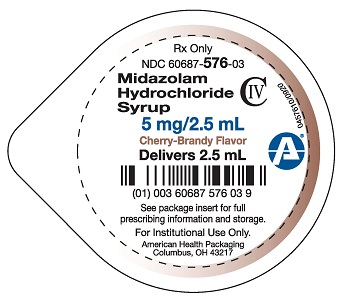
PACKAGE/LABEL PRINCIPAL DISPLAY PANEL - Cup - 5 mg/2.5mL Rx Only NDC 60687- 576 -03 Midazolam Hydrochloride CIV Syrup 5 mg/2.5 mL Cherry-Brandy Flavor Delivers 2.5 mL See package insert for full prescribing information and storage. For Institutional Use Only. American Health Packaging Columbus, OH 43217 0457610/0920 5 mg per 2.5 mL cup
PACKAGE/LABEL PRINCIPAL DISPLAY PANEL - Cup - 10mg/5mL Rx Only NDC 60687- 576 -40 Midazolam Hydrochloride CIV Syrup 10 mg/5 mL Cherry-Brandy Flavor Delivers 5 mL See package insert for full prescribing information and storage. For Institutional Use Only. American Health Packaging Columbus, OH 43217 0457686/0920 10 mg per 5mL cup
Medicaid utilization & spend
Medicaid utilization by pack size
About this NDC listing & data coverage
What data is (and isn’t) available for this NDC — tap to expand
| NDC identity (package / product / labeler codes) | ✓ Available |
| Labeler | ✓ Available |
| Product & package description | ✓ Available |
| Marketing category & status | ✓ Available |
| Active ingredient / dosage form / route | ✓ Available |
| FDA label (SPL via DailyMed) | ✓ Available |
| Package photos | ✓ Available |
| Inactive ingredients (structured) | ✓ Available |
| NADAC pharmacy acquisition price (CMS) | — Not published for this NDC CMS publishes NADAC only for NDCs reported in its retail-pharmacy survey. |
| Orange Book / therapeutic-equivalence data | ✓ Available |
| HCPCS J-code billing crosswalk | — Not published for this NDC Most self-administered / retail products have no J-code — that is normal. |
| Medicaid utilization (CMS SDUD) | ✓ Available |