
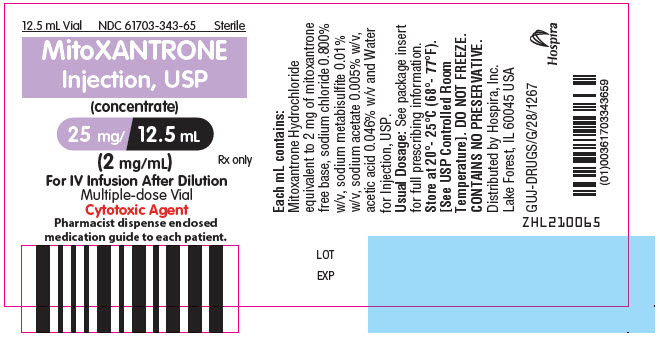
Mitoxantrone 2 mg/mL Injection, Solution, Concentrate, 1 vial — NDC 61703-343-65 (Billing 61703-0343-65)
This is a package of 1 vial of Mitoxantrone 2 mg/mL Injection, Solution, Concentrate from Hospira, Inc., marketed since Apr 2006 and currently FDA-listed.
NDC database record
One package, one record: these facts belong to NDC 61703-343-65 alone.
- Record
- FDA NDC Directory package listing · Human prescription drug
- Code segments
- 61703 labeler · 343 product · 65 package
- Package marketed since
- Apr 11, 2006
- Sample package
- No — commercial package
- Listing certified through
- Dec 31, 2026
- Barcode (UPC-A, from the NDC)
- 3 6170334365 9
- FDA record last changed
- Jul 24, 2026
Identity & classification
Regulatory identifiers FDA, NLM and CMS codes for this package
Drug-database identifiers Medi-Span GPI and First Databank GCN / HICL / AHFS classification
- GSN (GCN sequence number): 036985
- GCN: 07544
- GPI-14 (Medi-Span): 21200055001320
- HICL (First Databank): 003932
- AHFS class code: 10:00.00.00
- RxCUI (RxNorm): 197989
Where does this data come from?
- FDA openFDA NDC Directory · synced Oct 1, 2026
- FDA label on DailyMed · label index refreshed Oct 6, 2026
- RxNorm (NLM RxNav) · catalog refreshed Oct 1, 2026
- Medi-Span GPI (licensed)
- First Databank (licensed) · refreshed Oct 1, 2026
RxNorm drug class
This medicine belongs to the Topoisomerase Inhibitor class.
Where does this data come from?
- RxClass (NLM) · catalog refreshed Oct 1, 2026
Clinical
Mitoxantrone injection is used to adults with various forms of multiple sclerosis (MS; a disease in which the nerves do not function properly and people may experience weakness, numbness, loss of muscle coordination, and problems with vision, speech, and bladder control) including the following: relapsing-remitting forms (course of disease where symptoms flare up from time to time), or progressive relapsing (course of disease with occasional relapses), or secondary progressive forms (course of disease where relapses occur more often). Mitoxantrone injection is also used together with ster...
Read the full MedlinePlus article ↗- It treats certain types of multiple sclerosis, where it reduces disability and relapses. It also treats pain from advanced hormone-refractory prostate cancer and, with other medici...
- What is Mitoxantrone Injection used for?
- A healthcare professional gives it through a vein. For MS, it is a short infusion about every 3 months. It must never go under the skin, into a muscle, or into the spinal fluid.
- Nausea, hair thinning, menstrual changes, mouth sores and urinary tract infections are common. Your blood counts can also drop. Call your team for fever, signs of infection, shortn...
Patient education
Supplement & herbal interactions
Some supplements/herbs that may interact with Mitoxantrone — tap one for details:
Where does this data come from?
- MedlinePlus (NLM) · refreshed Oct 1, 2026
- FDA label on DailyMed · label index refreshed Oct 6, 2026
Ask a licensed pharmacist directly — free, answered by our team.
Pricing
A drug doesn't have one price. Each row is a different public payment system, and none is what you'd pay at the counter — that depends on your insurance. The ⓘ on each row explains what it measures.
| Price system | Per mL | Per package |
|---|---|---|
| Retail pharmacies payNADAC · weekly | Not in the retail survey — common for institutional, discontinued, or low-volume packs. | |
| Medicaid paysCMS SDUD · 12 mo | No recent Medicaid claims on file for this NDC — rare and low-volume NDCs are suppressed in the public data. | |
| Medicare drug plans payPart D · quarterly | No Part D plan price is available for this NDC in our data. | |
| Medicare Part B allowsASP · J9293 | $29.702 / J9293 unit | — |
Where does this data come from?
- CMS NADAC weekly file
- CMS ASP pricing files · refreshed Sep 20, 2026
- CMS Medicaid State Drug Utilization Data · refreshed Oct 6, 2026
- CMS Part D plan pricing files · refreshed Sep 24, 2026
- VA National Acquisition Center price file
Billing & reimbursement
Where does this data come from?
- CMS ASP NDC-HCPCS crosswalk · refreshed Sep 22, 2026
- DMEPDAC NDC-HCPCS crosswalk
- openFDA NSDE billing units · refreshed Sep 7, 2026
Packaging — all sizes for this product
| Package NDC | Description | Marketing start | Marketing end | Status |
|---|---|---|---|---|
| 61703-0343-18 61703-343-18 Main listing | 1 VIAL, MULTI-DOSE in 1 CARTON / 10 mL in 1 VIAL, MULTI-DOSE | 2006-04-11 | — | Active |
| 61703-0343-65 You're viewing this | 1 VIAL, MULTI-DOSE in 1 CARTON / 12.5 mL in 1 VIAL, MULTI-DOSE | 2006-04-11 | — | Active |
| 61703-0343-66 61703-343-66 | 1 VIAL, MULTI-DOSE in 1 CARTON / 15 mL in 1 VIAL, MULTI-DOSE | 2006-04-11 | — | Active |
Pack size FAQ
What quantity is in this package?
What NDC number is used to bill for this package of Mitoxantrone 2 mg/mL Injection, Solution, Concentrate?
Therapeutic equivalents
| Product | Labeler | Pack | NADAC/unit | TE | Status | Price vs. this |
|---|---|---|---|---|---|---|
| Mitoxantrone 2 mg/mLthis 61703-0343-65 | Hospira, | 1 vial | — | AP | FDA listed | — |
| Mitoxantrone 2 mg/mL 63323-0132-10 | Fresenius | 1 vial | — | AP | FDA listed | — |
| mitoXANTRONE 2 mg/mL 71288-0178-10 | Meitheal | 1 vial | — | AP | FDA listed | — |
| mitoXANTRONE 2 mg/mL 71288-0179-13 | Meitheal | 1 vial | — | AP | FDA listed | — |
Where does this data come from?
- FDA openFDA NDC Directory · synced Oct 1, 2026
- FDA Orange Book · refreshed Oct 3, 2026
- CMS NADAC weekly file
Availability & generic status
This product is an FDA-approved generic. Other versions of the same drug are listed under Therapeutic equivalents, least expensive first.
Where does this data come from?
- FDA Orange Book · refreshed Oct 3, 2026
Inactive Ingredients / Excipients
Inactive ingredients, also called excipients, are components of the drug product other than the active ingredient. They may include fillers, dyes, coatings, preservatives, flavors, or other formulation ingredients.
🧪 Avoiding an ingredient? See Mitoxantrone Injection inactive ingredients by manufacturer: every current product's list side by side, so you can ask your pharmacy for the version that does not list it.
💡 Tap an ingredient (hover on desktop) to see what it is and why it’s used.
-
UNII Q40Q9N063P
Acetic acid is a weak organic acid commonly used in medicines as a buffer and pH adjuster. It helps maintain the proper acidity level to ensure the drug remains stable and effective in its formulation.
-
UNII 4550K0SC9B
Sodium acetate is a salt derived from acetic acid. It acts as a buffer to help maintain the medicine's pH stability and may serve as a preservative or solubilizer in liquid formulations.
-
UNII 451W47IQ8X
Sodium chloride is common table salt. It's used in medicines as a buffer to maintain proper pH, as a filler to add bulk, or to adjust the osmotic balance in liquid formulations.
-
UNII 4VON5FNS3C
Sodium metabisulfite is a preservative derived from sulfur compounds. It prevents microbial growth and oxidation in medicines, helping extend shelf life and maintain product stability.
-
UNII 059QF0KO0R
Water is a liquid solvent that dissolves and mixes ingredients together in liquid medicines, syrups, and injections. It helps distribute the active drug evenly throughout the product.
5 inactive ingredients listed in the exact product block matched to this NDC.
Where does this data come from?
ingredient classCode="IACT" elements from the exact product block matched by this NDC. Label-section narrative from DailyMed / the openFDA label index is shown separately when available.- FDA label on DailyMed · label index refreshed Oct 6, 2026
- FDA openFDA NDC Directory · synced Oct 1, 2026
Inactive ingredient FAQ
Are inactive ingredients the same for every manufacturer?
Why might an inactive ingredient be missing?
Can inactive ingredients matter?
Manufacturer & labeler
More NDCs from Hospira, Inc. labeler code 61703
- Pamidronate Disodium 3 mg/mL Injection, Solution NDC 61703-324-18
- Pamidronate Disodium 6 mg/mL Injection, Solution NDC 61703-325-18
- Pamidronate Disodium 9 mg/mL Injection, Solution NDC 61703-326-18
- Bleomycin 15 [USP'U]/1 Injection, Powder, Lyophilized, For Solution NDC 61703-332-18
- Carboplatin 10 mg/mL Injection, Solution NDC 61703-339-18
- Paclitaxel 6 mg/mL Injection, Solution NDC 61703-342-09
- Irinotecan Hydrochloride 20 mg/mL Injection, Solution NDC 61703-349-09
- Methotrexate 25 mg/mL Injection, Solution NDC 61703-350-10
- Carboplatin 10 mg/mL Injection, Solution NDC 61703-360-18
- Oxaliplatin 5 mg/mL Injection, Solution, Concentrate NDC 61703-363-18
- Methotrexate 25 mg/mL Injection, Solution NDC 61703-408-25
- Carboplatin 10 mg/mL Injection, Solution NDC 61703-600-05
Where does this data come from?
- FDA openFDA NDC Directory · synced Oct 1, 2026
- Drugs@FDA
Full prescribing information FDA SPL
🚨 Boxed Warning ▾
WARNING Mitoxantrone Injection, USP (concentrate) should be administered under the supervision of a physician experienced in the use of cytotoxic chemotherapy agents. Mitoxantrone Injection, USP (concentrate) should be given slowly into a freely flowing intravenous infusion. It must never be given subcutaneously, intramuscularly, or intra-arterially.
Severe local tissue damage may occur if there is extravasation during administration. (See ADVERSE REACTIONS, General, Cutaneous and DOSAGE AND ADMINISTRATION, Preparation and Administration Precautions ). NOT FOR INTRATHECAL USE.
Severe injury with permanent sequelae can result from intrathecal administration. (See WARNINGS, General ) Except for the treatment of acute nonlymphocytic leukemia, mitoxantrone therapy generally should not be given to patients with baseline neutrophil counts of less than 1,500 cells/mm 3 . In order to monitor the occurrence of bone marrow suppression, primarily neutropenia, which may be severe and result in infection, it is recommended that frequent peripheral blood cell counts be performed on all patients receiving mitoxantrone.
Cardiotoxicity: Congestive heart failure (CHF), potentially fatal, may occur either during therapy with mitoxantrone or months to years after termination of therapy. Cardiotoxicity risk increases with cumulative mitoxantrone dose and may occur whether or not cardiac risk factors are present. Presence or history of cardiovascular disease, radiotherapy to the mediastinal/pericardial area, previous therapy with other anthracyclines or anthracenediones, or use of other cardiotoxic drugs may increase this risk.
In cancer patients, the risk of symptomatic CHF was estimated to be 2.6% for patients receiving up to a cumulative dose of 140 mg/m 2 . To mitigate the cardiotoxicity risk with mitoxantrone, prescribers should consider the following: All Patients: • All patients should be assessed for cardiac signs and symptoms by history, physical examination, and ECG prior to start of mitoxantrone therapy. • All patients should have baseline quantitative evaluation of left ventricular ejection fraction (LVEF) using appropriate methodology (ex.
Echocardiogram, multi-gated radionuclide angiography (MUGA), MRI, etc.). Multiple Sclerosis Patients: • MS patients with a baseline LVEF below the lower limit of normal should not be treated with mitoxantrone. • MS patients should be assessed for cardiac signs and symptoms by history, physical examination and ECG prior to each dose. • MS patients should undergo quantitative reevaluation of LVEF prior to each dose using the same methodology that was used to assess baseline LVEF. Additional doses of mitoxantrone should not be administered to multiple sclerosis patients who have experienced either a drop in LVEF to below the lower limit of normal or a clinically significant reduction in LVEF during mitoxantrone therapy. • MS patients should not receive a cumulative mitoxantrone dose greater than 140 mg/m 2 . • MS patients should undergo yearly quantitative LVEF evaluation after stopping mitoxantrone to monitor for late occurring cardiotoxicity.
For additional information, see WARNINGS and DOSAGE AND ADMINISTRATION . Secondary Leukemia: Mitoxantrone therapy in patients with MS and in patients with cancer increases the risk of developing secondary acute myeloid leukemia.
🎯 Indications and Usage ▾
INDICATIONS AND USAGE Mitoxantrone is indicated for reducing neurologic disability and/or the frequency of clinical relapses in patients with secondary (chronic) progressive, progressive relapsing, or worsening relapsing-remitting multiple sclerosis (i.e., patients whose neurologic status is significantly abnormal between relapses). Mitoxantrone is not indicated in the treatment of patients with primary progressive multiple sclerosis. The clinical patterns of multiple sclerosis in the studies were characterized as follows: secondary progressive and progressive relapsing disease were characterized by gradual increasing disability with or without superimposed clinical relapses, and worsening relapsing-remitting disease was characterized by clinical relapses resulting in a step-wise worsening of disability.
Mitoxantrone in combination with corticosteroids is indicated as initial chemotherapy for the treatment of patients with pain related to advanced hormone-refractory prostate cancer. Mitoxantrone in combination with other approved drug(s) is indicated in the initial therapy of acute nonlymphocytic leukemia (ANLL) in adults. This category includes myelogenous, promyelocytic, monocytic, and erythroid acute leukemias.
⏱️ Dosage and Administration ▾
DOSAGE AND ADMINISTRATION ( See also WARNINGS ) Multiple Sclerosis The recommended dosage of mitoxantrone is 12 mg/m 2 given as a short (approximately 5 to 15 minutes) intravenous infusion every 3 months. Left ventricular ejection fraction (LVEF) should be evaluated by echocardiogram or MUGA prior to administration of the initial dose of mitoxantrone and all subsequent doses. In addition, LVEF evaluations are recommended if signs or symptoms of congestive heart failure develop at any time during treatment with mitoxantrone.
Mitoxantrone should not be administered to multiple sclerosis patients with an LVEF <50%, with a clinically significant reduction in LVEF, or to those who have received a cumulative lifetime dose of ≥140 mg/m 2 . Complete blood counts, including platelets, should be monitored prior to each course of mitoxantrone and in the event that signs or symptoms of infection develop. Mitoxantrone generally should not be administered to multiple sclerosis patients with neutrophil counts less than 1500 cells/mm 3 .
Liver function tests should also be monitored prior to each course. Mitoxantrone therapy in multiple sclerosis patients with abnormal liver function tests is not recommended because mitoxantrone clearance is reduced by hepatic impairment and no laboratory measurement can predict drug clearance and dose adjustments. Women with multiple sclerosis who are biologically capable of becoming pregnant, even if they are using birth control, should have a pregnancy test, and the results should be known, before receiving each dose of mitoxantrone (see WARNINGS, Pregnancy ).
Hormone-Refractory Prostate Cancer Based on data from two Phase 3 comparative trials of mitoxantrone plus corticosteroids versus corticosteroids alone, the recommended dosage of mitoxantrone is 12 to 14 mg/m 2 given as a short intravenous infusion every 21 days. Combination Initial Therapy for ANLL in Adults For induction, the recommended dosage is 12 mg/m 2 of mitoxantrone daily on Days 1 to 3 given as an intravenous infusion, and 100 mg/m 2 of cytarabine for 7 days given as a continuous 24-hour infusion on Days 1 to 7.
Most complete remissions will occur following the initial course of induction therapy. In the event of an incomplete antileukemic response, a second induction course may be given. Mitoxantrone should be given for 2 days and cytarabine for 5 days using the same daily dosage levels.
If severe or life-threatening nonhematologic toxicity is observed during the first induction course, the second induction course should be withheld until toxicity resolves. Consolidation therapy which was used in two large randomized multicenter trials consisted of mitoxantrone, 12 mg/m 2 given by intravenous infusion daily on Days 1 and 2 and cytarabine, 100 mg/m 2 for 5 days given as a continuous 24-hour infusion on Days 1 to 5. The first course was given approximately 6 weeks after the final induction course; the second was generally administered 4 weeks after the first.
Severe myelosuppression occurred. (See CLINICAL PHARMACOLOGY ) Hepatic Impairment For patients with hepatic impairment, there is at present no laboratory measurement that allows for dose adjustment recommendations. (See CLINICAL PHARMACOLOGY, Special Populations, Hepatic Impairment ) Preparation and Administration Precautions MITOXANTRONE INJECTION, USP (CONCENTRATE) MUST BE DILUTED PRIOR TO USE.
Parenteral drug products should be inspected visually for particulate matter and discoloration prior to administration whenever solution and container permit. The dose of mitoxantrone should be diluted to at least 50 mL with either 0.9% Sodium Chloride Injection (USP) or 5% Dextrose Injection (USP). Mitoxantrone Injection, USP (concentrate) may be further diluted into Dextrose 5% in Water, Normal Saline or Dextrose 5% with Normal Saline and used immediately.
DO NOT FREEZE. Mitoxantrone should not be mixed in the same infusion as heparin since a precipitate may form. Because specific compatibilit… [Excerpted — this section continues on DailyMed.]
⛔ Contraindications ▾
CONTRAINDICATIONS Mitoxantrone is contraindicated in patients who have demonstrated prior hypersensitivity to it.
⚠️ Warnings ▾
WARNINGS WHEN MITOXANTRONE IS USED IN HIGH DOSES (> 14 mg/m 2 /d × 3 days) SUCH AS INDICATED FOR THE TREATMENT OF LEUKEMIA, SEVERE MYELOSUPPRESSION WILL OCCUR. THEREFORE, IT IS RECOMMENDED THAT MITOXANTRONE BE ADMINISTERED ONLY BY PHYSICIANS EXPERIENCED IN THE CHEMOTHERAPY OF THIS DISEASE. LABORATORY AND SUPPORTIVE SERVICES MUST BE AVAILABLE FOR HEMATOLOGIC AND CHEMISTRY MONITORING AND ADJUNCTIVE THERAPIES, INCLUDING ANTIBIOTICS.
BLOOD AND BLOOD PRODUCTS MUST BE AVAILABLE TO SUPPORT PATIENTS DURING THE EXPECTED PERIOD OF MEDULLARY HYPOPLASIA AND SEVERE MYELOSUPPRESSION. PARTICULAR CARE SHOULD BE GIVEN TO ASSURING FULL HEMATOLOGIC RECOVERY BEFORE UNDERTAKING CONSOLIDATION THERAPY (IF THIS TREATMENT IS USED) AND PATIENTS SHOULD BE MONITORED CLOSELY DURING THIS PHASE. MITOXANTRONE ADMINISTERED AT ANY DOSE CAN CAUSE MYELOSUPPRESSION.
CONTAINS SODIUM METABISULFITE, A SULFITE THAT MAY CAUSE ALLERGIC-TYPE REACTIONS INCLUDING ANAPHYLACTIC SYMPTOMS AND LIFE-THREATENING OR LESS SEVERE ASTHMATIC EPISODES IN CERTAIN SUSCEPTIBLE PEOPLE. THE OVERALL PREVALENCE OF SULFITE SENSITIVITY IN THE GENERAL POPULATION IS UNKNOWN AND PROBABLY LOW. SULFITE SENSITIVITY IS SEEN MORE FREQUENTLY IN ASTHMATIC THAN IN NONASTHMATIC PEOPLE.
General Patients with preexisting myelosuppression as the result of prior drug therapy should not receive mitoxantrone unless it is felt that the possible benefit from such treatment warrants the risk of further medullary suppression. The safety of Mitoxantrone Injection, USP (concentrate) in patients with hepatic insufficiency is not established (see CLINICAL PHARMACOLOGY ). Safety for use by routes other than intravenous administration has not been established.
Mitoxantrone is not indicated for subcutaneous, intramuscular, or intra-arterial injection. There have been reports of local/regional neuropathy, some irreversible, following intra-arterial injection. Mitoxantrone must not be given by intrathecal injection.
There have been reports of neuropathy and neurotoxicity, both central and peripheral, following intrathecal injection. These reports have included seizures leading to coma and severe neurologic sequelae, and paralysis with bowel and bladder dysfunction. Topoisomerase II inhibitors, including mitoxantrone, have been associated with the development of secondary acute myeloid leukemia and myelosuppression.
Cardiac Effects Because of the possible danger of cardiac effects in patients previously treated with daunorubicin or doxorubicin, the benefit-to-risk ratio of mitoxantrone therapy in such patients should be determined before starting therapy. Functional cardiac changes including decreases in left ventricular ejection fraction (LVEF) and irreversible congestive heart failure can occur with mitoxantrone. Cardiac toxicity may be more common in patients with prior treatment with anthracyclines, prior mediastinal radiotherapy, or with preexisting cardiovascular disease.
Such patients should have regular cardiac monitoring of LVEF from the initiation of therapy. Cancer patients who received cumulative doses of 140 mg/m 2 either alone or in combination with other chemotherapeutic agents had a cumulative 2.6% probability of clinical congestive heart failure. In comparative oncology trials, the overall cumulative probability rate of moderate or severe decreases in LVEF at this dose was 13%.
Multiple Sclerosis Changes in cardiac function may occur in patients with multiple sclerosis treated with mitoxantrone. In one controlled trial (Study 1, see CLINICAL TRIALS, Multiple Sclerosis ), two patients (2%) of 127 receiving mitoxantrone, one receiving a 5 mg/m 2 dose and the other receiving the 12 mg/m 2 dose, had LVEF values that decreased to below 50%. An additional patient receiving 12 mg/m 2 , who did not have LVEF measured, had a decrease in another echocardiographic measurement of ventricular function (fractional shortening) that led to discontinuation from the trial (see ADVERSE REACTIONS, Multiple Sclerosis ).
There we… [Excerpted — this section continues on DailyMed.]
🤒 Adverse Reactions ▾
ADVERSE REACTIONS Multiple Sclerosis Mitoxantrone has been administered to 149 patients with multiple sclerosis in two randomized clinical trials, including 21 patients who received mitoxantrone in combination with corticosteroids. In Study 1, the proportion of patients who discontinued treatment due to an adverse event was 9.7% (n = 6) in the 12 mg/m 2 mitoxantrone arm (leukopenia, depression, decreased LV function, bone pain and emesis, renal failure, and one discontinuation to prevent future complications from repeated urinary tract infections) compared to 3.1% (n = 2) in the placebo arm (hepatitis and myocardial infarction).
The following clinical adverse experiences were significantly more frequent in the mitoxantrone groups: nausea, alopecia, urinary tract infection, and menstrual disorders, including amenorrhea. Table 4a summarizes clinical adverse events of all intensities occurring in ≥5% of patients in either dose group of mitoxantrone and that were numerically greater on drug than on placebo in Study 1. The majority of these events were of mild to moderate intensity, and nausea was the only adverse event that occurred with severe intensity in more than one patient (three patients [5%] in the 12 mg/m 2 group).
Of note, alopecia consisted of mild hair thinning. Two of the 127 patients treated with mitoxantrone in Study 1 had decreased LVEF to below 50% at some point during the 2 years of treatment. An additional patient receiving 12 mg/m 2 did not have LVEF measured, but had another echocardiographic measure of ventricular function (fractional shortening) that led to discontinuation from the study.
Table 4a: Adverse Events of Any Intensity Occurring in ≥ 5% of Patients on Any Dose of Mitoxantrone and That Were Numerically Greater Than in the Placebo Group Study 1 Percent of Patients Preferred Term Placebo (N = 64) 5 mg/m 2 Mitoxantrone (N = 65) 12 mg/m 2 Mitoxantrone (N = 62) Nausea 20 55 76 Alopecia 31 38 61 Menstrual disorder Percentage of female patients. 26 51 61 Amenorrhea 3 28 43 Upper respiratory tract infection 52 51 53 Urinary tract infection 13 29 32 Stomatitis 8 15 19 Arrhythmia 8 6 18 Diarrhea 11 25 16 Urine abnormal 6 5 11 ECG abnormal 3 5 11 Constipation 6 14 10 Back pain 5 6 8 Sinusitis 2 3 6 Headache 5 6 6 The proportion of patients experiencing any infection during Study 1 was 67% for the placebo group, 85% for the 5 mg/m 2 group, and 81% for the 12 mg/m 2 group.
However, few of these infections required hospitalization: one placebo patient (tonsillitis), three 5 mg/m 2 patients (enteritis, urinary tract infection, viral infection), and four 12 mg/m 2 patients (tonsillitis, urinary tract infection [two], endometritis). Table 4b summarizes laboratory abnormalities that occurred in ≥ 5% of patients in either mitoxantrone dose group, and that were numerically more frequent than in the placebo group. Table 4b: Laboratory Abnormalities Occurring in ≥ 5% of Patients Assessed using World Health Organization (WHO) toxicity criteria. on Either Dose of Mitoxantrone and That Were More Frequent Than in the Placebo Group Study 1 Percent of Patients Event Placebo (N = 64) 5 mg/m 2 Mitoxantrone (N = 65) 12 mg/m 2 Mitoxantrone (N = 62) Leukopenia < 4000 cells/mm 3 0 9 19 Gamma-GT increased 3 3 15 SGOT increased 8 9 8 Granulocytopenia < 2000 cells/mm 3 2 6 6 Anemia 2 9 6 SGPT increased 3 6 5 There was no difference among treatment groups in the incidence or severity of hemorrhagic events.
In Study 2, mitoxantrone was administered once a month. Clinical adverse events most frequently reported in the mitoxantrone group included amenorrhea (53% of female patients), alopecia (33% of patients), nausea (29% of patients), and asthenia (24% of patients). Tables 5a and 5b respectively summarize adverse events and laboratory abnormalities occurring in > 5% of patients in the mitoxantrone group and numerically more frequent than in the control group.
Table 5a: Adverse Events of Any Intensity Occurring in > 5% of Patients Assesse… [Excerpted — this section continues on DailyMed.]
🔄 Drug Interactions ▾
Drug Interactions Mitoxantrone and its metabolites are excreted in bile and urine, but it is not known whether the metabolic or excretory pathways are saturable, may be inhibited or induced, or if mitoxantrone and its metabolites undergo enterohepatic circulation. To date, post-marketing experience has not revealed any significant drug interactions in patients who have received mitoxantrone for treatment of cancer. Information on drug interactions in patients with multiple sclerosis is limited.
Following concurrent administration of mitoxantrone with corticosteroids, no evidence of drug interactions has been observed.
🤰 Pregnancy ▾
Pregnancy (see WARNINGS ).
🧒 Pediatric Use ▾
Pediatric Use Safety and effectiveness in pediatric patients have not been established.
🧓 Geriatric Use ▾
Geriatric Use Multiple Sclerosis Clinical studies of mitoxantrone did not include sufficient numbers of patients aged 65 and over to determine whether they respond differently from younger patients. Other reported clinical experience has not identified differences in responses between the elderly and younger patients. Hormone-Refractory Prostate Cancer One hundred forty-six patients aged 65 and over and 52 younger patients (<65 years) have been treated with mitoxantrone in controlled clinical studies.
These studies did not include sufficient numbers of younger patients to determine whether they respond differently from older patients. However, greater sensitivity of some older individuals cannot be ruled out. Acute Nonlymphocytic Leukemia Although definitive studies with mitoxantrone have not been performed in geriatric patients with ANLL, toxicity may be more frequent in the elderly.
Elderly patients are more likely to have age-related comorbidities due to disease or disease therapy.
🆘 Overdosage ▾
OVERDOSAGE There is no known specific antidote for mitoxantrone. Accidental overdoses have been reported. Four patients receiving 140 to 180 mg/m 2 as a single bolus injection died as a result of severe leukopenia with infection.
Hematologic support and antimicrobial therapy may be required during prolonged periods of severe myelosuppression. Although patients with severe renal failure have not been studied, mitoxantrone is extensively tissue bound and it is unlikely that the therapeutic effect or toxicity would be mitigated by peritoneal or hemodialysis.
🧬 Clinical Pharmacology ▾
CLINICAL PHARMACOLOGY Mechanism of Action Mitoxantrone, a DNA-reactive agent that intercalates into deoxyribonucleic acid (DNA) through hydrogen bonding, causes crosslinks and strand breaks. Mitoxantrone also interferes with ribonucleic acid (RNA) and is a potent inhibitor of topoisomerase II, an enzyme responsible for uncoiling and repairing damaged DNA. It has a cytocidal effect on both proliferating and nonproliferating cultured human cells, suggesting lack of cell cycle phase specificity.
Mitoxantrone has been shown in vitro to inhibit B cell, T cell, and macrophage proliferation and impair antigen presentation, as well as the secretion of interferon gamma, TNFα, and IL-2. Pharmacokinetics Pharmacokinetics of mitoxantrone in patients following a single intravenous administration of mitoxantrone can be characterized by a three-compartment model. The mean alpha half-life of mitoxantrone is 6 to 12 minutes, the mean beta half-life is 1.1 to 3.1 hours and the mean gamma (terminal or elimination) half-life is 23 to 215 hours (median approximately 75 hours).
Pharmacokinetic studies have not been performed in humans receiving multiple daily dosing. Distribution to tissues is extensive: steady-state volume of distribution exceeds 1,000 L/m 2 . Tissue concentrations of mitoxantrone appear to exceed those in the blood during the terminal elimination phase.
In the healthy monkey, distribution to brain, spinal cord, eye, and spinal fluid is low. In patients administered 15 to 90 mg/m 2 of mitoxantrone intravenously, there is a linear relationship between dose and the area under the concentration-time curve (AUC). Mitoxantrone is 78% bound to plasma proteins in the observed concentration range of 26 to 455 ng/mL.
This binding is independent of concentration and is not affected by the presence of phenytoin, doxorubicin, methotrexate, prednisone, prednisolone, heparin, or aspirin. Metabolism and Elimination Mitoxantrone is excreted in urine and feces as either unchanged drug or as inactive metabolites. In human studies, 11% and 25% of the dose were recovered in urine and feces, respectively, as either parent drug or metabolite during the 5-day period following drug administration.
Of the material recovered in urine, 65% was unchanged drug. The remaining 35% was composed of monocarboxylic and dicarboxylic acid derivatives and their glucuronide conjugates. The pathways leading to the metabolism of mitoxantrone have not been elucidated.
Special Populations Gender The effect of gender on mitoxantrone pharmacokinetics is unknown. Geriatric In elderly patients with breast cancer, the systemic mitoxantrone clearance was
21.3 L/hr/m 2 , compared with
28.3 L/hr/m 2 and
16.2L/hr/m 2 for non-elderly patients with nasopharyngeal carcinoma and malignant lymphoma, respectively. Pediatric Mitoxantrone pharmacokinetics in the pediatric population are unknown. Race The effect of race on mitoxantrone pharmacokinetics is unknown.
Renal Impairment Mitoxantrone pharmacokinetics in patients with renal impairment are unknown. Hepatic Impairment Mitoxantrone clearance is reduced by hepatic impairment. Patients with severe hepatic dysfunction (bilirubin > 3.4 mg/dL) have an AUC more than three times greater than that of patients with normal hepatic function receiving the same dose.
Patients with multiple sclerosis who have hepatic impairment should ordinarily not be treated with mitoxantrone. Other patients with hepatic impairment should be treated with caution and dosage adjustment may be required. Drug Interactions In vitro drug interaction studies have demonstrated that mitoxantrone did not inhibit CYP450 1A2, 2A6, 2C9, 2C19, 2D6, 2E1, and 3A4 across a broad concentration range.
The results of in vitro induction studies are inconclusive, but suggest that mitoxantrone may be a weak inducer of CYP450 2E1 activity. Pharmacokinetic studies of the interaction of mitoxantrone with concomitantly administered medications in humans have not been performed. The pathwa… [Excerpted — this section continues on DailyMed.]
🧬 Mechanism of Action ▾
Mechanism of Action Mitoxantrone, a DNA-reactive agent that intercalates into deoxyribonucleic acid (DNA) through hydrogen bonding, causes crosslinks and strand breaks. Mitoxantrone also interferes with ribonucleic acid (RNA) and is a potent inhibitor of topoisomerase II, an enzyme responsible for uncoiling and repairing damaged DNA. It has a cytocidal effect on both proliferating and nonproliferating cultured human cells, suggesting lack of cell cycle phase specificity.
Mitoxantrone has been shown in vitro to inhibit B cell, T cell, and macrophage proliferation and impair antigen presentation, as well as the secretion of interferon gamma, TNFα, and IL-2.
📦 How Supplied / Storage and Handling ▾
HOW SUPPLIED Mitoxantrone Injection, USP (concentrate) is a sterile aqueous solution containing mitoxantrone hydrochloride at a concentration equivalent to 2 mg mitoxantrone free base per mL supplied in vials for multiple-dose use as follows: Unit of Sale Concentration NDC 61703-343-18 Carton containing 1 multiple-dose vial 20 mg/10 mL (2 mg/ mL) NDC 61703-343-65 Carton containing 1 multiple-dose vial 25 mg/12.5 mL (2 mg/ mL) NDC 61703-343-66 Carton containing 1 multiple-dose vial 30 mg/15 mL (2 mg/ mL) Mitoxantrone Injection, USP (concentrate) should be stored between 20° to 25°C (68° to 77°F). [See USP Controlled Room Temperature].
DO NOT FREEZE. Store Upright.
📦 Storage and Handling ▾
Mitoxantrone Injection, USP (concentrate) should be stored between 20° to 25°C (68° to 77°F). [See USP Controlled Room Temperature]. DO NOT FREEZE. Store Upright.
📋 Description ▾
DESCRIPTION Mitoxantrone Injection, USP (concentrate) is a synthetic antineoplastic anthracenedione for intravenous use. The molecular formula is C 22 H 28 N 4 O 6 ∙2HCl and the molecular weight is 517.41. It is supplied as a concentrate that MUST BE DILUTED PRIOR TO INJECTION.
The concentrate is a sterile, nonpyrogenic, dark blue aqueous solution containing mitoxantrone hydrochloride equivalent to 2 mg/mL mitoxantrone free base, with sodium chloride (0.80% w/v), sodium metabisulfite (0.01% w/v), sodium acetate (0.005% w/v), acetic acid (0.046% w/v), and Water for Injection, USP as inactive ingredients. The solution has a pH of 3.0 to 4.5 and contains 0.14 mEq of sodium per mL. The product does not contain preservatives.
The chemical name is 1, 4-dihydroxy-5, 8-bis[[2-[(2-hydroxyethyl) amino]ethyl]amino]-9,10- anthracenedione dihydrochloride and the structural formula is: Chemical Structure
💬 Information for Patients ▾
Information for Patients See FDA-approved patient labeling (MEDICATION GUIDE) . Inform patients of the availability of a Medication Guide and instruct them to read the Medication Guide prior to initiating treatment with MitoXANTRONE and prior to each infusion. Review the MitoXANTRONE Medication Guide with every patient prior to initiation of treatment and periodically during treatment.
Instruct patients that MitoXANTRONE should be taken only as prescribed. Advise patients that MitoXANTRONE can cause myelosuppression and inform patients of the signs and symptoms of myelosuppression. Advise patients that MitoXANTRONE can cause congestive heart failure that may lead to death even in people who have never had heart problems before, and inform patients of the signs and symptoms of congestive heart failure.
Advise patients receiving MitoXANTRONE to treat multiple sclerosis that they should receive cardiac monitoring prior to each MitoXANTRONE dose and yearly after stopping MitoXANTRONE. MitoXANTRONE may impart a blue-green color to the urine for 24 hours after administration, and patients should be advised to expect this during therapy. Bluish discoloration of the sclera may also occur.
💬 Medication Guide ▾
MEDICATION GUIDE MitoXANTRONE (mito-xan-trone) Injection, USP (concentrate) CONTAINS SODIUM METABISULFITE, A SULFITE THAT MAY CAUSE ALLERGIC-TYPE REACTIONS INCLUDING ANAPHYLACTIC SYMPTOMS AND LIFE-THREATENING OR LESS SEVERE ASTHMATIC EPISODES IN CERTAIN SUSCEPTIBLE PEOPLE. THE OVERALL PREVALENCE OF SULFITE SENSITIVITY IN THE GENERAL POPULATION IS UNKNOWN AND PROBABLY LOW. SULFITE SENSITIVITY IS SEEN MORE FREQUENTLY IN ASTHMATIC THAN IN NONASTHMATIC PEOPLE.
Read this Medication Guide before you start receiving MitoXANTRONE and each time you receive MitoXANTRONE. There may be new information. This information does not take the place of talking to your doctor about your medical condition or your treatment.
What is the most important information I should know about MitoXANTRONE? MitoXANTRONE can cause serious side effects, including: • decrease in the ability of your bone marrow to make blood cells (myelosuppression). Your doctor may do blood tests during treatment with MitoXANTRONE to check your blood cell counts.
The symptoms of myelosuppression can include: o feeling tired o increased infections o bruising and bleeding easily • heart problems (congestive heart failure) that may lead to death even in people who have never had heart problems before. Heart failure can happen while you receive MitoXANTRONE, or months to years after you stop receiving MitoXANTRONE. Your risk of heart failure increases the more MitoXANTRONE you receive.
Call your doctor or get medical help right away if you have any of these problems during or after treatment with MitoXANTRONE: o shortness of breath o swelling of your ankles or feet o sudden weight gain o fast heartbeat or pounding in your chest Before receiving MitoXANTRONE for the first time, you should have the following tests done: o physical examination o a test to check your heart's electrical activity (electrocardiogram) o a test to check your heart's ability to pump blood If you receive MitoXANTRONE to treat Multiple Sclerosis (MS), your doctor should also do the tests above: o before you receive each MitoXANTRONE dose o yearly after you stop receiving MitoXANTRONE treatment • acute myeloid leukemia (AML).
Receiving MitoXANTRONE increases your risk of AML. AML is a cancer of the blood-forming cells of your bone marrow. Symptoms of AML can include: o feeling unusually tired and weak o increased infections o bruising and bleeding easily o fever o pain in your bones o trouble breathing o unexplained weight loss o night sweats • skin problems at your injection site.
If MitoXANTRONE leaks out of your vein, skin problems can happen that may lead to serious skin damage (necrosis). Necrosis may need to be repaired surgically. Tell your doctor right away if you have any of the following problems at your injection site: o redness o swelling o pain o burning o skin turns a bluish color What is MitoXANTRONE?
MitoXANTRONE is a prescription medicine used alone or with other medicines to treat people with: • secondary (chronic) progressive, progressive relapsing, or worsening relapsing-remitting multiple sclerosis (MS) • pain related to advanced hormone-refractory prostate cancer • acute nonlymphocytic leukemia (ANLL) MitoXANTRONE is not for people with primary progressive MS. It is not known if MitoXANTRONE is safe and effective in children. Who should not receive MitoXANTRONE?
Do not receive MitoXANTRONE if you are allergic to MitoXANTRONE or any of the ingredients in MitoXANTRONE. See the end of this Medication Guide for a complete list of ingredients in MitoXANTRONE. What should I tell my doctor before receiving MitoXANTRONE?
Before you receive MitoXANTRONE, tell your doctor if you have: • received MitoXANTRONE in the past • heart problems • liver problems • kidney problems • low blood cell counts • an infection • had radiation treatment in your chest area • any other medical conditions • are pregnant or plan to become pregnant. MitoXANTRONE may harm your unborn baby. Women who are able to become pregna… [Excerpted — this section continues on DailyMed.]
⚠️ Precautions ▾
PRECAUTIONS General Therapy with mitoxantrone should be accompanied by close and frequent monitoring of hematologic and chemical laboratory parameters, as well as frequent patient observation. Systemic infections should be treated concomitantly with or just prior to commencing therapy with mitoxantrone. Information for Patients See FDA-approved patient labeling (MEDICATION GUIDE) .
Inform patients of the availability of a Medication Guide and instruct them to read the Medication Guide prior to initiating treatment with MitoXANTRONE and prior to each infusion. Review the MitoXANTRONE Medication Guide with every patient prior to initiation of treatment and periodically during treatment. Instruct patients that MitoXANTRONE should be taken only as prescribed.
Advise patients that MitoXANTRONE can cause myelosuppression and inform patients of the signs and symptoms of myelosuppression. Advise patients that MitoXANTRONE can cause congestive heart failure that may lead to death even in people who have never had heart problems before, and inform patients of the signs and symptoms of congestive heart failure. Advise patients receiving MitoXANTRONE to treat multiple sclerosis that they should receive cardiac monitoring prior to each MitoXANTRONE dose and yearly after stopping MitoXANTRONE.
MitoXANTRONE may impart a blue-green color to the urine for 24 hours after administration, and patients should be advised to expect this during therapy. Bluish discoloration of the sclera may also occur. Laboratory Tests A complete blood count, including platelets, should be obtained prior to each course of mitoxantrone and in the event that signs and symptoms of infection develop.
Liver function tests should also be performed prior to each course of therapy. Mitoxantrone therapy in multiple sclerosis patients with abnormal liver function tests is not recommended because mitoxantrone clearance is reduced by hepatic impairment and no laboratory measurement can predict drug clearance and dose adjustments. In leukemia treatment, hyperuricemia may occur as a result of rapid lysis of tumor cells by mitoxantrone.
Serum uric acid levels should be monitored and hypouricemic therapy instituted prior to the initiation of antileukemic therapy. Women with multiple sclerosis who are biologically capable of becoming pregnant, even if they are using birth control, should have a pregnancy test, and the results should be known, before receiving each dose of mitoxantrone (see WARNINGS, Pregnancy ). Carcinogenesis, Mutagenesis, Impairment of Fertility Carcinogenesis Intravenous treatment of rats and mice, once every 21 days for 24 months, with mitoxantrone resulted in an increased incidence of fibroma and external auditory canal tumors in rats at a dose of 0.03 mg/kg (0.02 fold the recommended human dose, on a mg/m 2 basis), and hepatocellular adenoma in male mice at a dose of 0.1 mg/kg (0.03 fold the recommended human dose, on a mg/m 2 basis).
Intravenous treatment of rats, once every 21 days for 12 months with mitoxantrone resulted in an increased incidence of external auditory canal tumors in rats at a dose of 0.3 mg/kg (0.15 fold the recommended human dose, on a mg/m 2 basis). Mutagenesis Mitoxantrone was clastogenic in the in vivo rat bone marrow assay. Mitoxantrone was also clastogenic in two in vitro assays; it induced DNA damage in primary rat hepatocytes and sister chromatid exchanges in Chinese hamster ovary cells.
Mitoxantrone was mutagenic in bacterial and mammalian test systems (Ames/Salmonella and E. coli and L5178Y TK+/-mouse lymphoma). Drug Interactions Mitoxantrone and its metabolites are excreted in bile and urine, but it is not known whether the metabolic or excretory pathways are saturable, may be inhibited or induced, or if mitoxantrone and its metabolites undergo enterohepatic circulation. To date, post-marketing experience has not revealed any significant drug interactions in patients who have received mitoxantrone for treatment of cancer.
Informa… [Excerpted — this section continues on DailyMed.]
🍼 Nursing Mothers ▾
Nursing Mothers Mitoxantrone is excreted in human milk and significant concentrations (18 ng/mL) have been reported for 28 days after the last administration. Because of the potential for serious adverse reactions in infants from mitoxantrone, breast feeding should be discontinued before starting treatment.
🧬 Pharmacokinetics ▾
Pharmacokinetics Pharmacokinetics of mitoxantrone in patients following a single intravenous administration of mitoxantrone can be characterized by a three-compartment model. The mean alpha half-life of mitoxantrone is 6 to 12 minutes, the mean beta half-life is 1.1 to 3.1 hours and the mean gamma (terminal or elimination) half-life is 23 to 215 hours (median approximately 75 hours). Pharmacokinetic studies have not been performed in humans receiving multiple daily dosing.
Distribution to tissues is extensive: steady-state volume of distribution exceeds 1,000 L/m 2 . Tissue concentrations of mitoxantrone appear to exceed those in the blood during the terminal elimination phase. In the healthy monkey, distribution to brain, spinal cord, eye, and spinal fluid is low.
In patients administered 15 to 90 mg/m 2 of mitoxantrone intravenously, there is a linear relationship between dose and the area under the concentration-time curve (AUC). Mitoxantrone is 78% bound to plasma proteins in the observed concentration range of 26 to 455 ng/mL. This binding is independent of concentration and is not affected by the presence of phenytoin, doxorubicin, methotrexate, prednisone, prednisolone, heparin, or aspirin.
Metabolism and Elimination Mitoxantrone is excreted in urine and feces as either unchanged drug or as inactive metabolites. In human studies, 11% and 25% of the dose were recovered in urine and feces, respectively, as either parent drug or metabolite during the 5-day period following drug administration. Of the material recovered in urine, 65% was unchanged drug.
The remaining 35% was composed of monocarboxylic and dicarboxylic acid derivatives and their glucuronide conjugates. The pathways leading to the metabolism of mitoxantrone have not been elucidated. Special Populations Gender The effect of gender on mitoxantrone pharmacokinetics is unknown.
Geriatric In elderly patients with breast cancer, the systemic mitoxantrone clearance was
21.3 L/hr/m 2 , compared with
28.3 L/hr/m 2 and
16.2L/hr/m 2 for non-elderly patients with nasopharyngeal carcinoma and malignant lymphoma, respectively. Pediatric Mitoxantrone pharmacokinetics in the pediatric population are unknown. Race The effect of race on mitoxantrone pharmacokinetics is unknown.
Renal Impairment Mitoxantrone pharmacokinetics in patients with renal impairment are unknown. Hepatic Impairment Mitoxantrone clearance is reduced by hepatic impairment. Patients with severe hepatic dysfunction (bilirubin > 3.4 mg/dL) have an AUC more than three times greater than that of patients with normal hepatic function receiving the same dose.
Patients with multiple sclerosis who have hepatic impairment should ordinarily not be treated with mitoxantrone. Other patients with hepatic impairment should be treated with caution and dosage adjustment may be required. Drug Interactions In vitro drug interaction studies have demonstrated that mitoxantrone did not inhibit CYP450 1A2, 2A6, 2C9, 2C19, 2D6, 2E1, and 3A4 across a broad concentration range.
The results of in vitro induction studies are inconclusive, but suggest that mitoxantrone may be a weak inducer of CYP450 2E1 activity. Pharmacokinetic studies of the interaction of mitoxantrone with concomitantly administered medications in humans have not been performed. The pathways leading to the metabolism of mitoxantrone have not been elucidated.
To date, post-marketing experience has not revealed any significant drug interactions in patients who have received mitoxantrone for treatment of cancer. Information on drug interactions in patients with multiple sclerosis is limited.
🔬 Clinical Studies ▾
CLINICAL TRIALS Multiple Sclerosis The safety and efficacy of mitoxantrone in multiple sclerosis were assessed in two randomized, multicenter clinical studies. One randomized, controlled study (Study 1) was conducted in patients with secondary progressive or progressive relapsing multiple sclerosis. Patients in this study demonstrated significant neurological disability based on the Kurtzke Expanded Disability Status Scale (EDSS).
The EDSS is an ordinal scale with 0.5 point increments ranging from 0.0 to 10.0 (increasing score indicates worsening) and based largely on ambulatory impairment in its middle range (EDSS 4.5 to 7.5 points). Patients in this study had experienced a mean deterioration in EDSS of about 1.6 points over the 18 months prior to enrollment. Patients were randomized to receive placebo, 5 mg/m 2 mitoxantrone, or 12 mg/m 2 mitoxantrone administered IV every 3 months for 2 years.
High-dose methylprednisolone was administered to treat relapses. The intent-to-treat analysis cohort consisted of 188 patients; 149 completed the 2-year study. Patients were evaluated every 3 months, and clinical outcome was determined after 24 months.
In addition, a subset of patients was assessed with magnetic resonance imaging (MRI) at baseline, Month 12, and Month 24. Neurologic assessments and MRI reviews were performed by evaluators blinded to study drug and clinical outcome, although the diagnosis of relapse and the decision to treat relapses with steroids were made by unblinded treating physicians. A multivariate analysis of five clinical variables (EDSS, Ambulation Index [AI], number of relapses requiring treatment with steroids, months to first relapse needing treatment with steroids, and Standard Neurological Status [SNS]) was used to determine primary efficacy.
The AI is an ordinal scale ranging from 0 to 9 in one point increments to define progressive ambulatory impairment. The SNS provides an overall measure of neurologic impairment and disability, with scores ranging from 0 (normal neurologic examination) to 99 (worst possible score). Results of Study 1 are summarized in Table 1.
Table 1: Efficacy Results at Month 24 Study 1 Treatment Groups p-value Mitoxantrone Placebo vs. Primary Endpoints Placebo (N = 64) 5 mg/m 2 (N = 64) 12 mg/m 2 (N = 60) 12 mg/m 2 Mitoxantrone NR = not reached within 24 months; MRI = magnetic resonance imaging. Primary efficacy multivariate analysis Wei-Lachin test. - - - < 0.0001 Primary clinical variables analyzed: EDSS change Month 24 value minus baseline.
(mean) 0.23 – 0.23 – 0.13 0.0194 Ambulation Index change (mean) 0.77 0.41 0.30 0.0306 Mean number of relapses per patient requiring corticosteroid treatment (adjusted for discontinuation) 1.20 0.73 0.40 0.0002 Months to first relapse requiring corticosteroid treatment (median [1 st quartile]) 14.2 [6.7] NR [6.9] NR [20.4] 0.0004 Standard Neurological Status change (mean) 0.77 – 0.38 – 1.07 0.0269 MRI A subset of 110 patients was selected for MRI analysis. MRI results were not available for all patients at all time points.
No. of patients with new Gd-enhancing lesions 5/32 (16%) 4/37 (11%) 0/31 0.022 Change in number of T2-weighted lesions, mean (n) 1.94 (32) 0.68 (34) 0.29 (28) 0.027 A second randomized, controlled study (Study 2) evaluated mitoxantrone in combination with methylprednisolone (MP) and was conducted in patients with secondary progressive or worsening relapsing-remitting multiple sclerosis who had residual neurological deficit between relapses. All patients had experienced at least two relapses with sequelae or neurological deterioration within the previous 12 months.
The average deterioration in EDSS was 2.2 points during the previous 12 months. During the screening period, patients were treated with two monthly doses of 1 g of IV MP and underwent monthly MRI scans. Only patients who developed at least one new Gd-enhancing MRI lesion during the 2-month screening period were eligible for randomization.
A total of 42 evaluable pa… [Excerpted — this section continues on DailyMed.]
📄 Carcinogenesis, Mutagenesis, Impairment of Fertility ▾
Carcinogenesis, Mutagenesis, Impairment of Fertility Carcinogenesis Intravenous treatment of rats and mice, once every 21 days for 24 months, with mitoxantrone resulted in an increased incidence of fibroma and external auditory canal tumors in rats at a dose of 0.03 mg/kg (0.02 fold the recommended human dose, on a mg/m 2 basis), and hepatocellular adenoma in male mice at a dose of 0.1 mg/kg (0.03 fold the recommended human dose, on a mg/m 2 basis). Intravenous treatment of rats, once every 21 days for 12 months with mitoxantrone resulted in an increased incidence of external auditory canal tumors in rats at a dose of 0.3 mg/kg (0.15 fold the recommended human dose, on a mg/m 2 basis).
Mutagenesis Mitoxantrone was clastogenic in the in vivo rat bone marrow assay. Mitoxantrone was also clastogenic in two in vitro assays; it induced DNA damage in primary rat hepatocytes and sister chromatid exchanges in Chinese hamster ovary cells. Mitoxantrone was mutagenic in bacterial and mammalian test systems (Ames/Salmonella and E. coli and L5178Y TK+/-mouse lymphoma).
📚 References ▾
REFERENCES 1. NIOSH Alert: Preventing occupational exposures to antineoplastic and other hazardous drugs in healthcare settings. 2004.
U.S. Department of Health and Human Services, Public Health Service, Centers for Disease Control and Prevention, National Institute for Occupational Safety and Health, DHHS (NIOSH) Publication No. 2004-165.
2. OSHA Technical Manual, TED 1-0.15A, Section VI: Chapter 2. Controlling Occupational Exposure to Hazardous Drugs.
OSHA, 1999. http://www.osha.gov/dts/osta/otm_vi_2.html. 3. American Society of Health-System Pharmacists.
(2006) ASHP Guidelines on Handling Hazardous Drugs. 4. Polovich, M., White, J.M., & Kelleher, L.O.
(eds.) 2005. Chemotherapy and biotherapy guidelines and recommendations for practice (2nd ed.) Pittsburgh, PA: Oncology Nursing Society.
📄 Package Label / Principal Display Panel ▾
PRINCIPAL DISPLAY PANEL - 10 mL Vial Label 10 mL Vial NDC 61703-343-18 Sterile MitoXANTRONE Injection, USP (concentrate) 20 mg/ 10 mL (2 mg/mL) Rx only For IV Infusion After Dilution Multiple-dose Vial Cytotoxic Agent Pharmacist dispense enclosed medication guide to each patient. Hospira PRINCIPAL DISPLAY PANEL - 10 mL Vial Label
PRINCIPAL DISPLAY PANEL - 10 mL Vial Carton VIAL Hospira 1 x 10 mL Vial NDC 61703-343-18 Sterile Rx only MitoXANTRONE Injection, USP (concentrate) 20 mg/ 10 mL (2 mg/mL) For Intravenous Infusion After Dilution Multiple-dose Vial Pharmacist dispense enclosed medication guide to each patient. Cytotoxic Agent PRINCIPAL DISPLAY PANEL - 10 mL Vial Carton
PRINCIPAL DISPLAY PANEL - 12.5 mL Vial Label 12.5 mL Vial NDC 61703-343-65 Sterile MitoXANTRONE Injection, USP (concentrate) 25 mg/ 12.5 mL (2 mg/mL) Rx only For IV Infusion After Dilution Multiple-dose Vial Cytotoxic Agent Pharmacist dispense enclosed medication guide to each patient. PRINCIPAL DISPLAY PANEL - 12.5 mL Vial Label
PRINCIPAL DISPLAY PANEL - 12.5 mL Vial Carton VIAL Hospira 1 x 12.5 mL Vial NDC 61703-343-65 Sterile Rx only MitoXANTRONE Injection, USP (concentrate) 25 mg/ 12.5 mL (2 mg/mL) For Intravenous Infusion After Dilution Multiple-dose Vial Pharmacist dispense enclosed medication guide to each patient. Cytotoxic Agent PRINCIPAL DISPLAY PANEL - 12.5 mL Vial Carton
PRINCIPAL DISPLAY PANEL - 15 mL Vial Label 15 mL Vial NDC 61703-343-66 Sterile Rx only MitoXANTRONE Injection, USP (concentrate) 30 mg/ 15 mL (2 mg/mL) For IV Infusion After Dilution Multiple-dose Vial Cytotoxic Agent Pharmacist dispense enclosed medication guide to each patient. PRINCIPAL DISPLAY PANEL - 15 mL Vial Label
PRINCIPAL DISPLAY PANEL - 15 mL Vial Carton VIAL Hospira 1 x 15 mL Vial NDC 61703-343-66 Sterile Rx only MitoXANTRONE Injection, USP (concentrate) 30 mg/ 15 mL (2 mg/mL) For Intravenous Infusion After Dilution Multiple-dose Vial Pharmacist dispense enclosed medication guide to each patient. Cytotoxic Agent PRINCIPAL DISPLAY PANEL - 15 mL Vial Carton
Reported adverse events (FAERS)
Top reported reactions
Age at onset
Reporter sex
Serious outcomes
Where does this data come from?
About this NDC listing & data coverage
What data is (and isn’t) available for this NDC — tap to expand
| NDC identity (package / product / labeler codes) | ✓ Available |
| Labeler | ✓ Available |
| Product & package description | ✓ Available |
| Marketing category & status | ✓ Available |
| Active ingredient / dosage form / route | ✓ Available |
| FDA label (SPL via DailyMed) | ✓ Available |
| Package photos | ✓ Available |
| Inactive ingredients (structured) | ✓ Available |
| NADAC pharmacy acquisition price (CMS) | — Not published for this NDC CMS publishes NADAC only for NDCs reported in its retail-pharmacy survey. |
| Orange Book / therapeutic-equivalence data | ✓ Available |
| HCPCS J-code billing crosswalk | ✓ Available |
| Medicaid utilization (CMS SDUD) | — Not published for this NDC CMS reports utilization only for NDCs with Medicaid claims above its privacy threshold. |