
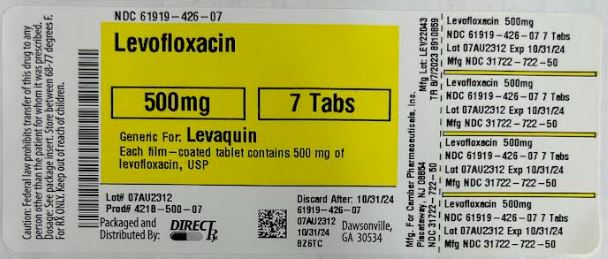
Levofloxacin 500 mg Tablet, Film Coated, 7-count — NDC 61919-426-07 (Billing 61919-0426-07)
This is a package of 7 tablets of Levofloxacin 500 mg Tablet, Film Coated from DIRECT RX, marketed since Apr 2019 and currently FDA-listed. It is the main listing for this product, which comes in 3 package sizes.
NDC database record
One package, one record: these facts belong to NDC 61919-426-07 alone.
- Record
- FDA NDC Directory package listing · Human prescription drug
- Code segments
- 61919 labeler · 426 product · 07 package
- Package marketed since
- Apr 24, 2019
- Sample package
- No — commercial package
- Listing certified through
- Dec 31, 2027
- Billing quantity
- 7 EA per package
- Barcode (UPC-A, from the NDC)
- 3 6191942607 8
- FDA record last changed
- Jul 24, 2026
Identity & classification
Regulatory identifiers FDA, NLM and CMS codes for this package
Drug-database identifiers Medi-Span GPI and First Databank GCN / HICL / AHFS classification
- GSN (GCN sequence number): 029928
- GCN: 47074
- HICL (First Databank): 012384
- AHFS class code: 08:12.18.00
- RxCUI (RxNorm): 199885
Where does this data come from?
- FDA openFDA NDC Directory · synced Oct 1, 2026
- FDA label on DailyMed · label index refreshed Oct 5, 2026
- RxNorm (NLM RxNav) · catalog refreshed Oct 1, 2026
- Medi-Span GPI (licensed)
- First Databank (licensed) · refreshed Oct 1, 2026
RxNorm drug class
This medicine belongs to the Fluoroquinolone Antibacterial class.
Where does this data come from?
- RxClass (NLM) · catalog refreshed Oct 1, 2026
Clinical
Levofloxacin is used to treat certain infections caused by bacteria. Levofloxacin is also used to prevent anthrax (a serious infection that may be spread on purpose as part of a bioterror attack) in people who may have been exposed to anthrax germs in the air, and to treat and prevent plague (a serious infection that may be spread on purpose as part of a bioterror attack.) Levofloxacin is in a class of antibiotics called fluoroquinolones. It works by killing bacteria that cause infections. Antibiotics such as levofloxacin will not work for colds, flu, or other viral infections. Using antibiot...
Read the full MedlinePlus article ↗- It treats bacterial infections such as pneumonia, skin, urinary tract, prostate and sinus infections, and is used after anthrax exposure and for plague. The eye drops treat bacteri...
- Tablets and oral solution are taken by mouth, usually once a day. Take it exactly as prescribed and finish the course. Keep it at least 2 hours apart from antacids, magnesium and s...
- Nausea, headache, diarrhea, trouble sleeping, constipation and dizziness are the most common. Most are manageable, but let me know if they bother you.
- Stop and call right away for tendon pain or swelling, tingling or numbness, new anxiety, confusion or mood changes, rash or swelling, severe diarrhea, or yellow skin or eyes. These...
Patient education
Supplement & herbal interactions
Some supplements/herbs that may interact with Levofloxacin — tap one for details:
Levofloxacin may be associated with lower levels of 11 nutrients — worth a chat with your pharmacist, not a cause for alarm.
Where does this data come from?
- MedlinePlus (NLM) · refreshed Oct 1, 2026
- FDA label on DailyMed · label index refreshed Oct 5, 2026
Ask a licensed pharmacist directly — free, answered by our team.
Pricing
A drug doesn't have one price. Each row is a different public payment system, and none is what you'd pay at the counter — that depends on your insurance. The ⓘ on each row explains what it measures.
| Price system | Per each | Per package |
|---|---|---|
| Retail pharmacies payNADAC · weekly | Not in the retail survey — common for institutional, discontinued, or low-volume packs. | |
| Medicaid paysCMS SDUD · 12 mo | No recent Medicaid claims on file for this NDC — rare and low-volume NDCs are suppressed in the public data. | |
| Medicare drug plans payPart D · Q2 2026 | $0.3933 | $2.75 / 7 tablets |
Where does this data come from?
- CMS NADAC weekly file
- CMS ASP pricing files · refreshed Sep 20, 2026
- CMS Medicaid State Drug Utilization Data · refreshed Oct 5, 2026
- CMS Part D plan pricing files · refreshed Sep 24, 2026
- VA National Acquisition Center price file
Packaging — all sizes for this product
| Package NDC | Description | Marketing start | Marketing end | Status |
|---|---|---|---|---|
| 61919-0426-07 You're viewing this Main listing | 7 TABLET, FILM COATED in 1 BOTTLE | 2019-04-24 | — | Active |
| 61919-0426-10 61919-426-10 | 10 TABLET, FILM COATED in 1 BOTTLE | 2019-04-24 | — | Active |
| 61919-0426-14 61919-426-14 | 14 TABLET, FILM COATED in 1 BOTTLE | 2019-04-24 | — | Active |
You're viewing the smallest of 3 pack sizes for this product.
Pack size FAQ
What quantity is in this package?
How does this package differ from NDC 61919-0426-10?
What NDC number is used to bill for this package of Levofloxacin 500 mg Tablet, Film Coated?
Therapeutic equivalents
| Product | Labeler | Pack | NADAC/unit | TE | Status | Price vs. this |
|---|---|---|---|---|---|---|
| Levofloxacin 500 mg 00904-6352-61 | Major | 1 tablet | $0.133 | AB | Availability likely | — |
| Levofloxacin 500 mg 33342-0532-08 | Macleods | 50 tablets | $0.133 | AB | Availability likely | — |
| Levofloxacin 500 mg 62135-0656-50 | Chartwell | 50 tablets | $0.133 | AB | Availability likely | — |
| Levofloxacin 500 mg 31722-0722-31 | Camber | 10 tablets | — | AB | FDA listed | — |
| Levofloxacin 500 mg 43063-0457-02 | PD-Rx | 2 tablets | — | AB | FDA listed | — |
| Levofloxacin 500 mg 50090-3311-00 | A-S | 7 tablets | — | AB | FDA listed | — |
| Levofloxacin 500 mg 50090-3314-00 | A-S | 10 tablets | — | AB | FDA listed | — |
| Levofloxacin 500 mg 51407-0429-50 | Golden | 50 tablets | — | AB | FDA listed | — |
| Levofloxacin 500 mg 51655-0666-07 | Northwind | 7 tablets | — | AB | FDA listed | — |
| Levofloxacin 500 mg 55111-0280-01 | Dr. | 100 tablets | — | AB | FDA listed | — |
| Levofloxacin 500 mg 55154-5897-00 | Cardinal | 1 tablet | — | AB | FDA listed | — |
| Levofloxacin 500 mgthis 61919-0426-07 | DIRECT | 7 tablets | — | AB | FDA listed | — |
| levofloxacin 500 mg 65841-0692-01 | Zydus | 100 tablets | — | AB | FDA listed | — |
| Levofloxacin 500 mg 65862-0537-10 | Aurobindo | 10 tablets | — | — | FDA listed | — |
| Levofloxacin 500 mg 67296-0743-05 | Redpharm | 5 tablets | — | AB | FDA listed | — |
| levofloxacin 500 mg 67296-2126-01 | Redpharm | 10 tablets | — | AB | FDA listed | — |
| Levofloxacin 500 mg 68071-3511-05 | NuCare | 50 tablets | — | AB | FDA listed | — |
| Levofloxacin 500 mg 68071-4512-01 | NuCare | 1 tablet | — | AB | FDA listed | — |
| Levofloxacin 500 mg 68071-4738-01 | NuCare | 10 tablets | — | AB | FDA listed | — |
| Levofloxacin 500 mg 68788-6938-01 | Preferred | 10 tablets | — | AB | FDA listed | — |
| levofloxacin 500 mg 68788-8772-01 | Preferred | 10 tablets | — | AB | FDA listed | — |
| Levofloxacin 500 mg 70518-0453-00 | REMEDYREPACK | 7 tablets | — | AB | Discontinued | — |
| Levofloxacin 500 mg 70518-0587-00 | REMEDYREPACK | 30 tablets | — | AB | FDA listed | — |
| Levofloxacin 500 mg 70518-3712-00 | REMEDYREPACK | 10 tablets | — | AB | FDA listed | — |
| levofloxacin 500 mg 70518-4568-00 | REMEDYREPACK | 30 tablets | — | AB | FDA listed | — |
| Levofloxacin 500 mg 71205-0002-03 | Proficient | 3 tablets | — | AB | FDA listed | — |
| Levofloxacin 500 mg 71335-0434-00 | Bryant | 90 tablets | — | AB | Discontinued | — |
| levofloxacin 500 mg 71335-2276-00 | Bryant | 90 tablets | — | AB | FDA listed | — |
| levofloxacin 500 mg 72578-0099-01 | Viona | 100 tablets | — | AB | FDA listed | — |
| Levofloxacin 500 mg 72789-0085-50 | PD-Rx | 50 tablets | — | AB | FDA listed | — |
| Levofloxacin 500 mg 72789-0367-07 | PD-Rx | 7 tablets | — | AB | FDA listed | — |
| Levofloxacin 500 mg 76420-0816-00 | Asclemed | 1000 tablets | — | AB | FDA listed | — |
| Levofloxacin 500 mg 80425-0007-01 | ADVANCED | 14 tablets | — | AB | FDA listed | — |
| Levofloxacin 500 mg 80425-0008-01 | Advanced | 14 tablets | — | AB | FDA listed | — |
| Levofloxacin 500 mg 83939-0020-01 | VERITYRX, | 1 tablet | — | AB | FDA listed | — |
| Levofloxacin 500 mg 68180-0241-01 | Lupin | 100 tablets | — | — | Discontinued | — |
| Levofloxacin 500 mg 85534-0097-00 | HAWAII | 5 tablets | — | AB | FDA listed | — |
| levofloxacin 500 mg 67046-1358-03 | Coupler | 30 tablets | — | AB | FDA listed | — |
Where does this data come from?
- FDA openFDA NDC Directory · synced Oct 1, 2026
- FDA Orange Book · refreshed Oct 3, 2026
- CMS NADAC weekly file
Availability & generic status
This product is an FDA-approved generic. Other versions of the same drug are listed under Therapeutic equivalents, least expensive first.
Where does this data come from?
- FDA Orange Book · refreshed Oct 3, 2026
What it looks like
Where does this data come from?
- FDA label on DailyMed · label index refreshed Oct 5, 2026
Inactive Ingredients / Excipients
Inactive ingredients, also called excipients, are components of the drug product other than the active ingredient. They may include fillers, dyes, coatings, preservatives, flavors, or other formulation ingredients.
💡 Tap an ingredient (hover on desktop) to see what it is and why it’s used.
-
UNII OP1R32D61U
Microcrystalline cellulose is a purified form of cellulose, a natural fiber from plant sources. It acts as a binder and filler in tablets and capsules, helping hold ingredients together and give the medicine its shape and size.
-
UNII M28OL1HH48
Croscarmellose sodium is a plant-based substance derived from cellulose. It acts as a disintegrant, helping tablets and capsules break down quickly in the digestive system so the medicine can be absorbed.
-
UNII 1K09F3G675
Ferric oxide red is an inorganic iron compound used as a colorant in medicines. It gives tablets, capsules, or other dosage forms a red or reddish tint for identification and appearance.
-
UNII EX438O2MRT
Ferric oxide yellow is a naturally occurring iron compound used as a colorant in medications. It gives tablets, capsules, and other forms a yellow or golden hue for identification and appearance.
-
UNII 3NXW29V3WO
Hypromellose is a plant-based thickener made from cellulose. It's used in medicines as a binder to hold ingredients together, a coating for tablets, and a thickener for liquids.
-
UNII 70097M6I30
Magnesium stearate is a salt made from magnesium and stearic acid, a fatty substance. It's used in tablets and capsules as a lubricant and glidant to help ingredients flow smoothly during manufacturing and prevent sticking.
-
UNII 3WJQ0SDW1A
Polyethylene glycol is a synthetic liquid or solid polymer used in medicines as a solvent, lubricant, and humectant. It helps dissolve active ingredients, reduces friction during manufacturing, and retains moisture in the final product.
-
UNII 6OZP39ZG8H
Polysorbate 80 is a synthetic emulsifier derived from sorbitol and oleic acid. It helps mix oil and water-based ingredients together in medications and improves how the product disperses in the body.
-
UNII FZ989GH94E
Povidone is a synthetic polymer made from a plastic-like material. It acts as a binder to hold tablet ingredients together and as a disintegrant to help the tablet break apart in your stomach so the medicine can be absorbed.
-
UNII 15FIX9V2JP
Titanium dioxide is a bright white mineral powder commonly used as a colorant and opacifying agent. It makes pills and tablets white or lighter in color and helps make coatings non-transparent.
10 inactive ingredients listed in the exact product block matched to this NDC.
Where does this data come from?
ingredient classCode="IACT" elements from the exact product block matched by this NDC. Label-section narrative from DailyMed / the openFDA label index is shown separately when available.- FDA label on DailyMed · label index refreshed Oct 5, 2026
- FDA openFDA NDC Directory · synced Oct 1, 2026
Inactive ingredient FAQ
Are inactive ingredients the same for every manufacturer?
Why might an inactive ingredient be missing?
Can inactive ingredients matter?
Manufacturer & labeler
More NDCs from DIRECT RX labeler code 61919
- Prednisone 5 mg Tablet NDC 61919-365-21
- Methocarbamol 500 mg Tablet NDC 61919-368-07
- Rizatriptan Benzoate 5 mg Tablet NDC 61919-394-18
- Benzonatate 100 mg Capsule NDC 61919-400-20
- AMOXICILLIN 400 mg/5mL Powder, For Suspension NDC 61919-401-32
- Diazepam 5 mg Tablet NDC 61919-409-02
- Meloxicam 7.5 mg Tablet NDC 61919-434-10
- Nortriptyline Hydrochloride 10 mg Capsule NDC 61919-435-30
- Ibuprofen Ibuorofen 800 mg Tablet, Film Coated NDC 61919-463-15
- Meloxicam 15 mg Tablet NDC 61919-469-07
- Acetaminophen and Codeine 300 mg; 30 mg Tablet NDC 61919-484-10
- Fluconazole 200 mg Tablet NDC 61919-493-03
Where does this data come from?
- FDA openFDA NDC Directory · synced Oct 1, 2026
- Drugs@FDA
Full prescribing information FDA SPL
🚨 Boxed Warning ▾
WARNING: SERIOUS ADVERSE REACTIONS INCLUDING TENDINITIS, TENDON RUPTURE, PERIPHERAL NEUROPATHY, CENTRAL NERVOUS SYSTEM EFFECTS AND EXACERBATION OF MYASTHENIA GRAVISWARNING: SERIOUS ADVERSE REACTIONS INCLUDING TENDINITIS, TENDON RUPTURE, PERIPHERAL NEUROPATHY, CENTRAL NERVOUS SYSTEM EFFECTS AND EXACERBATION OF MYASTHENIA GRAVIS WARNING: SERIOUS ADVERSE REACTIONS INCLUDING TENDINITIS, TENDON RUPTURE, PERIPHERAL NEUROPATHY, CENTRAL NERVOUS SYSTEM EFFECTS AND EXACERBATION OFMYASTHENIA GRAVIS • Fluoroquinolones, including levofloxacin, have been associated with disabling and potentially irreversible serious adverse reactions that have occurred together [see Warnings and Precautions (5.1)], including: o Tendinitis and tendon rupture [see Warnings and Precautions (5.2)] o Peripheral neuropathy [see Warnings and Precautions (5.3)] o Central nervous system effects [see Warnings and Precautions (5.4)] Discontinue levofloxacin immediately and avoid the use of fluoroquinolones, including levofloxacin, in patients who experience any of these serious adverse reactions [see Warnings and Precautions (5.1)] • Fluoroquinolones, including levofloxacin, may exacerbate muscle weakness in patients with myasthenia gravis.
Avoid levofloxacin in patients with a known history of myasthenia gravis [see Warnings and Precautions (5.5)]. • Because fluoroquinolones, including levofloxacin, have been associated with serious adverse reactions [see Warnings and Precautions (5.1 to 5.14)], reserve levofloxacin for use in patients who have no alternative treatment options for the following indications: o Uncomplicated urinary tract infection [see Indications and Usage (1.12)] o Acute bacterial exacerbation of chronic bronchitis [see Indications and Usage (1.13)] o Acute bacterial sinusitis [see Indications and Usage (1.14)].
🎯 Indications and Usage ▾
Levofloxacin tablets are indicated for the treatment of adults (≥18 years of age) with mild, moderate, and severe infections caused by susceptible isolates of the designated microorganisms in the conditions listed in this section.
1.1Nosocomial Pneumonia Levofloxacin is indicated for the treatment of nosocomial pneumonia due to methicillin-susceptible Staphylococcus aureus, Pseudomonas aeruginosa, Serratia marcescens, Escherichia coli, Klebsiella pneumoniae, Haemophilus influenzae, or Streptococcus pneumoniae. Adjunctive therapy should be used as clinically indicated. Where Pseudomonas aeruginosa is a documented or presumptive pathogen, combination therapy with an anti-pseudomonal β-lactam is recommended [see Clinical Studies (14.1)].
1.2Community-Acquired Pneumonia: 7 to 14 day Treatment Regimen Levofloxacin is indicated for the treatment of community-acquired pneumonia due to methicillin-susceptible Staphylococcus aureus, Streptococcus pneumoniae (including multi-drug-resistant Streptococcus pneumoniae [MDRSP]), Haemophilus influenzae, Haemophilus parainfluenzae, Klebsiella pneumoniae, Moraxella catarrhalis, Chlamydophila pneumoniae, Legionella pneumophila, or Mycoplasma pneumoniae[see Dosage and Administration (2.1) and Clinical Studies (14.2)].
MDRSP isolates are isolates resistant to two or more of the following antibacterials: penicillin (MIC ≥ 2 mcg/mL), 2nd generation cephalosporins, e.g., cefuroxime, macrolides, tetracyclines and trimethoprim/sulfamethoxazole.
1.3Community-Acquired Pneumonia: 5-day Treatment Regimen Levofloxacin is indicated for the treatment of community-acquired pneumonia due to Streptococcus pneumoniae (excluding multi-drug-resistant isolates [MDRSP]), Haemophilus influenzae, Haemophilus parainfluenzae, Mycoplasma pneumoniae, or Chlamydophila pneumoniae[see Dosage and Administration (2.1) and Clinical Studies (14.3)].
1.4Complicated Skin and Skin Structure Infections Levofloxacin is indicated for the treatment of complicated skin and skin structure infections due to methicillin-susceptible Staphylococcus aureus, Enterococcus faecalis, Streptococcus pyogenes, or Proteus mirabilis [see Clinical Studies (14.5)].
1.5Uncomplicated Skin and Skin Structure Infections Levofloxacin is indicated for the treatment of uncomplicated skin and skin structure infections (mild to moderate) including abscesses, cellulitis, furuncles, impetigo, pyoderma, wound infections, due to methicillin-susceptible Staphylococcus aureus, or Streptococcus pyogenes.
1.6Chronic Bacterial Prostatitis Levofloxacin is indicated for the treatment of chronic bacterial prostatitis due to Escherichia coli, Enterococcus faecalis, or methicillin-susceptible Staphylococcus epidermidis [see Clinical Studies (14.6)].
1.7Inhalational Anthrax (Post-Exposure) Levofloxacin is indicated for inhalational anthrax (post-exposure) to reduce the incidence or progression of disease following exposure to aerosolized Bacillus anthracis. The effectiveness of levofloxacin is based on plasma concentrations achieved in humans, a surrogate endpoint reasonably likely to predict clinical benefit. Levofloxacin has not been tested in humans for the post-exposure prevention of inhalation anthrax.
The safety of levofloxacin in adults for durations of therapy beyond 28 days or in pediatric patients for durations of therapy beyond 14 days has not been studied. Prolonged levofloxacin therapy should only be used when the benefit outweighs the risk [see Dosage and Administration (2.1, 2.2) and Clinical Studies (14.9)].
1.8Plague Levofloxacin is indicated for treatment of plague, including pneumonic and septicemic plague, due to Yersinia pestis (Y. pestis) and prophylaxis for plague in adults and pediatric patients, 6 months of age and older. Efficacy studies of levofloxacin could not be conducted in humans with plague for ethical and feasibility reasons. Therefore, approval of this indication was based on an efficacy study conducted in animals [see Dosage and Admin… [Excerpted — this section continues on DailyMed.]
⏱️ Dosage and Administration ▾
2.1Dosage in Adult Patients with Normal Renal Function The usual dose of levofloxacin tablets is 250 mg, 500 mg, or 750 mg administered orally every 24 hours, as indicated by infection and described in Table 1. These recommendations apply to patients with creatinine clearance ≥ 50 mL/min. For patients with creatinine clearance <50 mL/min, adjustments to the dosing regimen are required [see Dosage and Administration (2.3) ].
Table 1: Dosage in Adult Patients with Normal Renal Function (creatinine clearance ≥ 50 mL/min) Type of Infection* Dosed Every 24 hours Duration (days)† Nosocomial Pneumonia 750 mg 7-14 Community Acquired Pneumonia‡ 500 mg 7-14 Community Acquired Pneumonia§ 750 mg 5 Complicated Skin and Skin Structure Infections (SSSI) 750 mg 7-14 Uncomplicated SSSI 500 mg 7-10 Chronic Bacterial Prostatitis 500 mg 28 Inhalation Anthrax (Post-Exposure), adult and pediatric patients > 50 kg Þ,ß Pediatric patients < 50 kg and ≥ 6 months of age Þ,ß 500 mg see Table 2 below (2.2) 60ß 60ß Plague, adult and pediatric patients > 50 kgá Pediatric patients < 50 kg and ≥ 6 months of age 500 mg see Table 2 below (2.2) 10 to 14 10 to 14 Complicated Urinary Tract Infection (cUTI) or Acute Pyelonephritis (AP)¶ 750 mg 5 Complicated Urinary Tract Infection (cUTI) or Acute Pyelonephritis (AP)# 250 mg 10 Uncomplicated Urinary Tract Infection 250 mg 3 Acute Bacterial Exacerbation of Chronic Bronchitis (ABECB) 500 mg 7 Acute Bacterial Sinusitis (ABS) 750 mg 5 500 mg 10-14 *Due to the designated pathogens [see Indications and Usage (1)]. †Sequential therapy (intravenous to oral) may be instituted at the discretion of the physician. ‡Due to methicillin-susceptible Staphylococcus aureus, Streptococcus pneumoniae (including multi-drug-resistant isolates [MDRSP]), Haemophilus influenzae, Haemophilus parainfluenzae, Klebsiella pneumoniae, Moraxella catarrhalis, Chlamydophila pneumoniae, Legionella pneumophila, or Mycoplasma pneumoniae[see Indications and Usage (1.2)]. §Due to Streptococcus pneumoniae (excluding multi-drug-resistant isolates [MDRSP]), Haemophilusinfluenzae, Haemophilus parainfluenzae, Mycoplasma pneumoniae, or Chlamydophila pneumoniae [see Indications and Usage (1.3)]. ¶This regimen is indicated for cUTI due to Escherichia coli, Klebsiella pneumoniae, Proteus mirabilis and AP due to E. coli, including cases with concurrent bacteremia. #This regimen is indicated for cUTI due to Enterococcus faecalis, Enterococcus cloacae, Escherichia coli, Klebsiella pneumoniae, Proteus mirabilis, Pseudomonas aeruginosa; and for AP due to E. coli. ÞDrug administration should begin as soon as possible after suspected or confirmed exposure to aerosolized B.anthracis.
This indication is based on a surrogate endpoint. Levofloxacin plasma concentrations achieved in humans are reasonably likely to predict clinical benefit [see Clinical Studies (14.9)]. ßThe safety of levofloxacin in adults for duration of therapy beyond 28 days or in pediatric patients for durations beyond 14 days has not been studied. An increased incidence of musculoskeletal adverse events compared to controls has been observed in pediatric patients [see Warnings and Precautions(5.10), Use in Specific Populations (8.4), and Clinical Studies (14.9)].
Prolonged levofloxacin therapy should only be used when the benefit outweighs the risk. áDrug administration should begin as soon as possible after suspected or confirmed exposure to Yersinia pestis. Higher doses of levofloxacin typically used for treatment of pneumonia can be used for treatment of plague, if clinically indicated.
2.2Dosage in Pediatric Patients The dosage in pediatric patients ≥ 6 months of age is described below in Table 2. Table 2: Dosage in Pediatric Patients ≥ 6 months of age Type of Infection* Dose Freq. Once every Duration† Inhalational Anthrax (post-exposure)‡,§ Pediatric patients > 50 kg 500 mg 24 hr 60 days§ Pediatric patients < 50 kg and ≥ 6 months of age 8 mg/kg (not to exceed 250 mg per dose) 12 hr 60 days§ Plagu… [Excerpted — this section continues on DailyMed.]
💊 Dosage Forms and Strengths ▾
• Levofloxacin tablets, USP 250 mg are pink colored, capsule shaped, biconvex, film coated tablets debossed with '25on' one side and 'I' on the other side. • Levofloxacin tablets, USP 500 mg are orange colored, capsule shaped, biconvex, film coated tablets debossed with '26' on one side and 'I' on the other side. • Levofloxacin tablets, USP 750 mg are white colored, capsule shaped, biconvex, film coated tablets debossed with '18'on one side and 'I' on the other side.
⛔ Contraindications ▾
Levofloxacin is contraindicated in persons with known hypersensitivity to levofloxacin, or other quinolone antibacterials [see Warnings and Precautions (5.3)].
⚠️ Warnings and Cautions ▾
5.1Disabling and Potentially Irreversible Serious Adverse Reactions Including Tendinitis and Tendon Rupture, Peripheral Neuropathy, and Central Nervous System Effects Fluoroquinolones, including levofloxacin, have been associated with disabling and potentially irreversible serious adverse reactions from different body systems that can occur together in the same patient. Commonly seen adverse reactions include tendinitis, tendon rupture, arthralgia, myalgia, peripheral neuropathy, and central nervous system effects (hallucinations, anxiety, depression, insomnia, severe headaches, and confusion).
These reactions can occur within hours to weeks after starting levofloxacin. Patients of any age or without pre-existing risk factors have experienced these adverse reactions [see Warnings and Precautions (5.2, 5.3, 5.4)]. Discontinue levofloxacin immediately at the first signs or symptoms of any serious adverse reaction.
In addition, avoid the use of fluoroquinolones, including levofloxacin, in patients who have experienced any of these serious adverse reactions associated with fluoroquinolones.
5.2Tendinopathy and Tendon Rupture Fluoroquinolones, including levofloxacin, have been associated with an increased risk of tendinitis and tendon rupture in all ages [see Warnings and Precautions (5.1) and Adverse Reactions (6.2)]. This adverse reaction most frequently involves the Achilles tendon and has also been reported with the rotator cuff (the shoulder), the hand, the biceps, the thumb, and other tendon sites. Tendinitis or tendon rupture can occur within hours or days of starting levofloxacin or as long as several months after completion of fluoroquinolone therapy.
Tendinitis and tendon rupture can occur bilaterally. The risk of developing fluoroquinolone-associated tendinitis and tendon rupture is increased in patients over 60 years of age, in those taking corticosteroid drugs, and in patients with kidney, heart or lung transplants. Other factors that may independently increase the risk of tendon rupture include strenuous physical activity, renal failure, and previous tendon disorders such as rheumatoid arthritis.
Tendinitis and tendon rupture have been reported in patients taking fluoroquinolones who do not have the above risk factors. Discontinue levofloxacin immediately if the patient experiences pain, swelling, inflammation or rupture of a tendon. Patients should be advised to rest at the first sign of tendinitis or tendon rupture, and to contact their healthcare provider regarding changing to a non-quinolone antimicrobial drug.
Avoid levofloxacin in patients who have a history of tendon disorders or tendon rupture [see Adverse Reactions (6.3); Patient Counseling Information (17.3)].
5.3Peripheral Neuropathy Fluoroquinolones, including levofloxacin, have been associated with an increased risk of peripheral neuropathy. Cases of sensory or sensorimotor axonal polyneuropathy affecting small and/or large axons resulting in paresthesias, hypoesthesias, dysesthesias and weakness have been reported in patients receiving fluoroquinolones, including levofloxacin. Symptoms may occur soon after initiation of levofloxacin and may be irreversible in some patients [see Warnings and Precautions (5.1) and Adverse Reactions (6.1, 6.2)].
Discontinue levofloxacin immediately if the patient experiences symptoms of neuropathy including pain, burning, tingling, numbness, and/or weakness or other alterations of sensation including light touch, pain, temperature, position sense, and vibratory sensation. Avoid fluoroquinolones, including levofloxacin, in patients who have previously experienced peripheral neuropathy [see Adverse Reactions (6), Patient Counseling Information (17.3)].
5.4Central Nervous System Effects Fluoroquinolones, including levofloxacin, have been associated with an increased risk of central nervous system (CNS) effects, including convulsions, toxic psychoses, increased intracranial pressure (including pseudotumor cerebri). Fluoroqu… [Excerpted — this section continues on DailyMed.]
🤒 Adverse Reactions ▾
6.1Serious and Otherwise Important Adverse Reactions The following serious and otherwise important adverse drug reactions are discussed in greater detail in other sections of labeling: • Disabling and Potentially Irreversible Serious Adverse Reactions [see Warnings and Precautions (5.1)] • Tendinitis and Tendon Rupture [see Warnings and Precautions (5.2)] • Peripheral Neuropathy [see Warnings and Precautions (5.3)] • Central Nervous System Effects [see Warnings and Precautions (5.4)] • Exacerbation of Myasthenia Gravis [see Warnings and Precautions (5.5)] • Other Serious and Sometimes Fatal Reactions [see Warnings and Precautions (5.6)] • Hypersensitivity Reactions [see Warnings and Precautions (5.7)] • Hepatotoxicity [see Warnings and Precautions (5.8)] • Clostridium difficile-Associated Diarrhea [see Warnings and Precautions (5.9)] • Prolongation of the QT Interval [see Warnings and Precautions (5.10)] • Musculoskeletal Disorders in Pediatric Patients [see Warnings and Precautions (5.11)] • Blood Glucose Disturbances [see Warnings and Precautions (5.12)] • Photosensitivity/Phototoxicity [see Warnings and Precautions (5.13)] • Development of Drug Resistant Bacteria [see Warnings and Precautions (5.14)] Crystalluria and cylindruria have been reported with quinolones, including levofloxacin.
Therefore, adequate hydration of patients receiving levofloxacin should be maintained to prevent the formation of a highly concentrated urine [see Dosage and Administration (2.5)].
6.2Clinical Trial Experience Because clinical trials are conducted under widely varying conditions, adverse reaction rates observed in the clinical trials of a drug cannot be directly compared to rates in the clinical trials of another drug and may not reflect the rates observed in practice. The data described below reflect exposure to levofloxacin in 7537 patients in 29 pooled Phase 3 clinical trials. The population studied had a mean age of 50 years (approximately 74% of the population was < 65 years of age), 50% were male, 71% were Caucasian, 19% were Black.
Patients were treated with levofloxacin for a wide variety of infectious diseases [see Indications and Usage (1)]. Patients received levofloxacin doses of 750 mg once daily, 250 mg once daily, or 500 mg once or twice daily. Treatment duration was usually 3 to 14 days, and the mean number of days on therapy was 10 days.
The overall incidence, type and distribution of adverse reactions was similar in patients receiving levofloxacin doses of 750 mg once daily, 250 mg once daily, and 500 mg once or twice daily. Discontinuation of levofloxacin due to adverse drug reactions occurred in 4.3% of patients overall, 3.8% of patients treated with the 250 mg and 500 mg doses and 5.4% of patients treated with the 750 mg dose. The most common adverse drug reactions leading to discontinuation with the 250 and 500 mg doses were gastrointestinal (1.4%), primarily nausea (0.6%); vomiting (0.4%); dizziness (0.3%); and headache (0.2%).
The most common adverse drug reactions leading to discontinuation with the 750 mg dose were gastrointestinal (1.2%), primarily nausea (0.6%), vomiting (0.5%); dizziness (0.3%); and headache (0.3%). Adverse reactions occurring in ≥1% of levofloxacin-treated patients and less common adverse reactions, occurring in 0.1 to <1% of levofloxacin-treated patients, are shown in Table 4 and Table 5, respectively. The most common adverse drug reactions (≥3%) are nausea, headache, diarrhea, insomnia, constipation, and dizziness.
Table 4:Common (≥1%) Adverse Reactions Reported in Clinical Trials with Levofloxacin System/Organ Class Adverse Reaction % (N=7537) Infections and Infestations moniliasis 1 Psychiatric Disorders insomnia*[see Warnings and Precautions (5.4)] 4 Nervous System Disorders headache dizziness [see Warnings and Precautions (5.4)] 6 3 Respiratory, Thoracic and Mediastinal Disorders dyspnea [see Warnings and Precautions (5.7)] 1 Gastrointestinal Disorders nausea diarrhea constipation abdomi… [Excerpted — this section continues on DailyMed.]
🔄 Drug Interactions ▾
7.1Chelation Agents: Antacids, Sucralfate, Metal Cations, Multivitamins Levofloxacin Tablets While the chelation by divalent cations is less marked than with other fluoroquinolones, concurrent administration of levofloxacin tablets with antacids containing magnesium, or aluminum, as well as sucralfate, metal cations such as iron, and multivitamin preparations with zinc may interfere with the gastrointestinal absorption of levofloxacin, resulting in systemic levels considerably lower than desired. Tablets with antacids containing magnesium, aluminum, as well as sucralfate, metal cations such as iron, and multivitamin preparations with zinc or didanosine may substantially interfere with the gastrointestinal absorption of levofloxacin, resulting in systemic levels considerably lower than desired.
These agents should be taken at least two hours before or two hours after oral levofloxacin administration.
7.2Warfarin No significant effect of levofloxacin on the peak plasma concentrations, AUC, and other disposition parameters for R- and S- warfarin was detected in a clinical study involving healthy volunteers. Similarly, no apparent effect of warfarin on levofloxacin absorption and disposition was observed. However, there have been reports during the postmarketing experience in patients that levofloxacin enhances the effects of warfarin.
Elevations of the prothrombin time in the setting of concurrent warfarin and levofloxacin use have been associated with episodes of bleeding. Prothrombin time, International Normalized Ratio (INR), or other suitable anticoagulation tests should be closely monitored if levofloxacin is administered concomitantly with warfarin. Patients should also be monitored for evidence of bleeding [see Adverse Reactions (6.3); Patient Counseling Information (17.4)].
7.3Antidiabetic Agents Disturbances of blood glucose, including hyperglycemia and hypoglycemia, have been reported in patients treated concomitantly with fluoroquinolones and an antidiabetic agent. Therefore, careful monitoring of blood glucose is recommended when these agents are co-administered [see Warnings and Precautions (5.12); Adverse Reactions (6.2), Patient Counseling Information (17.4)].
7.4Non-Steroidal Anti-Inflammatory Drugs The concomitant administration of a non-steroidal anti-inflammatory drug with a fluoroquinolone, including levofloxacin, may increase the risk of CNS stimulation and convulsive seizures [see Warnings and Precautions (5.4)].
7.5Theophylline No significant effect of levofloxacin on the plasma concentrations, AUC, and other disposition parameters for theophylline was detected in a clinical study involving healthy volunteers. Similarly, no apparent effect of theophylline on levofloxacin absorption and disposition was observed. However, concomitant administration of other fluoroquinolones with theophylline has resulted in prolonged elimination half-life, elevated serum theophylline levels, and a subsequent increase in the risk of theophylline-related adverse reactions in the patient population.
Therefore, theophylline levels should be closely monitored and appropriate dosage adjustments made when levofloxacin is co-administered. Adverse reactions, including seizures, may occur with or without an elevation in serum theophylline levels [see Warnings and Precautions (5.4)].
7.6Cyclosporine No significant effect of levofloxacin on the peak plasma concentrations, AUC, and other disposition parameters for cyclosporine was detected in a clinical study involving healthy volunteers. However, elevated serum levels of cyclosporine have been reported in the patient population when co-administered with some other fluoroquinolones. Levofloxacin Cmax and ke were slightly lower while Tmax and t1/2 were slightly longer in the presence of cyclosporine than those observed in other studies without concomitant medication.
The differences, however, are not considered to be clinically significant. Therefore, no dosage adjustment is required… [Excerpted — this section continues on DailyMed.]
👥 Use in Specific Populations ▾
8.1Pregnancy Pregnancy Category C. Levofloxacin was not teratogenic in rats at oral doses as high as 810 mg/kg/day which corresponds to 9.4 times the highest recommended human dose based upon relative body surface area, or at intravenous doses as high as 160 mg/kg/day corresponding to 1.9 times the highest recommended human dose based upon relative body surface area. The oral dose of 810 mg/kg/day to rats caused decreased fetal body weight and increased fetal mortality.
No teratogenicity was observed when rabbits were dosed orally as high as 50 mg/kg/day which corresponds to 1.1 times the highest recommended human dose based upon relative body surface area, or when dosed intravenously as high as 25 mg/kg/day, corresponding to 0.5 times the highest recommended human dose based upon relative body surface area. There are, however, no adequate and well-controlled studies in pregnant women. Levofloxacin should be used during pregnancy only if the potential benefit justifies the potential risk to the fetus.
8.3Nursing Mothers Based on data on other fluoroquinolones and very limited data on levofloxacin, it can be presumed that levofloxacin will be excreted in human milk. Because of the potential for serious adverse reactions from levofloxacin in nursing infants, a decision should be made whether to discontinue nursing or to discontinue the drug, taking into account the importance of the drug to the mother.
8.4Pediatric Use Quinolones, including levofloxacin, cause arthropathy and osteochondrosis in juvenile animals of several species. [see Warnings and Precautions (5.11) and Animal Toxicologyand/or Pharmacology (13.2)]. Inhalational Anthrax (Post-Exposure) Levofloxacin is indicated in pediatric patients 6 months of age and older, for inhalational anthrax (post-exposure). The risk-benefit assessment indicates that administration of levofloxacin to pediatric patients is appropriate.
The safety of levofloxacin in pediatric patients treated for more than 14 days has not been studied [see Indications and Usage (1.7), Dosage and Administration (2.2) and Clinical Studies (14.9)]. Plague Levofloxacin is indicated in pediatric patients, 6 months of age and older, for treatment of plague, including pneumonic and septicemic plague due to Yersinia pestis (Y. pestis) and prophylaxis for plague. Efficacy studies of levofloxacin could not be conducted in humans with pneumonic plague for ethical and feasibility reasons.
Therefore, approval of this indication was based on an efficacy study conducted in animals. The risk-benefit assessment indicates that administration of levofloxacin to pediatric patients is appropriate [see Indications and Usage (1.8), Dosage and Administration (2.2) and Clinical Studies (14.10)]. Safety and effectiveness in pediatric patients below the age of six months have not been established.
Adverse Events In clinical trials, 1534 children (6 months to 16 years of age) were treated with oral and intravenous levofloxacin. Children 6 months to 5 years of age received levofloxacin 10 mg/kg twice a day and children greater than 5 years of age received 10 mg/kg once a day (maximum 500 mg per day) for approximately 10 days. A subset of children in the clinical trials (1340 levofloxacin-treated and 893 non-fluoroquinolone-treated) enrolled in a prospective, long-term surveillance study to assess the incidence of protocol-defined musculoskeletal disorders (arthralgia, arthritis, tendinopathy, gait abnormality) during 60 days and 1 year following the first dose of the study drug.
Children treated with levofloxacin had a significantly higher incidence of musculoskeletal disorders when compared to the non-fluoroquinolone-treated children as illustrated in Table 7. Table 7: Incidence of Musculoskeletal Disorders in Pediatric Clinical Trial Follow-up Period Levofloxacin N = 1340 Non-Fluoroquinolone* N = 893 p-value† 60 days 28 (2.1%) 8 (0.9%) p = 0.038 1 year ‡ 46 (3.4%) 16 (1.8%) p = 0.025 *Non-Fluoroquinolone: ceftriaxone, amoxicilli… [Excerpted — this section continues on DailyMed.]
🆘 Overdosage ▾
In the event of an acute overdosage, the stomach should be emptied. The patient should be observed and appropriate hydration maintained. Levofloxacin is not efficiently removed by hemodialysis or peritoneal dialysis.
Levofloxacin exhibits a low potential for acute toxicity. Mice, rats, dogs and monkeys exhibited the following clinical signs after receiving a single high dose of levofloxacin: ataxia, ptosis, decreased locomotor activity, dyspnea, prostration, tremors, and convulsions. Doses in excess of 1500 mg/kg orally and 250 mg/kg IV produced significant mortality in rodents.
🧬 Clinical Pharmacology ▾
12.1Mechanism of Action Levofloxacin is a member of the fluoroquinolone class of antibacterial agents [see Microbiology (12.4)].
12.3Pharmacokinetics The mean ± SD pharmacokinetic parameters of levofloxacin determined under single and steady-state conditions following oral tablet, oral solution, or intravenous (IV) doses of levofloxacin are summarized in Table 8. Table 8: Mean ± SD Levofloxacin PK Parameters Regimen Cmax (mcg/mL) Tmax (h) AUC (mcg•h/mL) CL/F1(mL/min) Vd/F2 (L) t1/2 (h) CLR(mL/min) Single dose 250 mg oral tablet3 2.8 ± 0.4 1.6 ± 1 27.2 ± 3.9 156 ± 20 ND 7.3 ± 0.9 142 ± 21 500 mg oral tablet3* 5.1 ± 0.8 1.3 ± 0.6 47.9 ± 6.8 178 ± 28 ND 6.3 ± 0.6 103 ± 30 500 mg oral solution12 5.8 ± 1.8 0.8 ± 0.7 47.8 ± 10.8 183 ± 40 112 ± 37.2 7 ±
1.4ND 500 mg IV3 6.2 ± 1 1 ± 0.1 48.3 ± 5.4 175 ± 20 90 ± 11 6.4 ± 0.7 112 ± 25 750 mg oral tablet5* 9.3 ± 1.6 1.6 ± 0.8 101 ± 20 129 ± 24 83 ± 17 7.5 ±
0.9ND 750 mg IV5 11.5 ± 44 ND 110 ± 40 126 ± 39 75 ± 13 7.5 ±
1.6ND Multiple dose 500 mg every 24h oral tablet3 5.7 ± 1.4 1.1 ± 0.4 47.5 ± 6.7 175 ± 25 102 ± 22 7.6 ± 1.6 116 ± 31 500 mg every 24h IV3 6.4 ±
0.8ND 54.6 ± 11.1 158 ± 29 91 ± 12 7 ± 0.8 99 ± 28 500 mg or 250 mg every 24h IV, patients with bacterial infection6 8.7 ± 47 ND 72.5 ± 51.27 154 ± 72 111 ± 58 ND ND 750 mg every 24h oral tablet5 8.6 ± 1.9 1.4 ± 0.5 90.7 ± 17.6 143 ± 29 100 ± 16 8.8 ± 1.5 116 ± 28 750 mg every 24h IV5 12.1 ±
4.14ND 108 ± 34 126 ± 37 80 ± 27 7.9 ±
1.9ND 500 mg oral tablet single dose, effects of gender and age: Male8 5.5 ± 1.1 1.2 ± 0.4 54.4 ± 18.9 166 ± 44 89 ± 13 7.5 ± 2.1 126 ± 38 Female9 7 ± 1.6 1.7 ± 0.5 67.7 ± 24.2 136 ± 44 62 ± 16 6.1 ± 0.8 106 ± 40 Young10 5.5 ± 1 1.5 ± 0.6 47.5 ± 9.8 182 ± 35 83 ± 18 6 ± 0.9 140 ± 33 Elderly11 7 ± 1.6 1.4 ± 0.5 74.7 ± 23.3 121 ± 33 67 ± 19 7.6 ± 2 091 ± 29 500 mg oral single dose tablet, patients with renal insufficiency: CLCR 50-80 mL/min 7.5 ± 1.8 1.5 ± 0.5 95.6 ± 11.8 88 ± 10 ND 9.1 ± 0.9 57 ± 8 CLCR 20-49 mL/min 7.1 ± 3.1 2.1 ± 1.3 182.1 ± 62.6 51 ± 19 ND 27 ± 10 26 ± 13 CLCR <20 mL/min 8.2 ± 2.6 1.1 ± 1 263.5 ± 72.5 33 ± 8 ND 35 ± 5 13 ± 3 Hemodialysis 5.7 ± 1 2.8 ±
2.2ND ND ND 76 ± 42 ND CAPD 6.9 ± 2.3 1.4 ±
1.1ND ND ND 51 ± 24 ND 1clearance/bioavailability 2volume of distribution/bioavailability 3healthy males 18 to 53 years of age 460 min infusion for 250 mg and 500 mg doses, 90 min infusion for 750 mg dose 5healthy male and female subjects 18 to 54 years of age 6500 mg every 48h for patients with moderate renal impairment (CLCR 20 to 50 mL/min) and infections of the respiratory tract or skin 7dose-normalized values (to 500 mg dose), estimated by population pharmacokinetic modeling 8 healthy males 22 to 75 years of age 9 healthy females 18 to 80 years of age 10 young healthy male and female subjects 18 to 36 years of age 11healthy elderly male and female subjects 66 to 80 years of age 12healthy males and females 19 to 55 years of age. *Absolute bioavailability; F=0.99 ± 0.08 from a 500 mg tablet and F=0.99 ± 0.06 from a 750 mg tablet; ND=not determined.
Absorption Levofloxacin is rapidly and essentially completely absorbed after oral administration. Peak plasma concentrations are usually attained one to two hours after oral dosing. The absolute bioavailability of levofloxacin from a 500 mg tablet and a 750 mg tablet of levofloxacin are both approximately 99%, demonstrating complete oral absorption of levofloxacin.
Following a single intravenous dose of levofloxacin to healthy volunteers, the mean ± SD peak plasma concentration attained was 6.2 ± 1 mcg/mL after a 500 mg dose infused over 60 minutes and 11.5 ± 4 mcg/mL after a 750 mg dose infused over 90 minutes. Levofloxacin Oral Solution and Tablet formulations are bioequivalent. Levofloxacin pharmacokinetics are linear and predictable after single and multiple oral or IV dosing regimens.
Steady-state conditions are reached within 48 hours following a 500 mg or 750 mg once-daily dosage regimen. The mean ± SD peak and trough plasma concentr… [Excerpted — this section continues on DailyMed.]
📦 How Supplied / Storage and Handling ▾
16.1Levofloxacin Tablets, USP •Levofloxacin Tablets USP, 250 mg are pink colored, capsule shaped, biconvex, film coated tablets debossed with '25' on one side and 'I' on the other side. •Levofloxacin Tablets USP, 500 mg are orange colored, capsule shaped, biconvex, film coated tablets debossed with '26' on one side and 'I' on the other side. •Levofloxacin Tablets USP, 750 mg are white colored, capsule shaped, biconvex, film coated tablets debossed with '18' on one side and 'I' on the other side. Store at 20° to 25°C (68° to 77°F) [see USP Controlled Room Temperature].
📋 Description ▾
[levofloxacinfigure1] Levofloxacin, USP is a synthetic broad-spectrum antibacterial agent for oral administration. Chemically, levofloxacin, a chiral fluorinated carboxyquinolone, is the pure (-)-(S)-enantiomer of the racemic drug substance ofloxacin. The chemical name is (-)-(S)-9-fluoro-2,3-dihydro-3-methyl-10-(4-methyl-1-piperazinyl)-7-oxo-7H-pyrido [1,2,3-de]-1,4 benzoxazine-6-carboxylic acid hemihydrate.
Figure 1: The Chemical Structure of Levofloxacin, USP The molecular formula is C18H20FN3O4 •1/2 H2O and the molecular weight is 370.38. Levofloxacin, USP is a light yellowish-white to yellow-white crystals or crystalline powder. The molecule exists as a zwitterion at the pH conditions in the small intestine.
The data demonstrate that from pH 0.6 to 5.8, the solubility of levofloxacin, USP is essentially constant (approximately 100 mg/mL). Levofloxacin, USP is considered soluble to freely soluble in this pH range, as defined by USP nomenclature. Above pH 5.8, the solubility increases rapidly to its maximum at pH 6.7 (272 mg/mL) and is considered freely soluble in this range.
Above pH 6.7, the solubility decreases and reaches a minimum value (about 50 mg/mL) at a pH of approximately 6.9. Levofloxacin, USP has the potential to form stable coordination compounds with many metal ions. This in vitro chelation potential has the following formation order: Al+3>Cu+2>Zn+2>Mg+2>Ca+2.
Excipients and Description of Dosage Form Levofloxacin Tablets, USP are available as film-coated tablets and contain the following inactive ingredients: • 250 mg: croscarmellose sodium, hypromellose, iron oxide red, magnesium stearate, microcrystalline cellulose, polyethylene glycol, polysorbate 80, povidone and titanium dioxide. • 500 mg: croscarmellose sodium, hypromellose, iron oxide red, iron oxide yellow magnesium stearate, microcrystalline cellulose, polyethylene glycol, polysorbate 80, povidone and titanium dioxide. • 750 mg: croscarmellose sodium, hypromellose, magnesium stearate, microcrystalline cellulose, polyethylene glycol, polysorbate 80, povidone and titanium dioxide.
Levofloxacin tablets, USP meets USP Dissolution Test 2.
🔬 Clinical Studies ▾
14.1Nosocomial Pneumonia Adult patients with clinically and radiologically documented nosocomial pneumonia were enrolled in a multicenter, randomized, open-label study comparing intravenous levofloxacin (750 mg once daily) followed by oral levofloxacin (750 mg once daily) for a total of 7 to 15 days to intravenous imipenem/cilastatin (500 to 1000 mg every 6 to 8 hours daily) followed by oral ciprofloxacin (750 mg every 12 hours daily) for a total of 7 to 15 days. Levofloxacin-treated patients received an average of 7 days of intravenous therapy (range: 1 to 16 days); comparator-treated patients received an average of 8 days of intravenous therapy (range: 1 to 19 days).
Overall, in the clinically and microbiologically evaluable population, adjunctive therapy was empirically initiated at study entry in 56 of 93 (60.2%) patients in the levofloxacin arm and 53 of 94 (56.4%) patients in the comparator arm. The average duration of adjunctive therapy was 7 days in the levofloxacin arm and 7 days in the comparator. In clinically and microbiologically evaluable patients with documented Pseudomonas aeruginosa infection, 15 of 17 (88.2%) received ceftazidime (N=11) or piperacillin/tazobactam (N=4) in the levofloxacin arm and 16 of 17 (94.1%) received an aminoglycoside in the comparator arm.
Overall, in clinically and microbiologically evaluable patients, vancomycin was added to the treatment regimen of 37 of 93 (39.8%) patients in the levofloxacin arm and 28 of 94 (29.8%) patients in the comparator arm for suspected methicillin-resistant S. aureus infection. Clinical success rates in clinically and microbiologically evaluable patients at the posttherapy visit (primary study endpoint assessed on day 3 to 15 after completing therapy) were 58.1% for levofloxacin and 60.6% for comparator. The 95% CI for the difference of response rates (levofloxacin minus comparator) was [-17.2, 12].
The microbiological eradication rates at the posttherapy visit were 66.7% for levofloxacin and 60.6% for comparator. The 95% CI for the difference of eradication rates (levofloxacin minus comparator) was [-8.3, 20.3]. Clinical success and microbiological eradication rates by pathogen are detailed in Table 11.
Table 11: Clinical Success Rates and Bacteriological Eradication Rates (Nosocomial Pneumonia) Pathogen N Levofloxacin No. (%) of Patients Microbiologic/ Clinical Outcomes N Imipenem/Cilastatin No. (%) of Patients Microbiologic/ Clinical Outcomes MSSA* 21 14 (66.7)/13 (61.9) 19 13 (68.4)/15 (78.9) P. aeruginosa† 17 10 (58.8)/11 (64.7) 17 5 (29.4)/7 (41.2) S. marcescens 11 9 (81.8)/7 (63.6) 7 2 (28.6)/3 (42.9) E. coli 12 10 (83.3)/7 (58.3) 11 7 (63.6 )/8 (72.7) K. pneumoniae ‡ 11 9 (81.8)/5 (45.5) 7 6 (85.7)/3 (42.9) H. influenzae 16 13 (81.3)/10 (62.5) 15 14 (93.3)/11 (73.3) S. pneumoniae 4 3 (75)/3 (75) 7 5 (71.4)/4 (57.1) *Methicillin-susceptible S. aureus †See above text for use of combination therapy ‡The observed differences in rates for the clinical and microbiological outcomes may reflect other factors that were not accounted for in the study
14.2Community-Acquired Pneumonia: 7 to 14 day Treatment Regimen Adult inpatients and outpatients with a diagnosis of community-acquired bacterial pneumonia were evaluated in 2 pivotal clinical studies. In the first study, 590 patients were enrolled in a prospective, multi-center, unblinded randomized trial comparing levofloxacin 500 mg once daily orally or intravenously for 7 to 14 days to ceftriaxone 1 to 2 grams intravenously once or in equally divided doses twice daily followed by cefuroxime axetil 500 mg orally twice daily for a total of 7 to 14 days.
Patients assigned to treatment with the control regimen were allowed to receive erythromycin (or doxycycline if intolerant of erythromycin) if an infection due to atypical pathogens was suspected or proven. Clinical and microbiologic evaluations were performed during treatment, 5 to 7 days posttherapy, and 3 to 4 weeks posttherapy. Clinical success (cure plus… [Excerpted — this section continues on DailyMed.]
🧪 Nonclinical Toxicology ▾
13.1Carcinogenesis & Mutagenesis & Impairment Of Fertility In a lifetime bioassay in rats, levofloxacin exhibited no carcinogenic potential following daily dietary administration for 2 years; the highest dose (100 mg/kg/day) was 1.4 times the highest recommended human dose (750 mg) based upon relative body surface area. Levofloxacin did not shorten the time to tumor development of UV-induced skin tumors in hairless albino (Skh-1) mice at any levofloxacin dose level and was therefore not photo-carcinogenic under conditions of this study.
Dermal levofloxacin concentrations in the hairless mice ranged from 25 to 42 mcg/g at the highest levofloxacin dose level (300 mg/kg/day) used in the photo-carcinogenicity study. By comparison, dermal levofloxacin concentrations in human subjects receiving 750 mg of levofloxacin averaged approximately 11.8 mcg/g at Cmax. Levofloxacin was not mutagenic in the following assays: Ames bacterial mutation assay (S. typhimurium and E. coli), CHO/HGPRT forward mutation assay, mouse micronucleus test, mouse dominant lethal test, rat unscheduled DNA synthesis assay, and the mouse sister chromatid exchange assay.
It was positive in the in vitro chromosomal aberration (CHL cell line) and sister chromatid exchange (CHL/IU cell line) assays. Levofloxacin caused no impairment of fertility or reproductive performance in rats at oral doses as high as 360 mg/kg/day, corresponding to 4.2 times the highest recommended human dose based upon relative body surface area and intravenous doses as high as 100 mg/kg/day, corresponding to 1.2 times the highest recommended human dose based upon relative body surface area.
13.2Animal Pharmacology & OR Toxicology Levofloxacin and other quinolones have been shown to cause arthropathy in immature animals of most species tested [see Warnings and Precautions (5.11)]. In immature dogs (4 to 5 months old), oral doses of 10 mg/kg/day for 7 days and intravenous doses of 4 mg/kg/day for 14 days of levofloxacin resulted in arthropathic lesions. Administration at oral doses of 300 mg/kg/day for 7 days and intravenous doses of 60 mg/kg/day for 4 weeks produced arthropathy in juvenile rats.
Three-month old beagle dogs dosed orally with levofloxacin at 40 mg/kg/day exhibited clinically severe arthrotoxicity resulting in the termination of dosing at Day 8 of a 14-day dosing routine. Slight musculoskeletal clinical effects, in the absence of gross pathological or histopathological effects, resulted from the lowest dose level of 2.5 mg/kg/day (approximately 0.2-fold the pediatric dose based upon AUC comparisons). Synovitis and articular cartilage lesions were observed at the 10 and 40 mg/kg dose levels (approximately 0.7-fold and 2.4-fold the pediatric dose, respectively, based on AUC comparisons).
Articular cartilage gross pathology and histopathology persisted to the end of the 18-week recovery period for those dogs from the 10 and 40 mg/kg/day dose levels. When tested in a mouse ear swelling bioassay, levofloxacin exhibited phototoxicity similar in magnitude to ofloxacin, but less phototoxicity than other quinolones. While crystalluria has been observed in some intravenous rat studies, urinary crystals are not formed in the bladder, being present only after micturition and are not associated with nephrotoxicity.
In mice, the CNS stimulatory effect of quinolones is enhanced by concomitant administration of non-steroidal anti-inflammatory drugs. In dogs, levofloxacin administered at 6 mg/kg or higher by rapid intravenous injection produced hypotensive effects. These effects were considered to be related to histamine release.
In vitro and in vivo studies in animals indicate that levofloxacin is neither an enzyme inducer nor inhibitor in the human therapeutic plasma concentration range; therefore, no drug metabolizing enzyme-related interactions with other drugs or agents are anticipated.
📄 Package Label / Principal Display Panel ▾
440-14
426-07
426-10
61919-426-07
61919-426-14
Medicare Part D spend CMS · PART D · 2026 (Q1)
About this NDC listing & data coverage
What data is (and isn’t) available for this NDC — tap to expand
| NDC identity (package / product / labeler codes) | ✓ Available |
| Labeler | ✓ Available |
| Product & package description | ✓ Available |
| Marketing category & status | ✓ Available |
| Active ingredient / dosage form / route | ✓ Available |
| FDA label (SPL via DailyMed) | ✓ Available |
| Package photos | ✓ Available |
| Inactive ingredients (structured) | ✓ Available |
| NADAC pharmacy acquisition price (CMS) | — Not published for this NDC CMS publishes NADAC only for NDCs reported in its retail-pharmacy survey. |
| Orange Book / therapeutic-equivalence data | ✓ Available |
| HCPCS J-code billing crosswalk | — Not published for this NDC Most self-administered / retail products have no J-code — that is normal. |
| Medicaid utilization (CMS SDUD) | — Not published for this NDC CMS reports utilization only for NDCs with Medicaid claims above its privacy threshold. |