
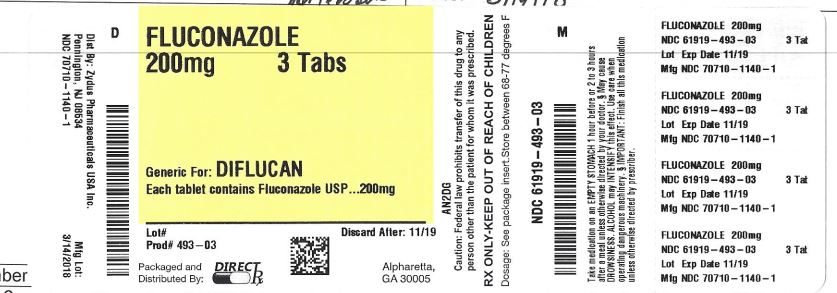
Fluconazole 200 mg Tablet, 3-count
🆔 Identity & classification
Where does this data come from?
🏷️ RxNorm drug class
This medicine belongs to the Azole Antifungal class.
Where does this data come from?
🏭 Manufacturer & labeler
Where does this data come from?
🩺 Clinical
Fluconazole is used to treat fungal infections, including yeast infections of the vagina, mouth, throat, esophagus (tube leading from the mouth to the stomach), abdomen (area between the chest and waist), lungs, blood, and other organs. Fluconazole is also used to treat meningitis (infection of the membranes covering the brain and spine) caused by fungus. Fluconazole is also used to prevent yeast infections in patients who are likely to become infected because they are being treated with chemotherapy or radiation therapy before a bone marrow transplant (replacement of unhealthy spongy tissue i...
Read the full MedlinePlus article ↗- Yes, for a vaginal yeast infection, a single oral dose of fluconazole is the standard treatment with Diflucan or generic fluconazole tablets. Most people see their symptoms clear u...
- I was prescribed fluconazole for a yeast infection — do I really only need one pill?
- Good news — you can take fluconazole tablets with or without food, whichever is easier on your stomach. Studies showed that eating doesn't meaningfully change how much of the drug...
- Can I take fluconazole with food, or does it need to be on an empty stomach?
Patient education
Supplement & herbal interactions
Some supplements/herbs that may interact with Fluconazole — tap one for details:
Where does this data come from?
Ask a licensed pharmacist directly — free, answered by our team.
💊 What it looks like
Where does this data come from?
🧪 Inactive Ingredients / Excipients
Inactive ingredients, also called excipients, are components of the drug product other than the active ingredient. They may include fillers, dyes, coatings, preservatives, flavors, or other formulation ingredients.
💡 Tap an ingredient (hover on desktop) to see what it is and why it’s used.
-
UNII L11K75P92J
A mineral salt made from calcium and phosphate. It acts as a filler and binder in tablets to add bulk and help hold the medicine together in solid form.
-
UNII OP1R32D61U
Microcrystalline cellulose is a purified form of cellulose, a natural fiber from plant sources. It acts as a binder and filler in tablets and capsules, helping hold ingredients together and give the medicine its shape and size.
-
UNII M28OL1HH48
Croscarmellose sodium is a plant-based substance derived from cellulose. It acts as a disintegrant, helping tablets and capsules break down quickly in the digestive system so the medicine can be absorbed.
-
UNII WZB9127XOA
A synthetic red dye used to color medications and make them easier to identify. It serves as a colorant in tablets, capsules, and liquid formulations.
-
UNII 70097M6I30
Magnesium stearate is a salt made from magnesium and stearic acid, a fatty substance. It's used in tablets and capsules as a lubricant and glidant to help ingredients flow smoothly during manufacturing and prevent sticking.
-
UNII U725QWY32X
Povidone K30 is a synthetic polymer made from petroleum. It acts as a binder to hold tablet ingredients together and as a disintegrant to help the tablet break apart in the stomach so the medicine can be absorbed.
6 inactive ingredients listed in the exact product block matched to this NDC.
Where does this data come from?
ingredient classCode="IACT" elements from the exact product block matched by this NDC. Label-section narrative from DailyMed / the openFDA label index is shown separately when available.Inactive ingredient FAQ
Are inactive ingredients the same for every manufacturer?
Why might an inactive ingredient be missing?
Can inactive ingredients matter?
💲 Pricing
A drug doesn't have one price. Each row is a different public payment system, and none is what you'd pay at the counter — that depends on your insurance. The ⓘ on each row explains what it measures.
| Price system | Per each | Per package |
|---|---|---|
| Retail pharmacies payNADAC · weekly | Not in the retail survey — common for institutional, discontinued, or low-volume packs. | |
| Medicaid paysCMS SDUD · 12 mo | No recent Medicaid claims on file for this NDC — rare and low-volume NDCs are suppressed in the public data. | |
| Medicare drug plans payPart D · Q2 2026 | $0.4361 | $1.31 / 3 tablets |
Where does this data come from?
🔁 Therapeutic equivalents
| Product | Labeler | Pack | NADAC/unit | TE | Status | Price vs. this |
|---|---|---|---|---|---|---|
| Fluconazole 200 mg 00904-6501-06 | Major | 50 tablets | $0.392 | AB | Availability likely | — |
| Fluconazole 200 mg 16714-0693-01 | NorthStar | 30 tablets | $0.392 | AB | Availability likely | — |
| Fluconazole 200 mg 50268-0339-15 | AvPAK | 50 tablets | $0.392 | AB | Availability likely | — |
| Fluconazole 200 mg 55111-0146-01 | Dr. | 100 tablets | $0.392 | AB | Availability likely | — |
| Fluconazole 200 mg 57237-0006-01 | Rising | 100 tablets | $0.392 | AB | Availability likely | — |
| Fluconazole 200 mg 62135-0133-30 | Chartwell | 30 tablets | $0.392 | AB | Availability likely | — |
| Fluconazole 200 mg 62559-0993-30 | ANI | 30 tablets | $0.392 | AB | Availability likely | — |
| Fluconazole 200 mg 68001-0254-04 | BluePoint | 30 tablets | $0.392 | AB | Availability likely | — |
| Fluconazole 200 mg 68084-0735-01 | American | 100 tablets | $0.392 | AB | Availability likely | — |
| fluconazole 200 mg 70710-1140-01 | Zydus | 100 tablets | $0.392 | AB | Availability likely | — |
| fluconazole 200 mg 50090-4864-01 | A-S | 30 tablets | — | AB | FDA listed | — |
| Fluconazole 200 mg 50090-6751-00 | A-S | 28 tablets | — | AB | FDA listed | — |
| Fluconazole 200 mg 51407-0427-01 | Golden | 100 tablets | — | AB | FDA listed | — |
| Fluconazole 200 mg 55154-7875-00 | Cardinal | 10 tablets | — | AB | FDA listed | — |
| Fluconazole 200 mg 55289-0824-20 | PD-Rx | 20 tablets | — | AB | FDA listed | — |
| Fluconazole 200 mgthis 61919-0493-03 | Direct | 3 tablets | — | AB | FDA listed | — |
| Fluconazole 200 mg 63187-0878-01 | Proficient | 1 tablet | — | AB | FDA listed | — |
| Fluconazole 200 mg 63629-9091-01 | Bryant | 30 tablets | — | AB | FDA listed | — |
| Fluconazole 200 mg 65862-0061-01 | Aurobindo | 100 tablets | — | AB | FDA listed | — |
| Fluconazole 200 mg 68071-3428-02 | NuCare | 2 tablets | — | AB | FDA listed | — |
| Fluconazole 200 mg 68071-3547-03 | NuCare | 30 tablets | — | AB | FDA listed | — |
| Fluconazole 200 mg 68462-0104-10 | Glenmark | 1000 tablets | — | AB | FDA listed | — |
| Fluconazole 200 mg 68788-8526-00 | Preferred | 1 tablet | — | AB | FDA listed | — |
| Fluconazole 200 mg 70518-4020-00 | REMEDYREPACK | 30 tablets | — | AB | FDA listed | — |
| fluconazole 200 mg 70771-1066-01 | Zydus | 100 tablets | — | AB | FDA listed | — |
| fluconazole 200 mg 71205-0283-30 | Proficient | 30 tablets | — | AB | FDA listed | — |
| fluconazole 200 mg 71335-0769-00 | Bryant | 4 tablets | — | AB | FDA listed | — |
| Fluconazole 200 mg 71335-1895-00 | Bryant | 4 tablets | — | AB | FDA listed | — |
| Fluconazole 200 mg 71335-2235-00 | Bryant | 4 tablets | — | AB | FDA listed | — |
| Fluconazole 200 mg 72189-0516-03 | Direct_Rx | 3 tablets | — | AB | FDA listed | — |
| Fluconazole 200 mg 77771-0399-01 | Radha | 100 tablets | — | AB | FDA listed | — |
| Fluconazole 200 mg 82804-0030-30 | Proficient | 30 tablets | — | AB | FDA listed | — |
| Fluconazole 200 mg 82804-0146-06 | Proficient | 6 tablets | — | AB | FDA listed | — |
| Fluconazole 200 mg 85766-0104-00 | Sportpharm | 100 tablets | — | AB | FDA listed | — |
| Fluconazole 200 mg 85766-0159-00 | Sportpharm | 100 tablets | — | AB | FDA listed | — |
| Fluconazole 200 mg 87063-0206-00 | ASCLEMED | 100 tablets | — | AB | FDA listed | — |
| fluconazole 200 mg 68788-4163-00 | Preferred | 1 tablet | — | AB | FDA listed | — |
Where does this data come from?
⏳ Availability & generic status
This product is an FDA-approved generic. Other versions of the same drug are listed under Therapeutic equivalents, least expensive first.
Where does this data come from?
📊 Medicare Part D spend CMS · PART D · 2026 (Q1)
🔬 Reported adverse events (FAERS)
Top reported reactions
Reporter sex
Serious outcomes
Where does this data come from?
📦 Packaging — all sizes for this product
| Package NDC | Description | Marketing start | Status |
|---|---|---|---|
| 61919-0493-03 You're viewing this | 3 TABLET in 1 BOTTLE (61919-493-03) | 2019-04-08 | Active |
🧭 About this NDC listing & data coverage
What data is (and isn’t) available for this NDC — tap to expand
| NDC identity (package / product / labeler codes) | ✓ Available |
| Labeler | ✓ Available |
| Product & package description | ✓ Available |
| Marketing category & status | ✓ Available |
| Active ingredient / dosage form / route | ✓ Available |
| FDA label (SPL via DailyMed) | ✓ Available |
| Package photos | ✓ Available |
| Inactive ingredients (structured) | ✓ Available |
| NADAC pharmacy acquisition price (CMS) | — Not published for this NDC CMS publishes NADAC only for NDCs reported in its retail-pharmacy survey. |
| Orange Book / therapeutic-equivalence data | ✓ Available |
| HCPCS J-code billing crosswalk | — Not published for this NDC Most self-administered / retail products have no J-code — that is normal. |
| Medicaid utilization (CMS SDUD) | — Not published for this NDC CMS reports utilization only for NDCs with Medicaid claims above its privacy threshold. |
Questions about this listing
Why is there no price listed?
Is the NDC printed on the package the same as the 11-digit billing NDC?
What do the three segments of this NDC mean?
Is this package still being marketed?
Who lists this product with the FDA?
Do I need a prescription for this product?
Where does this data come from?
📄 Full prescribing information FDA SPL
⏱️ Dosage and Administration ▾
Dosage and Administration in Adults Single Dose Vaginal candidiasis: The recommended dosage of fluconazole for vaginal candidiasis is 150 mg as a single oral dose. Multiple Dose SINCE ORAL ABSORPTION IS RAPID AND ALMOST COMPLETE, THE DAILY DOSE OF FLUCONAZOLE IS THE SAME FOR ORAL AND INTRAVENOUS ADMINISTRATION. In general, a loading dose of twice the daily dose is recommended on the first day of therapy to result in plasma concentrations close to steady-state by the second day of therapy.
The daily dose of fluconazole for the treatment of infections other than vaginal candidiasis should be based on the infecting organism and the patient’s response to therapy. Treatment should be continued until clinical parameters or laboratory tests indicate that active fungal infection has subsided. An inadequate period of treatment may lead to recurrence of active infection.
Patients with AIDS and cryptococcal meningitis or recurrent oropharyngeal candidiasis usually require maintenance therapy to prevent relapse. Oropharyngeal candidiasis: The recommended dosage of fluconazole for oropharyngeal candidiasis is 200 mg on the first day, followed by 100 mg once daily. Clinical evidence of oropharyngeal candidiasis generally resolves within several days, but treatment should be continued for at least 2 weeks to decrease the likelihood of relapse.
Esophageal candidiasis: The recommended dosage of fluconazole for esophageal candidiasis is 200 mg on the first day, followed by 100 mg once daily. Doses up to 400 mg/day may be used, based on medical judgment of the patient’s response to therapy. Patients with esophageal candidiasis should be treated for a minimum of three weeks and for at least two weeks following resolution of symptoms.
Systemic Candida infections: For systemic Candida infections including candidemia, disseminated candidiasis, and pneumonia, optimal therapeutic dosage and duration of therapy have not been established. In open, noncomparative studies of small numbers of patients, doses of up to 400 mg daily have been used. Urinary tract infections and peritonitis: For the treatment of Candida urinary tract infections and peritonitis, daily doses of 50 to 200 mg have been used in open, noncomparative studies of small numbers of patients.
Cryptococcal meningitis: The recommended dosage for treatment of acute cryptococcal meningitis is 400 mg on the first day, followed by 200 mg once daily. A dosage of 400 mg once daily may be used, based on medical judgment of the patient’s response to therapy. The recommended duration of treatment for initial therapy of cryptococcal meningitis is 10 to 12 weeks after the cerebrospinal fluid becomes culture negative.
The recommended dosage of fluconazole for suppression of relapse of cryptococcal meningitis in patients with AIDS is 200 mg once daily. Prophylaxis in patients undergoing bone marrow transplantation: The recommended fluconazole daily dosage for the prevention of candidiasis in patients undergoing bone marrow transplantation is 400 mg, once daily. Patients who are anticipated to have severe granulocytopenia (less than 500 neutrophils per cu mm) should start fluconazole prophylaxis several days before the anticipated onset of neutropenia, and continue for 7 days after the neutrophil count rises above 1000 cells per cu mm.
Dosage and Administration in Children The following dose equivalency scheme should generally provide equivalent exposure in pediatric and adult patients: [undefined] Experience with fluconazole in neonates is limited to pharmacokinetic studies in premature newborns. (See CLINICAL PHARMACOLOGY.) Based on the prolonged half-life seen in premature newborns (gestational age 26 to 29 weeks), these children, in the first two weeks of life, should receive the same dosage (mg/kg) as in older children, but administered every 72 hours.
After the first two weeks, these children should be dosed once daily. No information regarding fluconazole pharmacokinetics in full-term newborns is a…
🤒 Adverse Reactions ▾
Fluconazole is generally well tolerated. In some patients, particularly those with serious underlying diseases such as AIDS and cancer, changes in renal and hematological function test results and hepatic abnormalities have been observed during treatment with fluconazole and comparative agents, but the clinical significance and relationship to treatment is uncertain. In Patients Receiving a Single Dose for Vaginal Candidiasis During comparative clinical studies conducted in the United States, 448 patients with vaginal candidiasis were treated with fluconazole, 150 mg single dose.
The overall incidence of side effects possibly related to fluconazole was 26%. In 422 patients receiving active comparative agents, the incidence was 16%. The most common treatment-related adverse events reported in the patients who received 150 mg single dose fluconazole for vaginitis were headache (13%), nausea (7%), and abdominal pain (6%).
Other side effects reported with an incidence equal to or greater than 1% included diarrhea (3%), dyspepsia (1%), dizziness (1%), and taste perversion (1%). Most of the reported side effects were mild to moderate in severity. Rarely, angioedema and anaphylactic reaction have been reported in marketing experience.
In Patients Receiving Multiple Doses for Other Infections Sixteen percent of over 4000 patients treated with fluconazole in clinical trials of 7 days or more experienced adverse events. Treatment was discontinued in 1.5% of patients due to adverse clinical events and in 1.3% of patients due to laboratory test abnormalities. Clinical adverse events were reported more frequently in HIV infected patients (21%) than in non-HIV infected patients (13%); however, the patterns in HIV infected and non-HIV infected patients were similar.
The proportions of patients discontinuing therapy due to clinical adverse events were similar in the two groups (1.5%). The following treatment-related clinical adverse events occurred at an incidence of 1% or greater in 4048 patients receiving fluconazole for 7 or more days in clinical trials: nausea 3.7%, headache 1.9%, skin rash 1.8%, vomiting 1.7%, abdominal pain 1.7%, and diarrhea 1.5%. Hepatobiliary: In combined clinical trials and marketing experience, there have been rare cases of serious hepatic reactions during treatment with fluconazole.
(See WARNINGS.) The spectrum of these hepatic reactions has ranged from mild transient elevations in transaminases to clinical hepatitis, cholestasis and fulminant hepatic failure, including fatalities. Instances of fatal hepatic reactions were noted to occur primarily in patients with serious underlying medical conditions (predominantly AIDS or malignancy) and often while taking multiple concomitant medications. Transient hepatic reactions, including hepatitis and jaundice, have occurred among patients with no other identifiable risk factors.
In each of these cases, liver function returned to baseline on discontinuation of fluconazole. In two comparative trials evaluating the efficacy of fluconazole for the suppression of relapse of cryptococcal meningitis, a statistically significant increase was observed in median AST (SGOT) levels from a baseline value of 30 IU/L to 41 IU/L in one trial and 34 IU/L to 66 IU/L in the other. The overall rate of serum transaminase elevations of more than 8 times the upper limit of normal was approximately 1% in fluconazole-treated patients in clinical trials.
These elevations occurred in patients with severe underlying disease, predominantly AIDS or malignancies, most of whom were receiving multiple concomitant medications, including many known to be hepatotoxic. The incidence of abnormally elevated serum transaminases was greater in patients taking fluconazole concomitantly with one or more of the following medications: rifampin, phenytoin, isoniazid, valproic acid, or oral sulfonylurea hypoglycemic agents. Post-Marketing Experience In addition, the following adverse events have occurred during postm…
🧬 Clinical Pharmacology ▾
Pharmacokinetics and Metabolism The pharmacokinetic properties of fluconazole are similar following administration by the intravenous or oral routes. In normal volunteers, the bioavailability of orally administered fluconazole is over 90% compared with intravenous administration. Peak plasma concentrations (Cmax) in fasted normal volunteers occur between 1 and 2 hours with a terminal plasma elimination half-life of approximately 30 hours (range: 20 to 50 hours) after oral administration.
In fasted normal volunteers, administration of a single oral 400 mg dose of fluconazole leads to a mean Cmax of 6.72 mcg/mL (range: 4.12 to 8.08 mcg/mL) and after single oral doses of 50 to 400 mg, fluconazole plasma concentrations and AUC (area under the plasma concentration-time curve) are dose proportional. The Cmax and AUC data from a food-effect study involving administration of fluconazole tablets to healthy volunteers under fasting conditions and with a high-fat meal indicated that exposure to the drug is not affected by food.
Therefore, fluconazole may be taken without regard to meals. (See DOSAGE AND ADMINISTRATION.) Administration of a single oral 150 mg tablet of fluconazole to ten lactating women resulted in a mean Cmax of 2.61 mcg/mL (range: 1.57 to 3.65 mcg/mL). Steady-state concentrations are reached within 5 to 10 days following oral doses of 50 to 400 mg given once daily.
Administration of a loading dose (on day 1) of twice the usual daily dose results in plasma concentrations close to steady-state by the second day. The apparent volume of distribution of fluconazole approximates that of total body water. Plasma protein binding is low (11 to 12%).
Following either single- or multiple-oral doses for up to 14 days, fluconazole penetrates into all body fluids studied (see table below). In normal volunteers, saliva concentrations of fluconazole were equal to or slightly greater than plasma concentrations regardless of dose, route, or duration of dosing. In patients with bronchiectasis, sputum concentrations of fluconazole following a single 150 mg oral dose were equal to plasma concentrations at both 4 and 24 hours post dose.
In patients with fungal meningitis, fluconazole concentrations in the CSF are approximately 80% of the corresponding plasma concentrations. A single oral 150 mg dose of fluconazole administered to 27 patients penetrated into vaginal tissue, resulting in tissue: plasma ratios ranging from 0.94 to 1.14 over the first 48 hours following dosing. A single oral 150 mg dose of fluconazole administered to 14 patients penetrated into vaginal fluid, resulting in fluid: plasma ratios ranging from 0.36 to 0.71 over the first 72 hours following dosing. [undefined] * Relative to concurrent concentrations in plasma in subjects with normal renal function. † Independent of degree of meningeal inflammation.
In normal volunteers, fluconazole is cleared primarily by renal excretion, with approximately 80% of the administered dose appearing in the urine as unchanged drug. About 11% of the dose is excreted in the urine as metabolites. The pharmacokinetics of fluconazole are markedly affected by reduction in renal function.
There is an inverse relationship between the elimination half-life and creatinine clearance. The dose of fluconazole may need to be reduced in patients with impaired renal function. (See DOSAGE AND ADMINISTRATION.) A 3-hour hemodialysis session decreases plasma concentrations by approximately 50%.
In normal volunteers, fluconazole administration (doses ranging from 200 mg to 400 mg once daily for up to 14 days) was associated with small and inconsistent effects on testosterone concentrations, endogenous corticosteroid concentrations, and the ACTH-stimulated cortisol response. Pharmacokinetics in Children In children, the following pharmacokinetic data {Mean (% cv)} have been reported: [undefined] Clearance corrected for body weight was not affected by age in these studies. Mean body clearance in adults is report…
📋 Description ▾
Fluconazole, the first of a new subclass of synthetic triazole antifungal agents, is available as tablets for oral administration. Fluconazole is designated chemically as 2,4-difluoro-α,α1-bis(1H-1,2,4-triazol-1-ylmethyl) benzyl alcohol with a molecular formula of C13H12F2N6O and molecular weight 306.3. The structural formula is: Fluconazole USP is a white crystalline solid which is slightly soluble in water and saline.
Fluconazole tablets USP contain 50, 100, 150, or 200 mg of fluconazole USP and the following inactive ingredients: dibasic calcium phosphate anhydrous, ferric oxide (iron oxide, red), magnesium stearate, microcrystalline cellulose, povidone, sodium starch glycolate, and starch. Fluconazole tablets meets USP Dissolution Test 2. Close