
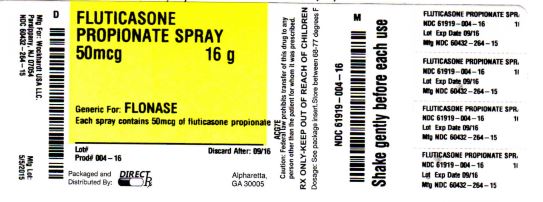
FLUTICASONE 50 ug/.1g Spray, Metered, 16 g
🆔 Identity & classification
Where does this data come from?
🏭 Manufacturer & labeler
Where does this data come from?
🩺 Clinical
Patient education
Supplement & herbal interactions
Some supplements/herbs that may interact with Fluticasone — tap one for details:
Fluticasone may be associated with lower levels of 8 nutrients — worth a chat with your pharmacist, not a cause for alarm.
Where does this data come from?
Ask a licensed pharmacist directly — free, answered by our team.
🧪 Inactive Ingredients / Excipients
Inactive ingredients, also called excipients, are components of the drug product other than the active ingredient. They may include fillers, dyes, coatings, preservatives, flavors, or other formulation ingredients.
Where does this data come from?
IACT rows and label-wide narrative are kept separate; availability and product-level specificity depend on the submitted label.Inactive ingredient FAQ
Are inactive ingredients the same for every manufacturer?
Why might an inactive ingredient be missing?
Can inactive ingredients matter?
💲 Pricing
A drug doesn't have one price. Each row is a different public payment system, and none is what you'd pay at the counter — that depends on your insurance. The ⓘ on each row explains what it measures.
| Price system | Per mL | Per package |
|---|---|---|
| Retail pharmacies payNADAC · weekly | Not in the retail survey — common for institutional, discontinued, or low-volume packs. | |
| Medicaid paysCMS SDUD · 12 mo | No recent Medicaid claims on file for this NDC — rare and low-volume NDCs are suppressed in the public data. | |
| Medicare drug plans payPart D · quarterly | No Part D plan price is available for this NDC in our data. | |
Where does this data come from?
🔁 Therapeutic equivalents
| Product | Labeler | Pack | NADAC/unit | TE | Status | Price vs. this |
|---|---|---|---|---|---|---|
| Fluticasone 50 ug/.1gthis 61919-0620-01 | Direct | 16 g | — | — | Discontinued | — |
Where does this data come from?
⏳ Availability & generic status
This product is an FDA-approved generic. Other versions of the same drug are listed under Therapeutic equivalents, least expensive first.
Where does this data come from?
📦 Packaging — all sizes for this product
| Package NDC | Description | Marketing start | Status |
|---|---|---|---|
| 61919-0620-01 You're viewing this | 16 g in 1 BOTTLE, PUMP (61919-620-01) | 2019-04-08 | Inactivated by FDA |
🧭 About this NDC listing & data coverage
What data is (and isn’t) available for this NDC — tap to expand
| NDC identity (package / product / labeler codes) | ✓ Available |
| Labeler | ✓ Available |
| Product & package description | ✓ Available |
| Marketing category & status | ✓ Available |
| Active ingredient / dosage form / route | ✓ Available |
| FDA label (SPL via DailyMed) | ✓ Available |
| Package photos | ✓ Available |
| Inactive ingredients (structured) | — Not published for this NDC The labeler did not submit a structured excipient list, or no SPL is available. |
| NADAC pharmacy acquisition price (CMS) | — Not published for this NDC CMS publishes NADAC only for NDCs reported in its retail-pharmacy survey. |
| Orange Book / therapeutic-equivalence data | — Not published for this NDC Applies only to products approved under an NDA/ANDA; many listings are out of scope. |
| HCPCS J-code billing crosswalk | — Not published for this NDC Most self-administered / retail products have no J-code — that is normal. |
| Medicaid utilization (CMS SDUD) | — Not published for this NDC CMS reports utilization only for NDCs with Medicaid claims above its privacy threshold. |
Questions about this listing
Why is there no price listed?
What does the discontinued status mean for this NDC?
Is the NDC printed on the package the same as the 11-digit billing NDC?
What do the three segments of this NDC mean?
Who lists this product with the FDA?
Do I need a prescription for this product?
Where does this data come from?
📄 Full prescribing information FDA SPL
🎯 Indications and Usage ▾
INDICATIONS & USAGE SECTION Fluticasone Propionate Nasal Spray, USP is indicated for the management of the nasal symptoms of seasonal and perennial allergic and nonallergic rhinitis in adults and pediatric patients 4 years of age and older. Safety and effectiveness of Fluticasone Propionate Nasal Spray, USP in children below 4 years of age have not been adequately established.
⏱️ Dosage and Administration ▾
DOSAGE & ADMINISTRATION SECTION Patients should use Fluticasone Propionate Nasal Spray, USP at regular intervals for optimal effect. Adults The recommended starting dosage in adults is 2 sprays (50 mcg of fluticasone propionate each) in each nostril once daily (total daily dose, 200 mcg). The same dosage divided into 100 mcg given twice daily (e.g., 8 a.m. and 8 p.m.) is also effective.
After the first few days, patients may be able to reduce their dosage to 100 mcg (1 spray in each nostril) once daily for maintenance therapy. Some patients (12 years of age and older) with seasonal allergic rhinitis may find as-needed use of 200 mcg once daily effective for symptom control (see Clinical Trials ). Greater symptom control may be achieved with scheduled regular use.
Adolescents and Children (4 Years of Age and Older) Patients should be started with 100 mcg (1 spray in each nostril once daily). Patients not adequately responding to 100 mcg may use 200 mcg (2 sprays in each nostril). Once adequate control is achieved, the dosage should be decreased to 100 mcg (1 spray in each nostril) daily.
The maximum total daily dosage should not exceed 2 sprays in each nostril (200 mcg/day). (See Individualization of Dosage and Clinical Trials sections.) Fluticasone Propionate Nasal Spray, USP is not recommended for children under 4 years of age. Directions for Use Illustrated patient's instructions for proper use accompany each package of Fluticasone Propionate Nasal Spray, USP.
⛔ Contraindications ▾
CONTRAINDICATIONS SECTION Fluticasone Propionate Nasal Spray, USP is contraindicated in patients with a hypersensitivity to any of its ingredients.
⚠️ Warnings ▾
WARNINGS SECTION The replacement of a systemic corticosteroid with a topical corticosteroid can be accompanied by signs of adrenal insufficiency, and in addition some patients may experience symptoms of withdrawal, e.g., joint and/or muscular pain, lassitude, and depression. Patients previously treated for prolonged periods with systemic corticosteroids and transferred to topical corticosteroids should be carefully monitored for acute adrenal insufficiency in response to stress. In those patients who have asthma or other clinical conditions requiring long-term systemic corticosteroid treatment, too rapid a decrease in systemic corticosteroids may cause a severe exacerbation of their symptoms.
The concomitant use of intranasal corticosteroids with other inhaled corticosteroids could increase the risk of signs or symptoms of hypercorticism and/or suppression of the HPA axis. A drug interaction study in healthy subjects has shown that ritonavir (a highly potent cytochrome P450 3A4 inhibitor) can significantly increase plasma fluticasone propionate exposure, resulting in significantly reduced serum cortisol concentrations (see CLINICAL PHARMACOLOGY: Drug Interactions and PRECAUTIONS: Drug Interactions ). During postmarketing use, there have been reports of clinically significant drug interactions in patients receiving fluticasone propionate and ritonavir, resulting in systemic corticosteroid effects including Cushing syndrome and adrenal suppression.
Therefore, coadministration of fluticasone propionate and ritonavir is not recommended unless the potential benefit to the patient outweighs the risk of systemic corticosteroid side effects. Persons who are using drugs that suppress the immune system are more susceptible to infections than healthy individuals. Chickenpox and measles, for example, can have a more serious or even fatal course in susceptible children or adults using corticosteroids.
In children or adults who have not had these diseases or been properly immunized, particular care should be taken to avoid exposure. How the dose, route, and duration of corticosteroid administration affect the risk of developing a disseminated infection is not known. The contribution of the underlying disease and/or prior corticosteroid treatment to the risk is also not known.
If exposed to chickenpox, prophylaxis with varicella zoster immune globulin (VZIG) may be indicated. If exposed to measles, prophylaxis with pooled intramuscular immunoglobulin (IG) may be indicated. (See the respective package inserts for complete VZIG and IG prescribing information.) If chickenpox develops, treatment with antiviral agents may be considered.
Avoid spraying in eyes.
🤒 Adverse Reactions ▾
ADVERSE REACTIONS SECTION In controlled US studies, more than 3,300 patients with seasonal allergic, perennial allergic, or perennial nonallergic rhinitis received treatment with intranasal fluticasone propionate. In general, adverse reactions in clinical studies have been primarily associated with irritation of the nasal mucous membranes, and the adverse reactions were reported with approximately the same frequency by patients treated with the vehicle itself. The complaints did not usually interfere with treatment.
Less than 2% of patients in clinical trials discontinued because of adverse events; this rate was similar for vehicle placebo and active comparators. Systemic corticosteroid side effects were not reported during controlled clinical studies up to 6 months' duration with Fluticasone Propionate Nasal Spray, USP. If recommended doses are exceeded, however, or if individuals are particularly sensitive or taking Fluticasone Propionate Nasal Spray, USP in conjunction with administration of other corticosteroids, symptoms of hypercorticism, e.g., Cushing syndrome, could occur.
The following incidence of common adverse reactions (>3%, where incidence in fluticasone propionate-treated subjects exceeded placebo) is based upon 7 controlled clinical trials in which 536 patients (57 girls and 108 boys aged 4 to 11 years, 137 female and 234 male adolescents and adults) were treated with Fluticasone Propionate Nasal Spray, USP 200 mcg once daily over 2 to 4 weeks and 2 controlled clinical trials in which 246 patients (119 female and 127 male adolescents and adults) were treated with Fluticasone Propionate Nasal Spray, USP 200 mcg once daily over 6 months.
Also included in the table are adverse events from 2 studies in which 167 children (45 girls and 122 boys aged 4 to 11 years) were treated with Fluticasone Propionate Nasal Spray, USP 100 mcg once daily for 2 to 4 weeks. Overall Adverse Experiences With >3% Incidence on Fluticasone Propionate in Controlled Clinical Trials With Fluticasone Propionate Nasal Spray, USP in Patients ≥4 Years With Seasonal or Perennial Allergic Rhinitis Adverse Experience Vehicle Placebo (n = 758) % Fluticasone Propionate 100 mcg Once Daily (n = 167) % Fluticasone Propionate 200 mcg Once Daily (n = 782) % Headache 14.6 6.6
16.1Pharyngitis 7.2 6.0
7.8Epistaxis 5.4 6.0
6.9Nasal burning/nasal irritation 2.6 2.4
3.2Nausea/vomiting 2.0 4.8
2.6Asthma symptoms 2.9 7.2
3.3Cough 2.8 3.6
3.8Other adverse events that occurred in ≤3% but ≥1% of patients and that were more common with fluticasone propionate (with uncertain relationship to treatment) included: blood in nasal mucus, runny nose, abdominal pain, diarrhea, fever, flu-like symptoms, aches and pains, dizziness, bronchitis. Observed During Clinical Practice In addition to adverse events reported from clinical trials, the following events have been identified during postapproval use of intranasal fluticasone propionate in clinical practice. Because they are reported voluntarily from a population of unknown size, estimates of frequency cannot be made.
These events have been chosen for inclusion due to either their seriousness, frequency of reporting, or causal connection to fluticasone propionate or a combination of these factors. General: Hypersensitivity reactions, including angioedema, skin rash, edema of the face and tongue, pruritus, urticaria, bronchospasm, wheezing, dyspnea, and anaphylaxis/anaphylactoid reactions, which in rare instances were severe. Ear, Nose, and Throat: Alteration or loss of sense of taste and/or smell and, rarely, nasal septal perforation, nasal ulcer, sore throat, throat irritation and dryness, cough, hoarseness, and voice changes.
Eye: Dryness and irritation, conjunctivitis, blurred vision, glaucoma, increased intraocular pressure, and cataracts. Cases of growth suppression have been reported for intranasal corticosteroids, including fluticasone propionate (see PRECAUTIONS: Pediatric Use ).
🆘 Overdosage ▾
OVERDOSAGE SECTION Chronic overdosage may result in signs/symptoms of hypercorticism (see PRECAUTIONS ). Intranasal administration of 2 mg (10 times the recommended dose) of fluticasone propionate twice daily for 7 days to healthy human volunteers was well tolerated. Single oral doses up to 16 mg have been studied in human volunteers with no acute toxic effects reported.
Repeat oral doses up to 80 mg daily for 10 days in volunteers and repeat oral doses up to 10 mg daily for 14 days in patients were well tolerated. Adverse reactions were of mild or moderate severity, and incidences were similar in active and placebo treatment groups. Acute overdosage with this dosage form is unlikely since 1 bottle of Fluticasone Propionate Nasal Spray, USP contains approximately 8 mg of fluticasone propionate.
The oral and subcutaneous median lethal doses in mice and rats were >1,000 mg/kg (>20,000 and >41,000 times, respectively, the maximum recommended daily intranasal dose in adults and >10,000 and >20,000 times, respectively, the maximum recommended daily intranasal dose in children on a mg/m2 basis).
🧬 Clinical Pharmacology ▾
CLINICAL PHARMACOLOGY SECTION Mechanism of Action Fluticasone propionate is a synthetic, trifluorinated corticosteroid with anti-inflammatory activity. In vitro dose response studies on a cloned human glucocorticoid receptor system involving binding and gene expression afforded 50% responses at 1.25 and 0.17 nM concentrations, respectively. Fluticasone propionate was 3-fold to 5-fold more potent than dexamethasone in these assays.
Data from the McKenzie vasoconstrictor assay in man also support its potent glucocorticoid activity. In preclinical studies, fluticasone propionate revealed progesterone-like activity similar to the natural hormone. However, the clinical significance of these findings in relation to the low plasma levels (see Pharmacokinetics ) is not known.
The precise mechanism through which fluticasone propionate affects allergic rhinitis symptoms is not known. Corticosteroids have been shown to have a wide range of effects on multiple cell types (e.g., mast cells, eosinophils, neutrophils, macrophages, and lymphocytes) and mediators (e.g., histamine, eicosanoids, leukotrienes, and cytokines) involved in inflammation. In 7 trials in adults, Fluticasone Propionate Nasal Spray, USP has decreased nasal mucosal eosinophils in 66% (35% for placebo) of patients and basophils in 39% (28% for placebo) of patients.
The direct relationship of these findings to long-term symptom relief is not known. Fluticasone Propionate Nasal Spray, USP like other corticosteroids, is an agent that does not have an immediate effect on allergic symptoms. A decrease in nasal symptoms has been noted in some patients 12 hours after initial treatment with Fluticasone Propionate Nasal Spray, USP.
Maximum benefit may not be reached for several days. Similarly, when corticosteroids are discontinued, symptoms may not return for several days. PharmacokineticsAbsorption The activity of Fluticasone Propionate Nasal Spray, USP is due to the parent drug, fluticasone propionate.
Indirect calculations indicate that fluticasone propionate delivered by the intranasal route has an absolute bioavailability averaging less than 2%. After intranasal treatment of patients with allergic rhinitis for 3 weeks, fluticasone propionate plasma concentrations were above the level of detection (50 pg/mL) only when recommended doses were exceeded and then only in occasional samples at low plasma levels. Due to the low bioavailability by the intranasal route, the majority of the pharmacokinetic data was obtained via other routes of administration.
Studies using oral dosing of radiolabeled drug have demonstrated that fluticasone propionate is highly extracted from plasma and absorption is low. Oral bioavailability is negligible, and the majority of the circulating radioactivity is due to an inactive metabolite. Distribution Following intravenous administration, the initial disposition phase for fluticasone propionate was rapid and consistent with its high lipid solubility and tissue binding.
The volume of distribution averaged
4.2L/kg. The percentage of fluticasone propionate bound to human plasma proteins averaged 91% with no obvious concentration relationship. Fluticasone propionate is weakly and reversibly bound to erythrocytes and freely equilibrates between erythrocytes and plasma.
Fluticasone propionate is not significantly bound to human transcortin. Metabolism The total blood clearance of fluticasone propionate is high (average, 1,093 mL/min), with renal clearance accounting for less than 0.02% of the total. The only circulating metabolite detected in man is the 17β-carboxylic acid derivative of fluticasone propionate, which is formed through the cytochrome P450 3A4 pathway.
This inactive metabolite had less affinity (approximately 1/2,000) than the parent drug for the glucocorticoid receptor of human lung cytosol in vitro and negligible pharmacological activity in animal studies. Other metabolites detected in vitro using cultured human hepatoma cells have not been d…
📦 How Supplied / Storage and Handling ▾
HOW SUPPLIED SECTION Fluticasone Propionate Nasal Spray, USP 50 mcg is supplied in an amber glass bottle fitted with a white metering atomizing pump, white nasal adapter, and transparent dust cap in a box of 1 (NDC 60432-264-15) with patient's instructions for use. Each bottle contains a net fill weight of 16 g and will provide 120 actuations. Each actuation delivers 50 mcg of fluticasone propionate in 100 mg of formulation through the nasal adapter.
The correct amount of medication in each spray cannot be assured after 120 sprays even though the bottle is not completely empty. The bottle should be discarded when the labeled number of actuations has been used. Store between 4° and 30°C (39° and 86°F).
📋 Description ▾
DESCRIPTION SECTION Fluticasone propionate, the active component of Fluticasone Propionate Nasal Spray, USP is a synthetic corticosteroid having the chemical name S-(fluoromethyl)6α,9-difluoro-11β-17-dihydroxy-16α-methyl-3-oxoandrosta-1,4-diene-17β-carbothioate, 17-propionate and the following chemical structure: Fluticasone propionate is a white to off-white powder with a molecular weight of 500.6, and the molecular formula is C25H31F3O5S. It is practically insoluble in water, freely soluble in dimethyl sulfoxide and dimethylformamide, and slightly soluble in methanol and 95% ethanol.
Fluticasone Propionate Nasal Spray, USP 50 mcg is an aqueous suspension of microfine fluticasone propionate for topical administration to the nasal mucosa by means of a metering, atomizing spray pump. Fluticasone Propionate Nasal Spray, USP also contains microcrystalline cellulose and carboxymethylcellulose sodium, dextrose, 0.02% w/w benzalkonium chloride, polysorbate 80, and 0.25% w/w phenylethyl alcohol, and has a pH between 5 and 7. It is necessary to prime the pump before first use or after a period of non-use (1 week or more).
After initial priming (6 actuations), each actuation delivers 50 mcg of fluticasone propionate in 100 mg of formulation through the nasal adapter. Each 16-g bottle of Fluticasone Propionate Nasal Spray, USP provides 120 metered sprays. After 120 metered sprays, the amount of fluticasone propionate delivered per actuation may not be consistent and the unit should be discarded. image description