
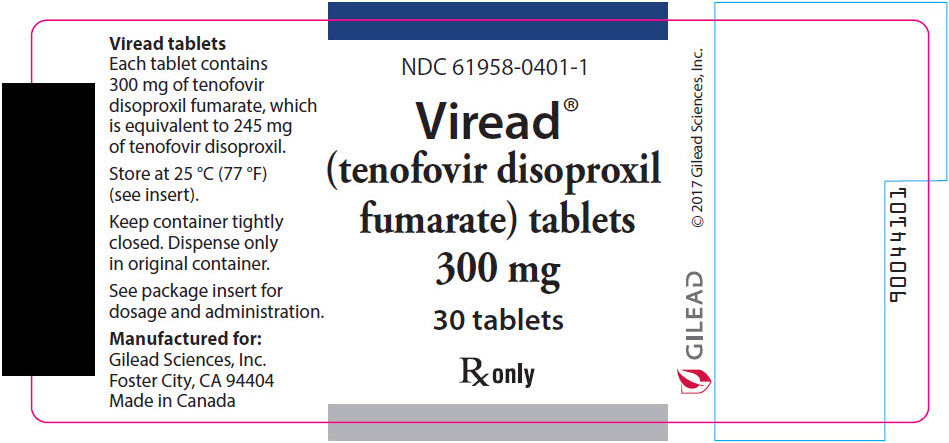
Viread TENOFOVIR DISOPROXIL FUMARATE 300 mg Tablet, Coated, 30-count — NDC 61958-0401-1 (Billing 61958-0401-01)
This is a package of 30 tablets of Viread TENOFOVIR DISOPROXIL FUMARATE 300 mg Tablet, Coated from Gilead Sciences, Inc., marketed since Oct 2001 and currently FDA-listed; retail pharmacies pay about $40.69 per tablet (NADAC). It is this product's only package size.
NDC database record
One package, one record: these facts belong to NDC 61958-0401-1 alone.
- Record
- FDA NDC Directory package listing · Human prescription drug
- Code segments
- 61958 labeler · 0401 product · 1 package
- Package marketed since
- Oct 26, 2001
- Sample package
- No — commercial package
- Listing certified through
- Dec 31, 2026
- Billing quantity
- 30 EA per package
- Barcode (UPC-A, from the NDC)
- 3 6195804011 2
- Medicaid fills, this package
- 502 prescriptions in the last four reported quarters
- FDA record last changed
- Jul 24, 2026
Identity & classification
Regulatory identifiers FDA, NLM and CMS codes for this package
Drug-database identifiers Medi-Span GPI and First Databank GCN / HICL / AHFS classification
- GSN (GCN sequence number): 048843
- GCN: 14822
- GPI-14 (Medi-Span): 12108570100320
- HICL (First Databank): 022937
- AHFS class code: 08:18.08.20
- RxCUI (RxNorm): 349251
Where does this data come from?
- FDA openFDA NDC Directory · synced Oct 1, 2026
- FDA label on DailyMed · label index refreshed Oct 1, 2026
- RxNorm (NLM RxNav) · catalog refreshed Oct 1, 2026
- Medi-Span GPI (licensed)
- First Databank (licensed) · refreshed Oct 1, 2026
RxNorm drug class
This medicine belongs to the Nucleoside and nucleotide reverse transcriptase inhibitors class.
Where does this data come from?
- RxClass (NLM) · catalog refreshed Oct 1, 2026
Clinical
Tenofovir alafenamide (AF) is used to treat chronic (long term) hepatitis B virus (HBV) infection. Tenofovir is in a class of medications called nucleoside reverse transcriptase inhibitors (NRTIs). It works by decreasing the amount of HBV in the blood. Tenofovir AF will not cure hepatitis B and may not prevent complications of chronic hepatitis B. Tenofovir AF may not prevent the spread of hepatitis B to other people.
Read the full MedlinePlus article ↗Patient education
Supplement & herbal interactions
Some supplements/herbs that may interact with Tenofovir Disoproxil Fumarate — tap one for details:
Where does this data come from?
- MedlinePlus (NLM) · refreshed Oct 1, 2026
- FDA label on DailyMed · label index refreshed Oct 1, 2026
Ask a licensed pharmacist directly — free, answered by our team.
Pricing
A drug doesn't have one price. Each row is a different public payment system, and none is what you'd pay at the counter — that depends on your insurance. The ⓘ on each row explains what it measures.
| Price system | Per ea | Per package |
|---|---|---|
| Retail pharmacies payNADAC · weekly | $40.687 | $1,220.60 / 30 tablets |
| Medicaid paysCMS SDUD · 12 mo | $32.92 | $987.65 / 30 tablets |
| Medicare drug plans payPart D · Q2 2026 | $40.99 | $1,229.71 / 30 tablets |
Where does this data come from?
- CMS NADAC weekly file · file of Sep 30, 2026
- CMS ASP pricing files · refreshed Sep 20, 2026
- CMS Medicaid State Drug Utilization Data · through Q4 2025
- CMS Part D plan pricing files · refreshed Sep 24, 2026
- VA National Acquisition Center price file
Packaging — all sizes for this product
| Package NDC | Description | Marketing start | Marketing end | Status |
|---|---|---|---|---|
| 61958-0401-01 You're viewing this Main listing | 30 TABLET, COATED in 1 BOTTLE, PLASTIC | 2001-10-26 | — | Active |
Therapeutic equivalents
| Product | Labeler | Pack | NADAC/unit | TE | Status | Price vs. this |
|---|---|---|---|---|---|---|
| tenofovir disoproxil fumarate 300 mg 00904-6821-04 | Major | 30 tablets | $0.294 | AB | Availability likely | save 99% |
| Tenofovir Disoproxil Fumarate 300 mg 16714-0820-01 | NorthStar | 30 tablets | $0.294 | AB | Availability likely | save 99% |
| tenofovir disoproxil fumarate 300 mg 33342-0096-07 | Macleods | 30 tablets | $0.294 | AB | Availability likely | save 99% |
| Tenofovir Disoproxil Fumarate 300 mg 50268-0758-12 | AvPAK | 20 tablets | $0.294 | AB | Availability likely | save 99% |
| Tenofovir Disoproxil Fumarate 300 mg 62135-0466-30 | Chartwell | 30 tablets | $0.294 | AB | Availability likely | save 99% |
| Tenofovir Disoproxil Fumarate 300 mg 64380-0714-04 | Strides | 30 tablets | $0.294 | AB | Availability likely | save 99% |
| Tenofovir Disoproxil Fumarate 300 mg 65862-0421-30 | Aurobindo | 30 tablets | $0.294 | — | Availability likely | save 99% |
| Tenofovir Disoproxil Fumarate 300 mg 69076-0105-03 | Quinn | 30 tablets | $0.294 | AB | Availability likely | save 99% |
| Tenofovir disoproxil fumarate 300 mg 69097-0533-02 | Cipla | 30 tablets | $0.294 | AB | Availability likely | save 99% |
| Tenofovir Disoproxil Fumarate 300 mg 71921-0105-33 | Florida | 30 tablets | $0.294 | AB | Availability likely | save 99% |
| Viread 300 mgthis 61958-0401-01 | Gilead | 30 tablets | $40.687 | AB | Availability likely | — |
| Tenofovir Disoproxil Fumarate 300 mg 31722-0535-01 | Camber | 100 tablets | — | AB | FDA listed | — |
| Tenofovir Disoproxil Fumarate 300 mg 42291-0800-30 | AvKARE | 30 tablets | — | AB | FDA listed | — |
| Tenofovir Disoproxil Fumarate 300 mg 50090-7202-00 | A-S | 30 tablets | — | AB | FDA listed | — |
| Tenofovir Disoproxil Fumarate 300 mg 63629-9729-01 | Bryant | 30 tablets | — | AB | FDA listed | — |
| Tenofovir Disoproxil Fumarate 300 mg 71335-2364-01 | Bryant | 30 tablets | — | AB | FDA listed | — |
| Tenofovir Disoproxil Fumarate 300 mg 72789-0361-07 | PD-Rx | 7 tablets | — | AB | FDA listed | — |
| Tenofovir Disoproxil Fumarate 300 mg 71335-3155-01 | Bryant | 30 tablets | — | AB | FDA listed | — |
Where does this data come from?
- FDA openFDA NDC Directory · synced Oct 1, 2026
- FDA Orange Book · refreshed Oct 3, 2026
- CMS NADAC weekly file · file of Sep 30, 2026
Availability & generic status
FDA-approved generic versions are listed, and recent pricing/market data suggests they may be available — see Therapeutic equivalents.
Where does this data come from?
- FDA Orange Book · refreshed Oct 3, 2026
What it looks like
Where does this data come from?
- FDA label on DailyMed · label index refreshed Oct 1, 2026
Inactive Ingredients / Excipients
Inactive ingredients, also called excipients, are components of the drug product other than the active ingredient. They may include fillers, dyes, coatings, preservatives, flavors, or other formulation ingredients.
💡 Tap an ingredient (hover on desktop) to see what it is and why it’s used.
-
UNII LMI26O6933
Alumina is a white powder form of aluminum oxide. It's used as a filler to add bulk to tablets and capsules, and sometimes as a thickening or anti-caking agent in powdered formulations.
-
UNII M28OL1HH48
Croscarmellose sodium is a plant-based substance derived from cellulose. It acts as a disintegrant, helping tablets and capsules break down quickly in the digestive system so the medicine can be absorbed.
-
UNII L06K8R7DQK
A synthetic blue dye approved by the FDA for use in medications and foods. It serves as a colorant to make pills and liquids visually distinct and easier to identify.
-
UNII 288VBX44JC
Hypromellose is a plant-based cellulose derivative that acts as a binder and film-coating agent in medications. It helps hold tablet ingredients together and creates a smooth, protective coating on pills.
-
UNII EWQ57Q8I5X
Lactose monohydrate is a natural sugar derived from milk. It serves as a filler and binder in tablets and capsules, helping create the proper size, texture, and consistency of the medicine.
-
UNII 70097M6I30
Magnesium stearate is a salt made from magnesium and stearic acid, a fatty substance. It's used in tablets and capsules as a lubricant and glidant to help ingredients flow smoothly during manufacturing and prevent sticking.
-
UNII OP1R32D61U
Microcrystalline cellulose is a purified form of cellulose, a natural fiber from plant sources. It acts as a binder and filler in tablets and capsules, helping hold ingredients together and give the medicine its shape and size.
-
UNII O8232NY3SJ
A plant-based carbohydrate derived from corn kernels. It acts as a filler to add bulk, a binder to hold ingredients together, and a disintegrant to help the tablet break apart in your stomach for absorption.
-
UNII 15FIX9V2JP
Titanium dioxide is a bright white mineral powder commonly used as a colorant and opacifying agent. It makes pills and tablets white or lighter in color and helps make coatings non-transparent.
-
UNII XHX3C3X673
Triacetin is a clear, oily liquid made from glycerin and acetic acid. It works as a plasticizer and solvent in medicines, helping soften coatings and improve how liquids mix together in formulations.
10 inactive ingredients listed in the exact product block matched to this NDC.
Where does this data come from?
ingredient classCode="IACT" elements from the exact product block matched by this NDC. Label-section narrative from DailyMed / the openFDA label index is shown separately when available.- FDA label on DailyMed · label index refreshed Oct 1, 2026
- FDA openFDA NDC Directory · synced Oct 1, 2026
Inactive ingredient FAQ
Are inactive ingredients the same for every manufacturer?
Why might an inactive ingredient be missing?
Can inactive ingredients matter?
Manufacturer & labeler
More NDCs from Gilead Sciences, Inc. labeler code 61958
- Viread TENOFOVIR DISOPROXIL FUMARATE 40 mg/g Powder NDC 61958-0403-1
- Viread TENOFOVIR DISOPROXIL FUMARATE 150 mg Tablet, Coated NDC 61958-0404-1
- Viread TENOFOVIR DISOPROXIL FUMARATE 200 mg Tablet, Coated NDC 61958-0405-1
- Viread TENOFOVIR DISOPROXIL FUMARATE 250 mg Tablet, Coated NDC 61958-0406-1
- Emtriva EMTRICITABINE 200 mg Capsule NDC 61958-0601-1
- Emtriva EMTRICITABINE 10 mg/mL Solution NDC 61958-0602-1
Where does this data come from?
- FDA openFDA NDC Directory · synced Oct 1, 2026
- Drugs@FDA
Full prescribing information FDA SPL
🚨 Boxed Warning ▾
WARNING: POSTTREATMENT ACUTE EXACERBATION OF HEPATITIS B Severe acute exacerbations of hepatitis B virus (HBV) have been reported in HBV-infected patients who have discontinued anti-hepatitis B therapy, including VIREAD. Hepatic function should be monitored closely with both clinical and laboratory follow-up for at least several months in HBV-infected patients who discontinue anti-hepatitis B therapy, including VIREAD. If appropriate, resumption of anti-hepatitis B therapy may be warranted [see Warnings and Precautions (5.1) ] .
WARNING: POSTTREATMENT ACUTE EXACERBATION OF HEPATITIS B See full prescribing information for complete boxed warning. Severe acute exacerbations of hepatitis B virus (HBV) have been reported in HBV-infected patients who have discontinued anti-hepatitis B therapy, including VIREAD. Hepatic function should be monitored closely in HBV-infected patients who discontinue VIREAD.
If appropriate, resumption of anti-hepatitis B therapy may be warranted. ( 5.1 )
🎯 Indications and Usage ▾
1 INDICATIONS AND USAGE VIREAD is a nucleotide analog HIV-1 reverse transcriptase inhibitor and an HBV reverse transcriptase inhibitor and is indicated: in combination with other antiretroviral agents for the treatment of HIV-1 infection in adults and pediatric patients 2 years of age and older weighing at least 10 kg. ( 1.1 ) for the treatment of chronic hepatitis B in adults and pediatric patients 2 years and older weighing at least 10 kg. ( 1.2 )
1.1HIV-1 Infection VIREAD is indicated in combination with other antiretroviral agents for the treatment of human immunodeficiency virus type 1 (HIV-1) infection in adults and pediatric patients 2 years of age and older weighing at least 10 kg.
1.2Chronic Hepatitis B VIREAD is indicated for the treatment of chronic hepatitis B virus (HBV) in adults and pediatric patients 2 years of age and older weighing at least 10 kg .
⏱️ Dosage and Administration ▾
2 DOSAGE AND ADMINISTRATION Testing: Prior to or when initiating VIREAD test for hepatitis B virus infection and HIV-1 infection. Prior to initiation and during use of VIREAD, on a clinically appropriate schedule, assess serum creatinine, estimated creatinine clearance, urine glucose, and urine protein in all patients. In patients with chronic kidney disease, also assess serum phosphorous.
( 2.1 ) Recommended tablet dosage in adults and pediatric patients weighing at least 35 kg: One VIREAD 300 mg tablet once daily taken orally without regard to food. ( 2.2 ) Recommended dosage in pediatric patients at least 2 years of age and adults: Tablets: For patients weighing at least 17 kg who can swallow an intact tablet, one VIREAD tablet (150 mg, 200 mg, 250 mg, or 300 mg based on body weight) once daily taken orally without regard to food. ( 2.2 ) Oral powder: For patients weighing at least 10 kg and unable to swallow a tablet, 8 mg per kg VIREAD oral powder (up to a maximum of 300 mg) taken once daily with food.
( 2.3 ) Recommended dosage in renally impaired adult patients: Creatinine clearance (CrCl) 30–49 mL/min: 300 mg every 48 hours. ( 2.4 ) CrCl 10–29 mL/min: 300 mg every 72 to 96 hours. ( 2.4 ) Hemodialysis: 300 mg every 7 days or after approximately 12 hours of dialysis.
( 2.4 )
2.1Testing Prior to Initiation of VIREAD for Treatment of HIV-1 Infection or Chronic Hepatitis B Prior to or when initiating VIREAD, test patients for HBV infection and HIV-1 infection. VIREAD alone should not be used in patients with HIV-1 infection [see Warnings and Precautions (5.3) ] . Prior to initiation and during use of VIREAD, on a clinically appropriate schedule, assess serum creatinine, estimated creatinine clearance, urine glucose and urine protein in all patients.
In patients with chronic kidney disease, also assess serum phosphorus [see Warnings and Precautions (5.2) ] .
2.2Recommended Tablet Dosage in Adults and Pediatric Patients 2 Years and Older Weighing at Least 17 kg The recommended dosage of VIREAD in adults and pediatric patients weighing at least 35 kg is one 300 mg tablet taken orally once daily without regard to food . The dosage for VIREAD is the same for both HIV and HBV indications. The recommended dosage of VIREAD tablet in adults and pediatric patients 2 years and older weighing at least 17 kg is 8 mg of tenofovir disoproxil fumarate (TDF) per kg of body weight (up to a maximum of 300 mg) once daily.
Dosage for pediatric patients 2 years and older weighing between 17 kg and 35 kg and able to swallow an intact tablet is provided in Table 1. Weight should be monitored periodically and the VIREAD dose adjusted accordingly. Table 1 Recommended Dosing for Patients 2 Years and Older and Weighing at Least 17 kg Using VIREAD Tablets Body Weight (kg) Dosing of VIREAD Tablets 17 to less than 22 one 150 mg tablet once daily 22 to less than 28 one 200 mg tablet once daily 28 to less than 35 one 250 mg tablet once daily at least 35 one 300 mg tablet once daily
2.3Recommended Oral Powder Dosage in Adults and Pediatric Patients 2 Years and Older Weighing at Least 10 kg The recommended dosage of VIREAD oral powder in adults and pediatric patients 2 years and older weighing at least 10 kg who are unable to swallow a tablet is 8 mg of TDF per kg of body weight (up to a maximum of 300 mg) once daily administered as oral powder (see Table 2 ). Weight should be monitored periodically and the VIREAD dose adjusted accordingly. VIREAD oral powder should be measured only with the supplied dosing scoop.
One level scoop delivers 1 g of powder, which contains 40 mg of TDF. VIREAD oral powder should be mixed in a container with 2 to 4 ounces of soft food not requiring chewing (e.g., applesauce, baby food, yogurt). The entire mixture should be ingested immediately to avoid a bitter taste.
Do not administer VIREAD oral powder in a liquid as the powder may float on top of the liquid even after stirring. Further patient instructions on how to administ… [Excerpted — this section continues on DailyMed.]
💊 Dosage Forms and Strengths ▾
3 DOSAGE FORMS AND STRENGTHS VIREAD is available as tablets in four dose strengths or as an oral powder. 150 mg Tablets: 150 mg of tenofovir disoproxil fumarate (TDF) (equivalent to 123 mg of tenofovir disoproxil): triangle shaped, white, film coated, debossed with "GSI" on one side and with "150" on the other side. 200 mg Tablets: 200 mg of TDF (equivalent to 163 mg of tenofovir disoproxil): round shaped, white, film coated, debossed with "GSI" on one side and with "200" on the other side.
250 mg Tablets: 250 mg of TDF (equivalent to 204 mg of tenofovir disoproxil): capsule shaped, white, film coated, debossed with "GSI" on one side and with "250" on the other side. 300 mg Tablets: 300 mg of TDF (equivalent to 245 mg of tenofovir disoproxil): almond shaped, light blue, film coated, debossed with "GILEAD" and "4331" on one side and with "300" on the other side. Oral Powder: white, taste-masked, coated granules containing 40 mg of TDF (equivalent to 33 mg of tenofovir disoproxil) per level scoop.
Each level scoop contains 1 gram of oral powder. Tablets: 150 mg, 200 mg, 250 mg, and 300 mg of tenofovir disoproxil fumarate. ( 3 ) Oral Powder: 40 mg per 1 g of oral powder of tenofovir disoproxil fumarate.
( 3 )
⛔ Contraindications ▾
4 CONTRAINDICATIONS None. None. ( 4 )
⚠️ Warnings and Cautions ▾
5 WARNINGS AND PRECAUTIONS New onset or worsening renal impairment: Can include acute renal failure and Fanconi syndrome. Avoid administering VIREAD with concurrent or recent use of nephrotoxic drugs. ( 5.2 ) HIV testing: HIV antibody testing should be offered to all HBV-infected patients before initiating therapy with VIREAD.
VIREAD should only be used as part of an appropriate antiretroviral combination regimen in HIV-infected patients with or without HBV coinfection. ( 5.3 ) Immune reconstitution syndrome: May necessitate further evaluation and treatment. ( 5.4 ) Decreases in bone mineral density (BMD): Consider assessment of BMD in patients with a history of pathologic fracture or other risk factors for osteoporosis or bone loss.
( 5.5 ) Lactic acidosis/severe hepatomegaly with steatosis: Discontinue treatment in patients who develop symptoms or laboratory findings suggestive of lactic acidosis or pronounced hepatotoxicity. ( 5.6 )
5.1Severe Acute Exacerbation of Hepatitis B in Patients with HBV Infection All patients should be tested for the presence of chronic hepatitis B virus (HBV) before or when initiating VIREAD [see Dosage and Administration (2.1) ] . Discontinuation of anti-HBV therapy, including VIREAD, may be associated with severe acute exacerbations of hepatitis B. Patients infected with HBV who discontinue VIREAD should be closely monitored with both clinical and laboratory follow-up for at least several months after stopping treatment.
If appropriate, resumption of anti-hepatitis B therapy may be warranted, especially in patients with advanced liver disease or cirrhosis, since posttreatment exacerbation of hepatitis may lead to hepatic decompensation and liver failure.
5.2New Onset or Worsening Renal Impairment Tenofovir is principally eliminated by the kidney. Renal impairment, including cases of acute renal failure and Fanconi syndrome (renal tubular injury with severe hypophosphatemia), has been reported with the use of VIREAD [see Adverse Reactions (6.2) ] . Prior to initiation and during use of VIREAD, on a clinically appropriate schedule, assess serum creatinine, estimated creatinine clearance, urine glucose, and urine protein in all patients.
In patients with chronic kidney disease, also assess serum phosphorus. Dosing interval adjustment of VIREAD and close monitoring of renal function are recommended in all patients with creatinine clearance below 50 mL/min [see Dosage and Administration (2.4) ] . No safety or efficacy data are available in patients with renal impairment who received VIREAD using these dosing guidelines, so the potential benefit of VIREAD therapy should be assessed against the potential risk of renal toxicity.
VIREAD should be avoided with concurrent or recent use of a nephrotoxic agent (e.g., high-dose or multiple non-steroidal anti-inflammatory drugs [NSAIDs]) [see Drug Interactions (7.1) ] . Cases of acute renal failure after initiation of high-dose or multiple NSAIDs have been reported in HIV-infected patients with risk factors for renal dysfunction who appeared stable on TDF. Some patients required hospitalization and renal replacement therapy.
Alternatives to NSAIDs should be considered, if needed, in patients at risk for renal dysfunction. Persistent or worsening bone pain, pain in extremities, fractures and/or muscular pain or weakness may be manifestations of proximal renal tubulopathy and should prompt an evaluation of renal function in patients at risk of renal dysfunction.
5.3Patients Coinfected with HIV-1 and HBV Due to the risk of development of HIV-1 resistance, VIREAD should only be used in HIV-1 and HBV coinfected patients as part of an appropriate antiretroviral combination regimen. HIV-1 antibody testing should be offered to all HBV-infected patients before initiating therapy with VIREAD. It is also recommended that all patients with HIV-1 be tested for the presence of chronic hepatitis B before initiating treatment with VIREAD.
5.4Immune Reconstitution Syndrom… [Excerpted — this section continues on DailyMed.]
🤒 Adverse Reactions ▾
6 ADVERSE REACTIONS The following adverse reactions are discussed in other sections of the labeling: Severe Acute Exacerbation of Hepatitis B in Patients with HBV Infection [see Warnings and Precautions (5.1) ] . New Onset or Worsening Renal Impairment [see Warnings and Precautions (5.2) ] . Immune Reconstitution Syndrome [see Warnings and Precautions (5.4) ] .
Bone Loss and Mineralization Defects [see Warnings and Precautions (5.5) ] . Lactic Acidosis/Severe Hepatomegaly with Steatosis [see Warnings and Precautions (5.6) ] . In HIV-infected adult subjects: Most common adverse reactions (incidence greater than or equal to 10%, Grades 2–4) were rash, diarrhea, nausea, headache, pain, depression, and asthenia.
( 6.1 ) In HBV-infected subjects with compensated liver disease: Most common adverse reaction (all grades) was nausea (9%). ( 6.1 ) In HBV-infected subjects with decompensated liver disease: Most common adverse reactions (incidence greater than or equal to 10%, all grades) were abdominal pain, nausea, insomnia, pruritus, vomiting, dizziness, and pyrexia. ( 6.1 ) In pediatric subjects: Adverse reactions in pediatric subjects were consistent with those observed in adults.
( 6.1 ) To report SUSPECTED ADVERSE REACTIONS, contact Gilead Sciences, Inc. at 1-800-GILEAD-5 or FDA at 1-800-FDA-1088 or www.fda.gov/medwatch
6.1Clinical Trials Experience Because clinical trials are conducted under widely varying conditions, adverse reaction rates observed in the clinical trials of a drug cannot be directly compared to rates in the clinical trials of another drug and may not reflect the rates observed in practice. Adverse Reactions from Clinical Trials Experience in HIV-1 Infected Adults More than 12,000 subjects have been treated with VIREAD alone or in combination with other antiretroviral medicinal products for periods of 28 days to 215 weeks in clinical trials and expanded access programs.
A total of 1,544 subjects have received VIREAD 300 mg once daily in clinical trials; over 11,000 subjects have received VIREAD in expanded access programs. The most common adverse reactions (incidence greater than or equal to 10%, Grades 2–4) identified from any of the 3 large controlled clinical trials include rash, diarrhea, headache, pain, depression, asthenia, and nausea. Clinical Trials in Treatment-Naïve HIV-1 Infected Adult Subjects In Trial 903, 600 antiretroviral-naïve subjects received VIREAD (N=299) or stavudine (d4T) (N=301) administered in combination with lamivudine (3TC) and efavirenz (EFV) for 144 weeks.
The most common adverse reactions were mild to moderate gastrointestinal events and dizziness. Mild adverse reactions (Grade 1) were common with a similar incidence in both arms and included dizziness, diarrhea, and nausea. Table 4 provides the treatment-emergent adverse reactions (Grades 2–4) occurring in greater than or equal to 5% of subjects treated in any treatment group.
Table 4 Selected Adverse Reactions Frequencies of adverse reactions are based on all treatment-emergent adverse events, regardless of relationship to study drug. (Grades 2–4) Reported in ≥5% in Any Treatment Group in Trial 903 (0–144 Weeks) VIREAD+3TC+EFV d4T+3TC+EFV N=299 N=301 Rash event Rash event includes rash, pruritus, maculopapular rash, urticaria, vesiculobullous rash, and pustular rash. 18% 12% Headache 14% 17% Pain 13% 12% Diarrhea 11% 13% Depression 11% 10% Back pain 9% 8% Nausea 8% 9% Fever 8% 7% Abdominal pain 7% 12% Asthenia 6% 7% Anxiety 6% 6% Vomiting 5% 9% Insomnia 5% 8% Arthralgia 5% 7% Pneumonia 5% 5% Dyspepsia 4% 5% Dizziness 3% 6% Myalgia 3% 5% Lipodystrophy Lipodystrophy represents a variety of investigator-described adverse events not a protocol-defined syndrome.
1% 8% Peripheral neuropathy Peripheral neuropathy includes peripheral neuritis and neuropathy. 1% 5% Laboratory Abnormalities: Table 5 provides a list of laboratory abnormalities (Grades 3–4) observed in Trial 903. With the exception of fasting cholesterol and fasting triglycer… [Excerpted — this section continues on DailyMed.]
🔄 Drug Interactions ▾
7 DRUG INTERACTIONS Tenofovir disoproxil fumarate increases didanosine concentrations. Dose reduction and close monitoring for didanosine toxicity are warranted. ( 7.2 ) Coadministration decreases atazanavir concentrations.
When coadministered with VIREAD, use atazanavir given with ritonavir. ( 7.2 ) Coadministration of VIREAD with certain HIV-1 protease inhibitors or certain drugs to treat HCV increases tenofovir concentrations. Monitor for evidence of tenofovir toxicity.
( 7.2 ) Consult Full Prescribing Information prior to and during treatment for important drug interactions. ( 7.2 )
7.1Drugs Affecting Renal Function Tenofovir is primarily eliminated by the kidneys [see Clinical Pharmacology (12.3) ]. Coadministration of VIREAD with drugs that are eliminated by active tubular secretion may increase concentrations of tenofovir and/or the coadministered drug. Some examples include, but are not limited to, acyclovir, cidofovir, ganciclovir, valacyclovir, valganciclovir, aminoglycosides (e.g., gentamicin), and high-dose or multiple NSAIDs [see Warnings and Precautions (5.2) ].
Drugs that decrease renal function may increase concentrations of tenofovir. In the treatment of chronic hepatitis B, VIREAD should not be administered in combination with HEPSERA (adefovir dipivoxil).
7.2Established and Significant Interactions Table 12 provides a listing of established or clinically significant drug interactions. The drug interactions described are based on studies conducted with TDF [see Clinical Pharmacology (12.3) ]. Table 12 Established and Significant This table is not all inclusive.
Drug Interactions: Alteration in Dose or Regimen May Be Recommended Based on Drug Interaction Trials Concomitant Drug Class: Drug Name Effect on Concentration ↑=Increase, ↓=Decrease Clinical Comment NRTI: didanosine ↑ didanosine Patients receiving VIREAD and didanosine should be monitored closely for didanosine-associated adverse reactions. Discontinue didanosine in patients who develop didanosine-associated adverse reactions. Higher didanosine concentrations could potentiate didanosine-associated adverse reactions, including pancreatitis, and neuropathy.
Suppression of CD4+ cell counts has been observed in patients receiving VIREAD with didanosine 400 mg daily. In patients weighing greater than 60 kg, reduce the didanosine dose to 250 mg when it is coadministered with VIREAD. In patients weighing less than 60 kg, reduce the didanosine dose to 200 mg when it is coadministered with VIREAD.
When coadministered, VIREAD and Videx EC may be taken under fasted conditions or with a light meal (less than 400 kcal, 20% fat). HIV-1 Protease Inhibitor s: atazanavir ↓ atazanavir When coadministered with VIREAD, atazanavir 300 mg should be given with ritonavir 100 mg. lopinavir/ritonavir atazanavir/ritonavir darunavir/ritonavir ↑ tenofovir Monitor patients receiving VIREAD concomitantly with lopinavir/ritonavir, ritonavir-boosted atazanavir, or ritonavir-boosted darunavir for TDF-associated adverse reactions. Discontinue VIREAD in patients who develop TDF-associated adverse reactions.
Hepatitis C Antiviral Agents: sofosbuvir/velpatasvir sofosbuvir/velpatasvir/voxilaprevir ↑ tenofovir Monitor patients receiving VIREAD concomitantly with EPCLUSA ® (sofosbuvir/velpatasvir) for adverse reactions associated with TDF. ledipasvir/sofosbuvir Monitor patients receiving VIREAD concomitantly with HARVONI ® (ledipasvir/sofosbuvir) without an HIV-1 protease inhibitor/ritonavir or an HIV-1 protease inhibitor/cobicistat combination, for adverse reactions associated with TDF. In patients receiving VIREAD concomitantly with HARVONI and an HIV-1 protease inhibitor/ritonavir or an HIV-1 protease inhibitor/cobicistat combination, consider an alternative HCV or antiretroviral therapy, as the safety of increased tenofovir concentrations in this setting has not been established.
If coadministration is necessary, monitor for adverse reactions associated with TDF.
👥 Use in Specific Populations ▾
8 USE IN SPECIFIC POPULATIONS Lactation: Breastfeeding in HIV-1 infected mothers is not recommended due to the potential for HIV-1 transmission. ( 8.2 )
8.1Pregnancy Pregnancy Exposure Registry There is a pregnancy exposure registry that monitors pregnancy outcomes in women exposed to VIREAD during pregnancy. Healthcare providers are encouraged to register patients by calling the Antiretroviral Pregnancy Registry (APR) at 1-800-258-4263. Risk Summary Available data from the APR show no increase in the overall risk of major birth defects with first trimester exposure for tenofovir disoproxil fumarate (TDF) (2.1%) compared with the background rate for major birth defects of 2.7% in a U.S. reference population of the Metropolitan Atlanta Congenital Defects Program (MACDP) (see Data ).
The rate of miscarriage for individual drugs is not reported in the APR. In the U.S. general population, the estimated background risk of miscarriage in clinically recognized pregnancies is 15–20%. Published studies in HBV-infected subjects do not report an increased risk of adverse pregnancy-related outcomes with the use of VIREAD during the third trimester of pregnancy (see Data ) .
In animal reproduction studies, no adverse developmental effects were observed when TDF was administered at doses/exposures ≥ 14 (TDF) and 2.7 (tenofovir) times those of the recommended daily dose of VIREAD (see Data ). Data Human Data Based on prospective reports from the APR exposures to TDF-containing regimens during pregnancy resulting in live births (including 3,342 exposed in the first trimester and 1,475 exposed in the second/third trimester), there was no increase in overall major birth defects with TDF compared with the background birth defect rate of 2.7% in a U.S. reference population of the MACDP.
The prevalence of major birth defects in live births was 2.3% (95% CI: 1.8% to 2.8%) with first trimester exposure to TDF-containing regimens, and 2.1% (95% CI: 1.4% to 3.0%) with the second/third trimester exposure to TDF-containing regimens. Prospective reports from the APR of overall major birth defects in pregnancies exposed to TDF are compared with a U.S. background major birth defect rate. Methodological limitations of the APR include the use of MACDP as the external comparator group.
Limitations of using an external comparator include differences in methodology and populations, as well as confounding due to the underlying disease. In published data from three controlled clinical trials, a total of 327 pregnant women with chronic HBV infection were administered VIREAD from 28 to 32 weeks gestation through 1 to 2 months postpartum and followed for up to 12 months after delivery. There were no new safety findings in pregnant women compared with the known safety profile of VIREAD in HBV-infected adults.
An increased risk of adverse pregnancy-related outcomes was not observed; 2 stillbirths were identified, and there was 1 major birth defect (talipes) and 1 occurrence of multiple congenital abnormalities (not further specified) in VIREAD-exposed infants. Infants were followed for up to 12 months after delivery; there were no clinically relevant drug-related safety findings in infants exposed to VIREAD during late gestation. Animal Data TDF was administered orally to pregnant rats (at 0, 50, 150, or 450 mg/kg/day) and rabbits (at 0, 30, 100, or 300 mg/kg/day) through organogenesis (on gestation days 7 through 17, and 6 through 18, respectively).
No significant toxicological effects were observed in embryo-fetal toxicity studies performed with TDF in rats at doses up to 14 times the human dose based on body surface area comparisons and in rabbits at doses up to 19 times the human dose based on body surface area comparisons. In a pre/postnatal development study in rats, TDF was administered orally through lactation at doses up to 600 mg/kg/day; no adverse effects were observed in the offspring at tenofovir exposures of approximately 2.7 times higher than human exp… [Excerpted — this section continues on DailyMed.]
🤰 Pregnancy ▾
8.1Pregnancy Pregnancy Exposure Registry There is a pregnancy exposure registry that monitors pregnancy outcomes in women exposed to VIREAD during pregnancy. Healthcare providers are encouraged to register patients by calling the Antiretroviral Pregnancy Registry (APR) at 1-800-258-4263. Risk Summary Available data from the APR show no increase in the overall risk of major birth defects with first trimester exposure for tenofovir disoproxil fumarate (TDF) (2.1%) compared with the background rate for major birth defects of 2.7% in a U.S. reference population of the Metropolitan Atlanta Congenital Defects Program (MACDP) (see Data ).
The rate of miscarriage for individual drugs is not reported in the APR. In the U.S. general population, the estimated background risk of miscarriage in clinically recognized pregnancies is 15–20%. Published studies in HBV-infected subjects do not report an increased risk of adverse pregnancy-related outcomes with the use of VIREAD during the third trimester of pregnancy (see Data ) .
In animal reproduction studies, no adverse developmental effects were observed when TDF was administered at doses/exposures ≥ 14 (TDF) and 2.7 (tenofovir) times those of the recommended daily dose of VIREAD (see Data ). Data Human Data Based on prospective reports from the APR exposures to TDF-containing regimens during pregnancy resulting in live births (including 3,342 exposed in the first trimester and 1,475 exposed in the second/third trimester), there was no increase in overall major birth defects with TDF compared with the background birth defect rate of 2.7% in a U.S. reference population of the MACDP.
The prevalence of major birth defects in live births was 2.3% (95% CI: 1.8% to 2.8%) with first trimester exposure to TDF-containing regimens, and 2.1% (95% CI: 1.4% to 3.0%) with the second/third trimester exposure to TDF-containing regimens. Prospective reports from the APR of overall major birth defects in pregnancies exposed to TDF are compared with a U.S. background major birth defect rate. Methodological limitations of the APR include the use of MACDP as the external comparator group.
Limitations of using an external comparator include differences in methodology and populations, as well as confounding due to the underlying disease. In published data from three controlled clinical trials, a total of 327 pregnant women with chronic HBV infection were administered VIREAD from 28 to 32 weeks gestation through 1 to 2 months postpartum and followed for up to 12 months after delivery. There were no new safety findings in pregnant women compared with the known safety profile of VIREAD in HBV-infected adults.
An increased risk of adverse pregnancy-related outcomes was not observed; 2 stillbirths were identified, and there was 1 major birth defect (talipes) and 1 occurrence of multiple congenital abnormalities (not further specified) in VIREAD-exposed infants. Infants were followed for up to 12 months after delivery; there were no clinically relevant drug-related safety findings in infants exposed to VIREAD during late gestation. Animal Data TDF was administered orally to pregnant rats (at 0, 50, 150, or 450 mg/kg/day) and rabbits (at 0, 30, 100, or 300 mg/kg/day) through organogenesis (on gestation days 7 through 17, and 6 through 18, respectively).
No significant toxicological effects were observed in embryo-fetal toxicity studies performed with TDF in rats at doses up to 14 times the human dose based on body surface area comparisons and in rabbits at doses up to 19 times the human dose based on body surface area comparisons. In a pre/postnatal development study in rats, TDF was administered orally through lactation at doses up to 600 mg/kg/day; no adverse effects were observed in the offspring at tenofovir exposures of approximately 2.7 times higher than human exposures at the recommended daily dose of VIREAD.
🧒 Pediatric Use ▾
8.4Pediatric Use Pediatric Patients 2 Years and Older with HIV-1 Infection The safety and effectiveness of VIREAD in pediatric patients 2 years to less than 18 years of age is supported by data from two randomized trials. Trial 352 was a randomized controlled trial in 92 HIV-1 treatment experienced subjects 2 years to less than 12 years of age who were virologically suppressed on a stavudine- or zidovudine-containing regimen and were randomized to either switch to a VIREAD-containing regimen (N=44) or stay on their original regimen (N=48) for 48 weeks.
At Week 48, 89% of subjects in the VIREAD treatment group and 90% of subjects in the d4T or AZT treatment group had HIV-1 RNA concentrations <400 copies/mL. Trial 321 was a placebo-controlled trial in 87 HIV-1 treatment experienced subjects 12 years to less than 18 years of age who were treated with VIREAD (N=45) or placebo (N=42) in combination with an optimized background regimen for 48 weeks. Overall, the trial failed to show a difference in virologic response between the VIREAD and placebo groups.
Subgroup analyses suggest the lack of difference in virologic response may be attributable to imbalances between treatment arms in baseline viral susceptibility to VIREAD and OBR [see Adverse Reactions (6.1) and Clinical Studies (14.3) ]. Although changes in HIV-1 RNA in these highly treatment-experienced subjects in Trial 321 were less than anticipated, the pharmacokinetic profile of tenofovir in patients 2 years to less than 18 years of age at the recommended doses was similar to that found to be safe and effective in adult clinical trials [see Clinical Pharmacology (12.3) ] .
The effects of VIREAD-associated changes in BMD and biochemical markers on long-term bone health and future fracture risk in HIV-1 pediatric patients 2 years and older are unknown. The long-term effect of lower spine and total body BMD on skeletal growth in pediatric patients 2 years and older, and in particular, the effects of long-duration exposure in younger children is unknown [see Warnings and Precautions (5.5) , Adverse Reactions (6.1) ] . Safety and effectiveness of VIREAD in pediatric patients younger than 2 years of age and weighing less than 10 kg with HIV-1 infection have not been established.
Pediatric Patients 2 Years of Age and Older with Chronic Hepatitis B The safety and effectiveness of VIREAD in pediatric patients 2 years to less than 18 years of age is supported by data from two randomized trials (Trial 115 and Trial 144) in which VIREAD was administered to HBV-infected treatment-experienced subjects . In Trial 115, 106 HBeAg negative (9%) and positive (91%) subjects 12 years to less than 18 years of age with chronic HBV infection were randomized to receive blinded treatment with VIREAD or placebo for 72 weeks.
At Week 72, 88% of subjects in the VIREAD group and 0% of subjects in the placebo group had HBV DNA <400 copies/mL (69 IU/mL). In Trial 144, 89 HBeAg positive (96%) and negative (4%) subjects 2 years to less than 12 years of age were treated with VIREAD 8 mg/kg up to maximum dose of 300 mg or placebo once daily for 48 weeks. At Week 48, 77% of subjects in the VIREAD group and 7% of subjects in the placebo group had HBV DNA <400 copies/mL (69 IU/mL).
The effects of VIREAD-associated changes in BMD and biochemical markers on long-term bone health and future fracture risk in chronic HBV-infected pediatric patients 2 years and older are unknown. The long-term effect of lower spine and total body BMD on skeletal growth in pediatric patients 2 years and older, and in particular, the effects of long-duration exposure in younger children is unknown [see Warnings and Precautions (5.5) , Adverse Reactions (6.1) ] . Safety and effectiveness of VIREAD in chronic HBV-infected pediatric patients younger than 2 years of age and weighing less than 10 kg have not been established.
🧓 Geriatric Use ▾
8.5Geriatric Use Clinical trials of VIREAD did not include sufficient numbers of subjects aged 65 and over to determine whether they respond differently from younger subjects. In general, dose selection for the elderly patient should be cautious, keeping in mind the greater frequency of decreased hepatic, renal, or cardiac function, and of concomitant disease or other drug therapy.
🆘 Overdosage ▾
10 OVERDOSAGE If overdose occurs, the patient must be monitored for evidence of toxicity, and standard supportive treatment applied as necessary. Tenofovir is efficiently removed by hemodialysis with an extraction coefficient of approximately 54%. Following a single 300 mg dose of VIREAD, a four-hour hemodialysis session removed approximately 10% of the administered tenofovir dose.
🧬 Clinical Pharmacology ▾
12 CLINICAL PHARMACOLOGY
12.1Mechanism of Action Tenofovir disoproxil fumarate is an antiviral drug [see Microbiology (12.4) ].
12.3Pharmacokinetics The pharmacokinetics of TDF have been evaluated in healthy volunteers and HIV-1 infected individuals. Tenofovir pharmacokinetics are similar between these populations. Absorption VIREAD is a water soluble diester prodrug of the active ingredient tenofovir.
The oral bioavailability of tenofovir from VIREAD in fasted subjects is approximately 25%. Following oral administration of a single dose of VIREAD 300 mg to HIV-1 infected subjects in the fasted state, maximum serum concentrations (C max ) are achieved in 1.0 ± 0.4 hrs. C max and AUC values are 0.30 ± 0.09 µg/mL and 2.29 ± 0.69 µg ∙ hr/mL, respectively.
The pharmacokinetics of tenofovir are dose proportional over a VIREAD dose range of 75 to 600 mg and are not affected by repeated dosing. In a single-dose bioequivalence study conducted under non-fasted conditions (dose administered with 4 oz. applesauce) in healthy adult volunteers, the mean C max of tenofovir was 26% lower for the oral powder relative to the tablet formulation. Mean AUC of tenofovir was similar between the oral powder and tablet formulations.
Distribution In vitro binding of tenofovir to human plasma or serum proteins is less than 0.7 and 7.2%, respectively, over the tenofovir concentration range 0.01 to 25 µg/mL. The volume of distribution at steady-state is 1.3 ±
0.6L/kg and 1.2 ±
0.4L/kg, following intravenous administration of tenofovir 1.0 mg/kg and 3.0 mg/kg. Metabolism and Elimination In vitro studies indicate that neither tenofovir disoproxil nor tenofovir are substrates of CYP enzymes. Following IV administration of tenofovir, approximately 70–80% of the dose is recovered in the urine as unchanged tenofovir within 72 hours of dosing.
Following single dose, oral administration of VIREAD, the terminal elimination half-life of tenofovir is approximately 17 hours. After multiple oral doses of VIREAD 300 mg once daily (under fed conditions), 32 ± 10% of the administered dose is recovered in urine over 24 hours. Tenofovir is eliminated by a combination of glomerular filtration and active tubular secretion.
There may be competition for elimination with other compounds that are also renally eliminated. Effects of Food on Oral Absorption Administration of VIREAD 300 mg tablets following a high-fat meal (~700 to 1,000 kcal containing 40 to 50% fat) increases the oral bioavailability, with an increase in tenofovir AUC 0–∞ of approximately 40% and an increase in C max of approximately 14%. However, administration of VIREAD with a light meal did not have a significant effect on the pharmacokinetics of tenofovir when compared to fasted administration of the drug.
Food delays the time to tenofovir C max by approximately 1 hour. C max and AUC of tenofovir are 0.33 ± 0.12 µg/mL and 3.32 ± 1.37 µg ∙ hr/mL following multiple doses of VIREAD 300 mg once daily in the fed state, when meal content was not controlled. Specific Populations Race There were insufficient numbers from racial and ethnic groups other than Caucasian to adequately determine potential pharmacokinetic differences among these populations.
Gender Tenofovir pharmacokinetics are similar in male and female subjects. Pediatric Patients 2 Years and Older: Steady-state pharmacokinetics of tenofovir were evaluated in 31 HIV-1 infected pediatric subjects 2 years to less than 18 years of age (Table 13). Tenofovir exposure achieved in these pediatric subjects receiving oral once daily doses of VIREAD 300 mg (tablet) or 8 mg/kg of body weight (powder) up to a maximum dose of 300 mg was similar to exposures achieved in adults receiving once-daily doses of VIREAD 300 mg.
Table 13 Mean (± SD) Tenofovir Pharmacokinetic Parameters by Age Groups for HIV-1 infected Pediatric Patients 2 years and older for the Tablet and Oral Powder Dose and Formulation 300 mg Tablet 8 mg/kg Oral Powder 12 Years to <18 Years (N=8) 2 Ye… [Excerpted — this section continues on DailyMed.]
🧬 Mechanism of Action ▾
12.1Mechanism of Action Tenofovir disoproxil fumarate is an antiviral drug [see Microbiology (12.4) ].
📦 How Supplied / Storage and Handling ▾
16 HOW SUPPLIED/STORAGE AND HANDLING VIREAD tablets are available in bottles containing 30 tablets with child-resistant closure as follows: 150 mg of TDF (equivalent to 123 mg of tenofovir disoproxil): tablets are triangle-shaped, white, film-coated, and debossed with "GSI" on one side and with "150" on the other side. (NDC 61958-0404-1) 200 mg of TDF (equivalent to 163 mg of tenofovir disoproxil): tablets are round-shaped, white, film-coated, and debossed with "GSI" on one side and with "200" on the other side. (NDC 61958-0405-1) 250 mg of TDF (equivalent to 204 mg of tenofovir disoproxil): tablets are capsule-shaped, white, film-coated and debossed with "GSI" on one side and with "250" on the other side.
(NDC 61958-0406-1) 300 mg of TDF (equivalent to 245 mg of tenofovir disoproxil): tablets are almond-shaped, light-blue, film-coated, and debossed with "GILEAD" and "4331" on one side and with "300" on the other side. (NDC 61958-0401-1) VIREAD oral powder consists of white, coated granules containing 40 mg of TDF (equivalent to 33 mg of tenofovir disoproxil) per gram of powder and is available in multi-use bottles containing 60 grams of oral powder, closed with a child-resistant closure, and co-packaged with a dosing scoop.
(NDC 61958-0403-1) Store VIREAD tablets and oral powder at 25 °C (77 °F), excursions permitted to 15–30 °C (59–86 °F) (see USP Controlled Room Temperature). Keep container tightly closed. Dispense only in original container.
Do not use if seal over bottle opening is broken or missing.
📦 Storage and Handling ▾
Store VIREAD tablets and oral powder at 25 °C (77 °F), excursions permitted to 15–30 °C (59–86 °F) (see USP Controlled Room Temperature). Keep container tightly closed. Dispense only in original container. Do not use if seal over bottle opening is broken or missing.
📋 Description ▾
11 DESCRIPTION VIREAD is the brand name for tenofovir disoproxil fumarate (TDF) (a prodrug of tenofovir) which is a fumaric acid salt of bis-isopropoxycarbonyloxymethyl ester derivative of tenofovir. TDF is converted in vivo to tenofovir, an acyclic nucleoside phosphonate (nucleotide) analog of adenosine 5'-monophosphate. Tenofovir exhibits activity against HIV-1 reverse transcriptase.
The chemical name of TDF is 9-[( R )-2-[[bis[[(isopropoxycarbonyl)oxy]methoxy]phosphinyl]methoxy]propyl]adenine fumarate (1:1). It has a molecular formula of C 19 H 30 N 5 O 10 P ∙ C 4 H 4 O 4 and a molecular weight of 635.52. It has the following structural formula: Tenofovir disoproxil fumarate is a white to off-white crystalline powder with a solubility of 13.4 mg/mL in distilled water at 25 °C.
It has an octanol/phosphate buffer (pH 6.5) partition coefficient (log p) of 1.25 at 25 °C. VIREAD is available as tablets or as an oral powder. VIREAD tablets are for oral administration and are available in the following strengths: 150 mg, 200 mg, 250 mg, and 300 mg of TDF (equivalent to 123 mg, 163 mg, 204 mg, and 245 mg of tenofovir disoproxil, respectively).
All strengths of VIREAD tablets contain the following inactive ingredients: croscarmellose sodium, lactose monohydrate, magnesium stearate, microcrystalline cellulose, and pregelatinized starch. The 300 mg strength tablets are coated with Opadry II Y-30-10671-A, which contains FD&C blue #2 aluminum lake, hypromellose 2910, lactose monohydrate, titanium dioxide, and triacetin. The 150 mg, 200 mg, and 250 mg strength tablets are coated with Opadry II 32K-18425, which contains hypromellose 2910, lactose monohydrate, titanium dioxide, and triacetin.
VIREAD oral powder is available for oral administration as white, taste-masked, coated granules containing 40 mg of TDF per gram of oral powder (equivalent to 33 mg of tenofovir disoproxil). The oral powder contains the following inactive ingredients: mannitol, hydroxypropyl cellulose, ethylcellulose, and silicon dioxide. In this insert, all dosages are expressed in terms of TDF except where otherwise noted.
Chemical Structure
💬 Information for Patients ▾
17 PATIENT COUNSELING INFORMATION Advise the patient to read the FDA-approved patient labeling (Patient Information and Instructions for Use). Severe Acute Exacerbation of Hepatitis B in Patients Infected with HBV Inform patients that severe acute exacerbations of hepatitis B have been reported in patients infected with hepatitis B virus (HBV) and have discontinued VIREAD. Advise patients not to discontinue VIREAD without first informing their healthcare provider.
All patients should be tested for HBV infection before or when starting VIREAD and those who are infected with HBV need close medical follow-up for several months after stopping VIREAD to monitor for exacerbations of hepatitis [see Warnings and Precautions (5.1) ] . New Onset or Worsening Renal Impairment Inform patients that renal impairment, including cases of acute renal failure and Fanconi syndrome, has been reported in association with the use of VIREAD. Advise patients to avoid VIREAD with concurrent or recent use of a nephrotoxic agent (e.g., high-dose or multiple NSAIDs) [see Warnings and Precautions (5.2) ] .
The dosing interval of VIREAD may need adjustment in HIV-1 infected patients with renal impairment. Immune Reconstitution Syndrome Inform patients that in some patients with advanced HIV infection (AIDS) signs and symptoms of inflammation from previous infections may occur soon after anti-HIV treatment is started. It is believed that these symptoms are due to an improvement in the body's immune response, enabling the body to fight infections that may have been present with no obvious symptoms.
Advise patients to inform their healthcare provider immediately of any symptoms of infection [see Warnings and Precautions (5.4) ]. Bone Loss and Mineralization Defects Inform patients that decreases in bone mineral density have been observed with the use of VIREAD. Consider bone monitoring in patients who have a history of pathologic bone fracture or at risk for osteopenia [see Warnings and Precautions (5.5) ] .
Lactic Acidosis and Severe Hepatomegaly Inform patients that lactic acidosis and severe hepatomegaly with steatosis, including fatal cases, have been reported. Treatment with VIREAD should be suspended in any patient who develops clinical symptoms suggestive of lactic acidosis or pronounced hepatotoxicity [see Warnings and Precautions (5.6) ] . Drug Interactions Advise patients that VIREAD may interact with many drugs; therefore, advise patients to report to their healthcare provider the use of any other medication, including other HIV drugs and drugs for treatment of hepatitis C virus [see Warnings and Precautions (5.7) and Drug Interactions (7) ].
Dosing Recommendations Inform patients that it is important to take VIREAD on a regular dosing schedule with or without food and to avoid missing doses as it can result in development of resistance [see Dosage and Administration (2) ] . Pregnancy Registry Inform patients that there is an antiretroviral pregnancy registry to monitor fetal outcomes of pregnant women exposed to VIREAD [see Use in Specific Populations (8.1) ] . Lactation Instruct mothers not to breastfeed if they are taking VIREAD for the treatment of HIV-1 infection because of the risk of passing the HIV-1 virus to the baby [see Use in Specific Populations (8.2) ].
Treatment Duration Advise patients that in the treatment of chronic hepatitis B, the optimal duration of treatment is unknown. The relationship between response and long-term prevention of outcomes such as hepatocellular carcinoma is not known.
🧬 Pharmacokinetics ▾
12.3Pharmacokinetics The pharmacokinetics of TDF have been evaluated in healthy volunteers and HIV-1 infected individuals. Tenofovir pharmacokinetics are similar between these populations. Absorption VIREAD is a water soluble diester prodrug of the active ingredient tenofovir.
The oral bioavailability of tenofovir from VIREAD in fasted subjects is approximately 25%. Following oral administration of a single dose of VIREAD 300 mg to HIV-1 infected subjects in the fasted state, maximum serum concentrations (C max ) are achieved in 1.0 ± 0.4 hrs. C max and AUC values are 0.30 ± 0.09 µg/mL and 2.29 ± 0.69 µg ∙ hr/mL, respectively.
The pharmacokinetics of tenofovir are dose proportional over a VIREAD dose range of 75 to 600 mg and are not affected by repeated dosing. In a single-dose bioequivalence study conducted under non-fasted conditions (dose administered with 4 oz. applesauce) in healthy adult volunteers, the mean C max of tenofovir was 26% lower for the oral powder relative to the tablet formulation. Mean AUC of tenofovir was similar between the oral powder and tablet formulations.
Distribution In vitro binding of tenofovir to human plasma or serum proteins is less than 0.7 and 7.2%, respectively, over the tenofovir concentration range 0.01 to 25 µg/mL. The volume of distribution at steady-state is 1.3 ±
0.6L/kg and 1.2 ±
0.4L/kg, following intravenous administration of tenofovir 1.0 mg/kg and 3.0 mg/kg. Metabolism and Elimination In vitro studies indicate that neither tenofovir disoproxil nor tenofovir are substrates of CYP enzymes. Following IV administration of tenofovir, approximately 70–80% of the dose is recovered in the urine as unchanged tenofovir within 72 hours of dosing.
Following single dose, oral administration of VIREAD, the terminal elimination half-life of tenofovir is approximately 17 hours. After multiple oral doses of VIREAD 300 mg once daily (under fed conditions), 32 ± 10% of the administered dose is recovered in urine over 24 hours. Tenofovir is eliminated by a combination of glomerular filtration and active tubular secretion.
There may be competition for elimination with other compounds that are also renally eliminated. Effects of Food on Oral Absorption Administration of VIREAD 300 mg tablets following a high-fat meal (~700 to 1,000 kcal containing 40 to 50% fat) increases the oral bioavailability, with an increase in tenofovir AUC 0–∞ of approximately 40% and an increase in C max of approximately 14%. However, administration of VIREAD with a light meal did not have a significant effect on the pharmacokinetics of tenofovir when compared to fasted administration of the drug.
Food delays the time to tenofovir C max by approximately 1 hour. C max and AUC of tenofovir are 0.33 ± 0.12 µg/mL and 3.32 ± 1.37 µg ∙ hr/mL following multiple doses of VIREAD 300 mg once daily in the fed state, when meal content was not controlled. Specific Populations Race There were insufficient numbers from racial and ethnic groups other than Caucasian to adequately determine potential pharmacokinetic differences among these populations.
Gender Tenofovir pharmacokinetics are similar in male and female subjects. Pediatric Patients 2 Years and Older: Steady-state pharmacokinetics of tenofovir were evaluated in 31 HIV-1 infected pediatric subjects 2 years to less than 18 years of age (Table 13). Tenofovir exposure achieved in these pediatric subjects receiving oral once daily doses of VIREAD 300 mg (tablet) or 8 mg/kg of body weight (powder) up to a maximum dose of 300 mg was similar to exposures achieved in adults receiving once-daily doses of VIREAD 300 mg.
Table 13 Mean (± SD) Tenofovir Pharmacokinetic Parameters by Age Groups for HIV-1 infected Pediatric Patients 2 years and older for the Tablet and Oral Powder Dose and Formulation 300 mg Tablet 8 mg/kg Oral Powder 12 Years to <18 Years (N=8) 2 Years to <12 Years (N=23) C max (µg/mL) 0.38 ± 0.13 0.24 ±
0.13AUC tau (µg ∙ hr/mL) 3.39 ± 1.22 2.59 ±
1.06Tenofovir exposures in… [Excerpted — this section continues on DailyMed.]
🔬 Clinical Studies ▾
14 CLINICAL STUDIES
14.1Overview of Clinical Trials The efficacy and safety of VIREAD in adults and pediatric subjects were evaluated in the trials summarized in Table 19. Table 19 Trials Conducted with VIREAD in Adults and Pediatric Subjects for HIV-1 Treatment and Chronic HBV Treatment Trial Population Study Arms (N) Randomized and dosed. Timepoint (Week) Trial 903 Randomized, double-blind, active-controlled trial.
(NCT00158821) HIV-1 treatment-naïve adults VIREAD+lamivudine+efavirenz (299) stavudine+lamivudine+efavirenz (301) 144 Trial 934 Randomized, open-label active-controlled trial. (NCT00112047) emtricitabine+VIREAD+efavirenz (257) zidovudine/lamivudine+efavirenz (254) 144 Trial 907 Randomized, double-blind, placebo-controlled trial. (NCT00002450) HIV-1 treatment-experienced adults VIREAD (368) Placebo (182) 24 Trial 0102 (NCT00117676) HBeAg-negative adults with chronic HBV VIREAD (250) HEPSERA (125) 48 Trial 0103 (NCT00116805) HBeAg-positive adults with chronic HBV VIREAD (176) HEPSERA (90) 48 Trial 121 (NCT00737568) Adults with lamivudine-resistant chronic HBV VIREAD (141) 96 Trial 0108 (NCT00298363) Adults with chronic HBV and decompensated liver disease VIREAD (45) 48 Trial 352 (NCT00528957) HIV-1 treatment experienced pediatric subjects 2 years to <12 years VIREAD (44) stavudine or zidovudine (48) 48 Trial 321 (NCT00352053) HIV-1 treatment-experienced pediatric subjects 12 years to <18 years VIREAD (45) Placebo (42) 48 Trial 115 (NCT00734162) Pediatric subjects 12 years to <18 years with chronic HBV VIREAD (52) Placebo (54) 72 Trial 144 (NCT01651403) Pediatric subjects 2 years to <12 years with chronic HBV VIREAD (60) Placebo (29) 48
14.2Clinical Trial Results in Adults with HIV-1 Infection Treatment-Naïve Subjects: Trial 903 Data through 144 weeks are reported for Trial 903, a double-blind, active-controlled multicenter trial comparing VIREAD (300 mg once daily) administered in combination with lamivudine (3TC) and efavirenz (EFV) versus stavudine (d4T), 3TC, and EFV in 600 antiretroviral-naïve subjects. Subjects had a mean age of 36 years (range 18–64); 74% were male, 64% were Caucasian, and 20% were Black. The mean baseline CD4+ cell count was 279 cells/mm 3 (range 3–956) and median baseline plasma HIV-1 RNA was 77,600 copies/mL (range 417–5,130,000).
Subjects were stratified by baseline HIV-1 RNA and CD4+ cell count. Forty-three percent of subjects had baseline viral loads >100,000 copies/mL and 39% had CD4+ cell counts <200 cells/mm 3 . Table 20 provides treatment outcomes through 48 and 144 weeks.
Table 20 Outcomes of Randomized Treatment at Week 48 and 144 (Trial 903) At Week 48 At Week 144 Outcomes VIREAD+3TC+EFV (N=299) d4T+3TC+EFV (N=301) VIREAD+3TC+EFV (N=299) d4T+3TC+EFV (N=301) Responder Subjects achieved and maintained confirmed HIV-1 RNA <400 copies/mL through Week 48 and 144. 79% 82% 68% 62% Virologic failure Includes confirmed viral rebound and failure to achieve confirmed <400 copies/mL through Week 48 and 144. 6% 4% 10% 8% Rebound 5% 3% 8% 7% Never suppressed 0% 1% 0% 0% Added an antiretroviral agent 1% 1% 2% 1% Death <1% 1% <1% 2% Discontinued due to adverse event 6% 6% 8% 13% Discontinued for other reasons Includes lost to follow-up, subject's withdrawal, noncompliance, protocol violation and other reasons.
8% 7% 14% 15% Achievement of plasma HIV-1 RNA concentrations of <400 copies/mL at Week 144 was similar between the two treatment groups for the population stratified at baseline on the basis of HIV-1 RNA concentration (> or ≤100,000 copies/mL) and CD4+ cell count (< or ≥200 cells/mm 3 ). Through 144 weeks of therapy, 62% and 58% of subjects in the VIREAD and d4T arms, respectively, achieved and maintained confirmed HIV-1 RNA <50 copies/mL. The mean increase from baseline in CD4+ cell count was 263 cells/mm 3 for the VIREAD arm and 283 cells/mm 3 for the d4T arm.
Through 144 weeks, 11 subjects in the VIREAD group and 9 subjects in the d4T group experienced a new CDC Class C event. Treatmen… [Excerpted — this section continues on DailyMed.]
🧪 Nonclinical Toxicology ▾
13 NONCLINICAL TOXICOLOGY
13.1Carcinogenesis, Mutagenesis, Impairment of Fertility Carcinogenesis Long-term oral carcinogenicity studies of TDF in mice and rats were carried out at exposures up to approximately 16 times (mice) and 5 times (rats) those observed in humans at the therapeutic dose for HIV-1 infection. At the high dose in female mice, liver adenomas were increased at exposures 16 times that in humans. In rats, the study was negative for carcinogenic findings at exposures up to 5 times that observed in humans at the therapeutic dose.
Mutagenesis Tenofovir disoproxil fumarate was mutagenic in the in vitro mouse lymphoma assay and negative in an in vitro bacterial mutagenicity test (Ames test). In an in vivo mouse micronucleus assay, TDF was negative when administered to male mice. Impairment of Fertility There were no effects on fertility, mating performance or early embryonic development when TDF was administered to male rats at a dose equivalent to 10 times the human dose based on body surface area comparisons for 28 days prior to mating and to female rats for 15 days prior to mating through day seven of gestation.
There was, however, an alteration of the estrous cycle in female rats.
13.2Animal Toxicology and/or Pharmacology Tenofovir and TDF administered in toxicology studies to rats, dogs, and monkeys at exposures (based on AUCs) greater than or equal to 6 fold those observed in humans caused bone toxicity. In monkeys the bone toxicity was diagnosed as osteomalacia. Osteomalacia observed in monkeys appeared to be reversible upon dose reduction or discontinuation of tenofovir.
In rats and dogs, the bone toxicity manifested as reduced bone mineral density. The mechanism(s) underlying bone toxicity is unknown. Evidence of renal toxicity was noted in 4 animal species.
Increases in serum creatinine, BUN, glycosuria, proteinuria, phosphaturia, and/or calciuria and decreases in serum phosphate were observed to varying degrees in these animals. These toxicities were noted at exposures (based on AUCs) 2–20 times higher than those observed in humans. The relationship of the renal abnormalities, particularly the phosphaturia, to the bone toxicity is not known.
📄 Carcinogenesis, Mutagenesis, Impairment of Fertility ▾
13.1Carcinogenesis, Mutagenesis, Impairment of Fertility Carcinogenesis Long-term oral carcinogenicity studies of TDF in mice and rats were carried out at exposures up to approximately 16 times (mice) and 5 times (rats) those observed in humans at the therapeutic dose for HIV-1 infection. At the high dose in female mice, liver adenomas were increased at exposures 16 times that in humans. In rats, the study was negative for carcinogenic findings at exposures up to 5 times that observed in humans at the therapeutic dose.
Mutagenesis Tenofovir disoproxil fumarate was mutagenic in the in vitro mouse lymphoma assay and negative in an in vitro bacterial mutagenicity test (Ames test). In an in vivo mouse micronucleus assay, TDF was negative when administered to male mice. Impairment of Fertility There were no effects on fertility, mating performance or early embryonic development when TDF was administered to male rats at a dose equivalent to 10 times the human dose based on body surface area comparisons for 28 days prior to mating and to female rats for 15 days prior to mating through day seven of gestation.
There was, however, an alteration of the estrous cycle in female rats.
📄 Patient Package Insert ▾
This Patient Information has been approved by the U.S. Food and Drug Administration. Revised: April 2019 Patient Information VIREAD ® (VEER-ee-ad) (tenofovir disoproxil fumarate) tablets VIREAD ® (VEER-ee-ad) (tenofovir disoproxil fumarate) oral powder Read this Patient Information before you start taking VIREAD and each time you get a refill.
There may be new information. This information does not take the place of talking with your healthcare provider about your medical condition or treatment. What is the most important information I should know about VIREAD?
VIREAD can cause serious side effects, including: Worsening of Hepatitis B virus infection (HBV). Your healthcare provider will test you for HBV and HIV before starting treatment with VIREAD. If you have HBV infection and take VIREAD your HBV may get worse (flare-up) if you stop taking VIREAD.
A "flare-up" is when your HBV infection suddenly returns in a worse way than before. Do not run out of VIREAD. Refill your prescription or talk to your healthcare provider before your VIREAD is all gone.
Do not stop taking VIREAD without first talking to your healthcare provider. If you stop taking VIREAD, your healthcare provider will need to check your health often and do blood tests regularly to check your HBV infection. Tell your healthcare provider about any new or unusual symptoms you may have after you stop taking VIREAD.
For more information about side effects, see " What are the possible side effects of VIREAD? " What is VIREAD? VIREAD is a prescription medicine that is used to: treat HIV-1 infection when used with other anti-HIV-1 medicines in adults and children 2 years of age and older who weigh at least 22 pounds (10 kg). HIV is the virus that causes AIDS (Acquired Immune Deficiency Syndrome). treat HBV infection in adults and children 2 years of age and older who weigh at least 22 pounds (10 kg).
It is not known if VIREAD is safe and effective in children under 2 years of age. What should I tell my healthcare provider before taking VIREAD? Before you take VIREAD, tell your healthcare provider about all of your medical conditions, including if you: have liver problems, including HBV infection have kidney problems or receive kidney dialysis treatment have bone problems have HIV infection are pregnant or plan to become pregnant.
Tell your healthcare provider if you become pregnant during treatment with VIREAD. Pregnancy Registry . There is a pregnancy registry for women who take VIREAD during pregnancy.
The purpose of this registry is to collect information about the health of you and your baby. Talk to your healthcare provider about how you can take part in this registry. are breastfeeding or plan to breastfeed. VIREAD can pass to your baby in your breast milk.
Do not breastfeed if you have HIV-1 because of the risk of passing HIV-1 to your baby. If you take VIREAD for treatment of HBV infection, talk with your healthcare provider about the best way to feed your baby. Tell your healthcare provider about all the medicines you take, including prescription and non-prescription medicines, vitamins, and herbal supplements.
Some medicines may interact with VIREAD. Keep a list of your medicines and show it to your healthcare provider and pharmacist when you get a new medicine. You can ask your healthcare provider or pharmacist for a list of medicines that interact with VIREAD.
Do not start a new medicine without telling your healthcare provider. Your healthcare provider can tell you if it is safe to take VIREAD with other medicines. How should I take VIREAD?
Take VIREAD exactly as your healthcare provider tells you to take it. Do not change your dose or stop taking VIREAD without first talking with your healthcare provider. Stay under a healthcare provider's care when taking VIREAD.
Take VIREAD at the same time every day. For adults and children 2 years of age and older who weigh at least 77 pounds (35 kg), the usual dose of VIREAD is one 300 mg tablet each day. For children… [Excerpted — this section continues on DailyMed.]
📖 Instructions for Use ▾
Instructions for Use VIREAD ® (VEER-ee-ad) (tenofovir disoproxil fumarate) powder for oral use Read the Patient Information that comes with VIREAD powder for important information about VIREAD. Read this Instructions for Use before you give VIREAD for the first time. Be sure you understand and follow the instructions.
If you have any questions, ask your healthcare provider or pharmacist. Important information VIREAD powder comes in a box that has a bottle of VIREAD and a dosing scoop (see Figure A ). Figure A Only use the dosing scoop to measure VIREAD powder.
Only mix VIREAD powder with soft foods that can be swallowed without chewing. Examples of soft foods you can use are: applesauce, baby food, or yogurt. Do not mix VIREAD powder with liquid .
The powder may float to the top even after stirring. Give the entire dose right away after mixing to avoid a bad taste. How do I prepare and give a dose of VIREAD powder?
Wash your hands well with soap and water, and dry them. Measure ¼ to ½ cup of soft food such as applesauce, baby food, or yogurt into a cup or bowl. To open a new bottle of powder, press down on the bottle lid and turn to remove (see picture on the top of the bottle cap).
Peel off the foil. Measure the number of scoops prescribed by your healthcare provider. For each full scoop prescribed: Fill the dosing scoop to the top.
Use the flat edge of clean knife to make the powder even with the top of the scoop (see Figure B ). Figure B For ½ scoop: Fill the dosing scoop up to the "½ line" on the side (see Figure C ). Figure C Sprinkle the VIREAD powder on the soft food.
Stir with a spoon until well mixed. Give the entire dose right away after mixing to avoid a bad taste. Close the bottle of VIREAD tightly.
Wash and dry the dosing scoop. Do not store the dosing scoop in the bottle. How should I store VIREAD powder ?
Store VIREAD powder at room temperature between 68 °F to 77 °F (20 °C to 25 °C). Keep VIREAD powder in the original container. Keep the bottle tightly closed.
Do not use VIREAD powder if the seal over the bottle opening is broken or missing. Keep VIREAD and all medicines out of the reach of children. This Instructions for Use has been approved by the U.S.
Food and Drug Administration. Figure A Figure B Figure C
📄 Recent Major Changes ▾
Indications and Usage, Chronic Hepatitis B ( 1.2 ) 12/2018 Dosage and Administration ( 2.1 , 2.2 , 2.3 , 2.4 ) 12/2018 Warnings and Precautions ( 5.1 , 5.2 , 5.5 , 5.7 ) 12/2018 Early Virologic Failure Removed 12/2018
📄 Package Label / Principal Display Panel ▾
PRINICPAL DISPLAY PANEL - 150 mg Tablet Bottle Label NDC 61958-0404-1 Viread ® (tenofovir disoproxil fumarate) tablets 150 mg 30 tablets R x only PRINICPAL DISPLAY PANEL - 150 mg Tablet Bottle Label
PRINICPAL DISPLAY PANEL - 200 mg Tablet Bottle Label NDC 61958-0405-1 Viread ® (tenofovir disoproxil fumarate) tablets 200 mg 30 tablets R x only PRINICPAL DISPLAY PANEL - 200 mg Tablet Bottle Label
PRINICPAL DISPLAY PANEL - 250 mg Tablet Bottle Label NDC 61958-0406-1 Viread ® (tenofovir disoproxil fumarate) tablets 250 mg 30 tablets R x only PRINICPAL DISPLAY PANEL - 250 mg Tablet Bottle Label
PRINICPAL DISPLAY PANEL - 300 mg Tablet Bottle Label NDC 61958-0401-1 Viread ® (tenofovir disoproxil fumarate) tablets 300 mg 30 tablets R x only PRINICPAL DISPLAY PANEL - 300 mg Tablet Bottle Label
PRINICPAL DISPLAY PANEL - 40 mg/Scoop Bottle Label NDC 61958-0403-1 Viread ® (tenofovir disoproxil fumarate) Oral Powder 40 mg/scoop 60 g per bottle R x only PRINICPAL DISPLAY PANEL - 40 mg/Scoop Bottle Label