
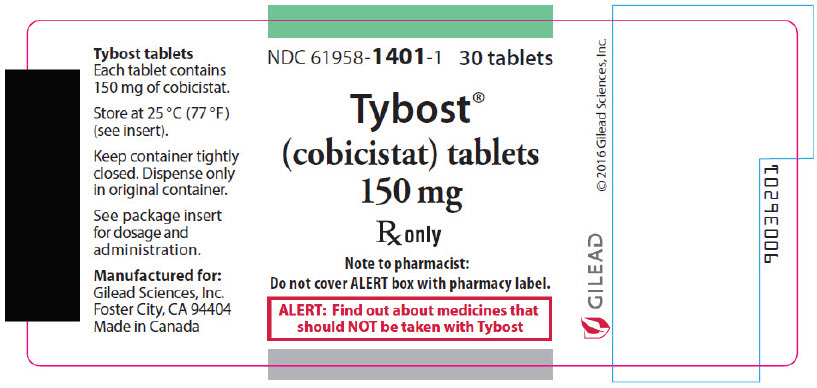
Tybost COBICISTAT 150 mg Tablet, Film Coated, 30-count — NDC 61958-1401-1 (Billing 61958-1401-01)
This is a package of 30 tablets of Tybost COBICISTAT 150 mg Tablet, Film Coated from Gilead Sciences, Inc., marketed since Sep 2014 and currently FDA-listed, this package's marketing is listed to end Mar 2028. It is this product's only package size.
NDC database record
One package, one record: these facts belong to NDC 61958-1401-1 alone.
- Record
- FDA NDC Directory package listing · Human prescription drug
- Code segments
- 61958 labeler · 1401 product · 1 package
- Package marketed since
- Sep 24, 2014
- Package marketing ended
- Mar 31, 2028
- Sample package
- No — commercial package
- Billing quantity
- 30 EA per package
- Barcode (UPC-A, from the NDC)
- 3 6195814011 9
- Medicaid fills, this package
- 42 prescriptions in the last four reported quarters
- FDA record last changed
- Oct 1, 2026
Identity & classification
Regulatory identifiers FDA, NLM and CMS codes for this package
Drug-database identifiers Medi-Span GPI and First Databank GCN / HICL / AHFS classification
- GSN (GCN sequence number): 072318
- GCN: 36468
- GPI-14 (Medi-Span): 12109530000320
- HICL (First Databank): 041076
- AHFS class code: 08:18.08.92
- RxCUI (RxNorm): 1551993
Where does this data come from?
- FDA openFDA NDC Directory · synced Oct 1, 2026
- FDA label on DailyMed · label index refreshed Oct 6, 2026
- RxNorm (NLM RxNav) · catalog refreshed Oct 1, 2026
- Medi-Span GPI (licensed)
- First Databank (licensed) · refreshed Oct 1, 2026
RxNorm drug class
This medicine belongs to the Cytochrome P450 3A Inhibitor class.
Where does this data come from?
- RxClass (NLM) · catalog refreshed Oct 1, 2026
Clinical
Cobicistat is used to increase the amounts of atazanavir or darunavir when these medications are used to treat human immunodeficiency virus (HIV). Cobicistat is in a class of medications called pharmacokinetic boosters. It works by increasing the amount of atazanavir or darunavir in the body so that they can have a greater effect.
Read the full MedlinePlus article ↗- It is a booster for HIV-1 treatment. It raises the levels of atazanavir or darunavir in your body so they work better. It does not treat HIV on its own, so you take it with other H...
- Take it by mouth once a day, with food. Take it at the same time as your atazanavir or darunavir. Follow your prescriber’s directions.
- Some people get jaundice, yellowing of the eyes, rash, nausea, diarrhea, or headache. Call your doctor if you notice yellowing, a bad rash, or signs of kidney problems.
- Cobicistat can raise creatinine and lower estimated kidney function without harming how your kidneys actually filter. Your doctor will check your kidney function. This matters more...
Patient education
Supplement & herbal interactions
Some supplements/herbs that may interact with Cobicistat — tap one for details:
Where does this data come from?
- MedlinePlus (NLM) · refreshed Oct 1, 2026
- FDA label on DailyMed · label index refreshed Oct 6, 2026
Ask a licensed pharmacist directly — free, answered by our team.
Pricing
A drug doesn't have one price. Each row is a different public payment system, and none is what you'd pay at the counter — that depends on your insurance. The ⓘ on each row explains what it measures.
| Price system | Per each | Per package |
|---|---|---|
| Retail pharmacies payNADAC · weekly | Not in the retail survey — common for institutional, discontinued, or low-volume packs. | |
| Medicaid paysCMS SDUD · 12 mo | $10.85 | $325.36 / 30 tablets |
| Medicare drug plans payPart D · Q2 2026 | $10.50 | $314.90 / 30 tablets |
Where does this data come from?
- CMS NADAC weekly file
- CMS ASP pricing files · refreshed Sep 20, 2026
- CMS Medicaid State Drug Utilization Data · through Q1 2026
- CMS Part D plan pricing files · refreshed Sep 24, 2026
- VA National Acquisition Center price file
Packaging — all sizes for this product
| Package NDC | Description | Marketing start | Marketing end | Status |
|---|---|---|---|---|
| 61958-1401-01 You're viewing this Main listing | 30 TABLET, FILM COATED in 1 BOTTLE | 2014-09-24 | Mar 31, 2028 | Active |
Therapeutic equivalents
| Product | Labeler | Pack | NADAC/unit | TE | Status | Price vs. this |
|---|---|---|---|---|---|---|
| Tybost 150 mgthis 61958-1401-01 | Gilead | 30 tablets | — | — | FDA listed | — |
Where does this data come from?
- FDA openFDA NDC Directory · synced Oct 1, 2026
- FDA Orange Book · refreshed Oct 3, 2026
- CMS NADAC weekly file
Availability & generic status
The FDA lists approved generic versions of this medicine, but that does not always mean a pharmacy can get one today. Patent rules, launch agreements, supply and pricing can affect when generics actually arrive.
Why the date isn’t exact: Generic timing can change because patents may be challenged, settled, licensed, added, removed, or worked around with a narrower label — and FDA approval does not always mean a pharmacy can get the generic today.
🛈 What do these terms mean?
- Patent
- Legal protection listed in the Orange Book that may delay generic approval or launch. Issued by the U.S. Patent & Trademark Office.
- Substance patent
- Covers the active drug molecule itself — the hardest to design around. A generic generally can’t launch until it expires.
- Formulation (product) patent
- Covers a specific formulation or dosage form. A generic can sometimes work around it with a different formulation.
- Method-of-use patent
- A patent covering one specific approved use of the drug — not necessarily the whole molecule. A generic can sometimes launch with a “skinny label” that carves out the protected use and keeps the others.
- Skinny label
- A generic label that omits a still-patented use when the FDA allows it — letting a generic reach the market for the unprotected uses.
- Exclusivity
- FDA-granted marketing protection, separate from patents — e.g. 5-yr new chemical entity, 7-yr orphan drug, or a +6-month pediatric extension.
- Paragraph IV
- A generic applicant’s formal challenge to a listed patent. It can potentially lead to earlier generic entry, but often involves litigation or a settlement.
- RLD / RS
- Reference Listed Drug — the brand product the FDA uses as the reference for generic applications. Reference Standard — the product the FDA expects generics to compare against in bioequivalence testing.
- TE / AB rating
- FDA therapeutic-equivalence rating. An AB rating generally means the FDA considers a generic therapeutically equivalent to — and substitutable for — the brand.
- LOE (loss of exclusivity)
- The latest patent or exclusivity currently listed — the loss-of-exclusivity / latest-listed-protection date shown on this page. Paragraph-IV challenges and settlements can move the real date earlier; FDA approval and a manufacturer’s decision to market can move it later.
Built from the FDA Orange Book. The bars above are scaled to each protection’s expiry; the red LOE marker is the last one to lapse.
| Patent | Type | Use code | Expires |
|---|---|---|---|
| US 8148374 ↗ | Drug substance | U-1279 | Sep 3, 2029 |
| US 8148374 ↗ | Drug substance | U-1279 | Sep 3, 2029 |
| US 10039718 ↗ | Drug product | — | Oct 6, 2032 |
| US 10039718 ↗ | Drug product | — | Oct 6, 2032 |
| US 8148374*PED ↗ | Drug product | — | Mar 3, 2030 |
| US 10039718*PED ↗ | Drug product | — | Apr 6, 2033 |
| US 10039718*PED ↗ | Drug product | — | Apr 6, 2033 |
| US 8148374*PED ↗ | Drug product | — | Mar 3, 2030 |
| Code | What it grants | Expires |
|---|---|---|
| NPP | New Patient Population | Jun 20, 2028 |
| ODE-260 | Orphan Drug Exclusivity (7-year) | Aug 22, 2026 |
| NS | New Strength | Jun 20, 2028 |
Is there a generic version of TYBOST 150 MG TABLET?
The FDA approved a generic — why can’t I get it at my pharmacy yet?
Why do different websites show different generic release dates?
What does “FDA listed” mean?
What does a patent or protection date mean here?
What does “current Orange Book estimate” mean?
Can a generic come out before the last patent expires?
Can a generic come out after the listed dates?
What is the difference between patents and exclusivity?
Why are there multiple patent dates?
Where does this data come from?
- FDA Orange Book · refreshed Oct 3, 2026
What it looks like
Where does this data come from?
- FDA label on DailyMed · label index refreshed Oct 6, 2026
Inactive Ingredients / Excipients
Inactive ingredients, also called excipients, are components of the drug product other than the active ingredient. They may include fillers, dyes, coatings, preservatives, flavors, or other formulation ingredients.
🧪 Avoiding an ingredient? See Cobicistat inactive ingredients by manufacturer: every current product's list side by side, so you can ask your pharmacy for the version that does not list it.
💡 Tap an ingredient (hover on desktop) to see what it is and why it’s used.
-
UNII M28OL1HH48
Croscarmellose sodium is a plant-based substance derived from cellulose. It acts as a disintegrant, helping tablets and capsules break down quickly in the digestive system so the medicine can be absorbed.
-
UNII H77VEI93A8
A synthetic yellow dye used to color medications. It helps identify the drug and make it visually distinctive, with no effect on how the medicine works.
-
UNII EX438O2MRT
Ferric oxide yellow is a naturally occurring iron compound used as a colorant in medications. It gives tablets, capsules, and other forms a yellow or golden hue for identification and appearance.
-
UNII 70097M6I30
Magnesium stearate is a salt made from magnesium and stearic acid, a fatty substance. It's used in tablets and capsules as a lubricant and glidant to help ingredients flow smoothly during manufacturing and prevent sticking.
-
UNII OP1R32D61U
Microcrystalline cellulose is a purified form of cellulose, a natural fiber from plant sources. It acts as a binder and filler in tablets and capsules, helping hold ingredients together and give the medicine its shape and size.
-
UNII G2M7P15E5P
Polyethylene glycol 3350 is a synthetic polymer used as a solvent, humectant, and thickening agent in medicines. It helps dissolve other ingredients, retain moisture in the product, and achieve the desired consistency.
-
UNII 532B59J990
Polyvinyl alcohol is a synthetic polymer made from plant-derived materials. It's used as a binder to hold ingredients together, a film-former in coatings, and a thickener in liquid formulations.
-
UNII 7SEV7J4R1U
A powder made from a naturally occurring mineral. In medicines, talc works as a glidant and anti-caking agent, helping tablets and capsules flow smoothly during manufacturing and preventing clumping.
-
UNII 15FIX9V2JP
Titanium dioxide is a bright white mineral powder commonly used as a colorant and opacifying agent. It makes pills and tablets white or lighter in color and helps make coatings non-transparent.
-
UNII 059QF0KO0R
Water is a liquid solvent that dissolves and mixes ingredients together in liquid medicines, syrups, and injections. It helps distribute the active drug evenly throughout the product.
10 inactive ingredients listed in the exact product block matched to this NDC.
Where does this data come from?
ingredient classCode="IACT" elements from the exact product block matched by this NDC. Label-section narrative from DailyMed / the openFDA label index is shown separately when available.- FDA label on DailyMed · label index refreshed Oct 6, 2026
- FDA openFDA NDC Directory · synced Oct 1, 2026
Inactive ingredient FAQ
Are inactive ingredients the same for every manufacturer?
Why might an inactive ingredient be missing?
Can inactive ingredients matter?
Manufacturer & labeler
More NDCs from Gilead Sciences, Inc. labeler code 61958
- Truvada emtricitabine and tenofovir disoproxil fumarate 167 mg; 250 mg Tablet, Film Coated NDC 61958-0705-1
- Letairis AMBRISENTAN 5 mg Tablet, Film Coated NDC 61958-0801-1
- Letairis AMBRISENTAN 10 mg Tablet, Film Coated NDC 61958-0802-1
- Cayston aztreonam Kit NDC 61958-0901-1
- Complera emtricitabine, rilpivirine hydrochloride, and tenofovir disoproxil fumarate 200 mg; 25 mg; 300 mg Tablet, Film Coated NDC 61958-1101-1
- Stribild elvitegravir, cobicistat, emtricitabine, and tenofovir disoproxil fumarate 150 mg; 150 mg; 200 mg; 300 mg Tablet, Film Coated NDC 61958-1201-1
- Sovaldi SOFOSBUVIR 400 mg Tablet, Film Coated NDC 61958-1501-1
- Sovaldi SOFOSBUVIR 200 mg Tablet, Film Coated NDC 61958-1503-1
- Sovaldi SOFOSBUVIR 150 mg Pellet NDC 61958-1504-1
- Sovaldi SOFOSBUVIR 200 mg Pellet NDC 61958-1505-1
- Zydelig idelalisib 100 mg Tablet, Film Coated NDC 61958-1701-1
- Zydelig idelalisib 150 mg Tablet, Film Coated NDC 61958-1702-1
Where does this data come from?
- FDA openFDA NDC Directory · synced Oct 1, 2026
- Drugs@FDA
Full prescribing information FDA SPL
🎯 Indications and Usage ▾
1 INDICATIONS AND USAGE TYBOST is a CYP3A inhibitor indicated to increase systemic exposure of atazanavir or darunavir (once daily dosing regimen) in combination with other antiretroviral agents in the treatment of HIV-1 infection in adults and in pediatric patients weighing at least 14 kg. ( 1.1 ) Limitations of Use : TYBOST is not interchangeable with ritonavir to increase systemic exposure of darunavir 600 mg twice daily, fosamprenavir, saquinavir, or tipranavir due to lack of exposure data. The use of TYBOST is not recommended with darunavir 600 mg twice daily, fosamprenavir, saquinavir, or tipranavir.
( 1.2 , 5.4 ) Complex or unknown mechanisms of drug interactions preclude extrapolation of ritonavir drug interactions to certain TYBOST interactions. TYBOST and ritonavir when administered with either atazanavir or darunavir may result in different drug interactions when used with concomitant medications. ( 1.2 , 5.3 , 7 , 12.3 )
1.1Indications Adult Patients: TYBOST is a CYP3A inhibitor indicated to increase systemic exposure of atazanavir or darunavir (once daily dosing regimen) in combination with other antiretroviral agents in the treatment of HIV-1 infection in adults [see Dosage and Administration (2.1) ]. Pediatric Patients: TYBOST is a CYP3A inhibitor indicated to increase systemic exposure of atazanavir or darunavir (once daily dosing regimen) in combination with other antiretroviral agents in the treatment of HIV-1 infection in pediatric patients weighing at least 14 kg [see Dosage and Administration (2.2) , and Drug Interactions (7.3) ].
1.2Limitations of Use TYBOST is not interchangeable with ritonavir to increase systemic exposure of darunavir 600 mg twice daily, fosamprenavir, saquinavir, or tipranavir due to lack of exposure data. The use of TYBOST is not recommended with darunavir 600 mg twice daily, fosamprenavir, saquinavir, or tipranavir [see Warnings and Precautions (5.4) ]. Complex or unknown mechanisms of drug interactions preclude extrapolation of ritonavir drug interactions to certain TYBOST interactions.
TYBOST and ritonavir when administered with either atazanavir or darunavir may result in different drug interactions when used with concomitant medications [see Warnings and Precautions (5.3) , Drug Interactions (7) , and Clinical Pharmacology (12.3) ].
⏱️ Dosage and Administration ▾
2 DOSAGE AND ADMINISTRATION TYBOST must be coadministered with atazanavir or darunavir at the same time, with food, and in combination with other HIV-1 antiretroviral agents. ( 2.1 , 2.2 ) Recommended dosage in adults: ( 2.1 ) Adult Patient Populations Coadministered Agent Dosage TYBOST Dosage Treatment-naïve or treatment-experienced atazanavir 300 mg orally once daily 150 mg orally once daily Treatment-naïve or treatment-experienced with no darunavir resistance-associated substitutions darunavir 800 mg orally once daily Recommended dosage in pediatric patients: TYBOST 150 mg or TYBOST 90 mg orally once daily based on body weight.
For dosage recommendations for TYBOST and the coadministered protease inhibitor atazanavir or darunavir in pediatric patients, refer to Table 2 and Table 3 of the full prescribing information respectively. ( 2.2 ) Prior to starting TYBOST, assess estimated creatinine clearance. ( 2.3 ) Coadministration with tenofovir disoproxil fumarate (TDF): assess estimated creatinine clearance, urine glucose, and urine protein at baseline.
( 2.3 ) TYBOST coadministered with TDF is not recommended in patients who have an estimated creatinine clearance below 70 mL/min because dose adjustment of TDF is required below 50 mL/min and such dose adjustments have not been established for coadministration with TYBOST. ( 2.4 )
2.1Recommended Dosage in Adults Administer TYBOST in conjunction with atazanavir or darunavir and other antiretroviral agents in the treatment of adults with HIV-1 infection. The recommended dosages of TYBOST and atazanavir or darunavir given with food are presented in Table 1 . TYBOST must be coadministered at the same time as atazanavir or darunavir [see Drug Interactions (7) ].
Consult the prescribing information for atazanavir or darunavir. Table 1 Recommended Dosing Regimens in Treatment-Naïve or Treatment-Experienced Adults Patient Populations Coadministered Agent Dosage TYBOST Dosage Treatment-naïve or treatment-experienced atazanavir 300 mg orally once daily 150 mg orally once daily Treatment-naïve or treatment-experienced with no darunavir resistance-associated substitutions darunavir 800 mg orally once daily
2.2Recommended Dosage in Pediatric Patients Administer TYBOST in conjunction with atazanavir or darunavir and other antiretroviral agents in the treatment of pediatric patients with HIV-1 infection. The recommended dosages of TYBOST and atazanavir or darunavir given with food are based on weight and presented in Table 2 and Table 3 , respectively. TYBOST must be coadministered at the same time as atazanavir or darunavir [see Drug Interactions (7) ].
Consult the prescribing information for atazanavir or darunavir. Table 2 Recommended Dosing Regimen in Treatment-Naïve or Treatment-Experienced Pediatric Patients in Combination with Atazanavir Body Weight Atazanavir Dosage TYBOST Dosage Weighing at least 14 kg to less than 25 kg 200 mg orally once daily 90 mg orally once daily Weighing at least 25 kg to less than 35 kg 200 mg orally once daily 150 mg orally once daily Weighing at least 35 kg 300 mg orally once daily Table 3 Recommended Dosing Regimen in Treatment-Naïve or Treatment-Experienced Pediatric Patients with no Darunavir Resistance-Associated Substitutions in Combination with Darunavir Body Weight Darunavir Dosage TYBOST Dosage Weighing at least 15 kg to less than 25 kg 600 mg orally once daily 90 mg orally once daily Weighing at least 25 kg to less than 30 kg 600 mg orally once daily 150 mg orally once daily Weighing at least 30 kg to less than 40 kg 675 mg orally once daily Weighing at least 40 kg 800 mg orally once daily
2.3Testing Prior to Initiation of TYBOST Prior to or when initiating TYBOST and during treatment with TYBOST, on a clinically appropriate schedule, assess estimated creatinine clearance because TYBOST decreases estimated creatinine clearance due to inhibition of tubular secretion of creatinine without affecting actual renal glomerular function [see Warnings an… [Excerpted — this section continues on DailyMed.]
💊 Dosage Forms and Strengths ▾
3 DOSAGE FORMS AND STRENGTHS TYBOST, 150 mg: Orange, round, biconvex, film-coated tablets debossed with "GSI" on one side and plain faced on the other side of the tablet. TYBOST, 90 mg: White, round, biconvex, film-coated tablets debossed with "TYB" on one side and "90" on the other side of the tablet. Tablets: 150 mg and 90 mg. ( 3 )
⛔ Contraindications ▾
4 CONTRAINDICATIONS The concomitant use of TYBOST with atazanavir or darunavir and the following drugs is contraindicated due to the potential for serious and/or life-threatening events or loss of therapeutic effect [see Drug Interactions (7.3) and Clinical Pharmacology (12.3) ] . Alpha 1-adrenoreceptor antagonist: alfuzosin Antianginal: ranolazine Antiarrhythmic: dronedarone Anticonvulsants: carbamazepine, phenobarbital, phenytoin Anti-gout: colchicine Antimycobacterial: rifampin Antineoplastics: irinotecan These contraindications apply only to TYBOST coadministered with atazanavir Antipsychotics: lurasidone, pimozide Ergot Derivatives: dihydroergotamine, ergotamine, methylergonovine Herbal Products: St.
John's wort ( Hypericum perforatum ) Hormonal Contraceptives: drospirenone/ ethinyl estradiol Lipid-modifying Agents: lomitapide, lovastatin, simvastatin Non-nucleoside Reverse Transcriptase Inhibitor: nevirapine Phosphodiesterase-5 (PDE-5) Inhibitor: sildenafil when administered as Revatio ® for the treatment of pulmonary arterial hypertension Protease Inhibitor: indinavir Sedative/hypnotics triazolam, orally administered midazolam Coadministration with certain drugs for which altered plasma concentrations are associated with serious and/or life-threatening events or loss of therapeutic effect.
( 4 )
⚠️ Warnings and Cautions ▾
5 WARNINGS AND PRECAUTIONS Assess creatinine clearance (CLcr) before initiating treatment. ( 5.1 ) When TYBOST is used in combination with a TDF-containing regimen, cases of acute renal failure and Fanconi syndrome have been reported. ( 5.2 ) Use with TDF: Assess urine glucose and urine protein at baseline and monitor CLcr, urine glucose, and urine protein.
Monitor serum phosphorus in patients with or at risk for renal impairment. ( 5.2 ) TYBOST in combination with more than one antiretroviral that requires pharmacokinetic enhancement (i.e., two protease inhibitors or elvitegravir in combination with a protease inhibitor) is not recommended. ( 5.4 ) Use with HIV-1 protease inhibitors other than atazanavir or darunavir administered once daily is not recommended.
( 5.4 ) Coadministration with drugs or regimens containing ritonavir is not recommended. ( 5.4 )
5.1Effects on Serum Creatinine TYBOST decreases estimated creatinine clearance due to inhibition of tubular secretion of creatinine without affecting actual renal glomerular function. This effect should be considered when interpreting changes in estimated creatinine clearance in patients initiating TYBOST, particularly in patients with medical conditions or receiving drugs needing monitoring with estimated creatinine clearance. Prior to initiating therapy with TYBOST, assess estimated creatinine clearance [see Dosage and Administration (2.3) ] .
Dosage recommendations are not available for drugs that require dosage adjustments in TYBOST-treated patients with renal impairment [see Adverse Reactions (6.1) , Drug Interactions (7.3) , and Clinical Pharmacology (12.2) ] . Consider alternative medications that do not require dosage adjustments in patients with renal impairment. Although TYBOST may cause modest increases in serum creatinine and modest declines in estimated creatinine clearance without affecting renal glomerular function, patients who experience a confirmed increase in serum creatinine of greater than 0.4 mg/dL from baseline should be closely monitored for renal safety.
5.2New Onset or Worsening Renal Impairment When Used with Tenofovir Disoproxil Fumarate Renal impairment, including cases of acute renal failure and Fanconi syndrome, has been reported when TYBOST was used in an antiretroviral regimen that contained TDF. Coadministration of TYBOST and TDF is not recommended in patients who have an estimated creatinine clearance below 70 mL/min because dose adjustment of TDF is required below 50 mL/min and such dose adjustments have not been established for coadministration with TYBOST [see Dosage and Administration (2.3 , 2.4) ] .
Document urine glucose and urine protein at baseline [see Dosage and Administration (2.3) ] and perform routine monitoring of estimated creatinine clearance, urine glucose, and urine protein during treatment when TYBOST is used with TDF. Measure serum phosphorus in patients with or at risk for renal impairment when used with TDF. Coadministration of TYBOST and TDF in combination with concomitant or recent use of a nephrotoxic agent is not recommended.
In a clinical trial of TYBOST over 144 weeks (N=692), 10 (2.9%) participants treated with TYBOST coadministered with atazanavir and TRUVADA ® and 11 (3.2%) participants treated with ritonavir coadministered with atazanavir and TRUVADA discontinued study drug due to a renal adverse event. Seven of the 10 participants (2.0% overall) in the TYBOST group had laboratory findings consistent with proximal renal tubulopathy leading to study drug discontinuation compared to 7 of 11 participants (2.0% overall) in the ritonavir group.
One participant in the TYBOST group had renal impairment at baseline (i.e., estimated creatinine clearance less than 70 mL/min). The laboratory findings in these 7 participants with evidence of proximal tubulopathy improved but did not completely resolve in all participants upon discontinuation of TYBOST coadministered with atazanavir and TRUVADA. Renal replacement therap… [Excerpted — this section continues on DailyMed.]
🤒 Adverse Reactions ▾
6 ADVERSE REACTIONS The following adverse reaction is described in greater detail in another section of the labeling: New Onset or Worsening Renal Impairment When Used with Tenofovir Disoproxil Fumarate [see Warnings and Precautions (5.2) ]. The most common adverse drug reactions observed with TYBOST in combination with atazanavir (incidence greater than 5%, Grades 2−4) are jaundice and rash. ( 6.1 ) To report SUSPECTED ADVERSE REACTIONS, contact Gilead Sciences, Inc. at 1-800-GILEAD-5 or FDA at 1-800-FDA-1088 or www.fda.gov/medwatch .
6.1Clinical Trials Experience Because clinical trials are conducted under widely varying conditions, adverse reaction rates observed in the clinical trials of a drug cannot be directly compared to rates in the clinical trials of another drug and may not reflect the rates observed in practice. Adverse Reactions from Clinical Trials Experience in Adults The safety of TYBOST is based on Week 144 data from a Phase 3 trial, Trial 114, in which 692 antiretroviral treatment-naïve participants with HIV-1 received: TYBOST coadministered with atazanavir and TDF/emtricitabine (administered as TRUVADA) (N=344) or ritonavir coadministered with atazanavir and TDF/emtricitabine (administered as TRUVADA) (N=348).
The most common adverse reactions (Grades 2−4) and reported in >5% of participants in the TYBOST group were jaundice (6%) and rash (5%). The proportion of participants who discontinued study treatment due to adverse events, regardless of severity, was 11% in both the TYBOST and ritonavir groups. Table 4 displays the frequency of adverse reactions (Grades 2−4) occurring in at least 2% of participants in the TYBOST group in Trial 114.
Table 4 Selected Adverse Reactions Frequencies of adverse reactions are based on Grades 2–4 adverse events attributed to study drugs. (Grades 2−4) Reported in ≥2% of Treatment-Naïve Adults with HIV-1 in the TYBOST Coadministered with Atazanavir Group in Trial 114 (Week 144 Analysis) TYBOST Coadministered with Atazanavir + TRUVADA N=344 Ritonavir Coadministered with Atazanavir + TRUVADA N=348 Jaundice 6% 3% Rash Rash events include dermatitis allergic, drug hypersensitivity, pruritus generalized, eosinophilic pustular folliculitis, rash, rash generalized, rash macular, rash maculo-papular, rash morbilliform, rash papular, and urticaria.
5% 4% Ocular icterus 4% 2% Nausea 2% 2% Diarrhea 2% 1% Headache 2% 1% Less Common Adverse Reactions Selected adverse reactions of at least moderate severity (≥Grade 2) occurring in less than 2% of participants receiving TYBOST coadministered with atazanavir and TRUVADA are listed below. These events have been included because of the investigator’s assessment of potential causal relationship and were considered serious or have been reported in more than one subject treated with TYBOST and with greater frequency compared with ritonavir.
Gastrointestinal Disorders: vomiting, upper abdominal pain General Disorders and Administration Site Conditions: fatigue Musculoskeletal and Connective Tissue Disorders: rhabdomyolysis Psychiatric Disorders: depression, abnormal dreams, insomnia Renal and Urinary Disorders: nephropathy, Fanconi syndrome acquired, nephrolithiasis Refer to the prescribing information for atazanavir or darunavir for information regarding adverse reactions with these drugs. Laboratory Abnormalities: The frequency of laboratory abnormalities (Grades 3−4) occurring in at least 2% of participants in the TYBOST group in Trial 114 is presented in Table 5 .
Table 5 Laboratory Abnormalities (Grades 3−4) in ≥2% of Treatment-Naïve Adults with HIV-1 in the TYBOST Coadministered with Atazanavir Group in Trial 114 (Week 144 Analysis) TYBOST + Atazanavir + TRUVADA Ritonavir + Atazanavir + TRUVADA Laboratory Parameter Abnormality N=344 N=348 Total Bilirubin (>2.5 × ULN) 73% 66% Creatine Kinase (≥10.0 × ULN) 8% 9% Urine RBC (Hematuria) (>75 RBC/HPF) 6% 3% ALT (>5.0 × ULN) 6% 3% AST (>5.0 × ULN) 4% 3% GGT (>5.0 × ULN) 4% 2% Serum Amylase For parti… [Excerpted — this section continues on DailyMed.]
🔄 Drug Interactions ▾
7 DRUG INTERACTIONS TYBOST, in combination with atazanavir or darunavir, can alter the concentration of drugs metabolized by CYP3A or CYP2D6. Drugs that induce CYP3A can alter the concentrations of TYBOST, atazanavir and darunavir. Consult the full prescribing information prior to and during treatment for potential drug interactions. ( 4 , 5.3 , 7 , 12.3 )
7.1Potential Effect of Cobicistat (Coadministered with Atazanavir or Darunavir) on the Pharmacokinetics of Concomitant Drugs Cobicistat is an inhibitor of CYP3A and CYP2D6. The transporters that cobicistat inhibits include p-glycoprotein (P-gp), BCRP, OATP1B1, and OATP1B3. The plasma concentration of drugs that are primarily metabolized by CYP3A or CYP2D6, or are substrates of P-gp, BCRP, OATP1B1, or OATP1B3 may be increased if those drugs are coadministered with TYBOST.
Based on in vitro data, cobicistat is not expected to induce CYP1A2 or CYP2B6 and based on in vivo data, cobicistat is not expected to induce MDR1 or, in general, CYP3A to a clinically significant extent. The induction effect of cobicistat on CYP2C9, CYP2C19, or UGT1A1 is unknown, but is expected to be low based on CYP3A in vitro induction data. Coadministration of TYBOST with atazanavir or darunavir with drugs highly dependent on CYP3A for clearance and for which elevated plasma concentrations are associated with serious and/or life-threatening events is contraindicated.
Coadministration with drugs that have active metabolite(s) formed by CYP3A may result in reduced plasma concentrations of these active metabolite(s). Coadministration with other CYP3A substrates may require a dose adjustment or additional monitoring as shown in Table 7 .
7.2Potential Effect of Concomitant Drugs on the Pharmacokinetics of Cobicistat (Coadministered with Atazanavir or Darunavir) Cobicistat is metabolized by CYP3A, and to a minor extent, by CYP2D6. Atazanavir and darunavir are also metabolized by CYP3A. Coadministration of TYBOST with atazanavir or darunavir in combination with drugs that induce CYP3A activity have the potential to decrease plasma concentrations of cobicistat, atazanavir, and darunavir, which may lead to loss of therapeutic effect and development of resistance (see Table 7 ).
Coadministration of TYBOST with atazanavir or darunavir in combination with other drugs that inhibit CYP3A may further increase the plasma concentrations of cobicistat, atazanavir, and darunavir (see Table 7 ).
7.3Established and Other Potentially Significant Interactions Coadministration of TYBOST with fosamprenavir, saquinavir, or tipranavir is not recommended because pharmacokinetic data are not available to provide appropriate dosing recommendations. Use of TYBOST with lopinavir is not recommended because lopinavir is co-formulated with ritonavir. Table 7 provides dosing recommendations as a result of drug interactions with TYBOST coadministered with atazanavir or darunavir.
These recommendations are based on either drug interaction trials or predicted interactions due to the expected magnitude of the interaction and potential for serious adverse events or loss of therapeutic effect [see Contraindications (4) , Warnings and Precautions (5.3 , 5.4) , and Clinical Pharmacology (12.3) ]. In Table 7 , if not specifically stated, the drug interaction information applies to both coadministered agents: TYBOST coadministered with atazanavir or darunavir [see Clinical Pharmacology (12.3) ] . In addition to the drug interactions noted in Table 7 , TYBOST is not recommended for use in combination with fixed-dose combination tablets that contain cobicistat, lopinavir/ritonavir or regimens containing ritonavir, or in combination with more than one antiretroviral agent that requires pharmacokinetic enhancement [see Warnings and Precautions (5.4) ].
Evaluate whether dosing adjustments of concomitant medications or coadministered antiretroviral drugs are necessary in: Patients on a stable concomitant medication who initiate or switch to a TYBOST-c… [Excerpted — this section continues on DailyMed.]
👥 Use in Specific Populations ▾
8 USE IN SPECIFIC POPULATIONS Pregnancy: TYBOST coadministered with darunavir or atazanavir is not recommended during pregnancy. TYBOST coadministered with darunavir or atazanavir should not be initiated in pregnant individuals. ( 2.5 , 8.1 , 12.3 ) Pediatrics: Not recommended for patients weighing less than 14 kg. ( 8.4 )
8.1Pregnancy Pregnancy Exposure Registry There is a pregnancy exposure registry that monitors fetal outcomes in individuals exposed to TYBOST during pregnancy. Healthcare providers are encouraged to register patients by calling the Antiretroviral Pregnancy Registry (APR) 1-800-258-4263. Risk Summary TYBOST coadministered with darunavir or atazanavir is not recommended during pregnancy [see Dosage and Administration (2.5) ] .
In a clinical trial of individuals taking cobicistat coadministered with darunavir, exposures of cobicistat and darunavir were substantially lower during the second and third trimesters of pregnancy [see Data and Clinical Pharmacology (12.3) ] . TYBOST use during pregnancy has been evaluated in a limited number of individuals as reported by the APR, and available data show no significant difference in the rate of overall birth defects for cobicistat compared with the background rate for major defects of 2.7% in a U.S. reference population of the Metropolitan Atlanta Congenital Defects Program (MACDP) ( see Data ).
The rate of miscarriage is not reported in the APR. The estimated background rate of miscarriage in clinically recognized pregnancies in the U.S. general population is 15−20%. In animal reproduction studies in rats and rabbits, no evidence of fetal harm was observed with oral administration of cobicistat during organogenesis at doses that produced exposures up to 1.4 and 3.3 times, respectively, the maximal recommended human dose (MRHD) of 150 mg (see Data ).
Because TYBOST is coadministered with atazanavir or darunavir and other antiretroviral drugs, also refer to the prescribing information of each drug for information about pregnancy. Data Human Data Cobicistat coadministered with darunavir as a fixed dose combination, in combination with a background regimen, was evaluated in a clinical trial of 7 pregnant individuals taking darunavir/cobicistat prior to enrollment and who were willing to remain on darunavir/cobicistat throughout the study. The study period included the second and third trimesters, and through 12 weeks postpartum.
Six pregnant individuals completed the trial. Exposure to darunavir and cobicistat as part of an antiretroviral regimen was substantially lower during the second and third trimesters of pregnancy compared with postpartum [see Clinical Pharmacology (12.3) ] . One out of 6 individuals who completed the study experienced virologic failure with HIV-1 RNA >1,000 copies/mL from the third trimester visit through the postpartum period.
Five individuals had sustained virologic response (HIV-1 RNA <50 copies/mL) throughout the study period. There are no clinical data on the virologic response when darunavir/cobicistat is initiated during pregnancy. There were no new clinically relevant safety findings compared with the known safety profile of darunavir/cobicistat in adult participants with HIV-1.
The APR has received prospective reports of live births following exposure to cobicistat-containing regimens during pregnancy, including over 600 exposures in the first trimester and over 90 exposures in the second/third trimester. The prevalence of birth defects in live births was 3.5% (95% CI: 2.2% to 5.3%) and 3.2% (95% CI: 0.7% to 9.1%) following first trimester and second/third trimester exposure, respectively, to cobicistat-containing regimens. Methodological limitations of the APR include the use of MACDP as the external comparator group.
The MACDP population is not disease-specific, evaluates women and infants from a limited geographic area, and does not include outcomes for births that occurred at <20 weeks gestation. Animal Data Cobicistat was administer… [Excerpted — this section continues on DailyMed.]
🤰 Pregnancy ▾
8.1Pregnancy Pregnancy Exposure Registry There is a pregnancy exposure registry that monitors fetal outcomes in individuals exposed to TYBOST during pregnancy. Healthcare providers are encouraged to register patients by calling the Antiretroviral Pregnancy Registry (APR) 1-800-258-4263. Risk Summary TYBOST coadministered with darunavir or atazanavir is not recommended during pregnancy [see Dosage and Administration (2.5) ] .
In a clinical trial of individuals taking cobicistat coadministered with darunavir, exposures of cobicistat and darunavir were substantially lower during the second and third trimesters of pregnancy [see Data and Clinical Pharmacology (12.3) ] . TYBOST use during pregnancy has been evaluated in a limited number of individuals as reported by the APR, and available data show no significant difference in the rate of overall birth defects for cobicistat compared with the background rate for major defects of 2.7% in a U.S. reference population of the Metropolitan Atlanta Congenital Defects Program (MACDP) ( see Data ).
The rate of miscarriage is not reported in the APR. The estimated background rate of miscarriage in clinically recognized pregnancies in the U.S. general population is 15−20%. In animal reproduction studies in rats and rabbits, no evidence of fetal harm was observed with oral administration of cobicistat during organogenesis at doses that produced exposures up to 1.4 and 3.3 times, respectively, the maximal recommended human dose (MRHD) of 150 mg (see Data ).
Because TYBOST is coadministered with atazanavir or darunavir and other antiretroviral drugs, also refer to the prescribing information of each drug for information about pregnancy. Data Human Data Cobicistat coadministered with darunavir as a fixed dose combination, in combination with a background regimen, was evaluated in a clinical trial of 7 pregnant individuals taking darunavir/cobicistat prior to enrollment and who were willing to remain on darunavir/cobicistat throughout the study. The study period included the second and third trimesters, and through 12 weeks postpartum.
Six pregnant individuals completed the trial. Exposure to darunavir and cobicistat as part of an antiretroviral regimen was substantially lower during the second and third trimesters of pregnancy compared with postpartum [see Clinical Pharmacology (12.3) ] . One out of 6 individuals who completed the study experienced virologic failure with HIV-1 RNA >1,000 copies/mL from the third trimester visit through the postpartum period.
Five individuals had sustained virologic response (HIV-1 RNA <50 copies/mL) throughout the study period. There are no clinical data on the virologic response when darunavir/cobicistat is initiated during pregnancy. There were no new clinically relevant safety findings compared with the known safety profile of darunavir/cobicistat in adult participants with HIV-1.
The APR has received prospective reports of live births following exposure to cobicistat-containing regimens during pregnancy, including over 600 exposures in the first trimester and over 90 exposures in the second/third trimester. The prevalence of birth defects in live births was 3.5% (95% CI: 2.2% to 5.3%) and 3.2% (95% CI: 0.7% to 9.1%) following first trimester and second/third trimester exposure, respectively, to cobicistat-containing regimens. Methodological limitations of the APR include the use of MACDP as the external comparator group.
The MACDP population is not disease-specific, evaluates women and infants from a limited geographic area, and does not include outcomes for births that occurred at <20 weeks gestation. Animal Data Cobicistat was administered orally to pregnant rats at doses of 0, 25, 50, and 125 mg/kg/day on gestation day 6 to 17. Maternal toxicity (adverse clinical signs, decreased body weight and food consumption) was noted at 125 mg/kg/day and was associated with increases in postimplantation loss and decreased fetal weights.
No malformations were noted a… [Excerpted — this section continues on DailyMed.]
🧒 Pediatric Use ▾
8.4Pediatric Use The safety and effectiveness of TYBOST coadministered with atazanavir or darunavir and two nucleoside reverse transcriptase inhibitors for the treatment of HIV-1 infection have been established in pediatric patients weighing at least 14 kg [see Indications and Usage (1.1) and Dosage and Administration (2.2) ]. Use of TYBOST and Darunavir Adolescent Patients Weighing at Least 40 kg Use of TYBOST and darunavir for this indication is supported by evidence from adequate and well-controlled studies in adults, and by pharmacokinetic, safety, and virologic data from an open-label trial (Trial 128; cohort 1 [Part A]) in virologically suppressed pediatric participants with HIV-1 aged 12 years and older (n=7).
The safety, pharmacokinetics, and effectiveness in these participants were similar to that in adults [see Adverse Reactions (6.1) , Clinical Pharmacology (12.3) , and Clinical Studies (14.2) ]. Pediatric Patients Weighing at Least 15 kg to Less than 40 kg: Use of TYBOST and darunavir in combination with other ARVs is supported by evidence from adequate and well-controlled studies in adults, and by pharmacokinetic, safety, and efficacy data from an open-label trial (Trial 128; cohorts 2 and 3) in pediatric participants with HIV-1 at least 2 years of age and weighing at least 15 kg to less than 40 kg (n=20, all of whom were virologically suppressed at baseline).
The safety, pharmacokinetics, and effectiveness of TYBOST when administered with darunavir in pediatric patients weighing at least 15 kg to less than 40 kg were similar to that in adults [see Adverse Reactions (6.1) , Clinical Pharmacology (12.3) , and Clinical Studies (14.2) ] . Pediatric Patients Weighing Less than 15 kg: Safety, pharmacokinetics, and effectiveness of TYBOST in combination with darunavir in pediatric patients weighing less than 15 kg have not been established. Use of TYBOST and Atazanavir Adolescent Patients Weighing at Least 35 kg: Use of TYBOST and atazanavir is supported by evidence from adequate and well-controlled studies in adults, and by safety, pharmacokinetic, and efficacy data from an open-label trial (Trial 128; cohort 1 [Part A]) in pediatric participants with HIV-1 at least 12 years of age (n=14).
The safety, pharmacokinetics, and effectiveness in these participants were similar to that in adults [see Adverse Reactions (6.1) , Clinical Pharmacology (12.3) , and Clinical Studies (14.2) ] . Pediatric Patients Weighing at Least 14 kg to Less than 35 kg: Use of TYBOST and Atazanavir with Tenofovir Alafenamide (TAF) The use of TYBOST in combination with atazanavir and TAF in pediatric patients weighing less than 35 kg is not recommended. The use of TYBOST with atazanavir and emtricitabine/tenofovir alafenamide (FTC/TAF) was studied in pediatric participants weighing at least 14 kg to less than 35 kg.
In Trial 128, patients who received ATV +cobicistat in cohort 2 (25 kg to <40 kg, n=14) and cohort 3 (14 kg to <25 kg, n=15) showed TAF exposures (C max and AUC) that exceeded adult exposures by 4-5-fold in cohort 2 and 2-3-fold in cohort 3. Limited safety data were available to support the increased TAF exposures. Therefore, the use of TYBOST with atazanavir and TAF is not recommended in pediatric participants weighing at least 14 kg to less than 35 kg [see Drug Interactions (7.3) ] . • Use of TYBOST and Atazanavir with other antiretrovirals other than TAF Use of TYBOST and atazanavir is supported by evidence from adequate and well-controlled studies in adults, and by pharmacokinetic data from Trial 128 in pediatric participants weighing at least 14 kg to less than 35 kg.
In this population, the pharmacokinetics of atazanavir and cobicistat were similar to adults [see Clinical Pharmacology (12.3) ] . Pediatric Patients Weighing Less than 14 kg: Safety, pharmacokinetics, and effectiveness of TYBOST in combination with atazanavir in pediatric participants weighing less than 14 kg have not been established.
🧓 Geriatric Use ▾
8.5Geriatric Use Clinical trials of TYBOST did not include sufficient numbers of participants aged 65 years and older to determine whether they respond differently from younger participants.
🆘 Overdosage ▾
10 OVERDOSAGE If overdose occurs, the patient must be monitored for evidence of toxicity. Treatment of overdose with TYBOST consists of general supportive measures including monitoring of vital signs, as well as observation of the clinical status of the patient. As cobicistat is highly bound to plasma proteins, it is unlikely that it will be significantly removed by hemodialysis or peritoneal dialysis.
🧬 Clinical Pharmacology ▾
12 CLINICAL PHARMACOLOGY
12.1Mechanism of Action Cobicistat is a mechanism-based inhibitor of cytochrome P450 3A (CYP3A). Inhibition of CYP3A-mediated metabolism by cobicistat increases the systemic exposure of CYP3A substrates atazanavir and darunavir.
12.2Pharmacodynamics Effects on Pharmacokinetic Enhancement The effect of TYBOST on atazanavir pharmacokinetics was evaluated in the pharmacokinetic substudy (N=48) of Trial 114 in which participants with HIV-1 received atazanavir 300 mg coadministered with TYBOST 150 mg or atazanavir 300 mg coadministered with ritonavir 100 mg, both in combination with TRUVADA. The steady-state pharmacokinetic parameters of atazanavir were comparable when coadministered with TYBOST versus ritonavir groups as shown in Table 8 [see Clinical Studies (14.1) ].
Table 8 Pharmacokinetic Parameters (Mean ± SD) of Atazanavir in Treatment-Naïve Adults with HIV-1 (Pharmacokinetic Substudy of Trial 114) TYBOST + Atazanavir + TRUVADA Once Daily Ritonavir + Atazanavir + TRUVADA Once Daily Atazanavir Pharmacokinetic Parameters N=22 N=26 AUC tau (mcg∙hr/mL) 46.13 ± 26.18 47.59 ±
24.38C max (mcg/mL) 3.91 ± 1.94 4.76 ±
1.94C tau (mcg/mL) 0.80 ± 0.72 0.85 ±
0.72The effect of TYBOST on darunavir was evaluated in a clinical study (Trial 115) in 31 healthy participants who received darunavir 800 mg in combination with TYBOST 150 mg or ritonavir 100 mg, all once daily, for 10 days. With the exception of Ctau, the steady-state pharmacokinetic parameters of darunavir were comparable when coadministered with TYBOST versus ritonavir as shown in Table 9 , and these results were similar to those reported in previous clinical trials of darunavir 800 mg with ritonavir 100 mg once daily (refer to prescribing information for darunavir).
Table 9 Pharmacokinetic Parameters (Mean ± SD) of Darunavir in Healthy Adults (Trial 115) TYBOST + Darunavir Once Daily Ritonavir + Darunavir Once Daily Darunavir Pharmacokinetic Parameters N=31 N=31 AUC tau (mcg∙hr/mL) 81.08 ± 25.15 79.99 ±
27.20C max (mcg/mL) 7.74 ± 1.69 7.46 ±
1.52C 0h (mcg/mL) 2.40 ± 1.22 2.48 ±
0.85C tau (mcg/mL) 1.33 ± 0.89 1.87 ±
1.56Cardiac Electrophysiology In a thorough QT/QTc study in 48 healthy participants, a single dose of cobicistat 250 mg and 400 mg (1.67 and 2.67 times the dose in TYBOST) did not affect the QT/QTc interval. Prolongation of the PR interval was noted in participants receiving cobicistat. The maximum mean (95% upper confidence bound) difference in PR from placebo after baseline-correction was 9.5 (12.1) msec for the 250 mg cobicistat dose and 20.2 (22.8) for the 400 mg cobicistat dose.
Effects on Serum Creatinine The effect of TYBOST on serum creatinine was investigated in a trial in participants with normal renal function (eGFR ≥80 mL/min, N=12) and mild-to-moderate renal impairment (eGFR 50–79 mL/min, N=18). A statistically significant decrease in the estimated glomerular filtration rate, calculated by Cockcroft-Gault method (eGFR CG ) from baseline, was observed after 7 days of treatment with cobicistat 150 mg among participants with normal renal function (−9.9 ± 13.1 mL/min) and mild-to-moderate renal impairment (−11.9 ± 7.0 mL/min).
No statistically significant changes in eGFR CG were observed compared to baseline for participants with normal renal function or mild-to-moderate renal impairment 7 days after cobicistat was discontinued. The actual glomerular filtration rate, as determined by the clearance of probe drug iohexol, was not altered from baseline following treatment with TYBOST among participants with normal renal function and mild-to-moderate renal impairment, indicating that cobicistat inhibits tubular secretion of creatinine, reflected as a reduction in eGFR CG , without affecting the actual glomerular filtration rate [see Warnings and Precautions (5.1) ] .
12.3Pharmacokinetics Absorption In a trial where participants were instructed to take coadministered TYBOST and darunavir with food, median cobicistat peak plasma co… [Excerpted — this section continues on DailyMed.]
🧬 Mechanism of Action ▾
12.1Mechanism of Action Cobicistat is a mechanism-based inhibitor of cytochrome P450 3A (CYP3A). Inhibition of CYP3A-mediated metabolism by cobicistat increases the systemic exposure of CYP3A substrates atazanavir and darunavir.
📦 How Supplied / Storage and Handling ▾
16 HOW SUPPLIED/STORAGE AND HANDLING TYBOST tablets are available in bottles containing 30 tablets and a silica gel desiccant, with a child-resistant closure. TYBOST tablets, 150 mg, are orange, round, biconvex, film-coated, and debossed with “GSI” on one side and plain faced on the other side. (NDC 61958-1401-1).
TYBOST tablets, 90 mg, are white, round, biconvex, film-coated, and debossed with “TYB” on one side and “ 90 ” on the other side. (NDC 61958-1402-1). Store at 25 °C (77 °F); excursions permitted to 15°C –30 °C (59–86 °F) (see USP Controlled Room Temperature).
Keep container tightly closed. Dispense only in original container. Do not use if seal over bottle opening is broken or missing.
📦 Storage and Handling ▾
TYBOST tablets, 150 mg, are orange, round, biconvex, film-coated, and debossed with “GSI” on one side and plain faced on the other side. (NDC 61958-1401-1). TYBOST tablets, 90 mg, are white, round, biconvex, film-coated, and debossed with “TYB” on one side and “ 90 ” on the other side.
(NDC 61958-1402-1). Store at 25 °C (77 °F); excursions permitted to 15°C –30 °C (59–86 °F) (see USP Controlled Room Temperature). Keep container tightly closed.
Dispense only in original container. Do not use if seal over bottle opening is broken or missing.
📋 Description ▾
11 DESCRIPTION TYBOST (cobicistat) is a mechanism-based CYP3A inhibitor. The chemical name for cobicistat is 1,3-thiazol-5-ylmethyl [(2 R ,5 R )-5-{[(2 S )-2-[(methyl{[2-(propan-2-yl)-1,3-thiazol-4-yl]methyl}carbamoyl)amino]-4-(morpholin-4-yl)butanoyl]amino}-1,6-diphenylhexan-2-yl]carbamate. It has a molecular formula of C 40 H 53 N 7 O 5 S 2 and a molecular weight of 776.0.
It has the following structural formula: Cobicistat is adsorbed onto silicon dioxide. Cobicistat on silicon dioxide is a white to pale yellow solid with a solubility of 0.1 mg/mL in water at 20 °C. TYBOST tablets are for oral administration.
Each tablet contains 150 mg or 90 mg of cobicistat. The 150 mg and 90 mg tablets include the following inactive ingredients: silicon dioxide, microcrystalline cellulose, croscarmellose sodium, and magnesium stearate. The 150 mg tablets are film-coated with a coating material containing the following inactive ingredients: polyethylene glycol, polyvinyl alcohol, talc, titanium dioxide, sunset yellow FCF (FD&C Yellow #6) aluminum lake, and iron oxide yellow.
The 90 mg tablets are film-coated with a coating material containing the following inactive ingredients: polyvinyl alcohol, titanium dioxide, polyethylene glycol, and talc. Chemical Structure
💬 Information for Patients ▾
17 PATIENT COUNSELING INFORMATION Advise the patient to read the FDA-approved patient labeling ( Patient Information ). Drug Interaction Inform patients that TYBOST coadministered with atazanavir or darunavir may interact with many drugs with potential serious implications and that some drugs are contraindicated with TYBOST coadministered with atazanavir or darunavir. Advise patients to report to their healthcare provider the use of any other prescription or nonprescription medication, including acid-modifying medications or herbal products, including St.
John's wort [see Contraindications (4) , Warnings and Precautions (5.3) , and Drug Interactions (7) ]. New Onset or Worsening Renal Impairment Inform patients that renal impairment, including cases of acute renal failure and Fanconi syndrome, has been reported when TYBOST is used in combination with a TDF containing regimen [see Warnings and Precautions (5.2) ] . Pregnancy Advise patients that TYBOST is not recommended during pregnancy and to alert their healthcare provider if they get pregnant while taking TYBOST [see Use in Specific Populations (8.1) ] .
Inform patients that there is a pregnancy exposure registry that monitors fetal outcomes in pregnant individuals exposed to TYBOST during pregnancy [see Use in Specific Populations (8.1) ]. Lactation Inform individuals with HIV-1 infection that the potential risks of breastfeeding include: (1) HIV-1 transmission to HIV-1–negative infants, (2) developing viral resistance in HIV-1–positive infants, and (3) adverse reactions in a breastfed infant similar to those seen in adults [see Use in Specific Populations (8.2) ] .
Dosing Instructions Inform patients that TYBOST must be taken at the same time as atazanavir or darunavir and with food once daily as prescribed. It is important to take TYBOST and atazanavir or darunavir together on a regular dosing schedule and to avoid missing doses. Counsel patients about the risks of developing resistance to their HIV-1 medications.
🧬 Pharmacokinetics ▾
12.3Pharmacokinetics Absorption In a trial where participants were instructed to take coadministered TYBOST and darunavir with food, median cobicistat peak plasma concentrations were observed approximately 3.5 hours postdose. Steady-state cobicistat C max , AUC tau, and C tau (mean ± SD) values were 0.99 ± 0.3 mcg/mL (n=60), 7.6 ± 3.7 mcg∙hr/mL (n=59), and 0.03 ± 0.1 mcg/mL (n=59), respectively. Effect of Food on Oral Absorption A food-effect trial was not conducted for TYBOST.
In clinical trials, TYBOST was coadministered with other antiretroviral agents [see Clinical Studies (14.1) ] under fed conditions, in accordance with the prescribing information for these agents. It is recommended that TYBOST coadministered with atazanavir or darunavir be administered with food [see Dosage and Administration (2.1 , 2.2) ] . Distribution Cobicistat is 97–98% bound to human plasma proteins and the mean blood-to-plasma ratio was approximately 0.5.
Metabolism Cobicistat is metabolized by CYP3A and to a minor extent by CYP2D6 enzymes and does not undergo glucuronidation. Elimination The terminal plasma half-life of cobicistat following administration of TYBOST is approximately 3 to 4 hours. With single dose administration of [ 14 C] cobicistat after multiple dosing of cobicistat for 6 days, the mean percent of the administered dose excreted in feces and urine was 86.2% and 8.2%, respectively.
Specific Populations Race and Gender No clinically relevant differences in the pharmacokinetics of cobicistat were observed based on race or gender. Pediatric Patients In pediatric participants aged 12 to less than 18 years who received TYBOST 150 mg coadministered with atazanavir 300 mg (N=12), geometric mean atazanavir C max and AUC tau and cobicistat AUC tau values were approximately 20-30% higher than in adults and geometric mean atazanavir and cobicistat C tau values were approximately 60% to 160% higher than in adults; the increases were not considered clinically significant.
In pediatric participants aged 12 to less than 18 years who received TYBOST 150 mg coadministered with darunavir 800 mg (N=7), geometric mean darunavir C max and AUC tau values were similar between adults and adolescents. Geometric mean darunavir AUC tau and C tau values were 15% and 32% lower, with geometric mean ratios of 0.85 (90% CI: 0.64, 1.13) and 0.68 (90% CI: 0.30, 1.55) in adolescent participants relative to adults, respectively. This difference was not considered clinically significant based on exposure-response relationships.
Geometric mean cobicistat AUC tau, C max, and C tau values were comparable in adolescents and adults ( Table 10 ). In pediatric participants aged 6 to less than 12 years (weighing ≥25 kg to <40 kg) who received TYBOST 150 mg coadministered with atazanavir (N=14) or darunavir (N=9), AUC tau and C max values were similar to those in adults, while the C trough was 33% higher for atazanavir and 44% higher for darunavir than in adults. In this study, exposures of cobicistat (AUC tau, C max, and C trough ) in the combined groups were 88%, 52%, and 192%, respectively, higher than in adults ( Table 10 ).
However, the increases were not considered clinically significant. In pediatric participants at least 2 years of age (weighing ≥14 kg to <25 kg) who received TYBOST 90 mg coadministered with atazanavir (N=15) or darunavir (N=11), exposures (AUC tau, C max, and C trough ) were higher for atazanavir (46%, 72% and 42%, respectively) and darunavir (49%, 88%, and 66%, respectively) as compared to exposures in adults. Exposures of cobicistat (AUC tau, C max, and C trough ) in the combined groups were 58%, 29%, and 126%, respectively, higher than in adults ( Table 10 ).
However, the increases were not considered clinically significant. Table 10 Multiple-Dose PK Parameters of Cobicistat, Atazanavir, and Darunavir Following Administration of TYBOST with Atazanavir or Darunavir in Pediatric Participants with HIV-1 Weighing at Least 14 kg From Intensive PK ana… [Excerpted — this section continues on DailyMed.]
🧬 Pharmacodynamics ▾
12.2Pharmacodynamics Effects on Pharmacokinetic Enhancement The effect of TYBOST on atazanavir pharmacokinetics was evaluated in the pharmacokinetic substudy (N=48) of Trial 114 in which participants with HIV-1 received atazanavir 300 mg coadministered with TYBOST 150 mg or atazanavir 300 mg coadministered with ritonavir 100 mg, both in combination with TRUVADA. The steady-state pharmacokinetic parameters of atazanavir were comparable when coadministered with TYBOST versus ritonavir groups as shown in Table 8 [see Clinical Studies (14.1) ].
Table 8 Pharmacokinetic Parameters (Mean ± SD) of Atazanavir in Treatment-Naïve Adults with HIV-1 (Pharmacokinetic Substudy of Trial 114) TYBOST + Atazanavir + TRUVADA Once Daily Ritonavir + Atazanavir + TRUVADA Once Daily Atazanavir Pharmacokinetic Parameters N=22 N=26 AUC tau (mcg∙hr/mL) 46.13 ± 26.18 47.59 ±
24.38C max (mcg/mL) 3.91 ± 1.94 4.76 ±
1.94C tau (mcg/mL) 0.80 ± 0.72 0.85 ±
0.72The effect of TYBOST on darunavir was evaluated in a clinical study (Trial 115) in 31 healthy participants who received darunavir 800 mg in combination with TYBOST 150 mg or ritonavir 100 mg, all once daily, for 10 days. With the exception of Ctau, the steady-state pharmacokinetic parameters of darunavir were comparable when coadministered with TYBOST versus ritonavir as shown in Table 9 , and these results were similar to those reported in previous clinical trials of darunavir 800 mg with ritonavir 100 mg once daily (refer to prescribing information for darunavir).
Table 9 Pharmacokinetic Parameters (Mean ± SD) of Darunavir in Healthy Adults (Trial 115) TYBOST + Darunavir Once Daily Ritonavir + Darunavir Once Daily Darunavir Pharmacokinetic Parameters N=31 N=31 AUC tau (mcg∙hr/mL) 81.08 ± 25.15 79.99 ±
27.20C max (mcg/mL) 7.74 ± 1.69 7.46 ±
1.52C 0h (mcg/mL) 2.40 ± 1.22 2.48 ±
0.85C tau (mcg/mL) 1.33 ± 0.89 1.87 ±
1.56Cardiac Electrophysiology In a thorough QT/QTc study in 48 healthy participants, a single dose of cobicistat 250 mg and 400 mg (1.67 and 2.67 times the dose in TYBOST) did not affect the QT/QTc interval. Prolongation of the PR interval was noted in participants receiving cobicistat. The maximum mean (95% upper confidence bound) difference in PR from placebo after baseline-correction was 9.5 (12.1) msec for the 250 mg cobicistat dose and 20.2 (22.8) for the 400 mg cobicistat dose.
Effects on Serum Creatinine The effect of TYBOST on serum creatinine was investigated in a trial in participants with normal renal function (eGFR ≥80 mL/min, N=12) and mild-to-moderate renal impairment (eGFR 50–79 mL/min, N=18). A statistically significant decrease in the estimated glomerular filtration rate, calculated by Cockcroft-Gault method (eGFR CG ) from baseline, was observed after 7 days of treatment with cobicistat 150 mg among participants with normal renal function (−9.9 ± 13.1 mL/min) and mild-to-moderate renal impairment (−11.9 ± 7.0 mL/min).
No statistically significant changes in eGFR CG were observed compared to baseline for participants with normal renal function or mild-to-moderate renal impairment 7 days after cobicistat was discontinued. The actual glomerular filtration rate, as determined by the clearance of probe drug iohexol, was not altered from baseline following treatment with TYBOST among participants with normal renal function and mild-to-moderate renal impairment, indicating that cobicistat inhibits tubular secretion of creatinine, reflected as a reduction in eGFR CG , without affecting the actual glomerular filtration rate [see Warnings and Precautions (5.1) ] .
🔬 Clinical Studies ▾
14 CLINICAL STUDIES
14.1Clinical Trial Results in Treatment-Naïve Adult Participants with HIV-1 – Trial 114 The activity of TYBOST as a CYP3A inhibitor to increase the systemic exposures of atazanavir or darunavir has been demonstrated in pharmacokinetic trials. In these trials, the exposure of atazanavir or darunavir coadministered with TYBOST 150 mg was consistent with those observed with ritonavir 100 mg [see Clinical Pharmacology (12.2) ] . For clinical efficacy of darunavir/ritonavir 800/100 mg once daily, refer to the prescribing information for darunavir.
The safety and efficacy of TYBOST coadministered with atazanavir were evaluated in a randomized, double-blind, active-controlled trial (Trial 114) in treatment-naïve participants with HIV-1 and baseline estimated creatinine clearance above 70 mL/min (N=692). In Trial 114, participants were randomized in a 1:1 ratio to receive either atazanavir 300 mg + TYBOST 150 mg once daily or atazanavir 300 mg + ritonavir 100 mg once daily. All participants received concomitant treatment with 300 mg of TDF and 200 mg of emtricitabine once a day administered as single tablet TRUVADA.
Randomization was stratified by screening HIV-1 RNA level (≤100,000 copies/mL or >100,000 copies/mL). The mean age of participants was 37 years (range 19–70); 83% were male, 60% were White, 18% were Black, and 12% were Asian. The mean baseline plasma HIV-1 RNA was 4.8 log 10 copies/mL (range 3.2–6.4).
Forty percent of patients had baseline viral loads >100,000 copies/mL. The mean baseline CD4+ cell count was 352 cells/mm 3 (range 1–1455) and 17% had CD4+ cell counts ≤200 cells/mm 3 . Virologic outcomes in Trial 114 through Week 144 are presented in Table 13 .
In Trial 114, the mean increase from baseline in CD4+ cell count at Week 144 was 281 cells/mm 3 in the TYBOST group and 297 cells/mm 3 in the ritonavir group. Table 13 Virologic Outcome of Randomized Treatment of Trial 114 in Treatment Naïve Adults with HIV-1 at Week 144 Week 144 window was between Day 967 and 1050 (inclusive). TYBOST + Atazanavir + TRUVADA (N=344) Ritonavir + Atazanavir + TRUVADA (N=348) HIV-1 RNA <50 copies/mL 72% 74% Treatment Difference −2.1% (95% CI = −8.7%, 4.5%) HIV RNA ≥50 copies/mL Included participants who had ≥50 copies/mL in the Week 144 window; participants who discontinued early due to lack or loss of efficacy; participants who discontinued for reasons other than an adverse event (AE), death, or lack or loss of efficacy and at the time of discontinuation had a viral value of ≥50 copies/mL.
8% 5% No Virologic Data at Week 144 Window 20% 21% Discontinued Study Drug Due to AE or Death Includes participants who discontinued due to AE or death at any time point from Day 1 through the time window if this resulted in no virologic data on treatment during the specified window. 11% 11% Discontinued Study Drug Due to Other Reasons and Last Available HIV-1 RNA <50 copies/mL Includes participants who discontinued for reasons other than an AE, death, or lack or loss of efficacy; e.g., withdrew consent, lost to follow-up, etc.
8% 10% Missing Data During Window but on Study Drug <1% <1%
14.2Clinical Trial Results in Pediatric Participants with HIV-1 – Trial 128 Trial 128 was a Phase 2/3 multicenter, open-label trial to evaluate the pharmacokinetics, safety, and efficacy of TYBOST coadministered with atazanavir or darunavir in pediatric participants with HIV-1 and baseline estimated creatinine clearance ≥90 mL/min/1.73 m 2 , including virologically-suppressed pediatric participants between the ages of 12 to less than 18 years (cohort 1 [Part A], N=22), pediatric participants between the ages of 6 to less than 12 years (cohort 2, N=23, 9 of whom switched to TYBOST co-administered with darunavir and were all virologically-suppressed at baseline), and pediatric participants at least 2 years of age (cohort 3, N=26, 11 of whom switched to TYBOST co-administered with darunavir and were all virologically-suppressed at baseline).
Participa… [Excerpted — this section continues on DailyMed.]
🧪 Nonclinical Toxicology ▾
13 NONCLINICAL TOXICOLOGY
13.1Carcinogenesis, Mutagenesis, Impairment of Fertility Carcinogenesis In a long-term carcinogenicity study in mice, no drug-related increases in tumor incidence were observed at doses up to 50 and 100 mg/kg/day (males and females, respectively). Cobicistat exposures at these doses were approximately 7 (male) and 16 (females) times, respectively, the human systemic exposure at the therapeutic daily dose. In a long-term carcinogenicity study of cobicistat in rats, an increased incidence of follicular cell adenomas and/or carcinomas in the thyroid gland was observed at doses of 25 and 50 mg/kg/day in males, and at 30 mg/kg/day in females.
The follicular cell findings are considered to be rat-specific, secondary to hepatic microsomal enzyme induction and thyroid hormone imbalance, and are not relevant for humans. At the highest doses tested in the rat carcinogenicity study, systemic exposures were approximately 2 times the human systemic exposure at the therapeutic daily dose. Mutagenesis Cobicistat was not genotoxic in the reverse mutation bacterial test (Ames test), mouse lymphoma, or rat micronucleus assays.
Impairment of Fertility Cobicistat did not affect fertility in male or female rats at daily exposures (AUC) approximately 3-fold higher than human exposures at the recommended 150 mg daily dose. Fertility was normal in the offspring of rats exposed daily from before birth (in utero) through sexual maturity at daily exposures (AUC) of approximately similar human exposures at the recommended 150 mg daily dose.
📄 Carcinogenesis, Mutagenesis, Impairment of Fertility ▾
13.1Carcinogenesis, Mutagenesis, Impairment of Fertility Carcinogenesis In a long-term carcinogenicity study in mice, no drug-related increases in tumor incidence were observed at doses up to 50 and 100 mg/kg/day (males and females, respectively). Cobicistat exposures at these doses were approximately 7 (male) and 16 (females) times, respectively, the human systemic exposure at the therapeutic daily dose. In a long-term carcinogenicity study of cobicistat in rats, an increased incidence of follicular cell adenomas and/or carcinomas in the thyroid gland was observed at doses of 25 and 50 mg/kg/day in males, and at 30 mg/kg/day in females.
The follicular cell findings are considered to be rat-specific, secondary to hepatic microsomal enzyme induction and thyroid hormone imbalance, and are not relevant for humans. At the highest doses tested in the rat carcinogenicity study, systemic exposures were approximately 2 times the human systemic exposure at the therapeutic daily dose. Mutagenesis Cobicistat was not genotoxic in the reverse mutation bacterial test (Ames test), mouse lymphoma, or rat micronucleus assays.
Impairment of Fertility Cobicistat did not affect fertility in male or female rats at daily exposures (AUC) approximately 3-fold higher than human exposures at the recommended 150 mg daily dose. Fertility was normal in the offspring of rats exposed daily from before birth (in utero) through sexual maturity at daily exposures (AUC) of approximately similar human exposures at the recommended 150 mg daily dose.
📄 Patient Package Insert ▾
This Patient Information has been approved by the U.S. Food and Drug Administration. Revised: 06/2025 Patient Information TYBOST ® (TYE-bost) (cobicistat) tablets Important: Ask your healthcare provider or pharmacist about medicines that should not be taken with TYBOST .
For more information, see the section “ What should I tell my healthcare provider before taking TYBOST? ” Also read the Patient Information for atazanavir or darunavir prescribed by your healthcare provider when taking TYBOST. What is TYBOST? TYBOST is a prescription medicine used in adults and children who weigh at least 31 pounds (14 kg): 1 time each day with the Human Immunodeficiency Virus-1 (HIV-1) medicines atazanavir or darunavir, to increase the amount of those medicines in your blood.
TYBOST is not an HIV-1 medicine and does not treat the HIV-1 virus. You must also take all the HIV-1 medicines prescribed by your healthcare provider even if you take TYBOST and atazanavir or darunavir. TYBOST should not be used if you take darunavir when prescribed by your healthcare provider to be taken 2 times each day, or if you take other HIV-1 protease inhibitor medicines, including fosamprenavir, saquinavir, or tipranavir.
It is not known if TYBOST when taken with atazanavir is safe and effective in children who weigh less than 31 pounds (14 kg) of if TYBOST when taken with darunavir is safe and effective in children who weigh less than 33 pounds (15 kg). Do not take TYBOST combined with atazanavir or darunavir if you also take a medicine that contains: alfuzosin hydrochloride carbamazepine colchicine, if you have liver or kidney problems dronedarone hydrochloride ergot-containing medicines: dihydroergotamine mesylate ergotamine tartrate methylergonovine maleate lomitapide lovastatin lurasidone midazolam, when taken by mouth phenobarbital phenytoin pimozide ranolazine rifampin sildenafil, when used for treating the lung problem pulmonary arterial hypertension (PAH) simvastatin St.
John’s wort (Hypericum perforatum) or a product that contains St. John’s wort triazolam Do not take TYBOST with atazanavir if you also take a medicine that contains: drospirenone/ethinyl estradiol indinavir irinotecan nevirapine Before you take TYBOST, tell your healthcare provider about all of your medical conditions, including if you: have kidney problems have liver problems are pregnant or plan to become pregnant. It is not known if TYBOST can harm your unborn baby.
TYBOST should not be used during pregnancy because you may not have enough TYBOST in your body during pregnancy. TYBOST may reduce how well some hormonal birth control (contraceptives) works. You should consider using a different form of birth control or an additional barrier method of birth control during treatment with TYBOST.
Tell your healthcare provider if you become pregnant during treatment with TYBOST. Your healthcare provider may prescribe different medicines if you become pregnant during treatment with TYBOST. Pregnancy Registry: There is a pregnancy registry for people who take TYBOST during pregnancy.
The purpose of the registry is to collect information about the health of you and your baby. Talk to your healthcare provider about how you can take part in this registry. are breastfeeding or plan to breastfeed. It is not known if TYBOST can pass to your baby in your breast milk.
Talk to your healthcare provider about the following risks to your baby from breastfeeding during treatment with TYBOST: the HIV-1 virus may pass to your baby if your baby does not have HIV-1. the HIV-1 virus may become harder to treat if your baby has HIV-1. your baby may get side effects from TYBOST. Tell your healthcare provider about all the medicines you take, including prescription and over-the-counter medicines, antacids, vitamins, and herbal supplements. TYBOST with atazanavir or darunavir may affect the way other medicines work, and other medicines may affect how TYBOST with atazanavir or darunavir works.
Taking TYBOST with ataz… [Excerpted — this section continues on DailyMed.]
📄 Recent Major Changes ▾
Indications and Usage ( 1.1 ) 06/2025 Dosage and Administration ( 2.2 ) 06/2025
📄 Package Label / Principal Display Panel ▾
PRINCIPAL DISPLAY PANEL - 150 mg Tablet Bottle Label NDC 61958-1401-1 30 tablets Tybost ® (cobicistat) tablets 150 mg Rx only Note to pharmacist: Do not cover ALERT box with pharmacy label. ALERT: Find out about medicines that should NOT be taken with Tybost PRINCIPAL DISPLAY PANEL - 150 mg Tablet Bottle Label
PRINCIPAL DISPLAY PANEL - 90 mg Tablet Bottle Label NDC 61958-1402-1 30 tablets Tybost ® (cobicistat) tablets 90 mg Note to pharmacist: Do not cover ALERT box with pharmacy label. ALERT: Find out about medicines that should NOT be taken with Tybost Rx only PRINCIPAL DISPLAY PANEL - 90 mg Tablet Bottle Label
Medicaid utilization & spend
Medicare Part D spend CMS · PART D · 2026 (Q1)
About this NDC listing & data coverage
What data is (and isn’t) available for this NDC — tap to expand
| NDC identity (package / product / labeler codes) | ✓ Available |
| Labeler | ✓ Available |
| Product & package description | ✓ Available |
| Marketing category & status | ✓ Available |
| Active ingredient / dosage form / route | ✓ Available |
| FDA label (SPL via DailyMed) | ✓ Available |
| Package photos | ✓ Available |
| Inactive ingredients (structured) | ✓ Available |
| NADAC pharmacy acquisition price (CMS) | — Not published for this NDC CMS publishes NADAC only for NDCs reported in its retail-pharmacy survey. |
| Orange Book / therapeutic-equivalence data | ✓ Available |
| HCPCS J-code billing crosswalk | — Not published for this NDC Most self-administered / retail products have no J-code — that is normal. |
| Medicaid utilization (CMS SDUD) | ✓ Available |