
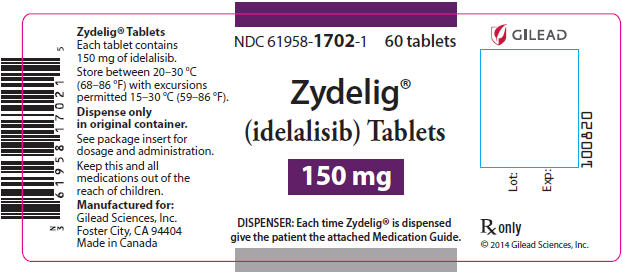
Zydelig idelalisib 150 mg Tablet, Film Coated, 60-count — NDC 61958-1702-1 (Billing 61958-1702-01)
This is a package of 60 tablets of Zydelig idelalisib 150 mg Tablet, Film Coated from Gilead Sciences, Inc., marketed since Jul 2014 and currently FDA-listed, this package's marketing is listed to end Feb 2028. It is this product's only package size.
NDC database record
One package, one record: these facts belong to NDC 61958-1702-1 alone.
- Record
- FDA NDC Directory package listing · Human prescription drug
- Code segments
- 61958 labeler · 1702 product · 1 package
- Package marketed since
- Jul 23, 2014
- Package marketing ended
- Feb 29, 2028
- Sample package
- No — commercial package
- Billing quantity
- 60 EA per package
- Barcode (UPC-A, from the NDC)
- 3 6195817021 5
- FDA record last changed
- Oct 1, 2026
Identity & classification
Regulatory identifiers FDA, NLM and CMS codes for this package
Drug-database identifiers Medi-Span GPI and First Databank GCN / HICL / AHFS classification
- GSN (GCN sequence number): 072611
- GCN: 36885
- HICL (First Databank): 041297
- AHFS class code: 10:00.00.00
Where does this data come from?
- FDA openFDA NDC Directory · synced Oct 1, 2026
- FDA label on DailyMed · label index refreshed Oct 6, 2026
- RxNorm (NLM RxNav) · catalog refreshed Oct 1, 2026
- Medi-Span GPI (licensed)
- First Databank (licensed) · refreshed Oct 1, 2026
Clinical
Idelalisib is used along with another medication rituximab (Rituxan) to treat chronic lymphocytic leukemia (CLL; a type of cancer that begins in the white blood cells) in people whose cancer came back after receiving other cancer treatments. It is also used to treat certain types of follicular lymphoma (FL; a type of cancer that begins in the white blood cells) and small lymphocytic lymphoma (SLL:a type of cancer that begins in the white blood cells) in people whose cancer came back after being treated with at least 2 other cancer treatments. Idelalisib is in a class of medications called kina...
Read the full MedlinePlus article ↗- It is used together with rituximab to treat relapsed chronic lymphocytic leukemia, meaning the CLL has come back. It is for people who are suited to rituximab alone because of othe...
- Zydelig is a tablet you swallow whole, twice a day, with or without food. If you miss a dose by less than 6 hours, take it as soon as you can. If it has been more than 6 hours, ski...
- Common ones are diarrhea, fever, tiredness, rash, cough, and nausea. Blood tests may also show low white blood cells or raised liver enzymes. That is why regular lab work is part o...
- Call for severe or lasting diarrhea, belly pain, new cough or trouble breathing, fever or signs of infection, yellow skin or eyes, or a severe skin rash or blistering. These can be...
Patient education
Supplement & herbal interactions
Some supplements/herbs that may interact with Idelalisib — tap one for details:
Where does this data come from?
- MedlinePlus (NLM) · refreshed Oct 1, 2026
- FDA label on DailyMed · label index refreshed Oct 6, 2026
Ask a licensed pharmacist directly — free, answered by our team.
Pricing
A drug doesn't have one price. Each row is a different public payment system, and none is what you'd pay at the counter — that depends on your insurance. The ⓘ on each row explains what it measures.
| Price system | Per each | Per package |
|---|---|---|
| Retail pharmacies payNADAC · weekly | Not in the retail survey — common for institutional, discontinued, or low-volume packs. | |
| Medicaid paysCMS SDUD · 12 mo | No recent Medicaid claims on file for this NDC — rare and low-volume NDCs are suppressed in the public data. | |
| Medicare drug plans payPart D · Q2 2026 | $259.00 | $15,540.14 / 60 tablets |
Where does this data come from?
- CMS NADAC weekly file
- CMS ASP pricing files · refreshed Sep 20, 2026
- CMS Medicaid State Drug Utilization Data · refreshed Oct 6, 2026
- CMS Part D plan pricing files · refreshed Sep 24, 2026
- VA National Acquisition Center price file
Packaging — all sizes for this product
| Package NDC | Description | Marketing start | Marketing end | Status |
|---|---|---|---|---|
| 61958-1702-01 You're viewing this Main listing | 60 TABLET, FILM COATED in 1 BOTTLE, PLASTIC | 2014-07-23 | Feb 29, 2028 | Active |
Therapeutic equivalents
| Product | Labeler | Pack | NADAC/unit | TE | Status | Price vs. this |
|---|---|---|---|---|---|---|
| Zydelig 150 mgthis 61958-1702-01 | Gilead | 60 tablets | — | AB | FDA listed | — |
Where does this data come from?
- FDA openFDA NDC Directory · synced Oct 1, 2026
- FDA Orange Book · refreshed Oct 3, 2026
- CMS NADAC weekly file
Availability & generic status
The FDA lists approved generic versions of this medicine, but that does not always mean a pharmacy can get one today. Patent rules, launch agreements, supply and pricing can affect when generics actually arrive.
Why the date isn’t exact: Generic timing can change because patents may be challenged, settled, licensed, added, removed, or worked around with a narrower label — and FDA approval does not always mean a pharmacy can get the generic today.
🛈 What do these terms mean?
- Patent
- Legal protection listed in the Orange Book that may delay generic approval or launch. Issued by the U.S. Patent & Trademark Office.
- Substance patent
- Covers the active drug molecule itself — the hardest to design around. A generic generally can’t launch until it expires.
- Formulation (product) patent
- Covers a specific formulation or dosage form. A generic can sometimes work around it with a different formulation.
- Method-of-use patent
- A patent covering one specific approved use of the drug — not necessarily the whole molecule. A generic can sometimes launch with a “skinny label” that carves out the protected use and keeps the others.
- Skinny label
- A generic label that omits a still-patented use when the FDA allows it — letting a generic reach the market for the unprotected uses.
- Exclusivity
- FDA-granted marketing protection, separate from patents — e.g. 5-yr new chemical entity, 7-yr orphan drug, or a +6-month pediatric extension.
- Paragraph IV
- A generic applicant’s formal challenge to a listed patent. It can potentially lead to earlier generic entry, but often involves litigation or a settlement.
- RLD / RS
- Reference Listed Drug — the brand product the FDA uses as the reference for generic applications. Reference Standard — the product the FDA expects generics to compare against in bioequivalence testing.
- TE / AB rating
- FDA therapeutic-equivalence rating. An AB rating generally means the FDA considers a generic therapeutically equivalent to — and substitutable for — the brand.
- LOE (loss of exclusivity)
- The latest patent or exclusivity currently listed — the loss-of-exclusivity / latest-listed-protection date shown on this page. Paragraph-IV challenges and settlements can move the real date earlier; FDA approval and a manufacturer’s decision to market can move it later.
Built from the FDA Orange Book. The bars above are scaled to each protection’s expiry; the red LOE marker is the last one to lapse.
| Patent | Type | Use code | Expires |
|---|---|---|---|
| US 8865730 ↗ | Drug substance | U-1615 | Mar 5, 2033 |
| US 9492449 ↗ | Method of use | U-1914 | Mar 11, 2030 |
| US 9492449 ↗ | Method of use | U-1914 | Mar 11, 2030 |
| US 8865730 ↗ | Drug substance | U-1615 | Mar 5, 2033 |
| US 9469643 ↗ | Drug substance | — | Sep 2, 2033 |
| US 10730879 ↗ | Drug substance | — | Mar 5, 2033 |
| US 10730879 ↗ | Drug substance | — | Mar 5, 2033 |
| US 9469643 ↗ | Drug substance | — | Sep 2, 2033 |
Is there a generic version of ZYDELIG 150 MG TABLET?
The FDA approved a generic — why can’t I get it at my pharmacy yet?
Why do different websites show different generic release dates?
What does “FDA listed” mean?
What does a patent or protection date mean here?
What does “current Orange Book estimate” mean?
Can a generic come out before the last patent expires?
Can a generic come out after the listed dates?
What is the difference between patents and exclusivity?
Why are there multiple patent dates?
Where does this data come from?
- FDA Orange Book · refreshed Oct 3, 2026
What it looks like
Where does this data come from?
- FDA label on DailyMed · label index refreshed Oct 6, 2026
Inactive Ingredients / Excipients
Inactive ingredients, also called excipients, are components of the drug product other than the active ingredient. They may include fillers, dyes, coatings, preservatives, flavors, or other formulation ingredients.
🧪 Avoiding an ingredient? See Idelalisib inactive ingredients by manufacturer: every current product's list side by side, so you can ask your pharmacy for the version that does not list it.
💡 Tap an ingredient (hover on desktop) to see what it is and why it’s used.
-
UNII M28OL1HH48
Croscarmellose sodium is a plant-based substance derived from cellulose. It acts as a disintegrant, helping tablets and capsules break down quickly in the digestive system so the medicine can be absorbed.
-
UNII 1K09F3G675
Ferric oxide red is an inorganic iron compound used as a colorant in medicines. It gives tablets, capsules, or other dosage forms a red or reddish tint for identification and appearance.
-
UNII RFW2ET671P
Hydroxypropyl cellulose is a plant-derived thickening agent made from cellulose. It acts as a binder to hold tablet ingredients together and as a film-former to coat tablets or control how fast the medicine releases.
-
UNII 70097M6I30
Magnesium stearate is a salt made from magnesium and stearic acid, a fatty substance. It's used in tablets and capsules as a lubricant and glidant to help ingredients flow smoothly during manufacturing and prevent sticking.
-
UNII OP1R32D61U
Microcrystalline cellulose is a purified form of cellulose, a natural fiber from plant sources. It acts as a binder and filler in tablets and capsules, helping hold ingredients together and give the medicine its shape and size.
-
UNII 3WJQ0SDW1A
Polyethylene glycol is a synthetic liquid or solid polymer used in medicines as a solvent, lubricant, and humectant. It helps dissolve active ingredients, reduces friction during manufacturing, and retains moisture in the final product.
-
UNII 532B59J990
Polyvinyl alcohol is a synthetic polymer made from plant-derived materials. It's used as a binder to hold ingredients together, a film-former in coatings, and a thickener in liquid formulations.
-
UNII 5856J3G2A2
A starch-based powder made from potatoes and processed with sodium. It acts as a disintegrant, helping the tablet or capsule break apart quickly in the stomach so the medicine can be absorbed.
-
UNII 7SEV7J4R1U
A powder made from a naturally occurring mineral. In medicines, talc works as a glidant and anti-caking agent, helping tablets and capsules flow smoothly during manufacturing and preventing clumping.
-
UNII 15FIX9V2JP
Titanium dioxide is a bright white mineral powder commonly used as a colorant and opacifying agent. It makes pills and tablets white or lighter in color and helps make coatings non-transparent.
10 inactive ingredients listed in the exact product block matched to this NDC.
Where does this data come from?
ingredient classCode="IACT" elements from the exact product block matched by this NDC. Label-section narrative from DailyMed / the openFDA label index is shown separately when available.- FDA label on DailyMed · label index refreshed Oct 6, 2026
- FDA openFDA NDC Directory · synced Oct 1, 2026
Inactive ingredient FAQ
Are inactive ingredients the same for every manufacturer?
Why might an inactive ingredient be missing?
Can inactive ingredients matter?
Manufacturer & labeler
More NDCs from Gilead Sciences, Inc. labeler code 61958
- Tybost COBICISTAT 150 mg Tablet, Film Coated NDC 61958-1401-1
- Sovaldi SOFOSBUVIR 400 mg Tablet, Film Coated NDC 61958-1501-1
- Sovaldi SOFOSBUVIR 200 mg Tablet, Film Coated NDC 61958-1503-1
- Sovaldi SOFOSBUVIR 150 mg Pellet NDC 61958-1504-1
- Sovaldi SOFOSBUVIR 200 mg Pellet NDC 61958-1505-1
- Zydelig idelalisib 100 mg Tablet, Film Coated NDC 61958-1701-1
- Harvoni LEDIPASVIR and SOFOSBUVIR 90 mg; 400 mg Tablet, Film Coated NDC 61958-1801-1
- Harvoni ledipasvir and sofosbuvir 45 mg; 200 mg Tablet, Film Coated NDC 61958-1803-1
- Harvoni ledipasvir and sofosbuvir 45 mg; 200 mg Pellet NDC 61958-1804-1
- Harvoni ledipasvir and sofosbuvir 33.75 mg; 150 mg Pellet NDC 61958-1805-1
- Genvoya elvitegravir, cobicistat, emtricitabine, and tenofovir alafenamide 150 mg; 150 mg; 200 mg; 10 mg Tablet NDC 61958-1901-1
- Descovy emtricitabine and tenofovir alafenamide 200 mg; 25 mg Tablet NDC 61958-2002-1
Where does this data come from?
- FDA openFDA NDC Directory · synced Oct 1, 2026
- Drugs@FDA
Full prescribing information FDA SPL
🚨 Boxed Warning ▾
WARNING: FATAL AND SERIOUS TOXICITIES: HEPATIC, SEVERE DIARRHEA, COLITIS, PNEUMONITIS, INFECTIONS, and INTESTINAL PERFORATION Fatal and/or serious hepatotoxicity occurred in 16% of Zydelig-treated patients. Monitor hepatic function prior to and during treatment. Interrupt and then reduce or discontinue Zydelig as recommended [see Dosage and Administration (2.2) , Warnings and Precautions (5.1) ] .
Fatal and/or serious and severe diarrhea or colitis occurred in 20% of Zydelig-treated patients. Monitor for the development of severe diarrhea or colitis. Interrupt and then reduce or discontinue Zydelig as recommended [see Dosage and Administration (2.2) , Warnings and Precautions (5.2) ] .
Fatal and/or serious pneumonitis occurred in 4% of Zydelig-treated patients. Monitor for pulmonary symptoms and bilateral interstitial infiltrates. Interrupt or discontinue Zydelig as recommended [see Dosage and Administration (2.2) , Warnings and Precautions (5.3) ] .
Fatal and/or serious infections occurred in 48% of Zydelig-treated patients. Monitor for signs and symptoms of infection. Interrupt Zydelig if infection is suspected [see Dosage and Administration (2.2) , Warnings and Precautions (5.4) ].
Fatal and serious intestinal perforation can occur in Zydelig-treated patients across clinical trials. Discontinue Zydelig for intestinal perforation [see Warnings and Precautions (5.5) ] . WARNING: FATAL AND SERIOUS TOXICITIES: HEPATIC, SEVERE DIARRHEA, COLITIS, PNEUMONITIS, INFECTIONS, and INTESTINAL PERFORATION See full prescribing information for complete boxed warning.
Fatal and/or serious hepatotoxicity occurred in 16% of Zydelig-treated patients. Monitor hepatic function prior to and during treatment. Interrupt and then reduce or discontinue Zydelig.
( 5.1 ) Fatal and/or serious and severe diarrhea or colitis occurred in 20% of Zydelig-treated patients. Monitor for the development of severe diarrhea or colitis. Interrupt and then reduce or discontinue Zydelig.
( 5.2 ) Fatal and/or serious pneumonitis occurred in 4% of Zydelig-treated patients. Monitor for pulmonary symptoms and bilateral interstitial infiltrates. Interrupt or discontinue Zydelig.
( 5.3 ) Fatal and/or serious infections occurred in 48% of Zydelig-treated patients. Monitor for signs and symptoms of infection. Interrupt Zydelig if infection is suspected.
( 5.4 ) Fatal and serious intestinal perforation can occur in Zydelig-treated patients across clinical trials. Discontinue Zydelig if intestinal perforation is suspected. ( 5.5 )
🎯 Indications and Usage ▾
1 INDICATIONS AND USAGE Zydelig is indicated, in combination with rituximab, for the treatment of patients with relapsed chronic lymphocytic leukemia (CLL) for whom rituximab alone would be considered appropriate therapy due to other co-morbidities. Zydelig is a kinase inhibitor indicated for the treatment of patients with: Relapsed chronic lymphocytic leukemia (CLL), in combination with rituximab, in patients for whom rituximab alone would be considered appropriate therapy due to other co-morbidities. ( 1 ) Limitations of use: Zydelig is not indicated and is not recommended for first-line treatment of any patient, including patients with CLL, small lymphocytic lymphoma (SLL), follicular lymphoma (FL), and other indolent non-Hodgkin lymphomas.
( 1 , 6.1 ) Zydelig is not indicated and is not recommended in combination with bendamustine and rituximab, or in combination with rituximab for the treatment of patients with FL, SLL, and other indolent non-Hodgkin lymphomas. ( 6.1 ) Limitations of Use Zydelig is not indicated and is not recommended for first-line treatment of any patient, including patients with CLL, small lymphocytic lymphoma (SLL), follicular lymphoma (FL), and other indolent non-Hodgkin lymphomas. Zydelig is not indicated and is not recommended in combination with bendamustine and rituximab, or in combination with rituximab for the treatment of patients with FL, SLL, and other indolent non-Hodgkin lymphomas.
⏱️ Dosage and Administration ▾
2 DOSAGE AND ADMINISTRATION Recommended dosage: 150 mg orally twice daily. ( 2.1 )
2.1Recommended Dosage The recommended dosage of Zydelig is 150 mg administered orally twice daily with or without food until disease progression or unacceptable toxicity. The optimal and safe dosing regimen for patients who receive treatment longer than several months is unknown. Swallow tablets whole.
If a planned dose of Zydelig is missed by less than 6 hours, take the missed dose as soon as possible and take the next dose as usual. If a dose of Zydelig is missed by more than 6 hours, skip the missed dose and take the next dose at the usual time.
2.2Dosage Modifications for Adverse Reactions Table 1 presents the dosage modification for specific adverse reactions. For other severe or life-threatening adverse reactions, withhold Zydelig until resolution. If resuming Zydelig after interruption for other severe or life-threatening toxicities, reduce the dosage to 100 mg orally twice daily.
Permanently discontinue Zydelig for recurrence of other severe or life-threatening Zydelig-related toxicity upon rechallenge. Table 1 Dosage Modifications for Adverse Reactions Abbreviations: ANC: absolute neutrophil count; ALT, alanine aminotransferase; AST, aspartate aminotransferase; BID, twice daily; ULN, upper limit of normal; CMV, cytomegalovirus; DRESS, drug reaction with eosinophilia and systemic symptoms; PCR: polymerase chain reaction; PJP: Pneumocystis jirovecii pneumonia; SJS: Stevens-Johnson syndrome; TEN: toxic epidermal necrolysis ALT/AST >3–5 × ULN >5–20 × ULN >20 × ULN [see Warnings and Precautions (5.1) ] Maintain Zydelig dose.
Monitor at least weekly until ≤1 × ULN. Withhold Zydelig. Monitor at least weekly until ALT/AST are ≤1 × ULN, then may resume Zydelig at 100 mg BID.
Discontinue Zydelig permanently. Bilirubin >1.5–3 × ULN >3–10 × ULN >10 × ULN [see Warnings and Precautions (5.1) ] Maintain Zydelig dose. Monitor at least weekly until ≤1 × ULN.
Withhold Zydelig. Monitor at least weekly until bilirubin is ≤1 × ULN, then may resume Zydelig at 100 mg BID. Discontinue Zydelig permanently.
Diarrhea Moderate diarrhea: increase of 4–6 stools per day over baseline; severe diarrhea: increase of ≥7 stools per day over baseline. Moderate diarrhea Severe diarrhea or hospitalization Life-threatening diarrhea [see Warnings and Precautions (5.2) ] Maintain Zydelig dose. Monitor at least weekly until resolved.
Withhold Zydelig. Monitor at least weekly until resolved, then may resume Zydelig at 100 mg BID. Discontinue Zydelig permanently.
Pneumonitis Any symptomatic pneumonitis [see Warnings and Precautions (5.3) ] Discontinue Zydelig in patients with any severity of symptomatic pneumonitis. Infections Grade 3 or higher sepsis or pneumonia [see Warnings and Precautions (5.4) ] Interrupt Zydelig until infection has resolved. Evidence of CMV infection or viremia Interrupt Zydelig in patients with evidence of active CMV infection of any grade or viremia (positive PCR or antigen test) until the viremia has resolved.
If Zydelig is resumed, monitor patients by PCR or antigen test for CMV reactivation at least monthly. Evidence of PJP infection Interrupt Zydelig in patients with suspected PJP infection of any grade. Permanently discontinue Zydelig if PJP infection is confirmed.
Intestinal Perforation Evidence of intestinal perforation [see Warnings and Precautions (5.5) ] Permanently discontinue Zydelig in patients who experience intestinal perforation. Severe Cutaneous Reactions Suspected/Confirmed SJS, TEN, DRESS, or other severe or life-threatening (Grade ≥3) cutaneous reactions [see Warnings and Precautions (5.6) ] Interrupt Zydelig in patients with suspected SJS, TEN, or DRESS until the etiology of the reaction has been determined. Permanently discontinue Zydelig in patients with confirmed SJS, TEN, or DRESS, or other severe or life-threatening (Grade ≥3) cutaneous reactions.
Hypersensitivity Reactions Evidence of hypersensitivity reactions [see Warnings a… [Excerpted — this section continues on DailyMed.]
💊 Dosage Forms and Strengths ▾
3 DOSAGE FORMS AND STRENGTHS Tablets: 100 mg: orange, oval-shaped, film-coated tablet debossed with "GSI" on one side and "100" on the other side. 150 mg: pink, oval-shaped, film-coated tablet debossed with "GSI" on one side and "150" on the other side. Tablets: 100 mg, 150 mg. ( 3 )
⛔ Contraindications ▾
4 CONTRAINDICATIONS Zydelig is contraindicated in patients with a history of serious hypersensitivity reactions to idelalisib, including anaphylaxis, or patients with a history of toxic epidermal necrolysis with any drug [see Warnings and Precautions (5.6 , 5.7) ] . History of serious hypersensitivity reactions to idelalisib, including anaphylaxis, or history of toxic epidermal necrolysis with any drug. ( 4 )
⚠️ Warnings and Cautions ▾
5 WARNINGS AND PRECAUTIONS Severe Cutaneous Reactions : Monitor patients for the development of severe cutaneous reactions. Permanently discontinue Zydelig if confirmed. ( 2.2 , 5.6 ) Hypersensitivity Reactions : Permanently discontinue Zydelig and institute appropriate supportive measures.
( 2.2 , 5.7 ) Neutropenia : Monitor blood counts. Interrupt Zydelig until resolution and resume at reduced dose. ( 2.2 , 5.8 ) Embryo-fetal Toxicity : May cause fetal harm.
Advise females of reproductive potential of potential risk to a fetus and to use effective contraception. ( 5.9 , 8.1 , 8.3 )
5.1Hepatotoxicity Fatal and/or serious hepatotoxicity occurred in 16% of patients treated with Zydelig in combination with rituximab or with unapproved combination therapies. Elevations in ALT or AST greater than 5 times the upper limit of normal have occurred [see Adverse Reactions (6.1) ]. These findings were generally observed within the first 12 weeks of treatment and were reversible with dose interruption.
After resumption of treatment at a lower dose, 26% of patients had recurrence of ALT and AST elevations. Discontinue Zydelig for recurrent hepatotoxicity. Avoid concurrent use of Zydelig with other drugs that may cause liver toxicity.
Monitor ALT and AST in all patients every 2 weeks for the first 3 months of treatment, every 4 weeks for the next 3 months, then every 1 to 3 months thereafter. Monitor weekly for liver toxicity if the ALT or AST rises above 3 times the upper limit of normal until resolved. Withhold Zydelig if the ALT or AST is greater than 5 times the upper limit of normal, and continue to monitor AST, ALT and total bilirubin weekly until the abnormality is resolved [see Dosage and Administration (2.2) ].
5.2Severe Diarrhea or Colitis Severe diarrhea or colitis (Grade 3 or higher) occurred in 20% of patients treated with Zydelig in combination with rituximab or with unapproved combination therapies [see Adverse Reactions (6.1) ]. Diarrhea can occur at any time. Avoid concurrent use of Zydelig and other drugs that cause diarrhea.
Diarrhea due to Zydelig responds poorly to antimotility agents. Median time to resolution ranged between 1 week and 1 month across trials, following interruption of Zydelig therapy and in some instances, use of corticosteroids [see Dosage and Administration (2.2) ].
5.3Pneumonitis Fatal and serious pneumonitis occurred in patients treated with Zydelig [see Adverse Reactions (6.1) ] . Clinical manifestations included interstitial infiltrates and organizing pneumonia. In randomized clinical trials of combination therapies, pneumonitis occurred in 4% of patients treated with Zydelig compared to 1% on the comparator arms.
Time to onset of pneumonitis ranged from <1 to 15 months. Monitor patients on Zydelig for pulmonary symptoms. In patients taking Zydelig who present with pulmonary symptoms such as cough, dyspnea, hypoxia, interstitial infiltrates on a radiologic exam, or a decline by more than 5% in oxygen saturation, interrupt Zydelig until the etiology has been determined.
If symptomatic pneumonitis or organizing pneumonia is diagnosed, initiate appropriate treatment with corticosteroids and permanently discontinue Zydelig [see Dosage and Administration (2.2) ] .
5.4Infections Fatal and/or serious infections occurred in 48% of patients treated with Zydelig in combination with rituximab or with unapproved combination therapies [see Adverse Reactions (6.1) ] . The most common infections were pneumonia, sepsis, and febrile neutropenia. Treat infections prior to initiation of Zydelig therapy.
Monitor patients on Zydelig for signs and symptoms of infection, and interrupt Zydelig for Grade 3 or higher infection [see Dosage and Administration (2.2) ] . Serious or fatal Pneumocystis jirovecii pneumonia (PJP) or cytomegalovirus (CMV) occurred in <1% of patients treated with Zydelig. Provide PJP prophylaxis during treatment with Zydelig.
Interrupt Zydelig in patients with suspected PJP infection of any grad… [Excerpted — this section continues on DailyMed.]
🤒 Adverse Reactions ▾
6 ADVERSE REACTIONS The following clinically significant adverse reactions are described elsewhere in the labeling. Hepatotoxicity [see Warnings and Precautions (5.1) ] Severe Diarrhea or Colitis [see Warnings and Precautions (5.2) ] Pneumonitis [see Warnings and Precautions (5.3) ] Infections [see Warnings and Precautions (5.4) ] Intestinal Perforation [see Warnings and Precautions (5.5) ] Severe Cutaneous Reactions [see Warnings and Precautions (5.6) ] Hypersensitivity Reactions [see Warnings and Precautions (5.7) ] Neutropenia [see Warnings and Precautions (5.8) ] The most common adverse reactions (incidence ≥30%) in patients treated with Zydelig in combination trials are diarrhea, pneumonia, pyrexia, fatigue, rash, cough, and nausea.
( 6.1 ) Common laboratory abnormalities are neutropenia, ALT elevations and AST elevations. ( 6.1 ) To report SUSPECTED ADVERSE REACTIONS, contact Gilead Sciences, Inc. at 1-800-GILEAD-5 or FDA at 1-800-FDA-1088 or www.fda.gov/medwatch.
6.1Clinical Trials Experience Because clinical trials are conducted under widely varying conditions, adverse reaction rates observed in the clinical trials of a drug cannot be directly compared to rates in the clinical trials of another drug and may not reflect the rates observed in practice. The pooled safety population described in the WARNINGS AND PRECAUTIONS reflect exposure to Zydelig at a dosage of 150 mg twice daily in 110 patients administered in combination with rituximab in Study 312-0116, and in combination with other drugs in 380 patients.
Among 490 patients who received Zydelig, 74% were exposed for 6 months or longer and 50% were exposed for one year or longer. In this pooled safety population, the most common (> 30%) adverse reactions were diarrhea, pneumonia, pyrexia, fatigue, rash, cough, and nausea. Common laboratory abnormalities were neutropenia, ALT elevations and AST elevations.
Summary of Clinical Trials in Chronic Lymphocytic Leukemia The safety data reflect exposure to Zydelig from two randomized, double-blind clinical trials (Studies 312-0116 and 312-0115) in 634 patients with relapsed CLL [see Clinical Studies (14.1)] and one randomized, open-label trial in 259 patients with relapsed CLL (Study 312-0119). Zydelig with Rituximab (Study 312-0116) Patients with relapsed CLL received up to 8 doses of rituximab (R) with (n=110) or without Zydelig (n=108)150 mg twice daily. The median duration of exposure to Zydelig was 8 months.
Serious adverse reactions were reported in 65 (59%) patients treated with Zydelig + R The most frequent serious adverse reactions reported for patients treated with Zydelig + R were pneumonia (23%), diarrhea (10%), pyrexia (9%), sepsis (8%), and febrile neutropenia (5%). Adverse reactions that led to discontinuation of Zydelig occurred in 19 (17%) patients. The most common adverse reactions that led to treatment discontinuations were hepatotoxicity and diarrhea/colitis.
Forty-two (38%) patients had dose interruptions and sixteen (15%) patients had dose reductions due to adverse reactions or laboratory abnormalities. The most common reasons for dose interruptions or reductions were pneumonia, diarrhea or colitis, rash, and elevated transaminases. Table 2 and Table 3 summarize common adverse reactions and laboratory abnormalities reported for Zydelig + R and placebo + R arms.
Table 2 Adverse Reactions Reported in ≥5% of Patients with CLL and Occurred at ≥2% Higher Incidence in Patients Receiving Zydelig in Study 312-0116 Zydelig + R N=110 (%) Placebo + R N=108 (%) Adverse Reaction Any Grade Grade ≥3 Any Grade Grade ≥3 General disorders and administration site conditions pyrexia 44 (40) 3 (3) 20 (19) 1 (1) chills 27 (25) 2 (2) 17 (16) 0 pain 8 (7) 0 1 (1) 0 Gastrointestinal disorders diarrhea Diarrhea includes the following preferred terms: diarrhea, colitis. 35 (32) 12 (11) 20 (19) 0 nausea 30 (27) 1 (1) 25 (23) 0 abdominal pain Abdominal pain includes the following preferred terms: abdominal pain, abdominal pain up… [Excerpted — this section continues on DailyMed.]
🔄 Drug Interactions ▾
7 DRUG INTERACTIONS Strong CYP3A Inhibitors : Additional monitoring required if alternative therapy is not available. ( 7.1 ) Strong CYP3A Inducers : Avoid coadministration of strong CYP3A inducers. ( 7.1 ) CYP3A Substrates : Avoid coadministration of sensitive CYP3A substrates. ( 7.2 )
7.1Effects of Other Drugs on Zydelig Table 6 lists the potential effects of the coadministration of strong CYP3A modulators on Zydelig. Table 6 Drug Interactions with Zydelig that affect Idelalisib Concentrations Strong CYP3A Inhibitors Clinical Impact Coadministration with strong CYP3A inhibitors may increase idelalisib concentrations [see Clinical Pharmacology (12.3) ] . Increased idelalisib concentrations may increase the risk of exposure related adverse reactions.
Prevention or Management Use other drugs that are not strong CYP3A inhibitors. If unable to use alternative drugs, monitor patients more frequently for Zydelig adverse reactions [see Adverse Reactions (6.1) ] . Strong CYP3A Inducers Clinical Impact Coadministration with strong CYP3A inducers may decrease idelalisib concentrations [see Clinical Pharmacology (12.3) ] .
Decreased idelalisib concentrations may reduce efficacy. Prevention or Management Avoid coadministration of Zydelig with strong CYP3A4 inducers.
7.2Effects of Zydelig on Other Drugs The coadministration of Zydelig with a CYP3A substrate may increase the concentrations of this CYP3A substrate. Avoid coadministration of Zydelig with sensitive CYP3A substrates [see Clinical Pharmacology (12.3) ].
👥 Use in Specific Populations ▾
8 USE IN SPECIFIC POPULATIONS Lactation : Advise not to breastfeed. ( 8.2 )
8.1Pregnancy Risk Summary Based on findings in animal studies and the mechanism of action [see Clinical Pharmacology (12.1) ] , Zydelig may cause fetal harm when administered to a pregnant woman. There are no available data in pregnant women to inform the drug-associated risk. In animal reproduction studies, administration of idelalisib to pregnant rats during organogenesis resulted in decreased fetal weight and congenital malformations in rats at maternal exposures (AUC) 12 times those reported in patients at the recommended dosage of 150 mg twice daily (see Data ) .
The estimated background risk of major birth defects and miscarriage for the indicated populations is unknown. All pregnancies have a background risk of birth defect, loss, or other adverse outcomes. In the U.S. general population, the estimated background risk of major birth defects and miscarriage of clinically recognized pregnancies 2–4% and 15–20%, respectively.
Data Animal Data In an embryo-fetal development study in rats, pregnant animals receiving oral doses of idelalisib during the period of organogenesis (implantation to closure of the hard palate), embryo-fetal toxicities were observed at the mid- and high-doses that also resulted in maternal toxicity, based on reductions in maternal body weight gain. Adverse findings at idelalisib doses ≥ 75 mg/kg/day included decreased fetal weights, external malformations (short tail), and skeletal variations (delayed ossification and/or unossification of the skull, vertebrae, and sternebrae).
Additional findings were observed at 150 mg/kg/day dose of idelalisib and included urogenital blood loss, complete resorption, increased post-implantation loss, and malformations (vertebral agenesis with anury, hydrocephaly, and microphthalmia/anophthalmia). The dose of 75 and 150 mg/kg/day of idelalisib in rats resulted in exposures (AUC) of approximately 12 and 30 times, respectively, the human exposure at the recommended dose of 150 mg twice daily.
8.2Lactation Risk Summary There are no data on the presence of idelalisib or its metabolites in human milk or its effects on the breastfed child or on milk production. Because of the potential for serious adverse reactions in the breastfed child, advise women not to breastfeed during treatment with Zydelig and for 1 month after the last dose.
8.3Females and Males of Reproductive Potential Zydelig may cause fetal harm when administered to a pregnant woman [see Use in Specific Populations (8.1) ] . Pregnancy Pregnancy testing is recommended for females of reproductive potential prior to starting Zydelig. Contraception Females Advise females of reproductive potential to use effective contraception during treatment with Zydelig and for 1 month after the last dose.
Males Advise males with female partners of reproductive potential to use effective contraception during treatment with Zydelig and for 3 months after the last dose [see Nonclinical Toxicology (13.1) ] .
8.4Pediatric Use Safety and effectiveness of Zydelig in pediatric patients have not been established.
8.5Geriatric Use Of the 490 patients with relapsed CLL who were treated with Zydelig in combination trials, 271 (55%) were 65 years of age and older. When comparing patients 65 years of age or older to younger patients with CLL, older patients had a higher incidence of discontinuation due to an adverse reaction (36% vs 28%), higher incidence of serious adverse reactions (73% vs 67%), and higher incidence of death (13% vs 9%).
8.6Hepatic Impairment No dose adjustment is recommended for patients with ALT or AST or bilirubin > upper limit of normal (ULN); however, limited safety and efficacy data are available for patients with baseline AST or ALT > 2.5 × ULN or bilirubin > 1.5 × ULN. Monitor patients with baseline hepatic impairment for adverse reactions [see Warnings and Precautions (5) ]. Follow dosage modifications for adverse reactions [see Do… [Excerpted — this section continues on DailyMed.]
🤰 Pregnancy ▾
8.1Pregnancy Risk Summary Based on findings in animal studies and the mechanism of action [see Clinical Pharmacology (12.1) ] , Zydelig may cause fetal harm when administered to a pregnant woman. There are no available data in pregnant women to inform the drug-associated risk. In animal reproduction studies, administration of idelalisib to pregnant rats during organogenesis resulted in decreased fetal weight and congenital malformations in rats at maternal exposures (AUC) 12 times those reported in patients at the recommended dosage of 150 mg twice daily (see Data ) .
The estimated background risk of major birth defects and miscarriage for the indicated populations is unknown. All pregnancies have a background risk of birth defect, loss, or other adverse outcomes. In the U.S. general population, the estimated background risk of major birth defects and miscarriage of clinically recognized pregnancies 2–4% and 15–20%, respectively.
Data Animal Data In an embryo-fetal development study in rats, pregnant animals receiving oral doses of idelalisib during the period of organogenesis (implantation to closure of the hard palate), embryo-fetal toxicities were observed at the mid- and high-doses that also resulted in maternal toxicity, based on reductions in maternal body weight gain. Adverse findings at idelalisib doses ≥ 75 mg/kg/day included decreased fetal weights, external malformations (short tail), and skeletal variations (delayed ossification and/or unossification of the skull, vertebrae, and sternebrae).
Additional findings were observed at 150 mg/kg/day dose of idelalisib and included urogenital blood loss, complete resorption, increased post-implantation loss, and malformations (vertebral agenesis with anury, hydrocephaly, and microphthalmia/anophthalmia). The dose of 75 and 150 mg/kg/day of idelalisib in rats resulted in exposures (AUC) of approximately 12 and 30 times, respectively, the human exposure at the recommended dose of 150 mg twice daily.
🧒 Pediatric Use ▾
8.4Pediatric Use Safety and effectiveness of Zydelig in pediatric patients have not been established.
🧓 Geriatric Use ▾
8.5Geriatric Use Of the 490 patients with relapsed CLL who were treated with Zydelig in combination trials, 271 (55%) were 65 years of age and older. When comparing patients 65 years of age or older to younger patients with CLL, older patients had a higher incidence of discontinuation due to an adverse reaction (36% vs 28%), higher incidence of serious adverse reactions (73% vs 67%), and higher incidence of death (13% vs 9%).
🧬 Clinical Pharmacology ▾
12 CLINICAL PHARMACOLOGY
12.1Mechanism of Action Idelalisib is an inhibitor of phosphatidylinositol 3-kinase, PI3Kδ, which is expressed in normal and malignant B-cells. Idelalisib induced apoptosis and inhibited proliferation in cell lines derived from malignant B-cells and in primary tumor cells. Idelalisib inhibits several cell signaling pathways, including B-cell receptor (BCR) signaling and the CXCR4 and CXCR5 signaling, which are involved in trafficking and homing of B-cells to the lymph nodes and bone marrow.
Treatment of lymphoma cells with idelalisib resulted in inhibition of chemotaxis and adhesion, and reduced cell viability.
12.2Pharmacodynamics Cardiac Electrophysiology At a dose 2.7 times the maximum recommended dose, Zydelig did not prolong the QT/QTc interval (i.e., ≤10 ms).
12.3Pharmacokinetics Idelalisib exposure increased in a less than dose-proportional manner over a dose range of 50 mg to 350 mg twice daily (0.3 to 2.3 times the approved recommended dosage). Following 150 mg twice daily administration of idelalisib, average (% coefficient of variation) maximum concentrations (C max ) and area under the curve (AUC) at steady-state were 1861 (43%) ng/mL and 10598 (41%) ng∙h/mL for idelalisib. Absorption The median time to peak concentration (T max ) was observed at 1.5 hours.
Food Effect The administration of a single dose of Zydelig with a high-fat meal (900 calories: 525 calories fat, 250 calories carbohydrates, and 125 calories protein) increased idelalisib AUC 1.4-fold relative to fasting conditions. Distribution Protein binding of idelalisib is ≥ 84% with no concentration dependence. The mean blood-to-plasma ratio was 0.7.
The apparent central volume of distribution at steady state is 23 L (%CV ~85%). Idelalisib is a substrate of P-glycoprotein (P-gp) and BCRP in vitro. Elimination The population apparent systemic clearance at steady-state is
14.9L/hr (%CV ~ 38%). The population terminal elimination half-life of idelalisib is 8.2 hours. Metabolism Idelalisib is metabolized via aldehyde oxidase and CYP3A with additional minor metabolism by UGT1A4.
Excretion Following a single 150 mg dose of radiolabeled idelalisib, 78% of the radioactivity was excreted in feces and 14% was excreted in the urine. Idelalisib is not a substrate of OATP1B1, OATP1B3, OAT1, OAT3, or OCT2. Specific Populations Age (18 to 91 years), sex, race (White, and non-Whites), renal impairment (creatinine clearance ≥ 15 mL/min) and weight (38 to 148 kg) had no effect on idelalisib exposure.
Patients with Hepatic Impairment The mean AUC increased up to 1.7-fold in patients with hepatic impairment (defined as ALT or AST or bilirubin values ≥ ULN) compared to patients with normal hepatic function. There is limited information on idelalisib exposure in patients with baseline AST or ALT > 2.5 × ULN or bilirubin > 1.5 × ULN [see Specific Populations (8.6) ]. Drug Interaction Studies Effect of Other Drugs on Idelalisib The coadministration of rifampin (strong CYP3A inducer and P-gp inducer) to healthy subjects decreased the mean idelalisib AUC by 75% and the mean C max by 58% [see Drug Interactions (7.1) ].
The coadministration of ketoconazole (strong CYP3A inhibitor and P-gp inhibitor) to healthy subjects increased the mean idelalisib AUC by 1.8-fold. No changes in the mean C max were observed [see Drug Interactions (7.1) ]. In vitro studies suggest that idelalisib inhibits CYP2C8, CYP2C19, and UGT1A1 and induces CYP2B6.
Effect of Idelalisib on Other Drugs The mean C max of midazolam increased by 2.4-fold and the mean AUC of midazolam increased by 5.4-fold when midazolam (sensitive CYP3A substrate) was coadministered with Zydelig [ see Drug Interactions (7.2) ]. No changes in exposure to rosuvastatin (OATP1B1 and OATP1B3 substrate) or digoxin (P-glycoprotein substrate) were observed when coadministered with Zydelig.
🧬 Mechanism of Action ▾
12.1Mechanism of Action Idelalisib is an inhibitor of phosphatidylinositol 3-kinase, PI3Kδ, which is expressed in normal and malignant B-cells. Idelalisib induced apoptosis and inhibited proliferation in cell lines derived from malignant B-cells and in primary tumor cells. Idelalisib inhibits several cell signaling pathways, including B-cell receptor (BCR) signaling and the CXCR4 and CXCR5 signaling, which are involved in trafficking and homing of B-cells to the lymph nodes and bone marrow.
Treatment of lymphoma cells with idelalisib resulted in inhibition of chemotaxis and adhesion, and reduced cell viability.
📦 How Supplied / Storage and Handling ▾
16 HOW SUPPLIED/STORAGE AND HANDLING Zydelig tablets supplied as follows: Tablet Strength Package Configuration NDC No. Description of Tablet; Debossed on Tablet 150 mg High density polyethylene (HDPE) bottle with a polyester fiber coil, capped with a child-resistant closure. Each bottle contains 60 film-coated tablets.
61958-1702-1 Oval shaped; pink; "150" on one side and "GSI" on the other side 100 mg 61958-1701-1 Oval-shaped; orange; "100" on one side and "GSI" on the other side Store between 20–30 °C (68–86 °F) with excursions permitted 15–30 °C (59–86 °F). Dispense only in original container. Do not use if seal over bottle opening is broken or missing.
📦 Storage and Handling ▾
Store between 20–30 °C (68–86 °F) with excursions permitted 15–30 °C (59–86 °F). Dispense only in original container. Do not use if seal over bottle opening is broken or missing.
📋 Description ▾
11 DESCRIPTION Idelalisib is a kinase inhibitor. The chemical name for idelalisib is 5-fluoro-3-phenyl-2-[(1S)-1-( 9H -purin-6-ylamino)propyl]quinazolin-4( 3H )-one. It has a molecular formula of C22H18FN7O and a molecular weight of 415.42 g/mol.
Idelalisib has the following structural formula: Idelalisib is a white to off-white solid with a pH-dependent aqueous solubility ranging from <0.1 mg/mL at pH 5–7 to over 1 mg/mL at pH 2 under ambient conditions. Zydelig (idelalisib) tablets are for oral use. Each tablet contains either 100 mg or 150 mg of idelalisib with the following inactive ingredients: microcrystalline cellulose, hydroxypropyl cellulose, croscarmellose sodium, sodium starch glycolate, magnesium stearate and a tablet coating.
The tablet coating consists of polyethylene glycol, talc, polyvinyl alcohol, and titanium dioxide and of FD&C Yellow #6/Sunset Yellow FCF Aluminum Lake (for the 100 mg tablet) and red iron oxide (for the 150 mg tablet). Chemical Structure
💬 Information for Patients ▾
17 PATIENT COUNSELING INFORMATION Advise the patient to read the FDA-approved patient labeling (Medication Guide). Hepatotoxicity Advise patients that Zydelig can cause significant elevations in liver enzymes, and that serial testing of serum liver tests (ALT, AST, and bilirubin) are recommended while taking Zydelig [see Warnings and Precautions (5.1) ]. Advise patients to report symptoms of liver dysfunction including jaundice, bruising, abdominal pain, or bleeding.
Severe Diarrhea or Colitis Advise patients that Zydelig may cause severe diarrhea or colitis and to notify their healthcare provider immediately if the number of bowel movements in a day increases by six or more [see Warnings and Precautions (5.2) ]. Pneumonitis Advise patients of the possibility of pneumonitis, and to report any new or worsening respiratory symptoms including cough or dyspnea [see Warnings and Precautions (5.3) ]. Infections Advise patients that Zydelig can cause serious infections that may be fatal.
Advise patients to immediately report symptoms of infection (e.g. pyrexia) [see Warnings and Precautions (5.4) ] . Intestinal Perforation Advise patients of the possibility for intestinal perforation and to notify their healthcare provider immediately if they experience severe abdominal pain [see Warnings and Precautions (5.5) ]. Severe Cutaneous Reactions Advise patients that Zydelig may cause severe cutaneous reactions and to notify their healthcare provider immediately if they develop a severe skin reaction [see Warnings and Precautions (5.6) ].
Hypersensitivity Reactions Advise patients that anaphylaxis can occur during treatment with Zydelig and to notify their healthcare provider immediately if they experience a hypersensitivity reaction, including anaphylaxis [see Warnings and Precautions (5.7) ]. Neutropenia Advise patients of the need for periodic monitoring of blood counts. Advise patients to notify their healthcare provider immediately if they develop a fever or any signs of infection [see Warnings and Precautions (5.8) ].
Embryo-Fetal Toxicity Advise pregnant women of the potential risk to a fetus. Advise females of reproductive potential to inform their healthcare provider of a known or suspected pregnancy [see Warnings and Precautions (5.9) , Use in Specific Populations (8.1) ] . Advise females of reproductive potential to use effective contraception during treatment with Zydelig and for 1 month after the last dose [see Use in Specific Populations (8.3) ] .
Advise males with female partners of reproductive potential to use effective contraception during treatment with Zydelig and for 3 months after receiving the last dose [see Use in Specific Populations (8.3) ] . Lactation Advise women not to breastfeed during treatment with Zydelig and for 1 month after the last dose [see Use in Specific Populations (8.2) ] . Instructions for Taking Zydelig Advise patients to take Zydelig exactly as prescribed and not to change their dose or to stop taking Zydelig unless they are told to do so by their healthcare provider.
Zydelig may be taken with or without food. Zydelig tablets should be swallowed whole. Advise patients that if a dose of Zydelig is missed by less than 6 hours, to take the missed dose right away and take the next dose as usual.
If a dose of Zydelig is missed by more than 6 hours, advise patients to wait and take the next dose at the usual time [see Dosage and Administration (2.1) ] .
💬 Medication Guide ▾
This Medication Guide has been approved by the U.S. Food and Drug Administration. Revised: 2/2022 MEDICATION GUIDE ZYDELIG ® (zye-DEL-ig) (idelalisib) tablets What is the most important information I should know about Zydelig?
Zydelig can cause serious side effects that can lead to death, including: Liver problems. Abnormal liver blood test results are common during treatment with Zydelig. Zydelig can cause severe liver problems.
Your healthcare provider will do blood tests before and during your treatment with Zydelig to check for liver problems. Tell your healthcare provider right away if you get any of the following symptoms of liver problems: yellowing of your skin or the white part of your eyes (jaundice) dark or brown (tea colored) urine pain in the upper right side of your stomach area (abdomen) bleeding or bruising more easily than normal Severe diarrhea. Diarrhea is common during treatment with Zydelig and can sometimes be severe.
Tell your healthcare provider right away if the number of bowel movements you have in a day increases by six or more. Ask your healthcare provider about medicines you can take to treat your diarrhea. Lung problems (pneumonitis).
Your healthcare provider may do tests to check your lungs if you have breathing problems during treatment with Zydelig. Tell your healthcare provider right away if you get new or worsening cough, shortness of breath, difficulty breathing, or wheezing. Your healthcare provider may treat you with a corticosteroid medicine if you develop lung problems.
Infections. Zydelig can cause serious infections that may lead to death. Tell your healthcare provider right away if you have a fever or any signs of an infection during treatment with Zydelig.
Tear in intestinal wall (perforation). Tell your healthcare provider or get medical help right away if you get new or worsening stomach area (abdomen) pain, chills, fever, nausea, or vomiting. Severe skin reactions.
Tell your healthcare provider right away if you get any of the following symptoms during treatment with Zydelig: painful sores or ulcers on your skin, lips, or in your mouth severe rash with blisters or peeling skin rash with itching fever enlarged lymph nodes If you have any of the above serious side effects during treatment with Zydelig, your healthcare provider may completely stop your treatment, stop your treatment for a period of time, or change your dose of Zydelig. See " What are the possible side effects of Zydelig? " for more information about side effects.
What is Zydelig? Zydelig is a prescription medicine used to treat people with chronic lymphocytic leukemia (CLL), in combination with rituximab, when CLL comes back after prior cancer treatment and when rituximab treatment alone may be used due to other health problems. Zydelig should not be used as the first medicine to treat anyone, including people with CLL, small lymphocytic lymphoma (SLL), follicular lymphoma (FL), and other slow growing (indolent) non-Hodgkin lymphomas.
Zydelig should not be used in combination with bendamustine and rituximab, or in combination with rituximab to treat people with FL, SLL, and other indolent non-Hodgkin lymphomas. It is not known if Zydelig is safe and effective in children. Do not take Zydelig if you: have had a serious allergic reaction to idelalisib. have had a severe skin reaction called toxic epidermal necrolysis (TEN) to any drug.
Before taking Zydelig, tell your healthcare provider about all of your medical conditions, including if you: have liver problems have lung problems have an infection are pregnant or plan to become pregnant. Zydelig may harm your unborn baby. Females who are able to become pregnant should have a pregnancy test before starting treatment with Zydelig.
Females who are able to become pregnant should use effective birth control (contraception) during treatment with Zydelig and for 1 month after the last dose of Zydelig. Talk to your healthcare provider about birth control methods that may be r… [Excerpted — this section continues on DailyMed.]
🧬 Pharmacokinetics ▾
12.3Pharmacokinetics Idelalisib exposure increased in a less than dose-proportional manner over a dose range of 50 mg to 350 mg twice daily (0.3 to 2.3 times the approved recommended dosage). Following 150 mg twice daily administration of idelalisib, average (% coefficient of variation) maximum concentrations (C max ) and area under the curve (AUC) at steady-state were 1861 (43%) ng/mL and 10598 (41%) ng∙h/mL for idelalisib. Absorption The median time to peak concentration (T max ) was observed at 1.5 hours.
Food Effect The administration of a single dose of Zydelig with a high-fat meal (900 calories: 525 calories fat, 250 calories carbohydrates, and 125 calories protein) increased idelalisib AUC 1.4-fold relative to fasting conditions. Distribution Protein binding of idelalisib is ≥ 84% with no concentration dependence. The mean blood-to-plasma ratio was 0.7.
The apparent central volume of distribution at steady state is 23 L (%CV ~85%). Idelalisib is a substrate of P-glycoprotein (P-gp) and BCRP in vitro. Elimination The population apparent systemic clearance at steady-state is
14.9L/hr (%CV ~ 38%). The population terminal elimination half-life of idelalisib is 8.2 hours. Metabolism Idelalisib is metabolized via aldehyde oxidase and CYP3A with additional minor metabolism by UGT1A4.
Excretion Following a single 150 mg dose of radiolabeled idelalisib, 78% of the radioactivity was excreted in feces and 14% was excreted in the urine. Idelalisib is not a substrate of OATP1B1, OATP1B3, OAT1, OAT3, or OCT2. Specific Populations Age (18 to 91 years), sex, race (White, and non-Whites), renal impairment (creatinine clearance ≥ 15 mL/min) and weight (38 to 148 kg) had no effect on idelalisib exposure.
Patients with Hepatic Impairment The mean AUC increased up to 1.7-fold in patients with hepatic impairment (defined as ALT or AST or bilirubin values ≥ ULN) compared to patients with normal hepatic function. There is limited information on idelalisib exposure in patients with baseline AST or ALT > 2.5 × ULN or bilirubin > 1.5 × ULN [see Specific Populations (8.6) ]. Drug Interaction Studies Effect of Other Drugs on Idelalisib The coadministration of rifampin (strong CYP3A inducer and P-gp inducer) to healthy subjects decreased the mean idelalisib AUC by 75% and the mean C max by 58% [see Drug Interactions (7.1) ].
The coadministration of ketoconazole (strong CYP3A inhibitor and P-gp inhibitor) to healthy subjects increased the mean idelalisib AUC by 1.8-fold. No changes in the mean C max were observed [see Drug Interactions (7.1) ]. In vitro studies suggest that idelalisib inhibits CYP2C8, CYP2C19, and UGT1A1 and induces CYP2B6.
Effect of Idelalisib on Other Drugs The mean C max of midazolam increased by 2.4-fold and the mean AUC of midazolam increased by 5.4-fold when midazolam (sensitive CYP3A substrate) was coadministered with Zydelig [ see Drug Interactions (7.2) ]. No changes in exposure to rosuvastatin (OATP1B1 and OATP1B3 substrate) or digoxin (P-glycoprotein substrate) were observed when coadministered with Zydelig.
🧬 Pharmacodynamics ▾
12.2Pharmacodynamics Cardiac Electrophysiology At a dose 2.7 times the maximum recommended dose, Zydelig did not prolong the QT/QTc interval (i.e., ≤10 ms).
🔬 Clinical Studies ▾
14 CLINICAL STUDIES Zydelig was evaluated in a randomized, double-blind, placebo-controlled study GS-US-312-0116 (referred to as 312-0116) (NCT01539512) in 220 patients with relapsed CLL who required treatment and were unable to tolerate standard chemoimmunotherapy due to coexisting medical conditions, reduced renal function as measured by creatinine clearance < 60 mL/min, or NCI CTCAE Grade ≥ 3 neutropenia or Grade ≥ 3 thrombocytopenia resulting from myelotoxic effects of prior therapy with cytotoxic agents. Patients were randomized 1:1 to receive 8 doses of rituximab (first dose at 375 mg/m 2 , subsequent doses at 500 mg/m 2 every 2 weeks for 4 infusions and every 4 weeks for an additional 4 infusions) in combination with either an placebo taken orally twice daily or with Zydelig 150 mg taken orally twice daily until disease progression or unacceptable toxicity.
The median age was 71 years (range 47, 92) with 78% over 65, 66% were male, and 90% were White. The median time since diagnosis was 8.5 years. The median number of prior therapies was 3.
Nearly all (96%) patients had received prior anti-CD20 monoclonal antibodies. The most common (>15%) prior regimens were: bendamustine + rituximab (BR) (98 patients, 45%), fludarabine + cyclophosphamide + rituximab (75 patients, 34%), single-agent rituximab (67 patients, 31%), fludarabine + rituximab (37 patients, 17%), and chlorambucil (36 patients, 16%). The median CIRS (Cumulative Illness Rating Scale) score was 8 (range 0–17), and 85% of patients had a score of >6.
Median Karnofsky score was 80. Median estimated Creatinine Clearance (eCLcr) was 63.6 mL/min, with 41% of patients having an eCLcr of <60 mL/min. At screening, 19.5% of patients had a platelet count of <50 × 10 9 /L, and 13.2% had an absolute neutrophil count (ANC) of <1 × 10 9 /L.
The efficacy of Zydelig was based on progression free survival (PFS), as assessed by an independent review committee (IRC). The trial was stopped for efficacy following the first pre-specified interim analysis. Results of a second interim analysis continued to show a statistically significant improvement for Zydelig + R compared to placebo + R for the major efficacy outcome measure of PFS (HR: 0.18, 95% CI [0.10, 0.32], p <0.0001).
At the final analysis, with a median follow-up of 8.3 months for the Zydelig + R group, and 5.6 months for the placebo + R group, the median PFS for the Zydelig + R group was 19.4 months (95% CI: 12.3, Not Reached) versus 6.5 months (95% CI: 4.0, 7.3) for the placebo + R group (HR: 0.15, 95% CI [0.09, 0.24], p < 0.0001). Updated efficacy results are shown in Table 7 and the Kaplan-Meier curve for PFS is shown in Figure 1. Table 7 Efficacy Results from Study 312-0116 Zydelig + R N = 110 Placebo + R N = 110 PFS: progression-free survival; NR: not reached; ORR: overall response rate; PR: partial response; DOR: duration of response PFS Median (months) (95% CI) 19.4 (12.3, NR) 6.5 (4.0, 7.3) Hazard ratio (95% CI) 0.15 (0.09, 0.24) P-value < 0.0001 The p value for PFS was based on stratified log-rank test.
ORR ORR defined as the proportion of patients who achieved a complete response (CR) or PR. All PRs achieved; none of the patients achieved a CR. (All PRs) 92 (83.6%) 17 (15.5%) 95% CI 75.4, 90.0 9.3,
23.6Odds Ratio (95% CI) 27.8 (13.4, 57.5) P-value <0.0001 DOR Median (months) (95% CI) NR (12, NR) 6.2 (2.8, 6.5) Figure 1 Kaplan-Meier Plot of IRC-Assessed PFS for Study 312-0116 Figure 1
🧪 Nonclinical Toxicology ▾
13 NONCLINICAL TOXICOLOGY
13.1Carcinogenesis, Mutagenesis, Impairment of Fertility Idelalisib was not carcinogenic in a 26-week study in transgenic mice when administered daily by oral gavage at doses up to 500 mg/kg/day in males and 1000 mg/kg/day in females. Idelalisib was not carcinogenic in a 2-year study in rats when administered daily by oral gavage at exposures 0.40/0.62-fold (male/female), compared to the exposure in patients with hematologic malignancies administered the recommended dose of 150 mg twice daily. Idelalisib did not induce mutations in the bacterial mutagenesis (Ames) assay and was not clastogenic in the in vitro chromosome aberration assay using human peripheral blood lymphocytes.
Idelalisib was genotoxic in males in the in vivo rat micronucleus study at a high dose of 2000 mg/kg. Idelalisib may impair fertility in humans. In a fertility study, treated male rats (25, 50, or 100 mg/kg/day of idelalisib) were mated with untreated females.
Decreased epididymidal and testicular weights were observed at all dose levels and reduced sperm concentration at the mid- and high doses; however, there were no adverse effects on fertility parameters. The low dose in males resulted in an exposure (AUC) that is approximately 50% of the exposure in patients at the recommended dose of 150 mg twice daily. In a separate fertility study, treated female rats (25, 50, or 100 mg/kg/day of idelalisib) were mated with untreated males.
There were no adverse effects on fertility parameters; however, there was a decrease in the number of live embryos at the high dose. The high dose in females resulted in an exposure (AUC) that is approximately 17-fold the exposure in patients at the recommended dose of 150 mg twice daily.
13.2Animal Toxicology and/or Pharmacology Toxicities observed in animals and not reported in patients include cardiac toxicity (cardiomyopathy, inflammation, and increased heart weight) and pancreatic findings (inflammation, hemorrhage, and low-incidence acinar degeneration and hyperplasia). These findings were observed in Sprague-Dawley rats in toxicology studies at exposures (AUCs) higher than those reported in patients at the recommended dose of 150 mg twice daily. Cardiac inflammation was mainly seen in a 28-day study in rats, the other findings were observed in the 13-week and/or 6-month studies.
📄 Carcinogenesis, Mutagenesis, Impairment of Fertility ▾
13.1Carcinogenesis, Mutagenesis, Impairment of Fertility Idelalisib was not carcinogenic in a 26-week study in transgenic mice when administered daily by oral gavage at doses up to 500 mg/kg/day in males and 1000 mg/kg/day in females. Idelalisib was not carcinogenic in a 2-year study in rats when administered daily by oral gavage at exposures 0.40/0.62-fold (male/female), compared to the exposure in patients with hematologic malignancies administered the recommended dose of 150 mg twice daily. Idelalisib did not induce mutations in the bacterial mutagenesis (Ames) assay and was not clastogenic in the in vitro chromosome aberration assay using human peripheral blood lymphocytes.
Idelalisib was genotoxic in males in the in vivo rat micronucleus study at a high dose of 2000 mg/kg. Idelalisib may impair fertility in humans. In a fertility study, treated male rats (25, 50, or 100 mg/kg/day of idelalisib) were mated with untreated females.
Decreased epididymidal and testicular weights were observed at all dose levels and reduced sperm concentration at the mid- and high doses; however, there were no adverse effects on fertility parameters. The low dose in males resulted in an exposure (AUC) that is approximately 50% of the exposure in patients at the recommended dose of 150 mg twice daily. In a separate fertility study, treated female rats (25, 50, or 100 mg/kg/day of idelalisib) were mated with untreated males.
There were no adverse effects on fertility parameters; however, there was a decrease in the number of live embryos at the high dose. The high dose in females resulted in an exposure (AUC) that is approximately 17-fold the exposure in patients at the recommended dose of 150 mg twice daily.
📄 Recent Major Changes ▾
Indications and Usage, Relapsed Follicular B-cell non-Hodgkin Lymphoma – Accelerated Approval Indication Removed ( 1 ) 2/2022 Indications and Usage, Relapsed Small Lymphocytic Lymphoma – Accelerated Approval Indication Removed ( 1 ) 2/2022
📄 Package Label / Principal Display Panel ▾
PRINCIPAL DISPLAY PANEL - 100 mg Tablet Bottle Label NDC 61958- 1701 -1 60 tablets Zydelig ® (idelalisib) Tablets 100 mg DISPENSER: Each time Zydelig ® is dispensed give the patient the attached Medication Guide. PRINCIPAL DISPLAY PANEL - 100 mg Tablet Bottle Label
PRINCIPAL DISPLAY PANEL - 150 mg Tablet Bottle Label NDC 61958- 1702 -1 60 tablets Zydelig ® (idelalisib) Tablets 150 mg DISPENSER: Each time Zydelig ® is dispensed give the patient the attached Medication Guide. PRINCIPAL DISPLAY PANEL - 150 mg Tablet Bottle Label
Medicare Part D spend CMS · PART D · 2026 (Q1)
About this NDC listing & data coverage
What data is (and isn’t) available for this NDC — tap to expand
| NDC identity (package / product / labeler codes) | ✓ Available |
| Labeler | ✓ Available |
| Product & package description | ✓ Available |
| Marketing category & status | ✓ Available |
| Active ingredient / dosage form / route | ✓ Available |
| FDA label (SPL via DailyMed) | ✓ Available |
| Package photos | ✓ Available |
| Inactive ingredients (structured) | ✓ Available |
| NADAC pharmacy acquisition price (CMS) | — Not published for this NDC CMS publishes NADAC only for NDCs reported in its retail-pharmacy survey. |
| Orange Book / therapeutic-equivalence data | ✓ Available |
| HCPCS J-code billing crosswalk | — Not published for this NDC Most self-administered / retail products have no J-code — that is normal. |
| Medicaid utilization (CMS SDUD) | — Not published for this NDC CMS reports utilization only for NDCs with Medicaid claims above its privacy threshold. |