
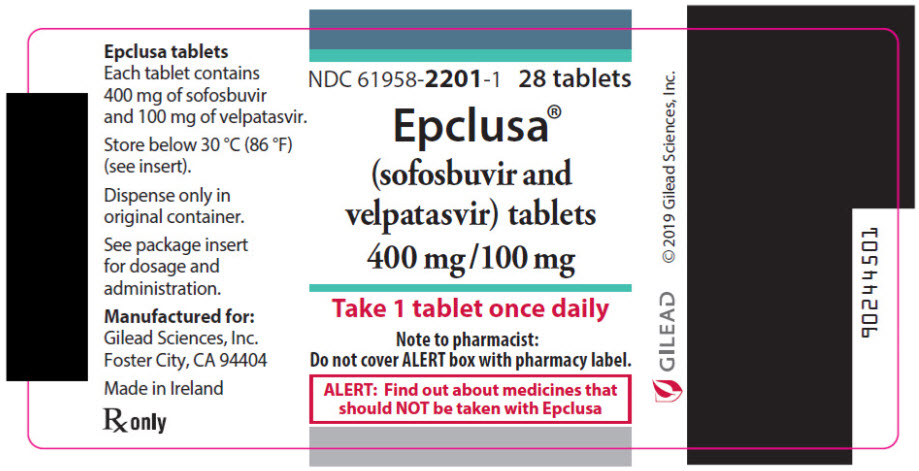
Epclusa Velpatasvir and Sofosbuvir 100 mg; 400 mg Tablet, Film Coated, 28-count — NDC 61958-2201-1 (Billing 61958-2201-01)
This is a package of 28 tablets of Epclusa Velpatasvir and Sofosbuvir 100 mg; 400 mg Tablet, Film Coated from Gilead Sciences, Inc., marketed since Jun 2016 and currently FDA-listed; retail pharmacies pay about $865.89 per tablet (NADAC). It is this product's only package size.
NDC database record
One package, one record: these facts belong to NDC 61958-2201-1 alone.
- Record
- FDA NDC Directory package listing · Human prescription drug
- Code segments
- 61958 labeler · 2201 product · 1 package
- Package marketed since
- Jun 28, 2016
- Sample package
- No — commercial package
- Listing certified through
- Dec 31, 2026
- Billing quantity
- 28 EA per package
- Barcode (UPC-A, from the NDC)
- 3 6195822011 8
- Medicaid fills, this package
- 1,690 prescriptions in the last four reported quarters
- FDA record last changed
- Oct 8, 2026
Identity & classification
Regulatory identifiers FDA, NLM and CMS codes for this package
Drug-database identifiers Medi-Span GPI and First Databank GCN / HICL / AHFS classification
- GSN (GCN sequence number): 076305
- GCN: 41729
- GPI-14 (Medi-Span): 12359902650330
- HICL (First Databank): 043561
- AHFS class code: 08:18.40.16
- RxCUI (RxNorm): 1799212
Where does this data come from?
- FDA openFDA NDC Directory · synced Oct 8, 2026
- FDA label on DailyMed · label index refreshed Oct 6, 2026
- RxNorm (NLM RxNav) · catalog refreshed Oct 1, 2026
- Medi-Span GPI (licensed)
- First Databank (licensed) · refreshed Oct 8, 2026
RxNorm drug class
This medicine belongs to the Hepatitis C Virus Nucleotide Analog NS5B Polymerase Inhibitor class.
Where does this data come from?
- RxClass (NLM) · catalog refreshed Oct 1, 2026
Clinical
- It treats chronic hepatitis C infection, genotypes 1 through 6, in adults and children 3 and older. For people whose cirrhosis is decompensated, it is taken together with ribavirin...
- Adults take one tablet by mouth once a day, with or without food. Treatment usually lasts 12 weeks. Take it as your prescriber directs.
- Hepatitis B can flare up again during or after hepatitis C treatment, sometimes seriously. Testing lets your doctor watch you closely or treat hepatitis B if needed.
- The most common are headache and tiredness. Some people also have nausea, weakness, or trouble sleeping. With ribavirin, anemia and diarrhea are more common.
Patient education
Supplement & herbal interactions
Where does this data come from?
- MedlinePlus (NLM) · refreshed Oct 1, 2026
- FDA label on DailyMed · label index refreshed Oct 6, 2026
Ask a licensed pharmacist directly — free, answered by our team.
Pricing
A drug doesn't have one price. Each row is a different public payment system, and none is what you'd pay at the counter — that depends on your insurance. The ⓘ on each row explains what it measures.
| Price system | Per ea | Per package |
|---|---|---|
| Retail pharmacies payNADAC · weekly | $865.892 | $24,244.98 / 28 tablets |
| Medicaid paysCMS SDUD · 12 mo | $823.30 | $23,052.33 / 28 tablets |
| Medicare drug plans payPart D · Q2 2026 | $848.54 | $23,759.21 / 28 tablets |
Where does this data come from?
- CMS NADAC weekly file · file of Oct 7, 2026
- CMS ASP pricing files · refreshed Sep 20, 2026
- CMS Medicaid State Drug Utilization Data · through Q1 2026
- CMS Part D plan pricing files · refreshed Sep 24, 2026
- VA National Acquisition Center price file
Packaging — all sizes for this product
| Package NDC | Description | Marketing start | Marketing end | Status |
|---|---|---|---|---|
| 61958-2201-01 You're viewing this Main listing | 28 TABLET, FILM COATED in 1 BOTTLE, PLASTIC | 2016-06-28 | — | Active |
Therapeutic equivalents
| Product | Labeler | Pack | NADAC/unit | TE | Status | Price vs. this |
|---|---|---|---|---|---|---|
| Sofosbuvir and Velpatasvir 100 mg/1; 400 mg 72626-2701-01 | Asegua | 14 tablets | $278.026 | — | Availability likely | save 68% |
| Epclusa 100 mg/1; 400 mgthis 61958-2201-01 | Gilead | 28 tablets | $865.892 | — | Availability likely | — |
Where does this data come from?
- FDA openFDA NDC Directory · synced Oct 8, 2026
- FDA Orange Book · refreshed Oct 3, 2026
- CMS NADAC weekly file · file of Oct 7, 2026
Availability & generic status
We did not find an FDA-approved generic match for this exact strength, form and route. Patent/protection dates below may affect future generic timing.
Why the date isn’t exact: Generic timing can change because patents may be challenged, settled, licensed, added, removed, or worked around with a narrower label — and FDA approval does not always mean a pharmacy can get the generic today.
🛈 What do these terms mean?
- Patent
- Legal protection listed in the Orange Book that may delay generic approval or launch. Issued by the U.S. Patent & Trademark Office.
- Substance patent
- Covers the active drug molecule itself — the hardest to design around. A generic generally can’t launch until it expires.
- Formulation (product) patent
- Covers a specific formulation or dosage form. A generic can sometimes work around it with a different formulation.
- Method-of-use patent
- A patent covering one specific approved use of the drug — not necessarily the whole molecule. A generic can sometimes launch with a “skinny label” that carves out the protected use and keeps the others.
- Skinny label
- A generic label that omits a still-patented use when the FDA allows it — letting a generic reach the market for the unprotected uses.
- Exclusivity
- FDA-granted marketing protection, separate from patents — e.g. 5-yr new chemical entity, 7-yr orphan drug, or a +6-month pediatric extension.
- Paragraph IV
- A generic applicant’s formal challenge to a listed patent. It can potentially lead to earlier generic entry, but often involves litigation or a settlement.
- RLD / RS
- Reference Listed Drug — the brand product the FDA uses as the reference for generic applications. Reference Standard — the product the FDA expects generics to compare against in bioequivalence testing.
- TE / AB rating
- FDA therapeutic-equivalence rating. An AB rating generally means the FDA considers a generic therapeutically equivalent to — and substitutable for — the brand.
- LOE (loss of exclusivity)
- The latest patent or exclusivity currently listed — the loss-of-exclusivity / latest-listed-protection date shown on this page. Paragraph-IV challenges and settlements can move the real date earlier; FDA approval and a manufacturer’s decision to market can move it later.
Built from the FDA Orange Book. The bars above are scaled to each protection’s expiry; the red LOE marker is the last one to lapse.
| Patent | Type | Use code | Expires |
|---|---|---|---|
| US 8921341 ↗ | Drug substance | U-1470 | Nov 16, 2032 |
| US 8575135 ↗ | Drug substance | U-1470 | Nov 16, 2032 |
| US 8735372 ↗ | Method of use | U-1470 | Mar 21, 2028 |
| US 10086011 ↗ | Method of use | U-1470 | Jan 30, 2034 |
| US 8889159 ↗ | Method of use | U-1470 | Mar 26, 2029 |
| US 8633309 ↗ | Drug substance | U-1470 | Mar 26, 2029 |
| US 7964580 ↗ | Drug substance | U-1470 | Mar 26, 2029 |
| US 8940718 ↗ | Drug substance | U-1470 | Nov 16, 2032 |
| US 8334270 ↗ | Drug substance | U-1470 | Mar 21, 2028 |
| US 9085573 ↗ | Drug substance | U-1470 | Mar 21, 2028 |
| US 8580765 ↗ | Drug substance | U-1470 | Mar 21, 2028 |
| US 7964580 ↗ | Drug substance | U-1470 | Mar 26, 2029 |
| US 8334270 ↗ | Drug substance | U-1470 | Mar 21, 2028 |
| US 8575135 ↗ | Drug substance | U-1470 | Nov 16, 2032 |
| US 8580765 ↗ | Drug substance | U-1470 | Mar 21, 2028 |
| US 8618076 ↗ | Drug substance | U-1470 | Dec 11, 2030 |
| US 8735372 ↗ | Method of use | U-1470 | Mar 21, 2028 |
| US 8889159 ↗ | Method of use | U-1470 | Mar 26, 2029 |
| US 9085573 ↗ | Drug substance | U-1470 | Mar 21, 2028 |
| US 8921341 ↗ | Drug substance | U-1470 | Nov 16, 2032 |
| US 8633309 ↗ | Drug substance | U-1470 | Mar 26, 2029 |
| US 8940718 ↗ | Drug substance | U-1470 | Nov 16, 2032 |
| US 9284342 ↗ | Drug substance | U-1470 | Sep 13, 2030 |
| US 10086011 ↗ | Method of use | U-1470 | Jan 30, 2034 |
| US 11116783 ↗ | Method of use | U-1470 | Jan 30, 2034 |
| US 11116783 ↗ | Method of use | U-1470 | Jan 30, 2034 |
| US 8618076 ↗ | Drug substance | U-1470 | Dec 11, 2030 |
| US 9284342 ↗ | Drug substance | U-1470 | Sep 13, 2030 |
| US 9757406 ↗ | Drug product | — | Jan 30, 2034 |
| US 9757406 ↗ | Drug product | — | Jan 30, 2034 |
| US 8580765*PED ↗ | Drug product | — | Sep 21, 2028 |
| US 8940718*PED ↗ | Drug product | — | May 16, 2033 |
| US 8618076*PED ↗ | Drug product | — | Jun 11, 2031 |
| US 8334270*PED ↗ | Drug product | — | Sep 21, 2028 |
| US 8575135*PED ↗ | Drug product | — | May 16, 2033 |
| US 8889159*PED ↗ | Drug product | — | Sep 26, 2029 |
| US 7964580*PED ↗ | Drug product | — | Sep 26, 2029 |
| US 8633309*PED ↗ | Drug product | — | Sep 26, 2029 |
| US 9085573*PED ↗ | Drug product | — | Sep 21, 2028 |
| US 8735372*PED ↗ | Drug product | — | Sep 21, 2028 |
| US 8921341*PED ↗ | Drug product | — | May 16, 2033 |
| US 9284342*PED ↗ | Drug product | — | Mar 13, 2031 |
| US 10086011*PED ↗ | Drug product | — | Jul 30, 2034 |
| US 9757406*PED ↗ | Drug product | — | Jul 30, 2034 |
| US 7964580*PED ↗ | Drug product | — | Sep 26, 2029 |
| US 8334270*PED ↗ | Drug product | — | Sep 21, 2028 |
| US 8575135*PED ↗ | Drug product | — | May 16, 2033 |
| US 8580765*PED ↗ | Drug product | — | Sep 21, 2028 |
| US 8618076*PED ↗ | Drug product | — | Jun 11, 2031 |
| US 8735372*PED ↗ | Drug product | — | Sep 21, 2028 |
| US 8889159*PED ↗ | Drug product | — | Sep 26, 2029 |
| US 9085573*PED ↗ | Drug product | — | Sep 21, 2028 |
| US 8921341*PED ↗ | Drug product | — | May 16, 2033 |
| US 8633309*PED ↗ | Drug product | — | Sep 26, 2029 |
| US 8940718*PED ↗ | Drug product | — | May 16, 2033 |
| US 9284342*PED ↗ | Drug product | — | Mar 13, 2031 |
| US 10086011*PED ↗ | Drug product | — | Jul 30, 2034 |
| US 9757406*PED ↗ | Drug product | — | Jul 30, 2034 |
| US 11116783*PED ↗ | Drug product | — | Jul 30, 2034 |
| US 11116783*PED ↗ | Drug product | — | Jul 30, 2034 |
| Code | What it grants | Expires |
|---|---|---|
| ODE-293 | Orphan Drug Exclusivity (7-year) | Mar 19, 2027 |
| ODE-293 | Orphan Drug Exclusivity (7-year) | Mar 19, 2027 |
| PED | Pediatric Exclusivity (+6 months) | Sep 19, 2027 |
| PED | Pediatric Exclusivity (+6 months) | Sep 19, 2027 |
Is there a generic version of EPCLUSA 400 MG-100 MG TABLET?
The FDA approved a generic — why can’t I get it at my pharmacy yet?
Why do different websites show different generic release dates?
What does “FDA listed” mean?
What does a patent or protection date mean here?
What does “current Orange Book estimate” mean?
Can a generic come out before the last patent expires?
Can a generic come out after the listed dates?
What is the difference between patents and exclusivity?
Why are there multiple patent dates?
Where does this data come from?
- FDA Orange Book · refreshed Oct 3, 2026
What it looks like
Where does this data come from?
- FDA label on DailyMed · label index refreshed Oct 6, 2026
Inactive Ingredients / Excipients
Inactive ingredients, also called excipients, are components of the drug product other than the active ingredient. They may include fillers, dyes, coatings, preservatives, flavors, or other formulation ingredients.
🧪 Avoiding an ingredient? See Sofosbuvir and Velpatasvir inactive ingredients by manufacturer: every current product's list side by side, so you can ask your pharmacy for the version that does not list it.
💡 Tap an ingredient (hover on desktop) to see what it is and why it’s used.
-
UNII 3K9958V90M
A liquid solvent derived from fermentation or chemical synthesis. In medicines, alcohol dissolves active ingredients, helps preserve the product, and improves how the body absorbs certain drugs.
-
UNII D9C330MD8B
Copovidone is a synthetic polymer made by combining two types of plastic-like molecules. It acts as a binder and film-former to help hold tablet ingredients together and improve how the medicine dissolves in your body.
-
UNII M28OL1HH48
Croscarmellose sodium is a plant-based substance derived from cellulose. It acts as a disintegrant, helping tablets and capsules break down quickly in the digestive system so the medicine can be absorbed.
-
UNII 1K09F3G675
Ferric oxide red is an inorganic iron compound used as a colorant in medicines. It gives tablets, capsules, or other dosage forms a red or reddish tint for identification and appearance.
-
UNII 70097M6I30
Magnesium stearate is a salt made from magnesium and stearic acid, a fatty substance. It's used in tablets and capsules as a lubricant and glidant to help ingredients flow smoothly during manufacturing and prevent sticking.
-
UNII OP1R32D61U
Microcrystalline cellulose is a purified form of cellulose, a natural fiber from plant sources. It acts as a binder and filler in tablets and capsules, helping hold ingredients together and give the medicine its shape and size.
-
UNII G2M7P15E5P
Polyethylene glycol 3350 is a synthetic polymer used as a solvent, humectant, and thickening agent in medicines. It helps dissolve other ingredients, retain moisture in the product, and achieve the desired consistency.
-
UNII 532B59J990
Polyvinyl alcohol is a synthetic polymer made from plant-derived materials. It's used as a binder to hold ingredients together, a film-former in coatings, and a thickener in liquid formulations.
-
UNII 7SEV7J4R1U
A powder made from a naturally occurring mineral. In medicines, talc works as a glidant and anti-caking agent, helping tablets and capsules flow smoothly during manufacturing and preventing clumping.
-
UNII 15FIX9V2JP
Titanium dioxide is a bright white mineral powder commonly used as a colorant and opacifying agent. It makes pills and tablets white or lighter in color and helps make coatings non-transparent.
-
UNII 059QF0KO0R
Water is a liquid solvent that dissolves and mixes ingredients together in liquid medicines, syrups, and injections. It helps distribute the active drug evenly throughout the product.
11 inactive ingredients listed in the exact product block matched to this NDC.
Where does this data come from?
ingredient classCode="IACT" elements from the exact product block matched by this NDC. Label-section narrative from DailyMed / the openFDA label index is shown separately when available.- FDA label on DailyMed · label index refreshed Oct 6, 2026
- FDA openFDA NDC Directory · synced Oct 8, 2026
Inactive ingredient FAQ
Are inactive ingredients the same for every manufacturer?
Why might an inactive ingredient be missing?
Can inactive ingredients matter?
Manufacturer & labeler
More NDCs from Gilead Sciences, Inc. labeler code 61958
- Harvoni ledipasvir and sofosbuvir 45 mg; 200 mg Pellet NDC 61958-1804-1
- Harvoni ledipasvir and sofosbuvir 33.75 mg; 150 mg Pellet NDC 61958-1805-1
- Genvoya elvitegravir, cobicistat, emtricitabine, and tenofovir alafenamide 150 mg; 150 mg; 200 mg; 10 mg Tablet NDC 61958-1901-1
- Descovy emtricitabine and tenofovir alafenamide 200 mg; 25 mg Tablet NDC 61958-2002-1
- Descovy emtricitabine and tenofovir alafenamide 120 mg; 15 mg Tablet NDC 61958-2005-1
- Odefsey emtricitabine, rilpivirine hydrochloride, and tenofovir alafenamide 200 mg; 25 mg; 25 mg Tablet NDC 61958-2101-1
- Epclusa Velpatasvir and Sofosbuvir 50 mg; 200 mg Tablet, Film Coated NDC 61958-2203-1
- Epclusa Velpatasvir and Sofosbuvir 50 mg; 200 mg Pellet NDC 61958-2204-1
- Epclusa Velpatasvir and Sofosbuvir 37.5 mg; 150 mg Pellet NDC 61958-2205-1
- Vemlidy tenofovir alafenamide 25 mg Tablet NDC 61958-2301-1
- Vosevi SOFOSBUVIR, VELPATASVIR, and VOXILAPREVIR 400 mg; 100 mg; 100 mg Tablet, Film Coated NDC 61958-2401-1
- Biktarvy bictegravir sodium, emtricitabine, and tenofovir alafenamide fumarate 50 mg; 200 mg; 25 mg Tablet NDC 61958-2501-1
Where does this data come from?
- FDA openFDA NDC Directory · synced Oct 8, 2026
- Drugs@FDA
Full prescribing information FDA SPL
🚨 Boxed Warning ▾
WARNING: RISK OF HEPATITIS B VIRUS REACTIVATION IN PATIENTS COINFECTED WITH HCV AND HBV Test all patients for evidence of current or prior hepatitis B virus (HBV) infection before initiating treatment with EPCLUSA. HBV reactivation has been reported in HCV/HBV coinfected patients who were undergoing or had completed treatment with HCV direct acting antivirals and were not receiving HBV antiviral therapy. Some cases have resulted in fulminant hepatitis, hepatic failure, and death.
Monitor HCV/HBV coinfected patients for hepatitis flare or HBV reactivation during HCV treatment and post-treatment follow-up. Initiate appropriate patient management for HBV infection as clinically indicated [see Warnings and Precautions (5.1) ] . WARNING: RISK OF HEPATITIS B VIRUS REACTIVATION IN PATIENTS COINFECTED WITH HCV AND HBV See full prescribing information for complete boxed warning.
Hepatitis B virus (HBV) reactivation has been reported, in some cases resulting in fulminant hepatitis, hepatic failure, and death. ( 5.1 )
🎯 Indications and Usage ▾
1 INDICATIONS AND USAGE EPCLUSA is indicated for the treatment of adults and pediatric patients 3 years of age and older with chronic hepatitis C virus (HCV) genotype 1, 2, 3, 4, 5, or 6 infection [see Dosage and Administration (2.2 , 2.3 , 2.4) and Clinical Studies (14) ] : without cirrhosis or with compensated cirrhosis with decompensated cirrhosis for use in combination with ribavirin. EPCLUSA is a fixed-dose combination of sofosbuvir, a hepatitis C virus (HCV) nucleotide analog NS5B polymerase inhibitor, and velpatasvir, an HCV NS5A inhibitor, and is indicated for the treatment of adults and pediatric patients 3 years of age and older with chronic HCV genotype 1, 2, 3, 4, 5, or 6 infection ( 1 ): without cirrhosis or with compensated cirrhosis with decompensated cirrhosis for use in combination with ribavirin.
⏱️ Dosage and Administration ▾
2 DOSAGE AND ADMINISTRATION Testing prior to the initiation of therapy: Test all patients for HBV infection by measuring HBsAg and anti-HBc. ( 2.1 ) See recommended treatment regimen and duration in patients 3 years of age and older with genotypes 1, 2, 3, 4, 5, or 6 HCV in table below: ( 2.2 ) Patient Population Regimen and Duration Treatment-naïve and treatment-experienced In clinical trials, regimens contained peginterferon alfa/ribavirin with or without an HCV NS3/4A protease inhibitor (boceprevir, simeprevir, or telaprevir). , without cirrhosis and with compensated cirrhosis (Child-Pugh A) EPCLUSA 12 weeks Treatment-naïve and treatment-experienced , with decompensated cirrhosis (Child-Pugh B and C) EPCLUSA + ribavirin 12 weeks Recommended dosage in adults: One tablet (400 mg of sofosbuvir and 100 mg of velpatasvir) taken orally once daily with or without food.
( 2.3 ) Recommended dosage in pediatric patients 3 years and older: Recommended dosage is based on weight. Refer to Table 2 of the full prescribing information for specific dosing guidelines based on body weight. ( 2.4 ) For pediatric patients less than 6 years of age, administer EPCLUSA oral pellets with food.
( 2.4 ) Instructions for Use should be followed for preparation and administration of EPCLUSA oral pellets. ( 2.5 ) HCV/HIV-1 coinfection: For patients with HCV/HIV-1 coinfection, follow the dosage recommendations in the table above. ( 2.2 ) For treatment-naïve and treatment-experienced liver transplant recipients without cirrhosis or with compensated cirrhosis (Child-Pugh A), the recommended regimen is EPCLUSA once daily for 12 weeks.
( 2.2 ) If used in combination with ribavirin, follow the recommendations for ribavirin dosing and dosage modifications. ( 2.3 , 2.4 ) For patients with renal impairment including end stage renal disease on dialysis, follow the dosage recommendations in the table above. ( 2.6 )
2.1Testing Prior to the Initiation of Therapy Test all patients for evidence of current or prior HBV infection by measuring hepatitis B surface antigen (HBsAg) and hepatitis B core antibody (anti-HBc) before initiating HCV treatment with EPCLUSA [see Warnings and Precautions (5.1) ].
2.2Recommended Treatment Regimen and Duration in Patients 3 Years of Age and Older Table 1 shows the recommended treatment regimen and duration based on patient population . For patients with HCV/HIV-1 coinfection follow the dosage recommendations in Table 1. For treatment-naïve and treatment-experienced liver transplant recipients without cirrhosis or with compensated cirrhosis (Child-Pugh A), the recommended regimen is EPCLUSA once daily for 12 weeks [see Clinical Studies (14.3 and 14.5) ].
Refer to Drug Interactions (7) for dosage recommendations for concomitant drugs. Table 1 Recommended Treatment Regimen and Duration in Patients 3 Years of Age and Older with Genotype 1, 2, 3, 4, 5, or 6 HCV Patient Population Treatment Regimen and Duration Treatment-naïve and treatment-experienced In clinical trials in adults, regimens contained peginterferon alfa/ribavirin with or without an HCV NS3/4A protease inhibitor (boceprevir, simeprevir, or telaprevir). , without cirrhosis and with compensated cirrhosis (Child-Pugh A) EPCLUSA 12 weeks Treatment-naïve and treatment-experienced , with decompensated cirrhosis (Child-Pugh B or C) EPCLUSA + ribavirin See Dosage and Administration 2.3 and 2.4 for ribavirin dosage recommendations .
12 weeks
2.3Recommended Dosage in Adults The recommended dosage of EPCLUSA in adults is one tablet (400 mg sofosbuvir and 100 mg velpatasvir) taken orally once daily with or without food [see Clinical Pharmacology (12.3) ] . When administered with EPCLUSA, the recommended dosage of ribavirin is based on weight (administered with food): 1,000 mg per day for patients less than 75 kg and 1,200 mg for those weighing at least 75 kg, divided and administered twice daily. The starting dosage and on-treatment dosage of ribavirin can be decreased based on hemoglo… [Excerpted — this section continues on DailyMed.]
💊 Dosage Forms and Strengths ▾
3 DOSAGE FORMS AND STRENGTHS EPCLUSA is available as tablets or pellets for oral use. Each dosage form is available in two dose strengths: 400 mg/100 mg Tablets: pink, diamond-shaped, film-coated tablet debossed with "GSI" on one side and "7916" on the other side. Each tablet contains 400 mg of sofosbuvir and 100 mg of velpatasvir.
200 mg/50 mg Tablets: pink, oval-shaped, film-coated tablet debossed with "GSI" on one side and "S/V" on the other side. Each tablet contains 200 mg of sofosbuvir and 50 mg of velpatasvir. 200 mg/50 mg Oral Pellets: white to off-white, film-coated pellets in unit-dose packets.
Each packet contains 200 mg of sofosbuvir and 50 mg of velpatasvir. 150 mg/37.5 mg Oral Pellets: white to off-white, film-coated pellets in unit-dose packets. Each packet contains 150 mg of sofosbuvir and 37.5 mg of velpatasvir.
Tablets: 400 mg of sofosbuvir and 100 mg of velpatasvir; 200 mg of sofosbuvir and 50 mg of velpatasvir. ( 3 ) Oral Pellets: 200 mg of sofosbuvir and 50 mg of velpatasvir; 150 mg of sofosbuvir and 37.5 mg of velpatasvir. ( 3 )
⛔ Contraindications ▾
4 CONTRAINDICATIONS EPCLUSA and ribavirin combination regimen is contraindicated in patients for whom ribavirin is contraindicated. Refer to the ribavirin prescribing information for a list of contraindications for ribavirin [see Dosage and Administration (2.2 , 2.3 , 2.4) ]. EPCLUSA and ribavirin combination regimen is contraindicated in patients for whom ribavirin is contraindicated. ( 4 )
⚠️ Warnings and Cautions ▾
5 WARNINGS AND PRECAUTIONS Risk of Hepatitis B Virus Reactivation: Test all patients for evidence of current or prior HBV infection before initiation of HCV treatment. Monitor HCV/HBV coinfected patients for HBV reactivation and hepatitis flare during HCV treatment and post-treatment follow-up. Initiate appropriate patient management for HBV infection as clinically indicated.
( 5.1 ) Bradycardia with amiodarone coadministration: Serious symptomatic bradycardia may occur in patients taking amiodarone, particularly in patients also receiving beta blockers, or those with underlying cardiac comorbidities and/or advanced liver disease. Coadministration of amiodarone with EPCLUSA is not recommended. In patients without alternative viable treatment options, cardiac monitoring is recommended.
( 5.2 , 7.3 )
5.1Risk of Hepatitis B Virus Reactivation in Patients Coinfected with HCV and HBV Hepatitis B virus (HBV) reactivation has been reported in HCV/HBV coinfected patients who were undergoing or had completed treatment with HCV direct acting antivirals, and who were not receiving HBV antiviral therapy. Some cases have resulted in fulminant hepatitis, hepatic failure, and death. Cases have been reported in patients who are HBsAg positive and also in patients with serologic evidence of resolved HBV infection (i.e., HBsAg negative and anti-HBc positive).
HBV reactivation has also been reported in patients receiving certain immunosuppressants or chemotherapeutic agents; the risk of HBV reactivation associated with treatment with HCV direct-acting antivirals may be increased in these patients. HBV reactivation is characterized as an abrupt increase in HBV replication manifesting as a rapid increase in serum HBV DNA level. In patients with resolved HBV infection, reappearance of HBsAg can occur.
Reactivation of HBV replication may be accompanied by hepatitis, i.e., increases in aminotransferase levels and, in severe cases, increases in bilirubin levels, liver failure, and death can occur. Test all patients for evidence of current or prior HBV infection by measuring HBsAg and anti-HBc before initiating HCV treatment with EPCLUSA. In patients with serologic evidence of HBV infection, monitor for clinical and laboratory signs of hepatitis flare or HBV reactivation during HCV treatment with EPCLUSA and during post-treatment follow-up.
Initiate appropriate patient management for HBV infection as clinically indicated.
5.2Serious Symptomatic Bradycardia When Coadministered with Amiodarone Postmarketing cases of symptomatic bradycardia and cases requiring pacemaker intervention have been reported when amiodarone is coadministered with a sofosbuvir-containing regimen. A fatal cardiac arrest was reported in a patient taking amiodarone who was coadministered a sofosbuvir-containing regimen (HARVONI ® [ledipasvir/sofosbuvir]). Bradycardia has generally occurred within hours to days, but cases have been observed up to 2 weeks after initiating HCV treatment.
Patients also taking beta blockers, or those with underlying cardiac comorbidities and/or advanced liver disease may be at increased risk for symptomatic bradycardia with coadministration of amiodarone. Bradycardia generally resolved after discontinuation of HCV treatment. The mechanism for this effect is unknown.
Coadministration of amiodarone with EPCLUSA is not recommended. For patients taking amiodarone who have no other alternative viable treatment options and who will be coadministered EPCLUSA: Counsel patients about the risk of symptomatic bradycardia. Cardiac monitoring in an in-patient setting for the first 48 hours of coadministration is recommended, after which outpatient or self-monitoring of the heart rate should occur on a daily basis through at least the first 2 weeks of treatment.
Patients who are taking EPCLUSA who need to start amiodarone therapy due to no other alternative viable treatment options should undergo similar cardiac monitoring as outlined above. Due to amiodarone's long… [Excerpted — this section continues on DailyMed.]
🤒 Adverse Reactions ▾
6 ADVERSE REACTIONS The following serious adverse reactions are described below and elsewhere in labeling: Serious Symptomatic Bradycardia When Coadministered with Amiodarone [see Warnings and Precautions (5.2) ]. The most common adverse reactions (incidence greater than or equal to 10%, all grades) observed in adults and pediatric subjects 6 years of age and older with treatment with EPCLUSA for 12 weeks are headache and fatigue. ( 6.1 ) The most common adverse reactions (incidence greater than or equal to 10%, grade 1 or 2) observed in pediatric subjects less than 6 years of age are vomiting and product use issue (spitting up the drug).
( 6.1 ) The most common adverse reactions (incidence greater than or equal to 10%, all grades) observed with treatment with EPCLUSA and ribavirin for 12 weeks in adult patients with decompensated cirrhosis are fatigue, anemia, nausea, headache, insomnia, and diarrhea. ( 6.1 ) To report SUSPECTED ADVERSE REACTIONS, contact Gilead Sciences, Inc. at 1-800-GILEAD-5 or FDA at 1-800-FDA-1088 or www.fda.gov/medwatch.
6.1Clinical Trials Experience Because clinical trials are conducted under widely varying conditions, adverse reaction rates observed in the clinical trials of a drug cannot be directly compared to rates in the clinical trials of another drug and may not reflect the rates observed in practice. If EPCLUSA is administered with ribavirin, refer to the prescribing information for ribavirin for a description of ribavirin-associated adverse reactions. Clinical Trials in Adult Subjects Adverse Reactions in Subjects without Cirrhosis or with Compensated Cirrhosis The adverse reactions data for EPCLUSA in patients without cirrhosis or with compensated cirrhosis were derived from three Phase 3 clinical trials (ASTRAL-1, ASTRAL-2, and ASTRAL-3) which evaluated a total of 1035 subjects infected with genotype 1, 2, 3, 4, 5, or 6 HCV, without cirrhosis or with compensated cirrhosis, who received EPCLUSA for 12 weeks.
EPCLUSA was studied in placebo- and active-controlled trials [see Clinical Studies (14.2) ] . The proportion of subjects who permanently discontinued treatment due to adverse events was 0.2% for subjects who received EPCLUSA for 12 weeks. The most common adverse reactions (adverse events assessed as causally related by the investigator and at least 10%) were headache and fatigue in subjects treated with EPCLUSA for 12 weeks.
Adverse reactions, all grades, observed in greater than or equal to 5% of subjects receiving 12 weeks of treatment with EPCLUSA in ASTRAL-1 include headache (22%), fatigue (15%), nausea (9%), asthenia (5%), and insomnia (5%). Of subjects receiving EPCLUSA who experienced these adverse reactions, 79% had an adverse reaction of mild severity (Grade 1). With the exception of asthenia, each of these adverse reactions occurred at a similar frequency or more frequently in subjects treated with placebo compared to subjects treated with EPCLUSA (asthenia: 3% versus 5% for the placebo and EPCLUSA groups, respectively).
The adverse reactions observed in subjects treated with EPCLUSA in ASTRAL-2 and ASTRAL-3 were consistent with those observed in ASTRAL-1. Irritability was also observed in greater than or equal to 5% of subjects treated with EPCLUSA in ASTRAL-3. Adverse Reactions in Subjects Coinfected with HCV and HIV-1 The safety assessment of EPCLUSA in subjects with HCV/HIV-1 coinfection was based on an open-label clinical trial (ASTRAL-5) in 106 subjects who were on stable antiretroviral therapy [see Clinical Studies (14.3) ] .
The safety profile in HCV/HIV-1 coinfected subjects was similar to that observed in HCV mono-infected subjects. The most common adverse reactions occurring in at least 10% of subjects were fatigue (22%) and headache (10%). Adverse Reactions in Subjects with Decompensated Cirrhosis The safety assessment of EPCLUSA in subjects infected with genotype 1, 2, 3, 4, or 6 HCV with decompensated cirrhosis was based on one Phase 3 trial (ASTRAL-4) including 8… [Excerpted — this section continues on DailyMed.]
🔄 Drug Interactions ▾
7 DRUG INTERACTIONS P-gp inducers and/or moderate to strong CYP inducers (e.g., rifampin, St. John's wort, carbamazepine): May decrease concentrations of sofosbuvir and/or velpatasvir. Use of EPCLUSA with P-gp inducers and/or moderate to strong CYP inducers is not recommended.
( 5.3 , 7 ) Consult the full prescribing information prior to use for potential drug interactions. ( 5.2 , 5.3 , 7 ) Clearance of HCV infection with direct acting antivirals may lead to changes in hepatic function, which may impact safe and effective use of concomitant medications. Frequent monitoring of relevant laboratory parameters (INR or blood glucose) and dose adjustments of certain concomitant medications may be necessary.
( 7.3 )
7.1Potential for Other Drugs to Affect EPCLUSA Sofosbuvir and velpatasvir are substrates of drug transporters P-gp and BCRP while GS-331007 (the predominant circulating metabolite of sofosbuvir) is not. In vitro, slow metabolic turnover of velpatasvir by CYP2B6, CYP2C8, and CYP3A4 was observed. Drugs that are inducers of P-gp and/or moderate to strong inducers of CYP2B6, CYP2C8, or CYP3A4 (e.g., rifampin, St.
John's wort, carbamazepine) may decrease plasma concentrations of sofosbuvir and/or velpatasvir, leading to reduced therapeutic effect of EPCLUSA. The use of these agents with EPCLUSA is not recommended [see Warnings and Precautions (5.3) and Clinical Pharmacology (12.3) ] . EPCLUSA may be coadministered with P-gp, BCRP, and CYP inhibitors.
7.2Potential for EPCLUSA to Affect Other Drugs Velpatasvir is an inhibitor of drug transporters P-gp, breast cancer resistance protein (BCRP), OATP1B1, OATP1B3, and OATP2B1. Coadministration of EPCLUSA with drugs that are substrates of these transporters may increase the exposure of such drugs.
7.3Established and Potentially Significant Drug Interactions Clearance of HCV infection with direct acting antivirals may lead to changes in hepatic function, which may impact the safe and effective use of concomitant medications. For example, altered blood glucose control resulting in serious symptomatic hypoglycemia has been reported in diabetic patients in postmarketing case reports and published epidemiological studies. Management of hypoglycemia in these cases required either discontinuation or dose modification of concomitant medications used for diabetes treatment.
Frequent monitoring of relevant laboratory parameters (e.g., International Normalized Ratio [INR] in patients taking warfarin, blood glucose levels in diabetic patients) or drug concentrations of concomitant medications such as cytochrome P450 substrates with a narrow therapeutic index (e.g., certain immunosuppressants) is recommended to ensure safe and effective use. Dose adjustments of concomitant medications may be necessary. Table 4 provides a listing of established or potentially clinically significant drug interactions.
The drug interactions described are based on studies conducted with either EPCLUSA, the components of EPCLUSA (sofosbuvir and velpatasvir) as individual agents, or are predicted drug interactions that may occur with EPCLUSA [see Warnings and Precautions (5.2 , 5.3) and Clinical Pharmacology (12.3) ] . Table 4 Potentially Significant Drug Interactions: Alteration in Dose or Regimen May Be Recommended Based on Drug Interaction Studies or Predicted Interaction This table is not all inclusive. Concomitant Drug Class: Drug Name Effect on Concentration ↓ = decrease, ↑ = increase.
Clinical Effect/Recommendation DF = disoproxil fumarate. Acid Reducing Agents: ↓ velpatasvir Velpatasvir solubility decreases as pH increases. Drugs that increase gastric pH are expected to decrease concentration of velpatasvir.
Antacids (e.g., aluminum and magnesium hydroxide) Separate antacid and EPCLUSA administration by 4 hours. H 2 -receptor antagonists These interactions have been studied in healthy adults. (e.g., famotidine) H 2 -receptor antagonists may be administered simultaneously with or 12 hours apart from EPCLUSA… [Excerpted — this section continues on DailyMed.]
👥 Use in Specific Populations ▾
8 USE IN SPECIFIC POPULATIONS
8.1Pregnancy Risk Summary If EPCLUSA is administered with ribavirin, the combination regimen is contraindicated in pregnant women and in men whose female partners are pregnant. Refer to the ribavirin prescribing information for more information on ribavirin-associated risks of use during pregnancy. No adequate human data are available to establish whether or not EPCLUSA poses a risk to pregnancy outcomes.
In animal reproduction studies, no evidence of adverse developmental outcomes was observed with the components of EPCLUSA (sofosbuvir or velpatasvir) at exposures greater than those in humans at the recommended human dose (RHD) [see Data ] . During organogenesis in the mouse, rat, and rabbit, systemic exposures (AUC) to velpatasvir were approximately 31 (mice), 6 (rats), and 0.4 (rabbits) times the exposure in humans at the RHD, while exposures to the predominant circulating metabolite of sofosbuvir (GS-331007) were approximately 4 (rats) and 10 (rabbits) times the exposure in humans at the RHD.
In rat pre/postnatal development studies, maternal systemic exposures (AUC) to velpatasvir and GS-331007 were approximately 5 times the exposures of each component in humans at the RHD. The background risk of major birth defects and miscarriage for the indicated population is unknown. In the U.S. general population, the estimated background risk of major birth defects and miscarriage in clinically recognized pregnancies is 2–4% and 15–20%, respectively.
Data Sofosbuvir: Sofosbuvir was administered orally to pregnant rats (up to 500 mg/kg/day) and rabbits (up to 300 mg/kg/day) on gestation days 6 to 18 and 6 to 19, respectively, and also to rats (oral doses up to 500 mg/kg/day) on gestation day 6 to lactation/post-partum day 20. No significant effects on embryo-fetal (rats and rabbits) or pre/postnatal (rats) development were observed at the highest doses tested. The systemic exposures (AUC) of the predominant circulating metabolite of sofosbuvir (GS-331007) during gestation were approximately 4 (rats) and 10 (rabbits) times the exposure in humans at the RHD.
Velpatasvir: Velpatasvir was administered orally to pregnant mice (up to 1000 mg/kg/day), rats (up to 200 mg/kg/day), and rabbits (up to 300 mg/kg/day) on gestation days 6 to 15, 6 to 17, and 7 to 20, respectively, and also to rats (oral doses up to 200 mg/kg) on gestation day 6 to lactation/post-partum day 20. No significant effects on embryo-fetal (mice, rats, and rabbits) or pre/postnatal (rats) development were observed at the highest doses tested. The systemic exposures (AUC) of velpatasvir during gestation were approximately 31 (mice), 6 (rats), and 0.4 (rabbits) times the exposure in humans at the RHD.
8.2Lactation Risk Summary It is not known whether the components of EPCLUSA and its metabolites are present in human breast milk, affect human milk production, or have effects on the breastfed infant. The predominant circulating metabolite of sofosbuvir (GS-331007) was the primary component observed in the milk of lactating rats administered sofosbuvir, without effect on nursing pups. When administered to lactating rats, velpatasvir was detected in the milk of lactating rats and in the plasma of nursing pups without effects on the nursing pups [see Data ] .
The development and health benefits of breastfeeding should be considered along with the mother's clinical need for EPCLUSA and any potential adverse effects on the breastfed child from EPCLUSA or from the underlying maternal condition. If EPCLUSA is administered with ribavirin, the nursing mother's information for ribavirin also applies to this combination regimen. Refer to the ribavirin prescribing information for more information on use during lactation.
Data Sofosbuvir: No effects of sofosbuvir on growth and postnatal development were observed in nursing pups at the highest dose tested in rats. Maternal systemic exposure (AUC) to the predominant circulating metabolite of sofosbuvir (GS-3… [Excerpted — this section continues on DailyMed.]
🤰 Pregnancy ▾
8.1Pregnancy Risk Summary If EPCLUSA is administered with ribavirin, the combination regimen is contraindicated in pregnant women and in men whose female partners are pregnant. Refer to the ribavirin prescribing information for more information on ribavirin-associated risks of use during pregnancy. No adequate human data are available to establish whether or not EPCLUSA poses a risk to pregnancy outcomes.
In animal reproduction studies, no evidence of adverse developmental outcomes was observed with the components of EPCLUSA (sofosbuvir or velpatasvir) at exposures greater than those in humans at the recommended human dose (RHD) [see Data ] . During organogenesis in the mouse, rat, and rabbit, systemic exposures (AUC) to velpatasvir were approximately 31 (mice), 6 (rats), and 0.4 (rabbits) times the exposure in humans at the RHD, while exposures to the predominant circulating metabolite of sofosbuvir (GS-331007) were approximately 4 (rats) and 10 (rabbits) times the exposure in humans at the RHD.
In rat pre/postnatal development studies, maternal systemic exposures (AUC) to velpatasvir and GS-331007 were approximately 5 times the exposures of each component in humans at the RHD. The background risk of major birth defects and miscarriage for the indicated population is unknown. In the U.S. general population, the estimated background risk of major birth defects and miscarriage in clinically recognized pregnancies is 2–4% and 15–20%, respectively.
Data Sofosbuvir: Sofosbuvir was administered orally to pregnant rats (up to 500 mg/kg/day) and rabbits (up to 300 mg/kg/day) on gestation days 6 to 18 and 6 to 19, respectively, and also to rats (oral doses up to 500 mg/kg/day) on gestation day 6 to lactation/post-partum day 20. No significant effects on embryo-fetal (rats and rabbits) or pre/postnatal (rats) development were observed at the highest doses tested. The systemic exposures (AUC) of the predominant circulating metabolite of sofosbuvir (GS-331007) during gestation were approximately 4 (rats) and 10 (rabbits) times the exposure in humans at the RHD.
Velpatasvir: Velpatasvir was administered orally to pregnant mice (up to 1000 mg/kg/day), rats (up to 200 mg/kg/day), and rabbits (up to 300 mg/kg/day) on gestation days 6 to 15, 6 to 17, and 7 to 20, respectively, and also to rats (oral doses up to 200 mg/kg) on gestation day 6 to lactation/post-partum day 20. No significant effects on embryo-fetal (mice, rats, and rabbits) or pre/postnatal (rats) development were observed at the highest doses tested. The systemic exposures (AUC) of velpatasvir during gestation were approximately 31 (mice), 6 (rats), and 0.4 (rabbits) times the exposure in humans at the RHD.
🧒 Pediatric Use ▾
8.4Pediatric Use The pharmacokinetics, safety, and effectiveness of EPCLUSA for treatment of HCV genotype 1, 2, 3, 4, or 6 infection in treatment-naïve and treatment-experienced pediatric patients 3 years of age and older without cirrhosis or with compensated cirrhosis have been established in an open-label, multicenter clinical trial (Study 1143, N=216; 190 treatment-naïve, 26 treatment-experienced). No clinically meaningful differences in pharmacokinetics were observed in comparison to those observed in adults. The safety and effectiveness in pediatric subjects were comparable to those observed in adults.
However, among the 41 pediatric subjects less than 6 years of age, vomiting and product use issue (spitting up the drug) were reported more frequently (15% and 10%, respectively; all Grade 1 or 2) compared to subjects 6 years of age and older. Five subjects (12%) discontinued treatment after vomiting or spitting up the drug [see Dosage and Administration (2.4 , 2.5) , Adverse Reactions (6.1) , Clinical Pharmacology (12.3) , and Clinical Studies (14.8) ]. The safety and effectiveness of EPCLUSA for treatment of HCV genotype 5 in pediatric patients 3 years of age and older without cirrhosis or with compensated cirrhosis are supported by sofosbuvir, GS-331007, and velpatasvir exposures in adults and pediatric patients [see Dosage and Administration (2.2 and 2.4) , Adverse Reactions (6.1) , Clinical Pharmacology (12.3) , and Clinical Studies (14.8) ] .
Similar rationale is used to support dosing recommendations for pediatric patients with HCV genotype 1, 2, 3, 4, 5, or 6 infection who have decompensated cirrhosis (Child-Pugh B or C). In patients with severe renal impairment, including those requiring dialysis, exposures of GS-331007, the inactive metabolite of sofosbuvir, are increased [see Clinical Pharmacology (12.3) ] . No data are available regarding the safety of EPCLUSA in pediatric patients with renal impairment [see Use in Specific Populations (8.6) ].
The safety and effectiveness of EPCLUSA have not been established in pediatric patients less than 3 years of age.
🧓 Geriatric Use ▾
8.5Geriatric Use Clinical trials of EPCLUSA included 156 subjects aged 65 and over (12% of total number of subjects in the Phase 3 clinical trials). No overall differences in safety or effectiveness were observed between these subjects and younger subjects, and other reported clinical experience has not identified differences in responses between the elderly and younger patients, but greater sensitivity of some older individuals cannot be ruled out. No dosage adjustment of EPCLUSA is warranted in geriatric patients [see Clinical Pharmacology (12.3) ] .
🆘 Overdosage ▾
10 OVERDOSAGE No specific antidote is available for overdose with EPCLUSA. If overdose occurs the patient must be monitored for evidence of toxicity. Treatment of overdose with EPCLUSA consists of general supportive measures including monitoring of vital signs as well as observation of the clinical status of the patient.
Hemodialysis can efficiently remove the predominant circulating metabolite of sofosbuvir, GS-331007, with an extraction ratio of 53%. Hemodialysis is unlikely to result in significant removal of velpatasvir since velpatasvir is highly bound to plasma protein.
🧬 Clinical Pharmacology ▾
12 CLINICAL PHARMACOLOGY
12.1Mechanism of Action EPCLUSA is a fixed-dose combination of sofosbuvir and velpatasvir, which are direct-acting antiviral agents against the hepatitis C virus [see Microbiology (12.4) ].
12.2Pharmacodynamics Cardiac Electrophysiology The effect of sofosbuvir 400 mg (recommended dosage) and 1200 mg (3 times the recommended dosage) on QTc interval was evaluated in an active-controlled (moxifloxacin 400 mg) thorough QT trial. At a dose 3 times the recommended dose, sofosbuvir does not prolong QTc to any clinically relevant extent. The effect of velpatasvir 500 mg (5 times the recommended dosage) was evaluated in an active-controlled (moxifloxacin 400 mg) thorough QT trial.
At a dose 5 times the recommended dose, velpatasvir does not prolong QTc interval to any clinically relevant extent.
12.3Pharmacokinetics The pharmacokinetic properties of the components of EPCLUSA are provided in Table 5. The multiple dose pharmacokinetic parameters of sofosbuvir and its metabolite, GS-331007, and velpatasvir are provided in Table 6. Table 5 Pharmacokinetic Properties of the Components of EPCLUSA Sofosbuvir Velpatasvir CES1 = carboxylesterase 1; HINT1 = histidine triad nucleotide-binding protein 1.
Absorption T max (hr) 0.5–1 3 Effect of moderate meal (relative to fasting) Values refer to mean systemic exposure. Moderate meal = ~600 kcal, 30% fat; high fat meal = ~800 kcal, 50% fat. EPCLUSA can be taken with or without food. ↑ 60% ↑ 34% Effect of high fat meal (relative to fasting) ↑ 78% ↑ 21% Distribution % Bound to human plasma proteins 61–65 >99.5 Blood-to-plasma ratio 0.7 0.52–0.67 Metabolism Metabolism Cathepsin A CES1 HINT1 CYP2B6 CYP2C8 CYP3A4 Elimination Major route of elimination SOF: metabolism GS-331007 GS-331007 is the primary circulating nucleoside metabolite of SOF. : glomerular filtration and active tubular secretion Biliary excretion as parent (77%) t 1/2 (hr) t 1/2 values refer to median terminal plasma half-life.
SOF:
0.5GS-331007 : 25 15 % Of dose excreted in urine Single dose administration of [ 14 C] SOF or [ 14 C] VEL in mass balance studies. 80 Predominantly as GS-331007. 0.4 % Of dose excreted in feces 14 94 Table 6 Multiple Dose Pharmacokinetic Parameters of Sofosbuvir and its Metabolite, GS-331007, and Velpatasvir Following Oral Administration of EPCLUSA in HCV-Infected Adults Parameter Mean (%CV) Sofosbuvir From Population PK analysis, N = 666 GS-331007 From Population PK analysis, N = 1029 Velpatasvir From Population PK analysis, N = 1025 CV = coefficient of variation; NA = not applicable.
C max (ng/mL) 567 (30.7) 898 (26.7) 259 (54.3) AUC tau (ng∙hr/mL) 1268 (38.5) 14372 (28.0) 2980 (51.3) C trough (ng/mL) NA - 42 (67.3) Sofosbuvir and GS-331007 AUC 0–24 and C max were similar in healthy adult subjects and subjects with HCV infection. Relative to healthy subjects (N=331), velpatasvir AUC 0–24 and C max were 37% lower and 42% lower, respectively, in HCV-infected subjects. Velpatasvir AUC increases in a greater than proportional manner from 5 to 50 mg and in a less than proportional manner from 50 to 450 mg in healthy volunteers.
However, velpatasvir exhibited more than or near dose-proportional increase in exposures 25 mg to 150 mg in HCV-infected patients when coadministered with sofosbuvir. Sofosbuvir and GS-331007 AUCs are near dose-proportional over the dose range of 200 mg to 1200 mg. Specific Populations Pediatric Patients: The pharmacokinetics of sofosbuvir, GS-331007, and velpatasvir were determined in HCV genotype 1, 2, 3, 4, or 6 infected pediatric subjects 3 years of age and older receiving a daily dose of EPCLUSA as described below in Table 7.
Sofosbuvir AUC tau and C max and velpatasvir C max values were 67%, 69%, and 78% higher in pediatric subjects ≥30 kg, 68%, 70%, and 96% higher in pediatric subjects 17 to <30 kg, and 103%, 135%, and 92% higher in pediatric subjects <17 kg compared to those observed in adults. These differences were not considered clinically significa… [Excerpted — this section continues on DailyMed.]
🧬 Mechanism of Action ▾
12.1Mechanism of Action EPCLUSA is a fixed-dose combination of sofosbuvir and velpatasvir, which are direct-acting antiviral agents against the hepatitis C virus [see Microbiology (12.4) ].
📦 How Supplied / Storage and Handling ▾
16 HOW SUPPLIED/STORAGE AND HANDLING Tablets EPCLUSA tablets, 400 mg/100 mg, are pink, diamond-shaped, film-coated, debossed with "GSI" on one side and "7916" on the other. Each bottle contains 28 tablets (NDC 61958-2201-1), polyester coil, and is closed with a child-resistant closure. EPCLUSA tablets, 200 mg/50 mg, are pink, oval-shaped, film-coated, debossed with "GSI" on one side and "S/V" on the other.
Each bottle contains 28 tablets (NDC 61958-2203-1), polyester coil, and is closed with a child-resistant closure. Store below 30 °C (86 ºF). Dispense only in original container.
Oral Pellets EPCLUSA oral pellets, 200 mg/50 mg, are white to off-white, film-coated pellets supplied as unit-dose packets in cartons. Each carton contains 28 packets (NDC 61958-2204-1). EPCLUSA oral pellets, 150 mg/37.5 mg, are white to off-white, film-coated pellets supplied as unit-dose packets in cartons.
Each carton contains 28 packets (NDC 61958-2205-1). Store below 30 °C (86 ºF). Do not use if carton tamper-evident seal or packet has been opened or damaged.
📦 Storage and Handling ▾
Store below 30 °C (86 ºF). Dispense only in original container.
Store below 30 °C (86 ºF). Do not use if carton tamper-evident seal or packet has been opened or damaged.
📋 Description ▾
11 DESCRIPTION Tablets EPCLUSA is a fixed-dose combination tablet containing sofosbuvir and velpatasvir for oral administration. Sofosbuvir is a nucleotide analog HCV NS5B polymerase inhibitor and velpatasvir is an NS5A inhibitor. Each 400 mg/100 mg tablet contains 400 mg sofosbuvir and 100 mg velpatasvir, and each 200 mg/50 mg tablet contains 200 mg sofosbuvir and 50 mg velpatasvir.
The tablets include the following inactive ingredients: copovidone, croscarmellose sodium, magnesium stearate, and microcrystalline cellulose. The tablets are film-coated with a coating material containing the following inactive ingredients: iron oxide red, polyethylene glycol, polyvinyl alcohol, talc, and titanium dioxide. Pellets EPCLUSA oral pellets are for oral administration, supplied as small, white to off-white pellets in unit-dose packets.
Each unit-dose of EPCLUSA oral pellets contains either 200 mg sofosbuvir and 50 mg velpatasvir or 150 mg sofosbuvir and 37.5 mg velpatasvir and the following inactive ingredients: colloidal silicon dioxide, copovidone, croscarmellose sodium, lactose monohydrate, magnesium stearate, and microcrystalline cellulose. The oral pellets are film-coated with a coating material containing the following inactive ingredients: amino methacrylate copolymer, colloidal silicon dioxide, hypromellose, L-tartaric acid, polyethylene glycol, stearic acid, talc, and titanium dioxide.
Sofosbuvir: The IUPAC name for sofosbuvir is ( S )-isopropyl 2-(( S )-(((2 R ,3 R ,4 R ,5 R )-5-(2,4-dioxo-3,4-dihydropyrimidin-1(2 H )-yl)-4-fluoro-3-hydroxy-4-methyltetrahydrofuran-2-yl)methoxy)-(phenoxy)phosphorylamino)propanoate. It has a molecular formula of C 22 H 29 FN 3 O 9 P and a molecular weight of 529.45. It has the following structural formula: Sofosbuvir is a white to off-white crystalline solid with a solubility of at least 2 mg/mL across the pH range of 2–7.7 at 37 °C and is slightly soluble in water.
Velpatasvir: The IUPAC name for velpatasvir is methyl {(1 R )-2-[(2 S ,4 S )-2-(5-{2-[(2 S ,5 S )-1-{(2 S )-2-[(methoxycarbonyl)amino]-3-methylbutanoyl}-5-methylpyrrolidin-2-yl]-1,11-dihydro[2]benzopyrano[4',3':6,7]naphtho[1,2- d ]imidazol-9-yl}-1 H -imidazol-2-yl)-4-(methoxymethyl)pyrrolidin-1-yl]-2-oxo-1-phenylethyl}carbamate. It has a molecular formula of C 49 H 54 N 8 O 8 and a molecular weight of 883.0. It has the following structural formula: Velpatasvir is practically insoluble (less than 0.1 mg/mL) above pH 5, slightly soluble (3.6 mg/mL) at pH 2, and soluble (greater than 36 mg/mL) at pH 1.2.
Chemical Structure Chemical Structure
💬 Information for Patients ▾
17 PATIENT COUNSELING INFORMATION Advise the patient to read the FDA-approved patient labeling (Patient Information and Instructions for Use). Risk of Hepatitis B Virus Reactivation in Patients Coinfected with HCV and HBV Inform patients that HBV reactivation can occur in patients coinfected with HBV during or after treatment of HCV infection. Advise patients to tell their healthcare provider if they have a history of HBV infection [see Warnings and Precautions (5.1) ] .
Serious Symptomatic Bradycardia When Coadministered with Amiodarone Advise patients to seek medical evaluation immediately for symptoms of bradycardia such as near-fainting or fainting, dizziness or lightheadedness, malaise, weakness, excessive tiredness, shortness of breath, chest pain, confusion, or memory problems [see Warnings and Precautions (5.2) , Adverse Reactions (6.2) , and Drug Interactions (7.3) ]. Drug Interactions Inform patients that EPCLUSA may interact with other drugs. Advise patients to report to their healthcare provider the use of any other prescription or nonprescription medication or herbal products including St.
John's wort [see Warnings and Precautions (5.2 , 5.3) and Drug Interactions (7) ]. Administration Advise patients to take EPCLUSA once daily on a regular dosing schedule with or without food. Inform patients that it is important not to miss or skip doses and to take EPCLUSA for the duration that is recommended by the physician.
For EPCLUSA oral pellets, advise patients or caregivers to read and follow the Instructions for Use for preparing the correct dose [see Dosage and Administration (2.4 , 2.5) ] . Pregnancy Advise patients to avoid pregnancy during combination treatment with EPCLUSA and ribavirin and for 6 months after completion of treatment. Inform patients to notify their healthcare provider immediately in the event of a pregnancy [see Use in Specific Populations (8.1) ] .
🧬 Pharmacokinetics ▾
12.3Pharmacokinetics The pharmacokinetic properties of the components of EPCLUSA are provided in Table 5. The multiple dose pharmacokinetic parameters of sofosbuvir and its metabolite, GS-331007, and velpatasvir are provided in Table 6. Table 5 Pharmacokinetic Properties of the Components of EPCLUSA Sofosbuvir Velpatasvir CES1 = carboxylesterase 1; HINT1 = histidine triad nucleotide-binding protein 1.
Absorption T max (hr) 0.5–1 3 Effect of moderate meal (relative to fasting) Values refer to mean systemic exposure. Moderate meal = ~600 kcal, 30% fat; high fat meal = ~800 kcal, 50% fat. EPCLUSA can be taken with or without food. ↑ 60% ↑ 34% Effect of high fat meal (relative to fasting) ↑ 78% ↑ 21% Distribution % Bound to human plasma proteins 61–65 >99.5 Blood-to-plasma ratio 0.7 0.52–0.67 Metabolism Metabolism Cathepsin A CES1 HINT1 CYP2B6 CYP2C8 CYP3A4 Elimination Major route of elimination SOF: metabolism GS-331007 GS-331007 is the primary circulating nucleoside metabolite of SOF. : glomerular filtration and active tubular secretion Biliary excretion as parent (77%) t 1/2 (hr) t 1/2 values refer to median terminal plasma half-life.
SOF:
0.5GS-331007 : 25 15 % Of dose excreted in urine Single dose administration of [ 14 C] SOF or [ 14 C] VEL in mass balance studies. 80 Predominantly as GS-331007. 0.4 % Of dose excreted in feces 14 94 Table 6 Multiple Dose Pharmacokinetic Parameters of Sofosbuvir and its Metabolite, GS-331007, and Velpatasvir Following Oral Administration of EPCLUSA in HCV-Infected Adults Parameter Mean (%CV) Sofosbuvir From Population PK analysis, N = 666 GS-331007 From Population PK analysis, N = 1029 Velpatasvir From Population PK analysis, N = 1025 CV = coefficient of variation; NA = not applicable.
C max (ng/mL) 567 (30.7) 898 (26.7) 259 (54.3) AUC tau (ng∙hr/mL) 1268 (38.5) 14372 (28.0) 2980 (51.3) C trough (ng/mL) NA - 42 (67.3) Sofosbuvir and GS-331007 AUC 0–24 and C max were similar in healthy adult subjects and subjects with HCV infection. Relative to healthy subjects (N=331), velpatasvir AUC 0–24 and C max were 37% lower and 42% lower, respectively, in HCV-infected subjects. Velpatasvir AUC increases in a greater than proportional manner from 5 to 50 mg and in a less than proportional manner from 50 to 450 mg in healthy volunteers.
However, velpatasvir exhibited more than or near dose-proportional increase in exposures 25 mg to 150 mg in HCV-infected patients when coadministered with sofosbuvir. Sofosbuvir and GS-331007 AUCs are near dose-proportional over the dose range of 200 mg to 1200 mg. Specific Populations Pediatric Patients: The pharmacokinetics of sofosbuvir, GS-331007, and velpatasvir were determined in HCV genotype 1, 2, 3, 4, or 6 infected pediatric subjects 3 years of age and older receiving a daily dose of EPCLUSA as described below in Table 7.
Sofosbuvir AUC tau and C max and velpatasvir C max values were 67%, 69%, and 78% higher in pediatric subjects ≥30 kg, 68%, 70%, and 96% higher in pediatric subjects 17 to <30 kg, and 103%, 135%, and 92% higher in pediatric subjects <17 kg compared to those observed in adults. These differences were not considered clinically significant. GS-331007 exposures and velpatasvir AUC tau and C tau values in pediatric subjects were similar to those observed in adults.
Table 7 Exposures of Sofosbuvir, GS-331007, and Velpatasvir at Steady-State in HCV-Infected Pediatric Subjects 3 Years of Age and Older Population PK derived parameters Weight Group Dose PK Parameter Mean (%CV) Sofosbuvir GS-331007 Velpatasvir CV = coefficient of variation; NA = not applicable. <17 kg Sofosbuvir N=11; GS-331007 N=11; Velpatasvir N=11 150/37.5 mg C max (ng/mL) 1550 (65.2) 1090 (17.0) 488 (46.6) AUC tau (ng∙hr/mL) 2830 (63.7) 11900 (19.7) 4480 (53.4) C trough (ng/mL) NA - 57.4 (82.7) 17 to <30 kg Sofosbuvir N=62; GS-331007 N=64; Velpatasvir N=64 200/50 mg C max (ng/mL) 1200 (73.8) 1070 (27.2) 483 (39.5) AUC tau (ng∙hr/mL) 2280 (55.6) 11400 (43.3) 4090 (38.5) C trough (ng/mL… [Excerpted — this section continues on DailyMed.]
🧬 Pharmacodynamics ▾
12.2Pharmacodynamics Cardiac Electrophysiology The effect of sofosbuvir 400 mg (recommended dosage) and 1200 mg (3 times the recommended dosage) on QTc interval was evaluated in an active-controlled (moxifloxacin 400 mg) thorough QT trial. At a dose 3 times the recommended dose, sofosbuvir does not prolong QTc to any clinically relevant extent. The effect of velpatasvir 500 mg (5 times the recommended dosage) was evaluated in an active-controlled (moxifloxacin 400 mg) thorough QT trial.
At a dose 5 times the recommended dose, velpatasvir does not prolong QTc interval to any clinically relevant extent.
🔬 Clinical Studies ▾
14 CLINICAL STUDIES
14.1Description of Clinical Trials Table 12 presents the clinical trial design including different treatment groups that were conducted with EPCLUSA with and without ribavirin in subjects with chronic hepatitis C (HCV) genotype 1, 2, 3, 4, 5, and 6 infection. For detailed description of trial design and recommended regimen and duration [see Dosage and Administration (2.2 , 2.3 , and 2.4) and Clinical Studies (14.2 , 14.3 , 14.4 , 14.5 , 14.6 , 14.7 , and 14.8) ]. Table 12 Trials Conducted with EPCLUSA in Subjects with Genotype 1, 2, 3, 4, 5, or 6 HCV Infection Trial Population EPCLUSA and Comparator Groups (Number of Subjects Treated) TN = treatment-naïve subjects; SOF = sofosbuvir; RBV = ribavirin; CP = Child-Pugh; ESRD = End Stage Renal Disease; PWID = People Who Inject Drugs; MAT = Medication-Assisted Treatment.
ASTRAL-1 Double-blind, placebo-controlled. (NCT02201940) Genotype 1, 2, 4, 5, and 6 TN and TE TE = treatment-experienced subjects are those who have failed a peginterferon alfa/ribavirin based regimen with or without an HCV protease inhibitor (boceprevir, simeprevir, or telaprevir). , without cirrhosis or with compensated cirrhosis EPCLUSA 12 weeks (624) Placebo 12 weeks (116) ASTRAL-2 Open-label. (NCT02220998) Genotype 2 TN and TE , without cirrhosis or with compensated cirrhosis EPCLUSA 12 weeks (134) SOF + RBV 12 weeks (132) ASTRAL-3 (NCT02201953) Genotype 3 TN and TE , without cirrhosis or with compensated cirrhosis EPCLUSA 12 weeks (277) SOF + RBV 24 weeks (275) ASTRAL-5 (NCT02480712) Genotype 1, 2, 3, 4, 5, and 6 HCV/HIV-1 coinfected TN and TE , without cirrhosis or with compensated cirrhosis EPCLUSA 12 weeks (106) ASTRAL-4 (NCT02201901) Genotype 1, 2, 3, 4, 5, and 6 TN and TE , with CP class B decompensated cirrhosis EPCLUSA 12 weeks (90) EPCLUSA + RBV 12 weeks (87) EPCLUSA 24 weeks (90) 2104 (NCT02781571) Genotype 1, 2, 3, and 4 TN and TE TE = treatment-experienced subjects are those who have failed a peginterferon alfa/ribavirin based regimen or an HCV-specific DAA-based regimen that does not include an NS5A inhibitor. liver transplant recipients, without cirrhosis or with compensated cirrhosis EPCLUSA 12 weeks (79) 4062 (NCT03036852) Genotype 1, 2, 3, 4, and 6 TN and TE TE = treatment-experienced subjects are those who have failed a peginterferon alfa/ribavirin or interferon/ribavirin based regimen. without cirrhosis or with compensated cirrhosis, with ESRD requiring dialysis EPCLUSA 12 weeks (59) SIMPLIFY (NCT02336139) Genotype 1, 2, 3, and 4 PWID, including those on MAT for opioid use disorder, without cirrhosis or with compensated cirrhosis EPCLUSA 12 weeks (103) 1143 (NCT03022981) Genotype 1, 2, 3, 4, and 6 TN and TE TE = treatment-experienced subjects are those who have failed an interferon-based regimen with or without ribavirin and with or without an HCV protease inhibitor (boceprevir, simeprevir, or telaprevir). pediatric subjects 3 years of age and older EPCLUSA 12 weeks (214) The ribavirin dosage was weight-based (1000 mg daily administered in two divided doses for subjects less than 75 kg and 1200 mg for those greater than or equal to 75 kg) and administered in two divided doses when used in combination with sofosbuvir in the ASTRAL-2 and ASTRAL-3 trials or in combination with EPCLUSA in the ASTRAL-4 trial.
Ribavirin dosage adjustments were performed according to the ribavirin prescribing information. Serum HCV RNA values were measured during the clinical trials using the COBAS AmpliPrep/COBAS Taqman HCV test (version 2.0) with a lower limit of quantification (LLOQ) of 15 IU/mL. SVR12, defined as HCV RNA less than LLOQ at 12 weeks after the cessation of treatment, was the primary endpoint in all the trials.
Relapse is defined as HCV RNA greater than or equal to LLOQ during the post-treatment period after having achieved HCV RNA less than LLOQ at the end of treatment. On-treatment virologic failure is defined as breakthrough, rebound, or non-response.
14.2Clinical Trials in… [Excerpted — this section continues on DailyMed.]
🧪 Nonclinical Toxicology ▾
13 NONCLINICAL TOXICOLOGY
13.1Carcinogenesis, Mutagenesis, Impairment of Fertility Carcinogenesis and Mutagenesis Sofosbuvir: Sofosbuvir was not genotoxic in a battery of in vitro or in vivo assays, including bacterial mutagenicity, chromosome aberration using human peripheral blood lymphocytes, and in vivo mouse micronucleus assays. Sofosbuvir was not carcinogenic in a 2-year mouse study (up to 200 mg/kg/day in males and 600 mg/kg/day in females) and in a 2-year rat study (up to 750 mg/kg/day), resulting in exposures of the predominant circulating metabolite GS-331007 of approximately 3 and 15 times (in mice) and 7 and 9 times (in rats), in males and females, respectively, the exposure in humans at the recommended human dose (RHD).
Velpatasvir: Velpatasvir was not genotoxic in a battery of in vitro or in vivo assays, including bacterial mutagenicity, chromosome aberration using human peripheral blood lymphocytes, and in vivo rat micronucleus assays. Velpatasvir was not carcinogenic in a 6-month rasH2 transgenic mouse study (up to 1000 mg/kg/day) and a 2-year rat carcinogenicity study (up to 200 mg/kg/day). The exposure of VEL in the 2-year rat study was approximately 6 times the exposure in humans at the RHD.
Impairment of Fertility Sofosbuvir: Sofosbuvir had no effects on embryo-fetal viability or on fertility when evaluated in rats. At the highest dose tested, AUC exposure to the predominant circulating metabolite GS-331007 was approximately 4 times the exposure in humans at the RHD. Velpatasvir: Velpatasvir had no effects on embryo-fetal viability or on fertility when evaluated in rats.
At the highest dose tested, velpatasvir exposure was approximately 6 times the exposure in humans at the RHD.
📄 Carcinogenesis, Mutagenesis, Impairment of Fertility ▾
13.1Carcinogenesis, Mutagenesis, Impairment of Fertility Carcinogenesis and Mutagenesis Sofosbuvir: Sofosbuvir was not genotoxic in a battery of in vitro or in vivo assays, including bacterial mutagenicity, chromosome aberration using human peripheral blood lymphocytes, and in vivo mouse micronucleus assays. Sofosbuvir was not carcinogenic in a 2-year mouse study (up to 200 mg/kg/day in males and 600 mg/kg/day in females) and in a 2-year rat study (up to 750 mg/kg/day), resulting in exposures of the predominant circulating metabolite GS-331007 of approximately 3 and 15 times (in mice) and 7 and 9 times (in rats), in males and females, respectively, the exposure in humans at the recommended human dose (RHD).
Velpatasvir: Velpatasvir was not genotoxic in a battery of in vitro or in vivo assays, including bacterial mutagenicity, chromosome aberration using human peripheral blood lymphocytes, and in vivo rat micronucleus assays. Velpatasvir was not carcinogenic in a 6-month rasH2 transgenic mouse study (up to 1000 mg/kg/day) and a 2-year rat carcinogenicity study (up to 200 mg/kg/day). The exposure of VEL in the 2-year rat study was approximately 6 times the exposure in humans at the RHD.
Impairment of Fertility Sofosbuvir: Sofosbuvir had no effects on embryo-fetal viability or on fertility when evaluated in rats. At the highest dose tested, AUC exposure to the predominant circulating metabolite GS-331007 was approximately 4 times the exposure in humans at the RHD. Velpatasvir: Velpatasvir had no effects on embryo-fetal viability or on fertility when evaluated in rats.
At the highest dose tested, velpatasvir exposure was approximately 6 times the exposure in humans at the RHD.
📄 Patient Package Insert ▾
This Patient Information has been approved by the U.S. Food and Drug Administration. Revised: 06/2021 PATIENT INFORMATION EPCLUSA ® (ep-KLOO-suh) (sofosbuvir and velpatasvir) tablets EPCLUSA ® (ep-KLOO-suh) (sofosbuvir and velpatasvir) oral pellets Important: If you take EPCLUSA with ribavirin, you should also read the Medication Guide for ribavirin.
What is the most important information I should know about EPCLUSA? EPCLUSA can cause serious side effects, including: Hepatitis B virus reactivation: Before starting treatment with EPCLUSA, your healthcare provider will do blood tests to check for hepatitis B virus infection. If you have ever had hepatitis B virus infection, the hepatitis B virus could become active again during or after treatment of hepatitis C virus with EPCLUSA.
Hepatitis B virus becoming active again (called reactivation) may cause serious liver problems including liver failure and death. Your healthcare provider will monitor you if you are at risk for hepatitis B virus reactivation during treatment and after you stop taking EPCLUSA. For more information about side effects, see the section " What are the possible side effects of EPCLUSA? " What is EPCLUSA?
EPCLUSA is a prescription medicine used to treat adults and children 3 years of age and older with chronic (lasting a long time) hepatitis C virus (HCV) genotype 1, 2, 3, 4, 5, or 6 infection: without cirrhosis or with compensated cirrhosis. with advanced cirrhosis (decompensated) in combination with ribavirin. EPCLUSA contains the two medicines: sofosbuvir and velpatasvir. It is not known if EPCLUSA is safe and effective in children under 3 years of age.
Before taking EPCLUSA, tell your healthcare provider about all of your medical conditions, including if you: have ever had hepatitis B virus infection have liver problems other than hepatitis C infection have had a liver transplant have kidney problems or you are on dialysis have HIV-1 infection are pregnant or plan to become pregnant. It is not known if EPCLUSA will harm your unborn baby. Females who take EPCLUSA in combination with ribavirin should avoid becoming pregnant during treatment and for 6 months after stopping treatment.
Call your healthcare provider right away if you think you may be pregnant or become pregnant during treatment with EPCLUSA in combination with ribavirin. Males and females who take EPCLUSA in combination with ribavirin should also read the ribavirin Medication Guide for important pregnancy, contraception, and infertility information. are breastfeeding or plan to breastfeed. It is not known if EPCLUSA passes into your breast milk.
Talk to your healthcare provider about the best way to feed your baby during treatment with EPCLUSA. Tell your healthcare provider about all of the medicines you take, including prescription and over-the-counter medicines, vitamins, and herbal supplements. EPCLUSA and other medicines may affect each other.
This can cause you to have too much or not enough EPCLUSA or other medicines in your body. This may affect the way EPCLUSA or your other medicines work or may cause side effects. Keep a list of your medicines to show your healthcare provider and pharmacist.
You can ask your healthcare provider or pharmacist for a list of medicines that interact with EPCLUSA. Do not start taking a new medicine without telling your healthcare provider. Your healthcare provider can tell you if it is safe to take EPCLUSA with other medicines.
How should I take EPCLUSA? Take EPCLUSA exactly as your healthcare provider tells you to take it. Do not change your dose unless your healthcare provider tells you to.
Do not stop taking EPCLUSA without first talking with your healthcare provider. Take EPCLUSA oral pellets or tablets by mouth, with or without food. For adults the usual dose of EPCLUSA is one 400/100 mg tablet each day.
For children 3 years of age and older your healthcare provider will prescribe the right dose of EPCLUSA oral pellets or tablets based on your child's… [Excerpted — this section continues on DailyMed.]
📖 Instructions for Use ▾
INSTRUCTIONS FOR USE EPCLUSA ® (ep-KLOO-suh) (sofosbuvir and velpatasvir) pellets, for oral use Read the Patient Information that comes with EPCLUSA oral pellets for important information about EPCLUSA. This Instructions for Use contains information on how to take EPCLUSA oral pellets. Be sure you understand and follow the instructions.
If you have any questions, ask your healthcare provider or pharmacist. Important Information You Need to Know Before Taking EPCLUSA oral pellets For oral use only (take by mouth with or without food). Pellets should be swallowed whole.
Do not chew pellets. Do not open the EPCLUSA oral pellet packet(s) until ready to use. For children younger than 6 years, take EPCLUSA oral pellets with food.
EPCLUSA oral pellets are white to off-white pellets supplied as single-use packets in cartons. Each carton contains 28 packets. Do not use EPCLUSA oral pellets if the carton tamper-evident seal or the packet has been opened or damaged.
Gather Supplies: Before you prepare a dose of EPCLUSA oral pellets, gather the following supplies: Daily EPCLUSA oral pellet packet(s), as prescribed by your healthcare provider Scissors (optional) If taking EPCLUSA oral pellets with food, gather the following additional supplies: One or more spoonfuls of non-acidic soft food such as pudding, chocolate syrup, or ice cream Bowl Spoon Prepare and Administer a Dose: Step 1: If taking EPCLUSA oral pellets with food, add one or more spoonfuls of non-acidic soft food to the bowl first.
Step 2: Hold the EPCLUSA oral pellets packet with the cut line on top (see Figure A ). Step 3: Shake the packet gently to settle the pellets to the bottom of the packet (see Figure B ). Figure A Figure B Step 4: Cut the packet along the cut line with scissors (see Figure C ), or fold the packet back at the tear line (see Figure D ) and tear open (see Figure E ).
Figure C Figure D Figure E Step 5: If taking EPCLUSA oral pellets with food, carefully pour the entire contents of the prescribed number of EPCLUSA oral pellet packet(s) onto the food in the bowl and gently mix with a spoon (see Figure F ). Take the EPCLUSA oral pellets and food mixture within 15 minutes without chewing to avoid a bitter taste. If taking EPCLUSA oral pellets by mouth, pour the entire contents of the prescribed number of EPCLUSA oral pellet packet(s) directly in the mouth and swallow without chewing to avoid a bitter taste (see Figure G ).
Water may be taken after swallowing the pellets, if needed. Figure F Figure G Step 6: Make sure all of the EPCLUSA oral pellets are taken. Make sure that no EPCLUSA oral pellets remain in the packet(s) or in the food.
Storing EPCLUSA oral pellets Store EPCLUSA pellets below 86°F (30°C). Keep EPCLUSA oral pellets and all medicines out of the reach of children. Disposing of EPCLUSA oral pellets Throw away (dispose of) any unused portion.
Do not store and reuse any leftover EPCLUSA oral pellets or EPCLUSA mixture (oral pellets mixed with food). For more information, call 1-800-445-3235 or go to www.EPCLUSA.com. Manufactured for and distributed by: Gilead Sciences, Inc., Foster City, CA 94404 EPCLUSA is a trademark of Gilead Sciences, Inc., or its related companies. © 2022 Gilead Sciences, Inc.
All rights reserved. 208341-GS-010 This Instructions for Use has been approved by the U.S. Food and Drug Administration.
Issued: June 2021 Figure A Figure B Figure C Image Figure D Figure E Figure F Image Figure G
📄 Recent Major Changes ▾
Indications and Usage ( 1 ) 06/2021 Dosage and Administration Recommended Treatment Regimen and Duration in Patients 3 Years of Age and Older ( 2.2 ) 06/2021 Recommended Dosage in Pediatric Patients 3 Years of Age and Older ( 2.4 ) 06/2021 Preparation and Administration of Oral Pellets ( 2.5 ) 06/2021
📄 Package Label / Principal Display Panel ▾
PRINCIPAL DISPLAY PANEL - 400 mg/100 mg Tablet Bottle Label NDC 61958-2201-1 28 tablets Epclusa ® (sofosbuvir and velpatasvir) tablets 400 mg / 100 mg Take 1 tablet once daily Note to pharmacist: Do not cover ALERT box with pharmacy label. ALERT: Find out about medicines that should NOT be taken with Epclusa PRINCIPAL DISPLAY PANEL - 400 mg/100 mg Tablet Bottle Label
PRINCIPAL DISPLAY PANEL - 200 mg/50 mg Tablet Bottle Label NDC 61958-2203-1 28 tablets Epclusa ® (sofosbuvir and velpatasvir) tablets 200 mg/50 mg Note to pharmacist: Do not cover ALERT box with pharmacy label. ALERT: Find out about medicines that should NOT be taken with Epclusa PRINCIPAL DISPLAY PANEL - 200 mg/50 mg Tablet Bottle Label
PRINCIPAL DISPLAY PANEL - 200 mg/50 mg Packet Carton NDC 61958-2204-1 28 packets Rx only Epclusa ® (sofosbuvir and velpatasvir) oral pellets 200 mg/50 mg per packet Pellets should be swallowed whole. Do not chew pellets. Note to pharmacist: Do not cover ALERT box with pharmacy label. ALERT: Find out about medicines that should NOT be taken with Epclusa GILEAD PRINCIPAL DISPLAY PANEL - 200 mg/50 mg Packet Carton
PRINCIPAL DISPLAY PANEL - 150 mg/37.5 mg Packet Carton NDC 61958-2205-1 28 packets Rx only Epclusa ® (sofosbuvir and velpatasvir) oral pellets 150 mg/37.5 mg per packet Pellets should be swallowed whole. Do not chew pellets. Note to pharmacist: Do not cover ALERT box with pharmacy label. ALERT: Find out about medicines that should NOT be taken with Epclusa GILEAD PRINCIPAL DISPLAY PANEL - 150 mg/37.5 mg Packet Carton