
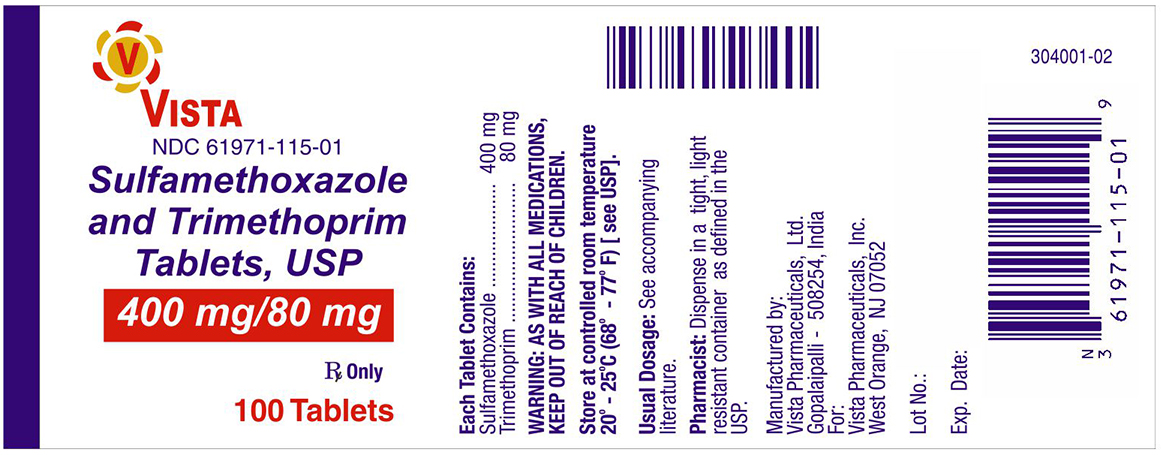
Sulfamethoxazole and Trimethoprim 400 mg; 80 mg Tablet, 100-count — NDC 61971-115-01 (Billing 61971-0115-01)
This is a package of 100 tablets of Sulfamethoxazole and Trimethoprim 400 mg; 80 mg Tablet from Vista Pharmaceuticals, Inc., marketed since Jun 2006 and currently FDA-listed. It is the main listing for this product, which comes in 2 package sizes.
NDC database record
One package, one record: these facts belong to NDC 61971-115-01 alone.
- Record
- FDA NDC Directory package listing · Human prescription drug
- Code segments
- 61971 labeler · 115 product · 01 package
- Package marketed since
- Jun 6, 2006
- Sample package
- No — commercial package
- Listing certified through
- Dec 31, 2026
- Billing quantity
- 100 EA per package
- Barcode (UPC)
- 0361971115019, 0361971115057, 0361971120013, 0361971120051
- FDA record last changed
- Oct 1, 2026
Other active recalls for Sulfamethoxazole And Trimethoprim (different manufacturers) — 5 · tap to view
Identity & classification
Regulatory identifiers FDA, NLM and CMS codes for this package
Drug-database identifiers Medi-Span GPI and First Databank GCN / HICL / AHFS classification
- GSN (GCN sequence number): 009395
- GCN: 90161
- GPI-14 (Medi-Span): 16990002300310
- HICL (First Databank): 004071
- AHFS class code: 08:12.20.00
- RxCUI (RxNorm): 198334
Where does this data come from?
- FDA openFDA NDC Directory · synced Oct 1, 2026
- FDA label on DailyMed · label index refreshed Oct 3, 2026
- RxNorm (NLM RxNav) · catalog refreshed Oct 1, 2026
- Medi-Span GPI (licensed)
- First Databank (licensed) · refreshed Oct 1, 2026
RxNorm drug class
This medicine belongs to the Sulfonamide Antimicrobial class.
Where does this data come from?
- RxClass (NLM) · catalog refreshed Oct 1, 2026
Clinical
- It’s an antibiotic combination used for infections like urinary tract infections, shigellosis and Pneumocystis pneumonia. The tablets and liquid are also used for children’s ear in...
- Tablets and liquid are taken by mouth, usually every 12 hours. Follow the length of treatment your doctor gave you, since it varies by infection. Drinking enough fluids helps prote...
- Nausea, vomiting, poor appetite and mild rash or hives are the most common. Call your doctor about any rash, since it can be the first sign of something serious.
- Stop the medicine and get help for a spreading rash, blistering, fever, sore throat, cough, trouble breathing, chest pain, unusual bruising, or yellow skin or eyes. Also call about...
Patient education
Supplement & herbal interactions
Where does this data come from?
- MedlinePlus (NLM) · refreshed Oct 1, 2026
- FDA label on DailyMed · label index refreshed Oct 3, 2026
Ask a licensed pharmacist directly — free, answered by our team.
Pricing
A drug doesn't have one price. Each row is a different public payment system, and none is what you'd pay at the counter — that depends on your insurance. The ⓘ on each row explains what it measures.
| Price system | Per each | Per package |
|---|---|---|
| Retail pharmacies payNADAC · weekly | Not in the retail survey — common for institutional, discontinued, or low-volume packs. | |
| Medicaid paysCMS SDUD · 12 mo | No recent Medicaid claims on file for this NDC — rare and low-volume NDCs are suppressed in the public data. | |
| Medicare drug plans payPart D · Q2 2026 | $0.1395 | $13.95 / 100 tablets |
Where does this data come from?
- CMS NADAC weekly file
- CMS ASP pricing files · refreshed Sep 20, 2026
- CMS Medicaid State Drug Utilization Data · refreshed Oct 4, 2026
- CMS Part D plan pricing files · refreshed Sep 24, 2026
- VA National Acquisition Center price file
Packaging — all sizes for this product
| Package NDC | Description | Marketing start | Marketing end | Status |
|---|---|---|---|---|
| 61971-0115-01 You're viewing this Main listing | 100 TABLET in 1 BOTTLE | 2006-06-06 | — | Active |
| 61971-0115-05 61971-115-05 | 500 TABLET in 1 BOTTLE | 2006-06-06 | — | Active |
You're viewing the smallest of 2 pack sizes for this product.
Pack size FAQ
What quantity is in this package?
How does this package differ from NDC 61971-0115-05?
What NDC number is used to bill for this package of Sulfamethoxazole and Trimethoprim 400 mg; 80 mg Tablet?
Therapeutic equivalents
| Product | Labeler | Pack | NADAC/unit | TE | Status | Price vs. this |
|---|---|---|---|---|---|---|
| Sulfamethoxazole and Trimethoprim 400 mg/1; 80 mg 50268-0728-15 | AvPAK | 50 tablets | $0.039 | AB | Availability likely | — |
| Sulfamethoxazole and Trimethoprim 400 mg/1; 80 mg 57237-0232-01 | Rising | 100 tablets | $0.039 | AB | Availability likely | — |
| Sulfamethoxazole and Trimethoprim 400 mg/1; 80 mg 62135-0897-18 | Chartwell | 180 tablets | $0.039 | AB | Availability likely | — |
| Sulfamethoxazole and Trimethoprim 400 mg/1; 80 mg 65862-0419-01 | Aurobindo | 100 tablets | $0.039 | — | Availability likely | — |
| Sulfamethoxazole and Trimethoprim 400 mg/1; 80 mg 53489-0145-01 | Sun | 100 tablets | $0.046 | AB | FDA listed | — |
| Sulfamethoxazole and Trimethoprim 400 mg/1; 80 mg 42291-0758-01 | AvKARE | 100 tablets | — | AB | FDA listed | — |
| Bactrim 400 mg/1; 80 mg 49708-0145-01 | Sun | 100 tablets | — | AB | FDA listed | — |
| Sulfamethoxazole and Trimethoprim 400 mg/1; 80 mg 53746-0271-01 | Amneal | 100 tablets | — | AB | FDA listed | — |
| Sulfamethoxazole and Trimethoprim 400 mg/1; 80 mgthis 61971-0115-01 | Vista | 100 tablets | — | AB | FDA listed | — |
| Sulfamethoxazole and Trimethoprim 400 mg/1; 80 mg 65162-0271-05 | Amneal | 50 tablets | — | AB | FDA listed | — |
| Sulfamethoxazole and Trimethoprim 400 mg/1; 80 mg 69043-0010-01 | Cronus | 100 tablets | — | AB | FDA listed | — |
| Sulfamethoxazole and Trimethoprim 400 mg/1; 80 mg 70518-3454-00 | REMEDYREPACK | 6 tablets | — | AB | Discontinued | — |
| Sulfamethoxazole and Trimethoprim 400 mg/1; 80 mg 68071-3579-01 | NuCare | 100 tablets | — | AB | FDA listed | — |
Where does this data come from?
- FDA openFDA NDC Directory · synced Oct 1, 2026
- FDA Orange Book · refreshed Oct 3, 2026
- CMS NADAC weekly file
Availability & generic status
This product is an FDA-approved generic. Other versions of the same drug are listed under Therapeutic equivalents, least expensive first.
Where does this data come from?
- FDA Orange Book · refreshed Oct 3, 2026
What it looks like
Where does this data come from?
- FDA label on DailyMed · label index refreshed Oct 3, 2026
Inactive Ingredients / Excipients
Inactive ingredients, also called excipients, are components of the drug product other than the active ingredient. They may include fillers, dyes, coatings, preservatives, flavors, or other formulation ingredients.
Where does this data come from?
IACT rows and label-wide narrative are kept separate; availability and product-level specificity depend on the submitted label.- FDA label on DailyMed · label index refreshed Oct 3, 2026
- FDA openFDA NDC Directory · synced Oct 1, 2026
Inactive ingredient FAQ
Are inactive ingredients the same for every manufacturer?
Why might an inactive ingredient be missing?
Can inactive ingredients matter?
Manufacturer & labeler
More NDCs from Vista Pharmaceuticals, Inc. labeler code 61971
Where does this data come from?
- FDA openFDA NDC Directory · synced Oct 1, 2026
- Drugs@FDA
Full prescribing information FDA SPL
🎯 Indications and Usage ▾
INDICATIONS AND USAGE: To reduce the development of drug-resistant bacteria and maintain the effectiveness of sulfamethoxazole and trimethoprim tablets and other antibacterial drugs, sulfamethoxazole and trimethoprim tablets should be used only to treat or prevent infections that are proven or strongly suspected to be caused by susceptible bacteria R . When culture and susceptibility information are available, they should be considered in selecting or modifying antibacterial therapy. In the absence of such data, local epidemiology and susceptibility patterns may contribute to the empiric selection of therapy.
Urinary Tract Infections: For the treatment of urinary tract infections due to susceptible strains of the following organisms: Escherichia coli, Klebsiella species, Enterobacter species, Morganella morganii, Proteus mirabilis and Proteus vulgaris. It is recommended that initial episodes of uncomplicated urinary tract infections be treated with a single effective antibacterial agent rather than the combination. Acute Otitis Media: For the treatment of acute otitis media in pediatric patients due to susceptible strains of pneumoniae or Haemophilus influenzae when in the judgment of the physician sulfamethoxazole and trimethoprim offers some advantage over the use of other antimicrobial agents.
To date, there are limited data on the safety of repeated use of sulfamethoxazole and trimethoprim in pediatric patients under two years of age. Sulfamethoxazole and trimethoprim is not indicated for prophylactic or prolonged administration in otitis media at any age. Acute Exacerbations of Chronic Bronchitis in Adults: For the treatment of acute exacerbations of chronic bronchitis due to susceptible strains of Streptococcus pneumoniae or Haemophilus influenzae when in the judgment of the physician sulfamethoxazole and trimethoprim offers some advantage over the use of a single antimicrobial agent.
Shigellosis: For the treatment of enteritis caused by susceptible strains of Shigella flexneri and Shigella sonnei when antibacterial therapy is indicated. Pneumocystis Carinii Pneumonia: For the treatment of documented Pneumocystis carinii pneumonia and for prophylaxis against Pneumocystis carinii pneumonia in individuals who are immunosuppressed and considered to be at an increased risk of developing Pneumocystis carinii pneumonia. Traveler’s Diarrhea in Adults: For the treatment of traveler’s diarrhea due to susceptible strains of enterotoxigenic E. coli.
⏱️ Dosage and Administration ▾
DOSAGE AND ADMINISTRATION: Not recommended for use in pediatric patients less than 2 months of age. Urinary Tract Infections and Shigellosis in Adults and Pediatric Patients, and Acute Otitis Media in Children R Adults: The usual adult dosage in the treatment of urinary tract infections is 1 sulfamethoxazole and trimethoprim Double Strength tablet or 2 sulfamethoxazole and trimethoprim tablets every 12 hours for 10 to 14 days. An identical daily dosage is used for 5 days in the treatment of shigellosis.
Children R : The recommended dose for Children R with urinary tract infections or acute otitis media is 40 mg/kg sulfamethoxazole and 8 mg/kg trimethoprim per 24 hours, given in two divided doses every 12 hours for 10 days. An identical daily dosage is used for 5 days in the treatment of shigellosis. The following table is a guideline for the attainment of this dosage: Children R 2 months of age and older: Weight Dose – every 12 hours lb kg Tablets 22 10 - 44 20 1 66 30 1½ 88 40 2 or 1 Double Strength tablet For Patients with Impaired Renal Function: When renal function is impaired, a reduced dosage should be employed using the following table: Creatinine Recommended Clearance (mL/min) Dosage Regimen Above 30 Usual standard regimen 15-30 1/2 the usual regimen Below 15 Use not recommended Acute Exacerbations of Chronic Bronchitis in Adults: The usual adult dosage in the treatment of acute exacerbations of chronic bronchitis is 1 sulfamethoxazole and trimethoprim Double Strength tablet or 2 sulfamethoxazole and trimethoprim tablets every 12 hours for 14 days.
Pneumocystis Carinii Pneumonia: Treatment: Adults and Children R : The recommended dosage for patients with documented Pneumocystis carinii pneumonia is 75 to 100 mg/kg sulfamethoxazole and 15 to 20 mg/kg trimethoprim per 24 hours given in equally divided doses every 6 hours for 14 to 21 days11. The following table is a guideline for the upper limit of this dosage. Weight Dose – every 6 hours lb kg Tablets 18 8 - 35 16 1 53 24 1 ½ 70 32 2 or 1 Double Strength tablet 88 40 2 ½ 106 48 3 or 1 ½ Double Strength tablets 141 64 4 or 2 Double Strength tablets 176 80 5 or 2 ½ Double Strength tablets For the lower limit dose (75 mg/kg sulfamethoxazole and 15 mg/kg trimethoprim per 24 hours) administer 75% of the dose in the above table.
Prophylaxis: Adults: The recommended dosage for prophylaxis in adults is 1 sulfamethoxazole and trimethoprim Double Strength tablet daily 12R Children R : For Children R , the recommended dose is 750 mg/m 2 /day sulfamethoxazole with 150 mg/m 2 /day trimethoprim given orally in equally divided doses twice a day, on 3 consecutive days per week. The total daily dose should not exceed 1600 mg sulfamethoxazole and 320 mg trimethoprim 13R The following table is a guideline for the attainment of this dosage in Children R : Body Surface Area Dose – every 12 hours (m 2 ) Tablets 0.26 - 0.53 ½ 1.06 1 Traveler’s Diarrhea in Adults: For the treatment of traveler’s diarrhea, the usual adult dosage is 1 sulfamethoxazole and trimethoprim Double Strength tablet or 2 sulfamethoxazole and trimethoprim tablets every 12 hours for 5 days.
⛔ Contraindications ▾
CONTRAINDICATIONS: Sulfamethoxazole and trimethoprim is contraindicated in patients with a known hypersensitivity to trimethoprim or sulfonamides and in patients with documented megaloblastic anemia due to folate deficiency. Sulfamethoxazole and trimethoprim is also contraindicated in pregnant patients and nursing mothers, because sulfonamides pass the placenta and are excreted in the milk and may cause kernicterus. Sulfamethoxazole and trimethoprim is contraindicated in pediatric patients less than 2 months of age.
Sulfamethoxazole and trimethoprim is also contraindicated in patients with marked hepatic damage or with severe renal insufficiency when renal function status cannot be monitored.
⚠️ Warnings ▾
WARNINGS: FATALITIES ASSOCIATED WITH THE ADMINISTRATION OF SULFONAMIDES, ALTHOUGH RARE, HAVE OCCURRED DUE TO SEVERE REACTIONS, INCLUDING STEVENS-JOHNSON SYNDROME, TOXIC EPIDERMAL NECROLYSIS, FULMINANT HEPATIC NECROSIS, AGRANULOCYTOSIS, APLASTIC ANEMIA AND OTHER BLOOD DYSCRASIAS. SULFONAMIDES, INCLUDING SULFONAMIDE-CONTAINING PRODUCTS SUCH AS SULFAMETHOXAZOLE/TRIMETHOPRIM, SHOULD BE DISCONTINUED AT THE FIRST APPEARANCE OF SKIN RASH OR ANY SIGN OF ADVERSE REACTION. In rare instances, a skin rash may be followed by a more severe reaction, such as Stevens-Johnson syndrome, toxic epidermal necrolysis, hepatic necrosis, and serious blood disorders (see PRECAUTIONS).
Clinical signs, such as rash, sore throat, fever, arthralgia, pallor, purpura or jaundice may be early indications of serious reactions. Cough, shortness of breath, and pulmonary infiltrates are hypersensitivity reactions of the respiratory tract that have been reported in association with sulfonamide treatment. The sulfonamides should not be used for the treatment of group A - B hemolytic streptococcal infections.
In an established infection, they will not eradicate the streptococcus and, therefore, will not prevent sequelae such as rheumatic fever. Clostridium difficile associated diarrhea (CDAD) has been reported with use of nearly all antibacterial agents, including sulfamethoxazole and trimethoprim tablets, and may range in severity from mild diarrhea to fatal colitis. Treatment with antibacterial agents alters the normal flora of the colon leading to overgrowth of C. difficile A .
C. difficile produces toxins A and B which contribute to the development of CDAD. Hypertoxin producing strains of C. difficile cause increased morbidity and mortality, as these infections can be refractory to antimicrobial therapy and may require colectomy. CDAD must be considered in all patients who present with diarrhea following antibiotic use.
Careful medical history is necessary since CDAD has been reported to occur over two months after the administration of antibacterial agents A . If CDAD is suspected or confirmed, ongoing antibiotic use not directed against C. difficile may need to be discontinued. Appropriate fluid and electrolyte management, protein supplementation, antibiotic treatment of C. difficile, and surgical evaluation should be instituted as clinically indicated A .
🤒 Adverse Reactions ▾
ADVERSE REACTIONS: The most common adverse effects are gastrointestinal disturbances (nausea, vomiting, anorexia) and allergic skin reactions (such as rash and urticaria). FATALITIES ASSOCIATED WITH THE ADMINISTRATION OF SULFONAMIDES, ALTHOUGH RARE, HAVE OCCURRED DUE TO SEVERE REACTIONS, INCLUDING STEVENS-JOHNSON SYNDROME, TOXIC EPIDERMAL NECROLYSIS, FULMINANT HEPATIC NECROSIS, AGRANULOCYTOSIS, APLASTIC ANEMIA AND OTHER BLOOD DYSCRASIAS (SEE WARNINGS SECTION). Hematologic: Agranulocytosis, aplastic anemia, thrombocytopenia, leukopenia, neutropenia, hemolytic anemia, megaloblastic anemia, hypoprothrombinemia, methemoglobinemia, eosinophilia.
Allergic Reactions: Stevens-Johnson syndrome, toxic epidermal necrolysis, anaphylaxis, allergic myocarditis, erythema multiforme, exfoliative dermatitis, angioedema, drug fever, chills, Henoch-Schoenlein purpura, serum sickness-like syndrome, generalized allergic reactions, generalized skin eruptions, photosensitivity, conjunctival and scleral injection, pruritus, urticaria and rash. In addition, periarteritis nodosa and systemic lupus erythematosus have been reported. Gastrointestinal: Hepatitis (including cholestatic jaundice and hepatic necrosis), elevation of serum transaminase and bilirubin, pseudomembranous enterocolitis, pancreatitis, stomatitis, glossitis, nausea, emesis, abdominal pain, diarrhea, anorexia.
Genitourinary: Renal failure, interstitial nephritis, BUN and serum creatinine elevation, toxic nephrosis with oliguria and anuria, crystalluria and nephrotoxicity in association with cyclosporine. Metabolic and Nutritional: Hyperkalemia (see PRECAUTIONS: Use in the Treatment of and Prophylaxis for Pneumocystis Carinii Pneumonia in Patients with Acquired Immunodeficiency Syndrome (AIDS). Neurologic: Aseptic meningitis, convulsions, peripheral neuritis, ataxia, vertigo, tinnitus, headache.
Psychiatric: Hallucinations, depression, apathy, nervousness. Endocrine: The sulfonamides bear certain chemical similarities to some goitrogens, diuretics (acetazolamide and the thiazides) and oral hypoglycemic agents. Cross-sensitivity may exist with these agents.
Diuresis and hypoglycemia have occurred rarely in patients receiving sulfonamides. Musculoskeletal: Arthralgia and myalgia. Isolated cases of rhabdomyolysis have been reported with sulfamethoxazole and trimethoprim, mainly in AIDS patients.
Respiratory: Cough, shortness of breath and R pulmonary infiltrates (see WARNINGS). Miscellaneous : Weakness, fatigue, insomnia.
🆘 Overdosage ▾
OVERDOSAGE: Acute: The amount of a single dose of sulfamethoxazole and trimethoprim that is either associated with symptoms of overdosage or is likely to be life-threatening has not been reported. Signs and symptoms of overdosage reported with sulfonamides include anorexia, colic, nausea, vomiting, dizziness, headache, drowsiness and unconsciousness. Pyrexia, hematuria and crystalluria may be noted.
Blood dyscrasias and jaundice are potential late manifestations of overdosage. Signs of acute overdosage with trimethoprim include nausea, vomiting, dizziness, headache, mental depression, confusion and bone marrow depression. General principles of treatment include the institution of gastric lavage or emesis, forcing oral fluids, and the administration of intravenous fluids if urine output is low and renal function is normal.
Acidification of the urine will increase renal elimination of trimethoprim. The patient should be monitored with blood counts and appropriate blood chemistries, including electrolytes. If a significant blood dyscrasia or jaundice occurs, specific therapy should be instituted for these complications.
Peritoneal dialysis is not effective and hemodialysis is only moderately effective in eliminating sulfamethoxazole and trimethoprim. Chronic: Use of sulfamethoxazole and trimethoprim at high doses and/or for extended periods of time may cause bone marrow depression manifested as thrombocytopenia, leukopenia and/or megaloblastic anemia. If signs of bone marrow depression occur, the patient should be given leucovorin 5 to 15 mg daily until normal hematopoiesis is restored.
🧬 Clinical Pharmacology ▾
CLINICAL PHARMACOLOGY: Sulfamethoxazole and trimethoprim is rapidly absorbed following oral administration. Both sulfamethoxazole and trimethoprim exist in the blood as unbound, protein-bound and metabolized forms. sulfamethoxazole also exists as the conjugated form. The metabolism of sulfamethoxazole occurs predominately by N 4 -acetylation, although the glucuronide conjugate has been identified.
The principal metabolites of trimethoprim are the 1- and 3-oxides and the 3'- and 4'-hydroxy derivatives. The free forms of sulfamethoxazole and trimethoprim are considered to be the therapeutically active forms. Approximately 70% of sulfamethoxazole and 44% of trimethoprim are bound to plasma proteins.
The presence of 10 percent sulfamethoxazole in plasma decreases the protein binding of trimethoprim by an insignificant degree, trimethoprim does not influence the protein binding of sulfamethoxazole. Peak blood levels for the individual components occur 1 to 4 hours after oral administration. The mean serum half-lives of sulfamethoxazole and trimethoprim are 10 and 8 to 10 hours, respectively.
However, patients with severely impaired renal function exhibit an increase in the half-lives of both components, requiring dosage regimen adjustments (see DOSAGE AND ADMINISTRATION section). Detectable amounts of sulfamethoxazole and trimethoprim are present in the blood 24 hours after drug administration. During administration of 800 mg sulfamethoxazole and 160 mg trimethoprim bid, the mean steady-state plasma concentration of trimethoprim was 1.72 µg/mL.
The steady-state mean plasma levels for free and total sulfamethoxazole were 57.4 µg/mL and 68.0 µg/mL, respectively. These steady-state levels were achieved after three days of drug administration 1 . Excretion of sulfamethoxazole and trimethoprim is primarily by the kidneys through both glomerular filtration and tubular secretion.
Urine concentrations of both sulfamethoxazole and trimethoprim are considerably higher than the concentrations in the blood. The average percentage of the dose recovered in urine from 0 to 72 hours after a single oral dose of sulfamethoxazole and trimethoprim is 84.5% for total sulfonamide and 66.8% for free trimethoprim. Thirty percent of the total sulfonamide is excreted as free sulfamethoxazole with the remaining as N 4 -acetylated metabolite.
2 When administered together as sulfamethoxazole and trimethoprim, neither sulfamethoxazole nor trimethoprim affects the urinary excretion pattern of the other. Both sulfamethoxazole and trimethoprim distribute to sputum, vaginal fluid and middle ear fluid, trimethoprim also distributes to bronchial secretion, and both pass the palcental barrier and are excreted in human milk. Geriatric Pharmacokinetics: The pharmacokinetics of sulfamethoxazole 800 mg and trimethoprim 160 mg were studied in 6 geriatric subjects (mean age: 78.6 years) and 6 young healthy subjects (mean age: 29.3 years) using a non-US approved formulation.
Pharmacokinetic values for sulfamethoxazole in geriatric subjects were similar to those observed in young adult subjects. The mean renal clearance of trimethoprim was significantly lower in geriatric subjects compared with young adult subjects (19 mL/h/kg vs. 55 mL/h/kg).
However, after normalizing by body weight, the apparent total body clearance of trimethoprim was on average 19% lower in geriatric subjects compared with young adult subjects. 3 Microbiology: Sulfamethoxazole inhibits bacterial synthesis of dihydrofolic acid by competing with para-aminobenzoic acid (PABA). Trimethoprim blocks the production of tetrahydrofolic acid from dihydrofolic acid by binding to and reversibly inhibiting the required enzyme, dihydrofolate reductase.
Thus, sulfamethoxazole and trimethoprim blocks two consecutive steps in the bio-synthesis of nucleic acids and proteins essential to many bacteria. In vitro studies have shown that bacterial resistance develops more slowly with both sulfamethoxazole and trimethoprim in… [Excerpted — this section continues on DailyMed.]
📦 How Supplied / Storage and Handling ▾
HOW SUPPLIED: Sulfamethoxazole and trimethoprim Double Strength tablets (white, scored, oblong), containing 800 mg sulfamethoxazole and 160 mg trimethoprim-bottles of 100 (NDC 61971-120-01) and 500 (NDC 61971-120-05). Imprint on tablets: VP 120. Sulfamethoxazole and trimethoprim tablets (white, scored, round), containing 400 mg sulfamethoxazole and 80 mg trimethoprim-bottles of 100 (NDC 61971-115-01) and 500 (NDC 61971-115-05).
Imprint on tablets: VISTA over 115. TABLETS SHOULD BE STORED AT 20° TO 25° C (68° to 77°F) ) [see USP Controlled Room Temperature] R . DISPENSE IN TIGHT, LIGHT RESISTANT CONTAINER R .
📋 Description ▾
DESCRIPTION: Sulfamethoxazole and Trimethoprim is a synthetic antibacterial combination product available in 800 mg sulfamethoxazole and 160 mg trimethoprim Double Strength tablets and 400 mg sulfamethoxazole and 80 mg trimethoprim tablets for oral administration. Each Double Strength tablet contains 800 mg sulfamethoxazole and 160 mg trimethoprim plus magnesium stearate, pregelatinized starch and sodium starch glycolate. Each tablet contains 400 mg sulfamethoxazole and 80 mg trimethoprim plus magnesium stearate, pregelatinized starch, and sodium starch glycolate.
Trimethoprim is 2, 4-diamino-5-(3,4,5 trimethoxybenzyl) pyrimidine: the molecular formula is C 14 H 18 N 4 O 3 . It is a white to light yellow, odorless, bitter compound with a molecular weight of 290.3 and the following structural formula: Sulfamethoxazole is N 1 -(5-methyl-3-isoxazolyl) sulfanilamide; the molecular formula is C 10 H 11 N 3 O 3 S. It is almost white, odorless, tasteless compound with a molecular weight of 253.28 and the following structural formula: chemical structure chemical structure
⚠️ Precautions ▾
PRECAUTIONS: General: Prescribing sulfamethoxazole and trimethoprim tablets in the absence of a proven or strongly suspected bacterial infection or a prophylactic indication is unlikely to provide benefit to the patient and increases the risk of the development of drug-resistant bacteria R . Sulfamethoxazole and trimethoprim should be given with caution to patients with impaired renal or hepatic function, to those with possible folate deficiency (e.g., the elderly, chronic alcoholics, patients receiving anticonvulsant therapy, patients with malabsorption syndrome, and patients in malnutrition states) and to those with severe allergies or bronchial asthma.
In glucose-6-phosphate dehydrogenase deficient individuals, hemolysis may occur. This reaction is frequently dose-related. (see CLINICAL PHARMACOLOGY and DOSAGE AND ADMINISTRATION).
Cases of hypoglycemia in non-diabetic patients treated with sulfamethoxazole and trimethoprim are seen rarely, usually occurring after a few days of therapy. Patients with renal dysfunction, liver disease, malnutrition or those receiving high doses of sulfamethoxazole and trimethoprim are particularly at risk. Hematological changes indicative of folic acid deficiency may occur in elderly patients or in patients with preexisting folic acid deficiency or kidney failure.
These effects are reversible by folinic acid therapy. Trimethoprim has been noted to impair phenylalanine metabolism but this is of no significance in phenylketonuric patients on appropriate dietary restriction. As with all drugs containing sulfonamides, caution is advisable in patients with porphyria or thyroid dysfunction.
Use in the Treatment of and Prophylaxis for Pneumocystis Carinii Pneumonia in Patients with Acquired Immunodeficiency Syndrome (AIDS): AIDS patients may not tolerate or respond to sulfamethoxazole and trimethoprim in the same manner as non-AIDS patients. The incidence of side effects, particularly rash, fever, leukopenia and elevated aminotransferase (transaminase) values, with sulfamethoxazole and trimethoprim therapy in AIDS patients who are being treated for Pneumocystis carinii pneumonia has been reported to be greatly increased compared with the incidence normally associated with the use of sulfamethoxazole and trimethoprim in non-AIDS patients.
The incidence of hyperkalemia appears to be increased in AIDS patients receiving sulfamethoxazole and trimethoprim. Adverse effects are generally less severe in patients receiving sulfamethoxazole and trimethoprim for prophylaxis. A history of mild intolerance to sulfamethoxazole and trimethoprim in AIDS patients does not appear to predict intolerance of subsequent secondary prophylaxis.
6 However, if a patient develops skin rash or any sign of adverse reaction, therapy with sulfamethoxazole and trimethoprim should be reevaluated (see WARNINGS). High dosage of trimethoprim, as used in patients with Pneumocystis carinii pneumonia, induces a progressive but reversible increase of serum potassium concentrations in a substantial number of patients. Even treatment with recommended doses may cause hyperkalemia when trimethoprim is administered to patients with underlying disorders of potassium metabolism, with renal insufficiency, or if drugs known to induce hyperkalemia are given concomitantly.
Close monitoring of serum potassium is warranted in these patients. During treatment, adequate fluid intake and urinary output should be ensured to prevent crystalluria. Patients who are “slow acetylators” may be more prone to idiosyncratic reactions to sulfonamides.
Information for Patients: Patients should be counseled that antibacterial drugs including sulfamethoxazole and trimethoprim tablets should only be used to treat bacterial infections. They do not treat viral infections (e.g., the common cold).When sulfamethoxazole and trimethoprim tablets are prescribed to treat a bacterial infection, patients should be told that although it is common to feel better early in the course… [Excerpted — this section continues on DailyMed.]
📚 References ▾
REFERENCES 1. Kremers P, Duvivier J, Heusghem C. Pharmacokinetic Studies of CoTrimoxazole in Man after Single and Repeated Doses.
J Clin Pharmacol. Feb-Mar 1974; 14:112-117. 2.
Kaplan SA, et al. Pharmacokinetic Profile of Trimethoprim-Sulfamethoxazole in Man. J Infect Dis.
Nov 1973; 128 (Suppl): S547-S555. 3. Varoquaux O, et al.
Pharmacokinetics of the trimethoprim-sulfamethoxazole combination in the elderly. Br J Clin Pharmacol 1985; 20:575-581. 4.
A Rudoy RC, Nelson JD, Haltalin KC. Antimicrobial Agents Chemother. May 1974; 5:439-443.
5. R National Committee for Clinical Laboratory Standards. Methods for Dilution Antimicrobial Susceptibility Tests for Bacteria that Grow Aerobically; Approved Standard-Fourth Edition.
NCCLS Document M7-A4, Vol. 17, No. 2, NCCLS, Wayne, PA, January, 1997.
6. R National Committee for Clinical Laboratory Standards. Performance Standards for Antimicrobial Disk Susceptibility Tests.
Approved Standard-Sixth Edition. NCCLS Document M2-A6, Vol. 17, No.
1, NCCLS, Wayne, PA, January, 1997. 7. R Hardy DW, et al.
A controlled trial of trimethoprim-sulfamethoxazole or aerosolized pentamidine for secondary prophylaxis of Pneumocystis carinii pneumonia in patients with the acquired immunodeficiency syndrome. N Engl J Med. 1992; 327:1842-1848.
8. R Marinella, Mark A. 1999, Trimethoprim-induced hyperkalemia; An analysis of reported cases.
Gerontol. 45:209-212. 9.
R Margassery, S. and B. Bastani. 2002.
Life threatening hyperkalemia and acidosis secondary to trimethoprim-sulfamethoxazole treatment. J. Nephrol.
14:410:414. 10. R Brumfitt W, Pursell R.
Trimethoprim/Sulfamethoxazole in the Treatment of Bacteriuria in Women. J Infect Dis. Nov 1973; 128 (Suppl):S657-S663.
11. R Masur H. Prevention and treatment of Pneumocystis pneumonia.
N Engl J Med. 1992; 327: 1853-1880. 12.
R Recommendations for prophylaxis against Pneumocystis carinii pneumonia for adults and adolescents infected with human immunodeficiency virus. MMWR. 1992; 41 (RR-4): 1-11.
13. R CDC Guidelines for prophylaxis against Pneumocystis carinii pneumonia for children infected with human immunodeficiency virus. MMWR.
1991; 40(RR-2):1-13.
📄 Package Label / Principal Display Panel ▾
PACKAGE LABELS bottle label bottle label bottle label bottle label
About this NDC listing & data coverage
What data is (and isn’t) available for this NDC — tap to expand
| NDC identity (package / product / labeler codes) | ✓ Available |
| Labeler | ✓ Available |
| Product & package description | ✓ Available |
| Marketing category & status | ✓ Available |
| Active ingredient / dosage form / route | ✓ Available |
| FDA label (SPL via DailyMed) | ✓ Available |
| Package photos | ✓ Available |
| Inactive ingredients (structured) | — Not published for this NDC The labeler did not submit a structured excipient list, or no SPL is available. |
| NADAC pharmacy acquisition price (CMS) | — Not published for this NDC CMS publishes NADAC only for NDCs reported in its retail-pharmacy survey. |
| Orange Book / therapeutic-equivalence data | ✓ Available |
| HCPCS J-code billing crosswalk | — Not published for this NDC Most self-administered / retail products have no J-code — that is normal. |
| Medicaid utilization (CMS SDUD) | — Not published for this NDC CMS reports utilization only for NDCs with Medicaid claims above its privacy threshold. |