
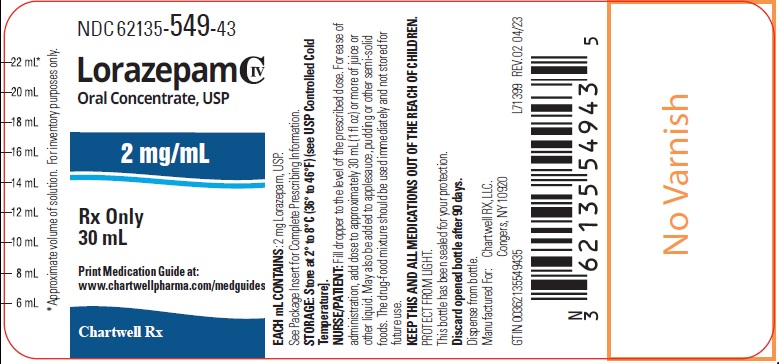
Lorazepam 2 mg/mL Concentrate, 30 mL
Other active recalls for Lorazepam (different manufacturers) — 1 · tap to view
🆔 Identity & classification
Where does this data come from?
🏷️ RxNorm drug class
This medicine belongs to the Benzodiazepine class.
Where does this data come from?
🏭 Manufacturer & labeler
Where does this data come from?
🩺 Clinical
Lorazepam is used to relieve anxiety and treat insomnia. Lorazepam is in a class of medications called benzodiazepines. It works by slowing activity in the brain to allow for relaxation.
Read the full MedlinePlus article ↗- Lorazepam is mainly prescribed for anxiety disorders — it can calm anxious feelings and physical tension, especially for short periods. In tablet or liquid form, it's used for ongo...
- Yes, drowsiness is one of the most common effects — and for many people that's actually part of how it helps with anxiety. You may also notice some unsteadiness, dizziness, or mild...
- Will lorazepam make me feel really drowsy?
- No — please avoid alcohol completely while you're on lorazepam. Both alcohol and lorazepam slow down your central nervous system, and together they can make that effect dangerously...
Patient education
Supplement & herbal interactions
Some supplements/herbs that may interact with Lorazepam — tap one for details:
Lorazepam may be associated with lower levels of 1 nutrient — worth a chat with your pharmacist, not a cause for alarm.
Where does this data come from?
Ask a licensed pharmacist directly — free, answered by our team.
🧪 Inactive Ingredients / Excipients
Inactive ingredients, also called excipients, are components of the drug product other than the active ingredient. They may include fillers, dyes, coatings, preservatives, flavors, or other formulation ingredients.
💡 Tap an ingredient (hover on desktop) to see what it is and why it’s used.
-
UNII 3WJQ0SDW1A
Polyethylene glycol is a synthetic liquid or solid polymer used in medicines as a solvent, lubricant, and humectant. It helps dissolve active ingredients, reduces friction during manufacturing, and retains moisture in the final product.
-
UNII 6DC9Q167V3
Propylene glycol is a clear liquid derived from petroleum or vegetable sources. It acts as a solvent, humectant, and preservative in medicines, helping dissolve active ingredients and maintain product stability.
2 inactive ingredients listed in the exact product block matched to this NDC.
Where does this data come from?
ingredient classCode="IACT" elements from the exact product block matched by this NDC. Label-section narrative from DailyMed / the openFDA label index is shown separately when available.Inactive ingredient FAQ
Are inactive ingredients the same for every manufacturer?
Why might an inactive ingredient be missing?
Can inactive ingredients matter?
💲 Pricing
A drug doesn't have one price. Each row is a different public payment system, and none is what you'd pay at the counter — that depends on your insurance. The ⓘ on each row explains what it measures.
| Price system | Per mL | Per package |
|---|---|---|
| Retail pharmacies payNADAC · weekly | $0.693 | $20.78 / 30 ml |
| Medicaid paysCMS SDUD · 12 mo | No recent Medicaid claims on file for this NDC — rare and low-volume NDCs are suppressed in the public data. | |
| Medicare drug plans payPart D · Q2 2026 | $0.7606 | $22.82 / 30 ml |
Where does this data come from?
🔁 Therapeutic equivalents
| Product | Labeler | Pack | NADAC/unit | TE | Status | Price vs. this |
|---|---|---|---|---|---|---|
| Lorazepam 2 mg/mL 00054-3532-44 | Hikma | 1 bottle | $0.693 | AA | Availability likely | — |
| Lorazepam 2 mg/mL 00121-0770-01 | Pharmaceutical | 1 bottle | $0.693 | AA | Availability likely | — |
| Lorazepam 2 mg/mLthis 62135-0549-43 | Chartwell | 30 ml | $0.693 | — | Availability likely | — |
| Lorazepam 2 mg/mL 65162-0687-84 | Amneal | 30 ml | $0.693 | AA | Availability likely | — |
| Lorazepam 2 mg/mL 68000-0108-05 | American | 50 syringes | — | AA | FDA listed | — |
| Lorazepam 2 mg/mL 68000-0107-05 | American | 50 syringes | — | AA | FDA listed | — |
Where does this data come from?
⏳ Availability & generic status
This product is an FDA-approved generic. Other versions of the same drug are listed under Therapeutic equivalents, least expensive first.
Where does this data come from?
📊 Medicare Part D spend CMS · PART D · 2026 (Q1)
🔬 Reported adverse events (FAERS)
Top reported reactions
Age at onset
Reporter sex
Serious outcomes
Where does this data come from?
📦 Packaging — all sizes for this product
| Package NDC | Description | Marketing start | Status |
|---|---|---|---|
| 62135-0549-43 You're viewing this | 30 mL in 1 BOTTLE (62135-549-43) | 2023-04-20 | Active |
📄 Full prescribing information FDA SPL
🚨 Boxed Warning ▾
WARNING: RISKS FROM CONCOMITANT USE WITH OPIOIDS; ABUSE, MISUSE, AND ADDICTION; and DEPENDENCE AND WITHDRAWAL REACTIONS Concomitant use of benzodiazepines and opioids may result in profound sedation, respiratory depression, coma, and death. Reserve concomitant prescribing of these drugs for patients for whom alternative treatment options are inadequate. Limit dosages and durations to the minimum required.
Follow patients for signs and symptoms of respiratory depression and sedation (see WARNINGS and PRECAUTIONS ). The use of benzodiazepines, including lorazepam, exposes users to risks of abuse, misuse, and addiction, which can lead to overdose or death. Abuse and misuse of benzodiazepines commonly involve concomitant use of other medications, alcohol, and/or illicit substances, which is associated with an increased frequency of serious adverse outcomes.
Before prescribing lorazepam and throughout treatment, assess each patient’s risk for abuse, misuse, and addiction (see WARNINGS ). The continued use of benzodiazepines, including lorazepam, may lead to clinically significant physical dependence. The risks of dependence and withdrawal increase with longer treatment duration and higher daily dose.
Abrupt discontinuation or rapid dosage reduction of lorazepam after continued use may precipitate acute withdrawal reactions, which can be life-threatening. To reduce the risk of withdrawal reactions, use a gradual taper to discontinue lorazepam or reduce the dosage ( DOSAGE AND ADMINISTRATION and WARNINGS ).
🎯 Indications and Usage ▾
INDICATIONS AND USAGE Lorazepam is indicated for the management of anxiety disorders or for the short-term relief of the symptoms of anxiety or anxiety associated with depressive symptoms. Anxiety or tension associated with the stress of everyday life usually does not require treatment with an anxiolytic. The effectiveness of lorazepam in long-term use, that is, more than 4 months, has not been assessed by systematic clinical studies.
The physician should periodically reassess the usefulness of the drug for the individual patient.
⏱️ Dosage and Administration ▾
DOSAGE AND ADMINISTRATION
⛔ Contraindications ▾
CONTRAINDICATIONS Lorazepam is contraindicated in patients with: • hypersensitivity to benzodiazepines or to any components of the formulation. • acute narrow-angle glaucoma.
⚠️ Warnings ▾
WARNINGS
🤒 Adverse Reactions ▾
ADVERSE REACTIONS Most adverse reactions to benzodiazepines, including CNS effects and respiratory depression, are dose dependent, with more severe effects occurring with high doses. In a sample of about 3,500 patients treated for anxiety, the most frequent adverse reaction to lorazepam was sedation (15.9%), followed by dizziness (6.9%), weakness (4.2%), and unsteadiness (3.4%). The incidence of sedation and unsteadiness increased with age.
Other adverse reactions to benzodiazepines, including lorazepam are fatigue, drowsiness, amnesia, memory impairment, confusion, disorientation, depression, unmasking of depression, disinhibition, euphoria, suicidal ideation/attempt, ataxia, asthenia, extrapyramidal symptoms, convulsions/seizures, tremor, vertigo, eye-function/visual disturbance (including diplopia and blurred vision), dysarthria/slurred speech, change in libido, impotence, decreased orgasm; headache, coma; respiratory depression, apnea, worsening of sleep apnea, worsening of obstructive pulmonary disease; gastrointestinal symptoms including nausea, change in appetite, constipation, jaundice, increase in bilirubin, increase in liver transaminases, increase in alkaline phosphatase; hypersensitivity reactions, anaphylactoid reactions; dermatological symptoms, allergic skin reactions, alopecia; syndrome of inappropriate antidiuretic hormone (SIADH), hyponatremia; thrombocytopenia, agranulocytosis, pancytopenia; hypothermia; and autonomic manifestations.
Paradoxical reactions, including anxiety, excitation, agitation, hostility, aggression, rage, sleep disturbances/insomnia, sexual arousal, and hallucinations may occur. Small decreases in blood pressure and hypotension may occur but are usually not clinically significant, probably being related to the relief of anxiety produced by lorazepam. To report SUSPECTED ADVERSE REACTIONS, contact Chartwell RX, LLC. at 1-845-232-1683 or FDA at 1-800-FDA-1088 or www.fda.gov/medwatch .
🆘 Overdosage ▾
OVERDOSAGE Overdosage of benzodiazepines is characterized by central nervous system depression ranging from drowsiness to coma. In mild to moderate cases, symptoms can include drowsiness, confusion, dysarthria, lethargy, hypnotic state, diminished reflexes, ataxia, and hypotonia. Rarely, paradoxical or disinhibitory reactions (including agitation, irritability, impulsivity, violent behavior, confusion, restlessness, excitement, and talkativeness) may occur.
In severe overdosage cases, patients may develop respiratory depression and coma. Overdosage of benzodiazepines in combination with other CNS depressants (including alcohol and opioids) may be fatal (see WARNINGS: Abuse, Misuse, and Addiction ). Markedly abnormal (lowered or elevated) blood pressure, heart rate, or respiratory rate raise the concern that additional drugs and/or alcohol are involved in the overdosage.
In managing benzodiazepine overdosage, employ general supportive measures, including intravenous fluids and airway management. Flumazenil, a specific benzodiazepine receptor antagonist indicated for the complete or partial reversal of the sedative effects of benzodiazepines in the management of benzodiazepine overdosage, can lead to withdrawal and adverse reactions, including seizures, particularly in the context of mixed overdosage with drugs that increase seizure risk (e.g., tricyclic and tetracyclic antidepressants) and in patients with long-term benzodiazepine use and physical dependency.
The risk of withdrawal seizures with flumazenil use may be increased in patients with epilepsy. Flumazenil is contraindicated in patients who have received a benzodiazepine for control of a potentially life-threatening condition (e.g., status epilepticus). If the decision is made to use flumazenil, it should be used as an adjunct to, not as a substitute for, supportive management of benzodiazepine overdosage.
See the flumazenil injection Prescribing Information. Consider contacting the Poison Help line (1-800-222-1222) or a medical toxicologist for additional overdosage management recommendations.
🧬 Clinical Pharmacology ▾
CLINICAL PHARMACOLOGY Studies in healthy volunteers show that in single high doses lorazepam has a tranquilizing action on the central nervous system with no appreciable effect on the respiratory or cardiovascular systems. Lorazepam is readily absorbed with an absolute bioavailability of 90 percent. Peak concentrations in plasma occur approximately two hours following administration.
The peak plasma level of lorazepam from a 2 mg dose is approximately 20 ng/mL. The mean half-life of unconjugated lorazepam in human plasma is about 12 hours and for its major metabolite, lorazepam glucuronide, about 18 hours. At clinically relevant concentrations, lorazepam is approximately 85% bound to plasma proteins.
Lorazepam is rapidly conjugated at its 3-hydroxy group into lorazepam glucuronide which is then excreted in the urine. Lorazepam glucuronide has no demonstrable central nervous system (CNS) activity in animals. The plasma levels of lorazepam are proportional to the dose given.
There is no evidence of accumulation of lorazepam on administration up to 6 months. Studies comparing young and elderly subjects have shown that advancing age does not have a significant effect on the pharmacokinetics of lorazepam. However, in one study involving single intravenous doses of 1.5 mg to 3 mg of lorazepam injection, mean total body clearance of lorazepam decreased by 20% in 15 elderly subjects of 60 to 84 years of age compared to that in 15 younger subjects of 19 to 38 years of age.
📦 How Supplied / Storage and Handling ▾
HOW SUPPLIED Lorazepam Oral Concentrate, USP The 2 mg per mL oral concentrate is supplied as a clear colorless to light yellow solution. NDC 62135-549-43: Bottle of 30 mL PROTECT FROM LIGHT Store at cold temperature. Refrigerate at 2° to 8°C (36° to 46°F) [See USP Controlled Cold Temperature].
Dispense from this bottle. Discard opened bottle after 90 days . Manufactured for: Chartwell RX, LLC.
Congers, NY 10920 L71400 Revised 04/2023-01 Print Medication Guide at www.chartwellpharma.com/medguides
📋 Description ▾
DESCRIPTION Lorazepam, an antianxiety agent, has the chemical formula, 2 H -1,4-benzodiazepin-2-one, 7-chloro-5-(2-chlorophenyl)-1,3-dihydro-3-hydroxy-, (±)-: C 15 H 10 Cl 2 N 2 O 2 MW: 321.16 Lorazepam, USP is a white or a practically white powder almost insoluble in water. Each mL of Lorazepam for oral administration contains 2 mg of lorazepam. The inactive ingredients present are polyethylene glycol and propylene glycol. image description
💬 Patient Medication Information ▾
Medication Guide Lorazepam Oral Concentrate, USP, CIV (lor A ze pam) What is the most important information I should know about lorazepam? Lorazepam is a benzodiazepine medicine. Taking benzodiazepines with opioid medicines, alcohol, or other central nervous system depressants (including street drugs) can cause severe drowsiness, breathing problems (respiratory depression), coma and death.
Get emergency help right away if any of the following happens: shallow or slowed breathing breathing stops (which may lead to the heart stopping) excessive sleepiness (sedation) Do not drive or operate heavy machinery until you know how taking lorazepam with opioids affects you. Risk of abuse, misuse, and addiction. There is a risk of abuse, misuse, and addiction with benzodiazepines including lorazepam which can lead to overdose and serious side effects including coma and death.
Serious side effects including coma and death have happened in people who have abused or misused benzodiazepines, including lorazepam. These serious side effects may also include delirium, paranoia, suicidal thoughts or actions, seizures, and difficulty breathing. Call your healthcare provider or go to the nearest hospital emergency room right away if you get any of these serious side effects.
You can develop an addiction even if you take lorazepam exactly as prescribed by your healthcare provider. Take lorazepam exactly as your healthcare provider prescribed. Do not share your lorazepam with other people.
Keep lorazepam in a safe place and away from children. Physical dependence and withdrawal reactions. Lorazepam can cause physical dependence and withdrawal reactions.
Do not suddenly stop taking lorazepam. Stopping lorazepam suddenly can cause serious and life-threatening side effects, including, unusual movements, responses or expressions, seizures, sudden and severe mental or nervous system changes, depression, seeing or hearing things that others do not see or hear, an extreme increase in activity or talking, losing touch with reality, and suicidal thoughts or actions. Call your healthcare provider or go to the nearest hospital emergency room right away if you get any of these symptoms.
Some people who suddenly stop benzodiazepines have symptoms that can last for several weeks to more than 12 months, including anxiety, trouble remembering, learning, or concentrating, depression, problems sleeping, feeling like insects are crawling under your skin, weakness, shaking, muscle twitching, burning or prickling feeling in your hands, arms, legs or feet, and ringing in your ears. Physical dependence is not the same as drug addiction. Your healthcare provider can tell you more about the differences between physical dependence and drug addiction.
Do not take more lorazepam than prescribed or take lorazepam for longer than prescribed. What is lorazepam? Lorazepam is a prescription medicine used: to treat anxiety disorders for the short-term relief of the symptoms of anxiety or anxiety that can happen with symptoms of depression Lorazepam is a federal controlled substance (C-IV) because it can be abused or lead to dependence.
Keep lorazepam in a safe place to prevent misuse and abuse. Selling or giving away lorazepam may harm others, and is against the law. Tell your healthcare provider if you have abused or been dependent on alcohol, prescription medicines or street drugs.
It is not known if lorazepam is safe and effective for use in children less than 12 years of age. It is not known if lorazepam is safe and effective for use for longer than 4 months. Do not take lorazepam if you: are allergic to lorazepam, other benzodiazepines, or any of the ingredients in Lorazepam Oral Concentrate.
See the end of this Medication Guide for a complete list of ingredients in Lorazepam Oral Concentrate. Before you take lorazepam, tell your healthcare provider about all your medical conditions, including if you: have or have had depression, mood problems, or suicidal thoughts or behavior…