
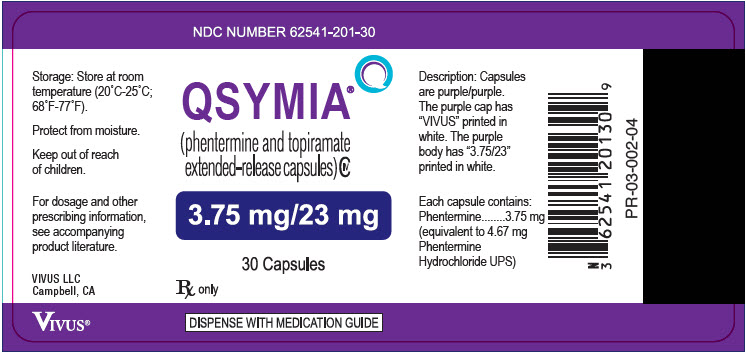
Qsymia phentermine and topiramate 3.75 mg; 23 mg Capsule, Extended Release, 30-count
🆔 Identity & classification
Where does this data come from?
🏷️ RxNorm drug class
This medicine belongs to the Centrally acting antiobesity products class.
Where does this data come from?
🏭 Manufacturer & labeler
Where does this data come from?
🩺 Clinical
Phentermine and topiramate is used to help lose weight and to keep from gaining back that weight. Phentermine and topiramate must be used along with a reduced calorie diet and exercise plan. Phentermine is in a class of medications called anorectics. It works by decreasing appetite. Topiramate is in a class of medications called anticonvulsants. It works by decreasing appetite and by causing feelings of fullness to last longer after eating.
Read the full MedlinePlus article ↗- It's more than a simple appetite suppressant. Phentermine and topiramate combines two different drugs: phentermine reduces your appetite by triggering certain brain chemicals, and...
- What exactly does this medication do — is it just a diet pill?
- Take it once every morning — timing really does matter here. Taking it in the evening can interfere with your sleep. The good news is you can take it with or without food, so don't...
- When should I take it, and does it matter if I eat first?
Patient education
Supplement & herbal interactions
Where does this data come from?
Ask a licensed pharmacist directly — free, answered by our team.
💊 What it looks like
Where does this data come from?
🧪 Inactive Ingredients / Excipients
Inactive ingredients, also called excipients, are components of the drug product other than the active ingredient. They may include fillers, dyes, coatings, preservatives, flavors, or other formulation ingredients.
💡 Tap an ingredient (hover on desktop) to see what it is and why it’s used.
-
UNII 7Z8S9VYZ4B
Ethylcellulose is a plant-derived thickener and film-former made by chemically modifying cellulose. It's used as a binder to hold tablet ingredients together, a coating to control how quickly medicine is released, or a thickener in liquid formulations.
-
UNII H3R47K3TBD
FD&C Blue No. 1 is a synthetic blue dye approved for use in foods and medicines. It serves as a colorant to give the medication its distinctive appearance and help with product identification.
-
UNII PN2ZH5LOQY
A synthetic red dye approved by the FDA for use in foods, medicines, and cosmetics. It serves as a colorant to make tablets, capsules, and liquids visually distinctive for product identification.
-
UNII 2G86QN327L
Gelatin is a protein derived from animal collagen, commonly used in medicines as a gelling agent and capsule material. It helps create soft or hard capsule shells that hold and release medication, and can also thicken liquid formulations.
-
UNII OP1R32D61U
Microcrystalline cellulose is a purified form of cellulose, a natural fiber from plant sources. It acts as a binder and filler in tablets and capsules, helping hold ingredients together and give the medicine its shape and size.
-
UNII U725QWY32X
Povidone K30 is a synthetic polymer made from petroleum. It acts as a binder to hold tablet ingredients together and as a disintegrant to help the tablet break apart in the stomach so the medicine can be absorbed.
-
UNII O8232NY3SJ
A plant-based carbohydrate derived from corn kernels. It acts as a filler to add bulk, a binder to hold ingredients together, and a disintegrant to help the tablet break apart in your stomach for absorption.
-
UNII C151H8M554
A natural sugar derived from sugar cane or sugar beets. It's used as a sweetener, filler, and binder to improve taste, add bulk, and help hold tablet or capsule ingredients together.
-
UNII 7SEV7J4R1U
A powder made from a naturally occurring mineral. In medicines, talc works as a glidant and anti-caking agent, helping tablets and capsules flow smoothly during manufacturing and preventing clumping.
-
UNII 15FIX9V2JP
Titanium dioxide is a bright white mineral powder commonly used as a colorant and opacifying agent. It makes pills and tablets white or lighter in color and helps make coatings non-transparent.
10 inactive ingredients listed in the exact product block matched to this NDC.
Where does this data come from?
ingredient classCode="IACT" elements from the exact product block matched by this NDC. Label-section narrative from DailyMed / the openFDA label index is shown separately when available.Inactive ingredient FAQ
Are inactive ingredients the same for every manufacturer?
Why might an inactive ingredient be missing?
Can inactive ingredients matter?
💲 Pricing
A drug doesn't have one price. Each row is a different public payment system, and none is what you'd pay at the counter — that depends on your insurance. The ⓘ on each row explains what it measures.
| Price system | Per ea | Per package |
|---|---|---|
| Retail pharmacies payNADAC · weekly | $5.765 | $172.95 / 30 capsules |
| Medicaid paysCMS SDUD · 12 mo | No recent Medicaid claims on file for this NDC — rare and low-volume NDCs are suppressed in the public data. | |
| Medicare drug plans payPart D · quarterly | No Part D plan price is available for this NDC in our data. | |
Where does this data come from?
🔁 Therapeutic equivalents
| Product | Labeler | Pack | NADAC/unit | TE | Status | Price vs. this |
|---|---|---|---|---|---|---|
| Phentermine and topiramate 3.75 mg/1; 23 mg 00480-3297-56 | Teva | 30 capsules | $3.232 | — | Availability likely | save 44% |
| Phentermine and Topiramate Extended-Release 3.75 mg/1; 23 mg 43598-0624-30 | Dr.Reddys | 30 capsules | $3.232 | AB | Availability likely | save 44% |
| phentermine and topiramate 3.75 mg/1; 23 mg 66993-0780-30 | Prasco | 30 capsules | $3.232 | AB | Availability likely | save 44% |
| Qsymia 3.75 mg/1; 23 mgthis 62541-0201-30 | Vivus | 30 capsules | $5.765 | AB | FDA listed | — |
Where does this data come from?
⏳ Availability & generic status
FDA-approved generic versions are listed, and recent pricing/market data suggests they may be available — see Therapeutic equivalents.
Why the date isn’t exact: Generic timing can change because patents may be challenged, settled, licensed, added, removed, or worked around with a narrower label — and FDA approval does not always mean a pharmacy can get the generic today.
🛈 What do these terms mean?
- Patent
- Legal protection listed in the Orange Book that may delay generic approval or launch. Issued by the U.S. Patent & Trademark Office.
- Substance patent
- Covers the active drug molecule itself — the hardest to design around. A generic generally can’t launch until it expires.
- Formulation (product) patent
- Covers a specific formulation or dosage form. A generic can sometimes work around it with a different formulation.
- Method-of-use patent
- A patent covering one specific approved use of the drug — not necessarily the whole molecule. A generic can sometimes launch with a “skinny label” that carves out the protected use and keeps the others.
- Skinny label
- A generic label that omits a still-patented use when the FDA allows it — letting a generic reach the market for the unprotected uses.
- Exclusivity
- FDA-granted marketing protection, separate from patents — e.g. 5-yr new chemical entity, 7-yr orphan drug, or a +6-month pediatric extension.
- Paragraph IV
- A generic applicant’s formal challenge to a listed patent. It can potentially lead to earlier generic entry, but often involves litigation or a settlement.
- RLD / RS
- Reference Listed Drug — the brand product the FDA uses as the reference for generic applications. Reference Standard — the product the FDA expects generics to compare against in bioequivalence testing.
- TE / AB rating
- FDA therapeutic-equivalence rating. An AB rating generally means the FDA considers a generic therapeutically equivalent to — and substitutable for — the brand.
- LOE (loss of exclusivity)
- The latest patent or exclusivity currently listed — the loss-of-exclusivity / latest-listed-protection date shown on this page. Paragraph-IV challenges and settlements can move the real date earlier; FDA approval and a manufacturer’s decision to market can move it later.
Built from the FDA Orange Book. The bars above are scaled to each protection’s expiry; the red LOE marker is the last one to lapse.
| Patent | Type | Use code | Expires |
|---|---|---|---|
| US 9011906 ↗ | Method of use | U-3398 | Jun 9, 2028 |
| US 9011906 ↗ | Method of use | U-3398 | Jun 9, 2028 |
| US 9011906 ↗ | Method of use | U-3398 | Jun 9, 2028 |
| US 9011906 ↗ | Method of use | U-3398 | Jun 9, 2028 |
| US 8895057 ↗ | Method of use | U-3398 | Jun 9, 2028 |
| US 8895057 ↗ | Method of use | U-3398 | Jun 9, 2028 |
| US 8895057 ↗ | Method of use | U-3398 | Jun 9, 2028 |
| US 8895057 ↗ | Method of use | U-3398 | Jun 9, 2028 |
| US 8580299 ↗ | Method of use | U-3399 | Jun 14, 2029 |
| US 8580299 ↗ | Method of use | U-3399 | Jun 14, 2029 |
| US 8580299 ↗ | Method of use | U-3399 | Jun 14, 2029 |
| US 8580299 ↗ | Method of use | U-3399 | Jun 14, 2029 |
| US 8895058 ↗ | Drug product | — | Jun 9, 2028 |
| US 9011905 ↗ | Drug product | — | Jun 9, 2028 |
| US 8895058 ↗ | Drug product | — | Jun 9, 2028 |
| US 8895058 ↗ | Drug product | — | Jun 9, 2028 |
| US 8580298 ↗ | Drug product | — | May 15, 2029 |
| US 9011905 ↗ | Drug product | — | Jun 9, 2028 |
| US 8580298 ↗ | Drug product | — | May 15, 2029 |
| US 9011905 ↗ | Drug product | — | Jun 9, 2028 |
| US 8580298 ↗ | Drug product | — | May 15, 2029 |
| US 8895058 ↗ | Drug product | — | Jun 9, 2028 |
| US 8580298 ↗ | Drug product | — | May 15, 2029 |
| US 9011905 ↗ | Drug product | — | Jun 9, 2028 |
| Code | What it grants | Expires |
|---|---|---|
| M-308 | New indication / labeling change (3-year) | Sep 13, 2027 |
| M-308 | New indication / labeling change (3-year) | Sep 13, 2027 |
| M-308 | New indication / labeling change (3-year) | Sep 13, 2027 |
| M-308 | New indication / labeling change (3-year) | Sep 13, 2027 |
Is there a generic version of QSYMIA 3.75 MG-23 MG CAPSULE?
The FDA approved a generic — why can’t I get it at my pharmacy yet?
Why do different websites show different generic release dates?
What does “FDA listed” mean?
What does a patent or protection date mean here?
What does “current Orange Book estimate” mean?
Can a generic come out before the last patent expires?
Can a generic come out after the listed dates?
What is the difference between patents and exclusivity?
Why are there multiple patent dates?
Where does this data come from?
🔬 Reported adverse events (FAERS)
Top reported reactions
Age at onset
Reporter sex
Serious outcomes
Where does this data come from?
📦 Packaging — all sizes for this product
| Package NDC | Description | Per unit | Per pack | Marketing start | Status |
|---|---|---|---|---|---|
| 62541-0201-14 | 14 CAPSULE, EXTENDED RELEASE in 1 BOTTLE, UNIT-DOSE (62541-201-14) | — | — | 2012-09-17 | Active |
| 62541-0201-30 You're viewing this | 30 CAPSULE, EXTENDED RELEASE in 1 BOTTLE, UNIT-DOSE (62541-201-30) | $5.77 / ea | $172.95 | 2012-09-17 | Active |
You're viewing the largest of 2 pack sizes for this product.
Pack size FAQ
What quantity is in NDC 62541-0201-30?
What is the difference between NDC 62541-0201-30 and NDC 62541-0201-14?
What NDC number is used to bill for this package of Qsymia phentermine and topiramate 3.75 mg; 23 mg Capsule, Extended Release?
Prices are the latest CMS NADAC pharmacy acquisition cost per NDC; per-pack figures are per-unit × pack quantity, shown only when the pack is denominated in the same measure NADAC prices.
📄 Full prescribing information FDA SPL
🎯 Indications and Usage ▾
1 INDICATIONS AND USAGE QSYMIA is indicated in combination with a reduced-calorie diet and increased physical activity to reduce excess body weight and maintain weight reduction long term in: Adults and pediatric patients aged 12 years and older with obesity Adults with overweight in the presence of at least one weight-related comorbid condition QSYMIA is a combination of phentermine, a sympathomimetic amine anorectic, and topiramate, indicated in combination with a reduced-calorie diet and increased physical activity to reduce excess body weight and maintain weight reduction long term in: Adults and pediatric patients aged 12 years and older with obesity ( 1 ).
Adults with overweight in the presence of at least one weight-related comorbid condition ( 1 ). Limitations of Use: The effect of QSYMIA on cardiovascular morbidity and mortality has not been established ( 1 ). The safety and effectiveness of QSYMIA in combination with other products intended for weight loss, including prescription and over-the-counter drugs, and herbal preparations, have not been established ( 1 ).
Limitations of Use The effect of QSYMIA on cardiovascular morbidity and mortality has not been established. The safety and effectiveness of QSYMIA in combination with other products intended for weight loss, including prescription drugs, over-the-counter drugs, and herbal preparations, have not been established.
⏱️ Dosage and Administration ▾
2 DOSAGE AND ADMINISTRATION Take orally once daily in morning. Avoid administration in evening to prevent insomnia ( 2.2 ). Recommended starting dosage is 3.75 mg/23 mg (phentermine mg/topiramate mg) daily for 14 days; then increase to 7.5 mg/46 mg daily ( 2.2 ).
Escalate dosage based on weight loss in adults or BMI reduction in pediatric patients. See the Full Prescribing Information for details regarding discontinuation or dosage escalation ( 2.2 ). Gradually discontinue 15 mg/92 mg dosage to prevent possible seizure ( 2.3 ).
Do not exceed 7.5 mg/46 mg dosage for patients with moderate or severe renal impairment or patients with moderate hepatic impairment ( 2.4 , 2.5 ).
2.1Recommended Testing Prior to and During Treatment with QSYMIA Prior to QSYMIA initiation and during treatment with QSYMIA, the following is recommended: Obtain a negative pregnancy test before initiating QSYMIA in patients who can become pregnant and monthly during QSYMIA therapy. QSYMIA is contraindicated during pregnancy [see Contraindications (4) , Warnings and Precautions (5.1) , and Use in Specific Populations (8.3) ] . Obtain a blood chemistry profile that includes bicarbonate, creatinine, and potassium in all patients, and glucose in patients with type 2 diabetes mellitus on antidiabetic medication prior to initiating QSYMIA treatment and periodically during treatment [see Warnings and Precautions (5.7 , 5.8 , 5.12) ] .
2.2Recommended Dosage and Administration The recommended dosage, titration, and administration of QSYMIA are as follows: Take QSYMIA orally once daily in the morning with or without food. Avoid administration of QSYMIA in the evening due to the possibility of insomnia. The recommended starting dosage of QSYMIA is one capsule (containing 3.75 mg of phentermine and 23 mg of topiramate) (3.75 mg/23 mg) taken orally once daily for 14 days; after 14 days increase to the recommended dosage of QSYMIA 7.5 mg/46 mg orally once daily.
After 12 weeks of treatment with QSYMIA 7.5 mg/46 mg, evaluate weight loss for adults or BMI reduction for pediatric patients aged 12 years and older. If an adult patient has not lost at least 3% of baseline body weight or a pediatric patient has not experienced a reduction of at least 3% of baseline BMI, increase the dosage to QSYMIA 11.25 mg/69 mg orally once daily for 14 days; followed by an increase in the dosage to QSYMIA 15 mg/92 mg orally once daily. After 12 weeks of treatment with QSYMIA 15 mg/92 mg, evaluate weight loss for adults or BMI reduction for pediatric patients aged 12 years and older.
If an adult patient has not lost at least 5% of baseline body weight or a pediatric patient has not experienced a reduction of at least 5% of baseline BMI, discontinue QSYMIA [see Dosage and Administration (2.3) ] , as it is unlikely that the patient will achieve and sustain clinically meaningful weight loss with continued treatment. Monitor the rate of weight loss in pediatric patients. If weight loss exceeds 2 lbs (0.9 kg)/week, consider dosage reduction.
2.3Discontinuation of QSYMIA 15 mg/92 mg Discontinue QSYMIA 15 mg/92 mg gradually by taking QSYMIA 15 mg/92 mg orally once daily every other day for at least 1 week prior to stopping treatment altogether, due to the possibility of precipitating a seizure [see Warnings and Precautions (5.9) and Drug Abuse and Dependence (9.3) ] .
2.4Recommended Dosage in Patients with Renal Impairment The recommended dosage in patients with mild (CrCl greater or equal to 50 and less than 80 mL/min) renal impairment is the same as the recommended dosage for patients with normal renal function [see Warnings and Precautions (5.9) , Use in Specific Populations (8.6) , and Clinical Pharmacology (12.3) ] . In patients with severe [creatinine clearance (CrCl) less than 30 mL/min] or moderate (CrCl greater than or equal to 30 and less than 50 mL/min) renal impairment (CrCl calculated using the Cockcroft-Gault equation with actual body weight), the maximum recommended dosage is QSY…
💊 Dosage Forms and Strengths ▾
3 DOSAGE FORMS AND STRENGTHS QSYMIA extended-release capsules are available in four strengths (phentermine mg/topiramate mg): 3.75 mg/23 mg - purple cap imprinted with VIVUS and purple body imprinted with 3.75/23 7.5 mg/46 mg - purple cap imprinted with VIVUS and yellow body imprinted with 7.5/46 11.25 mg/69 mg - yellow cap imprinted with VIVUS and yellow body imprinted with 11.25/69 15 mg/92 mg - yellow cap imprinted with VIVUS and white body imprinted with 15/92 Extended-release capsules: (phentermine mg/topiramate mg) 3.75 mg/23 mg ( 3 ) 7.5 mg/46 mg ( 3 ) 11.25 mg/69 mg ( 3 ) 15 mg/92 mg ( 3 )
⛔ Contraindications ▾
4 CONTRAINDICATIONS QSYMIA is contraindicated in patients: Who are pregnant [see Warnings and Precautions (5.1) and Use in Specific Populations (8.1) ] With glaucoma [see Warnings and Precautions (5.3) ] With hyperthyroidism Taking or within 14 days of stopping a monoamine oxidase inhibitors [see Drug Interactions (7) ] With known hypersensitivity to phentermine, topiramate or any of the excipients in QSYMIA, or idiosyncrasy to the sympathomimetic amines. Anaphylaxis and angioedema have occurred with topiramate [see Warnings and Precautions (5.15) ] Pregnancy ( 4 ) Glaucoma ( 4 ) Hyperthyroidism ( 4 ) Taking or within 14 days of stopping monoamine oxidase inhibitors ( 4 ) Known hypersensitivity to any component of QSYMIA or idiosyncrasy to sympathomimetic amines ( 4 )
⚠️ Warnings and Cautions ▾
5 WARNINGS AND PRECAUTIONS Embryo-Fetal Toxicity : Can cause fetal harm. In patients who can become pregnant, a negative pregnancy test is recommended before initiating QSYMIA and monthly during therapy; advise use of effective contraception. QSYMIA is available through a limited program under a Risk Evaluation and Mitigation Strategy (REMS) ( 5.1 ).
Suicidal Behavior and Ideation : Monitor for depression or suicidal thoughts. Discontinue QSYMIA if symptoms develop ( 5.2 ). Risk of Ophthalmologic Adverse Reactions : Acute myopia and secondary angle closure glaucoma have been reported.
Immediately discontinue QSYMIA if symptoms develop. Consider QSYMIA discontinuation if visual field defects occur ( 5.3 ). Mood and Sleep Disorders : Consider dosage reduction or discontinuation for clinically significant or persistent mood or sleep disorder symptoms ( 5.4 ).
Cognitive Impairment : May cause disturbances in attention or memory, or speech/language problems. Caution patients about operating automobiles or hazardous machinery when starting treatment ( 5.5 ). Slowing of Linear Growth : Consider dosage reduction or discontinuation if pediatric patients are not growing or gaining height as expected ( 5.6 ).
Metabolic Acidosis : Measure electrolytes before and during treatment. If persistent metabolic acidosis develops, reduce dosage or discontinue QSYMIA ( 5.7 ). Decrease in Renal Function : Measure creatinine before and during treatment.
For persistent creatinine elevations, reduce dosage or discontinue QSYMIA ( 5.8 ). Drug Reaction with Eosinophilia and Systemic Symptoms (DRESS)/ Multiorgan Hypersensitivity, serious skin reactions (SJS or TEN), anaphylaxis, and angioedema : Discontinue QSYMIA if an alternative etiology cannot be established ( 5.13 , 5.14 , 5.15 ).
5.1Embryo-Fetal Toxicity QSYMIA can cause fetal harm. Data from pregnancy registries and epidemiologic studies indicate that a fetus exposed to topiramate in the first trimester of pregnancy has an increased risk of major congenital malformations, including but not limited to cleft lip and/or cleft palate (oral clefts), and of being small for gestational age (SGA). When multiple species of pregnant animals received topiramate at clinically relevant doses, structural malformations, including craniofacial defects, and reduced fetal weights occurred in offspring.
A negative pregnancy test is recommended before initiating QSYMIA treatment in patients who can become pregnant and monthly during QSYMIA therapy. Advise patients who can become pregnant of the potential risk to a fetus and to use effective contraception during QSYMIA therapy [see Use in Specific Populations (8.1 , 8.3) ] . QSYMIA Risk Evaluation and Mitigation Strategy (REMS) Because of the teratogenic risk associated with QSYMIA therapy, QSYMIA is available through a limited program under the REMS.
Under the QSYMIA REMS, only certified pharmacies may distribute QSYMIA. Further information is available at www.QSYMIAREMS.com or by telephone at 1-888-998-4887.
5.2Suicidal Behavior and Ideation Antiepileptic drugs (AEDs), including topiramate, increase the risk of suicidal thoughts or behavior in patients taking these drugs for any indication. Pooled analyses of 199 placebo-controlled clinical studies (monotherapy and adjunctive therapy, median treatment duration 12 weeks) of 11 different AEDs across several indications showed that patients randomized to one of the AEDs had approximately twice the risk (adjusted Relative Risk 1.8, 95% CI 1.2, 2.7) of suicidal thinking or behavior compared to patients randomized to placebo.
The estimated incidence rate of suicidal behavior or ideation among 27,863 AED-treated patients was 0.43%, compared to 0.24% among 16,029 placebo-treated patients, representing an increase of approximately one case of suicidal thinking or behavior for every 530 patients treated. There were four suicides in AED-treated patients in the trials and none in placebo-treated patients, but the number is too…
🤒 Adverse Reactions ▾
6 ADVERSE REACTIONS The following clinically significant adverse reactions are described elsewhere in the labeling: Embryo-Fetal Toxicity [see Warnings and Precautions (5.1) and Use in Specific Populations (8.1 , 8.6) ] Suicidal Behavior and Ideation [see Warnings and Precautions (5.2) ] Risk of Ophthalmologic Adverse Reactions [see Warnings and Precautions (5.3) ] Mood and Sleep Disorders [see Warnings and Precautions (5.4) ] Cognitive Impairment [see Warnings and Precautions (5.5) ] Slowing of Linear Growth [see Warnings and Precautions (5.6) ] Metabolic Acidosis [see Warnings and Precautions (5.7) ] Decrease in Renal Function [see Warnings and Precautions (5.8) ] Risk of Seizures with Abrupt Withdrawal of QSYMIA [see Warnings and Precautions (5.9) ] Kidney Stones [see Warnings and Precautions (5.10) ] Oligohydrosis and Hyperthermia [see Warnings and Precautions (5.11) ] Hypokalemia [see Warnings and Precautions (5.12) ] Drug Reaction with Eosinophilia and Systemic Symptoms (DRESS)/Multiorgan Hypersensitivity Reactions [ see Warnings and Precautions (5.13) ] Serious Skin Reactions [see Warnings and Precautions (5.14) ] Anaphylaxis and Angioedema [see Warnings and Precautions (5.15) ] Allergic Reactions Due to Inactive Ingredient FD&C Yellow No.
5 [see Warnings and Precautions (5.16) ] Most common adverse reactions in: Adults (incidence ≥ 5% and at least 1.5 times placebo) are: paraesthesia, dizziness, dysgeusia, insomnia, constipation, and dry mouth ( 6.1 ). Pediatric patients aged 12 years and older (incidence ≥4% and greater than placebo) are: depression, dizziness, arthralgia, pyrexia, influenza, and ligament sprain ( 6.1 ). To report SUSPECTED ADVERSE REACTIONS, contact VIVUS LLC, at 1-888-998-4887 or FDA at 1-800-FDA-1088 or www.fda.gov/medwatch .
6.1Clinical Trials Experience Because clinical trials are conducted under widely varying conditions, adverse reaction rates observed in the clinical trials of a drug cannot be directly compared to rates in the clinical studies of another drug and may not reflect the rates observed in practice. The data described herein reflect exposure to QSYMIA in two 1-year, randomized, double-blind, placebo-controlled, multicenter clinical trials and two supportive trials in 2,318 adult patients with overweight or obesity [936 (40%) patients with hypertension, 309 (13%) patients with type 2 diabetes mellitus, 808 (35%) patients with BMI greater than 40 kg/m 2 ] exposed for a mean duration of 298 days.
Data in this section also describe adverse reactions from a 1-year, randomized, double-blind, placebo-controlled multicenter clinical trial that evaluated 223 pediatric patients (12 to 17 years old) with obesity [see Clinical Studies (14) ] . Adults Adverse reactions occurring at greater than or equal to 5% and at least 1.5 times placebo in adults include paraesthesia, dizziness, dysgeusia, insomnia, constipation, and dry mouth. Adverse reactions reported in greater than or equal to 2% of QSYMIA-treated adults and more frequently than in the placebo group are shown in Table 1.
Table 1. Adverse Reactions Reported in ≥2% of QSYMIA-Treated Adults with Overweight or Obesity and More Frequently than Placebo in Overall Study Population of 1 Year Duration Adverse Reaction Placebo (N = 1561) % QSYMIA 3.75 mg/23 mg (N = 240) % QSYMIA 7.5 mg/46 mg (N = 498) % QSYMIA 15 mg/92 mg (N = 1,580) % Paraesthesia 2 4 14 20 Dry Mouth 3 7 14 19 Constipation 6 8 15 16 Upper Respiratory Tract Infection 13 16 12 14 Headache 9 10 7 11 Dysgeusia 1 1 7 9 Insomnia 5 5 6 9 Nasopharyngitis 8 13 11 9 Dizziness 3 3 7 9 Sinusitis 6 8 7 8 Nausea 4 6 4 7 Back Pain 5 5 6 7 Fatigue 4 5 4 6 Diarrhea 5 5 6 6 Vision Blurred 4 6 4 5 Bronchitis 4 7 4 5 Urinary Tract Infection 4 3 5 5 Cough 4 3 4 5 Influenza 4 8 5 4 Depression 2 3 3 4 Anxiety 2 3 2 4 Hypoesthesia 1 1 4 4 Irritability 1 2 3 4 Alopecia 1 2 3 4 Disturbance in Attention 1 0 2 4 Pain in Extremity 3 2 3 3 Muscle Spasms 2 3 3 3 Dyspepsia 2 2 2 3 Gastroesophageal Reflux Disea…
🔄 Drug Interactions ▾
7 DRUG INTERACTIONS Table 5 displays clinically significant drug interactions with QSYMIA. Table 5. Clinically Significant Drug Interactions with QSYMIA Monoamine Oxidase Inhibitors Clinical Impact Concomitant use of phentermine with monoamine oxidase inhibitors (MAOIs) increases the risk of hypertensive crisis.
Intervention Concomitant use of QSYMIA is contraindicated during MAOI treatment and within 14 days of stopping an MAOI. Oral Contraceptives Clinical Impact Co-administration of multiple-dose QSYMIA 15 mg/92 mg once daily with a single dose of oral contraceptive containing 35 µg ethinyl estradiol (estrogen component) and 1 mg norethindrone (progestin component), in obese otherwise healthy volunteers, decreased the exposure of ethinyl estradiol by 16% and increased the exposure of norethindrone by 22% [see Clinical Pharmacology (12.3) ] .
Although this interaction is not anticipated to increase the risk of pregnancy, irregular bleeding (spotting) may occur more frequently due to both the increased exposure to the progestin and lower exposure to the estrogen, which tends to stabilize the endometrium. Intervention Inform patients not to discontinue their combination oral contraceptive if spotting occurs, but to notify their health care provider if the spotting is troubling to them. CNS Depressants Including Alcohol Clinical Impact The concomitant use of alcohol or CNS depressant drugs (e.g., barbiturates, benzodiazepines, and sleep medications) with phentermine or topiramate may potentiate CNS depression such as dizziness or cognitive adverse reactions, or other centrally mediated effects of these agents.
Intervention Advise patients not to drive or operate machinery until they have gained sufficient experience on QSYMIA to gauge whether it adversely affects their mental performance, motor performance, and/or vision. Caution patients against excessive alcohol intake when taking QSYMIA. Consider QSYMIA dosage reduction or discontinuation if cognitive dysfunction persists [see Warnings and Precautions (5.5) ].
Non-Potassium Sparing Diuretics Clinical Impact Concurrent use of QSYMIA with non-potassium sparing diuretics may potentiate the potassium-wasting action of these diuretics. Concomitant administration of hydrochlorothiazide alone with topiramate alone has been shown to increase the C max and AUC of topiramate by 27% and 29%, respectively. Intervention When QSYMIA is used concomitantly with non-potassium-sparing diuretics, measure potassium before and during QSYMIA treatment [see Warnings and Precautions (5.12) and Clinical Pharmacology (12.3) ] .
Antiepileptic Drugs Clinical Impact Concomitant administration of phenytoin or carbamazepine with topiramate in patients with epilepsy, decreased plasma concentrations of topiramate by 48% and 40%, respectively, when compared to topiramate given alone [see Clinical Pharmacology (12.3) ] . Concomitant administration of valproic acid and topiramate has been associated with hyperammonemia with and without encephalopathy. Concomitant administration of topiramate with valproic acid in patients has also been associated with hypothermia (with and without hyperammonemia).
Intervention Consider measuring blood ammonia in patients in whom the onset of hypothermia or encephalopathy has been reported [see Clinical Pharmacology (12.3) ] . Carbonic Anhydrase Inhibitors Clinical Impact Concomitant use of topiramate with any other carbonic anhydrase inhibitor may increase the severity of metabolic acidosis and may also increase the risk of kidney stone formation. Intervention Avoid the use of QSYMIA with other drugs that inhibit carbonic anhydrase.
If concomitant use of QSYMIA with another carbonic anhydrase inhibitor is unavoidable, monitor patient for the appearance or worsening of metabolic acidosis [see Warnings and Precautions (5.7 , 5.10) ] . Pioglitazone Clinical Impact A decrease in the exposure of pioglitazone and its active metabolites were noted with the concurrent use of pioglitaz…
👥 Use in Specific Populations ▾
8 USE IN SPECIFIC POPULATIONS Lactation : Breastfeeding not recommended ( 8.2 ).
8.1Pregnancy Risk Summary QSYMIA is contraindicated in pregnant patients. The use of QSYMIA can cause fetal harm, and weight loss offers no clear clinical benefit to a pregnant patient (see Clinical Considerations ) . Available data from pregnancy registries and epidemiologic studies indicate an increased risk of major congenital malformations, including but not limited to cleft lip and/or cleft palate (oral clefts), and of being SGA in infants exposed in utero to topiramate (see Data ) .
When phentermine and topiramate were co-administered to rats at doses of 3.75 and 25 mg/kg, respectively [approximately 2 times the maximum recommended human dose (MRHD) based on area under the curve (AUC)], or at the same dose to rabbits (approximately 0.1 times and 1 time, respectively, the clinical exposures at the MRHD based on AUC), there were no drug-related malformations. However, structural malformations, including craniofacial defects and reduced fetal weights occurred in offspring of multiple species of pregnant animals administered topiramate at clinically relevant doses (see Data ) .
Advise pregnant women of the potential risk to a fetus. Clinical Considerations Disease Associated Maternal and/or Embryo/Fetal Risk Weight loss during pregnancy may result in fetal harm. Appropriate weight gain based on pre-pregnancy weight is currently recommended for all pregnant patients, including those who are already overweight or obese, due to the obligatory weight gain that occurs in maternal tissues during pregnancy.
Maternal obesity increases the risk for congenital malformations, including neural tube defects, cardiac malformations, oral clefts, and limb reduction defects. Fetal/Neonatal Adverse Reactions QSYMIA can cause metabolic acidosis [see Warnings and Precautions (5.7) ] . The effect of topiramate-induced metabolic acidosis has not been studied in pregnancy; however, metabolic acidosis in pregnancy (due to other causes) can cause decreased fetal growth, decreased fetal oxygenation, and fetal death, and may affect the fetus' ability to tolerate labor.
Data Human Data Data evaluating the risk of major congenital malformations, oral clefts, and being SGA with topiramate exposure during pregnancy is available from the North American Antiepileptic Drug (NAAED) Pregnancy Registry and from several larger retrospective epidemiologic studies. Major Congenital Malformations The NAAED Pregnancy Registry indicates an increased risk of major congenital malformations, including but not limited to oral clefts in infants exposed to topiramate during the first trimester of pregnancy.
Other than oral clefts, no specific pattern of major congenital malformations or grouping of major congenital malformation types were observed. In the NAAED pregnancy registry, when topiramate-exposed infants with only oral clefts were excluded, the prevalence of major congenital malformations (4.1%) was higher than that in infants exposed to a reference antiepileptic drug (AED) (1.8%) or in infants with mothers without epilepsy and without exposure to AEDs (1.1%). Oral Clefts In the NAAED Pregnancy Registry, the prevalence of oral clefts among topiramate-exposed infants (1.4%) was higher than the prevalence in infants exposed to a reference AED (0.3%) or the prevalence in infants with mothers without epilepsy and without exposure to AEDs (0.11%).
It was also higher than the background prevalence in United States (0.17%) as estimated by the Centers for Disease Control and Prevention (CDC). The relative risk of oral clefts in topiramate-exposed pregnancies in the NAAED Pregnancy Registry was 12.5 (95% Confidence Interval [CI] 5.9-26.37) as compared to the risk in a background population of untreated women. The UK Epilepsy and Pregnancy Register reported a prevalence of oral clefts among infants exposed to topiramate monotherapy (3.2%) that was 16 times higher than the background rate in the…
🤰 Pregnancy ▾
8.1Pregnancy Risk Summary QSYMIA is contraindicated in pregnant patients. The use of QSYMIA can cause fetal harm, and weight loss offers no clear clinical benefit to a pregnant patient (see Clinical Considerations ) . Available data from pregnancy registries and epidemiologic studies indicate an increased risk of major congenital malformations, including but not limited to cleft lip and/or cleft palate (oral clefts), and of being SGA in infants exposed in utero to topiramate (see Data ) .
When phentermine and topiramate were co-administered to rats at doses of 3.75 and 25 mg/kg, respectively [approximately 2 times the maximum recommended human dose (MRHD) based on area under the curve (AUC)], or at the same dose to rabbits (approximately 0.1 times and 1 time, respectively, the clinical exposures at the MRHD based on AUC), there were no drug-related malformations. However, structural malformations, including craniofacial defects and reduced fetal weights occurred in offspring of multiple species of pregnant animals administered topiramate at clinically relevant doses (see Data ) .
Advise pregnant women of the potential risk to a fetus. Clinical Considerations Disease Associated Maternal and/or Embryo/Fetal Risk Weight loss during pregnancy may result in fetal harm. Appropriate weight gain based on pre-pregnancy weight is currently recommended for all pregnant patients, including those who are already overweight or obese, due to the obligatory weight gain that occurs in maternal tissues during pregnancy.
Maternal obesity increases the risk for congenital malformations, including neural tube defects, cardiac malformations, oral clefts, and limb reduction defects. Fetal/Neonatal Adverse Reactions QSYMIA can cause metabolic acidosis [see Warnings and Precautions (5.7) ] . The effect of topiramate-induced metabolic acidosis has not been studied in pregnancy; however, metabolic acidosis in pregnancy (due to other causes) can cause decreased fetal growth, decreased fetal oxygenation, and fetal death, and may affect the fetus' ability to tolerate labor.
Data Human Data Data evaluating the risk of major congenital malformations, oral clefts, and being SGA with topiramate exposure during pregnancy is available from the North American Antiepileptic Drug (NAAED) Pregnancy Registry and from several larger retrospective epidemiologic studies. Major Congenital Malformations The NAAED Pregnancy Registry indicates an increased risk of major congenital malformations, including but not limited to oral clefts in infants exposed to topiramate during the first trimester of pregnancy.
Other than oral clefts, no specific pattern of major congenital malformations or grouping of major congenital malformation types were observed. In the NAAED pregnancy registry, when topiramate-exposed infants with only oral clefts were excluded, the prevalence of major congenital malformations (4.1%) was higher than that in infants exposed to a reference antiepileptic drug (AED) (1.8%) or in infants with mothers without epilepsy and without exposure to AEDs (1.1%). Oral Clefts In the NAAED Pregnancy Registry, the prevalence of oral clefts among topiramate-exposed infants (1.4%) was higher than the prevalence in infants exposed to a reference AED (0.3%) or the prevalence in infants with mothers without epilepsy and without exposure to AEDs (0.11%).
It was also higher than the background prevalence in United States (0.17%) as estimated by the Centers for Disease Control and Prevention (CDC). The relative risk of oral clefts in topiramate-exposed pregnancies in the NAAED Pregnancy Registry was 12.5 (95% Confidence Interval [CI] 5.9-26.37) as compared to the risk in a background population of untreated women. The UK Epilepsy and Pregnancy Register reported a prevalence of oral clefts among infants exposed to topiramate monotherapy (3.2%) that was 16 times higher than the background rate in the UK (0.2%).
Larger retrospective epidemiology studies showed that topiramate mono…
🧒 Pediatric Use ▾
8.4Pediatric Use The safety and effectiveness of QSYMIA as an adjunct to a reduced-calorie diet and increased physical activity for weight reduction and long-term maintenance of body weight have been established in pediatric patients aged 12 years and older with obesity. Use of QSYMIA for this indication is supported by a 56-week, double-blind, placebo-controlled study in 223 pediatric patients aged 12 years and above, a pharmacokinetic study in pediatric patients, and studies in adults with obesity [see Clinical Pharmacology (12.3) and Clinical Studies (14) ] .
In a pediatric clinical trial, there was one episode of serious suicidal ideation in a QSYMIA-treated patient requiring hospitalization and pharmacologic treatment [see Warnings and Precautions (5.2) ] more patients treated with QSYMIA versus placebo reported adverse reactions related to mood (e.g., depression, anxiety) and sleep disorders (e.g., insomnia) [see Warnings and Precautions (5.4) ] . Increases in bone mineral density and linear growth were attenuated in QSYMIA- versus placebo-treated patients [see Warnings and Precautions (5.6) ] .
Serious adverse reactions seen in pediatric patients using topiramate include acute angle glaucoma, oligohidrosis and hyperthermia, metabolic acidosis, cognitive and neuropsychiatric reactions, hyperammonemia and encephalopathy, and kidney stones. The safety and effectiveness of QSYMIA in pediatric patients below the age of 12 years have not been established.
🧓 Geriatric Use ▾
8.5Geriatric Use In the QSYMIA clinical trials, a total of 254 (7%) of the patients were 65 to 69 years of age; no patients 70 years of age or older were enrolled. Clinical studies of QSYMIA did not include sufficient numbers of patients aged 65 and over to determine whether they respond differently from younger patients. In general, dose selection for an elderly patient should be cautious, usually starting at the low end of the dosing range, reflecting the greater frequency of decreased hepatic, renal, or cardiac function, and of concomitant disease or other drug therapy.
🆘 Overdosage ▾
10 OVERDOSAGE In the event of a significant overdose with QSYMIA, if the ingestion is recent, the stomach should be emptied immediately by gastric lavage or by induction of emesis. Appropriate supportive treatment should be provided according to the patient's clinical signs and symptoms. In the event of an overdose of QSYMIA, consider contacting the Poison Help line (1-800-222-1222) or a medical toxicologist for additional overdosage management recommendations.
Acute overdose of phentermine may be associated with restlessness, tremor, hyperreflexia, rapid respiration, confusion, aggressiveness, hallucinations, and panic states. Fatigue and depression usually follow the central stimulation. Cardiovascular effects include arrhythmia, hypertension or hypotension, and circulatory collapse.
Gastrointestinal symptoms include nausea, vomiting, diarrhea, and abdominal cramps. Fatal poisoning usually terminates in convulsions and coma. Manifestations of chronic intoxication with anorectic drugs include severe dermatoses, marked insomnia, irritability, hyperactivity, and personality changes.
A severe manifestation of chronic intoxication is psychosis, often clinically indistinguishable from schizophrenia. Management of acute phentermine intoxication is largely symptomatic and includes lavage and sedation with a barbiturate. Acidification of the urine increases phentermine excretion.
Intravenous phentolamine has been suggested for possible acute, severe hypertension, if this complicates phentermine overdosage. Topiramate overdose has resulted in severe metabolic acidosis. Other signs and symptoms include convulsions, drowsiness, speech disturbance, blurred vision, diplopia, impaired mentation, lethargy, abnormal coordination, stupor, hypotension, abdominal pain, agitation, dizziness, and depression.
The clinical consequences were not severe in most cases, but deaths have been reported after overdoses involving topiramate. A patient who ingested a dose between 96 and 110 gm topiramate was admitted to hospital with coma lasting 20 to 24 hours followed by full recovery after 3 to 4 days. Hemodialysis is an effective means of removing topiramate from the body.
🧬 Clinical Pharmacology ▾
12 CLINICAL PHARMACOLOGY
12.1Mechanism of Action Phentermine is a sympathomimetic amine with pharmacologic activity similar to the prototype drugs of this class used in obesity, amphetamine (d- and d/l-amphetamine). Drugs of this class used in obesity are commonly known as "anorectics" or "anorexigenics." The effect of phentermine on weight reduction and long-term maintenance of body weight is likely mediated by release of catecholamines in the hypothalamus, resulting in reduced appetite and decreased food consumption, but other metabolic effects may also be involved.
The exact mechanism of action is not known. The precise mechanism of action of topiramate on weight reduction and long-term maintenance of body weight is not known. Topiramate's effect on weight reduction and long-term maintenance of body weight may be due to its effects on both appetite suppression and satiety enhancement, induced by a combination of pharmacologic effects including augmenting the activity of the neurotransmitter gamma-aminobutyrate, modulation of voltage-gated ion channels, inhibition of AMPA/kainite excitatory glutamate receptors, or inhibition of carbonic anhydrase.
12.2Pharmacodynamics Typical actions of amphetamines include central nervous system stimulation and elevation of blood pressure. Tachyphylaxis and tolerance have been demonstrated with drugs in this class. Cardiac Electrophysiology The effect of QSYMIA on the QTc interval was evaluated in a randomized, double-blind, placebo- and active-controlled (400 mg moxifloxacin), and parallel group/crossover thorough QT/QTc study.
A total of 54 healthy subjects were administered QSYMIA 7.5 mg/46 mg at steady state and then titrated to QSYMIA 22.5 mg/138 mg at steady state. QSYMIA 22.5 mg/138 mg [a supra-therapeutic dose resulting in a phentermine and topiramate maximum concentration (C max ) of 4- and 3- times higher than those at QSYMIA 7.5 mg/46 mg, respectively] did not affect cardiac repolarization as measured by the change from baseline in QTc. Glomerular Filtration Rate (GFR) Healthy obese males and females received QSYMIA daily for 4 weeks (3.75 mg/23 mg on Days 1 to 3, 7.5 mg/46 mg on Days 4 to 6, 11.25 mg/69 mg on Days 7 to 9, and 15 mg/92 mg on Days 10 to 28).
The glomerular filtration rate (GFR) of these participants was assessed via iohexol clearance. On average, GFR decreased during QSYMIA treatment and returned to baseline within 4 weeks after discontinuing QSYMIA [see Warnings and Precautions (5.8) ]. Ambulatory Blood Pressure Monitoring The effect of QSYMIA on blood pressure as measured by 24-hr ABPM was evaluated in a randomized, double-blind, 3-arm (QSYMIA, placebo, and active phentermine comparator) study of adults with obesity or overweight and at least one weight-related comorbidity.
The study had a treatment duration of 8 weeks, and the primary endpoint was the change from baseline to Week 8 in mean systolic blood pressure (SBP) as measured by 24-hr ABPM. QSYMIA 15 mg/92 mg did not demonstrate a pressor effect (see Table 6 ). At Week 8, placebo-adjusted mean (95% CI) treatment differences by 24-hr ABPM for QSYMIA 15 mg/92 mg were SBP -3.2 mmHg (-5.5, -0.9), DBP +1.2 mmHg (-0.2, +2.6), and heart rate (HR) +3.6 bpm (+2.1, +5.2).
Placebo-adjusted mean weight loss was -3.9% (-4.9%, -3.0%) for QSYMIA 15 mg/92 mg and -3.8% (-4.7%, -2.9%) for phentermine 30 mg at Week 8. Table 6. Ambulatory Blood Pressure Monitoring Results in Adults with Obesity or Overweight Treated with QSYMIA, Placebo, or Phentermine - Change from Baseline and Treatment Difference from Placebo and Phentermine at Week 8 APBM Measure Change from Baseline Treatment Difference Placebo (n=130) QSYMIA 15 mg/ 92 mg (n=122) Phentermine 30 mg (n=133) Qsymia – Placebo Qsymia - Phentermine Phentermine - Placebo SBP=systolic blood pressure; DBP=diastolic blood pressure; HR=heart rate; BPM=beats per minute; ABPM=ambulatory blood pressure monitoring; CI=confidence interval An analysis of covariance (ANCOVA) model was u…
🧬 Mechanism of Action ▾
12.1Mechanism of Action Phentermine is a sympathomimetic amine with pharmacologic activity similar to the prototype drugs of this class used in obesity, amphetamine (d- and d/l-amphetamine). Drugs of this class used in obesity are commonly known as "anorectics" or "anorexigenics." The effect of phentermine on weight reduction and long-term maintenance of body weight is likely mediated by release of catecholamines in the hypothalamus, resulting in reduced appetite and decreased food consumption, but other metabolic effects may also be involved.
The exact mechanism of action is not known. The precise mechanism of action of topiramate on weight reduction and long-term maintenance of body weight is not known. Topiramate's effect on weight reduction and long-term maintenance of body weight may be due to its effects on both appetite suppression and satiety enhancement, induced by a combination of pharmacologic effects including augmenting the activity of the neurotransmitter gamma-aminobutyrate, modulation of voltage-gated ion channels, inhibition of AMPA/kainite excitatory glutamate receptors, or inhibition of carbonic anhydrase.
📦 How Supplied / Storage and Handling ▾
16 HOW SUPPLIED/STORAGE AND HANDLING QSYMIA (phentermine and topiramate extended-release capsules) are available as follows (see Table 15 ): Table 15. QSYMIA Presentations Strength (phentermine mg/topiramate mg) Description How Supplied NDC 3.75 mg/23 mg extended-release capsules Purple cap imprinted with VIVUS, Purple body imprinted with 3.75/23 Unit of Use Bottle (14 capsules) 62541-201-14 Pharmacy Bottle (30 capsules) 62541-201-30 7.5 mg/46 mg extended-release capsules Purple cap imprinted with VIVUS, Yellow body imprinted with 7.5/46 Unit of Use Bottle (30 capsules) 62541-202-30 11.25 mg/69 mg extended-release capsules Yellow cap imprinted with VIVUS, Yellow body imprinted with 11.25/69 Pharmacy Bottle (30 capsules) 62541-203-30 15 mg/92 mg extended-release capsules Yellow cap imprinted with VIVUS, White body imprinted with 15/92 Unit of Use Bottle (30 capsules) 62541-204-30 3.75 mg/23 mg and 7.5 mg/46 mg extended-release capsules Purple cap imprinted with VIVUS, Purple body imprinted with 3.75/23 and Purple cap imprinted with VIVUS, Yellow body imprinted with 7.5/46 Starter Pack - Blister Configuration (28 Capsules) 62541-210-28 11.25 mg/69 mg and 15 mg/92 mg extended-release capsules Yellow cap imprinted with VIVUS, Yellow body imprinted with 11.25/69 Dose Escalation Pack – Blister Configuration (28 Capsules) 62541-220-28 Store at 20°C to 25°C (68°F to 77°F), excursions permitted between 15°C and 30°C (59°F and 86°F) [see USP Controlled Room Temperature].
Keep container tightly closed and protect from moisture.
📦 Storage and Handling ▾
Store at 20°C to 25°C (68°F to 77°F), excursions permitted between 15°C and 30°C (59°F and 86°F) [see USP Controlled Room Temperature]. Keep container tightly closed and protect from moisture.
📋 Description ▾
11 DESCRIPTION QSYMIA extended-release capsules are comprised of immediate-release phentermine hydrochloride (expressed as the weight of the free base) and extended-release topiramate. QSYMIA contains phentermine hydrochloride, a sympathomimetic amine anorectic, and topiramate, a sulfamate-substituted monosaccharide. Phentermine Hydrochloride The chemical name of phentermine hydrochloride is α,α-dimethylphenethylamine hydrochloride.
The molecular formula is C 10 H 15 N ∙ HCl and its molecular weight is 185.7 (hydrochloride salt) or 149.2 (free base). Phentermine hydrochloride is a white, odorless, hygroscopic, crystalline powder that is soluble in water, methanol, and ethanol. Its structural formula is: Chemical Structure Topiramate Topiramate is 2,3:4,5-di-O-isopropylidene-β-D-fructopyranose sulfamate.
The molecular formula is C 12 H 21 NO 8 S and its molecular weight is 339.4. Topiramate is a white to off-white crystalline powder with a bitter taste. It is freely soluble in methanol and acetone, sparingly soluble in pH 9 to pH 12 aqueous solutions and slightly soluble in pH 1 to pH 8 aqueous solutions.
Its structural formula is: Chemical Structure QSYMIA QSYMIA (phentermine and topiramate extended-release capsules) is for oral administration and available in four dosage strengths: 3.75 mg/23 mg (phentermine 3.75 mg and topiramate 23 mg) (equivalent to 4.67 mg of Phentermine Hydrochloride USP). 7.5 mg/46 mg (phentermine 7.5 mg and topiramate 46 mg) (equivalent to 9.33 mg of Phentermine Hydrochloride USP). 11.25 mg/69 mg (phentermine 11.25 mg and topiramate 69 mg) (equivalent to 14.0 mg of Phentermine Hydrochloride USP).
15 mg/92 mg (phentermine 15 mg and topiramate 92 mg) (equivalent to 18.66 mg of Phentermine Hydrochloride USP). Each capsule contains the following inactive ingredients: FD&C Blue #1, FD&C Red #3, FD&C Yellow #5 and #6, ethylcellulose, gelatin, methylcellulose, microcrystalline cellulose, povidone, starch, sucrose, talc, titanium dioxide, and pharmaceutical black and white inks.
💬 Information for Patients ▾
17 PATIENT COUNSELING INFORMATION Advise the patient to read the FDA-approved patient labeling (Medication Guide). Embryo-Fetal Toxicity Inform patients who can become pregnant that QSYMIA can cause fetal harm and patients should avoid getting pregnant while taking QSYMIA [see Warnings and Precautions (5.1) , Drug Interactions (7) , and Use in Specific Populations (8.3) ] . Advise patients who can become pregnant: that pregnancy testing is recommended before initiating QSYMIA and monthly during therapy; to use effective contraception during QSYMIA therapy; who experience spotting while taking a combined oral contraceptive to notify their health care provider; with a known or suspected pregnancy to stop QSYMIA immediately and notify their health care provider.
Access to QSYMIA Advise patients that QSYMIA is only available through certified pharmacies that are enrolled in the QSYMIA certified pharmacy network. Advise patients on how to access QSYMIA through certified pharmacies. Additional information may be obtained via the website www.QSYMIAREMS.com or by telephone at 1-888-998-4887.
Suicidal Behavior and Ideation and Mood and Sleep Disorders Inform patients that QSYMIA can increase the risk of mood changes, sleep disorders, depression, and suicidal ideation. Advise patients to tell their health care provider(s) immediately if mood changes, depression, or suicidal ideation occur [see Warnings and Precautions (5.2 , 5.4) ] . Ophthalmologic Adverse Reactions Inform patients that QSYMIA can increase the risk of acute myopia, secondary angle closure glaucoma, and visual field defects.
Advise patients to immediately report symptoms of severe and persistent eye pain or significant changes in their vision to their health care provider(s) [see Warnings and Precautions (5.3) ]. Cognitive Impairment Inform patients that QSYMIA can cause confusion, concentration, and word-finding difficulties. Inform patients that the concomitant use of alcohol or central nervous system (CNS) depressant drugs with QSYMIA, may increase the risk of dizziness, cognitive adverse reactions, drowsiness, light-headedness, impaired coordination and somnolence.
Advise patients to tell their health care provider(s) about any changes in attention, concentration, memory, difficulty finding words, or other cognitive functions. Advise patients not to drive or operate machinery until they have gained sufficient experience on QSYMIA to gauge whether it adversely affects their mental performance, motor performance, and/or vision. Advise patients to avoid excessive alcohol intake while taking QSYMIA [see Warnings and Precautions (5.5) ] .
Slowing of Linear Growth Discuss with the patient and caregiver that long-term QSYMIA treatment may attenuate growth as reflected by slower height increase in pediatric patients [see Warnings and Precautions (5.6) ] . Metabolic Acidosis Inform patients that QSYMIA can increase the risk of metabolic acidosis. Advise patients to tell their health care provider(s) about any factors that can increase the risk of acidosis (e.g. prolonged diarrhea, surgery, and high protein/low carbohydrate diet, and/or concomitant medications such as carbonic anhydrase inhibitors) [see Warnings and Precautions (5.7) ] .
Risk of Seizures with Abrupt Withdrawal of QSYMIA Inform patients that abrupt withdrawal of topiramate has been associated with seizures in individuals without a history of seizures or epilepsy. Advise patients not to abruptly stop QSYMIA without first talking to their health care provider(s) [see Dosage and Administration (2.3) and Warnings and Precautions (5.9) ] . Kidney Stones Inform patients that use of QSYMIA has been associated with kidney stone formation.
Advise patients to increase fluid intake to increase urinary output which can decrease the concentration of substances involved in kidney stone formation. Advise patients to report symptoms of severe side or back pain, and/or blood in their urine to their health care provider(s) [see…
💬 Medication Guide ▾
MEDICATION GUIDE QSYMIA ® (Kyoo sim ee uh) (phentermine and topiramate extended-release capsules) for oral use, CIV This Medication Guide has been approved by the U.S. Food and Drug Administration. PH-03-002-18 Revised: 03/2026 What is the most important information I should know about QSYMIA?
QSYMIA can cause serious side effects, including : Birth defects. If you take QSYMIA during pregnancy, your baby has a higher risk for birth defects including cleft lip and cleft palate. Your baby may also be smaller than expected at birth.
The long-term effects of this are not known. These defects can begin early in pregnancy, even before you know you are pregnant. Patients who are pregnant must not take QSYMIA.
Patients who can become pregnant should: Have a pregnancy test before taking QSYMIA and every month while taking QSYMIA. Use effective birth control (contraception) consistently while taking QSYMIA. Talk to your health care provider about how to prevent pregnancy.
If you become pregnant while taking QSYMIA, stop taking QSYMIA immediately and tell your health care provider right away. Health care providers and patients who become pregnant should report all cases of pregnancy to: FDA MedWatch at 1-800-FDA-1088 Because of the risk for birth defects (cleft lip and cleft palate), QSYMIA is available through a restricted program called the QSYMIA Risk Evaluation and Mitigation Strategy (REMS) . QSYMIA is only available through certified pharmacies that participate in the QSYMIA REMS program.
Your health care provider can give you information about how to find a certified pharmacy. For more information, go to www.QSYMIAREMS.com or call 1-888-998-4887. Suicidal thoughts or actions.
Topiramate, an ingredient in QSYMIA, may cause you to have suicidal thoughts or actions. Call your health care provider right away if you have any of these symptoms, especially if they are new, worse, or worry you: thoughts about suicide or dying attempts to commit suicide new or worse depression new or worse anxiety feeling agitated or restless panic attacks trouble sleeping (insomnia) new or worse irritability acting aggressive, being angry, or violent acting on dangerous impulses an extreme increase in activity and talking (mania) other unusual changes in behavior or mood Do not stop QYSMIA without first talking to a health care provider.
Stopping QYSMIA suddenly can cause serious problems. Suicidal thoughts or actions can be caused by things other than medicines. If you have suicidal thoughts or actions, your health care provider may check for other causes.
How can I watch for early symptoms of suicidal thoughts and actions? Pay attention to any changes, especially sudden changes in mood, behaviors, thoughts, or feelings. Keep all follow-up visits with your health care provider as scheduled.
Call your health care provider between visits as needed, especially if you are worried about symptoms. Serious eye problems which include: any sudden decrease in vision, with or without eye pain and redness, a blockage of fluid in the eye causing increased pressure in the eye (secondary angle closure glaucoma). These problems can lead to permanent vision loss if not treated.
Tell your health care provider right away if you have any new eye symptoms. QSYMIA can have other serious side effects. See " What are the possible side effects of QSYMIA? " What is QSYMIA?
QSYMIA is a prescription medicine that contains phentermine and topiramate extended-release. QSYMIA may help adults and children 12 years and older with obesity, or some adults with overweight who also have weight-related medical problems, to help them lose excess body weight and keep the weight off. QSYMIA should be used with a reduced calorie diet and increased physical activity.
It is not known if QSYMIA changes your risk of heart problems or stroke or of death due to heart problems or stroke. It is not known if QSYMIA is safe and effective when taken with other prescription and over-the-counter medicines, o…