
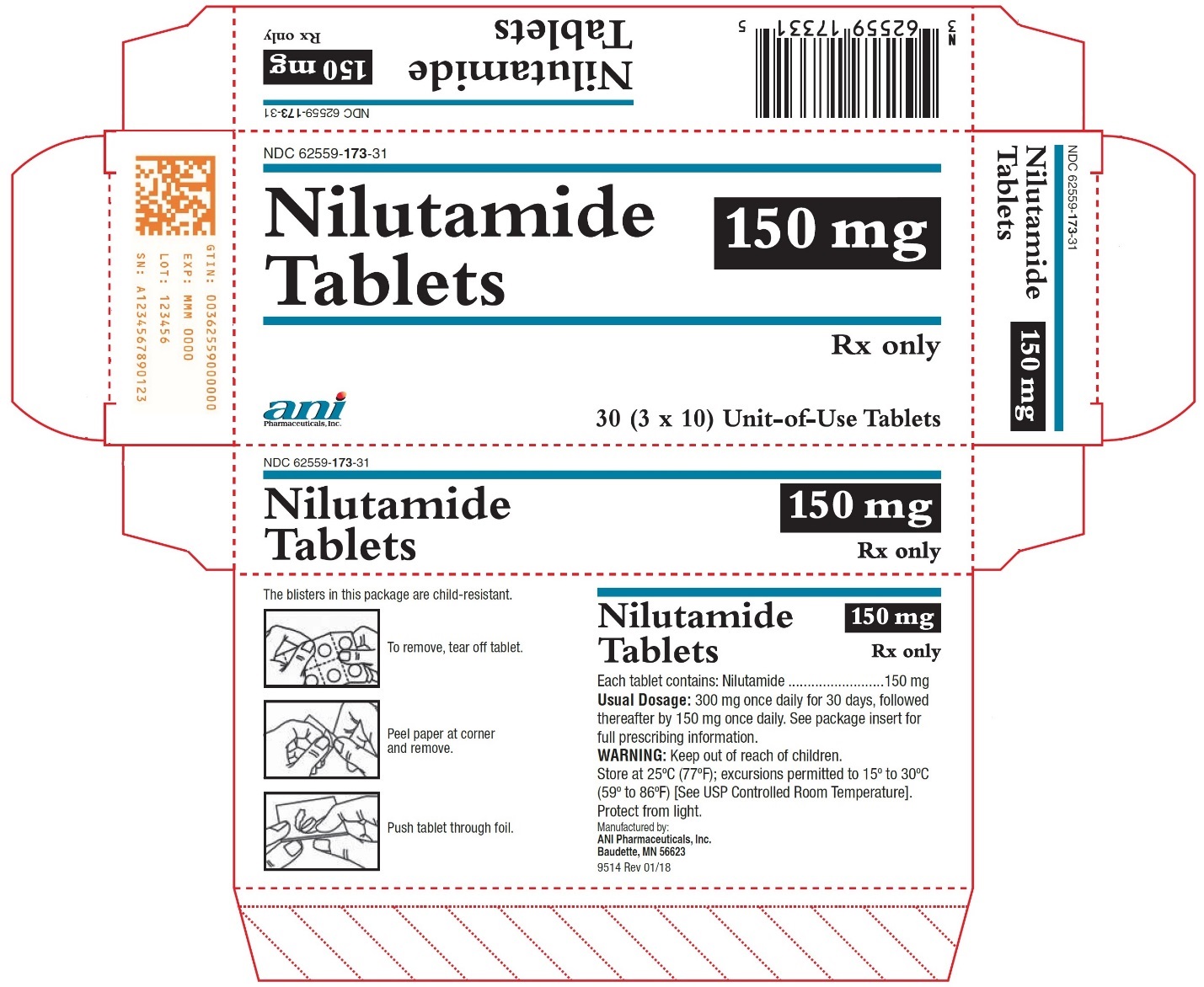
Nilutamide 150 mg Tablet, 30-count
🆔 Identity & classification
Where does this data come from?
🏷️ RxNorm drug class
This medicine belongs to the Androgen Receptor Inhibitor class.
Where does this data come from?
🏭 Manufacturer & labeler
Where does this data come from?
🩺 Clinical
Nilutamide is used after surgery to treat prostate cancer. Nilutamide is in a class of medications called antiandrogens. It works by blocking the effect of androgen (a male hormone), to stop the growth and spread of cancer cells.
Read the full MedlinePlus article ↗- Nilutamide is specifically approved to be used together with surgical removal of the testicles — not on its own for this purpose. The surgery cuts off the main source of testostero...
- Why do I need surgery AND this pill? Can't the pill work on its own?
- Yes, this is one of the most distinctive and common side effects of nilutamide. Over half of patients in one clinical trial reported trouble adapting when moving from a bright plac...
- I'm having trouble seeing in the dark since starting this medication. Is that normal?
Patient education
Supplement & herbal interactions
Some supplements/herbs that may interact with Nilutamide — tap one for details:
Where does this data come from?
Ask a licensed pharmacist directly — free, answered by our team.
🧪 Inactive Ingredients / Excipients
Inactive ingredients, also called excipients, are components of the drug product other than the active ingredient. They may include fillers, dyes, coatings, preservatives, flavors, or other formulation ingredients.
Where does this data come from?
IACT rows and label-wide narrative are kept separate; availability and product-level specificity depend on the submitted label.Inactive ingredient FAQ
Are inactive ingredients the same for every manufacturer?
Why might an inactive ingredient be missing?
Can inactive ingredients matter?
💲 Pricing
A drug doesn't have one price. Each row is a different public payment system, and none is what you'd pay at the counter — that depends on your insurance. The ⓘ on each row explains what it measures.
| Price system | Per each | Per package |
|---|---|---|
| Retail pharmacies payNADAC · weekly | Not in the retail survey — common for institutional, discontinued, or low-volume packs. | |
| Medicaid paysCMS SDUD · 12 mo | No recent Medicaid claims on file for this NDC — rare and low-volume NDCs are suppressed in the public data. | |
| Medicare drug plans payPart D · Q2 2026 | $144.46 | $4,333.86 / 30 tablets |
Where does this data come from?
🔁 Therapeutic equivalents
| Product | Labeler | Pack | NADAC/unit | TE | Status | Price vs. this |
|---|---|---|---|---|---|---|
| Nilutamide 150 mgthis 62559-0173-31 | ANI | 30 tablets | — | — | FDA listed | — |
Where does this data come from?
⏳ Availability & generic status
This product is an FDA-approved generic. Other versions of the same drug are listed under Therapeutic equivalents, least expensive first.
Where does this data come from?
📊 Medicare Part D spend CMS · PART D · 2026 (Q1)
📦 Packaging — all sizes for this product
| Package NDC | Description | Marketing start | Status |
|---|---|---|---|
| 62559-0173-31 You're viewing this | 3 BLISTER PACK in 1 CARTON (62559-173-31) / 10 TABLET in 1 BLISTER PACK | 2016-07-18 | Active |
🧭 About this NDC listing & data coverage
What data is (and isn’t) available for this NDC — tap to expand
| NDC identity (package / product / labeler codes) | ✓ Available |
| Labeler | ✓ Available |
| Product & package description | ✓ Available |
| Marketing category & status | ✓ Available |
| Active ingredient / dosage form / route | ✓ Available |
| FDA label (SPL via DailyMed) | ✓ Available |
| Package photos | ✓ Available |
| Inactive ingredients (structured) | — Not published for this NDC The labeler did not submit a structured excipient list, or no SPL is available. |
| NADAC pharmacy acquisition price (CMS) | — Not published for this NDC CMS publishes NADAC only for NDCs reported in its retail-pharmacy survey. |
| Orange Book / therapeutic-equivalence data | — Not published for this NDC Applies only to products approved under an NDA/ANDA; many listings are out of scope. |
| HCPCS J-code billing crosswalk | — Not published for this NDC Most self-administered / retail products have no J-code — that is normal. |
| Medicaid utilization (CMS SDUD) | — Not published for this NDC CMS reports utilization only for NDCs with Medicaid claims above its privacy threshold. |
Questions about this listing
Why is there no price listed?
Is the NDC printed on the package the same as the 11-digit billing NDC?
What do the three segments of this NDC mean?
Is this package still being marketed?
Who lists this product with the FDA?
Do I need a prescription for this product?
Where does this data come from?
📄 Full prescribing information FDA SPL
🚨 Boxed Warning ▾
Interstitial Pneumonitis Interstitial pneumonitis has been reported in 2% of patients in controlled clinical trials in patients exposed to nilutamide. A small study in Japanese subjects showed that 8 of 47 patients (17%) developed interstitial pneumonitis. Reports of interstitial changes including pulmonary fibrosis that led to hospitalization and death have been reported rarely post-marketing.
Symptoms included exertional dyspnea, cough, chest pain, and fever. X-rays showed interstitial or alveolo-interstitial changes, and pulmonary function tests revealed a restrictive pattern with decreased DLco. Most cases occurred within the first 3 months of treatment with Nilutamide Tablets, and most reversed with discontinuation of therapy.
A routine chest X-ray should be performed prior to initiating treatment with Nilutamide Tablets. Baseline pulmonary function tests may be considered. Patients should be instructed to report any new or worsening shortness of breath that they experience while on Nilutamide Tablets.
If symptoms occur, Nilutamide Tablets should be immediately discontinued until it can be determined if the symptoms are drug related.
🎯 Indications and Usage ▾
INDICATIONS AND USAGE Metastatic Prostate Cancer Nilutamide Tablets are indicated for use in combination with surgical castration for the treatment of metastatic prostate cancer (Stage D 2 ). For maximum benefit, treatment with Nilutamide Tablets must begin on the same day as or on the day after surgical castration.
⏱️ Dosage and Administration ▾
DOSAGE AND ADMINISTRATION The recommended dosage is 300 mg once a day for 30 days, followed thereafter by 150 mg once a day. Nilutamide Tablets can be taken with or without food.
⛔ Contraindications ▾
CONTRAINDICATIONS Nilutamide Tablets are contraindicated: • in patients with severe hepatic impairment (baseline hepatic enzymes should be evaluated prior to treatment) • in patients with severe respiratory insufficiency • in patients with hypersensitivity to nilutamide or any component of this preparation.
⚠️ Warnings ▾
WARNINGS Interstitial Pneumonitis Interstitial pneumonitis has been reported in 2% of patients in controlled clinical trials in patients exposed to nilutamide. A small study in Japanese subjects showed that 8 of 47 patients (17%) developed interstitial pneumonitis. Reports of interstitial changes including pulmonary fibrosis that led to hospitalization and death have been reported rarely post-marketing.
Symptoms included exertional dyspnea, cough, chest pain, and fever. X-rays showed interstitial or alveolo-interstitial changes, and pulmonary function tests revealed a restrictive pattern with decreased DLco. Most cases occurred within the first 3 months of treatment with Nilutamide Tablets, and most reversed with discontinuation of therapy.
A routine chest X-ray should be performed prior to initiating treatment with Nilutamide Tablets. Baseline pulmonary function tests may be considered. Patients should be instructed to report any new or worsening shortness of breath that they experience while on Nilutamide Tablets.
If symptoms occur, Nilutamide Tablets should be immediately discontinued until it can be determined if the symptoms are drug related. Hepatitis Rare cases of death or hospitalization due to severe liver injury have been reported post-marketing in association with the use of Nilutamide Tablets. Hepatotoxicity in these reports generally occurred within the first 3 to 4 months of treatment.
Hepatitis or marked increases in liver enzymes leading to drug discontinuation occurred in 1% of Nilutamide Tablet patients in controlled clinical trials. Serum transaminase levels should be measured prior to starting treatment with Nilutamide Tablets, at regular intervals for the first 4 months of treatment, and periodically thereafter. Liver function tests should also be obtained at the first sign or symptom suggestive of liver dysfunction, e.g. nausea, vomiting, abdominal pain, fatigue, anorexia, "flu-like" symptoms, dark urine, jaundice, or right upper quadrant tenderness.
If at any time, a patient has jaundice, or their ALT rises above 2 times the upper limit of normal, Nilutamide Tablets should be immediately discontinued with close follow-up of liver function tests until resolution. Use in Women Nilutamide Tablets have no indication for women, and should not be used in this population, particularly for non-serious or non-life threatening conditions. Other Foreign post-marketing surveillance has revealed isolated cases of aplastic anemia in which a causal relationship with Nilutamide Tablets could not be ascertained.
🤒 Adverse Reactions ▾
ADVERSE REACTIONS Clinical Trial Experience The following adverse experiences were reported during a multicenter clinical trial comparing Nilutamide Tablets + surgical castration versus placebo + surgical castration. The most frequently reported (greater than 5%) adverse experiences during treatment with Nilutamide Tablets in combination with surgical castration are listed below. For comparison, adverse experiences seen with surgical castration and placebo are also listed.
Adverse Experience Nilutamide Tablets + surgical castration (N=225) % All Placebo + surgical castration (N=232) % All Cardiovascular System Hypertension 5.3
2.6Digestive System Nausea 9.8
6.0Constipation 7.1
3.9Endocrine System Hot flushes 28.4
22.4Metabolic and Nutritional System Increased AST 8.0
3.9Increased ALT 7.6
4.3Nervous System Dizziness 7.1
3.4Respiratory System Dyspnea 6.2
7.3Special Senses Impaired adaptation to dark 12.9
1.3Abnormal vision 6.7
1.7Urogenital System Urinary tract infection 8.0
9.1The overall incidence of adverse experiences was 86% (194/225) for the Nilutamide Tablets group and 81% (188/232) for the placebo group. The following adverse experiences were reported during a multicenter clinical trial comparing Nilutamide Tablets + leuprolide versus placebo + leuprolide. The most frequently reported (greater than 5%) adverse experiences during treatment with Nilutamide Tablets in combination with leuprolide are listed below.
For comparison, adverse experiences seen with leuprolide and placebo are also listed. Adverse Experience Nilutamide Tablets + leuprolide (N=209) % All Placebo + leuprolide (N=202) % All Body as a Whole Pain 26.8
27.7Headache 13.9
10.4Asthenia 19.1
20.8Back pain 11.5
16.8Abdominal pain 10.0
5.4Chest pain 7.2
4.5Flu syndrome 7.2
3.0Fever 5.3
6.4Cardiovascular System Hypertension 9.1
9.9Digestive System Nausea 23.9
8.4Constipation 19.6
16.8Anorexia 11.0
6.4Dyspepsia 6.7
4.5Vomiting 5.7
4.0Endocrine System Hot flushes 66.5
59.4Impotence 11.0
12.9Libido decreased 11.0
4.5Hemic and Lymphatic System Anemia 7.2
6.4Metabolic and Nutritional System Increased AST 12.9
13.9Peripheral edema 12.4
17.3Increased ALT 9.1
8.9Musculoskeletal System Bone Pain 6.2
5.0Nervous System Insomnia 16.3
15.8Dizziness 10.0
11.4Depression 8.6
7.4Hypesthesia 5.3
2.0Respiratory System Dyspnea 10.5
7.4Upper respiratory infection 8.1
10.9Pneumonia 5.3
3.5Skin and Appendages Sweating 6.2
3.0Body hair loss 5.7
0.5Dry skin 5.3
2.5Rash 5.3
4.0Special Senses Impaired adaptation to dark 56.9
5.4Chromatopsia 8.6
0.0Impaired adaptation to light 7.7
1.0Abnormal vision 6.2
4.5Urogenital System Testicular atrophy 16.3
12.4Gynecomastia 10.5
11.9Urinary tract infection 8.6
21.3Hematuria 8.1
7.9Urinary tract disorder 7.2
10.4Nocturia 6.7
6.4The overall incidence of adverse experiences is 99.5% (208/209) for the Nilutamide Tablets group and 98.5% (199/202) for the placebo group. Some frequently occurring adverse experiences, for example hot flushes, impotence, and decreased libido, are known to be associated with low serum androgen levels and known to occur with medical or surgical castration alone. Notable was the higher incidence of visual disturbances (variously described as impaired adaptation to darkness, abnormal vision, and colored vision), which led to treatment discontinuation in 1% to 2% of patients.
Interstitial pneumonitis occurred in one (<1%) patient receiving Nilutamide Tablets in combination with surgical castration and in seven patients (3%) receiving Nilutamide Tablets in combination with leuprolide and one patient receiving placebo in combination with leuprolide. Overall, it has been reported in 2% of patients receiving Nilutamide Tablets. This included a report of interstitial pneumonitis in 8 of 47 patients (17%) in a small study performed in Japan.
In addition, the following adverse experiences were reported in 2 to 5% of patients treated with Nilutamide Tablets in combination with leuprol…
🔄 Drug Interactions ▾
Drug Interactions In vitro , nilutamide has been shown to inhibit the activity of liver cytochrome P-450 isoenzymes and, therefore, may reduce the metabolism of compounds requiring these systems. Consequently, drugs with a low therapeutic margin, such as vitamin K antagonists, phenytoin, and theophylline, could have a delayed elimination and increases in their serum half-life leading to a toxic level. The dosage of these drugs or others with a similar metabolism may need to be modified if they are administered concomitantly with nilutamide.
For example, when vitamin K antagonists are administered concomitantly with nilutamide, prothrombin time should be carefully monitored and, if necessary, the dosage of vitamin K antagonists should be reduced.
🤰 Pregnancy ▾
Pregnancy Animal reproduction studies have not been conducted with nilutamide. It is also not known whether nilutamide can cause fetal harm when administered to a pregnant woman or can affect reproductive capacity. Nilutamide should be given to a pregnant woman only if clearly needed.
🧒 Pediatric Use ▾
Pediatric Use Safety and effectiveness in pediatric patients have not been determined.
🆘 Overdosage ▾
OVERDOSAGE One case of massive overdosage has been published. A 79-year-old man attempted suicide by ingesting 13 g of nilutamide (i.e., 43 times the maximum recommended dose). Despite immediate gastric lavage and oral administration of activated charcoal, plasma nilutamide levels peaked at 6 times the normal range 2 hours after ingestion.
There were no clinical signs or symptoms or changes in parameters such as transaminases or chest X-ray. Maintenance treatment (150 mg/day) was resumed 30 days later. In repeated-dose tolerance studies, doses of 600 mg/day and 900 mg/day were administered to 9 and 4 patients, respectively.
The ingestion of these doses was associated with gastrointestinal disorders, including nausea and vomiting, malaise, headache, and dizziness. In addition, a transient elevation in hepatic enzyme levels was noted in one patient. Since nilutamide is protein bound, dialysis may not be useful as treatment for overdose.
As in the management of overdosage with any drug, it should be borne in mind that multiple agents may have been taken. If vomiting does not occur spontaneously, it should be induced if the patient is alert. General supportive care, including frequent monitoring of the vital signs and close observation of the patient, is indicated.
🧬 Clinical Pharmacology ▾
CLINICAL PHARMACOLOGY Mechanism of Action Prostate cancer is known to be androgen sensitive and responds to androgen ablation. In animal studies, nilutamide has demonstrated antiandrogenic activity without other hormonal (estrogen, progesterone, mineralocorticoid, and glucocorticoid) effects. In vitro , nilutamide blocks the effects of testosterone at the androgen receptor level.
In vivo , nilutamide interacts with the androgen receptor and prevents the normal androgenic response. Pharmacokinetics Absorption Analysis of blood, urine, and feces samples following a single oral 150-mg dose of [ 14 C]-nilutamide in patients with metastatic prostate cancer showed that the drug is rapidly and completely absorbed and that it yields high and persistent plasma concentrations. Distribution After absorption of the drug, there is a detectable distribution phase.
There is moderate binding of the drug to plasma proteins and low binding to erythrocytes. The binding is nonsaturable except in the case of alpha-1-glycoprotein, which makes a minor contribution to the total concentration of proteins in the plasma. The results of binding studies do not indicate any effects that would cause nonlinear pharmacokinetics.
Metabolism The results of a human metabolism study using 14 C-radiolabelled tablets show that nilutamide is extensively metabolized and less than 2% of the drug is excreted unchanged in urine after 5 days. Five metabolites have been isolated from human urine. Two metabolites display an asymmetric center, due to oxidation of a methyl group, resulting in the formation of D- and L-isomers.
One of the metabolites was shown, in vitro , to possess 25 to 50% of the pharmacological activity of the parent drug, and the D-isomer of the active metabolite showed equal or greater potency compared to the L-isomer. However, the pharmacokinetics and the pharmacodynamics of the metabolites have not been fully investigated. Elimination The majority (62%) of orally administered [ 14 C]-nilutamide is eliminated in the urine during the first 120 hours after a single 150-mg dose.
Fecal elimination is negligible, ranging from 1.4% to 7% of the dose after 4 to 5 days. Excretion of radioactivity in urine likely continues beyond 5 days. The mean elimination half-life of nilutamide determined in studies in which subjects received a single dose of 100 to 300 mg ranged from 38.0 to 59.1 hours with most values between 41 and 49 hours.
The elimination of at least one metabolite is generally longer than that of unchanged nilutamide (59 to 126 hours). During multiple dosing of 150 mg nilutamide (given as 3 × 50 mg) twice a day, steady state was reached within 2 to 4 weeks for most patients, and mean steady state AUC 0–12 was 110% higher than the AUC 0–∞ obtained from the first 150 mg dose. These data and in vitro metabolism data suggest that, upon multiple dosing, metabolic enzyme inhibition may occur for this drug.
Clinical Studies Nilutamide through its antiandrogenic activity can complement surgical castration, which suppresses only testicular androgens. The effects of the combined therapy were studied in patients with previously untreated metastatic prostate cancer. In a double-blind, randomized, multicenter study that enrolled 457 patients (225 treated with orchiectomy and Nilutamide Tablets, 232 treated with orchiectomy and placebo), the Nilutamide Tablets group showed a statistically significant benefit in time to progression and time to death.
The results are summarized below. NILUTAMIDE TABLETS PLACEBO Median Survival (months) 27.3
23.6Progression-Free Survival (months) 21.1
14.9 Complete or Partial Regression 41% 24% Improvement in Bone Pain 54% 37%
📦 How Supplied / Storage and Handling ▾
HOW SUPPLIED Nilutamide Tablets, 150 mg, are supplied in boxes of 30 tablets. Each box contains 3 child-resistant, PVC, aluminum foil-backed blisters of 10 tablets (NDC 62559-173-31). Each round, biconvex, white to off-white tablet is debossed with “ANI” and “173” on one side and plain on the other side.
Store at 25°C (77°F); excursions permitted between 15 to 30°C (59 to 86°F) [see USP Controlled Room Temperature]. Protect from light. Keep out of reach of children.
Manufactured by: ANI Pharmaceuticals, Inc. Baudette, MN 56623 9625 Rev 06/25 ani-logo
📋 Description ▾
DESCRIPTION Nilutamide Tablets contain nilutamide, a nonsteroidal, orally active antiandrogen having the chemical name 5,5-dimethyl-3-[4-nitro-3-(trifluoromethyl)phenyl]-2,4-imidazolidinedione with the following structural formula: Nilutamide is a microcrystalline, white to practically white powder with a molecular weight of 317.25. Its molecular formula is C 12 H 10 F 3 N 3 O 4 . It is freely soluble in ethyl acetate, acetone, chloroform, ethyl alcohol, dichloromethane, and methanol.
It is slightly soluble in water [<0.1% W/V at 25°C (77°F)]. It melts between 153°C and 156°C (307.4°F and 312.8°F). Each Nilutamide Tablet contains 150 mg of nilutamide.
The inactive ingredients in Nilutamide Tablets include: calcium stearate, docusate sodium, lactose, povidone, corn starch, and talc. structure