
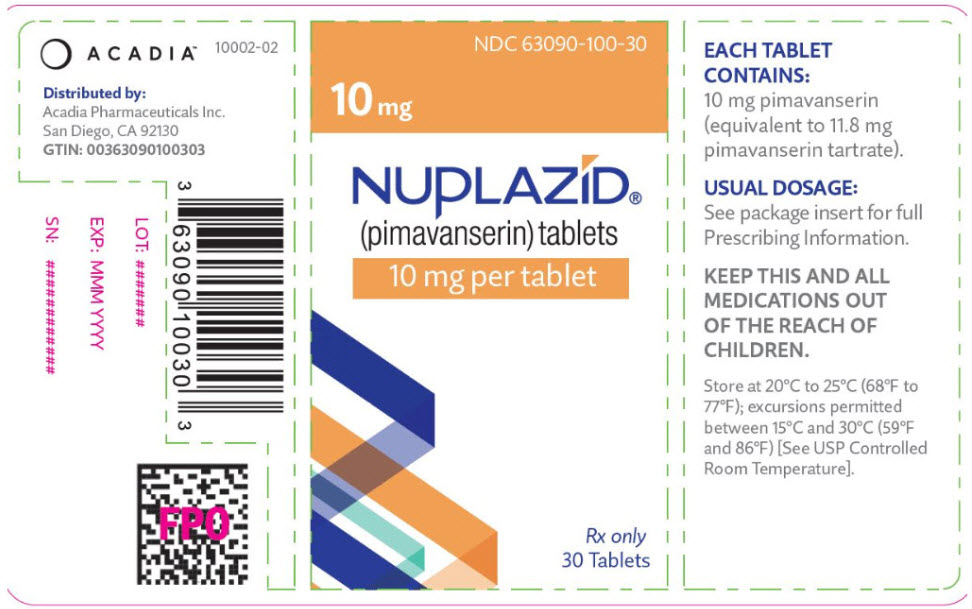
Nuplazid pimavanserin tartrate 10 mg Tablet, Coated, 30-count — NDC 63090-100-30 (Billing 63090-0100-30)
This is a package of 30 tablets of Nuplazid pimavanserin tartrate 10 mg Tablet, Coated from Acadia Pharmaceuticals Inc., marketed since Jun 2018 and currently FDA-listed. It is this product's only package size.
NDC database record
One package, one record: these facts belong to NDC 63090-100-30 alone.
- Record
- FDA NDC Directory package listing · Human prescription drug
- Code segments
- 63090 labeler · 100 product · 30 package
- Package marketed since
- Jun 28, 2018
- Sample package
- No — commercial package
- Listing certified through
- Dec 31, 2027
- Billing quantity
- 30 EA per package
- Barcode (UPC)
- 0363090100303, 0363090340303
- FDA record last changed
- Jul 24, 2026
Identity & classification
Regulatory identifiers FDA, NLM and CMS codes for this package
Drug-database identifiers Medi-Span GPI and First Databank GCN / HICL / AHFS classification
- GSN (GCN sequence number): 078604
- GCN: 44959
- GPI-14 (Medi-Span): 59400028200310
- HICL (First Databank): 043373
- AHFS class code: 28:16.08.04
- RxCUI (RxNorm): 2049269
Where does this data come from?
- FDA openFDA NDC Directory · synced Oct 1, 2026
- FDA label on DailyMed · label index refreshed Oct 5, 2026
- RxNorm (NLM RxNav) · catalog refreshed Oct 1, 2026
- Medi-Span GPI (licensed)
- First Databank (licensed) · refreshed Oct 1, 2026
RxNorm drug class
This medicine belongs to the Atypical Antipsychotic class.
Where does this data come from?
- RxClass (NLM) · catalog refreshed Oct 1, 2026
Clinical
Pimavanserin is used to treat hallucinations and delusions in people with psychosis from Parkinson's disease (PD; a disorder of the nervous system that causes difficulties with movement, muscle control, and balance). Pimavanserin is in a class of medications called atypical antipsychotics. It works by changing the activity of certain natural substances in the brain.
Read the full MedlinePlus article ↗- It treats hallucinations and delusions that can happen with Parkinson’s disease psychosis. That means seeing or believing things that aren’t real. It is not approved for psychosis...
- You take it by mouth once a day, with or without food. If swallowing capsules is hard, you can open one and sprinkle all of it over applesauce, yogurt, pudding, or a liquid nutriti...
- The most common ones were swelling in the arms or legs and confusion. Nausea, constipation, and trouble walking also showed up in studies. Let your doctor know if any of these both...
- Call right away for a racing, pounding, or irregular heartbeat, or fainting, since this medicine can affect heart rhythm. Get emergency help for hives, swelling of the tongue or fa...
Patient education
Supplement & herbal interactions
Some supplements/herbs that may interact with Pimavanserin Tartrate — tap one for details:
Where does this data come from?
- MedlinePlus (NLM) · refreshed Oct 1, 2026
- FDA label on DailyMed · label index refreshed Oct 5, 2026
Ask a licensed pharmacist directly — free, answered by our team.
Pricing
A drug doesn't have one price. Each row is a different public payment system, and none is what you'd pay at the counter — that depends on your insurance. The ⓘ on each row explains what it measures.
| Price system | Per each | Per package |
|---|---|---|
| Retail pharmacies payNADAC · weekly | Not in the retail survey — common for institutional, discontinued, or low-volume packs. | |
| Medicaid paysCMS SDUD · 12 mo | No recent Medicaid claims on file for this NDC — rare and low-volume NDCs are suppressed in the public data. | |
| Medicare drug plans payPart D · Q2 2026 | $170.67 | $5,119.99 / 30 tablets |
Where does this data come from?
- CMS NADAC weekly file
- CMS ASP pricing files · refreshed Sep 20, 2026
- CMS Medicaid State Drug Utilization Data · refreshed Oct 5, 2026
- CMS Part D plan pricing files · refreshed Sep 24, 2026
- VA National Acquisition Center price file
Packaging — all sizes for this product
| Package NDC | Description | Marketing start | Marketing end | Status |
|---|---|---|---|---|
| 63090-0100-30 You're viewing this Main listing | 30 TABLET, COATED in 1 BOTTLE, PLASTIC | 2018-06-28 | — | Active |
Therapeutic equivalents
| Product | Labeler | Pack | NADAC/unit | TE | Status | Price vs. this |
|---|---|---|---|---|---|---|
| Nuplazid 10 mgthis 63090-0100-30 | Acadia | 30 tablets | — | — | FDA listed | — |
Where does this data come from?
- FDA openFDA NDC Directory · synced Oct 1, 2026
- FDA Orange Book · refreshed Oct 3, 2026
- CMS NADAC weekly file
Availability & generic status
The FDA lists approved generic versions of this medicine, but that does not always mean a pharmacy can get one today. Patent rules, launch agreements, supply and pricing can affect when generics actually arrive.
Why the date isn’t exact: Generic timing can change because patents may be challenged, settled, licensed, added, removed, or worked around with a narrower label — and FDA approval does not always mean a pharmacy can get the generic today.
🛈 What do these terms mean?
- Patent
- Legal protection listed in the Orange Book that may delay generic approval or launch. Issued by the U.S. Patent & Trademark Office.
- Substance patent
- Covers the active drug molecule itself — the hardest to design around. A generic generally can’t launch until it expires.
- Formulation (product) patent
- Covers a specific formulation or dosage form. A generic can sometimes work around it with a different formulation.
- Method-of-use patent
- A patent covering one specific approved use of the drug — not necessarily the whole molecule. A generic can sometimes launch with a “skinny label” that carves out the protected use and keeps the others.
- Skinny label
- A generic label that omits a still-patented use when the FDA allows it — letting a generic reach the market for the unprotected uses.
- Exclusivity
- FDA-granted marketing protection, separate from patents — e.g. 5-yr new chemical entity, 7-yr orphan drug, or a +6-month pediatric extension.
- Paragraph IV
- A generic applicant’s formal challenge to a listed patent. It can potentially lead to earlier generic entry, but often involves litigation or a settlement.
- RLD / RS
- Reference Listed Drug — the brand product the FDA uses as the reference for generic applications. Reference Standard — the product the FDA expects generics to compare against in bioequivalence testing.
- TE / AB rating
- FDA therapeutic-equivalence rating. An AB rating generally means the FDA considers a generic therapeutically equivalent to — and substitutable for — the brand.
- LOE (loss of exclusivity)
- The latest patent or exclusivity currently listed — the loss-of-exclusivity / latest-listed-protection date shown on this page. Paragraph-IV challenges and settlements can move the real date earlier; FDA approval and a manufacturer’s decision to market can move it later.
Built from the FDA Orange Book. The bars above are scaled to each protection’s expiry; the red LOE marker is the last one to lapse.
| Patent | Type | Use code | Expires |
|---|---|---|---|
| US 10517860 ↗ | Method of use | U-1974 | Mar 23, 2037 |
| US 10953000 ↗ | Method of use | U-1974 | Mar 23, 2037 |
| US 7659285 ↗ | Method of use | U-1844 | Aug 24, 2026 |
| US 7659285 ↗ | Method of use | U-1844 | Aug 24, 2026 |
| US 7732615 ↗ | Drug substance | — | Jun 3, 2028 |
| US 7601740 ↗ | Drug substance | — | Apr 29, 2030 |
| US 7601740 ↗ | Drug substance | — | Apr 29, 2030 |
| US 7732615 ↗ | Drug substance | — | Jun 3, 2028 |
| US 7732615*PED ↗ | Drug product | — | Dec 3, 2028 |
| US 7601740*PED ↗ | Drug product | — | Oct 29, 2030 |
| US 7601740*PED ↗ | Drug product | — | Oct 29, 2030 |
| US 7732615*PED ↗ | Drug product | — | Dec 3, 2028 |
| US 10953000*PED ↗ | Drug product | — | Sep 23, 2037 |
| US 10517860*PED ↗ | Drug product | — | Sep 23, 2037 |
| Code | What it grants | Expires |
|---|---|---|
| M-14 | New indication / labeling change (3-year) | Apr 27, 2029 |
| M-14 | New indication / labeling change (3-year) | Apr 27, 2029 |
| PED | Pediatric Exclusivity (+6 months) | Oct 27, 2029 |
| PED | Pediatric Exclusivity (+6 months) | Oct 27, 2029 |
Is there a generic version of NUPLAZID 10 MG TABLET?
The FDA approved a generic — why can’t I get it at my pharmacy yet?
Why do different websites show different generic release dates?
What does “FDA listed” mean?
What does a patent or protection date mean here?
What does “current Orange Book estimate” mean?
Can a generic come out before the last patent expires?
Can a generic come out after the listed dates?
What is the difference between patents and exclusivity?
Why are there multiple patent dates?
Where does this data come from?
- FDA Orange Book · refreshed Oct 3, 2026
What it looks like
Where does this data come from?
- FDA label on DailyMed · label index refreshed Oct 5, 2026
Inactive Ingredients / Excipients
Inactive ingredients, also called excipients, are components of the drug product other than the active ingredient. They may include fillers, dyes, coatings, preservatives, flavors, or other formulation ingredients.
💡 Tap an ingredient (hover on desktop) to see what it is and why it’s used.
-
UNII 1K09F3G675
Ferric oxide red is an inorganic iron compound used as a colorant in medicines. It gives tablets, capsules, or other dosage forms a red or reddish tint for identification and appearance.
-
UNII EX438O2MRT
Ferric oxide yellow is a naturally occurring iron compound used as a colorant in medications. It gives tablets, capsules, and other forms a yellow or golden hue for identification and appearance.
-
UNII 70097M6I30
Magnesium stearate is a salt made from magnesium and stearic acid, a fatty substance. It's used in tablets and capsules as a lubricant and glidant to help ingredients flow smoothly during manufacturing and prevent sticking.
-
UNII OP1R32D61U
Microcrystalline cellulose is a purified form of cellulose, a natural fiber from plant sources. It acts as a binder and filler in tablets and capsules, helping hold ingredients together and give the medicine its shape and size.
-
UNII U076Q6Q621
Polyethylene glycol 1000 is a synthetic compound made from ethylene oxide. It serves as a solvent, lubricant, and humectant in medicines, helping dissolve active ingredients and improve how the product flows and feels.
-
UNII 532B59J990
Polyvinyl alcohol is a synthetic polymer made from plant-derived materials. It's used as a binder to hold ingredients together, a film-former in coatings, and a thickener in liquid formulations.
-
UNII O8232NY3SJ
A plant-based carbohydrate derived from corn kernels. It acts as a filler to add bulk, a binder to hold ingredients together, and a disintegrant to help the tablet break apart in your stomach for absorption.
-
UNII 7SEV7J4R1U
A powder made from a naturally occurring mineral. In medicines, talc works as a glidant and anti-caking agent, helping tablets and capsules flow smoothly during manufacturing and preventing clumping.
-
UNII 15FIX9V2JP
Titanium dioxide is a bright white mineral powder commonly used as a colorant and opacifying agent. It makes pills and tablets white or lighter in color and helps make coatings non-transparent.
9 inactive ingredients listed in the exact product block matched to this NDC.
Where does this data come from?
ingredient classCode="IACT" elements from the exact product block matched by this NDC. Label-section narrative from DailyMed / the openFDA label index is shown separately when available.- FDA label on DailyMed · label index refreshed Oct 5, 2026
- FDA openFDA NDC Directory · synced Oct 1, 2026
Inactive ingredient FAQ
Are inactive ingredients the same for every manufacturer?
Why might an inactive ingredient be missing?
Can inactive ingredients matter?
Manufacturer & labeler
More NDCs from Acadia Pharmaceuticals Inc. labeler code 63090
- Nuplazid pimavanserin tartrate 34 mg Capsule NDC 63090-340-30
- Daybue trofinetide 200 mg/mL Solution NDC 63090-660-01
- Daybue Stix trofinetide 5000 mg For Solution NDC 63090-663-60
- Daybue Stix trofinetide 6000 mg For Solution NDC 63090-664-60
- Daybue Stix trofinetide 8000 mg For Solution NDC 63090-665-60
Where does this data come from?
- FDA openFDA NDC Directory · synced Oct 1, 2026
- Drugs@FDA
Full prescribing information FDA SPL
🚨 Boxed Warning ▾
WARNING: INCREASED MORTALITY IN ELDERLY PATIENTS WITH DEMENTIA-RELATED PSYCHOSIS Elderly patients with dementia-related psychosis treated with antipsychotic drugs are at an increased risk of death. NUPLAZID is not approved for the treatment of patients with dementia who experience psychosis unless their hallucinations and delusions are related to Parkinson's disease [see Warnings and Precautions (5.1) ] . WARNING: INCREASED MORTALITY IN ELDERLY PATIENTS WITH DEMENTIA-RELATED PSYCHOSIS See full prescribing information for complete boxed warning .
Elderly patients with dementia-related psychosis treated with antipsychotic drugs are at an increased risk of death. NUPLAZID is not approved for the treatment of patients with dementia who experience psychosis unless their hallucinations and delusions are related to Parkinson's disease. ( 5.1 )
🎯 Indications and Usage ▾
1 INDICATIONS AND USAGE NUPLAZID ® is indicated for the treatment of hallucinations and delusions associated with Parkinson's disease psychosis [ see Clinical Studies (14) ] . NUPLAZID is an atypical antipsychotic indicated for the treatment of hallucinations and delusions associated with Parkinson's disease psychosis. ( 1 )
⏱️ Dosage and Administration ▾
2 DOSAGE AND ADMINISTRATION Recommended dose is 34 mg taken orally once daily, without titration. ( 2.1 ) Can be taken with or without food. ( 2.2 ) Capsules may be swallowed whole or opened and entire contents sprinkled over a tablespoon of certain types of soft food. ( 2.2 )
2.1Recommended Dosage The recommended dose of NUPLAZID is 34 mg taken orally once daily, without titration.
2.2Administration Information NUPLAZID can be taken with or without food [see Clinical Pharmacology (12.3) ] . NUPLAZID capsules can be taken whole, or opened and the entire contents sprinkled over a tablespoon (15 mL) of applesauce, yogurt, pudding, or a liquid nutritional supplement. Consume the drug/food mixture immediately without chewing; do not store for future use.
2.3Dosage Modifications for Concomitant Use with CYP3A4 Inhibitors and Inducers Coadministration with Strong CYP3A4 Inhibitors The recommended dose of NUPLAZID when coadministered with strong CYP3A4 inhibitors is 10 mg, taken orally as one tablet once daily [see Drug Interactions (7.1) ]. Coadministration with Strong or Moderate CYP3A4 Inducers Avoid concomitant use of strong or moderate CYP3A4 inducers with NUPLAZID [see Drug Interactions (7.1) ] .
💊 Dosage Forms and Strengths ▾
3 DOSAGE FORMS AND STRENGTHS NUPLAZID (pimavanserin) is available as: 34 mg strength capsules. The capsules are opaque white and light green with "PIMA" and "34" printed in black. 10 mg strength tablets. The orange, round, coated tablets are debossed on one side with a "P" and "10" on the reverse side. Capsules: 34 mg ( 3 ) Tablets: 10 mg ( 3 )
⛔ Contraindications ▾
4 CONTRAINDICATIONS NUPLAZID is contraindicated in patients with a history of a hypersensitivity reaction to pimavanserin or any of its components. Rash, urticaria, and reactions consistent with angioedema (e.g., tongue swelling, circumoral edema, throat tightness, and dyspnea) have been reported [see Adverse Reactions (6.2) ] . Known hypersensitivity to NUPLAZID or any of its components. ( 4 )
⚠️ Warnings and Cautions ▾
5 WARNINGS AND PRECAUTIONS QT Interval Prolongation: Increases in QT interval; avoid use with drugs that also increase the QT interval and in patients with risk factors for prolonged QT interval. ( 5.2 )
5.1Increased Mortality in Elderly Patients with Dementia-Related Psychosis Antipsychotic drugs increase the all-cause risk of death in elderly patients with dementia-related psychosis. Analyses of 17 dementia-related psychosis placebo-controlled trials (modal duration of 10 weeks and largely in patients taking atypical antipsychotic drugs) revealed a risk of death in the drug-treated patients of between 1.6- to 1.7-times that in placebo-treated patients. Over the course of a typical 10-week controlled trial, the rate of death in drug-treated patients was about 4.5%, compared to a rate of about 2.6% in placebo-treated patients.
Although the causes of death were varied, most of the deaths appeared to be either cardiovascular (e.g., heart failure, sudden death) or infectious (e.g., pneumonia) in nature. NUPLAZID is not approved for the treatment of patients with dementia who experience psychosis unless their hallucinations and delusions are related to Parkinson's disease [see Boxed Warning ].
5.2QT Interval Prolongation NUPLAZID prolongs the QT interval. The use of NUPLAZID should be avoided in patients with known QT prolongation or in combination with other drugs known to prolong QT interval including Class 1A antiarrhythmics (e.g., quinidine, procainamide) or Class 3 antiarrhythmics (e.g., amiodarone, sotalol), certain antipsychotic medications (e.g., ziprasidone, chlorpromazine, thioridazine), and certain antibiotics (e.g., gatifloxacin, moxifloxacin) [see Drug Interactions (7.1) ] . NUPLAZID should also be avoided in patients with a history of cardiac arrhythmias, as well as other circumstances that may increase the risk of the occurrence of torsade de pointes and/or sudden death, including symptomatic bradycardia, hypokalemia or hypomagnesemia, and the presence of congenital prolongation of the QT interval [see Clinical Pharmacology (12.2) ] .
🤒 Adverse Reactions ▾
6 ADVERSE REACTIONS The following serious adverse reactions are discussed elsewhere in the labeling: Increased Mortality in Elderly Patients with Dementia-Related Psychosis [see Boxed Warning and Warnings and Precautions (5.1) ] QT Interval Prolongation [see Warnings and Precautions (5.2) ] Most common adverse reactions (≥5% and twice the rate of placebo): peripheral edema and confusional state. ( 6.1 ) To report SUSPECTED ADVERSE REACTIONS, contact Acadia Pharmaceuticals Inc. at 1-844-422-2342 or FDA at 1-800-FDA-1088 or www.fda.gov/medwatch .
6.1Clinical Trials Experience Because clinical trials are conducted under widely varying conditions, adverse reaction rates observed in the clinical trials of a drug cannot be directly compared to rates in the clinical trials of another drug and may not reflect the rates observed in practice. The clinical trial database for NUPLAZID consists of over 1200 subjects and patients exposed to one or more doses of NUPLAZID. Of these, 616 were patients with hallucinations and delusions associated with Parkinson's disease psychosis (PDP).
In the placebo-controlled setting, the majority of experience in patients comes from studies evaluating once-daily NUPLAZID doses of 34 mg (N=202) compared to placebo (N=231) for up to 6 weeks. In the controlled trial setting, the study population was approximately 64% male and 91% Caucasian, and the mean age was about 71 years at study entry. Additional clinical trial experience in patients with hallucinations and delusions associated with PDP comes from two open-label, safety extension studies (total N=497).
The majority of patients receiving long-term treatment received 34 mg once-daily (N=459). Over 300 patients have been treated for more than 6 months; over 270 have been treated for at least 12 months; and over 150 have been treated for at least 24 months. The following adverse reactions are based on the 6-week, placebo-controlled studies in which NUPLAZID was administered once daily to patients with hallucinations and delusions associated with PDP.
Common Adverse Reactions (incidence ≥5% and at least twice the rate of placebo): peripheral edema (7% NUPLAZID 34 mg vs. 2% placebo) and confusional state (6% NUPLAZID 34 mg vs. 3% placebo).
Adverse Reactions Leading to Discontinuation of Treatment A total of 8% (16/202) of NUPLAZID 34 mg-treated patients and 4% (10/231) of placebo-treated patients discontinued because of adverse reactions. The adverse reactions that occurred in more than one patient and with an incidence at least twice that of placebo were hallucination (2% NUPLAZID vs. <1% placebo), urinary tract infection (1% NUPLAZID vs. <1% placebo), and fatigue (1% NUPLAZID vs. 0% placebo).
Adverse reactions that occurred in 6-week, placebo-controlled studies and that were reported at an incidence of ≥2% and >placebo are presented in Table 1 . Table 1 Adverse Reactions in Placebo-Controlled Studies of 6-Week Treatment Duration and Reported in ≥2% and >Placebo Percentage of Patients Reporting Adverse Reaction NUPLAZID 34 mg Placebo N=202 N=231 Gastrointestinal disorders Nausea 7% 4% Constipation 4% 3% General disorders Peripheral edema 7% 2% Gait disturbance 2% <1% Psychiatric disorders Hallucination 5% 3% Confusional state 6% 3% Adverse Reactions in Demographic Subgroups Examination of population subgroups in the 6-week, placebo-controlled studies did not reveal any differences in safety on the basis of age (≤75 vs. >75 years) or sex.
Because the study population was predominantly Caucasian (91%; consistent with reported demographics for PD/PDP), racial or ethnic differences in the safety profile of NUPLAZID could not be assessed. In addition, in the 6-week, placebo-controlled studies, no clinically relevant differences in the incidence of adverse reactions were observed among those with a Mini-Mental State Examination (MMSE) score at entry of <25 versus those with scores ≥25.
6.2Postmarketing Experience The following adverse reactions have been identif… [Excerpted — this section continues on DailyMed.]
🔄 Drug Interactions ▾
7 DRUG INTERACTIONS Strong CYP3A4 Inhibitors: Reduce NUPLAZID dose to 10 mg once daily. ( 2.3 , 7.1 ) Strong or Moderate CYP3A4 Inducers: Avoid concomitant use of NUPLAZID. ( 2.3 , 7.1 )
7.1Drugs Having Clinically Important Interactions with NUPLAZID Table 2 Clinically Important Drug Interactions with NUPLAZID QT Interval Prolongation Clinical Impact: Concomitant use of drugs that prolong the QT interval may add to the QT effects of NUPLAZID and increase the risk of cardiac arrhythmia. Intervention: Avoid the use of NUPLAZID in combination with other drugs known to prolong QT interval (e.g., Class 1A antiarrythmics, Class 3 antiarrythmics, certain antipsychotics or antibiotics) [see Warnings and Precautions (5.2) ] .
Strong CYP3A4 Inhibitors Clinical Impact: Concomitant use of NUPLAZID with a strong CYP3A4 inhibitor increases pimavanserin exposure [see Clinical Pharmacology (12.3) ] . Intervention: If NUPLAZID is used with a strong CYP3A4 inhibitor, reduce the dosage of NUPLAZID [see Dosage and Administration (2.3) ]. Strong or Moderate CYP3A4 Inducers Clinical Impact: Concomitant use of NUPLAZID with strong or moderate CYP3A4 inducers reduces pimavanserin exposure [see Clinical Pharmacology (12.3) ].
Intervention: Avoid concomitant use of strong or moderate CYP3A4 inducers with NUPLAZID [see Dosage and Administration (2.3) ] .
7.2Drugs Having No Clinically Important Interactions with NUPLAZID Based on pharmacokinetic studies, no dosage adjustment of carbidopa/levodopa is required when administered concomitantly with NUPLAZID [see Clinical Pharmacology (12.3) ] .
👥 Use in Specific Populations ▾
8 USE IN SPECIFIC POPULATIONS
8.1Pregnancy Risk Summary There are no data on NUPLAZID use in pregnant women that would allow assessment of the drug-associated risk of major congenital malformations or miscarriage. In animal reproduction studies, no adverse developmental effects were seen when pimavanserin was administered orally to rats or rabbits during the period of organogenesis at doses up to 10- or 12-times the maximum recommended human dose (MRHD) of 34 mg/day, respectively. Administration of pimavanserin to pregnant rats during pregnancy and lactation resulted in maternal toxicity and lower pup survival and body weight at doses which are 2-times the MRHD of 34 mg/day [see Data ] .
The estimated background risk of major birth defects and miscarriage for the indicated population is unknown. In the U.S. general population, the estimated background risk of major birth defects and miscarriage in clinically recognized pregnancies is 2-4% and 15-20%, respectively. Data Animal Data Pimavanserin was not teratogenic in pregnant rats when administered during the period of organogenesis at oral doses of 0.9, 8.5, and 51 mg/kg/day, which are 0.2- and 10-times the MRHD of 34 mg/day based on AUC at mid and high doses, respectively.
Maternal toxicity included reduction in body weight and food consumption at the highest dose. Administration of pimavanserin to pregnant rats during pregnancy and lactation at oral doses of 8.5, 26, and 51 mg/kg/day, which are 0.14- to 14-times the MRHD of 34 mg/day based on AUC, caused maternal toxicity, including mortality, clinical signs including dehydration, hunched posture, and rales, and decreases in body weight, and/or food consumption at doses ≥26 mg/kg/day (2-times the MRHD based on AUC). At these maternally toxic doses there was a decrease in pup survival, reduced litter size, and reduced pup weights, and food consumption.
Pimavanserin had no effect on sexual maturation, neurobehavioral function including learning and memory, or reproductive function in the first generation pups up to 14-times the MRHD of 34 mg/day based on AUC. Pimavanserin was not teratogenic in pregnant rabbits during the period of organogenesis at oral doses of 4.3, 43, and 85 mg/kg/day, which are 0.2- to 12-times the MRHD of 34 mg/day based on AUC. Maternal toxicity, including mortality, clinical signs of dyspnea and rales, decreases in body weight and/or food consumption, and abortions occurred at doses 12-times the MRHD of 34 mg/day based on AUC.
8.2Lactation Risk Summary There is no information regarding the presence of pimavanserin in human milk, the effects on the breastfed infant, or the effects on milk production. The developmental and health benefits of breastfeeding should be considered along with the mother's clinical need for NUPLAZID and any potential adverse effects on the breastfed infant from NUPLAZID or from the underlying maternal condition.
8.4Pediatric Use Safety and effectiveness of NUPLAZID in pediatric patients have not been established. Irritability Associated with Autism Spectrum Disorder The safety and effectiveness of NUPLAZID for the treatment of irritability associated with autism spectrum disorder have not been established in pediatric patients. Effectiveness was not demonstrated in a 6-week, double-blind, placebo-controlled, fixed-dose clinical study conducted in 237 pediatric patients 5 to 17 years of age with irritability associated with autism spectrum disorder diagnosed by the Diagnostic and Statistical Manual of Mental Disorders, 5th Edition (DSM-5) criteria (NCT05523895).
In this study, 159 patients were treated with NUPLAZID and 78 were treated with placebo. The most common adverse events (incidence ≥5%) reported among NUPLAZID-treated pediatric patients were upper respiratory tract infection (8% vs. 5% placebo) and headache (6% vs.
5% placebo). In this study, 1% (2/159) NUPLAZID-treated pediatric patients discontinued due to adverse events. Of the 237 patients from this study, 209 pat… [Excerpted — this section continues on DailyMed.]
🤰 Pregnancy ▾
8.1Pregnancy Risk Summary There are no data on NUPLAZID use in pregnant women that would allow assessment of the drug-associated risk of major congenital malformations or miscarriage. In animal reproduction studies, no adverse developmental effects were seen when pimavanserin was administered orally to rats or rabbits during the period of organogenesis at doses up to 10- or 12-times the maximum recommended human dose (MRHD) of 34 mg/day, respectively. Administration of pimavanserin to pregnant rats during pregnancy and lactation resulted in maternal toxicity and lower pup survival and body weight at doses which are 2-times the MRHD of 34 mg/day [see Data ] .
The estimated background risk of major birth defects and miscarriage for the indicated population is unknown. In the U.S. general population, the estimated background risk of major birth defects and miscarriage in clinically recognized pregnancies is 2-4% and 15-20%, respectively. Data Animal Data Pimavanserin was not teratogenic in pregnant rats when administered during the period of organogenesis at oral doses of 0.9, 8.5, and 51 mg/kg/day, which are 0.2- and 10-times the MRHD of 34 mg/day based on AUC at mid and high doses, respectively.
Maternal toxicity included reduction in body weight and food consumption at the highest dose. Administration of pimavanserin to pregnant rats during pregnancy and lactation at oral doses of 8.5, 26, and 51 mg/kg/day, which are 0.14- to 14-times the MRHD of 34 mg/day based on AUC, caused maternal toxicity, including mortality, clinical signs including dehydration, hunched posture, and rales, and decreases in body weight, and/or food consumption at doses ≥26 mg/kg/day (2-times the MRHD based on AUC). At these maternally toxic doses there was a decrease in pup survival, reduced litter size, and reduced pup weights, and food consumption.
Pimavanserin had no effect on sexual maturation, neurobehavioral function including learning and memory, or reproductive function in the first generation pups up to 14-times the MRHD of 34 mg/day based on AUC. Pimavanserin was not teratogenic in pregnant rabbits during the period of organogenesis at oral doses of 4.3, 43, and 85 mg/kg/day, which are 0.2- to 12-times the MRHD of 34 mg/day based on AUC. Maternal toxicity, including mortality, clinical signs of dyspnea and rales, decreases in body weight and/or food consumption, and abortions occurred at doses 12-times the MRHD of 34 mg/day based on AUC.
🧒 Pediatric Use ▾
8.4Pediatric Use Safety and effectiveness of NUPLAZID in pediatric patients have not been established. Irritability Associated with Autism Spectrum Disorder The safety and effectiveness of NUPLAZID for the treatment of irritability associated with autism spectrum disorder have not been established in pediatric patients. Effectiveness was not demonstrated in a 6-week, double-blind, placebo-controlled, fixed-dose clinical study conducted in 237 pediatric patients 5 to 17 years of age with irritability associated with autism spectrum disorder diagnosed by the Diagnostic and Statistical Manual of Mental Disorders, 5th Edition (DSM-5) criteria (NCT05523895).
In this study, 159 patients were treated with NUPLAZID and 78 were treated with placebo. The most common adverse events (incidence ≥5%) reported among NUPLAZID-treated pediatric patients were upper respiratory tract infection (8% vs. 5% placebo) and headache (6% vs.
5% placebo). In this study, 1% (2/159) NUPLAZID-treated pediatric patients discontinued due to adverse events. Of the 237 patients from this study, 209 patients entered the open-label treatment study and received up to 52 weeks of daily treatment with NUPLAZID (NCT05555615).
In the open-label study, the most common adverse events (incidence ≥5%) were upper respiratory tract infection (10%), vomiting (7%), headache (7%), nasopharyngitis (6%), and pyrexia (5%). In this study, 4% (9/209) of patients discontinued due to adverse events. Juvenile Animal Studies Juvenile rats were administered oral doses of pimavanserin of 15, 30, and 45 (12.8, 25.5, and 38.3 free base equivalents) mg/kg/day once daily beginning from postnatal day 21 through postnatal day 111, followed by a 4-week recovery (nondosing) period.
A decrease in growth (decreased body weight and femur length) was observed in males at ≥ 30 mg/kg/day and in females at all dose levels, which reversed following dose cessation. A delay in sexual maturation was observed in males at ≥ 30 mg/kg/day. There was no effect on fertility or reproductive performance for males or females; however, a slight decrease in the number of implantations and viable embryos was observed in mated females at all dose levels.
There were no adverse effects on neurobehavioral development or learning and memory up to the highest dose tested. All other drug-related effects, including an increased incidence of microscopic findings in the heart (minimal myofiber degeneration and fibrosis, and/or minimal to mild mononuclear cell infiltrate) observed in males and females at 45 mg/kg/day, were generally consistent with those observed in previous repeat-dose rat oral toxicity studies.
🧓 Geriatric Use ▾
8.5Geriatric Use No dose adjustment is required for elderly patients. Parkinson's disease is a disorder occurring primarily in individuals over 55 years of age. The mean age of patients enrolled in the 6-week clinical studies with NUPLAZID [see Adverse Reactions (6.1) ] was 71 years, with 49% 65-75 years old and 31% >75 years old.
In the pooled population of patients enrolled in 6-week, placebo-controlled studies (N=614), 27% had MMSE scores from 21 to 24 compared to 73% with scores ≥25. No clinically meaningful differences in safety or effectiveness were noted between these two groups.
🆘 Overdosage ▾
10 OVERDOSAGE
10.1Human Experience The pre-marketing clinical trials involving NUPLAZID in approximately 1200 subjects and patients do not provide information regarding symptoms with overdose. In healthy subject studies, dose-limiting nausea and vomiting were observed.
10.2Management of Overdose There are no known specific antidotes for NUPLAZID. In managing overdose, cardiovascular monitoring should commence immediately and should include continuous ECG monitoring to detect possible arrhythmias [see Warnings and Precautions (5.2) ] . If antiarrhythmic therapy is administered, disopyramide, procainamide, and quinidine should not be used, as they have the potential for QT-prolonging effects that might be additive to those of NUPLAZID [see Drug Interactions (7.1) ].
Consider the long plasma half-life of pimavanserin (about 57 hours) and the possibility of multiple drug involvement. Consult a Certified Poison Control Center (1-800-222-1222) for up-to-date guidance and advice.
🧬 Clinical Pharmacology ▾
12 CLINICAL PHARMACOLOGY
12.1Mechanism of Action The mechanism of action of pimavanserin in the treatment of hallucinations and delusions associated with PDP is unclear. However, the effect of pimavanserin could be mediated through a combination of inverse agonist and antagonist activity at serotonin 5-HT 2A receptors and to a lesser extent at serotonin 5-HT 2C receptors.
12.2Pharmacodynamics In vitro , pimavanserin acts as an inverse agonist and antagonist at serotonin 5-HT 2A receptors with high binding affinity (K i value 0.087 nM) and at serotonin 5-HT 2C receptors with lower binding affinity (K i value 0.44 nM). Pimavanserin shows low binding to sigma 1 receptors (K i value 120 nM) and has no appreciable affinity (K i value >300 nM), to serotonin 5-HT 2B , dopaminergic (including D 2 ), muscarinic, histaminergic, or adrenergic receptors, or to calcium channels. Cardiac Electrophysiology The effect of NUPLAZID on the QTc interval was evaluated in a randomized placebo- and positive-controlled double-blind, multiple-dose parallel thorough QTc study in 252 healthy subjects.
A central tendency analysis of the QTc data at steady-state demonstrated that the maximum mean change from baseline (upper bound of the two-sided 90% CI) was 13.5 (16.6) msec at a dose of twice the therapeutic dose. A pharmacokinetic/ pharmacodynamic analysis with NUPLAZID suggested a concentration-dependent QTc interval prolongation in the therapeutic range. In the 6-week, placebo-controlled effectiveness studies, mean increases in QTc interval of ~5-8 msec were observed in patients receiving once-daily doses of NUPLAZID 34 mg.
These data are consistent with the profile observed in a thorough QT study in healthy subjects. Sporadic QTcF values ≥500 msec and change from baseline values ≥60 msec were observed in subjects treated with NUPLAZID 34 mg; although the incidence was generally similar for NUPLAZID and placebo groups. There were no reports of torsade de pointes or any differences from placebo in the incidence of other adverse reactions associated with delayed ventricular repolarization in studies of NUPLAZID, including those patients with hallucinations and delusions associated with PDP [see Warnings and Precautions (5.2) ] .
12.3Pharmacokinetics Pimavanserin demonstrates dose-proportional pharmacokinetics after single oral doses from 17 to 255 mg (0.5- to 7.5-times the recommended dosage). The pharmacokinetics of pimavanserin are similar in both the study population and healthy subjects. The mean plasma half-lives for pimavanserin and the active metabolite ( N -desmethylated metabolite) are approximately 57 hours and 200 hours, respectively.
Absorption The median T max of pimavanserin was 6 (range 4-24) hours and was generally unaffected by dose. The bioavailability of pimavanserin oral tablet and pimavanserin solution was essentially identical. The formation of the major circulating N- desmethylated metabolite AC-279 (active) from pimavanserin occurs with a median T max of 6 hours.
Effect of Food Ingestion of a high-fat meal had no significant effect on rate (C max ) and extent (AUC) of pimavanserin exposure. C max decreased by about 9% while AUC increased by about 8% with a high-fat meal. Distribution Pimavanserin is highly protein bound (~95%) in human plasma.
Protein binding appeared to be dose-independent and did not change significantly over dosing time from Day 1 to Day 14. Following administration of a single dose of NUPLAZID (34 mg), the mean (SD) apparent volume of distribution was 2173 (307) L. Elimination Metabolism Pimavanserin is predominantly metabolized by CYP3A4 and CYP3A5 and to a lesser extent by CYP2J2, CYP2D6, and various other CYP and FMO enzymes.
CYP3A4 is the major enzyme responsible for the formation of its major active metabolite (AC-279). Pimavanserin does not cause clinically significant CYP inhibition or induction of CYP3A4. Based on in vitro data, pimavanserin is not an irreversible inhibitor of any of the major hepa… [Excerpted — this section continues on DailyMed.]
🧬 Mechanism of Action ▾
12.1Mechanism of Action The mechanism of action of pimavanserin in the treatment of hallucinations and delusions associated with PDP is unclear. However, the effect of pimavanserin could be mediated through a combination of inverse agonist and antagonist activity at serotonin 5-HT 2A receptors and to a lesser extent at serotonin 5-HT 2C receptors.
📦 How Supplied / Storage and Handling ▾
16 HOW SUPPLIED/STORAGE AND HANDLING NUPLAZID (pimavanserin) is available as: 34 mg Capsule: Opaque white and light green capsule with "PIMA" and "34" printed in black. Bottle of 30: NDC 63090-340-30 10 mg Tablet: Orange, round, coated tablet debossed with "P" on one side and "10" on the reverse. Bottle of 30: NDC 63090-100-30 Storage 34 mg Capsule: Store at 20°C to 25°C (68°F to 77°F); excursions permitted between 15°C and 30°C (59°F and 86°F) [See USP Controlled Room Temperature].
To prevent potential capsule color fading, protect from light. 10 mg Tablet: Store at 20°C to 25°C (68°F to 77°F); excursions permitted between 15°C and 30°C (59°F and 86°F) [See USP Controlled Room Temperature].
📦 Storage and Handling ▾
Storage 34 mg Capsule: Store at 20°C to 25°C (68°F to 77°F); excursions permitted between 15°C and 30°C (59°F and 86°F) [See USP Controlled Room Temperature]. To prevent potential capsule color fading, protect from light. 10 mg Tablet: Store at 20°C to 25°C (68°F to 77°F); excursions permitted between 15°C and 30°C (59°F and 86°F) [See USP Controlled Room Temperature].
📋 Description ▾
11 DESCRIPTION NUPLAZID contains pimavanserin, an atypical antipsychotic, which is present as pimavanserin tartrate salt with the chemical name, urea, N -[(4-fluorophenyl)methyl]- N -(1-methyl-4-piperidinyl)- N '-[[4-(2-methylpropoxy)phenyl]methyl]-,(2 R ,3 R )-2,3-dihydroxybutanedioate (2:1). Pimavanserin tartrate is freely soluble in water. Its molecular formula is (C 25 H 34 FN 3 O 2 ) 2 ∙C 4 H 6 O 6 and its molecular weight is 1005.20 (tartrate salt).
The chemical structure is: The molecular formula of pimavanserin free base is C 25 H 34 FN 3 O 2 and its molecular weight is 427.55. NUPLAZID capsules are intended for oral administration only. Each capsule contains 40 mg of pimavanserin tartrate, which is equivalent to 34 mg of pimavanserin free base.
Inactive ingredients include magnesium stearate and microcrystalline cellulose. Additionally, the following inactive ingredients are present as components of the capsule shell: black iron oxide, FD&C blue #1, hypromellose, titanium dioxide, and yellow iron oxide. NUPLAZID tablets are intended for oral administration only.
Each round, orange, immediate-release, film coated tablet contains 11.8 mg of pimavanserin tartrate, which is equivalent to 10 mg pimavanserin free base. Inactive ingredients include magnesium stearate, pregelatinized starch, and silicified microcrystalline cellulose. Additionally, the following inactive ingredients are present as components of the film coat: polyethylene glycol, polyvinyl alcohol, red iron oxide, talc, titanium dioxide, and yellow iron oxide.
Chemical Structure
💬 Information for Patients ▾
17 PATIENT COUNSELING INFORMATION Concomitant Medication Advise patients to inform their healthcare providers if there are any changes to their current prescription or over-the-counter medications, since there is a potential for drug interactions [see Warnings and Precautions (5.2) , Drug Interactions (7) ] . Administration Instructions Advise patients to take the capsule whole or sprinkled over a tablespoon (15 mL) of applesauce, yogurt, pudding, or a liquid nutritional supplement. Advise patients to consume the drug/food mixture immediately and not to store for future use [see Dosage and Administration (2.2) ] .
🧬 Pharmacokinetics ▾
12.3Pharmacokinetics Pimavanserin demonstrates dose-proportional pharmacokinetics after single oral doses from 17 to 255 mg (0.5- to 7.5-times the recommended dosage). The pharmacokinetics of pimavanserin are similar in both the study population and healthy subjects. The mean plasma half-lives for pimavanserin and the active metabolite ( N -desmethylated metabolite) are approximately 57 hours and 200 hours, respectively.
Absorption The median T max of pimavanserin was 6 (range 4-24) hours and was generally unaffected by dose. The bioavailability of pimavanserin oral tablet and pimavanserin solution was essentially identical. The formation of the major circulating N- desmethylated metabolite AC-279 (active) from pimavanserin occurs with a median T max of 6 hours.
Effect of Food Ingestion of a high-fat meal had no significant effect on rate (C max ) and extent (AUC) of pimavanserin exposure. C max decreased by about 9% while AUC increased by about 8% with a high-fat meal. Distribution Pimavanserin is highly protein bound (~95%) in human plasma.
Protein binding appeared to be dose-independent and did not change significantly over dosing time from Day 1 to Day 14. Following administration of a single dose of NUPLAZID (34 mg), the mean (SD) apparent volume of distribution was 2173 (307) L. Elimination Metabolism Pimavanserin is predominantly metabolized by CYP3A4 and CYP3A5 and to a lesser extent by CYP2J2, CYP2D6, and various other CYP and FMO enzymes.
CYP3A4 is the major enzyme responsible for the formation of its major active metabolite (AC-279). Pimavanserin does not cause clinically significant CYP inhibition or induction of CYP3A4. Based on in vitro data, pimavanserin is not an irreversible inhibitor of any of the major hepatic and intestinal human CYP enzymes involved in drug metabolism (CYP1A2, 2B6, 2C8, 2C9, 2C19, 2D6, and 3A4).
Based on in vitro studies, transporters play no significant role in the disposition of pimavanserin. AC-279 is neither a reversible or irreversible (metabolism-dependent) inhibitor of any of the major hepatic and intestinal human CYP enzymes involved in drug metabolism (CYP1A2, 2B6, 2C8, 2C9, 2C19, 2D6, and 3A4). AC-279 does not cause clinically significant CYP3A induction and is not predicted to cause induction of any other CYP enzymes involved in drug metabolism.
Excretion Approximately 0.55% of the 34 mg oral dose of 14 C-pimavanserin was eliminated as unchanged drug in urine and 1.53% was eliminated in feces after 10 days. Less than 1% of the administered dose of pimavanserin and its active metabolite AC-279 were recovered in urine. Specific Populations Population PK analysis indicated that age, sex, ethnicity, and weight do not have clinically relevant effect on the pharmacokinetics of pimavanserin.
In addition, the analysis indicated that exposure of pimavanserin in patients with mild to moderate renal impairment was similar to exposure in patients with normal renal function. The effects of other intrinsic factors on pimavanserin pharmacokinetics is shown in Figure 1 [see Use in Specific Populations (8.6 , 8.7) ] . Figure 1 Effects of Intrinsic Factors on Pimavanserin Pharmacokinetics *Less than 10% of the administered dose of NUPLAZID was recovered in the dialysate.
Figure 1 Drug Interaction Studies CYP3A4 Inhibitor: ketoconazole, a strong inhibitor of CYP3A4, increased pimavanserin C max by 1.5-fold and AUC by 3-fold. Population PK modeling and simulation show that steady-state exposure (C max,ss and AUC tau ) for 10 mg pimavanserin with ketoconazole is similar to exposure for 34 mg pimavanserin alone [see Dosage and Administration (2.3) and Drug Interactions (7.1) ]. CYP3A4 Inducer: In a clinical study where single doses of 34 mg pimavanserin were administered on Days 1 and 22, and 600 mg rifampin, a strong inducer of CYP3A4, was given daily on Days 15 through 21, pimavanserin C max and AUC decreased by 71% and 91%, respectively, compared to pre-rifampin plasma concentrations.
In a simula… [Excerpted — this section continues on DailyMed.]
🧬 Pharmacodynamics ▾
12.2Pharmacodynamics In vitro , pimavanserin acts as an inverse agonist and antagonist at serotonin 5-HT 2A receptors with high binding affinity (K i value 0.087 nM) and at serotonin 5-HT 2C receptors with lower binding affinity (K i value 0.44 nM). Pimavanserin shows low binding to sigma 1 receptors (K i value 120 nM) and has no appreciable affinity (K i value >300 nM), to serotonin 5-HT 2B , dopaminergic (including D 2 ), muscarinic, histaminergic, or adrenergic receptors, or to calcium channels. Cardiac Electrophysiology The effect of NUPLAZID on the QTc interval was evaluated in a randomized placebo- and positive-controlled double-blind, multiple-dose parallel thorough QTc study in 252 healthy subjects.
A central tendency analysis of the QTc data at steady-state demonstrated that the maximum mean change from baseline (upper bound of the two-sided 90% CI) was 13.5 (16.6) msec at a dose of twice the therapeutic dose. A pharmacokinetic/ pharmacodynamic analysis with NUPLAZID suggested a concentration-dependent QTc interval prolongation in the therapeutic range. In the 6-week, placebo-controlled effectiveness studies, mean increases in QTc interval of ~5-8 msec were observed in patients receiving once-daily doses of NUPLAZID 34 mg.
These data are consistent with the profile observed in a thorough QT study in healthy subjects. Sporadic QTcF values ≥500 msec and change from baseline values ≥60 msec were observed in subjects treated with NUPLAZID 34 mg; although the incidence was generally similar for NUPLAZID and placebo groups. There were no reports of torsade de pointes or any differences from placebo in the incidence of other adverse reactions associated with delayed ventricular repolarization in studies of NUPLAZID, including those patients with hallucinations and delusions associated with PDP [see Warnings and Precautions (5.2) ] .
🔬 Clinical Studies ▾
14 CLINICAL STUDIES The efficacy of NUPLAZID 34 mg as a treatment of hallucinations and delusions associated with Parkinson's disease (PD) psychosis was demonstrated in a 6-week, randomized, placebo-controlled, parallel-group study. In this outpatient study, 199 patients were randomized in a 1:1 ratio to NUPLAZID 34 mg or placebo once daily. Study patients (male or female and aged 40 years or older) had a diagnosis of PD (with or without dementia) established at least 1 year prior to study entry and had psychotic symptoms (hallucinations and/or delusions) that started after the PD diagnosis and that were severe and frequent enough to warrant treatment with an antipsychotic.
At entry, patients were required to have a Mini-Mental State Examination (MMSE) score ≥21 and to be able to self-report symptoms. The majority of patients were on PD medications at entry; these medications were required to be stable for at least 30 days prior to study start and throughout the study period. The PD-adapted Scale for the Assessment of Positive Symptoms (SAPS-PD) was used to evaluate the efficacy of NUPLAZID 34 mg.
SAPS-PD is a 9-item scale adapted for PD from the Hallucinations and Delusions domains of the SAPS. Each item is scored on a scale of 0-5, with 0 being none and 5 representing severe and frequent symptoms. Therefore, the SAPS-PD total score can range from 0 to 45 with higher scores reflecting greater severity of illness.
A negative change in score indicates improvement. Primary efficacy was evaluated based on change from baseline to Week 6 in SAPS-PD total score. As shown in Table 3 , Figure 3 , and Figure 4 , NUPLAZID 34 mg (n=95) was statistically significantly superior to placebo (n=90) in decreasing the frequency and/or severity of hallucinations and delusions in patients with PDP as measured by central, independent, and blinded raters using the SAPS-PD scale.
An effect was seen on both the hallucinations and delusions components of the SAPS-PD. Table 3 Primary Efficacy Analysis Result Based on SAPS-PD (N=185) Endpoint Treatment Group Mean Baseline Score (SD) LS Mean Change from Baseline (SE) Placebo-subtracted Difference Difference (drug minus placebo) in least-squares mean change from baseline. (95% CI) SD: standard deviation; SE: standard error; LS Mean: least-squares mean; CI: confidence interval.
SAPS-PD NUPLAZID 15.9 (6.12) -5.79 (0.66) -3.06 Statistically significantly superior to placebo. (-4.91, -1.20) Placebo 14.7 (5.55) -2.73 (0.67) -- SAPS-PD Hallucinations Supportive analysis. NUPLAZID 11.1 (4.58) -3.81 (0.46) -2.01 (-3.29, -0.72) Placebo 10.0 (3.80) -1.80 (0.46) -- SAPS-PD Delusions NUPLAZID 4.8 (3.59) -1.95 (0.32) -0.94 (-1.83, -0.04) Placebo 4.8 (3.82) -1.01 (0.32) -- The effect of NUPLAZID on SAPS-PD improved through the six-week trial period, as shown in Figure 3 .
Figure 3 SAPS-PD Change from Baseline through 6 Weeks Total Study Treatment Figure 4 Proportion of Patients with SAPS-PD Score Improvement at the End of Week 6 (N=185) Complete response = SAPS-PD score reduced to zero from baseline value. Patients with missing values were counted as non-responders. Figure 3 Figure 4 Motor Function in Patients with Hallucinations and Delusions Associated with Parkinson's Disease Psychosis NUPLAZID 34 mg did not show an effect compared to placebo on motor function, as measured using the Unified Parkinson's Disease Rating Scale Parts II and III (UPDRS Parts II+III) ( Figure 5 ).
A negative change in score indicates improvement. The UPDRS Parts II+III was used to assess the patient's Parkinson's disease state during the 6-week double-blind treatment period. The UPDRS score was calculated as the sum of the 40 items from activities of daily living and motor examination, with a range of 0 to 160.
LSM: least-squares mean; SE: standard error. The error bars extend one SE below the LSM. Figure 5 Motor Function Change from Baseline to Week 6 in UPDRS Parts II+III (LSM - SE) Figure 5
🔒 Drug Abuse and Dependence ▾
9 DRUG ABUSE AND DEPENDENCE
9.1Controlled Substance NUPLAZID is not a controlled substance.
9.2Abuse NUPLAZID has not been systematically studied in humans for its potential for abuse, tolerance, or physical dependence. While short-term, placebo-controlled and long-term, open-label clinical trials did not reveal increases in drug-seeking behavior, the limited experience from the clinical trials do not predict the extent to which a CNS-active drug will be misused, diverted, and/or abused once marketed.
🔒 Controlled Substance ▾
9.1Controlled Substance NUPLAZID is not a controlled substance.
🧪 Nonclinical Toxicology ▾
13 NONCLINICAL TOXICOLOGY
13.1Carcinogenesis, Mutagenesis, Impairment of Fertility Carcinogenesis There was no increase in the incidence of tumors following daily oral administration of pimavanserin to mice or rats for 2 years. Mice were administered pimavanserin at oral doses of 2.6, 6, and 13 (males)/8.5, 21, and 43 mg/kg/day (females) which are 0.01- to 1- (males)/0.5- to 7- (females) times the MRHD of 34 mg/day based on AUC. Rats were administered pimavanserin at oral doses of 2.6, 8.5, and 26 (males)/4.3, 13, and 43 mg/kg/day (females) which are 0.01- to 4- (males)/0.04- to 16- (females) times the MRHD of 34 mg/day based on AUC.
Mutagenesis Pimavanserin was not mutagenic in the in vitro Ames reverse mutation test, or in the in vitro mouse lymphoma assay, and was not clastogenic in the in vivo mouse bone marrow micronucleus assay. Impairment of Fertility Pimavanserin was administered orally to male and female rats before mating, through mating, and up to Day 7 of gestation at doses of 8.5, 51, and 77 mg/kg/day, which are approximately 2-, 15-, and 22-times the MRHD of 34 mg/day based on mg/m 2 , respectively. Pimavanserin had no effect on fertility or reproductive performance in male and female rats at doses up to 22-times the MRHD of 34 mg based on mg/m 2 .
Changes in uterine parameters (decreases in the number of corpora lutea, number of implants, viable implants, and increases in pre-implantation loss, early resorptions and post-implantation loss) occurred at the highest dose which was also a maternally toxic dose. Changes in sperm parameters (decreased density and motility) and microscopic findings of cytoplasmic vacuolation in the epididymis occurred at doses approximately 15-times the MRHD of 34 mg/day based on mg/m 2 .
13.2Animal Toxicology and/or Pharmacology Phospholipidosis (foamy macrophages and/or cytoplasmic vacuolation) was observed in multiple tissues and organs of mice, rats, and monkeys following oral daily administration of pimavanserin. The occurrence of phospholipidosis was both dose- and duration-dependent. The most severely affected organs were the lungs and kidneys.
In rats, diffuse phospholipidosis was associated with increased lung and kidney weights, respiratory-related clinical signs including rales, labored breathing, and gasping, renal tubular degeneration, and, in some animals, focal/multifocal chronic inflammation in the lungs at exposures ≥10-times those at the MRHD of 34 mg/day based on AUC. Phospholipidosis caused mortality in rats at exposures ≥16-times the MRHD of 34 mg/day based on AUC. The chronic inflammation in the rat lung was characterized by minimal to mild focal collagen positive fibroplasia as shown by specialized staining.
Chronic inflammation of the lungs was not seen in monkeys treated for 12 months (exposures 9-times the MRHD). Based on the exposures at the estimated No Observed Effect Level (NOEL) for chronic lung inflammation in rats, there is a 5- to 9-times safety margin after 6-months of treatment and a 2- to 4-times safety margin after 24-months (lifetime) treatment compared to exposure at the MRHD. The relevance of these findings to human risk is not clear.
📄 Carcinogenesis, Mutagenesis, Impairment of Fertility ▾
13.1Carcinogenesis, Mutagenesis, Impairment of Fertility Carcinogenesis There was no increase in the incidence of tumors following daily oral administration of pimavanserin to mice or rats for 2 years. Mice were administered pimavanserin at oral doses of 2.6, 6, and 13 (males)/8.5, 21, and 43 mg/kg/day (females) which are 0.01- to 1- (males)/0.5- to 7- (females) times the MRHD of 34 mg/day based on AUC. Rats were administered pimavanserin at oral doses of 2.6, 8.5, and 26 (males)/4.3, 13, and 43 mg/kg/day (females) which are 0.01- to 4- (males)/0.04- to 16- (females) times the MRHD of 34 mg/day based on AUC.
Mutagenesis Pimavanserin was not mutagenic in the in vitro Ames reverse mutation test, or in the in vitro mouse lymphoma assay, and was not clastogenic in the in vivo mouse bone marrow micronucleus assay. Impairment of Fertility Pimavanserin was administered orally to male and female rats before mating, through mating, and up to Day 7 of gestation at doses of 8.5, 51, and 77 mg/kg/day, which are approximately 2-, 15-, and 22-times the MRHD of 34 mg/day based on mg/m 2 , respectively. Pimavanserin had no effect on fertility or reproductive performance in male and female rats at doses up to 22-times the MRHD of 34 mg based on mg/m 2 .
Changes in uterine parameters (decreases in the number of corpora lutea, number of implants, viable implants, and increases in pre-implantation loss, early resorptions and post-implantation loss) occurred at the highest dose which was also a maternally toxic dose. Changes in sperm parameters (decreased density and motility) and microscopic findings of cytoplasmic vacuolation in the epididymis occurred at doses approximately 15-times the MRHD of 34 mg/day based on mg/m 2 .
Carcinogenesis There was no increase in the incidence of tumors following daily oral administration of pimavanserin to mice or rats for 2 years. Mice were administered pimavanserin at oral doses of 2.6, 6, and 13 (males)/8.5, 21, and 43 mg/kg/day (females) which are 0.01- to 1- (males)/0.5- to 7- (females) times the MRHD of 34 mg/day based on AUC. Rats were administered pimavanserin at oral doses of 2.6, 8.5, and 26 (males)/4.3, 13, and 43 mg/kg/day (females) which are 0.01- to 4- (males)/0.04- to 16- (females) times the MRHD of 34 mg/day based on AUC.
Mutagenesis Pimavanserin was not mutagenic in the in vitro Ames reverse mutation test, or in the in vitro mouse lymphoma assay, and was not clastogenic in the in vivo mouse bone marrow micronucleus assay.
Impairment of Fertility Pimavanserin was administered orally to male and female rats before mating, through mating, and up to Day 7 of gestation at doses of 8.5, 51, and 77 mg/kg/day, which are approximately 2-, 15-, and 22-times the MRHD of 34 mg/day based on mg/m 2 , respectively. Pimavanserin had no effect on fertility or reproductive performance in male and female rats at doses up to 22-times the MRHD of 34 mg based on mg/m 2 . Changes in uterine parameters (decreases in the number of corpora lutea, number of implants, viable implants, and increases in pre-implantation loss, early resorptions and post-implantation loss) occurred at the highest dose which was also a maternally toxic dose.
Changes in sperm parameters (decreased density and motility) and microscopic findings of cytoplasmic vacuolation in the epididymis occurred at doses approximately 15-times the MRHD of 34 mg/day based on mg/m 2 .
📄 Package Label / Principal Display Panel ▾
PRINCIPAL DISPLAY PANEL - 34 mg Capsule Bottle Label NDC 63090-340-30 34 mg NUPLAZID ® (pimavanserin) capsules 34 mg per capsule Rx only 30 Capsules PRINCIPAL DISPLAY PANEL - 34 mg Capsule Bottle Label
PRINCIPAL DISPLAY PANEL - 10 mg Tablet Bottle Label NDC 63090-100-30 10 mg NUPLAZID ® (pimavanserin) tablets 10 mg per tablet Rx only 30 Tablets PRINCIPAL DISPLAY PANEL - 10 mg Tablet Bottle Label
Medicare Part D spend CMS · PART D · 2026 (Q1)
About this NDC listing & data coverage
What data is (and isn’t) available for this NDC — tap to expand
| NDC identity (package / product / labeler codes) | ✓ Available |
| Labeler | ✓ Available |
| Product & package description | ✓ Available |
| Marketing category & status | ✓ Available |
| Active ingredient / dosage form / route | ✓ Available |
| FDA label (SPL via DailyMed) | ✓ Available |
| Package photos | ✓ Available |
| Inactive ingredients (structured) | ✓ Available |
| NADAC pharmacy acquisition price (CMS) | — Not published for this NDC CMS publishes NADAC only for NDCs reported in its retail-pharmacy survey. |
| Orange Book / therapeutic-equivalence data | ✓ Available |
| HCPCS J-code billing crosswalk | — Not published for this NDC Most self-administered / retail products have no J-code — that is normal. |
| Medicaid utilization (CMS SDUD) | — Not published for this NDC CMS reports utilization only for NDCs with Medicaid claims above its privacy threshold. |