
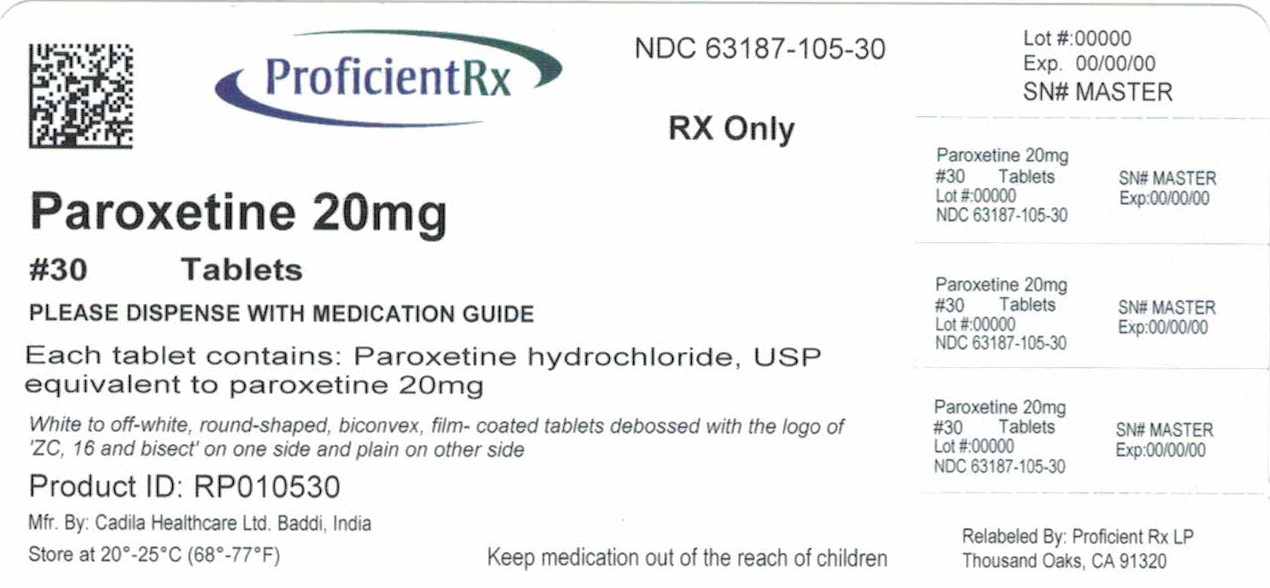
Paroxetine 20 mg Tablet, Film Coated, 30-count — NDC 63187-105-30 (Billing 63187-0105-30)
This is a package of 30 tablets of Paroxetine 20 mg Tablet, Film Coated from Proficient Rx LP, marketed since Apr 2007 and currently FDA-listed. It is the main listing for this product, which comes in 3 package sizes.
Identity & classification
Regulatory identifiers FDA, NLM and CMS codes for this package
- RxCUI (RxNorm): 1738483
Where does this data come from?
- FDA openFDA NDC Directory · synced Oct 1, 2026
- FDA label on DailyMed · label index refreshed Oct 1, 2026
- RxNorm (NLM RxNav) · catalog refreshed Oct 1, 2026
- Medi-Span GPI (licensed)
- First Databank (licensed) · refreshed Oct 1, 2026
RxNorm drug class
This medicine belongs to the Serotonin Reuptake Inhibitor class.
Where does this data come from?
- RxClass (NLM) · catalog refreshed Oct 1, 2026
Clinical
Paroxetine is used to treat depression, panic disorder (sudden, unexpected attacks of extreme fear and worry about these attacks), social anxiety disorder (extreme fear of interacting with others or performing in front of others that interferes with normal life), obsessive-compulsive disorder (bothersome thoughts that won't go away and the need to perform certain actions over and over), generalized anxiety disorder (GAD; excessive worrying that is difficult to control), and posttraumatic stress disorder (disturbing psychological symptoms that develop after a frightening experience). Paroxetine...
Read the full MedlinePlus article ↗- It depends on the product. Tablets and oral suspension treat depression, OCD, panic disorder, social anxiety, generalized anxiety, and PTSD in adults. Extended-release tablets trea...
- Take it once a day, usually in the morning, with or without food. The menopause capsule is taken at bedtime. Swallow extended-release tablets whole, and shake the suspension well....
- The most common are nausea, sleepiness, dry mouth, sweating, constipation or diarrhea, dizziness, trouble sleeping, and sexual side effects. Tell me or your doctor if they're bothe...
- Yes. Never combine it with MAOIs, thioridazine, or pimozide. Be careful with other serotonin-affecting drugs like triptans, tramadol, or St. John's Wort, and with aspirin, NSAIDs,...
Patient education
Supplement & herbal interactions
Some supplements/herbs that may interact with Paroxetine — tap one for details:
Paroxetine may be associated with lower levels of 1 nutrient — worth a chat with your pharmacist, not a cause for alarm.
Where does this data come from?
- MedlinePlus (NLM) · refreshed Oct 1, 2026
- FDA label on DailyMed · label index refreshed Oct 1, 2026
Ask a licensed pharmacist directly — free, answered by our team.
Pricing
A drug doesn't have one price. Each row is a different public payment system, and none is what you'd pay at the counter — that depends on your insurance. The ⓘ on each row explains what it measures.
| Price system | Per each | Per package |
|---|---|---|
| Retail pharmacies payNADAC · weekly | Not in the retail survey — common for institutional, discontinued, or low-volume packs. | |
| Medicaid paysCMS SDUD · 12 mo | No recent Medicaid claims on file for this NDC — rare and low-volume NDCs are suppressed in the public data. | |
| Medicare drug plans payPart D · Q2 2026 | $0.2824 | $8.47 / 30 tablets |
Where does this data come from?
- CMS NADAC weekly file
- CMS ASP pricing files · refreshed Sep 20, 2026
- CMS Medicaid State Drug Utilization Data · refreshed Oct 2, 2026
- CMS Part D plan pricing files · refreshed Sep 24, 2026
- VA National Acquisition Center price file
Packaging — all sizes for this product
| Package NDC | Description | Marketing start | Marketing end | Status |
|---|---|---|---|---|
| 63187-0105-30 You're viewing this Main listing | 30 TABLET, FILM COATED in 1 BOTTLE | 2015-02-02 | — | Active |
| 63187-0105-60 63187-105-60 | 60 TABLET, FILM COATED in 1 BOTTLE | 2015-02-02 | — | Active |
| 63187-0105-90 63187-105-90 | 90 TABLET, FILM COATED in 1 BOTTLE | 2015-02-02 | — | Active |
You're viewing the smallest of 3 pack sizes for this product.
Pack size FAQ
What quantity is in this package?
How does this package differ from NDC 63187-0105-60?
What NDC number is used to bill for this package of Paroxetine 20 mg Tablet, Film Coated?
Therapeutic equivalents
| Product | Labeler | Pack | NADAC/unit | TE | Status | Price vs. this |
|---|---|---|---|---|---|---|
| Paroxetine 20 mg 00378-7002-10 | Mylan | 1000 tablets | $0.061 | AB | Availability likely | — |
| Paroxetine 20 mg 00904-5677-61 | Major | 1 tablet | $0.061 | AB | Availability likely | — |
| Paroxetine 20 mg 16714-0182-01 | NorthStar | 30 tablets | $0.061 | AB | Availability likely | — |
| Paroxetine 20 mg 43547-0348-03 | Solco | 30 tablets | $0.061 | AB | Availability likely | — |
| Paroxetine 20 mg 60505-0083-01 | Apotex | 30 tablets | $0.061 | AB | Availability likely | — |
| Paroxetine 20 mg 62135-0542-90 | Chartwell | 90 tablets | $0.061 | AB | Availability likely | — |
| Paroxetine 20 mg 68084-0045-01 | American | 1 tablet | $0.061 | AB | Availability likely | — |
| Paroxetine 20 mg 68382-0098-01 | Zydus | 100 tablets | $0.061 | AB | Availability likely | — |
| paroxetine hydrochloride 20 mg 69584-0672-03 | Oxford | 30 tablets | $0.061 | AB | Availability likely | — |
| Paxil 20 mg 60505-4518-03 | Apotex | 30 tablets | $10.737 | AB | Availability likely | — |
| Paroxetine 20 mg 00615-7985-05 | NCS | 15 tablets | — | AB | FDA listed | — |
| Paroxetine 20 mg 13107-0155-01 | Aurolife | 100 tablets | — | AB | FDA listed | — |
| Paroxetine 20 mg 43353-0554-15 | Aphena | 15 tablets | — | AB | FDA listed | — |
| Paroxetine 20 mg 43353-0713-15 | Aphena | 15 tablets | — | AB | FDA listed | — |
| Paroxetine 20 mg 50090-0850-00 | A-S | 30 tablets | — | AB | FDA listed | — |
| Paroxetine 20 mg 55154-7999-00 | Cardinal | 10 tablets | — | AB | FDA listed | — |
| Paroxetine 20 mg 55289-0972-30 | PD-Rx | 30 tablets | — | AB | FDA listed | — |
| Paroxetine 20 mg 60429-0735-10 | Golden | 1000 tablets | — | AB | FDA listed | — |
| Paroxetine 20 mgthis 63187-0105-30 | Proficient | 30 tablets | — | AB | FDA listed | — |
| Paroxetine 20 mg 63187-0564-30 | Proficient | 30 tablets | — | AB | FDA listed | — |
| Paroxetine 20 mg 63187-0927-30 | Proficient | 30 tablets | — | AB | FDA listed | — |
| Paroxetine 20 mg 63629-1840-01 | Bryant | 30 tablets | — | AB | FDA listed | — |
| Paroxetine 20 mg 65841-0098-01 | Zydus | 100 tablets | — | AB | FDA listed | — |
| Paroxetine 20 mg 65862-0155-01 | Aurobindo | 100 tablets | — | AB | FDA listed | — |
| Paroxetine 20 mg 67544-0317-15 | Aphena | 15 tablets | — | AB | FDA listed | — |
| Paroxetine 20 mg 68071-2835-09 | NuCare | 90 tablets | — | AB | FDA listed | — |
| Paroxetine 20 mg 68788-8777-01 | Preferred | 100 tablets | — | AB | FDA listed | — |
| Paroxetine 20 mg 68788-9074-01 | Preferred | 100 tablets | — | AB | FDA listed | — |
| Paroxetine 20 mg 69117-0025-01 | Yiling | 30 tablets | — | AB | FDA listed | — |
| Paroxetine 20 mg 70518-2387-00 | REMEDYREPACK | 1 tablet | — | AB | Discontinued | — |
| Paroxetine 20 mg 70518-2871-00 | REMEDYREPACK | 1 tablet | — | AB | FDA listed | — |
| Paroxetine 20 mg 70518-3518-00 | REMEDYREPACK | 100 tablets | — | AB | FDA listed | — |
| Paroxetine 20 mg 76420-0717-01 | Asclemed | 100 tablets | — | AB | FDA listed | — |
| Paroxetine 20 mg 80425-0339-01 | Advanced | 30 tablets | — | AB | FDA listed | — |
Where does this data come from?
- FDA openFDA NDC Directory · synced Oct 1, 2026
- FDA Orange Book · refreshed Sep 3, 2026
- CMS NADAC weekly file
Availability & generic status
This product is an FDA-approved generic. Other versions of the same drug are listed under Therapeutic equivalents, least expensive first.
Where does this data come from?
- FDA Orange Book · refreshed Sep 3, 2026
What it looks like
Where does this data come from?
- FDA label on DailyMed · label index refreshed Oct 1, 2026
Inactive Ingredients / Excipients
Inactive ingredients, also called excipients, are components of the drug product other than the active ingredient. They may include fillers, dyes, coatings, preservatives, flavors, or other formulation ingredients.
💡 Tap an ingredient (hover on desktop) to see what it is and why it’s used.
-
UNII L11K75P92J
A mineral salt made from calcium and phosphate. It acts as a filler and binder in tablets to add bulk and help hold the medicine together in solid form.
-
UNII 3SY5LH9PMK
Anhydrous lactose is a milk sugar with no water content. It acts as a filler and binder in tablets and capsules, adding bulk and helping ingredients stick together.
-
UNII 3NXW29V3WO
Hypromellose is a plant-based thickener made from cellulose. It's used in medicines as a binder to hold ingredients together, a coating for tablets, and a thickener for liquids.
-
UNII 70097M6I30
Magnesium stearate is a salt made from magnesium and stearic acid, a fatty substance. It's used in tablets and capsules as a lubricant and glidant to help ingredients flow smoothly during manufacturing and prevent sticking.
-
UNII 30IQX730WE
Polyethylene glycol 6000 is a synthetic polymer made from ethylene glycol units. It acts as a binder, filler, and solubilizer in medicines to help hold ingredients together, add bulk, and improve how well active drugs dissolve and absorb.
-
UNII FZ989GH94E
Povidone is a synthetic polymer made from a plastic-like material. It acts as a binder to hold tablet ingredients together and as a disintegrant to help the tablet break apart in your stomach so the medicine can be absorbed.
-
UNII 5856J3G2A2
A starch-based powder made from potatoes and processed with sodium. It acts as a disintegrant, helping the tablet or capsule break apart quickly in the stomach so the medicine can be absorbed.
-
UNII 7SEV7J4R1U
A powder made from a naturally occurring mineral. In medicines, talc works as a glidant and anti-caking agent, helping tablets and capsules flow smoothly during manufacturing and preventing clumping.
-
UNII 15FIX9V2JP
Titanium dioxide is a bright white mineral powder commonly used as a colorant and opacifying agent. It makes pills and tablets white or lighter in color and helps make coatings non-transparent.
9 inactive ingredients listed in the exact product block matched to this NDC.
Where does this data come from?
ingredient classCode="IACT" elements from the exact product block matched by this NDC. Label-section narrative from DailyMed / the openFDA label index is shown separately when available.- FDA label on DailyMed · label index refreshed Oct 1, 2026
- FDA openFDA NDC Directory · synced Oct 1, 2026
Inactive ingredient FAQ
Are inactive ingredients the same for every manufacturer?
Why might an inactive ingredient be missing?
Can inactive ingredients matter?
Manufacturer & labeler
Where does this data come from?
- FDA openFDA NDC Directory · synced Oct 1, 2026
- Drugs@FDA
Full prescribing information FDA SPL
🚨 Boxed Warning ▾
Suicidality and Antidepressant Drugs Antidepressants increased the risk compared to placebo of suicidal thinking and behavior (suicidality) in children, adolescents, and young adults in short-term Studies of major depressive disorder (MDD) and other psychiatric disorders. Anyone considering the use of paroxetine tablets or any other antidepressant in a child, adolescent, or young adult must balance this risk with the clinical need. Short-term studies did not show an increase in the risk of suicidality with antidepressants compared to placebo in adults beyond age 24; there was a reduction in risk with antidepressants compared to placebo in adults aged 65 and older.
Depression and certain other psychiatric disorders are themselves associated with increases in the risk of suicide. Patients of all ages who are started on antidepressant therapy should be monitored appropriately and observed closely for clinical worsening, suicidality, or unusual changes in behavior. Families and caregivers should be advised of the need for close observation and communication with the prescriber.
Paroxetine tablets are not approved for use in pediatric patients (see WARNINGS: Clinical Worsening and Suicide Risk , PRECAUTIONS: Information for Patients , and PRECAUTIONS: Pediatric Use ).
🎯 Indications and Usage ▾
INDICATIONS AND USAGE Major Depressive Disorder: Paroxetine tablets, USP are indicated for the treatment of major depressive disorder. The efficacy of paroxetine tablets, USP in the treatment of a major depressive episode was established in 6-week controlled trials of outpatients whose diagnoses corresponded most closely to the DSM-III category of major depressive disorder (see CLINICAL PHARMACOLOGY —Clinical Trials ). A major depressive episode implies a prominent and relatively persistent depressed or dysphoric mood that usually interferes with daily functioning (nearly every day for at least 2 weeks); it should include at least 4 of the following 8 symptoms: Change in appetite, change in sleep, psychomotor agitation or retardation, loss of interest in usual activities or decrease in sexual drive, increased fatigue, feelings of guilt or worthlessness, slowed thinking or impaired concentration, and a suicide attempt or suicidal ideation.
The effects of paroxetine tablets, USP in hospitalized depressed patients have not been adequately studied. The efficacy of paroxetine tablets, USP in maintaining a response in major depressive disorder for up to 1 year was demonstrated in a placebo-controlled trial (see CLINICAL PHARMACOLOGY —Clinical Trials ). Nevertheless, the physician who elects to use paroxetine tablets, USP for extended periods should periodically re-evaluate the long-term usefulness of the drug for the individual patient.
Obsessive Compulsive Disorder: Paroxetine tablets, USP are indicated for the treatment of obsessions and compulsions in patients with obsessive compulsive disorder (OCD) as defined in the DSM-IV. The obsessions or compulsions cause marked distress, are time-consuming, or significantly interfere with social or occupational functioning. The efficacy of paroxetine tablets, USP were established in two 12-week trials with obsessive compulsive outpatients whose diagnoses corresponded most closely to the DSM-IIIR category of obsessive compulsive disorder (see CLINICAL PHARMACOLOGY —Clinical Trials ).
Obsessive compulsive disorder is characterized by recurrent and persistent ideas, thoughts, impulses, or images (obsessions) that are ego-dystonic and/or repetitive, purposeful, and intentional behaviors (compulsions) that are recognized by the person as excessive or unreasonable. Long-term maintenance of efficacy was demonstrated in a 6-month relapse prevention trial. In this trial, patients assigned to paroxetine showed a lower relapse rate compared to patients on placebo (see CLINICAL PHARMACOLOGY — Clinical Trials ).
Nevertheless, the physician who elects to use paroxetine tablets, USP for extended periods should periodically re-evaluate the long-term usefulness of the drug for the individual patient (see DOSAGE AND ADMINISTRATION ). Panic Disorder: Paroxetine tablets, USP are indicated for the treatment of panic disorder, with or without agoraphobia, as defined in DSM-IV. Panic disorder is characterized by the occurrence of unexpected panic attacks and associated concern about having additional attacks, worry about the implications or consequences of the attacks, and/or a significant change in behavior related to the attacks.
The efficacy of paroxetine tablets, USP were established in three 10- to 12-week trials in panic disorder patients whose diagnoses corresponded to the DSM-IIIR category of panic disorder (see CLINICAL PHARMACOLOGY —Clinical Trials ). Panic disorder (DSM-IV) is characterized by recurrent unexpected panic attacks, i.e., a discrete period of intense fear or discomfort in which 4 (or more) of the following symptoms develop abruptly and reach a peak within 10 minutes: (1) palpitations, pounding heart, or accelerated heart rate; (2) sweating; (3) trembling or shaking; (4) sensations of shortness of breath or smothering; (5) feeling of choking; (6) chest pain or discomfort; (7) nausea or abdominal distress; (8) feeling dizzy, unsteady, lightheaded, or faint; (9) derealization (feelings of un… [Excerpted — this section continues on DailyMed.]
⏱️ Dosage and Administration ▾
DOSAGE AND ADMINISTRATION Major Depressive Disorder: Usual Initial Dosage: Paroxetine tablets should be administered as a single daily dose with or without food, usually in the morning. The recommended initial dose is 20 mg/day. Patients were dosed in a range of 20 to 50 mg/day in the clinical trials demonstrating the effectiveness of paroxetine tablets in the treatment of major depressive disorder.
As with all drugs effective in the treatment of major depressive disorder, the full effect may be delayed. Some patients not responding to a 20-mg dose may benefit from dose increases, in 10-mg/day increments, up to a maximum of 50 mg/day. Dose changes should occur at intervals of at least 1 week.
Maintenance Therapy: There is no body of evidence available to answer the question of how long the patient treated with paroxetine tablets should remain on it. It is generally agreed that acute episodes of major depressive disorder require several months or longer of sustained pharmacologic therapy. Whether the dose needed to induce remission is identical to the dose needed to maintain and/or sustain euthymia is unknown.
Systematic evaluation of the efficacy of paroxetine tablets has shown that efficacy is maintained for periods of up to 1 year with doses that averaged about 30 mg. Obsessive Compulsive Disorder: Usual Initial Dosage: Paroxetine tablets should be administered as a single daily dose with or without food, usually in the morning. The recommended dose of paroxetine tablets in the treatment of OCD is 40 mg daily.
Patients should be started on 20 mg/day and the dose can be increased in 10-mg/day increments. Dose changes should occur at intervals of at least 1 week. Patients were dosed in a range of 20 to 60 mg/day in the clinical trials demonstrating the effectiveness of paroxetine tablets in the treatment of OCD.
The maximum dosage should not exceed 60 mg/day. Maintenance Therapy: Long-term maintenance of efficacy was demonstrated in a 6-month relapse prevention trial. In this trial, patients with OCD assigned to paroxetine demonstrated a lower relapse rate compared to patients on placebo (see CLINICAL PHARMACOLOGY — Clinical Trials ).
OCD is a chronic condition, and it is reasonable to consider continuation for a responding patient. Dosage adjustments should be made to maintain the patient on the lowest effective dosage, and patients should be periodically reassessed to determine the need for continued treatment. Panic Disorder: Usual Initial Dosage: Paroxetine tablets should be administered as a single daily dose with or without food, usually in the morning.
The target dose of paroxetine tablets in the treatment of panic disorder is 40 mg/day. Patients should be started on 10 mg/day. Dose changes should occur in 10-mg/day increments and at intervals of at least 1 week.
Patients were dosed in a range of 10 to 60 mg/day in the clinical trials demonstrating the effectiveness of paroxetine tablets. The maximum dosage should not exceed 60 mg/day. Maintenance Therapy: Long-term maintenance of efficacy was demonstrated in a 3-month relapse prevention trial.
In this trial, patients with panic disorder assigned to paroxetine demonstrated a lower relapse rate compared to patients on placebo (see CLINICAL PHARMACOLOGY — Clinical Trials ). Panic disorder is a chronic condition, and it is reasonable to consider continuation for a responding patient. Dosage adjustments should be made to maintain the patient on the lowest effective dosage, and patients should be periodically reassessed to determine the need for continued treatment.
Social Anxiety Disorder: Usual Initial Dosage: Paroxetine tablets should be administered as a single daily dose with or without food, usually in the morning. The recommended and initial dosage is 20 mg/day. In clinical trials the effectiveness of paroxetine tablets was demonstrated in patients dosed in a range of 20 to 60 mg/day.
While the safety of paroxetine tablets has been evaluated in patients with social an… [Excerpted — this section continues on DailyMed.]
⛔ Contraindications ▾
CONTRAINDICATIONS The use of MAOIs intended to treat psychiatric disorders with paroxetine tablets or within 14 days of stopping treatment with paroxetine tablets is contraindicated because of an increased risk of serotonin syndrome. The use of paroxetine tablets within 14 days of stopping an MAOI intended to treat psychiatric disorders is also contraindicated (see WARNINGS and DOSAGE AND ADMINISTRATION ). Starting paroxetine tablets in a patient who is being treated with MAOIs such as linezolid or intravenous methylene blue is also contraindicated because of an increased risk of serotonin syndrome (see WARNINGS and DOSAGE AND ADMINISTRATION ).
Concomitant use with thioridazine is contraindicated (see WARNINGS and PRECAUTIONS ). Concomitant use in patients taking pimozide is contraindicated (see PRECAUTIONS ). Paroxetine tablets are contraindicated in patients with a hypersensitivity to paroxetine or any of the inactive ingredients in paroxetine tablets.
⚠️ Warnings ▾
WARNINGS Clinical Worsening and Suicide Risk: Patients with major depressive disorder (MDD), both adult and pediatric, may experience worsening of their depression and/or the emergence of suicidal ideation and behavior (suicidality) or unusual changes in behavior, whether or not they are taking antidepressant medications, and this risk may persist until significant remission occurs. Suicide is a known risk of depression and certain other psychiatric disorders, and these disorders themselves are the strongest predictors of suicide.
There has been a long-standing concern, however, that antidepressants may have a role in inducing worsening of depression and the emergence of suicidality in certain patients during the early phases of treatment. Pooled analyses of short-term placebo-controlled trials of antidepressant drugs (SSRIs and others) showed that these drugs increase the risk of suicidal thinking and behavior (suicidality) in children,adolescents, and young adults (ages 18-24) with major depressive disorder (MDD) and other psychiatric disorders.
Short-term studies did not show an increase in the risk of suicidality with antidepressants compared to placebo in adults beyond age 24; there was a reduction with antidepressants compared to placebo in adults aged 65 and older. The pooled analyses of placebo-controlled trials in children and adolescents with MDD, obsessive compulsive disorder (OCD), or other psychiatric disorders included a total of 24 short-term trials of 9 antidepressant drugs in over 4,400 patients. The pooled analyses of placebo-controlled trials in adults with MDD or other psychiatric disorders included a total of 295 short-term trials (median duration of 2 months) of 11 antidepressant drugs in over 77,000 patients.
There was considerable variation in risk of suicidality among drugs, but a tendency toward an increase in the younger patients for almost all drugs studied. There were differences in absolute risk of suicidality across the different indications, with the highest incidence in MDD. The risk differences (drug vs placebo), however, were relatively stable within age strata and across indications.
These risk differences (drug-placebo difference in the number of cases of suicidality per 1,000 patients treated) are provided in Table 1. Table 1 Age Range Drug-Placebo Difference in Number of Cases of Suicidality per 1,000 Patients Treated Increases Compared to Placebo <18 14 additional cases 18-24 5 additional cases Decreases Compared to Placebo 25-64 1 fewer case ≥65 6 fewer cases No suicides occurred in any of the pediatric trials. There were suicides in the adult trials, but the number was not sufficient to reach any conclusion about drug effect on suicide.
It is unknown whether the suicidality risk extends to longer-term use, i.e., beyond several months. However, there is substantial evidence from placebo-controlled maintenance trials in adults with depression that the use of antidepressants can delay the recurrence of depression. All patients being treated with antidepressants for any indication should be monitored appropriately and observed closely for clinical worsening, suicidality, and unusual changes in behavior, especially during the initial few months of a course of drug therapy, or at times of dose changes, either increases or decreases.
The following symptoms, anxiety, agitation, panic attacks, insomnia, irritability, hostility, aggressiveness, impulsivity, akathisia (psychomotor restlessness), hypomania, and mania, have been reported in adult and pediatric patients being treated with antidepressants for major depressive disorder as well as for other indications, both psychiatric and nonpsychiatric. Although a causal link between the emergence of such symptoms and either the worsening of depression and/or the emergence of suicidal impulses has not been established, there is concern that such symptoms may represent precursors to emerging suicidality.
Consideration should be given to changing the… [Excerpted — this section continues on DailyMed.]
🤒 Adverse Reactions ▾
ADVERSE REACTIONS Associated with Discontinuation of Treatment: Twenty percent (1,199/6,145) of patients treated with paroxetine tablets in worldwide clinical trials in major depressive disorder and 16.1% (84/522), 11.8% (64/542), 9.4% (44/469), and 10.7% (79/735), and 11.7% (79/676) of patients treated with paroxetine tablets in worldwide trials in social anxiety disorder, OCD, panic disorder, and GAD, respectively, discontinued treatment due to an adverse event. The most common events (≥1%) associated with discontinuation and considered to be drug related (i.e., those events associated with dropout at a rate approximately twice or greater for paroxetine tablets compared to placebo) included the following: Major Depressive Disorder OCD Panic Disorder Social Anxiety Disorder Generalized Anxiety Disorder Paroxetine Tablets Placebo Paroxetine Tablets Placebo Paroxetine Tablets Placebo Paroxetine Tablets Placebo Paroxetine Tablets Placebo Where numbers are not provided the incidence of the adverse events in patients treated with paroxetine tablets were not >1% or were not greater than or equal to 2 times the incidence of placebo.
CNS Somnolence 2.3% 0.7% — 1.9% 0.3% 3.4% 0.3% 2.0% 0.2% Insomnia — — 1.7% 0% 1.3% 0.3% 3.1% 0% Agitation 1.1% 0.5% — Tremor 1.1% 0.3% — 1.7% 0% Anxiety — — — 1.1% 0% Dizziness — — 1.5% 0% 1.9% 0% 1.0% 0.2% Gastrointestinal Constipation — 1.1% 0% Nausea 3.2% 1.1% 1.9% 0% 3.2% 1.2% 4.0% 0.3% 2.0% 0.2% Diarrhea 1.0% 0.3% — Dry Mouth 1.0% 0.3% — Vomiting 1.0% 0.3% — 1.0% 0% Flatulence 1.0% 0.3% Other Asthenia 1.6% 0.4% 1.9% 0.4% 2.5% 0.6% 1.8% 0.2% Abnormal ejaculation Incidence corrected for gender. 1.6% 0% 2.1% 0% 4.9% 0.6% 2.5% 0.5% Sweating 1.0% 0.3% — 1.1% 0% 1.1% 0.2% Impotence — 1.5% 0% Libido Decreased 1.0% 0% Commonly Observed Adverse Events: Major Depressive Disorder: The most commonly observed adverse events associated with the use of paroxetine (incidence of 5% or greater and incidence for paroxetine tablets at least twice that for placebo, derived from Table 2 ) were: Asthenia, sweating, nausea, decreased appetite, somnolence, dizziness, insomnia, tremor, nervousness, ejaculatory disturbance, and other male genital disorders.
Obsessive Compulsive Disorder: The most commonly observed adverse events associated with the use of paroxetine (incidence of 5% or greater and incidence for paroxetine tablets at least twice that of placebo, derived from Table 3 ) were: Nausea, dry mouth, decreased appetite, constipation, dizziness, somnolence, tremor, sweating, impotence, and abnormal ejaculation. Panic Disorder: The most commonly observed adverse events associated with the use of paroxetine (incidence of 5% or greater and incidence for paroxetine tablets at least twice that for placebo, derived from Table 3 ) were: Asthenia, sweating, decreased appetite, libido decreased, tremor, abnormal ejaculation, female genital disorders, and impotence.
Social Anxiety Disorder: The most commonly observed adverse events associated with the use of paroxetine (incidence of 5% or greater and incidence for paroxetine tablets at least twice that for placebo, derived from Table 3 ) were: Sweating, nausea, dry mouth, constipation, decreased appetite, somnolence, tremor, libido decreased, yawn, abnormal ejaculation, female genital disorders, and impotence. Generalized Anxiety Disorder: The most commonly observed adverse events associated with the use of paroxetine (incidence of 5% or greater and incidence for paroxetine tablets at least twice that for placebo, derived from Table 4 ) were: Asthenia, infection, constipation, decreased appetite, dry mouth, nausea, libido decreased, somnolence, tremor, sweating, and abnormal ejaculation.
Incidence in Controlled Clinical Trials: The prescriber should be aware that the figures in the tables following cannot be used to predict the incidence of side effects in the course of usual medical practice where patient characteristics and other factors differ from those that prevailed in the… [Excerpted — this section continues on DailyMed.]
🔄 Drug Interactions ▾
Drug Interactions:
🤰 Pregnancy ▾
Pregnancy: Pregnancy Category D. see WARNINGS ─ Usage in Pregnancy : Teratogenic and Nonteratogenic Effects .
🧒 Pediatric Use ▾
Pediatric Use: Safety and effectiveness in the pediatric population have not been established (see BOX WARNING and WARNINGS — Clinical Worsening and Suicide Risk ). Three placebo-controlled trials in 752 pediatric patients with MDD have been conducted with paroxetine tablets, and the data were not sufficient to support a claim for use in pediatric patients. Anyone considering the use of paroxetine tablets in a child or adolescent must balance the potential risks with the clinical need.
Decreased appetite and weight loss have been observed in association with the use of SSRIs. Consequently, regular monitoring of weight and growth should be performed in children and adolescents treated with an SSRI such as paroxetine. In placebo-controlled clinical trials conducted with pediatric patients, the following adverse events were reported in at least 2% of pediatric patients treated with paroxetine tablets and occurred at a rate at least twice that for pediatric patients receiving placebo: emotional lability (including self-harm, suicidal thoughts, attempted suicide, crying, and mood fluctuations), hostility, decreased appetite, tremor, sweating, hyperkinesia, and agitation.
Events reported upon discontinuation of treatment with paroxetine tablets in the pediatric clinical trials that included a taper phase regimen, which occurred in at least 2% of patients who received paroxetine tablets and which occurred at a rate at least twice that of placebo, were: emotional lability (including suicidal ideation, suicide attempt, mood changes, and tearfulness), nervousness, dizziness, nausea, and abdominal pain (see DOSAGE AND ADMINISTRATION : Discontinuation of Treatment with Paroxetine Tablets ).
🆘 Overdosage ▾
OVERDOSAGE Human Experience: Since the introduction of paroxetine tablets in the United States, 342 spontaneous cases of deliberate or accidental overdosage during paroxetine treatment have been reported worldwide (circa 1999). These include overdoses with paroxetine alone and in combination with other substances. Of these, 48 cases were fatal and of the fatalities, 17 appeared to involve paroxetine alone.
Eight fatal cases that documented the amount of paroxetine ingested were generally confounded by the ingestion of other drugs or alcohol or the presence of significant comorbid conditions. Of 145 non-fatal cases with known outcome, most recovered without sequelae. The largest known ingestion involved 2,000 mg of paroxetine (33 times the maximum recommended daily dose) in a patient who recovered.
Commonly reported adverse events associated with paroxetine overdosage include somnolence, coma, nausea, tremor, tachycardia, confusion, vomiting, and dizziness. Other notable signs and symptoms observed with overdoses involving paroxetine (alone or with other substances) include mydriasis, convulsions (including status epilepticus), ventricular dysrhythmias (including torsade de pointes), hypertension, aggressive reactions, syncope, hypotension, stupor, bradycardia, dystonia, rhabdomyolysis, symptoms of hepatic dysfunction (including hepatic failure, hepatic necrosis, jaundice, hepatitis, and hepatic steatosis), serotonin syndrome, manic reactions, myoclonus, acute renal failure, and urinary retention.
Overdosage Management: No specific antidotes for paroxetine are known.Treatment should consist of those general measures employed in the management of overdosage with any drugs effective in the treatment of major depressive disorder. Ensure an adequate airway, oxygenation, and ventilation. Monitor cardiac rhythm and vital signs.
General supportive and symptomatic measures are also recommended. Induction of emesis is not recommended. Due to the large volume of distribution of this drug, forced diuresis, dialysis, hemoperfusion, or exchange transfusion are unlikely to be of benefit.
A specific caution involves patients who are taking or have recently taken paroxetine who might ingest excessive quantities of a tricyclic antidepressant. In such a case, accumulation of the parent tricyclic and/or an active metabolite may increase the possibility of clinically significant sequelae and extend the time needed for close medical observation (see PRECAUTIONS — Drugs Metabolized by Cytochrome CYP2D6 ). In managing overdosage, consider the possibility of multiple drug involvement.
The physician should consider contacting a poison control center for additional information on the treatment of any overdose. Telephone numbers for certified poison control centers are listed in the Physicians’ Desk Reference (PDR).
🧬 Clinical Pharmacology ▾
CLINICAL PHARMACOLOGY Pharmacodynamics: The efficacy of paroxetine in the treatment of major depressive disorder, social anxiety disorder, obsessive compulsive disorder (OCD), panic disorder (PD), and generalized anxiety disorder (GAD) is presumed to be linked to potentiation of serotonergic activity in the central nervous system resulting from inhibition of neuronal reuptake of serotonin (5-hydroxy-tryptamine, 5-HT). Studies at clinically relevant doses in humans have demonstrated that paroxetine blocks the uptake of serotonin into human platelets.
In vitro studies in animals also suggest that paroxetine is a potent and highly selective inhibitor of neuronal serotonin reuptake and has only very weak effects on norepinephrine and dopamine neuronal reuptake. In vitro radioligand binding studies indicate that paroxetine has little affinity for muscarinic, alpha 1 -, alpha 2 -, beta-adrenergic-, dopamine (D 2 )-, 5-HT 1 -, 5-HT 2 -, and histamine (H 1 )-receptors; antagonism of muscarinic, histaminergic, and alpha 1 -adrenergic receptors has been associated with various anticholinergic, sedative, and cardiovascular effects for other psychotropic drugs.
Because the relative potencies of paroxetine’s major metabolites are at most 1/50 of the parent compound, they are essentially inactive. Pharmacokinetics: Paroxetine hydrochloride is completely absorbed after oral dosing of a solution of the hydrochloride salt. The mean elimination half-life is approximately 21 hours (CV 32%) after oral dosing of paroxetine tablets, 30 mg daily for 30 days.
Paroxetine is extensively metabolized and the metabolites are considered to be inactive. Nonlinearity in pharmacokinetics is observed with increasing doses. Paroxetine metabolism is mediated in part by CYP2D6, and the metabolites are primarily excreted in the urine and to some extent in the feces.
Pharmacokinetic behavior of paroxetine has not been evaluated in subjects who are deficient in CYP2D6 (poor metabolizers). In a meta analysis of paroxetine from 4 studies done in healthy volunteers following multiple dosing of 20 mg/day to 40 mg/day, males did not exhibit a significantly lower C max or AUC than females. Absorption and Distribution: Paroxetine hydrochloride hemihydrate is completely absorbed after oral dosing of a solution of the hydrochloride salt.
In a study in which normal male subjects (n = 15) received 30 mg tablets daily for 30 days, steady-state paroxetine concentrations were achieved by approximately 10 days for most subjects, although it may take substantially longer in an occasional patient. At steady state, mean values of C max , T max , C min , and T ½ were 61.7 ng/mL (CV 45%), 5.2 hr. (CV 10%), 30.7 ng/mL (CV 67%), and 21.0 hours (CV 32%), respectively.
The steady-state C max and C min values were about 6 and 14 times what would be predicted from single-dose studies. Steady-state drug exposure based on AUC 0-24 was about 8 times greater than would have been predicted from single-dose data in these subjects. The excess accumulation is a consequence of the fact that 1 of the enzymes that metabolizes paroxetine is readily saturable.
The effects of food on the bioavailability of paroxetine were studied in subjects administered a single dose with and without food. AUC was only slightly increased (6%) when drug was administered with food but the C max was 29% greater, while the time to reach peak plasma concentration decreased from 6.4 hours post-dosing to 4.9 hours. Paroxetine distributes throughout the body, including the CNS, with only 1% remaining in the plasma.
Approximately 95% and 93% of paroxetine is bound to plasma protein at 100 ng/mL and 400 ng/mL, respectively. Under clinical conditions, paroxetine concentrations would normally be less than 400 ng/mL. Paroxetine does not alter the in vitro protein binding of phenytoin or warfarin.
Metabolism and Excretion: The mean elimination half-life is approximately 21 hours (CV 32%) after oral dosing of paroxetine tablets, 30 mg… [Excerpted — this section continues on DailyMed.]
📦 How Supplied / Storage and Handling ▾
HOW SUPPLIED Paroxetine Tablets USP, 10 mg are white to off-white, round-shaped, biconvex, film- coated tablets debossed with the logo of 'ZC, 15 and bisect' on one side and plain on other side, and are supplied as follows: NDC 63187-190-30 in bottles of 30 tablets NDC 63187-190-60 in bottles of 60 tablets NDC 63187-190-90 in bottles of 90 tablets Paroxetine Tablets USP, 20 mg are white to off-white, round-shaped, biconvex, film- coated tablets debossed with the logo of 'ZC, 16 and bisect' on one side and plain on other side, and are supplied as follows: NDC 63187-105-30 in bottles of 30 tablets NDC 63187-105-60 in bottles of 60 tablets NDC 63187-105-90 in bottles of 90 tablets Paroxetine Tablets USP, 40 mg are white to off-white, round-shaped, biconvex, film- coated tablets debossed with the logo of 'ZC18' on one side and plain on other side, and are supplied as follows: NDC 63187-434-30 in bottles of 30 tablets NDC 63187-434-60 in bottles of 60 tablets NDC 63187-434-90 in bottles of 90 tablets Storage Store at 20° to 25° C (68° to 77° F) [See USP Controlled Room Temperature].
Manufactured by: Cadila Healthcare Ltd. Ahmedabad, India Distributed by: Zydus Pharmaceuticals USA Inc. Pennington, NJ 08534 Rev.: 05/13 Revision Date: 2013/05/15 Repackaged by: Proficient Rx LP Thousand Oaks, CA 91320
📋 Description ▾
DESCRIPTION Paroxetine tablets, USP are an orally administered psychotropic drug. It is the hydrochloride salt of a phenylpiperidine compound identified chemically as (-)-trans - 4R -(4' - fluorophenyl)- 3S -[(3',4'-methylenedioxyphenoxy) methyl] piperidine hydrochloride hemihydrate and has the molecular formula of C 19 H 20 FNO 3 •HCl•1/2H 2 O. The molecular weight is 374.8 (329.4 as free base).
The structural formula of paroxetine hydrochloride hemihydrate is: Paroxetine hydrochloride, USP is an odorless, white to off-white crystalline powder, having a melting point range of 120° to 138°C. It is freely soluble in methanol, soluble in ethanol, sparingly soluble in dichloromethane and slightly soluble in water. Each paroxetine tablet, USP intended for oral administration contains paroxetine hydrochloride hemihydrate equivalent to 10 mg or 20 mg or 30 mg of paroxetine.
In addition, each tablet contains the following inactive ingredients: dibasic calcium phosphate anhydrous, hypromellose 6 cP, lactose anhydrous, magnesium stearate, polyethylene glycol 6000, povidone, sodium starch glycolate, talc, and titanium dioxide. Structured formula for Paroxetine
💬 Medication Guide ▾
Medication Guide Paroxetine Tablets, USP Read the Medication Guide that comes with paroxetine tablets before you start taking it and each time you get a refill. There may be new information. This Medication Guide does not take the place of talking to your healthcare provider about your medical condition or treatment.
Talk with your healthcare provider if there is something you do not understand or want to learn more about. What is the most important information I should know about paroxetine? Paroxetine and other antidepressant medicines may cause serious side effects, including: 1.
Suicidal thoughts or actions: • Paroxetine and other antidepressant medicines may increase suicidal thoughts or actions in some children, teenagers, or young adults within the first few months of treatment or when the dose is changed . • Depression or other serious mental illnesses are the most important causes of suicidal thoughts or actions. • Watch for these changes and call your healthcare provider right away if you notice: • New or sudden changes in mood, behavior, actions, thoughts, or feelings, especially if severe. • Pay particular attention to such changes when paroxetine is started or when the dose is changed.
Keep all follow-up visits with your healthcare provider and call between visits if you are worried about symptoms. Call your healthcare provider right away if you have any of the following symptoms, or call 911 if an emergency, especially if they are new, worse, or worry you: • attempts to commit suicide • acting on dangerous impulses • acting aggressive or violent • thoughts about suicide or dying • new or worse depression • new or worse anxiety or panic attacks • feeling agitated, restless, angry, or irritable • trouble sleeping • an increase in activity or talking more than what is normal for you • other unusual changes in behavior or mood Call your healthcare provider right away if you have any of the following symptoms, or call 911 if an emergency.
Paroxetine may be associated with these serious side effects: 2. Serotonin Syndrome or Neuroleptic Malignant Syndrome-like reactions. This condition can be life-threatening and may include: • agitation, hallucinations, coma, or other changes in mental status • coordination problems or muscle twitching (overactive reflexes) • racing heartbeat, high or low blood pressure • sweating or fever • nausea, vomiting, or diarrhea • muscle rigidity 3.
Severe allergic reactions: • trouble breathing • swelling of the face, tongue, eyes, or mouth • rash, itchy welts (hives), or blisters, alone or with fever or joint pain 4. Abnormal bleeding: Paroxetine and other antidepressant medicines may increase your risk of bleeding or bruising, especially if you take the blood thinner warfarin (Coumadin ®* , Jantoven ®* ), a non-steroidal antiinflammatory drug (NSAIDs, like ibuprofen or naproxen), or aspirin. 5.Seizures or convulsions 6.
Manic episodes: • greatly increased energy • severe trouble sleeping • racing thoughts • reckless behavior • unusually grand ideas • excessive happiness or irritability • talking more or faster than usual 7. Changes in appetite or weight. Children and adolescents should have height and weight monitored during treatment.
8. Low salt (sodium) levels in the blood. Elderly people may be at greater risk for this.
Symptoms may include: • headache • weakness or feeling unsteady • confusion, problems concentrating or thinking, or memory problems Do not stop paroxetine without first talking to your healthcare provider. Stopping paroxetine too quickly may cause serious symptoms including: • anxiety, irritability, high or low mood, feeling restless, or changes in sleep habits • headache, sweating, nausea, dizziness • electric shock-like sensations, shaking, confusion What is paroxetine ? Paroxetine is a prescription medicine used to treat depression .
It is important to talk with your healthcare provider about the risks of treating depression and also the risks of not treating it. You… [Excerpted — this section continues on DailyMed.]
⚠️ Precautions ▾
PRECAUTIONS General: Activation of Mania Hypomania During premarketing testing, hypomania or mania occurred in approximately 1.0% of unipolar patients treated with paroxetine tablets compared to 1.1% of active-control and 0.3% of placebo-treated unipolar patients. In a subset of patients classified as bipolar, the rate of manic episodes was 2.2% for paroxetine tablets and 11.6% for the combined active-control groups. As with all drugs effective in the treatment of major depressive disorder, paroxetine tablets should be used cautiously in patients with a history of mania.
Seizures: During premarketing testing, seizures occurred in 0.1% of patients treated with paroxetine tablets, a rate similar to that associated with other drugs effective in the treatment of major depressive disorder. Paroxetine tablets should be used cautiously in patients with a history of seizures. It should be discontinued in any patient who develops seizures.
Discontinuation of Treatment with Paroxetine Tablets: Recent clinical trials supporting the various approved indications for paroxetine tablets employed a taper-phase regimen, rather than an abrupt discontinuation of treatment. The taper-phase regimen used in GAD clinical trials involved an incremental decrease in the daily dose by 10 mg/day at weekly intervals. When a daily dose of 20 mg/day was reached, patients were continued on this dose for 1 week before treatment was stopped.
With this regimen in those studies, the following adverse events were reported at an incidence of 2% or greater for paroxetine tablets and were at least twice that reported for placebo: Abnormal dreams, paresthesia, and dizziness. In the majority of patients, these events were mild to moderate and were self limiting and did not require medical intervention. During marketing of paroxetine tablets and other SSRIs and SNRIs, there have been spontaneous reports of adverse events occurring upon the discontinuation of these drugs (particularly when abrupt), including the following: Dysphoric mood, irritability, agitation, dizziness, sensory disturbances (e.g., paresthesias such as electric shock sensations and tinnitus), anxiety, confusion, headache, lethargy, emotional lability, insomnia, and hypomania.
While these events are generally selflimiting, there have been reports of serious discontinuation symptoms. Patients should be monitored for these symptoms when discontinuing treatment with paroxetine tablets. A gradual reduction in the dose rather than abrupt cessation is recommended whenever possible.
If intolerable symptoms occur following a decrease in the dose or upon discontinuation of treatment, then resuming the previously prescribed dose may be considered. Subsequently, the physician may continue decreasing the dose but at a more gradual rate (see DOSAGE AND ADMINISTRATION ). See also PRECAUTIONS— Pediatric Use , for adverse events reported upon discontinuation of treatment with paroxetine tablets in pediatric patients.
Tamoxifen: Some studies have shown that the efficacy of tamoxifen, as measured by the risk of breast cancer relapse/mortality, may be reduced when co-prescribed with paroxetine as a result of paroxetine’s irreversible inhibition of CYP2D6 (see DRUG INTERACTIONS ). However, other studies have failed to demonstrate such a risk. It is uncertain whether the coadministration of paroxetine and tamoxifen has a significant adverse effect on the efficacy of tamoxifen.
One study suggests that the risk may increase with longer duration of coadministration. When tamoxifen is used for the treatment or prevention of breast cancer, prescribers should consider using an alternative antidepressant with little or no CYP2D6 inhibition. Akathisia: The use of paroxetine or other SSRIs has been associated with the development of akathisia, which is characterized by an inner sense of restlessness and psychomotor agitation such as an inability to sit or stand still usually associated with subjective distress.
This is most likely… [Excerpted — this section continues on DailyMed.]
🍼 Nursing Mothers ▾
Nursing Mothers: Like many other drugs, paroxetine is secreted in human milk, and caution should be exercised when paroxetine tablets are administered to a nursing woman.
🧬 Pharmacokinetics ▾
Pharmacokinetics: Paroxetine hydrochloride is completely absorbed after oral dosing of a solution of the hydrochloride salt. The mean elimination half-life is approximately 21 hours (CV 32%) after oral dosing of paroxetine tablets, 30 mg daily for 30 days. Paroxetine is extensively metabolized and the metabolites are considered to be inactive.
Nonlinearity in pharmacokinetics is observed with increasing doses. Paroxetine metabolism is mediated in part by CYP2D6, and the metabolites are primarily excreted in the urine and to some extent in the feces. Pharmacokinetic behavior of paroxetine has not been evaluated in subjects who are deficient in CYP2D6 (poor metabolizers).
In a meta analysis of paroxetine from 4 studies done in healthy volunteers following multiple dosing of 20 mg/day to 40 mg/day, males did not exhibit a significantly lower C max or AUC than females.
🧬 Pharmacodynamics ▾
Pharmacodynamics: The efficacy of paroxetine in the treatment of major depressive disorder, social anxiety disorder, obsessive compulsive disorder (OCD), panic disorder (PD), and generalized anxiety disorder (GAD) is presumed to be linked to potentiation of serotonergic activity in the central nervous system resulting from inhibition of neuronal reuptake of serotonin (5-hydroxy-tryptamine, 5-HT). Studies at clinically relevant doses in humans have demonstrated that paroxetine blocks the uptake of serotonin into human platelets.
In vitro studies in animals also suggest that paroxetine is a potent and highly selective inhibitor of neuronal serotonin reuptake and has only very weak effects on norepinephrine and dopamine neuronal reuptake. In vitro radioligand binding studies indicate that paroxetine has little affinity for muscarinic, alpha 1 -, alpha 2 -, beta-adrenergic-, dopamine (D 2 )-, 5-HT 1 -, 5-HT 2 -, and histamine (H 1 )-receptors; antagonism of muscarinic, histaminergic, and alpha 1 -adrenergic receptors has been associated with various anticholinergic, sedative, and cardiovascular effects for other psychotropic drugs.
Because the relative potencies of paroxetine’s major metabolites are at most 1/50 of the parent compound, they are essentially inactive.
🔒 Drug Abuse and Dependence ▾
DRUG ABUSE AND DEPENDENCE Controlled Substance Class: Paroxetine tablets are not controlled substance. Physical and Psychologic Dependence: Paroxetine tablets have not been systematically studied in animals or humans for its potential for abuse, tolerance or physical dependence. While the clinical trials did not reveal any tendency for any drug-seeking behavior, these observations were not systematic and it is not possible to predict on the basis of this limited experience the extent to which a CNS-active drug will be misused, diverted, and/or abused once marketed.
Consequently, patients should be evaluated carefully for history of drug abuse, and such patients should be observed closely for signs of misuse or abuse of paroxetine tablets (e.g., development of tolerance, incrementations of dose, drug-seeking behavior).
📄 Package Label / Principal Display Panel ▾
PACKAGE LABEL.PRINCIPAL DISPLAY PANEL NDC 63187-190-90 in pack count of 90 tablets Paroxetine Tablets USP, 10 mg R x only 90 tablets 63187-190-30
Package/Label Display Panel 63187-434-30
Package/Label Display Panel 20 MG Bottle of 30 63187-105-30
About this NDC listing & data coverage
What data is (and isn’t) available for this NDC — tap to expand
| NDC identity (package / product / labeler codes) | ✓ Available |
| Labeler | ✓ Available |
| Product & package description | ✓ Available |
| Marketing category & status | ✓ Available |
| Active ingredient / dosage form / route | ✓ Available |
| FDA label (SPL via DailyMed) | ✓ Available |
| Package photos | ✓ Available |
| Inactive ingredients (structured) | ✓ Available |
| NADAC pharmacy acquisition price (CMS) | — Not published for this NDC CMS publishes NADAC only for NDCs reported in its retail-pharmacy survey. |
| Orange Book / therapeutic-equivalence data | ✓ Available |
| HCPCS J-code billing crosswalk | — Not published for this NDC Most self-administered / retail products have no J-code — that is normal. |
| Medicaid utilization (CMS SDUD) | — Not published for this NDC CMS reports utilization only for NDCs with Medicaid claims above its privacy threshold. |