
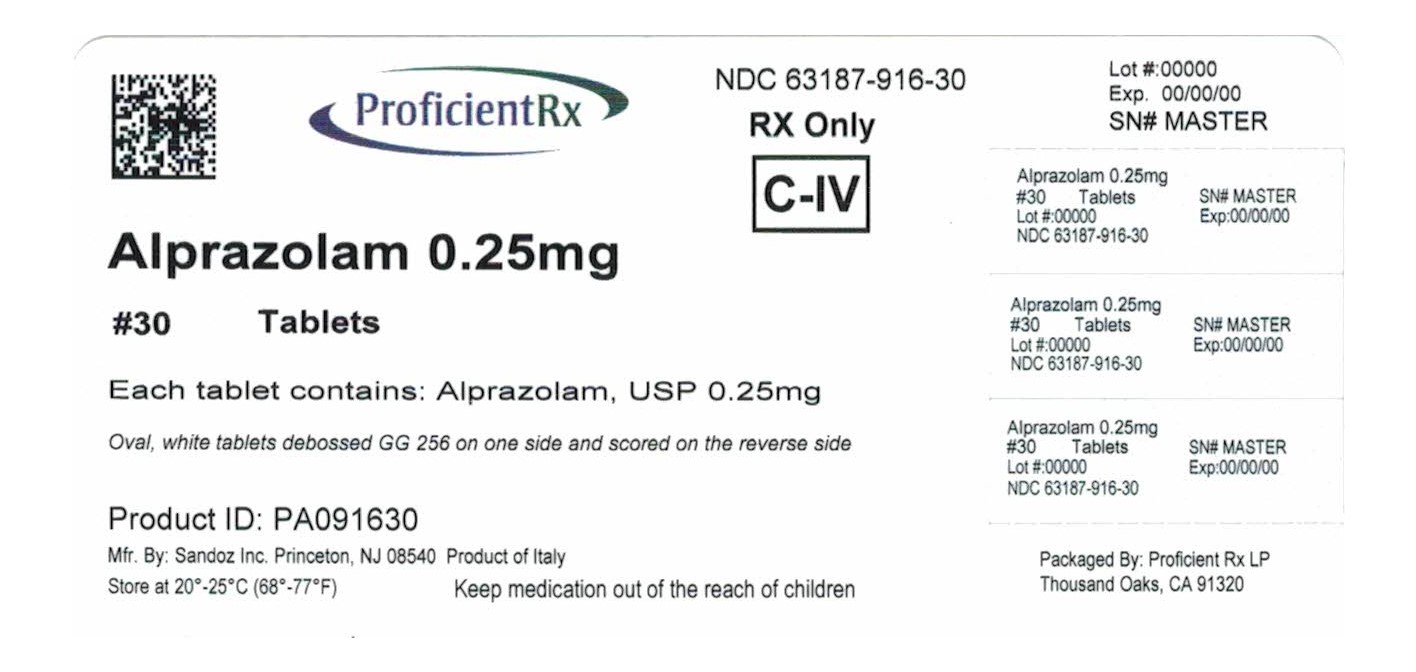
Alprazolam .25 mg Tablet, 60-count — NDC 63187-916-60 (Billing 63187-0916-60)
This is a package of 60 tablets of Alprazolam .25 mg Tablet from Proficient Rx LP, marketed since Dec 1995 and currently FDA-listed.
NDC database record
One package, one record: these facts belong to NDC 63187-916-60 alone.
- Record
- FDA NDC Directory package listing · Human prescription drug
- Code segments
- 63187 labeler · 916 product · 60 package
- Package marketed since
- Sep 1, 2017
- Sample package
- No — commercial package
- Listing certified through
- Dec 31, 2027
- Barcode (UPC-A, from the NDC)
- 3 6318791660 2
- FDA record last changed
- Oct 8, 2026
Other active recalls for Alprazolam (different manufacturers) — 1 · tap to view
Identity & classification
Regulatory identifiers FDA, NLM and CMS codes for this package
Drug-database identifiers Medi-Span GPI and First Databank GCN / HICL / AHFS classification
- GSN (GCN sequence number): 003773
- GCN: 14260
- GPI-14 (Medi-Span): 57100010000305
- HICL (First Databank): 001617
- AHFS class code: 28:24.08.00
- RxCUI (RxNorm): 308047
Where does this data come from?
- FDA openFDA NDC Directory · synced Oct 8, 2026
- FDA label on DailyMed · label index refreshed Oct 8, 2026
- RxNorm (NLM RxNav) · catalog refreshed Oct 1, 2026
- Medi-Span GPI (licensed)
- First Databank (licensed) · refreshed Oct 8, 2026
RxNorm drug class
This medicine belongs to the Benzodiazepine class.
Where does this data come from?
- RxClass (NLM) · catalog refreshed Oct 1, 2026
Clinical
Alprazolam is used to treat anxiety disorders and panic disorder (sudden, unexpected attacks of extreme fear and worry about these attacks). Alprazolam is in a class of medications called benzodiazepines. It works by decreasing abnormal excitement in the brain.
Read the full MedlinePlus article ↗- It treats generalized anxiety disorder and panic disorder in adults. Some forms, like the extended-release tablets, are only for panic disorder. Your pharmacy label will show which...
- Please don't stop suddenly. Quitting abruptly or cutting down too fast can cause withdrawal, including seizures. Your prescriber will give you a slow taper plan.
- It's best to avoid alcohol. Opioid pain medicines are especially risky, since the combination can slow your breathing and can be fatal. Always tell your prescriber and pharmacist a...
- Can I have a drink or take my pain medicine with it?
Patient education
Supplement & herbal interactions
Some supplements/herbs that may interact with Alprazolam — tap one for details:
Where does this data come from?
- MedlinePlus (NLM) · refreshed Oct 8, 2026
- FDA label on DailyMed · label index refreshed Oct 8, 2026
Ask a licensed pharmacist directly — free, answered by our team.
Pricing
A drug doesn't have one price. Each row is a different public payment system, and none is what you'd pay at the counter — that depends on your insurance. The ⓘ on each row explains what it measures.
| Price system | Per each | Per package |
|---|---|---|
| Retail pharmacies payNADAC · weekly | Not in the retail survey — common for institutional, discontinued, or low-volume packs. | |
| Medicaid paysCMS SDUD · 12 mo | No recent Medicaid claims on file for this NDC — rare and low-volume NDCs are suppressed in the public data. | |
| Medicare drug plans payPart D · Q2 2026 | $0.1302 | $7.81 / 60 tablets |
Where does this data come from?
- CMS NADAC weekly file
- CMS ASP pricing files · refreshed Sep 20, 2026
- CMS Medicaid State Drug Utilization Data · refreshed Oct 8, 2026
- CMS Part D plan pricing files · refreshed Sep 24, 2026
- VA National Acquisition Center price file
Packaging — all sizes for this product
| Package NDC | Description | Marketing start | Marketing end | Status |
|---|---|---|---|---|
| 63187-0916-30 63187-916-30 Main listing | 60 TABLET in 1 BOTTLE | 2017-09-01 | — | Active |
| 63187-0916-60 You're viewing this | 60 TABLET in 1 BOTTLE | 2017-09-01 | — | Active |
| 63187-0916-90 63187-916-90 | 90 TABLET in 1 BOTTLE | 2017-09-01 | — | Active |
Pack size FAQ
What quantity is in this package?
How does this package differ from NDC 63187-0916-30?
What NDC number is used to bill for this package of Alprazolam .25 mg Tablet?
Therapeutic equivalents
| Product | Labeler | Pack | NADAC/unit | TE | Status | Price vs. this |
|---|---|---|---|---|---|---|
| Alprazolam .25 mg 00228-2027-10 | Actavis | 100 tablets | $0.024 | AB | Availability likely | — |
| Alprazolam .25 mg 00781-1061-01 | Sandoz | 100 tablets | $0.024 | AB | Availability likely | — |
| Alprazolam .25 mg 50268-0033-15 | AvPAK | 50 tablets | $0.024 | AB | Availability likely | — |
| Alprazolam .25 mg 59762-3719-01 | Mylan | 100 tablets | $0.024 | AB | Availability likely | — |
| Alprazolam .25 mg 60687-0377-01 | American | 100 tablets | $0.024 | AB | Availability likely | — |
| Alprazolam .25 mg 65862-0676-01 | Aurobindo | 100 tablets | $0.024 | — | Availability likely | — |
| Xanax .25 mg 58151-0452-01 | Viatris | 100 tablets | $5.629 | AB | Availability likely | — |
| Xanax .25 mg 00009-0029-01 | PHARMACIA | 100 tablets | $5.632 | AB | Availability likely | — |
| Alprazolam .25 mgthis 63187-0916-60 | Proficient | 60 tablets | — | AB | FDA listed | — |
| Alprazolam .25 mg 67544-0414-15 | Aphena | 15 tablets | — | AB | FDA listed | — |
| Alprazolam .25 mg 68071-2292-01 | NuCare | 10 tablets | — | AB | FDA listed | — |
| Alprazolam .25 mg 68071-3481-06 | NuCare | 6 tablets | — | AB | FDA listed | — |
| Alprazolam .25 mg 68071-3817-01 | NuCare | 1000 tablets | — | AB | FDA listed | — |
| Alprazolam .25 mg 68788-8414-02 | Preferred | 20 tablets | — | AB | FDA listed | — |
| Alprazolam .25 mg 69339-0199-01 | Natco | 100 tablets | — | AB | FDA listed | — |
| Alprazolam .25 mg 70954-0508-10 | ANI | 100 tablets | — | AB | FDA listed | — |
| Alprazolam .25 mg 71335-2133-00 | Bryant | 10 tablets | — | AB | FDA listed | — |
| Alprazolam .25 mg 71335-9667-00 | Bryant | 10 tablets | — | AB | FDA listed | — |
| Alprazolam .25 mg 71610-0112-30 | Aphena | 30 tablets | — | AB | FDA listed | — |
| Alprazolam .25 mg 71610-0696-15 | Aphena | 15 tablets | — | AB | FDA listed | — |
| Alprazolam .25 mg 72789-0151-06 | PD-Rx | 6 tablets | — | AB | FDA listed | — |
| Alprazolam .25 mg 76420-0664-01 | Asclemed | 100 tablets | — | AB | FDA listed | — |
| Alprazolam .25 mg 82804-0027-30 | Proficient | 30 tablets | — | AB | FDA listed | — |
| Alprazolam .25 mg 82804-0271-30 | Proficient | 30 tablets | — | AB | FDA listed | — |
| Alprazolam .25 mg 82868-0061-30 | Northwind | 30 tablets | — | AB | FDA listed | — |
| Alprazolam .25 mg 87063-0171-01 | ASCLEMED | 100 tablets | — | AB | FDA listed | — |
| Alprazolam .25 mg 58118-0676-08 | Clinical | 30 tablets | — | AB | FDA listed | — |
Where does this data come from?
- FDA openFDA NDC Directory · synced Oct 8, 2026
- FDA Orange Book · refreshed Oct 3, 2026
- CMS NADAC weekly file
Availability & generic status
This product is an FDA-approved generic. Other versions of the same drug are listed under Therapeutic equivalents, least expensive first.
Where does this data come from?
- FDA Orange Book · refreshed Oct 3, 2026
What it looks like
Where does this data come from?
- FDA label on DailyMed · label index refreshed Oct 8, 2026
Inactive Ingredients / Excipients
Inactive ingredients, also called excipients, are components of the drug product other than the active ingredient. They may include fillers, dyes, coatings, preservatives, flavors, or other formulation ingredients.
🧪 Avoiding an ingredient? See Alprazolam inactive ingredients by manufacturer: every current product's list side by side, so you can ask your pharmacy for the version that does not list it.
💡 Tap an ingredient (hover on desktop) to see what it is and why it’s used.
-
UNII F05Q2T2JA0
Docusate sodium is a stool softener compound that helps medicines dissolve and move through the digestive tract. It acts as a surfactant, reducing surface tension in the intestines, and also serves as a wetting agent in tablet formulations.
-
UNII EWQ57Q8I5X
Lactose monohydrate is a natural sugar derived from milk. It serves as a filler and binder in tablets and capsules, helping create the proper size, texture, and consistency of the medicine.
-
UNII 70097M6I30
Magnesium stearate is a salt made from magnesium and stearic acid, a fatty substance. It's used in tablets and capsules as a lubricant and glidant to help ingredients flow smoothly during manufacturing and prevent sticking.
-
UNII OP1R32D61U
Microcrystalline cellulose is a purified form of cellulose, a natural fiber from plant sources. It acts as a binder and filler in tablets and capsules, helping hold ingredients together and give the medicine its shape and size.
-
UNII OJ245FE5EU
Sodium benzoate is a salt derived from benzoic acid, a preservative. It's added to medicines to prevent growth of bacteria, fungi, and other microorganisms that could spoil the product.
-
UNII O8232NY3SJ
A plant-based carbohydrate derived from corn kernels. It acts as a filler to add bulk, a binder to hold ingredients together, and a disintegrant to help the tablet break apart in your stomach for absorption.
6 inactive ingredients listed in the exact product block matched to this NDC.
Where does this data come from?
ingredient classCode="IACT" elements from the exact product block matched by this NDC. Label-section narrative from DailyMed / the openFDA label index is shown separately when available.- FDA label on DailyMed · label index refreshed Oct 8, 2026
- FDA openFDA NDC Directory · synced Oct 8, 2026
Inactive ingredient FAQ
Are inactive ingredients the same for every manufacturer?
Why might an inactive ingredient be missing?
Can inactive ingredients matter?
Manufacturer & labeler
More NDCs from Proficient Rx LP labeler code 63187
- Famotidine 40 mg Tablet NDC 63187-908-30
- Gabapentin 400 mg Capsule NDC 63187-909-00
- Tizanidine 2 mg Tablet NDC 63187-910-30
- Sprintec Norgestimate and Ethinyl Estradiol Kit NDC 63187-911-28
- Amlodipine Besylate 10 mg Tablet NDC 63187-914-30
- Ramipril 2.5 mg Capsule NDC 63187-915-30
- Losartan Potassium and Hydrochlorothiazide 100 mg; 12.5 mg Tablet, Film Coated NDC 63187-918-30
- Fexofenadine HCl 180 mg Tablet, Film Coated NDC 63187-921-20
- Penicillin V Potassium 500 mg Tablet, Film Coated NDC 63187-926-20
- Paroxetine 20 mg Tablet, Film Coated NDC 63187-927-30
- benzonatate 100 mg Capsule NDC 63187-928-10
- venlafaxine 75 mg Tablet NDC 63187-929-30
Where does this data come from?
- FDA openFDA NDC Directory · synced Oct 8, 2026
- Drugs@FDA
Full prescribing information FDA SPL
🎯 Indications and Usage ▾
INDICATIONS AND USAGE Anxiety Disorders Alprazolam tablets are indicated for the management of anxiety disorder (a condition corresponding most closely to the APA Diagnostic and Statistical Manual [DSM-III-R] diagnosis of generalized anxiety disorder) or the short-term relief of symptoms of anxiety. Anxiety or tension associated with the stress of everyday life usually does not require treatment with an anxiolytic. Generalized anxiety disorder is characterized by unrealistic or excessive anxiety and worry (apprehensive expectation) about two or more life circumstances, for a period of six months or longer, during which the person has been bothered more days than not by these concerns.
At least 6 of the following 18 symptoms are often present in these patients: Motor Tension (trembling, twitching, or feeling shaky; muscle tension, aches, or soreness; restlessness; easy fatigability); Autonomic Hyperactivity (shortness of breath or smothering sensations; palpitations or accelerated heart rate; sweating, or cold clammy hands; dry mouth; dizziness or light-headedness; nausea, diarrhea, or other abdominal distress; flushes or chills; frequent urination; trouble swallowing or ‘lump in throat’); Vigilance and Scanning (feeling keyed up or on edge; exaggerated startle response; difficulty concentrating or ‘mind going blank’ because of anxiety; trouble falling or staying asleep; irritability).
These symptoms must not be secondary to another psychiatric disorder or caused by some organic factor. Anxiety associated with depression is responsive to alprazolam. Panic Disorder Alprazolam is also indicated for the treatment of panic disorder, with or without agoraphobia.
Studies supporting this claim were conducted in patients whose diagnoses corresponded closely to the DSM-III-R/IV criteria for panic disorder (see CLINICAL STUDIES ). Panic disorder (DSM-IV) is characterized by recurrent unexpected panic attacks, ie, a discrete period of intense fear or discomfort in which four (or more) of the following symptoms develop abruptly and reach a peak within 10 minutes: (1) palpitations, pounding heart, or accelerated heart rate; (2) sweating; (3) trembling or shaking; (4) sensations of shortness of breath or smothering; (5) feeling of choking; (6) chest pain or discomfort; (7) nausea or abdominal distress; (8) feeling dizzy, unsteady, lightheaded, or faint; (9) derealization (feelings of unreality) or depersonalization (being detached from oneself); (10) fear of losing control; (11) fear of dying; (12) paresthesias (numbness or tingling sensations); (13) chills or hot flushes.
Demonstrations of the effectiveness of alprazolam by systematic clinical study are limited to 4 months duration for anxiety disorder and 4 to 10 weeks duration for panic disorder; however, patients with panic disorder have been treated on an open basis for up to 8 months without apparent loss of benefit. The physician should periodically reassess the usefulness of the drug for the individual patient.
⏱️ Dosage and Administration ▾
DOSAGE AND ADMINISTRATION Dosage should be individualized for maximum beneficial effect. While the usual daily dosages given below will meet the needs of most patients, there will be some who require doses greater than 4 mg/day. In such cases, dosage should be increased cautiously to avoid adverse effects.
Anxiety Disorders and Transient Symptoms of Anxiety Treatment for patients with anxiety should be initiated with a dose of 0.25 to 0.5 mg given three times daily. The dose may be increased to achieve a maximum therapeutic effect, at intervals of 3 to 4 days, to a maximum daily dose of 4 mg, given in divided doses. The lowest possible effective dose should be employed and the need for continued treatment reassessed frequently.
The risk of dependence may increase with dose and duration of treatment. In all patients, dosage should be reduced gradually when discontinuing therapy or when decreasing the daily dosage. Although there are no systematically collected data to support a specific discontinuation schedule, it is suggested that the daily dosage be decreased by no more than 0.5 mg every three days.
Some patients may require an even slower dosage reduction. Panic Disorder The successful treatment of many panic disorder patients has required the use of alprazolam at doses greater than 4 mg daily. In controlled trials conducted to establish the efficacy of alprazolam in panic disorder, doses in the range of 1 to 10 mg daily were used.
The mean dosage employed was approximately 5 to 6 mg daily. Among the approximately 1700 patients participating in the panic disorder development program, about 300 received alprazolam in dosages of greater than 7 mg/day, including approximately 100 patients who received maximum dosages of greater than 9 mg/day. Occasional patients required as much as 10 mg a day to achieve a successful response.
Dose Titration Treatment may be initiated with a dose of 0.5 mg three times daily. Depending on the response, the dose may be increased at intervals of 3 to 4 days in increments of no more than 1 mg per day. Slower titration to the dose levels greater than 4 mg/day may be advisable to allow full expression of the pharmacodynamic effect of alprazolam.
To lessen the possibility of interdose symptoms, the times of administration should be distributed as evenly as possible throughout the waking hours, that is, on a three or four times per day schedule. Generally, therapy should be initiated at a low dose to minimize the risk of adverse responses in patients especially sensitive to the drug. Dose should be advanced until an acceptable therapeutic response (ie, a substantial reduction in or total elimination of panic attacks) is achieved, intolerance occurs, or the maximum recommended dose is attained.
Dose Maintenance For patients receiving doses greater than 4 mg/day, periodic reassessment and consideration of dosage reduction is advised. In a controlled postmarketing dose-response study, patients treated with doses of alprazolam greater than 4 mg/day for 3 months were able to taper to 50% of their total maintenance dose without apparent loss of clinical benefit. Because of the danger of withdrawal, abrupt discontinuation of treatment should be avoided.
(See WARNINGS , PRECAUTIONS , DRUG ABUSE AND DEPENDENCE .) The necessary duration of treatment for panic disorder patients responding to alprazolam is unknown. After a period of extended freedom from attacks, a carefully supervised tapered discontinuation may be attempted, but there is evidence that this may often be difficult to accomplish without recurrence of symptoms and/or the manifestation of withdrawal phenomena. Dose Reduction Because of the danger of withdrawal, abrupt discontinuation of treatment should be avoided (see WARNINGS , PRECAUTIONS , DRUG ABUSE AND DEPENDENCE ).
In all patients, dosage should be reduced gradually when discontinuing therapy or when decreasing the daily dosage. Although there are no systematically collected data to support a… [Excerpted — this section continues on DailyMed.]
⛔ Contraindications ▾
CONTRAINDICATIONS Alprazolam tablets are contraindicated in patients with known sensitivity to this drug or other benzodiazepines. Alprazolam may be used in patients with open angle glaucoma who are receiving appropriate therapy, but is contraindicated in patients with acute narrow angle glaucoma. Alprazolam is contraindicated with ketoconazole and itraconazole, since these medications significantly impair the oxidative metabolism mediated by cytochrome P450 3A (CYP3A) (see WARNINGS and PRECAUTIONS: Drug Interactions ).
⚠️ Warnings ▾
WARNINGS Dependence and Withdrawal Reactions, Including Seizures Certain adverse clinical events, some life-threatening, are a direct consequence of physical dependence to alprazolam. These include a spectrum of withdrawal symptoms; the most important is seizure (see DRUG ABUSE AND DEPENDENCE ). Even after relatively short-term use at the doses recommended for the treatment of transient anxiety and anxiety disorder (i.e., 0.75 to 4 mg per day), there is some risk of dependence.
Spontaneous reporting system data suggest that the risk of dependence and its severity appear to be greater in patients treated with doses greater than 4 mg/day and for long periods (more than 12 weeks). However, in a controlled postmarketing discontinuation study of panic disorder patients, the duration of treatment (3 months compared to 6 months) had no effect on the ability of patients to taper to zero dose. In contrast, patients treated with doses of alprazolam greater than 4 mg/day had more difficulty tapering to zero dose than those treated with less than 4 mg/day.
The importance of dose and the risks of alprazolam as a treatment for panic disorder Because the management of panic disorder often requires the use of average daily doses of alprazolam above 4 mg, the risk of dependence among panic disorder patients may be higher than that among those treated for less severe anxiety. Experience in randomized placebo-controlled discontinuation studies of patients with panic disorder showed a high rate of rebound and withdrawal symptoms in patients treated with alprazolam compared to placebo-treated patients.
Relapse or return of illness was defined as a return of symptoms characteristic of panic disorder (primarily panic attacks) to levels approximately equal to those seen at baseline before active treatment was initiated. Rebound refers to a return of symptoms of panic disorder to a level substantially greater in frequency, or more severe in intensity than seen at baseline. Withdrawal symptoms were identified as those which were generally not characteristic of panic disorder and which occurred for the first time more frequently during discontinuation than at baseline.
In a controlled clinical trial in which 63 patients were randomized to alprazolam and where withdrawal symptoms were specifically sought, the following were identified as symptoms of withdrawal: heightened sensory perception, impaired concentration, dysosmia, clouded sensorium, paresthesias, muscle cramps, muscle twitch, diarrhea, blurred vision, appetite decrease, and weight loss. Other symptoms, such as anxiety and insomnia, were frequently seen during discontinuation, but it could not be determined if they were due to return of illness, rebound, or withdrawal.
In two controlled trials of 6 to 8 weeks duration where the ability of patients to discontinue medication was measured, 71% to 93% of patients treated with alprazolam tapered completely off therapy compared to 89% to 96% of placebo-treated patients. In a controlled postmarketing discontinuation study of panic disorder patients, the duration of treatment (3 months compared to 6 months) had no effect on the ability of patients to taper to zero dose. Seizures attributable to alprazolam were seen after drug discontinuance or dose reduction in 8 of 1980 patients with panic disorder or in patients participating in clinical trials where doses of alprazolam greater than 4 mg/day for over 3 months were permitted.
Five of these cases clearly occurred during abrupt dose reduction, or discontinuation from daily doses of 2 to 10 mg. Three cases occurred in situations where there was not a clear relationship to abrupt dose reduction or discontinuation. In one instance, seizure occurred after discontinuation from a single dose of 1 mg after tapering at a rate of 1 mg every 3 days from 6 mg daily.
In two other instances, the relationship to taper is indeterminate; in both of these cases the patients had been receiving doses of 3 mg daily prior t… [Excerpted — this section continues on DailyMed.]
🤒 Adverse Reactions ▾
ADVERSE REACTIONS Side effects to alprazolam tablets, if they occur, are generally observed at the beginning of therapy and usually disappear upon continued medication. In the usual patient, the most frequent side effects are likely to be an extension of the pharmacological activity of alprazolam, eg, drowsiness or light-headedness. The data cited in the two tables below are estimates of untoward clinical event incidence among patients who participated under the following clinical conditions: relatively short duration (ie, four weeks) placebo-controlled clinical studies with dosages up to 4 mg/day of alprazolam (for the management of anxiety disorders or for the short-term relief of the symptoms of anxiety) and short-term (up to ten weeks) placebo-controlled clinical studies with dosages up to 10 mg/day of alprazolam in patients with panic disorder, with or without agoraphobia.
These data cannot be used to predict precisely the incidence of untoward events in the course of usual medical practice where patient characteristics, and other factors often differ from those in clinical trials. These figures cannot be compared with those obtained from other clinical studies involving related drug products and placebo as each group of drug trials are conducted under a different set of conditions. Comparison of the cited figures, however, can provide the prescriber with some basis for estimating the relative contributions of drug and non-drug factors to the untoward event incidence in the population studied.
Even this use must be approached cautiously, as a drug may relieve a symptom in one patient but induce it in others. (For example, an anxiolytic drug may relieve dry mouth [a symptom of anxiety] in some subjects but induce it [an untoward event] in others.) Additionally, for anxiety disorders the cited figures can provide the prescriber with an indication as to the frequency with which physician intervention (eg, increased surveillance, decreased dosage or discontinuation of drug therapy) may be necessary because of the untoward clinical event.
Treatment-Emergent Adverse Events Reported in Placebo-Controlled Trials of Anxiety Disorders ANXIETY DISORDERS Treatment-Emergent Symptom Incidence Events reported by 1% or more of alprazolam patients are included. Incidence of Intervention Because of Symptom Alprazolam Placebo Alprazolam Number of Patients 565 505 565 % of Patients Reporting: Central Nervous System Drowsiness 41.0 21.6
15.1Light-headedness 20.8 19.3
1.2Depression 13.9 18.1
2.4Headache 12.9 19.6
1.1Confusion 9.9 10.0
0.9Insomnia 8.9 18.4
1.3Nervousness 4.1 10.3
1.1Syncope 3.1
4.0None reported Dizziness 1.8 0.8
2.5Akathisia 1.6
1.2 Tiredness/Sleepiness
1.8Gastrointestinal Dry Mouth 14.7 13.3
0.7Constipation 10.4 11.4
0.9Diarrhea 10.1 10.3
1.2Nausea/Vomiting 9.6 12.8
1.7Increased Salivation 4.2
2.4Cardiovascular Tachycardia/Palpitations 7.7 15.6
0.4Hypotension 4.7
2.2Sensory Blurred Vision 6.2 6.2
0.4Musculoskeletal Rigidity 4.2
5.3Tremor 4.0 8.8
0.4Cutaneous Dermatitis/Allergy 3.8 3.1
0.6Other Nasal Congestion 7.3
9.3Weight Gain 2.7
2.7Weight Loss 2.3
3.0In addition to the relatively common (i.e., greater than 1%) untoward events enumerated in the table above, the following adverse events have been reported in association with the use of benzodiazepines: dystonia, irritability, concentration difficulties, anorexia, transient amnesia or memory impairment, loss of coordination, fatigue, seizures, sedation, slurred speech, jaundice, musculoskeletal weakness, pruritus, diplopia, dysarthria, changes in libido, menstrual irregularities, incontinence and urinary retention.
Treatment-Emergent Adverse Events Reported in Placebo-Controlled Trials of Panic Disorder PANIC DISORDER Treatment-Emergent Symptom Incidence Events reported by 1% or more of alprazolam patients are included. Alprazolam Placebo Number of Patients 1388 1231 % of Patients Reporting: Central Nervous System Drowsiness 76.8
42.7Fatigue and Tired… [Excerpted — this section continues on DailyMed.]
🔄 Drug Interactions ▾
Drug Interactions Use with Other CNS Depressants If alprazolam tablets are to be combined with other psychotropic agents or anticonvulsant drugs, careful consideration should be given to the pharmacology of the agents to be employed, particularly with compounds which might potentiate the action of benzodiazepines. The benzodiazepines, including alprazolam, produce additive CNS depressant effects when co-administered with other psychotropic medications, anticonvulsants, antihistaminics, ethanol and other drugs which themselves produce CNS depression.
Use with Imipramine and Desipramine The steady state plasma concentrations of imipramine and desipramine have been reported to be increased an average of 31% and 20%, respectively, by the concomitant administration of alprazolam tablets in doses up to 4 mg/day. The clinical significance of these changes is unknown. Drugs that inhibit alprazolam metabolism via cytochrome P450 3A The initial step in alprazolam metabolism is hydroxylation catalyzed by cytochrome P450 3A (CYP3A).
Drugs which inhibit this metabolic pathway may have a profound effect on the clearance of alprazolam (see CONTRAINDICATIONS and WARNINGS for additional drugs of this type). Drugs demonstrated to be CYP3A inhibitors of possible clinical significance on the basis of clinical studies involving alprazolam (caution is recommended during coadministration with alprazolam) Fluoxetine Coadministration of fluoxetine with alprazolam increased the maximum plasma concentration of alprazolam by 46%, decreased clearance by 21%, increased half-life by 17%, and decreased measured psychomotor performance.
Propoxyphene Coadministration of propoxyphene decreased the maximum plasma concentration of alprazolam by 6%, decreased clearance by 38%, and increased half-life by 58%. Oral Contraceptives Coadministration of oral contraceptives increased the maximum plasma concentration of alprazolam by 18%, decreased clearance by 22%, and increased half-life by 29%. Drugs and other substances demonstrated to be CYP3A inhibitors on the basis of clinical studies involving benzodiazepines metabolized similarly to alprazolam or on the basis of in vitro studies with alprazolam or other benzodiazepines (caution is recommended during coadministration with alprazolam) Available data from clinical studies of benzodiazepines other than alprazolam suggest a possible drug interaction with alprazolam for the following: diltiazem, isoniazid, macrolide antibiotics such as erythromycin and clarithromycin, and grapefruit juice.
Data from in vitro studies of alprazolam suggest a possible drug interaction with alprazolam for the following: sertraline and paroxetine. However, data from an in vivo drug interaction study involving a single dose of alprazolam 1 mg and steady state dose of sertraline (50 to 150 mg/day) did not reveal any clinically significant changes in the pharmacokinetics of alprazolam. Data from in vitro studies of benzodiazepines other than alprazolam suggest a possible drug interaction for the following: ergotamine, cyclosporine, amiodarone, nicardipine, and nifedipine.
Caution is recommended during the coadministration of any of these with alprazolam (see WARNINGS ). Drugs demonstrated to be inducers of CYP3A Carbamazepine can increase alprazolam metabolism and therefore can decrease plasma levels of alprazolam.
🔄 Drug / Laboratory Test Interactions ▾
Drug/Laboratory Test Interactions Although interactions between benzodiazepines and commonly employed clinical laboratory tests have occasionally been reported, there is no consistent pattern for a specific drug or specific test.
🤰 Pregnancy ▾
Pregnancy Teratogenic Effects Pregnancy Category D (See WARNINGS section). Nonteratogenic Effects It should be considered that the child born of a mother who is receiving benzodiazepines may be at some risk for withdrawal symptoms from the drug during the postnatal period. Also, neonatal flaccidity and respiratory problems have been reported in children born of mothers who have been receiving benzodiazepines.
🧒 Pediatric Use ▾
Pediatric Use Safety and effectiveness of alprazolam in individuals below 18 years of age have not been established.
🧓 Geriatric Use ▾
Geriatric Use The elderly may be more sensitive to the effects of benzodiazepines. They exhibit higher plasma alprazolam concentrations due to reduced clearance of the drug as compared with a younger population receiving the same doses. The smallest effective dose of alprazolam should be used in the elderly to preclude the development of ataxia and oversedation (see CLINICAL PHARMACOLOGY and DOSAGE AND ADMINISTRATION ).
🆘 Overdosage ▾
OVERDOSAGE Clinical Experience Manifestations of alprazolam overdosage include somnolence, confusion, impaired coordination, diminished reflexes and coma. Death has been reported in association with overdoses of alprazolam by itself, as it has with other benzodiazepines. In addition, fatalities have been reported in patients who have overdosed with a combination of a single benzodiazepine, including alprazolam, and alcohol; alcohol levels seen in some of these patients have been lower than those usually associated with alcohol-induced fatality.
The acute oral LD 50 in rats is 331 to 2171 mg/kg. Other experiments in animals have indicated that cardiopulmonary collapse can occur following massive intravenous doses of alprazolam (over 195 mg/kg; 975 times the maximum recommended daily human dose of 10 mg/day). Animals could be resuscitated with positive mechanical ventilation and the intravenous infusion of norepinephrine bitartrate.
Animal experiments have suggested that forced diuresis or hemodialysis are probably of little value in treating overdosage. General Treatment of Overdose Overdosage reports with alprazolam tablets are limited. As in all cases of drug overdosage, respiration, pulse rate, and blood pressure should be monitored.
General supportive measures should be employed, along with immediate gastric lavage. Intravenous fluids should be administered and an adequate airway maintained. If hypotension occurs, it may be combated by the use of vasopressors.
Dialysis is of limited value. As with the management of intentional overdosing with any drug, it should be borne in mind that multiple agents may have been ingested. Flumazenil, a specific benzodiazepine receptor antagonist, is indicated for the complete or partial reversal of the sedative effects of benzodiazepines and may be used in situations when an overdose with a benzodiazepine is known or suspected.
Prior to the administration of flumazenil, necessary measures should be instituted to secure airway, ventilation, and intravenous access. Flumazenil is intended as an adjunct to, not as a substitute for, proper management of benzodiazepine overdose. Patients treated with flumazenil should be monitored for re-sedation, respiratory depression, and other residual benzodiazepine effects for an appropriate period after treatment.
The prescriber should be aware of a risk of seizure in association with flumazenil treatment, particularly in long-term benzodiazepine users and in cyclic antidepressant overdose. The complete flumazenil package insert including CONTRAINDICATIONS , WARNINGS , and PRECAUTIONS should be consulted prior to use.
🧬 Clinical Pharmacology ▾
CLINICAL PHARMACOLOGY Pharmacodynamics CNS agents of the 1,4 benzodiazepine class presumably exert their effects by binding at stereo specific receptors at several sites within the central nervous system. Their exact mechanism of action is unknown. Clinically, all benzodiazepines cause a dose-related central nervous system depressant activity varying from mild impairment of task performance to hypnosis.
Pharmacokinetics Absorption Following oral administration, alprazolam is readily absorbed. Peak concentrations in the plasma occur in one to two hours following administration. Plasma levels are proportionate to the dose given; over the dose range of 0.5 to 3 mg, peak levels of 8 to 37 ng/mL were observed.
Using a specific assay methodology, the mean plasma elimination half-life of alprazolam has been found to be about 11.2 hours (range: 6.3 to 26.9 hours) in healthy adults. Distribution In vitro , alprazolam is bound (80 percent) to human serum protein. Serum albumin accounts for the majority of the binding.
Metabolism/Elimination Alprazolam is extensively metabolized in humans, primarily by cytochrome P450 3A4 (CYP3A4), to two major metabolites in the plasma: 4-hydroxyalprazolam and α-hydroxyalprazolam. A benzophenone derived from alprazolam is also found in humans. Their half-lives appear to be similar to that of alprazolam.
The plasma concentrations of 4-hydroxyalprazolam and α-hydroxyalprazolam relative to unchanged alprazolam concentration were always less than 4%. The reported relative potencies in benzodiazepine receptor binding experiments and in animal models of induced seizure inhibition are 0.2 and 0.66, respectively, for 4-hydroxyalprazolam and α-hydroxyalprazolam. Such low concentrations and the lesser potencies of 4-hydroxyalprazolam and α-hydroxyalprazolam suggest that they are unlikely to contribute much to the pharmacological effects of alprazolam.
The benzophenone metabolite is essentially inactive. Alprazolam and its metabolites are excreted primarily in the urine. Special Populations Changes in the absorption, distribution, metabolism and excretion of benzodiazepines have been reported in a variety of disease states including alcoholism, impaired hepatic function and impaired renal function.
Changes have also been demonstrated in geriatric patients. A mean half-life of alprazolam of 16.3 hours has been observed in healthy elderly subjects (range: 9 to 26.9 hours, n = 16) compared to 11 hours (range: 6.3 to 15.8 hours, n = 16) in healthy adult subjects. In patients with alcoholic liver disease the half-life of alprazolam ranged between 5.8 and 65.3 hours (mean: 19.7 hours, n = 17) as compared to between 6.3 and 26.9 hours (mean = 11.4 hours, n = 17) in healthy subjects.
In an obese group of subjects the half-life of alprazolam ranged between 9.9 and 40.4 hours (mean = 21.8 hours, n = 12) as compared to between 6.3 and 15.8 hours (mean = 10.6 hours, n = 12) in healthy subjects. Because of its similarity to other benzodiazepines, it is assumed that alprazolam undergoes transplacental passage and that it is excreted in human milk. Race Maximal concentrations and half-life of alprazolam are approximately 15% and 25% higher in Asians compared to Caucasians.
Pediatrics The pharmacokinetics of alprazolam in pediatric patients have not been studied. Gender Gender has no effect on the pharmacokinetics of alprazolam. Cigarette Smoking Alprazolam concentrations may be reduced by up to 50% in smokers compared to non-smokers.
Drug-Drug Interactions Alprazolam is primarily eliminated by metabolism via cytochrome P450 3A (CYP3A). Most of the interactions that have been documented with alprazolam are with drugs that inhibit or induce CYP3A4. Compounds that are potent inhibitors of CYP3A would be expected to increase plasma alprazolam concentrations.
Drug products that have been studied in vivo , along with their effect on increasing alprazolam AUC, are as follows: ketoconazole, 3.98 fold; itraconazole, 2.7 fold; nefazodone,… [Excerpted — this section continues on DailyMed.]
📦 How Supplied / Storage and Handling ▾
HOW SUPPLIED Alprazolam tablets, USP for oral administration are available as: 0.25 mg: Oval, white tablets debossed GG 256 on one side and scored on the reverse side and supplied as: NDC 63187-916-30 bottles of 30 NDC 63187-916-60 bottles of 60 NDC 63187-916-90 bottles of 90 Store at 20°-25°C (68°-77°F) [see USP Controlled Room Temperature]. Dispense in a tight, light-resistant container.
📦 Storage and Handling ▾
Store at 20°-25°C (68°-77°F) [see USP Controlled Room Temperature]. Dispense in a tight, light-resistant container.
📋 Description ▾
DESCRIPTION Alprazolam is a triazolo analog of the 1,4 benzodiazepine class of central nervous system-active compounds. The chemical name of alprazolam is 8-Chloro-1-methyl-6-phenyl-4 H - s -triazolo [4,3-α] [1,4] benzodiazepine. The structural formula is: Alprazolam is a white to off-white crystalline powder, which is soluble in alcohol but which has no appreciable solubility in water at physiological pH.
Each alprazolam tablet, for oral administration, contains 0.25, 0.5, 1 or 2 mg of alprazolam. Alprazolam tablets, 2 mg, are multi-scored and may be divided as shown below: Complete 2 mg Tablet Two 1 mg segments Four 0.5 mg segments Inactive ingredients: docusate sodium, lactose monohydrate, magnesium stearate, microcrystalline cellulose, pregelatinized starch, and sodium benzoate. Additionally, the 0.5 mg also contains FD & C Yellow #6 Aluminum Lake, and the 1 mg also contains FD & C Blue #2 Aluminum Lake.
Alprazolam Chemical Structure Complete 2 mg Tablet Two 1 mg segments Four 0.5 mg segments
💬 Information for Patients ▾
Information for Patients For All Users of Alprazolam To assure safe and effective use of benzodiazepines, all patients prescribed alprazolam should be provided with the following guidance. 1. Inform your physician about any alcohol consumption and medicine you are taking now, including medication you may buy without a prescription.
Alcohol should generally not be used during treatment with benzodiazepines. 2. Not recommended for use in pregnancy.
Therefore, inform your physician if you are pregnant, if you are planning to have a child, or if you become pregnant while you are taking this medication. 3. Inform your physician if you are nursing.
4. Until you experience how this medication affects you, do not drive a car or operate potentially dangerous machinery, etc. 5.
Do not increase the dose even if you think the medication “does not work anymore” without consulting your physician. Benzodiazepines, even when used as recommended, may produce emotional and/or physical dependence. 6.
Do not stop taking this medication abruptly or decrease the dose without consulting your physician, since withdrawal symptoms can occur. Additional advice for panic disorder patients The use of alprazolam at doses greater than 4 mg/day, often necessary to treat panic disorder, is accompanied by risks that you need to carefully consider. When used at doses greater than 4 mg/day, which may or may not be required for your treatment, alprazolam has the potential to cause severe emotional and physical dependence in some patients and these patients may find it exceedingly difficult to terminate treatment.
In two controlled trials of 6 to 8 weeks duration where the ability of patients to discontinue medication was measured, 7 to 29% of patients treated with alprazolam did not completely taper off therapy. In a controlled postmarketing discontinuation study of panic disorder patients, the patients treated with doses of alprazolam greater than 4 mg/day had more difficulty tapering to zero dose than patients treated with less than 4 mg/day. In all cases, it is important that your physician help you discontinue this medication in a careful and safe manner to avoid overly extended use of alprazolam.
In addition, the extended use at doses greater than 4 mg/day appears to increase the incidence and severity of withdrawal reactions when alprazolam is discontinued. These are generally minor but seizure can occur, especially if you reduce the dose too rapidly or discontinue the medication abruptly. Seizure can be life-threatening.
⚠️ Precautions ▾
PRECAUTIONS General Suicide As with other psychotropic medications, the usual precautions with respect to administration of the drug and size of the prescription are indicated for severely depressed patients or those in whom there is reason to expect concealed suicidal ideation or plans. Panic disorder has been associated with primary and secondary major depressive disorders and increased reports of suicide among untreated patients. Mania Episodes of hypomania and mania have been reported in association with the use of alprazolam in patients with depression.
Uricosuric Effect Alprazolam has a weak uricosuric effect. Although other medications with weak uricosuric effect have been reported to cause acute renal failure, there have been no reported instances of acute renal failure attributable to therapy with alprazolam. Use in Patients with Concomitant Illness It is recommended that the dosage be limited to the smallest effective dose to preclude the development of ataxia or oversedation which may be a particular problem in elderly or debilitated patients.
(See DOSAGE AND ADMINISTRATION .) The usual precautions in treating patients with impaired renal, hepatic or pulmonary function should be observed. There have been rare reports of death in patients with severe pulmonary disease shortly after the initiation of treatment with alprazolam. A decreased systemic alprazolam elimination rate (eg, increased plasma half-life) has been observed in both alcoholic liver disease patients and obese patients receiving alprazolam (see CLINICAL PHARMACOLOGY ).
Information for Patients For All Users of Alprazolam To assure safe and effective use of benzodiazepines, all patients prescribed alprazolam should be provided with the following guidance. 1. Inform your physician about any alcohol consumption and medicine you are taking now, including medication you may buy without a prescription.
Alcohol should generally not be used during treatment with benzodiazepines. 2. Not recommended for use in pregnancy.
Therefore, inform your physician if you are pregnant, if you are planning to have a child, or if you become pregnant while you are taking this medication. 3. Inform your physician if you are nursing.
4. Until you experience how this medication affects you, do not drive a car or operate potentially dangerous machinery, etc. 5.
Do not increase the dose even if you think the medication “does not work anymore” without consulting your physician. Benzodiazepines, even when used as recommended, may produce emotional and/or physical dependence. 6.
Do not stop taking this medication abruptly or decrease the dose without consulting your physician, since withdrawal symptoms can occur. Additional advice for panic disorder patients The use of alprazolam at doses greater than 4 mg/day, often necessary to treat panic disorder, is accompanied by risks that you need to carefully consider. When used at doses greater than 4 mg/day, which may or may not be required for your treatment, alprazolam has the potential to cause severe emotional and physical dependence in some patients and these patients may find it exceedingly difficult to terminate treatment.
In two controlled trials of 6 to 8 weeks duration where the ability of patients to discontinue medication was measured, 7 to 29% of patients treated with alprazolam did not completely taper off therapy. In a controlled postmarketing discontinuation study of panic disorder patients, the patients treated with doses of alprazolam greater than 4 mg/day had more difficulty tapering to zero dose than patients treated with less than 4 mg/day. In all cases, it is important that your physician help you discontinue this medication in a careful and safe manner to avoid overly extended use of alprazolam.
In addition, the extended use at doses greater than 4 mg/day appears to increase the incidence and severity of withdrawal reactions when alprazolam is discontinued. These are generally minor but seizure can occur, especially if… [Excerpted — this section continues on DailyMed.]
🍼 Nursing Mothers ▾
Nursing Mothers Benzodiazepines are known to be excreted in human milk. It should be assumed that alprazolam is as well. Chronic administration of diazepam to nursing mothers has been reported to cause their infants to become lethargic and to lose weight. As a general rule, nursing should not be undertaken by mothers who must use alprazolam.
🧬 Pharmacokinetics ▾
Pharmacokinetics Absorption Following oral administration, alprazolam is readily absorbed. Peak concentrations in the plasma occur in one to two hours following administration. Plasma levels are proportionate to the dose given; over the dose range of 0.5 to 3 mg, peak levels of 8 to 37 ng/mL were observed.
Using a specific assay methodology, the mean plasma elimination half-life of alprazolam has been found to be about 11.2 hours (range: 6.3 to 26.9 hours) in healthy adults. Distribution In vitro , alprazolam is bound (80 percent) to human serum protein. Serum albumin accounts for the majority of the binding.
Metabolism/Elimination Alprazolam is extensively metabolized in humans, primarily by cytochrome P450 3A4 (CYP3A4), to two major metabolites in the plasma: 4-hydroxyalprazolam and α-hydroxyalprazolam. A benzophenone derived from alprazolam is also found in humans. Their half-lives appear to be similar to that of alprazolam.
The plasma concentrations of 4-hydroxyalprazolam and α-hydroxyalprazolam relative to unchanged alprazolam concentration were always less than 4%. The reported relative potencies in benzodiazepine receptor binding experiments and in animal models of induced seizure inhibition are 0.2 and 0.66, respectively, for 4-hydroxyalprazolam and α-hydroxyalprazolam. Such low concentrations and the lesser potencies of 4-hydroxyalprazolam and α-hydroxyalprazolam suggest that they are unlikely to contribute much to the pharmacological effects of alprazolam.
The benzophenone metabolite is essentially inactive. Alprazolam and its metabolites are excreted primarily in the urine.
🧬 Pharmacodynamics ▾
Pharmacodynamics CNS agents of the 1,4 benzodiazepine class presumably exert their effects by binding at stereo specific receptors at several sites within the central nervous system. Their exact mechanism of action is unknown. Clinically, all benzodiazepines cause a dose-related central nervous system depressant activity varying from mild impairment of task performance to hypnosis.
🔬 Clinical Studies ▾
CLINICAL STUDIES Anxiety Disorders Alprazolam tablets were compared to placebo in double blind clinical studies (doses up to 4 mg/day) in patients with a diagnosis of anxiety or anxiety with associated depressive symptomatology. Alprazolam was significantly better than placebo at each of the evaluation periods of these 4-week studies as judged by the following psychometric instruments: Physician’s Global Impressions, Hamilton Anxiety Rating Scale, Target Symptoms, Patient’s Global Impressions and Self-Rating Symptom Scale.
Panic Disorder Support for the effectiveness of alprazolam in the treatment of panic disorder came from three short-term, placebo-controlled studies (up to 10 weeks) in patients with diagnoses closely corresponding to DSM-III-R criteria for panic disorder. The average dose of alprazolam was 5 to 6 mg/day in two of the studies, and the doses of alprazolam were fixed at 2 and 6 mg/day in the third study. In all three studies, alprazolam was superior to placebo on a variable defined as “the number of patients with zero panic attacks” (range, 37 to 83% met this criterion), as well as on a global improvement score.
In two of the three studies, alprazolam was superior to placebo on a variable defined as “change from baseline on the number of panic attacks per week” (range, 3.3 to 5.2), and also on a phobia rating scale. A subgroup of patients who were improved on alprazolam during short-term treatment in one of these trials was continued on an open basis up to 8 months, without apparent loss of benefit.
🔒 Drug Abuse and Dependence ▾
DRUG ABUSE AND DEPENDENCE Physical and Psychological Dependence Withdrawal symptoms similar in character to those noted with sedative/hypnotics and alcohol have occurred following discontinuance of benzodiazepines, including alprazolam. The symptoms can range from mild dysphoria and insomnia to a major syndrome that may include abdominal and muscle cramps, vomiting, sweating, tremors and convulsions. Distinguishing between withdrawal emergent signs and symptoms and the recurrence of illness is often difficult in patients undergoing dose reduction.
The long term strategy for treatment of these phenomena will vary with their cause and the therapeutic goal. When necessary, immediate management of withdrawal symptoms requires re-institution of treatment at doses of alprazolam sufficient to suppress symptoms. There have been reports of failure of other benzodiazepines to fully suppress these withdrawal symptoms.
These failures have been attributed to incomplete cross-tolerance but may also reflect the use of an inadequate dosing regimen of the substituted benzodiazepine or the effects of concomitant medications. While it is difficult to distinguish withdrawal and recurrence for certain patients, the time course and the nature of the symptoms may be helpful. A withdrawal syndrome typically includes the occurrence of new symptoms, tends to appear toward the end of taper or shortly after discontinuation, and will decrease with time.
In recurring panic disorder, symptoms similar to those observed before treatment may recur either early or late, and they will persist. While the severity and incidence of withdrawal phenomena appear to be related to dose and duration of treatment, withdrawal symptoms, including seizures, have been reported after only brief therapy with alprazolam at doses within the recommended range for the treatment of anxiety (e.g., 0.75 to 4 mg/day). Signs and symptoms of withdrawal are often more prominent after rapid decrease of dosage or abrupt discontinuance.
The risk of withdrawal seizures may be increased at doses above 4 mg/day (see WARNINGS ). Patients, especially individuals with a history of seizures or epilepsy, should not be abruptly discontinued from any CNS depressant agent, including alprazolam. It is recommended that all patients on alprazolam who require a dosage reduction be gradually tapered under close supervision (see WARNINGS and DOSAGE AND ADMINISTRATION ).
Psychological dependence is a risk with all benzodiazepines, including alprazolam. The risk of psychological dependence may also be increased at doses greater than 4 mg/day and with longer term use, and this risk is further increased in patients with a history of alcohol or drug abuse. Some patients have experienced considerable difficulty in tapering and discontinuing from alprazolam, especially those receiving higher doses for extended periods.
Addiction-prone individuals should be under careful surveillance when receiving alprazolam. As with all anxiolytics, repeat prescriptions should be limited to those who are under medical supervision. Controlled Substance Class Alprazolam is a controlled substance under the Controlled Substance Act by the Drug Enforcement Administration and alprazolam tablets have been assigned to Schedule IV.
🔒 Controlled Substance ▾
Controlled Substance Class Alprazolam is a controlled substance under the Controlled Substance Act by the Drug Enforcement Administration and alprazolam tablets have been assigned to Schedule IV.
📄 Carcinogenesis, Mutagenesis, Impairment of Fertility ▾
Carcinogenesis, Mutagenesis, Impairment of Fertility No evidence of carcinogenic potential was observed during 2-year bioassay studies of alprazolam in rats at doses up to 30 mg/kg/day (150 times the maximum recommended daily human dose of 10 mg/day) and in mice at doses up to 10 mg/kg/day (50 times the maximum recommended daily human dose). Alprazolam was not mutagenic in the rat micronucleus test at doses up to 100 mg/kg, which is 500 times the maximum recommended daily human dose of 10 mg/day. Alprazolam also was not mutagenic in vitro in the DNA Damage/Alkaline Elution Assay or the Ames Assay.
Alprazolam produced no impairment of fertility in rats at doses up to 5 mg/kg/day, which is 25 times the maximum recommended daily human dose of 10 mg/day.
📄 Package Label / Principal Display Panel ▾
0.25mg Label NDC 63187-916-30 CIV Alprazolam Tablets, USP 0.25 mg Rx only 30 Tablets 63187-916-30
Medicare Part D spend CMS · PART D · 2026 (Q1)
About this NDC listing & data coverage
What data is (and isn’t) available for this NDC — tap to expand
| NDC identity (package / product / labeler codes) | ✓ Available |
| Labeler | ✓ Available |
| Product & package description | ✓ Available |
| Marketing category & status | ✓ Available |
| Active ingredient / dosage form / route | ✓ Available |
| FDA label (SPL via DailyMed) | ✓ Available |
| Package photos | ✓ Available |
| Inactive ingredients (structured) | ✓ Available |
| NADAC pharmacy acquisition price (CMS) | — Not published for this NDC CMS publishes NADAC only for NDCs reported in its retail-pharmacy survey. |
| Orange Book / therapeutic-equivalence data | ✓ Available |
| HCPCS J-code billing crosswalk | — Not published for this NDC Most self-administered / retail products have no J-code — that is normal. |
| Medicaid utilization (CMS SDUD) | — Not published for this NDC CMS reports utilization only for NDCs with Medicaid claims above its privacy threshold. |