
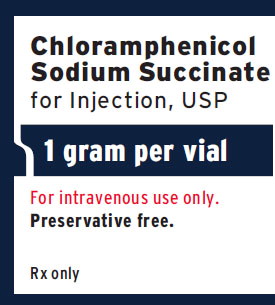
Chloramphenicol Sodium Succinate 1 g/10mL Injection, Powder, Lyophilized, For Solution — NDC 63323-011-15 (Billing 63323-0011-15)
This is a package of Chloramphenicol Sodium Succinate 1 g/10mL Injection, Powder, Lyophilized, For Solution from Fresenius Kabi USA, LLC, marketed since Jan 2001 and currently FDA-listed. It is this product's only package size.
NDC database record
One package, one record: these facts belong to NDC 63323-011-15 alone.
- Record
- FDA NDC Directory package listing · Human prescription drug
- Code segments
- 63323 labeler · 011 product · 15 package
- Package marketed since
- Jan 12, 2001
- Sample package
- No — commercial package
- Listing certified through
- Dec 31, 2026
- Barcode (UPC-A, from the NDC)
- 3 6332301115 4
- Medicaid fills, this package
- 12 prescriptions in the last four reported quarters
- FDA record last changed
- Jul 24, 2026
Identity & classification
Regulatory identifiers FDA, NLM and CMS codes for this package
Drug-database identifiers Medi-Span GPI and First Databank GCN / HICL / AHFS classification
- GSN (GCN sequence number): 009269
- GCN: 40880
- GPI-14 (Medi-Span): 16200010202160
- HICL (First Databank): 004025
- AHFS class code: 08:12.08.00
- RxCUI (RxNorm): 239200
Where does this data come from?
- FDA openFDA NDC Directory · synced Oct 8, 2026
- FDA label on DailyMed · label index refreshed Oct 8, 2026
- RxNorm (NLM RxNav) · catalog refreshed Oct 8, 2026
- Medi-Span GPI (licensed)
- First Databank (licensed) · refreshed Oct 8, 2026
RxNorm drug class
This medicine belongs to the Amphenicol-class Antibacterial class.
Where does this data come from?
- RxClass (NLM) · catalog refreshed Oct 8, 2026
Clinical
- Chloramphenicol carries a risk of causing aplastic anemia — a serious, sometimes fatal condition where your bone marrow stops making blood cells. Because safer antibiotics exist fo...
- Why is this antibiotic only used for serious infections? Why not just use it for any bacterial infection?
- Aplastic anemia is a condition where the bone marrow — the spongy tissue inside your bones — stops producing enough red blood cells, white blood cells, and platelets. Warning signs...
- What is aplastic anemia, and how would I know if I was developing it?
Patient education
Supplement & herbal interactions
Chloramphenicol may be associated with lower levels of 8 nutrients — worth a chat with your pharmacist, not a cause for alarm.
Where does this data come from?
- MedlinePlus (NLM) · refreshed Oct 8, 2026
- FDA label on DailyMed · label index refreshed Oct 8, 2026
Ask a licensed pharmacist directly — free, answered by our team.
Pricing
A drug doesn't have one price. Each row is a different public payment system, and none is what you'd pay at the counter — that depends on your insurance. The ⓘ on each row explains what it measures.
| Price system | Per mL | Per package |
|---|---|---|
| Retail pharmacies payNADAC · weekly | Not in the retail survey — common for institutional, discontinued, or low-volume packs. | |
| Medicaid paysCMS SDUD · 12 mo | $5.14 | $513.71 / 100 ml |
| Medicare drug plans payPart D · quarterly | No Part D plan price is available for this NDC in our data. | |
| Medicare Part B allowsASP · J0720 | No ASP payment limit on file for J0720 this quarter. | |
Where does this data come from?
- CMS NADAC weekly file
- CMS ASP pricing files · refreshed Sep 20, 2026
- CMS Medicaid State Drug Utilization Data · through Q1 2026
- CMS Part D plan pricing files · refreshed Sep 24, 2026
- VA National Acquisition Center price file
Billing & reimbursement
Where does this data come from?
- CMS ASP NDC-HCPCS crosswalk · refreshed Sep 22, 2026
- DMEPDAC NDC-HCPCS crosswalk
- openFDA NSDE billing units · refreshed Oct 7, 2026
Packaging — all sizes for this product
| Package NDC | Description | Marketing start | Marketing end | Status |
|---|---|---|---|---|
| 63323-0011-15 You're viewing this Main listing | 10 VIAL in 1 TRAY / 10 mL in 1 VIAL | 2001-01-12 | — | Active |
Therapeutic equivalents
| Product | Labeler | Pack | NADAC/unit | TE | Status | Price vs. this |
|---|---|---|---|---|---|---|
| Chloramphenicol Sodium Succinate 1 g/10mLthis 63323-0011-15 | Fresenius | 10 vials | — | — | FDA listed | — |
Where does this data come from?
- FDA openFDA NDC Directory · synced Oct 8, 2026
- FDA Orange Book · refreshed Oct 9, 2026
- CMS NADAC weekly file
Availability & generic status
This product is an FDA-approved generic. Other versions of the same drug are listed under Therapeutic equivalents, least expensive first.
Where does this data come from?
- FDA Orange Book · refreshed Oct 9, 2026
Inactive Ingredients / Excipients
Inactive ingredients, also called excipients, are components of the drug product other than the active ingredient. They may include fillers, dyes, coatings, preservatives, flavors, or other formulation ingredients.
🧪 Avoiding an ingredient? See Chloramphenicol Injection inactive ingredients by manufacturer: every current product's list side by side, so you can ask your pharmacy for the version that does not list it.
Where does this data come from?
IACT rows and label-wide narrative are kept separate; availability and product-level specificity depend on the submitted label.- FDA label on DailyMed · label index refreshed Oct 8, 2026
- FDA openFDA NDC Directory · synced Oct 8, 2026
Inactive ingredient FAQ
Are inactive ingredients the same for every manufacturer?
Why might an inactive ingredient be missing?
Can inactive ingredients matter?
Manufacturer & labeler
More NDCs from Fresenius Kabi USA, LLC labeler code 63323
- Gentamicin 40 mg/mL Injection, Solution NDC 63323-010-02
- Oxytocin 10 [USP'U]/mL Injection, Solution NDC 63323-012-01
- Thiamine 100 mg/mL Injection, Solution NDC 63323-013-02
- Mannitol 250 mg/mL Injection, Solution NDC 63323-024-25
- Chorionic Gonadotropin Kit NDC 63323-030-11
- SODIUM ACETATE 4 meq/100mL Injection, Solution, Concentrate NDC 63323-032-00
- Cyanocobalamin 1000 ug/mL Injection, Solution NDC 63323-044-01
Where does this data come from?
- FDA openFDA NDC Directory · synced Oct 8, 2026
- Drugs@FDA
Full prescribing information FDA SPL
🚨 Boxed Warning ▾
WARNING Serious and fatal blood dyscrasias (aplastic anemia, hypoplastic anemia, thrombocytopenia and granulocytopenia) are known to occur after the administration of chloramphenicol. In addition, there have been reports of aplastic anemia attributed to chloramphenicol which later terminated in leukemia. Blood dyscrasias have occurred after both short-term and prolonged therapy with this drug.
Chloramphenicol must not be used when less potentially dangerous agents will be effective, as described in the INDICATIONS AND USAGE section. It must not be used in the treatment of trivial infections or where it is not indicated, as in colds, influenza, infections of the throat; or as a prophylactic agent to prevent bacterial infections. Precautions: It is essential that adequate blood studies be made during treatment with the drug.
While blood studies may detect early peripheral blood changes, such as leukopenia, reticulocytopenia, or granulocytopenia, before they become irreversible, such studies cannot be relied on to detect bone marrow depression prior to development of aplastic anemia. To facilitate appropriate studies and observation during therapy, it is desirable that patients be hospitalized.
⛔ Contraindications ▾
CONTRAINDICATIONS: Chloramphenicol is contraindicated in individuals with a history of previous hypersensitivity and/or toxic reaction to it. It must not be used in the treatment of trivial infections or where it is not indicated, as in colds, influenza, infections of the throat; or as a prophylactic agent to prevent bacterial infections.
🤒 Adverse Reactions ▾
ADVERSE REACTIONS: Blood Dyscrasias The most serious adverse effect of chloramphenicol is bone marrow depression. Serious and fatal blood dyscrasias (aplastic anemia, hypoplastic anemia, thrombocytopenia, and granulocytopenia) are known to occur after the administration of chloramphenicol. An irreversible type of marrow depression leading to aplastic anemia with a high rate of mortality is characterized by the appearance weeks or months after therapy of bone marrow aplasia or hypoplasia.
Peripherally, pancytopenia is most often observed, but in a small number of cases only one or two of the three major cell types (erythrocytes, leukocytes, platelets) may be depressed. A reversible type of bone marrow depression, which is dose related, may occur. This type of marrow depression is characterized by vacuolization of the erythroid cells, reduction of reticulocytes and leukopenia, and responds promptly to the withdrawal of chloramphenicol.
An exact determination of the risk of serious and fatal blood dyscrasias is not possible because of lack of accurate information regarding 1) the size of the population at risk, 2) the total number of drug-associated dyscrasias, and 3) the total number of non-drug associated dyscrasias. In a report to the California State Assembly by the California Medical Association and the State Department of Public Health in January 1967, the risk of fatal aplastic anemia was estimated at 1:24,200 to 1:40,500 based on two dosage levels.
There have been reports of aplastic anemia attributed to chloramphenicol which later terminated in leukemia. Paroxysmal nocturnal hemoglobinuria has been reported. Gastrointestinal Reactions Nausea, vomiting, glossitis and stomatitis, diarrhea and enterocolitis may occur in low incidence.
Neurotoxic Reactions Headache, mild depression, mental confusion, and delirium have been described in patients receiving chloramphenicol. Optic and peripheral neuritis have been reported, usually following long-term therapy. If this occurs, the drug should be promptly withdrawn.
Hypersensitivity Reactions Fever, macular and vesicular rashes, angioedema, urticaria, and anaphylaxis may occur. Herxheimer’s reactions have occurred during therapy for typhoid fever. "Gray Syndrome" Toxic reactions including fatalities have occurred in the premature and neonate; the signs and symptoms associated with these reactions have been referred to as the “gray syndrome.” One case of gray syndrome has been reported in a neonate born to a mother having received chloramphenicol during labor. One case has been reported in a 3-month-old infant.
The following summarizes the clinical and laboratory studies that have been made on these patients: a) In most cases therapy with chloramphenicol had been instituted within the first 48 hours of life. b) Symptoms first appeared after 3 to 4 days of continued treatment with high doses of chloramphenicol. c) The symptoms appeared in the following order: (1) abdominal distension with or without emesis; (2) progressive pallid cyanosis; (3) vasomotor collapse, frequently accompanied by irregular respiration; (4) death within a few hours of onset of these symptoms. d) The progression of symptoms from onset to exitus was accelerated with higher dose schedules. e) Preliminary blood serum level studies revealed unusually high concentrations of chloramphenicol (over 90 mcg/mL after repeated doses). f) Termination of therapy upon early evidence of the associated symptomatology frequently reversed the process with complete recovery.
Blood Dyscrasias The most serious adverse effect of chloramphenicol is bone marrow depression. Serious and fatal blood dyscrasias (aplastic anemia, hypoplastic anemia, thrombocytopenia, and granulocytopenia) are known to occur after the administration of chloramphenicol. An irreversible type of marrow depression leading to aplastic anemia with a high rate of mortality is characterized by the appearance weeks or months after therapy of bone marrow aplasia or… [Excerpted — this section continues on DailyMed.]
🔄 Drug Interactions ▾
Drug Interactions Concurrent therapy with other drugs that may cause bone marrow depression should be avoided.
🤰 Pregnancy ▾
Pregnancy Pregnancy Category C – Animal reproduction studies have not been conducted with chloramphenicol. There are no adequate and well-controlled studies to establish safety of this drug in pregnancy. It is not known whether chloramphenicol can cause fetal harm when administered to a pregnant woman.
Orally administered chloramphenicol has been shown to cross the placental barrier. Because of potential toxic effects on the fetus (see ADVERSE REACTIONS, “Gray Syndrome” ), chloramphenicol should be given to a pregnant woman only if the potential benefit justifies the potential risk to the fetus.
🧒 Pediatric Use ▾
Pediatric Use Precaution should be used in therapy of premature and full-term neonates and infants to avoid “gray syndrome” toxicity. Due to immature metabolic processes in the neonate and infant, excessive blood levels may result from administration of the recommended dose. The dosage should be adjusted accordingly or, preferable, the blood concentration should be determined at appropriate intervals (see ADVERSE REACTIONS , "Gray Syndrome" ).
See DOSAGE AND ADMINISTRATION for dosing information in the pediatric population.
🧓 Geriatric Use ▾
Geriatric Use Clinical studies of chloramphenicol sodium succinate did not include sufficient numbers of subjects aged 65 and over to determine whether they respond differently from younger subjects. Other reported clinical experience has not identified differences in responses between the elderly and younger patients. In general, dose selection for an elderly patient should be cautious, usually starting at the low end of the dosing range, reflecting the greater frequency of decreased hepatic, renal, or cardiac function, and of concomitant disease or other drug therapy.
This drug is known to be substantially excreted by the kidney, and the risk of toxic reactions to this drug may be greater in patients with impaired renal function. Because elderly patients are more likely to have decreased renal function, care should be taken in dose selection, and it may be useful to monitor renal function. Each gram (10 mL of a 10% solution) of chloramphenicol sodium succinate contains approximately 52 mg (2.25 mEq) of sodium.
🧬 Clinical Pharmacology ▾
CLINICAL PHARMACOLOGY: Chloramphenicol administered orally is absorbed rapidly from the intestinal tract. In controlled studies in adult volunteers using the recommended dosage of 50 mg/kg/day, a dosage of 1 g every 6 hours for 8 doses was given. Using the microbiological assay method, the average peak serum level was 11.2 mcg/mL one hour after the first dose.
A cumulative effect gave a peak rise to 18.4 mcg/mL after the fifth dose of 1 g. Mean serum levels ranged from 8 to 14 mcg/mL over the 48-hour period. Total urinary excretion of chloramphenicol in these studies ranged from a low of 68% to a high of 99% over a three-day period.
From 8% to 12% of the antibiotic excreted is in the form of free chloramphenicol; the remainder consists of microbiologically inactive metabolites, principally the conjugate with glucuronic acid. Since the glucuronide is excreted rapidly, most chloramphenicol detected in the blood is in the microbiologically active free form. Despite the small proportion of unchanged drug excreted in the urine, the concentration of free chloramphenicol is relatively high, amounting to several hundred mcg/mL in patients receiving divided doses of 50 mg/kg/day.
Small amounts of active drug are found in bile and feces. Chloramphenicol diffuses rapidly, but its distribution is not uniform. Highest concentrations are found in liver and kidney, and lowest concentrations are found in brain and cerebrospinal fluid.
Chloramphenicol enters cerebrospinal fluid even in the absence of meningeal inflammation, appearing in concentrations about half of those found in the blood. Measurable levels are also detected in pleural and in ascitic fluids, saliva, milk, and in the aqueous and vitreous humors. Transport across the placental barrier occurs with somewhat lower concentration in cord blood of neonates than in maternal blood.
Microbiology Mechanism of Action Chloramphenicol is a broad-spectrum antibiotic originally isolated from Streptomyces venezuelae . It inhibits bacterial protein synthesis by interfering with the transfer of activated amino acids from soluble RNA to ribosomes. In vitro, chloramphenicol exerts mainly a bacteriostatic effect on a wide range of gram-negative and gram-positive bacteria.
Antimicrobial Activity Chloramphenicol has been shown to be active against most strains of the following microorganisms, both in vitro and in clinical infections as described in the INDICATIONS AND USAGE section. Aerobic gram-negative microorganisms Haemophilus influenzae Salmonella species, including Salmonella typhi Other microorganisms Lymphogranuloma-psittacosis group Rickettsia Susceptibility Testing Methods When available, the clinical microbiology laboratory should provide cumulative reports of in vitro susceptibility test results for antimicrobial drugs used in local hospitals and practice areas to the physician as periodic reports that describe the susceptibility profile of nosocomial and community-acquired pathogens.
These reports should aid the physician in selecting an antibacterial drug for treatment. Dilution Techniques Quantitative methods are used to determine antimicrobial minimum inhibitory concentrations (MICs). These MICs provide estimates of the susceptibility of bacteria to antimicrobial compounds.
The MICs should be determined using a standardized (broth and/or agar). 1,3 The MIC values should be interpreted according to the criteria provided in Table 1. Diffusion Techniques Quantitative methods that require measurement of zone diameters can also provide reproducible estimates of the susceptibility of bacteria to antimicrobial compounds.
The zone size should be determined using a standardized test method. 2,3 This procedure uses paper disks impregnated with 30 mcg chloramphenicol to test the susceptibility of bacteria to chloramphenicol. The disc diffusion breakpoints should be interpreted according to the criteria provided in Table 1.
Table 1. Susceptibility Test Interpretive Criteria for Chloramphenicol Pa… [Excerpted — this section continues on DailyMed.]
📦 How Supplied / Storage and Handling ▾
HOW SUPPLIED: Chloramphenicol Sodium Succinate for Injection, USP is freeze-dried in the vial. When reconstituted as directed, each vial contains a sterile solution equivalent to 100 mg of chloramphenicol per mL (1 g/10 mL). Product No. NDC No. 1115 63323-011-15 Available in packages of 10 vials. Preservative Free. Store at 20° to 25°C (68° to 77°F) [see USP Controlled Room Temperature].
📋 Description ▾
DESCRIPTION: Chloramphenicol is an antibiotic that is clinically useful for, and should be reserved for, serious infections caused by organisms susceptible to its antimicrobial effects when less potentially hazardous therapeutic agents are ineffective or contraindicated. Sensitivity testing is essential to determine its indicated use, but may be performed concurrently with therapy initiated on clinical impression that one of the indicated conditions exists (see INDICATIONS AND USAGE section). When reconstituted as directed, each vial contains a sterile solution equivalent to 100 mg of chloramphenicol per mL (1 g/10 mL).
Each gram (10 mL of a 10% solution) of chloramphenicol sodium succinate contains approximately 52 mg (2.25 mEq) of sodium. The chemical name for chloramphenicol sodium succinate is D-threo-(-)-2, 2-Dichloro-N-[β-hydroxy-α-(hydroxymethyl)-p-nitrophenethyl] acetamide α-(sodium succinate). The structural formula is: structure
⚠️ Precautions ▾
PRECAUTIONS: General Repeated courses of chloramphenicol treatment should be avoided if at all possible. Treatment should not be continued longer than required to produce a cure with little or no risk or relapse of the disease. Excessive blood levels may result from administration of the recommended dose to patients with impaired liver or kidney function.
The dosage should be adjusted accordingly, or preferably, the blood concentration should be determined at appropriate intervals. The use of this antibiotic, as with other antibiotics, may result in an overgrowth of nonsusceptible organisms, including fungi. If infections caused by nonsusceptible organisms appear during therapy, appropriate measures should be taken.
Laboratory Tests Baseline blood studies should be followed by periodic blood studies approximately every two days during therapy. The drug should be discontinued upon appearance of reticulocytopenia, leukopenia, thrombocytopenia, anemia or any other blood study findings attributable to chloramphenicol. However, it should be noted that such studies do not exclude the possible later appearance of the irreversible type of bone marrow depression.
Drug Interactions Concurrent therapy with other drugs that may cause bone marrow depression should be avoided. Carcinogenesis, Mutagenesis, Impairment of Fertility No studies have been conducted in animals or humans to evaluate the possibility of these effects with chloramphenicol. Pregnancy Pregnancy Category C – Animal reproduction studies have not been conducted with chloramphenicol.
There are no adequate and well-controlled studies to establish safety of this drug in pregnancy. It is not known whether chloramphenicol can cause fetal harm when administered to a pregnant woman. Orally administered chloramphenicol has been shown to cross the placental barrier.
Because of potential toxic effects on the fetus (see ADVERSE REACTIONS, “Gray Syndrome” ), chloramphenicol should be given to a pregnant woman only if the potential benefit justifies the potential risk to the fetus. Nursing Mothers Chloramphenicol is excreted in human milk following oral administration of the drug. Because of the potential for serious adverse reactions in nursing infants from chloramphenicol, a decision should be made whether to discontinue nursing or to discontinue the drug, taking into account the importance of the drug to the mother (see ADVERSE REACTIONS, “Gray Syndrome” ).
Pediatric Use Precaution should be used in therapy of premature and full-term neonates and infants to avoid “gray syndrome” toxicity. Due to immature metabolic processes in the neonate and infant, excessive blood levels may result from administration of the recommended dose. The dosage should be adjusted accordingly or, preferable, the blood concentration should be determined at appropriate intervals (see ADVERSE REACTIONS , "Gray Syndrome" ).
See DOSAGE AND ADMINISTRATION for dosing information in the pediatric population. Geriatric Use Clinical studies of chloramphenicol sodium succinate did not include sufficient numbers of subjects aged 65 and over to determine whether they respond differently from younger subjects. Other reported clinical experience has not identified differences in responses between the elderly and younger patients.
In general, dose selection for an elderly patient should be cautious, usually starting at the low end of the dosing range, reflecting the greater frequency of decreased hepatic, renal, or cardiac function, and of concomitant disease or other drug therapy. This drug is known to be substantially excreted by the kidney, and the risk of toxic reactions to this drug may be greater in patients with impaired renal function. Because elderly patients are more likely to have decreased renal function, care should be taken in dose selection, and it may be useful to monitor renal function.
Each gram (10 mL of a 10% solution) of chloramphenicol sodium succinate contains approximately 52 mg (2.25 mEq) of sodiu… [Excerpted — this section continues on DailyMed.]
🍼 Nursing Mothers ▾
Nursing Mothers Chloramphenicol is excreted in human milk following oral administration of the drug. Because of the potential for serious adverse reactions in nursing infants from chloramphenicol, a decision should be made whether to discontinue nursing or to discontinue the drug, taking into account the importance of the drug to the mother (see ADVERSE REACTIONS, “Gray Syndrome” ).
📄 Carcinogenesis, Mutagenesis, Impairment of Fertility ▾
Carcinogenesis, Mutagenesis, Impairment of Fertility No studies have been conducted in animals or humans to evaluate the possibility of these effects with chloramphenicol.
📚 References ▾
REFERENCES: Clinical and Laboratory Standards Institute (CLSI), Methods for Dilution Antimicrobial Susceptibility Tests for Bacteria that Grow Aerobically; Approved Standard – Tenth Edition . CLSI document M07-A10 [2015], Clinical and Laboratory Standards Institute, 950 West Valley Road, Suite 2500, Wayne, Pennsylvania 19087, USA. Clinical and Laboratory Standards Institute (CLSI).
Performance Standards for Antimicrobial Disk Diffusion Susceptibility Tests; Approved Standard – Twelfth Edition . CLSI document M02-A12 [2015]. Clinical and Laboratory Standards Institute, 950 West Valley Road, Suite 2500, Wayne, Pennsylvania 19087, USA.
Clinical and Laboratory Standards Institute (CLSI). Performance Standards for Antimicrobial Susceptibility Testing; Twenty-sixth Informational Supplement . CLSI document M100-S26 [2016].
Clinical and Laboratory Standards Institute, 950 West Valley Road, Suite 2500, Wayne, Pennsylvania 19087, USA.
📄 Package Label / Principal Display Panel ▾
PACKAGE LABEL - PRINCIPAL DISPLAY - Chloramphenicol Sodium Succinate 1 gram Vial Label Chloramphenicol Sodium Succinate for Injection, USP 1 gram per vial For intravenous use only. Preservative free. Rx only PACKAGE LABEL - PRINCIPAL DISPLAY - Chloramphenicol Sodium Succinate 1 gram Vial Tray Label Chloramphenicol Sodium Succinate for Injection, USP 1 gram per vial For intravenous use only. Preservative free. 10 x 1 g vials Rx only vial tray
Medicaid utilization & spend
About this NDC listing & data coverage
What data is (and isn’t) available for this NDC — tap to expand
| NDC identity (package / product / labeler codes) | ✓ Available |
| Labeler | ✓ Available |
| Product & package description | ✓ Available |
| Marketing category & status | ✓ Available |
| Active ingredient / dosage form / route | ✓ Available |
| FDA label (SPL via DailyMed) | ✓ Available |
| Package photos | ✓ Available |
| Inactive ingredients (structured) | — Not published for this NDC The labeler did not submit a structured excipient list, or no SPL is available. |
| NADAC pharmacy acquisition price (CMS) | — Not published for this NDC CMS publishes NADAC only for NDCs reported in its retail-pharmacy survey. |
| Orange Book / therapeutic-equivalence data | — Not published for this NDC Applies only to products approved under an NDA/ANDA; many listings are out of scope. |
| HCPCS J-code billing crosswalk | ✓ Available |
| Medicaid utilization (CMS SDUD) | ✓ Available |