
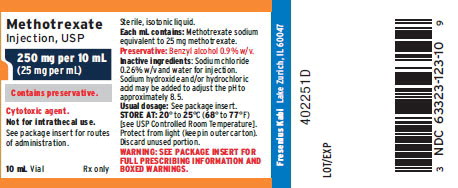
Methotrexate 25 mg/mL Injection, Solution — NDC 63323-123-10 (Billing 63323-0123-10)
This is a package of Methotrexate 25 mg/mL Injection, Solution from Fresenius Kabi USA, LLC, marketed since Sep 2001 and currently FDA-listed; retail pharmacies pay about $3.18 per mL (NADAC). It is this product's only package size.
NDC database record
One package, one record: these facts belong to NDC 63323-123-10 alone.
- Record
- FDA NDC Directory package listing · Human prescription drug
- Code segments
- 63323 labeler · 123 product · 10 package
- Package marketed since
- Sep 10, 2001
- Sample package
- No — commercial package
- Listing certified through
- Dec 31, 2026
- Barcode (UPC-A, from the NDC)
- 3 6332312310 9
- Medicaid fills, this package
- 2,178 prescriptions in the last four reported quarters
- FDA record last changed
- Jul 24, 2026
Other active recalls for Methotrexate Sodium (different manufacturers) — 1 · tap to view
Identity & classification
Regulatory identifiers FDA, NLM and CMS codes for this package
Drug-database identifiers Medi-Span GPI and First Databank GCN / HICL / AHFS classification
- GSN (GCN sequence number): 008798
- GCN: 38466
- GPI-14 (Medi-Span): 21300050102068
- HICL (First Databank): 003905
- AHFS class code: 10:00.00.00
- RxCUI (RxNorm): 1946772
Where does this data come from?
- FDA openFDA NDC Directory · synced Oct 1, 2026
- FDA label on DailyMed · label index refreshed Oct 6, 2026
- RxNorm (NLM RxNav) · catalog refreshed Oct 1, 2026
- Medi-Span GPI (licensed)
- First Databank (licensed) · refreshed Oct 1, 2026
RxNorm drug class
This medicine belongs to the Folate Analog Metabolic Inhibitor class.
Where does this data come from?
- RxClass (NLM) · catalog refreshed Oct 1, 2026
Clinical
Methotrexate injection is used alone or in combination with other medications: to treat certain types of acute lymphocytic leukemia (ALL) in adults and children; to treat or prevent meningeal leukemia (cancer in the covering of the spinal cord and brain) in adults and children; to treat certain types of non-Hodgkin's lymphoma (types of cancer that begin in a type of white blood cells that normally fights infection) in adults and children; to treat osteosarcoma (cancer that forms in bones) after surgery to remove the tumor in adults and children; to treat cutaneous T-cell lymphoma (CTCL,...
Read the full MedlinePlus article ↗- It treats certain cancers, rheumatoid arthritis, polyarticular juvenile idiopathic arthritis and severe psoriasis. Which use applies depends on the product you were given. Otrexup...
- For many uses, such as arthritis and psoriasis, it is taken once a week, not daily. Taking it daily by mistake has caused deaths. Follow your prescriber's schedule exactly, and ask...
- Nausea, stomach upset, mouth sores, tiredness, dizziness, rash and hair loss are common. Call your doctor about a dry cough, bad diarrhea, fever, severe skin reactions or unusual b...
- NSAIDs and aspirin can raise methotrexate levels and increase toxicity, so check with your prescriber or pharmacist first. This matters most at high methotrexate doses. Also tell u...
Patient education
Supplement & herbal interactions
Some supplements/herbs that may interact with Methotrexate Sodium — tap one for details:
Methotrexate Sodium may be associated with lower levels of 1 nutrient — worth a chat with your pharmacist, not a cause for alarm.
Where does this data come from?
- MedlinePlus (NLM) · refreshed Oct 1, 2026
- FDA label on DailyMed · label index refreshed Oct 6, 2026
Ask a licensed pharmacist directly — free, answered by our team.
Pricing
A drug doesn't have one price. Each row is a different public payment system, and none is what you'd pay at the counter — that depends on your insurance. The ⓘ on each row explains what it measures.
| Price system | Per mL | Per package |
|---|---|---|
| Retail pharmacies payNADAC · weekly | $3.183 | $31.83 / 10 ml |
| Medicaid paysCMS SDUD · 12 mo | $3.02 | $30.23 / 10 ml |
| Medicare drug plans payPart D · Q2 2026 | $3.06 | $30.64 / 10 ml |
| Medicare Part B allowsASP · J9260 | $2.941 / J9260 unit | — |
Where does this data come from?
- CMS NADAC weekly file · file of Sep 30, 2026
- CMS ASP pricing files · refreshed Sep 20, 2026
- CMS Medicaid State Drug Utilization Data · through Q1 2026
- CMS Part D plan pricing files · refreshed Sep 24, 2026
- VA National Acquisition Center price file
Billing & reimbursement
Where does this data come from?
- CMS ASP NDC-HCPCS crosswalk · refreshed Sep 22, 2026
- DMEPDAC NDC-HCPCS crosswalk
- openFDA NSDE billing units · refreshed Oct 7, 2026
Packaging — all sizes for this product
| Package NDC | Description | Marketing start | Marketing end | Status |
|---|---|---|---|---|
| 63323-0123-10 You're viewing this Main listing | 1 VIAL in 1 CARTON / 10 mL in 1 VIAL | 2001-09-10 | — | Active |
Therapeutic equivalents
| Product | Labeler | Pack | NADAC/unit | TE | Status | Price vs. this |
|---|---|---|---|---|---|---|
| Methotrexate 25 mg/mL 61703-0161-05 | Hospira, | 5 vials | $3.183 | AP | Availability likely | — |
| Methotrexate 25 mg/mL 61703-0350-10 | Hospira, | 5 vials | $3.183 | AP | Availability likely | — |
| Methotrexate 25 mg/mLthis 63323-0123-10 | Fresenius | 1 vial | $3.183 | AP | Availability likely | — |
| Methotrexate 25 mg/mL 46708-0711-05 | Alembic | 5 vials | — | AP | FDA listed | — |
| Methotrexate 25 mg/mL 62332-0711-05 | Alembic | 5 vials | — | AP | FDA listed | — |
Where does this data come from?
- FDA openFDA NDC Directory · synced Oct 1, 2026
- FDA Orange Book · refreshed Oct 3, 2026
- CMS NADAC weekly file · file of Sep 30, 2026
Availability & generic status
This product is an FDA-approved generic. Other versions of the same drug are listed under Therapeutic equivalents, least expensive first.
Where does this data come from?
- FDA Orange Book · refreshed Oct 3, 2026
Inactive Ingredients / Excipients
Inactive ingredients, also called excipients, are components of the drug product other than the active ingredient. They may include fillers, dyes, coatings, preservatives, flavors, or other formulation ingredients.
🧪 Avoiding an ingredient? See Methotrexate inactive ingredients by manufacturer: every current product's list side by side, so you can ask your pharmacy for the version that does not list it.
💡 Tap an ingredient (hover on desktop) to see what it is and why it’s used.
-
UNII LKG8494WBH
Benzyl alcohol is a clear liquid used as a preservative and solvent in medicines. It helps prevent bacterial and fungal growth and dissolves other ingredients to create uniform liquid formulations.
-
UNII QTT17582CB
A strong acid used to adjust and maintain the proper pH level in liquid medicines, ensuring stability and preventing breakdown of active ingredients.
-
UNII 451W47IQ8X
Sodium chloride is common table salt. It's used in medicines as a buffer to maintain proper pH, as a filler to add bulk, or to adjust the osmotic balance in liquid formulations.
-
UNII 55X04QC32I
A strong alkaline chemical used to adjust and maintain the pH balance of liquid medicines. It helps keep the medicine stable and ensures it stays effective during storage.
4 inactive ingredients listed in the exact product block matched to this NDC.
Where does this data come from?
ingredient classCode="IACT" elements from the exact product block matched by this NDC. Label-section narrative from DailyMed / the openFDA label index is shown separately when available.- FDA label on DailyMed · label index refreshed Oct 6, 2026
- FDA openFDA NDC Directory · synced Oct 1, 2026
Inactive ingredient FAQ
Are inactive ingredients the same for every manufacturer?
Why might an inactive ingredient be missing?
Can inactive ingredients matter?
Manufacturer & labeler
More NDCs from Fresenius Kabi USA, LLC labeler code 63323
- Magnesium Sulfate in 5% Dextrose Magnesium Sulfate Heptahydrate 1 g/100mL Injection, Solution NDC 63323-108-01
- Pentam 300 PENTAMIDINE ISETHIONATE 300 mg/3mL Injection, Powder, Lyophilized, For Solution NDC 63323-113-10
- Fluorouracil 50 mg/mL Injection, Solution NDC 63323-117-10
- Heparin Sodium 5000 [USP'U]/.5mL Injection, Solution NDC 63323-118-05
- Cytarabine 100 mg/mL Injection, Solution NDC 63323-120-20
- Methotrexate 1 g Injection, Powder, Lyophilized, For Solution NDC 63323-122-50
- GEMCITABINE 1 g/25mL Injection, Powder, Lyophilized, For Solution NDC 63323-125-53
- GEMCITABINE 2 g/50mL Injection, Powder, Lyophilized, For Solution NDC 63323-126-00
- Dacarbazine 10 mg/mL Injection, Powder, For Solution NDC 63323-127-10
- Dacarbazine 10 mg/mL Injection, Powder, For Solution NDC 63323-128-20
- Doxy 100 DOXYCYCLINE 100 mg/10mL Injection, Powder, Lyophilized, For Solution NDC 63323-130-11
- Mitoxantrone 2 mg/mL Injection, Solution NDC 63323-132-10
Where does this data come from?
- FDA openFDA NDC Directory · synced Oct 1, 2026
- Drugs@FDA
Full prescribing information FDA SPL
🚨 Boxed Warning ▾
WARNINGS FOR INTRATHECAL AND HIGH-DOSE THERAPY, USE THE PRESERVATIVE-FREE FORMULATION OF METHOTREXATE. DO NOT USE THE PRESERVED FORMULATION FOR INTRATHECAL OR HIGH-DOSE THERAPY BECAUSE IT CONTAINS BENZYL ALCOHOL. METHOTREXATE SHOULD BE USED ONLY IN LIFE-THREATENING NEOPLASTIC DISEASES, OR IN PATIENTS WITH PSORIASIS OR RHEUMATOID ARTHRITIS WITH SEVERE, RECALCITRANT, DISABLING DISEASE WHICH IS NOT ADEQUATELY RESPONSIVE TO OTHER FORMS OF THERAPY.
DEATHS HAVE BEEN REPORTED WITH THE USE OF METHOTREXATE IN THE TREATMENT OF MALIGNANCY, PSORIASIS, AND RHEUMATOID ARTHRITIS. PATIENTS SHOULD BE CLOSELY MONITORED FOR BONE MARROW, LIVER, LUNG AND KIDNEY TOXICITIES (see PRECAUTIONS ). PATIENTS SHOULD BE INFORMED BY THEIR PHYSICIAN OF THE RISKS INVOLVED AND BE UNDER A PHYSICIAN’S CARE THROUGHOUT THERAPY.
THE USE OF METHOTREXATE HIGH-DOSE REGIMENS RECOMMENDED FOR OSTEOSARCOMA REQUIRES METICULOUS CARE (see DOSAGE AND ADMINISTRATION ). HIGH-DOSE REGIMENS FOR OTHER NEOPLASTIC DISEASES ARE INVESTIGATIONAL AND A THERAPEUTIC ADVANTAGE HAS NOT BEEN ESTABLISHED. Methotrexate has been reported to cause fetal death and/or congenital anomalies.
Therefore, it is not recommended for women of childbearing potential unless there is clear medical evidence that the benefits can be expected to outweigh the considered risks. Pregnant women with psoriasis or rheumatoid arthritis should not receive methotrexate (see CONTRAINDICATIONS ). Methotrexate elimination is reduced in patients with impaired renal functions, ascites, or pleural effusions.
Such patients require especially careful monitoring for toxicity, and require dose reduction or, in some cases, discontinuation of methotrexate administration. Unexpectedly severe (sometimes fatal) bone marrow suppression, aplastic anemia, and gastrointestinal toxicity have been reported with concomitant administration of methotrexate (usually in high dosage) along with some non-steroidal anti-inflammatory drugs (NSAIDs) (see PRECAUTIONS , Drug Interactions ). Methotrexate causes hepatotoxicity, fibrosis and cirrhosis, but generally only after prolonged use.
Acutely, liver enzyme elevations are frequently seen. These are usually transient and asymptomatic, and also do not appear predictive of subsequent hepatic disease. Liver biopsy after sustained use often shows histologic changes, and fibrosis and cirrhosis have been reported; these latter lesions may not be preceded by symptoms or abnormal liver function tests in the psoriasis population.
For this reason, periodic liver biopsies are usually recommended for psoriatic patients who are under long-term treatment. Persistent abnormalities in liver function tests may precede appearance of fibrosis or cirrhosis in the rheumatoid arthritis population (see PRECAUTIONS , Organ System Toxicity , Hepatic ). Methotrexate-induced lung disease, including acute or chronic interstitial pneumonitis, is a potentially dangerous lesion, which may occur acutely at any time during therapy and has been reported at low doses.
It is not always fully reversible and fatalities have been reported. Pulmonary symptoms (especially a dry, nonproductive cough) may require interruption of treatment and careful investigation. Diarrhea and ulcerative stomatitis require interruption of therapy: otherwise, hemorrhagic enteritis and death from intestinal perforation may occur.
Malignant lymphomas, which may regress following withdrawal of methotrexate, may occur in patients receiving low-dose methotrexate and, thus, may not require cytotoxic treatment. Discontinue methotrexate first and, if the lymphoma does not regress, appropriate treatment should be instituted. Like other cytotoxic drugs, methotrexate may induce “tumor lysis syndrome” in patients with rapidly growing tumors.
Appropriate supportive and pharmacologic measures may prevent or alleviate this complication. Severe, occasionally fatal, skin reactions have been reported following single or multiple doses of methotrexate. Reactions have occurred wi… [Excerpted — this section continues on DailyMed.]
🎯 Indications and Usage ▾
INDICATIONS AND USAGE: Neoplastic Diseases Methotrexate is indicated in the treatment of gestational choriocarcinoma, chorioadenoma destruens and hydatidiform mole. In acute lymphocytic leukemia, methotrexate is indicated for use in maintenance therapy in combination with other chemotherapeutic agents. Methotrexate is used alone or in combination with other anticancer agents in the treatment of breast cancer, epidermoid cancers of the head and neck, advanced mycosis fungoides (cutaneous T cell lymphoma), and lung cancer, particularly squamous cell and small cell types.
Methotrexate is also used in combination with other chemotherapeutic agents in the treatment of advanced stage non-Hodgkin’s lymphomas. Methotrexate in high doses followed by leucovorin rescue in combination with other chemotherapeutic agents is effective in prolonging relapse-free survival in patients with non-metastatic osteosarcoma who have undergone surgical resection or amputation for the primary tumor. Psoriasis Methotrexate is indicated in the symptomatic control of severe, recalcitrant, disabling psoriasis that is not adequately responsive to other forms of therapy, but only when the diagnosis has been established, as by biopsy and/or after dermatologic consultation.
It is important to ensure that a psoriasis “flare” is not due to an undiagnosed concomitant disease affecting immune responses. Rheumatoid Arthritis including Polyarticular-Course Juvenile Rheumatoid Arthritis Methotrexate is indicated in the management of selected adults with severe, active rheumatoid arthritis (ACR criteria), or children with active polyarticular-course juvenile rheumatoid arthritis, who have had an insufficient therapeutic response to, or are intolerant of, an adequate trial of first-line therapy including full dose non-steroidal anti-inflammatory agents (NSAIDs).
Aspirin, (NSAIDs), and/or low-dose steroids may be continued, although the possibility of increased toxicity with concomitant use of NSAIDs including salicylates has not been fully explored (see PRECAUTIONS , Drug Interactions ). Steroids may be reduced gradually in patients who respond to methotrexate. Combined use of methotrexate with gold, penicillamine, hydroxychloroquine, sulfasalazine, or cytotoxic agents, has not been studied and may increase the incidence of adverse effects.
Rest and physiotherapy as indicated should be continued.
⏱️ Dosage and Administration ▾
DOSAGE AND ADMINISTRATION: Neoplastic Diseases For intrathecal and high-dose methotrexate therapy, use the preservative-free formulation of methotrexate. Do not use the preserved formulation of methotrexate for intrathecal or high-dose therapy because it contains benzyl alcohol. Oral administration in tablet form is often preferred when low doses are being administered since absorption is rapid and effective serum levels are obtained.
Methotrexate Injection may be given by the intramuscular, intravenous or intra-arterial route. Parenteral drug products should be inspected visually for particulate matter and discoloration prior to administration, whenever solution and container permit. Choriocarcinoma and Similar Trophoblastic Diseases Methotrexate is administered orally or intramuscularly in doses of 15 to 30 mg daily for a five-day course.
Such courses are usually repeated for 3 to 5 times as required, with rest periods of one or more weeks interposed between courses, until any manifesting toxic symptoms subside. The effectiveness of therapy is ordinarily evaluated by 24 hour quantitative analysis of urinary chorionic gonadotropin (hCG), which should return to normal or less than 50 IU/24 hr usually after the third or fourth course and usually be followed by a complete resolution of measurable lesions in 4 to 6 weeks. One to two courses of methotrexate after normalization of hCG is usually recommended.
Before each course of the drug careful clinical assessment is essential. Cyclic combination therapy of methotrexate with other antitumor drugs has been reported as being useful. Since hydatidiform mole may precede choriocarcinoma, prophylactic chemotherapy with methotrexate has been recommended.
Chorioadenoma destruens is considered to be an invasive form of hydatidiform mole. Methotrexate is administered in these disease states in doses similar to those recommended for choriocarcinoma. Leukemia Acute lymphoblastic leukemia in pediatric patients and young adolescents is the most responsive to present day chemotherapy.
In young adults and older patients, clinical remission is more difficult to obtain and early relapse is more common. Methotrexate alone or in combination with steroids was used initially for induction of remission in acute lymphoblastic leukemias. More recently corticosteroid therapy, in combination with other antileukemic drugs or in cyclic combinations with methotrexate included, has appeared to produce rapid and effective remissions.
When used for induction, methotrexate in doses of 3.3 mg/m 2 in combination with 60 mg/m 2 of prednisone, given daily, produced remissions in 50% of patients treated, usually within a period of 4 to 6 weeks. Methotrexate in combination with other agents appears to be the drug of choice for securing maintenance of drug-induced remissions. When remission is achieved and supportive care has produced general clinical improvement, maintenance therapy is initiated, as follows: Methotrexate is administered 2 times weekly either by mouth or intramuscularly in total weekly doses of 30 mg/m 2 .
It has also been given in doses of 2.5 mg/kg intravenously every 14 days. If and when relapse does occur, reinduction of remission can again usually be obtained by repeating the initial induction regimen. A variety of combination chemotherapy regimens have been used for both induction and maintenance therapy in acute lymphoblastic leukemia.
The physician should be familiar with the new advances in antileukemic therapy. Lymphomas In Burkitt’s tumor, Stages I-II, methotrexate has produced prolonged remissions in some cases. Recommended dosage is 10 to 25 mg/day orally for 4 to 8 days.
In Stage III, methotrexate is commonly given concomitantly with other antitumor agents. Treatment in all stages usually consists of several courses of the drug interposed with 7 to 10 day rest periods. Lymphosarcomas in Stage III may respond to combined drug therapy with methotrexate given in doses of 0.625 to 2.5 mg/kg da… [Excerpted — this section continues on DailyMed.]
⛔ Contraindications ▾
CONTRAINDICATIONS: Methotrexate can cause fetal death or teratogenic effects when administered to a pregnant woman. Methotrexate is contraindicated in pregnant women with psoriasis or rheumatoid arthritis and should be used in the treatment of neoplastic diseases only when the potential benefit outweighs the risk to the fetus. Women of childbearing potential should not be started on methotrexate until pregnancy is excluded and should be fully counseled on the serious risk to the fetus (see PRECAUTIONS ) should they become pregnant while undergoing treatment.
Pregnancy should be avoided if either partner is receiving methotrexate; during and for a minimum of three months after therapy for male patients, and during and for at least one ovulatory cycle after therapy for female patients (see BOXED WARNINGS ). Because of the potential for serious adverse reactions from methotrexate in breast fed infants, it is contraindicated in nursing mothers. Patients with psoriasis or rheumatoid arthritis with alcoholism, alcoholic liver disease or other chronic liver disease should not receive methotrexate.
Patients with psoriasis or rheumatoid arthritis who have overt or laboratory evidence of immunodeficiency syndromes should not receive methotrexate. Patients with psoriasis or rheumatoid arthritis who have pre-existing blood dyscrasias, such as bone marrow hypoplasia, leukopenia, thrombocytopenia, or significant anemia, should not receive methotrexate. Patients with a known hypersensitivity to methotrexate should not receive the drug.
🤒 Adverse Reactions ▾
ADVERSE REACTIONS: To report SUSPECTED ADVERSE REACTIONS, contact Fresenius Kabi USA, LLC at 1-800-551-7176 or FDA at 1-800-FDA-1088 or www.fda.gov/medwatch. IN GENERAL, THE INCIDENCE AND SEVERITY OF ACUTE SIDE EFFECTS ARE RELATED TO DOSE AND FREQUENCY OF ADMINISTRATION. THE MOST SERIOUS REACTIONS ARE DISCUSSED ABOVE UNDER ORGAN SYSTEM TOXICITY IN THE PRECAUTIONS SECTION.
THAT SECTION SHOULD ALSO BE CONSULTED WHEN LOOKING FOR INFORMATION ABOUT ADVERSE REACTIONS WITH METHOTREXATE. The most frequently reported adverse reactions include ulcerative stomatitis, leukopenia, nausea, and abdominal distress. Other frequently reported adverse effects are malaise, undue fatigue, chills and fever, dizziness and decreased resistance to infection.
Other adverse reactions that have been reported with methotrexate are listed below by organ system. In the oncology setting, concomitant treatment and the underlying disease make specific attribution of a reaction to methotrexate difficult. Alimentary System: gingivitis, pharyngitis, stomatitis, anorexia, nausea, vomiting, diarrhea, hematemesis, melena, gastrointestinal ulceration and bleeding, enteritis, pancreatitis.
Blood and Lymphatic System Disorders: suppressed hematopoiesis, anemia, aplastic anemia, pancytopenia, leukopenia, neutropenia, thrombocytopenia, agranulocytosis, eosinophilia, lymphadenopathy and lymphoproliferative disorders (including reversible). Hypogammaglobulinemia has been reported rarely. Cardiovascular: pericarditis, pericardial effusion, hypotension, and thromboembolic events (including arterial thrombosis, cerebral thrombosis, deep vein thrombosis, retinal vein thrombosis, thrombophlebitis, and pulmonary embolus).
Central Nervous System: headaches, drowsiness, blurred vision, transient blindness, speech impairment including dysarthria and aphasia, hemiparesis, paresis and convulsions have also occurred following administration of methotrexate. Following low doses, there have been occasional reports of transient subtle cognitive dysfunction, mood alteration or unusual cranial sensations, leukoencephalopathy, or encephalopathy. Hepatobiliary Disorders: hepatotoxicity, acute hepatitis, chronic fibrosis and cirrhosis, hepatic failure, decrease in serum albumin, liver enzyme elevations.
Infection: There have been case reports of sometimes fatal opportunistic infections in patients receiving methotrexate therapy for neoplastic and non-neoplastic diseases. Pneumocystis carinii pneumonia was the most common opportunistic infection. There have also been reports of infections, pneumonia, Cytomegalovirus infection, including cytomegaloviral pneumonia, sepsis, fatal sepsis, nocardiosis; histoplasmosis, cryptococcosis, Herpes zoster , H. simplex hepatitis, and disseminated H. simplex .
Musculoskeletal System: stress fracture. Ophthalmic: conjunctivitis, serious visual changes of unknown etiology. Pulmonary System: respiratory fibrosis, respiratory failure, alveolitis, interstitial pneumonitis deaths have been reported, and chronic interstitial obstructive pulmonary disease has occasionally occurred.
Skin: erythematous rashes, pruritus, urticaria, photosensitivity, pigmentary changes, alopecia, ecchymosis, telangiectasia, acne, furunculosis, erythema multiforme, toxic epidermal necrolysis, Stevens-Johnson syndrome, skin necrosis, skin ulceration and exfoliative dermatitis. Urogenital System: severe nephropathy or renal failure, azotemia, cystitis, hematuria, proteinuria; defective oogenesis or spermatogenesis, transient oligospermia, menstrual dysfunction, vaginal discharge, and gynecomastia; infertility, abortion, fetal death, fetal defects.
Other rarer reactions related to or attributed to the use of methotrexate such as nodulosis, vasculitis, arthralgia/myalgia, loss of libido/impotence, diabetes, osteoporosis, sudden death, lymphoma, including reversible lymphomas, tumor lysis syndrome, soft tissue necrosis and osteonecrosis. Anaphylactoid reactions have been reported. Adverse Rea… [Excerpted — this section continues on DailyMed.]
🤰 Pregnancy ▾
Pregnancy Psoriasis and rheumatoid arthritis: Methotrexate is in Pregnancy Category X (see CONTRAINDICATIONS ).
🧒 Pediatric Use ▾
Pediatric Use Safety and effectiveness in pediatric patients have been established only in cancer chemotherapy and in polyarticular-course juvenile rheumatoid arthritis. Published clinical studies evaluating the use of methotrexate in children and adolescents (i.e., patients 2 to 16 years of age) with JRA demonstrated safety comparable to that observed in adults with rheumatoid arthritis (see CLINICAL PHARMACOLOGY , ADVERSE REACTIONS and DOSAGE AND ADMINISTRATION ). For intrathecal and high-dose methotrexate therapy, use the preservative-free formulation of methotrexate.
Do not use the preserved formulation of methotrexate for intrathecal or high-dose therapy because it contains benzyl alcohol. Use the preservative-free formulation of methotrexate in neonates. There have been reports of fatal ‘gasping syndrome’ in neonates (children less than one month of age) following the administration of intravenous solutions containing the preservative benzyl alcohol.
Symptoms include a striking onset of gasping respiration, hypotension, bradycardia, and cardiovascular collapse. Serious neurotoxicity, frequently manifested as generalized or focal seizures, has been reported with unexpectedly increased frequency among pediatric patients with acute lymphoblastic leukemia who were treated with intermediate-dose intravenous methotrexate (1 gm/m 2 ) (see PRECAUTIONS , Organ System Toxicity , Neurologic ).
🧓 Geriatric Use ▾
Geriatric Use Clinical studies of methotrexate did not include sufficient numbers of subjects age 65 and over to determine whether they respond differently from younger subjects. In general, dose selection for an elderly patient should be cautious reflecting the greater frequency of decreased hepatic and renal function, decreased folate stores, concomitant disease or other drug therapy (i.e., that interfere with renal function, methotrexate or folate metabolism) in this population (see PRECAUTIONS , Drug Interactions ).
Since decline in renal function may be associated with increases in adverse events and serum creatinine measurements may over estimate renal function in the elderly, more accurate methods (i.e., creatinine clearance) should be considered. Serum methotrexate levels may also be helpful. Elderly patients should be closely monitored for early signs of hepatic, bone marrow and renal toxicity.
In chronic use situations, certain toxicities may be reduced by folate supplementation. Post-marketing experience suggests that the occurrence of bone marrow suppression, thrombocytopenia, and pneumonitis may increase with age (see BOXED WARNINGS and ADVERSE REACTIONS ).
🆘 Overdosage ▾
OVERDOSAGE: Leucovorin is indicated to diminish the toxicity and counteract the effect of inadvertently administered overdosages of methotrexate. Leucovorin administration should begin as promptly as possible. As the time interval between methotrexate administration and leucovorin initiation increases, the effectiveness of leucovorin in counteracting toxicity decreases.
Monitoring of the serum methotrexate concentration is essential in determining the optimal dose and duration of treatment with leucovorin. In cases of massive overdosage, hydration and urinary alkalinization may be necessary to prevent the precipitation of methotrexate and/or its metabolites in the renal tubules. Generally speaking, neither hemodialysis nor peritoneal dialysis has been shown to improve methotrexate elimination.
However, effective clearance of methotrexate has been reported with acute, intermittent hemodialysis using a high-flux dialyzer (Wall, SM et al: Am J Kidney Dis 28(6): 846-854, 1996). Accidental intrathecal overdosage may require intensive systemic support, high-dose systemic leucovorin, alkaline diuresis and rapid CSF drainage and ventriculolumbar perfusion. In post-marketing experience, overdose with methotrexate has generally occurred with oral and intrathecal administration, although intravenous and intramuscular overdose have also been reported.
Reports of oral overdose often indicate accidental daily administration instead of weekly (single or divided doses). Symptoms commonly reported following oral overdose include those symptoms and signs reported at pharmacologic doses, particularly hematologic and gastrointestinal reaction. For example, leukopenia, thrombocytopenia, anemia, pancytopenia, bone marrow suppression, mucositis, stomatitis, oral ulceration, nausea, vomiting, gastrointestinal ulceration, gastrointestinal bleeding.
In some cases, no symptoms were reported. There have been reports of death following overdose. In these cases, events such as sepsis or septic shock, renal failure, and aplastic anemia were also reported.
Symptoms of intrathecal overdose are generally central nervous system (CNS) symptoms, including headache, nausea and vomiting, seizure or convulsion, and acute toxic encephalopathy. In some cases, no symptoms were reported. There have been reports of death following intrathecal overdose.
In these cases, cerebellar herniation associated with increased intracranial pressure, and acute toxic encephalopathy have also been reported. Glucarpidase is indicated for the treatment of toxic methotrexate concentrations in patients with delayed methotrexate clearance due to impaired renal function (refer to the glucarpidase prescribing information). If glucarpidase is used, do not administer leucovorin within two hours before or after a dose of glucarpidase because leucovorin is a substrate for glucarpidase.
There are published case reports of intravenous and intrathecal glucarpidase treatment to hasten clearance of methotrexate in cases of overdose.
🧬 Clinical Pharmacology ▾
CLINICAL PHARMACOLOGY: Methotrexate inhibits dihydrofolic acid reductase. Dihydrofolates must be reduced to tetrahydrofolates by this enzyme before they can be utilized as carriers of one-carbon groups in the synthesis of purine nucleotides and thymidylate. Therefore, methotrexate interferes with DNA synthesis, repair, and cellular replication.
Actively proliferating tissues such as malignant cells, bone marrow, fetal cells, buccal and intestinal mucosa, and cells of the urinary bladder are in general more sensitive to this effect of methotrexate. When cellular proliferation in malignant tissues is greater than in most normal tissues, methotrexate may impair malignant growth without irreversible damage to normal tissues. The mechanism of action in rheumatoid arthritis is unknown; it may affect immune function.
Two reports describe in vitro methotrexate inhibition of DNA precursor uptake by stimulated mononuclear cells, and another describes in animal polyarthritis partial correction by methotrexate of spleen cell hyporesponsiveness and suppressed IL 2 production. Other laboratories, however, have been unable to demonstrate similar effects. Clarification of methotrexate’s effect on immune activity and its relation to rheumatoid immunopathogenesis await further studies.
In patients with rheumatoid arthritis, effects of methotrexate on articular swelling and tenderness can be seen as early as 3 to 6 weeks. Although methotrexate clearly ameliorates symptoms of inflammation (pain, swelling, stiffness), there is no evidence that it induces remission of rheumatoid arthritis nor has a beneficial effect been demonstrated on bone erosions and other radiologic changes which result in impaired joint use, functional disability, and deformity. Most studies of methotrexate in patients with rheumatoid arthritis are relatively short-term (3 to 6 months).
Limited data from long-term studies indicate that an initial clinical improvement is maintained for at least two years with continued therapy. In psoriasis, the rate of production of epithelial cells in the skin is greatly increased over normal skin. This differential in proliferation rates is the basis for the use of methotrexate to control the psoriatic process.
Methotrexate in high doses, followed by leucovorin rescue, is used as a part of the treatment of patients with non-metastatic osteosarcoma. The original rationale for high-dose methotrexate therapy was based on the concept of selective rescue of normal tissues by leucovorin. More recent evidence suggests that high-dose methotrexate may also overcome methotrexate resistance caused by impaired active transport, decreased affinity of dihydrofolic acid reductase for methotrexate, increased levels of dihydrofolic acid reductase resulting from gene amplification, or decreased polyglutamation of methotrexate.
The actual mechanism of action is unknown. In a 6-month double-blind, placebo-controlled trial of 127 pediatric patients with juvenile rheumatoid arthritis (JRA) (mean age, 10.1 years; age range, 2.5 to 18 years; mean duration of disease, 5.1 years) on background non-steroidal anti-inflammatory drugs (NSAIDs) and/or prednisone, methotrexate given weekly at an oral dose of 10 mg/m 2 provided significant clinical improvement compared to placebo as measured by either the physician’s global assessment, or by a patient composite (25% reduction in the articular-severity score plus improvement in parent and physician global assessments of disease activity).
Over two-thirds of the patients in this trial had polyarticular-course JRA, and the numerically greatest response was seen in this subgroup treated with 10 mg/m 2 /wk methotrexate. The overwhelming majority of the remaining patients had systemic-course JRA. All patients were unresponsive to NSAIDs; approximately one-third were using low-dose corticosteroids.
Weekly methotrexate at a dose of 5 mg/m 2 was not significantly more effective than placebo in this trial. Two Pediatric Oncology Gro… [Excerpted — this section continues on DailyMed.]
📦 How Supplied / Storage and Handling ▾
HOW SUPPLIED: Parenteral Methotrexate Injection, USP, Isotonic Liquid, Contains Preservative . Each mL contains methotrexate sodium equivalent to 25 mg methotrexate. Product No. NDC No. Strength 102310 63323-123-10 250 mg per 10 mL (25 mg per mL) Store at 20° to 25°C (68° to 77°F) [see USP Controlled Room Temperature]. PROTECT FROM LIGHT. The container closure is not made with natural rubber latex.
📋 Description ▾
DESCRIPTION: Methotrexate (formerly Amethopterin) is an antimetabolite used in the treatment of certain neoplastic diseases, severe psoriasis, and adult rheumatoid arthritis. Chemically, methotrexate is N -[4-[[(2,4-diamino-6-pteridinyl) methyl] methylamino]benzoyl]-L-glutamic acid. The structural formula is: C 20 H 22 N 8 O 5 M.W.
454.45 Methotrexate Injection, USP is sterile and non-pyrogenic and may be given by the intramuscular, intravenous or intra-arterial route (see DOSAGE AND ADMINISTRATION ). The preserved formulation contains benzyl alcohol; do not use for intrathecal or high-dose therapy. Methotrexate Injection, USP, Isotonic Liquid, Contains Preservative is available in 10 mL (25 mg/mL) vials.
Each mL contains methotrexate sodium equivalent to 25 mg methotrexate, 0.9% w/v of benzyl alcohol as a preservative, and the following inactive ingredients: sodium chloride 0.26% w/v and water for injection, q.s. ad 100% v. Sodium hydroxide and/or hydrochloric acid may be added to adjust the pH to approximately 8.5. structure
⚠️ Precautions ▾
PRECAUTIONS: General Methotrexate has the potential for serious toxicity (see BOXED WARNINGS ). Toxic effects may be related in frequency and severity to dose or frequency of administration but have been seen at all doses. Because they can occur at any time during therapy, it is necessary to follow patients on methotrexate closely.
Most adverse reactions are reversible if detected early. When such reactions do occur, the drug should be reduced in dosage or discontinued and appropriate corrective measures should be taken. If necessary, this could include the use of leucovorin calcium and/or acute, intermittent hemodialysis with a high-flux dialyzer (see OVERDOSAGE ).
If methotrexate therapy is reinstituted, it should be carried out with caution, with adequate consideration of further need for the drug and increased alertness as to possible recurrence of toxicity. The clinical pharmacology of methotrexate has not been well studied in older individuals. Due to diminished hepatic and renal function as well as decreased folate stores in this population, relatively low doses should be considered, and these patients should be closely monitored for early signs of toxicity.
Some of the effects mentioned under ADVERSE REACTIONS , such as dizziness and fatigue, may affect the ability to drive or operate machinery. Information for Patients Patients should be informed of the early signs and symptoms of toxicity, of the need to see their physician promptly if they occur, and the need for close follow-up, including periodic laboratory tests to monitor toxicity. Both the physician and pharmacist should emphasize to the patient that the recommended dose is taken weekly in rheumatoid arthritis and psoriasis, and that mistaken daily use of the recommended dose has led to fatal toxicity.
Prescriptions should not be written or refilled on a PRN basis. Patients should be informed of the potential benefit and risk in the use of methotrexate. The risk of effects on reproduction should be discussed with both male and female patients taking methotrexate.
Laboratory Tests Patients undergoing methotrexate therapy should be closely monitored so that toxic effects are detected promptly. Baseline assessment should include a complete blood count with differential and platelet counts, hepatic enzymes, renal function tests and a chest X-ray. During therapy of rheumatoid arthritis and psoriasis, monitoring of these parameters is recommended: hematology at least monthly, renal function and liver function every 1 to 2 months.
More frequent monitoring is usually indicated during antineoplastic therapy. During initial or changing doses, or during periods of increased risk of elevated methotrexate blood levels (e.g., dehydration), more frequent monitoring may also be indicated. Transient liver function test abnormalities are observed frequently after methotrexate administration and are usually not cause for modification of methotrexate therapy.
Persistent liver function test abnormalities, and/or depression of serum albumin may be indicators of serious liver toxicity and require evaluation (see PRECAUTIONS , Organ System Toxicity , Hepatic ). A relationship between abnormal liver function tests and fibrosis or cirrhosis of the liver has not been established for patients with psoriasis. Persistent abnormalities in liver function tests may precede appearance of fibrosis or cirrhosis in the rheumatoid arthritis population.
Pulmonary function tests may be useful if methotrexate-induced lung disease is suspected, especially if baseline measurements are available. Drug Interactions Non-steroidal anti-inflammatory drugs should not be administered prior to or concomitantly with the high doses of methotrexate, such as used in the treatment of osteosarcoma. Concomitant administration of some NSAIDs with high-dose methotrexate therapy has been reported to elevate and prolong serum methotrexate levels, resulting in deaths from severe hematologic and gastrointestinal toxicity.
C… [Excerpted — this section continues on DailyMed.]
🍼 Nursing Mothers ▾
Nursing Mothers See CONTRAINDICATIONS .
🧬 Pharmacokinetics ▾
Pharmacokinetics Absorption Oral absorption appears to be dose dependent. Peak plasma concentrations are reached within 0.75 to 6.0 hours following oral administration. At doses of 30 mg/m 2 or less, methotrexate is generally well absorbed with a mean bioavailability of about 60%.
The absorption of doses greater than 80 mg/m 2 is significantly less, possibly due to a saturation effect. In leukemic pediatric patients, oral absorption of methotrexate also appears to be dose dependent and has been reported to vary widely (23% to 95%). A twenty fold difference between highest and lowest peak levels (C max : 0.11 to 2.3 micromolar after a 20 mg/m 2 dose) has been reported.
Significant interindividual variability has also been noted in time to peak concentration (T max : 0.67 to 4 hrs after a 15 mg/m 2 dose) and fraction of dose absorbed. The absorption of doses greater than 40 mg/m 2 has been reported to be significantly less than that of lower doses. Food has been shown to delay absorption and reduce peak concentration.
Methotrexate is generally completely absorbed from parenteral routes of injection. After intramuscular injection, peak serum concentrations occur in 30 to 60 minutes. As in leukemic pediatric patients, a wide interindividual variability in the plasma concentrations of methotrexate has been reported in pediatric patients with JRA.
Following oral administration of methotrexate in doses of 6.4 to 11.2 mg/m 2 /week in pediatric patients with JRA, mean serum concentrations were 0.59 micromolar (range, 0.03 to 1.4) at 1 hour, 0.44 micromolar (range, 0.01 to 1) at 2 hours, and 0.29 micromolar (range, 0.06 to 0.58) at 3 hours. In pediatric patients receiving methotrexate for acute lymphocytic leukemia (6.3 to 30 mg/m 2 ), or for JRA (3.75 to 26.2 mg/m 2 ), the terminal half-life has been reported to range from 0.7 to 5.8 hours or 0.9 to 2.3 hours, respectively.
Distribution After intravenous administration, the initial volume of distribution is approximately
0.18L/kg (18% of body weight) and steady-state volume of distribution is approximately 0.4 to
0.8L/kg (40 to 80% of body weight). Methotrexate competes with reduced folates for active transport across cell membranes by means of a single carrier-mediated active transport process. At serum concentrations greater than 100 micromolar, passive diffusion becomes a major pathway by which effective intracellular concentrations can be achieved.
Methotrexate in serum is approximately 50% protein bound. Laboratory studies demonstrate that it may be displaced from plasma albumin by various compounds including sulfonamides, salicylates, tetracyclines, chloramphenicol, and phenytoin. Methotrexate does not penetrate the blood-cerebrospinal fluid barrier in therapeutic amounts when given orally or parenterally.
High CSF concentrations of the drug may be attained by intrathecal administration. In dogs, synovial fluid concentrations after oral dosing were higher in inflamed than uninflamed joints. Although salicylates did not interfere with this penetration, prior prednisone treatment reduced penetration into inflamed joints to the level of normal joints.
Metabolism After absorption, methotrexate undergoes hepatic and intracellular metabolism to polyglutamated forms which can be converted back to methotrexate by hydrolase enzymes. These polyglutamates act as inhibitors of dihydrofolate reductase and thymidylate synthetase. Small amounts of methotrexate polyglutamates may remain in tissues for extended periods.
The retention and prolonged drug action of these active metabolites vary among different cells, tissues and tumors. A small amount of metabolism to 7-hydroxymethotrexate may occur at doses commonly prescribed. Accumulation of this metabolite may become significant at the high doses used in osteogenic sarcoma.
The aqueous solubility of 7-hydroxymethotrexate is 3 to 5 fold lower than the parent compound. Methotrexate is partially metabolized by intestinal flora after oral administ… [Excerpted — this section continues on DailyMed.]
📚 References ▾
REFERENCES: Controlling Occupational Exposure to Hazardous Drugs (OSHA Work-Practice Guidelines). Am J Health Syst Pharma 1996: 53:1669-1685. Recommendations for the Safe Handling of Parenteral Antineoplastic Drugs.
NIH Publication No. 83-2621. For sale by the Superintendent of Documents, U.S.
Government Printing Office, Washington, DC 20402. AMA Council Report. Guidelines for Handling Parenteral Antineoplastics.
JAMA , 1985; 253 (11): 1590-1592. National Study Commission on Cytotoxic Exposure-Recommendations for Handling Cytotoxic Agents. Available from Louis P.
Jeffrey, ScD, Chairman, National Study Commission on Cytotoxic Exposure, Massachusetts College of Pharmacy and Allied Health Sciences, 179 Longwood Avenue, Boston, Massachusetts 02115. Clinical Oncological Society of Australia: Guidelines and Recommendations for Safe Handling of Antineoplastic Agents. Med J Australia 1983; 1:426-428.
Jones RB, et al. Safe Handling of Chemotherapeutic Agents: A Report from the Mount Sinai Medical Center. Ca- A Cancer Journal for Clinicians Sept/Oct 1983; 258-263.
American Society of Hospital Pharmacists Technical Assistance Bulletin on Handling Cytotoxic and Hazardous Drugs. Am J Hosp Pharm 1990; 47:1033-1049.
📄 Package Label / Principal Display Panel ▾
PACKAGE LABEL- PRINCIPAL DISPLAY- Methotrexate 250 mg Vial Label Methotrexate Injection, USP 250 mg per 10 mL (25 mg per mL) Contains preservative. Cytotoxic agent. Not for intrathecal use. See package insert for routes of administration. 10 mL Vial Rx only vial
PACKAGE LABEL- PRINCIPAL DISPLAY- Methotrexate 250 mg Vial Carton Panel Methotrexate Injection, USP 250 mg per 10 mL (25 mg per mL) Contains preservative. Cytotoxic agent. Not for intrathecal use. See package insert for routes of administration. Rx only 10 mL Vial carton