
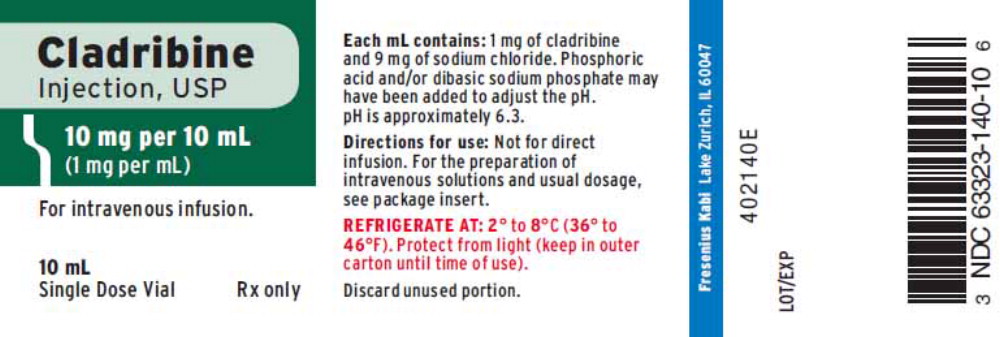
Cladribine 1 mg/mL Injection — NDC 63323-140-10 (Billing 63323-0140-10)
This is a package of Cladribine 1 mg/mL Injection from Fresenius Kabi USA, LLC, marketed since Dec 2004 and currently FDA-listed. It is this product's only package size.
NDC database record
One package, one record: these facts belong to NDC 63323-140-10 alone.
- Record
- FDA NDC Directory package listing · Human prescription drug
- Code segments
- 63323 labeler · 140 product · 10 package
- Package marketed since
- Dec 1, 2004
- Sample package
- No — commercial package
- Listing certified through
- Dec 31, 2026
- Barcode (UPC)
- 0363323140106
- Medicaid fills, this package
- 101 prescriptions in the last four reported quarters
- FDA record last changed
- Jul 24, 2026
Identity & classification
Regulatory identifiers FDA, NLM and CMS codes for this package
Drug-database identifiers Medi-Span GPI and First Databank GCN / HICL / AHFS classification
- GSN (GCN sequence number): 019181
- GCN: 00880
- GPI-14 (Medi-Span): 21300007002015
- HICL (First Databank): 007840
- AHFS class code: 10:00.00.00
- RxCUI (RxNorm): 240754
Where does this data come from?
- FDA openFDA NDC Directory · synced Oct 1, 2026
- FDA label on DailyMed · label index refreshed Oct 6, 2026
- RxNorm (NLM RxNav) · catalog refreshed Oct 1, 2026
- Medi-Span GPI (licensed)
- First Databank (licensed) · refreshed Oct 1, 2026
RxNorm drug class
This medicine belongs to the Purine Antimetabolite class.
Where does this data come from?
- RxClass (NLM) · catalog refreshed Oct 1, 2026
Clinical
Cladribine is used to treat hairy cell leukemia (cancer of a certain type of white blood cell). Cladribine is in a class of medications known as purine analogs. It works by stopping or slowing the growth of cancer cells.
Read the full MedlinePlus article ↗- It treats active hairy cell leukemia, a type of blood cancer. It is used when the disease is causing low blood counts or symptoms. It is given by IV by a team experienced in chemot...
- It goes into a vein as a continuous infusion. For hairy cell leukemia, the usual plan is one course over seven days. Your doctor will set the exact dose and schedule, so follow the...
- Fever, tiredness, nausea, rash, and headache are common. Most side effects other than blood count changes are mild to moderate. Your team will check your blood counts closely, espe...
- Call right away for a fever, cough, trouble breathing, or any sign of infection. Also report unusual bruising or bleeding, new weakness or numbness, changes in urination, or severe...
Patient education
Supplement & herbal interactions
Some supplements/herbs that may interact with Cladribine — tap one for details:
Where does this data come from?
- MedlinePlus (NLM) · refreshed Oct 1, 2026
- FDA label on DailyMed · label index refreshed Oct 6, 2026
Ask a licensed pharmacist directly — free, answered by our team.
Pricing
A drug doesn't have one price. Each row is a different public payment system, and none is what you'd pay at the counter — that depends on your insurance. The ⓘ on each row explains what it measures.
| Price system | Per each | Per package |
|---|---|---|
| Retail pharmacies payNADAC · weekly | Not in the retail survey — common for institutional, discontinued, or low-volume packs. | |
| Medicaid paysCMS SDUD · 12 mo | $6.38 | $6.38 / 1 vial |
| Medicare drug plans payPart D · quarterly | No Part D plan price is available for this NDC in our data. | |
| Medicare Part B allowsASP · J9065 | $8.188 / J9065 unit | — |
Where does this data come from?
- CMS NADAC weekly file
- CMS ASP pricing files · refreshed Sep 20, 2026
- CMS Medicaid State Drug Utilization Data · through Q1 2026
- CMS Part D plan pricing files · refreshed Sep 24, 2026
- VA National Acquisition Center price file
Billing & reimbursement
Where does this data come from?
- CMS ASP NDC-HCPCS crosswalk · refreshed Sep 22, 2026
- DMEPDAC NDC-HCPCS crosswalk
- openFDA NSDE billing units · refreshed Sep 7, 2026
Packaging — all sizes for this product
| Package NDC | Description | Marketing start | Marketing end | Status |
|---|---|---|---|---|
| 63323-0140-10 You're viewing this Main listing | 1 VIAL, SINGLE-DOSE in 1 CARTON / 10 mL in 1 VIAL, SINGLE-DOSE | 2004-12-01 | — | Active |
Therapeutic equivalents
| Product | Labeler | Pack | NADAC/unit | TE | Status | Price vs. this |
|---|---|---|---|---|---|---|
| Cladribine 1 mg/mL 00143-9871-01 | Hikma | 1 vial | — | AP | FDA listed | — |
| Cladribine 1 mg/mL 42658-0010-01 | Hisun | 1 ml | — | AP | FDA listed | — |
| Cladribine 1 mg/mLthis 63323-0140-10 | Fresenius | 1 vial | — | AP | FDA listed | — |
Where does this data come from?
- FDA openFDA NDC Directory · synced Oct 1, 2026
- FDA Orange Book · refreshed Oct 3, 2026
- CMS NADAC weekly file
Availability & generic status
This product is an FDA-approved generic. Other versions of the same drug are listed under Therapeutic equivalents, least expensive first.
Where does this data come from?
- FDA Orange Book · refreshed Oct 3, 2026
Inactive Ingredients / Excipients
Inactive ingredients, also called excipients, are components of the drug product other than the active ingredient. They may include fillers, dyes, coatings, preservatives, flavors, or other formulation ingredients.
🧪 Avoiding an ingredient? See Cladribine Injection inactive ingredients by manufacturer: every current product's list side by side, so you can ask your pharmacy for the version that does not list it.
💡 Tap an ingredient (hover on desktop) to see what it is and why it’s used.
-
UNII E4GA8884NN
Phosphoric acid is a weak mineral acid used in medicines as a buffer and pH adjuster. It helps stabilize the product and control its acidity level.
-
9 mg / 1 mL
UNII 451W47IQ8X
Sodium chloride is common table salt. It's used in medicines as a buffer to maintain proper pH, as a filler to add bulk, or to adjust the osmotic balance in liquid formulations.
-
UNII GR686LBA74
Sodium phosphate, dibasic is a salt derived from phosphoric acid. It acts as a buffer to help maintain the medicine's pH balance and may serve as a binder or filler in tablets and capsules.
3 inactive ingredients listed in the exact product block matched to this NDC.
Where does this data come from?
ingredient classCode="IACT" elements from the exact product block matched by this NDC. Label-section narrative from DailyMed / the openFDA label index is shown separately when available.- FDA label on DailyMed · label index refreshed Oct 6, 2026
- FDA openFDA NDC Directory · synced Oct 1, 2026
Inactive ingredient FAQ
Are inactive ingredients the same for every manufacturer?
Why might an inactive ingredient be missing?
Can inactive ingredients matter?
Manufacturer & labeler
More NDCs from Fresenius Kabi USA, LLC labeler code 63323
- Dacarbazine 10 mg/mL Injection, Powder, For Solution NDC 63323-128-20
- Doxy 100 DOXYCYCLINE 100 mg/10mL Injection, Powder, Lyophilized, For Solution NDC 63323-130-11
- Mitoxantrone 2 mg/mL Injection, Solution NDC 63323-132-10
- Pemetrexed 100 mg/4mL Injection, Powder, Lyophilized, For Solution NDC 63323-134-10
- Bleomycin 15 [USP'U]/1 Injection, Powder, Lyophilized, For Solution NDC 63323-136-10
- Bleomycin 30 [USP'U]/1 Injection, Powder, Lyophilized, For Solution NDC 63323-137-20
- Ifosfamide 1 g Injection, Powder, Lyophilized, For Solution NDC 63323-142-10
- Floxuridine 500 mg/5mL Injection, Powder, Lyophilized, For Solution NDC 63323-145-07
- Ketorolac Tromethamine 15 mg/mL Injection, Solution NDC 63323-161-01
- Ketorolac Tromethamine 30 mg/mL Injection, Solution NDC 63323-162-01
- LACTATED RINGERS SODIUM CHLORIDE, SODIUM LACTATE, POTASSIUM CHLORIDE, CALCIUM CHLORIDE 600 mg/100mL; 310 mg/100mL; 30 mg/100mL; 20 mg/100mL Injection, Solution NDC 63323-164-74
- Dexamethasone Sodium Phosphate 4 mg/mL Injection, Solution NDC 63323-165-01
Where does this data come from?
- FDA openFDA NDC Directory · synced Oct 1, 2026
- Drugs@FDA
Full prescribing information FDA SPL
🚨 Boxed Warning ▾
WARNING: Cladribine injection should be administered under the supervision of a qualified physician experienced in the use of antineoplastic therapy. Suppression of bone marrow function should be anticipated. This is usually reversible and appears to be dose dependent.
Serious neurological toxicity (including irreversible paraparesis and quadraparesis) has been reported in patients who received cladribine injection by continuous infusion at high doses (four to nine times the recommended dose for Hairy Cell Leukemia). Neurologic toxicity appears to demonstrate a dose relationship; however, severe neurological toxicity has been reported rarely following treatment with standard cladribine dosing regimens. Acute nephrotoxicity has been observed with high doses of cladribine injection (four to nine times the recommended dose for Hairy Cell Leukemia), especially when given concomitantly with other nephrotoxic agents/therapies.
🎯 Indications and Usage ▾
INDICATIONS AND USAGE: Cladribine Injection, USP is indicated for the treatment of active Hairy Cell Leukemia as defined by clinically significant anemia, neutropenia, thrombocytopenia or disease-related symptoms.
⏱️ Dosage and Administration ▾
DOSAGE AND ADMINISTRATION: Usual Dosage The recommended dose and schedule of cladribine injection for active Hairy Cell Leukemia is as a single course given by continuous infusion for seven consecutive days at a dose of 0.09 mg/kg/day. Deviations from this dosage regimen are not advised. If the patient does not respond to the initial course of cladribine injection for Hairy Cell Leukemia, it is unlikely that they will benefit from additional courses.
Physicians should consider delaying or discontinuing the drug if neurotoxicity or renal toxicity occurs (see WARNINGS ). Specific risk factors predisposing to increased toxicity from cladribine injection have not been defined. In view of the known toxicities of agents of this class, it would be prudent to proceed carefully in patients with known or suspected renal insufficiency or severe bone marrow impairment of any etiology.
Patients should be monitored closely for hematologic and non-hematologic toxicity (see WARNINGS and PRECAUTIONS ). Preparation and Administration of Intravenous Solutions Cladribine injection must be diluted with the designated diluent prior to administration. Since the drug product does not contain any antimicrobial preservative or bacteriostatic agent, aseptic technique and proper environmental precautions must be observed in preparation of cladribine injection solutions .
To prepare a single daily dose Cladribine injection should be passed through a sterile 0.22 μ m disposable hydrophilic syringe filter prior to introduction into the infusion bag, prior to each daily infusion. Add the calculated dose (0.09 mg/kg or 0.09 mL/kg) of cladribine injection through the sterile filter to an infusion bag containing 500 mL of 0.9% Sodium Chloride Injection, USP. Infuse continuously over 24 hours.
Repeat daily for a total of seven consecutive days. The use of 5% dextrose as a diluent is not recommended because of increased degradation of cladribine. Admixtures of cladribine injection are chemically and physically stable for at least 24 hours at room temperature under normal room fluorescent light in Baxter Viaflex ® PVC infusion containers.
Since limited compatibility data are available, adherence to the recommended diluents and infusion systems is advised. Dose of Cladribine Injection Recommended Diluent Quantity of Diluent 24-hour infusion method 1 (day) x 0.09 mg/kg 0.9% Sodium Chloride Injection, USP 500 mL To prepare a 7-day infusion The seven-day infusion solution should only be prepared with Bacteriostatic 0.9% Sodium Chloride Injection, USP (0.9% benzyl alcohol preserved). In order to minimize the risk of microbial contamination, both cladribine injection and the diluent should be passed through a sterile 0.22 μ m disposable hydrophilic syringe filter as each solution is being introduced into the infusion reservoir.
First add the calculated dose of cladribine injection (7 days x 0.09 mg/kg or mL/kg) to the infusion reservoir through the sterile filter. Then add a calculated amount of Bacteriostatic 0.9% Sodium Chloride Injection, USP (0.9% benzyl alcohol preserved) also through the filter to bring the total volume of the solution to 100 mL. After completing solution preparation, clamp off the line, disconnect and discard the filter.
Aseptically aspirate air bubbles from the reservoir as necessary using the syringe and a dry second sterile filter or a sterile vent filter assembly. Reclamp the line and discard the syringe and filter assembly. Infuse continuously over seven days.
Solutions prepared with Bacteriostatic Sodium Chloride Injection for individuals weighing more than 85 kg may have reduced preservative effectiveness due to greater dilution of the benzyl alcohol preservative. Admixtures for the seven-day infusion have demonstrated acceptable chemical and physical stability for at least seven days in the SIMS Deltec MEDICATION CASSETTE™ Reservoir. Dose of Cladribine Injection Recommended Diluent Quantity of Diluent 7-day infusion method (use sterile 0.… [Excerpted — this section continues on DailyMed.]
⛔ Contraindications ▾
CONTRAINDICATIONS: Cladribine Injection is contraindicated in those patients who are hypersensitive to this drug or any of its components.
⚠️ Warnings ▾
WARNINGS: Due to increased risk of infection in the setting of immunosuppression with chemotherapy including cladribine, it is recommended not to administer live attenuated vaccines to patients receiving cladribine injection. Severe bone marrow suppression, including neutropenia, anemia and thrombocytopenia, has been commonly observed in patients treated with cladribine injection, especially at high doses. At initiation of treatment, most patients in the clinical studies had hematologic impairment as a manifestation of active Hairy Cell Leukemia.
Following treatment with cladribine injection, further hematologic impairment occurred before recovery of peripheral blood counts began. During the first two weeks after treatment initiation, mean Platelet Count, ANC, and Hemoglobin concentration declined and subsequently increased with normalization of mean counts by Day 12, Week 5 and Week 8, respectively. The myelosuppressive effects of cladribine injection were most notable during the first month following treatment.
Forty-four percent (44%) of patients received transfusions with RBCs and 14% received transfusions with platelets during Month 1. Careful hematologic monitoring, especially during the first four to eight weeks after treatment with cladribine injection, is recommended (see PRECAUTIONS ). Fever (T ≥ 100°F) was associated with the use of cladribine injection in approximately two-thirds of patients (131/196) in the first month of therapy.
Virtually all of these patients were treated empirically with parenteral antibiotics. Overall, 47% (93/196) of all patients had fever in the setting of neutropenia (ANC ≤ 1,000), including 62 patients (32%) with severe neutropenia (i.e., ANC ≤ 500). In a Phase I investigational study using cladribine injection in high doses (four to nine times the recommended dose for Hairy Cell Leukemia) as part of a bone marrow transplant conditioning regimen, which also included high dose cyclophosphamide and total body irradiation, acute nephrotoxicity and delayed onset neurotoxicity were observed.
Thirty-one (31) poor-risk patients with drug-resistant acute leukemia in relapse (29 cases) or non-Hodgkins Lymphoma (two cases) received cladribine for 7 to 14 days prior to bone marrow transplantation. During infusion, eight patients experienced gastrointestinal symptoms. While the bone marrow was initially cleared of all hematopoietic elements, including tumor cells, leukemia eventually recurred in all treated patients.
Within 7 to 13 days after starting treatment with cladribine, six patients (19%) developed manifestations of renal dysfunction (e.g., acidosis, anuria, elevated serum creatinine, etc.) and five required dialysis. Several of these patients were also being treated with other medications having known nephrotoxic potential. Renal dysfunction was reversible in two of these patients.
In the four patients whose renal function had not recovered at the time of death, autopsies were performed; in two of these, evidence of tubular damage was noted. Eleven (11) patients (35%) experienced delayed onset neurologic toxicity. In the majority, this was characterized by progressive irreversible motor weakness (paraparesis/quadriparesis), of the upper and/or lower extremities, first noted 35 to 84 days after starting high dose therapy with cladribine.
Non-invasive testing (electromyography and nerve conduction studies) was consistent with demyelinating disease. Severe neurologic toxicity has also been noted with high doses of another drug in this class. Axonal peripheral polyneuropathy was observed in a dose escalation study at the highest dose levels (approximately four times the recommended dose for Hairy Cell Leukemia) in patients not receiving cyclophosphamide or total body irradiation.
Severe neurological toxicity has been reported rarely following treatment with standard cladribine dosing regimens. In patients with Hairy Cell Leukemia treated with the recommended treatment regimen (0.09 mg/kg/day for… [Excerpted — this section continues on DailyMed.]
🤒 Adverse Reactions ▾
ADVERSE REACTIONS: Clinical Trials Experience Adverse drug reactions reported by ≥ 1% of cladribine-treated patients with HCL noted in the HCL clinical dataset (studies K90-091 and L91-048, n=576) are shown in the table below. Adverse Drug Reactions in ≥ 1% of Patients Treated with Cladribine in HCL Clinical Trials System Organ Class Preferred Term Cladribine (n=576) % Blood and Lymphatic System Disorder (see also sections WARNINGS and PRECAUTIONS ) Anemia 1 Febrile neutropenia 8 Psychiatric Disorders Anxiety 1 Insomnia 3 Nervous System Disorders Dizziness 6 Headache 14 Cardiac Disorders Tachycardia 2 Respiratory, Thoracic and Mediastinal Disorders Breath sounds abnormal 4 Cough 7 Dyspnea* 5 Rales 1 Gastrointestinal Disorders Abdominal pain** 4 Constipation 4 Diarrhea 7 Flatulence 1 Nausea 22 Vomiting 9 Skin and Subcutaneous Tissue Disorders Ecchymosis 2 Hyperhidrosis 3 Petechiae 2 Pruritus 2 Rash*** 16 Musculoskeletal, Connective Tissue, and Bone Disorders Arthralgia 3 Myalgia 6 Pain**** 6 General Disorders and Administration Site Conditions (see also sections WARNINGS and PRECAUTIONS ) Administration site reaction***** 11 Asthenia 6 Chills 2 Decreased appetite 8 Fatigue 31 Malaise 5 Muscular weakness 1 Edema peripheral 2 Pyrexia 33 Injury, Poisoning and Procedural Complications Contusion 1 * Dyspnea includes dyspnea, dyspnea exertional, and wheezing ** Abdominal pain includes abdominal discomfort, abdominal pain, and abdominal pain (lower and upper) *** Rash includes erythema, rash, and rash (macular, macula-papular, papular, pruritic, pustular and erythematous) **** Pain includes pain, back pain, chest pain, arthritis pain, bone pain, and pain in extremity *****Administration site reaction includes administration site reaction, catheter site (cellulitis, erythema, hemorrhage, and pain), and infusion site reaction (erythema, edema, and pain) The following safety data are based on 196 patients with Hairy Cell Leukemia: the original cohort of 124 patients plus an additional 72 patients enrolled at the same two centers after the original enrollment cutoff.
In Month 1 of the Hairy Cell Leukemia clinical trials, severe neutropenia was noted in 70% of patients, fever in 69%, and infection was documented in 28%. Most non-hematologic adverse experiences were mild to moderate in severity. Myelosuppression was frequently observed during the first month after starting treatment.
Neutropenia (ANC < 500 x 10 6 /L) was noted in 70% of patients, compared with 26% in whom it was present initially. Severe anemia (Hemoglobin < 8.5 g/dL) developed in 37% of patients, compared with 10% initially and thrombocytopenia (Platelets < 20 x 10 9 /L) developed in 12% of patients, compared to 4% in whom it was noted initially. During the first month, 54 of 196 patients (28%) exhibited documented evidence of infection.
Serious infections (e.g., septicemia, pneumonia) were reported in 6% of all patients; the remainder were mild or moderate. Several deaths were attributable to infection and/or complications related to the underlying disease. During the second month, the overall rate of documented infection was 6%; these infections were mild to moderate and no severe systemic infections were seen.
After the third month, the monthly incidence of infection was either less than or equal to that of the months immediately preceding cladribine therapy. During the first month, 11% of patients experienced severe fever (i.e., ≥ 104°F). Documented infections were noted in fewer than one-third of febrile episodes.
Of the 196 patients studied, 19 were noted to have a documented infection in the month prior to treatment. In the month following treatment, there were 54 episodes of documented infection: 23 (42%) were bacterial, 11 (20%) were viral and 11 (20%) were fungal. Seven (7) of 8 documented episodes of herpes zoster occurred during the month following treatment.
Fourteen (14) of 16 episodes of documented fungal infections occurred in the first two months following… [Excerpted — this section continues on DailyMed.]
🆘 Overdosage ▾
OVERDOSAGE: High doses of cladribine have been associated with: irreversible neurologic toxicity (paraparesis/quadriparesis), acute nephrotoxicity, and severe bone marrow suppression resulting in neutropenia, anemia and thrombocytopenia (see WARNINGS ). There is no known specific antidote to overdosage. Treatment of overdosage consists of discontinuation of cladribine, careful observation, and appropriate supportive measures.
It is not known whether the drug can be removed from the circulation by dialysis or hemofiltration.
🧬 Clinical Pharmacology ▾
CLINICAL PHARMACOLOGY: Cellular Resistance and Sensitivity The selective toxicity of 2-chloro-2’-deoxy-ß-D-adenosine towards certain normal and malignant lymphocyte and monocyte populations is based on the relative activities of deoxycytidine kinase and deoxynucleotidase. Cladribine passively crosses the cell membrane. In cells with a high ratio of deoxycytidine kinase to deoxynucleotidase, it is phosphorylated by deoxycytidine kinase to 2-chloro-2’-deoxy-ß-D-adenosine monophosphate (2-CdAMP).
Since 2-chloro-2’-deoxy-ß-D-adenosine is resistant to deamination by adenosine deaminase and there is little deoxynucleotide deaminase in lymphocytes and monocytes, 2-CdAMP accumulates intracellularly and is subsequently converted into the active triphosphate deoxynucleotide,2-chloro-2’-deoxy-ß-D-adenosine triphosphate (2-CdATP). It is postulated that cells with high deoxycytidine kinase and low deoxynucleotidase activities will be selectively killed by 2-chloro-2’-deoxy-ß-D-adenosine as toxic deoxynucleotides accumulate intracellularly.
Cells containing high concentrations of deoxynucleotides are unable to properly repair single-strand DNA breaks. The broken ends of DNA activate the enzyme poly (ADP-ribose) polymerase resulting in NAD and ATP depletion and disruption of cellular metabolism. There is evidence, also, that 2-CdATP is incorporated into the DNA of dividing cells, resulting in impairment of DNA synthesis.
Thus, 2-chloro-2’-deoxy-ß-D-adenosine can be distinguished from other chemotherapeutic agents affecting purine metabolism in that it is cytotoxic to both actively dividing and quiescent lymphocytes and monocytes, inhibiting both DNA synthesis and repair. Pharmacokinetics In a clinical investigation, 17 patients with Hairy Cell Leukemia (HCL) and normal renal function were treated for seven days with the recommended treatment regimen of cladribine injection (0.09 mg/kg/day) by continuous intravenous infusion. The mean steady-state serum concentration was estimated to be 5.7 ng/mL with an estimated systemic clearance of 663.5 mL/h/kg when cladribine injection was given by continuous infusion over seven days.
In Hairy Cell Leukemia patients, there does not appear to be a relationship between serum concentrations and ultimate clinical outcome. In another study, eight patients with hematologic malignancies received a two (2) hour infusion of cladribine injection (0.12 mg/kg). The mean end-of-infusion plasma cladribine injection concentration was 48 ± 19 ng/mL.
For five of these patients, the disappearance of cladribine injection could be described by either a biphasic or triphasic decline. For these patients with normal renal function, the mean terminal half-life was 5.4 hours. Mean values for clearance and steady-state volume of distribution were 978 ± 422 mL/h/kg and 4.5 ±
2.8L/kg, respectively. Cladribine plasma concentration after intravenous administration declines multi-exponentially with an average half-life of 6.7 +/- 2.5 hours. In general, the apparent volume of distribution of cladribine is approximately 9 L/kg, indicating an extensive distribution in body tissues.
Cladribine penetrates into cerebrospinal fluid. One report indicates that concentrations are approximately 25% of those in plasma. Cladribine injection is bound approximately 20% to plasma proteins.
Except for some understanding of the mechanism of cellular toxicity, no other information is available on the metabolism of cladribine injection in humans. An average of 18% of the administered dose has been reported to be excreted in urine of patients with solid tumors during a five-day continuous intravenous infusion of 3.5 to 8.1 mg/m 2 /day of cladribine injection. The effect of renal and hepatic impairment on the elimination of cladribine has not been investigated in humans.
Cellular Resistance and Sensitivity The selective toxicity of 2-chloro-2’-deoxy-ß-D-adenosine towards certain normal and malignant lymphocyte and monocyte populations is based on the re… [Excerpted — this section continues on DailyMed.]
📦 How Supplied / Storage and Handling ▾
HOW SUPPLIED: Product No. NDC No. 104010 63323-140-10 Cladribine Injection, USP is available as 10 mg per 10 mL (1 mg per mL), single-dose vial, packaged individually. Store refrigerated 2° to 8°C (36° to 46°F). Protect from light (keep in outer carton until time of use). The container closure is not made with natural rubber latex.
📋 Description ▾
DESCRIPTION: Cladribine Injection, USP (also commonly known as 2-chloro-2’-deoxy-ß-D-adenosine) is a synthetic antineoplastic agent for continuous intravenous infusion. It is a clear, colorless, sterile, preservative-free, isotonic solution. Cladribine injection, USP is available in single-dose vials containing 10 mg (1 mg/mL) of cladribine, a chlorinated purine nucleoside analog.
Each milliliter of cladribine injection, USP contains 1 mg of the active ingredient and 9 mg (0.15 mEq) of sodium chloride as an inactive ingredient. The solution has a pH range of 5.5 to 8.0. Phosphoric acid and/or dibasic sodium phosphate may have been added to adjust the pH to 6.3 ± 0.3.
The chemical name for cladribine is 2-chloro-6-amino-9-(2-deoxy-ß-D-erythropento-furanosyl) purine and the structure is represented below: structure
⚠️ Precautions ▾
PRECAUTIONS: General Cladribine injection is a potent antineoplastic agent with potentially significant toxic side effects. It should be administered only under the supervision of a physician experienced with the use of cancer chemotherapeutic agents. Patients undergoing therapy should be closely observed for signs of hematologic and non-hematologic toxicity.
Periodic assessment of peripheral blood counts, particularly during the first four to eight weeks posttreatment, is recommended to detect the development of anemia, neutropenia and thrombocytopenia and for early detection of any potential sequelae (e.g., infection or bleeding). As with other potent chemotherapeutic agents, monitoring of renal and hepatic function is also recommended, especially in patients with underlying kidney or liver dysfunction (see WARNINGS and ADVERSE REACTIONS ). Fever was a frequently observed side effect during the first month on study.
Since the majority of fevers occurred in neutropenic patients, patients should be closely monitored during the first month of treatment and empiric antibiotics should be initiated as clinically indicated. Although 69% of patients developed fevers, less than 1/3 of febrile events were associated with documented infection. Given the known myelosuppressive effects of cladribine, practitioners should carefully evaluate the risks and benefits of administering this drug to patients with active infections (see WARNINGS and ADVERSE REACTIONS ).
There are inadequate data on dosing of patients with renal or hepatic insufficiency. Development of acute renal insufficiency in some patients receiving high doses of cladribine has been described. Until more information is available, caution is advised when administering the drug to patients with known or suspected renal or hepatic insufficiency (see WARNINGS ).
Rare cases of tumor lysis syndrome have been reported in patients treated with cladribine with other hematologic malignancies having a high tumor burden. Cladribine injection must be diluted in designated intravenous solutions prior to administration (see DOSAGE AND ADMINISTRATION ). Laboratory Tests During and following treatment, the patient’s hematologic profile should be monitored regularly to determine the degree of hematopoietic suppression.
In the clinical studies, following reversible declines in all cell counts, the mean Platelet Count reached 100 x 10 9 /L by Day 12, the mean Absolute Neutrophil Count reached 1,500 x 10 6 /L by Week 5 and the mean Hemoglobin reached 12 g/dL by Week 8. After peripheral counts have normalized, bone marrow aspiration and biopsy should be performed to confirm response to treatment with cladribine. Febrile events should be investigated with appropriate laboratory and radiologic studies.
Periodic assessment of renal function and hepatic function should be performed as clinically indicated. Drug Interactions There are no known drug interactions with cladribine injection. Caution should be exercised if cladribine injection is administered before, after, or in conjunction with other drugs known to cause immunosuppression or myelosuppression (see WARNINGS ).
Carcinogenesis No animal carcinogenicity studies have been conducted with cladribine. However, its carcinogenic potential cannot be excluded based on demonstrated genotoxicity of cladribine. Mutagenesis As expected for compounds in this class, the actions of cladribine yield DNA damage.
In mammalian cells in culture, cladribine caused the accumulation of DNA strand breaks. Cladribine was also incorporated into DNA of human lymphoblastic leukemia cells. Cladribine was not mutagenic in vitro (Ames and Chinese hamster ovary cell gene mutation tests) and did not induce unscheduled DNA synthesis in primary rat hepatocyte cultures.
However, cladribine was clastogenic both in vitro (chromosome aberrations in Chinese hamster ovary cells) and in vivo (mouse bone marrow micronucleus test). Impairment of Fertility The effect on human fertility i… [Excerpted — this section continues on DailyMed.]
🔬 Clinical Studies ▾
CLINICAL STUDIES: Two single-center open label studies of cladribine injection have been conducted in patients with Hairy Cell Leukemia with evidence of active disease requiring therapy. In the study conducted at the Scripps Clinic and Research Foundation (Study A), 89 patients were treated with a single course of cladribine injection given by continuous intravenous infusion for seven days at a dose of 0.09 mg/kg/day. In the study conducted at the M.D.
Anderson Cancer Center (Study B), 35 patients were treated with a seven-day continuous intravenous infusion of cladribine injection at a comparable dose of 3.6 mg/m 2 /day. A complete response (CR) required clearing of the peripheral blood and bone marrow of hairy cells and recovery of the hemoglobin to 12 g/dL, platelet count to 100 x 10 9 /L, and absolute neutrophil count to 1,500 x 10 6 /L. A good partial response (GPR) required the same hematologic parameters as a complete response, and that fewer than 5% hairy cells remain in the bone marrow.
A partial response (PR) required that hairy cells in the bone marrow be decreased by at least 50% from baseline and the same response for hematologic parameters as for complete response. A pathologic relapse was defined as an increase in bone marrow hairy cells to 25% of pretreatment levels. A clinical relapse was defined as the recurrence of cytopenias, specifically, decreases in hemoglobin ≥ 2 g/dL, ANC ≥ 25% or platelet counts ≥ 50,000.
Patients who met the criteria for a complete response but subsequently were found to have evidence of bone marrow hairy cells (< 25% of pretreatment levels) were reclassified as partial responses and were not considered to be complete responses with relapse. Among patients evaluable for efficacy (N=106), using the hematologic and bone marrow response criteria described above, the complete response rates in patients treated with cladribine injection were 65% and 68% for Study A and Study B, respectively, yielding a combined complete response rate of 66%.
Overall response rates (i.e., Complete plus Good Partial plus Partial Responses) were 89% and 86% in Study A and Study B, respectively, for a combined overall response rate of 88% in evaluable patients treated with cladribine injection. Using an intent-to-treat analysis (N=123) and further requiring no evidence of splenomegaly as a criterion for CR (i.e., no palpable spleen on physical examination and ≤ 13 cm on CT scan), the complete response rates for Study A and Study B were 54% and 53%, respectively, giving a combined CR rate of 54%.
The overall response rates (CR + GPR + PR) were 90% and 85%, for Studies A and B, respectively, yielding a combined overall response rate of 89%. RESPONSE RATES TO CLADRIBINE INJECTION TREATMENT IN PATIENTS WITH HAIRY CELL LEUKEMIA CR Overall Evaluable Patients N=106 66% 88% Intent-to-treat Population N=123 54% 89% In these studies, 60% of the patients had not received prior chemotherapy for Hairy Cell Leukemia or had undergone splenectomy as the only prior treatment and were receiving cladribine injection as a first-line treatment.
The remaining 40% of the patients received cladribine injection as a second-line treatment, having been treated previously with other agents, including α-interferon and/or deoxycoformycin. The overall response rate for patients without prior chemotherapy was 92%, compared with 84% for previously treated patients. Cladribine injection is active in previously treated patients; however, retrospective analysis suggests that the overall response rate is decreased in patients previously treated with splenectomy or deoxycoformycin and in patients refractory to α-interferon.
OVERALL RESPONSE RATES (CR + GPR + PR) TO CLADRIBINE INJECTION TREATMENT IN PATIENTS WITH HAIRY CELL LEUKEMIA OVERALL RESPONSE (N=123) NR + RELAPSE No Prior Chemotherapy 68/74 92% 6 + 4 14% Any Prior Chemotherapy 41/49 84% 8 +3 22% Previous Splenectomy 32/41* 78% 9 + 1 24% Previous Interferon 40/48 83% 8 + 3 23% Interferon Ref… [Excerpted — this section continues on DailyMed.]
📚 References ▾
REFERENCES: Santana VM, Mirro J, Harwood FC, et al : A phase I clinical trial of 2-Chloro-deoxyadenosine in pediatric patients with acute leukemia. J. Clin.
Onc ., 9: 416(1991). Recommendations for the Safe Handling of Parenteral Antineoplastic Drugs. NIH Publication No.
83-2621. For sale by the Superintendent of Documents, U.S. Government Printing Office, Washington D.C.
20402. AMA Council Report. Guidelines for Handling Parenteral Antineoplastics, JAMA , March 15 (1985).
National Study Commission on Cytotoxic Exposure-Recommendations for Handling Cytotoxic Agents. Available from Louis P. Jeffrey, Sc.D., Chairman, National Study Commission on Cytotoxic Exposure, Massachusetts College of Pharmacy and Allied Health Sciences, 179 Longwood Avenue, Boston, Massachusetts 02115.
Clinical Oncological Society of Australia: Guidelines and Recommendations for Safe Handling of Antineoplastic Agents, Med. J. Australia 1:425 (1983).
Jones RB, et al . Safe Handling of Chemotherapeutic Agents: A Report from the Mount Sinai Medical Center. Ca—A Cancer Journal for Clinicians , Sept/Oct.
258-263 (1983). American Society of Hospital Pharmacists Technical Assistance Bulletin on Handling Cytotoxic Drugs in Hospitals. Am.
J. Hosp. Pharm. , 42:131 (1985).
OSHA Work-Practice Guidelines for Personnel Dealing with Cytotoxic (antineoplastic) Drugs. Am. J.
Hosp. Pharm. , 43:1193 (1986). The brand names mentioned in this document are the trademarks of their respective owners.
📄 Package Label / Principal Display Panel ▾
PACKAGE LABEL - PRINCIPAL DISPLAY - Cladribine 10 mL Single Dose Vial Label Cladribine Injection, USP 10 mg per 10 mL ( 1 mg per mL ) For intravenous infusion. 10 mL Single Dose Vial Rx only PACKAGE LABEL - PRINCIPAL DISPLAY - Cladribine 10 mL Single Dose Vial Carton Panel Cladribine Injection, USP 10 mg per 10 mL ( 1 mg per mL ) For intravenous infusion. vial carton
Medicaid utilization & spend
Medicare Part D spend CMS · PART D · 2026 (Q1)
About this NDC listing & data coverage
What data is (and isn’t) available for this NDC — tap to expand
| NDC identity (package / product / labeler codes) | ✓ Available |
| Labeler | ✓ Available |
| Product & package description | ✓ Available |
| Marketing category & status | ✓ Available |
| Active ingredient / dosage form / route | ✓ Available |
| FDA label (SPL via DailyMed) | ✓ Available |
| Package photos | ✓ Available |
| Inactive ingredients (structured) | ✓ Available |
| NADAC pharmacy acquisition price (CMS) | — Not published for this NDC CMS publishes NADAC only for NDCs reported in its retail-pharmacy survey. |
| Orange Book / therapeutic-equivalence data | ✓ Available |
| HCPCS J-code billing crosswalk | ✓ Available |
| Medicaid utilization (CMS SDUD) | ✓ Available |