
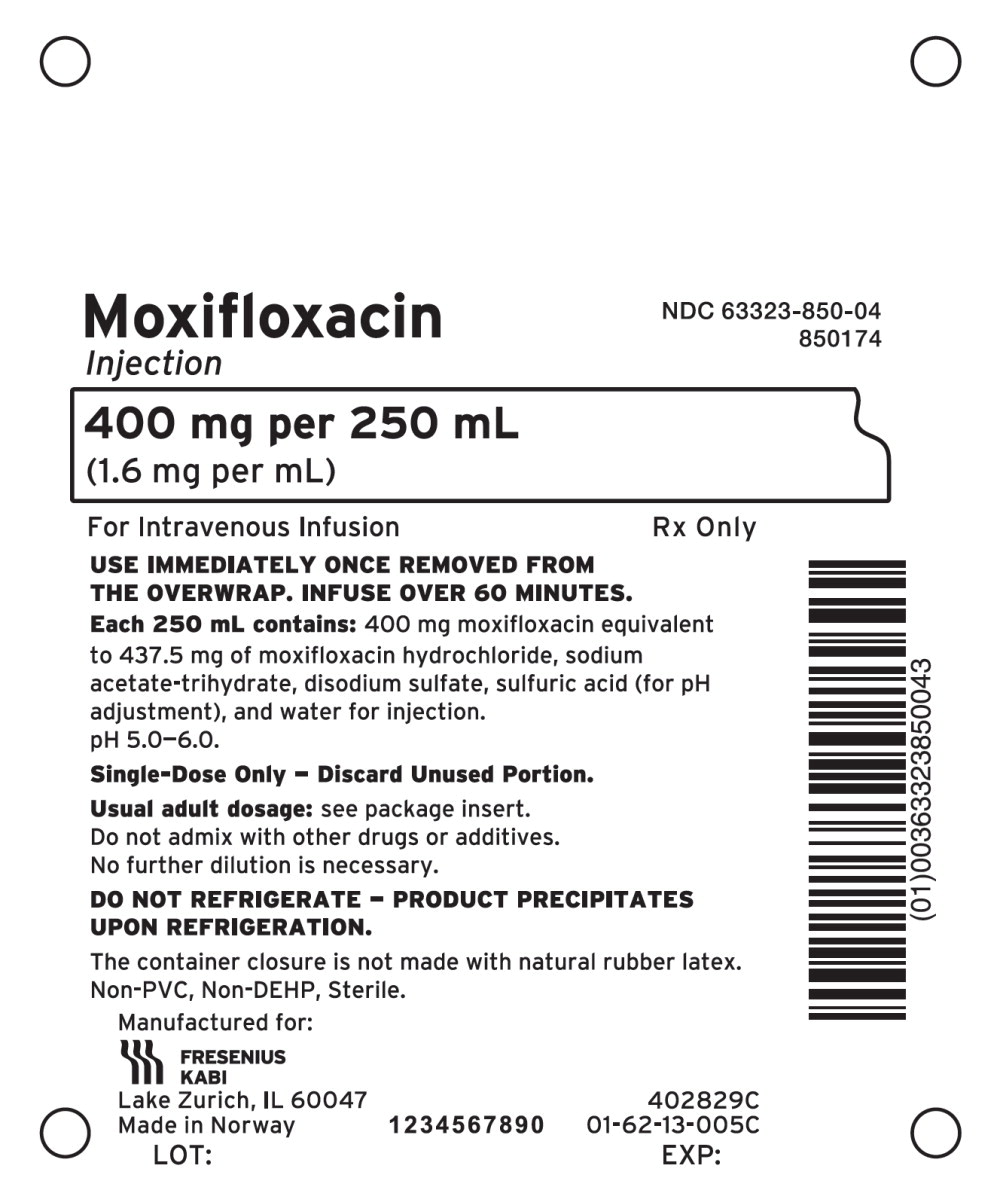
Moxifloxacin 400 mg/250mL Injection, Solution — NDC 63323-850-04 (Billing 63323-0850-04)
This is a package of Moxifloxacin 400 mg/250mL Injection, Solution from Fresenius Kabi USA, LLC, marketed since Mar 2015 and currently FDA-listed. It is the main listing for this product, which comes in 2 package sizes.
NDC database record
One package, one record: these facts belong to NDC 63323-850-04 alone.
- Record
- FDA NDC Directory package listing · Human prescription drug
- Code segments
- 63323 labeler · 850 product · 04 package
- Package marketed since
- Mar 18, 2015
- Sample package
- No — commercial package
- Listing certified through
- Dec 31, 2026
- Barcode (UPC-A, from the NDC)
- 3 6332385004 3
- FDA record last changed
- Jul 24, 2026
Identity & classification
Regulatory identifiers FDA, NLM and CMS codes for this package
Drug-database identifiers Medi-Span GPI and First Databank GCN / HICL / AHFS classification
- GSN (GCN sequence number): 074502
- GCN: 39172
- GPI-14 (Medi-Span): 05000037102020
- HICL (First Databank): 042339
- AHFS class code: 08:12.18.00
- RxCUI (RxNorm): 351156
Where does this data come from?
- FDA openFDA NDC Directory · synced Oct 8, 2026
- FDA label on DailyMed · label index refreshed Oct 8, 2026
- RxNorm (NLM RxNav) · catalog refreshed Oct 1, 2026
- Medi-Span GPI (licensed)
- First Databank (licensed) · refreshed Oct 8, 2026
RxNorm drug class
This medicine belongs to the Fluoroquinolone Antibacterial class.
Where does this data come from?
- RxClass (NLM) · catalog refreshed Oct 1, 2026
Clinical
- It treats certain bacterial infections in adults, like community acquired pneumonia, skin infections and abdominal infections. It can also be used for sinusitis or chronic bronchit...
- What is Moxifloxacin Injection used for?
- It is given through an IV, usually once a day over about an hour. A healthcare professional runs the infusion. Your doctor may later switch you to tablets if that suits you.
- The most common are nausea, diarrhea, headache and dizziness. Many people have little trouble, but tell your care team if something bothers you.
Patient education
Supplement & herbal interactions
Moxifloxacin may be associated with lower levels of 11 nutrients — worth a chat with your pharmacist, not a cause for alarm.
Where does this data come from?
- MedlinePlus (NLM) · refreshed Oct 8, 2026
- FDA label on DailyMed · label index refreshed Oct 8, 2026
Ask a licensed pharmacist directly — free, answered by our team.
Pricing
A drug doesn't have one price. Each row is a different public payment system, and none is what you'd pay at the counter — that depends on your insurance. The ⓘ on each row explains what it measures.
| Price system | Per mL | Per package |
|---|---|---|
| Retail pharmacies payNADAC · weekly | Not in the retail survey — common for institutional, discontinued, or low-volume packs. | |
| Medicaid paysCMS SDUD · 12 mo | No recent Medicaid claims on file for this NDC — rare and low-volume NDCs are suppressed in the public data. | |
| Medicare drug plans payPart D · Q2 2026 | $0.1600 | $480.00 / 3000 ml |
Where does this data come from?
- CMS NADAC weekly file
- CMS ASP pricing files · refreshed Sep 20, 2026
- CMS Medicaid State Drug Utilization Data · refreshed Oct 8, 2026
- CMS Part D plan pricing files · refreshed Sep 24, 2026
- VA National Acquisition Center price file
Packaging — all sizes for this product
| Package NDC | Description | Marketing start | Marketing end | Status |
|---|---|---|---|---|
| 63323-0850-74 63323-850-74 | 250 mL in 1 BAG | 2015-03-18 | — | Active |
| 63323-0850-04 You're viewing this Main listing | 12 BAG in 1 CASE / 250 mL in 1 BAG | 2015-03-18 | — | Active |
Pack size FAQ
What quantity is in this package?
What NDC number is used to bill for this package of Moxifloxacin 400 mg/250mL Injection, Solution?
Therapeutic equivalents
| Product | Labeler | Pack | NADAC/unit | TE | Status | Price vs. this |
|---|---|---|---|---|---|---|
| Moxifloxacin 400 mg/250mLthis 63323-0850-04 | Fresenius | 250 ml | — | — | FDA listed | — |
| Moxifloxacin 400 mg/250mL 66298-8507-04 | Hp | 250 ml | — | — | FDA listed | — |
| Moxifloxacin Hydrochloride 400 mg/250mL 67457-0323-25 | Mylan | 250 ml | — | — | FDA listed | — |
Where does this data come from?
- FDA openFDA NDC Directory · synced Oct 8, 2026
- FDA Orange Book · refreshed Oct 3, 2026
- CMS NADAC weekly file
Availability & generic status
The FDA lists approved generic versions of this medicine, but that does not always mean a pharmacy can get one today. Patent rules, launch agreements, supply and pricing can affect when generics actually arrive.
Where does this data come from?
- FDA Orange Book · refreshed Oct 3, 2026
Inactive Ingredients / Excipients
Inactive ingredients, also called excipients, are components of the drug product other than the active ingredient. They may include fillers, dyes, coatings, preservatives, flavors, or other formulation ingredients.
🧪 Avoiding an ingredient? See Moxifloxacin Injection inactive ingredients by manufacturer: every current product's list side by side, so you can ask your pharmacy for the version that does not list it.
💡 Tap an ingredient (hover on desktop) to see what it is and why it’s used.
-
UNII 4550K0SC9B
Sodium acetate is a salt derived from acetic acid. It acts as a buffer to help maintain the medicine's pH stability and may serve as a preservative or solubilizer in liquid formulations.
-
UNII 0YPR65R21J
Sodium sulfate is a mineral salt used in pharmaceuticals as a filler and diluent. It helps provide bulk and stability to tablets and capsules while remaining inert in the body.
-
UNII O40UQP6WCF
A strong acid used in small amounts to adjust and maintain the pH balance of a medicine, helping ensure stability and proper dissolution of the active ingredients.
-
UNII 059QF0KO0R
Water is a liquid solvent that dissolves and mixes ingredients together in liquid medicines, syrups, and injections. It helps distribute the active drug evenly throughout the product.
4 inactive ingredients listed in the exact product block matched to this NDC.
Where does this data come from?
ingredient classCode="IACT" elements from the exact product block matched by this NDC. Label-section narrative from DailyMed / the openFDA label index is shown separately when available.- FDA label on DailyMed · label index refreshed Oct 8, 2026
- FDA openFDA NDC Directory · synced Oct 8, 2026
Inactive ingredient FAQ
Are inactive ingredients the same for every manufacturer?
Why might an inactive ingredient be missing?
Can inactive ingredients matter?
Manufacturer & labeler
More NDCs from Fresenius Kabi USA, LLC labeler code 63323
- Amikacin Sulfate 250 mg/mL Injection, Solution NDC 63323-815-02
- Smoflipid 6 g/100mL; 6 g/100mL; 5 g/100mL; 3 g/100mL Injection, Emulsion NDC 63323-820-00
- Bortezomib 3.5 mg Injection, Powder, Lyophilized, For Solution NDC 63323-821-10
- Ertapenem 1 g Injection, Powder, Lyophilized, For Solution NDC 63323-823-20
- Dextrose 100 mg/mL Injection, Solution NDC 63323-824-74
- Dicyclomine Hydrochloride 10 mg/mL Injection, Solution NDC 63323-842-02
- Hydromorphone Hydrochloride 10 mg/mL Injection, Solution NDC 63323-851-10
- Hydromorphone Hydrochloride 1 mg/mL Injection, Solution NDC 63323-852-25
- Hydromorphone Hydrochloride 2 mg/mL Injection, Solution NDC 63323-853-25
- Hydromorphone Hydrochloride 4 mg/mL Injection, Solution NDC 63323-854-10
- Calcitonin Salmon 200 [iU]/mL Injection, Solution NDC 63323-865-02
- Dextrose and Sodium Chloride 5 g/100mL; .3 g/100mL Injection, Solution NDC 63323-867-10
Where does this data come from?
- FDA openFDA NDC Directory · synced Oct 8, 2026
- Drugs@FDA
Full prescribing information FDA SPL
🚨 Boxed Warning ▾
WARNING: SERIOUS ADVERSE REACTIONS INCLUDING TENDINITIS, TENDON RUPTURE, PERIPHERAL NEUROPATHY, CENTRAL NERVOUS SYSTEM EFFECTS and EXACERBATION OF MYASTHENIA GRAVIS Fluoroquinolones, including moxifloxacin, have been associated with disabling and potentially irreversible serious adverse reactions that have occurred together [see Warnings and Precautions ( 5.1 )] , including: Tendinitis and tendon rupture [see Warnings and Precautions ( 5.2 )] Peripheral neuropathy [see Warnings and Precautions ( 5.3 )] Central nervous system effects [see Warnings and Precautions ( 5.4 )] Discontinue Moxifloxacin Injection immediately and avoid the use of fluoroquinolones, including Moxifloxacin Injection, in patients who experience any of these serious adverse reactions [see Warnings and Precautions ( 5.1 )] .
Fluoroquinolones, including moxifloxacin, may exacerbate muscle weakness in patients with myasthenia gravis. Avoid Moxifloxacin Injection in patients with known history of myasthenia gravis [see Warnings and Precautions ( 5.5 )]. Because fluoroquinolones, including moxifloxacin, have been associated with serious adverse reactions [see Warnings and Precautions ( 5.1 to 5.14 )] , reserve Moxifloxacin Injection for use in patients who have no alternative treatment options for the following indications: Acute sinusitis [see Indications and Usage ( 1.5 )] Acute bacterial exacerbation of chronic bronchitis [see Indications and Usage ( 1.6 )] WARNING: SERIOUS ADVERSE REACTIONS INCLUDING TENDINITIS, TENDON RUPTURE, PERIPHERAL NEUROPATHY, CENTRAL NERVOUS SYSTEM EFFECTS and EXACERBATION OF MYASTHENIA GRAVIS See full prescribing Information for complete boxed warning Fluoroquinolones, including moxifloxacin, have been associated with disabling and potentially irreversible serious adverse reactions that have occurred together ( 5.1 ) including: Tendinitis and tendon rupture ( 5.2 ) Peripheral neuropathy ( 5.3 ) Central nervous system effects ( 5.4 ) Discontinue Moxifloxacin Injection immediately and avoid the use of fluoroquinolones, including Moxifloxacin Injection, in patients who experience any of these serious adverse reactions.
Fluoroquinolones, including moxifloxacin, may exacerbate muscle weakness in patients with myasthenia gravis. Avoid Moxifloxacin Injection in patients with known history of myasthenia gravis ( 5.5 ). Because fluoroquinolones, including moxifloxacin, have been associated with serious adverse reactions ( 5.1 to 5.14 ), reserve Moxifloxacin Injection for use in patients who have no alternative treatment options for the following indications: Acute bacterial sinusitis ( 1.5 ) Acute bacterial exacerbation of chronic bronchitis ( 1.6 )
🎯 Indications and Usage ▾
1 INDICATIONS AND USAGE Moxifloxacin Injection is a fluoroquinolone antibacterial drug indicated for treating infections in adults ≥ 18 years of age caused by designated, susceptible bacteria. ( 1 , 12.4 ) Community Acquired Pneumonia ( 1.1 ) Skin and Skin Structure Infections: Uncomplicated ( 1.2 ) and Complicated ( 1.3 ) Complicated Intra-Abdominal Infections ( 1.4 ) Acute Bacterial Sinusitis ( 1.5 ) Acute Bacterial Exacerbation of Chronic Bronchitis ( 1.6 ) To reduce the development of drug-resistant bacteria and maintain the effectiveness of Moxifloxacin Injection and other antibacterial drugs, Moxifloxacin Injection should be used only to treat or prevent infections that are proven or strongly suspected to be caused by susceptible bacteria.
( 1.7 )
1.1Community Acquired Pneumonia Moxifloxacin Injection is indicated in adults (18 years of age or older) for the treatment of Community Acquired Pneumonia caused by susceptible isolates of Streptococcus pneumoniae (including multi-drug resistant isolates*), Haemophilus influenzae, Moraxella catarrhalis, methicillin-susceptible Staphylococcus aureus, Klebsiella pneumoniae, Mycoplasma pneumoniae, or Chlamydophila pneumoniae . * MDRSP, Multi-drug resistant Streptococcus pneumoniae includes isolates previously known as PRSP (Penicillin-resistant S. pneumoniae ), and are isolates resistant to two or more of the following antibiotics: penicillin (minimum inhibitory concentrations [MIC] ≥ 2 mcg/mL), 2nd generation cephalosporins (for example, cefuroxime), macrolides, tetracyclines, and trimethoprim/sulfamethoxazole [see Clinical Studies ( 14.2 )] .
1.2Uncomplicated Skin and Skin Structure Infections Moxifloxacin Injection is indicated in adults (18 years of age or older) for the treatment of Uncomplicated Skin and Skin Structure Infections caused by susceptible isolates of methicillin-susceptible Staphylococcus aureus or Streptococcus pyogenes [see Clinical Studies ( 14.5 )].
1.3Complicated Skin and Skin Structure Infections Moxifloxacin Injection is indicated in adults (18 years of age or older) for the treatment of Complicated Skin and Skin Structure Infections caused by susceptible isolates of methicillin-susceptible Staphylococcus aureus, Escherichia coli, Klebsiella pneumoniae, or Enterobacter cloacae [see Clinical Studies ( 14.6 )].
1.4Complicated Intra-Abdominal Infections Moxifloxacin Injection is indicated in adults (18 years of age or older) for the treatment of Complicated Intra-Abdominal Infections including polymicrobial infections such as abscess caused by susceptible isolates of Escherichia coli, Bacteroides fragilis, Streptococcus anginosus, Streptococcus constellatus, Enterococcus faecalis, Proteus mirabilis, Clostridium perfringens, Bacteroides thetaiotaomicron, or Peptostreptococcus species [see Clinical Studies ( 14.7 )] .
1.5Acute Bacterial Sinusitis Moxifloxacin Injection is indicated in adults (18 years of age or older) for the treatment of Acute Bacterial Sinusitis (ABS) caused by susceptible isolates of Streptococcus pneumoniae, Haemophilus influenzae , or Moraxella catarrhalis [see Clinical Studies ( 14.4 )] . Because fluoroquinolones, including Moxifloxacin Injection, have been associated with serious adverse reactions [see Warnings and Precautions ( 5.1 to 5.14 )] and for some patients ABS is self-limiting, reserve Moxifloxacin Injection for treatment of ABS in patients who have no alternative treatment options.
1.6Acute Bacterial Exacerbation of Chronic Bronchitis Moxifloxacin Injection is indicated in adults (18 years of age or older) for the treatment of Acute Bacterial Exacerbation of Chronic Bronchitis (ABECB) caused by susceptible isolates of Streptococcus pneumoniae, Haemophilus influenzae, Haemophilus parainfluenzae, Klebsiella pneumoniae, methicillin-susceptible Staphylococcus aureus, or Moraxella catarrhalis [see Clinical Studies ( 14.1 )]. Because fluoroquinolones, including Moxifloxacin Injection, have been associated with serious adverse… [Excerpted — this section continues on DailyMed.]
⏱️ Dosage and Administration ▾
2 DOSAGE AND ADMINISTRATION Type of Infection Dose Every 24 hours Duration (days) Community Acquired Pneumonia ( 1.1 ) 400 mg 7 to 14 Uncomplicated Skin and Skin Structure Infections (SSSI) ( 1.2 ) 400 mg 7 Complicated SSSI ( 1.3 ) 400 mg 7 to 21 Complicated Intra-Abdominal Infections ( 1.4 ) 400 mg 5 to 14 Acute Bacterial Sinusitis ( 1.5 ) 400 mg 10 Acute Bacterial Exacerbation of Chronic Bronchitis ( 1.6 ) 400 mg 5 No dosage adjustment in patients with renal or hepatic impairment. ( 8.6 , 8.7 ) Moxifloxacin Injection: Slow Intravenous infusion over 60 minutes.
Avoid rapid or bolus Intravenous infusion. ( 2.2 ) Do not mix with other medications in intravenous bag or in intravenous line. ( 2.2 )
2.1Dosage in Adult Patients The dose of Moxifloxacin Injection is 400 mg intravenously once every 24 hours. The duration of therapy depends on the type of infection as described in Table 1 . Table 1: Dosage and Duration of Therapy in Adult Patients a Due to the designated pathogens [see Indications and Usage ( 1 ), for IV use , see Use in Specific Populations ( 8.5 )] . b Sequential therapy (intravenous to oral) may be instituted at the discretion of the physician.
Type of Infection a Dose Every 24 hours Duration b (days) Community Acquired Pneumonia ( 1.1 ) 400 mg 7 to 14 Uncomplicated Skin and Skin Structure Infections (SSSI) ( 1.2 ) 400 mg 7 Complicated SSSI ( 1.3 ) 400 mg 7 to 21 Complicated Intra-Abdominal Infections ( 1.4 ) 400 mg 5 to 14 Acute Bacterial Sinusitis ( 1.5 ) 400 mg 10 Acute Bacterial Exacerbation of Chronic Bronchitis ( 1.6 ) 400 mg 5 When switching from intravenous to oral formulation, no dosage adjustment is necessary [see Clinical Pharmacology ( 12.4 )] .
Patients whose therapy is started with Moxifloxacin Injection may be switched to moxifloxacin tablets when clinically indicated at the discretion of the physician.
2.2Administration Instructions Moxifloxacin Injection Solution for Infusion Parenteral drug products should be inspected visually for particulate matter and discoloration prior to administration, whenever solution and container permit. Moxifloxacin Injection should be administered by intravenous infusion only. It is not intended for intra-arterial, intramuscular, intrathecal, intraperitoneal, or subcutaneous administration.
Moxifloxacin Injection should be administered by intravenous infusion over a period of 60 minutes by direct infusion or through a Y-type intravenous infusion set which may already be in place. Caution: rapid or bolus intravenous infusion must be avoided. Because only limited data are available on the compatibility of moxifloxacin intravenous injection with other intravenous substances, additives or other medications should not be added to Moxifloxacin Injection or infused simultaneously through the same intravenous line.
If the same intravenous line or a Y-type line is used for sequential infusion of other drugs, or if the “piggyback” method of administration is used, the line should be flushed before and after infusion of Moxifloxacin Injection with an infusion solution compatible with moxifloxacin injection as well as with other drug(s) administered via this common line. Moxifloxacin Injection is compatible with the following intravenous solutions at ratios from 1:10 to 10:1 0.9% Sodium Chloride Injection, USP Sterile Water for Injection, USP 1 molar Sodium Chloride Injection 10% Dextrose for Injection, USP 5% Dextrose Injection, USP Lactated Ringer's for Injection
2.3Preparation for Administration of Moxifloxacin Injection To prepare Moxifloxacin Injection premix in flexible bags: Close flow control clamp of administration set. Remove cover from port at bottom of container. Insert piercing pin from an appropriate transfer set (for example, one that does not require excessive force, such as ISO compatible administration set) into port with a gentle twisting motion until pin is firmly seated.
NOTE: Refer to complete directions that have been provided with the administration set… [Excerpted — this section continues on DailyMed.]
💊 Dosage Forms and Strengths ▾
3 DOSAGE FORMS AND STRENGTHS Injection: 400 mg moxifloxacin in 250 mL single-dose flexible bag. (3.1) Moxifloxacin Injection Each single-dose flexible bag contains 400 mg of moxifloxacin in 250 mL, each mL contains 1.6 mg of moxifloxacin.
⛔ Contraindications ▾
4 CONTRAINDICATIONS Moxifloxacin is contraindicated in persons with a history of hypersensitivity to moxifloxacin or any member of the quinolone class of antimicrobial agents. Known hypersensitivity to moxifloxacin or other quinolones. ( 4 , 5.7 )
⚠️ Warnings and Cautions ▾
5 WARNINGS AND PRECAUTIONS Prolongation of the QT interval and isolated cases of torsades de pointes has been reported. Avoid use in patients with known prolongation, hypokalemia, and with drugs that prolong the QT interval. ( 5.6 , 7.4 , 8.5 ).
Use caution in patients with proarrhythmic conditions such as clinically significant bradycardia or acute myocardial ischemia. ( 5.6 ) Serious and sometimes fatal hypersensitivity reactions, including anaphylactic reactions, may occur after first or subsequent doses. Discontinue moxifloxacin at the first sign of skin rash, jaundice or any other sign of hypersensitivity.
( 5.7 , 5.8 ) Clostridioides difficile -associated diarrhea: Evaluate if diarrhea occurs. ( 5.10 ) High sodium load: each unit dose contains 52.5 mEq (1,207 mg) of sodium. Avoid in patients with sodium restriction.
( 5.11 )
5.1Disabling and Potentially Irreversible Serious Adverse Reactions Including Tendinitis and Tendon Rupture, Peripheral Neuropathy, and Central Nervous System Effects Fluoroquinolones, including Moxifloxacin Injection, have been associated with disabling and potentially irreversible serious adverse reactions from different body systems that can occur together in the same patient. Commonly seen adverse reactions include tendinitis, tendon rupture, arthralgia, myalgia, peripheral neuropathy, and central nervous system effects (hallucinations, anxiety, depression, insomnia, severe headaches, and confusion).
These reactions can occur within hours to weeks after starting moxifloxacin. Patients of any age or without pre-existing risk factors have experienced these adverse reactions [see Warnings and Precautions ( 5.2 , 5.3 , 5.4 )] . Discontinue Moxifloxacin Injection immediately at the first signs or symptoms of any serious adverse reaction.
In addition, avoid the use of fluoroquinolones, including moxifloxacin, in patients who have experienced any of these serious adverse reactions associated with fluoroquinolones.
5.2Tendinitis and Tendon Rupture Fluoroquinolones, including moxifloxacin, have been associated with an increased risk of tendinitis and tendon rupture in all ages [see Warnings and Precautions ( 5.1 ) and Adverse Reactions ( 6.1 )] . This adverse reaction most frequently involves the Achilles tendon, and has also been reported with the rotator cuff (the shoulder), the hand, the biceps, the thumb, and other tendons. Tendinitis or tendon rupture can occur within hours or days of starting moxifloxacin or as long as several months after completion of therapy.
Tendinitis and tendon rupture can occur bilaterally. The risk of developing fluoroquinolone-associated tendinitis and tendon rupture is increased in patients over 60 years of age, in patients taking corticosteroid drugs, and in patients with kidney, heart or lung transplants. Other factors that may independently increase the risk of tendon rupture include strenuous physical activity, renal failure, and previous tendon disorders such as rheumatoid arthritis.
Tendinitis and tendon rupture have also occurred in patients taking fluoroquinolones who do not have the above risk factors. Discontinue moxifloxacin if the patient experiences pain, swelling, inflammation or rupture of a tendon. Patients should be advised to rest at the first sign of tendinitis or tendon rupture, and to contact their healthcare provider regarding changing to a non- quinolone antimicrobial drug [see Adverse Reactions ( 6.2 ) and Patient Counseling Information ( 17 )].
Avoid fluoroquinolones, including moxifloxacin, in patients who have a history of tendon disorders or have experienced tendinitis or tendon rupture [see Adverse Reactions ( 6.1 )] .
5.3Peripheral Neuropathy Fluoroquinolones, including moxifloxacin, have been associated with an increased risk of peripheral neuropathy. Cases of sensory or sensorimotor axonal polyneuropathy affecting small and/or large axons resulting in paresthesias, hypoesthesias, dysesthesias and weakness have been reported in patients re… [Excerpted — this section continues on DailyMed.]
🤒 Adverse Reactions ▾
6 ADVERSE REACTIONS The following serious and otherwise important adverse reactions are discussed in greater detail in the Warnings and Precautions section of the label: Disabling and Potentially Irreversible Serious Adverse Reactions Including Tendinitis and Tendon Rupture, Peripheral Neuropathy, and Central Nervous System Effects [see Warnings and Precautions ( 5.1 )] Tendinitis and Tendon Rupture [see Warnings and Precautions ( 5.2 )] Peripheral Neuropathy [see Warnings and Precautions ( 5.3 )] Central Nervous System Effects [see Warnings and Precautions ( 5.4 )] Exacerbation of Myasthenia Gravis [see Warnings and Precautions ( 5.5 )] QT Prolongation [see Warnings and Precautions ( 5.6 )] Hypersensitivity Reactions [see Warnings and Precautions ( 5.7 )] Other Serious and Sometimes Fatal Adverse Reactions [see Warnings and Precautions ( 5.8 )] Clostridioides Difficile -Associated Diarrhea [see Warnings and Precautions ( 5.10 )] Blood Glucose Disturbances [see Warnings and Precautions ( 5.13 )] Photosensitivity/Phototoxicity [see Warnings and Precautions ( 5.14 )] Development of Drug Resistant Bacteria [see Warnings and Precautions ( 5.15 )] Most common reactions (≥ 3%) were nausea, diarrhea, headache, and dizziness.
( 6.1 ) To report SUSPECTED ADVERSE REACTIONS, contact Fresenius Kabi USA, LLC at 1-800-551-7176 or FDA at 1-800-FDA-1088 or www.fda.gov/medwatch.
6.1Clinical Trials Experience Because clinical trials are conducted under widely varying conditions, adverse reaction rates observed in the clinical trials of a drug cannot be directly compared to rates in the clinical trials of another drug and may not reflect the rates observed in practice. The data described below reflect exposure to moxifloxacin in 14,981 patients in 71 active controlled Phase II - IV clinical trials in different indications [see Indications and Usage ( 1 )] . The population studied had a mean age of 50 years (approximately 73% of the population was < 65 years of age), 50% were male, 63% were Caucasian, 12% were Asian and 9% were Black.
Patients received moxifloxacin 400 mg once daily PO, IV, or sequentially (IV followed by PO). Treatment duration was usually 6 to 10 days, and the mean number of days on therapy was 9 days. Discontinuation of moxifloxacin due to adverse events occurred in 5% of patients overall, 4.1% of patients treated with 400 mg PO, 3.9% with 400 mg IV and 8.2% with sequential therapy 400 mg PO/IV.
The most common adverse events leading to discontinuation with the 400 mg PO doses were nausea (0.8%), diarrhea (0.5%), dizziness (0.5%), and vomiting (0.4%). The most common adverse event leading to discontinuation with the 400 mg IV dose was rash (0.5%). The most common adverse events leading to discontinuation with the 400 mg IV/PO sequential dose were diarrhea (0.5%) and pyrexia (0.4%).
Adverse reactions occurring in ≥ 1% of moxifloxacin-treated patients and less common adverse reactions, occurring in 0.1 to < 1% of moxifloxacin-treated patients, are shown in Table 2 and Table 3 , respectively. The most common adverse drug reactions (≥ 3%) are nausea, diarrhea, headache, and dizziness. Table 2: Common (≥1%) Adverse Reactions Reported in Active-Controlled Clinical Trials with Moxifloxacin a MedDRA Version
12.0System Organ Class Adverse Reactions a % (N=14,981) Blood and Lymphatic System Disorders Anemia
1.1 Gastrointestinal Disorders Nausea
6.9 Diarrhea 6 Vomiting
2.4 Constipation
1.9 Abdominal pain
1.5 Abdominal pain upper
1.1 Dyspepsia 1 General Disorders and Administration Site Conditions Pyrexia
1.1 Investigations Alanine aminotransferase increased
1.1 Metabolism and Nutritional Disorder Hypokalemia 1 Nervous System Disorders Headache
4.2 Dizziness 3 Psychiatric Disorders Insomnia
1.9Table 3: Less Common (0.1 to < 1%) Adverse Reactions Reported in Active-Controlled Clinical Trials with Moxifloxacin (N=14,981) a MedDRA Version
12.0System Organ Class Adverse Reactions a Blood and Lymphatic System Disorders Thrombocythemia Eosi… [Excerpted — this section continues on DailyMed.]
🔄 Drug Interactions ▾
7 DRUG INTERACTIONS Interacting Drug Interaction Warfarin Anticoagulant effect of warfarin may be enhanced. Monitor prothrombin time/INR, watch for bleeding. ( 6.2 , 7.1 , 12.3 ) Class IA and Class III antiarrhythmics: Proarrhythmic effect may be enhanced. Avoid concomitant use. ( 5.6 , 7.4 ) Antidiabetic agents Carefully monitor blood glucose. ( 5.13 , 7.2 )
7.1Warfarin Quinolones, including moxifloxacin, have been reported to enhance the anticoagulant effects of warfarin or its derivatives in the patient population. In addition, infectious disease and its accompanying inflammatory process, age, and general status of the patient are risk factors for increased anticoagulant activity. Therefore, the prothrombin time, International Normalized Ratio (INR), or other suitable anticoagulation tests should be closely monitored if a quinolone is administered concomitantly with warfarin or its derivatives [see Adverse Reactions ( 6 , 6.1 ,), Clinical Pharmacology ( 12.3 ), and Patient Counseling Information ( 17 )].
7.2Antidiabetic Agents Disturbances of blood glucose, including hyperglycemia and hypoglycemia, have been reported in patients treated concomitantly with fluoroquinolones and an antidiabetic agent. Therefore, careful monitoring of blood glucose is recommended when these agents are co-administered. If a hypoglycemic reaction occurs, moxifloxacin should be discontinued and appropriate therapy should be initiated immediately [see Warnings and Precautions ( 5.13 ), Adverse Reactions ( 6.1 ), and Patient Counseling Information ( 17 )] .
7.3Nonsteroidal Anti-Inflammatory Drugs (NSAIDs) Although not observed with moxifloxacin in preclinical and clinical trials, the concomitant administration of a nonsteroidal anti-inflammatory drug with a quinolone may increase the risks of CNS stimulation and convulsions [see Warnings and Precautions ( 5.4 ), and Patient Counseling Information ( 17 )].
7.4Drugs that Prolong QT There is limited information available on the potential for a pharmacodynamic interaction in humans between moxifloxacin and other drugs that prolong the QTc interval of the electrocardiogram. Sotalol, a Class III antiarrhythmic, has been shown to further increase the QTc interval when combined with high doses of intravenous (IV) moxifloxacin in dogs. Therefore, moxifloxacin should be avoided with Class IA and Class III antiarrhythmics [see Warnings and Precautions ( 5.6 ), Nonclinical Toxicology ( 13.2 ), and Patient Counseling Information ( 17 )].
👥 Use in Specific Populations ▾
8 USE IN SPECIFIC POPULATIONS Pregnancy: Based on animal data may cause fetal harm. ( 8.1 ) Geriatrics: Increased risk for severe tendon disorders further increased by concomitant corticosteroid therapy and increased risk of prolongation of the QT interval. ( 5.2 , 5.6 , 8.5 )
8.1Pregnancy Risk Summary There are no available human data establishing a drug associated risk with the use of moxifloxacin. Based on animal studies, Moxifloxacin Injection may cause fetal harm. Moxifloxacin did not cause fetal malformations when administered to pregnant rats (IV and oral), rabbits (IV) and monkeys (oral) at exposures that were 0.24-2.5 times of those at the human clinical dose (400mg/day moxifloxacin).
However, when moxifloxacin was administered to rats and rabbits during pregnancy and throughout lactation (rats only) at doses associated with maternal toxicity, decreased neonatal body weights, increased incidence of skeletal variations (rib and vertebra combined), and increased fetal loss were observed (see Data ). Advise pregnant women of the potential risk to the fetus. The estimated background risk of major birth defects and miscarriage for the indicated population is unknown.
All pregnancies have a background risk of birth defect. In the U.S. general population, the estimated background risk of major birth defects and miscarriage in clinically recognized pregnancies is 2 to 4% and 15 to 20%, respectively. Data Animal Data Animal reproductive and development studies were done in rats, rabbits and cynomolgus macaques.
Moxifloxacin did not cause fetal malformations when administered to pregnant rats during organogenesis (gestation days 6 to 17) at oral doses as high as 500 mg/kg/day or 0.24 times the maximum recommended human dose based on systemic exposure (AUC), but decreased fetal body weights and slightly delayed fetal skeletal development were observed. Intravenous administration of 80 mg/kg/day (approximately 2 times the maximum recommended human dose based on body surface area) to pregnant rats resulted in maternal toxicity and a marginal effect on fetal and placental weights and the appearance of the placenta (Gestation days 6 to 17).
Fetal malformations were not observed at intravenous doses as high as 80 mg/kg/day (approximately 2 times the maximum recommended human dose based on body surface area) in litters of pregnant rats that received moxifloxacin during organogenesis (Gestation days 6 to 17). Intravenous administration of 20 mg/kg/day (approximately equal to the maximum recommended human oral dose based upon systemic exposure) to pregnant rabbits during organogenesis (gestation days 6 to 20) resulted in decreased fetal body weights and delayed fetal skeletal ossification.
When rib and vertebral malformations were combined, there was an increased fetal and litter incidence of these effects in rabbits. Signs of maternal toxicity in rabbits at this dose included mortality, abortions, marked reduction of food consumption, decreased water intake, body weight loss and hypoactivity. Fetal malformations were not observed when pregnant cynomolgus macaques were given oral doses as high as 100 mg/kg/day (2.5 times the maximum recommended human dose based upon systemic exposure) during organogenesis (gestation days 20 to 50).
An increased incidence of smaller fetuses was observed at 100 mg/kg/day in macaques. In a pre- and postnatal development study conducted in rats given oral doses from Gestation day 6, throughout gestation and rearing to Postpartum day 21, effects observed at 500 mg/kg/day (0.24 times the maximum recommended human dose based on systemic exposure (AUC)) included slight increases in duration of pregnancy and prenatal loss, reduced pup birth weight and decreased neonatal survival. Treatment-related maternal mortality occurred during gestation at 500 mg/kg/day in this study.
8.2Lactation Risk Summary It is not known if moxifloxacin is present in human milk. Based on animal studies in rats, moxifloxacin may be ex… [Excerpted — this section continues on DailyMed.]
🤰 Pregnancy ▾
8.1Pregnancy Risk Summary There are no available human data establishing a drug associated risk with the use of moxifloxacin. Based on animal studies, Moxifloxacin Injection may cause fetal harm. Moxifloxacin did not cause fetal malformations when administered to pregnant rats (IV and oral), rabbits (IV) and monkeys (oral) at exposures that were 0.24-2.5 times of those at the human clinical dose (400mg/day moxifloxacin).
However, when moxifloxacin was administered to rats and rabbits during pregnancy and throughout lactation (rats only) at doses associated with maternal toxicity, decreased neonatal body weights, increased incidence of skeletal variations (rib and vertebra combined), and increased fetal loss were observed (see Data ). Advise pregnant women of the potential risk to the fetus. The estimated background risk of major birth defects and miscarriage for the indicated population is unknown.
All pregnancies have a background risk of birth defect. In the U.S. general population, the estimated background risk of major birth defects and miscarriage in clinically recognized pregnancies is 2 to 4% and 15 to 20%, respectively. Data Animal Data Animal reproductive and development studies were done in rats, rabbits and cynomolgus macaques.
Moxifloxacin did not cause fetal malformations when administered to pregnant rats during organogenesis (gestation days 6 to 17) at oral doses as high as 500 mg/kg/day or 0.24 times the maximum recommended human dose based on systemic exposure (AUC), but decreased fetal body weights and slightly delayed fetal skeletal development were observed. Intravenous administration of 80 mg/kg/day (approximately 2 times the maximum recommended human dose based on body surface area) to pregnant rats resulted in maternal toxicity and a marginal effect on fetal and placental weights and the appearance of the placenta (Gestation days 6 to 17).
Fetal malformations were not observed at intravenous doses as high as 80 mg/kg/day (approximately 2 times the maximum recommended human dose based on body surface area) in litters of pregnant rats that received moxifloxacin during organogenesis (Gestation days 6 to 17). Intravenous administration of 20 mg/kg/day (approximately equal to the maximum recommended human oral dose based upon systemic exposure) to pregnant rabbits during organogenesis (gestation days 6 to 20) resulted in decreased fetal body weights and delayed fetal skeletal ossification.
When rib and vertebral malformations were combined, there was an increased fetal and litter incidence of these effects in rabbits. Signs of maternal toxicity in rabbits at this dose included mortality, abortions, marked reduction of food consumption, decreased water intake, body weight loss and hypoactivity. Fetal malformations were not observed when pregnant cynomolgus macaques were given oral doses as high as 100 mg/kg/day (2.5 times the maximum recommended human dose based upon systemic exposure) during organogenesis (gestation days 20 to 50).
An increased incidence of smaller fetuses was observed at 100 mg/kg/day in macaques. In a pre- and postnatal development study conducted in rats given oral doses from Gestation day 6, throughout gestation and rearing to Postpartum day 21, effects observed at 500 mg/kg/day (0.24 times the maximum recommended human dose based on systemic exposure (AUC)) included slight increases in duration of pregnancy and prenatal loss, reduced pup birth weight and decreased neonatal survival. Treatment-related maternal mortality occurred during gestation at 500 mg/kg/day in this study.
🧒 Pediatric Use ▾
8.4Pediatric Use Effectiveness in pediatric patients and adolescents less than 18 years of age has not been established. Moxifloxacin causes arthropathy in juvenile animals. Limited information on the safety of Moxifloxacin in 301 pediatric patients is available from the cIAI trial [see Boxed Warning , Warnings and Precautions ( 5.9 ) and Nonclinical Toxicology ( 13.2 )].
Active Controlled Trial in Complicated Intra-Abdominal Infection (cIAI) The safety and efficacy of Moxifloxacin Injection in pediatric patients for the treatment of cIAI has not been demonstrated. Pediatric patients 3 months to <18 years of age (mean age of 12 ± 4 years) were enrolled in a single randomized, double-blind, active controlled trial in cIAI including appendicitis with perforation, abscesses and peritonitis. Pediatric patients were randomized (2:1) to receive either Moxifloxacin or comparator.
This study enrolled 451 patients who received study medication, 301 treated with moxifloxacin, and 150 with comparator. Of the 301 pediatric patients treated with Moxifloxacin, 15 were below the age of 6 years and 286 were between the ages of 6–18 years. Patients received sequential intravenous/oral Moxifloxacin or comparator (intravenous ertapenem followed by oral amoxicillin/clavulanate) for 5 to 14 days (mean duration was 9 days with a range of 1 to 24 days).
The overall adverse reaction profile in pediatric patients was comparable to that of adult patients. The most frequently occurring adverse reactions in pediatric patients treated with Moxifloxacin were QT prolongation 9.3% (28/301), vomiting, 6.6% (20/301) diarrhea 3.7% (11/301), arthralgia 3.0% (9/301), and phlebitis 2.7% (8/301) (see Table 5 ). Discontinuation of study drug due to an adverse reaction was reported in 5.3% (16/301) of Moxifloxacin-treated patients versus 1.3% (2/150) of comparator-treated patients.
The adverse reaction profile of Moxifloxacin or comparator was similar across all age groups studied. Musculoskeletal adverse reactions were monitored and followed up to 5 years after the end of study treatment. The rates of musculoskeletal adverse reactions were 4.3% (13/301) in the Moxifloxacin-treated group versus 3.3% (5/150) in the comparator-treated group.
The majority of musculoskeletal adverse reactions were reported between 12 and 53 weeks after start of study treatment with complete resolution at the end of the study [see Warnings and Precautions ( 5.12 ) and Nonclinical Toxicology ( 13.2 )]. Table 5 Incidence (%) of Selected Adverse Reactions in ≥2.0% of Pediatric Patients Treated with Moxifloxacin Injection in cIAI Clinical Trial System Organ Class Adverse Reactions Moxifloxacin Injection N = 301 (%) Comparator N = 150 (%) Gastrointestinal disorders Abdominal pain 8 (2.7) 3 (2.0) Diarrhea 11 (3.7) 1 (0.7) Vomiting 20 (6.6) 12 (8.0) General disorders and administration site conditions Pyrexia 6 (2.0) 4 (2.7) Investigations Aspartate aminotransferase increased 2 (0.7) 3 (2.0) Electrocardiogram QT prolonged 28 (9.3) 4 (2.7) Musculoskeletal and connective tissue disorders Arthralgia 9 (3.0) 2 (1.3) Nervous system disorders Headache 6 (2.0) 2 (1.3) Vascular disorders Phlebitis 8 (2.7) 0 (0) Clinical response was assessed at the test-of-cure visit (28 to 42 days after end of treatment).
The clinical response rates observed in the modified intent to treat population were 83.9% (208/248) for Moxifloxacin and 95.5% (127/133) for comparator; see Table 6 . Table 6: Clinical Response Rates at 28-42 Days After End of Treatment in Pediatric Patients with cIAI 1 The modified intent-to-treat (mITT) population is defined as all subjects who were treated with at least one dose of study medication and who have at least one pre-treatment causative organism from the intra- abdominal site of infection or from blood cultures.
2 Difference in clinical cure rates (Moxifloxacin - Comparator) and 95% confidence intervals, presented as percentages, are based on stratified analysis by age group using Mant… [Excerpted — this section continues on DailyMed.]
🧓 Geriatric Use ▾
8.5Geriatric Use Geriatric patients are at increased risk for developing severe tendon disorders including tendon rupture when being treated with a fluoroquinolone such as Moxifloxacin Injection. This risk is further increased in patients receiving concomitant corticosteroid therapy. Tendinitis or tendon rupture can involve the Achilles, hand, shoulder, or other tendon sites and can occur during or after completion of therapy; cases occurring up to several months after fluoroquinolone treatment have been reported.
Caution should be used when prescribing Moxifloxacin Injection to elderly patients especially those on corticosteroids. Patients should be informed of this potential side effect and advised to discontinue Moxifloxacin Injection and contact their healthcare provider if any symptoms of tendinitis or tendon rupture occur [see Boxed Warning , Warnings and Precautions ( 5.1 , 5.2 ), and Adverse Reactions ( 6.2 )]. Epidemiologic studies report an increased rate of aortic aneurysm and dissection within two months following use of fluoroquinolones, particularly in elderly patients [see Warnings and Precautions ( 5.9 )].
Moxifloxacin Injection contains 1,207 mg (52.5 mEq) of sodium per unit dose. The geriatric population may respond with a blunted natriuresis to salt loading. This may be clinically important with regard to such diseases as congestive heart failure [see Warnings and Precautions ( 5.11 )] .
In controlled multiple-dose clinical trials, 23% of patients receiving oral moxifloxacin were greater than or equal to 65 years of age and 9% were greater than or equal to 75 years of age. The clinical trial data demonstrate that there is no difference in the safety and efficacy of oral moxifloxacin in patients aged 65 or older compared to younger adults. In trials of intravenous use, 42% of moxifloxacin patients were greater than or equal to 65 years of age, and 23% were greater than or equal to 75 years of age.
The clinical trial data demonstrate that the safety of intravenous moxifloxacin in patients aged 65 or older was similar to that of comparator-treated patients. In general, elderly patients may be more susceptible to drug-associated effects of the QT interval. Therefore, Moxifloxacin Injection should be avoided in patients taking drugs that can result in prolongation of the QT interval (for example, Class IA or Class III antiarrhythmics) or in patients with risk factors for torsades de pointes (for example, known QT prolongation, uncorrected hypokalemia) [see Warnings and Precautions ( 5.6 ), Drug Interactions ( 7.4 ), and Clinical Pharmacology ( 12.3 )].
🆘 Overdosage ▾
10 OVERDOSAGE Single oral overdoses up to 2.8 g were not associated with any serious adverse events. In the event of acute overdose, the stomach should be emptied and adequate hydration maintained. ECG monitoring is recommended due to the possibility of QT interval prolongation.
The patient should be carefully observed and given supportive treatment. The administration of activated charcoal as soon as possible after oral overdose may prevent excessive increase of systemic moxifloxacin exposure. About 3% and 9% of the dose of moxifloxacin, as well as about 2% and 4.5% of its glucuronide metabolite are removed by continuous ambulatory peritoneal dialysis and hemodialysis, respectively.
🧬 Clinical Pharmacology ▾
12 CLINICAL PHARMACOLOGY
12.1Mechanism of Action Moxifloxacin is a member of the fluoroquinolone class of antibacterial agents [see Microbiology ( 12.4 )].
12.3Pharmacokinetics The mean (± SD) pharmacokinetic parameters of moxifloxacin following single and multiple dose of 400 mg moxifloxacin given by 1 hour intravenous infusion are summarized in Table 7 . The mean (± SD) elimination half-life from plasma is 12 ± 1.3 hours; steady-state is achieved after at least three days with a 400 mg once daily regimen. The absolute bioavailability of moxifloxacin is approximately 90 percent.
When switching from intravenous to oral formulation, no dosage adjustment is necessary [see Dosage and Administration ( 2.1 )]. Table 7: Mean (± SD) C max and AUC Values Following Single and Multiple Doses of 400 mg Moxifloxacin Given by 1 Hour Intravenous Infusion a Range of means from different studies b Expected Cmax (concentration obtained around the time of the end of the infusion) C max (mg/L) AUC (mg•h/L) Half-life (hr) Single Dose IV Healthy young male/female (n = 56) 3.9 ± 0.9 39.3 ± 8.6 8.2 to 15.4 a Patients (n = 118) Male (n = 64) 4.4 ±
3.7Female (n = 54) 4.5 ± 2 < 65 years (n = 58) 4.6 ± 4.2 ≥ 65 years (n = 60) 4.3 ±
1.3Multiple Dose IV Healthy young male (n = 8) Healthy elderly (n =12; 8 male, 4 female) 4.2 ± 0.8 6.1 ± 1.3 38 ± 4.7 48.2 ± 0.9 14.8 ± 2.2 10.1 ±
1.6Patients b (n = 107) Male (n = 58) 4.2 ±
2.6Female (n = 49) 4.6 ± 1.5 < 65 years (n = 52) 4.1 ± 1.4 ≥ 65 years (n = 55) 4.7 ±
2.7Distribution Moxifloxacin is approximately 30 to 50% bound to serum proteins, independent of drug concentration. The volume of distribution of moxifloxacin ranges from 1.7 to
2.7L/kg. Moxifloxacin is widely distributed throughout the body, with tissue concentrations often exceeding plasma concentrations. Moxifloxacin has been detected in the saliva, nasal and bronchial secretions, mucosa of the sinuses, skin blister fluid, subcutaneous tissue, skeletal muscle, and abdominal tissues and fluids following oral or intravenous administration of 400 mg.
Moxifloxacin concentrations measured post-dose in various tissues and fluids following a 400 mg oral or intravenous dose are summarized in Table 8 . The rates of elimination of moxifloxacin from tissues generally parallel the elimination from plasma. Table 8: Moxifloxacin Concentrations (mean ± SD) in Tissues and the Corresponding Plasma Concentrations After a Single 400 mg Oral or Intravenous Dose a a All moxifloxacin concentrations were measured 3 hours after a single 400 mg dose, except the abdominal tissue and exudate concentrations which were measured at 2 hours post-dose and the sinus concentrations which were measured 3 hours post-dose after 5 days of dosing. b N = 5 c N = 7 d N = 12 e Reflects only non-protein bound concentrations of drug.
Tissue or Fluid N Plasma Concentration (mcg/mL) Tissue or Fluid Concentration (mcg/mL or mcg/g) Tissue Plasma Ratio Respiratory Alveolar Macrophages 5 3.3 ± 0.7 61.8 ± 27.3 21.2 ± 10 Bronchial Mucosa 8 3.3 ± 0.7 5.5 ± 1.3 1.7 ±
0.3Epithelial Lining Fluid 5 3.3 ± 0.7 24.4 ± 14.7 8.7 ±
6.1Sinus Maxillary Sinus Mucosa 4 3.7 ± 1.1 b 7.6 ± 1.7 2 ±
0.3Anterior Ethmoid Mucosa 3 3.7 ± 1.1 b 8.8 ± 4.3 2.2 ±
0.6Nasal Polyps 4 3.7 ± 1.1 b 9.8 ± 4.5 2.6 ±
0.6Skin, Musculoskeletal Blister Fluid 5 3 ± 0.5 c 2.6 ± 0.9 0.9 ±
0.2Subcutaneous Tissue 6 2.3 ± 0.4 d 0.9 ± 0.3 e 0.4 ±
0.6Skeletal Muscle 6 2.3 ± 0.4 d 0.9 ± 0.2 e 0.4 ±
0.1Intra-Abdominal Abdominal tissue 8 2.9 ± 0.5 7.6 ± 2 2.7 ±
0.8Abdominal exudate 10 2.3 ± 0.5 3.5 ± 1.2 1.6 ±
0.7Abscess fluid 6 2.7 ± 0.7 2.3 ± 1.5 0.8 ±
0.4Metabolism Approximately 52% of an oral or intravenous dose of moxifloxacin is metabolized via glucuronide and sulfate conjugation. The cytochrome P450 system is not involved in moxifloxacin metabolism and is not affected by moxifloxacin. The sulfate conjugate (M1) accounts for approximately 38% of the dose and is eliminated primarily in the feces. Approximately 14% of an oral or i… [Excerpted — this section continues on DailyMed.]
🧬 Mechanism of Action ▾
12.1Mechanism of Action Moxifloxacin is a member of the fluoroquinolone class of antibacterial agents [see Microbiology ( 12.4 )].
📦 How Supplied / Storage and Handling ▾
16 HOW SUPPLIED/STORAGE AND HANDLING How Supplied Moxifloxacin Injection 400 mg/250 mL is a sterile solution available in a single-dose, ready-to-use flexible bag. No further dilution is necessary. Product Code Unit of Sale Strength Unit of Use 850174 NDC 63323-850-74 Package of 12 free flex ® bags 400 mg per 250 mL (1.6 mg per mL) NDC 63323-850-04 250 mL fill in a 300 mL free flex ® Bag Parenteral drug products should be inspected visually for particulate matter prior to administration.
Samples containing visible particulates should not be used. Storage and Handling Store at 20°C to 25°C (68°F to 77°F) [see USP Controlled Room Temperature]. Do not refrigerate - Product precipitates upon refrigeration.
Retain in overwrap to protect from light. Use immediately once removed from the overwrap. The container closure is not made with natural rubber latex.
Non-PVC, Non-DEHP. Sterile.
📦 Storage and Handling ▾
Storage and Handling Store at 20°C to 25°C (68°F to 77°F) [see USP Controlled Room Temperature]. Do not refrigerate - Product precipitates upon refrigeration. Retain in overwrap to protect from light. Use immediately once removed from the overwrap. The container closure is not made with natural rubber latex. Non-PVC, Non-DEHP. Sterile.
📋 Description ▾
11 DESCRIPTION Moxifloxacin is a synthetic broad spectrum antibacterial agent for intravenous administration. Moxifloxacin, a fluoroquinolone, is available as a buffered monohydrochloride salt of 1-cyclopropyl-7-[(S,S)-2,8-diazabicyclo[4.3.0]non-8-yl]-6- fluoro-8-methoxy-1,4-dihydro-4-oxo-3 quinoline carboxylic acid. It is a slightly yellow to yellow crystalline substance.
Its chemical structure is as follows: Moxifloxacin Injection is sterile solution for infusion in a ready-to-use, single-dose flexible bag. Chemical Structure Moxifloxacin Injection * 400 mg moxifloxacin equivalent to 437.5 mg of moxifloxacin hydrochloride. **The pH may have been adjusted with sulfuric acid. The pH is 5.0 to 6.0.
Component Function Dosage Formulation Moxifloxacin* Active ingredient 400 mg* Sodium acetate (added as a trihydrate) Tonicity adjuster 1,702.5 mg Disodium sulfate Tonicity adjuster 2,840 mg Sulfuric acid ** pH adjustment As needed Water for injection vehicle q.s. 250 mL Each mL contains 1.6 mg of moxifloxacin. The appearance of the intravenous solution is clear.
The flexible bag is fabricated from a specially designed multilayer plastic (freeflex ® ). Solution is in contact with the polypropylene layer of this container and can leach out certain chemical components of the plastic in very small amounts within the expiration period. The leachable compounds were all within acceptable limits based on animal toxicology studies.
Moxifloxacin Injection contains approximately 52.5 mEq (1,207 mg) of sodium in 250 mL.
💬 Information for Patients ▾
17 PATIENT COUNSELING INFORMATION Advise patients to read the FDA-approved patient labeling ( Medication Guide ). Serious Adverse Reactions Advise patients to stop taking moxifloxacin if they experience an adverse reaction and to call their healthcare provider for advice on completing the full course of treatment with another antibacterial drug. Inform patients of the following serious adverse reactions that have been associated with moxifloxacin or other fluoroquinolone use: Disabling and potentially irreversible serious adverse reactions that may occur together: Inform patients that disabling and potentially irreversible serious adverse reactions, including tendinitis and tendon rupture, peripheral neuropathies, and central nervous system effects, have been associated with use of moxifloxacin and may occur together in the same patient.
Inform patients to stop taking moxifloxacin immediately if they experience an adverse reaction and to call their healthcare provider. Tendinitis and Tendon Rupture: Instruct patients to contact their healthcare provider if they experience pain, swelling, or inflammation of a tendon, or weakness or inability to use one of their joints; rest and refrain from exercise; and discontinue moxifloxacin treatment. Symptoms may be irreversible.
The risk of severe tendon disorder with fluoroquinolones is higher in older patients usually over 60 years of age, in patients taking corticosteroid drugs, and in patients with kidney, heart or lung transplants. Peripheral Neuropathies: Inform patients that peripheral neuropathies have been associated with moxifloxacin use, symptoms may occur soon after initiation of therapy and may be irreversible. If symptoms of peripheral neuropathy including pain, burning, tingling, numbness and/or weakness develop, immediately discontinue moxifloxacin and tell them to contact their physician.
Central nervous system effects (for example, convulsions, dizziness, lightheadedness, increased intracranial pressure): Inform patients that convulsions have been reported in patients receiving fluoroquinolones, including moxifloxacin. Instruct patients to notify their physician before taking this drug if they have a history of convulsions. Inform patients that they should know how they react to moxifloxacin before they operate an automobile or machinery or engage in other activities requiring mental alertness and coordination.
Instruct patients to notify their physician if persistent headache with or without blurred vision occurs. Exacerbation of Myasthenia Gravis: Instruct patients to inform their physician of any history of myasthenia gravis. Instruct patients to notify their physician if they experience any symptoms of muscle weakness, including respiratory difficulties.
Hypersensitivity Reactions: Inform patients that moxifloxacin can cause hypersensitivity reactions, even following a single dose, and to discontinue the drug at the first sign of a skin rash, hives or other skin reactions, a rapid heartbeat, difficulty in swallowing or breathing, any swelling suggesting angioedema (for example, swelling of the lips, tongue, face, tightness of the throat, hoarseness), or other symptoms of an allergic reaction. Hepatotoxicity: Inform patients that severe hepatotoxicity (including acute hepatitis and fatal events) has been reported in patients taking moxifloxacin.
Instruct patients to inform their physician if they experience any signs or symptoms of liver injury including: loss of appetite, nausea, vomiting, fever, weakness, tiredness, right upper quadrant tenderness, itching, yellowing of the skin and eyes, light colored bowel movements or dark colored urine. Aortic aneurysm and dissection: Inform patients to seek emergency medical care if they experience sudden chest, stomach, or back pain. Diarrhea: Diarrhea is a common problem caused by antibiotics which usually ends when the antibiotic is discontinued.
Sometimes after starting treatment with antibiotics, patients can develop wate… [Excerpted — this section continues on DailyMed.]
💬 Medication Guide ▾
This Medication Guide has been approved by the U.S. Food and Drug Administration Revised:10/2022 Medication Guide MOXIFLOXACIN (mox i FLOX a sin) (in jek shun) injection, for intravenous use Read the Medication Guide that comes with moxifloxacin injection before you start receiving it and each time you receive it. There may be new information.
This Medication Guide does not take the place of talking to your healthcare provider about your medical condition or your treatment. What is the most important information I should know about moxifloxacin injection ? Moxifloxacin injection is in a class of antibiotics called fluoroquinolones.
Moxifloxacin injection can cause serious side effects that can happen at the same time and could result in death. If you get any of the following serious side effects, you should stop receiving moxifloxacin injection and get medical help right away. Talk with your healthcare provider about whether you should continue to receive moxifloxacin injection.
1. Tendon rupture or swelling of the tendon (tendinitis). Tendon problems can happen in people of all ages who receive moxifloxacin injection .
Tendons are tough cords of tissue that connect muscles to bones. Symptoms of tendon problems may include: Pain, swelling, tears and inflammation of tendons including the back of the ankle (Achilles), shoulder, hand, or other tendon sites. The risk of getting tendon problems while you receive moxifloxacin injection is higher if you: Are over 60 years of age.
Are taking steroids (corticosteroids). Have had a kidney, heart or lung transplant. Tendon problems can happen in people who do not have the above risk factors when they receive moxifloxacin injection .
Other reasons that can increase your risk of tendon problems can include: Physical activity or exercise. Kidney failure. Tendon problems in the past, such as in people with rheumatoid arthritis (RA).
Stop receiving moxifloxacin injection immediately and call your healthcare provider right away at the first sign of tendon pain, swelling or inflammation. Stop receiving moxifloxacin injection until tendinitis or tendon rupture has been ruled out by your healthcare provider. Avoid exercise and using the affected area.
The most common area of pain and swelling is in the Achilles tendon at the back of your ankle. This can also happen with other tendons. Talk to your healthcare provider about the risk of tendon rupture with continued use of moxifloxacin injection .
You may need a different antibiotic that is not a fluoroquinolone to treat your infection. Tendon rupture can happen while you are receiving or after you have finished receiving moxifloxacin injection . Tendon ruptures can happen within hours or days after taking moxifloxacin and have happened up to several months after people have finished receiving their fluoroquinolone.
Stop receiving moxifloxacin injection immediately and get medical help right away if you get any of the following signs or symptoms of a tendon rupture : Hear or feel a snap or pop in a tendon area. Bruising right after an injury in a tendon area. Unable to move the affected area or put weight on the area.
2. Changes in sensation and possible nerve damage (peripheral neuropathy). Damage to the nerves in arms, hands, legs, or feet can happen in people who take fluoroquinolones, including moxifloxacin.
Stop receiving moxifloxacin immediately and talk to your healthcare provider right away if you get any of the following symptoms of peripheral neuropathy in your arms, hands, legs, or feet: pain burning tingling numbness weakness Moxifloxacin may need to be stopped to prevent permanent nerve damage. 3. Central Nervous System (CNS) effects .
Seizures have been reported in people who take fluoroquinolone antibiotic medicines, including moxifloxacin. Tell your healthcare provider if you have a history of seizures before you start taking moxifloxacin. CNS side effects may happen as soon as after taking the first dose of moxifloxacin.
Stop takin… [Excerpted — this section continues on DailyMed.]
🧬 Pharmacokinetics ▾
12.3Pharmacokinetics The mean (± SD) pharmacokinetic parameters of moxifloxacin following single and multiple dose of 400 mg moxifloxacin given by 1 hour intravenous infusion are summarized in Table 7 . The mean (± SD) elimination half-life from plasma is 12 ± 1.3 hours; steady-state is achieved after at least three days with a 400 mg once daily regimen. The absolute bioavailability of moxifloxacin is approximately 90 percent.
When switching from intravenous to oral formulation, no dosage adjustment is necessary [see Dosage and Administration ( 2.1 )]. Table 7: Mean (± SD) C max and AUC Values Following Single and Multiple Doses of 400 mg Moxifloxacin Given by 1 Hour Intravenous Infusion a Range of means from different studies b Expected Cmax (concentration obtained around the time of the end of the infusion) C max (mg/L) AUC (mg•h/L) Half-life (hr) Single Dose IV Healthy young male/female (n = 56) 3.9 ± 0.9 39.3 ± 8.6 8.2 to 15.4 a Patients (n = 118) Male (n = 64) 4.4 ±
3.7Female (n = 54) 4.5 ± 2 < 65 years (n = 58) 4.6 ± 4.2 ≥ 65 years (n = 60) 4.3 ±
1.3Multiple Dose IV Healthy young male (n = 8) Healthy elderly (n =12; 8 male, 4 female) 4.2 ± 0.8 6.1 ± 1.3 38 ± 4.7 48.2 ± 0.9 14.8 ± 2.2 10.1 ±
1.6Patients b (n = 107) Male (n = 58) 4.2 ±
2.6Female (n = 49) 4.6 ± 1.5 < 65 years (n = 52) 4.1 ± 1.4 ≥ 65 years (n = 55) 4.7 ±
2.7Distribution Moxifloxacin is approximately 30 to 50% bound to serum proteins, independent of drug concentration. The volume of distribution of moxifloxacin ranges from 1.7 to
2.7L/kg. Moxifloxacin is widely distributed throughout the body, with tissue concentrations often exceeding plasma concentrations. Moxifloxacin has been detected in the saliva, nasal and bronchial secretions, mucosa of the sinuses, skin blister fluid, subcutaneous tissue, skeletal muscle, and abdominal tissues and fluids following oral or intravenous administration of 400 mg.
Moxifloxacin concentrations measured post-dose in various tissues and fluids following a 400 mg oral or intravenous dose are summarized in Table 8 . The rates of elimination of moxifloxacin from tissues generally parallel the elimination from plasma. Table 8: Moxifloxacin Concentrations (mean ± SD) in Tissues and the Corresponding Plasma Concentrations After a Single 400 mg Oral or Intravenous Dose a a All moxifloxacin concentrations were measured 3 hours after a single 400 mg dose, except the abdominal tissue and exudate concentrations which were measured at 2 hours post-dose and the sinus concentrations which were measured 3 hours post-dose after 5 days of dosing. b N = 5 c N = 7 d N = 12 e Reflects only non-protein bound concentrations of drug.
Tissue or Fluid N Plasma Concentration (mcg/mL) Tissue or Fluid Concentration (mcg/mL or mcg/g) Tissue Plasma Ratio Respiratory Alveolar Macrophages 5 3.3 ± 0.7 61.8 ± 27.3 21.2 ± 10 Bronchial Mucosa 8 3.3 ± 0.7 5.5 ± 1.3 1.7 ±
0.3Epithelial Lining Fluid 5 3.3 ± 0.7 24.4 ± 14.7 8.7 ±
6.1Sinus Maxillary Sinus Mucosa 4 3.7 ± 1.1 b 7.6 ± 1.7 2 ±
0.3Anterior Ethmoid Mucosa 3 3.7 ± 1.1 b 8.8 ± 4.3 2.2 ±
0.6Nasal Polyps 4 3.7 ± 1.1 b 9.8 ± 4.5 2.6 ±
0.6Skin, Musculoskeletal Blister Fluid 5 3 ± 0.5 c 2.6 ± 0.9 0.9 ±
0.2Subcutaneous Tissue 6 2.3 ± 0.4 d 0.9 ± 0.3 e 0.4 ±
0.6Skeletal Muscle 6 2.3 ± 0.4 d 0.9 ± 0.2 e 0.4 ±
0.1Intra-Abdominal Abdominal tissue 8 2.9 ± 0.5 7.6 ± 2 2.7 ±
0.8Abdominal exudate 10 2.3 ± 0.5 3.5 ± 1.2 1.6 ±
0.7Abscess fluid 6 2.7 ± 0.7 2.3 ± 1.5 0.8 ±
0.4Metabolism Approximately 52% of an oral or intravenous dose of moxifloxacin is metabolized via glucuronide and sulfate conjugation. The cytochrome P450 system is not involved in moxifloxacin metabolism and is not affected by moxifloxacin. The sulfate conjugate (M1) accounts for approximately 38% of the dose and is eliminated primarily in the feces.
Approximately 14% of an oral or intravenous dose is converted to a glucuronide conjugate (M2), which is excreted exclusively in the urine. Peak plasma concentrations of M2 are approximately… [Excerpted — this section continues on DailyMed.]
🔬 Clinical Studies ▾
14 CLINICAL STUDIES
14.1Acute Bacterial Exacerbation of Chronic Bronchitis Moxifloxacin tablets (400 mg once daily for five days) were evaluated for the treatment of acute bacterial exacerbation of chronic bronchitis in a randomized, double-blind, controlled clinical trial conducted in the US. This study compared moxifloxacin with clarithromycin (500 mg twice daily for 10 days) and enrolled 629 patients. Clinical success was assessed at 7 to 17 days post-therapy.
The clinical success for moxifloxacin was 89% (222/250) compared to 89% (224/251) for clarithromycin. Table 9: Clinical Success Rates at Follow-Up Visit for Clinically Evaluable Patients by Pathogen (Acute Bacterial Exacerbation of Chronic Bronchitis) Pathogen Moxifloxacin Clarithromycin Streptococcus pneumoniae 16/16 (100%) 20/23 (87%) Haemophilus influenzae 33/37 (89%) 36/41 (88%) Haemophilus parainfluenzae 16/16 (100%) 14/14 (100%) Moraxella catarrhalis 29/34 (85%) 24/24 (100%) Staphylococcus aureus 15/16 (94%) 6/8 (75%) Klebsiella pneumoniae 18/20 (90%) 10/11 (91%) The microbiological eradication rates (eradication plus presumed eradication) in moxifloxacin-treated patients were Streptococcus pneumoniae 100%, Haemophilus influenzae 89%, Haemophilus parainfluenzae 100%, Moraxella catarrhalis 85%, Staphylococcus aureus 94%, and Klebsiella pneumoniae 85%.
14.2Community Acquired Pneumonia A randomized, double-blind, controlled clinical trial was conducted in the US to compare the efficacy of moxifloxacin tablets (400 mg once daily) to that of high-dose clarithromycin (500 mg twice daily) in the treatment of patients with clinically and radiologically documented community acquired pneumonia. This study enrolled 474 patients (382 of whom were valid for the efficacy analysis conducted at the 14 to 35 day follow-up visit). Clinical success for clinically evaluable patients was 95% (184/194) for moxifloxacin and 95% (178/188) for high dose clarithromycin.
A randomized, double-blind, controlled trial was conducted in the US and Canada to compare the efficacy of sequential IV/PO moxifloxacin 400 mg QD for 7 to 14 days to an IV/PO fluoroquinolone control (trovafloxacin or levofloxacin) in the treatment of patients with clinically and radiologically documented community acquired pneumonia. This study enrolled 516 patients, 362 of whom were valid for the efficacy analysis conducted at the 7 to 30 day post-therapy visit. The clinical success rate was 86% (157/182) for moxifloxacin therapy and 89% (161/180) for the fluoroquinolone comparators.
An open-label ex-US study that enrolled 628 patients compared moxifloxacin to sequential IV/PO amoxicillin/clavulanate (1.2 g IV q8h/625 mg PO q8h) with or without high-dose IV/PO clarithromycin (500 mg BID). The intravenous formulations of the comparators are not FDA approved. The clinical success rate at Day 5 to 7 for moxifloxacin therapy was 93% (241/258) and demonstrated superiority to amoxicillin/clavulanate ± clarithromycin (85%, 239/280) [95% C.I. of difference in success rates between moxifloxacin and comparator (2.9%, 13.2%)].
The clinical success rate at the 21 to 28 days post-therapy visit for moxifloxacin was 84% (216/258), which also demonstrated superiority to the comparators (74%, 208/280) [95% C.I. of difference in success rates between moxifloxacin and comparator (2.6%, 16.3%)]. The clinical success rates by pathogen across four CAP studies are presented in Table 10 . Table 10: Clinical Success Rates by Pathogen (Pooled CAP Studies) Pathogen Moxifloxacin Streptococcus pneumoniae 80/85 (94%) Staphylococcus aureus 17/20 (85%) Klebsiella pneumoniae 11/12 (92%) Haemophilus influenzae 56/61 (92%) Chlamydophila pneumoniae 119/128 (93%) Mycoplasma pneumoniae 73/76 (96%) Moraxella catarrhalis 11/12 (92%)
14.3Community Acquired Pneumonia Caused by Multi-Drug Resistant Streptococcus pneumoniae (MDRSP)* Moxifloxacin was effective in the treatment of community acquired pneumonia (CAP) caused by multi-drug resistant MDRSP* isolates.… [Excerpted — this section continues on DailyMed.]
🧪 Nonclinical Toxicology ▾
13 NONCLINICAL TOXICOLOGY
13.1Carcinogenesis, Mutagenesis, Impairment of Fertility Long term studies in animals to determine the carcinogenic potential of moxifloxacin have not been performed. Moxifloxacin was not mutagenic in 4 bacterial strains (TA 98, TA 100, TA 1535, TA 1537) used in the Ames Salmonella reversion assay. As with other quinolones, the positive response observed with moxifloxacin in strain TA 102 using the same assay may be due to the inhibition of DNA gyrase.
Moxifloxacin was not mutagenic in the CHO/HGPRT mammalian cell gene mutation assay. An equivocal result was obtained in the same assay when v79 cells were used. Moxifloxacin was clastogenic in the v79 chromosome aberration assay, but it did not induce unscheduled DNA synthesis in cultured rat hepatocytes.
There was no evidence of genotoxicity in vivo in a micronucleus test or a dominant lethal test in mice. Moxifloxacin had no effect on fertility in male and female rats at oral doses as high as 500 mg/kg/day, (approximately 12 times the maximum recommended human dose based on body surface area), or at intravenous doses as high as 45 mg/kg/day, (approximately equal to the maximum recommended human dose based on body surface area). At 500 mg/kg orally there were slight effects on sperm morphology (head-tail separation) in male rats and on the estrous cycle in female rats.
13.2Animal Toxicology and/or Pharmacology Quinolones have been shown to cause arthropathy in immature animals. In studies in juvenile dogs oral doses of moxifloxacin ≥ 30 mg/kg/day (approximately 1.5 times the maximum recommended human dose based upon systemic exposure) for 28 days resulted in arthropathy. There was no evidence of arthropathy in mature monkeys and rats at oral doses up to 135 and 500 mg/kg/day, respectively.
Moxifloxacin at an oral dose of 300 mg/kg did not show an increase in acute toxicity or potential for CNS toxicity (for example, seizures) in mice when used in combination with NSAIDs such as diclofenac, ibuprofen, or fenbufen. Some quinolones have been reported to have proconvulsant activity that is exacerbated with concomitant use of non- steroidal anti-inflammatory drugs (NSAIDs). A QT-prolonging effect of moxifloxacin was found in dog studies, at plasma concentrations about five times the human therapeutic level.
The combined infusion of sotalol, a Class III antiarrhythmic agent, with moxifloxacin induced a higher degree of QTc prolongation in dogs than that induced by the same dose (30 mg/kg) of moxifloxacin alone. Electrophysiological in vitro studies suggested an inhibition of the rapid activating component of the delayed rectifier potassium current (I Kr ) as an underlying mechanism. No signs of local intolerability were observed in dogs when moxifloxacin was administered intravenously.
After intra-arterial injection, inflammatory changes involving the peri-arterial soft tissue were observed suggesting that intra-arterial administration of moxifloxacin should be avoided.
📄 Carcinogenesis, Mutagenesis, Impairment of Fertility ▾
13.1Carcinogenesis, Mutagenesis, Impairment of Fertility Long term studies in animals to determine the carcinogenic potential of moxifloxacin have not been performed. Moxifloxacin was not mutagenic in 4 bacterial strains (TA 98, TA 100, TA 1535, TA 1537) used in the Ames Salmonella reversion assay. As with other quinolones, the positive response observed with moxifloxacin in strain TA 102 using the same assay may be due to the inhibition of DNA gyrase.
Moxifloxacin was not mutagenic in the CHO/HGPRT mammalian cell gene mutation assay. An equivocal result was obtained in the same assay when v79 cells were used. Moxifloxacin was clastogenic in the v79 chromosome aberration assay, but it did not induce unscheduled DNA synthesis in cultured rat hepatocytes.
There was no evidence of genotoxicity in vivo in a micronucleus test or a dominant lethal test in mice. Moxifloxacin had no effect on fertility in male and female rats at oral doses as high as 500 mg/kg/day, (approximately 12 times the maximum recommended human dose based on body surface area), or at intravenous doses as high as 45 mg/kg/day, (approximately equal to the maximum recommended human dose based on body surface area). At 500 mg/kg orally there were slight effects on sperm morphology (head-tail separation) in male rats and on the estrous cycle in female rats.
📄 Recent Major Changes ▾
Indications and Usage ( 1 ) 3/2020 Dosage and Administration ( 2 ) 3/2020 Warnings and Precautions ( 5 ) 3/2020
📄 Package Label / Principal Display Panel ▾
PACKAGE LABEL - PRINCIPAL DISPLAY - Moxifloxacin 250 mL Bag Label NDC 63323-850-04 850174 Moxifloxacin Injection 400 mg per 250 mL (1.6 mg per mL) For Intravenous Infusion Rx Only USE IMMEDIATELY ONCE REMOVED FROM THE OVERWRAP. INFUSE OVER 60 MINUTES. PACKAGE LABEL - PRINCIPAL DISPLAY - Moxifloxacin 250 mL Bag Label
PACKAGE LABEL - PRINCIPAL DISPLAY – Moxifloxacin 250 mL Overwrap To Open Overwrap - Tear at Notch Moxifloxacin NDC 63323-850-04 Injection 850174 400 mg per 250 mL (1.6 mg per mL) For Intravenous Infusion Rx Only PACKAGE LABEL - PRINCIPAL DISPLAY – Moxifloxacin 250 mL Overwrap
Medicare Part D spend CMS · PART D · 2026 (Q1)
Reported adverse events (FAERS)
Top reported reactions
Age at onset
Reporter sex
Serious outcomes
Where does this data come from?
About this NDC listing & data coverage
What data is (and isn’t) available for this NDC — tap to expand
| NDC identity (package / product / labeler codes) | ✓ Available |
| Labeler | ✓ Available |
| Product & package description | ✓ Available |
| Marketing category & status | ✓ Available |
| Active ingredient / dosage form / route | ✓ Available |
| FDA label (SPL via DailyMed) | ✓ Available |
| Package photos | ✓ Available |
| Inactive ingredients (structured) | ✓ Available |
| NADAC pharmacy acquisition price (CMS) | — Not published for this NDC CMS publishes NADAC only for NDCs reported in its retail-pharmacy survey. |
| Orange Book / therapeutic-equivalence data | — Not published for this NDC Applies only to products approved under an NDA/ANDA; many listings are out of scope. |
| HCPCS J-code billing crosswalk | — Not published for this NDC Most self-administered / retail products have no J-code — that is normal. |
| Medicaid utilization (CMS SDUD) | — Not published for this NDC CMS reports utilization only for NDCs with Medicaid claims above its privacy threshold. |