
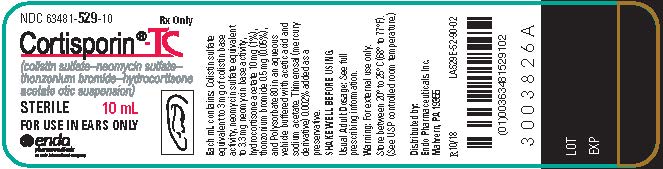
Cortisporin TC colistin sulfate, neomycin sulfate, thonzonium bromide and hydrocortisone acetate 3 mg/mL; 3.3 mg/mL; .5 mg/mL; 10 mg/mL Suspension, 10 mL
🆔 Identity & classification
Where does this data come from?
🏭 Manufacturer & labeler
Where does this data come from?
🩺 Clinical
Patient education
Supplement & herbal interactions
Where does this data come from?
Ask a licensed pharmacist directly — free, answered by our team.
🧪 Inactive Ingredients / Excipients
Inactive ingredients, also called excipients, are components of the drug product other than the active ingredient. They may include fillers, dyes, coatings, preservatives, flavors, or other formulation ingredients.
💡 Tap an ingredient (hover on desktop) to see what it is and why it’s used.
-
UNII Q40Q9N063P
Acetic acid is a weak organic acid commonly used in medicines as a buffer and pH adjuster. It helps maintain the proper acidity level to ensure the drug remains stable and effective in its formulation.
-
UNII 6OZP39ZG8H
Polysorbate 80 is a synthetic emulsifier derived from sorbitol and oleic acid. It helps mix oil and water-based ingredients together in medications and improves how the product disperses in the body.
-
UNII 4550K0SC9B
Sodium acetate is a salt derived from acetic acid. It acts as a buffer to help maintain the medicine's pH stability and may serve as a preservative or solubilizer in liquid formulations.
-
UNII 2225PI3MOV
A mercury-containing preservative used to prevent bacterial and fungal contamination in multi-dose vials of vaccines and some injectable medicines. It stops microorganisms from growing in the product during storage and use.
4 inactive ingredients listed in the exact product block matched to this NDC.
Where does this data come from?
ingredient classCode="IACT" elements from the exact product block matched by this NDC. Label-section narrative from DailyMed / the openFDA label index is shown separately when available.Inactive ingredient FAQ
Are inactive ingredients the same for every manufacturer?
Why might an inactive ingredient be missing?
Can inactive ingredients matter?
💲 Pricing
A drug doesn't have one price. Each row is a different public payment system, and none is what you'd pay at the counter — that depends on your insurance. The ⓘ on each row explains what it measures.
| Price system | Per mL | Per package |
|---|---|---|
| Retail pharmacies payNADAC · weekly | $21.986 | $219.86 / 10 ml |
| Medicaid paysCMS SDUD · 12 mo | $22.97 | $229.71 / 10 ml |
| Medicare drug plans payPart D · quarterly | No Part D plan price is available for this NDC in our data. | |
Where does this data come from?
🔁 Therapeutic equivalents
| Product | Labeler | Pack | NADAC/unit | TE | Status | Price vs. this |
|---|---|---|---|---|---|---|
| Cortisporin TC 3 mg/mL; 3.3 mg/mL; .5 mg/mL; 10 mg/mLthis 63481-0529-10 | Endo | 10 ml | $21.986 | — | Availability likely | — |
Where does this data come from?
⏳ Availability & generic status
We did not find an FDA-approved generic match for this exact strength, form and route.
Where does this data come from?
🗺️ Medicaid utilization & spend
📊 Medicare Part D spend CMS · PART D · 2026 (Q1)
🔬 Reported adverse events (FAERS)
Top reported reactions
Age at onset
Reporter sex
Serious outcomes
Where does this data come from?
📦 Packaging — all sizes for this product
| Package NDC | Description | Marketing start | Status |
|---|---|---|---|
| 63481-0529-10 You're viewing this | 10 mL in 1 BOTTLE, DROPPER (63481-529-10) | 2019-06-03 | Active |
📄 Full prescribing information FDA SPL
🎯 Indications and Usage ▾
INDICATIONS AND USAGE Cortisporin ® TC Otic is indicated for the treatment of superficial bacterial infections of the external auditory canal, caused by organisms susceptible to the action of the antibiotics; and for the treatment of infections of mastoidectomy and fenestration cavities, caused by organisms susceptible to the antibiotics.
⏱️ Dosage and Administration ▾
DOSAGE AND ADMINISTRATION Therapy with this product should be limited to 10 days (See WARNINGS ). The external auditory canal should be thoroughly cleansed and dried with a sterile cotton applicator. When using the calibrated dropper: For adults, 5 drops of the suspension should be instilled into the affected ear 3 or 4 times daily.
For pediatric patients, 4 drops are suggested because of the smaller capacity of the ear canal. The patient should lie with the affected ear upward and then the drops should be instilled. This position should be maintained for 5 minutes to facilitate penetration of the drops into the ear canal.
Repeat, if necessary, for the opposite ear. If preferred, a cotton wick may be inserted into the canal and then the cotton may be saturated with the suspension. This wick should be kept moist by adding further solution every 4 hours.
The wick should be replaced at least once every 24 hours.
⛔ Contraindications ▾
CONTRAINDICATIONS This product is contraindicated in those individuals who have shown hypersensitivity to any of its components. This product should not be used if the external auditory canal disorder is suspected or known to be due to cutaneous viral infection (e.g., herpes simplex virus or varicella zoster virus).
⚠️ Warnings ▾
WARNINGS Neomycin can induce permanent sensorineural hearing loss due to cochlear damage, mainly destruction of hair cells in the organ of Corti. The risk is greater with prolonged use. Therapy should be limited to 10 consecutive days (See PRECAUTIONS-General ).
Patients being treated with eardrops containing neomycin should be under close clinical observation. Cortisporin ® TC Otic should be used cautiously in any patient with a perforated tympanic membrane. Neomycin sulfate may cause cutaneous sensitization.
A precise incidence of hypersensitivity reactions (primarily skin rash) due to topical neomycin is not known. Discontinue promptly if sensitivity or irritation occurs. When using neomycin-containing products to control secondary infection in the chronic dermatoses, such as chronic otitis externa or stasis dermatitis, it should be borne in mind that the skin in these conditions is more liable than is normal skin to become sensitized to many substances, including neomycin.
The manifestation of sensitization to neomycin is usually a low-grade reddening with swelling, dry scaling, and itching; it may be manifest simply as a failure to heal. Periodic examination for such signs is advisable, and the patient should be told to discontinue the product if they are observed. These symptoms regress quickly on withdrawing the medication.
Neomycin containing applications should be avoided for the patient thereafter.
🤒 Adverse Reactions ▾
ADVERSE REACTIONS Neomycin occasionally causes skin sensitization. Ototoxicity (see WARNINGS section) and nephrotoxicity have also been reported. Adverse reactions have occurred with topical use of antibiotic combinations.
Exact incidence figures are not available since no denominator of treated patients is available. The reaction occurring most often is allergic sensitization. In one clinical study, using a 20% neomycin patch, neomycin-induced allergic skin reactions occurred in two of 2,175 (0.09%) individuals in the general population.
In another study the incidence was found to be approximately 1%. The following local adverse events have been reported with topical corticosteroids, especially under occlusive dressings: burning, itching, irritation, dryness, folliculitis, hypertrichosis, acneiform eruptions, hypopigmentation, perioral dermatitis, allergic contact dermatitis, maceration of the skin, secondary infection, skin atrophy, striae, and miliaria. For medical advice about adverse reactions contact your medical professional.
To report SUSPECTED ADVERSE REACTIONS, contact Endo at 1-800-462-3636 or FDA at 1-800-FDA-1088 or www.fda.gov/medwatch.
🤰 Pregnancy ▾
Pregnancy Teratogenic Effects Pregnancy Category C There are no adequate and well controlled studies of Cortisporin ® TC Otic in pregnant women. It is not known whether Cortisporin ® TC Otic can cause fetal harm when administered to a pregnant woman. Colistimethate sodium, the methanesulfonate salt of colistin, was not teratogenic in rats or rabbits given intramuscular doses up to 20 mg/kg (equivalent to 9.3 mg/kg of colisitin base, approximately 30 times (rats) or 55 times (rabbits) the clinical daily dose based on body surface area and assuming 100% absorption from the ear).
Increased resorptions were observed in rabbits at 20 mg/kg, but not 10 mg/kg (equivalent to 4.15 mg/kg of colistin base). Decreased pup survival at weaning was observed in rats at 20 mg/kg, a maternally toxic dose of colistin, but not 10 mg/kg. Colistin has not been shown to have any adverse effects on the developing embryo or fetus at doses relevant to the amount that will be delivered ototopically at the recommended clinical doses.
Although aminoglycosides can cause congenital deafness in humans if administered during pregnancy, significant systemic levels of neomycin would not be anticipated when Cortisporin ® TC Otic is used as directed. Corticosteroids are generally teratogenic in laboratory animals when administered systemically at relatively low dosage levels. The more potent corticosteroids have been shown to be teratogenic after dermal application in laboratory animals.
Cortisporin ® TC Otic should be used during pregnancy only if the potential benefit justifies the potential risk to the fetus.
🧒 Pediatric Use ▾
Pediatric Use See DOSAGE AND ADMINISTRATION . The safety and effectiveness of Cortisporin ® TC Otic in infants below one year of age have not been established. The efficacy of Cortisporin ® TC Otic in pediatric patients one year or older in the treatment of superficial bacterial infections of the external auditory canal and for the treatment of infections of mastoidectomy and fenestration cavities has been demonstrated in a controlled clinical trial.
🧓 Geriatric Use ▾
Geriatric Use No overall differences in safety or effectiveness have been observed between elderly and younger patients.
🧬 Clinical Pharmacology ▾
CLINICAL PHARMACOLOGY Colistin sulfate is a polypeptide antibiotic which penetrates into and disrupts the bacterial cell membrane. Neomycin sulfate is an aminoglycoside antibiotic which inhibits protein synthesis, disrupting the normal cycle of ribosomal function. Hydrocortisone acetate is a corticosteroid hormone which is thought to act by regulating the rate of protein synthesis; it controls inflammation, edema, pruritus and other dermal reactions.
Corticosteroids suppress the inflammatory response to a variety of agents and they may delay healing. Since corticoids may inhibit the body's defense mechanism against infection, a concomitant antimicrobial drug may be used when this inhibition is considered to be clinically significant in a particular case. The relative potency of corticosteroids depends on the molecular structure, concentration, and release from the vehicle.
Thonzonium bromide is a surface-active agent that promotes tissue contact by dispersion and penetration of the cellular debris and exudate. Microbiology Together, colistin sulfate and neomycin sulfate have bactericidal activity against most strains of the following microorganisms, both in vitro and in clinical infections as described in the INDICATIONS AND USAGE section. Aerobic gram-positive microorganisms: Staphylococcus aureus.
Aerobic gram-negative microorganisms: Enterobacter aerogenes Escherichia coli Klebsiella pneumoniae Pseudomonas aeruginosa. Susceptibility Tests: It is not recommended that colistin sulfate or neomycin sulfate be routinely tested and reported by clinical microbiology laboratories.
📦 How Supplied / Storage and Handling ▾
HOW SUPPLIED Cortisporin ® TC Otic is supplied as: NDC 63481-529-10 10 mL bottle with dropper Each mL contains: Colistin sulfate equivalent to 3 mg of colistin base activity, Neomycin sulfate equivalent to 3.3 mg neomycin base activity, Hydrocortisone acetate 10 mg (1%), Thonzonium bromide 0.5 mg (0.05%), and Polysorbate 80 in an aqueous vehicle buffered with acetic acid and sodium acetate. Thimerosal (mercury derivative) 0.002% is added as a preservative. A sterilized dropper-cap assembly for use on the bottle of suspension is included in the package.
Shake well before using. Store at 20° to 25°C (68° to 77°F). Rx only.
📦 Storage and Handling ▾
Store at 20° to 25°C (68° to 77°F). Rx only.
📋 Description ▾
DESCRIPTION Cortisporin ® TC Otic with Neomycin and Hydrocortisone (colistin sulfate—neomycin sulfate—thonzonium bromide—hydrocortisone acetate otic suspension) is a sterile antibacterial and anti-inflammatory aqueous suspension containing in each mL: Colistin base activity, 3 mg (as the sulfate); Neomycin base activity, 3.3 mg (as the sulfate); Hydrocortisone acetate, 10 mg (1%); Thonzonium bromide, 0.5 mg (0.05%); Polysorbate 80, acetic acid, and sodium acetate in a buffered aqueous vehicle. Thimerosal (mercury derivative), 0.002%, is added as a preservative.
It is a nonviscous liquid, buffered at pH 5, for instillation into the canal of the external ear or direct application to the affected aural skin. The structural formulas of colistin sulfate (mixture of Colistin A & B), neomycin sulfate (mixture of neomycin A, B & C), hydrocortisone acetate ((11β)-21-(acetyloxy)-11,17-dihydroxypregn) methyl]-2 pyrimidinylamino] ethyl]-N,N-dimethyl-1-hexadecanaminium, bromide) are represented below: Thonzonium Bromide Colistin sulfate Neomycin A Neomycin B Sulfate Hydrocortisone Acetate Neomycin C Sulfate Thonzonium Bromide Colistin Sulfate Neomycin A Neomycin B Sulfate Hydrocortisone Acetate Neomycin C Sulfate
💬 Information for Patients ▾
Information for Patients Avoid contaminating the dropper with material from the ear, fingers, or other source. This caution is necessary if the sterility of the drops is to be preserved. If sensitization or irritation occurs, discontinue use immediately and contact your physician.
Do not use in the eyes. If you prefer to warm the medication before using it, do not heat the suspension above body temperature in order to avoid loss of potency. SHAKE WELL BEFORE USING.