
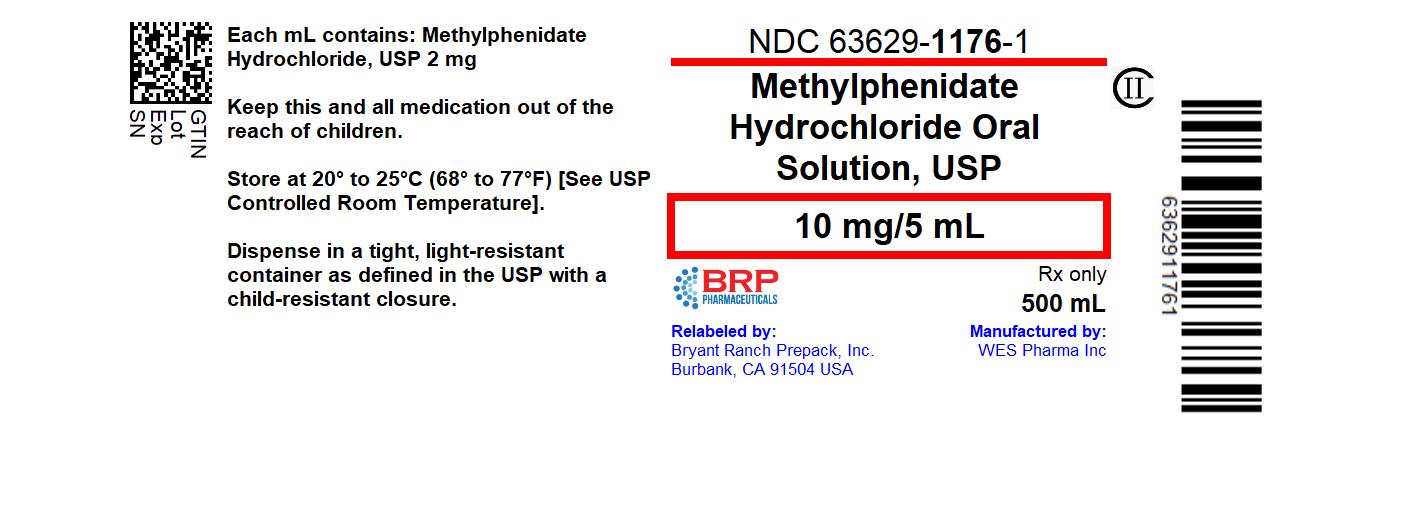
Methylphenidate Hydrochloride 10 mg/5mL Solution, 500 mL — NDC 63629-1176-1 (Billing 63629-1176-01)
This is a package of 500 mL of Methylphenidate Hydrochloride 10 mg/5mL Solution from Bryant Ranch Prepack, marketed since Mar 2019 and currently FDA-listed. It is this product's only package size.
NDC database record
One package, one record: these facts belong to NDC 63629-1176-1 alone.
- Record
- FDA NDC Directory package listing · Human prescription drug
- Code segments
- 63629 labeler · 1176 product · 1 package
- Package marketed since
- Jun 29, 2021
- Sample package
- No — commercial package
- Listing certified through
- Dec 31, 2026
- Billing quantity
- 500 mL per package
- Barcode (UPC-A, from the NDC)
- 3 6362911761 1
- FDA record last changed
- Jul 24, 2026
Other active recalls for Methylphenidate Hydrochloride (different manufacturers) — 1 · tap to view
Identity & classification
Regulatory identifiers FDA, NLM and CMS codes for this package
Drug-database identifiers Medi-Span GPI and First Databank GCN / HICL / AHFS classification
- GSN (GCN sequence number): 054680
- GCN: 22686
- GPI-14 (Medi-Span): 61400020102030
- HICL (First Databank): 001682
- AHFS class code: 28:20.32.00
- RxCUI (RxNorm): 1091133
Where does this data come from?
- FDA openFDA NDC Directory · synced Oct 8, 2026
- FDA label on DailyMed · label index refreshed Oct 8, 2026
- RxNorm (NLM RxNav) · catalog refreshed Oct 1, 2026
- Medi-Span GPI (licensed)
- First Databank (licensed) · refreshed Oct 8, 2026
RxNorm drug class
This medicine belongs to the Central Nervous System Stimulant class.
Where does this data come from?
- RxClass (NLM) · catalog refreshed Oct 1, 2026
Clinical
Methylphenidate is used to control symptoms of attention deficit hyperactivity disorder (ADHD; condition that makes it hard to pay attention, control your behavior, and remain still or quiet) and to treat narcolepsy (condition that causes people to be very sleepy during the day and to fall asleep suddenly). Methylphenidate is in a class of medications called central nervous system (CNS) stimulants. It works by changing the amounts of certain natural substances in the brain.
Read the full MedlinePlus article ↗- It mainly treats ADHD, and some products are also used for narcolepsy. The exact approval depends on the product and the age group. Your prescriber chooses the right one for you.
- It depends on your product. Many extended-release forms are taken once daily in the morning, while Jornay PM is taken in the evening. Swallow extended-release tablets whole, and fo...
- The most common ones are decreased appetite, headache, dry mouth, nausea, trouble sleeping, anxiety and dizziness. Children and teens may get upper stomach pain. Call your doctor i...
- Call for chest pain, fainting, a racing heartbeat, hallucinations, seizures, painful erections that won’t go away, or color changes in your fingers or toes. Also call if you notice...
Patient education
Supplement & herbal interactions
Some supplements/herbs that may interact with Methylphenidate Hydrochloride — tap one for details:
Where does this data come from?
- MedlinePlus (NLM) · refreshed Oct 8, 2026
- FDA label on DailyMed · label index refreshed Oct 8, 2026
Ask a licensed pharmacist directly — free, answered by our team.
Pricing
A drug doesn't have one price. Each row is a different public payment system, and none is what you'd pay at the counter — that depends on your insurance. The ⓘ on each row explains what it measures.
| Price system | Per mL | Per package |
|---|---|---|
| Retail pharmacies payNADAC · weekly | Not in the retail survey — common for institutional, discontinued, or low-volume packs. | |
| Medicaid paysCMS SDUD · 12 mo | No recent Medicaid claims on file for this NDC — rare and low-volume NDCs are suppressed in the public data. | |
| Medicare drug plans payPart D · Q2 2026 | $0.1476 | $73.80 / 500 ml |
Where does this data come from?
- CMS NADAC weekly file
- CMS ASP pricing files · refreshed Sep 20, 2026
- CMS Medicaid State Drug Utilization Data · refreshed Oct 8, 2026
- CMS Part D plan pricing files · refreshed Sep 24, 2026
- VA National Acquisition Center price file
Packaging — all sizes for this product
| Package NDC | Description | Marketing start | Marketing end | Status |
|---|---|---|---|---|
| 63629-1176-01 You're viewing this Main listing | 500 mL in 1 BOTTLE | 2021-06-29 | — | Active |
Therapeutic equivalents
| Product | Labeler | Pack | NADAC/unit | TE | Status | Price vs. this |
|---|---|---|---|---|---|---|
| Methylphenidate Hydrochloride 10 mg/5mL 27808-0059-01 | Cranbury | 500 ml | $0.120 | AA | Availability likely | — |
| Methylphenidate Hydrochloride 10 mg/5mL 70752-0132-14 | QUAGEN | 500 ml | $0.120 | AA | Availability likely | — |
| Methylphenidate Hydrochloride 10 mg/5mL 71930-0025-52 | Eywa | 500 ml | $0.120 | AA | Availability likely | — |
| Methylphenidate 10 mg/5mL 10702-0164-50 | KVK-Tech, | 500 ml | $0.151 | AA | FDA listed | — |
| Methylin 10 mg/5mL 59630-0755-50 | SHIONOGI | 500 ml | $0.231 | AA | Availability likely | — |
| Methylphenidate HCl 10 mg/5mL 39328-0154-50 | Patrin | 500 ml | — | AA | FDA listed | — |
| Methylphenidate Hydrochloride 10 mg/5mL 43386-0931-05 | Lupin | 500 ml | — | AA | FDA listed | — |
| Methylphenidate Hydrochloride 10 mg/5mL 43602-0178-05 | Ascent | 500 ml | — | AA | FDA listed | — |
| Methylphenidate Hydrochloride 10 mg/5mLthis 63629-1176-01 | Bryant | 500 ml | — | AA | FDA listed | — |
| Methylphenidate Hydrochloride 10 mg/5mL 67877-0603-91 | Ascend | 500 ml | — | AA | FDA listed | — |
| Methylphenidate Hydrochloride 10 mg/5mL 72162-1993-05 | Bryant | 500 ml | — | AA | FDA listed | — |
| Methylphenidate Hydrochloride 10 mg/5mL 72162-2041-05 | Bryant | 500 ml | — | AA | FDA listed | — |
Where does this data come from?
- FDA openFDA NDC Directory · synced Oct 8, 2026
- FDA Orange Book · refreshed Oct 3, 2026
- CMS NADAC weekly file
Availability & generic status
This product is an FDA-approved generic. Other versions of the same drug are listed under Therapeutic equivalents, least expensive first.
Where does this data come from?
- FDA Orange Book · refreshed Oct 3, 2026
What it looks like
Where does this data come from?
- FDA label on DailyMed · label index refreshed Oct 8, 2026
Inactive Ingredients / Excipients
Inactive ingredients, also called excipients, are components of the drug product other than the active ingredient. They may include fillers, dyes, coatings, preservatives, flavors, or other formulation ingredients.
🧪 Avoiding an ingredient? See Methylphenidate inactive ingredients by manufacturer: every current product's list side by side, so you can ask your pharmacy for the version that does not list it.
💡 Tap an ingredient (hover on desktop) to see what it is and why it’s used.
-
UNII PDC6A3C0OX
Glycerin is a clear, thick liquid derived from plant oils or fats. It acts as a humectant to retain moisture, a sweetener, and a solvent in medications.
-
UNII 6X543N684K
A natural flavoring derived from grapes that enhances taste appeal. It's used in medicines to improve flavor and make medications more palatable, especially for children or patients who need better taste acceptance.
-
UNII QTT17582CB
A strong acid used to adjust and maintain the proper pH level in liquid medicines, ensuring stability and preventing breakdown of active ingredients.
-
UNII 3WJQ0SDW1A
Polyethylene glycol is a synthetic liquid or solid polymer used in medicines as a solvent, lubricant, and humectant. It helps dissolve active ingredients, reduces friction during manufacturing, and retains moisture in the final product.
-
UNII 059QF0KO0R
Water is a liquid solvent that dissolves and mixes ingredients together in liquid medicines, syrups, and injections. It helps distribute the active drug evenly throughout the product.
5 inactive ingredients listed in the exact product block matched to this NDC.
Where does this data come from?
ingredient classCode="IACT" elements from the exact product block matched by this NDC. Label-section narrative from DailyMed / the openFDA label index is shown separately when available.- FDA label on DailyMed · label index refreshed Oct 8, 2026
- FDA openFDA NDC Directory · synced Oct 8, 2026
Inactive ingredient FAQ
Are inactive ingredients the same for every manufacturer?
Why might an inactive ingredient be missing?
Can inactive ingredients matter?
Manufacturer & labeler
More NDCs from Bryant Ranch Prepack labeler code 63629
- Labetalol Hydrochloride 300 mg Tablet, Film Coated NDC 63629-1166-1
- Zolpidem 5 mg Tablet NDC 63629-1170-1
- Zolpidem 10 mg Tablet NDC 63629-1171-1
- Methylphenidate Hydrochloride 5 mg Tablet NDC 63629-1172-1
- Oxycodone Hydrochloride 5 mg/5mL Solution NDC 63629-1174-1
- Methylphenidate Hydrochloride 5 mg/5mL Solution NDC 63629-1175-1
- hydrocodone bitartrate and acetaminophen 5 mg; 300 mg Tablet NDC 63629-1177-1
- Lovastatin 10 mg Tablet NDC 63629-1178-1
- hydrocodone bitartrate and acetaminophen 5 mg; 300 mg Tablet NDC 63629-1179-1
- hydrocodone bitartrate and acetaminophen 7.5 mg; 300 mg Tablet NDC 63629-1180-1
- hydrocodone bitartrate and acetaminophen 7.5 mg; 300 mg Tablet NDC 63629-1181-1
- hydrocodone bitartrate and acetaminophen 10 mg; 300 mg Tablet NDC 63629-1183-1
Where does this data come from?
- FDA openFDA NDC Directory · synced Oct 8, 2026
- Drugs@FDA
Full prescribing information FDA SPL
🎯 Indications and Usage ▾
INDICATIONS AND USAGE Attention Deficit Disorders, Narcolepsy Attention Deficit Disorders (previously known as Minimal Brain Dysfunction in Children). Other terms being used to describe the behavioral syndrome below include: Hyperkinetic Child Syndrome, Minimal Brain Damage, Minimal Cerebral Dysfunction, Minor Cerebral Dysfunction. Methylphenidate hydrochloride oral solution is indicated as an integral part of a total treatment program which typically includes other remedial measures (psychological, educational, social) for a stabilizing effect in children with a behavioral syndrome characterized by the following group of developmentally inappropriate symptoms: moderate-to-severe distractibility, short attention span, hyperactivity, emotional lability, and impulsivity.
The diagnosis of this syndrome should not be made with finality when these symptoms are only of comparatively recent origin. Nonlocalizing (soft) neurological signs, learning disability, and abnormal EEG may or may not be present, and a diagnosis of central nervous system dysfunction may or may not be warranted. Special Diagnostic Considerations Specific etiology of this syndrome is unknown, and there is no single diagnostic test.
Adequate diagnosis requires the use not only of medical but of special psychological, educational, and social resources. Characteristics commonly reported include: chronic history of short attention span, distractibility, emotional lability, impulsivity, and moderate-to-severe hyperactivity; minor neurological signs and abnormal EEG. Learning may or may not be impaired.
The diagnosis must be based upon a complete history and evaluation of the child and not solely on the presence of one or more of these characteristics. Drug treatment is not indicated for all children with this syndrome. Stimulants are not intended for use in the child who exhibits symptoms secondary to environmental factors and/or primary psychiatric disorders, including psychosis.
Appropriate educational placement is essential and psychosocial intervention is generally necessary. When remedial measures alone are insufficient, the decision to prescribe stimulant medication will depend upon the physician’s assessment of the chronicity and severity of the child’s symptoms.
⏱️ Dosage and Administration ▾
DOSAGE AND ADMINISTRATION Dosage should be individualized according to the needs and responses of the patient. Adults Administer in divided doses 2 or 3 times daily, preferably 30 to 45 minutes before meals. Average dosage is 20 to 30 mg daily.
Some patients may require 40 to 60 mg daily. In others, 10 to 15 mg daily will be adequate. Patients who are unable to sleep if medication is taken late in the day should take the last dose before 6 p.m.
Children (6 years and over) Methylphenidate hydrochloride oral solution should be initiated in small doses, with gradual weekly increments. Daily dosage above 60 mg is not recommended. If improvement is not observed after appropriate dosage adjustment over a one-month period, the drug should be discontinued.
Start with 5 mg twice daily (before breakfast and lunch) with gradual increments of 5 to 10 mg weekly. If paradoxical aggravation of symptoms or other adverse effects occur, reduce dosage, or, if necessary, discontinue the drug. Methylphenidate hydrochloride oral solution should be periodically discontinued to assess the child’s condition.
Improvement may be sustained when the drug is either temporarily or permanently discontinued. Drug treatment should not and need not be indefinite and usually may be discontinued after puberty.
⛔ Contraindications ▾
CONTRAINDICATIONS Marked anxiety, tension, and agitation are contraindications to methylphenidate hydrochloride oral solution, since the drug may aggravate these symptoms. Methylphenidate hydrochloride oral solution is contraindicated also in patients known to be hypersensitive to the drug, in patients with glaucoma, and in patients with motor tics or with a family history or diagnosis of Tourette’s syndrome. Methylphenidate Hydrochloride Oral Solution is contraindicated during treatment with monoamine oxidase inhibitors, and also within a minimum of 14 days following discontinuation of a monoamine oxidase inhibitor (hypertensive crises may result).
⚠️ Warnings ▾
WARNINGS Serious Cardiovascular Events Sudden Death and Pre-Existing Structural Cardiac Abnormalities or Other Serious Heart Problems Children and Adolescents – Sudden death has been reported in association with CNS stimulant treatment at usual doses in children and adolescents with structural cardiac abnormalities or other serious heart problems. Although some serious heart problems alone carry an increased risk of sudden death, stimulant products generally should not be used in children or adolescents with known serious structural cardiac abnormalities, cardiomyopathy, serious heart rhythm abnormalities, or other serious cardiac problems that may place them at increased vulnerability to the sympathomimetic effects of a stimulant drug.
Adults – Sudden deaths, stroke, and myocardial infarction have been reported in adults taking stimulant drugs at usual doses for ADHD. Although the role of stimulants in these adult cases is also unknown, adults have a greater likelihood than children of having serious structural cardiac abnormalities, cardiomyopathy, serious heart rhythm abnormalities, coronary artery disease, or other serious cardiac problems. Adults with such abnormalities should also generally not be treated with stimulant drugs.
Hypertension and Other Cardiovascular Conditions Stimulant medications cause a modest increase in average blood pressure (about 2 to 4 mmHg) and average heart rate (about 3 to 6 bpm), and individuals may have larger increases. While the mean changes alone would not be expected to have short-term consequences, all patients should be monitored for larger changes in heart rate and blood pressure. Caution is indicated in treating patients whose underlying medical conditions might be compromised by increases in blood pressure or heart rate, e.g., those with pre-existing hypertension, heart failure, recent myocardial infarction, or ventricular arrhythmia.
Assessing Cardiovascular Status in Patients being Treated with Stimulant Medications Children, adolescents, or adults who are being considered for treatment with stimulant medications should have a careful history (including assessment for a family history of sudden death or ventricular arrhythmia) and physical exam to assess for the presence of cardiac disease, and should receive further cardiac evaluation if findings suggest such disease (e.g., electrocardiogram and echocardiogram). Patients who develop symptoms such as exertional chest pain, unexplained syncope, or other symptoms suggestive of cardiac disease during stimulant treatment should undergo a prompt cardiac evaluation.
Psychiatric Adverse Events Pre-Existing Psychosis – Administration of stimulants may exacerbate symptoms of behavior disturbance and thought disorder in patients with a pre-existing psychotic disorder. Bipolar Illness – Particular care should be taken in using stimulants to treat ADHD in patients with comorbid bipolar disorder because of concern for possible induction of a mixed/manic episode in such patients. Prior to initiating treatment with a stimulant, patients with comorbid depressive symptoms should be adequately screened to determine if they are at risk for bipolar disorder; such screening should include a detailed psychiatric history, including a family history of suicide, bipolar disorder, and depression.
Emergence of New Psychotic or Manic Symptoms – Treatment emergent psychotic or manic symptoms, e.g., hallucinations, delusional thinking, or mania in children and adolescents without a prior history of psychotic illness or mania can be caused by stimulants at usual doses. If such symptoms occur, consideration should be given to a possible causal role of the stimulant, and discontinuation of treatment may be appropriate. In a pooled analysis of multiple short-term, placebo-controlled studies, such symptoms occurred in about 0.1% (4 patients with events out of 3,482 exposed to methylphenidate or amphetamine for several weeks at usual doses) of stimulant-treated patie… [Excerpted — this section continues on DailyMed.]
🤒 Adverse Reactions ▾
ADVERSE REACTIONS Nervousness and insomnia are the most common adverse reactions but are usually controlled by reducing dosage and omitting the drug in the afternoon or evening. Other reactions include hypersensitivity (including skin rash, urticaria, fever, arthralgia, exfoliative dermatitis, erythema multiforme with histopathological findings of necrotizing vasculitis, and thrombocytopenic purpura); anorexia; nausea; dizziness; palpitations; headache; dyskinesia; drowsiness; blood pressure and pulse changes, both up and down; tachycardia; angina; cardiac arrhythmia; abdominal pain; weight loss during prolonged therapy; libido changes; and rhabdomyolysis.
There have been rare reports of Tourette’s syndrome. Toxic psychosis has been reported. Although a definite causal relationship has not been established, the following have been reported in patients taking this drug: instances of abdominal liver function, ranging from transaminase elevation to severe hepatic injury; isolated cases of cerebral arteritis and/or occlusion; leukopenia and/or anemia; transient depressed mood; a few instances of scalp hair loss; serotonin syndrome in combination with serotonergic drugs.
Very rare reports of neuroleptic malignant syndrome (NMS) have been received, and, in most of these, patients were concurrently receiving therapies associated with NMS. In a single report, a ten year old boy who had been taking methylphenidate for approximately 18 months experienced an NMS-like event within 45 minutes of ingesting his first dose of venlafaxine. It is uncertain whether this case represented a drug-drug interaction, a response to either drug alone, or some other cause.
In children, loss of appetite, abdominal pain, weight loss during prolonged therapy, insomnia, and tachycardia may occur more frequently; however, any of the other adverse reactions listed above may also occur.
🔄 Drug Interactions ▾
Drug Interactions Methylphenidate hydrochloride oral solution may decrease the hypotensive effect of guanethidine. Use cautiously with pressor agents. Human pharmacologic studies have shown that methylphenidate hydrochloride oral solution may inhibit the metabolism of coumarin anticoagulants, anticonvulsants (phenobarbital, diphenylhydantoin, primidone), phenylbutazone, and tricyclic drugs (imipramine, clomipramine, desipramine).
Downward dosage adjustments of these drugs may be required when given concomitantly with methylphenidate hydrochloride oral solution.
🤰 Pregnancy ▾
Usage in Pregnancy Adequate animal reproduction studies to establish safe use of methylphenidate hydrochloride oral solution during pregnancy have not been conducted. However, in a recently conducted study, methylphenidate has been shown to have teratogenic effects in rabbits when given in doses of 200 mg/kg/day, which is approximately 167 times and 78 times the maximum recommended human dose on a mg/kg and a mg/m 2 basis, respectively. In rats, teratogenic effects were not seen when the drug was given in doses of 75 mg/kg/day, which is approximately 62.5 and 13.5 times the maximum recommended human dose on a mg/kg and a mg/m 2 basis, respectively.
Therefore, until more information is available, methylphenidate should not be prescribed for women of childbearing age unless, in the opinion of the physician, the potential benefits outweigh the possible risks.
🆘 Overdosage ▾
OVERDOSAGE Signs and symptoms of acute overdosage, resulting principally from overstimulation of the central nervous system and from excessive sympathomimetic effects, may include the following: vomiting, agitation, tremors, hyperreflexia, muscle twitching, convulsions (may be followed by coma), euphoria, confusion, hallucinations, delirium, sweating, flushing, headache, hyperpyrexia, tachycardia, palpitations, cardiac arrhythmias, hypertension, mydriasis, dryness of mucous membranes, and rhabdomyolysis. Consult with a Certified Poison Control Center regarding treatment for up-to-date guidance and advice.
Treatment consists of appropriate supportive measures. The patient must be protected against self-injury and against external stimuli that would aggravate overstimulation already present. Gastric contents may be evacuated by gastric lavage.
In the presence of severe intoxication, use a carefully titrated dosage of a short-acting barbiturate before performing gastric lavage. Other measures to detoxify the gut include administration of activated charcoal and a cathartic. Intensive care must be provided to maintain adequate circulation and respiratory exchange; external cooling procedures may be required for hyperpyrexia.
Efficacy of peritoneal dialysis or extracorporeal hemodialysis for methylphenidate overdosage has not been established.
🧬 Clinical Pharmacology ▾
CLINICAL PHARMACOLOGY Methylphenidate is a racemic mixture comprised of the d- and l-threo enantiomers. The d-threo enantiomer is more pharmacologically active than the l-threo enantiomer. Methylphenidate HCl is a central nervous system (CNS) stimulant.
The mode of therapeutic action in humans is not completely understood, but methylphenidate presumably activates the brain stem arousal system and cortex to produce its stimulant effect. Methylphenidate is thought to block the reuptake of norepinephrine and dopamine into the presynaptic neuron and increase the release of these monoamines into the extraneuronal space. There is neither specific evidence which clearly establishes the mechanism whereby methylphenidate hydrochloride oral solution produces its mental and behavioral effects in children, nor conclusive evidence regarding how these effects relate to the condition of the central nervous system.
Pharmacokinetics Absorption Methylphenidate hydrochloride oral solution, is readily absorbed. Following oral administration of methylphenidate hydrochloride oral solution, peak plasma methylphenidate concentrations are achieved at 1 to 2 hours. Methylphenidate hydrochloride oral solution, has been shown to be bioequivalent to Ritalin ® tablet.
The mean C max following a 20 mg dose is approximately 9 ng/mL. Food Effect In a study in adult volunteers to investigate the effects of a high-fat meal on the bioavailability of methylphenidate hydrochloride oral solution at a dose of 20 mg, the presence of food delayed the peak by approximately 1 hour (1.7 hours, fasted and 2.7 hours, fed). Overall, a high-fat meal increased the C max of methylphenidate hydrochloride oral solution by about 13% and the AUC by about 25%, on average.
Through a cross-study comparison, the magnitude of increase in C max and AUC is found to be comparable between the methylphenidate hydrochloride oral solution, and Ritalin, the immediate release tablet. Metabolism and Excretion In humans, methylphenidate is metabolized primarily via deesterification to alpha-phenylpiperidine acetic acid (PPA, ritalinic acid). The metabolite has little or no pharmacologic activity.
After oral dosing of radiolabeled methylphenidate in humans, about 90% of the radioactivity was recovered in urine. The main urinary metabolite was PPA, accounting for approximately 80% of the dose. The pharmacokinetics of the methylphenidate hydrochloride oral solution have been studied in healthy adult volunteers.
The mean terminal half-life (t ½ ) of methylphenidate following administration of 20 mg methylphenidate hydrochloride oral solution (t ½ = 2.7 hours) is comparable to the mean terminal t ½ following administration of Ritalin (methylphenidate hydrochloride immediate-release tablets) (t ½ = 2.8h) in healthy adult volunteers. Special Populations Gender – The effect of gender on the pharmacokinetics of methylphenidate after methylphenidate hydrochloride oral solution administration has not been studied. Race – The influence of race on the pharmacokinetics of methylphenidate after methylphenidate hydrochloride oral solution administration has not been studied.
Age – The pharmacokinetics of methylphenidate after methylphenidate hydrochloride oral solution administration have not been studied in pediatrics. Renal Insufficiency There is no experience with the use of methylphenidate hydrochloride oral solution in patients with renal insufficiency. After oral administration of radiolabeled methylphenidate in humans, methylphenidate was extensively metabolized and approximately 80% of the radioactivity was excreted in the urine in the form of ritalinic acid.
Since renal clearance is not an important route of methylphenidate clearance, renal insufficiency is expected to have little effect on the pharmacokinetics of methylphenidate hydrochloride oral solution Hepatic Insufficiency There is no experience with the use of methylphenidate hydrochloride oral solution in patients with hepatic insufficiency.
📦 How Supplied / Storage and Handling ▾
HOW SUPPLIED Methylphenidate Hydrochloride Oral Solution is a clear, colorless to pale yellow, grape flavored solution with no visible particulates. • 10 mg per 5 mL Bottles of 500 mL……… NDC 63629-1176-1 Storage and Handling Store at 20° to 25°C (68° to 77°F) [see USP Controlled Room Temperature]. Dispense in tight container with child-resistant closure. Disposal Comply with local laws and regulations on drug disposal of CNS stimulants.
Dispose of remaining, unused, or expired methylphenidate hydrochloride oral solution by a medicine take-back program or by an authorized collector registered with the Drug Enforcement Administration. If no take-back program or authorized collector is available, mix methylphenidate hydrochloride oral solution with an undesirable, nontoxic substance to make it less appealing to children and pets. Place the mixture in a container such as a sealed plastic bag and discard methylphenidate hydrochloride oral solution in the household trash.
Repackaged/Relabeled by: Bryant Ranch Prepack, Inc. Burbank, CA 91504
📋 Description ▾
DESCRIPTION Methylphenidate hydrochloride oral solution is a mild central nervous system (CNS) stimulant available as 5 mg/5 mL and 10 mg/5 mL oral solutions for oral administration. Methylphenidate hydrochloride is methyl α-phenyl-2-piperidineacetate hydrochloride, and its structural formula is Methylphenidate hydrochloride USP is a white to off white, fine crystalline powder. Its solutions are acid to litmus.
It is freely soluble in water and in methanol, soluble in alcohol, and slightly soluble in chloroform and in acetone. Each mL of methylphenidate hydrochloride oral solution 5 mg/5 mL contains 1 mg of methylphenidate hydrochloride USP. Each mL of methylphenidate hydrochloride oral solution 10 mg/5 mL contains 2 mg of methylphenidate hydrochloride USP.
In addition, methylphenidate hydrochloride oral solution also contains the following inactive ingredients: glycerin,polyethylene glycol 1450, concord grape flavor N&A, diluted hydrochloric acid (10%), and purified water.
💬 Information for Patients ▾
Information for Patients Prescribers or other health professionals should inform patients, their families, and their caregivers about the benefits and risks associated with treatment with methylphenidate and should counsel them in its appropriate use. A patient Medication Guide is available for methylphenidate hydrochloride oral solution. The prescriber or health professional should instruct patients, their families, and their caregivers to read the Medication Guide and should assist them in understanding its contents.
Patients should be given the opportunity to discuss the contents of the Medication Guide and to obtain answers to any questions they may have. The complete text of the Medication Guide is reprinted at the end of this document. Priapism Advise patients, caregivers, and family members of the possibility of painful or prolonged penile erections (priapism).
Instruct the patient to seek immediate medical attention in the event of priapism . Circulation Problems in Fingers and Toes [Peripheral Vasculopathy, Including Raynaud’s Phenomenon] • Instruct patients beginning treatment with methylphenidate hydrochloride oral solution about the risk of peripheral vasculopathy, including Raynaud’s Phenomenon, and associated signs and symptoms: fingers or toes may feel numb, cool, painful, and/or may change color from pale, to blue, to red. • Instruct patients to report to their physician any new numbness, pain, skin color change, or sensitivity to temperature in fingers or toes. • Instruct patients to call their physician immediately with any signs of unexplained wounds appearing on fingers or toes while taking methylphenidate hydrochloride oral solution. • Further clinical evaluation (e.g., rheumatology referral) may be appropriate for certain patients.
💬 Medication Guide ▾
MEDICATION GUIDE Methylphenidate (METH-il-FEN-i-date) Hydrochloride Oral Solution, 5 mg/5 mL and 10 mg/5 mL CII Read the Medication Guide that comes with methylphenidate hydrochloride oral solution before you or your child starts taking it and each time you get a refill. There may be new information. This Medication Guide does not take the place of talking to your doctor about your or your child’s treatment with methylphenidate hydrochloride oral solution.
What is the most important information I should know about methylphenidate hydrochloride oral solution? The following have been reported with use of methylphenidate HCl oral solution and other stimulant medicines . 1.
Heart-related problems : • sudden death in patients who have heart problems or heart defects • stroke and heart attack in adults • increased blood pressure and heart rate Tell your doctor if you or your child have any heart problems, heart defects, high blood pressure, or a family history of these problems. Your doctor should check you or your child carefully for heart problems before starting methylphenidate hydrochloride oral solution. Your doctor should check you or your child’s blood pressure and heart rate regularly during treatment with methylphenidate hydrochloride oral solution.
Call your doctor right away if you or your child has any signs of heart problems such as chest pain, shortness of breath, or fainting while taking methylphenidate hydrochloride oral solution. 2. Mental (Psychiatric) problems: All Patients • new or worse behavior and thought problems • new or worse bipolar illness • new or worse aggressive behavior or hostility Children and Teenagers • new psychotic symptoms (such as hearing voices, believing things that are not true, are suspicious) or new manic symptoms Tell your doctor about any mental problems you or your child have, or about a family history of suicide, bipolar illness, or depression.
Call your doctor right away if you or your child have any new or worsening mental symptoms or problems while taking methylphenidate hydrochloride oral solution, especially seeing or hearing things that are not real, believing things that are not real, or are suspicious. 3. Circulation problems in fingers and toes [Peripheral vasculopathy, including Raynaud’s phenomenon]: fingers or toes may feel numb, cool, painful, and/or may change color from pale, to blue, to red. • Tell your doctor if you have or your child has numbness, pain, skin color change, or sensitivity to temperature in your fingers or toes. • Call your doctor right away if you have or your child has any signs of unexplained wounds appearing on fingers or toes while taking methylphenidate hydrochloride oral solution.
What Is methylphenidate hydrochloride oral solution? Methylphenidate hydrochloride oral solution is a central nervous system stimulant prescription medicine. Methylphenidate hydrochloride oral solution is a liquid form of medication that you take by mouth.
It is used for the treatment of Attention-Deficit Hyperactivity Disorder (ADHD) . Methylphenidate hydrochloride oral solution may help increase attention and decrease impulsiveness and hyperactivity in patients with ADHD. Methylphenidate hydrochloride oral solution should be used as a part of a total treatment program for ADHD that may include counseling or other therapies.
Methylphenidate hydrochloride oral solution is also used in the treatment of a sleep disorder called narcolepsy. Methylphenidate hydrochloride oral solution is a federally controlled substance (CII) because it can be abused or lead to dependence. Keep methylphenidate hydrochloride oral solution in a safe place to prevent misuse and abuse.
Selling or giving away methylphenidate hydrochloride oral solution may harm others, and is against the law. Tell your doctor if you or your child have (or have a family history of) ever abused or been dependent on alcohol, prescription medicines or street drugs. Who should not take methylphenidate hydrochloride or… [Excerpted — this section continues on DailyMed.]
⚠️ Precautions ▾
PRECAUTIONS General Patients with an element of agitation may react adversely; discontinue therapy if necessary. Periodic CBC, differential, and platelet counts are advised during prolonged therapy. Drug treatment is not indicated in all cases of this behavioral syndrome and should be considered only in light of the complete history and evaluation of the child.
The decision to prescribe methylphenidate hydrochloride oral solution should depend on the physician’s assessment of the chronicity and severity of the child’s symptoms and their appropriateness for his/her age. Prescription should not depend solely on the presence of one or more of the behavioral characteristics. When these symptoms are associated with acute stress reactions, treatment with methylphenidate hydrochloride oral solution is usually not indicated.
Long-term effects of methylphenidate hydrochloride oral solution in children have not been well established. Information for Patients Prescribers or other health professionals should inform patients, their families, and their caregivers about the benefits and risks associated with treatment with methylphenidate and should counsel them in its appropriate use. A patient Medication Guide is available for methylphenidate hydrochloride oral solution.
The prescriber or health professional should instruct patients, their families, and their caregivers to read the Medication Guide and should assist them in understanding its contents. Patients should be given the opportunity to discuss the contents of the Medication Guide and to obtain answers to any questions they may have. The complete text of the Medication Guide is reprinted at the end of this document.
Priapism Advise patients, caregivers, and family members of the possibility of painful or prolonged penile erections (priapism). Instruct the patient to seek immediate medical attention in the event of priapism . Circulation Problems in Fingers and Toes [Peripheral Vasculopathy, Including Raynaud’s Phenomenon] • Instruct patients beginning treatment with methylphenidate hydrochloride oral solution about the risk of peripheral vasculopathy, including Raynaud’s Phenomenon, and associated signs and symptoms: fingers or toes may feel numb, cool, painful, and/or may change color from pale, to blue, to red. • Instruct patients to report to their physician any new numbness, pain, skin color change, or sensitivity to temperature in fingers or toes. • Instruct patients to call their physician immediately with any signs of unexplained wounds appearing on fingers or toes while taking methylphenidate hydrochloride oral solution. • Further clinical evaluation (e.g., rheumatology referral) may be appropriate for certain patients.
Drug Interactions Methylphenidate hydrochloride oral solution may decrease the hypotensive effect of guanethidine. Use cautiously with pressor agents. Human pharmacologic studies have shown that methylphenidate hydrochloride oral solution may inhibit the metabolism of coumarin anticoagulants, anticonvulsants (phenobarbital, diphenylhydantoin, primidone), phenylbutazone, and tricyclic drugs (imipramine, clomipramine, desipramine).
Downward dosage adjustments of these drugs may be required when given concomitantly with methylphenidate hydrochloride oral solution. Carcinogenesis, Mutagenesis, Impairment of Fertility In a lifetime carcinogenicity study carried out in B6C3F1 mice, methylphenidate caused an increase in hepatocellular adenomas and, in males only, an increase in hepatoblastomas, at a daily dose of approximately 60 mg/kg/day. This dose is approximately 30 times and 2.5 times the maximum recommended human dose on a mg/kg and mg/m 2 basis, respectively.
Hepatoblastoma is a relatively rare rodent malignant tumor type. There was no increase in total malignant hepatic tumors. The mouse strain used is sensitive to the development of hepatic tumors, and the significance of these results to humans is unknown.
Methylphenidate did not cause any increase in tum… [Excerpted — this section continues on DailyMed.]
📄 Carcinogenesis, Mutagenesis, Impairment of Fertility ▾
Carcinogenesis, Mutagenesis, Impairment of Fertility In a lifetime carcinogenicity study carried out in B6C3F1 mice, methylphenidate caused an increase in hepatocellular adenomas and, in males only, an increase in hepatoblastomas, at a daily dose of approximately 60 mg/kg/day. This dose is approximately 30 times and 2.5 times the maximum recommended human dose on a mg/kg and mg/m 2 basis, respectively. Hepatoblastoma is a relatively rare rodent malignant tumor type.
There was no increase in total malignant hepatic tumors. The mouse strain used is sensitive to the development of hepatic tumors, and the significance of these results to humans is unknown. Methylphenidate did not cause any increase in tumors in a lifetime carcinogenicity study carried out in F344 rats; the highest dose used was approximately 45 mg/kg/day, which is approximately 22 times and 4 times the maximum recommended human dose on a mg/kg and mg/m 2 basis, respectively.
Methylphenidate was not mutagenic in the in vitro Ames reverse mutation assay or in the in vitro mouse lymphoma cell forward mutation assay. Sister chromatid exchanges and chromosome aberrations were increased, indicative of a weak clastogenic response, in an in vitro assay in cultured Chinese Hamster Ovary (CHO) cells. The genotoxic potential of methylphenidate has not been evaluated in an in vivo assay.
📄 Package Label / Principal Display Panel ▾
Methylphenidate Hcl 10mg/5ml #500ml Label
About this NDC listing & data coverage
What data is (and isn’t) available for this NDC — tap to expand
| NDC identity (package / product / labeler codes) | ✓ Available |
| Labeler | ✓ Available |
| Product & package description | ✓ Available |
| Marketing category & status | ✓ Available |
| Active ingredient / dosage form / route | ✓ Available |
| FDA label (SPL via DailyMed) | ✓ Available |
| Package photos | ✓ Available |
| Inactive ingredients (structured) | ✓ Available |
| NADAC pharmacy acquisition price (CMS) | — Not published for this NDC CMS publishes NADAC only for NDCs reported in its retail-pharmacy survey. |
| Orange Book / therapeutic-equivalence data | ✓ Available |
| HCPCS J-code billing crosswalk | — Not published for this NDC Most self-administered / retail products have no J-code — that is normal. |
| Medicaid utilization (CMS SDUD) | — Not published for this NDC CMS reports utilization only for NDCs with Medicaid claims above its privacy threshold. |