
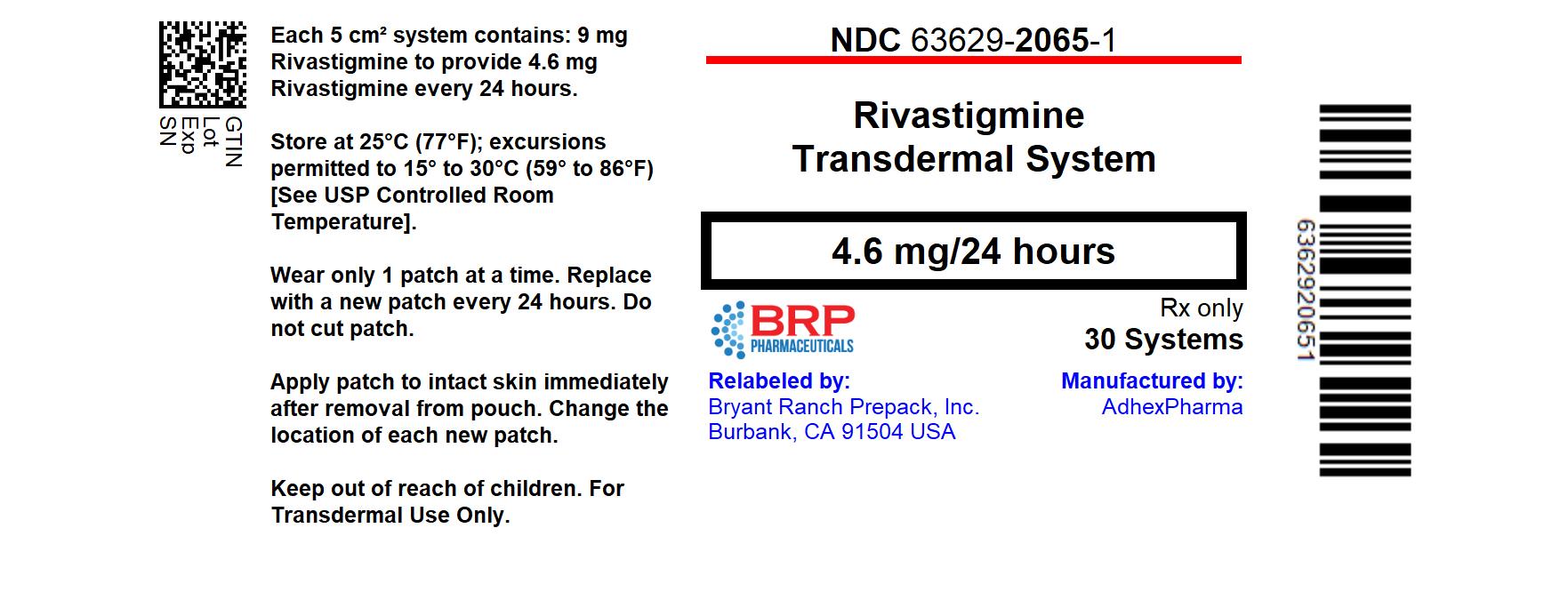
Rivastigmine Transdermal System 4.6 mg/24h Patch, Extended Release — NDC 63629-2065-1 (Billing 63629-2065-01)
This is a package of Rivastigmine Transdermal System 4.6 mg/24h Patch, Extended Release from Bryant Ranch Prepack, marketed since Dec 2019 and currently FDA-listed. It is this product's only package size.
NDC database record
One package, one record: these facts belong to NDC 63629-2065-1 alone.
- Record
- FDA NDC Directory package listing · Human prescription drug
- Code segments
- 63629 labeler · 2065 product · 1 package
- Package marketed since
- Feb 11, 2021
- Sample package
- No — commercial package
- Listing certified through
- Dec 31, 2026
- Barcode (UPC-A, from the NDC)
- 3 6362920651 3
- FDA record last changed
- Jul 24, 2026
Identity & classification
Regulatory identifiers FDA, NLM and CMS codes for this package
Drug-database identifiers Medi-Span GPI and First Databank GCN / HICL / AHFS classification
- GSN (GCN sequence number): 062870
- GCN: 98640
- GPI-14 (Medi-Span): 62051040008520
- HICL (First Databank): 034884
- AHFS class code: 12:04.00.00
- RxCUI (RxNorm): 725021
Where does this data come from?
- FDA openFDA NDC Directory · synced Oct 8, 2026
- FDA label on DailyMed · label index refreshed Oct 8, 2026
- RxNorm (NLM RxNav) · catalog refreshed Oct 1, 2026
- Medi-Span GPI (licensed)
- First Databank (licensed) · refreshed Oct 8, 2026
RxNorm drug class
This medicine belongs to the Cholinesterase Inhibitor class.
Where does this data come from?
- RxClass (NLM) · catalog refreshed Oct 1, 2026
Clinical
- It treats dementia from Alzheimer’s disease and dementia linked to Parkinson’s disease. It can help with symptoms, but it does not change the course of the underlying disease.
- Capsules are taken twice a day with meals. The patch goes on intact skin once every 24 hours, and the old one must come off first. Your doctor will raise the dose slowly, so follow...
- Nausea, vomiting, diarrhea, lower appetite and weight loss are the most common, especially early on or after dose increases. Call us if they are severe or last, since dehydration c...
- No. Wearing multiple patches or leaving the old one on has led to serious overdoses. Use one patch at a time, and ask your doctor before changing anything.
Patient education
Supplement & herbal interactions
Some supplements/herbs that may interact with Rivastigmine — tap one for details:
Where does this data come from?
- MedlinePlus (NLM) · refreshed Oct 8, 2026
- FDA label on DailyMed · label index refreshed Oct 8, 2026
Ask a licensed pharmacist directly — free, answered by our team.
Pricing
A drug doesn't have one price. Each row is a different public payment system, and none is what you'd pay at the counter — that depends on your insurance. The ⓘ on each row explains what it measures.
| Price system | Per each | Per package |
|---|---|---|
| Retail pharmacies payNADAC · weekly | Not in the retail survey — common for institutional, discontinued, or low-volume packs. | |
| Medicaid paysCMS SDUD · 12 mo | No recent Medicaid claims on file for this NDC — rare and low-volume NDCs are suppressed in the public data. | |
| Medicare drug plans payPart D · quarterly | No Part D plan price is available for this NDC in our data. | |
Where does this data come from?
- CMS NADAC weekly file
- CMS ASP pricing files · refreshed Sep 20, 2026
- CMS Medicaid State Drug Utilization Data · refreshed Oct 8, 2026
- CMS Part D plan pricing files · refreshed Sep 24, 2026
- VA National Acquisition Center price file
Packaging — all sizes for this product
| Package NDC | Description | Marketing start | Marketing end | Status |
|---|---|---|---|---|
| 63629-2065-01 You're viewing this Main listing | 30 POUCH in 1 CARTON / 1 PATCH in 1 POUCH / 24 h in 1 PATCH | 2021-02-11 | — | Active |
Therapeutic equivalents
| Product | Labeler | Pack | NADAC/unit | TE | Status | Price vs. this |
|---|---|---|---|---|---|---|
| Rivastigmine 4.6 mg/24h 00378-9070-93 | Mylan | 30 patches | $1.752 | AB | Availability likely | — |
| Rivastigmine 4.6 mg/24h 00781-7304-31 | Sandoz | 30 patches | $1.752 | AB | Availability likely | — |
| Rivastigmine Transdermal System 4.6 mg/24h 51991-0897-30 | Breckenridge | 30 patches | $1.752 | AB | Availability likely | — |
| Rivastigmine 4.6 mg/24h 65162-0825-34 | Amneal | 30 patches | $1.752 | AB | Availability likely | — |
| Rivastigmine 4.6 mg/24h 70710-1196-07 | Zydus | 30 pouches | $1.752 | AB | Availability likely | — |
| Exelon 4.6 mg/24h 00078-0501-15 | Novartis | 30 patches | $21.872 | AB | Availability likely | — |
| Exelon 4.6 mg/24h 66758-0142-31 | Sandoz | 30 patches | $21.872 | AB | Availability likely | — |
| Rivastigmine Transdermal System 4.6 mg/24hthis 63629-2065-01 | Bryant | 30 patches | — | AB | FDA listed | — |
| Rivastigmine 4.6 mg/24h 70771-1949-07 | Zydus | 30 pouches | — | AB | FDA listed | — |
| Rivastigmine Transdermal System 4.6 mg/24h 72162-1608-03 | Bryant | 30 patches | — | AB | FDA listed | — |
Where does this data come from?
- FDA openFDA NDC Directory · synced Oct 8, 2026
- FDA Orange Book · refreshed Oct 3, 2026
- CMS NADAC weekly file
Availability & generic status
This product is an FDA-approved generic. Other versions of the same drug are listed under Therapeutic equivalents, least expensive first.
Where does this data come from?
- FDA Orange Book · refreshed Oct 3, 2026
Inactive Ingredients / Excipients
Inactive ingredients, also called excipients, are components of the drug product other than the active ingredient. They may include fillers, dyes, coatings, preservatives, flavors, or other formulation ingredients.
🧪 Avoiding an ingredient? See Rivastigmine inactive ingredients by manufacturer: every current product's list side by side, so you can ask your pharmacy for the version that does not list it.
Where does this data come from?
IACT rows and label-wide narrative are kept separate; availability and product-level specificity depend on the submitted label.- FDA label on DailyMed · label index refreshed Oct 8, 2026
- FDA openFDA NDC Directory · synced Oct 8, 2026
Inactive ingredient FAQ
Are inactive ingredients the same for every manufacturer?
Why might an inactive ingredient be missing?
Can inactive ingredients matter?
Manufacturer & labeler
More NDCs from Bryant Ranch Prepack labeler code 63629
- Meloxicam 15 mg Tablet NDC 63629-2019-1
- Urea 39 g/100g Cream NDC 63629-2036-1
- Urea 40 g/100g Lotion NDC 63629-2040-1
- Exemestane 25 mg Tablet, Film Coated NDC 63629-2056-1
- Duloxetine Delayed-Release DULOXETINE HYDROCHLORIDE 40 mg Capsule, Delayed Release Pellets NDC 63629-2063-1
- Rivastigmine Transdermal System 13.3 mg/24h Patch, Extended Release NDC 63629-2064-1
- Rivastigmine Transdermal System 9.5 mg/24h Patch, Extended Release NDC 63629-2066-1
- propranolol hydrochloride 120 mg Capsule, Extended Release NDC 63629-2069-1
- propranolol hydrochloride 160 mg Capsule, Extended Release NDC 63629-2070-1
- propranolol hydrochloride 60 mg Capsule, Extended Release NDC 63629-2071-1
- propranolol hydrochloride 80 mg Capsule, Extended Release NDC 63629-2072-1
- METHYLERGONOVINE MALEATE .2 mg/mL Injection NDC 63629-2074-1
Where does this data come from?
- FDA openFDA NDC Directory · synced Oct 8, 2026
- Drugs@FDA
Full prescribing information FDA SPL
🎯 Indications and Usage ▾
1 INDICATIONS AND USAGE Rivastigmine Transdermal System is an acetylcholinesterase inhibitor indicated for treatment of: Mild, moderate, and severe dementia of the Alzheimer's type (AD) ( 1.1 ) Mild-to-moderate dementia associated with Parkinson's disease (PD) ( 1.2 )
1.1Alzheimer's Disease Rivastigmine Transdermal System is indicated for the treatment of dementia of the Alzheimer's type (AD). Efficacy has been demonstrated in patients with mild, moderate, and severe Alzheimer's disease.
1.2Parkinson's Disease Dementia Rivastigmine Transdermal System is indicated for the treatment of mild-to-moderate dementia associated with Parkinson's disease (PDD).
⏱️ Dosage and Administration ▾
2 DOSAGE AND ADMINISTRATION Apply patch on intact skin for a 24-hour period; replace with a new patch every 24 hours. ( 2.1 , 2.4 ) Initial Dose : Initiate treatment with 4.6 mg/24 hours Rivastigmine Transdermal System. ( 2.1 ) Dose Titration ( 2.1 ) : After a minimum of 4 weeks, if tolerated, increase dose to 9.5 mg/24 hours, which is the minimum effective dose.
Following a minimum additional 4 weeks, may increase dosage to maximum dosage of 13.3 mg/24 hours. Mild-to-Moderate Alzheimer's Disease and Parkinson's Disease Dementia : Rivastigmine Transdermal System 9.5 mg/24 hours or 13.3 mg/24 hours once daily. ( 2.1 ) Severe Alzheimer's Disease : Rivastigmine Transdermal System 13.3 mg/24 hours once daily.
( 2.1 ) For treatment interruption longer than 3 days, retitrate dosage starting at 4.6 mg per 24 hours. ( 2.1 ) Consider dose adjustments in patients with ( 2.2 ): Mild-to-moderate hepatic impairment ( 8.6 ) Low (less than 50 kg) body weight ( 8.7 )
2.1Recommended Dosing Initial Dose Initiate treatment with one 4.6 mg/24 hours Rivastigmine Transdermal System applied to the skin once daily [see Dosage and Administration (2.4) ] . Dose Titration Increase the dose only after a minimum of 4 weeks at the previous dose, and only if the previous dose has been tolerated. For mild-to-moderate AD and PDD patients, continue the effective dose of 9.5 mg/24 hours for as long as therapeutic benefit persists.
Patients can then be increased to the maximum effective dose of 13.3 mg/24 hours dose. For patients with severe AD, 13.3 mg/24 hours is the effective dose. Doses higher than 13.3 mg/24 hours confer no appreciable additional benefit, and are associated with an increase in the incidence of adverse reactions [see Warnings and Precautions (5.2) , Adverse Reactions (6.1) ] .
Mild-to-Moderate Alzheimer's Disease and Mild-to-Moderate Parkinson's Disease Dementia The effective dosage of Rivastigmine Transdermal System is 9.5 mg/24 hours or 13.3 mg/24 hours administered once per day; replace with a new patch every 24 hours. Severe Alzheimer's Disease The effective dosage of Rivastigmine Transdermal System in patients with severe Alzheimer's disease is 13.3 mg/24 hours administered once per day; replace with a new patch every 24 hours. Interruption of Treatment If dosing is interrupted for 3 days or fewer, restart treatment with the same or lower strength Rivastigmine Transdermal System.
If dosing is interrupted for more than 3 days, restart treatment with the 4.6 mg/24 hours Rivastigmine Transdermal System and titrate as described above.
2.2Dosing in Specific Populations Dosing Modifications in Patients with Hepatic Impairment Consider using the 4.6 mg/24 hours Rivastigmine Transdermal System as both the initial and maintenance dose in patients with mild (Child-Pugh score 5 to 6) to moderate (Child-Pugh score 7 to 9) hepatic impairment [see Use in Specific Populations (8.6) and Clinical Pharmacology (12.3) ] . Dosing Modifications in Patients with Low Body Weight Carefully titrate and monitor patients with low body weight (less than 50 kg) for toxicities (e.g., excessive nausea, vomiting) and consider reducing the maintenance dose to the 4.6 mg/24 hours Rivastigmine Transdermal System if such toxicities develop.
2.3Switching to Rivastigmine Transdermal System from Rivastigmine Capsules or Rivastigmine Oral Solution Patients treated with Rivastigmine capsules or oral solution may be switched to Rivastigmine Transdermal System as follows: A patient who is on a total daily dose of less than 6 mg of oral rivastigmine can be switched to the 4.6 mg/24 hours Rivastigmine Transdermal System. A patient who is on a total daily dose of 6 mg to 12 mg of oral rivastigmine can be switched to the 9.5 mg/24 hours Rivastigmine Transdermal System.
Instruct patients or caregivers to apply the first patch on the day following the last oral dose.
2.4Important Administration Instructions Rivastigmine Transdermal System is for transdermal use on intact skin. (a)… [Excerpted — this section continues on DailyMed.]
💊 Dosage Forms and Strengths ▾
3 DOSAGE FORMS AND STRENGTHS Rivastigmine Transdermal System is available in 3 strengths. Each patch has a transparent backing layer labeled as either: Rivastigmine 4.6 mg/24 hr. Rivastigmine 9.5 mg/24 hr. Rivastigmine 13.3 mg/24 hr. Patch : 4.6 mg/24 hours or 9.5 mg/24 hours or 13.3 mg/24 hours ( 3 )
⛔ Contraindications ▾
4 CONTRAINDICATIONS Rivastigmine Transdermal System is contraindicated in patients with: known hypersensitivity to rivastigmine, other carbamate derivatives, or other components of the formulation [see Description (11) ] . previous history of application site reactions with rivastigmine transdermal patch suggestive of allergic contact dermatitis [see Warnings and Precautions (5.3) ] . Isolated cases of generalized skin reactions have been described in postmarketing experience [see Adverse Reactions (6.2) ] . Known hypersensitivity to rivastigmine, other carbamate derivatives, or other components of the formulation.
( 4 ) History of application site reactions with rivastigmine transdermal patch suggestive of allergic contact dermatitis. ( 4 , 6.2 )
⚠️ Warnings and Cautions ▾
5 WARNINGS AND PRECAUTIONS Hospitalization and, rarely, death have been reported due to application of multiple patches at same time. Ensure patients or caregivers receive instruction on proper dosing and administration. ( 5.1 ) Gastrointestinal Adverse Reactions : May include significant nausea, vomiting, diarrhea, anorexia/decreased appetite, and weight loss, and may necessitate treatment interruption.
Dehydration may result from prolonged vomiting or diarrhea and can be associated with serious outcomes. ( 5.2 ) Application site reactions may occur with the patch form of rivastigmine. Discontinue treatment if application site reactions spread beyond the patch size, if there is evidence of a more intense local reaction (e.g., increasing erythema, edema, papules, vesicles), and if symptoms do not significantly improve within 48 hours after patch removal.
( 5.3 )
5.1Medication Errors Resulting in Overdose Medication errors with Rivastigmine Transdermal System have resulted in serious adverse reactions; some cases have required hospitalization, and rarely, led to death. The majority of medication errors have involved not removing the old patch when putting on a new one and the use of multiple patches at one time. Instruct patients and their caregivers on important administration instructions for Rivastigmine Transdermal System [see Dosage and Administration (2.4) ] .
5.2Gastrointestinal Adverse Reactions Rivastigmine transdermal system can cause gastrointestinal adverse reactions, including significant nausea, vomiting, diarrhea, anorexia/decreased appetite, and weight loss. Dehydration may result from prolonged vomiting or diarrhea and can be associated with serious outcomes. The incidence and severity of these reactions are dose-related [see Adverse Reactions (6.1) ] .
For this reason, initiate treatment with Rivastigmine Transdermal System at a dose of 4.6 mg/24 hours and titrate to a dose of 9.5 mg/24 hours and then to a dose of 13.3 mg/24 hours, if appropriate [see Dosage and Administration (2.1) ] . If treatment is interrupted for more than 3 days because of intolerance, reinitiate Rivastigmine Transdermal System with the 4.6 mg/24 hours dose to reduce the possibility of severe vomiting and its potentially serious sequelae. A postmarketing report described a case of severe vomiting with esophageal rupture following inappropriate reinitiation of treatment of an oral formulation of rivastigmine without retitration after 8 weeks of treatment interruption.
Inform caregivers to monitor for gastrointestinal adverse reactions and to inform the physician if they occur. It is critical to inform caregivers that if therapy has been interrupted for more than 3 days because of intolerance, the next dose should not be administered without contacting the physician regarding proper retitration.
5.3Skin Reactions Skin application site reactions may occur with Rivastigmine Transdermal System. These reactions are not in themselves an indication of sensitization. However, use of Rivastigmine Transdermal System may lead to allergic contact dermatitis.
Allergic contact dermatitis should be suspected if application site reactions spread beyond the patch size, if there is evidence of a more intense local reaction (e.g. increasing erythema, edema, papules, vesicles) and if symptoms do not significantly improve within 48 hours after patch removal. In these cases, treatment should be discontinued [see Contraindications (4) ] . In patients who develop application site reactions to Rivastigmine Transdermal System suggestive of allergic contact dermatitis and who still require rivastigmine, treatment should be switched to oral rivastigmine only after negative allergy testing and under close medical supervision.
It is possible that some patients sensitized to rivastigmine by exposure to Rivastigmine Transdermal System may not be able to take rivastigmine in any form. There have been isolated postmarketing reports of patients experiencing disseminated… [Excerpted — this section continues on DailyMed.]
🤒 Adverse Reactions ▾
6 ADVERSE REACTIONS The following adverse reactions are described below and elsewhere in the labeling: Gastrointestinal Adverse Reactions [see Warnings and Precautions (5.2) ] . Skin Reactions [see Warnings and Precautions (5.3) ]. Other Adverse Reactions from Increased Cholinergic Activity [see Warnings and Precautions (5.4) ] .
Most common adverse reactions (less than 5% and higher than with placebo): Nausea, vomiting, and diarrhea. ( 6.1 ) To report SUSPECTED ADVERSE REACTIONS, contact Breckenridge Pharmaceutical, Inc. at 1-800-367-3395 or FDA at 1-800-FDA-1088 or www.fda.gov/medwatch.
6.1Clinical Trials Experience Because clinical trials are conducted under widely varying conditions, adverse reaction rates observed in the clinical trials of a drug cannot be directly compared to rates in the clinical trials of another drug and may not reflect the rates observed in practice. Rivastigmine Transdermal System has been administered to 4516 patients with Alzheimer's disease during clinical trials worldwide. Of these, 3005 patients have been treated for at least 26 weeks, 1771 patients have been treated for at least 52 weeks, 974 patients have been treated for at least 78 weeks, and 24 patients have been treated for at least 104 weeks.
Mild-to-Moderate Alzheimer's Disease 24-Week International Placebo-Controlled Trial (Study 1) Most Common Adverse Reactions The most common adverse reactions in patients administered Rivastigmine Transdermal System in Study 1 [see Clinical Studies (14) ] , defined as those occurring at a frequency of at least 5% in the 9.5 mg/24 hours Rivastigmine Transdermal System arm and at a frequency at higher than in the placebo group, were nausea, vomiting, and diarrhea. These reactions were dose-related, with each being more common in patients using the unapproved 17.4 mg/24 hours Rivastigmine Transdermal System than in those using the 9.5 mg/24 hours Rivastigmine Transdermal System.
Discontinuation Rates In Study 1, which randomized a total of 1195 patients, the proportions of patients in the Rivastigmine Transdermal System 9.5 mg/24 hours, Rivastigmine Capsules 6 mg twice daily, and placebo groups who discontinued treatment due to adverse events were 10%, 8%, and 5%, respectively. The most common adverse reactions in the Rivastigmine Transdermal System -treated groups that led to treatment discontinuation in this study were nausea and vomiting. The proportions of patients who discontinued treatment due to nausea were 0.7%, 1.7%, and 1.3% in the Rivastigmine Transdermal System 9.5 mg/24 hours, Rivastigmine Capsules 6 mg twice daily, and placebo groups, respectively.
The proportions of patients who discontinued treatment due to vomiting were 0%, 2.0%, and 0.3% in the Rivastigmine Transdermal System 9.5 mg/24 hours, Rivastigmine Capsules 6 mg twice daily, and placebo groups, respectively. Adverse Reactions Observed at an Incidence of Greater Than or Equal to 2% Table 1 lists adverse reactions seen at an incidence of greater than or equal to 2% in either Rivastigmine Transdermal System -treated group in Study 1, and for which the rate of occurrence was greater for patients treated with that dose of Rivastigmine Transdermal System than for those treated with placebo.
The unapproved 17.4 mg/24 hours Rivastigmine Transdermal System arm is included to demonstrate the increased rates of gastrointestinal adverse reactions over those seen with the 9.5 mg/24 hours Rivastigmine Transdermal System. Table 1: Proportion of Adverse Reactions (ARs) Observed with a Frequency of Greater Than or Equal to 2% and Occurring at a Rate Greater Than Placebo in Study 1 Rivastigmine Transdermal System 9.5 mg/24 hours Rivastigmine Transdermal System 17.4 mg/24 hours Rivastigmine Capsule 6 mg twice daily Placebo Total Patients Studied 291 303 294 302 Total Percentage of Patients with ARs (%) 51 66 63 46 Nausea 7 21 23 5 Vomiting Vomiting was severe in 0% of patients who received Rivastigmine Transdermal System 9.5 mg/24 hours, 1% of pa… [Excerpted — this section continues on DailyMed.]
🔄 Drug Interactions ▾
7 DRUG INTERACTIONS Concomitant use with metoclopramide, beta-blockers, or cholinomimetics and anticholinergic medications is not recommended. ( 7.1 , 7.2 , 7.3 )
7.1Metoclopramide Due to the risk of additive extra-pyramidal adverse reactions, the concomitant use of metoclopramide and Rivastigmine Transdermal System is not recommended.
7.2Cholinomimetic and Anticholinergic Medications Rivastigmine Transdermal System may increase the cholinergic effects of other cholinomimetic medications and may also interfere with the activity of anticholinergic medications (e.g., oxybutynin, tolterodine). Concomitant use of Rivastigmine Transdermal System with medications having these pharmacologic effects is not recommended unless deemed clinically necessary [see Warnings and Precautions (5.4) ] .
7.3Beta-blockers Additive bradycardic effects resulting in syncope may occur when rivastigmine is used concomitantly with beta-blockers, especially cardioselective beta-blockers (including atenolol). Concomitant use is not recommended when signs of bradycardia including syncope are present.
👥 Use in Specific Populations ▾
8 USE IN SPECIFIC POPULATIONS
8.1Pregnancy Risk Summary There are no adequate data on the developmental risks associated with the use of Rivastigmine Transdermal System in pregnant women. In animals, no adverse effects on embryo-fetal development were observed at oral doses 2-4 times the maximum recommended human dose (MRHD) (see Data ) . The background risk of major birth defects and miscarriage for the indicated population is unknown.
In the U.S. general population, the estimated background risk of major birth defects and miscarriage in clinically recognized pregnancies is 2%-4% and 15%-20%, respectively. Data Animal Data Oral administration of rivastigmine to pregnant rats and rabbits throughout organogenesis produced no adverse effects on embryo-fetal development up to the highest dose tested (2.3 mg/kg/day), which is 2 and 4 times, respectively, the MRHD of 12 mg per day on a body surface area (mg/m 2 ) basis.
8.2Lactation Risk Summary There are no data on the presence of rivastigmine in human milk, the effects on the breastfed infant, or the effects of rivastigmine on milk production. Rivastigmine and its metabolites are excreted in rat milk following oral administration of rivastigmine; levels of rivastigmine plus metabolites in rat milk are approximately 2 times that in maternal plasma. The developmental and health benefits of breastfeeding should be considered along with the mother's clinical need for rivastigmine and any potential adverse effects on the breastfed infant from rivastigmine or from the underlying maternal condition.
8.4Pediatric Use Safety and effectiveness in pediatric patients have not been established. The use of Rivastigmine Transdermal System in pediatric patients (below 18 years of age) is not recommended.
8.5Geriatric Use Of the total number of patients in clinical studies of Rivastigmine Transdermal System, 88% were 65 years and over, while 55% were 75 years. No overall differences in safety or effectiveness were observed between these patients and younger patients, and other reported clinical experience has not identified differences in responses between the elderly and younger patients, but greater sensitivity of some older individuals cannot be ruled out.
8.6Hepatic Impairment Increased exposure to rivastigmine was observed in patients with mild or moderate hepatic impairment with oral rivastigmine. Patients with mild or moderate hepatic impairment may be able to only tolerate lower doses [see Dosage and Administration (2.2) and Clinical Pharmacology (12.3) ] . No data are available on the use of rivastigmine in patients with severe hepatic impairment.
8.7Low or High Body Weight Because rivastigmine blood levels vary with weight, careful titration and monitoring should be performed in patients with low or high body weights [see Dosage and Administration (2.2) and Clinical Pharmacology (12.3) ] .
🤰 Pregnancy ▾
8.1Pregnancy Risk Summary There are no adequate data on the developmental risks associated with the use of Rivastigmine Transdermal System in pregnant women. In animals, no adverse effects on embryo-fetal development were observed at oral doses 2-4 times the maximum recommended human dose (MRHD) (see Data ) . The background risk of major birth defects and miscarriage for the indicated population is unknown.
In the U.S. general population, the estimated background risk of major birth defects and miscarriage in clinically recognized pregnancies is 2%-4% and 15%-20%, respectively. Data Animal Data Oral administration of rivastigmine to pregnant rats and rabbits throughout organogenesis produced no adverse effects on embryo-fetal development up to the highest dose tested (2.3 mg/kg/day), which is 2 and 4 times, respectively, the MRHD of 12 mg per day on a body surface area (mg/m 2 ) basis.
🧒 Pediatric Use ▾
8.4Pediatric Use Safety and effectiveness in pediatric patients have not been established. The use of Rivastigmine Transdermal System in pediatric patients (below 18 years of age) is not recommended.
🧓 Geriatric Use ▾
8.5Geriatric Use Of the total number of patients in clinical studies of Rivastigmine Transdermal System, 88% were 65 years and over, while 55% were 75 years. No overall differences in safety or effectiveness were observed between these patients and younger patients, and other reported clinical experience has not identified differences in responses between the elderly and younger patients, but greater sensitivity of some older individuals cannot be ruled out.
🆘 Overdosage ▾
10 OVERDOSAGE Overdose with Rivastigmine Transdermal System has been reported in the postmarketing setting [see Warnings and Precautions (5.1) ] . Overdoses have occurred from application of more than one patch at one time and not removing the previous day's patch before applying a new patch. The symptoms reported in these overdose cases are similar to those seen in cases of overdose associated with rivastigmine oral formulations.
Because strategies for the management of overdose are continually evolving, it is advisable to contact a Poison Control Center to determine the latest recommendations for the management of an overdose of any drug. As rivastigmine has a plasma half-life of about 3.4 hours after patch administration and a duration of acetylcholinesterase inhibition of about 9 hours, it is recommended that in cases of asymptomatic overdose the patch should be immediately removed and no further patch should be applied for the next 24 hours.
As in any case of overdose, general supportive measures should be utilized. Overdosage with cholinesterase inhibitors can result in cholinergic crisis characterized by severe nausea, vomiting, salivation, sweating, bradycardia, hypotension, respiratory depression, and convulsions. Increasing muscle weakness is a possibility and may result in death if respiratory muscles are involved.
Atypical responses in blood pressure and heart rate have been reported with other drugs that increase cholinergic activity when coadministered with quaternary anticholinergics such as glycopyrrolate. Additional symptoms associated with rivastigmine overdose are diarrhea, abdominal pain, dizziness, tremor, headache, somnolence, confusional state, hyperhidrosis, hypertension, hallucinations and malaise. Due to the short plasma elimination half-life of rivastigmine after patch administration, dialysis (hemodialysis, peritoneal dialysis, or hemofiltration) would not be clinically indicated in the event of an overdose.
In overdose accompanied by severe nausea and vomiting, the use of antiemetics should be considered. A fatal outcome has rarely been reported with rivastigmine overdose.
🧬 Clinical Pharmacology ▾
12 CLINICAL PHARMACOLOGY
12.1Mechanism of Action Although the precise mechanism of action of rivastigmine is unknown, it is thought to exert its therapeutic effect by enhancing cholinergic function. This is accomplished by increasing the concentration of acetylcholine through reversible inhibition of its hydrolysis by cholinesterase. The effect of rivastigmine may lessen as the disease process advances and fewer cholinergic neurons remain functionally intact.
There is no evidence that rivastigmine alters the course of the underlying dementing process.
12.2Pharmacodynamics After a 6-mg oral dose of rivastigmine in humans, anticholinesterase activity is present in cerebrospinal fluid for about 10 hours, with a maximum inhibition of about 60% 5 hours after dosing. In vitro and in vivo studies demonstrate that the inhibition of cholinesterase by rivastigmine is not affected by the concomitant administration of memantine, an N-methyl-D-aspartate receptor antagonist.
12.3Pharmacokinetics Absorption After the initial application of rivastigmine transdermal system, there is a lag time of 0.5 to 1 hour in the absorption of rivastigmine. Concentrations then rise slowly typically reaching a maximum after 8 hours, although maximum values (Cmax) can also occur later (at 10 to 16 hours). After the peak, plasma concentrations slowly decrease over the remainder of the 24-hour period of application.
At steady state, trough levels are approximately 60% to 80% of peak levels. Rivastigmine Transdermal System 9.5 mg/24 hours gave exposure approximately the same as that provided by an oral dose of 6 mg twice daily (i.e., 12 mg/day). Inter-subject variability in exposure was lower (43% to 49%) for the Rivastigmine Transdermal System formulation as compared with the oral formulations (73% to 103%).
Fluctuation (between Cmax and Cmin) is less for Rivastigmine Transdermal System than for the oral formulation of rivastigmine. Figure 2 displays rivastigmine plasma concentrations over 24 hours for the 3 available patch strengths. Figure 2: Rivastigmine Plasma Concentrations Following Dermal 24-Hour Patch Application Over a 24-hour dermal application, approximately 50% of the drug content of the patch is released from the system.
Exposure area under the plasma concentration-time curve from time zero to infinity (AUC ∞ ) to rivastigmine (and metabolite NAP266-90) was highest when the patch was applied to the upper back, chest, or upper arm. Two other sites (abdomen and thigh) could be used if none of the 3 other sites is available, but the practitioner should be aware that the rivastigmine plasma exposure associated with these sites was approximately 20% to 30% lower. There was no relevant accumulation of rivastigmine or the metabolite NAP226-90 in plasma in patients with Alzheimer's disease with daily dosing.
The pharmacokinetic profile of rivastigmine transdermal patches was comparable in patients with Alzheimer's disease and in patients with dementia associated with Parkinson's disease. Distribution Rivastigmine is weakly bound to plasma proteins (approximately 40%) over the therapeutic range. It readily crosses the blood-brain barrier, reaching CSF peak concentrations in 1.4 to 2.6 hours.
It has an apparent volume of distribution in the range of 1.8 to
2.7L/kg. Metabolism Rivastigmine is extensively metabolized primarily via cholinesterase-mediated hydrolysis to the decarbamylated metabolite NAP226-90. In vitro , this metabolite shows minimal inhibition of acetylcholinesterase (less than 10%).
Based on evidence from in vitro and animal studies, the major cytochrome P450 isoenzymes are minimally involved in rivastigmine metabolism. The metabolite-to-parent AUC ∞ ratio was about 0.7 after Rivastigmine Transdermal System application versus 3.5 after oral administration, indicating that much less metabolism occurred after dermal treatment. Less NAP226-90 is formed following patch application, presumably because of the lack of presystemic (hepatic first… [Excerpted — this section continues on DailyMed.]
🧬 Mechanism of Action ▾
12.1Mechanism of Action Although the precise mechanism of action of rivastigmine is unknown, it is thought to exert its therapeutic effect by enhancing cholinergic function. This is accomplished by increasing the concentration of acetylcholine through reversible inhibition of its hydrolysis by cholinesterase. The effect of rivastigmine may lessen as the disease process advances and fewer cholinergic neurons remain functionally intact.
There is no evidence that rivastigmine alters the course of the underlying dementing process.
📦 How Supplied / Storage and Handling ▾
16 HOW SUPPLIED/STORAGE AND HANDLING Rivastigmine Transdermal System: 4.6 mg/24 hours Each patch of 5 cm² contains 9 mg rivastigmine base with in vivo release rate of 4.6 mg/24 hours. Carton of 30 - NDC: 63629-2065-1 Single Patch - NDC: 63629-2065-2 Store at 25°C (77°F); excursions permitted to 15°C to 30°C (59°F to 86°F) [see USP Controlled Room Temperature]. Keep Rivastigmine Transdermal System in the individual sealed pouch until use.
Each pouch contains 1 patch. Used systems should be folded, with the adhesive surfaces pressed together, and discarded safely. Repackaged/Relabeled by: Bryant Ranch Prepack, Inc.
Burbank, CA 91504
📋 Description ▾
11 DESCRIPTION Rivastigmine Transdermal System contains rivastigmine, a reversible cholinesterase inhibitor known chemically as (S)-3-[1-(dimethylamino) ethyl]phenyl ethylmethylcarbamate. It has an empirical formula of C 14 H 22 N 2 O 2 as the base and a molecular weight of 250.34 g/mol (as the base). Rivastigmine is a viscous, clear, and colorless to yellow to very slightly brown liquid that is sparingly soluble in water and very soluble in ethanol, acetonitrile, n-octanol and ethyl acetate.
The distribution coefficient at 37°C in n-octanol/phosphate buffer solution pH 7 is 4.27. Rivastigmine Transdermal System is for transdermal administration. The patch is a 4-layer laminate containing the backing layer, drug matrix, adhesive matrix and release liner ( see Figure 1 ).
The release liner is removed and discarded prior to use. Figure 1: Cross Section of the Rivastigmine Transdermal System Layer 1: Backing Film Layer 2: Drug Product (Acrylic) Matrix Layer 3: Adhesive (Silicone) Matrix Layer 4: Release Liner (removed at time of use) Excipients within the formulation include acrylic adhesive (applied to a flexible polymer backing film), acrylates copolymer, silicone adhesive.
💬 Information for Patients ▾
17 PATIENT COUNSELING INFORMATION Advise the patient to read the FDA-approved patient labeling (Patient Information and Instructions for Use). Importance of Correct Usage Inform patients or caregivers of the importance of applying the correct dose on the correct part of the body. They should be instructed to rotate the application site in order to minimize skin irritation.
The same site should not be used within 14 days. The previous day's patch must be removed before applying a new patch to a different skin location. Rivastigmine Transdermal System should be replaced every 24 hours and the time of day should be consistent.
It may be helpful for this to be part of a daily routine, such as the daily bath or shower. Only 1 patch should be worn at a time [see Dosage and Administration (2.4) , Warnings and Precautions (5.1) ] . Instruct patients or caregivers to avoid exposure of the patch to external heat sources (excessive sunlight, saunas, solariums) for long periods of time.
Instruct patients who have missed a dose to apply a new patch immediately. They may apply the next patch at the usual time the next day. Instruct patients to not apply 2 patches to make up for 1 missed.
Inform the patient or caregiver to contact the physician for retitration instructions if treatment has been interrupted. Discarding Used Patches Instruct patients or caregivers to fold the patch in half after use, return the used patch to its original pouch, and discard it out of the reach and sight of children and pets. They should also be informed that drug still remains in the patch after 24-hour usage.
They should be instructed to avoid eye contact and to wash their hands after handling the patch. In case of accidental contact with the eyes, or if their eyes become red after handling the patch, they should be instructed to rinse immediately with plenty of water and to seek medical advice if symptoms do not resolve [see Dosage and Administration (2.4) ]. Gastrointestinal Adverse Reactions Inform patients or caregivers of the potential gastrointestinal adverse reactions such as nausea, vomiting, and diarrhea, including the possibility of dehydration due to these symptoms.
Explain that Rivastigmine Transdermal System may affect the patient's appetite and/or the patient's weight. Patients and caregivers should be instructed to look for these adverse reactions, in particular when treatment is initiated or the dose is increased. Instruct patients and caregivers to inform a physician if these adverse reactions persist [see Warnings and Precautions (5.2) ].
Skin Reactions Inform patients or caregivers about the potential for allergic contact dermatitis reactions to occur. Patients or caregivers should be instructed to inform a physician if application site reactions spread beyond the patch size, if there is evidence of a more intense local reaction (e.g., increasing erythema, edema, papules, vesicles) and if symptoms do not significantly improve within 48 hours after patch removal [see Warnings and Precautions (5.3) ]. Concomitant Use of Drugs with Cholinergic Action Inform patients or caregivers that while wearing Rivastigmine Transdermal System, patients should not be taking Rivastigmine Capsules or Rivastigmine Oral Solution or other drugs with cholinergic effects [see Warnings and Precautions (5.4) ].
Pregnancy Advise patients to notify their healthcare provider if they are pregnant or plan to become pregnant.
🧬 Pharmacokinetics ▾
12.3Pharmacokinetics Absorption After the initial application of rivastigmine transdermal system, there is a lag time of 0.5 to 1 hour in the absorption of rivastigmine. Concentrations then rise slowly typically reaching a maximum after 8 hours, although maximum values (Cmax) can also occur later (at 10 to 16 hours). After the peak, plasma concentrations slowly decrease over the remainder of the 24-hour period of application.
At steady state, trough levels are approximately 60% to 80% of peak levels. Rivastigmine Transdermal System 9.5 mg/24 hours gave exposure approximately the same as that provided by an oral dose of 6 mg twice daily (i.e., 12 mg/day). Inter-subject variability in exposure was lower (43% to 49%) for the Rivastigmine Transdermal System formulation as compared with the oral formulations (73% to 103%).
Fluctuation (between Cmax and Cmin) is less for Rivastigmine Transdermal System than for the oral formulation of rivastigmine. Figure 2 displays rivastigmine plasma concentrations over 24 hours for the 3 available patch strengths. Figure 2: Rivastigmine Plasma Concentrations Following Dermal 24-Hour Patch Application Over a 24-hour dermal application, approximately 50% of the drug content of the patch is released from the system.
Exposure area under the plasma concentration-time curve from time zero to infinity (AUC ∞ ) to rivastigmine (and metabolite NAP266-90) was highest when the patch was applied to the upper back, chest, or upper arm. Two other sites (abdomen and thigh) could be used if none of the 3 other sites is available, but the practitioner should be aware that the rivastigmine plasma exposure associated with these sites was approximately 20% to 30% lower. There was no relevant accumulation of rivastigmine or the metabolite NAP226-90 in plasma in patients with Alzheimer's disease with daily dosing.
The pharmacokinetic profile of rivastigmine transdermal patches was comparable in patients with Alzheimer's disease and in patients with dementia associated with Parkinson's disease. Distribution Rivastigmine is weakly bound to plasma proteins (approximately 40%) over the therapeutic range. It readily crosses the blood-brain barrier, reaching CSF peak concentrations in 1.4 to 2.6 hours.
It has an apparent volume of distribution in the range of 1.8 to
2.7L/kg. Metabolism Rivastigmine is extensively metabolized primarily via cholinesterase-mediated hydrolysis to the decarbamylated metabolite NAP226-90. In vitro , this metabolite shows minimal inhibition of acetylcholinesterase (less than 10%).
Based on evidence from in vitro and animal studies, the major cytochrome P450 isoenzymes are minimally involved in rivastigmine metabolism. The metabolite-to-parent AUC ∞ ratio was about 0.7 after Rivastigmine Transdermal System application versus 3.5 after oral administration, indicating that much less metabolism occurred after dermal treatment. Less NAP226-90 is formed following patch application, presumably because of the lack of presystemic (hepatic first pass) metabolism.
Based on in vitro studies, no unique metabolic routes were detected in human skin. Elimination Renal excretion of the metabolites is the major route of elimination. Unchanged rivastigmine is found in trace amounts in the urine.
Following administration of 14 C-rivastigmine, renal elimination was rapid and essentially complete (greater than 90%) within 24 hours. Less than 1% of the administered dose is excreted in the feces. The apparent elimination half-life in plasma is approximately 3 hours after patch removal.
Renal clearance was approximately 2.1 to
2.8L/hr. Age Age had no impact on the exposure to rivastigmine in Alzheimer's disease patients treated with Rivastigmine Transdermal System. Gender and Race No specific pharmacokinetic study was conducted to investigate the effect of gender and race on the disposition of Rivastigmine Transdermal System. A population pharmacokinetic analysis of oral rivastigmine indicated that neither gender (n=27… [Excerpted — this section continues on DailyMed.]
🧬 Pharmacodynamics ▾
12.2Pharmacodynamics After a 6-mg oral dose of rivastigmine in humans, anticholinesterase activity is present in cerebrospinal fluid for about 10 hours, with a maximum inhibition of about 60% 5 hours after dosing. In vitro and in vivo studies demonstrate that the inhibition of cholinesterase by rivastigmine is not affected by the concomitant administration of memantine, an N-methyl-D-aspartate receptor antagonist.
🔬 Clinical Studies ▾
14 CLINICAL STUDIES The effectiveness of the Rivastigmine Transdermal System in dementia of the Alzheimer's type and dementia associated with Parkinson's disease was based on the results of 3 controlled trials of Rivastigmine Transdermal System in patients with Alzheimer's disease (Studies 1, 2, and 3) (see below); 3 controlled trials of oral rivastigmine in patients with dementia of the Alzheimer's type; and 1 controlled trial of oral rivastigmine in patients with dementia associated with Parkinson's disease. See the prescribing information for oral rivastigmine for details of the four studies of oral rivastigmine.
Mild-to-Moderate Alzheimer's Disease International 24-Week Study of Rivastigmine Transdermal System in Dementia of the Alzheimer's Type (Study 1) This study was a randomized double-blind, double dummy clinical investigation in patients with Alzheimer's disease [diagnosed by NINCDS-ADRDA and DSM-IV criteria, Mini-Mental Status Examination (MMSE) score greater than or equal to 10 and less than or equal to 20] (Study 1). The mean age of patients participating in this trial was 74 years with a range of 50 to 90 years. Approximately 67% of patients were women, and 33% were men.
The racial distribution was Caucasian 75%, Black 1%, Asian 9%, and other races 15%. The effectiveness of the Rivastigmine Transdermal System was evaluated in Study 1 using a dual outcome assessment strategy, evaluating for changes in both cognitive performance and overall clinical effect. The ability of the Rivastigmine Transdermal System to improve cognitive performance was assessed with the cognitive subscale of the Alzheimer's Disease Assessment Scale (ADAS-Cog), a multi-item instrument that has been extensively validated in longitudinal cohorts of Alzheimer's disease patients.
The ADAS-Cog examines selected aspects of cognitive performance including elements of memory, orientation, attention, reasoning, language, and praxis. The ADAS-Cog scoring range is from 0 to 70, with higher scores indicating greater cognitive impairment. Elderly normal adults may score as low as 0 or 1, but it is not unusual for non-demented adults to score slightly higher.
The ability of the Rivastigmine Transdermal System to produce an overall clinical effect was assessed using the Alzheimer's Disease Cooperative Study-Clinical Global Impression of Change (ADCS-CGIC). The ADCS-CGIC is a more standardized form of the Clinician's Interview-Based Impression of Change-Plus (CIBIC-Plus) and is also scored as a 7-point categorical rating; scores range from 1, indicating "markedly improved," to 4, indicating "no change," to 7, indicating "marked worsening." In Study 1, 1195 patients were randomized to 1 of the following 4 treatments: Rivastigmine Transdermal System 9.5 mg/24 hours, Rivastigmine Transdermal System 17.4 mg/24 hours, Rivastigmine Capsules in a dose of 6 mg twice daily, or placebo.
This 24-week study was divided into a 16-week titration phase followed by an 8-week maintenance phase. In the active treatment arms of this study, doses below the target dose were permitted during the maintenance phase in the event of poor tolerability. Figure 3 illustrates the time course for the change from baseline in ADAS-Cog scores for all 4 treatment groups over the 24-week study.
At 24 weeks, the mean differences in the ADAS-Cog change scores for the rivastigmine-treated patients compared to the patients on placebo, were 1.8, 2.9, and 1.8 units for the Rivastigmine Transdermal System 9.5 mg/24 hours, Rivastigmine Transdermal System 17.4 mg/24 hours, and Rivastigmine Capsule 6 mg twice daily groups, respectively. The difference between each of these groups and placebo was statistically significant. Although a slight improvement was observed with the 17.4 mg/24 hours patch compared to the 9.5 mg/24 hours patch on this outcome measure, no meaningful difference between the two was seen on the global evaluation (see Figure 4 ).
Figure 3: Time Course of the Change from Baseline in AD… [Excerpted — this section continues on DailyMed.]
🧪 Nonclinical Toxicology ▾
13 NONCLINICAL TOXICOLOGY
13.1Carcinogenesis, Mutagenesis, Impairment of Fertility Carcinogenesis In oral carcinogenicity studies conducted at doses up to 1.1 mg/kg/day in rats and 1.6 mg/kg/day in mice, rivastigmine was not carcinogenic. In a dermal carcinogenicity study conducted at doses up to 0.75 mg base/kg/day in mice, rivastigmine was not carcinogenic. The mean rivastigmine plasma exposure (AUC) at this dose was less than that in humans at the maximum recommended human dose (13.3 mg/24 hours).
Mutagenesis Rivastigmine was clastogenic in in vitro chromosomal aberration assays in mammalian cells in the presence, but not the absence, of metabolic activation. Rivastigmine was negative in an in vitro bacterial reverse mutation (Ames) assay, an in vitro HGPRT assay, and in an in vivo mouse micronucleus test. Impairment of Fertility No fertility or reproduction studies of dermal rivastigmine have been conducted in animals.
Rivastigmine had no effect on fertility or reproductive performance in rats at oral doses up to 1.1 mg/kg/day.
📄 Carcinogenesis, Mutagenesis, Impairment of Fertility ▾
13.1Carcinogenesis, Mutagenesis, Impairment of Fertility Carcinogenesis In oral carcinogenicity studies conducted at doses up to 1.1 mg/kg/day in rats and 1.6 mg/kg/day in mice, rivastigmine was not carcinogenic. In a dermal carcinogenicity study conducted at doses up to 0.75 mg base/kg/day in mice, rivastigmine was not carcinogenic. The mean rivastigmine plasma exposure (AUC) at this dose was less than that in humans at the maximum recommended human dose (13.3 mg/24 hours).
Mutagenesis Rivastigmine was clastogenic in in vitro chromosomal aberration assays in mammalian cells in the presence, but not the absence, of metabolic activation. Rivastigmine was negative in an in vitro bacterial reverse mutation (Ames) assay, an in vitro HGPRT assay, and in an in vivo mouse micronucleus test. Impairment of Fertility No fertility or reproduction studies of dermal rivastigmine have been conducted in animals.
Rivastigmine had no effect on fertility or reproductive performance in rats at oral doses up to 1.1 mg/kg/day.
📄 Patient Package Insert ▾
Patient Information Rivastigmine (RIV-a-STIG-meen) Transdermal System What is the most important information I should know about Rivastigmine Transdermal System? Rivastigmine Transdermal System is for skin use only. What is Rivastigmine Transdermal System?
Rivastigmine Transdermal System is a prescription medicine used to treat: Mild, moderate, and severe memory problems (dementia) associated with Alzheimer's disease. Mild-to-moderate memory problems (dementia) associated with Parkinson's disease (PD). Based on clinical trials conducted over 6 to 12 months, Rivastigmine Transdermal System was shown to help with cognition which includes (memory, understanding communication and reasoning) and with doing daily tasks.
Rivastigmine Transdermal System does not work the same in all people. Some people treated with Rivastigmine Transdermal System may: Seem much better Get better in small ways or stay the same Get worse but slower than expected Not change and then get worse as expected Some patients will not benefit from treatment with Rivastigmine Transdermal System. Rivastigmine Transdermal System does not cure Alzheimer's disease.
All patients with Alzheimer's disease get worse over time. Rivastigmine Transdermal System comes as a transdermal system that delivers rivastigmine (the medicine in Rivastigmine Transdermal System) through the skin. It is not known if Rivastigmine Transdermal System is safe or effective in children under 18 years of age.
Who should not use Rivastigmine Transdermal System? Do not use Rivastigmine Transdermal System if you: are allergic to rivastigmine, carbamate derivatives, or any of the ingredients in Rivastigmine Transdermal System. See the end of this leaflet for a complete list of ingredients in Rivastigmine Transdermal System. have had a skin reaction that: spread beyond the Rivastigmine Transdermal System size had blisters, increased skin redness, or swelling did not get better within 48 hours after you removed the Rivastigmine Transdermal System Ask your healthcare provider if you are not sure if you should use Rivastigmine Transdermal System.
What should I tell my healthcare provider before using Rivastigmine Transdermal System? Before you use Rivastigmine Transdermal System, tell your healthcare provider if you: have or have had a stomach ulcer are planning to have surgery have or have had problems with your heart have problems passing urine have or have had seizures have problems with movement (tremors) have asthma or breathing problems have a loss of appetite or are losing weight have had a skin reaction to rivastigmine (the medicine in Rivastigmine Transdermal System) in the past. have any other medical conditions are pregnant or plan to become pregnant.
It is not known if the medicine in Rivastigmine Transdermal System will harm your unborn baby. Talk to your healthcare provider if you are pregnant or plan to become pregnant. are breastfeeding or plan to breastfeed. It is not known if the medicine in Rivastigmine Transdermal System passes into your breast milk.
Talk to your doctor about the best way to feed your baby if you take Rivastigmine Transdermal System. Tell your healthcare provider about all the medicines you take, including prescription and over-the-counter medicines, vitamins, and herbal supplements. Especially tell your healthcare provider if you take: a medicine used to treat inflammation [nonsteroidal anti-inflammatory drugs (NSAIDs)] other medicines used to treat Alzheimer's or Parkinson's disease an anticholinergic medicine, such as an allergy or cold medicine, a medicine to treat bladder or bowel spasms, or certain asthma medicines, or certain medicines to prevent motion or travel sickness metoclopramide, a drug given to relieve symptoms of nausea, gastroesophageal reflux disease(GERD), or nausea and vomiting after surgery or chemotherapy treatment If you are undergoing surgery while using Rivastigmine Transdermal System, inform your doctor because Rivastigmine Transdermal Sys… [Excerpted — this section continues on DailyMed.]
📖 Instructions for Use ▾
Instructions for Use Rivastigmine (RIV-a-STIG-meen) Transdermal System You will need the following supplies (See Figure A ): Rivastigmine Transdermal System is supplied in cartons containing 30 patches (See Figure A ) Figure A Rivastigmine Transdermal System is a thin, transparent, plastic patch that sticks to the skin. Each Rivastigmine Transdermal System is sealed in a pouch that protects it until you are ready to put it on (See Figure A ). Only 1 Rivastigmine Transdermal System should be worn at a time.
Do not apply more than 1 Rivastigmine Transdermal System at a time to the body. Do not open the pouch or remove the Rivastigmine Transdermal System until you are ready to apply it. Using Rivastigmine Transdermal System: Step 1.
Choose an area to apply the Rivastigmine Transdermal System (See Figure B ). Instructions for Caregivers: Apply Rivastigmine Transdermal System to the upper or lower back if it is likely that the patient will remove it. If this is not a concern, the Rivastigmine Transdermal System can be applied instead to the upper arm or chest.
Do not apply the Rivastigmine Transdermal System to areas where it can be rubbed off by tight clothing or belts. Only apply the Rivastigmine Transdermal System to healthy skin that is clean, dry, hairless, and free of redness, irritation, burns or cuts. Figure B The diagram represents areas on the body where Rivastigmine Transdermal System may be applied.
Only 1 patch should be worn at a time. Do not apply multiple patches to the body. Step 2.
Remove the Rivastigmine Transdermal System from the pouch (See Figure C ). Carefully cut the pouch along the dotted line to open and remove the Rivastigmine Transdermal System. Save the pouch for later use.
Figure C Do not cut or fold the Rivastigmine Transdermal System itself. Step 3. Remove 1 side of the adhesive liner (See Figure D ).
A protective liner covers the sticky (adhesive) side of the Rivastigmine Transdermal System. Peel off 1 side of the protective cover. Do not touch the sticky part of the Rivastigmine Transdermal System with your fingers.
Figure D Step 4. Apply the Rivastigmine Transdermal System to your skin (See Figure E ). Apply the sticky (adhesive) side of the Rivastigmine Transdermal System to your chosen area of skin and then peel off the other side of the protective cover.
Figure E Press down on the Rivastigmine Transdermal System firmly for 30 seconds to make sure that the edges stick to your skin (See Figure F ). Figure F Step 5. Wash your hands with soap and water right away.
Note: If your Rivastigmine Transdermal System falls off, select a new area, and repeat Steps 2 to 5 to apply a new Rivastigmine Transdermal System. Be sure to replace the new Rivastigmine Transdermal System the next day at the same time as usual. Removing your Rivastigmine Transdermal System: Step 6.
Remove the Rivastigmine Transdermal System from the skin (See Figure G ). Gently pull on 1 edge of the Rivastigmine Transdermal System to remove it from your skin. Figure G Throwing away the used Rivastigmine Transdermal System: Step 7.
Throw away the used Rivastigmine Transdermal System (See Figure H ). Fold the used Rivastigmine Transdermal System in half (with the sticky sides together) and put it back into the pouch that you saved. Figure H Throw away the used Rivastigmine Transdermal System safely and out of the reach of children and pets.
Some medicine stays in the patch for 24 hours after you use it and should be folded together (sticky side together) and safely thrown away. Do not try to re-use Rivastigmine Transdermal Systems. Step 8.
Wash your hands with soap and water right away. After you remove the Rivastigmine Transdermal System, if any adhesive remains on your skin, you can use soap and water or an oil-based substance (such as baby oil) to remove the adhesive. Alcohol or other dissolving liquids (such as nail polish remover) should not be used.
This Patient Information and Instructions for Use have been approved by the U.S. Foo… [Excerpted — this section continues on DailyMed.]
📄 Package Label / Principal Display Panel ▾
Rivastigmine 4.6 mg/24h Patch, ER, #30 Label
Medicare Part D spend CMS · PART D · 2026 (Q1)
Reported adverse events (FAERS)
Top reported reactions
Age at onset
Reporter sex
Serious outcomes
Where does this data come from?
About this NDC listing & data coverage
What data is (and isn’t) available for this NDC — tap to expand
| NDC identity (package / product / labeler codes) | ✓ Available |
| Labeler | ✓ Available |
| Product & package description | ✓ Available |
| Marketing category & status | ✓ Available |
| Active ingredient / dosage form / route | ✓ Available |
| FDA label (SPL via DailyMed) | ✓ Available |
| Package photos | ✓ Available |
| Inactive ingredients (structured) | — Not published for this NDC The labeler did not submit a structured excipient list, or no SPL is available. |
| NADAC pharmacy acquisition price (CMS) | — Not published for this NDC CMS publishes NADAC only for NDCs reported in its retail-pharmacy survey. |
| Orange Book / therapeutic-equivalence data | ✓ Available |
| HCPCS J-code billing crosswalk | — Not published for this NDC Most self-administered / retail products have no J-code — that is normal. |
| Medicaid utilization (CMS SDUD) | — Not published for this NDC CMS reports utilization only for NDCs with Medicaid claims above its privacy threshold. |