
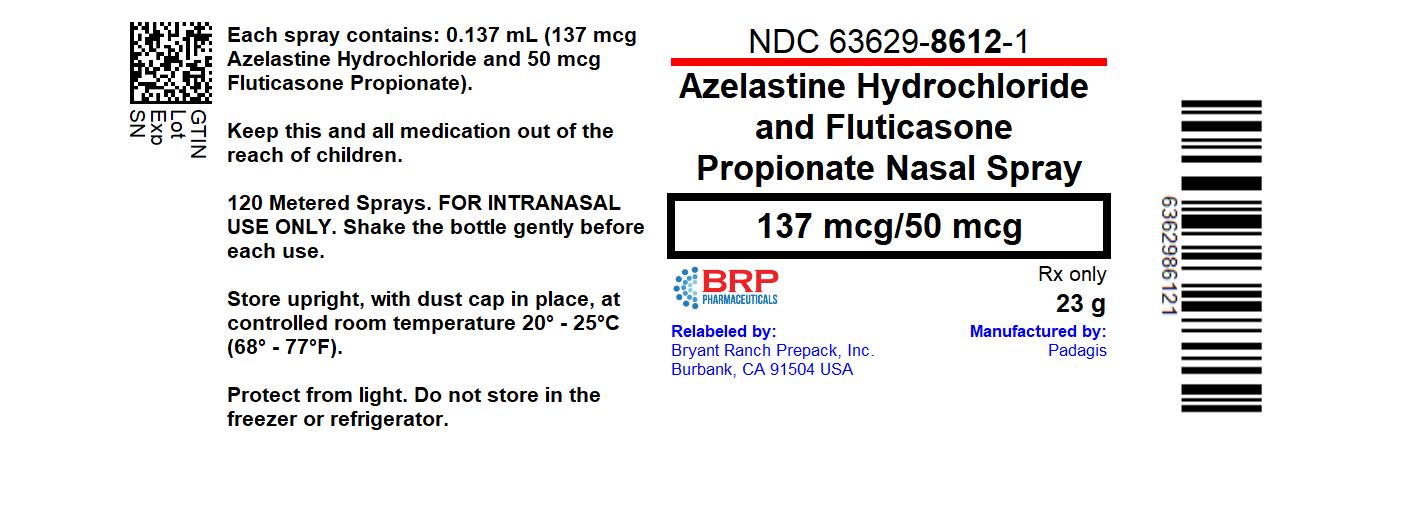
Azelastine Hydrochloride and Fluticasone Propionate 137 ug; 50 ug Spray, Metered — NDC 63629-8612-1 (Billing 63629-8612-01)
This is a package of Azelastine Hydrochloride and Fluticasone Propionate 137 ug; 50 ug Spray, Metered from Bryant Ranch Prepack, marketed since Mar 2021 and currently FDA-listed. It is this product's only package size.
Identity & classification
Regulatory identifiers FDA, NLM and CMS codes for this package
Drug-database identifiers Medi-Span GPI and First Databank GCN / HICL / AHFS classification
- GSN (GCN sequence number): 069144
- GCN: 32099
- HICL (First Databank): 038953
- AHFS class code: 48:04.08.00
- RxCUI (RxNorm): 1797847
Where does this data come from?
- FDA openFDA NDC Directory · synced Oct 1, 2026
- FDA label on DailyMed · label index refreshed Oct 1, 2026
- RxNorm (NLM RxNav) · catalog refreshed Sep 24, 2026
- Medi-Span GPI (licensed)
- First Databank (licensed) · refreshed Oct 1, 2026
RxNorm drug class
This medicine belongs to the Histamine-1 Receptor Antagonist class.
Where does this data come from?
- RxClass (NLM) · catalog refreshed Sep 24, 2026
Clinical
Azelastine nasal spray is used to treat allergy symptoms: sneezing runny or itchy nose congestion Azelastine is in a class of medications called antihistamines. It works by blocking the action of histamine, a substance in the body that causes allergic symptoms.
Read the full MedlinePlus article ↗Patient education
Supplement & herbal interactions
Some supplements/herbs that may interact with Azelastine Hydrochloride, Fluticasone Propionate — tap one for details:
Azelastine Hydrochloride, Fluticasone Propionate may be associated with lower levels of 8 nutrients — worth a chat with your pharmacist, not a cause for alarm.
Where does this data come from?
- MedlinePlus (NLM) · refreshed Oct 1, 2026
- FDA label on DailyMed · label index refreshed Oct 1, 2026
Ask a licensed pharmacist directly — free, answered by our team.
Pricing
A drug doesn't have one price. Each row is a different public payment system, and none is what you'd pay at the counter — that depends on your insurance. The ⓘ on each row explains what it measures.
| Price system | Per mL | Per package |
|---|---|---|
| Retail pharmacies payNADAC · weekly | Not in the retail survey — common for institutional, discontinued, or low-volume packs. | |
| Medicaid paysCMS SDUD · 12 mo | No recent Medicaid claims on file for this NDC — rare and low-volume NDCs are suppressed in the public data. | |
| Medicare drug plans payPart D · quarterly | No Part D plan price is available for this NDC in our data. | |
Where does this data come from?
- CMS NADAC weekly file
- CMS ASP pricing files · refreshed Sep 20, 2026
- CMS Medicaid State Drug Utilization Data · refreshed Oct 1, 2026
- CMS Part D plan pricing files · refreshed Sep 24, 2026
- VA National Acquisition Center price file
Packaging — all sizes for this product
| Package NDC | Description | Marketing start | Marketing end | Status |
|---|---|---|---|---|
| 63629-8612-01 You're viewing this Main listing | 1 BOTTLE in 1 CARTON / 120 SPRAY, METERED in 1 BOTTLE | 2021-03-01 | — | Active |
Therapeutic equivalents
| Product | Labeler | Pack | NADAC/unit | TE | Status | Price vs. this |
|---|---|---|---|---|---|---|
| Azelastine Hydrochloride and Fluticasone Propionate 137 ug/1; 50 ug 00378-3458-23 | Mylan | 1 bottle | $2.187 | AB | Availability likely | — |
| Azelastine Hydrochloride and Fluticasone Propionate 137 ug/1; 50 ug 00480-2157-57 | Teva | 1 bottle | $2.187 | AB | Availability likely | — |
| Azelastine Hydrochloride And Fluticasone Propionate 137 ug/1; 50 ug 45802-0066-01 | Padagis | 1 bottle | $2.187 | AB | Availability likely | — |
| Azelastine hydrochloride and Fluticasone propionate 137 ug/1; 50 ug 60505-0953-03 | Apotex | 1 bottle | $2.187 | AB | Availability likely | — |
| Dymista 137 ug/1; 50 ug 00037-0245-23 | Viatris | 1 bottle | $9.140 | AB | Availability likely | — |
| Azelastine Hydrochloride And Fluticasone Propionate 137 ug/1; 50 ugthis 63629-8612-01 | Bryant | 1 bottle | — | AB | FDA listed | — |
| Azelastine Hydrochloride And Fluticasone Propionate 137 ug/1; 50 ug 72162-1388-02 | Bryant | 1 bottle | — | AB | FDA listed | — |
Where does this data come from?
- FDA openFDA NDC Directory · synced Oct 1, 2026
- FDA Orange Book · refreshed Sep 3, 2026
- CMS NADAC weekly file
Availability & generic status
This product is an FDA-approved generic. Other versions of the same drug are listed under Therapeutic equivalents, least expensive first.
Where does this data come from?
- FDA Orange Book · refreshed Sep 3, 2026
Inactive Ingredients / Excipients
Inactive ingredients, also called excipients, are components of the drug product other than the active ingredient. They may include fillers, dyes, coatings, preservatives, flavors, or other formulation ingredients.
💡 Tap an ingredient (hover on desktop) to see what it is and why it’s used.
-
UNII F5UM2KM3W7
Benzalkonium chloride is a chemical compound that works as a preservative and antimicrobial agent in medications. It prevents bacterial and fungal growth in liquid formulations to keep the product safe during storage and use.
-
UNII K679OBS311
Carboxymethylcellulose sodium is a plant-derived thickening agent made from cellulose. In medicines, it acts as a binder to hold ingredients together, a disintegrant to help the tablet break apart, or a thickener in liquids.
-
UNII 7FLD91C86K
Edetate disodium is a chemical compound that binds and removes certain metal ions. In medicines, it acts as a preservative and stabilizer by preventing metals like calcium from interfering with the product's shelf life and consistency.
-
UNII PDC6A3C0OX
Glycerin is a clear, thick liquid derived from plant oils or fats. It acts as a humectant to retain moisture, a sweetener, and a solvent in medications.
-
UNII OP1R32D61U
Microcrystalline cellulose is a purified form of cellulose, a natural fiber from plant sources. It acts as a binder and filler in tablets and capsules, helping hold ingredients together and give the medicine its shape and size.
-
UNII ML9LGA7468
A naturally-derived alcohol used as a preservative and fragrance in medicines. It helps prevent bacterial and fungal growth, extending the product's shelf life.
-
UNII 6OZP39ZG8H
Polysorbate 80 is a synthetic emulsifier derived from sorbitol and oleic acid. It helps mix oil and water-based ingredients together in medications and improves how the product disperses in the body.
-
UNII 059QF0KO0R
Water is a liquid solvent that dissolves and mixes ingredients together in liquid medicines, syrups, and injections. It helps distribute the active drug evenly throughout the product.
8 inactive ingredients listed in the exact product block matched to this NDC.
Where does this data come from?
ingredient classCode="IACT" elements from the exact product block matched by this NDC. Label-section narrative from DailyMed / the openFDA label index is shown separately when available.- FDA label on DailyMed · label index refreshed Oct 1, 2026
- FDA openFDA NDC Directory · synced Oct 1, 2026
Inactive ingredient FAQ
Are inactive ingredients the same for every manufacturer?
Why might an inactive ingredient be missing?
Can inactive ingredients matter?
Manufacturer & labeler
Where does this data come from?
- FDA openFDA NDC Directory · synced Oct 1, 2026
- Drugs@FDA
Full prescribing information FDA SPL
🎯 Indications and Usage ▾
1 INDICATIONS AND USAGE Azelastine hydrochloride and fluticasone propionate nasal spray is indicated for the relief of symptoms of seasonal allergic rhinitis in adult and pediatric patients 6 years of age and older. Azelastine hydrochloride and fluticasone propionate nasal spray contains an H 1 -receptor antagonist and a corticosteroid, and is indicated for the relief of symptoms of seasonal allergic rhinitis in adult and pediatric patients 6 years of age and older. ( 1 )
⏱️ Dosage and Administration ▾
2 DOSAGE AND ADMINISTRATION • Recommended dosage: 1 spray per nostril twice daily ( 2.1 ) • For nasal use only. ( 2.2 ) • Prime before initial use and when it has not been used for 14 or more days. ( 2.2 )
2.1Recommended Dosage The recommended dosage of azelastine hydrochloride and fluticasone propionate nasal spray is 1 spray (137 mcg of azelastine hydrochloride and 50 mcg of fluticasone propionate) in each nostril twice daily.
2.2Important Administration Instructions • Administer azelastine hydrochloride and fluticasone propionate nasal spray by the intranasal route only. • Shake the bottle gently before each use. • Avoid spraying azelastine hydrochloride and fluticasone propionate nasal spray into the eyes. If sprayed in the eyes, flush eyes with water for at least 10 minutes. Priming Prime azelastine hydrochloride and fluticasone propionate nasal spray before initial use by releasing 6 sprays or until a fine mist appears.
Repriming (as needed) When azelastine hydrochloride and fluticasone propionate nasal spray has not been used for 14 or more days, reprime with 1 spray or until a fine mist appears.
💊 Dosage Forms and Strengths ▾
3 DOSAGE FORMS AND STRENGTHS Nasal spray: 137 mcg of azelastine hydrochloride and 50 mcg of fluticasone propionate per spray. Nasal spray: 137 mcg of azelastine hydrochloride and 50 mcg of fluticasone propionate in each spray. ( 3 )
⛔ Contraindications ▾
4 CONTRAINDICATIONS None. None. ( 4 )
⚠️ Warnings and Cautions ▾
5 WARNINGS AND PRECAUTIONS • Somnolence: Avoid engaging in hazardous occupations requiring complete mental alertness such as driving or operating machinery when taking azelastine hydrochloride and fluticasone propionate nasal spray. ( 5.1 ) • Avoid concurrent use of alcohol or other central nervous system (CNS) depressants with azelastine hydrochloride and fluticasone propionate nasal spray because further decreased alertness and impairment of CNS performance may occur. ( 5.1 ) • Epistaxis, nasal ulcerations, nasal septal perforation, impaired wound healing, Candida albicans infection: Monitor patients periodically for signs of adverse effects on the nasal mucosa.
Avoid use in patients with recent nasal ulcers, nasal surgery, or nasal trauma. ( 5.2 ) • Glaucoma or posterior subcapsular cataracts: Monitor patients closely with a change in vision or with a history of increased intraocular pressure, glaucoma, and/or cataracts. ( 5.3 ) • Potential worsening of existing tuberculosis; fungal, bacterial, viral, or parasitic infections; or ocular herpes simplex.
More serious or even fatal course of chickenpox or measles in susceptible patients. Use caution in patients with the above because of the potential for worsening of these infections. ( 5.4 ) • Hypercorticism and adrenal suppression with very high dosages or at the regular dosage in susceptible individuals.
If such changes occur, discontinue azelastine hydrochloride and fluticasone propionate nasal spray slowly. ( 5.5 ) • Potential reduction in growth velocity in children. Monitor growth routinely in pediatric patients receiving azelastine hydrochloride and fluticasone propionate nasal spray.
( 5.7 , 8.4 )
5.1Somnolence In clinical trials, the occurrence of somnolence has been reported in some patients (6 of 853 adult and adolescent patients and 2 of 416 children) taking azelastine hydrochloride and fluticasone propionate nasal spray in placebo controlled trials [see Adverse Reactions ( 6.1 )] . Patients should be cautioned against engaging in hazardous occupations requiring complete mental alertness and motor coordination such as operating machinery or driving a motor vehicle after administration of azelastine hydrochloride and fluticasone propionate nasal spray.
Concurrent use of azelastine hydrochloride and fluticasone propionate nasal spray with alcohol or other central nervous system depressants should be avoided because additional reductions in alertness and additional impairment of central nervous system performance may occur [see Drug Interactions ( 7.1 )].
5.2Local Nasal Effects In clinical trials of 2 to 52 weeks’ duration, epistaxis was observed more frequently in patients treated with azelastine hydrochloride and fluticasone propionate nasal spray than those who received placebo [see Adverse Reactions ( 6 )] . Instances of nasal ulceration and nasal septal perforation have been reported in patients following the nasal application of corticosteroids. There were no instances of nasal ulceration or nasal septal perforation observed in clinical trials with azelastine hydrochloride and fluticasone propionate nasal spray.
Because of the inhibitory effect of corticosteroids on wound healing, patients who have experienced recent nasal ulcers, nasal surgery, or nasal trauma should avoid use of azelastine hydrochloride and fluticasone propionate nasal spray until healing has occurred. In clinical trials with fluticasone propionate administered nasally, the development of localized infections of the nose and pharynx with Candida albicans has occurred. When such an infection develops, it may require treatment with appropriate local therapy and discontinuation of treatment with azelastine hydrochloride and fluticasone propionate nasal spray.
Patients using azelastine hydrochloride and fluticasone propionate nasal spray over several months or longer should be examined periodically for evidence of Candida infection or other signs of adverse effects on the nasal mucosa.
5.3 Glauc…
🤒 Adverse Reactions ▾
6 ADVERSE REACTIONS The following clinically significant adverse reactions are described elsewhere in the labeling: • Somnolence [see Warnings and Precautions ( 5.1 )] • Local nasal effects, including epistaxis, nasal ulceration, nasal septal perforation, impaired wound healing, and Candida albicans infection [see Warnings and Precautions ( 5.2 )] • Glaucoma and cataracts [see Warnings and Precautions ( 5.3 )] • Immunosuppression and Risk fo Infections [see Warnings and Precautions ( 5.4 )] • Hypercorticism and Adrenal Suppression, including growth reduction [see Warnings and Precautions ( 5.5 and 5.7 ), Use in Specific Populations ( 8.4 )] The most common adverse reactions (≥2% incidence) are: dysgeusia, epistaxis, and headache.
(6.1) To report SUSPECTED ADVERSE REACTIONS, contact Perrigo at 1-866-634-9120 or FDA at 1-800-FDA-1088 or www.fda.gov/medwatch.
6.1Clinical Trials Experience Because clinical trials are conducted under widely varying conditions, adverse reaction rates observed in clinical trials of a drug cannot be directly compared to rates in the clinical trials of another drug and may not reflect rates observed in practice. Adults and Adolescents 12 Years of Age and Older: The safety data described below in adults and adolescents 12 years of age and older reflect exposure to azelastine hydrochloride and fluticasone propionate nasal spray in 853 patients (12 years of age and older; 36% male and 64% female) with seasonal allergic rhinitis in 3 double-blind, placebo-controlled clinical trials of 2-week duration.
The racial distribution for the 3 clinical trials was 80% white, 16% black, 2% Asian, and 1% other. In the 3 placebo controlled clinical trials of 2-week duration, 3411 patients with seasonal allergic rhinitis were treated with 1 spray per nostril of azelastine hydrochloride and fluticasone propionate nasal spray, azelastine hydrochloride nasal spray, fluticasone propionate nasal spray, or placebo, twice daily. The azelastine hydrochloride and fluticasone propionate comparators use the same vehicle and device as azelastine hydrochloride and fluticasone propionate nasal spray and are not commercially marketed.
Overall, adverse reactions were 16% in the azelastine hydrochloride and fluticasone propionate nasal spray treatment groups, 15% in the azelastine hydrochloride nasal spray groups, 13% in the fluticasone propionate nasal spray groups, and 12% in the placebo groups. Overall, 1% of patients in both the azelastine hydrochloride and fluticasone propionate nasal spray and placebo groups discontinued due to adverse reactions. Table 1 contains adverse reactions reported with frequencies greater than or equal to 2% and more frequently than placebo in patients treated with azelastine hydrochloride and fluticasone propionate nasal spray in the seasonal allergic rhinitis controlled clinical trials.
Table 1. Adverse Reactions with ≥2% Incidence and More Frequently than Placebo in Placebo-Controlled Trials of 2 Weeks Duration with Azelastine Hydrochloride and Fluticasone Propionate Nasal Spray in Adult and Adolescent Patients with Seasonal Allergic Rhinitis 1 spray per nostril twice daily Azelastine Hydrochloride and Fluticasone Propionate Nasal Spray (N=853)* Azelastine Hydrochloride Nasal Spray † (N=851) Fluticasone Propionate Nasal Spray † (N=846) Vehicle Placebo (N=861) Dysgeusia 30 (4%) 44 (5%) 4 (1%) 2 (<1%) Headache 18 (2%) 20 (2%) 20 (2%) 10 (1%) Epistaxis 16 (2%) 14 (2%) 14 (2%) 15 (2%) *Safety population N=853, intent-to-treat population N=848 † Not commercially marketed In the above trials, somnolence was reported in <1% of patients treated with azelastine hydrochloride and fluticasone propionate nasal spray (6 of 853) or vehicle placebo (1 of 861) [see Warnings and Precautions ( 5.1 )] .
Pediatric Patients 6-11 Years of Age: The safety data described below in children 6-11 years of age reflect exposure to azelastine hydrochloride and fluticasone propionate nasal spray in 152 patients (6-11 years of age;…
🔄 Drug Interactions ▾
7 DRUG INTERACTIONS No formal drug interaction studies have been performed with azelastine hydrochloride and fluticasone propionate nasal spray. The drug interactions of the combination are expected to reflect those of the individual components. • Potent inhibitors of cytochrome P450 (CYP) 3A4: May increase blood levels of fluticasone propionate. • Ritonavir: Coadministration is not recommended. ( 5.6 , 7.2 ) • Other potent CYP3A4 inhibitors, such as ketoconazole: use caution with coadministration.
( 5.6 , 7.2 )
7.1Central Nervous System Depressants Concurrent use of azelastine hydrochloride and fluticasone propionate nasal spray with alcohol or other central nervous system depressants should be avoided because somnolence and impairment of central nervous system performance may occur [see Warnings and Precautions ( 5.1 )] .
7.2Cytochrome P450 3A4 Ritonavir (a strong CYP3A4 inhibitor) significantly increased plasma fluticasone propionate exposure following administration of fluticasone propionate aqueous nasal spray, resulting in significantly reduced serum cortisol concentrations [see Clinical Pharmacology ( 12.3 )] . During postmarketing use, there have been reports of clinically significant drug interactions in patients receiving fluticasone propionate and ritonavir, resulting in systemic corticosteroid effects including Cushing syndrome and adrenal suppression.
Therefore, coadministration of fluticasone propionate and ritonavir is not recommended unless the potential benefit to the patient outweighs the risk of systemic corticosteroid side effects. Ketoconazole (also a strong CYP3A4 inhibitor), administered in multiple 200 mg doses to steady-state, increased plasma exposure of fluticasone propionate, reduced plasma cortisol AUC, but had no effect on urinary excretion of cortisol, following administration of a single 1000 mcg dose of fluticasone propionate by oral inhalation route.
Caution should be exercised when azelastine hydrochloride and fluticasone propionate nasal spray is coadministered with ketoconazole and other known strong CYP3A4 inhibitors.
👥 Use in Specific Populations ▾
8 USE IN SPECIFIC POPULATIONS
8.1Pregnancy Risk Summary Limited data from postmarketing experience with azelastine hydrochloride and fluticasone propionate nasal spray in pregnant women have not identified any drug associated risks of miscarriage, birth defects, or other adverse maternal or fetal outcomes. The individual components of azelastine hydrochloride and fluticasone propionate nasal spray have been marketed for decades. While the data regarding the use of nasal preparations of fluticasone propionate in pregnancy are limited, data from clinical studies of inhaled fluticasone propionate do not indicate an increased risk of adverse maternal or fetal outcomes.
Animal reproduction studies with azelastine hydrochloride and fluticasone propionate nasal spray are not available; however, studies are available with its individual components, azelastine hydrochloride and fluticasone propionate. In animal reproduction studies, there was no evidence of fetal harm in animals at oral doses of azelastine hydrochloride approximately 10 times the clinical daily dose. Oral administration of azelastine hydrochloride to pregnant mice, rats, and rabbits, during the period of organogenesis, produced developmental toxicity that included structural abnormalities, decreased embryo-fetal survival, and decreased fetal body weights at doses 530 times and higher than the maximum recommended human daily nasal dose (MRHDID) of 0.548 mg.
However, the relevance of these findings in animals to pregnant women was considered questionable based upon the high animal to human dose multiple. In animal reproduction studies, fluticasone propionate administered via nose-only inhalation to rats decreased fetal body weight, but did not induce teratogenicity at a maternal toxic dose less than the MRHDID on a mcg/m 2 basis. Teratogenicity, characteristic of corticosteroids, decreased fetal body weight and/or skeletal variations, in rats, mice, and rabbits were observed with subcutaneously administered maternal toxic doses of fluticasone propionate less than the MRHDID of 200 mcg on a mcg/m 2 basis (see Data) .
Experience with corticosteroids suggests that rodents are more prone to teratogenic effects from corticosteroids than humans. The estimated background risk of major birth defects and miscarriage for the indicated populations is unknown. All pregnancies have a background risk of birth defect, loss, or other adverse outcomes.
In the U.S. general population, the estimated background risk of major birth defects and miscarriage in clinically recognized pregnancies is 2-4% and 15-20%, respectively. Data Animal Data: Azelastine Hydrochloride: In an embryo-fetal development study in mice dosed during the period of organogenesis, azelastine hydrochloride caused embryo-fetal death, structural abnormalities (cleft palate; short or absent tail; fused, absent or branched ribs), delayed ossification, and decreased fetal weight at approximately 610 times the MRHDID in adults (on a mg/m 2 basis at a maternal oral dose of 68.6 mg/kg/day), which also caused maternal toxicity as evidenced by decreased maternal body weight.
Neither fetal nor maternal effects occurred in mice at approximately 25 times the MRHDID in adults (on a mg/m 2 basis at a maternal oral dose of 3 mg/kg/day). In an embryo-fetal development study in pregnant rats dosed during the period of organogenesis from gestation days 7 to 17, azelastine hydrochloride caused structural abnormalities (oligo-and brachydactylia), delayed ossification, and skeletal variations, in the absence of maternal toxicity, at approximately 530 times the MRHDID in adults (on a mg/m 2 basis at a maternal oral dose of 30 mg/kg/day).
Azelastine hydrochloride caused embryo-fetal death and decreased fetal weight and severe maternal toxicity at approximately 1200 times the MRHDID (on a mg/m 2 basis at a maternal oral dose of 68.6 mg/kg/day). Neither fetal nor maternal effects occurred at approximately 55 times the MRHDID (on a mg/m 2 basis…
🤰 Pregnancy ▾
8.1Pregnancy Risk Summary Limited data from postmarketing experience with azelastine hydrochloride and fluticasone propionate nasal spray in pregnant women have not identified any drug associated risks of miscarriage, birth defects, or other adverse maternal or fetal outcomes. The individual components of azelastine hydrochloride and fluticasone propionate nasal spray have been marketed for decades. While the data regarding the use of nasal preparations of fluticasone propionate in pregnancy are limited, data from clinical studies of inhaled fluticasone propionate do not indicate an increased risk of adverse maternal or fetal outcomes.
Animal reproduction studies with azelastine hydrochloride and fluticasone propionate nasal spray are not available; however, studies are available with its individual components, azelastine hydrochloride and fluticasone propionate. In animal reproduction studies, there was no evidence of fetal harm in animals at oral doses of azelastine hydrochloride approximately 10 times the clinical daily dose. Oral administration of azelastine hydrochloride to pregnant mice, rats, and rabbits, during the period of organogenesis, produced developmental toxicity that included structural abnormalities, decreased embryo-fetal survival, and decreased fetal body weights at doses 530 times and higher than the maximum recommended human daily nasal dose (MRHDID) of 0.548 mg.
However, the relevance of these findings in animals to pregnant women was considered questionable based upon the high animal to human dose multiple. In animal reproduction studies, fluticasone propionate administered via nose-only inhalation to rats decreased fetal body weight, but did not induce teratogenicity at a maternal toxic dose less than the MRHDID on a mcg/m 2 basis. Teratogenicity, characteristic of corticosteroids, decreased fetal body weight and/or skeletal variations, in rats, mice, and rabbits were observed with subcutaneously administered maternal toxic doses of fluticasone propionate less than the MRHDID of 200 mcg on a mcg/m 2 basis (see Data) .
Experience with corticosteroids suggests that rodents are more prone to teratogenic effects from corticosteroids than humans. The estimated background risk of major birth defects and miscarriage for the indicated populations is unknown. All pregnancies have a background risk of birth defect, loss, or other adverse outcomes.
In the U.S. general population, the estimated background risk of major birth defects and miscarriage in clinically recognized pregnancies is 2-4% and 15-20%, respectively. Data Animal Data: Azelastine Hydrochloride: In an embryo-fetal development study in mice dosed during the period of organogenesis, azelastine hydrochloride caused embryo-fetal death, structural abnormalities (cleft palate; short or absent tail; fused, absent or branched ribs), delayed ossification, and decreased fetal weight at approximately 610 times the MRHDID in adults (on a mg/m 2 basis at a maternal oral dose of 68.6 mg/kg/day), which also caused maternal toxicity as evidenced by decreased maternal body weight.
Neither fetal nor maternal effects occurred in mice at approximately 25 times the MRHDID in adults (on a mg/m 2 basis at a maternal oral dose of 3 mg/kg/day). In an embryo-fetal development study in pregnant rats dosed during the period of organogenesis from gestation days 7 to 17, azelastine hydrochloride caused structural abnormalities (oligo-and brachydactylia), delayed ossification, and skeletal variations, in the absence of maternal toxicity, at approximately 530 times the MRHDID in adults (on a mg/m 2 basis at a maternal oral dose of 30 mg/kg/day).
Azelastine hydrochloride caused embryo-fetal death and decreased fetal weight and severe maternal toxicity at approximately 1200 times the MRHDID (on a mg/m 2 basis at a maternal oral dose of 68.6 mg/kg/day). Neither fetal nor maternal effects occurred at approximately 55 times the MRHDID (on a mg/m 2 basis at a maternal oral dose of 3 m…
🧒 Pediatric Use ▾
8.4Pediatric Use The safety and effectiveness of azelastine hydrochloride and fluticasone propionate nasal spray for seasonal allergic rhinitis have been established in pediatric patients aged 6 years and older. Use of azelastine hydrochloride and fluticasone propionate nasal spray for this indication in pediatric patients 6 to 11 years of age is supported by evidence from controlled clinical trials (416 patients 6 to 11 years of age with allergic rhinitis were treated with azelastine hydrochloride and fluticasone propionate nasal spray) [see Adverse Reactions ( 6.1 ) and Clinical Studies ( 14 )] .
Sixty-one patients ages 4-5 years of age were treated with azelastine hydrochloride and fluticasone propionate nasal spray in the pediatric studies described above. Safety findings in children 4-5 years of age were similar to those in children 6-11 years of age, but effectiveness has not been established. Safety and effectiveness of azelastine hydrochloride and fluticasone propionate nasal spray have not been established in pediatric patients below the age of 4 years.
Controlled clinical studies have shown that nasal corticosteroids may cause a reduction in growth velocity in pediatric patients. This effect has been observed in the absence of laboratory evidence of HPA axis suppression, suggesting that growth velocity is a more sensitive indicator of systemic corticosteroid exposure in pediatric patients than some commonly used tests of HPA axis function. The long-term effects of this reduction in growth velocity associated with nasal corticosteroids, including the impact on final adult height, are unknown.
The potential for “catch-up” growth following discontinuation of treatment with nasal corticosteroids has not been adequately studied. The growth of pediatric patients receiving nasal corticosteroids, including azelastine hydrochloride and fluticasone propionate nasal spray, should be monitored routinely (e.g., via stadiometry). The potential growth effects of prolonged treatment should be weighed against the clinical benefits obtained and the risks/benefits of treatment alternatives.
🧓 Geriatric Use ▾
8.5Geriatric Use Clinical trials of azelastine hydrochloride and fluticasone propionate nasal spray did not include sufficient numbers of patients 65 years of age and older to determine whether they respond differently from younger patients. Other reported clinical experience has not identified differences in responses between the elderly and younger patients. In general, dose selection for an elderly patient should be cautious, usually starting at the low end of the dosing range, reflecting the greater frequency of decreased hepatic, renal, or cardiac function, and of concomitant disease or other drug therapy.
🆘 Overdosage ▾
10 OVERDOSAGE Azelastine hydrochloride and fluticasone propionate nasal spray: Azelastine hydrochloride and fluticasone propionate nasal spray contains both azelastine hydrochloride and fluticasone propionate; therefore, the risks associated with overdosage for the individual components described below apply to azelastine hydrochloride and fluticasone propionate nasal spray. Azelastine hydrochloride: There have been no reported overdosages with azelastine hydrochloride. Acute azelastine hydrochloride overdosage by adults with this dosage form is unlikely to result in clinically significant adverse reactions, other than increased somnolence, since one (1) 23 g bottle of azelastine hydrochloride and fluticasone propionate nasal spray contains approximately 23 mg of azelastine hydrochloride.
General supportive measures should be employed if overdosage occurs. There is no known antidote to azelastine hydrochloride and fluticasone propionate nasal spray. Oral ingestion of antihistamines has the potential to cause serious adverse effects in children.
Accordingly, azelastine hydrochloride and fluticasone propionate nasal spray should be kept out of the reach of children. Fluticasone propionate: Chronic fluticasone propionate overdosage may result in signs/symptoms of hypercorticism [see Warnings and Precautions ( 5.5 )].
🧬 Clinical Pharmacology ▾
12 CLINICAL PHARMACOLOGY
12.1Mechanism of Action Azelastine hydrochloride and fluticasone propionate nasal spray: Azelastine hydrochloride and fluticasone propionate nasal spray contains both azelastine hydrochloride and fluticasone propionate; therefore, the mechanisms of actions described below for the individual components apply to azelastine hydrochloride and fluticasone propionate nasal spray. These drugs represent two different classes of medications (histamine H 1 -receptor antagonist and synthetic corticosteroid). Azelastine Hydrochloride: Azelastine hydrochloride, a phthalazinone derivative, exhibits histamine H 1 -receptor antagonist activity in isolated tissues, animal models, and humans.
Azelastine hydrochloride in azelastine hydrochloride and fluticasone propionate nasal spray is administered as a racemic mixture with no difference in pharmacologic activity noted between the enantiomers in in vitro studies. The major metabolite, desmethylazelastine, also possesses H 1 -receptor antagonist activity. Fluticasone Propionate: Fluticasone propionate is a synthetic trifluorinated corticosteroid with anti-inflammatory activity.
In vitro dose response studies on a cloned human glucocorticoid receptor system involving binding and gene expression afforded 50% responses at 1.25 and 0.17 nM concentrations, respectively. Fluticasone propionate was 3-fold to 5-fold more potent than dexamethasone in these assays. Data from the McKenzie vasoconstrictor assay in man also support its potent glucocorticoid activity.
The clinical relevance of these findings is unknown. The precise mechanism through which fluticasone propionate affects allergic rhinitis symptoms is not known. Corticosteroids have been shown to have a wide range of effects on multiple cell types (e.g., mast cells, eosinophils, neutrophils, macrophages, and lymphocytes) and mediators (e.g., histamine, eicosanoids, leukotrienes, and cytokines) involved in inflammation.
12.2Pharmacodynamics Cardiac Electrophysiology: In a placebo-controlled trial (95 patients with allergic rhinitis), there was no evidence of an effect of azelastine hydrochloride nasal spray (2 sprays per nostril twice daily for 56 days) on cardiac repolarization as represented by the corrected QT interval (QTc) of the electrocardiogram. Following multiple dose oral administration of azelastine 4 mg or 8 mg twice daily, the mean change in QTc was 7.2 msec and 3.6 msec, respectively. Interaction studies investigating the cardiac repolarization effects of concomitantly administered oral azelastine hydrochloride and erythromycin or ketoconazole were conducted.
These drugs had no effect on QTc based on analysis of serial electrocardiograms.
12.3Pharmacokinetics Absorption: After nasal administration of two sprays per nostril (548 mcg of azelastine hydrochloride and 200 mcg of fluticasone) of azelastine hydrochloride and fluticasone propionate nasal spray, the mean (± standard deviation) peak plasma exposure (C max ) was 194.5 ± 74.4 pg/mL for azelastine and 10.3±3.9 pg/mL for fluticasone propionate and the mean total exposure (AUC) was 4217 ± 2618 pg/mL*hr for azelastine and 97.7 ± 43.1 pg/mL*hr for fluticasone. The median time to peak exposure (t max ) from a single dose was 0.5 hours for azelastine and 1.0 hours for fluticasone.
Systemic bioavailability of azelastine from azelastine hydrochloride and fluticasone propionate nasal spray following nasal administration was comparable with monotherapy azelastine hydrochloride nasal spray without sweetener (i.e., approximately 40%). Systemic bioavailability of fluticasone from azelastine hydrochloride and fluticasone propionate nasal spray following nasal administration was 44-61% higher than monotherapy fluticasone propionate (bioavailability for monotherapy fluticasone nasal spray was less than 2%).
Due to the low nasal bioavailability, pharmacokinetic data for fluticasone propionate were obtained via other routes of administration. Studies using oral dosing…
🧬 Mechanism of Action ▾
12.1Mechanism of Action Azelastine hydrochloride and fluticasone propionate nasal spray: Azelastine hydrochloride and fluticasone propionate nasal spray contains both azelastine hydrochloride and fluticasone propionate; therefore, the mechanisms of actions described below for the individual components apply to azelastine hydrochloride and fluticasone propionate nasal spray. These drugs represent two different classes of medications (histamine H 1 -receptor antagonist and synthetic corticosteroid). Azelastine Hydrochloride: Azelastine hydrochloride, a phthalazinone derivative, exhibits histamine H 1 -receptor antagonist activity in isolated tissues, animal models, and humans.
Azelastine hydrochloride in azelastine hydrochloride and fluticasone propionate nasal spray is administered as a racemic mixture with no difference in pharmacologic activity noted between the enantiomers in in vitro studies. The major metabolite, desmethylazelastine, also possesses H 1 -receptor antagonist activity. Fluticasone Propionate: Fluticasone propionate is a synthetic trifluorinated corticosteroid with anti-inflammatory activity.
In vitro dose response studies on a cloned human glucocorticoid receptor system involving binding and gene expression afforded 50% responses at 1.25 and 0.17 nM concentrations, respectively. Fluticasone propionate was 3-fold to 5-fold more potent than dexamethasone in these assays. Data from the McKenzie vasoconstrictor assay in man also support its potent glucocorticoid activity.
The clinical relevance of these findings is unknown. The precise mechanism through which fluticasone propionate affects allergic rhinitis symptoms is not known. Corticosteroids have been shown to have a wide range of effects on multiple cell types (e.g., mast cells, eosinophils, neutrophils, macrophages, and lymphocytes) and mediators (e.g., histamine, eicosanoids, leukotrienes, and cytokines) involved in inflammation.
📦 How Supplied / Storage and Handling ▾
16 HOW SUPPLIED/STORAGE AND HANDLING How Supplied: Azelastine Hydrochloride and Fluticasone Propionate Nasal Spray, 137 mcg/50 mcg (NDC 63629-8612-1) is supplied as an amber glass bottle fitted with a metered-dose spray pump unit. The spray pump unit consists of a nasal spray pump with a white nasal adapter and clear plastic dust cap. Each bottle contains a net fill weight of 23 g and will deliver 120 metered sprays after priming [ see Dosage and Administration (2.2) ].
After priming [ see Dosage and Administration (2.2) ], each spray delivers a suspension volume of 0.137 mL as a fine mist, containing 137 mcg of azelastine hydrochloride and 50 mcg of fluticasone propionate (137 mcg/50 mcg). The correct amount of medication in each spray cannot be assured before the initial priming and after 120 sprays have been used, even though the bottle is not completely empty. The bottle should be discarded after 120 sprays have been used.
Azelastine hydrochloride and fluticasone propionate nasal spray should not be used after the expiration date “EXP” printed on the bottle label and carton. Storage: Store upright with the dust cap in place at controlled room temperature 20°C to 25°C (68°F to 77°F). [see USP Controlled Temperature] Protect from light. Do not store in the freezer or refrigerator.
Repackaged/Relabeled by: Bryant Ranch Prepack, Inc. Burbank, CA 91504
📋 Description ▾
11 DESCRIPTION Azelastine hydrochloride and fluticasone propionate nasal spray is formulated as a white, uniform metered-spray suspension for nasal administration. It is a fixed dose combination product containing an antihistamine (H 1 receptor antagonist) and a corticosteroid as active ingredients. Azelastine hydrochloride active ingredient occurs as a white, odorless, crystalline powder with a bitter taste.
It has a molecular weight of 418.37. It is sparingly soluble in water, methanol, and propylene glycol and slightly soluble in ethanol, octanol, and glycerin. It has a melting point of 225°C and the pH of 5.2.
Its chemical name is (±)- 1-(2H)-phthalazinone,4-[(4-chlorophenyl) methyl]-2-(hexahydro-1-methyl-1H-azepin-4-yl)-, monohydrochloride. Its molecular formula is C 22 H 24 ClN 3 O•HCl with the following chemical structure: Fluticasone propionate active ingredient is a white powder with a melting point of 273°C, a molecular weight of 500.6, and the empirical formula is C 25 H 31 F 3 O 5 S. It is practically insoluble in water, freely soluble in dimethyl sulfoxide and dimethylformamide, and slightly soluble in methanol and 95% ethanol.
Fluticasone propionate is a synthetic corticosteroid having the chemical name S-(fluoromethyl)-6α,9-difluoro-11β-17-dihydroxy-16α -methyl-3-oxoandrosta -1,4-diene-17β-carbothioate, 17-propionate, and the following chemical structure: Azelastine hydrochloride and fluticasone propionate nasal spray, 137 mcg/50 mcg contains 0.1% solution of azelastine hydrochloride and 0.037% suspension of micronized fluticasone propionate in an isotonic aqueous suspension containing glycerin, microcrystalline cellulose and carboxymethylcellulose sodium, phenylethyl alcohol (2.5 mg/g), edetate disodium, benzalkonium chloride (0.1 mg/g), polysorbate 80, and purified water.
It has a pH of approximately 6.0. After priming [see Dosage and Administration ( 2.2 )] , each metered spray delivers a 0.137 mL mean volume of suspension containing 137 mcg of azelastine hydrochloride (equivalent to 125 mcg of azelastine base) and 50 mcg of fluticasone propionate. The 23 g bottle provides 120 metered sprays, after priming.
💬 Information for Patients ▾
17 PATIENT COUNSELING INFORMATION See FDA-approved patient labeling (Patient Information and Instructions for Use) Somnolence: Somnolence has been reported in some patients (8 of 1,269 patients) taking azelastine hydrochloride and fluticasone propionate nasal spray in controlled clinical trials. Caution patients against engaging in hazardous occupations requiring complete mental alertness and motor coordination such as driving or operating machinery after administration of azelastine hydrochloride and fluticasone propionate nasal spray [see Warnings and Precautions ( 5.1 )] .
Concurrent Use of Alcohol and other Central Nervous System Depressants: Advise patients to avoid concurrent use of azelastine hydrochloride and fluticasone propionate nasal spray with alcohol or other central nervous system depressants because additional reductions in alertness and additional impairment of central nervous system performance may occur [see Warnings and Precautions ( 5.1 )] . Local Nasal Effects: Nasal corticosteroids are associated with epistaxis, nasal ulceration, nasal septal perforation, Candida albicans infection and impaired wound healing.
Patients who have experienced recent nasal ulcers, nasal surgery, or nasal trauma should not use azelastine hydrochloride and fluticasone propionate nasal spray until healing has occurred [see Warnings and Precautions ( 5.2 )] . Glaucoma and Cataracts: Inform patients that glaucoma and cataracts are associated with nasal and inhaled corticosteroid use. Advise patients to inform his/her health care provider if a change in vision is noted while using azelastine hydrochloride and fluticasone propionate nasal spray [see Warnings and Precautions ( 5.3 )] .
Immunosuppression and Risk of Infections: Warn patients who are on immunosuppressant doses of corticosteroids to avoid exposure to chickenpox or measles and, if exposed, to consult their physician without delay. Inform patients of potential worsening of existing tuberculosis, fungal, bacterial, viral or parasitic infections, or ocular herpes simplex [see Warnings and Precautions ( 5.4 )] . Effect on Growth: Corticosteroids may cause a reduction in growth velocity when administered to pediatric patients.
Monitor the growth routinely of pediatric patients receiving azelastine hydrochloride and fluticasone propionate nasal spray [see Use in Specific Populations ( 8.4 )] . Priming: Instruct patients to shake the bottle gently before each use and prime the pump before initial use and when azelastine hydrochloride and fluticasone propionate nasal spray has not been used for 14 or more days [see Dosage and Administration ( 2.2 )] . Keep Spray Out of Eyes: Instruct patients to avoid spraying azelastine hydrochloride and fluticasone propionate nasal spray into their eyes.
Potential Drug Interactions: Advise patients that coadministration of azelastine hydrochloride and fluticasone propionate nasal spray and ritonavir is not recommended and to be cautious if azelastine hydrochloride and fluticasone propionate nasal spray is coadministered with ketoconazole [see Drug Interactions ( 7.2 )] .
Reported adverse events (FAERS)
Top reported reactions
Age at onset
Reporter sex
Serious outcomes
Where does this data come from?
About this NDC listing & data coverage
What data is (and isn’t) available for this NDC — tap to expand
| NDC identity (package / product / labeler codes) | ✓ Available |
| Labeler | ✓ Available |
| Product & package description | ✓ Available |
| Marketing category & status | ✓ Available |
| Active ingredient / dosage form / route | ✓ Available |
| FDA label (SPL via DailyMed) | ✓ Available |
| Package photos | ✓ Available |
| Inactive ingredients (structured) | ✓ Available |
| NADAC pharmacy acquisition price (CMS) | — Not published for this NDC CMS publishes NADAC only for NDCs reported in its retail-pharmacy survey. |
| Orange Book / therapeutic-equivalence data | ✓ Available |
| HCPCS J-code billing crosswalk | — Not published for this NDC Most self-administered / retail products have no J-code — that is normal. |
| Medicaid utilization (CMS SDUD) | — Not published for this NDC CMS reports utilization only for NDCs with Medicaid claims above its privacy threshold. |