
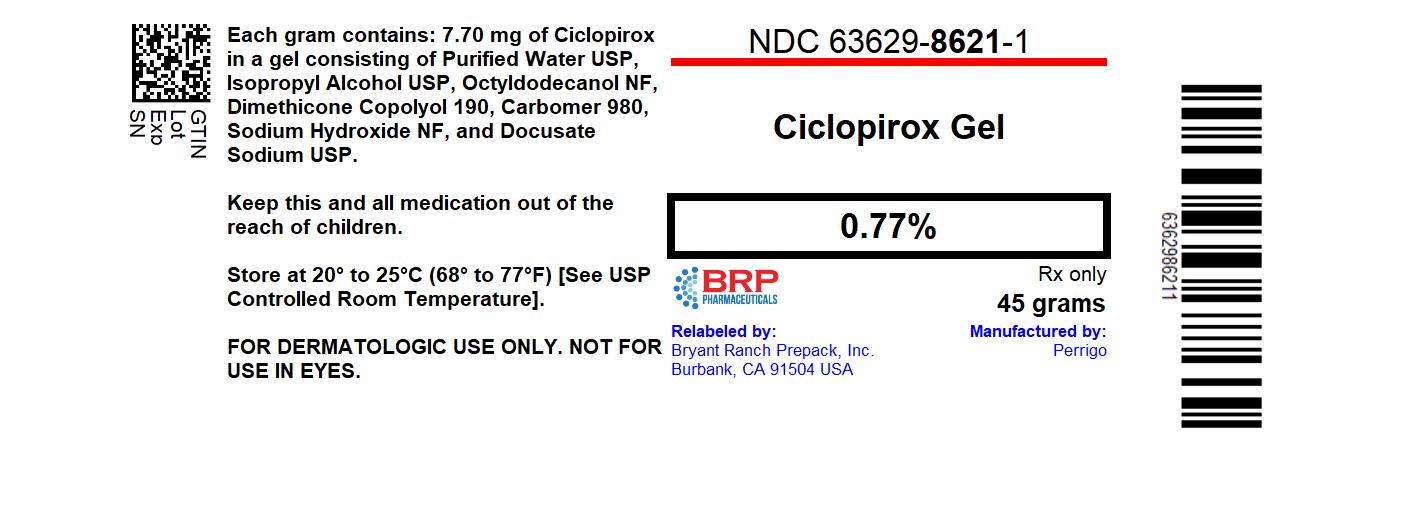
CICLOPIROX 7.7 mg/g Gel
🆔 Identity & classification
Where does this data come from?
🏷️ RxNorm drug class
This medicine belongs to the Other antifungals for topical use class.
Where does this data come from?
🏭 Manufacturer & labeler
Where does this data come from?
🩺 Clinical
Ciclopirox topical solution is used along with regular nail trimming to treat fungal infections of the fingernails and toenails (an infection that may cause nail discoloration, splitting and pain). Ciclopirox is in a class of medications called antifungals. It works by stopping the growth of nail fungus.
Read the full MedlinePlus article ↗- It's treating a fungal infection living inside your nail. Ciclodan (the 8% nail lacquer solution) works specifically on onychomycosis — a fungal infection of the nail plate caused...
- What is this medicine actually treating — my nail or a skin infection?
- Nail infections are slow to treat because nails grow slowly. Clinical studies used ciclopirox nail lacquer for 48 weeks — that's nearly a year. Even then, complete clearing of the...
- How long will I have to use this before I see results?
Patient education
Supplement & herbal interactions
Some supplements/herbs that may interact with Ciclopirox — tap one for details:
Where does this data come from?
Ask a licensed pharmacist directly — free, answered by our team.
💊 What it looks like
Where does this data come from?
🧪 Inactive Ingredients / Excipients
Inactive ingredients, also called excipients, are components of the drug product other than the active ingredient. They may include fillers, dyes, coatings, preservatives, flavors, or other formulation ingredients.
💡 Tap an ingredient (hover on desktop) to see what it is and why it’s used.
-
UNII 4Q93RCW27E
A synthetic polymer made from acrylic acid that's crosslinked for stability. It acts as a thickener and gelling agent in creams and gels, helping the medicine spread evenly and maintain its texture.
-
UNII F05Q2T2JA0
Docusate sodium is a stool softener compound that helps medicines dissolve and move through the digestive tract. It acts as a surfactant, reducing surface tension in the intestines, and also serves as a wetting agent in tablet formulations.
-
UNII ND2M416302
Isopropyl alcohol is a clear liquid solvent derived from petroleum. In medicines, it dissolves active ingredients and other components, helps the product flow smoothly, and aids in sterilization during manufacturing.
-
UNII 461N1O614Y
A synthetic oily liquid used as an emollient and solvent in medications. It helps dissolve active ingredients and improves how the medicine spreads or absorbs through the skin.
-
UNII 9H0AO7T794
A silicone-based lubricant mixed with polyethylene glycol and polypropylene glycol polymers. It reduces friction between pill surfaces and equipment during manufacturing, and helps the finished product slide smoothly when swallowed.
-
UNII 55X04QC32I
A strong alkaline chemical used to adjust and maintain the pH balance of liquid medicines. It helps keep the medicine stable and ensures it stays effective during storage.
-
UNII 059QF0KO0R
Water is a liquid solvent that dissolves and mixes ingredients together in liquid medicines, syrups, and injections. It helps distribute the active drug evenly throughout the product.
7 inactive ingredients listed in the exact product block matched to this NDC.
Where does this data come from?
ingredient classCode="IACT" elements from the exact product block matched by this NDC. Label-section narrative from DailyMed / the openFDA label index is shown separately when available.Inactive ingredient FAQ
Are inactive ingredients the same for every manufacturer?
Why might an inactive ingredient be missing?
Can inactive ingredients matter?
💲 Pricing
A drug doesn't have one price. Each row is a different public payment system, and none is what you'd pay at the counter — that depends on your insurance. The ⓘ on each row explains what it measures.
| Price system | Per g | Per package |
|---|---|---|
| Retail pharmacies payNADAC · weekly | Not in the retail survey — common for institutional, discontinued, or low-volume packs. | |
| Medicaid paysCMS SDUD · 12 mo | No recent Medicaid claims on file for this NDC — rare and low-volume NDCs are suppressed in the public data. | |
| Medicare drug plans payPart D · Q2 2026 | $1.19 | $53.64 / 45 g |
Where does this data come from?
🔁 Therapeutic equivalents
| Product | Labeler | Pack | NADAC/unit | TE | Status | Price vs. this |
|---|---|---|---|---|---|---|
| Ciclopirox 7.7 mg/g 00574-2061-01 | Padagis | 1 tube | $0.769 | AB | Availability likely | — |
| ciclopirox 7.7 mg/g 68462-0455-35 | Glenmark | 30 g | $0.848 | AB | Availability likely | — |
| Ciclopirox 7.7 mg/g 63629-8620-01 | Bryant | 1 tube | — | AB | FDA listed | — |
| Ciclopirox 7.7 mg/gthis 63629-8621-01 | Bryant | 1 tube | — | AB | FDA listed | — |
| Ciclopirox 7.7 mg/g 63629-8622-01 | Bryant | 1 tube | — | AB | FDA listed | — |
| ciclopirox 7.7 mg/g 71335-2757-01 | Bryant | 30 g | — | AB | FDA listed | — |
| Ciclopirox 7.7 mg/g 72162-1126-01 | Bryant | 1 tube | — | AB | FDA listed | — |
Where does this data come from?
⏳ Availability & generic status
This product is an FDA-approved generic. Other versions of the same drug are listed under Therapeutic equivalents, least expensive first.
Where does this data come from?
📊 Medicare Part D spend CMS · PART D · 2026 (Q1)
🔬 Reported adverse events (FAERS)
Top reported reactions
Age at onset
Reporter sex
Serious outcomes
Where does this data come from?
📦 Packaging — all sizes for this product
| Package NDC | Description | Marketing start | Status |
|---|---|---|---|
| 63629-8621-01 You're viewing this | 1 TUBE in 1 CARTON (63629-8621-1) / 45 g in 1 TUBE | 2009-01-07 | Active |
🧭 About this NDC listing & data coverage
What data is (and isn’t) available for this NDC — tap to expand
| NDC identity (package / product / labeler codes) | ✓ Available |
| Labeler | ✓ Available |
| Product & package description | ✓ Available |
| Marketing category & status | ✓ Available |
| Active ingredient / dosage form / route | ✓ Available |
| FDA label (SPL via DailyMed) | ✓ Available |
| Package photos | ✓ Available |
| Inactive ingredients (structured) | ✓ Available |
| NADAC pharmacy acquisition price (CMS) | — Not published for this NDC CMS publishes NADAC only for NDCs reported in its retail-pharmacy survey. |
| Orange Book / therapeutic-equivalence data | ✓ Available |
| HCPCS J-code billing crosswalk | — Not published for this NDC Most self-administered / retail products have no J-code — that is normal. |
| Medicaid utilization (CMS SDUD) | — Not published for this NDC CMS reports utilization only for NDCs with Medicaid claims above its privacy threshold. |
Questions about this listing
Why is there no price listed?
Is the NDC printed on the package the same as the 11-digit billing NDC?
What do the three segments of this NDC mean?
Is this package still being marketed?
Who lists this product with the FDA?
Do I need a prescription for this product?
Where does this data come from?
📄 Full prescribing information FDA SPL
🎯 Indications and Usage ▾
INDICATIONS AND USAGE Superficial Dermatophyte Infections Ciclopirox Gel, 0.77% is indicated for the topical treatment of interdigital tinea pedis and tinea corporis due to Trichophyton rubrum, Trichophyton mentagrophytes, or Epidermophyton floccosum . Seborrheic Dermatitis Ciclopirox Gel, 0.77% is indicated for the topical treatment of seborrheic dermatitis of the scalp.
⏱️ Dosage and Administration ▾
DOSAGE AND ADMINISTRATION Superficial Dermatophyte Infections Gently massage Ciclopirox Gel, 0.77% into the affected areas and surrounding skin twice daily, in the morning and evening immediately after cleaning or washing the areas to be treated. Interdigital tinea pedis and tinea corporis should be treated for 4 weeks. If a patient shows no clinical improvement after 4 weeks of treatment, the diagnosis should be reviewed.
Seborrheic Dermatitis of the Scalp Apply Ciclopirox Gel, 0.77% to affected scalp areas twice daily, in the morning and evening for 4 weeks. Clinical improvement usually occurs within the first week with continuing resolution of signs and symptoms through the fourth week of treatment. If a patient shows no clinical improvement after 4 weeks of treatment, the diagnosis should be reviewed.
⛔ Contraindications ▾
CONTRAINDICATIONS Ciclopirox Gel, 0.77% is contraindicated in individuals who have shown hypersensitivity to any of its components.
⚠️ Warnings ▾
WARNINGS Ciclopirox Gel, 0.77% is not for ophthalmic, oral, or intravaginal use. Keep out of reach of children.
🤒 Adverse Reactions ▾
ADVERSE REACTIONS In clinical trials, 140 (39%) of 359 subjects treated with Ciclopirox Gel, 0.77% reported adverse experiences, irrespective of relationship to test materials, which resulted in 8 subjects discontinuing treatment. The most frequent experience reported was skin burning sensation upon application, which occurred in approximately 34% of seborrheic dermatitis patients and 7% of tinea pedis patients. Adverse experiences occurring between 1% to 5% were contact dermatitis and pruritus.
Other reactions that occurred in less than 1% included dry skin, acne, rash, alopecia, pain upon application, eye pain, and facial edema.
🤰 Pregnancy ▾
Pregnancy Teratogenic Effects: Pregnancy Category B There are no adequate or well-controlled studies in pregnant women. Therefore, Ciclopirox Gel, 0.77% should be used during pregnancy only if the potential benefit justifies the potential risk to the fetus. Oral embryofetal developmental studies were conducted in mice, rats, rabbits and monkeys.
Ciclopirox or ciclopirox olamine was orally administered during the period of organogenesis. No maternal toxicity, embryotoxicity or teratogenicity were noted at the highest doses of 77, 125, 80 and 38.5 mg/kg/day ciclopirox in mice, rats, rabbits and monkeys, respectively (approximately 11, 37, 51 and 24 times the maximum recommended human dose based on body surface area comparisons, respectively). Dermal embryofetal developmental studies were conducted in rats and rabbits with ciclopirox olamine dissolved in PEG 400.
Ciclopirox olamine was topically administered during the period of organogenesis. No maternal toxicity, embryotoxicity or teratogenicity were noted at the highest doses of 92 mg/kg/day and 77 mg/kg/day ciclopirox in rats and rabbits, respectively (approximately 27 and 49 times the maximum recommended human dose based on body surface area comparisons, respectively).
🧒 Pediatric Use ▾
Pediatric Use The efficacy and safety of Ciclopirox Gel, 0.77% in pediatric patients below the age of 16 years have not been established.
🧬 Clinical Pharmacology ▾
CLINICAL PHARMACOLOGY Mechanism of Action Ciclopirox is a hydroxypyridone antifungal agent although the relevance of this property for the indication of seborrheic dermatitis is not known. Ciclopirox acts by chelation of polyvalent cations (Fe 3+ or Al 3+ ), resulting in the inhibition of the metal-dependent enzymes that are responsible for the degradation of peroxides within the fungal cell. Pharmacokinetics A comparative study of the pharmacokinetics of Ciclopirox Gel, 0.77% and Ciclopirox Cream (ciclopirox olamine) 0.77% in 18 healthy males indicated that systemic absorption of ciclopirox from Ciclopirox Gel, 0.77% was higher than that of Ciclopirox Cream, 0.77%.
A 5 gm dose of Ciclopirox Gel, 0.77% produced a mean (±SD) peak serum concentration of 25.02 (±20.6) ng/mL total ciclopirox and 5 gm of Ciclopirox Cream, 0.77% produced 18.62 (±13.56) ng/mL total ciclopirox. Approximately 3% of the applied ciclopirox was excreted in the urine within 48 hours after application, with a renal elimination half-life of about 5.5 hours. In a study of Ciclopirox Gel, 0.77%, 16 men with moderate to severe tinea cruris applied approximately 15 grams/day of the gel for 14.5 days.
The mean (±SD) dose-normalized values of C max for total ciclopirox in serum were 100 (±42) ng/mL on Day 1 and 238 (±144) ng/mL on Day 15. During the 10 hours after dosing on Day 1, approximately 10% of the administered dose was excreted in the urine. Microbiology Ciclopirox is a hydroxypyridinone antifungal agent that inhibits the growth of pathogenic dermatophytes.
Ciclopirox has been shown to be active against most strains of the following microorganisms both in vitro and in clinical infections as described in the INDICATIONS AND USAGE section: Trichophyton rubrum, Trichophyton mentagrophytes, and Epidermophyton floccosum .
🧬 Mechanism of Action ▾
Mechanism of Action Ciclopirox is a hydroxypyridone antifungal agent although the relevance of this property for the indication of seborrheic dermatitis is not known. Ciclopirox acts by chelation of polyvalent cations (Fe 3+ or Al 3+ ), resulting in the inhibition of the metal-dependent enzymes that are responsible for the degradation of peroxides within the fungal cell.
📦 How Supplied / Storage and Handling ▾
HOW SUPPLIED Ciclopirox Gel, 0.77% is supplied in 45 g tubes (NDC 63629-8621-1). Store at 20°–25°C (68°–77°F) [see USP Controlled Room Temperature].
📋 Description ▾
DESCRIPTION Ciclopirox Gel, 0.77% contains a synthetic antifungal agent, ciclopirox. It is intended for topical dermatologic use only. Each gram of Ciclopirox Gel, 0.77% contains 7.70 mg of ciclopirox in a gel consisting of Purified Water USP, Isopropyl Alcohol USP, Octyldodecanol NF, Dimethicone Copolyol 190, Carbomer 980, Sodium Hydroxide NF, and Docusate Sodium USP.
Ciclopirox Gel, 0.77% is a white, slightly fluid gel. The chemical name for ciclopirox is 6-cyclohexyl-1-hydroxy-4-methyl-2(1 H )- pyridinone, with the empirical formula C 12 H 17 NO 2 and a molecular weight of 207.27. The CAS Registry Number is [29342-05-0].
The chemical structure is:
💬 Information for Patients ▾
Information for Patients The patient should be told the following: 1 Use Ciclopirox Gel, 0.77% as directed by the physician. Avoid contact with the eyes and mucous membranes. Ciclopirox Gel, 0.77% is for external use only.
2 Use the medication for fungal infections for the full treatment time even though symptoms may have improved, and notify the physician if there is no improvement after 4 weeks. 3 A transient burning/stinging sensation may be felt. This may occur in approximately 15% to 20% of cases, when Ciclopirox Gel, 0.77% is used to treat seborrheic dermatitis of the scalp.
4 Inform the physician if the area of application shows signs of increased irritation or possible sensitization (redness with itching, burning, blistering, swelling, and/or oozing). 5 Avoid the use of occlusive dressings. 6 Do not use this medication for any disorder other than that for which it is prescribed.