
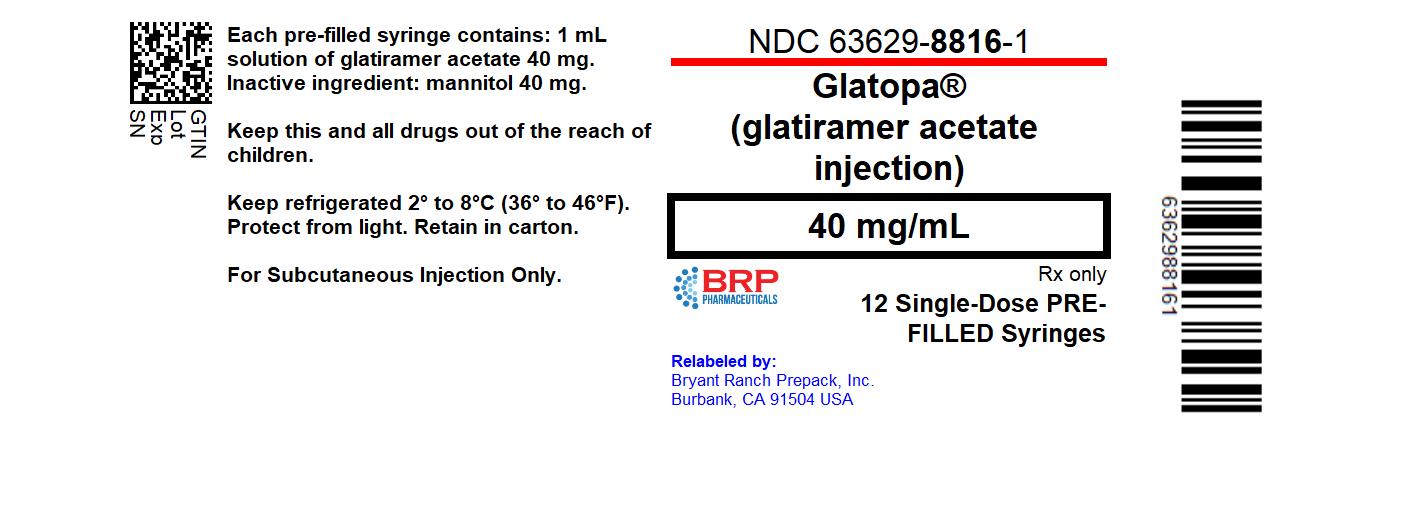
Glatopa Glatiramer Acetate 40 mg/mL Injection, Solution — NDC 63629-8816-1 (Billing 63629-8816-01)
This is a package of Glatopa Glatiramer Acetate 40 mg/mL Injection, Solution from Bryant Ranch Prepack, marketed since Feb 2018 and currently FDA-listed. It is this product's only package size.
NDC database record
One package, one record: these facts belong to NDC 63629-8816-1 alone.
- Record
- FDA NDC Directory package listing · Human prescription drug
- Code segments
- 63629 labeler · 8816 product · 1 package
- Package marketed since
- Sep 10, 2021
- Sample package
- No — commercial package
- Listing certified through
- Dec 31, 2026
- Barcode (UPC-A, from the NDC)
- 3 6362988161 1
- FDA record last changed
- Jul 24, 2026
Identity & classification
Regulatory identifiers FDA, NLM and CMS codes for this package
Drug-database identifiers Medi-Span GPI and First Databank GCN / HICL / AHFS classification
- GSN (GCN sequence number): 071942
- GCN: 35983
- GPI-14 (Medi-Span): 6240003010E540
- HICL (First Databank): 012810
- AHFS class code: 90:04.24.00
- RxCUI (RxNorm): 1487361
Where does this data come from?
- FDA openFDA NDC Directory · synced Oct 8, 2026
- FDA label on DailyMed · label index refreshed Oct 8, 2026
- RxNorm (NLM RxNav) · catalog refreshed Oct 1, 2026
- Medi-Span GPI (licensed)
- First Databank (licensed) · refreshed Oct 8, 2026
RxNorm drug class
This medicine belongs to the Other immunostimulants class.
Where does this data come from?
- RxClass (NLM) · catalog refreshed Oct 1, 2026
Clinical
Glatiramer injection is used to treat various forms of multiple sclerosis (MS; a disease that damages nerves and can cause weakness, numbness, trouble walking or talking, vision changes, and other problems). Glatiramer is in a class of medications called immunomodulators. It works by stopping the body from damaging its own nerve cells (myelin).
Read the full MedlinePlus article ↗- It's a treatment for relapsing forms of multiple sclerosis (MS) in adults. That includes a first episode that might signal MS (called clinically isolated syndrome), the classic rel...
- What exactly is glatiramer acetate used for?
- Yes, where you inject absolutely matters. You inject under the skin — never into a vein — and you should rotate your injection sites every single time. Good spots include your uppe...
- How do I give myself the injection, and does it matter where I inject?
Patient education
Supplement & herbal interactions
Some supplements/herbs that may interact with Glatiramer acetate — tap one for details:
Where does this data come from?
- MedlinePlus (NLM) · refreshed Oct 8, 2026
- FDA label on DailyMed · label index refreshed Oct 8, 2026
Ask a licensed pharmacist directly — free, answered by our team.
Pricing
A drug doesn't have one price. Each row is a different public payment system, and none is what you'd pay at the counter — that depends on your insurance. The ⓘ on each row explains what it measures.
| Price system | Per mL | Per package |
|---|---|---|
| Retail pharmacies payNADAC · weekly | Not in the retail survey — common for institutional, discontinued, or low-volume packs. | |
| Medicaid paysCMS SDUD · 12 mo | No recent Medicaid claims on file for this NDC — rare and low-volume NDCs are suppressed in the public data. | |
| Medicare drug plans payPart D · Q2 2026 | $79.29 | $951.44 / 12 ml |
Where does this data come from?
- CMS NADAC weekly file
- CMS ASP pricing files · refreshed Sep 20, 2026
- CMS Medicaid State Drug Utilization Data · refreshed Oct 8, 2026
- CMS Part D plan pricing files · refreshed Sep 24, 2026
- VA National Acquisition Center price file
Packaging — all sizes for this product
| Package NDC | Description | Marketing start | Marketing end | Status |
|---|---|---|---|---|
| 63629-8816-01 You're viewing this Main listing | 12 BLISTER PACK in 1 CARTON / 1 SYRINGE, GLASS in 1 BLISTER PACK / 1 mL in 1 SYRINGE, GLASS | 2021-09-10 | — | Active |
Therapeutic equivalents
| Product | Labeler | Pack | NADAC/unit | TE | Status | Price vs. this |
|---|---|---|---|---|---|---|
| Glatiramer Acetate 40 mg/mL 00378-6961-12 | Mylan | 1 syringe | $86.095 | AP | Availability likely | — |
| Glatopa 40 mg/mL 00781-3250-89 | Sandoz | 1 syringe | $86.095 | AP | Availability likely | — |
| Glatiramer Acetate 40 mg/mL 00832-6085-12 | UPSHER-SMITH | 12 syringes | $86.095 | AP | Availability likely | — |
| Glatiramer Acetate 40 mg/mL 47335-0991-02 | Sun | 1 syringe | $86.095 | AP | Availability likely | — |
| Glatiramer Acetate 40 mg/mL 70710-1549-06 | Zydus | 1 syringe | $86.095 | AP | Availability likely | — |
| Glatiramer Acetate 40 mg/mL 11797-0765-03 | Italfarmaco | 12 syringes | — | AP | FDA listed | — |
| Glatopa 40 mg/mLthis 63629-8816-01 | Bryant | 1 syringe | — | AP | FDA listed | — |
| Copaxone 40 mg/mL 68546-0325-06 | Teva | 1 syringe | — | AP | FDA listed | — |
| Glatiramer Acetate 40 mg/mL 82983-0430-12 | AJENAT | 1 syringe | — | AP | FDA listed | — |
Where does this data come from?
- FDA openFDA NDC Directory · synced Oct 8, 2026
- FDA Orange Book · refreshed Oct 3, 2026
- CMS NADAC weekly file
Availability & generic status
This product is an FDA-approved generic. Other versions of the same drug are listed under Therapeutic equivalents, least expensive first.
Where does this data come from?
- FDA Orange Book · refreshed Oct 3, 2026
Inactive Ingredients / Excipients
Inactive ingredients, also called excipients, are components of the drug product other than the active ingredient. They may include fillers, dyes, coatings, preservatives, flavors, or other formulation ingredients.
🧪 Avoiding an ingredient? See Glatiramer Injection inactive ingredients by manufacturer: every current product's list side by side, so you can ask your pharmacy for the version that does not list it.
💡 Tap an ingredient (hover on desktop) to see what it is and why it’s used.
-
UNII 3OWL53L36A
A natural sugar alcohol derived from seaweed or synthesized in the lab. It's used as a filler to add bulk, a sweetener in sugar-free formulas, and a disintegrant to help tablets break apart in the stomach.
1 inactive ingredient listed in the exact product block matched to this NDC.
Where does this data come from?
ingredient classCode="IACT" elements from the exact product block matched by this NDC. Label-section narrative from DailyMed / the openFDA label index is shown separately when available.- FDA label on DailyMed · label index refreshed Oct 8, 2026
- FDA openFDA NDC Directory · synced Oct 8, 2026
Inactive ingredient FAQ
Are inactive ingredients the same for every manufacturer?
Why might an inactive ingredient be missing?
Can inactive ingredients matter?
Manufacturer & labeler
More NDCs from Bryant Ranch Prepack labeler code 63629
- Fluticasone Propionate and Salmeterol 232 ug; 14 ug Powder, Metered NDC 63629-8810-1
- Fluticasone Propionate and Salmeterol 55 ug; 14 ug Powder, Metered NDC 63629-8811-1
- Fluvastatin 20 mg Capsule NDC 63629-8812-1
- Formoterol fumarate 20 ug/2mL Solution NDC 63629-8813-1
- Formoterol fumarate 20 ug/2mL Solution NDC 63629-8814-1
- Glatopa Glatiramer Acetate 20 mg/mL Injection, Solution NDC 63629-8815-1
- Hydrocortisone 25 mg/g Ointment NDC 63629-8817-1
- Ketoconazole 20 mg/g Cream NDC 63629-8819-1
- Ketoconazole 20 mg/g Cream NDC 63629-8820-1
- Lisinopril 2.5 mg Tablet NDC 63629-8823-1
- Medroxyprogesterone Acetate 10 mg Tablet NDC 63629-8824-1
- Medroxyprogesterone Acetate 2.5 mg Tablet NDC 63629-8825-1
Where does this data come from?
- FDA openFDA NDC Directory · synced Oct 8, 2026
- Drugs@FDA
Full prescribing information FDA SPL
🎯 Indications and Usage ▾
1 INDICATIONS AND USAGE Glatopa is indicated for the treatment of relapsing forms of multiple sclerosis (MS), to include clinically isolated syndrome, relapsing-remitting disease, and active secondary progressive disease, in adults. Glatopa is indicated for the treatment of relapsing-forms of multiple sclerosis (MS), to include clinically isolated syndrome, relapsing-remitting disease, and active secondary progressive disease, in adults ( 1 ).
⏱️ Dosage and Administration ▾
2 DOSAGE AND ADMINISTRATION • For subcutaneous injection only; doses are not interchangeable ( 2.1 ) • Glatopa 20 mg/mL per day ( 2.1 ) • Glatopa 40 mg/mL three times per week ( 2.1 ) • Before use, allow the solution to warm to room temperature ( 2.2 )
2.1Recommended Dose Glatopa is for subcutaneous use only. Do not administer intravenously. The dosing schedule depends on the product strength that is selected. The recommended doses are: • Glatopa 20 mg per mL: administer once per day or • Glatopa 40 mg per mL: administer three times per week and at least 48 hours apart. Glatopa 20 mg per mL and Glatopa 40 mg per mL are not interchangeable.
2.2Instructions for Use Remove one blister-packaged pre-filled syringe from the refrigerated carton. Let the pre-filled syringe stand at room temperature for 20 minutes to allow the solution to warm to room temperature. Visually inspect the syringe for particulate matter and discoloration prior to administration.
The solution in the syringe should appear clear, colorless to slightly yellow. If particulate matter or discoloration is observed, discard the syringe. Areas for subcutaneous self-injection include arms, abdomen, hips, and thighs.
The pre-filled syringe is for single use only. Discard unused portions.
💊 Dosage Forms and Strengths ▾
3 DOSAGE FORMS AND STRENGTHS • Injection: 20 mg per mL in a single-dose, pre-filled syringe with a white plunger. For subcutaneous use only. • Injection: 40 mg per mL in a single-dose, pre-filled syringe with a blue plunger. For subcutaneous use only. • Injection: 20 mg per mL in a single-dose, pre-filled syringe with a white plunger. ( 3 ) • Injection: 40 mg per mL in a single-dose, pre-filled syringe with a blue plunger. ( 3 )
⛔ Contraindications ▾
4 CONTRAINDICATIONS Glatopa is contraindicated in patients with known hypersensitivity to glatiramer acetate or mannitol. Known hypersensitivity to glatiramer acetate or mannitol ( 4 )
⚠️ Warnings and Cautions ▾
5 WARNINGS AND PRECAUTIONS • Immediate Post-Injection Reaction (flushing, chest pain, palpitations, tachycardia, anxiety, dyspnea, throat constriction, and/or urticaria), may occur within seconds to minutes after injection and are generally transient and self-limiting ( 5.1 ) • Chest pain, usually transient ( 5.2 ) • Lipoatrophy and skin necrosis may occur. Instruct patients in proper injection technique and to rotate injection sites ( 5.3 ) • Glatopa can modify immune response ( 5.4 ) • Hepatic Injury: if signs or symptoms of hepatic dysfunction occur, consider discontinuing Glatopa ( 5.5 )
5.1Immediate Post-Injection Reaction Approximately 16% of patients exposed to glatiramer acetate injection 20 mg per mL in the five placebo-controlled trials compared to 4% of those on placebo, and approximately 2% of patients exposed to glatiramer acetate injection 40 mg per mL in a placebo-controlled trial compared to none on placebo, experienced a constellation of symptoms that may occur immediately (within seconds to minutes, with the majority of symptoms observed within 1 hour) after injection and included at least two of the following: flushing, chest pain, palpitations, tachycardia, anxiety, dyspnea, constriction of the throat, and urticaria.
In general, these symptoms have their onset several months after the initiation of treatment, although they may occur earlier, and a given patient may experience one or several episodes of these symptoms. Whether or not any of these symptoms actually represent a specific syndrome is uncertain. Typically, the symptoms were transient and self-limited and did not require treatment; however, there have been reports of patients with similar symptoms who received emergency medical care.
Whether an immunologic or nonimmunologic mechanism mediates these episodes, or whether several similar episodes seen in a given patient have identical mechanisms, is unknown.
5.2Chest Pain Approximately 13% of glatiramer acetate injection 20 mg per mL patients in the five placebo-controlled studies compared to 6% of placebo patients, and approximately 2% of patients exposed to glatiramer acetate injection 40 mg per mL in a placebo-controlled trial compared to 1% of placebo patients, experienced at least one episode of transient chest pain. While some of these episodes occurred in the context of the Immediate Post-Injection Reaction described above, many did not. The temporal relationship of this chest pain to an injection was not always known.
The pain was usually transient, often unassociated with other symptoms, and appeared to have no clinical sequelae. Some patients experienced more than one such episode, and episodes usually began at least 1 month after the initiation of treatment. The pathogenesis of this symptom is unknown.
5.3Lipoatrophy and Skin Necrosis At injection sites, localized lipoatrophy and, rarely, injection site skin necrosis may occur. Lipoatrophy occurred in approximately 2% of patients exposed to glatiramer acetate injection 20 mg per mL in the five placebo-controlled trials compared to none on placebo, and 0.5% of patients exposed to glatiramer acetate injection 40 mg per mL in a single placebo-controlled trial and none on placebo. Skin necrosis has only been observed in the post-marketing setting.
Lipoatrophy may occur at various times after treatment onset (sometimes after several months) and is thought to be permanent. There is no known therapy for lipoatrophy. To assist in possibly minimizing these events, the patient should be advised to follow proper injection technique and to rotate injection sites with each injection.
5.4Potential Effects on Immune Response Because glatiramer acetate injection can modify immune response, it may interfere with immune functions. For example, treatment with glatiramer acetate injection may interfere with the recognition of foreign antigens in a way that would undermine the body’s tumor surveillance and its defenses against infection. There is no eviden… [Excerpted — this section continues on DailyMed.]
🤒 Adverse Reactions ▾
6 ADVERSE REACTIONS The following serious adverse reactions are described elsewhere in the labeling: • Immediate Post-Injection Reaction [see Warnings and Precautions ( 5.1 )] • Chest Pain [see Warnings and Precautions ( 5.2 )] • Lipoatrophy and Skin Necrosis [see Warnings and Precautions ( 5.3 )] • Potential Effects on Immune Response [see Warnings and Precautions ( 5.4 )] • Hepatic Injury [see Warnings and Precautions ( 5.5 )] • In controlled studies of glatiramer acetate injection 20 mg/mL, most common adverse reactions (≥10% and ≥1.5 times higher than placebo) were: injection site reactions, vasodilatation, rash, dyspnea, and chest pain ( 6.1 ) • In a controlled study of glatiramer acetate injection 40 mg/mL, most common adverse reactions (≥10% and ≥1.5 times higher than placebo) were: injection site reactions ( 6.1 ) To report SUSPECTED ADVERSE REACTIONS, contact Sandoz Inc. at 1-800-525-8747 or FDA at 1-800-FDA-1088 or www.fda.gov/medwatch.
6.1Clinical Trials Experience Because clinical trials are conducted under widely varying conditions, adverse reaction rates observed in the clinical trials of a drug cannot be directly compared to rates in the clinical trials of another drug and may not reflect the rates observed in practice. Incidence in Controlled Clinical Trials Glatiramer Acetate Injection 20 mg per mL per day Among 563 patients treated with glatiramer acetate injection in blinded placebo-controlled trials, approximately 5% of the subjects discontinued treatment because of an adverse reaction.
The adverse reactions most commonly associated with discontinuation were: injection site reactions, dyspnea, urticaria, vasodilatation, and hypersensitivity. The most common adverse reactions were: injection site reactions, vasodilatation, rash, dyspnea, and chest pain. Table 1 lists signs and symptoms that occurred in at least 2% of patients treated with glatiramer acetate injection 20 mg per mL in the placebo-controlled trials.
These signs and symptoms were numerically more common in patients treated with glatiramer acetate injection than in patients treated with placebo. Adverse reactions were usually mild in intensity . Table 1: Adverse Reactions in Controlled Clinical Trials with an Incidence ≥2% of Patients and more frequent with Glatiramer Acetate Injection (20 mg per mL daily) than with Placebo Glatiramer Acetate Injection 20 mg/mL (n=563) % Placebo (n=564) % Blood And Lymphatic System Disorders Lymphadenopathy 7 3 Cardiac Disorders Palpitations 9 4 Tachycardia 5 2 Eye Disorders Eye Disorder 3 1 Diplopia 3 2 Gastrointestinal Disorders Nausea 15 11 Vomiting 7 4 Dysphagia 2 1 General Disorders And Administration Injection Site Erythema 43 10 Site Conditions Injection Site Pain 40 20 Injection Site Pruritus 27 4 Injection Site Mass 26 6 Asthenia 22 21 Pain 20 17 Injection Site Edema 19 4 Chest Pain 13 6 Injection Site Inflammation 9 1 Edema 8 2 Injection Site Reaction 8 1 Pyrexia 6 5 Injection Site Hypersensitivity 4 0 Local Reaction 3 1 Chills 3 1 Face Edema 3 1 Edema Peripheral 3 2 Injection Site Fibrosis 2 1 Injection Site Atrophy Injection site atrophy comprises terms relating to localized lipoatrophy at injection site 2 0 Immune System Disorders Hypersensitivity 3 2 Infections And Infestations Infection 30 28 Influenza 14 13 Rhinitis 7 5 Bronchitis 6 5 Gastroenteritis 6 4 Vaginal Candidiasis 4 2 Metabolism And Nutrition Disorders Weight Increased 3 1 Musculoskeletal And Connective Back Pain 12 10 Tissue Disorders Neoplasms Benign, Malignant And Benign Neoplasm of Skin 2 1 Unspecified (Incl Cysts And Polyps) Nervous System Disorders Tremor 4 2 Migraine 4 2 Syncope 3 2 Speech Disorder 2 1 Psychiatric Disorders Anxiety 13 10 Nervousness 2 1 Renal And Urinary Disorders Micturition Urgency 5 4 Respiratory, Thoracic And Mediastinal Dyspnea 14 4 Disorders Cough 6 5 Laryngospasm 2 1 Skin And Subcutaneous Tissue Rash 19 11 Disorders Hyperhidrosis 7 5 Pruritus 5 4 Urticaria 3 1 Skin Disorder 3 1 Vascular Disorders Vasodilat… [Excerpted — this section continues on DailyMed.]
🔄 Drug Interactions ▾
7 DRUG INTERACTIONS Interactions between glatiramer acetate injection and other drugs have not been fully evaluated. Results from existing clinical trials do not suggest any significant interactions of glatiramer acetate injection with therapies commonly used in MS patients, including the concurrent use of corticosteroids for up to 28 days. Glatiramer acetate injection has not been formally evaluated in combination with interferon beta.
👥 Use in Specific Populations ▾
8 USE IN SPECIFIC POPULATIONS
8.1Pregnancy Risk Summary Available human data on the use of Glatopa in pregnant women are not sufficient to support conclusions about drug-associated risk for major birth defects and miscarriage. Administration of glatiramer acetate by subcutaneous injection to pregnant rats and rabbits resulted in no adverse effects on embryo-fetal or offspring development ( see Data ). The estimated background risk of major birth defects and miscarriage for the indicated population is unknown.
In the US general population, the estimated background risk of major birth defects and miscarriage in clinically recognized pregnancies is 2% to 4% and 15% to 20%, respectively. Data Human Data There are no adequate and well-controlled studies of Glatopa in pregnant women. The available postmarketing reports, case series, and small cohort studies do not provide sufficient information to support conclusions about drug-associated risk for major birth defects and miscarriage.
Animal Data In rats or rabbits receiving glatiramer acetate by subcutaneous injection during the period of organogenesis, no adverse effects on embryo-fetal development were observed at doses up to 37.5 mg/kg/day (18 and 36 times, respectively, the therapeutic human dose of 20 mg/day on a mg/m 2 basis). In rats receiving subcutaneous glatiramer acetate at doses of up to 36 mg/kg from day 15 of pregnancy throughout lactation, no significant effects on delivery or on offspring growth and development were observed.
8.2Lactation Risk Summary There are no data on the presence of glatiramer acetate in human milk, the effects on breastfed infants, or the effects on milk production. The developmental and health benefits of breastfeeding should be considered along with the mother’s clinical need for Glatopa and any potential adverse effects on the breastfed infant from Glatopa or from the underlying maternal condition.
8.4Pediatric Use The safety and effectiveness of Glatopa have not been established in patients under 18 years of age.
8.5Geriatric Use Glatopa has not been studied in elderly patients.
8.6Use in Patients with Impaired Renal Function The pharmacokinetics of glatiramer acetate in patients with impaired renal function have not been determined.
🤰 Pregnancy ▾
8.1Pregnancy Risk Summary Available human data on the use of Glatopa in pregnant women are not sufficient to support conclusions about drug-associated risk for major birth defects and miscarriage. Administration of glatiramer acetate by subcutaneous injection to pregnant rats and rabbits resulted in no adverse effects on embryo-fetal or offspring development ( see Data ). The estimated background risk of major birth defects and miscarriage for the indicated population is unknown.
In the US general population, the estimated background risk of major birth defects and miscarriage in clinically recognized pregnancies is 2% to 4% and 15% to 20%, respectively. Data Human Data There are no adequate and well-controlled studies of Glatopa in pregnant women. The available postmarketing reports, case series, and small cohort studies do not provide sufficient information to support conclusions about drug-associated risk for major birth defects and miscarriage.
Animal Data In rats or rabbits receiving glatiramer acetate by subcutaneous injection during the period of organogenesis, no adverse effects on embryo-fetal development were observed at doses up to 37.5 mg/kg/day (18 and 36 times, respectively, the therapeutic human dose of 20 mg/day on a mg/m 2 basis). In rats receiving subcutaneous glatiramer acetate at doses of up to 36 mg/kg from day 15 of pregnancy throughout lactation, no significant effects on delivery or on offspring growth and development were observed.
🧒 Pediatric Use ▾
8.4Pediatric Use The safety and effectiveness of Glatopa have not been established in patients under 18 years of age.
🧓 Geriatric Use ▾
8.5Geriatric Use Glatopa has not been studied in elderly patients.
🧬 Clinical Pharmacology ▾
12 CLINICAL PHARMACOLOGY
12.1Mechanism of Action The mechanism(s) by which glatiramer acetate exerts its effects in patients with MS are not fully understood. However, glatiramer acetate is thought to act by modifying immune processes that are believed to be responsible for the pathogenesis of MS. This hypothesis is supported by findings of studies that have been carried out to explore the pathogenesis of experimental autoimmune encephalomyelitis, a condition induced in animals through immunization against central nervous system derived material containing myelin and often used as an experimental animal model of MS.
Studies in animals and in vitro systems suggest that upon its administration, glatiramer acetate-specific suppressor T-cells are induced and activated in the periphery. Because glatiramer acetate can modify immune functions, concerns exist about its potential to alter naturally-occurring immune responses. There is no evidence that glatiramer acetate does this, but this has not been systematically evaluated [see Warnings and Precautions ( 5.4 )] .
12.3Pharmacokinetics Results obtained in pharmacokinetic studies performed in humans (healthy volunteers) and animals support that a substantial fraction of the therapeutic dose delivered to patients subcutaneously is hydrolyzed locally. Larger fragments of glatiramer acetate can be recognized by glatiramer acetate-reactive antibodies. Some fraction of the injected material, either intact or partially hydrolyzed, is presumed to enter the lymphatic circulation, enabling it to reach regional lymph nodes, and some may enter the systemic circulation intact.
🧬 Mechanism of Action ▾
12.1Mechanism of Action The mechanism(s) by which glatiramer acetate exerts its effects in patients with MS are not fully understood. However, glatiramer acetate is thought to act by modifying immune processes that are believed to be responsible for the pathogenesis of MS. This hypothesis is supported by findings of studies that have been carried out to explore the pathogenesis of experimental autoimmune encephalomyelitis, a condition induced in animals through immunization against central nervous system derived material containing myelin and often used as an experimental animal model of MS.
Studies in animals and in vitro systems suggest that upon its administration, glatiramer acetate-specific suppressor T-cells are induced and activated in the periphery. Because glatiramer acetate can modify immune functions, concerns exist about its potential to alter naturally-occurring immune responses. There is no evidence that glatiramer acetate does this, but this has not been systematically evaluated [see Warnings and Precautions ( 5.4 )] .
📦 How Supplied / Storage and Handling ▾
16 HOW SUPPLIED/STORAGE AND HANDLING Glatopa (glatiramer acetate injection) is a clear, colorless to slightly yellow, sterile, nonpyrogenic solution in a 1 mL single-dose glass syringe with attached 1/2 inch length, 29 gauge needle supplied as: 40 mg per mL in a single-dose, pre-filled syringe with a blue plunger, in individual blister packages supplied in 12-count cartons (NDC: 63629-8816-1) Store Glatopa refrigerated at 2°C to 8°C (36°F to 46°F). If needed, the patient may store Glatopa at room temperature, 15°C to 30°C (59°F to 86°F), for up to one month, but refrigeration is preferred.
Avoid exposure to higher temperatures or intense light. Do not freeze Glatopa. If a Glatopa syringe freezes, it should be discarded.
Repackaged/Relabeled by: Bryant Ranch Prepack, Inc. Burbank, CA 91504
📋 Description ▾
11 DESCRIPTION Glatiramer acetate, the active ingredient of Glatopa, consists of the acetate salts of synthetic polypeptides, containing four naturally occurring amino acids: L-glutamic acid, L-alanine, L-tyrosine, and L-lysine with an average molar fraction of 0.141, 0.427, 0.095, and 0.338, respectively. The average molecular weight of glatiramer acetate is 5,000 – 9,000 daltons. Glatiramer acetate is identified by specific antibodies.
Chemically, glatiramer acetate is designated L-glutamic acid polymer with L-alanine, L-lysine and L-tyrosine, acetate (salt). Its structural formula is: (Glu, Ala, Lys, Tyr) x • x CH 3 COOH (C 5 H 9 NO 4 •C 3 H 7 NO 2 •C 6 H 14 N 2 O 2 •C 9 H 11 NO 3 ) x • x C 2 H 4 O 2 CAS - 147245-92-9 Glatopa is a clear, colorless to slightly yellow, sterile, nonpyrogenic solution for subcutaneous injection. Each 1 mL of glatiramer acetate solution contains 20 mg or 40 mg of glatiramer acetate and the following inactive ingredient: 40 mg of mannitol.
The pH of the solutions is approximately 5.5 to 7.0. The biological activity of glatiramer acetate is determined by its ability to block the induction of experimental autoimmune encephalomyelitis (EAE) in mice.
💬 Information for Patients ▾
17 PATIENT COUNSELING INFORMATION Advise the patient to read the FDA-approved patient labeling (Patient Information and Instructions for Use). Immediate Post-Injection Reaction Advise patients that Glatopa may cause various symptoms after injection, including flushing, chest pain, palpitations, tachycardia, anxiety, dyspnea, constriction of the throat, and urticaria. These symptoms occur within seconds to minutes after injection and are generally transient and self-limited and do not require specific treatment.
Inform patients that these symptoms may occur early or may have their onset several months after the initiation of treatment. A patient may experience one or several episodes of these symptoms. Chest Pain Advise patients that they may experience transient chest pain either as part of the Immediate Post-Injection Reaction or in isolation.
Inform patients that the pain should be transient. Some patients may experience more than one such episode, usually beginning at least one month after the initiation of treatment. Patients should be advised to seek medical attention if they experience chest pain of unusual duration or intensity.
Lipoatrophy and Skin Necrosis at Injection Site Advise patients that localized lipoatrophy, and rarely, skin necrosis may occur at injection sites. Instruct patients to follow proper injection technique and to rotate injection areas and sites with each injection to minimize these risks. Hepatic Injury Advise patients that hepatic injury, including hepatic failure and hepatitis with jaundice, has been reported with the use of Glatopa.
Educate patients about the signs and symptoms of hepatic injury and instruct patients to report them immediately to their healthcare provider [see Warning and Precautions ( 5.5 )] . Pregnancy Instruct patients that if they are pregnant or plan to become pregnant while taking Glatopa they should inform their physician [see Use in Specific Populations ( 8.1 )] . Lactation Advise patients to notify their healthcare provider if they are breastfeeding or intend to breastfeed during Glatopa therapy [see Use in Specific Populations ( 8.2 )].
Instructions for Use Instruct patients to read the Glatopa Patient Information leaflet carefully. Glatopa 20 mg per mL and Glatopa 40 mg per mL are not interchangeable. Glatiramer acetate injection 20 mg per mL is administered daily and glatiramer acetate injection 40 mg per mL is administered three times per week.
Caution patients to use aseptic technique. The first injection should be performed under the supervision of a health care professional. Instruct patients to rotate injection areas and sites with each injection.
Caution patients against the reuse of needles or syringes. Instruct patients in safe disposal procedures. Storage Conditions Advise patients that the recommended storage condition for Glatopa is refrigeration at 36°F to 46°F (2°C to 8°C).
If needed, the patient may store Glatopa at room temperature, 59°F to 86°F (15°C to 30°C), for up to one month, but refrigeration is preferred. Glatopa should not be exposed to higher temperatures or intense light. Do not freeze Glatopa.
🧬 Pharmacokinetics ▾
12.3Pharmacokinetics Results obtained in pharmacokinetic studies performed in humans (healthy volunteers) and animals support that a substantial fraction of the therapeutic dose delivered to patients subcutaneously is hydrolyzed locally. Larger fragments of glatiramer acetate can be recognized by glatiramer acetate-reactive antibodies. Some fraction of the injected material, either intact or partially hydrolyzed, is presumed to enter the lymphatic circulation, enabling it to reach regional lymph nodes, and some may enter the systemic circulation intact.
🔬 Clinical Studies ▾
14 CLINICAL STUDIES Evidence supporting the effectiveness of glatiramer acetate injection derives from five placebo-controlled trials, four of which used a glatiramer acetate injection dose of 20 mg per mL per day and one of which used a glatiramer acetate injection dose of 40 mg per mL three times per week. Glatiramer acetate injection 20 mg per mL per day Study 1 was performed at a single center. Fifty patients were enrolled and randomized to receive daily doses of either glatiramer acetate injection, 20 mg per mL subcutaneously, or placebo (glatiramer acetate injection: n=25; placebo: n=25).
Patients were diagnosed with RRMS by standard criteria, and had at least 2 exacerbations during the 2 years immediately preceding enrollment. Patients were ambulatory, as evidenced by a score of no more than 6 on the Kurtzke Disability Scale Score (DSS), a standard scale ranging from 0–Normal to 10–Death due to MS. A score of 6 is defined as one at which a patient is still ambulatory with assistance; a score of 7 means the patient must use a wheelchair.
Patients were examined every 3 months for 2 years, as well as within several days of a presumed exacerbation. To confirm an exacerbation, a blinded neurologist had to document objective neurologic signs, as well as document the existence of other criteria (e.g., the persistence of the neurological signs for at least 48 hours). The protocol-specified primary outcome measure was the proportion of patients in each treatment group who remained exacerbation free for the 2 years of the trial, but two other important outcomes were also specified as endpoints: the frequency of attacks during the trial, and the change in the number of attacks compared with the number which occurred during the previous 2 years.
Table 3 presents the values of the three outcomes described above, as well as several protocol-specified secondary measures. These values are based on the intent-to-treat population (i.e., all patients who received at least 1 dose of treatment and who had at least 1 on-treatment assessment): Table 3: Study 1 Efficacy Results Glatiramer Acetate Injection 20 mg/mL (n=25) Placebo (n=25) P-Value % Relapse-Free Patients 14/25 (56%) 7/25 (28%) 0.085 Mean Relapse Frequency 0.6/2 years 2.4/2 years 0.005 Reduction in Relapse Rate Compared to Prestudy 3.2 1.6 0.025 Median Time to First Relapse (days) >700 150 0.03 % of Progression-Free Progression was defined as an increase of at least 1 point on the DSS, persisting for at least 3 consecutive months.
Patients 20/25 (80%) 13/25 (52%)
0.07Study 2 was a multicenter trial of similar design which was performed in 11 US centers. A total of 251 patients (glatiramer acetate injection: n=125; placebo: n=126) were enrolled. The primary outcome measure was the Mean 2-Year Relapse Rate.
Table 4 presents the values of this outcome for the intent-to-treat population, as well as several secondary measures: Table 4: Study 2 Efficacy Results Glatiramer Acetate Injection 20 mg/mL (n=125) Placebo (n=126) P-Value Mean No. of Relapses 1.19/2 years 1.68/2 years 0.055 % Relapse-Free Patients 42/125 (34%) 34/126 (27%)
0.25Median Time to First Relapse (days) 287 198 0.23 % of Progression-Free Patients 98/125 (78%) 95/126 (75%)
0.48Mean Change in DSS -0.05 +0.21 0.023 In both studies, glatiramer acetate injection exhibited a clear beneficial effect on relapse rate, and it is based on this evidence that glatiramer acetate injection is considered effective. In Study 3, 481 patients who had recently (within 90 days) experienced an isolated demyelinating event and who had lesions typical of multiple sclerosis on brain MRI were randomized to receive either glatiramer acetate injection 20 mg per mL (n=243) or placebo (n=238). The primary outcome measure was time to development of a second exacerbation.
Patients were followed for up to three years or until they reached the primary endpoint. Secondary outcomes were brain MRI measures, including number of new T2 lesions and T2 lesi… [Excerpted — this section continues on DailyMed.]
🧪 Nonclinical Toxicology ▾
13 NONCLINICAL TOXICOLOGY
13.1Carcinogenesis, Mutagenesis, Impairment of Fertility Carcinogenesis In a 2-year carcinogenicity study, mice were administered up to 60 mg/kg/day glatiramer acetate by subcutaneous injection (up to 15 times the human therapeutic dose of 20 mg/day on a mg/m 2 basis). No increase in systemic neoplasms was observed. In males receiving the 60-mg/kg/day dose, there was an increased incidence of fibrosarcomas at the injection sites.
These sarcomas were associated with skin damage precipitated by repetitive injections of an irritant over a limited skin area. In a 2-year carcinogenicity study, rats were administered up to 30 mg/kg/day glatiramer acetate by subcutaneous injection (up to 15 times the human therapeutic dose on a mg/m 2 basis). No increase in neoplasms was observed.
Mutagenesis Glatiramer acetate was not mutagenic in in vitro (Ames test, mouse lymphoma tk) assays. Glatiramer acetate was clastogenic in two separate in vitro chromosomal aberration assays in cultured human lymphocytes but not clastogenic in an in vivo mouse bone marrow micronucleus assay. Impairment of Fertility When glatiramer acetate was administered by subcutaneous injection prior to and during mating (males and females) and throughout gestation and lactation (females) at doses up to 36 mg/kg/day (18 times the human therapeutic dose on a mg/m 2 basis) no adverse effects were observed on reproductive or developmental parameters.
📄 Carcinogenesis, Mutagenesis, Impairment of Fertility ▾
13.1Carcinogenesis, Mutagenesis, Impairment of Fertility Carcinogenesis In a 2-year carcinogenicity study, mice were administered up to 60 mg/kg/day glatiramer acetate by subcutaneous injection (up to 15 times the human therapeutic dose of 20 mg/day on a mg/m 2 basis). No increase in systemic neoplasms was observed. In males receiving the 60-mg/kg/day dose, there was an increased incidence of fibrosarcomas at the injection sites.
These sarcomas were associated with skin damage precipitated by repetitive injections of an irritant over a limited skin area. In a 2-year carcinogenicity study, rats were administered up to 30 mg/kg/day glatiramer acetate by subcutaneous injection (up to 15 times the human therapeutic dose on a mg/m 2 basis). No increase in neoplasms was observed.
Mutagenesis Glatiramer acetate was not mutagenic in in vitro (Ames test, mouse lymphoma tk) assays. Glatiramer acetate was clastogenic in two separate in vitro chromosomal aberration assays in cultured human lymphocytes but not clastogenic in an in vivo mouse bone marrow micronucleus assay. Impairment of Fertility When glatiramer acetate was administered by subcutaneous injection prior to and during mating (males and females) and throughout gestation and lactation (females) at doses up to 36 mg/kg/day (18 times the human therapeutic dose on a mg/m 2 basis) no adverse effects were observed on reproductive or developmental parameters.
📄 Patient Package Insert ▾
PATIENT INFORMATION Glatopa ® (gluh-TOH-puh) (glatiramer acetate injection) for Subcutaneous Use Read this Patient Information before you start using Glatopa and each time you get a refill. There may be new information. This information does not take the place of talking with your doctor about your medical condition or your treatment.
What is Glatopa? Glatopa is a prescription medicine that is used to treat relapsing forms of multiple sclerosis (MS), to include clinically isolated syndrome, relapsing-remitting disease, and active secondary progressive disease, in adults. It is not known if Glatopa is safe and effective in children under 18 years of age.
Who should not use Glatopa? • Do not use Glatopa if you are allergic to glatiramer acetate, mannitol or any of the ingredients in Glatopa. See the end of this leaflet for a complete list of the ingredients in Glatopa. What should I tell my doctor before using Glatopa?
Before you use Glatopa, tell your doctor if you: • are pregnant or plan to become pregnant. It is not known if glatiramer acetate will harm your unborn baby. • are breastfeeding or plan to breastfeed. It is not known if glatiramer acetate passes into your breast milk.
Talk to your doctor about the best way to feed your baby while using Glatopa. Tell your doctor about all the medicines you take, including prescription and over-the-counter medicines, vitamins, and herbal supplements. Glatopa may affect the way other medicines work, and other medicines may affect how Glatopa works.
Know the medicines you take. Keep a list of your medicines with you to show your doctor and pharmacist when you get a new medicine. How should I use Glatopa? • For detailed instructions, see the Instructions for Use at the end of this leaflet for complete information on how to use Glatopa. • Your doctor will tell you how much Glatopa to use and when to use it. • Glatopa is given by injection under your skin (subcutaneously). • Use Glatopa exactly as your doctor tells you to use it. • Since every body type is different, talk with your doctor about the injection areas that are best for you. • You should receive your first dose of Glatopa with a doctor or nurse present.
This might be at your doctor’s office or with a visiting home health nurse who will teach you how to give your Glatopa injections. What are the possible side effects of Glatopa? Glatopa may cause serious side effects, including: • Immediate Post-Injection Reactions.
Serious side effects may happen right after or within minutes after you inject Glatopa at any time during your course of treatment. Call your doctor right away if you have any of these immediate post-injection reaction symptoms including: ∘ redness to your cheeks or other parts of the body (flushing) ∘ chest pain ∘ fast heart beat ∘ anxiety ∘ breathing problems or tightness in your throat ∘ swelling, rash, hives, or itching If you have symptoms of an immediate post-injection reaction, do not give yourself more injections until a doctor tells you to. • Chest Pain.
You can have chest pain as part of an immediate post-injection reaction or by itself. This type of chest pain usually lasts a few minutes and can begin around 1 month after you start using Glatopa. Call your doctor right away if you have chest pain while using Glatopa. • Damage to your skin.
Damage to the fatty tissue just under your skin’s surface (lipoatrophy) and, rarely, death of your skin tissue (necrosis) can happen when you use Glatopa. Damage to the fatty tissue under your skin can cause a “dent” at the injection site that may not go away. You can reduce your chance of developing these problems by: ∘ following your doctor’s instructions for how to use Glatopa ∘ choosing a different injection area each time you use Glatopa.
See Step 4 in the Instructions for Use , “Choose your injection area”. • Liver problems. Liver problems, including liver failure, can occur with Glatopa. Call your healthcare provider right away if you have symptoms, such as: ○ n… [Excerpted — this section continues on DailyMed.]
📖 Instructions for Use ▾
INSTRUCTIONS FOR USE Glatopa ® (gluh-TOH-puh) (glatiramer acetate injection) for Subcutaneous Use For subcutaneous injection only. Do not inject Glatopa in your veins (intravenously). Do not re-use your Glatopa pre-filled syringes.
Do not share your Glatopa pre-filled syringes with another person. You may give another person an infection or get an infection from them. You should receive your first dose of Glatopa with a doctor or nurse present.
This might be at your doctor’s office or with a visiting home health nurse who will show you how to give your own injections. Glatopa comes in either a 20 mg Pre-filled Syringe with needle attached or a 40 mg Pre-filled Syringe with needle attached. How often a dose is given depends on the product strength that is prescribed.
Your doctor will prescribe the correct dose for you. Instructions for Using Your Glatopa 20 mg Pre-filled Syringe: • Glatopa 20 mg is injected 1 time each day, in the fatty layer under your skin (subcutaneously). • Each Glatopa 20 mg pre-filled syringe is for single use (1 time use) only. • The Glatopa 20 mg dose is packaged in boxes of 30 pre-filled syringes with needles attached. Glatopa 20 mg pre-filled syringes have white plungers.
Instructions for Using Your Glatopa 40 mg Pre-filled Syringe: • Glatopa 40 mg is injected 3 times each week, in the fatty layer under your skin (subcutaneously). • Glatopa 40 mg should be given on the same 3 days each week, if possible for example, Monday, Wednesday, and Friday. Give your Glatopa injections at least 48 hours (2 days) apart. • Each Glatopa 40 mg pre-filled syringe is for single use (1 time use) only. • The Glatopa 40 mg dose is packaged in boxes of 12 pre-filled syringes with needles attached. Glatopa 40 mg pre-filled syringes have blue plungers.
How do I inject Glatopa? Step 1 : Gather the supplies you will need to inject Glatopa. See Figure A. • 1 blister pack with a Glatopa Pre-filled Syringe with needle attached • Alcohol wipe (not supplied) • Dry cotton ball (not supplied) • A place to record your injections, like a notebook (not supplied) • Sharps disposal container (not supplied).
See Step 13 below, “Dispose of your needles and syringes”. Figure A Step 2 : Remove only 1 blister pack from the Glatopa pre-filled syringe carton. See Figure B.
Figure B • Place the supplies you will need on a clean, flat surface in a well-lit area. • After you remove 1 blister pack from the carton, keep all unused syringes in the carton and store them in the refrigerator. • Let the blister pack, with the syringe inside, warm to room temperature for about 20 minutes. • Wash your hands. Be careful not to touch your face or hair after washing your hands. Step 3 : Look closely at your Glatopa pre-filled syringe. • There may be small air bubbles in the syringe.
Do not try to push the air bubble from the syringe before giving your injection so you do not lose any medicine. • Check the liquid medicine in the syringe before you give your injection. The liquid in the syringe should look clear, and colorless, and may look slightly yellow. If the liquid is cloudy or contains any particles, do not use the syringe and throw it away in a sharps disposal container.
See Step 13 below, “Dispose of your needles and syringes.” Step 4 : Choose your injection area. See Figure C. See the injection areas you should use on your body.
Talk with your doctor about the injection areas that are best for you. • The possible injection areas on your body include (See Figure C): ∘ your stomach area (abdomen) around the belly button ∘ the back of your upper arms ∘ upper hips (below your waist) ∘ your thighs (above your knees) Abdomen Avoid about 2 inches around the belly button Back of Hips and Arms Fleshy areas of the upper hips, always below the waist Fleshy areas of the upper back portion of the arms Arms Fleshy areas of the upper back portion Thighs About 2 inches above the knee and 2 inches below the groin Figure C • For each Glatopa dose, choose a different in… [Excerpted — this section continues on DailyMed.]
📄 Recent Major Changes ▾
Indications and Usage ( 1 ) 07/2019 Warnings and Precautions, Hepatic Injury ( 5.5 ) 07/2020
📄 Package Label / Principal Display Panel ▾
Glatiramer Acetate Injection Solution #12 Label
Medicare Part D spend CMS · PART D · 2026 (Q1)
Reported adverse events (FAERS)
Top reported reactions
Age at onset
Reporter sex
Serious outcomes
Where does this data come from?
About this NDC listing & data coverage
What data is (and isn’t) available for this NDC — tap to expand
| NDC identity (package / product / labeler codes) | ✓ Available |
| Labeler | ✓ Available |
| Product & package description | ✓ Available |
| Marketing category & status | ✓ Available |
| Active ingredient / dosage form / route | ✓ Available |
| FDA label (SPL via DailyMed) | ✓ Available |
| Package photos | ✓ Available |
| Inactive ingredients (structured) | ✓ Available |
| NADAC pharmacy acquisition price (CMS) | — Not published for this NDC CMS publishes NADAC only for NDCs reported in its retail-pharmacy survey. |
| Orange Book / therapeutic-equivalence data | ✓ Available |
| HCPCS J-code billing crosswalk | — Not published for this NDC Most self-administered / retail products have no J-code — that is normal. |
| Medicaid utilization (CMS SDUD) | — Not published for this NDC CMS reports utilization only for NDCs with Medicaid claims above its privacy threshold. |