
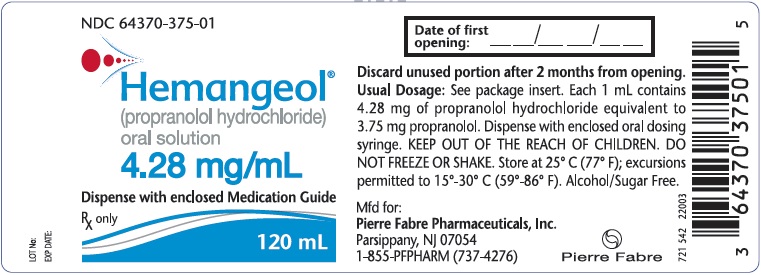
HEMANGEOL propranolol hydrochloride 4.28 mg/mL Solution
🆔 Identity & classification
Where does this data come from?
🏷️ RxNorm drug class
This medicine belongs to the beta-Adrenergic Blocker class.
Where does this data come from?
🏭 Manufacturer & labeler
Where does this data come from?
🩺 Clinical
Propranolol oral solution is used to treat proliferating infantile hemangioma (noncancerous growths or tumors appearing on or under the skin shortly after birth) in infants. Propranolol is in a class of medications called beta blockers. It works by narrowing the blood vessels already formed and by preventing new ones from growing.
Read the full MedlinePlus article ↗- Please don't stop propranolol on your own — even if you feel great. Stopping suddenly, especially if you have angina or any underlying heart disease, can cause a dangerous rebound...
- Can I stop taking propranolol if I feel fine and my blood pressure is under control?
- Bronchial asthma is actually a contraindication for propranolol, meaning it should not be used if you have asthma. Propranolol blocks receptors in your airways that help keep them...
- I have asthma — is it safe for me to take propranolol?
Patient education
Supplement & herbal interactions
Some supplements/herbs that may interact with Propranolol Hydrochloride — tap one for details:
Propranolol Hydrochloride may be associated with lower levels of 1 nutrient — worth a chat with your pharmacist, not a cause for alarm.
Where does this data come from?
Ask a licensed pharmacist directly — free, answered by our team.
💊 What it looks like
Where does this data come from?
🧪 Inactive Ingredients / Excipients
Inactive ingredients, also called excipients, are components of the drug product other than the active ingredient. They may include fillers, dyes, coatings, preservatives, flavors, or other formulation ingredients.
Where does this data come from?
IACT rows and label-wide narrative are kept separate; availability and product-level specificity depend on the submitted label.Inactive ingredient FAQ
Are inactive ingredients the same for every manufacturer?
Why might an inactive ingredient be missing?
Can inactive ingredients matter?
💲 Pricing
A drug doesn't have one price. Each row is a different public payment system, and none is what you'd pay at the counter — that depends on your insurance. The ⓘ on each row explains what it measures.
| Price system | Per mL | Per package |
|---|---|---|
| Retail pharmacies payNADAC · weekly | Not in the retail survey — common for institutional, discontinued, or low-volume packs. | |
| Medicaid paysCMS SDUD · 12 mo | $558.78 | $67,053.71 / 120 ml |
| Medicare drug plans payPart D · quarterly | No Part D plan price is available for this NDC in our data. | |
Where does this data come from?
🔁 Therapeutic equivalents
| Product | Labeler | Pack | NADAC/unit | TE | Status | Price vs. this |
|---|---|---|---|---|---|---|
| Hemangeol 4.28 mg/mLthis 64370-0375-01 | Pierre | 1 bottle | — | — | FDA listed | — |
| Hemangeol 4.28 mg/mL 71863-0132-12 | Eton | 120 ml | — | — | FDA listed | — |
Where does this data come from?
⏳ Availability & generic status
FDA-approved generic versions are listed, and recent pricing/market data suggests they may be available — see Therapeutic equivalents.
Why the date isn’t exact: Generic timing can change because patents may be challenged, settled, licensed, added, removed, or worked around with a narrower label — and FDA approval does not always mean a pharmacy can get the generic today.
🛈 What do these terms mean?
- Patent
- Legal protection listed in the Orange Book that may delay generic approval or launch. Issued by the U.S. Patent & Trademark Office.
- Substance patent
- Covers the active drug molecule itself — the hardest to design around. A generic generally can’t launch until it expires.
- Formulation (product) patent
- Covers a specific formulation or dosage form. A generic can sometimes work around it with a different formulation.
- Method-of-use patent
- A patent covering one specific approved use of the drug — not necessarily the whole molecule. A generic can sometimes launch with a “skinny label” that carves out the protected use and keeps the others.
- Skinny label
- A generic label that omits a still-patented use when the FDA allows it — letting a generic reach the market for the unprotected uses.
- Exclusivity
- FDA-granted marketing protection, separate from patents — e.g. 5-yr new chemical entity, 7-yr orphan drug, or a +6-month pediatric extension.
- Paragraph IV
- A generic applicant’s formal challenge to a listed patent. It can potentially lead to earlier generic entry, but often involves litigation or a settlement.
- RLD / RS
- Reference Listed Drug — the brand product the FDA uses as the reference for generic applications. Reference Standard — the product the FDA expects generics to compare against in bioequivalence testing.
- TE / AB rating
- FDA therapeutic-equivalence rating. An AB rating generally means the FDA considers a generic therapeutically equivalent to — and substitutable for — the brand.
- LOE (loss of exclusivity)
- The latest patent or exclusivity currently listed — the loss-of-exclusivity / latest-listed-protection date shown on this page. Paragraph-IV challenges and settlements can move the real date earlier; FDA approval and a manufacturer’s decision to market can move it later.
Built from the FDA Orange Book. The bars above are scaled to each protection’s expiry; the red LOE marker is the last one to lapse.
| Patent | Type | Use code | Expires |
|---|---|---|---|
| US 8338489 ↗ | Method of use | U-1496 | Oct 16, 2028 |
| US 8987262 ↗ | Method of use | U-1988 | Oct 16, 2028 |
Is there a generic version of HEMANGEOL 4.28 MG/ML ORAL SOLN?
The FDA approved a generic — why can’t I get it at my pharmacy yet?
Why do different websites show different generic release dates?
What does “FDA listed” mean?
What does a patent or protection date mean here?
What does “current Orange Book estimate” mean?
Can a generic come out before the last patent expires?
Can a generic come out after the listed dates?
What is the difference between patents and exclusivity?
Why are there multiple patent dates?
Where does this data come from?
🗺️ Medicaid utilization & spend
💊 Medicaid utilization by pack size
🔬 Reported adverse events (FAERS)
Top reported reactions
Age at onset
Reporter sex
Serious outcomes
Where does this data come from?
📦 Packaging — all sizes for this product
| Package NDC | Description | Marketing start | Status |
|---|---|---|---|
| 64370-0375-01 You're viewing this | 1 BOTTLE, GLASS in 1 CARTON (64370-375-01) / 120 mL in 1 BOTTLE, GLASS | 2014-04-14 | Active |
| 64370-0375-50 | 1 BOTTLE, GLASS in 1 CARTON (64370-375-50) / 50 mL in 1 BOTTLE, GLASS | 2014-04-14 | Active |
In Medicaid, this is the most-dispensed pack of this product — about 100% of fills over the last four reported quarters. See all packs ↓
Pack size FAQ
What quantity is in NDC 64370-0375-01?
What NDC number is used to bill for this package of HEMANGEOL propranolol hydrochloride 4.28 mg/mL Solution?
🧭 About this NDC listing & data coverage
What data is (and isn’t) available for this NDC — tap to expand
| NDC identity (package / product / labeler codes) | ✓ Available |
| Labeler | ✓ Available |
| Product & package description | ✓ Available |
| Marketing category & status | ✓ Available |
| Active ingredient / dosage form / route | ✓ Available |
| FDA label (SPL via DailyMed) | ✓ Available |
| Package photos | ✓ Available |
| Inactive ingredients (structured) | — Not published for this NDC The labeler did not submit a structured excipient list, or no SPL is available. |
| NADAC pharmacy acquisition price (CMS) | — Not published for this NDC CMS publishes NADAC only for NDCs reported in its retail-pharmacy survey. |
| Orange Book / therapeutic-equivalence data | ✓ Available |
| HCPCS J-code billing crosswalk | — Not published for this NDC Most self-administered / retail products have no J-code — that is normal. |
| Medicaid utilization (CMS SDUD) | ✓ Available |
Questions about this listing
Why is there no price listed?
Is the NDC printed on the package the same as the 11-digit billing NDC?
What do the three segments of this NDC mean?
Is this package still being marketed?
Does this product come in other package sizes?
Who lists this product with the FDA?
Do I need a prescription for this product?
Where does this data come from?
📄 Full prescribing information FDA SPL
🎯 Indications and Usage ▾
1 INDICATIONS AND USAGE HEMANGEOL oral solution contains the beta-adrenergic blocker propranolol hydrochloride and is indicated for the treatment of proliferating infantile hemangioma requiring systemic therapy. HEMANGEOL oral solution is a beta-adrenergic blocker indicated for the treatment of proliferating infantile hemangioma requiring systemic therapy. ( 1 )
⏱️ Dosage and Administration ▾
2 DOSAGE AND ADMINISTRATION Initiate treatment at ages 5 weeks to 5 months. The recommended starting dose of HEMANGEOL is 0.15 mL/kg (0.6 mg/kg) (see Table 1) twice daily, taken at least 9 hours apart. After 1 week, increase the daily dose to 0.3 mL/kg (1.1 mg/kg) twice daily.
After 2 weeks of treatment, increase the dose to 0.4 mL/kg (1.7 mg/kg) twice daily and maintain this for 6 months. Readjust the dose periodically as the child’s weight increases. To reduce the risk of hypoglycemia, administer HEMANGEOL orally during or right after a feeding.
Skip the dose if the child is not eating or is vomiting [see Warnings and Precautions (5.1) ] . Monitor heart rate and blood pressure for 2 hours after HEMANGEOL initiation or dose increases [see Warnings and Precautions (5.2) ]. If hemangiomas recur, treatment may be re-initiated [see Clinical Studies (14) ] .
HEMANGEOL is supplied with an oral dosing syringe for administration. Administration directly into the child’s mouth is recommended. Nevertheless, if necessary, the product may be diluted in a small quantity of milk or fruit juice, given in a baby’s bottle.
Table 1. Dose Titration According to Weight Week 1 Week 2 Week 3 (maintenance) Weight (kg) Volume administered Volume administered Volume administered twice a day twice a day twice a day 2 to <2.5 0.3 mL 0.6 mL 0.8 mL 2.5 to <3 0.4 mL 0.8 mL 1 mL 3 to <3.5 0.5 mL 0.9 mL 1.2 mL 3.5 to <4 0.5 mL 1.1 mL 1.4 mL 4 to <4.5 0.6 mL 1.2 mL 1.6 mL 4.5 to <5 0.7 mL 1.4 mL 1.8 mL 5 to <5.5 0.8 mL 1.5 mL 2 mL 5.5 to <6 0.8 mL 1.7 mL 2.2 mL 6 to <6.5 0.9 mL 1.8 mL 2.4 mL 6.5 to <7 1 mL 2 mL 2.6 mL 7 to <7.5 1.1 mL 2.1 mL 2.8 mL 7.5 to <8 1.1 mL 2.3 mL 3 mL 8 to <8.5 1.2 mL 2.4 mL 3.2 mL 8.5 to <9 1.3 mL 2.6 mL 3.4 mL 9 to <9.5 1.4 mL 2.7 mL 3.6 mL 9.5 to <10 1.4 mL 2.9 mL 3.8 mL 10 to <10.5 1.5 mL 3 mL 4 mL 10.5 to <11 1.6 mL 3.2 mL 4.2 mL 11 to <11.5 1.7 mL 3.3 mL 4.4 mL 11.5 to <12 1.7 mL 3.5 mL 4.6 mL 12 to <12.5 1.8 mL 3.6 mL 4.8 mL Initiate treatment at ages 5 weeks to 5 months.
( 2 ) Starting dose is 0.15 mL/kg (0.6 mg/kg) twice daily. After 1 week, increase dose to 0.3 mL/kg (1.1 mg/kg) twice daily. After 2 weeks, increase to a maintenance dose of 0.4 mL/kg (1.7 mg/kg) twice daily.
( 2 ) Administer doses at least 9 hours apart during or after feeding. ( 2 ) Readjust dose for changes in the child’s weight. ( 2 ) Monitor heart rate and blood pressure for 2 hours after the first dose or increasing dose.
( 2 )
💊 Dosage Forms and Strengths ▾
3 DOSAGE FORMS AND STRENGTHS Oral solution: 4.28 mg/mL propranolol hydrochloride. Alcohol-, paraben- and sugar-free. Oral solution: 4.28 mg/mL propranolol hydrochloride ( 3 )
⛔ Contraindications ▾
4 CONTRAINDICATIONS HEMANGEOL is contraindicated in the following conditions: Premature infants with corrected age < 5 weeks Infants weighing less than 2 kg Known hypersensitivity to propranolol or any of the excipients [see Description (11) ] Asthma or history of bronchospasm Heart rate <80 beats per minute, greater than first degree heart block, or decompensated heart failure Blood pressure <50/30 mmHg Pheochromocytoma Premature infants with corrected age <5 weeks ( 4 ) Infants weighing less than 2 kg ( 4 ) Known hypersensitivity to propranolol or excipients ( 4 ) Asthma or history of bronchospasm ( 4 , 5.3 , 6 , 10 , 17 ) Bradycardia (<80 beats per minute), greater than first degree heart block, decompensated heart failure ( 4 , 5.2 , 5.4 , 10 , 17 ) Blood pressure <50/30 mmHg ( 4 , 5.2 , 10 , 17 ) Pheochromocytoma ( 4 )
⚠️ Warnings and Cautions ▾
5 WARNINGS AND PRECAUTIONS Hypoglycemia: Administer during or after feeding. Do not use in patients who are not able to feed or are vomiting ( 4 , 5.1 , 6 , 10, 17 ) • Bradycardia and hypotension ( 4 , 5.2 , 17 ) • Bronchospasm: Avoid use in patients with asthma or lower respiratory infection ( 4 , 5.3 , 6 , 10 , 17 ) • Increased risk of stroke in PHACE syndrome ( 5.5 )
5.1Hypoglycemia HEMANGEOL prevents the response of endogenous catecholamines to correct hypoglycemia and masks the adrenergic warning signs of hypoglycemia, particularly tachycardia, palpitations and sweating. HEMANGEOL can cause hypoglycemia at any time during treatment. Risk is increased during a fasting period (e.g., poor oral food intake, infection, vomiting) or when glucose demands are increased (e.g., cold, stress, infections).
Withhold the dose under these conditions. Hypoglycemia may present in the form of seizures, lethargy, or coma. Discontinue HEMANGEOL if hypoglycemia develops and treat appropriately Concomitant treatment with corticosteroids may increase the risk of hypoglycemia [ see Drug Interactions (7) ] .
5.2Bradycardia and Hypotension HEMANGEOL may cause or worsen bradycardia or hypotension. In the studies of HEMANGEOL for infantile hemangioma the mean decrease in heart rate was about 7 bpm with little effect on blood pressure. Monitor heart rate and blood pressure after treatment initiation or increase in dose. Discontinue treatment if severe (<80 beats per minute) or symptomatic bradycardia or hypotension (systolic blood pressure <50 mmHg) occurs.
5.3Bronchospasm HEMANGEOL can cause bronchospasm; do not use in patients with asthma or a history of bronchospasm. Interrupt treatment in the event of a lower respiratory tract infection associated with dyspnea and wheezing.
5.4Cardiac Failure Sympathetic stimulation supports circulatory function in patients with congestive heart failure, beta blockade may precipitate more severe failure.
5.5Increased Risk of Stroke in PHACE Syndrome By dropping blood pressure, HEMANGEOL may increase the risk of stroke in PHACE syndrome patients with severe cerebrovascular anomalies. Investigate infants with large facial infantile hemangioma for potential arteriopathy associated with PHACE syndrome prior to HEMANGEOL therapy.
5.6Hypersensitivity Beta-blockers will interfere with epinephrine used to treat serious anaphylaxis.
🤒 Adverse Reactions ▾
6 ADVERSE REACTIONS The following serious adverse reactions are discussed in greater detail in other sections of the labeling: Hypoglycemia and related events, like hypoglycemic seizure [see Warnings and Precautions (5.1) ]. Bronchospasm [see Warnings and Precautions (5.3) ]. The most common adverse reactions to HEMANGEOL (occurring ≥ 10% of patients) were sleep disorders, aggravated respiratory tract infections, diarrhea, and vomiting.
( 6 ) To report SUSPECTED ADVERSE REACTIONS, contact Pierre Fabre Pharmaceuticals, Inc. at 1-855-PFPHARM (737-4276) or FDA at 1-800-FDA-1088 or www.fda.gov/medwatch . See 17 for PATIENT COUNSELING INFORMATION and Medication Guide
6.1Clinical Trials Experience Because clinical trials are conducted under widely varying conditions, adverse reaction rates observed in the clinical trials of a drug may not reflect the rates observed in clinical practice. Clinical Trials Experience with HEMANGEOL in Infants with proliferating infantile hemangioma In clinical trials for proliferating infantile hemangioma, the most frequently reported adverse reactions (>10%) in infants treated with HEMANGEOL were sleep disorders, aggravated respiratory tract infections such as bronchitis and bronchiolitis associated with cough and fever, diarrhea, and vomiting.
Adverse reactions led to treatment discontinuation in fewer than 2% of treated patients. Overall, 479 patients in the pooled safety population were exposed to study drug in the clinical study program (456 in placebo-controlled trials). A total of 424 patients were treated with HEMANGEOL at doses 1.2 mg/kg/day or 3.4 mg/kg/day for 3 or 6 months.
Of these, 63% of patients were aged 91-150 days and 37% were aged 35-90 days at randomization. The following table lists according to the dosage the most common adverse reactions (treatment-emergent adverse events with an incidence at least 3% greater on one of the two doses than on placebo). Table 2.
Treatment-emergent adverse events occurring at least 3% more often on HEMANGEOL than on placebo Reaction Placebo N=236 HEMANGEOL 1.2 mg/kg/day N=200 HEMANGEOL 3.4 mg/kg/day N=224 Sleep disorder 5.9% 17.5% 16.1% Bronchitis 4.7 8.0
13.4Peripheral coldness 0.4 8.0
6.7Agitation 2.1 8.5
4.5Diarrhea 1.3 4.5
6.3Somnolence 0.4 5.0
0.9Nightmare 1.7 2.0
6.3Irritability 1.3 5.5
1.3Decreased appetite 0.4 2.5
3.6Abdominal pain 0.4 3.5
0.4The following adverse events have been observed during clinical studies, with an incidence of less than 1%: Cardiac disorders : Second degree atrioventricular heart block, in a patient with underlying conduction disorder, required definitive treatment discontinuation [ see Warnings and Precautions ( 5.4 ) ] . Skin and subcutaneous tissue disorders : Urticaria, alopecia Investigations : Decreased blood glucose, decreased heart rate Compassionate Use Program More than 600 infants received HEMANGEOL in a compassionate use program (CUP).
Mean age at treatment initiation was 3.6 months. Mean dose of HEMANGEOL was 2.2 mg/kg/day and mean treatment duration was 7.1 months. The adverse reactions reported in the CUP were similar to the ADRs observed during clinical trials but some were more severe.
6.2Postmarketing Experience The following adverse reactions have been identified during post-approval use of propranolol. Because these reactions are reported voluntarily from a population of uncertain size, it is not always possible to reliably estimate their frequency or establish a causal relationship to drug exposure. These adverse reactions are as follows: Blood and lymphatic system disorders: Agranulocytosis Psychiatric disorders: Hallucination Skin and subcutaneous tissues disorders: Purpura, dermatitis psoriasform
🔄 Drug Interactions ▾
7 DRUG INTERACTIONS In the absence of specific studies in children, the drug interactions with propranolol are those known in adults. Consider both the infant’s medications and those of a nursing mother. Pharmacokinetic drug interactions Impact of co-administered drugs on propranolol: CYP2D6, CYP1A2 or CYP2C19 inhibitors increase propranolol plasma concentration.
CYP1A2 inducers (phenytoin, phenobarbital) or CYP2C19 inducers (rifampin) decrease propranolol plasma concentration when co-administered. Pharmacodynamic drug interactions Corticosteroids: Patients on corticosteroids may be at increased risk of hypoglycemia because of loss of the counter-regulatory cortisol response; monitor patients for signs of hypoglycemia.
👥 Use in Specific Populations ▾
8 USE IN SPECIFIC POPULATIONS
8.4Pediatric Use Of 460 infants with proliferating infantile hemangioma requiring systemic therapy who were treated with HEMANGEOL starting at 5 weeks to 5 months of age, 60% had complete or nearly complete resolution of their hemangioma at Week 24 [see Clinical Studies (14) ]. Safety and effectiveness for infantile hemangioma have not been established in pediatric patients greater than 1 year of age.
8.6Hepatic Impairment There is no experience in infants with hepatic impairment .
8.7Renal Impairment There is no experience in infants with renal impairment .
🧒 Pediatric Use ▾
8.4Pediatric Use Of 460 infants with proliferating infantile hemangioma requiring systemic therapy who were treated with HEMANGEOL starting at 5 weeks to 5 months of age, 60% had complete or nearly complete resolution of their hemangioma at Week 24 [see Clinical Studies (14) ]. Safety and effectiveness for infantile hemangioma have not been established in pediatric patients greater than 1 year of age.
🆘 Overdosage ▾
10 OVERDOSAGE Few cases of propranolol overdose were reported. For a single intake, the maximum dose was 20 mg/kg. Symptomatic cases featured hypotension, hypoglycemic seizure, and restlessness/euphory/insomnia; for most cases, propranolol was maintained or reintroduced.
The toxicity of beta-blockers is an extension of their therapeutic effects: - Cardiac symptoms of mild to moderate poisoning are decreased heart rate and hypotension. Atrioventricular blocks, intraventricular conduction delays, and congestive heart failure can occur with more severe poisoning. - Bronchospasm may develop particularly in patients with asthma. - Hypoglycemia may develop and manifestations of hypoglycemia (tremor, tachycardia) may be masked by other clinical effects of beta-blocker toxicity. Support and treatment: Place the patient on a cardiac monitor, and monitor vital signs, mental status and blood glucose.
Give intravenous fluids for hypotension and atropine for bradycardia. Glucagon then catecholamines should be considered if the patient does not respond appropriately to IV fluid. Isoproterenol and aminophylline may be used for bronchospasm.
Propranolol is not dialyzable.
🧬 Clinical Pharmacology ▾
12 CLINICAL PHARMACOLOGY
12.1Mechanism of Action The mechanism of HEMANGEOL’s effects on infantile hemangiomas is not well understood.
12.2Pharmacodynamics Propranolol is a nonselective beta-adrenergic receptor blocking agent possessing no other autonomic nervous system activity. It specifically competes with beta-adrenergic receptor stimulating agents for available receptor sites. When access to beta-receptor sites is blocked by propranolol, chronotropic, inotropic, and vasodilator responses to beta-adrenergic stimulation are decreased proportionately.
Propranolol selectively blocks beta-adrenergic receptors, leaving alpha-adrenergic responses intact. There are two well-characterized subtypes of beta receptors (beta1 and beta2); propranolol interacts with both subtypes equally. Beta1-adrenergic receptors are found primarily in the heart.
Blockade of cardiac beta1-adrenergic receptors leads to a decrease in the activity of both normal and ectopic pacemaker cells and a decrease in A-V nodal conduction velocity. Blockade of cardiac beta1-adrenergic receptors also decreases the myocardial force of contraction and may provoke cardiac decompensation in patients with minimal cardiac reserve. Beta2-adrenergic receptors are found predominantly in smooth muscle-vascular, bronchial, gastrointestinal and genitourinary.
Blockade of these receptors results in constriction. Propranolol’s beta-blocking effects are attributable to its S(-) enantiomer. Pharmacodynamic drug interactions Alpha blockers: Co-administration of beta-blockers with alpha blockers (prazosin) has been associated with prolongation of first dose hypotension and syncope.
Antidepressants : The hypotensive effect of MAO inhibitors and tricyclic antidepressants is exacerbated when administered with beta-blockers. Nonsteroidal anti-inflammatory drugs : Nonsteroidal anti-inflammatory drugs (NSAIDs) may attenuate the antihypertensive effect of beta-adrenoreceptor blocking agents. Monitor blood pressure.
12.3Pharmacokinetics Adults Absorption: Propranolol is almost completely absorbed after oral administration. However, it undergoes an extensive first-pass metabolism by the liver and on average; only about 25% of propranolol reaches the systemic circulation. Peak plasma concentrations occur about 1 to 4 hours after an oral dose.
Administration of protein-rich foods increases the bioavailability of propranolol by about 50% with no change in time to peak concentration. Propranolol is a substrate for the intestinal efflux transporter, P-glycoprotein (P-gp). However, studies suggest that P-gp is not dose-limiting for intestinal absorption of propranolol in the usual therapeutic dose range.
Distribution: Approximately 90% of circulating propranolol is bound to plasma proteins (albumin and alpha1 acid glycoprotein). The volume of distribution of propranolol is approximately 4 L/kg. Propranolol crosses the blood-brain barrier and the placenta, and is distributed into breast milk.
Propranolol is extensively metabolized with most metabolites appearing in the urine. Metabolism: Propranolol is metabolized through three primary routes: aromatic hydroxylation (mainly 4-hydroxylation), N-dealkylation followed by further side-chain oxidation, and direct glucuronidation. The percentage contributions of these routes to total metabolism are 42%, 41% and 17%, respectively, but with considerable variability between individuals.
The four major final metabolites are propranolol glucuronide, naphthyloxylactic acid and glucuronic acid, and sulfate conjugates of 4-hydroxy propranolol. In vitro studies indicated that CYP2D6 (aromatic hydroxylation), CYP1A2 (chain oxidation) and to a less extent CYP2C19 were involved in propranolol metabolism. In healthy subjects, no difference was observed between CYP2D6 extensive metabolizers (EMs) and poor metabolizers (PMs) with respect to oral clearance or elimination half-life.
Elimination:The plasma half-life of propranolol ranges from 3 to 6 hours. Less than 1%…
🧬 Mechanism of Action ▾
12.1Mechanism of Action The mechanism of HEMANGEOL’s effects on infantile hemangiomas is not well understood.
📦 How Supplied / Storage and Handling ▾
16 HOW SUPPLIED/STORAGE AND HANDLING
16.1How Supplied HEMANGEOL is supplied as an oral solution. Each 1 mL contains 4.28 mg propranolol. HEMANGEOL is supplied in a carton containing one 120 mL bottle with syringe adapter and one 5-mL oral dosing syringe. NDC 64370-375-01 Bottle 120 mL
16.2Storage and Handling Store at 25 °C (77 °F); excursions permitted from 15° to 30 °C (59° to 86 °F). [See USP Controlled Room Temperature.] Do not freeze. Do not shake the bottle before use. Dispense in original container with enclosed oral dosing syringe. The product can be kept for 2 months after first opening. See instructions for using enclosed oral dosing syringe.
📋 Description ▾
11 DESCRIPTION HEMANGEOL is an oral solution of propranolol that is alcohol free, paraben free and sugar free. Each mL of HEMANGEOL contains 4.28 mg of propranolol hydrochloride, USP equivalent to 3.75 mg of propranolol. Propranolol hydrochloride is a synthetic beta-adrenergic receptor blocking agent chemically described as (2RS)1-[(1-methylethyl)amino]-3-(naphthalene-1-yloxy)-propan-2-ol hydrochloride.
Its structural formula is shown in Figure 1: Figure 1. Propranolol HCl Structure Molecular formula: C 16 H 21 NO 2 -HCl Propranolol hydrochloride is a stable, white, crystalline solid with a molecular weight of 295.8. It is readily soluble in water and ethanol.
HEMANGEOL contains the following inactive ingredients: strawberry/vanilla flavorings, hydroxyethylcellulose, saccharin sodium, citric acid monohydrate, and water. Figure 1. Propranolol HCl structure
💬 Information for Patients ▾
17 PATIENT COUNSELING INFORMATION See FDA-approved patient labeling (Medication Guide and Instructions for Use). Patient advice Advise parents or caregivers to read the FDA-approved patient labeling (Medication Guide and Instructions for Use). Instructions for using oral dosing syringe Instruct parents or caregivers on use of the oral dosing syringe.
Risk of hypoglycemia Inform parents or caregivers that there is a risk of hypoglycemia while on HEMANGEOL. Hypoglycemia can occur at any time during treatment. Instruct caregivers to skip dosing in patients who are fasting (e.g., poor oral food intake, infection, vomiting), or when glucose demands are increased (e.g., cold, stress, infections).
Instruct parents or caregivers how to recognize the signs of hypoglycemia. Tell them to discontinue HEMANGEOL if hypoglycemia develops and call their health care provider immediately or take the child to the emergency room. [see Warnings and Precautions 5.1] Cardiovascular risks Advise parents or caregivers that there is a potential risk for bradycardia, aggravation of pre-existing conduction disorders, and hypotension associated with the use of HEMANGEOL. Instruct them to contact their healthcare provider in case of fatigue, pallor, slow or uneven heart beats, peripheral coldness or fainting.
Respiratory risks Inform parents or caregivers that HEMANGEOL carries risk of bronchospasm or exacerbation of lower respiratory tract infections. Instruct them to contact their healthcare provider or go to the nearest hospital emergency room if their child has breathing problems or wheezing during treatment with HEMANGEOL. Other risks Inform parents or caregivers that changes in sleep patterns may occur during HEMANGEOL therapy.
Ask parents or caregivers to tell you all the medications they are administering to their child including prescription and over the counter medicines, vitamins, and herbal supplements. Ask breastfeeding mothers to tell you all the medications they are currently taking, as these may pass into the milk.
💬 Medication Guide ▾
MEDICATION GUIDE HEMANGEOL ® (he-man je-ohl) (propranolol hydrochloride oral solution) What is the most important information I should know about HEMANGEOL? HEMANGEOL can cause serious side effects, including: Low blood sugar (hypoglycemia) , especially if your child is not taking feedings, or is vomiting. HEMANGEOL may make it more difficult to recognize the signs and symptoms of low blood sugar in your child.
To help reduce the risk of low blood sugar with HEMANGEOL: Give HEMANGEOL during or shortly after feeding your child. Feed your child regularly during treatment. Tell your doctor if your child has a poor appetite.
If your child is not taking feedings, for example, due to an illness or vomiting, do not give HEMANGEOL until your child is taking feedings normally again. If your child has any of the signs or symptoms of low blood sugar listed below during treatment with HEMANGEOL, stop giving your child HEMANGEOL, call your healthcare provider immediately or go to the emergency room. If the child is conscious, give him/her a drink of liquid containing sugar.
Signs or symptoms of low blood sugar include: pale, blue or purple skin color, sweating, irritability, crying for no apparent reason, irregular or fast heartbeat, poor feeding, low body temperature, unusual sleepiness, seizures, breathing stops for short periods of time, and loss of consciousness. What is HEMANGEOL? HEMANGEOL is a prescription medicine used to treat proliferating infantile hemangioma that requires treatment with a medicine that spreads throughout the body.
Who should not take HEMANGEOL? Do not give HEMANGEOL to your child if your child: was born prematurely and has not reached the corrected age of 5 weeks weighs less than 4 ½ pounds is allergic to propranolol or any of the other ingredients in HEMANGEOL. See the end of this Medication Guide for a list of ingredients in HEMANGEOL has asthma or a history of breathing problems has a heart problem, slow heart rate (less than 80 heart beats per minute), very low blood pressure is at risk for low blood sugar, for example is vomiting or unable to take feedings has high blood pressure caused by a tumor on the adrenal gland, called “pheochromocytoma” What should I tell my doctor before giving my child HEMANGEOL?
Before you start giving HEMANGEOL to your child, tell your child’s doctor about all of your child’s medical conditions. Tell your doctor about all of the medicines that your child takes , including prescription and over-the-counter medicines, vitamins, and herbal supplements. HEMANGEOL and some medicines may interact with each other and cause serious side effects.
Especially tell your doctor if your child takes a steroid medicine. Taking a steroid medicine during treatment with HEMANGEOL may increase your child’s risk of low blood sugar. If you are breastfeeding your child, it is important to tell your doctor about all the medicines you take.
Certain medicines may pass to your child through your breast-milk and interact with HEMANGEOL. Your doctor should tell you if you should stop breastfeeding. How should I give HEMANGEOL to my child?
Follow the detailed Instructions for Use that come with HEMANGEOL for information about the correct way to prepare and give a dose of HEMANGEOL. Give HEMANGEOL to your child exactly as your doctor tells you. Your doctor may change the dose until it is right for your child, and as your child’s weight changes.
Always give HEMANGEOL with a feeding or right away after a feeding. HEMANGEOL is given 2 times each day, at least 9 hours apart. If your child spits up a dose or if you are not sure your child got all of the medicine, do not give another dose.
Wait until the next scheduled dose. What are the possible side effects of HEMANGEOL? See “ What is the most important information I should know about HEMANGEOL? ” HEMANGEOL can cause serious side effects, including: New or worsening slow heart rate (bradycardia) or low blood pressure (hypotension).
Call your doctor if your child…