
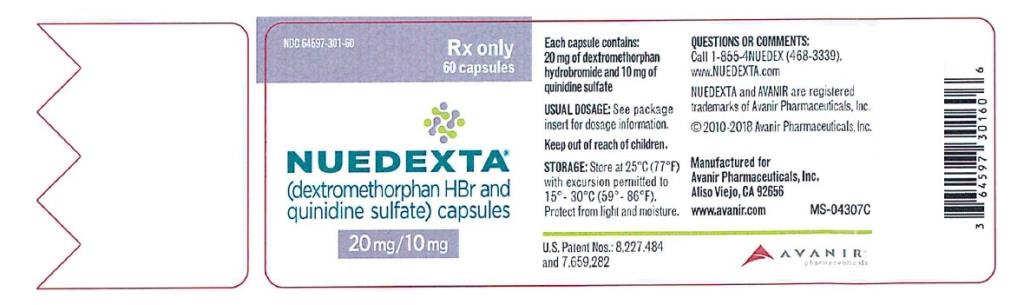
Nuedexta dextromethorphan hydrobromide and quinidine sulfate 20 mg; 10 mg Capsule, Gelatin Coated, 13-count — NDC 64597-301-13 (Billing 64597-0301-13)
This is a package of 13 capsules of Nuedexta dextromethorphan hydrobromide and quinidine sulfate 20 mg; 10 mg Capsule, Gelatin Coated from Avanir Pharmaceuticals, Inc., no longer marketed (first marketed Dec 2010), no longer in the FDA NDC Directory.
NDC database record
One package, one record: these facts belong to NDC 64597-301-13 alone.
- Record
- FDA NDC Directory package listing · Human prescription drug
- Code segments
- 64597 labeler · 301 product · 13 package
- Listing certified through
- Dec 31, 2026
- Barcode (UPC-A, from the NDC)
- 3 6459730113 2
- FDA record last changed
- Oct 8, 2026
Identity & classification
Regulatory identifiers FDA, NLM and CMS codes for this package
Drug-database identifiers Medi-Span GPI and First Databank GCN / HICL / AHFS classification
- GSN (GCN sequence number): 066871
- GCN: 29290
- GPI-14 (Medi-Span): 62609902300120
- HICL (First Databank): 037278
- AHFS class code: 28:92.00.00
- RxCUI (RxNorm): 1040054
Where does this data come from?
- FDA openFDA NDC Directory · synced Oct 8, 2026
- FDA label on DailyMed · label index refreshed Oct 8, 2026
- RxNorm (NLM RxNav) · catalog refreshed Oct 8, 2026
- Medi-Span GPI (licensed)
- First Databank (licensed) · refreshed Oct 8, 2026
RxNorm drug class
This medicine belongs to the Uncompetitive N-methyl-D-aspartate Receptor Antagonist class.
Where does this data come from?
- RxClass (NLM) · catalog refreshed Oct 8, 2026
Clinical
The combination of dextromethorphan and quinidine is used to treat pseudobulbar affect (PBA; a condition of sudden, frequent outbursts of crying or laughing that can not be controlled) in people with certain conditions such as amyotrophic lateral sclerosis (ALS, Lou Gehrig's disease; condition in which the nerves that control muscle movement slowly die, causing the muscles to shrink and weaken) or multiple sclerosis (a disease in which the nerves do not function properly and patients may experience weakness, numbness, loss of muscle coordination and problems with vision, speech, and bladder co...
Read the full MedlinePlus article ↗- It treats pseudobulbar affect, or PBA. That means sudden episodes of laughing or crying that you can't control and that don't match how you feel. It usually happens because of anot...
- You take it by mouth. Most people start with one capsule a day for a week, then one capsule every 12 hours. You can take it with or without food. Follow your prescriber's direction...
- The most common are diarrhea, dizziness, cough, vomiting, weakness, swelling in the legs or feet, urinary tract infections and flu. Take care to avoid falls if you feel dizzy.
- Call right away if you faint or feel your heart pounding or fluttering. Also call for unusual bleeding or bruising, fever with rash, or signs of serotonin syndrome like confusion,...
Patient education
Supplement & herbal interactions
Where does this data come from?
- MedlinePlus (NLM) · refreshed Oct 8, 2026
- FDA label on DailyMed · label index refreshed Oct 8, 2026
Ask a licensed pharmacist directly — free, answered by our team.
Pricing
A drug doesn't have one price. Each row is a different public payment system, and none is what you'd pay at the counter — that depends on your insurance. The ⓘ on each row explains what it measures.
| Price system | Per each | Per package |
|---|---|---|
| Retail pharmacies payNADAC · weekly | Not in the retail survey — common for institutional, discontinued, or low-volume packs. | |
| Medicaid paysCMS SDUD · 12 mo | No recent Medicaid claims on file for this NDC — rare and low-volume NDCs are suppressed in the public data. | |
| Medicare drug plans payPart D · Q2 2026 | $27.38 | $355.96 / 13 capsules |
Where does this data come from?
- CMS NADAC weekly file
- CMS ASP pricing files · refreshed Sep 20, 2026
- CMS Medicaid State Drug Utilization Data · refreshed Oct 9, 2026
- CMS Part D plan pricing files · refreshed Sep 24, 2026
- VA National Acquisition Center price file
Packaging — all sizes for this product
| Package NDC | Description | Per unit | Per pack | Marketing start | Marketing end | Status |
|---|---|---|---|---|---|---|
| 64597-0301-13 You're viewing this | 1 BOTTLE in 1 CARTON / 13 CAPSULE, GELATIN COATED in 1 BOTTLE | — | — | 2010-12-01 | — | Discontinued by firm |
| 64597-0301-60 64597-301-60 Main listing | 60 CAPSULE, GELATIN COATED in 1 BOTTLE | $26.64 / ea | $1,598.12 | 2010-12-01 | — | Discontinued by firm |
This pack shows little to no recent Medicaid volume — the 60 capsules pack carries most fills. See all packs ↓
Pack size FAQ
What quantity is in this package?
How does this package differ from NDC 64597-0301-60?
What NDC number is used to bill for this package of Nuedexta dextromethorphan hydrobromide and quinidine sulfate 20 mg; 10 mg Capsule, Gelatin Coated?
Prices are the latest CMS NADAC pharmacy acquisition cost per NDC; per-pack figures are per-unit × pack quantity, shown only when the pack is denominated in the same measure NADAC prices.
Therapeutic equivalents
| Product | Labeler | Pack | NADAC/unit | TE | Status | Price vs. this |
|---|---|---|---|---|---|---|
| Nuedexta 20 mg/1; 10 mg 59148-0053-16 | Otsuka | 60 capsules | $26.635 | AB | Availability likely | — |
| Dextromethorphan hydrobromide and quinidine sulfate 20 mg/1; 10 mg 31722-0693-60 | Camber | 60 capsules | — | AB | FDA listed | — |
| Nuedexta 20 mg/1; 10 mgthis 64597-0301-13 | Avanir | 13 capsules | — | AB | Discontinued | — |
| Dextromethorphan hydrobromide and quinidine sulfate 20 mg/1; 10 mg 00480-2602-06 | Teva | 60 capsules | — | AB | FDA listed | — |
Where does this data come from?
- FDA openFDA NDC Directory · synced Oct 8, 2026
- FDA Orange Book · refreshed Oct 3, 2026
- CMS NADAC weekly file
Availability & generic status
The FDA lists approved generic versions of this medicine, but that does not always mean a pharmacy can get one today. Patent rules, launch agreements, supply and pricing can affect when generics actually arrive.
Why the date isn’t exact: Generic timing can change because patents may be challenged, settled, licensed, added, removed, or worked around with a narrower label — and FDA approval does not always mean a pharmacy can get the generic today.
🛈 What do these terms mean?
- Patent
- Legal protection listed in the Orange Book that may delay generic approval or launch. Issued by the U.S. Patent & Trademark Office.
- Substance patent
- Covers the active drug molecule itself — the hardest to design around. A generic generally can’t launch until it expires.
- Formulation (product) patent
- Covers a specific formulation or dosage form. A generic can sometimes work around it with a different formulation.
- Method-of-use patent
- A patent covering one specific approved use of the drug — not necessarily the whole molecule. A generic can sometimes launch with a “skinny label” that carves out the protected use and keeps the others.
- Skinny label
- A generic label that omits a still-patented use when the FDA allows it — letting a generic reach the market for the unprotected uses.
- Exclusivity
- FDA-granted marketing protection, separate from patents — e.g. 5-yr new chemical entity, 7-yr orphan drug, or a +6-month pediatric extension.
- Paragraph IV
- A generic applicant’s formal challenge to a listed patent. It can potentially lead to earlier generic entry, but often involves litigation or a settlement.
- RLD / RS
- Reference Listed Drug — the brand product the FDA uses as the reference for generic applications. Reference Standard — the product the FDA expects generics to compare against in bioequivalence testing.
- TE / AB rating
- FDA therapeutic-equivalence rating. An AB rating generally means the FDA considers a generic therapeutically equivalent to — and substitutable for — the brand.
- LOE (loss of exclusivity)
- The latest patent or exclusivity currently listed — the loss-of-exclusivity / latest-listed-protection date shown on this page. Paragraph-IV challenges and settlements can move the real date earlier; FDA approval and a manufacturer’s decision to market can move it later.
Built from the FDA Orange Book. The bars above are scaled to each protection’s expiry; the red LOE marker is the last one to lapse.
| Patent | Type | Use code | Expires |
|---|---|---|---|
| US 7659282 ↗ | Method of use | U-1093 | Aug 13, 2026 |
Is there a generic version of NUEDEXTA 20-10 MG CAPSULE?
The FDA approved a generic — why can’t I get it at my pharmacy yet?
Why do different websites show different generic release dates?
What does “FDA listed” mean?
What does a patent or protection date mean here?
What does “current Orange Book estimate” mean?
Can a generic come out before the last patent expires?
Can a generic come out after the listed dates?
What is the difference between patents and exclusivity?
Why are there multiple patent dates?
Where does this data come from?
- FDA Orange Book · refreshed Oct 3, 2026
Inactive Ingredients / Excipients
Inactive ingredients, also called excipients, are components of the drug product other than the active ingredient. They may include fillers, dyes, coatings, preservatives, flavors, or other formulation ingredients.
🧪 Avoiding an ingredient? See Dextromethorphan and Quinidine inactive ingredients by manufacturer: every current product's list side by side, so you can ask your pharmacy for the version that does not list it.
💡 Tap an ingredient (hover on desktop) to see what it is and why it’s used.
-
UNII M28OL1HH48
Croscarmellose sodium is a plant-based substance derived from cellulose. It acts as a disintegrant, helping tablets and capsules break down quickly in the digestive system so the medicine can be absorbed.
-
UNII EWQ57Q8I5X
Lactose monohydrate is a natural sugar derived from milk. It serves as a filler and binder in tablets and capsules, helping create the proper size, texture, and consistency of the medicine.
-
UNII 70097M6I30
Magnesium stearate is a salt made from magnesium and stearic acid, a fatty substance. It's used in tablets and capsules as a lubricant and glidant to help ingredients flow smoothly during manufacturing and prevent sticking.
-
UNII OP1R32D61U
Microcrystalline cellulose is a purified form of cellulose, a natural fiber from plant sources. It acts as a binder and filler in tablets and capsules, helping hold ingredients together and give the medicine its shape and size.
-
UNII ETJ7Z6XBU4
Silicon dioxide is a naturally occurring mineral used as a glidant and anti-caking agent. It helps powder ingredients flow smoothly and prevents clumping during manufacturing and storage.
5 inactive ingredients listed in the exact product block matched to this NDC.
Where does this data come from?
ingredient classCode="IACT" elements from the exact product block matched by this NDC. Label-section narrative from DailyMed / the openFDA label index is shown separately when available.- FDA label on DailyMed · label index refreshed Oct 8, 2026
- FDA openFDA NDC Directory · synced Oct 8, 2026
Inactive ingredient FAQ
Are inactive ingredients the same for every manufacturer?
Why might an inactive ingredient be missing?
Can inactive ingredients matter?
Manufacturer & labeler
Where does this data come from?
- FDA openFDA NDC Directory · synced Oct 8, 2026
- Drugs@FDA
Full prescribing information FDA SPL
🎯 Indications and Usage ▾
1 INDICATIONS AND USAGE NUEDEXTA is indicated for the treatment of pseudobulbar affect (PBA). PBA occurs secondary to a variety of otherwise unrelated neurologic conditions, and is characterized by involuntary, sudden, and frequent episodes of laughing and/or crying. PBA episodes typically occur out of proportion or incongruent to the underlying emotional state.
PBA is a specific condition, distinct from other types of emotional lability that may occur in patients with neurological disease or injury. NUEDEXTA is a combination product containing dextromethorphan hydrobromide (an uncompetitive NMDA receptor antagonist and sigma-1 agonist) and quinidine sulfate (a CYP450 2D6 inhibitor) indicated for the treatment of pseudobulbar affect (PBA). ( 1 )
⏱️ Dosage and Administration ▾
2 DOSAGE AND ADMINISTRATION Starting dose: one capsule daily by mouth for 7 days. ( 2.1 ) Maintenance dose: After 7 days, 1 capsule every 12 hours. ( 2.1 )
2.1Recommended Dose The recommended starting dose of NUEDEXTA is one capsule daily by mouth for the initial seven days of therapy. On the eighth day of therapy and thereafter, the daily dose should be a total of two capsules a day, given as one capsule every 12 hours. The need for continued treatment should be reassessed periodically, as spontaneous improvement of PBA occurs in some patients.
💊 Dosage Forms and Strengths ▾
3 DOSAGE FORMS AND STRENGTHS NUEDEXTA capsules contain 20 mg dextromethorphan hydrobromide and 10 mg quinidine sulfate in a brick red gelatin capsule with “DMQ 20-10” printed in white ink on the capsule. Capsules: Dextromethorphan hydrobromide 20 mg/quinidine sulfate 10 mg. ( 3 )
⛔ Contraindications ▾
4 CONTRAINDICATIONS Concomitant use with quinidine, quinine, or mefloquine. ( 4.1 ) Patients with a history of quinidine, quinine or mefloquine-induced thrombocytopenia, hepatitis, or other hypersensitivity reactions. ( 4.2 ) Patients with known hypersensitivity to dextromethorphan.
( 4.2 ) Use with an MAOI or within 14 days of stopping an MAOI. Allow 14 days after stopping NUEDEXTA before starting an MAOI. ( 4.3 ) Prolonged QT interval, congenital long QT syndrome, history suggestive of torsades de pointes, or heart failure.
( 4.4 ) Complete atrioventricular (AV) block without implanted pacemaker, or patients at high risk of complete AV block. ( 4.4 ) Concomitant use with drugs that both prolong QT interval and are metabolized by CYP2D6 (e.g., thioridazine or pimozide). ( 4.4 )
4.1Quinidine and Related D rugs NUEDEXTA contains quinidine, and should not be used concomitantly with other drugs containing quinidine, quinine, or mefloquine.
4.2Hypersensitivity NUEDEXTA is contraindicated in patients with a history of NUEDEXTA, quinine, mefloquine or quinidine-induced thrombocytopenia, hepatitis, bone marrow depression or lupus-like syndrome. NUEDEXTA is also contraindicated in patients with a known hypersensitivity to dextromethorphan (e.g. rash, hives) [ see Warnings and Precautions ( 5.1 ) ] .
4.3MAOIs NUEDEXTA is contraindicated in patients taking monoamine oxidase inhibitors (MAOIs) or in patients who have taken MAOIs within the preceding 14 days, due to the risk of serious and possibly fatal drug interactions, including serotonin syndrome. Allow at least 14 days after stopping NUEDEXTA before starting an MAOI [ see Drug Interactions ( 7.1 ) ] .
4.4Cardiovascular NUEDEXTA is contraindicated in patients with a prolonged QT interval, congenital long QT syndrome or a history suggestive of torsades de pointes, and in patients with heart failure [ see Warnings and Precautions ( 5.3 ) ] . NUEDEXTA is contraindicated in patients receiving drugs that both prolong QT interval and are metabolized by CYP2D6 (e.g., thioridazine and pimozide), as effects on QT interval may be increased [ see Drug Interactions ( 7.2 ) ] . NUEDEXTA is contraindicated in patients with complete atrioventricular (AV) block without implanted pacemakers, or in patients who are at high risk of complete AV block.
⚠️ Warnings and Cautions ▾
5 WARNINGS AND PRECAUTIONS Thrombocytopenia or other hypersensitivity reactions: Discontinue if occurs. ( 5.1 ) Hepatitis: Discontinue if occurs. ( 5.2 ) QT Prolongation: Monitor ECG if concomitant use of drugs that prolong QT interval cannot be avoided or if concomitant CYP3A4 inhibitors used.
( 5.3 ) Left ventricular hypertrophy (LVH) or left ventricular dysfunction (LVD): Monitor ECG in patients with LVH or LVD. ( 5.3 ) CYP2D6 substrate: Nuedexta inhibits CYP2D6. Accumulation of parent drug and/or failure of metabolite formation may decrease safety and/or efficacy of concomitant CYP2D6 metabolized drugs.
Adjust dose of CYP2D6 substrate or use alternative treatment when clinically indicated. ( 5.4 , 12.4 ) Dizziness: Take precautions to reduce falls. ( 5.5 ) Serotonin syndrome: Use of NUEDEXTA with selective serotonin reuptake inhibitor (SSRIs) or tricyclic antidepressants increases the risk.
Discontinue if occurs. ( 5.6 , 7.4 ) Anticholinergic effects of quinidine: Monitor for worsening in myasthenia gravis and other sensitive conditions. ( 5.7 )
5.1Thrombocytopenia and Other Hypersensitivity Reactions Quinidine can cause immune-mediated thrombocytopenia that can be severe or fatal. Non-specific symptoms, such as lightheadedness, chills, fever, nausea, and vomiting, can precede or occur with thrombocytopenia. NUEDEXTA should be discontinued immediately if thrombocytopenia occurs, unless the thrombocytopenia is clearly not drug-related, as continued use increases the risk for fatal hemorrhage.
Likewise, NUEDEXTA should not be restarted in sensitized patients, because more rapid and more severe thrombocytopenia than the original episode can occur. NUEDEXTA should not be used if immune-mediated thrombocytopenia from structurally related drugs, including quinine and mefloquine is suspected, as cross-sensitivity can occur. Quinidine-associated thrombocytopenia usually, but not always, resolves within a few days of discontinuation of the sensitizing drug.
Quinidine has also been associated with a lupus-like syndrome involving polyarthritis, sometimes with a positive antinuclear antibody test. Other associations include rash, bronchospasm, lymphadenopathy, hemolytic anemia, vasculitis, uveitis, angioedema, agranulocytosis, the sicca syndrome, myalgia, elevation in serum levels of skeletal-muscle enzymes, and pneumonitis.
5.2Hepatotoxicity Hepatitis, including granulomatous hepatitis, has been reported in patients receiving quinidine, generally during the first few weeks of therapy. Fever may be a presenting symptom, and thrombocytopenia or other signs of hypersensitivity may also occur. Most cases remit when quinidine is withdrawn.
5.3Cardiac Effects NUEDEXTA causes dose-dependent QTc prolongation [ see Clinical Pharmacology ( 12.2 ) ] . QT prolongation can cause torsades de pointes-type ventricular tachycardia, with the risk increasing as the degree of prolongation increases. When initiating NUEDEXTA in patients at risk of QT prolongation and torsades de pointes, electrocardiographic (ECG) evaluation of QT interval should be conducted at baseline and 3-4 hours after the first dose.
This includes patients concomitantly taking/initiating drugs that prolong the QT interval or that are strong or moderate CYP3A4 inhibitors, and patients with left ventricular hypertrophy (LVH) or left ventricular dysfunction (LVD). LVH and LVD are more likely to be present in patients with chronic hypertension, known coronary artery disease, or history of stroke. LVH and LVD can be diagnosed utilizing echocardiography or another suitable cardiac imaging modality.
Strong and moderate CYP3A inhibitors include, but are not limited to, atazanavir, clarithromycin, indinavir, itraconazole, ketoconazole, nefazodone, nelfinavir, ritonavir, saquinavir, telithromycin, amprenavir, aprepitant, diltiazem, erythromycin, fluconazole, fosamprenavir, grapefruit juice, and verapamil. Reevaluate ECG if risk factors for arrhythmia change during the course of treatment… [Excerpted — this section continues on DailyMed.]
🤒 Adverse Reactions ▾
6 ADVERSE REACTIONS A total of 946 patients participated in four Phase 3 controlled and uncontrolled PBA studies and received at least one dose of the combination product of dextromethorphan/quinidine in various strengths at the recommended or higher than the recommended dose. Of those patients, 393 patients were exposed for at least 180 days and 294 patients were exposed for at least one year. Median exposure was 168 days.
Controlled trials enrolled only patients with either ALS or MS. Uncontrolled studies enrolled 136 patients with PBA secondary to a wide variety of underlying neurological conditions including stroke (45 patients) and traumatic brain injury (23 patients). Consequently, patients with other underlying neurologic diseases may experience other adverse reactions not described below.
The most common adverse reactions (incidence of ≥ 3% and two-fold greater than placebo) in patients taking NUEDEXTA are diarrhea, dizziness, cough, vomiting, asthenia, peripheral edema, urinary tract infection, influenza, increased gamma-glutamyltransferase, and flatulence. ( 6.1 ) To report SUSPECTED ADVERSE REACTIONS, contact Avanir Pharmaceuticals, Inc. at 1-855-4NUEDEX (468-3339) or FDA at 1-800-FDA-1088 or www.fda.gov/medwatch.
6.1Clinical Trials Experience A 12-week, placebo-controlled study evaluated NUEDEXTA (dextromethorphan 20 mg/quinidine 10 mg) (N=107) and a 30 mg dextromethorphan/10 mg quinidine combination (N=110) compared to placebo (N=109). Approximately 60% of patients had ALS and 40% had MS. Patients were 25 to 80 years of age, with a mean age of approximately 51 years.
Three (3) ALS patients in each drug treatment arm and 1 ALS patient in the placebo arm died during the 12-week placebo-control period. All deaths were consistent with the natural progression of ALS. Adverse Reactions Leading to Discontinuation The most commonly reported adverse reactions (incidence ≥ 2% and greater than placebo) that led to discontinuation with the 20 mg dextromethorphan/10 mg quinidine twice daily dose were muscle spasticity (3%), respiratory failure (1%), abdominal pain (2%), asthenia (2%), dizziness (2%), fall (1%), and muscle spasms (2%).
Most Common Adverse Reactions Adverse drug reactions that occurred in ≥ 3% of patients receiving the 20 mg dextromethorphan/10 mg quinidine twice daily dose, and at an incidence of ≥ 2 times placebo in short-term clinical trials in ALS and MS are provided in Table 1. Because clinical trials are conducted under widely varying conditions, adverse reaction rates observed in the clinical trials of a drug cannot be directly compared to the rates in the clinical trials of another drug and may not reflect the rates observed in clinical practice.
Table 1: Adverse Drug Reactions with an Incidence of ≥ 3% of Patients and ≥ 2x Placebo in NUEDEXTA-treated Patients by System-Organ Class and Preferred Term NUEDEXTA N=107 % Placebo N=109 % Diarrhea 13 6 Dizziness 10 5 Cough 5 2 Vomiting 5 1 Asthenia 5 2 Peripheral edema 5 1 Urinary tract infection 4 1 Influenza 4 1 Increased gamma- glutamyltransferase 3 0 Flatulence 3 1
6.2Long-Term Exposure with NUEDEXTA The experience in open-label clinical trials is consistent with the safety profile observed in the placebo-controlled clinical trials.
6.3Safety Experience of Individual Components The following adverse reactions have been reported with the use of the individual components of NUEDEXTA, dextromethorphan and quinidine, from post-marketing experience. Because these reactions are reported voluntarily from a population of unknown size, it is not always possible to reliably estimate their frequency or establish a causal relationship to drug exposure. Dextromethorphan Drowsiness, dizziness, nervousness or restlessness, nausea, vomiting, and stomach pain.
Quinidine Cinchonism is most often a sign of chronic quinidine toxicity, but it may appear in sensitive patients after a single moderate dose of several hundred milligrams. Cinchonism is characterized by nausea, v… [Excerpted — this section continues on DailyMed.]
🔄 Drug Interactions ▾
7 DRUG INTERACTIONS Desipramine: Exposure increases 8-fold. Reduce desipramine dose and adjust based on clinical response. ( 7.5 , 12.4 ) Paroxetine: Exposure increases 2-fold. Reduce paroxetine dose and adjust based on clinical response. ( 7.5 , 12.4 ) Digoxin: Increased digoxin substrate plasma concentration may occur. ( 7.6 )
7.1MAOIs Do not use NUEDEXTA with monoamine oxidase inhibitors (MAOIs) or in patients who have taken MAOIs within the preceding 14 days [ see Contraindications ( 4.3 ) ] .
7.2Drugs that Prolong QT and are Metabolized by CYP2D6 Do not use with drugs that both prolong QT interval and are metabolized by CYP2D6 (e.g., thioridazine or pimozide) [ see Contraindications ( 4.4 ) ] .
7.3Drugs that Prolong QT and Concomitant CYP3A4 Inhibitors Recommend ECG in patients taking drugs with NUEDEXTA that prolong the QT interval and in patients taking concomitant moderate or strong CYP3A4 inhibitors [ see Warnings and Precautions ( 5.3 ) ] .
7.4SSRIs and Tricyclic Antidepressants Use of NUEDEXTA with SSRIs or tricyclic antidepressants increases the risk of ‘serotonin syndrome’ [ see Warnings and Precautions ( 5.6 ) ] .
7.5CYP2D6 Substrate The co-administration of NUEDEXTA with drugs that undergo extensive CYP2D6 metabolism may result in altered drug effects, due to accumulation of parent drug and/or failure of metabolite formation [ see Warnings and Precautions ( 5.4 ) ] . Therapy with medications that are primarily metabolized by CYP2D6 and that have a relatively narrow therapeutic index should be initiated at a low dose if a patient is receiving NUEDEXTA concurrently. If NUEDEXTA is added to the treatment regimen of a patient already receiving a drug primarily metabolized by CYP2D6, the need for a dose modification of the original medication should be considered.
The extent to which CYP2D6 interactions may pose clinical problems will depend on the pharmacokinetics of the substrate involved. In cases of prodrugs whose actions are mediated by the CYP2D6-produced metabolites (for example, codeine and hydrocodone, whose analgesic and antitussive effects appear to be mediated by morphine and hydromorphone, respectively), it may not be possible to achieve the desired clinical benefits in the presence of NUEDEXTA due to quinidine-mediated inhibition of CYP2D6. Consider use of alternative treatment with NUEDEXTA when clinically indicated.
Drug interactions with desipramine and paroxetine have been studied in controlled clinical trials with a higher dose combination of dextromethorphan/quinidine (dextromethorphan 30 mg/quinidine 30 mg) than NUEDEXTA; study results are described below. No other drug interactions with CYP2D6 substrates have been systematically investigated, although concomitant use of such drugs was allowed in clinical trials with NUEDEXTA and in clinical trials with higher dose formulations of dextromethorphan/quinidine. Desipramine (CYP2D6 substrate): The tricyclic antidepressant desipramine is metabolized primarily by CYP2D6.
A drug interaction study was conducted between a higher combination dose of dextromethorphan (dextromethorphan 30 mg/quinidine 30 mg) and desipramine 25 mg. The combination dose of dextromethorphan/quinidine increased steady state desipramine levels approximately 8-fold. If NUEDEXTA and desipramine are prescribed concomitantly, the initial dose of desipramine should be markedly reduced.
The dose of desipramine can then be adjusted based on clinical response; however, a dose above 40 mg/day is not recommended. Paroxetine (CYP2D6 inhibitor and substrate) : When the combination dose of dextromethorphan 30 mg/quinidine 30 mg was added to paroxetine at steady state, paroxetine exposure (AUC 0-24 ) increased by 1.7 fold and C max increased by 1.5 fold. Consideration should be given to initiating treatment with a lower dose of paroxetine if given with NUEDEXTA.
The dose of paroxetine can then be adjusted based on clinical response; however, dosage above 35 mg/day is not recommended. 7.6… [Excerpted — this section continues on DailyMed.]
👥 Use in Specific Populations ▾
8 USE IN SPECIFIC POPULATIONS Pregnancy: Based on animal data, may cause fetal harm. ( 8.1 )
8.1Pregnancy Risk Summary There are no adequate data on the developmental risk associated with the use of NUEDEXTA in pregnant women. In oral studies conducted in rats and rabbits, a combination of dextromethorphan/quinidine demonstrated developmental toxicity, including teratogenicity (rabbits) and embryolethality, when given to pregnant animals (see Data) . In the U.S. general population, the estimated background risk of major birth defects and miscarriage in clinically recognized pregnancies is 2-4% and 15-20%, respectively.
The estimated background risk of major birth defects and miscarriage for the indicated population is unknown. Data Animal Data When dextromethorphan/quinidine was administered orally (0/0, 5/100, 15/100, and 50/100 mg/kg/day) to pregnant rats during the period of organogenesis, embryo-fetal deaths were observed at the highest dose tested and reduced skeletal ossification was observed at all doses. The lowest dose tested (5/100 mg/kg/day) is approximately 1/50 times the recommended human dose (RHD) of 40/20 mg/day on a mg/m 2 basis.
Oral administration to pregnant rabbits during organogenesis in two separate studies (0/0, 5/60, 15/60, and 30/60 mg/kg/day; 0/0, 5/100, 15/100, and 50/100 mg/kg/day) resulted in an increased incidence of fetal malformations at all but the lowest dose tested. The no-effect dose (5/100 mg/kg/day) is approximately 2/100 times the RHD on a mg/m 2 basis. When dextromethorphan/quinidine was orally administered to female rats during pregnancy and lactation in two separate studies (0/0, 5/100, 15/100, and 30/100 mg/kg/day; 0/0, 5/100, 15/100, and 50/100 mg/kg/day), pup survival and pup weight were decreased at all doses, and developmental delay was observed in offspring at the mid and high doses.
A no-effect dose for adverse developmental effects was not identified. The lowest dose tested (5/100 mg/kg/day) is approximately 1/50 times the RHD on a mg/m 2 basis. When dextromethorphan/quinidine was orally administered (0/0, 5/50, 15/50, 25/50 mg/kg) to male and female rats on postnatal day (PND) 7, the highest dose resulted in neuronal death in brain (thalamus and medulla oblongata).
PND 7 in rat corresponds to the third trimester of the gestation through the first several months of life but may extend to approximately three years of age in humans.
8.2Lactation Risk Summary Quinidine is excreted in human milk. It is not known whether dextromethorphan is excreted in human milk. There are no data on the effects of quinidine or dextromethorphan on the breastfed infant or the effects on milk production.
The development and health benefits of breastfeeding should be considered along with the mother’s clinical need for NUEDEXTA and any potential adverse effects on the breastfed infant from NUEDEXTA or from the underlying material condition.
8.4Pediatric Use The safety and effectiveness in pediatric patients below the age of 18 have not been established.
8.5Geriatric Use Of the total number of patients with PBA in clinical studies of NUEDEXTA, 14 percent were 65 years old and over, while 2 percent were 75 and over. Clinical studies of NUEDEXTA did not include sufficient number of patients aged 65 and over to determine whether they respond differently than younger patients. In general, dose selection for an elderly patient should be cautious, usually starting at the low end of the dosing range, reflecting the greater frequency of decreased hepatic, renal, or cardiac function, and of concomitant disease or other drug therapy.
8.6Renal Impairment Dose adjustment of NUEDEXTA is not required in patients with mild to moderate renal impairment [ see Clinical Pharmacology ( 12.3 )] . The pharmacokinetics of NUEDEXTA have not been evaluated in patients with severe renal impairment; however, increases in dextromethorphan and/or quinidine levels are likely to be observed.
8.7Hepatic Impairment Dose adjustm… [Excerpted — this section continues on DailyMed.]
🤰 Pregnancy ▾
8.1Pregnancy Risk Summary There are no adequate data on the developmental risk associated with the use of NUEDEXTA in pregnant women. In oral studies conducted in rats and rabbits, a combination of dextromethorphan/quinidine demonstrated developmental toxicity, including teratogenicity (rabbits) and embryolethality, when given to pregnant animals (see Data) . In the U.S. general population, the estimated background risk of major birth defects and miscarriage in clinically recognized pregnancies is 2-4% and 15-20%, respectively.
The estimated background risk of major birth defects and miscarriage for the indicated population is unknown. Data Animal Data When dextromethorphan/quinidine was administered orally (0/0, 5/100, 15/100, and 50/100 mg/kg/day) to pregnant rats during the period of organogenesis, embryo-fetal deaths were observed at the highest dose tested and reduced skeletal ossification was observed at all doses. The lowest dose tested (5/100 mg/kg/day) is approximately 1/50 times the recommended human dose (RHD) of 40/20 mg/day on a mg/m 2 basis.
Oral administration to pregnant rabbits during organogenesis in two separate studies (0/0, 5/60, 15/60, and 30/60 mg/kg/day; 0/0, 5/100, 15/100, and 50/100 mg/kg/day) resulted in an increased incidence of fetal malformations at all but the lowest dose tested. The no-effect dose (5/100 mg/kg/day) is approximately 2/100 times the RHD on a mg/m 2 basis. When dextromethorphan/quinidine was orally administered to female rats during pregnancy and lactation in two separate studies (0/0, 5/100, 15/100, and 30/100 mg/kg/day; 0/0, 5/100, 15/100, and 50/100 mg/kg/day), pup survival and pup weight were decreased at all doses, and developmental delay was observed in offspring at the mid and high doses.
A no-effect dose for adverse developmental effects was not identified. The lowest dose tested (5/100 mg/kg/day) is approximately 1/50 times the RHD on a mg/m 2 basis. When dextromethorphan/quinidine was orally administered (0/0, 5/50, 15/50, 25/50 mg/kg) to male and female rats on postnatal day (PND) 7, the highest dose resulted in neuronal death in brain (thalamus and medulla oblongata).
PND 7 in rat corresponds to the third trimester of the gestation through the first several months of life but may extend to approximately three years of age in humans.
🧒 Pediatric Use ▾
8.4Pediatric Use The safety and effectiveness in pediatric patients below the age of 18 have not been established.
🧓 Geriatric Use ▾
8.5Geriatric Use Of the total number of patients with PBA in clinical studies of NUEDEXTA, 14 percent were 65 years old and over, while 2 percent were 75 and over. Clinical studies of NUEDEXTA did not include sufficient number of patients aged 65 and over to determine whether they respond differently than younger patients. In general, dose selection for an elderly patient should be cautious, usually starting at the low end of the dosing range, reflecting the greater frequency of decreased hepatic, renal, or cardiac function, and of concomitant disease or other drug therapy.
🆘 Overdosage ▾
10 OVERDOSAGE Evaluation and treatment of NUEDEXTA overdose is based on experience with the individual components, dextromethorphan and quinidine. Metabolism of the dextromethorphan component of NUEDEXTA is inhibited by the quinidine component, such that adverse effects of overdose due to NUEDEXTA might be more severe or more persistent compared to overdose of dextromethorphan alone. During development of NUEDEXTA, dose combinations of dextromethorphan/quinidine containing up to 6-times higher dextromethorphan dose and 12-times higher quinidine dose were studied.
The most common adverse events were mild to moderate nausea, dizziness, and headache. The most important adverse effects of acute quinidine overdose are ventricular arrhythmias and hypotension. Other signs and symptoms of overdose may include vomiting, diarrhea, tinnitus, high-frequency hearing loss, vertigo, blurred vision, diplopia, photophobia, headache, confusion, and delirium.
While therapeutic doses of quinidine for treatment of cardiac arrhythmia or malaria are generally 10-fold, or more, higher than the dose of quinidine in NUEDEXTA, potentially fatal cardiac arrhythmia, including torsades de pointes, can occur at quinidine exposures that are possible from NUEDEXTA overdose. Adverse effects of dextromethorphan overdose include nausea, vomiting, stupor, coma, respiratory depression, seizures, tachycardia, hyperexcitability, and toxic psychosis. Other adverse effects include ataxia, nystagmus, dystonia, blurred vision, and changes in muscle reflexes.
Dextromethorphan may cause serotonin syndrome, and this risk is increased by overdose, particularly if taken with other serotonergic agents, SSRIs or tricyclic antidepressants.
10.1Treatment of Overdose While serum quinidine levels can be measured, electrocardiographic monitoring of the QTc interval is a better predictor of quinidine-induced arrhythmia. Treatment of hemodynamically unstable polymorphic ventricular tachycardia (including torsades de pointes) is either immediate cardioversion or, if a cardiac pacemaker is in place or immediately available, immediate overdrive pacing. After pacing or cardioversion, further management must be guided by the length of the QTc interval.
Factors contributing to QTc prolongation (especially hypokalemia and hypomagnesemia) should be sought out and (if possible) aggressively corrected. Prevention of recurrent torsades de pointes may require sustained overdrive pacing or the cautious administration of isoproterenol (30-150 ng/kg/min). Because of the theoretical possibility of QT-prolonging effects that might be additive to those of quinidine, other antiarrhythmics with Class I (procainamide) or Class III activities should (if possible) be avoided.
If the post-cardioversion QTc interval is prolonged, then the pre-cardioversion polymorphic ventricular tachyarrhythmia was (by definition) torsades de pointes. In this case, class Ib antiarrhythmics like lidocaine are unlikely to be of value, and other Class I and Class III antiarrhythmics are likely to exacerbate the situation. Quinidine-induced hypotension that is not due to an arrhythmia is likely to be a consequence of quinidine-related α-blockade and vasorelaxation.
Treatment of hypotension should be directed at symptomatic and supportive measures. Repletion of central volume (Trendelenburg positioning, saline infusion) may be sufficient therapy; other interventions reported to have been beneficial in this setting are those that increase peripheral vascular resistance, including α-agonist catecholamines (norepinephrine). Quinidine : Adequate studies of orally administered activated charcoal in human overdoses of quinidine have not been reported, but there are animal data showing significant enhancement of systemic elimination following this intervention, and there is at least one human case report in which the elimination half-life of quinidine in the serum was apparently shortened by repeated gastric lavage.
Activated charcoal… [Excerpted — this section continues on DailyMed.]
🧬 Clinical Pharmacology ▾
12 CLINICAL PHARMACOLOGY
12.1Mechanism of Action Dextromethorphan (DM) is a sigma-1 receptor agonist and an uncompetitive NMDA receptor antagonist. Quinidine increases plasma levels of dextromethorphan by competitively inhibiting cytochrome P450 2D6, which catalyzes a major biotransformation pathway for dextromethorphan. The mechanism by which dextromethorphan exerts therapeutic effects in patients with pseudobulbar affect is unknown.
12.2Pharmacodynamics Cardiac Electrophysiology The effect of dextromethorphan 30 mg/quinidine 10 mg (for 7 doses) on QTc prolongation was evaluated in a randomized, double-blind (except for moxifloxacin), placebo- and positive-controlled (400 mg moxifloxacin) crossover thorough QT study in 50 fasted normal healthy men and women with CYP2D6 extensive metabolizer (EM) genotype. Mean changes in QTcF were 6.8 ms for dextromethorphan 30 mg/quinidine 10 mg and 9.1 ms for the reference positive control (moxifloxacin). The maximum mean (95% upper confidence bound) difference from placebo after baseline correction was 10.2 (12.6) ms.
This test dose is adequate to represent the steady state exposure in patients with CYP2D6 extensive metabolizer phenotype. The effects of supratherapeutic doses of dextromethorphan/quinidine (30 mg/30mg and 60mg/60mg, for 7 doses) on QTc prolongation was evaluated in a randomized, placebo-controlled, double-blind, crossover design with an additional open-label positive control (400-mg moxifloxacin) arm in 36 healthy volunteers. The maximum mean (95% upper confidence bound) differences from placebo after baseline-correction were 10.2 (14.6) and 18.4 (22.7) ms following dextromethorphan/quinidine doses of 30 mg/30 mg and 60/60 mg, respectively.
The supratherapeutic doses are adequate to represent exposure increases due to drug-drug interactions and organ dysfunctions.
12.3Pharmacokinetics NUEDEXTA contains dextromethorphan and quinidine, both of which are metabolized primarily by liver enzymes. Quinidine’s primary pharmacological action in NUEDEXTA is to competitively inhibit the metabolism of dextromethorphan catalyzed by CYP2D6 in order to increase and prolong plasma concentrations of dextromethorphan [ see Warnings and Precautions ( 5.4 ), ( 5.8 ), and Clinical Pharmacology ( 12.5 ) ] . Studies were conducted with the individual components of NUEDEXTA in healthy subjects to determine single-dose and multiple-dose kinetics of orally administered dextromethorphan in combination with quinidine.
The increase in dextromethorphan levels appeared approximately dose proportional when the dextromethorphan dose was increased from 20 mg to 30 mg in the presence of 10 mg of quinidine. Absorption Following single and repeated combination doses of dextromethorphan 30 mg/quinidine 10 mg, dextromethorphan/quinidine -treated subjects had an approximately 20-fold increase in dextromethorphan exposure compared to dextromethorphan given without quinidine. Following repeated doses of dextromethorphan 30 mg/quinidine 10 mg and dextromethorphan 20 mg/ quinidine 10 mg (NUEDEXTA), maximal plasma concentrations (C max ) of dextromethorphan are reached approximately 3 to 4 hours after dosing and maximal plasma concentrations of quinidine are reached approximately 1 to 2 hours after dosing.
In extensive metabolizers, mean C max and AUC 0-12 values of dextromethorphan and dextrorphan increased as doses of dextromethorphan increased from 20 to 30 mg; mean C max and AUC 0-12 values of quinidine appeared similar. The mean plasma C max of quinidine following twice daily co-administration of dextromethorphan 30 mg/quinidine 10 mg in patients with PBA was within 1 to 3% of the concentrations required for antiarrhythmic efficacy (2 to 5 mcg/mL). NUEDEXTA may be taken without regard to meals as food does not affect the exposure of dextromethorphan and quinidine significantly.
Distribution After NUEDEXTA administration, protein binding remains essentially the same as that after administration of the individua… [Excerpted — this section continues on DailyMed.]
🧬 Mechanism of Action ▾
12.1Mechanism of Action Dextromethorphan (DM) is a sigma-1 receptor agonist and an uncompetitive NMDA receptor antagonist. Quinidine increases plasma levels of dextromethorphan by competitively inhibiting cytochrome P450 2D6, which catalyzes a major biotransformation pathway for dextromethorphan. The mechanism by which dextromethorphan exerts therapeutic effects in patients with pseudobulbar affect is unknown.
📦 How Supplied / Storage and Handling ▾
16 HOW SUPPLIED/STORAGE AND HANDLING NUEDEXTA is supplied as brick red gelatin capsules imprinted with “DMQ 20-10”. NUEDEXTA is supplied in the following package configuration: Package Configuration Capsule Strength (mg) NDC Code Bottles of 60 (30 day supply) dextromethorphan 20 mg/ quinidine 10 mg 64597-301-60 Storage Store NUEDEXTA capsules at controlled room temperature, 25°C (77°F); excursions permitted to 15° - 30°C (59° - 86°F) [See USP Controlled Room Temperature].
📋 Description ▾
11 DESCRIPTION NUEDEXTA is an oral formulation of dextromethorphan hydrobromide USP and quinidine sulfate USP in a fixed dose combination. Dextromethorphan hydrobromide is the pharmacologically active ingredient of NUEDEXTA that acts on the central nervous system (CNS). The chemical name is dextromethorphan hydrobromide: morphinan, 3-methoxy-17-methyl-, (9α, 13α, 14α), hydrobromide monohydrate.
Dextromethorphan hydrobromide has the empirical formula C 18 H 25 NO•HBr•H 2 O with a molecular weight of 370.33. The structural formula is: Quinidine sulfate is a specific inhibitor of CYP2D6-dependent oxidative metabolism used in NUEDEXTA to increase the systemic bioavailability of dextromethorphan. The chemical name is quinidine sulfate: cinchonan-9-o1, 6’-methoxy-, (9S) sulfate (2:1), (salt), dihydrate.
Quinidine sulfate dihydrate has the empirical formula of (C 20 H 24 N 2 O 2 ) 2 •H 2 SO 4 •2H 2 O with a molecular weight of 782.96. The structural formula is: The combination product, NUEDEXTA, is a white to off-white powder. NUEDEXTA is available for oral use as NUEDEXTA which contains 20 mg dextromethorphan hydrobromide and 10 mg quinidine sulfate.
The active ingredients are dextromethorphan hydrobromide monohydrate USP and quinidine sulfate dihydrate USP. Inactive ingredients in the capsule are croscarmellose sodium NF, microcrystalline cellulose NF, colloidal silicon dioxide NF, lactose monohydrate NF, and magnesium stearate NF. The structural formula for Dextromethorphan hydrobromide is the pharmacologically active ingredient of NUEDEXTA that acts on the central nervous system (CNS).
The chemical name is dextromethorphan hydrobromide: morphinan, 3-methoxy-17-methyl-, (9α, 13α, 14α), hydrobromide monohydrate. Dextromethorphan hydrobromide has the empirical formula C18H25NO•HBr•H2O with a molecular weight of 370.33. The structural formula for Quinidine sulfate is a specific inhibitor of CYP2D6-dependent oxidative metabolism used in NUEDEXTA to increase the systemic bioavailability of dextromethorphan.
The chemical name is quinidine sulfate: cinchonan-9-o1, 6’-methoxy-, (9S) sulfate (2:1), (salt), dihydrate. Quinidine sulfate dihydrate has the empirical formula of (C20H24N2O2)2•H2SO4•2H2O with a molecular weight of 782.96.
💬 Information for Patients ▾
17 PATIENT COUNSELING INFORMATION Hypersensitivity Patients should be advised a hypersensitivity reaction to NUEDEXTA could occur. Patients should be instructed to seek medical attention immediately if they experience symptoms indicative of hypersensitivity after taking NUEDEXTA [ see Contraindications ( 4.2 ), Warnings and Precautions ( 5.1 ) ] . Cardiac effects Patients should be advised to consult their healthcare provider immediately if they feel faint or lose consciousness.
Patients should be counseled to inform their healthcare provider if they have any personal or family history of QTc prolongation [ see Contraindications ( 4.4 ), Warnings and Precautions ( 5.3 ) Drug Interactions ( 7 ) ] . Dizziness Patients should be advised that NUEDEXTA may cause dizziness. Precautions to reduce the risk of falls should be taken, particularly for patients with motor impairment affecting gait or a history of falls [ see Warnings and Precautions ( 5.5 ), Adverse Reactions ( 6.1 ) ] .
Drug Interactions Inform patients that NUEDEXTA increases the risk of adverse drug interactions. Instruct patients to inform their healthcare provider about all the medications that they are taking before taking NUEDEXTA. Before taking any new medications, patients should tell their healthcare provider that they are taking NUEDEXTA [ s ee Drug Interactions ( 7 ) ] .
Dosing Instructions Instruct patients to take NUEDEXTA exactly as prescribed. Instruct patients not to take more than 2 capsules in a 24-hour period and to make sure that there is an approximate 12-hour interval between doses, and not to take a double dose after they miss a dose [see Dosage and Administration ( 2.1 )] . General Patients should not share or give NUEDEXTA to others, even if they have the same symptoms, because it may harm them.
Advise patients to contact their healthcare provider if their PBA symptoms persist or worsen. Advise patients to keep this and all medications out of reach of children and pets. Marketed by: Avanir Pharmaceuticals, Inc.
Aliso Viejo, CA 92656 1-855-4NUEDEX (468-3339) Part No. MS-04305B AVANIR and NUEDEXTA are trademarks or registered trademarks of Avanir Pharmaceuticals, Inc. in the United States and other countries. U.S.
Patent Nos.: 8,227,484 and 7,659,282 ©2010-2019 Avanir Pharmaceuticals, Inc. All rights reserved.
🧬 Pharmacokinetics ▾
12.3Pharmacokinetics NUEDEXTA contains dextromethorphan and quinidine, both of which are metabolized primarily by liver enzymes. Quinidine’s primary pharmacological action in NUEDEXTA is to competitively inhibit the metabolism of dextromethorphan catalyzed by CYP2D6 in order to increase and prolong plasma concentrations of dextromethorphan [ see Warnings and Precautions ( 5.4 ), ( 5.8 ), and Clinical Pharmacology ( 12.5 ) ] . Studies were conducted with the individual components of NUEDEXTA in healthy subjects to determine single-dose and multiple-dose kinetics of orally administered dextromethorphan in combination with quinidine.
The increase in dextromethorphan levels appeared approximately dose proportional when the dextromethorphan dose was increased from 20 mg to 30 mg in the presence of 10 mg of quinidine. Absorption Following single and repeated combination doses of dextromethorphan 30 mg/quinidine 10 mg, dextromethorphan/quinidine -treated subjects had an approximately 20-fold increase in dextromethorphan exposure compared to dextromethorphan given without quinidine. Following repeated doses of dextromethorphan 30 mg/quinidine 10 mg and dextromethorphan 20 mg/ quinidine 10 mg (NUEDEXTA), maximal plasma concentrations (C max ) of dextromethorphan are reached approximately 3 to 4 hours after dosing and maximal plasma concentrations of quinidine are reached approximately 1 to 2 hours after dosing.
In extensive metabolizers, mean C max and AUC 0-12 values of dextromethorphan and dextrorphan increased as doses of dextromethorphan increased from 20 to 30 mg; mean C max and AUC 0-12 values of quinidine appeared similar. The mean plasma C max of quinidine following twice daily co-administration of dextromethorphan 30 mg/quinidine 10 mg in patients with PBA was within 1 to 3% of the concentrations required for antiarrhythmic efficacy (2 to 5 mcg/mL). NUEDEXTA may be taken without regard to meals as food does not affect the exposure of dextromethorphan and quinidine significantly.
Distribution After NUEDEXTA administration, protein binding remains essentially the same as that after administration of the individual components; dextromethorphan is approximately 60-70% protein bound and quinidine is approximately 80-89% protein bound. Metabolism and Excretion NUEDEXTA is a combination product containing dextromethorphan and quinidine. Dextromethorphan is metabolized by CYP2D6 and quinidine is metabolized by CYP3A4.
After dextromethorphan 30 mg/quinidine 30 mg administration in extensive metabolizers, the elimination half-life of dextromethorphan was approximately 13 hours and the elimination half-life of quinidine was approximately 7 hours. There are several hydroxylated metabolites of quinidine. The major metabolite of quinidine is 3-hydroxyquinidine.
The 3-hydroxymetabolite is considered to be at least half as pharmacologically active as quinidine with respect to cardiac effects such as QT prolongation. When the urine pH is less than 7, about 20% of administered quinidine appears unchanged in the urine, but this fraction drops to as little as 5% when the urine is more alkaline. Renal clearance involves both glomerular filtration and active tubular secretion, moderated by (pH-dependent) tubular reabsorption.
Specific Populations Geriatric Use The pharmacokinetics of dextromethorphan/quinidine have not been investigated systematically in elderly subjects (aged > 65 years), although such subjects were included in the clinical program. A population pharmacokinetic analysis of 170 subjects (148 subjects < 65 years old and 22 subjects ≥ 65 years old) administered dextromethorphan 30 mg/quinidine 30 mg revealed similar pharmacokinetics in subjects < 65 years and those ≥ 65 years of age. Pediatric Use The pharmacokinetics of NUEDEXTA in pediatric patients have not been studied.
Gender A population pharmacokinetic analysis based on data from 109 subjects (75 male; 34 female) showed no apparent gender differences in the pharmacokinetics o… [Excerpted — this section continues on DailyMed.]
🧬 Pharmacodynamics ▾
12.2Pharmacodynamics Cardiac Electrophysiology The effect of dextromethorphan 30 mg/quinidine 10 mg (for 7 doses) on QTc prolongation was evaluated in a randomized, double-blind (except for moxifloxacin), placebo- and positive-controlled (400 mg moxifloxacin) crossover thorough QT study in 50 fasted normal healthy men and women with CYP2D6 extensive metabolizer (EM) genotype. Mean changes in QTcF were 6.8 ms for dextromethorphan 30 mg/quinidine 10 mg and 9.1 ms for the reference positive control (moxifloxacin). The maximum mean (95% upper confidence bound) difference from placebo after baseline correction was 10.2 (12.6) ms.
This test dose is adequate to represent the steady state exposure in patients with CYP2D6 extensive metabolizer phenotype. The effects of supratherapeutic doses of dextromethorphan/quinidine (30 mg/30mg and 60mg/60mg, for 7 doses) on QTc prolongation was evaluated in a randomized, placebo-controlled, double-blind, crossover design with an additional open-label positive control (400-mg moxifloxacin) arm in 36 healthy volunteers. The maximum mean (95% upper confidence bound) differences from placebo after baseline-correction were 10.2 (14.6) and 18.4 (22.7) ms following dextromethorphan/quinidine doses of 30 mg/30 mg and 60/60 mg, respectively.
The supratherapeutic doses are adequate to represent exposure increases due to drug-drug interactions and organ dysfunctions.
🔬 Clinical Studies ▾
6.1Clinical Trials Experience A 12-week, placebo-controlled study evaluated NUEDEXTA (dextromethorphan 20 mg/quinidine 10 mg) (N=107) and a 30 mg dextromethorphan/10 mg quinidine combination (N=110) compared to placebo (N=109). Approximately 60% of patients had ALS and 40% had MS. Patients were 25 to 80 years of age, with a mean age of approximately 51 years.
Three (3) ALS patients in each drug treatment arm and 1 ALS patient in the placebo arm died during the 12-week placebo-control period. All deaths were consistent with the natural progression of ALS. Adverse Reactions Leading to Discontinuation The most commonly reported adverse reactions (incidence ≥ 2% and greater than placebo) that led to discontinuation with the 20 mg dextromethorphan/10 mg quinidine twice daily dose were muscle spasticity (3%), respiratory failure (1%), abdominal pain (2%), asthenia (2%), dizziness (2%), fall (1%), and muscle spasms (2%).
Most Common Adverse Reactions Adverse drug reactions that occurred in ≥ 3% of patients receiving the 20 mg dextromethorphan/10 mg quinidine twice daily dose, and at an incidence of ≥ 2 times placebo in short-term clinical trials in ALS and MS are provided in Table 1. Because clinical trials are conducted under widely varying conditions, adverse reaction rates observed in the clinical trials of a drug cannot be directly compared to the rates in the clinical trials of another drug and may not reflect the rates observed in clinical practice.
Table 1: Adverse Drug Reactions with an Incidence of ≥ 3% of Patients and ≥ 2x Placebo in NUEDEXTA-treated Patients by System-Organ Class and Preferred Term NUEDEXTA N=107 % Placebo N=109 % Diarrhea 13 6 Dizziness 10 5 Cough 5 2 Vomiting 5 1 Asthenia 5 2 Peripheral edema 5 1 Urinary tract infection 4 1 Influenza 4 1 Increased gamma- glutamyltransferase 3 0 Flatulence 3 1
14 CLINICAL STUDIES The efficacy of NUEDEXTA was demonstrated in one trial in patients with pseudobulbar affect (PBA). These patients had underlying amyotrophic lateral sclerosis (ALS) or multiple sclerosis (MS). Other trials at higher doses (dextromethorphan 30 mg/quinidine 30 mg) provided supportive evidence.
In the NUEDEXTA trial, patients with PBA were randomized to receive NUEDEXTA dextromethorphan 20 mg/quinidine 10 mg, (N=107), dextromethorphan 30 mg/quinidine 10 mg (N=110), or placebo (N=109) for 12 weeks. The primary outcome measure, laughing and crying episodes (Figure 1), was statistically significantly lower in each dextromethorphan/quinidine arm compared to placebo, based on an analysis of the sums of the episode counts over the double-blind phase. The secondary endpoint was the Center for Neurologic Studies Lability Scale (CNS-LS), a seven-item self-report questionnaire with 3 items assessing crying and 4 assessing laughter.
CNS-LS was analyzed based on the difference between the mean scores on day 84 and baseline, and was also statistically significantly lower in each dextromethorphan/quinidine arm compared to placebo (Figure 2). There were no clinically important differences between NUEDEXTA and the dextromethorphan 30 mg/quinidine 10 mg arm. Figure 1 : Mean PBA Episode Rate s by Visit Figure 2 : Least Square Mean CNS-LS Scores by Visit Two additional studies conducted using a higher dose combination of dextromethorphan/quinidine (dextromethorphan 30 mg/quinidine 30 mg) provided supportive evidence of NUEDEXTA efficacy.
The first was a 4 week study in PBA patients with underlying ALS, and the second was a 12 week study in patients with underlying MS. In both studies, the primary outcome measure, CNS-LS, and the secondary outcome measure, laughing and crying episodes, were statistically significantly decreased by the dextromethorphan/quinidine combination. Figure 1: Mean PBA Episode Rates by Visit Figure 2: Least Square Mean CNS-LS Scores by Visit
🔒 Drug Abuse and Dependence ▾
9 DRUG ABUSE AND DEPENDENCE NUEDEXTA is a low-affinity uncompetitive NMDA antagonist and sigma-1 receptor agonist that has not been systematically studied in animals or humans for its potential for abuse, tolerance, or physical dependence. However, NUEDEXTA is a combination product containing dextromethorphan and quinidine, and cases of dextromethorphan abuse have been reported, predominantly in adolescents. While clinical trials did not reveal drug-seeking behavior, these observations were not systematic and it is not possible to predict on the basis of this experience the extent to which NUEDEXTA will be misused, diverted, and/or abused once marketed.
Therefore, patients with a history of drug abuse should be observed closely for signs of NUEDEXTA misuse or abuse (e.g. development of tolerance, increases in dose, drug-seeking behavior).
🧪 Nonclinical Toxicology ▾
13 NONCLINICAL TOXICOLOGY
13.1Carcinogenesis, Mutagenesis, Impairment of Fertility Carcinogenesis In a 26-week carcinogenicity study in the Tg.rasH2 transgenic mouse, dextromethorphan and quinidine, alone and in combination, at oral doses up to 100/100 mg/kg/day did not show any evidence of carcinogenic potential. In a two-year carcinogenicity study in rats, dextromethorphan/quinidine were administered at oral doses of 0/0, 5/100, 20/100, 50/100, 50/0, 0/100 mg/kg/day. No biologically significant tumor findings were observed.
The highest dose tested (50/100 mg/kg/day) is approximately 12/50 times the recommended human dose (RHD) of 40/20 mg/day on a mg/m 2 basis. Mutagenesis Dextromethorphan/quinidine was negative in an in vitro chromosomal aberration assay in human lymphocytes. Dextromethorphan was negative in in vitro (bacterial reverse mutation, chromosomal aberration in human lymphocytes) and in vivo (mouse micronucleus) assays.
Quinidine was negative in an in vitro bacterial reverse mutation assay and in an in vivo mouse micronucleus assay. Quinidine induced chromosomal aberrations in an in vitro chromosomal aberration assay in the presence of metabolic activation. Impairment of fertility When dextromethorphan/quinidine was administered orally (0/0, 5/100, 15/100, and 50/100 mg/kg/day) to male and female rats prior to and during mating, and continuing to Day 7 of gestation in females, no effect on fertility was observed up to the highest dose tested, which is approximately 12/50 times the RHD on a mg/m 2 basis.
📄 Carcinogenesis, Mutagenesis, Impairment of Fertility ▾
13.1Carcinogenesis, Mutagenesis, Impairment of Fertility Carcinogenesis In a 26-week carcinogenicity study in the Tg.rasH2 transgenic mouse, dextromethorphan and quinidine, alone and in combination, at oral doses up to 100/100 mg/kg/day did not show any evidence of carcinogenic potential. In a two-year carcinogenicity study in rats, dextromethorphan/quinidine were administered at oral doses of 0/0, 5/100, 20/100, 50/100, 50/0, 0/100 mg/kg/day. No biologically significant tumor findings were observed.
The highest dose tested (50/100 mg/kg/day) is approximately 12/50 times the recommended human dose (RHD) of 40/20 mg/day on a mg/m 2 basis. Mutagenesis Dextromethorphan/quinidine was negative in an in vitro chromosomal aberration assay in human lymphocytes. Dextromethorphan was negative in in vitro (bacterial reverse mutation, chromosomal aberration in human lymphocytes) and in vivo (mouse micronucleus) assays.
Quinidine was negative in an in vitro bacterial reverse mutation assay and in an in vivo mouse micronucleus assay. Quinidine induced chromosomal aberrations in an in vitro chromosomal aberration assay in the presence of metabolic activation. Impairment of fertility When dextromethorphan/quinidine was administered orally (0/0, 5/100, 15/100, and 50/100 mg/kg/day) to male and female rats prior to and during mating, and continuing to Day 7 of gestation in females, no effect on fertility was observed up to the highest dose tested, which is approximately 12/50 times the RHD on a mg/m 2 basis.
📄 Package Label / Principal Display Panel ▾
PRINCIPAL DISPLAY PANEL NDC 64597-301-60 NUEDEXTA (dextromethorphan HBr and quinidine sulfate) capsules 20 mg/ 10 mg 60 capsules Rx Only PRINCIPAL DISPLAY PANEL NDC 64597-301-60 NUEDEXTA (dextromethorphan HBr and quinidine sulfate) capsules 20 mg/ 10 mg 60 capsules Rx Only PRINCIPAL DISPLAY PANEL NDC 64597-301-60 NUEDEXTA (dextromethorphan HBr and quinidine sulfate) capsules 20 mg/ 10 mg 60 capsules Rx Only
Medicaid utilization by pack size
Medicare Part D spend CMS · PART D · 2026 (Q1)
About this NDC listing & data coverage
What data is (and isn’t) available for this NDC — tap to expand
| NDC identity (package / product / labeler codes) | ✓ Available |
| Labeler | ✓ Available |
| Product & package description | ✓ Available |
| Marketing category & status | ✓ Available |
| Active ingredient / dosage form / route | ✓ Available |
| FDA label (SPL via DailyMed) | ✓ Available |
| Package photos | ✓ Available |
| Inactive ingredients (structured) | ✓ Available |
| NADAC pharmacy acquisition price (CMS) | — Not published for this NDC CMS publishes NADAC only for NDCs reported in its retail-pharmacy survey. |
| Orange Book / therapeutic-equivalence data | ✓ Available |
| HCPCS J-code billing crosswalk | — Not published for this NDC Most self-administered / retail products have no J-code — that is normal. |
| Medicaid utilization (CMS SDUD) | — Not published for this NDC CMS reports utilization only for NDCs with Medicaid claims above its privacy threshold. |