
ADZYNMA Apadamtase Alfa Kit — NDC 64764-140-05 (Billing 64764-0140-05)
This is a package of ADZYNMA Apadamtase Alfa Kit from TAKEDA PHARMACEUTICALS AMERICA, INC., marketed since Nov 2023 and currently FDA-listed. It is this product's only package size.
NDC database record
One package, one record: these facts belong to NDC 64764-140-05 alone.
- Record
- FDA NDC Directory package listing · Human prescription drug
- Code segments
- 64764 labeler · 140 product · 05 package
- Package marketed since
- Nov 9, 2023
- Sample package
- No — commercial package
- Listing certified through
- Dec 31, 2027
- Barcode (UPC-A, from the NDC)
- 3 6476414005 2
- Medicaid fills, this package
- 35 prescriptions in the last four reported quarters
- FDA record last changed
- Sep 10, 2026
Identity & classification
Regulatory identifiers FDA, NLM and CMS codes for this package
Drug-database identifiers Medi-Span GPI and First Databank GCN / HICL / AHFS classification
- GSN (GCN sequence number): 085494
- GCN: 54995
- HICL (First Databank): 049300
- AHFS class code: 44:00.00.00
- RxCUI (RxNorm): 2670293
Where does this data come from?
- FDA openFDA NDC Directory · synced Oct 1, 2026
- FDA label on DailyMed · label index refreshed Oct 5, 2026
- RxNorm (NLM RxNav) · catalog refreshed Oct 1, 2026
- Medi-Span GPI (licensed)
- First Databank (licensed) · refreshed Oct 1, 2026
Clinical
Patient education
Supplement & herbal interactions
Where does this data come from?
- MedlinePlus (NLM) · refreshed Oct 1, 2026
- FDA label on DailyMed · label index refreshed Oct 5, 2026
Ask a licensed pharmacist directly — free, answered by our team.
Pricing
A drug doesn't have one price. Each row is a different public payment system, and none is what you'd pay at the counter — that depends on your insurance. The ⓘ on each row explains what it measures.
| Price system | Per each | Per package |
|---|---|---|
| Retail pharmacies payNADAC · weekly | Not in the retail survey — common for institutional, discontinued, or low-volume packs. | |
| Medicaid paysCMS SDUD · 12 mo | $3.43 | — |
| Medicare drug plans payPart D · quarterly | No Part D plan price is available for this NDC in our data. | |
| Medicare Part B allowsASP · J7171 | $36.214 / J7171 unit | — |
Where does this data come from?
- CMS NADAC weekly file
- CMS ASP pricing files · refreshed Sep 20, 2026
- CMS Medicaid State Drug Utilization Data · through Q1 2026
- CMS Part D plan pricing files · refreshed Sep 24, 2026
- VA National Acquisition Center price file
Billing & reimbursement
Where does this data come from?
- CMS ASP NDC-HCPCS crosswalk · refreshed Sep 22, 2026
- DMEPDAC NDC-HCPCS crosswalk
- openFDA NSDE billing units · refreshed Sep 7, 2026
Packaging — all sizes for this product
| Package NDC | Description | Marketing start | Marketing end | Status |
|---|---|---|---|---|
| 64764-0140-05 You're viewing this Main listing | 1 KIT in 1 CARTON * 500 [iU] in 1 VIAL, SINGLE-DOSE * 5 mL in 1 VIAL, GLASS | 2023-11-09 | — | Active |
Therapeutic equivalents
| Product | Labeler | Pack | NADAC/unit | TE | Status | Price vs. this |
|---|---|---|---|---|---|---|
| Adzynmathis 64764-0140-05 | TAKEDA | 1 kit | — | — | FDA listed | — |
| Adzynma 64764-0145-05 | TAKEDA | 1 kit | — | — | FDA listed | — |
Where does this data come from?
- FDA openFDA NDC Directory · synced Oct 1, 2026
- FDA Purple Book · refreshed Oct 5, 2026
- CMS NADAC weekly file
Availability & biosimilar status
Biologics have no small-molecule generics; biosimilar competition is tracked in the FDA Purple Book.
Why the date isn’t exact: Biosimilar timing can change because patents may be challenged, settled, licensed, added or removed, and litigation can move the real date earlier or later.
🛈 What do these terms mean?
- Biologic patent
- A patent the reference product’s maker has publicly listed. A biosimilar generally can’t launch until these expire — unless they’re invalidated or resolved in a settlement.
- Reference-product exclusivity
- A flat 12 years of FDA market protection from the biologic’s first licensure (the BPCIA). No biosimilar can be licensed before it ends, regardless of patents.
- Interchangeable exclusivity
- The first interchangeable biosimilar can earn a period as the only interchangeable version (pharmacists can substitute it without the prescriber).
- Earliest biosimilar (LOE)
- The latest of all the dates above — the soonest a biosimilar can realistically reach the market. Litigation and settlements can move it earlier.
Biologics have no small-molecule “generics” — competition comes from FDA-licensed biosimilars, tracked in the FDA Purple Book.
| Code | What it grants | Expires |
|---|---|---|
| RefProduct | Reference-product exclusivity (12-year, BPCIA) — no biosimilar can be licensed before this date | Nov 9, 2035 |
Is there a biosimilar for ADZYNMA 500 UNIT KIT?
Why do different websites show different biosimilar dates?
Can a biosimilar launch before the last patent expires?
What does “current Purple Book estimate” mean?
What does “FDA listed” mean?
What does a patent or protection date mean here?
Where does this data come from?
- FDA Purple Book · refreshed Oct 5, 2026
Inactive Ingredients / Excipients
Inactive ingredients, also called excipients, are components of the drug product other than the active ingredient. They may include fillers, dyes, coatings, preservatives, flavors, or other formulation ingredients.
Where does this data come from?
IACT rows and label-wide narrative are kept separate; availability and product-level specificity depend on the submitted label.- FDA label on DailyMed · label index refreshed Oct 5, 2026
- FDA openFDA NDC Directory · synced Oct 1, 2026
Inactive ingredient FAQ
Are inactive ingredients the same for every manufacturer?
Why might an inactive ingredient be missing?
Can inactive ingredients matter?
Manufacturer & labeler
More NDCs from TAKEDA PHARMACEUTICALS AMERICA, INC. labeler code 64764
- Amitiza lubiprostone 8 ug Capsule, Gelatin Coated NDC 64764-080-40
- Eohilia Budesonide 2 mg/10mL Suspension NDC 64764-105-00
- ENTYVIO vedolizumab 108 mg/.68mL Injection, Solution NDC 64764-107-11
- ENTYVIO Pen vedolizumab 108 mg/.68mL Injection, Solution NDC 64764-108-21
- Oseni alogliptin and pioglitazone 12.5 mg; 30 mg Tablet, Film Coated NDC 64764-123-03
- Nesina alogliptin 12.5 mg Tablet, Film Coated NDC 64764-125-02
- ADZYNMA Apadamtase Alfa Kit NDC 64764-145-05
- Actos pioglitazone 15 mg Tablet NDC 64764-151-02
- Actoplus Met pioglitazone and metformin hydrochloride 850 mg; 15 mg Tablet, Film Coated NDC 64764-158-18
- Dexilant dexlansoprazole 30 mg Capsule, Delayed Release NDC 64764-171-00
- Dexilant dexlansoprazole 60 mg Capsule, Delayed Release NDC 64764-175-00
- Amitiza lubiprostone 24 ug Capsule, Gelatin Coated NDC 64764-240-40
Where does this data come from?
- FDA openFDA NDC Directory · synced Oct 1, 2026
- Drugs@FDA
Full prescribing information FDA SPL
🚨 Boxed Warning ▾
WARNING: NEUTRALIZING ANTIBODIES TO ADAMTS13 Neutralizing antibodies to ADAMTS13 with serious outcomes, including death, have been reported in patients treated with ADZYNMA. Neutralizing antibodies may result in decreased or lack of response to recombinant or plasma-derived ADAMTS13 see [ Warnings and Precautions (5.2) , Postmarketing Experience (6.2) ] . Monitor all patients closely for ADAMTS13 activity and development of ADAMTS13 neutralizing antibodies [see Warnings and Precautions (5.2) ] .
WARNING: NEUTRALIZING ANTIBODIES TO ADAMTS13 Neutralizing antibodies to ADAMTS13 with serious outcomes, including death, have been reported in patients treated with ADZYNMA. Neutralizing antibodies may result in decreased or lack of response to recombinant or plasma-derived ADAMTS13 ( 5.2 , 6.2 ). Monitor all patients closely for ADAMTS13 activity and development of ADAMTS13 neutralizing antibodies ( 5.2 ).
🎯 Indications and Usage ▾
1 INDICATIONS AND USAGE ADZYNMA is indicated for prophylactic or on demand enzyme replacement therapy (ERT) in adult and pediatric patients with congenital thrombotic thrombocytopenic purpura (cTTP) [see Use in Specific Populations (8.4) , Clinical Studies (14) ]. ADZYNMA (ADAMTS13, recombinant-krhn) is a human recombinant “A disintegrin and metalloproteinase with thrombospondin motifs 13” (rADAMTS13) indicated for prophylactic or on demand enzyme replacement therapy (ERT) in adult and pediatric patients with congenital thrombotic thrombocytopenic purpura (cTTP).
( 1 )
⏱️ Dosage and Administration ▾
2 DOSAGE AND ADMINISTRATION For intravenous use after reconstitution only. ( 2 ) Prophylactic Therapy Administer 40 IU/kg body weight once every other week intravenously at a rate of 2 to 4 mL per minute. ( 2.1 ) The prophylaxis dosing frequency may be adjusted to 40 IU/kg body weight once weekly based on prior prophylactic dosing regimen or clinical response.
( 2.1 ) On-Demand Therapy Administer intravenously at a rate of 2 to 4 mL per minute: 40 IU/kg body weight on day 1. ( 2.1 ) 20 IU/kg body weight on day 2. ( 2.1 ) 15 IU/kg body weight on day 3 and beyond until two days after the acute event is resolved.
( 2.1 )
2.1Dosage For intravenous use after reconstitution only. Each vial of ADZYNMA is labeled with the actual rADAMTS13 activity, measured in terms of its potency in International Units (IU). Calculate administration dose and volume based on the patient's body weight using the actual potency (and not the nominal potency) as printed on ADZYNMA vial.
For Intravenous (IV) Infusion at a rate of 2 to 4 mL per minute. Prophylactic Therapy The recommended prophylactic dosage regimen of ADZYNMA is as follows: Administer 40 IU/kg body weight once every other week. The prophylactic dosing frequency may be adjusted to 40 IU/kg body weight once weekly based on prior prophylactic dosing regimen or clinical response [see Use in Specific Populations (8.4) , Clinical Pharmacology (12.3) , Clinical Studies (14) ].
On-Demand Therapy A guide for dosing ADZYNMA for on demand treatment of an acute event is provided in Table 1 . Table 1: Dosing for On-Demand Therapy Treatment Day 1 Treatment Day 2 Treatment Day 3 and Beyond 40 IU/kg 20 IU/kg 15 IU/kg once daily until two days after the acute event is resolved.
2.2Preparation and Administration Use aseptic technique (clean and germ-free) throughout the procedure. Check the expiration date of the product prior to use. Do not use ADZYNMA if the expiration date has passed.
Reconstitution 1. Prepare a clean, germ-free, flat surface and gather all the materials you will need for the reconstitution and infusion. Figure A depicts the materials provided in the carton box.
Figure A 2. Do not use ADZYNMA if the expiration date has passed. Use ADZYNMA within 3 hours after reconstitution and keep at room temperature not to exceed 86°F/30°C.
Do not store at any other temperature. Discard any unused reconstituted product if not used within 3 hours after reconstitution. 3.
Allow the vials of ADZYNMA and diluent to reach room temperature before use. If the patient needs more than one vial of ADZYNMA per injection, reconstitute each vial according to the instructions stated under ‘Reconstitution’. Inspect the reconstituted ADZYNMA solution for particulate matter and discoloration prior to administration.
The solution should be clear and colorless in appearance. Do not administer if particulate matter or discoloration is observed. 4.
Wash and dry your hands thoroughly, and put on clean exam gloves. 5. Remove plastic caps from the ADZYNMA and diluent vials and place the vials on a flat surface ( Figure B ).
Figure B 6. Wipe the rubber stoppers with an alcohol swab and allow them to dry prior to use ( Figure C ). Figure C 7.
Open the BAXJECT II Hi-Flow device package by peeling away the lid, without touching the inside ( Figure D ). Do not remove the BAXJECT II Hi-Flow device from the package. Do not touch the clear plastic spike.
Figure D 8. Turn the package with the BAXJECT II Hi-Flow device upside down and place it over the top of the diluent vial. Press straight down until the clear plastic spike pierces through the diluent vial stopper ( Figure E ).
Figure E 9. Grip the BAXJECT II Hi-Flow device package at its edge and pull the package off the device ( Figure F ). Do not remove the blue cap from the BAXJECT II Hi-Flow device.
Do not touch the exposed purple plastic spike. Figure F 10. Turn the system over so that the diluent vial is now on top.
Press the BAXJECT II Hi-Flow device straight down until the… [Excerpted — this section continues on DailyMed.]
💊 Dosage Forms and Strengths ▾
3 DOSAGE FORMS AND STRENGTHS ADZYNMA is a lyophilized powder in single-dose vials containing nominally 500 or 1500 International Units (IU) per vial and comes with 5 mL of Sterile Water for Injection. Each carton and vial label for ADZYNMA states the actual potency of ADAMTS13 in IU. ADZYNMA is available as a lyophilized powder in single-dose vials containing nominally 500 or 1500 international units. ( 3 )
⛔ Contraindications ▾
4 CONTRAINDICATIONS ADZYNMA is contraindicated in patients who have manifested life-threatening hypersensitivity reactions to ADZYNMA or its components [see Description (11) ] . Do not use in patients who have manifested life-threatening hypersensitivity reactions to ADZYNMA or its components. ( 4 )
⚠️ Warnings and Cautions ▾
5 WARNINGS AND PRECAUTIONS Hypersensitivity reactions may occur. Discontinue ADZYNMA if hypersensitivity symptoms occur and administer appropriate emergency treatment. ( 5.1 ) Neutralizing antibodies to ADAMTS13 with serious outcomes including death have been reported in patients with cTTP following administration of ADZYNMA.
Monitor all patients, including those who were previously exposed or naïve to plasma-based products, by assessing ADAMTS13 activity and ADAMTS13 neutralizing antibodies prior to initiation of ADZYNMA and periodically during the course of treatment. ( 5.2 , 6.2 )
5.1Hypersensitivity Reactions Hypersensitivity reactions including anaphylaxis may occur with ADZYNMA. Monitor patients for sign and symptoms of hypersensitivity reactions which may include tachycardia, tightness of the chest, wheezing and/or acute respiratory distress, hypotension, generalized urticaria, pruritus, rhinoconjunctivitis, angioedema, lethargy, nausea, vomiting, paresthesia, and restlessness. If signs and symptoms of severe hypersensitivity reactions occur, immediately discontinue administration of ADZYNMA and provide appropriate supportive care.
5.2Neutralizing Antibodies Neutralizing antibodies to ADAMTS13 with serious outcomes including death have occurred following ADZYNMA administration [see Postmarketing Experience (6.2) ] . Neutralizing antibodies may result in a decreased or lack of response to ADZYNMA which could lead to serious disease related outcomes. Neutralizing antibodies were not reported in the cTTP clinical trials.
All subjects had been previously exposed to ADAMTS13 through plasma-based products. There are no data on immunogenicity with ADZYNMA in previously untreated patients (subjects naïve to plasma-based products) [see Clinical Pharmacology (12.6) ] . Monitor all patients, including those who were previously exposed or naïve to plasma-based products, by assessing ADAMTS13 activity and ADAMTS13 neutralizing antibodies prior to initiation of ADZYNMA and periodically during the course of treatment.
If expected ADAMTS13 activity levels are not attained or if acute TTP exacerbation occurs despite appropriate dose, perform an assay that measures ADAMTS13 neutralizing antibody concentrations. Laboratory tests for monitoring neutralizing antibody levels are not capable of distinguishing between inhibitors directed against ADZYNMA, the patient’s endogenous ADAMTS13, or ADAMTS13 from other plasma sources.
🤒 Adverse Reactions ▾
6 ADVERSE REACTIONS Most common adverse reactions (incidence >5%) are headache, diarrhea, migraine, abdominal pain, nausea, upper respiratory tract infection, dizziness, and vomiting. ( 6.1 ) To report SUSPECTED ADVERSE REACTIONS, contact Takeda Pharmaceuticals U.S.A., Inc. at 1-877-TAKEDA-7 (1-877-825-3327) or FDA at 1-800-FDA-1088 or www.fda.gov/medwatch .
6.1Clinical Trials Experience Because clinical trials are conducted under widely varying conditions, adverse reaction rates observed in the clinical trials of a drug cannot be directly compared to rates in the clinical trials of another drug and may not reflect the rates observed in practice. The safety profile of ADZYNMA was evaluated in one, prospective, randomized, active-controlled, open-label, multicenter, two-period crossover study (Study 1) that treated 48 patients who had been previously exposed to ADAMTS13 through plasma-based products.
Patients received ADZYNMA at the dose of 40 IU/kg/dose. The adverse drug reactions (ADR) are listed in Table 2 . Table 2: Adverse Reactions Reported in >5% of Patients Treated with ADZYNMA Adverse Reaction ADZYNMA (N= 48) n (%) Percentages by patient were calculated using the number of all subjects who had the listed adverse event.
N = Total number of patients treated with ADZYNMA in Study 1. n = Number of patients who had at least one event in the category. Headache 15 (31.3) Diarrhea 8 (16.7) Migraine 7 (14.6) Abdominal pain 6 (12.5) Nausea 6 (12.5) Upper respiratory tract infection 6 (12.5) Dizziness 5 (10.4) Vomiting 5 (10.4)
6.2Postmarketing Experience The following adverse reactions have been reported during the post-approval use of ADZYNMA. Because these reactions are reported voluntarily from a population of uncertain size, it is not always possible to reliably estimate their frequency or establish a causal relationship to product exposure. Blood and lymphatic system: Neutralizing antibodies to ADAMTS13 with serious outcomes including death [see Warnings and Precautions (5.2) ] .
👥 Use in Specific Populations ▾
8 USE IN SPECIFIC POPULATIONS
8.1Pregnancy Risk Summary The safety of ADZYNMA for use during pregnancy has not been established in controlled clinical trials. Limited data with ADZYNMA use during pregnancy are insufficient to inform a drug-associated risk of adverse developmental outcomes. In determining whether ADZYNMA should be used in pregnancy, healthcare providers should balance the potential benefits with the potential risks.
The background rate of major birth defects and miscarriage in the indicated population is unknown. In the U.S. general population, the estimated background rate of major birth defects and miscarriage in clinically recognized pregnancies is 2% to 4% and 15% to 20%, respectively. Data Human Data There have been four cTTP patients exposed to ADZYNMA during pregnancy.
Two patients in a long-term extension study were found to be pregnant early in the first trimester while receiving prophylaxis with ADZYNMA. Both patients were discontinued from the study to comply with the protocol requirements. The first patient had no further exposure to ADZYNMA and had a first trimester miscarriage approximately two months after study discontinuation.
The investigator assessed the event was unrelated to ADZYNMA. The second patient resumed treatment with ADZYNMA under a compassionate use program and delivered a healthy full-term baby with no safety concerns reported by the investigator. Two additional cTTP patients were treated with ADZYNMA in a compassionate use program during pregnancy.
The first patient, in the third trimester of her second pregnancy, experienced a stroke and thrombocytopenia that was refractory to daily plasmapheresis. At 33 weeks of gestation, ADZYNMA treatment was started once weekly. ADAMTS13 activity levels normalized, thrombocytopenia resolved, and a healthy baby was delivered at 37 weeks with no safety concerns reported by the treating physician due to ADZYNMA.
The second patient had an exacerbation of her cTTP during her second trimester of pregnancy despite prior daily plasma exchange. Her pregnancy was considered to be at risk, with inadequate response to plasma-based therapies. ADZYNMA was started once weekly and induced clinical remission.
The baby was delivered by a cesarean section at week 29 and the treating physician reported no adverse events due to ADZYNMA. Whether ADZYNMA should be used in pregnancy is solely up to the medical judgment of the healthcare provider. Nonclinical Data In an embryo-fetal development study in rats, ADZYNMA was administered in female rats at 80, 200, or 400 IU/kg [up to 10x human equivalent dose (HED)] every third day from 2 weeks before mating through Day 16 of gestation and was not associated with any adverse maternal findings or treatment-related effects on embryo-fetal development.
In a pre- and post-natal development study in rats, ADZYNMA was administered at 80, 200, or 400 IU/kg [up to 10x HED] by intravenous (IV) bolus injection every three days from Day 6 of gestation to weaning at approximately Day 21 of lactation. There were no adverse maternal effects or findings in F1 or F2 offspring.
8.2Lactation Risk Summary There is no information regarding the presence of ADZYNMA in human milk, its effects on milk production or the breastfed infant. The developmental and health benefits of breastfeeding should be considered along with the mother’s clinical need for ADZYNMA and any potential adverse effects to the breastfed child.
8.4Pediatric Use The safety and effectiveness of ADZYNMA has been established in pediatric patients. Clinical trials included patients aged 2 years and older. Based on data from population pharmacokinetic (PK) analysis, no additional dose adjustments beyond body weight are required for this age group. The recommended body-weight based dosing regimen in pediatric patients is the same as that in adults.
8.5Geriatric Use Clinical studies of ADZYNMA did not include patients 65 years of age and older to determine whether they respo… [Excerpted — this section continues on DailyMed.]
🤰 Pregnancy ▾
8.1Pregnancy Risk Summary The safety of ADZYNMA for use during pregnancy has not been established in controlled clinical trials. Limited data with ADZYNMA use during pregnancy are insufficient to inform a drug-associated risk of adverse developmental outcomes. In determining whether ADZYNMA should be used in pregnancy, healthcare providers should balance the potential benefits with the potential risks.
The background rate of major birth defects and miscarriage in the indicated population is unknown. In the U.S. general population, the estimated background rate of major birth defects and miscarriage in clinically recognized pregnancies is 2% to 4% and 15% to 20%, respectively. Data Human Data There have been four cTTP patients exposed to ADZYNMA during pregnancy.
Two patients in a long-term extension study were found to be pregnant early in the first trimester while receiving prophylaxis with ADZYNMA. Both patients were discontinued from the study to comply with the protocol requirements. The first patient had no further exposure to ADZYNMA and had a first trimester miscarriage approximately two months after study discontinuation.
The investigator assessed the event was unrelated to ADZYNMA. The second patient resumed treatment with ADZYNMA under a compassionate use program and delivered a healthy full-term baby with no safety concerns reported by the investigator. Two additional cTTP patients were treated with ADZYNMA in a compassionate use program during pregnancy.
The first patient, in the third trimester of her second pregnancy, experienced a stroke and thrombocytopenia that was refractory to daily plasmapheresis. At 33 weeks of gestation, ADZYNMA treatment was started once weekly. ADAMTS13 activity levels normalized, thrombocytopenia resolved, and a healthy baby was delivered at 37 weeks with no safety concerns reported by the treating physician due to ADZYNMA.
The second patient had an exacerbation of her cTTP during her second trimester of pregnancy despite prior daily plasma exchange. Her pregnancy was considered to be at risk, with inadequate response to plasma-based therapies. ADZYNMA was started once weekly and induced clinical remission.
The baby was delivered by a cesarean section at week 29 and the treating physician reported no adverse events due to ADZYNMA. Whether ADZYNMA should be used in pregnancy is solely up to the medical judgment of the healthcare provider. Nonclinical Data In an embryo-fetal development study in rats, ADZYNMA was administered in female rats at 80, 200, or 400 IU/kg [up to 10x human equivalent dose (HED)] every third day from 2 weeks before mating through Day 16 of gestation and was not associated with any adverse maternal findings or treatment-related effects on embryo-fetal development.
In a pre- and post-natal development study in rats, ADZYNMA was administered at 80, 200, or 400 IU/kg [up to 10x HED] by intravenous (IV) bolus injection every three days from Day 6 of gestation to weaning at approximately Day 21 of lactation. There were no adverse maternal effects or findings in F1 or F2 offspring.
🧒 Pediatric Use ▾
8.4Pediatric Use The safety and effectiveness of ADZYNMA has been established in pediatric patients. Clinical trials included patients aged 2 years and older. Based on data from population pharmacokinetic (PK) analysis, no additional dose adjustments beyond body weight are required for this age group. The recommended body-weight based dosing regimen in pediatric patients is the same as that in adults.
🧓 Geriatric Use ▾
8.5Geriatric Use Clinical studies of ADZYNMA did not include patients 65 years of age and older to determine whether they respond differently from younger patients. Based on the results from population pharmacokinetics analysis, no dose adjustment is required for elderly patients [see Clinical Pharmacology (12.3) ] .
🧬 Clinical Pharmacology ▾
12 CLINICAL PHARMACOLOGY
12.1Mechanism of Action ADZYNMA is a recombinant form of the endogenous ADAMTS13. ADAMTS13 is a plasma zinc metalloprotease that regulates the activity of von Willebrand factor (VWF) by cleaving large and ultra-large VWF multimers to smaller units and thereby reducing the platelet binding properties of VWF and its propensity to form microthrombi.
12.2Pharmacodynamics VWF antigen (VWF:AG) and VWF:ristocetin cofactor activity (VWF:RCo) were used to assess VWF platelet binding activity. Following IV doses of ADZYNMA at the recommended dose, both VWF:AG and VWF:RCo transiently decreased for 1 to 2 days with a 15% to 25% change from baseline.
12.3Pharmacokinetics The PK profile of ADZYNMA was determined based on clinical trial ADAMTS13 activity data analyses. Following single-dose IV administration of ADZYNMA at 5 IU/kg, 20 IU/kg, and 40 IU/kg to adults and adolescents, dose-related increases in individual ADAMTS13 activity were observed and reached a maximum at approximately 1-hour post-infusion or earlier. At a dose of 40 IU/kg the mean (SD) half-life and mean residence time (MRT) in adults and adolescents were 47.8 (13.7) hours and 63.8 (16.0) hours, respectively.
The PK parameters of ADAMTS13 activity following IV administration of ADZYNMA at 40 IU/kg in adults and adolescents are described in Table 3 . Table 3: Pharmacokinetic Parameters of ADAMTS13 Activity following IV Administration of ADZYNMA in cTTP Patients ≥12 Years Old Parameter (unit) Mean (SD) Min; Max (N=23) AUC = area under ADAMTS13 activity-time curve; C ave (0-168 h) = average ADAMTS13 activity from 0 to 168 hours dosing interval; C max = maximum ADAMTS13 activity; IR = incremental recovery; MRT = mean residence time; t 1/2 = half-life.
Note: 1 IU/mL ADAMTS13 activity corresponds to 100% average normal activity. C max (IU/mL) 1.15 (0.25) 0.78;
1.56IR [(IU/mL)/(IU/kg)] 0.03 (0.01) 0.02; 0.04 t ½ (h) 47.8 (13.70) 30.1;
90.8AUC 0-inf (IUxh/mL) 57.6 (13.9) 37.0;
88.2AUC (0-168 h) (IUxh/mL) 57.2 (13.67) 36.2;
87.2MRT 0-inf N=22 (h) 63.8 (16.0) 44.8; 113 C ave (0-168 h) (IU/mL) 0.30 (0.07) 0.20;
0.46Duration ADAMTS13 Activity above 10% (days) 5.8 (1.2) 4.5;
8.9ADZYNMA IV administration at 40 IU/kg resulted in approximately 4- to 5-fold higher ADAMTS13 activity exposures (C max , AUC) and lower inter-subject variability when compared to plasma-based therapies. Mean time duration above 10% ADAMTS13 activity and mean average ADAMTS13 activity (C ave ) were both approximately 3- to 4-fold higher following ADZYNMA IV administration than plasma-based therapies. Based on Population PK analysis leveraging available data (N=65) from adults, adolescents and pediatric patients below 12 years of age, the mean (SD) steady state C max , AUC all , C ave , and duration of ADAMTS13 activity above 10% following IV administration of ADZYNMA every other week in cTTP patients below 12 years of age were 1.02 (0.19) IU/mL, 54.0 (12.2) IU*h/mL, 0.16 (0.04) IU/mL, and 6.8 (2.1) days, respectively.
ADAMTS13 antigen and activity PK characteristics (MRT, V ss , and CL) were similar across age groups in patients with cTTP. Body-weight based ADZYNMA dosing provides similar ADAMTS13 activity PK parameters (C max and C ave ) across the different age groups including pediatric patients <12 years of age. Specific Populations Besides body-weight dosing regimen, no dose adjustment is required since no intrinsic factors such as age, gender, race, baseline estimated glomerular filtration rate (eGFR), and baseline bilirubin were identified as covariates impacting ADAMTS13 PK.
Pediatric Patients Population pharmacokinetics (PK) analysis leveraging available data from adults, adolescents and pediatric patients below 12 years of age (N=65), suggests comparable ADAMTS13 activity exposures between patients below 12 years of age and patients aged 12 years and above receiving the recommended ADZYNMA dosing regimen [see Use in Specific Populations (8.4) ] .
12.6Immunogenicity The… [Excerpted — this section continues on DailyMed.]
🧬 Mechanism of Action ▾
12.1Mechanism of Action ADZYNMA is a recombinant form of the endogenous ADAMTS13. ADAMTS13 is a plasma zinc metalloprotease that regulates the activity of von Willebrand factor (VWF) by cleaving large and ultra-large VWF multimers to smaller units and thereby reducing the platelet binding properties of VWF and its propensity to form microthrombi.
📦 How Supplied / Storage and Handling ▾
16 HOW SUPPLIED/STORAGE AND HANDLING How Supplied ADZYNMA (rADAMTS13) is a sterile, nonpyrogenic, preservative free, white powder supplied in single-dose vials packaged with: one vial with 5 mL sterile water for injection, USP one BAXJECT II Hi-FLOW needleless transfer device one syringe one 25 gauge infusion set two individually packaged alcohol swabs one package insert ADZYNMA (rADAMTS13) is available in the following strengths: Color Code Nominal rADAMTS13 Potency rADAMTS13 vial NDC Carton NDC Syringe Fill Size Eggplant 500 IU 64764-130-01 64764-140-05 10 mL Marigold 1500 IU 64764-135-01 64764-145-05 20 mL The actual ADAMTS13 potency in international units is printed on the label of each ADZYNMA vial and carton.
Components are not made with natural rubber latex. Storage and Handling Store at refrigerated temperature 2°C to 8°C (36°F to 46°F) for up to 36 months from the date of manufacture until expiration date stated on the ADZYNMA vial label and carton. Within this period, ADZYNMA may be stored at room temperature not to exceed 30°C/86°F for a period up to 6 months.
After storage at room temperature, do not return to the refrigerator. Do not use beyond the expiration date printed on the ADZYNMA vial label or carton or if not stored properly. Do not freeze.
Store in the original box and protect from extreme exposure to light. Use reconstituted product immediately or within 3 hours after reconstitution when stored at room temperature. Do not use if the solution in the syringe is cloudy or contains particles.
Discard any unused reconstituted product after 3 hours.
📋 Description ▾
11 DESCRIPTION ADZYNMA is a purified bivariant human recombinant “A disintegrin and metalloproteinase with thrombospondin motifs 13” (rADAMTS13) expressed in Chinese Hamster Ovary (CHO) cells using recombinant DNA technology (a mixture of Native rADAMTS13 Q23 and Variant rADAMTS13 R23 with a controlled range of the two variants ratio). ADZYNMA is produced and formulated without the addition of any exogenous raw materials of human or animal origin in the cell culture, purification, or formulation of the final product.
The purification process for rADAMTS13 does not include use of a monoclonal antibody reagent. To enhance viral safety, the production process also incorporates two dedicated viral clearance steps – a solvent/detergent treatment step for inactivation and a 20 nm filtration step for removal of viruses. Recombinant ADAMTS13 has a molecular weight of approximately 172 kDa.
Proteins that may be present in the final product, other than rADAMTS13, are trace quantities of host cell (CHO) proteins. ADZYNMA (rADAMTS13) is a sterile, nonpyrogenic, preservative free, white powder supplied in single-dose vials for IV use after reconstitution. Each single-dose vial contains nominally 500 IU or 1500 IU of rADAMTS13, sodium chloride (9.4 mg), calcium chloride dihydrate (1.6 mg), L-histidine (16.7 mg), mannitol (161.4 mg), sucrose (53.8 mg), and polysorbate 80 (2.7 mg).
Each vial of ADZYNMA is labeled with the specific number of units of ADAMTS13 potency expressed in IU as measured with a fluorescence resonance energy transfer (FRET) assay using a synthetic 73-amino-acid peptide (FRETS-VWF73). The potency assignment employs an ADAMTS13 concentrate standard that is referenced to a WHO (World Health Organization) international standard for ADAMTS13 concentrates and is evaluated by appropriate methodology to ensure accuracy of the results. After reconstitution with 5 mL of Sterile Water for Injection, USP, the 500 IU and the 1500 IU vials result in a nominal potency of 100 IU/mL and 300 IU/mL, respectively.
All dosage strengths yield a clear, colorless solution, free from particles with a pH of approximately 7.0.
💬 Information for Patients ▾
17 PATIENT COUNSELING INFORMATION Advise the patient: To read the FDA-approved patient labeling ( Patient Information ). About early signs of hypersensitivity reactions, including tachycardia, tightness of the chest, wheezing and/or acute respiratory distress, hypotension, generalized urticaria, pruritus, rhinoconjunctivitis, angioedema, lethargy, nausea, vomiting, paresthesia, and restlessness. Advise patients to discontinue use of the product if these symptoms occur and seek immediate emergency treatment with appropriate supportive care.
To consult with their physicians or healthcare provider prior to traveling. While traveling, advise patients to bring an adequate supply of ADZYNMA based on their current regimen of treatment.
🧬 Pharmacokinetics ▾
12.3Pharmacokinetics The PK profile of ADZYNMA was determined based on clinical trial ADAMTS13 activity data analyses. Following single-dose IV administration of ADZYNMA at 5 IU/kg, 20 IU/kg, and 40 IU/kg to adults and adolescents, dose-related increases in individual ADAMTS13 activity were observed and reached a maximum at approximately 1-hour post-infusion or earlier. At a dose of 40 IU/kg the mean (SD) half-life and mean residence time (MRT) in adults and adolescents were 47.8 (13.7) hours and 63.8 (16.0) hours, respectively.
The PK parameters of ADAMTS13 activity following IV administration of ADZYNMA at 40 IU/kg in adults and adolescents are described in Table 3 . Table 3: Pharmacokinetic Parameters of ADAMTS13 Activity following IV Administration of ADZYNMA in cTTP Patients ≥12 Years Old Parameter (unit) Mean (SD) Min; Max (N=23) AUC = area under ADAMTS13 activity-time curve; C ave (0-168 h) = average ADAMTS13 activity from 0 to 168 hours dosing interval; C max = maximum ADAMTS13 activity; IR = incremental recovery; MRT = mean residence time; t 1/2 = half-life.
Note: 1 IU/mL ADAMTS13 activity corresponds to 100% average normal activity. C max (IU/mL) 1.15 (0.25) 0.78;
1.56IR [(IU/mL)/(IU/kg)] 0.03 (0.01) 0.02; 0.04 t ½ (h) 47.8 (13.70) 30.1;
90.8AUC 0-inf (IUxh/mL) 57.6 (13.9) 37.0;
88.2AUC (0-168 h) (IUxh/mL) 57.2 (13.67) 36.2;
87.2MRT 0-inf N=22 (h) 63.8 (16.0) 44.8; 113 C ave (0-168 h) (IU/mL) 0.30 (0.07) 0.20;
0.46Duration ADAMTS13 Activity above 10% (days) 5.8 (1.2) 4.5;
8.9ADZYNMA IV administration at 40 IU/kg resulted in approximately 4- to 5-fold higher ADAMTS13 activity exposures (C max , AUC) and lower inter-subject variability when compared to plasma-based therapies. Mean time duration above 10% ADAMTS13 activity and mean average ADAMTS13 activity (C ave ) were both approximately 3- to 4-fold higher following ADZYNMA IV administration than plasma-based therapies. Based on Population PK analysis leveraging available data (N=65) from adults, adolescents and pediatric patients below 12 years of age, the mean (SD) steady state C max , AUC all , C ave , and duration of ADAMTS13 activity above 10% following IV administration of ADZYNMA every other week in cTTP patients below 12 years of age were 1.02 (0.19) IU/mL, 54.0 (12.2) IU*h/mL, 0.16 (0.04) IU/mL, and 6.8 (2.1) days, respectively.
ADAMTS13 antigen and activity PK characteristics (MRT, V ss , and CL) were similar across age groups in patients with cTTP. Body-weight based ADZYNMA dosing provides similar ADAMTS13 activity PK parameters (C max and C ave ) across the different age groups including pediatric patients <12 years of age. Specific Populations Besides body-weight dosing regimen, no dose adjustment is required since no intrinsic factors such as age, gender, race, baseline estimated glomerular filtration rate (eGFR), and baseline bilirubin were identified as covariates impacting ADAMTS13 PK.
Pediatric Patients Population pharmacokinetics (PK) analysis leveraging available data from adults, adolescents and pediatric patients below 12 years of age (N=65), suggests comparable ADAMTS13 activity exposures between patients below 12 years of age and patients aged 12 years and above receiving the recommended ADZYNMA dosing regimen [see Use in Specific Populations (8.4) ] .
🧬 Pharmacodynamics ▾
12.2Pharmacodynamics VWF antigen (VWF:AG) and VWF:ristocetin cofactor activity (VWF:RCo) were used to assess VWF platelet binding activity. Following IV doses of ADZYNMA at the recommended dose, both VWF:AG and VWF:RCo transiently decreased for 1 to 2 days with a 15% to 25% change from baseline.
🔬 Clinical Studies ▾
14 CLINICAL STUDIES ADZYNMA was studied in a global, prospective, randomized, active-controlled, open-label, multicenter, two-period crossover study followed by a single arm continuation period (Study 1) evaluating the efficacy and safety of the prophylactic and on demand ERT with ADZYNMA compared to plasma-based therapies in patients with cTTP. Prophylactic Enzyme Replacement Therapy in patients with cTTP The efficacy of ADZYNMA in the prophylactic treatment of patients with cTTP was evaluated in Study 1, in 46 patients who were randomized to receive 6 months of treatment with either 40 IU/kg of ADZYNMA or plasma-based therapies (Period 1), then crossed over to the other treatment for 6 months (Period 2).
Thirty-five patients have entered the 6-month single arm period with ADZYNMA (Period 3). The median (min-max) age of patients was 32.5 years (range 3-58 years), with a mean weight of 67.6 kg. Most patients were white (65.2%), not Hispanic or Latino (80.4%) and were female (58.7%).
Twenty of the 27 female patients (74.1%) were of child-bearing potential. Baseline characteristics are listed in Table 4 . Table 4: Baseline Characteristics of the Prophylactic Cohort Characteristic Prophylactic Cohort The prophylactic cohort includes the patients who were originally enrolled in the prophylaxis cohort and the patients who moved to the prophylaxis cohort from the on demand cohort.
(N=46) cTTP Pre-Study Treatment 45 (97.8) Fresh Frozen Plasma (FFP) [n (%)] 32 (69.6) Solvent/Detergent Treated Plasma [n (%)] 10 (21.7) FVIII-VWF Concentrations [n (%)] 3 (6.5) Acute TTP Events (in the 12 Months prior to screening) [n (%)] Acute TTP events were defined in protocol by a drop in platelet count (≥50% of baseline or a platelet count <100,000/μL) and an elevation of lactate dehydrogenase (LDH) (>2 ×baseline or >2 ×upper limit normal (ULN)). - Yes 8 (17.4) No 38 (82.6) The efficacy of prophylactic treatment with ADZYNMA in patients with cTTP was demonstrated based on the incidence of protocol defined acute and subacute TTP events and TTP manifestations (see Table 5 ), as well as the incidence of supplemental doses prompted by subacute TTP events over a 6-month time period.
No patients receiving ADZYNMA had an acute TTP event throughout the study, including Period 3 (with a median duration of exposure to ADZYNMA of 14 months for patients 12 to <18 years of age and patients ≥18 years of age; and 4 and 1 months in patients 6 to <12 and <6 years of age, respectively). One acute TTP event occurred in a patient receiving plasma-based therapies (FFP) prophylactically during Period 1 (see Table 5 ). No subacute TTP events were reported in patients receiving ADZYNMA during Periods 1 and 2.
In Period 3, two patients receiving ADZYNMA prophylaxis had two subacute events of which one was treated with four supplemental doses, 2 of FFP and 2 of ADZYNMA. Four patients receiving plasma-based therapies had five subacute TTP events in Periods 1 and 2. A total of seven supplemental doses, 2 of FVIII-VWF concentrate, 1 of FFP and 4 of ADZYNMA were given to three of these patients (see Table 5 ).
Table 5: Prophylactic Cohort Efficacy Results in cTTP Patients ≥12 Years of Age (Periods 1 and 2) - ADZYNMA N=37 Plasma-Based Therapies N=38 SD = standard deviation; TTP = thrombotic thrombocytopenic purpura. Acute TTP events Acute TTP events were defined by a drop in platelet count (≥50% of baseline or a platelet count <100,000/μL) and an elevation of lactate dehydrogenase (LDH) (>2× baseline or >2× upper limit normal (ULN)). - - Number of subjects with event (number of events) 0 (0) 1 (1) Mean annualized event rate (SD) Annualized event rate for a subject = number of events/duration of the observation period (years).
Data shown are non-model based. 0 (0.000) 0.05 (0.304) Subacute TTP events Subacute events were defined by a thrombocytopenia event or a microangiopathic hemolytic anemia event; and organ-specific signs and symptoms including but not limited to renal dysfunc… [Excerpted — this section continues on DailyMed.]
🧪 Nonclinical Toxicology ▾
13 NONCLINICAL TOXICOLOGY
13.1Carcinogenesis, Mutagenesis, Impairment of Fertility No carcinogenicity or mutagenicity studies have been conducted with ADZYNMA to assess its mutagenic or carcinogenic potential. No adverse effects on fertility were observed in female rats administered 80, 200, or 400 IU/kg ADZYNMA every third day for 2 weeks before mating through Day 16.
📄 Carcinogenesis, Mutagenesis, Impairment of Fertility ▾
13.1Carcinogenesis, Mutagenesis, Impairment of Fertility No carcinogenicity or mutagenicity studies have been conducted with ADZYNMA to assess its mutagenic or carcinogenic potential. No adverse effects on fertility were observed in female rats administered 80, 200, or 400 IU/kg ADZYNMA every third day for 2 weeks before mating through Day 16.
📄 Patient Package Insert ▾
Patient Information ADZYNMA (ad-zin-muh) (ADAMTS13, recombinant-krhn) Lyophilized Powder for Injection, for Intravenous Use Single-Dose Vial This Patient Information has been approved by the U.S. Food and Drug Administration. Revised 8/2026 Read this Patient Information before you start using ADZYNMA.
This information does not take the place of talking with your healthcare provider about your medical condition or your treatment. What is ADZYNMA? ADZYNMA is a prescription medicine used to prevent or treat blood clots in patients with congenital thrombotic thrombocytopenic purpura (cTTP).
This medicine replaces low amounts of the enzyme (ADAMTS13) in the body. Who should not take ADZYNMA? Do not take ADZYNMA if you have had a life-threatening allergic reaction to ADZYNMA, or any of the ingredients in ADZYNMA.
See the end of this Patient Information for a complete list of ingredients in ADZYNMA. Before you take ADZYNMA, tell your healthcare provider about all of your medical conditions, including if you: have any allergies, including allergies to hamsters. are pregnant or plan to become pregnant. It is not known if ADZYNMA will harm your unborn baby.
Tell your healthcare provider right away if you become pregnant while receiving ADZYNMA. are breastfeeding or plan to breastfeed. It is not known if ADZYNMA passes into breast milk. Talk to your healthcare provider about the best way to feed your baby if you take ADZYNMA.
Tell your healthcare provider about all the medicines you take, including prescription medicines and over-the-counter medicines, vitamins, and herbal supplements. How is ADZYNMA given? ADZYNMA will be slowly injected into your vein (intravenous injection).
What are the possible side effects of ADZYNMA? You can have an allergic reaction to ADZYNMA. Call your healthcare provider right away and stop treatment if you get a rash or hives, itching, tightness of the throat, chest pain or tightness, difficulty breathing, lightheadedness, dizziness, nausea, or fainting.
The most common side effects that have been reported with ADZYNMA include: headache, diarrhea, migraine, abdominal pain, nausea, upper respiratory tract infection, dizziness, and vomiting. Tell your healthcare provider about any side effect that bothers you or does not go away. These are not all of the possible side effects of ADZYNMA.
For more information, ask your healthcare provider or pharmacist. Call your doctor for medical advice about side effects. You may report side effects to FDA at 1-800-FDA-1088.
What else should I know about ADZYNMA and hereditary ADAMTS13 deficiency (cTTP)? Your body can form inhibitors to ADAMTS13. An inhibitor is part of the body’s normal defense system.
If you form inhibitors, they may stop ADZYNMA from working properly which could lead to serious complications including death. Consult with your healthcare provider to make sure you are carefully monitored with blood tests for the development of inhibitors to ADAMTS13. General information about the safe and effective use of ADZYNMA Medicines are sometimes prescribed for purposes other than those listed here.
Do not use ADZYNMA for a condition for which it is not prescribed. Do not give ADZYNMA to other people, even if they have the same symptoms you have. It may harm them.
What are the ingredients in ADZYNMA? Active ingredient: recombinant ADAMTS13. Inactive ingredients: sodium chloride, calcium chloride dihydrate, L-histidine, mannitol, sucrose, and polysorbate 80.
Resources at Takeda available to the patients: For more product information on ADZYNMA, please visit www.ADZYNMA.com or call 1-877-TAKEDA-7 (1-877-825-3327). For information on additional Takeda patient resources, please visit www.ADZYNMA.com . Manufactured by: Takeda Pharmaceuticals U.S.A., Inc.
Cambridge, MA 02142 U.S. License No. 1898 ADZYNMA and are trademarks of Takeda Pharmaceuticals International AG.
BAXJECT ® is a registered trademark of Baxalta Incorporated. TAKEDA ® and are registered trademarks of Takeda… [Excerpted — this section continues on DailyMed.]
📖 Instructions for Use ▾
INSTRUCTIONS FOR USE ADZYNMA (ad-zin-muh) (ADAMTS13, recombinant-krhn) Lyophilized Powder for Injection, for Intravenous Use Single-Dose Vial The following information is intended for medical or healthcare professionals only. This Instructions for Use contains information on how to reconstitute and infuse ADZYNMA . This Instructions for Use is intended for the Healthcare Provider.
Treatment with ADZYNMA should be prescribed and administered by a healthcare professional experienced in the treatment of blood disorders. Important: For intravenous injection after reconstitution only. Use aseptic technique (clean and germ-free) throughout the procedure.
Check the expiration date of the product prior to use. Do not use ADZYNMA if the expiration date has passed. Storage of ADZYNMA Store ADZYNMA at refrigeration temperature of 36°F to 46°F [2°C to 8°C] until the expiration date stated on the carton.
Can be stored at room temperature not to exceed 86°F/30°C for a period of 6 months, do not return to the refrigerator. Do not use beyond the expiration date printed on the carton or vial or if not stored properly. Do not freeze.
Store vials in the original package to protect from light. Reconstitution of ADZYNMA Using the BAXJECT II Hi-Flow Needleless Transfer Device 1. Prepare a clean, germ-free, flat surface and gather all the materials you will need for the reconstitution and infusion.
Figure A depicts the materials provided in the carton box. Figure A 2. Do not use ADZYNMA if the expiration date has passed.
Use ADZYNMA within 3 hours after reconstitution and keep at room temperature not to exceed 86°F/30°C. Do not store at any other temperature. Discard any unused reconstituted product if not used within 3 hours after reconstitution.
3. Allow the vials of ADZYNMA and diluent to reach room temperature before use. If the patient needs more than one vial of ADZYNMA per injection, reconstitute each vial according to the instructions stated under “Reconstitution of ADZYNMA Using the BAXJECT II Hi-Flow Needleless Transfer Device”.
Inspect the reconstituted ADZYNMA solution for particulate matter and discoloration prior to administration. The solution should be clear and colorless in appearance. Do not administer if particulate matter or discoloration is observed.
4. Wash and dry your hands thoroughly, and put on clean exam gloves. 5.
Remove plastic caps from the ADZYNMA and diluent vials and place the vials on a flat surface ( Figure B ). Figure B 6. Wipe the rubber stoppers with an alcohol swab and allow them to dry prior to use.
( Figure C ). Figure C 7. Open the BAXJECT II Hi-Flow device package by peeling away the lid, without touching the inside ( Figure D ).
Do not remove the BAXJECT II Hi-Flow device from the package. Do not touch the clear plastic spike . Figure D 8.
Turn the package with the BAXJECT II Hi-Flow device upside down and place it over the top of the diluent vial. Press straight down until the clear plastic spike pierces through the diluent vial stopper ( Figure E ). Figure E 9.
Grip the BAXJECT II Hi-Flow device package at its edge and pull the package off the device ( Figure F ). Do not remove the blue cap from the BAXJECT II Hi-Flow device. Do not touch the exposed purple plastic spike .
Figure F 10. Turn the system over so that the diluent vial is now on top. Press the BAXJECT II Hi-Flow device straight down until the purple plastic spike pierces through the ADZYNMA powder vial stopper ( Figure G ).
The vacuum will draw the diluent into the ADZYNMA powder vial . You may notice some bubbles or foam – this is normal and should soon disappear. Wait until foam or bubbles dissipate before administration.
Figure G 11. Swirl the connected vials gently and continuously until the powder is completely dissolved ( Figure H ). Do not shake the vial.
Figure H 12. Visually inspect the reconstituted solution for particulate matter before administration. The solution should be clear and colorless in appearance.
Do not use the product… [Excerpted — this section continues on DailyMed.]
📄 Recent Major Changes ▾
Boxed Warning 8/2026 Warnings and Precautions ( 5.2 ) 8/2026
📄 Package Label / Principal Display Panel ▾
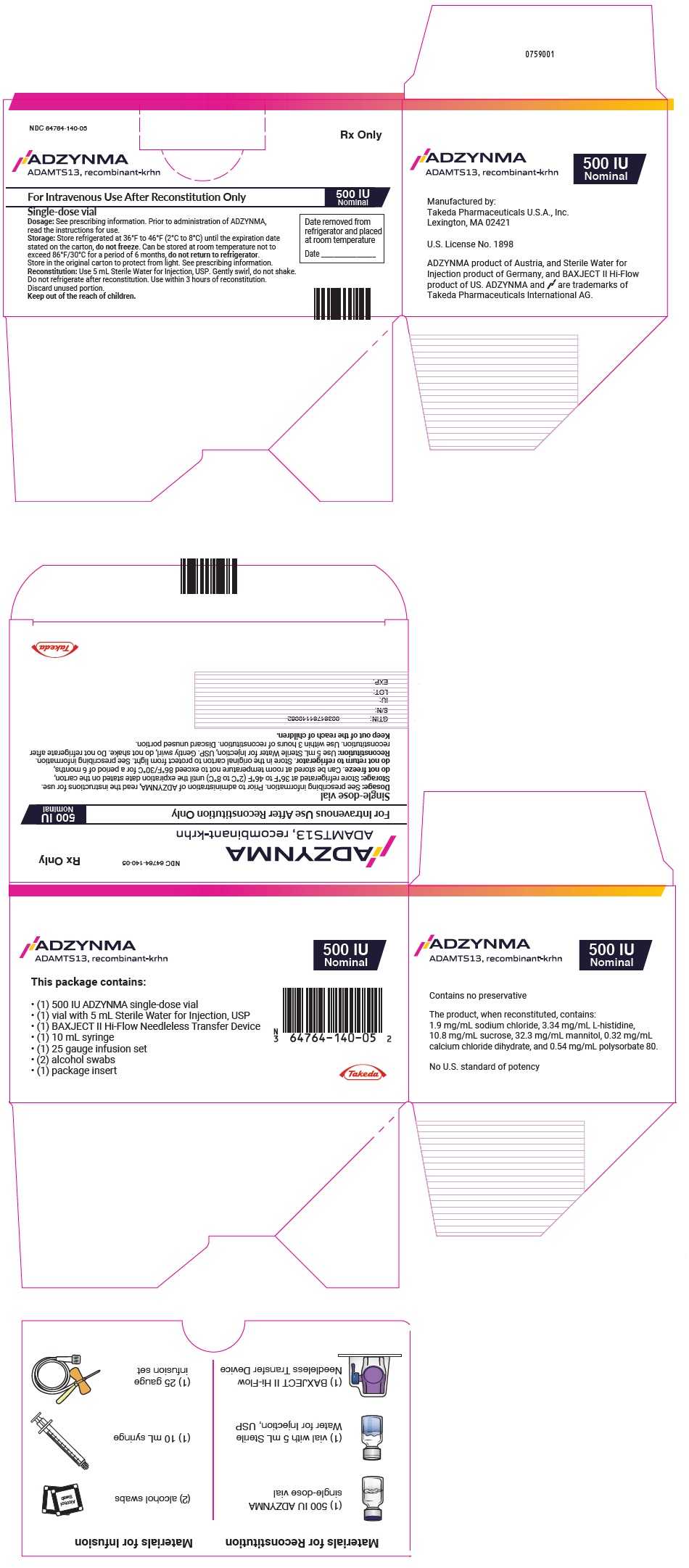
PRINCIPAL DISPLAY PANEL - 500 IU Kit Carton NDC 64764-140-05 Rx Only ADZYNMA ADAMTS13, recombinant-krhn For Intravenous Use After Reconstitution Only 500 IU Nominal Single-dose vial Dosage: See prescribing information. Prior to administration of ADZYNMA, read the instructions for use. Storage: Store refrigerated at 36°F to 46°F (2°C to 8°C) until the expiration date stated on the carton, do not freeze .
Can be stored at room temperature not to exceed 86°F/30°C for a period of 6 months, do not return to refrigerator . Store in the original carton to protect from light. See prescribing information.
Reconstitution: Use 5 mL Sterile Water for Injection, USP. Gently swirl, do not shake. Do not refrigerate after reconstitution.
Use within 3 hours of reconstitution. Discard unused portion. Keep out of the reach of children.
Date removed from refrigerator and placed at room temperature Date _________________ PRINCIPAL DISPLAY PANEL - 500 IU Kit Carton
PRINCIPAL DISPLAY PANEL - 1500 IU Kit Carton NDC 64764-145-05 Rx Only ADZYNMA ADAMTS13, recombinant-krhn For Intravenous Use After Reconstitution Only 1500 IU Nominal Single-dose vial Dosage: See prescribing information. Prior to administration of ADZYNMA, read the instructions for use. Storage: Store refrigerated at 36°F to 46°F (2°C to 8°C) until the expiration date stated on the carton, do not freeze.
Can be stored at room temperature not to exceed 86°F/30°C for a period of 6 months, do not return to refrigerator . Store in the original carton to protect from light. See prescribing information.
Reconstitution: Use 5 mL Sterile Water for Injection, USP. Gently swirl, do not shake. Do not refrigerate after reconstitution.
Use within 3 hours of reconstitution. Discard unused portion. Keep out of the reach of children.
Date removed from refrigerator and placed at room temperature Date _________________ PRINCIPAL DISPLAY PANEL - 1500 IU Kit Carton
Medicaid utilization & spend
Medicare Part D spend CMS · PART D · 2026 (Q1)
Reported adverse events (FAERS)
Top reported reactions
Age at onset
Reporter sex
Serious outcomes
Where does this data come from?
About this NDC listing & data coverage
Kit / multi-component package
This NDC identifies a kit — a package containing more than one component. Structured data (pricing, ingredients, equivalents) is often reported per component rather than for the kit NDC itself, which can make this page look thinner than the components' own pages.
What data is (and isn’t) available for this NDC — tap to expand
| NDC identity (package / product / labeler codes) | ✓ Available |
| Labeler | ✓ Available |
| Product & package description | ✓ Available |
| Marketing category & status | ✓ Available |
| Active ingredient / dosage form / route | ✓ Available |
| FDA label (SPL via DailyMed) | ✓ Available |
| Package photos | ✓ Available |
| Inactive ingredients (structured) | — Not published for this NDC The labeler did not submit a structured excipient list, or no SPL is available. |
| NADAC pharmacy acquisition price (CMS) | — Not published for this NDC CMS publishes NADAC only for NDCs reported in its retail-pharmacy survey. |
| Orange Book / therapeutic-equivalence data | ✓ Available |
| HCPCS J-code billing crosswalk | ✓ Available |
| Medicaid utilization (CMS SDUD) | ✓ Available |