
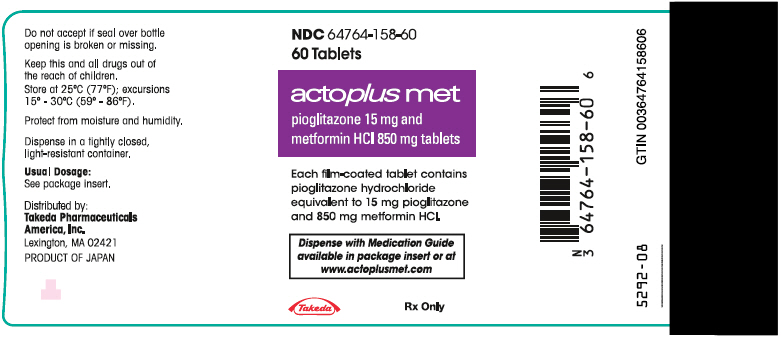
Actoplus Met pioglitazone and metformin hydrochloride 15 mg; 850 mg Tablet, Film Coated, 60-count — NDC 64764-158-60 (Billing 64764-0158-60)
This is a package of 60 tablets of Actoplus Met pioglitazone and metformin hydrochloride 15 mg; 850 mg Tablet, Film Coated from Takeda Pharmaceuticals America, Inc., marketed since Aug 2005 and currently FDA-listed.
NDC database record
One package, one record: these facts belong to NDC 64764-158-60 alone.
- Record
- FDA NDC Directory package listing · Human prescription drug
- Code segments
- 64764 labeler · 158 product · 60 package
- Package marketed since
- Aug 29, 2005
- Sample package
- No — commercial package
- Listing certified through
- Dec 31, 2027
- Billing quantity
- 60 EA per package
- Barcode (UPC)
- 0364764158606
- FDA record last changed
- Oct 1, 2026
Identity & classification
Regulatory identifiers FDA, NLM and CMS codes for this package
Drug-database identifiers Medi-Span GPI and First Databank GCN / HICL / AHFS classification
- GSN (GCN sequence number): 059686
- GCN: 25445
- HICL (First Databank): 033202
- AHFS class code: 68:20.04.00
- RxCUI (RxNorm): 861822
Where does this data come from?
- FDA openFDA NDC Directory · synced Oct 1, 2026
- FDA label on DailyMed · label index refreshed Oct 5, 2026
- RxNorm (NLM RxNav) · catalog refreshed Oct 1, 2026
- Medi-Span GPI (licensed)
- First Databank (licensed) · refreshed Oct 1, 2026
RxNorm drug class
This medicine belongs to the Peroxisome Proliferator-activated Receptor alpha Agonist class.
Where does this data come from?
- RxClass (NLM) · catalog refreshed Oct 1, 2026
Clinical
Metformin is used alone or with other medications, including insulin, to treat type 2 diabetes (condition in which the body does not use insulin normally and, therefore, cannot control the amount of sugar in the blood). Metformin is in a class of drugs called biguanides. Metformin helps to control the amount of glucose (sugar) in your blood. It decreases the amount of glucose you absorb from your food and the amount of glucose made by your liver. Metformin also increases your body's response to insulin, a natural substance that controls the amount of glucose in the blood. Metformin is not used...
Read the full MedlinePlus article ↗- It helps lower blood sugar in adults with type 2 diabetes, along with diet and exercise. It combines two medicines that work in different ways. It is not meant for type 1 diabetes.
- Take it by mouth with meals, which helps reduce stomach upset from the metformin. If you miss a dose, just take your next one on schedule and don't double up. Follow your prescribe...
- Common ones include cold-like symptoms, swelling, diarrhea, headache, and weight gain. Taking it with food may ease stomach effects. Call your doctor if the swelling or weight gain...
- Get help if you have fast weight gain, shortness of breath, or swelling, which can mean heart failure. Also seek care for unusual muscle pain, weakness, trouble breathing, unusual...
Patient education
Supplement & herbal interactions
Where does this data come from?
- MedlinePlus (NLM) · refreshed Oct 1, 2026
- FDA label on DailyMed · label index refreshed Oct 5, 2026
Ask a licensed pharmacist directly — free, answered by our team.
Pricing
A drug doesn't have one price. Each row is a different public payment system, and none is what you'd pay at the counter — that depends on your insurance. The ⓘ on each row explains what it measures.
| Price system | Per each | Per package |
|---|---|---|
| Retail pharmacies payNADAC · weekly | Not in the retail survey — common for institutional, discontinued, or low-volume packs. | |
| Medicaid paysCMS SDUD · 12 mo | No recent Medicaid claims on file for this NDC — rare and low-volume NDCs are suppressed in the public data. | |
| Medicare drug plans payPart D · quarterly | No Part D plan price is available for this NDC in our data. | |
Where does this data come from?
- CMS NADAC weekly file
- CMS ASP pricing files · refreshed Sep 20, 2026
- CMS Medicaid State Drug Utilization Data · refreshed Oct 5, 2026
- CMS Part D plan pricing files · refreshed Sep 24, 2026
- VA National Acquisition Center price file
Packaging — all sizes for this product
| Package NDC | Description | Marketing start | Marketing end | Status |
|---|---|---|---|---|
| 64764-0158-18 64764-158-18 Main listing | 180 TABLET, FILM COATED in 1 BOTTLE, PLASTIC | 2005-08-29 | — | Active |
| 64764-0158-41 64764-158-41 | 4 CARTON in 1 TRAY / 1 BLISTER PACK in 1 CARTON / 7 TABLET, FILM COATED in 1 BLISTER PACK | 2005-08-29 | — | Active |
| 64764-0158-60 You're viewing this | 60 TABLET, FILM COATED in 1 BOTTLE, PLASTIC | 2005-08-29 | — | Active |
Pack size FAQ
What quantity is in this package?
How does this package differ from NDC 64764-0158-18?
What NDC number is used to bill for this package of Actoplus Met pioglitazone and metformin hydrochloride 15 mg; 850 mg Tablet, Film Coated?
Therapeutic equivalents
| Product | Labeler | Pack | NADAC/unit | TE | Status | Price vs. this |
|---|---|---|---|---|---|---|
| Pioglitazone and metformin hydrochloride 850 mg/1; 15 mg 33342-0177-09 | Macleods | 60 tablets | $0.239 | AB | Availability likely | — |
| Pioglitazone Hydrochloride and Metformin Hydrochloride 15 mg/1; 850 mg 57237-0218-60 | Rising | 60 tablets | $0.239 | AB | Availability likely | — |
| Pioglitazone Hydrochloride and Metformin Hydrochloride 15 mg/1; 850 mg 65862-0526-18 | Aurobindo | 180 tablets | $0.239 | AB | Availability likely | — |
| Pioglitazone HCL and Metformin HCL 850 mg/1; 15 mg 13668-0281-05 | Torrent | 500 tablets | — | AB | FDA listed | — |
| Actoplus Met 15 mg/1; 850 mgthis 64764-0158-60 | Takeda | 60 tablets | — | AB | FDA listed | — |
| Pioglitazone and metformin hydrochloride 15 mg/1; 850 mg 71335-3020-01 | Bryant | 180 tablets | — | AB | FDA listed | — |
| Pioglitazole and metformin hydrochloride 15 mg/1; 850 mg 72162-2498-02 | Bryant | 180 tablets | — | AB | FDA listed | — |
Where does this data come from?
- FDA openFDA NDC Directory · synced Oct 1, 2026
- FDA Orange Book · refreshed Oct 3, 2026
- CMS NADAC weekly file
Availability & generic status
FDA-approved generic versions are listed, and recent pricing/market data suggests they may be available — see Therapeutic equivalents.
Why the date isn’t exact: Generic timing can change because patents may be challenged, settled, licensed, added, removed, or worked around with a narrower label — and FDA approval does not always mean a pharmacy can get the generic today.
🛈 What do these terms mean?
- Patent
- Legal protection listed in the Orange Book that may delay generic approval or launch. Issued by the U.S. Patent & Trademark Office.
- Substance patent
- Covers the active drug molecule itself — the hardest to design around. A generic generally can’t launch until it expires.
- Formulation (product) patent
- Covers a specific formulation or dosage form. A generic can sometimes work around it with a different formulation.
- Method-of-use patent
- A patent covering one specific approved use of the drug — not necessarily the whole molecule. A generic can sometimes launch with a “skinny label” that carves out the protected use and keeps the others.
- Skinny label
- A generic label that omits a still-patented use when the FDA allows it — letting a generic reach the market for the unprotected uses.
- Exclusivity
- FDA-granted marketing protection, separate from patents — e.g. 5-yr new chemical entity, 7-yr orphan drug, or a +6-month pediatric extension.
- Paragraph IV
- A generic applicant’s formal challenge to a listed patent. It can potentially lead to earlier generic entry, but often involves litigation or a settlement.
- RLD / RS
- Reference Listed Drug — the brand product the FDA uses as the reference for generic applications. Reference Standard — the product the FDA expects generics to compare against in bioequivalence testing.
- TE / AB rating
- FDA therapeutic-equivalence rating. An AB rating generally means the FDA considers a generic therapeutically equivalent to — and substitutable for — the brand.
- LOE (loss of exclusivity)
- The latest patent or exclusivity currently listed — the loss-of-exclusivity / latest-listed-protection date shown on this page. Paragraph-IV challenges and settlements can move the real date earlier; FDA approval and a manufacturer’s decision to market can move it later.
Built from the FDA Orange Book. The bars above are scaled to each protection’s expiry; the red LOE marker is the last one to lapse.
| Patent | Type | Use code | Expires |
|---|---|---|---|
| US 9320714 ↗ | Drug product | — | Feb 3, 2029 |
| US 9101660 ↗ | Drug product | — | Jan 22, 2027 |
| US 9101660 ↗ | Drug product | — | Jan 22, 2027 |
| US 9320714 ↗ | Drug product | — | Feb 3, 2029 |
Is there a generic version of ACTOPLUS MET 15 MG-850 MG TAB?
The FDA approved a generic — why can’t I get it at my pharmacy yet?
Why do different websites show different generic release dates?
What does “FDA listed” mean?
What does a patent or protection date mean here?
What does “current Orange Book estimate” mean?
Can a generic come out before the last patent expires?
Can a generic come out after the listed dates?
What is the difference between patents and exclusivity?
Why are there multiple patent dates?
Where does this data come from?
- FDA Orange Book · refreshed Oct 3, 2026
What it looks like
Where does this data come from?
- FDA label on DailyMed · label index refreshed Oct 5, 2026
Inactive Ingredients / Excipients
Inactive ingredients, also called excipients, are components of the drug product other than the active ingredient. They may include fillers, dyes, coatings, preservatives, flavors, or other formulation ingredients.
🧪 Avoiding an ingredient? See Metformin / Pioglitazone inactive ingredients by manufacturer: every current product's list side by side, so you can ask your pharmacy for the version that does not list it.
💡 Tap an ingredient (hover on desktop) to see what it is and why it’s used.
-
UNII M28OL1HH48
Croscarmellose sodium is a plant-based substance derived from cellulose. It acts as a disintegrant, helping tablets and capsules break down quickly in the digestive system so the medicine can be absorbed.
-
UNII 0WZ8WG20P6
Hypromellose 2910 is a plant-based cellulose derivative that acts as a thickener, binder, and film-coating agent. It helps control how quickly the medicine dissolves and protects the tablet or capsule from moisture and light.
-
UNII 70097M6I30
Magnesium stearate is a salt made from magnesium and stearic acid, a fatty substance. It's used in tablets and capsules as a lubricant and glidant to help ingredients flow smoothly during manufacturing and prevent sticking.
-
UNII OP1R32D61U
Microcrystalline cellulose is a purified form of cellulose, a natural fiber from plant sources. It acts as a binder and filler in tablets and capsules, helping hold ingredients together and give the medicine its shape and size.
-
UNII Q662QK8M3B
Polyethylene glycol 8000 is a synthetic polymer made from ethylene oxide. It acts as a binder and filler in tablets and capsules, helping hold ingredients together and add bulk to the medicine.
-
UNII FZ989GH94E
Povidone is a synthetic polymer made from a plastic-like material. It acts as a binder to hold tablet ingredients together and as a disintegrant to help the tablet break apart in your stomach so the medicine can be absorbed.
-
UNII 7SEV7J4R1U
A powder made from a naturally occurring mineral. In medicines, talc works as a glidant and anti-caking agent, helping tablets and capsules flow smoothly during manufacturing and preventing clumping.
-
UNII 15FIX9V2JP
Titanium dioxide is a bright white mineral powder commonly used as a colorant and opacifying agent. It makes pills and tablets white or lighter in color and helps make coatings non-transparent.
8 inactive ingredients listed in the exact product block matched to this NDC.
Where does this data come from?
ingredient classCode="IACT" elements from the exact product block matched by this NDC. Label-section narrative from DailyMed / the openFDA label index is shown separately when available.- FDA label on DailyMed · label index refreshed Oct 5, 2026
- FDA openFDA NDC Directory · synced Oct 1, 2026
Inactive ingredient FAQ
Are inactive ingredients the same for every manufacturer?
Why might an inactive ingredient be missing?
Can inactive ingredients matter?
Manufacturer & labeler
More NDCs from Takeda Pharmaceuticals America, Inc. labeler code 64764
- ENTYVIO Pen vedolizumab 108 mg/.68mL Injection, Solution NDC 64764-108-21
- Oseni alogliptin and pioglitazone 12.5 mg; 30 mg Tablet, Film Coated NDC 64764-123-03
- Nesina alogliptin 12.5 mg Tablet, Film Coated NDC 64764-125-02
- ADZYNMA Apadamtase Alfa Kit NDC 64764-140-05
- ADZYNMA Apadamtase Alfa Kit NDC 64764-145-05
- Actos pioglitazone 15 mg Tablet NDC 64764-151-02
- Dexilant dexlansoprazole 30 mg Capsule, Delayed Release NDC 64764-171-00
- Dexilant dexlansoprazole 60 mg Capsule, Delayed Release NDC 64764-175-00
- Amitiza lubiprostone 24 ug Capsule, Gelatin Coated NDC 64764-240-40
- Nesina alogliptin 25 mg Tablet, Film Coated NDC 64764-250-02
- Oseni alogliptin and pioglitazone 25 mg; 15 mg Tablet, Film Coated NDC 64764-251-03
- Oseni alogliptin and pioglitazone 25 mg; 30 mg Tablet, Film Coated NDC 64764-253-03
Where does this data come from?
- FDA openFDA NDC Directory · synced Oct 1, 2026
- Drugs@FDA
Full prescribing information FDA SPL
🚨 Boxed Warning ▾
WARNING: CONGESTIVE HEART FAILURE and LACTIC ACIDOSIS Congestive Heart Failure Thiazolidinediones, including pioglitazone, which is a component of ACTOPLUS MET ® , cause or exacerbate congestive heart failure in some patients [see Warnings and Precautions (5.1) ] . After initiation of ACTOPLUS MET, and after dose increases, monitor patients carefully for signs and symptoms of heart failure (e.g., excessive, rapid weight gain, dyspnea, and/or edema). If congestive heart failure develops while taking ACTOPLUS MET, consider discontinuation of ACTOPLUS MET or dosage reduction of pioglitazone in ACTOPLUS MET [see Warnings and Precautions (5.1) ] .
ACTOPLUS MET is not recommended in patients with symptomatic heart failure [see Warnings and Precautions (5.1) ] . Initiation of ACTOPLUS MET in patients with established New York Heart Association (NYHA) Class III or IV heart failure is contraindicated [see Contraindications (4) , Warnings and Precautions (5.1) ] . Lactic Acidosis Postmarketing cases of metformin-associated lactic acidosis have resulted in death, hypothermia, hypotension, and resistant bradyarrhythmias.
The onset of metformin-associated lactic acidosis is often subtle, accompanied only by nonspecific symptoms such as malaise, myalgias, respiratory distress, somnolence, and abdominal pain. Metformin-associated lactic acidosis was characterized by elevated blood lactate levels (greater than 5 mmol/L), anion gap acidosis (without evidence of ketonuria or ketonemia), an increased lactate/pyruvate ratio; and metformin plasma levels generally greater than 5 mcg/mL [see Warnings and Precautions (5.2) ] . Risk factors for metformin-associated lactic acidosis include renal impairment, concomitant use of certain drugs (e.g., carbonic anhydrase inhibitors such as topiramate), age 65 years old or greater, having a radiological study with contrast, surgery and other procedures, hypoxic states (e.g., acute congestive heart failure), excessive alcohol intake, hepatic impairment, and mitochondrial diseases [see Warnings and Precautions (5.2) ] .
Steps to reduce the risk of and manage metformin-associated lactic acidosis in these high-risk groups are provided in the Full Prescribing Information [see Dosage and Administration (2.2) , Contraindications (4) , Warnings and Precautions (5.2) , Drug Interactions (7) , Use in Specific Populations (8.6 , 8.7) ]. If metformin-associated lactic acidosis is suspected, immediately discontinue ACTOPLUS MET and institute general supportive measures in a hospital setting. Prompt hemodialysis is recommended [see Warnings and Precautions (5.2) ].
WARNING: CONGESTIVE HEART FAILURE and LACTIC ACIDOSIS See full prescribing information for complete boxed warning. Congestive Heart Failure Thiazolidinediones, including pioglitazone, which is a component of ACTOPLUS MET, cause or exacerbate congestive heart failure in some patients. ( 5.1 ) After initiation of ACTOPLUS MET, and after dose increases, monitor patients carefully for signs and symptoms of heart failure (e.g., excessive, rapid weight gain, dyspnea, and/or edema).
If congestive heart failure develops while taking ACTOPLUS MET, consider discontinuation of ACTOPLUS MET or dosage reduction of pioglitazone in ACTOPLUS MET. ( 5.1 ) ACTOPLUS MET is not recommended in patients with symptomatic heart failure. ( 5.1 ) Initiation of ACTOPLUS MET in patients with established New York Heart Association (NYHA) Class III or IV heart failure is contraindicated.
( 4 , 5.1 ) Lactic Acidosis Postmarketing cases of metformin-associated lactic acidosis have resulted in death, hypothermia, hypotension, and resistant bradyarrhythmias. Symptoms included malaise, myalgias, respiratory distress, somnolence, and abdominal pain. Laboratory abnormalities included elevated blood lactate levels, anion gap acidosis, increased lactate/ pyruvate ratio; and metformin plasma levels generally greater than 5 mcg/mL.
( 5.2 ) Risk factors include renal impairment, concomitant use of certa… [Excerpted — this section continues on DailyMed.]
🎯 Indications and Usage ▾
1 INDICATIONS AND USAGE ACTOPLUS MET is indicated as an adjunct to diet and exercise to improve glycemic control in adults with type 2 diabetes mellitus. Limitations of Use ACTOPLUS MET is not recommended to treat type 1 diabetes mellitus or diabetic ketoacidosis. ACTOPLUS MET is a combination of pioglitazone, a thiazolidinedione agonist of peroxisome proliferator receptor gamma, and metformin hydrochloride (HCl), a biguanide, indicated as an adjunct to diet and exercise to improve glycemic control in adults with type 2 diabetes mellitus.
( 1 ) Limitations of Use : Not recommended for treatment of type 1 diabetes or diabetic ketoacidosis. ( 1 )
⏱️ Dosage and Administration ▾
2 DOSAGE AND ADMINISTRATION Obtain liver tests before initiation. If abnormal, use caution when treating with ACTOPLUS MET, investigate the probable cause, treat (if possible), and follow appropriately. ( 2.1 ) Take orally with meals to reduce gastrointestinal adverse reactions with metformin ( 2.10 ) Individualize the starting dose based on the patient’s current regimen and titrate the dosage gradually, as needed after assessing therapeutic response and tolerability.
The maximum recommended total daily dosage is pioglitazone 45 mg and metformin 2,550 mg. ( 2.2 ) Recommended starting dosage in patients with NYHA Class I or Class II congestive heart failure is 15 mg of pioglitazone and 850 mg of metformin HCl orally once daily. ( 2.4 ) Prior to initiation, assess renal function with estimated glomerular filtration rate (eGFR).
( 2.2 ) Contraindicated in patients with eGFR below 30 mL/min Initiation is not recommended in patients with eGFR between 30 to 45 mL/min Assess risk/benefit of continuing ACTOPLUS MET if eGFR falls below 45 mL/min Discontinue if eGFR falls below 30 mL/min Monitor patients for adverse events related to fluid retention after initiation and dose increases. ( 2.4 ) ACTOPLUS MET may need to be discontinued at time of, or prior to, iodinated contrast imaging procedures. ( 2.6 )
2.1Important Dosage and Administration Information Obtain liver tests (serum alanine and aspartate aminotransferases, alkaline phosphatase, and total bilirubin) prior to initiating ACTOPLUS MET [see Warnings and Precautions (5.5) ] . ACTOPLUS MET contains 15 mg of pioglitazone and 850 mg of metformin hydrochloride (HCl) in each tablet. Take ACTOPLUS MET with meals to reduce gastrointestinal adverse reactions with metformin [see Adverse Reactions (6.1) ] .
If a dose is missed, do not double the next dose.
2.2Recommended Dosage and Administration Recommended Starting Dosage Based on Current Regimen Individualize the starting dosage of ACTOPLUS MET based on the patient's current regimen and the available strength of ACTOPLUS MET (see Table 1 ). Table 1: Recommended Starting Dosage Based on the Patient’s Current Regimen Current Regimen Starting Dosage of ACTOPLUS MET (15 mg of pioglitazone and 850 mg of metformin HCl per tablet) * Not treated with either pioglitazone or metformin HCl One tablet orally once daily Metformin HCl One tablet orally once or twice daily.
Select a dosage that is as close as possible to the current dosage of metformin HCl Pioglitazone One tablet orally once daily Pioglitazone and metformin HCl Select a dosage that is as close as possible to the current dosage of pioglitazone and metformin HCl while not exceeding three tablets orally per day. *For dosage recommendations for patients with renal impairment and/or congestive heart failure, see Dosage and Administration (2.3, 2.4) Dosage Titration for Additional Glycemic Control Titrate the ACTOPLUS MET dosage gradually, as needed, after assessing therapeutic response and tolerability.
ACTOPLUS MET may be increased to a maximum recommended total daily dosage of three tablets per day (45 mg of pioglitazone and 2,550 mg of metformin HCl). Total daily dosages of 2,550 mg of metformin HCl may be taken in divided doses three times a day to reduce gastrointestinal adverse reactions [see Adverse Reactions (6.1) ] .
2.3Recommendations for Use in Patients with Renal Impairment Assess renal function prior to initiation of ACTOPLUS MET and periodically thereafter [see Use in Specific Populations (8.6) ]. ACTOPLUS MET is contraindicated in patients with an estimated glomerular filtration rate (eGFR) below 30 mL/min. Initiation of ACTOPLUS MET in patients with an eGFR between 30 to 45 mL/min is not recommended.
In patients taking ACTOPLUS MET whose eGFR later falls below 45 mL/min, assess the benefit and risk of continuing therapy. Discontinue ACTOPLUS MET if the patient’s eGFR later falls below 30 mL/min [see Contraindications (4) , Warnings and Precautions (5.2) ] .
2.4Recommen… [Excerpted — this section continues on DailyMed.]
💊 Dosage Forms and Strengths ▾
3 DOSAGE FORMS AND STRENGTHS 15 mg of pioglitazone and 850 mg of metformin HCl tablets: White to off-white, oblong, film-coated tablets debossed with “4833M” on one side and “15/850” on the other Tablets: 15 mg pioglitazone/850 mg metformin HCl. ( 3 )
⛔ Contraindications ▾
4 CONTRAINDICATIONS ACTOPLUS MET is contraindicated in patients with: Established NYHA Class III or IV heart failure at the time of ACTOPLUS MET initiation [see Boxed Warning ] . Severe renal impairment (eGFR below 30 mL/min) [see Warnings and Precautions (5.2) ] . A history of serious hypersensitivity to pioglitazone, metformin HCl, or any of the excipients in ACTOPLUS MET.
Acute or chronic metabolic acidosis, including diabetic ketoacidosis [see Warnings and Precautions (5.2) ] . In patients with established New York Heart Association (NYHA) Class III or IV heart failure at the time of ACTOPLUS MET initiation [see Boxed Warning ]. ( 4 ) In patients with severe renal impairment: (eGFR below 30 mL/min).
( 4 ) In patients with a history of serious hypersensitivity to pioglitazone, metformin HCl, or any of the excipients in ACTOPLUS MET. ( 4 ) In patients with acute or chronic metabolic acidosis, including diabetic ketoacidosis. ( 4 )
⚠️ Warnings and Cautions ▾
5 WARNINGS AND PRECAUTIONS Congestive Heart Failure: Fluid retention may occur and can exacerbate or lead to congestive heart failure. Combination use with insulin and use in congestive heart failure NYHA Class I and II may increase risk. Monitor patients for signs and symptoms.
( 5.1 ) Edema: Dose-related edema may occur. ( 5.3 ) Hypoglycemia: Consider a lower dose of insulin or insulin secretagogue to reduce risk of hypoglycemia when used in combination with ACTOPLUS MET. ( 5.4 ) Hepatic Effects: Postmarketing reports of hepatic failure, sometimes fatal.
Causality cannot be excluded. If liver injury is detected, promptly interrupt ACTOPLUS MET and assess patient for probable cause, then treat cause if possible, to resolution or stabilization. Do not restart ACTOPLUS MET if liver injury is confirmed and no alternate etiology can be found.
( 5.5 ) Urinary Bladder Tumors: May increase the risk of bladder cancer. Do not use in patients with active bladder cancer. Use caution when using in patients with a prior history of bladder cancer.
( 5.6 ) Fractures: Increased incidence in female patients. Apply current standards of care for assessing and maintaining bone health. ( 5.7 ) Macular Edema: Postmarketing reports.
Recommend regular eye exams in all patients with diabetes according to current standards of care with prompt evaluation for acute visual changes. ( 5.8 ) Vitamin B 12 Deficiency: Metformin may lower vitamin B 12 levels. Monitor hematologic parameters annually and vitamin B 12 at 2 to 3 year intervals and manage any abnormalities.
( 5.9 )
5.1Congestive Heart Failure Pioglitazone, like other thiazolidinediones, can cause dose-related fluid retention when used alone or in combination with other antidiabetic medications and is most common when pioglitazone is used in combination with insulin. Fluid retention may lead to or exacerbate congestive heart failure. Observe patients for signs and symptoms of congestive heart failure.
If congestive heart failure develops while taking ACTOPLUS MET, consider discontinuation of ACTOPLUS MET or dosage reduction of pioglitazone in ACTOPLUS MET [see Boxed Warning , Contraindications (4) , Adverse Reactions (6.1) ] .
5.2Lactic Acidosis Lactic Acidosis There have been postmarketing cases of metformin-associated lactic acidosis, including fatal cases. These cases had a subtle onset and were accompanied by nonspecific symptoms such as malaise, myalgias, abdominal pain, respiratory distress, or increased somnolence; however, hypothermia, hypotension and resistant bradyarrhythmias have occurred with severe acidosis. Metformin-associated lactic acidosis was characterized by elevated blood lactate concentrations (greater than 5 mmol/L), anion gap acidosis (without evidence of ketonuria or ketonemia), an increased lactate/pyruvate ratio, and metformin plasma levels generally greater than 5 mcg/mL.
Metformin decreases liver uptake of lactate increasing lactate blood levels which may increase the risk of lactic acidosis, especially in patients at risk. If metformin-associated lactic acidosis is suspected, general supportive measures should be instituted promptly in a hospital setting, along with immediate discontinuation of ACTOPLUS MET. In ACTOPLUS MET-treated patients with a diagnosis or strong suspicion of lactic acidosis, prompt hemodialysis is recommended to correct the acidosis and remove accumulated metformin (metformin HCl is dialyzable, with a clearance of up to 170 mL/min under good hemodynamic conditions).
Hemodialysis has often resulted in reversal of symptoms and recovery. Educate patients and their families about the symptoms of lactic acidosis and if these symptoms occur instruct them to discontinue ACTOPLUS MET and report these symptoms to their healthcare provider. For each of the known and possible risk factors for metformin-associated lactic acidosis, recommendations to reduce the risk of and manage metformin-associated lactic acidosis are provided below: Renal Impairment The p… [Excerpted — this section continues on DailyMed.]
🤒 Adverse Reactions ▾
6 ADVERSE REACTIONS The following serious adverse reactions are discussed elsewhere in the labeling: Congestive heart failure [see Boxed Warning , Warnings and Precautions (5.1) ] Lactic acidosis [see Boxed Warning , Warnings and Precautions (5.2) ] Edema [see Warnings and Precautions (5.3) ] Hypoglycemia with Concomitant Use with Insulin or Insulin Secretagogues [see Warnings and Precautions (5.4) ] Hepatic Effects [see Warnings and Precautions (5.5) ] Urinary Bladder Tumors [see Warnings and Precautions (5.6) ] Fractures [see Warnings and Precautions (5.7) ] Macular Edema [see Warnings and Precautions (5.8 ] Vitamin B 12 Deficiency [see Warnings and Precautions (5.9 ] Most common adverse reactions (>5%) are upper respiratory tract infection, edema, diarrhea, headache and weight gain.
( 6.1 ) To report SUSPECTED ADVERSE REACTIONS, contact Takeda Pharmaceuticals America, Inc. at 1-877-825-3327 and the ACTOPLUS MET website at: www.actoplusmet.com or FDA at 1-800-FDA-1088 or www.fda.gov/medwatch .
6.1Clinical Trials Experience Because clinical trials are conducted under widely varying conditions, adverse reaction rates observed in the clinical trials of a drug cannot be directly compared to rates in the clinical trials of another drug and may not reflect the rates observed in practice. Pioglitazone Over 8,500 patients with type 2 diabetes mellitus have been treated with pioglitazone in randomized, double-blind, controlled clinical trials, including 2,605 patients with type 2 diabetes mellitus and macrovascular disease treated with pioglitazone from the PROactive clinical trial.
In these trials, over 6,000 patients have been treated with pioglitazone for six months or longer, over 4,500 patients have been treated with pioglitazone for one year or longer, and over 3,000 patients have been treated with pioglitazone for at least two years. In six pooled 16 to 26 week placebo-controlled monotherapy and 16 to 24 week add-on combination therapy trials, the incidence of withdrawals due to adverse events was 4.5% for patients treated with pioglitazone and 5.8% for comparator-treated patients. The most common adverse events leading to withdrawal were related to inadequate glycemic control, although the incidence of these events was lower (1.5%) with pioglitazone than with placebo (3.0%).
In the PROactive trial, the incidence of withdrawals due to adverse events was 9.0% for patients treated with pioglitazone and 7.7% for placebo-treated patients. Congestive heart failure was the most common serious adverse event leading to withdrawal occurring in 1.3% of patients treated with pioglitazone and 0.6% of patients treated with placebo. Common Adverse Events: 16 to 26 Week Monotherapy Trials A summary of the incidence and type of common adverse events reported in three pooled 16 to 26 week placebo-controlled monotherapy trials of pioglitazone is provided in Table 2.
Terms that are reported represent those that occurred at an incidence of >5% and more commonly in patients treated with pioglitazone than in patients who received placebo. None of these adverse events were related to the pioglitazone dose. Table 2: Three Pooled 16 to 26 Week Placebo-Controlled Clinical Trials of Pioglitazone Monotherapy: Adverse Events Reported at an Incidence >5% and More Commonly in Patients Treated with Pioglitazone than in Patients Treated with Placebo % of Patients Placebo N=259 Pioglitazone N=606 Upper Respiratory Tract Infection 8.5
13.2Headache 6.9
9.1Sinusitis 4.6
6.3Myalgia 2.7
5.4Pharyngitis 0.8
5.1Common Adverse Events: 16 to 24 Week Add-on Combination Therapy Trials A summary of the overall incidence and types of common adverse events reported in trials of pioglitazone add-on to metformin is provided in Table 3. Terms that are reported represent those that occurred at an incidence of >5% and more commonly with the highest tested dose of pioglitazone. Table 3: 16 to 24 Week Clinical Trials of Pioglitazone Add-on to Metformin Note: The preferred ter… [Excerpted — this section continues on DailyMed.]
🔄 Drug Interactions ▾
7 DRUG INTERACTIONS Strong CYP2C8 inhibitors (e.g., gemfibrozil): Limit ACTOPLUS MET dose to 15 mg/850 mg daily. ( 7.1 ) CYP2C8 inducers (e.g., rifampin) may decrease pioglitazone concentrations. ( 7.2 ) Carbonic anhydrase inhibitors may increase risk of lactic acidosis.
Consider more frequent monitoring. ( 7.3 ) Drugs that reduce metformin clearance (such as ranolazine, vandetanib, dolutegravir, and cimetidine), may increase the accumulation of metformin. Consider the benefits and risks of concomitant use.
( 7.4 ) Alcohol: Warn patients against excessive alcohol intake. ( 7.5 ) Use of insulin secretagogues or insulin use may increase the risk for hypoglycemia and may require dose reduction. ( 7.6 ) Topiramate may decrease pioglitazone concentrations.
( 7.8 )
7.1Strong CYP2C8 Inhibitors An inhibitor of CYP2C8 (e.g., gemfibrozil) significantly increases the exposure (area under the serum concentration-time curve or AUC) and half-life (t ½ ) of pioglitazone. Therefore, the maximum recommended dosage of ACTOPLUS MET is 15 mg of pioglitazone and 850 mg of metformin HCl once daily if used in combination with gemfibrozil or other strong CYP2C8 inhibitors [see Dosage and Administration (2.3) , Clinical Pharmacology (12.3) ] .
7.2CYP2C8 Inducers An inducer of CYP2C8 (e.g., rifampin) may significantly decrease the exposure (AUC) of pioglitazone. Therefore, if an inducer of CYP2C8 is started or stopped during treatment with ACTOPLUS MET, changes in diabetes treatment may be needed based on clinical response without exceeding the maximum recommended daily dosage of ACTOPLUS MET (45 mg of pioglitazone and 2,550 mg of metformin HCl) [see Clinical Pharmacology (12.3) ] .
7.3Carbonic Anhydrase Inhibitors Topiramate or other carbonic anhydrase inhibitors (e.g., zonisamide, acetazolamide or dichlorphenamide) frequently causes a decrease in serum bicarbonate and induce non-anion gap, hyperchloremic metabolic acidosis. Concomitant use of these drugs with ACTOPLUS MET may increase the risk for lactic acidosis. Consider more frequent monitoring of these patients.
7.4Drugs that Reduce Metformin Clearance Concomitant use of drugs that interfere with common renal tubular transport systems involved in the renal elimination of metformin (e.g., organic cationic transporter-2 [OCT2]/multidrug and toxin extrusion [MATE] inhibitors such as ranolazine, vandetanib, dolutegravir, and cimetidine) could increase systemic exposure to metformin and may increase the risk for lactic acidosis [see Clinical Pharmacology (12.3) ] . Consider the benefits and risks of concomitant use.
7.5Alcohol Alcohol is known to potentiate the effect of metformin on lactate metabolism. Warn patients against excessive alcohol intake while receiving ACTOPLUS MET.
7.6Insulin Secretagogues or Insulin Coadministration of ACTOPLUS MET with an insulin secretagogue (e.g., sulfonylurea) or insulin may increase the risk of hypoglycemia. If hypoglycemia occurs in a patient coadministered ACTOPLUS MET and an insulin secretagogue (e.g., sulfonylurea), the dose of the insulin secretagogue should be reduced.
7.7Drugs Affecting Glycemic Control Certain drugs tend to produce hyperglycemia and may lead to loss of glycemic control. These drugs include the thiazides and other diuretics, corticosteroids, phenothiazines, thyroid products, estrogens, oral contraceptives, phenytoin, nicotinic acid, sympathomimetics, calcium channel blockers, and isoniazid. When such drugs are administered to a patient receiving ACTOPLUS MET, the patient should be closely observed for loss of blood glucose control.
When such drugs are withdrawn from a patient receiving ACTOPLUS MET, the patient should be observed closely for hypoglycemia.
7.8Topiramate A decrease in the exposure of pioglitazone and its active metabolites were noted with concomitant administration of pioglitazone and topiramate [see Clinical Pharmacology (12.3) ] . The clinical relevance of this decrease is unknown; however, when ACTOPLUS MET and topi… [Excerpted — this section continues on DailyMed.]
👥 Use in Specific Populations ▾
8 USE IN SPECIFIC POPULATIONS Females and Males of Reproductive Potential: Advise premenopausal females of the potential for an unintended pregnancy. ( 8.3 ) Pediatrics: Safety and effectiveness have not been established. ( 8.4 ) Geriatric Use: Assess renal function more frequently. ( 8.5 ) Hepatic Impairment: Avoid use in patients with hepatic impairment. ( 8.7 )
8.1Pregnancy Risk Summary Limited data with ACTOPLUS MET or pioglitazone in pregnant women are not sufficient to determine a drug-associated risk for major birth defects or miscarriage. Published studies with metformin use during pregnancy have not reported a clear association with metformin and major birth defect or miscarriage risk (see Data ). There are risks to the mother and fetus associated with poorly controlled diabetes in pregnancy [see Clinical Considerations ].
In animal reproduction studies, no adverse developmental effects were observed when pioglitazone was administered to pregnant rats and rabbits during organogenesis at exposures up to 5 and 35 times the 45 mg clinical dose, respectively, based on body surface area. No adverse developmental effects were observed when metformin was administered to pregnant Sprague Dawley rats and rabbits during the period of organogenesis at doses up to 2 to 6 times, respectively, a 2,000 mg clinical dose, based on body surface area (see Data ).
The estimated background risk of major birth defects is 6 to 10% in women with pre-gestational diabetes with a HbA1c >7 and has been reported to be as high as 20 to 25% in women with a HbA1c >10. The estimated background risk of miscarriage for the indicated population is unknown. In the US general population, the estimated background risk of major birth defects and miscarriage in clinically recognized pregnancies is 2 to 4% and 15 to 20%, respectively.
Clinical Considerations Disease-Associated Maternal and/or Embryo/Fetal Risk Poorly controlled diabetes in pregnancy increases the maternal risk for diabetic ketoacidosis, pre-eclampsia, spontaneous abortions, preterm delivery, still birth and delivery complications. Poorly controlled diabetes increases the fetal risk for major birth defects, still birth, and macrosomia related morbidity. Data Human Data Published data from postmarketing studies have not reported a clear association with metformin and major birth defects, miscarriage, or adverse maternal or fetal outcomes when metformin was used during pregnancy.
However, these studies cannot definitely establish the absence of any metformin-associated risk because of methodological limitations, including small sample size and inconsistent comparator groups. Animal Data Pioglitazone and Metformin HCl Animal reproduction studies were not conducted with the combined products in ACTOPLUS MET. The following data are based on studies conducted with the individual components of ACTOPLUS MET.
Pioglitazone Pioglitazone administered to pregnant rats during organogenesis did not cause adverse developmental effects at a dose of 20 mg/kg (~5 times the 45 mg clinical dose), but delayed parturition and reduced embryo-fetal viability at 40 and 80 mg/kg, or ≥9 times the 45 mg clinical dose, by body surface area. In pregnant rabbits administered pioglitazone during organogenesis, no adverse developmental effects were observed at 80 mg/kg (~35 times the 45 mg clinical dose), but reduced embryo-fetal viability at 160 mg/kg, or ~69 times the 45 mg clinical dose, by body surface area.
When pregnant rats received pioglitazone during late gestation and lactation, delayed postnatal development, attributed to decreased body weight, occurred in offspring at maternal doses of 10 mg/kg and above or ≥2 times the 45 mg clinical dose, by body surface area. Metformin HCl Metformin HCl did not cause adverse developmental effects when administered to pregnant Sprague Dawley rats and rabbits up to 600 mg/kg/day during the period of organogenesis. This represents an exposure of about 2 to 6 times a 2,000 mg clini… [Excerpted — this section continues on DailyMed.]
🤰 Pregnancy ▾
8.1Pregnancy Risk Summary Limited data with ACTOPLUS MET or pioglitazone in pregnant women are not sufficient to determine a drug-associated risk for major birth defects or miscarriage. Published studies with metformin use during pregnancy have not reported a clear association with metformin and major birth defect or miscarriage risk (see Data ). There are risks to the mother and fetus associated with poorly controlled diabetes in pregnancy [see Clinical Considerations ].
In animal reproduction studies, no adverse developmental effects were observed when pioglitazone was administered to pregnant rats and rabbits during organogenesis at exposures up to 5 and 35 times the 45 mg clinical dose, respectively, based on body surface area. No adverse developmental effects were observed when metformin was administered to pregnant Sprague Dawley rats and rabbits during the period of organogenesis at doses up to 2 to 6 times, respectively, a 2,000 mg clinical dose, based on body surface area (see Data ).
The estimated background risk of major birth defects is 6 to 10% in women with pre-gestational diabetes with a HbA1c >7 and has been reported to be as high as 20 to 25% in women with a HbA1c >10. The estimated background risk of miscarriage for the indicated population is unknown. In the US general population, the estimated background risk of major birth defects and miscarriage in clinically recognized pregnancies is 2 to 4% and 15 to 20%, respectively.
Clinical Considerations Disease-Associated Maternal and/or Embryo/Fetal Risk Poorly controlled diabetes in pregnancy increases the maternal risk for diabetic ketoacidosis, pre-eclampsia, spontaneous abortions, preterm delivery, still birth and delivery complications. Poorly controlled diabetes increases the fetal risk for major birth defects, still birth, and macrosomia related morbidity. Data Human Data Published data from postmarketing studies have not reported a clear association with metformin and major birth defects, miscarriage, or adverse maternal or fetal outcomes when metformin was used during pregnancy.
However, these studies cannot definitely establish the absence of any metformin-associated risk because of methodological limitations, including small sample size and inconsistent comparator groups. Animal Data Pioglitazone and Metformin HCl Animal reproduction studies were not conducted with the combined products in ACTOPLUS MET. The following data are based on studies conducted with the individual components of ACTOPLUS MET.
Pioglitazone Pioglitazone administered to pregnant rats during organogenesis did not cause adverse developmental effects at a dose of 20 mg/kg (~5 times the 45 mg clinical dose), but delayed parturition and reduced embryo-fetal viability at 40 and 80 mg/kg, or ≥9 times the 45 mg clinical dose, by body surface area. In pregnant rabbits administered pioglitazone during organogenesis, no adverse developmental effects were observed at 80 mg/kg (~35 times the 45 mg clinical dose), but reduced embryo-fetal viability at 160 mg/kg, or ~69 times the 45 mg clinical dose, by body surface area.
When pregnant rats received pioglitazone during late gestation and lactation, delayed postnatal development, attributed to decreased body weight, occurred in offspring at maternal doses of 10 mg/kg and above or ≥2 times the 45 mg clinical dose, by body surface area. Metformin HCl Metformin HCl did not cause adverse developmental effects when administered to pregnant Sprague Dawley rats and rabbits up to 600 mg/kg/day during the period of organogenesis. This represents an exposure of about 2 to 6 times a 2,000 mg clinical dose based on body surface area (mg/m 2 ) for rats and rabbits, respectively.
🧒 Pediatric Use ▾
8.4Pediatric Use Safety and effectiveness of ACTOPLUS MET in pediatric patients have not been established. ACTOPLUS MET is not recommended for use in pediatric patients based on adverse effects observed in adults, including fluid retention and congestive heart failure, fractures, and urinary bladder tumors [see Warnings and Precautions ( 5.1 , 5.3 , 5.6 , 5.7 )].
🧓 Geriatric Use ▾
8.5Geriatric Use Pioglitazone A total of 92 patients (15.2%) treated with pioglitazone in the three pooled 16 to 26 week double-blind, placebo-controlled, monotherapy trials were ≥65 years old and two patients (0.3%) were ≥75 years old. In the two pooled 16 to 24 week add-on to sulfonylurea trials, 201 patients (18.7%) treated with pioglitazone were ≥65 years old and 19 (1.8%) were ≥75 years old. In the two pooled 16 to 24 week add-on to metformin trials, 155 patients (15.5%) treated with pioglitazone were ≥65 years old and 19 (1.9%) were ≥75 years old.
In the two pooled 16 to 24 week add-on to insulin trials, 272 patients (25.4%) treated with pioglitazone were ≥65 years old and 22 (2.1%) were ≥75 years old. In PROactive Trial, 1,068 patients (41.0%) treated with pioglitazone were ≥65 years old and 42 (1.6%) were ≥75 years old. In pharmacokinetic studies with pioglitazone, no significant differences were observed in pharmacokinetic parameters between elderly and younger patients [see Clinical Pharmacology (12.3) ] .
Although clinical experiences have not identified differences in effectiveness and safety between the elderly (≥65 years) and younger patients, these conclusions are limited by small sample sizes for patients ≥75 years old. Metformin HCl Controlled clinical studies of metformin did not include sufficient numbers of elderly patients to determine whether they respond differently from younger patients, although other reported clinical experience has not identified differences in responses between the elderly and young patients.
In general, dose selection for an elderly patient should be cautious, usually starting at the low end of the dosing range, reflecting the greater frequency of decreased hepatic, renal, or cardiac function, and of concomitant disease or other drug therapy and the higher risk of lactic acidosis. Assess renal function more frequently in elderly patients [see Warnings and Precautions (5.2) , Dosage and Administration (2.2) ].
🆘 Overdosage ▾
10 OVERDOSAGE Pioglitazone During controlled clinical trials, one case of overdose with pioglitazone was reported. A male patient took 120 mg per day for four days, then 180 mg per day for seven days. The patient denied any clinical symptoms during this period.
Metformin HCl Overdose of metformin HCl has occurred, including ingestion of amounts greater than 50 grams. Hypoglycemia was reported in approximately 10% of cases, but no causal association with metformin HCl has been established. Lactic acidosis has been reported in approximately 32% of metformin overdose cases [see Warnings and Precautions (5.2) ] .
Metformin is dialyzable with a clearance of up to 170 mL/min under good hemodynamic conditions. Therefore, hemodialysis may be useful for removal of accumulated metformin from patients in whom metformin overdosage is suspected. In the event of overdosage, contact the Poison Help Line (1-800-222-1222) or a medical toxicologist for additional overdosage management recommendations.
Appropriate supportive treatment should be initiated according to the patient’s clinical signs and symptoms.
🧬 Clinical Pharmacology ▾
12 CLINICAL PHARMACOLOGY
12.1Mechanism of Action ACTOPLUS MET combines two antihyperglycemic agents: pioglitazone and metformin. Pioglitazone Pioglitazone is a thiazolidinedione that depends on the presence of insulin for its mechanism of action. Pioglitazone decreases insulin resistance in the periphery and in the liver resulting in increased insulin-dependent glucose disposal and decreased hepatic glucose output.
Pioglitazone is not an insulin secretagogue. Pioglitazone is an agonist for peroxisome proliferator-activated receptor-gamma (PPARγ). PPAR receptors are found in tissues important for insulin action such as adipose tissue, skeletal muscle, and liver.
Activation of PPARγ nuclear receptors modulates the transcription of a number of insulin responsive genes involved in the control of glucose and lipid metabolism. In animal models of diabetes, pioglitazone reduces the hyperglycemia, hyperinsulinemia, and hypertriglyceridemia characteristic of insulin-resistant states such as type 2 diabetes mellitus. The metabolic changes produced by pioglitazone result in increased responsiveness of insulin-dependent tissues and are observed in numerous animal models of insulin resistance.
Because pioglitazone enhances the effects of circulating insulin (by decreasing insulin resistance), it does not lower blood glucose in animal models that lack endogenous insulin. Metformin HCl Metformin HCl improves glucose tolerance in patients with type 2 diabetes mellitus, lowering both basal and postprandial plasma glucose. Metformin decreases hepatic glucose production, decreases intestinal absorption of glucose, and improves insulin sensitivity by increasing peripheral glucose uptake and utilization.
Metformin does not produce hypoglycemia in either patients with type 2 diabetes mellitus or healthy subjects [except in specific circumstances, see Warnings and Precautions (5.4) ] and does not cause hyperinsulinemia. With metformin therapy, insulin secretion remains unchanged while fasting insulin levels and day-long plasma insulin response may actually decrease.
12.2Pharmacodynamics Pioglitazone Clinical studies demonstrate that pioglitazone improves insulin sensitivity in insulin-resistant patients. Pioglitazone enhances cellular responsiveness to insulin, increases insulin-dependent glucose disposal and improves hepatic sensitivity to insulin. In patients with type 2 diabetes mellitus, the decreased insulin resistance produced by pioglitazone results in lower plasma glucose concentrations, lower plasma insulin concentrations, and lower HbA1c values.
In controlled clinical trials, pioglitazone had an additive effect on glycemic control when used in combination with a sulfonylurea, metformin, or insulin [see Clinical Studies (14) ] . Patients with lipid abnormalities were included in clinical trials with pioglitazone. Overall, patients treated with pioglitazone had mean decreases in serum triglycerides, mean increases in HDL cholesterol, and no consistent mean changes in LDL and total cholesterol.
There is no conclusive evidence of macrovascular benefit with pioglitazone [see Adverse Reactions (6.1) ] . In a 26 week, placebo-controlled, dose-ranging monotherapy study, mean serum triglycerides decreased in the 15 mg, 30 mg, and 45 mg pioglitazone dose groups compared to a mean increase in the placebo group. Mean HDL cholesterol increased to a greater extent in patients treated with pioglitazone than in the placebo-treated patients.
There were no consistent differences for LDL and total cholesterol in patients treated with pioglitazone compared to placebo (see Table 17 ). Table 17: Lipids in a 26 Week Placebo-Controlled Monotherapy Dose-Ranging Study Placebo Pioglitazone 15 mg Once Daily Pioglitazone 30 mg Once Daily Pioglitazone 45 mg Once Daily Triglycerides (mg/dL) N=79 N=79 N=84 N=77 Baseline (mean) 263 284 261 260 Percent change from baseline (adjusted mean Adjusted for baseline, pooled center, and pooled center by treatment interaction. )… [Excerpted — this section continues on DailyMed.]
🧬 Mechanism of Action ▾
12.1Mechanism of Action ACTOPLUS MET combines two antihyperglycemic agents: pioglitazone and metformin. Pioglitazone Pioglitazone is a thiazolidinedione that depends on the presence of insulin for its mechanism of action. Pioglitazone decreases insulin resistance in the periphery and in the liver resulting in increased insulin-dependent glucose disposal and decreased hepatic glucose output.
Pioglitazone is not an insulin secretagogue. Pioglitazone is an agonist for peroxisome proliferator-activated receptor-gamma (PPARγ). PPAR receptors are found in tissues important for insulin action such as adipose tissue, skeletal muscle, and liver.
Activation of PPARγ nuclear receptors modulates the transcription of a number of insulin responsive genes involved in the control of glucose and lipid metabolism. In animal models of diabetes, pioglitazone reduces the hyperglycemia, hyperinsulinemia, and hypertriglyceridemia characteristic of insulin-resistant states such as type 2 diabetes mellitus. The metabolic changes produced by pioglitazone result in increased responsiveness of insulin-dependent tissues and are observed in numerous animal models of insulin resistance.
Because pioglitazone enhances the effects of circulating insulin (by decreasing insulin resistance), it does not lower blood glucose in animal models that lack endogenous insulin. Metformin HCl Metformin HCl improves glucose tolerance in patients with type 2 diabetes mellitus, lowering both basal and postprandial plasma glucose. Metformin decreases hepatic glucose production, decreases intestinal absorption of glucose, and improves insulin sensitivity by increasing peripheral glucose uptake and utilization.
Metformin does not produce hypoglycemia in either patients with type 2 diabetes mellitus or healthy subjects [except in specific circumstances, see Warnings and Precautions (5.4) ] and does not cause hyperinsulinemia. With metformin therapy, insulin secretion remains unchanged while fasting insulin levels and day-long plasma insulin response may actually decrease.
📦 How Supplied / Storage and Handling ▾
16 HOW SUPPLIED/STORAGE AND HANDLING ACTOPLUS MET is available in 15 mg pioglitazone (as the base)/850 mg metformin HCl tablets as follows: 15 mg/850 mg tablet: white to off-white, oblong, film-coated tablet with "4833M" on one side and "15/850" on the other, available in: Bottles of 60 NDC 64764-158-60 Bottles of 180 NDC 64764-158-18 Storage Store at 25°C (77°F); excursions permitted to 15°-30°C (59°-86°F) [see USP Controlled Room Temperature]. Keep container tightly closed, and protect from moisture and humidity.
📋 Description ▾
11 DESCRIPTION ACTOPLUS MET tablets are a thiazolidinediones and biguanide combination product that contains two oral antidiabetic medications: pioglitazone HCl and metformin HCl. Pioglitazone [(±)-5-[[4-[2-(5-ethyl-2-pyridinyl) ethoxy]phenyl]methyl]-2,4-] thiazolidinedione monohydrochloride contains one asymmetric carbon, and the compound is synthesized and used as the racemic mixture. The two enantiomers of pioglitazone interconvert in vivo .
No differences were found in the pharmacologic activity between the two enantiomers. The structural formula is as shown: pioglitazone HCl Pioglitazone HCl is an odorless white crystalline powder that has a molecular formula of C 19 H 20 N 2 O 3 S•HCl and a molecular weight of 392.90 daltons. It is soluble in N,N -dimethylformamide, slightly soluble in anhydrous ethanol, very slightly soluble in acetone and acetonitrile, practically insoluble in water, and insoluble in ether.
Metformin HCl ( N,N -dimethylimidodicarbonimidic diamide HCl) is a white crystalline powder with a molecular formula of C 4 H 11 N 5 •HCl and a molecular weight of 165.62. Metformin HCl is freely soluble in water and is practically insoluble in acetone, ether, and chloroform. The pKa of metformin is 12.4.
The pH of a 1% aqueous solution of metformin HCl is 6.68. The structural formula is as shown: metformin HCl ACTOPLUS MET is available as a tablet for oral administration containing 15 mg pioglitazone (as the base) with 850 mg metformin HCl (15 mg/850 mg) formulated with the following excipients: povidone USP, microcrystalline cellulose NF, croscarmellose sodium NF, magnesium stearate NF, hypromellose 2910 USP, polyethylene glycol 8000 NF, titanium dioxide USP, and talc USP. Pioglitazone Structure Metformin Structure
💬 Information for Patients ▾
17 PATIENT COUNSELING INFORMATION Advise the patient to read the FDA-approved patient labeling ( Medication Guide ). Congestive Heart Failure: Inform patients of the signs and symptoms of heart failure. Instruct patients who experience an unusually rapid increase in weight or edema, shortness of breath, or other symptoms of heart failure while on ACTOPLUS MET to immediately report these symptoms to their healthcare provider. [see Warnings and Precautions (5.1) ] .
Lactic Acidosis: Explain to patients the risks of lactic acidosis, its symptoms and conditions that predispose to its development, as noted in the Warnings and Precautions (5.2) section. Advise patients to discontinue ACTOPLUS MET immediately and to promptly notify their healthcare professional if unexplained hyperventilation, myalgia, gastrointestinal symptoms, malaise, unusual somnolence, or other nonspecific symptoms occur. Counsel patients against excessive alcohol intake and inform patients about the importance of regular testing of renal function while receiving ACTOPLUS MET.
Inform patients about the importance of regular testing of renal function and hematologic parameters when receiving treatment with ACTOPLUS MET Instruct patients to inform their doctor that they are taking ACTOPLUS MET prior to any surgical or radiological procedure, as temporary discontinuation of ACTOPLUS MET may be required until renal function has been confirmed to be normal. Edema: Inform patients that ACTOPLUS MET use can lead to new-onset or worsening of edema. Instruct patients to immediately report symptoms of rapid weight increase or worsening edema to their healthcare provider [see Warnings and Precautions (5.3) ] .
Hypoglycemia with Concomitant Use with Insulin or Insulin Secretagogues: Inform patients that the risk of hypoglycemia is increased when ACTOPLUS MET is used with insulin or insulin secretagogues (such as a sulfonylurea). Educate patients on the signs and symptoms of hypoglycemia [see Warnings and Precautions (5.4) ] . Hepatic Effects: Instruct patients to promptly stop taking ACTOPLUS MET and seek immediate medical advice if they experience signs or symptoms of liver injury (e.g., unexplained nausea, vomiting, abdominal pain, fatigue, anorexia, or dark urine) [see Warnings and Precautions (5.5) ] .
Urinary Bladder Tumors: Advise patients to promptly report any hematuria, dysuria or urinary urgency that develops or increases during treatment as these may be due to bladder cancer [see Warnings and Precautions (5.6) ] . Fractures : Inform female patients about the risk of fractures while taking ACTOPLUS MET. Provide them with information on factors that may contribute to fracture risk [see Warnings and Precautions (5.7) ] .
Macular Edema : Educate patients on the signs and symptoms of macular edema and advise them to seek medical attention from an ophthalmologist if they experience symptoms of macular edema [see Warnings and Precautions (5.8) ] . Vitamin B 12 Deficiency : Inform patients about the importance of obtaining regular hematological laboratory monitoring while receiving ACTOPLUS MET [see Warnings and Precautions (5.9) ] . Females of Reproductive Age: Inform female patients that treatment with ACTOPLUS MET may result in an unintended pregnancy in some premenopausal anovulatory females due to its effect on ovulation [see Use in Specific Populations (8.3) ] Missed Dosage : Instruct patients if a dose is missed, not to double their next dose.
💬 Medication Guide ▾
This Medication Guide has been approved by the U.S. Food and Drug Administration. APM001 R19 Revised: 08/2026 MEDICATION GUIDE ACTOPLUS MET ® (ak-TŌ-plus-met) (pioglitazone and metformin hydrochloride) tablets, for oral use Read this Medication Guide carefully before you start taking ACTOPLUS MET and each time you get a refill.
There may be new information. This information does not take the place of talking with your healthcare provider about your medical condition or your treatment. If you have any questions about ACTOPLUS MET, ask your healthcare provider or pharmacist.
What is the most important information I should know about ACTOPLUS MET? ACTOPLUS MET can cause serious side effects, including: Heart failure. Pioglitazone, one of the medicines in ACTOPLUS MET, can cause your body to keep extra fluid (fluid retention), which leads to swelling (edema) and weight gain.
Extra body fluid can make some heart problems worse or lead to heart failure. Heart failure means your heart does not pump blood well enough. Before you start taking ACTOPLUS MET: Tell your healthcare provider if you have ever had heart failure or have problems with your kidneys Call your healthcare provider right away if you have any of the following: increasing shortness of breath or trouble breathing, especially when you lie down an unusually fast increase in weight swelling or fluid retention, especially in the ankles or legs unusual tiredness These may be symptoms of heart failure.
Lactic acidosis. Metformin, one of the medicines in ACTOPLUS MET, can cause a rare but serious condition called lactic acidosis (a buildup of an acid in the blood) that can cause death. Lactic acidosis is a medical emergency and must be treated in the hospital.
Stop taking ACTOPLUS MET and call your healthcare provider right away if you have any of the following symptoms, which could be signs of lactic acidosis: feel very weak or tired have unusual (not normal) muscle pain have trouble breathing have unusual sleepiness or sleep longer than usual have unexplained stomach or intestinal problems with nausea, vomiting, or diarrhea feel cold, especially in your arms and legs feel dizzy or lightheaded have a slow or irregular heartbeat Most people who have had lactic acidosis with metformin have other things that, combined with the metformin, led to the lactic acidosis.
Tell your healthcare provider if you have any of the following, because you have a higher chance for getting lactic acidosis with ACTOPLUS MET if you: have severe kidney problems or your kidneys are affected by certain x-ray tests that use injectable dye. have liver problems drink alcohol very often, or drink a lot of alcohol in short-term ("binge" drinking) get dehydrated (lose a large amount of body fluids) . This can happen if you are sick with a fever, vomiting, or diarrhea. Dehydration can also happen when you sweat a lot with activity or exercise and do not drink enough fluids have surgery have a heart attack, severe infection, or stroke are 65 years of age or older have a genetically inherited disease affecting mitochondria (the energy-producing parts within cells) such as mitochondrial encephalomyopathy with lactic acidosis, and stroke-like episodes (MELAS) syndrome and maternally inherited diabetes and deafness (MIDD).
The best way to keep from having a problem with lactic acidosis from metformin is to tell your healthcare provider if you have any of the problems in the list above. Your healthcare provider may decide to stop your ACTOPLUS MET for a while if you have any of these things. ACTOPLUS MET can have other serious side effects.
See “ What are the possible side effects of ACTOPLUS MET? ”. What is ACTOPLUS MET? ACTOPLUS MET is a prescription medicine that contains 2 diabetes medicines, pioglitazone (ACTOS ® ) and metformin hydrochloride (GLUCOPHAGE).
ACTOPLUS MET is used along with diet and exercise to improve blood sugar (glucose) control in adults with type 2 diabetes. ACTOPLUS MET is not for people w… [Excerpted — this section continues on DailyMed.]
🧬 Pharmacokinetics ▾
12.3Pharmacokinetics Absorption ACTOPLUS MET In bioequivalence studies of ACTOPLUS MET 15 mg/500 mg and 15 mg/850 mg, the area under the curve (AUC) and maximum concentration (C max ) of both the pioglitazone and the metformin component following a single dose of the combination tablet were bioequivalent to ACTOS ® 15 mg concomitantly administered with metformin HCl immediate release (500 mg or 850 mg, respectively) tablets under fasted conditions in healthy subjects. Administration of ACTOPLUS MET 15 mg/850 mg with food resulted in no change in overall exposure of pioglitazone.
With metformin there was no change in AUC; however, mean peak serum concentration of metformin was decreased by 28% when administered with food. A delayed time to peak serum concentration was observed for both components (1.9 hours for pioglitazone and 0.8 hours for metformin) under fed conditions. These changes are not likely to be clinically significant.
Pioglitazone Following once-daily administration of pioglitazone, steady-state serum concentrations of both pioglitazone and its major active metabolites, M-III (keto derivative of pioglitazone) and M-IV (hydroxyl derivative of pioglitazone), are achieved within seven days. At steady state, M-III and M-IV reach serum concentrations equal to or greater than that of pioglitazone. At steady state, in both healthy volunteers and patients with type 2 diabetes mellitus, pioglitazone comprises approximately 30 to 50% of the peak total pioglitazone serum concentrations (pioglitazone plus active metabolites) and 20 to 25% of the total AUC.
C max , AUC, and trough serum concentrations (C min ) for pioglitazone and M-III and M-IV, increased proportionally with administered doses of 15 mg and 30 mg per day. Following oral administration of pioglitazone, T max of pioglitazone was within two hours. Food delays the T max to three to four hours, but does not alter the extent of absorption (AUC).
Metformin HCl The absolute bioavailability of a 500 mg metformin tablet given under fasting conditions is approximately 50 to 60%. Studies using single oral doses of metformin tablets of 500 mg to 1500 mg, and 850 mg to 2,550 mg, indicate that there is a lack of dose proportionality with increasing doses, which is due to decreased absorption rather than an alteration in elimination. At usual clinical doses and dosing schedules of metformin, steady-state plasma concentrations of metformin are reached within 24 to 48 hours and are generally <1 mcg/mL.
During controlled clinical trials, maximum metformin plasma levels did not exceed 5 mcg/mL, even at maximum doses. Food decreases the rate and extent of metformin absorption, as shown by a 40% lower mean C max , a 25% lower AUC, and a 35 minute prolongation of T max following administration of a single 850 mg tablet of metformin with food, compared to the same tablet strength administered fasting. The clinical relevance of these decreases is unknown.
Distribution Pioglitazone The mean apparent volume of distribution (Vd/F) of pioglitazone following single-dose administration is 0.63 ± 0.41 (mean ± SD) L/kg of body weight. Pioglitazone is extensively protein bound (>99%) in human serum, principally to serum albumin. Pioglitazone also binds to other serum proteins, but with lower affinity.
M-III and M-IV are also extensively bound (>98%) to serum albumin. Metformin HCl The Vd/F of metformin following single oral doses of 850 mg immediate-release metformin averaged 654 ± 358 L. Metformin is negligibly bound to plasma proteins.
Metformin partitions into erythrocytes, most likely as a function of time. Elimination Metabolism Pioglitazone Pioglitazone is extensively metabolized by hydroxylation and oxidation; the metabolites also partly convert to glucuronide or sulfate conjugates. Metabolites M-III and M-IV are the major circulating active metabolites in humans.
In vitro data demonstrate that multiple CYP isoforms are involved in the metabolism of pioglitazone which include CYP2C8 an… [Excerpted — this section continues on DailyMed.]
🧬 Pharmacodynamics ▾
12.2Pharmacodynamics Pioglitazone Clinical studies demonstrate that pioglitazone improves insulin sensitivity in insulin-resistant patients. Pioglitazone enhances cellular responsiveness to insulin, increases insulin-dependent glucose disposal and improves hepatic sensitivity to insulin. In patients with type 2 diabetes mellitus, the decreased insulin resistance produced by pioglitazone results in lower plasma glucose concentrations, lower plasma insulin concentrations, and lower HbA1c values.
In controlled clinical trials, pioglitazone had an additive effect on glycemic control when used in combination with a sulfonylurea, metformin, or insulin [see Clinical Studies (14) ] . Patients with lipid abnormalities were included in clinical trials with pioglitazone. Overall, patients treated with pioglitazone had mean decreases in serum triglycerides, mean increases in HDL cholesterol, and no consistent mean changes in LDL and total cholesterol.
There is no conclusive evidence of macrovascular benefit with pioglitazone [see Adverse Reactions (6.1) ] . In a 26 week, placebo-controlled, dose-ranging monotherapy study, mean serum triglycerides decreased in the 15 mg, 30 mg, and 45 mg pioglitazone dose groups compared to a mean increase in the placebo group. Mean HDL cholesterol increased to a greater extent in patients treated with pioglitazone than in the placebo-treated patients.
There were no consistent differences for LDL and total cholesterol in patients treated with pioglitazone compared to placebo (see Table 17 ). Table 17: Lipids in a 26 Week Placebo-Controlled Monotherapy Dose-Ranging Study Placebo Pioglitazone 15 mg Once Daily Pioglitazone 30 mg Once Daily Pioglitazone 45 mg Once Daily Triglycerides (mg/dL) N=79 N=79 N=84 N=77 Baseline (mean) 263 284 261 260 Percent change from baseline (adjusted mean Adjusted for baseline, pooled center, and pooled center by treatment interaction. ) 4.8% -9.0% p<0.05 vs placebo. -9.6% -9.3% HDL Cholesterol (mg/dL) N=79 N=79 N=83 N=77 Baseline (mean) 42 40 41 41 Percent change from baseline (adjusted mean ) 8.1% 14.1% 12.2% 19.1% LDL Cholesterol (mg/dL) N=65 N=63 N=74 N=62 Baseline (mean) 139 132 136 127 Percent change from baseline (adjusted mean ) 4.8% 7.2% 5.2% 6.0% Total Cholesterol (mg/dL) N=79 N=79 N=84 N=77 Baseline (mean) 225 220 223 214 Percent change from baseline (adjusted mean ) 4.4% 4.6% 3.3% 6.4% In the two other monotherapy studies (16 weeks and 24 weeks) and in combination therapy studies with metformin (16 weeks and 24 weeks), the results were generally consistent with the data above.
🔬 Clinical Studies ▾
14 CLINICAL STUDIES
14.1Patients Who Have Inadequate Glycemic Control with Diet and Exercise Alone In a 24 week, randomized, double-blind clinical trial, 600 patients with type 2 diabetes mellitus inadequately controlled with diet and exercise alone (mean baseline HbA1c 8.7%) were randomized to ACTOPLUS MET 15/850 mg, pioglitazone 15 mg, or metformin 850 mg twice daily. Statistically significant improvements in HbA1c and fasting plasma glucose (FPG) were observed in patients treated with ACTOPLUS MET compared to either pioglitazone or metformin alone (see Table 22 ) .
Table 22: Glycemic Parameters in 24 Week Study of ACTOPLUS MET in Patients with Type 2 Diabetes Mellitus Inadequately Controlled with Diet and Exercise Parameter Treatment Group ACTOPLUS MET 15/850 mg Twice Daily Pioglitazone 15 mg Twice Daily Metformin 850 mg Twice Daily HbA1c (%) N=188 N=162 N=193 Baseline (mean) 8.9 8.7
8.7Change from Baseline (adjusted mean Adjusted for baseline. ) -1.8 -1.0 -1.0 Difference between ACTOPLUS MET (adjusted mean ) 95% Confidence Interval 0.9 p ≤0.05 vs ACTOPLUS MET. (0.5, 1.2) 0.8 (0.5, 1.2) % of patients with HbA1c ≤7% 64 47 39 Fasting Plasma Glucose (mg/dL) N=196 N=176 N=202 Baseline (mean) 177 171 171 Change from Baseline (adjusted mean ) -40 -22 -25 Difference between ACTOPLUS MET (adjusted mean ) 95% Confidence Interval 18 (8, 28) 15 (6, 25)
14.2Patients Previously Treated with Metformin The efficacy and safety of pioglitazone as add-on to metformin therapy have been established in two clinical studies [see Clinical Pharmacology (12.3) ] . The two clinical trials testing pioglitazone as add-on to metformin therapy included patients with type 2 diabetes mellitus on any dose of metformin, either alone or in combination with another antidiabetic agent. All other antidiabetic agents were withdrawn at least three weeks prior to starting study treatment.
In the first trial, 328 patients were randomized to receive either 30 mg of pioglitazone or placebo once daily for 16 weeks in addition to their current metformin regimen. Treatment with pioglitazone as add-on to metformin produced statistically significant improvements in HbA1c and FPG at endpoint compared to placebo add-on to metformin (see Table 23 ) . Table 23: Glycemic Parameters in a 16 Week Placebo-Controlled, Add-on to Metformin Trial Placebo + Metformin Pioglitazone 30 mg + Metformin Total Population HbA1c (%) N=153 N=161 Baseline (mean) 9.8
9.9Change from baseline (adjusted mean Adjusted for baseline, pooled center, and pooled center by treatment interaction. ) 0.2 -0.6 Difference from placebo + metformin (adjusted mean ) 95% Confidence Interval -0.8 p ≤0.05 vs placebo + metformin. (-1.2, -0.5) Fasting Plasma Glucose (mg/dL) N=157 N=165 Baseline (mean) 260 254 Change from baseline (adjusted mean ) -5 -43 Difference from placebo + metformin (adjusted mean ) 95% Confidence Interval -38 (-49, -26) In the second trial, 827 patients were randomized to receive either 30 mg or 45 mg of pioglitazone once daily for 24 weeks in addition to their current metformin regimen.
The mean reduction from baseline at Week 24 in HbA1c was 0.8% for the 30 mg dose and 1.0% for the 45 mg dose (see Table 24 ) . The mean reduction from baseline at Week 24 in FPG was 38 mg/dL for the 30 mg dose and 51 mg/dL for the 45 mg dose. Table 24: Glycemic Parameters in a 24 Week Add-on to Metformin Study 95% CI = 95% confidence interval.
Pioglitazone 30 mg + Metformin Pioglitazone 45 mg + Metformin Total Population HbA1c (%) N=400 N=398 Baseline (mean) 9.9
9.8Change from baseline (adjusted mean Adjusted for baseline, pooled center, and pooled center by treatment interaction. ) -0.8 -1.0 Difference from 30 mg daily pioglitazone + metformin (adjusted mean ) (95% CI) -0.2 (-0.5, 0.1) Fasting Plasma Glucose (mg/dL) N=398 N=399 Baseline (mean) 233 232 Change from baseline (adjusted mean ) -38 -51 Difference from 30 mg daily pioglitazone + metformin (adjusted mean ) (95% CI) -12 p ≤0.05 vs. 30 mg daily piog… [Excerpted — this section continues on DailyMed.]
🧪 Nonclinical Toxicology ▾
13 NONCLINICAL TOXICOLOGY
13.1Carcinogenesis, Mutagenesis, Impairment of Fertility ACTOPLUS MET No animal studies have been conducted with ACTOPLUS MET. The following data are based on findings in studies performed with pioglitazone or metformin individually. Pioglitazone A two year carcinogenicity study was conducted in male and female rats at oral doses up to 63 mg/kg (approximately 14 times the maximum recommended human oral dose of 45 mg based on mg/m 2 ).
Drug-induced tumors were not observed in any organ except for the urinary bladder of male rats. Benign and/or malignant transitional cell neoplasms were observed in male rats at 4 mg/kg/day and above (approximately equal to the maximum recommended human oral dose based on mg/m 2 ). Urinary calculi with subsequent irritation and hyperplasia were postulated as the mechanism for bladder tumors observed in male rats.
A two year mechanistic study in male rats utilizing dietary acidification to reduce calculi formation was completed in 2009. Dietary acidification decreased but did not abolish the hyperplastic changes in the bladder. The presence of calculi exacerbated the hyperplastic response to pioglitazone but was not considered the primary cause of the hyperplastic changes.
The relevance to humans of the bladder findings in the male rat cannot be excluded. A two year carcinogenicity study was also conducted in male and female mice at oral doses up to 100 mg/kg/day (approximately 11 times the maximum recommended human oral dose based on mg/m 2 ). No drug-induced tumors were observed in any organ.
Pioglitazone HCl was not mutagenic in a battery of genetic toxicology studies, including the Ames bacterial assay, a mammalian cell forward gene mutation assay (CHO/HPRT and AS52/XPRT), an in vitro cytogenetics assay using CHL cells, an unscheduled DNA synthesis assay, and an in vivo micronucleus assay. No adverse effects upon fertility were observed in male and female rats at oral doses up to 40 mg/kg pioglitazone HCl daily prior to and throughout mating and gestation (approximately nine times the maximum recommended human oral dose based on mg/m 2 ).
Metformin HCl Long-term carcinogenicity studies have been performed in rats (dosing duration of 104 weeks) and mice (dosing duration of 91 weeks) at doses up to and including 900 mg/kg/day and 1500 mg/kg/day, respectively. These doses are both approximately four times a human daily dose of 2000 mg of the metformin component of ACTOPLUS MET based on body surface area comparisons. No evidence of carcinogenicity with metformin was found in either male or female mice.
Similarly, there was no tumorigenic potential observed with metformin in male rats. There was, however, an increased incidence of benign stromal uterine polyps in female rats treated with 900 mg/kg/day. There was no evidence of mutagenic potential of metformin in the following in vitro tests: Ames test ( S. typhimurium ), gene mutation test (mouse lymphoma cells), or chromosomal aberrations test (human lymphocytes).
Results in the in vivo mouse micronucleus test were also negative. Fertility of male or female rats was unaffected by metformin when administered at doses as high as 600 mg/kg/day, which is approximately three times the maximum recommended human daily dose of the metformin component of ACTOPLUS MET based on body surface area comparisons.
13.2Animal Toxicology and/or Pharmacology Heart enlargement has been observed in mice (100 mg/kg), rats (4 mg/kg and above) and dogs (3 mg/kg) treated orally with pioglitazone HCl (approximately 11, one, and two times the maximum recommended human oral dose for mice, rats, and dogs, respectively, based on mg/m 2 ). In a one year rat study, drug-related early death due to apparent heart dysfunction occurred at an oral dose of 160 mg/kg/day (approximately 35 times the maximum recommended human oral dose based on mg/m 2 ).
Heart enlargement was seen in a 13 week study in monkeys at oral doses of 8.9 mg/kg and above (approximately… [Excerpted — this section continues on DailyMed.]
📄 Carcinogenesis, Mutagenesis, Impairment of Fertility ▾
13.1Carcinogenesis, Mutagenesis, Impairment of Fertility ACTOPLUS MET No animal studies have been conducted with ACTOPLUS MET. The following data are based on findings in studies performed with pioglitazone or metformin individually. Pioglitazone A two year carcinogenicity study was conducted in male and female rats at oral doses up to 63 mg/kg (approximately 14 times the maximum recommended human oral dose of 45 mg based on mg/m 2 ).
Drug-induced tumors were not observed in any organ except for the urinary bladder of male rats. Benign and/or malignant transitional cell neoplasms were observed in male rats at 4 mg/kg/day and above (approximately equal to the maximum recommended human oral dose based on mg/m 2 ). Urinary calculi with subsequent irritation and hyperplasia were postulated as the mechanism for bladder tumors observed in male rats.
A two year mechanistic study in male rats utilizing dietary acidification to reduce calculi formation was completed in 2009. Dietary acidification decreased but did not abolish the hyperplastic changes in the bladder. The presence of calculi exacerbated the hyperplastic response to pioglitazone but was not considered the primary cause of the hyperplastic changes.
The relevance to humans of the bladder findings in the male rat cannot be excluded. A two year carcinogenicity study was also conducted in male and female mice at oral doses up to 100 mg/kg/day (approximately 11 times the maximum recommended human oral dose based on mg/m 2 ). No drug-induced tumors were observed in any organ.
Pioglitazone HCl was not mutagenic in a battery of genetic toxicology studies, including the Ames bacterial assay, a mammalian cell forward gene mutation assay (CHO/HPRT and AS52/XPRT), an in vitro cytogenetics assay using CHL cells, an unscheduled DNA synthesis assay, and an in vivo micronucleus assay. No adverse effects upon fertility were observed in male and female rats at oral doses up to 40 mg/kg pioglitazone HCl daily prior to and throughout mating and gestation (approximately nine times the maximum recommended human oral dose based on mg/m 2 ).
Metformin HCl Long-term carcinogenicity studies have been performed in rats (dosing duration of 104 weeks) and mice (dosing duration of 91 weeks) at doses up to and including 900 mg/kg/day and 1500 mg/kg/day, respectively. These doses are both approximately four times a human daily dose of 2000 mg of the metformin component of ACTOPLUS MET based on body surface area comparisons. No evidence of carcinogenicity with metformin was found in either male or female mice.
Similarly, there was no tumorigenic potential observed with metformin in male rats. There was, however, an increased incidence of benign stromal uterine polyps in female rats treated with 900 mg/kg/day. There was no evidence of mutagenic potential of metformin in the following in vitro tests: Ames test ( S. typhimurium ), gene mutation test (mouse lymphoma cells), or chromosomal aberrations test (human lymphocytes).
Results in the in vivo mouse micronucleus test were also negative. Fertility of male or female rats was unaffected by metformin when administered at doses as high as 600 mg/kg/day, which is approximately three times the maximum recommended human daily dose of the metformin component of ACTOPLUS MET based on body surface area comparisons.
📄 Recent Major Changes ▾
Boxed warning................................................................................................................................................................08/2026 Warnings and Precautions, Lactic Acidosis ( 5.2 )...................................................................................................................08/2026
📄 Package Label / Principal Display Panel ▾
PRINCIPAL DISPLAY PANEL - 15 mg/850 mg Tablet Bottle Label NDC 64764-158-60 60 Tablets acto plus met ® pioglitazone 15 mg and metformin HCl 850 mg tablets Each film-coated tablet contains pioglitazone hydrochloride equivalent to 15 mg pioglitazone and 850 mg metformin HCl. Dispense with Medication Guide available in package insert or at www.actoplusmet.com Takeda Rx Only PRINCIPAL DISPLAY PANEL - 15 mg/850 mg Tablet Bottle Label
Medicare Part D spend CMS · PART D · 2026 (Q1)
About this NDC listing & data coverage
What data is (and isn’t) available for this NDC — tap to expand
| NDC identity (package / product / labeler codes) | ✓ Available |
| Labeler | ✓ Available |
| Product & package description | ✓ Available |
| Marketing category & status | ✓ Available |
| Active ingredient / dosage form / route | ✓ Available |
| FDA label (SPL via DailyMed) | ✓ Available |
| Package photos | ✓ Available |
| Inactive ingredients (structured) | ✓ Available |
| NADAC pharmacy acquisition price (CMS) | — Not published for this NDC CMS publishes NADAC only for NDCs reported in its retail-pharmacy survey. |
| Orange Book / therapeutic-equivalence data | ✓ Available |
| HCPCS J-code billing crosswalk | — Not published for this NDC Most self-administered / retail products have no J-code — that is normal. |
| Medicaid utilization (CMS SDUD) | — Not published for this NDC CMS reports utilization only for NDCs with Medicaid claims above its privacy threshold. |