
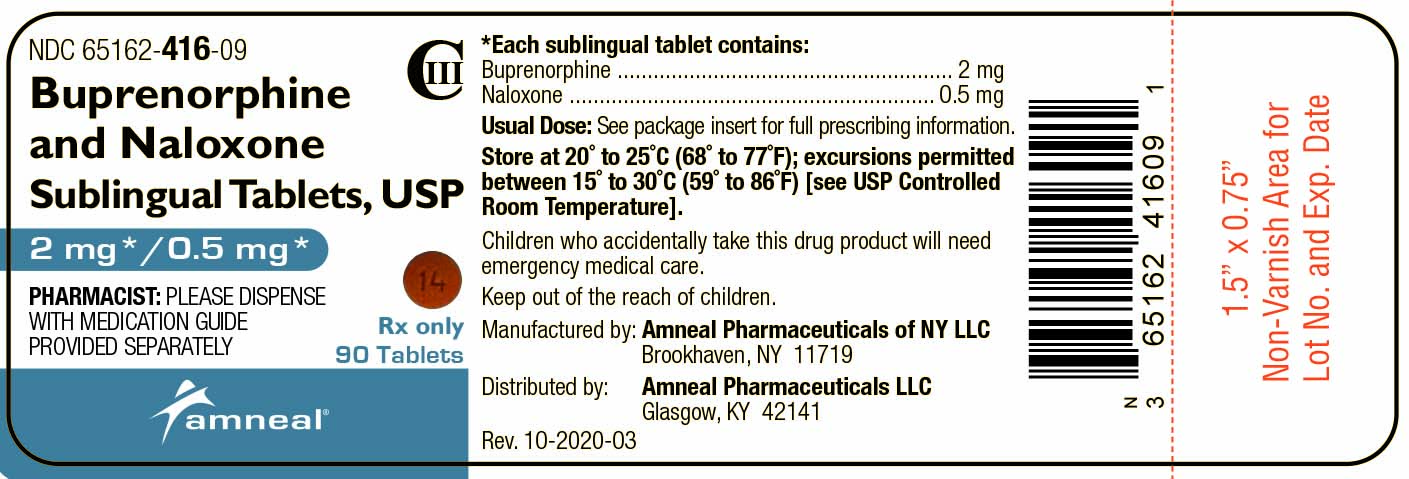
Buprenorphine HCl and Naloxone 8 mg; 2 mg Tablet, 90-count — NDC 65162-415-09 (Billing 65162-0415-09)
This is a package of 90 tablets of Buprenorphine HCl and Naloxone 8 mg; 2 mg Tablet from Amneal Pharmaceuticals LLC, marketed since Feb 2013 and currently FDA-listed.
NDC database record
One package, one record: these facts belong to NDC 65162-415-09 alone.
- Record
- FDA NDC Directory package listing · Human prescription drug
- Code segments
- 65162 labeler · 415 product · 09 package
- Package marketed since
- Feb 22, 2013
- Sample package
- No — commercial package
- Listing certified through
- Dec 31, 2027
- Barcode (UPC-A, from the NDC)
- 3 6516241509 4
- FDA record last changed
- Sep 3, 2026
Identity & classification
Regulatory identifiers FDA, NLM and CMS codes for this package
Drug-database identifiers Medi-Span GPI and First Databank GCN / HICL / AHFS classification
- GSN (GCN sequence number): 051641
- GCN: 18974
- GPI-14 (Medi-Span): 65200010200740
- HICL (First Databank): 024846
- AHFS class code: 28:08.12.00
- RxCUI (RxNorm): 351266
Where does this data come from?
- FDA openFDA NDC Directory · synced Oct 1, 2026
- FDA label on DailyMed · label index refreshed Oct 5, 2026
- RxNorm (NLM RxNav) · catalog refreshed Oct 1, 2026
- Medi-Span GPI (licensed)
- First Databank (licensed) · refreshed Oct 1, 2026
RxNorm drug class
This medicine belongs to the Partial Opioid Agonist class.
Where does this data come from?
- RxClass (NLM) · catalog refreshed Oct 1, 2026
Clinical
- It treats opioid dependence. It works best as part of a full plan that includes counseling and support.
- You take it once a day, letting it dissolve under your tongue. The film may also be placed inside the cheek. Don't chew or swallow it unless your pharmacist or prescriber says othe...
- Please don't without talking to your prescriber. Alcohol, benzodiazepines and other sedating drugs can slow your breathing dangerously. Tell every provider you see that you take th...
- Can I drink alcohol or take my anxiety or sleep medicine with it?
Patient education
Supplement & herbal interactions
Where does this data come from?
- MedlinePlus (NLM) · refreshed Oct 1, 2026
- FDA label on DailyMed · label index refreshed Oct 5, 2026
Ask a licensed pharmacist directly — free, answered by our team.
Pricing
A drug doesn't have one price. Each row is a different public payment system, and none is what you'd pay at the counter — that depends on your insurance. The ⓘ on each row explains what it measures.
| Price system | Per each | Per package |
|---|---|---|
| Retail pharmacies payNADAC · weekly | Not in the retail survey — common for institutional, discontinued, or low-volume packs. | |
| Medicaid paysCMS SDUD · 12 mo | No recent Medicaid claims on file for this NDC — rare and low-volume NDCs are suppressed in the public data. | |
| Medicare drug plans payPart D · quarterly | No Part D plan price is available for this NDC in our data. | |
Where does this data come from?
- CMS NADAC weekly file
- CMS ASP pricing files · refreshed Sep 20, 2026
- CMS Medicaid State Drug Utilization Data · refreshed Oct 5, 2026
- CMS Part D plan pricing files · refreshed Sep 24, 2026
- VA National Acquisition Center price file
Packaging — all sizes for this product
| Package NDC | Description | Per unit | Per pack | Marketing start | Marketing end | Status |
|---|---|---|---|---|---|---|
| 65162-0415-03 65162-415-03 Main listing | 30 TABLET in 1 BOTTLE | $0.6628 / ea | $19.88 | 2013-02-22 | — | Active |
| 65162-0415-09 You're viewing this | 90 TABLET in 1 BOTTLE | — | — | 2013-02-22 | — | Active |
You're viewing the largest of 2 pack sizes for this product.
This pack shows little to no recent Medicaid volume — the 30 tablets pack carries most fills. See all packs ↓
Pack size FAQ
What quantity is in this package?
How does this package differ from NDC 65162-0415-03?
What NDC number is used to bill for this package of Buprenorphine HCl and Naloxone 8 mg; 2 mg Tablet?
Prices are the latest CMS NADAC pharmacy acquisition cost per NDC; per-pack figures are per-unit × pack quantity, shown only when the pack is denominated in the same measure NADAC prices.
Therapeutic equivalents
| Product | Labeler | Pack | NADAC/unit | TE | Status | Price vs. this |
|---|---|---|---|---|---|---|
| buprenorphine and naloxone 8 mg/1; 2 mg 00054-0189-13 | Hikma | 30 tablets | $0.663 | AB | Availability likely | — |
| Buprenorphine and Naloxone 8 mg/1; 2 mg 00121-2036-30 | PAI | 30 tablets | $0.663 | AB | Availability likely | — |
| Buprenorphine and Naloxone 8 mg/1; 2 mg 00228-3155-03 | Actavis | 30 tablets | $0.663 | AB | Availability likely | — |
| Buprenorphine Hydrochloride and Naloxone Hydrochloride Dihydrate 8 mg/1; 2 mg 00406-8020-03 | SpecGx | 30 tablets | $0.663 | AB | Availability likely | — |
| buprenorphine hydrochloride and naloxone hydrochloride dihydrate 8 mg/1; 2 mg 00904-7010-06 | Major | 50 tablets | $0.663 | AB | Availability likely | — |
| BUPRENORPHINE HYDROCHLORIDE and NALOXONE HYDROCHLORIDE DIHYDRATE 8 mg/1; 2 mg 16729-0550-10 | Accord | 30 tablets | $0.663 | AB | Availability likely | — |
| Buprenorphine and Naloxone 8 mg/1; 2 mg 42858-0602-03 | Rhodes | 30 tablets | $0.663 | AB | Availability likely | — |
| Buprenorphine HCl and Naloxone HCl 8 mg/1; 2 mg 50268-0145-15 | AvPAK | 50 tablets | $0.663 | AB | Availability likely | — |
| Buprenorphine and Naloxone 8 mg/1; 2 mg 60687-0637-65 | American | 50 tablets | $0.663 | AB | Availability likely | — |
| Buprenorphine and Naloxone 8 mg/1; 2 mg 62175-0458-32 | Lannett | 30 tablets | $0.663 | AB | Availability likely | — |
| Buprenorphine and Naloxone 8 mg/1; 2 mg 31722-0851-30 | Camber | 30 tablets | — | AB | FDA listed | — |
| buprenorphine hydrochloride and naloxone hydrochloride dihydrate 8 mg/1; 2 mg 51407-0949-30 | Golden | 30 tablets | — | AB | FDA listed | — |
| buprenorphine hydrochloride and naloxone hydrochloride dihydrate 8 mg/1; 2 mg 58118-1189-08 | Clinical | 30 tablets | — | AB | FDA listed | — |
| Buprenorphine Hydrochloride and Naloxone Hydrochloride Dihydrate 8 mg/1; 2 mg 58118-8020-08 | Clinical | 30 tablets | — | AB | FDA listed | — |
| Buprenorphine and Naloxone 8 mg/1; 2 mg 62756-0970-64 | Sun | 30 tablets | — | AB | FDA listed | — |
| Buprenorphine HCl and Naloxone HCl 8 mg/1; 2 mg 63629-5074-00 | Bryant | 42 tablets | — | AB | FDA listed | — |
| Buprenorphine and Naloxone 8 mg/1; 2 mg 63629-9483-01 | Bryant | 30 tablets | — | AB | FDA listed | — |
| Buprenorphine HCl and Naloxone HCl 8 mg/1; 2 mgthis 65162-0415-09 | Amneal | 90 tablets | — | AB | FDA listed | — |
| Buprenorphine and Naloxone 8 mg/1; 2 mg 67296-2164-01 | Redpharm | 12 tablets | — | AB | FDA listed | — |
| BUPRENORPHINE HYDROCHLORIDE and NALOXONE HYDROCHLORIDE DIHYDRATE 8 mg/1; 2 mg 67296-2191-01 | Redpharm | 12 tablets | — | AB | FDA listed | — |
| Buprenorphine And Naloxone 8 mg/1; 2 mg 67877-0606-30 | Ascend | 30 tablets | — | AB | FDA listed | — |
| Buprenorphine and Naloxone 8 mg/1; 2 mg 70518-3389-00 | REMEDYREPACK | 30 tablets | — | AB | FDA listed | — |
| buprenorphine hydrochloride and naloxone hydrochloride dihydrate 8 mg/1; 2 mg 70518-3844-00 | REMEDYREPACK | 30 tablets | — | AB | FDA listed | — |
| Buprenorphine and Naloxone 8 mg/1; 2 mg 71335-1378-00 | Bryant | 42 tablets | — | AB | FDA listed | — |
| Buprenorphine Hydrochloride and Naloxone Hydrochloride Dihydrate 8 mg/1; 2 mg 71335-1725-00 | Bryant | 42 tablets | — | AB | FDA listed | — |
| BUPRENORPHINE HYDROCHLORIDE and NALOXONE HYDROCHLORIDE DIHYDRATE 8 mg/1; 2 mg 71335-1858-00 | Bryant | 42 tablets | — | AB | FDA listed | — |
| Buprenorphine and Naloxone 8 mg/1; 2 mg 71335-2828-01 | Bryant | 30 tablets | — | AB | FDA listed | — |
| Buprenorphine and Naloxone 8 mg/1; 2 mg 71335-2981-00 | Bryant | 42 tablets | — | AB | FDA listed | — |
| Buprenorphine and Naloxone 8 mg/1; 2 mg 72162-1347-03 | Bryant | 30 tablets | — | AB | FDA listed | — |
| BUPRENORPHINE HYDROCHLORIDE and NALOXONE HYDROCHLORIDE DIHYDRATE 8 mg/1; 2 mg 76420-0534-30 | Asclemed | 30 tablets | — | AB | FDA listed | — |
| Buprenorphine and Naloxone 8 mg/1; 2 mg 87441-0001-01 | Unit | 30 tablets | — | AB | FDA listed | — |
| Buprenorphine Hydrochloride and Naloxone Hydrochloride Dihydrate 8 mg/1; 2 mg 87441-0002-01 | Unit | 30 tablets | — | AB | FDA listed | — |
Where does this data come from?
- FDA openFDA NDC Directory · synced Oct 1, 2026
- FDA Orange Book · refreshed Oct 3, 2026
- CMS NADAC weekly file
Availability & generic status
This product is an FDA-approved generic. Other versions of the same drug are listed under Therapeutic equivalents, least expensive first.
Where does this data come from?
- FDA Orange Book · refreshed Oct 3, 2026
What it looks like
Where does this data come from?
- FDA label on DailyMed · label index refreshed Oct 5, 2026
Inactive Ingredients / Excipients
Inactive ingredients, also called excipients, are components of the drug product other than the active ingredient. They may include fillers, dyes, coatings, preservatives, flavors, or other formulation ingredients.
Where does this data come from?
IACT rows and label-wide narrative are kept separate; availability and product-level specificity depend on the submitted label.- FDA label on DailyMed · label index refreshed Oct 5, 2026
- FDA openFDA NDC Directory · synced Oct 1, 2026
Inactive ingredient FAQ
Are inactive ingredients the same for every manufacturer?
Why might an inactive ingredient be missing?
Can inactive ingredients matter?
Manufacturer & labeler
More NDCs from Amneal Pharmaceuticals LLC labeler code 65162
- Fesoterodine Fumarate 4 mg Tablet, Extended Release NDC 65162-369-03
- Fesoterodine Fumarate 8 mg Tablet, Extended Release NDC 65162-370-03
- Oxybutynin Chloride 5 mg Tablet, Extended Release NDC 65162-371-03
- Oxybutynin Chloride 10 mg Tablet, Extended Release NDC 65162-372-03
- Oxybutynin Chloride 15 mg Tablet, Extended Release NDC 65162-373-03
- Clopidogrel 75 mg Tablet NDC 65162-414-03
- Buprenorphine HCl and Naloxone 2 mg; .5 mg Tablet NDC 65162-416-03
- Diclofenac Sodium and Misoprostol 50 mg; 200 ug Tablet, Delayed Release NDC 65162-436-03
- Diclofenac Sodium and Misoprostol 75 mg; 200 ug Tablet, Delayed Release NDC 65162-438-03
- Meclizine Hydrochloride 12.5 mg Tablet NDC 65162-441-03
- Meclizine Hydrochloride 25 mg Tablet NDC 65162-442-03
- Meclizine Hydrochloride 50 mg Tablet NDC 65162-444-03
Where does this data come from?
- FDA openFDA NDC Directory · synced Oct 1, 2026
- Drugs@FDA
Full prescribing information FDA SPL
🎯 Indications and Usage ▾
1 INDICATIONS AND USAGE Buprenorphine and Naloxone Sublingual Tablets are indicated for the maintenance treatment of opioid dependence. Buprenorphine and Naloxone Sublingual Tablets should be used as part of a complete treatment plan that includes counseling and psychosocial support. Buprenorphine and Naloxone Sublingual Tablets contain buprenorphine, a partial opioid agonist, and naloxone, an opioid antagonist, and is indicated for the maintenance treatment of opioid dependence.
( 1 ) Buprenorphine and Naloxone Sublingual Tablets should be used as part of a complete treatment plan that includes counseling and psychosocial support. ( 1 )
⏱️ Dosage and Administration ▾
2 DOSAGE AND ADMINISTRATION Administer Buprenorphine and Naloxone Sublingual Tablets sublingually as a single daily dose. ( 2.1 ) Strongly consider recommending or prescribing an opioid overdose reversal agent (e.g., naloxone, nalmefene) at the time Buprenorphine and Naloxone Sublingual Tablets are initiated or renewed because patients being treated for opioid use disorder have the potential for relapse, putting them at risk for opioid overdose. ( 2.2 ) To avoid precipitating withdrawal, induction with Buprenorphine Sublingual Tablets should be undertaken when objective and clear signs of withdrawal are evident.
After induction, doses of Buprenorphine and Naloxone Sublingual Tablets should be progressively adjusted to a level that holds the patient in treatment and suppresses opioid withdrawal signs and symptoms. ( 2.3 ) The maintenance dose of Buprenorphine and Naloxone Sublingual Tablets is generally in the range of 4 mg/1 mg to 24 mg/6 mg per day and should be based on clinical response. ( 2.3 ) Administer Buprenorphine and Naloxone Sublingual Tablets as directed in the Full Prescribing Information.
( 2.3 , 2.4 ) When discontinuing treatment, gradually taper to avoid signs and symptoms of withdrawal. ( 2.7 )
2.1Important Dosage and Administration Information Buprenorphine and Naloxone Sublingual Tablets are administered sublingually as a single daily dose. Buprenorphine and Naloxone Sublingual Tablets should be used in patients who have been initially inducted using Buprenorphine Sublingual Tablets. Medication should be prescribed in consideration of the frequency of visits.
Provision of multiple refills is not advised early in treatment or without appropriate patient follow-up visits.
2.2Patient Access to an Opioid Overdose Reversal Agent for the Emergency Treatment of Opioid Overdose Inform patients and caregivers about opioid overdose reversal agents (e.g., naloxone, nalmefene) and discuss the importance of having access to an opioid overdose reversal agent. Because patients being treated for opioid use disorder have the potential for relapse, putting them at risk for opioid overdose, strongly consider recommending or prescribing an overdose reversal agent for the emergency treatment of opioid overdose, both when initiating and renewing treatment with Buprenorphine and Naloxone Sublingual Tablets.
Also consider recommending or prescribing such an agent if the patient has household members (including children) or other close contacts at risk for accidental ingestion or opioid overdose [see Warnings and Precautions (5.2) ]. Discuss the options for obtaining an opioid overdose reversal agent (e.g., prescription, over-the-counter, or as part of a community-based program) [see Warnings and Precautions (5.2) ] . There are important differences among the opioid overdose reversal agents, such as route of administration, product strength, approved patient age range, and pharmacokinetics.
Be familiar with these differences, as outlined in the approved labeling for those products, prior to recommending or prescribing such an agent. Advise patients and caregivers that opioid overdose reversal agents, such as naloxone or nalmefene, may also be administered for a known or suspected overdose with Buprenorphine and Naloxone Sublingual Tablets itself. Higher than normal doses and repeated administration of an opioid overdose reversal agent may be necessary due to the long duration of action of Buprenorphine and Naloxone Sublingual Tablets and its affinity for the mu opioid receptor [see Overdosage (10) ] .
2.3Maintenance The dosage of Buprenorphine and Naloxone Sublingual Tablets should be progressively adjusted in increments/decrements of 2 mg/0.5 mg or 4 mg/1 mg buprenorphine/naloxone to a level that holds the patient in treatment and suppresses opioid withdrawal signs and symptoms. After treatment induction to the recommended dose of 16 mg/4 mg buprenorphine/naloxone, dosing should be further adjusted based on the individual patien… [Excerpted — this section continues on DailyMed.]
💊 Dosage Forms and Strengths ▾
3 DOSAGE FORMS AND STRENGTHS Buprenorphine and Naloxone Sublingual Tablets, USP are available in the following strengths and colors: 2 mg/0.5 mg: orange, round, biconvex tablet debossed “A” on one side and “14” on the other side. 8 mg/2 mg: orange, round, biconvex tablet debossed “AN 415” on one side and plain on the other side. Sublingual tablet: 2 mg buprenorphine with 0.5 mg naloxone and 8 mg buprenorphine with 2 mg naloxone. ( 3 )
⛔ Contraindications ▾
4 CONTRAINDICATIONS Buprenorphine and Naloxone Sublingual Tablets are contraindicated in patients with a history of hypersensitivity to buprenorphine or naloxone as serious adverse reactions, including anaphylactic shock, have been reported [see Warnings and Precautions (5.9) ] . Hypersensitivity to buprenorphine or naloxone. ( 4 )
⚠️ Warnings and Cautions ▾
5 WARNINGS AND PRECAUTIONS Addiction, Abuse, and Misuse : Buprenorphine can be abused in a similar manner to other opioids. Clinical monitoring appropriate to the patient’s level of stability is essential. Monitor patients for conditions indicative of diversion or progression of opioid dependence and addictive behaviors.
Multiple refills should not be prescribed early in treatment or without appropriate patient follow-up visits. ( 5.1 ) Respiratory Depression : Life-threatening respiratory depression and death have occurred in association with buprenorphine use. Warn patients of the potential danger of self-administration of benzodiazepine or other CNS depressants while under treatment with Buprenorphine and Naloxone Sublingual Tablets.
( 5.2 , 5.3 ) Unintentional Pediatric Exposure : Store Buprenorphine and Naloxone Sublingual Tablets safely out of the sight and reach of children. Buprenorphine can cause severe, possibly fatal, respiratory depression in children. ( 5.4 ) Neonatal Opioid Withdrawal Syndrome : Neonatal opioid withdrawal syndrome (NOWS) is an expected and treatable outcome of prolonged use of opioids during pregnancy.
( 5.5 ) Adrenal Insufficiency : If diagnosed, treat with physiologic replacement of corticosteroids, and wean patient off of the opioid. ( 5.6 ) Risk of Opioid Withdrawal with Abrupt Discontinuation : If treatment is temporarily interrupted or discontinued, monitor patients for withdrawal and treat appropriately. ( 5.7 ) Risk of Hepatitis, Hepatic Events : Monitor liver function tests prior to initiation and during treatment and evaluate suspected hepatic events.
( 5.8 ) Precipitation of Opioid Withdrawal Signs and Symptoms : An opioid withdrawal syndrome is likely to occur with parenteral misuse of Buprenorphine and Naloxone Sublingual Tablets by individuals physically dependent on full opioid agonists, or by sublingual administration before the agonist effects of other opioids have subsided. ( 5.10 ) Risk of Overdose in Opioid-Naïve Patients : Buprenorphine and Naloxone Sublingual Tablets are not appropriate as an analgesic. There have been reported deaths of opioid naïve individuals who received a 2 mg sublingual dose.
( 5.11 )
5.1Addiction, Abuse, and Misuse Buprenorphine and Naloxone Sublingual Tablets contain buprenorphine, a schedule III controlled substance that can be abused in a manner similar to other opioids, legal or illicit. Prescribe and dispense buprenorphine with appropriate precautions to minimize risk of misuse, abuse, or diversion, and ensure appropriate protection from theft, including in the home. Clinical monitoring appropriate to the patient’s level of stability is essential.
Multiple refills should not be prescribed early in treatment or without appropriate patient follow-up visits [see Drug Abuse and Dependence (9.2) ] .
5.2Life-Threatening Respiratory Depression and Central Nervous System (CNS) Depression Buprenorphine has been associated with life-threatening respiratory depression and death. Many, but not all, post-marketing reports regarding coma and death involved misuse by self-injection or were associated with the concomitant use of buprenorphine and benzodiazepines or other CNS depressants, including alcohol. Warn patients of the potential danger of self-administration of benzodiazepines or other CNS depressants while under treatment with Buprenorphine and Naloxone Sublingual Tablets [see Warnings and Precautions (5.3) , Drug Interactions (7) ] .
Use Buprenorphine and Naloxone Sublingual Tablets with caution in patients with compromised respiratory function (e.g., chronic obstructive pulmonary disease, cor pulmonale, decreased respiratory reserve, hypoxia, hypercapnia, or pre-existing respiratory depression). Educate patients and caregivers on how to recognize respiratory depression and emphasize the importance of calling 911 or getting emergency medical help right away in the event of a known or suspected overdose [see Patient Counseling Information (17) ] .
Opi… [Excerpted — this section continues on DailyMed.]
🤒 Adverse Reactions ▾
6 ADVERSE REACTIONS The following serious adverse reactions are described elsewhere in the labeling: Addiction, Abuse, and Misuse [see Warnings and Precautions (5.1) ] Respiratory and CNS Depression [see Warnings and Precautions (5.2, 5.3) ] Neonatal Opioid Withdrawal Syndrome [see Warnings and Precautions (5.5) ] Adrenal Insufficiency [see Warnings and Precautions (5.6) ] Opioid Withdrawal [see Warnings and Precautions (5.7 , 5.10 )] Hepatitis, Hepatic Events [see Warnings and Precautions (5.8) ] Hypersensitivity Reactions [see Warnings and Precautions (5.9) ] Orthostatic Hypotension [see Warnings and Precautions (5.16) ] Elevation of Cerebrospinal Fluid Pressure [see Warnings and Precautions (5.17) ] Elevation of Intracholedochal Pressure [see Warnings and Precautions (5.18) ] Adverse events commonly observed with administration of Buprenorphine and Naloxone Sublingual Tablets are oral hypoesthesia, glossodynia, oral mucosal erythema, headache, nausea, vomiting, hyperhidrosis, constipation, signs and symptoms of withdrawal, insomnia, pain, and peripheral edema.
( 6 ) To report SUSPECTED ADVERSE REACTIONS, contact Amneal Pharmaceuticals at 1-877-835-5472, FDA at 1-800-FDA-1088, or www.fda.gov/medwatch.
6.1Clinical Trials Experience Because clinical trials are conducted under widely varying conditions, adverse reaction rates observed in the clinical trials of a drug cannot be directly compared to rates in the clinical trials of another drug and may not reflect the rates observed in practice. The safety of Buprenorphine and Naloxone Sublingual Tablets was evaluated in 497 opioid-dependent subjects. The prospective evaluation of Buprenorphine and Naloxone Sublingual Tablets was supported by clinical trials using Buprenorphine Sublingual Tablets (buprenorphine tablets without naloxone) and other trials using buprenorphine sublingual solutions.
In total, safety data were available from 3214 opioid-dependent subjects exposed to buprenorphine at doses in the range used in treatment of opioid addiction. Few differences in adverse event profile were noted between Buprenorphine and Naloxone Sublingual Tablets and Buprenorphine Sublingual Tablets or buprenorphine administered as a sublingual solution. The following adverse events were reported to occur by at least 5% of patients in a 4-week study (Table 1).
Table 1. Adverse Events ≥ 5% by Body System and Treatment Group in a 4-week Study N (%) N (%) Body System/Adverse Event (COSTART Terminology) Buprenorphine and Naloxone Sublingual Tablets 16 mg/day N=107 Placebo N=107 Body as a Whole Asthenia 7 (6.5%) 7 (6.5%) Chills 8 (7.5%) 8 (7.5%) Headache 39 (36.4%) 24 (22.4%) Infection 6 (5.6%) 7 (6.5%) Pain 24 (22.4%) 20 (18.7%) Pain Abdomen 12 (11.2%) 7 (6.5%) Pain Back 4 (3.7%) 12 (11.2%) Withdrawal Syndrome 27 (25.2%) 40 (37.4%) Cardiovascular System Vasodilation 10 (9.3%) 7 (6.5%) Digestive System Constipation 13 (12.1%) 3 (2.8%) Diarrhea 4 (3.7%) 16 (15%) Nausea 16 (15%) 12 (11.2%) Vomiting 8 (7.5%) 5 (4.7%) Nervous System Insomnia 15 (14%) 17 (15.9%) Respiratory System Rhinitis 5 (4.7%) 14 (13.1%) Skin and Appendages Sweating 15 (14%) 11 (10.3%) The adverse event profile of buprenorphine was also characterized in the dose-controlled study of buprenorphine solution, over a range of doses in four months of treatment.
Table 2 shows adverse events reported by at least 5% of subjects in any dose group in the dose-controlled study. Table 2. Adverse Events (≥ 5%) by Body System and Treatment Group in a 16-week Study Body System/Adverse Event (COSTART Terminology) Buprenorphine Dose* Very Low* (N=184) Low* (N=180) Moderate* (N=186) High* (N=181) Total* (N=731) N (%) N (%) N (%) N (%) N (%) Body as a Whole Abscess 9 (5%) 2 (1%) 3 (2%) 2 (1%) 16 (2%) Asthenia 26 (14%) 28 (16%) 26 (14%) 24 (13%) 104 (14%) Chills 11 (6%) 12 (7%) 9 (5%) 10 (6%) 42 (6%) Fever 7 (4%) 2 (1%) 2 (1%) 10 (6%) 21 (3%) Flu Syndrome 4 (2%) 13 (7%) 19 (10%) 8 (4%) 44 (6%) Headache 51 (28%) 62 (34%) 54 (29%) 53 (29%) 220 (30%)… [Excerpted — this section continues on DailyMed.]
🔄 Drug Interactions ▾
7 DRUG INTERACTIONS Table 3 includes clinically significant drug interactions with buprenorphine and naloxone sublingual tablets. Table 3. Clinically Significant Drug Interactions with Buprenorphine and Naloxone Sublingual Tablets Benzodiazepines or other Central Nervous System (CNS) Depressants Clinical Impact: Due to additive pharmacologic effects, the concomitant use of benzodiazepines or other CNS depressants, including alcohol, increases the risk of respiratory depression, profound sedation, coma, and death.
Intervention: Cessation of benzodiazepines or other CNS depressants is preferred in most cases of concomitant use. In some cases, monitoring in a higher level of care for taper may be appropriate. In others, gradually tapering a patient off of a prescribed benzodiazepine or other CNS depressant or decreasing to the lowest effective dose may be appropriate.
Before co-prescribing benzodiazepines for anxiety or insomnia, ensure that patients are appropriately diagnosed and consider alternative medications and non-pharmacologic treatments [see Warnings and Precautions (5.2 , 5.3 )]. If concomitant use is warranted, strongly consider recommending or prescribing an opioid overdose reversal agent, as is recommended for all patients on buprenorphine treatment for opioid use disorder [see Warnings and Precautions (5.2) ]. Examples: Benzodiazepines and other sedatives/hypnotics, anxiolytics, tranquilizers, muscle relaxants, general anesthetics, antipsychotics, gabepentinoids (gabapentin or pregabalin), and other opioids, alcohol.
Inhibitors of CYP3A4 Clinical Impact: The concomitant use of buprenorphine and CYP3A4 inhibitors can increase the plasma concentration of buprenorphine, resulting in increased or prolonged opioid effects, particularly when an inhibitor is added after a stable dose of Buprenorphine and Naloxone Sublingual Tablets is achieved. After stopping a CYP3A4 inhibitor, as the effects of the inhibitor decline, the buprenorphine plasma concentration will decrease [see Clinical Pharmacology (12.3) ] , potentially resulting in decreased opioid efficacy or a withdrawal syndrome in patients who had developed physical dependence to buprenorphine.
Intervention: If concomitant use is necessary, consider dosage reduction of Buprenorphine and Naloxone Sublingual Tablets until stable drug effects are achieved. Monitor patients for respiratory depression and sedation at frequent intervals. If a CYP3A4 inhibitor is discontinued, consider increasing the Buprenorphine and Naloxone Sublingual Tablets dosage until stable drug effects are achieved.
Monitor for signs of opioid withdrawal. Examples: Macrolide antibiotics (e.g., erythromycin), azole-antifungal agents (e.g., ketoconazole), protease inhibitors (e.g., ritonavir) CYP3A4 Inducers Clinical Impact: The concomitant use of buprenorphine and CYP3A4 inducers can decrease the plasma concentration of buprenorphine [see Clinical Pharmacology (12.3) ] , potentially resulting in decreased efficacy or onset of a withdrawal syndrome in patients who have developed physical dependence to buprenorphine. After stopping a CYP3A4 inducer, as the effects of the inducer decline, the buprenorphine plasma concentration will increase [see Clinical Pharmacology (12.3) ] , which could increase or prolong both therapeutic effects and adverse reactions and may cause serious respiratory depression.
Intervention: If concomitant use is necessary, consider increasing the Buprenorphine and Naloxone Sublingual Tablets dosage until stable drug effects are achieved. Monitor for signs of opioid withdrawal. If a CYP3A4 inducer is discontinued, consider Buprenorphine and Naloxone Sublingual Tablets dosage reduction and monitor for signs of respiratory depression.
Examples: Rifampin, carbamazepine, phenytoin Antiretrovirals: Non-nucleoside reverse transcriptase inhibitors (NNRTIs) Clinical Impact: Non-nucleoside reverse transcriptase inhibitors (NNRTIs) are metabolized principally by CYP3A4. Efavirenz, nevirapi… [Excerpted — this section continues on DailyMed.]
👥 Use in Specific Populations ▾
8 USE IN SPECIFIC POPULATIONS Lactation : Buprenorphine passes into mother’s milk. ( 8.2 ) Geriatric Patients : Monitor for sedation and respiratory depression. ( 8.5 ) Moderate and Severe Hepatic Impairment : Buprenorphine/naloxone products are not recommended in patients with severe hepatic impairment and may not be appropriate for patients with moderate hepatic impairment. ( 8.6 )
8.1Pregnancy Risk Summary The data on use of buprenorphine, one of the active ingredients in Buprenorphine and Naloxone Sublingual Tablets, in pregnancy, are limited; however, these data do not indicate an increased risk of major malformations specifically due to buprenorphine exposure. There are limited data from randomized clinical trials in women maintained on buprenorphine that were not designed appropriately to assess the risk of major malformations [see Data ] . Observational studies have reported on congenital malformations among buprenorphine-exposed pregnancies, but were also not designed appropriately to assess the risk of congenital malformations specifically due to buprenorphine exposure [see Data ] .
The extremely limited data on sublingual naloxone exposure in pregnancy are not sufficient to evaluate a drug-associated risk. Reproductive and developmental studies in rats and rabbits identified adverse events at clinically relevant and higher doses. Embryo-fetal death was observed in both rats and rabbits administered buprenorphine during the period of organogenesis at doses approximately 6 and 0.3 times, respectively, the human sublingual dose of 16 mg/day of buprenorphine.
Pre- and post-natal development studies in rats demonstrated increased neonatal deaths at 0.3 times and above and dystocia at approximately 3 times the human sublingual dose of 16 mg/day of buprenorphine. No clear teratogenic effects were seen when buprenorphine was administered during organogenesis with a range of doses equivalent to or greater than the human sublingual dose of 16 mg/day of buprenorphine. However, increases in skeletal abnormalities were noted in rats and rabbits administered buprenorphine daily during organogenesis at doses approximately 0.6 times and approximately equal to the human sublingual dose of 16 mg/day of buprenorphine, respectively.
In a few studies, some events such as acephalus and omphalocele were also observed but these findings were not clearly treatment-related [see Data ] . Based on animal data, advise pregnant women of the potential risk to a fetus. The estimated background risks of major birth defects and miscarriage for the indicated population are unknown.
All pregnancies have a background risk of birth defect, loss, or other adverse outcomes. In the U.S. general population, the estimated background risk of major birth defects and miscarriage in clinically recognized pregnancies is 2% to 4% and 15% to 20%, respectively. Clinical Considerations Disease-associated maternal and embryo-fetal risk Untreated opioid addiction in pregnancy is associated with adverse obstetrical outcomes such as low birth weight, preterm birth, and fetal death.
In addition, untreated opioid addiction often results in continued or relapsing illicit opioid use. Dose Adjustment during Pregnancy and the Postpartum Period Dosage adjustments of buprenorphine, such as using higher doses, may be required during pregnancy, even if the patient was maintained on a stable dose prior to pregnancy. Dosing should be based on individual response, and withdrawal signs and symptoms should be monitored closely and the dose adjusted as necessary.
Fetal/neonatal adverse reactions Neonatal opioid withdrawal syndrome may occur in newborn infants of mothers who are receiving treatment with Buprenorphine and Naloxone Sublingual Tablets. Neonatal opioid withdrawal syndrome presents as irritability, hyperactivity and abnormal sleep pattern, high pitched cry, tremor, vomiting, diarrhea, and/or failure to gain weight. Signs of neonatal withdrawal usually occur in the first days… [Excerpted — this section continues on DailyMed.]
🆘 Overdosage ▾
10 OVERDOSAGE Clinical Presentation The manifestations of acute overdose include pinpoint pupils, sedation, hypotension, hypoglycemia, respiratory depression, and death. Toxic leukoencephalopathy has been reported after opioid overdose and can present hours, days, or weeks after apparent recovery from the initial intoxication. Treatment of Overdose In the event of overdose, the respiratory and cardiac status of the patient should be monitored carefully.
When respiratory or cardiac functions are depressed, primary attention should be given to the re-establishment of adequate respiratory exchange through provision of a patent airway and institution of assisted or controlled ventilation. Oxygen, IV fluids, vasopressors, and other supportive measures should be employed as indicated. In the case of overdose, the primary management should be the re-establishment of adequate ventilation with mechanical assistance of respiration, if required.
An opioid overdose reversal agent may be of value for the management of buprenorphine overdose. Higher than normal doses and repeated administration may be necessary. The long duration of action of buprenorphine and naloxone sublingual tablets should be taken into consideration when determining the length of treatment and medical surveillance needed to reverse the effects of an overdose.
Insufficient duration of monitoring may put patients at risk.
🧬 Clinical Pharmacology ▾
12 CLINICAL PHARMACOLOGY
12.1Mechanism of Action Buprenorphine and Naloxone Sublingual Tablets contain buprenorphine and naloxone. Buprenorphine is a partial agonist at the mu-opioid receptor and an antagonist at the kappa-opioid receptor. Naloxone is an opioid antagonist and produces opioid withdrawal signs and symptoms in individuals physically dependent on full opioid agonists when administered parenterally.
12.2Pharmacodynamics Subjective Effects Comparisons of buprenorphine to full opioid agonists such as methadone and hydromorphone suggest that sublingual buprenorphine produces typical opioid agonist effects which are limited by a ceiling effect. In opioid-experienced subjects who were not physically dependent, acute sublingual doses of buprenorphine/naloxone tablets produced opioid agonist effects which reached a maximum between doses of 8 mg/2 mg and 16 mg/4 mg buprenorphine/naloxone. Opioid agonist ceiling-effects were also observed in a double-blind, parallel-group, dose-ranging comparison of single doses of buprenorphine sublingual solution (1, 2, 4, 8, 16, or 32 mg), placebo and a full agonist control at various doses.
The treatments were given in ascending dose order at intervals of at least one week to 16 opioid-experienced subjects who were not physically dependent. Both active drugs produced typical opioid agonist effects. For all measures for which the drugs produced an effect, buprenorphine produced a dose-related response.
However, in each case, there was a dose that produced no further effect. In contrast, the highest dose of the full agonist control always produced the greatest effects. Agonist objective rating scores remained elevated for the higher doses of buprenorphine (8 mg to 32 mg) longer than for the lower doses and did not return to baseline until 48 hours after drug administration.
The onset of effects appeared more rapidly with buprenorphine than with the full agonist control, with most doses nearing peak effect after 100 minutes for buprenorphine compared to 150 minutes for the full agonist control. Physiologic Effects Buprenorphine in IV (2, 4, 8, 12 and 16 mg) and sublingual (12 mg) doses has been administered to opioid-experienced subjects who were not physically dependent to examine cardiovascular, respiratory, and subjective effects at doses comparable to those used for treatment of opioid dependence.
Compared to placebo, there were no statistically significant differences among any of the treatment conditions for blood pressure, heart rate, respiratory rate, O 2 saturation, or skin temperature across time. Systolic BP was higher in the 8 mg group than placebo (3-hour AUC values). Minimum and maximum effects were similar across all treatments.
Subjects remained responsive to low voice and responded to computer prompts. Some subjects showed irritability, but no other changes were observed. The respiratory effects of sublingual buprenorphine were compared with the effects of methadone in a double-blind, parallel-group, dose-ranging comparison of single doses of buprenorphine sublingual solution (1, 2, 4, 8, 16, or 32 mg) and oral methadone (15, 30, 45, or 60 mg) in non-dependent, opioid-experienced volunteers.
In this study, hypoventilation not requiring medical intervention was reported more frequently after buprenorphine doses of 4 mg and higher than after methadone. Both drugs decreased O 2 saturation to the same degree. Effect of Naloxone Physiologic and subjective effects following acute sublingual administration of buprenorphine tablets and buprenorphine/naloxone tablets were similar at equivalent dose levels of buprenorphine.
Naloxone had no clinically significant effect when administered by the sublingual route, although blood levels of the drug were measurable. Buprenorphine/naloxone, when administered sublingually to an opioid-dependent cohort, was recognized as an opioid agonist, whereas when administered intramuscularly, combinations of buprenorphine with naloxone produced opio… [Excerpted — this section continues on DailyMed.]
📦 How Supplied / Storage and Handling ▾
16 HOW SUPPLIED/STORAGE AND HANDLING Buprenorphine and Naloxone Sublingual Tablets USP, 2 mg/0.5 mg are supplied as orange, round, biconvex tablet, debossed “A” on one side and “14” on the other side. They are available as follows: Bottles of 30 NDC 65162-416-03 Bottles of 90 NDC 65162-416-09 Buprenorphine and Naloxone Sublingual Tablets USP, 8 mg/2 mg are supplied as orange, round, biconvex tablet debossed “AN 415” on one side and plain on the other side. They are available as follows: Bottles of 30 NDC 65162-415-03 Bottles of 90 NDC 65162-415-09 Store at 20° to 25°C (68° to 77°F); excursions permitted between 15° to 30°C (59° to 86°F) [see USP Controlled Room Temperature].
Store Buprenorphine and Naloxone Sublingual Tablets, USP securely and dispose of properly [see Patient Counseling Information (17) ] .
📋 Description ▾
11 DESCRIPTION Buprenorphine and naloxone sublingual tablet USP, 2 mg/0.5 mg is an orange, round, biconvex tablet debossed “A” on one side and “14” on the other side. Buprenorphine and naloxone sublingual tablet USP, 8 mg/2 mg is an orange, round, biconvex tablet debossed “AN 415” on one side and plain on the other side. They contain buprenorphine HCl, USP, a partial agonist at the mu-opioid receptor, and naloxone HCl dihydrate, USP, an opioid receptor antagonist, at a ratio of 4:1 (ratio of free bases).
It is intended for sublingual administration and is available in two dosage strengths, 2 mg buprenorphine with 0.5 mg naloxone and 8 mg buprenorphine with 2 mg naloxone. Each sublingual tablet also contains the following inactive ingredients: acesulfame potassium, anhydrous citric acid, artificial lemon flavor, FD&C Yellow No. 6 Aluminum Lake, lactose monohydrate, magnesium stearate, mannitol, povidone, sodium citrate and starch (corn starch).
Chemically, buprenorphine HCl, USP is (2S)-2-[17-Cyclopropylmethyl-4,5α-epoxy-3-hydroxy-6-methoxy-6α,14-ethano-14α-morphinan-7α-yl]-3,3-dimethylbutan-2-ol hydrochloride. It has the following chemical structure: Buprenorphine HCl, USP has the molecular formula C 29 H 41 NO 4 • HCl and the molecular weight is 504.10. It is a white or off-white crystalline powder, sparingly soluble in water, freely soluble in methanol, soluble in alcohol, and practically insoluble in cyclohexane.
Chemically, naloxone HCl dihydrate, USP is 17-Allyl-4, 5 α -epoxy-3, 14-dihydroxymorphinan-6-one hydrochloride dihydrate. It has the following chemical structure: Naloxone hydrochloride dihydrate, USP has the molecular formula C 19 H 21 NO 4 • HCl • 2H 2 O and the molecular weight is 399.87. It is a white to slightly off-white powder and is freely soluble in water, soluble in alcohol, and practically insoluble in toluene and ether.
Meets USP Dissolution Test 1. 561287c0-figure-01 561287c0-figure-02
💬 Information for Patients ▾
17 PATIENT COUNSELING INFORMATION Advise patients to read the FDA-approved patient labeling ( Medication Guide ). Storage and Disposal Because of the risks associated with accidental ingestion, misuse, and abuse, advise patients to store Buprenorphine and Naloxone Sublingual Tablets securely, out of sight and reach of children, and in a location not accessible by others, including visitors to the home [see Warnings and Precautions (5.1 , 5.4) , Drug Abuse and Dependence (9.2 ) ] . Inform patients that leaving Buprenorphine and Naloxone Sublingual Tablets unsecured can pose a deadly risk to others in the home.
Advise patients and caregivers that when medicines are no longer needed, they should be disposed of promptly. Expired, unwanted, or unused Buprenorphine and Naloxone Sublingual Tablets should be disposed of by flushing the unused medication down the toilet, if a drug take-back option is not readily available. Inform patients that they can visit www.fda.gov/drugdisposal for a complete list of medicines recommended for disposal by flushing, as well as additional information on disposal of unused medicines.
Safe Use Before initiating treatment with Buprenorphine and Naloxone Sublingual Tablets, explain the points listed below to caregivers and patients. Instruct patients to read the Medication Guide each time buprenorphine and naloxone sublingual tablets are dispensed because new information may be available. Buprenorphine and Naloxone Sublingual Tablets must be administered whole.
Advise patients not to cut, chew, or swallow Buprenorphine and Naloxone Sublingual Tablets. Inform patients and caregivers that potentially fatal additive effects may occur if Buprenorphine and Naloxone Sublingual Tablets are used with benzodiazepines or other CNS depressants (e.g., alcohol, non-benzodiazepine sedative/hypnotics, anxiolytics, tranquilizers, muscle relaxants, general anesthetics, antipsychotics, gabapentinoids [gabapentin or pregabalin], and other opioids). Counsel patients that such medications should not be used concomitantly unless supervised by a health care provider [see Warnings and Precautions (5.2 , 5.3) , Drug Interactions (7) ] .
Educate patients and caregivers on how to recognize respiratory depression and emphasize the importance of calling 911 or getting emergency medical help right away in the event of a known or suspected overdose [see Warnings and Precautions (5.2) ] . Patient Access to an Opioid Overdose Reversal Agent for the Emergency Treatment of Opioid Overdose Inform patients and caregivers about opioid overdose reversal agents (e.g., naloxone, nalmefene) and discuss the importance of having access to an opioid overdose reversal agent.
Because patients being treated for opioid use disorder are at risk for relapse, discuss the importance of having access to an opioid overdose reversal agent. Also discuss the importance of having access to an opioid overdose reversal agent if there are household members (including children) or other close contacts at risk for accidental ingestion or opioid overdose. Discuss with the patient the options for obtaining an opioid overdose reversal agent (e.g., prescription, over-the-counter (some products), or as part of a community-based program) [see Dosage and Administration (2.2) , Warnings and Precautions (5.2) ] .
There are important differences among the opioid overdose reversal agents. Be familiar with these differences, as outlined in the approved labeling for those products, prior to recommending or prescribing such an agent. Educate patients and caregivers on how to recognize the signs and symptoms of an opioid overdose.
Explain to patients and caregivers that effects of opioid overdose reversal agents like naloxone and nalmefene are temporary, and that they must call 911 or get emergency medical help right away in all cases of known or suspected opioid overdose, even if an opioid overdose reversal agent is administered. Repeat administration may be necessary, particularl… [Excerpted — this section continues on DailyMed.]
💬 Medication Guide ▾
MEDICATION GUIDE BUPRENORPHINE (bue” pre nor’ feen) AND NALOXONE (nal ox’ one) SUBLINGUAL TABLETS, USP (CIII) IMPORTANT: Keep buprenorphine and naloxone sublingual tablets in a secure place away from children. Accidental use by a child is a medical emergency and can result in death. If a child accidentally takes buprenorphine and naloxone sublingual tablets, get emergency help or call 911 right away.
Tell your healthcare provider if you are living in a household where there are small children. What is the most important information I should know about buprenorphine and naloxone sublingual tablets? Buprenorphine and naloxone sublingual tablets contain a medicine called buprenorphine.
Buprenorphine is an opioid that can cause serious and life-threatening breathing problems, especially if you take or use certain other medicines or drugs. Ask your healthcare provider about medicines like naloxone or nalmefene that can be used in an emergency to reverse opioid overdose including accidental use of buprenorphine and naloxone sublingual tablet by a child. If naloxone or nalmefene is given, you must call 911 or get emergency medical help right away to treat an overdose or accidental use of an opioid.
Buprenorphine and naloxone sublingual tablets may cause serious and life‐threatening breathing problems. Get emergency help right away if you: feel faint have blurred vision feel dizzy have slurred speech are confused are breathing slower than normal feel sleepy or uncoordinated cannot think well or clearly Do not take buprenorphine and naloxone sublingual tablets with certain medicines. Taking buprenorphine and naloxone sublingual tablets with other opioid medicines, benzodiazepines, gabepentinoids (gabapentin or pregabalin), alcohol, or other central nervous system depressants (including street drugs) can cause severe drowsiness, decreased awareness, breathing problems, coma, and death.
Do not inject (“shoot‐up”) buprenorphine and naloxone . Injecting buprenorphine and naloxone may cause life‐threatening infections and other serious health problems. Injecting buprenorphine and naloxone may cause sudden serious withdrawal symptoms such as pain, cramps, vomiting, diarrhea, anxiety, sleep problems, and cravings.
Do not switch from b uprenorphine and naloxone sublingual tablets to other medicines that contain buprenorphine without talking with your healthcare provider. The amount of buprenorphine in a dose of buprenorphine and naloxone sublingual tablets are not the same as in other medicines that contain buprenorphine. Your healthcare provider will prescribe a starting dose of buprenorphine and naloxone sublingual tablets that may be different than other buprenorphine containing medicines you may have been taking.
Do not stop taking buprenorphine and naloxone sublingual tablets suddenly. You could become sick and have withdrawal symptoms because your body has become used to the medicine (physical dependence). Physical dependence is not the same as drug addiction.
In an emergency, have family members tell emergency department staff that you are physically dependent on an opioid and are being treated with buprenorphine and naloxone sublingual tablet. Never give anyone else your buprenorphine and naloxone sublingual tablet. They could die from taking it.
Selling or giving away buprenorphine and naloxone sublingual tablet is against the law. Store buprenorphine and naloxone sublingual tablet securely, out of sight and reach of children, and in a location not accessible by others, including visitors to the home. What are buprenorphine and naloxone sublingual tablets?
Buprenorphine and naloxone sublingual tablets are a prescription medicine used to treat opioid addiction in adults and is part of a complete treatment program that also includes counseling and behavioral therapy. Who should not take buprenorphine and naloxone sublingual tablets? Do not take b uprenorphine and naloxone sublingual tablets if you are allergic to buprenorphine or naloxo… [Excerpted — this section continues on DailyMed.]
🔬 Clinical Studies ▾
14 CLINICAL STUDIES Clinical data on the safety and efficacy of buprenorphine and naloxone were derived from studies of buprenorphine sublingual tablet formulations, with and without naloxone, and from studies of sublingual administration of a more bioavailable ethanolic solution of buprenorphine. Buprenorphine and Naloxone Sublingual Tablets were studied in 575 patients, buprenorphine sublingual tablets (without naloxone) in 1,834 patients and buprenorphine sublingual solutions in 2,470 patients. A total of 1,270 women received buprenorphine in those clinical trials.
Dosing recommendations are based on data from one trial of both tablet formulations and two trials of the ethanolic solution. All trials used buprenorphine in conjunction with psychosocial counseling as part of a comprehensive addiction treatment program. There were no clinical studies conducted to assess the efficacy of buprenorphine as the only component of treatment.
In a double-blind placebo- and active-controlled study, 326 heroin-addicted subjects were randomly assigned to either Buprenorphine and Naloxone Sublingual Tablets, 16 mg/4 mg per day; Buprenorphine Sublingual Tablets, 16 mg per day; or placebo sublingual tablets. For subjects randomized to either active treatment, dosing began with one 8 mg buprenorphine on Day 1, followed by 16 mg (two 8 mg tablets) of buprenorphine on Day 2. On Day 3, those randomized to receive Buprenorphine and Naloxone Sublingual Tablets were switched to the combination tablet.
Subjects randomized to placebo received one placebo tablet on Day 1 and two placebo tablets per day thereafter for four weeks. Subjects were seen daily in the clinic (Monday through Friday) for dosing and efficacy assessments. Take-home doses were provided for weekends.
Subjects were instructed to hold the medication under the tongue for approximately 5 to 10 minutes until completely dissolved. Subjects received counseling regarding HIV infection and up to one hour of individualized counseling per week. The primary study comparison was to assess the efficacy of Buprenorphine and Naloxone Sublingual Tablets and Buprenorphine Sublingual Tablets individually against placebo sublingual tablet.
The percentage of thrice-weekly urine samples that were negative for non-study opioids was statistically higher for both Buprenorphine and Naloxone Sublingual Tablets and Buprenorphine Sublingual Tablets than for placebo sublingual tablets. In a double-blind, double-dummy, parallel-group study comparing buprenorphine ethanolic solution to a full agonist active control, 162 subjects were randomized to receive the ethanolic sublingual solution of buprenorphine at 8 mg/day (a dose which is roughly comparable to a dose of 12 mg/3 mg per day of Buprenorphine and Naloxone Sublingual Tablets or 12 mg per day of Buprenorphine Sublingual Tablets), or two relatively low doses of active control, one of which was low enough to serve as an alternative to placebo, during a 3 to 10 day induction phase, a 16-week maintenance phase and a 7-week detoxification phase.
Buprenorphine was titrated to maintenance dose by Day 3; active control doses were titrated more gradually. Maintenance dosing continued through Week 17, and then medications were tapered by approximately 20% to 30% per week over Weeks 18 to 24, with placebo dosing for the last two weeks. Subjects received individual and/or group counseling weekly.
Based on retention in treatment and the percentage of thrice-weekly urine samples negative for non-study opioids, buprenorphine was more effective than the low-dose of the control, in keeping heroin addicts in treatment and in reducing their use of opioids while in treatment. The effectiveness of buprenorphine, 8 mg per day was similar to that of the moderate active control dose, but equivalence was not demonstrated. In a dose-controlled, double-blind, parallel-group, 16-week study, 731 subjects were randomized to receive one of four doses of buprenorphine ethanolic solution:… [Excerpted — this section continues on DailyMed.]
🔒 Drug Abuse and Dependence ▾
9 DRUG ABUSE AND DEPENDENCE
9.1Controlled Substance Buprenorphine and naloxone sublingual tablets contain buprenorphine, a Schedule III controlled substance under the Controlled Substances Act.
9.2Abuse Buprenorphine, like morphine and other opioids, has the potential for being abused and is subject to criminal diversion. This should be considered when prescribing or dispensing buprenorphine in situations when the clinician is concerned about an increased risk of misuse, abuse, or diversion. Healthcare professionals should contact their state professional licensing board or state controlled substances authority for information on how to prevent and detect abuse or diversion of this product.
Patients who continue to misuse, abuse, or divert buprenorphine products or other opioids should be provided with, or referred to, more intensive and structured treatment. Abuse of buprenorphine poses a risk of overdose and death. This risk is increased with the abuse of buprenorphine and alcohol and other substances, especially benzodiazepines.
The healthcare provider may be able to more easily detect misuse or diversion by maintaining records of medication prescribed including date, dose, quantity, frequency of refills, and renewal requests of medication prescribed. Proper assessment of the patient, proper prescribing practices, periodic re-evaluation of therapy, and proper handling and storage of the medication are appropriate measures that help to limit abuse of opioid drugs.
9.3Dependence Buprenorphine is a partial agonist at the mu-opioid receptor and chronic administration produces physical dependence of the opioid-type, characterized by moderate withdrawal signs and symptoms upon abrupt discontinuation or rapid taper. The withdrawal syndrome is typically milder than seen with full agonists and may be delayed in onset [see Warnings and Precautions (5.7) ] . Neonatal opioid withdrawal syndrome (NOWS) is an expected and treatable outcome of prolonged use of opioids during pregnancy [see Warnings and Precautions (5.5) ] .
🧪 Nonclinical Toxicology ▾
13 NONCLINICAL TOXICOLOGY
13.1Carcinogenesis, Mutagenesis, Impairment of Fertility Carcinogenicity A carcinogenicity study of buprenorphine/naloxone (4:1 ratio of the free bases) was performed in Alderley Park rats. Buprenorphine/naloxone was administered in the diet at doses of approximately 7, 31, and 123 mg/kg/day for 104 weeks (estimated exposure was approximately 4, 18, and 44 times the recommended human sublingual dose of 16 mg/4 mg buprenorphine/naloxone based on buprenorphine AUC comparisons). A statistically significant increase in Leydig cell adenomas was observed in all dose groups.
No other drug-related tumors were noted. Carcinogenicity studies of buprenorphine were conducted in Sprague-Dawley rats and CD-1 mice. Buprenorphine was administered in the diet to rats at doses of 0.6, 5.5, and 56 mg/kg/day (estimated exposure was approximately 0.4, 3, and 35 times the recommended human daily sublingual dose of 16 mg on a mg/m 2 basis) for 27 months.
As in the buprenorphine/naloxone carcinogenicity study in rat, statistically significant dose-related increases in Leydig cell tumors occurred. In an 86-week study in CD-1 mice, buprenorphine was not carcinogenic at dietary doses up to 100 mg/kg/day (estimated exposure was approximately 30 times the recommended human daily sublingual dose of 16 mg on a mg/m 2 basis). Mutagenicity The 4:1 combination of buprenorphine and naloxone was not mutagenic in a bacterial mutation assay (Ames test) using four strains of S. typhimurium and two strains of E. coli .
The combination was not clastogenic in an in vitro cytogenetic assay in human lymphocytes or in an IV micronucleus test in the rat. Buprenorphine was studied in a series of tests utilizing gene, chromosome, and DNA interactions in both prokaryotic and eukaryotic systems. Results were negative in yeast ( S. cerevisiae ) for recombinant, gene convertant, or forward mutations; negative in Bacillus subtilis “rec” assay, negative for clastogenicity in CHO cells, Chinese hamster bone marrow and spermatogonia cells, and negative in the mouse lymphoma L5178Y assay.
Results were equivocal in the Ames test: negative in studies in two laboratories, but positive for frame shift mutation at a high dose (5 mg/plate) in a third study. Results were positive in the Green-Tweets ( E. coli ) survival test, positive in a DNA synthesis inhibition test with testicular tissue from mice, for both in vivo and in vitro incorporation of [ 3 H] thymidine, and positive in unscheduled DNA synthesis test using testicular cells from mice. Impairment of Fertility Dietary administration of buprenorphine in the rat at dose levels of 500 ppm or greater (equivalent to approximately 47 mg/kg/day or greater; estimated exposure approximately 28 times the recommended human daily sublingual dose of 16 mg on a mg/m 2 basis) produced a reduction in fertility demonstrated by reduced female conception rates.
A dietary dose of 100 ppm (equivalent to approximately 10 mg/kg/day; estimated exposure approximately 6 times the recommended human daily sublingual dose of 16 mg on a mg/m 2 basis) had no adverse effect on fertility.
📖 Instructions for Use ▾
INSTRUCTIONS FOR USE BUPRENORPHINE (bue” pre nor’ feen) AND NALOXONE (nal ox’ one) Sublingual Tablets, USP (CIII) This “Instructions for Use” contains information on how to correctly take buprenorphine and naloxone sublingual tablets. Important Information You Need to Know Before Taking buprenorphine and naloxone sublingual tablets: Your healthcare provider should show you how to take buprenorphine and naloxone sublingual tablets the right way. Preparing to take buprenorphine and naloxone sublingual tablets : Put the tablets under your tongue.
Let them dissolve completely. While buprenorphine and naloxone sublingual tablet is dissolving, do not chew or swallow the tablet because the medicine will not work as well. Talking while the tablet is dissolving can affect how well the medicine in buprenorphine and naloxone sublingual tablet is absorbed.
After buprenorphine and naloxone sublingual tablet is completely dissolved, rinse your mouth with water and swallow. Wait for at least one hour before brushing teeth. If you miss a dose of buprenorphine and naloxone sublingual tablet, take your medicine when you remember.
If it is almost time for your next dose, skip the missed dose and take the next dose at your regular time. Do not take 2 doses at the same time unless your healthcare provider tells you to. If you are not sure about your dosing, call your healthcare provider.
Do not stop taking buprenorphine and naloxone sublingual tablet suddenly. You could become sick and have withdrawal symptoms because your body has become used to the medicine. Physical dependence is not the same as drug addiction.
Your healthcare provider can tell you more about the differences between physical dependence and drug addiction. To have fewer withdrawal symptoms, ask your healthcare provider how to stop using buprenorphine and naloxone sublingual tablet the right way. If you take too much buprenorphine and naloxone sublingual tablet or overdose, call Poison Control or get emergency medical help right away.
Storing buprenorphine and naloxone sublingual tablets: Store buprenorphine and naloxone sublingual tablets at room temperature between 68° to 77°F (20° to 25°C). Keep buprenorphine and naloxone sublingual tablets in a safe place, out of the sight and reach of children . Disposing of buprenorphine and naloxone sublingual tablets: Dispose of unused buprenorphine and naloxone sublingual tablets as soon as you no longer need them.
Dispose of expired, unwanted or unused buprenorphine and naloxone sublingual tablets by promptly flushing down the toilet (if a drug take‐back option is not readily available). Visit www.fda.gov/drugdisposal for additional information on disposal of unused medicines. If you need help with disposal of buprenorphine and naloxone sublingual tablet, call 1‐877‐835‐5472.
Manufactured by: Amneal Pharmaceuticals of New York, LLC Brookhaven, NY 11719 Distributed by: Amneal Pharmaceuticals LLC Glasgow, KY 42141 Rev. 03-2022-01 This “Instructions for Use” has been approved by the U.S. Food and Drug Administration.
1
📄 Recent Major Changes ▾
RECENT MAJOR CHANGES Dosage and Administration (2.2) 10/2025 Warnings and Precautions (5.2 , 5.3) 10/2025
📄 Package Label / Principal Display Panel ▾
PACKAGE LABEL.PRINCIPAL DISPLAY PANEL 2mg label
PACKAGE LABEL.PRINCIPAL DISPLAY PANEL 1
Medicaid utilization by pack size
Reported adverse events (FAERS)
Top reported reactions
Age at onset
Reporter sex
Serious outcomes
Where does this data come from?
About this NDC listing & data coverage
What data is (and isn’t) available for this NDC — tap to expand
| NDC identity (package / product / labeler codes) | ✓ Available |
| Labeler | ✓ Available |
| Product & package description | ✓ Available |
| Marketing category & status | ✓ Available |
| Active ingredient / dosage form / route | ✓ Available |
| FDA label (SPL via DailyMed) | ✓ Available |
| Package photos | ✓ Available |
| Inactive ingredients (structured) | — Not published for this NDC The labeler did not submit a structured excipient list, or no SPL is available. |
| NADAC pharmacy acquisition price (CMS) | — Not published for this NDC CMS publishes NADAC only for NDCs reported in its retail-pharmacy survey. |
| Orange Book / therapeutic-equivalence data | ✓ Available |
| HCPCS J-code billing crosswalk | — Not published for this NDC Most self-administered / retail products have no J-code — that is normal. |
| Medicaid utilization (CMS SDUD) | — Not published for this NDC CMS reports utilization only for NDCs with Medicaid claims above its privacy threshold. |