
Relistor Methylnaltrexone bromide 12 mg/.6mL Injection, Solution, 1 vial — NDC 65649-551-02 (Billing 65649-0551-02)
This is a package of 1 vial of Relistor Methylnaltrexone bromide 12 mg/.6mL Injection, Solution from Salix Pharmaceuticals, Inc., marketed since Apr 2008 and currently FDA-listed; retail pharmacies pay about $254.66 per mL (NADAC). It is the main listing for this product, which comes in 3 package sizes.
NDC database record
One package, one record: these facts belong to NDC 65649-551-02 alone.
- Record
- FDA NDC Directory package listing · Human prescription drug
- Code segments
- 65649 labeler · 551 product · 02 package
- Package marketed since
- Apr 24, 2008
- Sample package
- No — commercial package
- Listing certified through
- Dec 31, 2027
- Barcode (UPC-A, from the NDC)
- 3 6564955102 4
- Medicaid fills, this package
- 476 prescriptions in the last four reported quarters
- FDA record last changed
- Jul 24, 2026
Identity & classification
Regulatory identifiers FDA, NLM and CMS codes for this package
Drug-database identifiers Medi-Span GPI and First Databank GCN / HICL / AHFS classification
- GSN (GCN sequence number): 064011
- GCN: 99722
- GPI-14 (Medi-Span): 52580050102020
- HICL (First Databank): 035611
- AHFS class code: 56:18.04.00
- RxCUI (RxNorm): 979113
Where does this data come from?
- FDA openFDA NDC Directory · synced Oct 1, 2026
- FDA label on DailyMed · label index refreshed Oct 5, 2026
- RxNorm (NLM RxNav) · catalog refreshed Oct 1, 2026
- Medi-Span GPI (licensed)
- First Databank (licensed) · refreshed Oct 1, 2026
RxNorm drug class
This medicine belongs to the Opioid Antagonist class.
Where does this data come from?
- RxClass (NLM) · catalog refreshed Oct 1, 2026
Clinical
- It treats constipation caused by opioid pain medicine in adults. That includes people with chronic non-cancer pain and people with advanced illness who need opioid dose increases f...
- You inject it under the skin of your upper arm, belly or thigh, and switch spots each time. Follow your prescribed schedule and the Instructions for Use. Stay near a toilet afterwa...
- It is designed not to. It works mainly in the gut and does not easily enter the brain. Tell your doctor if your pain control changes or you feel withdrawal symptoms.
- Belly pain, nausea, diarrhea, sweating, hot flushes and chills are common. Call your doctor for severe or worsening belly pain, or severe or lasting diarrhea.
Patient education
Supplement & herbal interactions
Where does this data come from?
- MedlinePlus (NLM) · refreshed Oct 1, 2026
- FDA label on DailyMed · label index refreshed Oct 5, 2026
Ask a licensed pharmacist directly — free, answered by our team.
Pricing
A drug doesn't have one price. Each row is a different public payment system, and none is what you'd pay at the counter — that depends on your insurance. The ⓘ on each row explains what it measures.
| Price system | Per mL | Per package |
|---|---|---|
| Retail pharmacies payNADAC · weekly | $254.658 | $152.79 / 0.6 ml |
| Medicaid paysCMS SDUD · 12 mo | $166.17 | $99.70 / 0.6 ml |
| Medicare drug plans payPart D · Q2 2026 | $326.40 | $195.84 / 0.6 ml |
Where does this data come from?
- CMS NADAC weekly file · file of Feb 21, 2024
- CMS ASP pricing files · refreshed Sep 20, 2026
- CMS Medicaid State Drug Utilization Data · through Q4 2025
- CMS Part D plan pricing files · refreshed Sep 24, 2026
- VA National Acquisition Center price file
Packaging — all sizes for this product
| Package NDC | Description | Per unit | Per pack | Marketing start | Marketing end | Status |
|---|---|---|---|---|---|---|
| 65649-0551-02 You're viewing this Main listing | 1 VIAL, SINGLE-DOSE in 1 CARTON / .6 mL in 1 VIAL, SINGLE-DOSE | $254.66 / mL | $152.79 | 2008-04-24 | — | Active |
| 65649-0551-03 65649-551-03 | 7 BLISTER PACK in 1 CARTON / 1 SYRINGE in 1 BLISTER PACK / .6 mL in 1 SYRINGE | $256.47 / mL | $1,077.17 | 2008-04-24 | — | Active |
| 65649-0551-07 65649-551-07 | 1 BLISTER PACK in 1 CARTON / 1 SYRINGE in 1 BLISTER PACK / .6 mL in 1 SYRINGE | — | — | 2008-04-24 | — | Active |
This pack has the lowest per-mL cost of the 2 priced pack sizes ($254.66 NADAC).
In Medicaid, this is the most-dispensed pack of this product — about 49% of fills over the last four reported quarters. See all packs ↓
Pack size FAQ
What quantity is in this package?
How does this package differ from NDC 65649-0551-07?
What NDC number is used to bill for this package of Relistor Methylnaltrexone bromide 12 mg/.6mL Injection, Solution?
Prices are the latest CMS NADAC pharmacy acquisition cost per NDC; per-pack figures are per-unit × pack quantity, shown only when the pack is denominated in the same measure NADAC prices.
Therapeutic equivalents
| Product | Labeler | Pack | NADAC/unit | TE | Status | Price vs. this |
|---|---|---|---|---|---|---|
| Relistor 12 mg/.6mLthis 65649-0551-02 | Salix | 1 vial | $254.658 | — | FDA listed | — |
Where does this data come from?
- FDA openFDA NDC Directory · synced Oct 1, 2026
- FDA Orange Book · refreshed Oct 3, 2026
- CMS NADAC weekly file · file of Feb 21, 2024
Availability & generic status
The FDA lists approved generic versions of this medicine, but that does not always mean a pharmacy can get one today. Patent rules, launch agreements, supply and pricing can affect when generics actually arrive.
Why the date isn’t exact: Generic timing can change because patents may be challenged, settled, licensed, added, removed, or worked around with a narrower label — and FDA approval does not always mean a pharmacy can get the generic today.
🛈 What do these terms mean?
- Patent
- Legal protection listed in the Orange Book that may delay generic approval or launch. Issued by the U.S. Patent & Trademark Office.
- Substance patent
- Covers the active drug molecule itself — the hardest to design around. A generic generally can’t launch until it expires.
- Formulation (product) patent
- Covers a specific formulation or dosage form. A generic can sometimes work around it with a different formulation.
- Method-of-use patent
- A patent covering one specific approved use of the drug — not necessarily the whole molecule. A generic can sometimes launch with a “skinny label” that carves out the protected use and keeps the others.
- Skinny label
- A generic label that omits a still-patented use when the FDA allows it — letting a generic reach the market for the unprotected uses.
- Exclusivity
- FDA-granted marketing protection, separate from patents — e.g. 5-yr new chemical entity, 7-yr orphan drug, or a +6-month pediatric extension.
- Paragraph IV
- A generic applicant’s formal challenge to a listed patent. It can potentially lead to earlier generic entry, but often involves litigation or a settlement.
- RLD / RS
- Reference Listed Drug — the brand product the FDA uses as the reference for generic applications. Reference Standard — the product the FDA expects generics to compare against in bioequivalence testing.
- TE / AB rating
- FDA therapeutic-equivalence rating. An AB rating generally means the FDA considers a generic therapeutically equivalent to — and substitutable for — the brand.
- LOE (loss of exclusivity)
- The latest patent or exclusivity currently listed — the loss-of-exclusivity / latest-listed-protection date shown on this page. Paragraph-IV challenges and settlements can move the real date earlier; FDA approval and a manufacturer’s decision to market can move it later.
Built from the FDA Orange Book. The bars above are scaled to each protection’s expiry; the red LOE marker is the last one to lapse.
| Patent | Type | Use code | Expires |
|---|---|---|---|
| US 8420663 ↗ | Method of use | U-1185 | Sep 30, 2029 |
| US 8420663 ↗ | Method of use | U-1185 | Sep 30, 2029 |
| US 8420663 ↗ | Method of use | U-1185 | Sep 30, 2029 |
| US 8822490 ↗ | Method of use | U-1185 | Sep 30, 2029 |
| US 8822490 ↗ | Method of use | U-1185 | Sep 30, 2029 |
| US 9180125 ↗ | Method of use | U-1185 | Sep 30, 2029 |
| US 9180125 ↗ | Method of use | U-1185 | Sep 30, 2029 |
| US 9180125 ↗ | Method of use | U-1185 | Sep 30, 2029 |
| US 9492445 ↗ | Method of use | U-1185 | Sep 30, 2029 |
| US 8822490 ↗ | Method of use | U-1185 | Sep 30, 2029 |
| US 8247425 ↗ | Method of use | U-1185 | Dec 31, 2030 |
| US 8247425 ↗ | Method of use | U-1185 | Dec 31, 2030 |
| US 8247425 ↗ | Method of use | U-1185 | Dec 31, 2030 |
| US 9492445 ↗ | Method of use | U-1185 | Sep 30, 2029 |
| US 12303592 ↗ | Method of use | U-4197 | Aug 3, 2027 |
| US 12303592 ↗ | Method of use | U-4197 | Aug 3, 2027 |
| US 12303592 ↗ | Method of use | U-4197 | Aug 3, 2027 |
| US 12303592 ↗ | Method of use | U-4198 | Aug 3, 2027 |
| US 12303592 ↗ | Method of use | U-4198 | Aug 3, 2027 |
| US 12303592 ↗ | Method of use | U-4198 | Aug 3, 2027 |
| US 9492445 ↗ | Method of use | U-1185 | Sep 30, 2029 |
Is there a generic version of RELISTOR 12 MG/0.6 ML VIAL?
The FDA approved a generic — why can’t I get it at my pharmacy yet?
Why do different websites show different generic release dates?
What does “FDA listed” mean?
What does a patent or protection date mean here?
What does “current Orange Book estimate” mean?
Can a generic come out before the last patent expires?
Can a generic come out after the listed dates?
What is the difference between patents and exclusivity?
Why are there multiple patent dates?
Where does this data come from?
- FDA Orange Book · refreshed Oct 3, 2026
What it looks like
Where does this data come from?
- FDA label on DailyMed · label index refreshed Oct 5, 2026
Inactive Ingredients / Excipients
Inactive ingredients, also called excipients, are components of the drug product other than the active ingredient. They may include fillers, dyes, coatings, preservatives, flavors, or other formulation ingredients.
Where does this data come from?
IACT rows and label-wide narrative are kept separate; availability and product-level specificity depend on the submitted label.- FDA label on DailyMed · label index refreshed Oct 5, 2026
- FDA openFDA NDC Directory · synced Oct 1, 2026
Inactive ingredient FAQ
Are inactive ingredients the same for every manufacturer?
Why might an inactive ingredient be missing?
Can inactive ingredients matter?
Manufacturer & labeler
More NDCs from Salix Pharmaceuticals, Inc. labeler code 65649
- DIURIL CHLOROTHIAZIDE 250 mg/5mL Suspension NDC 65649-311-12
- Plenvu POLYETHYLENE GLYCOL 3350, SODIUM SULFATE, SODIUM CHLORIDE, POTASSIUM CHLORIDE, ASCORBIC ACID, SODIUM ASCORBATE Kit NDC 65649-400-01
- Anusol HC hydrocortisone 25 mg/g Cream NDC 65649-401-30
- Anusol HC HYDROCORTISONE ACETATE 25 mg Suppository NDC 65649-411-12
- Proctocort HYDROCORTISONE 10 mg/g Cream NDC 65649-501-30
- Proctocort HYDROCORTISONE ACETATE 30 mg Suppository NDC 65649-511-12
- Relistor Methylnaltrexone bromide 8 mg/.4mL Injection, Solution NDC 65649-552-04
- Uceris budesonide 2 mg Aerosol, Foam NDC 65649-651-03
Where does this data come from?
- FDA openFDA NDC Directory · synced Oct 1, 2026
- Drugs@FDA
Full prescribing information FDA SPL
🎯 Indications and Usage ▾
1 INDICATIONS AND USAGE • RELISTOR is an opioid antagonist. RELISTOR tablets and RELISTOR injection are indicated for the treatment of opioid-induced constipation (OIC) in adults with chronic non-cancer pain, including patients with chronic pain related to prior cancer or its treatment who do not require frequent (e.g., weekly) opioid dosage escalation. ( 1.1 ) • RELISTOR injection is indicated for the treatment of OIC in adults with advanced illness or pain caused by active cancer who require opioid dosage escalation for palliative care.
( 1.2 )
1.1Opioid-Induced Constipation in Adult Patients with Chronic Non-Cancer Pain RELISTOR tablets and RELISTOR injection are indicated for the treatment of opioid-induced constipation (OIC) in adult patients with chronic non-cancer pain, including patients with chronic pain related to prior cancer or its treatment who do not require frequent (e.g., weekly) opioid dosage escalation.
1.2Opioid-Induced Constipation in Adult Patients with Advanced Illness RELISTOR injection is indicated for the treatment of OIC in adult patients with advanced illness or pain caused by active cancer who require opioid dosage escalation for palliative care.
⏱️ Dosage and Administration ▾
2 DOSAGE AND ADMINISTRATION Administration Instructions ( 2.1 ) • Be within close proximity to toilet facilities once administered. • Discontinue if treatment with opioid pain medication is also discontinued. • In adult patients with chronic non-cancer pain and OIC: o Patients receiving opioids for less than 4 weeks may be less responsive to RELISTOR. o Discontinue all maintenance laxative therapy before starting RELISTOR; may resume laxatives if there is a suboptimal response to RELISTOR after 3 days. o Re-evaluate the continued need for RELISTOR when opioid regimen is changed to avoid adverse reactions. • In patients with chronic non-cancer pain and OIC, take RELISTOR tablets with water on an empty stomach at least 30 minutes before the first meal of the day.
Dosing • For OIC in adult patients with chronic non-cancer pain ( 2.2 ): o RELISTOR tablets: The recommended dosage is 450 mg once daily in the morning. o RELISTOR injection: The recommended dosage is 12 mg subcutaneously once daily. • For OIC in adult patients with advanced illness ( 2.3 ): o The pre-filled syringe is only for patients who require a RELISTOR injection dose of 8 mg or 12 mg. Use the vial for patients who require other doses of RELISTOR injection. o RELISTOR injection: See Table 1 in the full prescribing information for the recommended dosage; administer one dose every other day, as needed, but no more frequently than one dose in a 24-hour period.
Dosage Adjustment • See full prescribing information dosage adjustment in renal or hepatic impairment by indication. ( 2.4 , 2.5 ) Preparation and Administration of RELISTOR Injection ( 2.6 ) • For subcutaneous use only. • Inject in upper arm, abdomen or thigh. Rotate injection sites.
2.1Important Administration Information • Be within close proximity to toilet facilities once RELISTOR is administered. • Discontinue RELISTOR if treatment with the opioid pain medication is also discontinued. • In adult patients with chronic non-cancer pain and OIC: o Patients receiving opioids for less than 4 weeks may be less responsive to RELISTOR [see Clinical Studies ( 14.1 )]. o Discontinue all maintenance laxative therapy prior to initiation of RELISTOR. Laxative(s) can be used as needed if there is a suboptimal response to RELISTOR after three days. o Re-evaluate the continued need for RELISTOR when the opioid regimen is changed to avoid adverse reactions. o In patients with chronic non-cancer pain and OIC, take RELISTOR tablets with water on an empty stomach at least 30 minutes before the first meal of the day.
2.2Opioid-Induced Constipation in Adult Patients with Chronic Non-Cancer Pain • The recommended dosage of RELISTOR tablets is 450 mg taken orally once daily in the morning. • The recommended dosage of RELISTOR injection is 12 mg administered subcutaneously once daily.
2.3Opioid-Induced Constipation in Adult Patients with Advanced Illness The pre-filled syringe is only for patients who require a RELISTOR injection dose of 8 mg or 12 mg. Use the vial for patients who require other doses of RELISTOR injection. Table 1 below shows the recommended weight-based dose of RELISTOR injection and the corresponding injection volume.
The recommended dosage regimen is one dose administered subcutaneously every other day, as needed. Do not administer more frequently than one dose per 24-hour period. Table 1: Weight-Based Dosing of RELISTOR Injection and Corresponding Injection Volume for Adult Patients with OIC and Advanced Illness Weight of Adult Patient Subcutaneous Dose Injection Volume Less than 38 kg 0.15 mg/kg See below* 38 kg to less than 62 kg 8 mg 0.4 mL 62 kg to 114 kg 12 mg 0.6 mL More than 114 kg 0.15 mg/kg See below* *Calculate the injection volume for these patients by multiplying the patient weight in kilograms by 0.0075 and then rounding up the volume to the nearest 0.1 mL.
2.4Dosage in Patients with Renal Impairment The recommended dosage of RELISTOR in patients with moderate and severe renal impairment (i.e… [Excerpted — this section continues on DailyMed.]
💊 Dosage Forms and Strengths ▾
3 DOSAGE FORMS AND STRENGTHS • Tablets : • 150 mg methylnaltrexone bromide supplied as film-coated, white, round, biconvex, debossed with “REL” on one side and plain on the other side. Injection : Single-dose Vial: • 12 mg/0.6 mL methylnaltrexone bromide supplied as colorless to pale yellow solution. Single-dose Pre-filled Syringe: • 8 mg/0.4 mL methylnaltrexone bromide supplied as colorless to pale yellow solution. • 12 mg/0.6 mL methylnaltrexone bromide supplied as colorless to pale yellow solution. • Tablets: 150 mg methylnaltrexone bromide.
( 3 ) • Injection: o 8 mg/0.4 mL methylnaltrexone bromide in single-dose pre-filled syringe. ( 3 ) o 12 mg/0.6 mL methylnaltrexone bromide in a single-dose pre-filled syringe, or single-dose vial. ( 3 )
⛔ Contraindications ▾
4 CONTRAINDICATIONS RELISTOR is contraindicated in patients with known or suspected gastrointestinal obstruction and patients at increased risk of recurrent obstruction, due to the potential for gastrointestinal perforation [see Warnings and Precautions ( 5.1 )] . Patients with known or suspected mechanical gastrointestinal obstruction and at increased risk of recurrent obstruction. ( 4 , 5.1 )
⚠️ Warnings and Cautions ▾
5 WARNINGS AND PRECAUTIONS • Gastrointestinal Perforation : Consider the overall risk benefit in patients with known or suspected lesions of the GI tract. Monitor for severe, persistent or worsening abdominal pain; discontinue if development of symptoms. ( 5.1 ) • Severe or Persistent Diarrhea : Discontinue if severe or persistent diarrhea occurs during treatment.
( 5.2 ) • Opioid Withdrawal : Consider the overall risk benefit in patients with disruptions to the blood-brain barrier. Monitor closely for symptoms of opioid withdrawal. ( 5.3 )
5.1Gastrointestinal Perforation Cases of gastrointestinal perforation have been reported in adult patients with OIC and advanced illness with conditions that may be associated with localized or diffuse reduction of structural integrity in the wall of the gastrointestinal tract (e.g., peptic ulcer disease, Ogilvie’s syndrome, diverticular disease, infiltrative gastrointestinal tract malignancies or peritoneal metastases). Take into account the overall risk-benefit profile when using RELISTOR in patients with these conditions or other conditions which might result in impaired integrity of the gastrointestinal tract wall (e.g., Crohn’s disease).
Monitor for the development of severe, persistent, or worsening abdominal pain; discontinue RELISTOR in patients who develop this symptom [see Contraindications ( 4 )].
5.2Severe or Persistent Diarrhea If severe or persistent diarrhea occurs during treatment, advise patients to discontinue therapy with RELISTOR and consult their healthcare provider.
5.3Opioid Withdrawal Symptoms consistent with opioid withdrawal, including hyperhidrosis, chills, diarrhea, abdominal pain, anxiety, and yawning have occurred in patients treated with RELISTOR [see Adverse Reactions ( 6.1 )] . Patients having disruptions to the blood-brain barrier may be at increased risk for opioid withdrawal and/or reduced analgesia. Take into account the overall risk-benefit profile when using RELISTOR in such patients.
Monitor for adequacy of analgesia and symptoms of opioid withdrawal in such patients.
5.1Gastrointestinal Perforation Cases of gastrointestinal perforation have been reported in adult patients with OIC and advanced illness with conditions that may be associated with localized or diffuse reduction of structural integrity in the wall of the gastrointestinal tract (e.g., peptic ulcer disease, Ogilvie’s syndrome, diverticular disease, infiltrative gastrointestinal tract malignancies or peritoneal metastases). Take into account the overall risk-benefit profile when using RELISTOR in patients with these conditions or other conditions which might result in impaired integrity of the gastrointestinal tract wall (e.g., Crohn’s disease).
Monitor for the development of severe, persistent, or worsening abdominal pain; discontinue RELISTOR in patients who develop this symptom [see Contraindications ( 4 )].
5.2Severe or Persistent Diarrhea If severe or persistent diarrhea occurs during treatment, advise patients to discontinue therapy with RELISTOR and consult their healthcare provider.
🤒 Adverse Reactions ▾
6 ADVERSE REACTIONS Serious and important adverse reactions described elsewhere in the labeling include: • Gastrointestinal perforation [see Warnings and Precautions ( 5.1 )] • Severe or persistent diarrhea [see Warnings and Precautions ( 5.2 )] • Opioid withdrawal [see Warnings and Precautions ( 5.3 )] The most common adverse reactions are: OIC in adult patients with chronic non-cancer pain ( 6.1 ) • RELISTOR tablets (≥ 2%): abdominal pain, diarrhea, headache, abdominal distention, vomiting, hyperhidrosis, anxiety, muscle spasms, rhinorrhea, and chills. • RELISTOR injection (≥ 1%): abdominal pain, nausea, diarrhea, hyperhidrosis, hot flush, tremor, and chills.
OIC in adult patients with advanced illness ( 6.1 ) • RELISTOR injection (≥ 5%): abdominal pain, flatulence, nausea, dizziness, and diarrhea. To report SUSPECTED ADVERSE REACTIONS, contact Salix Pharmaceuticals at 1-800-321-4576 or FDA at 1-800-FDA-1088 or www.fda.gov/medwatch.
6.1Clinical Trials Experience Because clinical trials are conducted under widely varying conditions, adverse reaction rates observed in the clinical trials of a drug cannot be directly compared to rates in the clinical trials of another drug and may not reflect the rates observed in clinical practice. Opioid-Induced Constipation in Adult Patients with Chronic Non-Cancer Pain The safety of RELISTOR tablets was evaluated in a double-blind, placebo-controlled trial in adult patients with OIC and chronic non-cancer pain receiving opioid analgesia.
This study (Study 1) included a 12-week, double-blind, placebo-controlled period in which adult patients were randomized to receive RELISTOR tablets 450 mg orally (200 patients) or placebo (201 patients) [see Clinical Studies ( 14.1 ) ] . After 4 weeks of double-blind treatment administered once daily, patients continued 8 weeks of double-blind treatment on an as needed basis (but not more than once daily). The most common adverse reactions in adult patients with OIC and chronic non-cancer pain receiving RELISTOR tablets are shown in Table 4 .
Adverse reactions of abdominal pain, diarrhea, hyperhidrosis, anxiety, rhinorrhea, and chills may reflect symptoms of opioid withdrawal. Table 4: Adverse Reactions* in 4-Week Double-Blind, Placebo-Controlled Period of Clinical Study of RELISTOR Tablets in Adult Patients with OIC and Chronic Non-Cancer Pain (Study 1) Adverse Reaction RELISTOR Tablets n = 200 Placebo n = 201 Abdominal Pain ** 14% 10% Diarrhea 5% 2% Headache 4% 3% Abdominal Distention 4% 2% Vomiting 3% 2% Hyperhidrosis 3% 1% Anxiety 2% 1% Muscle Spasms 2% 1% Rhinorrhea 2% 1% Chills 2% 0% * Adverse reactions occurring in at least 2% of patients receiving RELISTOR tablets 450 mg once daily and at an incidence greater than placebo. ** Includes: abdominal pain, upper abdominal pain, lower abdominal pain, abdominal discomfort and abdominal tenderness The safety of RELISTOR injection was evaluated in a double-blind, placebo-controlled trial in adult patients with OIC and chronic non-cancer pain receiving opioid analgesia.
This study (Study 2) included a 4-week, double-blind, placebo-controlled period in which adult patients were randomized to receive RELISTOR injection 12 mg subcutaneously once daily (150 patients) or placebo (162 patients) [see Clinical Studies ( 14.1 )] . After 4 weeks of double-blind treatment, patients began an 8‑week open-label treatment period during which RELISTOR injection 12 mg subcutaneously was administered less frequently than the recommended dosage regimen of 12 mg once daily. The most common adverse reactions in adult patients with OIC and chronic non-cancer pain receiving RELISTOR injection are shown in Table 5 .
The adverse reactions in the table below may reflect symptoms of opioid withdrawal. Table 5: Adverse Reactions* in 4-Week Double-Blind, Placebo-Controlled Period of Clinical Study of RELISTOR Injection in Adult Patients with OIC and Chronic Non-Cancer Pain (Study 2) Adverse Reaction RELISTOR Injection n = 150 Placebo n… [Excerpted — this section continues on DailyMed.]
🔄 Drug Interactions ▾
7 DRUG INTERACTIONS • Other Opioid Antagonists : Potential for additive effect and increased risk of opioid withdrawal; avoid concomitant use. ( 7.1 )
7.1Other Opioid Antagonists Avoid concomitant use of RELISTOR with other opioid antagonists because of the potential for additive effects of opioid receptor antagonism and increased risk of opioid withdrawal.
7.2Drugs Metabolized by Cytochrome P450 Isozymes In healthy subjects, a subcutaneous dose of 0.3 mg/kg of RELISTOR did not significantly affect the metabolism of dextromethorphan, a CYP2D6 substrate.
7.1Other Opioid Antagonists Avoid concomitant use of RELISTOR with other opioid antagonists because of the potential for additive effects of opioid receptor antagonism and increased risk of opioid withdrawal.
7.2Drugs Metabolized by Cytochrome P450 Isozymes In healthy subjects, a subcutaneous dose of 0.3 mg/kg of RELISTOR did not significantly affect the metabolism of dextromethorphan, a CYP2D6 substrate.
👥 Use in Specific Populations ▾
8 USE IN SPECIFIC POPULATIONS • Pregnancy : May precipitate opioid withdrawal in a fetus ( 8.1 ) • Lactation : Breastfeeding not recommended. ( 8.2 )
8.1Pregnancy Risk Summary The limited available data with RELISTOR in pregnant women are not sufficient to inform a drug-associated risk for major birth defects and miscarriages. There are clinical considerations when RELISTOR is used by pregnant women [see Clinical Considerations]. In animal reproduction studies, no effects on embryofetal development were observed with the administration of intravenous methylnaltrexone bromide during organogenesis in rats and rabbits at doses up to 20 times and 26 times, respectively, the subcutaneous maximum recommended human dose (MRHD) of 12 mg RELISTOR injection per day.
The intravenous doses in rats and rabbits are about 0.5 times and 0.7 times, respectively, the oral MRHD of 450 mg/day [see Data]. Advise pregnant women of the potential risk to a fetus. The estimated background risk of major birth defects and miscarriage for the indicated population is unknown.
In the U.S. general population, the estimated background risk of major birth defects and miscarriage in clinically recognized pregnancies is 2 to 4% and 15 to 20%, respectively. Clinical Considerations Fetal/Neonatal Adverse Reactions The use of RELISTOR during pregnancy may precipitate opioid withdrawal in a fetus due to the immature fetal blood-brain barrier. Data Animal Data Reproduction studies have been performed with methylnaltrexone bromide administered during the period of organogenesis to rats at intravenous doses up to 25 mg/kg/day (about 20 times the subcutaneous MRHD of 12 mg/day based on body surface area), and did not cause any adverse effects on embryofetal development.
In rabbits, intravenous doses of methylnaltrexone bromide up to 16 mg/kg/day (about 26 times the subcutaneous MRHD of 12 mg/day) did not show any embryofetal toxicity. The intravenous doses in rats (25 mg/kg/day) and rabbits (16 mg/kg/day) are about 0.5 and 0.7 times, respectively, the oral MRHD of 450 mg/day based on body surface area. A pre- and postnatal development study in rats showed no evidence of any adverse effect on pre- and postnatal development at subcutaneous doses of methylnaltrexone bromide up to 100 mg/kg/day (about 81 times the subcutaneous MRHD of 12 mg/day; about 2.2 times the oral MRHD of 450 mg/day).
8.2Lactation Risk Summary There is no information regarding the presence of methylnaltrexone in human milk, the effects on the breastfed infant, or the effects on milk production. Methylnaltrexone is present in rat milk [see Data]. Because of the potential for serious adverse reactions, including opioid withdrawal, in breastfed infants, advise women that breastfeeding is not recommended during treatment with RELISTOR.
Data Radioactivity appeared in rat milk within 30 minutes of a single subcutaneous administration of radiolabeled methylnaltrexone bromide and was concentrated up to 24-fold at 8 hours after administration relative to plasma concentrations.
8.4Pediatric Use Safety and effectiveness of RELISTOR tablets and injection have not been established in pediatric patients. Juvenile Animal Studies In juvenile rats administered intravenous methylnaltrexone bromide for 13 weeks, adverse clinical signs such as convulsions, tremors and labored breathing were observed, and the juvenile rats were found to be more sensitive to the adverse effects of methylnaltrexone when compared to adult animals. Juvenile dogs administered intravenous methylnaltrexone bromide for 13 weeks had a toxicity profile similar to adult dogs [see Nonclinical Toxicology ( 13.2 )].
8.5Geriatric Use Of the total number of patients in clinical studies of RELISTOR tablets, a total of 136 patients (10%) were aged 65 years and older, while 23 (2%) were aged 75 and older. In clinical studies of RELISTOR tablets, no overall differences in effectiveness were observed. Adverse reactions were similar; however, there was a… [Excerpted — this section continues on DailyMed.]
🤰 Pregnancy ▾
8.1Pregnancy Risk Summary The limited available data with RELISTOR in pregnant women are not sufficient to inform a drug-associated risk for major birth defects and miscarriages. There are clinical considerations when RELISTOR is used by pregnant women [see Clinical Considerations]. In animal reproduction studies, no effects on embryofetal development were observed with the administration of intravenous methylnaltrexone bromide during organogenesis in rats and rabbits at doses up to 20 times and 26 times, respectively, the subcutaneous maximum recommended human dose (MRHD) of 12 mg RELISTOR injection per day.
The intravenous doses in rats and rabbits are about 0.5 times and 0.7 times, respectively, the oral MRHD of 450 mg/day [see Data]. Advise pregnant women of the potential risk to a fetus. The estimated background risk of major birth defects and miscarriage for the indicated population is unknown.
In the U.S. general population, the estimated background risk of major birth defects and miscarriage in clinically recognized pregnancies is 2 to 4% and 15 to 20%, respectively. Clinical Considerations Fetal/Neonatal Adverse Reactions The use of RELISTOR during pregnancy may precipitate opioid withdrawal in a fetus due to the immature fetal blood-brain barrier. Data Animal Data Reproduction studies have been performed with methylnaltrexone bromide administered during the period of organogenesis to rats at intravenous doses up to 25 mg/kg/day (about 20 times the subcutaneous MRHD of 12 mg/day based on body surface area), and did not cause any adverse effects on embryofetal development.
In rabbits, intravenous doses of methylnaltrexone bromide up to 16 mg/kg/day (about 26 times the subcutaneous MRHD of 12 mg/day) did not show any embryofetal toxicity. The intravenous doses in rats (25 mg/kg/day) and rabbits (16 mg/kg/day) are about 0.5 and 0.7 times, respectively, the oral MRHD of 450 mg/day based on body surface area. A pre- and postnatal development study in rats showed no evidence of any adverse effect on pre- and postnatal development at subcutaneous doses of methylnaltrexone bromide up to 100 mg/kg/day (about 81 times the subcutaneous MRHD of 12 mg/day; about 2.2 times the oral MRHD of 450 mg/day).
🧒 Pediatric Use ▾
8.4Pediatric Use Safety and effectiveness of RELISTOR tablets and injection have not been established in pediatric patients. Juvenile Animal Studies In juvenile rats administered intravenous methylnaltrexone bromide for 13 weeks, adverse clinical signs such as convulsions, tremors and labored breathing were observed, and the juvenile rats were found to be more sensitive to the adverse effects of methylnaltrexone when compared to adult animals. Juvenile dogs administered intravenous methylnaltrexone bromide for 13 weeks had a toxicity profile similar to adult dogs [see Nonclinical Toxicology ( 13.2 )].
🧓 Geriatric Use ▾
8.5Geriatric Use Of the total number of patients in clinical studies of RELISTOR tablets, a total of 136 patients (10%) were aged 65 years and older, while 23 (2%) were aged 75 and older. In clinical studies of RELISTOR tablets, no overall differences in effectiveness were observed. Adverse reactions were similar; however, there was a higher incidence of diarrhea in elderly patients.
Of the total number of patients in clinical studies of RELISTOR injection, a total of 226 (28%) were aged 65 years and older, while 108 (13%) were aged 75 years and older. In clinical studies of RELISTOR injection, no overall differences in safety or effectiveness were observed between elderly patients and younger patients. Based on pharmacokinetic data, and safety and efficacy data from controlled clinical trials, no dosage adjustment based on age is recommended.
Monitor elderly patients for adverse reactions.
🆘 Overdosage ▾
10 OVERDOSAGE During clinical trials of RELISTOR administered orally and subcutaneously, one accidental case of methylnaltrexone bromide overdose was reported and no adverse events were reported as a result of the overdosage. A study of healthy subjects noted orthostatic hypotension associated with a dose of 0.64 mg/kg administered as an intravenous bolus. Monitor for signs or symptoms of orthostatic hypotension and initiate treatment as appropriate.
If a patient on opioid therapy receives an overdose of RELISTOR, the patient should be monitored closely for potential evidence of opioid withdrawal symptoms such as chills, rhinorrhea, diaphoresis or reversal of central analgesic effect. Base treatment on the degree of opioid withdrawal symptoms, including changes in blood pressure and heart rate, and on the need for analgesia.
🧬 Clinical Pharmacology ▾
12 CLINICAL PHARMACOLOGY
12.1Mechanism of Action Methylnaltrexone is a selective antagonist of opioid binding at the mu-opioid receptor. As a quaternary amine, the ability of methylnaltrexone to cross the blood-brain barrier is restricted. This allows methylnaltrexone to function as a peripherally-acting mu-opioid receptor antagonist in tissues such as the gastrointestinal tract, thereby decreasing the constipating effects of opioids without impacting opioid-mediated analgesic effects on the central nervous system (CNS).
12.2Pharmacodynamics Cardiac Electrophysiology In a randomized, double-blind placebo- and (open-label) moxifloxacin-controlled 4-period crossover study, 56 healthy subjects were administered methylnaltrexone bromide 0.3 mg/kg and methylnaltrexone bromide 0.64 mg/kg by intravenous infusion over 20 minutes (RELISTOR is not approved for intravenous use), placebo, and a single oral dose of moxifloxacin. At a dose approximately 4.3 times the maximum recommended dose (7.5 times the mean peak plasma concentration for RELISTOR injection and 22 times the peak plasma concentration for RELISTOR tablets), methylnaltrexone does not prolong the QTc interval to any clinically relevant extent.
12.3Pharmacokinetics Between the oral dosage range of 150 mg to 450 mg for RELISTOR tablets and the subcutaneous dosage range of 0.15 mg/kg to 0.50 mg/kg for RELISTOR injection, the mean C max and area under the plasma concentration-time curve (AUC) of methylnaltrexone increased in a dose-proportional manner. There was no significant accumulation of methylnaltrexone following once-daily oral dosing of 450 mg RELISTOR tablets or subcutaneous dosing of 12 mg RELISTOR injection for seven consecutive days in healthy subjects.
Absorption Tablets Following administration of a single 450 mg dose of RELISTOR tablets in OIC patients or healthy subjects, peak concentrations (C max ) of methylnaltrexone were observed at approximately 1.5 hours. The absolute bioavailability of oral methylnaltrexone bromide has not been determined. The C max and AUC in healthy subjects were 48.1 ng/mL and 382 ng·hr/mL, respectively, following a single 450 mg dose of RELISTOR tablets.
Exposure in the OIC patient population was approximately 27% lower than in healthy subjects. Food Effect Administration of a single 450 mg dose of RELISTOR tablets to healthy subjects with a high-fat breakfast (containing approximately 800 to 1000 total calories, with 60%, 25% and 15% of calories derived from fat, carbohydrate and protein, respectively) resulted in a decrease in the C max of methylnaltrexone by 60%, the AUC by 43% and delayed the T max by 2 hours [see Dosage and Administration ( 2.1 )] . Injection Following administration of RELISTOR injection subcutaneously, methylnaltrexone achieved peak concentrations (C max ) at approximately 0.5 hours (see Table 7 ).
Table 7: Pharmacokinetic Parameters of Methylnaltrexone Following Subcutaneous Doses Parameter 0.15 mg/kg Single Dose 12 mg Single Dose 12 mg at Steady-State C max (ng/mL) i 117 (32.7) 140 (35.6) 119 (27.2) T max (hr) ii 0.5 (0.25 to 0.75) 0.25 (0.25 to 0.5) 0.25 (0.25 to 0.5) AUC 24 (ng·hr/mL) i 175 (36.6) 218 (28.3) 223 (28.2) ⁱ Expressed as mean (SD). ⁱⁱ Expressed as median (range). Distribution The steady-state volume of distribution (Vss) of methylnaltrexone is approximately
1.1L/kg. The fraction of methylnaltrexone bound to human plasma proteins is 11% to 15%, as determined by equilibrium dialysis. Elimination Following oral administration of a single 450 mg dose of RELISTOR tablets, concentrations of methylnaltrexone declined in multiphasic manner with a terminal half-life (t 1/2 ) of approximately 15 hours.
Metabolism In an intravenous mass balance study, approximately 44% of the administered radioactivity was recovered in the urine over 24 hours with 5 distinct metabolites. None of the detected metabolites was in amounts over 6% of administered radioactivity. Conversion to methyl-6-naltrexol isomers (5% of… [Excerpted — this section continues on DailyMed.]
🧬 Mechanism of Action ▾
12.1Mechanism of Action Methylnaltrexone is a selective antagonist of opioid binding at the mu-opioid receptor. As a quaternary amine, the ability of methylnaltrexone to cross the blood-brain barrier is restricted. This allows methylnaltrexone to function as a peripherally-acting mu-opioid receptor antagonist in tissues such as the gastrointestinal tract, thereby decreasing the constipating effects of opioids without impacting opioid-mediated analgesic effects on the central nervous system (CNS).
📦 How Supplied / Storage and Handling ▾
16 HOW SUPPLIED/STORAGE AND HANDLING How Supplied NDC Number Pack Size Contents 65649-150-90 90-count bottle 100-mL bottle containing 90 tablets and 2 silica gel desiccant canisters. Each 150 mg film-coated tablet is white, round, biconvex, and debossed with “REL” on one side and plain on the other side. 65649-551-02 1 vial per carton One 12 mg/0.6 mL single-dose vial containing a colorless to pale yellow solution.
65649-552-04 7 pre-filled syringes per carton Seven 8 mg/0.4 mL single-dose pre-filled syringes with needle guard system containing a colorless to pale yellow solution. 65649-551-03 7 pre-filled syringes per carton Seven 12 mg/0.6 mL single-dose pre-filled syringes with needle guard system containing a colorless to pale yellow solution. 65649-551-07 1 pre-filled syringe per carton One 12 mg/0.6 mL single-dose pre-filled syringe with needle guard system containing a colorless to pale yellow solution.
Storage Tablets Store at up to 25°C (77°F); excursions permitted to 15° to 30°C (59° to 86°F) [see USP Controlled Room Temperature]. Injection Store at 20° to 25°C (68° to 77°F); excursions permitted to 15° to 30°C (59° to 86°F) [see USP Controlled Room Temperature]. Do not freeze.
Protect from light.
📋 Description ▾
11 DESCRIPTION RELISTOR ® (methylnaltrexone bromide) is a mu-opioid receptor antagonist. The chemical name for methylnaltrexone bromide is ( R )- N -(cyclopropylmethyl) noroxymorphone methobromide. The molecular formula is C 21 H 26 NO 4 Br, and the molecular weight is 436.36.
The structural formula is: RELISTOR tablets for oral administration are film-coated and contain 150 mg of methylnaltrexone bromide (equivalent to 122.5 mg methylnaltrexone). Inactive ingredients are silicified microcrystalline cellulose, microcrystalline cellulose, sodium lauryl sulfate, croscarmellose sodium, crospovidone, poloxamer 407, stearic acid (vegetable source), colloidal silicon dioxide, edetate calcium disodium, polyvinyl alcohol, titanium dioxide, polyethylene glycol and talc. RELISTOR for subcutaneous administration is a sterile, clear and colorless to pale yellow aqueous solution.
Each 3 mL vial contains 12 mg of methylnaltrexone bromide (equivalent to 9.8 mg of methylnaltrexone) in 0.6 mL of water. The excipients are 3.9 mg sodium chloride USP, 0.24 mg edetate calcium disodium USP, and 0.18 mg glycine hydrochloride. During manufacture, the pH may have been adjusted with hydrochloric acid and/or sodium hydroxide.
Each 8 mg/0.4 mL pre-filled syringe (1 mL syringe) contains 8 mg of methylnaltrexone bromide (equivalent to 6.5 mg of methylnaltrexone) in 0.4 mL of water. The excipients are 2.6 mg sodium chloride USP, 0.16 mg edetate calcium disodium USP, and 0.12 mg glycine hydrochloride. Each 12 mg/0.6 mL pre-filled syringe (1 mL syringe) contains 12 mg of methylnaltrexone bromide (equivalent to 9.8 mg of methylnaltrexone) in 0.6 mL of water.
The excipients are 3.9 mg sodium chloride USP, 0.24 mg edetate calcium disodium USP, and 0.18 mg glycine hydrochloride. chemstructure
💬 Information for Patients ▾
17 PATIENT COUNSELING INFORMATION Advise the patient to read the FDA-approved patient labeling (Medication Guide and Instructions for Use). Administration • Be within close proximity to toilet facilities once RELISTOR is administered. • Discontinue RELISTOR if treatment with the opioid pain medication is also discontinued. • Advise chronic non-cancer pain patients receiving RELISTOR for OIC to: o Discontinue all maintenance laxative therapy prior to initiation of RELISTOR. Laxative(s) can be used as needed if there is a suboptimal response to RELISTOR after 3 days. o Inform their healthcare provider if their opioid regimen is changed, to avoid adverse reactions, such as diarrhea.
Tablets Advise patients with chronic non-cancer pain receiving RELISTOR tablets for OIC to take RELISTOR tablets once daily with water on an empty stomach at least 30 minutes before the first meal of the day. Injection • Advise all patients receiving RELISTOR injection to: o Inject RELISTOR subcutaneously in the upper arm, abdomen or thigh. Do not inject at the same spot each time (rotate injection sites). o Safely dispose of needles by following the sharps disposal recommendations described in the Instructions for Use . • Advise chronic non-cancer pain patients receiving RELISTOR injection for OIC to inject one dose every day. • Advise patients with advanced illness receiving RELISTOR injection for OIC to inject one dose every other day, as needed, but no more frequently than one dose in a 24-hour period.
Gastrointestinal Perforation Advise patients to discontinue RELISTOR and to promptly seek medical attention if they develop unusually severe, persistent, or worsening abdominal pain [see Warnings and Precautions ( 5.1 )] . Severe or Persistent Diarrhea Advise patients to discontinue RELISTOR if they experience severe or persistent diarrhea [ see Warnings and Precautions (5.2 )]. Opioid Withdrawal Advise patients that symptoms consistent with opioid withdrawal may occur while taking RELISTOR, including sweating, chills, diarrhea, abdominal pain, anxiety, and yawning [see Warnings and Precautions ( 5.3 ), Adverse Reactions ( 6.1 )].
Pregnancy Fetal Opioid Withdrawal Advise females of reproductive potential, who become pregnant or are planning to become pregnant, that the use of RELISTOR during pregnancy may precipitate opioid withdrawal in a fetus due to the undeveloped blood-brain barrier [see Use in Specific Populations ( 8.1 )] . Lactation Advise patients that breastfeeding is not recommended during treatment with RELISTOR [ see Use in Specific Populations ( 8.2 )] . Distributed by: Salix Pharmaceuticals, a division of Bausch Health US, LLC Bridgewater, NJ 08807 USA Under license from: Progenics Pharmaceuticals, Inc.
Tarrytown, NY 10591 USA For Injection: Patented. See https://patents.salix.com for US patent information. For Tablets: Patented.
See https://patents.salix.com for US patent information. For more information, go to www.RELISTOR.com or call 1-800-321-4576. RELISTOR is a trademark of Salix Pharmaceuticals, Inc. or its affiliates.
All other product/brand names and/or logos are trademarks of the respective owners. © 2024 Salix Pharmaceuticals, Inc. or its affiliates 9502506 70014843-01 logo logo
💬 Medication Guide ▾
MEDICATION GUIDE MEDICATION GUIDE RELISTOR ® (rel-i–store) (methylnaltrexone bromide) tablets and RELISTOR (rel-i–store) (methylnaltrexone bromide) injection, for subcutaneous use What is the most important information I should know about RELISTOR? RELISTOR can cause serious side effects, including: • Tear in your stomach or intestinal wall (perforation). Stomach pain that is severe can be a sign of a serious medical condition.
If you get stomach pain that is severe, does not go away, or gets worse, stop taking RELISTOR and get emergency medical help right away. • Diarrhea that is severe or that will not go away. Stop taking RELISTOR and call your healthcare provider if you get diarrhea that is severe or that does not go away during treatment with RELISTOR. • Opioid withdrawal. You may have symptoms of opioid withdrawal during treatment with RELISTOR including sweating, chills, diarrhea, stomach pain, anxiety, and yawning.
Tell your healthcare provider if you have any of these symptoms. What is RELISTOR? RELISTOR is a prescription medicine used to treat constipation in adults that is caused by prescription pain medicines called opioids: • RELISTOR tablets and RELISTOR injection are used to treat constipation caused by opioids in adults with long-lasting (chronic) pain that is not caused by active cancer. • RELISTOR injection is used to treat constipation caused by opioids in adults with advanced illness or pain caused by active cancer and who need increases in their opioid dose for comfort care.
It is not known if RELISTOR is safe and effective in children. Who should not use RELISTOR? Do not use RELISTOR if you have a bowel blockage (intestinal obstruction) or have a history of bowel blockage.
What should I tell my healthcare provider before taking RELISTOR? Before you start taking RELISTOR, tell your healthcare provider about all of your medical conditions, including if you: • have kidney problems. • have liver problems. • have any stomach or bowel (intestines) problems, including stomach ulcer, Crohn’s disease, diverticulitis, cancer of the stomach or bowel, or Ogilvie’s syndrome. • are pregnant or plan to become pregnant. Taking RELISTOR during pregnancy may cause opioid withdrawal symptoms in your unborn baby.
Tell your healthcare provider right away if you become pregnant during treatment with RELISTOR. • are breastfeeding or plan to breastfeed. It is not known if RELISTOR passes into your breast milk. Taking RELISTOR while you are breastfeeding may cause opioid withdrawal in your baby.
You should not breastfeed during treatment with RELISTOR. Tell your healthcare provider about all of the medicines you take , including prescription and over-the-counter medicines, vitamins, and herbal supplements. How should I take RELISTOR? • Stay close to a toilet after taking RELISTOR. • Stop taking RELISTOR if you stop taking your prescription opioid pain medicine.
Tell your healthcare provider if your pain medicine changes. • If you take too much RELISTOR, call your healthcare provider or go to the nearest emergency room right away. • If you take RELISTOR for long-lasting (chronic) pain that is not caused by cancer: o RELISTOR has been shown to be effective in people who have taken opioid pain medicines for at least 4 weeks to treat long-lasting (chronic) pain not caused by cancer. o Stop taking other laxatives before you start treatment with RELISTOR. You may use other laxatives if RELISTOR does not work after 3 days of treatment.
Tablets: • Take RELISTOR tablets 1 time each day with water. Take RELISTOR tablets on an empty stomach at least 30 minutes before your first meal of the day. Injection (Vials and Pre-filled Syringes): See the detailed “Instructions for Use” that comes with RELISTOR injection for information about how to prepare and inject RELISTOR injection, and properly throw away (dispose of) used needles and syringes the right way. • RELISTOR injection is injected under the skin (subcutaneous injection) of the upper ar… [Excerpted — this section continues on DailyMed.]
🧬 Pharmacokinetics ▾
12.3Pharmacokinetics Between the oral dosage range of 150 mg to 450 mg for RELISTOR tablets and the subcutaneous dosage range of 0.15 mg/kg to 0.50 mg/kg for RELISTOR injection, the mean C max and area under the plasma concentration-time curve (AUC) of methylnaltrexone increased in a dose-proportional manner. There was no significant accumulation of methylnaltrexone following once-daily oral dosing of 450 mg RELISTOR tablets or subcutaneous dosing of 12 mg RELISTOR injection for seven consecutive days in healthy subjects.
Absorption Tablets Following administration of a single 450 mg dose of RELISTOR tablets in OIC patients or healthy subjects, peak concentrations (C max ) of methylnaltrexone were observed at approximately 1.5 hours. The absolute bioavailability of oral methylnaltrexone bromide has not been determined. The C max and AUC in healthy subjects were 48.1 ng/mL and 382 ng·hr/mL, respectively, following a single 450 mg dose of RELISTOR tablets.
Exposure in the OIC patient population was approximately 27% lower than in healthy subjects. Food Effect Administration of a single 450 mg dose of RELISTOR tablets to healthy subjects with a high-fat breakfast (containing approximately 800 to 1000 total calories, with 60%, 25% and 15% of calories derived from fat, carbohydrate and protein, respectively) resulted in a decrease in the C max of methylnaltrexone by 60%, the AUC by 43% and delayed the T max by 2 hours [see Dosage and Administration ( 2.1 )] . Injection Following administration of RELISTOR injection subcutaneously, methylnaltrexone achieved peak concentrations (C max ) at approximately 0.5 hours (see Table 7 ).
Table 7: Pharmacokinetic Parameters of Methylnaltrexone Following Subcutaneous Doses Parameter 0.15 mg/kg Single Dose 12 mg Single Dose 12 mg at Steady-State C max (ng/mL) i 117 (32.7) 140 (35.6) 119 (27.2) T max (hr) ii 0.5 (0.25 to 0.75) 0.25 (0.25 to 0.5) 0.25 (0.25 to 0.5) AUC 24 (ng·hr/mL) i 175 (36.6) 218 (28.3) 223 (28.2) ⁱ Expressed as mean (SD). ⁱⁱ Expressed as median (range). Distribution The steady-state volume of distribution (Vss) of methylnaltrexone is approximately
1.1L/kg. The fraction of methylnaltrexone bound to human plasma proteins is 11% to 15%, as determined by equilibrium dialysis. Elimination Following oral administration of a single 450 mg dose of RELISTOR tablets, concentrations of methylnaltrexone declined in multiphasic manner with a terminal half-life (t 1/2 ) of approximately 15 hours.
Metabolism In an intravenous mass balance study, approximately 44% of the administered radioactivity was recovered in the urine over 24 hours with 5 distinct metabolites. None of the detected metabolites was in amounts over 6% of administered radioactivity. Conversion to methyl-6-naltrexol isomers (5% of total) and methylnaltrexone sulfate (1% of total) appear to be the primary pathways of metabolism.
N-demethylation of methylnaltrexone to produce naltrexone is not significant. Systemic exposure of methylnaltrexone metabolites after oral administration of a single 450 mg dose of RELISTOR tablets are greater than the systemic exposure of methylnaltrexone metabolites after subcutaneous administration of a single 12 mg dose of RELISTOR injection. Subcutaneous administration is not subject to first-pass hepatic metabolism prior to appearance in the systemic circulation.
After 12 mg subcutaneous once daily dosing the mean AUC 0-24 ratio of metabolites to methylnaltrexone at steady-state was 30%, 19%, and 9% for methylnaltrexone sulfate, methyl-6α-naltrexol, and methyl-6β-naltrexol, respectively. After 450 mg oral once daily dosing, the ratio of the mean AUC 0-24 of metabolites to methylnaltrexone at steady-state was 79%, 38%, and 21% for methylnaltrexone sulfate, methyl-6α-naltrexol, and methyl-6β-naltrexol, respectively. Methylnaltrexone sulfate is a weak mu-opioid receptor antagonist; methyl-6α-naltrexol, and methyl-6β-naltrexol are active mu-opioid receptor antagonists.
Methylnaltrexone is conjugat… [Excerpted — this section continues on DailyMed.]
🧬 Pharmacodynamics ▾
12.2Pharmacodynamics Cardiac Electrophysiology In a randomized, double-blind placebo- and (open-label) moxifloxacin-controlled 4-period crossover study, 56 healthy subjects were administered methylnaltrexone bromide 0.3 mg/kg and methylnaltrexone bromide 0.64 mg/kg by intravenous infusion over 20 minutes (RELISTOR is not approved for intravenous use), placebo, and a single oral dose of moxifloxacin. At a dose approximately 4.3 times the maximum recommended dose (7.5 times the mean peak plasma concentration for RELISTOR injection and 22 times the peak plasma concentration for RELISTOR tablets), methylnaltrexone does not prolong the QTc interval to any clinically relevant extent.
🔬 Clinical Studies ▾
14 CLINICAL STUDIES
14.1Opioid-Induced Constipation in Adult Patients with Chronic Non-Cancer Pain RELISTOR Tablets The efficacy of RELISTOR tablets in the treatment of OIC in patients with chronic non-cancer pain was evaluated in a randomized, double-blind, placebo-controlled study (Study 1). This study compared 4-week treatment of RELISTOR tablets 450 mg orally once daily with placebo. A total of 401 patients (200 RELISTOR, 201 placebo) were enrolled and treated in the double-blind period.
Patients had a history of chronic non-cancer pain for which they were taking opioids. The most common pain condition requiring opioid use was back pain. Other frequently reported primary pain conditions were arthritis, neurologic/neuropathic pain, joint/extremity pain, and fibromyalgia.
Prior to screening, patients were receiving opioid therapy for pain for 1 month or longer (median daily baseline oral morphine equivalent dose of 156 mg) and had OIC (less than 3 spontaneous bowel movements per week during the screening period). Constipation due to opioid use had to be associated with 1 or more of the following: A Bristol Stool Form Scale score of 1 or 2 for at least 25% of the bowel movements (BM), straining during at least 25% of the BMs or a sensation of incomplete evacuation after at least 25% of the BMs.
Patients were required to be on a stable opioid regimen (daily dose 50 mg or more of oral morphine equivalents per day) a minimum of 2 weeks prior to the screening visit and received their opioid medication during the study as clinically needed. The median duration of OIC at baseline was 53 months (4 years). The mean patient age was 52 years (range 23 to 78 years), 64% were female, and 84% of patients were Caucasian.
Eligible patients were required to discontinue all previous laxative therapy and use only the study-permitted rescue laxative (bisacodyl tablets). If patients did not have a bowel movement for 3 consecutive days during the study, they were permitted to use rescue medication (up to 3 bisacodyl tablets taken orally once during a 24-hour period). Bisacodyl tablets were taken 5 hours or longer and up to 8 hours after study drug administration.
If rescue treatment with bisacodyl tablets did not result in a bowel movement, a second dose of bisacodyl or an enema 24 hours after rescue was permitted. Enema use was permitted after rescue with bisacodyl tablets had failed at least once. A responder analysis was performed which defined the proportion of patients with 3 or more spontaneous bowel movements (SBMs)/week, with an increase of 1 or more SBM/week over baseline, for 3 or more out of the first 4 weeks of the treatment period.
A SBM was defined as a bowel movement that occurred without laxative use during the previous 24 hours. Table 8 presents the proportion of patients who responded during the double-blind treatment period in the intent-to-treat (ITT) population, which included all randomized patients who received at least one dose of double-blind study medication. Table 8: Proportion of Responders* in the ITT Population in Study 1 of RELISTOR Tablets for the Treatment of OIC in Patients with Chronic Non-Cancer Pain Treatment N n (%) Percent Difference a (2-sided 95% CI) RELISTOR Tablets 450 mg Once Daily 200 103 (52%) 13% (3%, 23%) Placebo 201 77 (38%) CI = confidence interval; ITT = intent-to-treat; a Difference for active treatment vs. placebo; * A responder is defined as a patient with 3 or more SBMs/week, with an increase of 1 or more SBM/week over baseline, for 3 or more out of the first 4 weeks of the treatment period.
RELISTOR Injection The efficacy of RELISTOR injection in the treatment of OIC in patients with chronic non-cancer pain were evaluated in a randomized, double-blind, placebo-controlled study (Study 2). This study compared 4-week treatment of RELISTOR injection 12 mg administered subcutaneously once daily with placebo. A total of 312 patients (150 RELISTOR, 162 placebo) were enrolled and treated in the dou… [Excerpted — this section continues on DailyMed.]
🧪 Nonclinical Toxicology ▾
13 NONCLINICAL TOXICOLOGY
13.1Carcinogenesis, Mutagenesis, Impairment of Fertility Carcinogenesis Two-year oral carcinogenicity studies have been conducted with methylnaltrexone bromide in CD-1 mice at doses up to 200 mg/kg/day (about 81 times the subcutaneous maximum recommended human dose (MRHD) of 12 mg/day based on body surface area) in males and 400 mg/kg/day (about 162 times the subcutaneous MRHD of 12 mg/day) in females and in Sprague Dawley rats at oral doses up to 300 mg/kg/day (about 243 times the subcutaneous MRHD of 12 mg/day). The 200 mg/kg/day and 400 mg/kg/day doses in male and female mice are about 2.2 and 4.4 times, respectively, the oral MRHD of 450 mg/day, and the 300 mg/kg/day dose in rats is about 6.5 times the oral MRHD of 450 mg/day, based on body surface area.
Oral administration of methylnaltrexone bromide for 104 weeks did not produce tumors in mice and rats. Mutagenesis Methylnaltrexone bromide was negative in the Ames test, chromosome aberration tests in Chinese hamster ovary cells and human lymphocytes, in the mouse lymphoma cell forward mutation tests and in the in vivo mouse micronucleus test. Impairment of Fertility Methylnaltrexone bromide at subcutaneous doses up to 150 mg/kg/day (about 122 times the subcutaneous MRHD of 12 mg/day; about 3.3 times the oral MRHD of 450 mg/day) was found to have no adverse effect on fertility and reproductive performance of male and female rats.
13.2Animal Toxicology and/or Pharmacology In an in vitro human cardiac potassium ion channel (hERG) assay, methylnaltrexone caused concentration-dependent inhibition of hERG current (1%, 12%, 13% and 40% inhibition at 30, 100, 300 and 1000 micromolar concentrations, respectively). Methylnaltrexone had a hERG IC 50 of more than 1000 micromolar. In isolated dog Purkinje fibers, methylnaltrexone caused prolongations in action potential duration (APD).
The highest tested concentration (10 micromolar) in the dog Purkinje fiber study was about 18 and 37 times the C max at human subcutaneous doses of 0.3 and 0.15 mg/kg, respectively. In isolated rabbit Purkinje fibers, methylnaltrexone (up to 100 micromolar) did not have an effect on APD, compared to vehicle control. The highest methylnaltrexone concentration (100 micromolar) tested was about 186 and 373 times the human C max at subcutaneous doses of 0.3 and 0.15 mg/kg, respectively.
In anesthetized dogs, methylnaltrexone bromide caused decreases in blood pressure, heart rate, cardiac output, left ventricular pressure, left ventricular end diastolic pressure, and +dP/dt at 1 mg/kg or more. In conscious dogs, methylnaltrexone bromide caused a dose-related increase in QTc interval. After a single intravenous dosage of 20 mg/kg to beagle dogs, predicted C max and AUC values were approximately 482 and 144 times, respectively, the exposure at human subcutaneous dose of 0.15 mg/kg and 241 times and 66 times, respectively, the exposure at a human subcutaneous dose of 0.3 mg/kg.
In conscious guinea pigs, methylnaltrexone bromide caused mild prolongation of QTc (4% over baseline) at 20 mg/kg, intravenous. A thorough QTc assessment was conducted in humans [see Clinical Pharmacology ( 12.2 )] . In juvenile rats administered intravenous methylnaltrexone bromide for 13 weeks, adverse clinical signs such as convulsions, tremors and labored breathing occurred at dosages of 3 and 10 mg/kg/day (about 2.4 and 8 times, respectively, the subcutaneous MRHD of 12 mg/day; about 0.06 and 0.22 times, respectively, the oral MRHD of 450 mg/day).
Similar adverse clinical signs were seen in adult rats at 20 mg/kg/day (about 16 times the subcutaneous MRHD of 12 mg/day; about 0.43 times the oral MRHD of 450 mg/day). Juvenile rats were found to be more sensitive to the toxicity of methylnaltrexone bromide when compared to adults. The no observed adverse effect levels (NOAELs) in juvenile and adult rats were 1 and 5 mg/kg/day, respectively (about 0.8 and 4 times, respectively, the subcutaneous MRHD of 12 mg/… [Excerpted — this section continues on DailyMed.]
📄 Carcinogenesis, Mutagenesis, Impairment of Fertility ▾
13.1Carcinogenesis, Mutagenesis, Impairment of Fertility Carcinogenesis Two-year oral carcinogenicity studies have been conducted with methylnaltrexone bromide in CD-1 mice at doses up to 200 mg/kg/day (about 81 times the subcutaneous maximum recommended human dose (MRHD) of 12 mg/day based on body surface area) in males and 400 mg/kg/day (about 162 times the subcutaneous MRHD of 12 mg/day) in females and in Sprague Dawley rats at oral doses up to 300 mg/kg/day (about 243 times the subcutaneous MRHD of 12 mg/day). The 200 mg/kg/day and 400 mg/kg/day doses in male and female mice are about 2.2 and 4.4 times, respectively, the oral MRHD of 450 mg/day, and the 300 mg/kg/day dose in rats is about 6.5 times the oral MRHD of 450 mg/day, based on body surface area.
Oral administration of methylnaltrexone bromide for 104 weeks did not produce tumors in mice and rats. Mutagenesis Methylnaltrexone bromide was negative in the Ames test, chromosome aberration tests in Chinese hamster ovary cells and human lymphocytes, in the mouse lymphoma cell forward mutation tests and in the in vivo mouse micronucleus test. Impairment of Fertility Methylnaltrexone bromide at subcutaneous doses up to 150 mg/kg/day (about 122 times the subcutaneous MRHD of 12 mg/day; about 3.3 times the oral MRHD of 450 mg/day) was found to have no adverse effect on fertility and reproductive performance of male and female rats.
📖 Instructions for Use ▾
Instructions for Use – Pre-filled Syringe INSTRUCTIONS FOR USE RELISTOR ® (rel-i-store) (methylnaltrexone bromide) injection, for subcutaneous use Pre-filled Syringe Read this Instructions for Use before you start using RELISTOR and each time you get a refill. There may be new information. This information does not take the place of talking to your healthcare provider about your medical condition or your treatment.
The following instructions explain how to prepare and give an injection of RELISTOR the right way, when using a pre-filled syringe of RELISTOR. Important information: • Do not use a RELISTOR pre-filled syringe and attached needle more than 1 time, even if there is medicine left in the syringe. See Step 4 “Dispose of used pre-filled syringes and needles.” • Safely throw away RELISTOR pre-filled syringes and attached needle after use. • To avoid needle-stick injuries, do not recap used needles. • Avoid touching the trigger fingers of the RELISTOR pre-filled syringe to keep from activating the needle guard (safety device) too soon.
The needle guard is activated by pressure from the plunger on the trigger fingers (See Figure A). Gather the supplies you will need for your injection (See Figure A). These include: • 1 RELISTOR pre-filled syringe with attached needle • 1 alcohol swab • 1 cotton ball or gauze • 1 adhesive bandage • a puncture resistant container, such as an FDA-cleared sharps disposal container to dispose of used pre-filled syringes and needles.
See Step 4: “Dispose of used pre-filled syringes and needles.” Step 1: Choose and prepare the injection site • Choose an injection site on your stomach-area (abdomen), thighs, or upper arms. See the shaded areas in Figures B and C below. Do not inject at the exact same spot each time (rotate injection sites).
Do not inject into areas where the skin is tender, bruised, red or hard. Avoid areas with scars or stretch marks. Figure B Abdomen or thigh – use these sites when injecting yourself or another person.
Figure C Upper arm – use this site only when injecting another person. • Clean the injection site with an alcohol swab and let it air dry. Do not touch this area again before giving the injection (See Figure D). Step 2: Prepare the pre-filled syringe • Choose a flat, clean, well-lit work surface. • Wash your hands with soap and water before preparing for the injection. • Look at the pre-filled syringe of RELISTOR (See Figure E).
Make sure that the dose prescribed by your healthcare provider matches the dose on the pre-filled syringe label. Look at the plunger rod of the syringe. If the dose prescribed by your healthcare provider is 8 mg, the plunger rod will be yellow; if the prescribed dose is 12 mg, the plunger rod of the syringe will be dark blue (See Figure E). • The liquid in the pre-filled syringe should be colorless to pale yellow, and should not have any particles in it.
Do not use the pre-filled syringe if it looks discolored, cloudy, or has any particles. • Use one hand to firmly hold the barrel of the pre-filled syringe. Use your other hand to pull the needle cap straight off (See Figure F). Do not touch the needle or allow it to touch anything.
Step 3: Inject RELISTOR • Use one hand to pinch the skin around the injection site (See Figure G). • Use your other hand to hold the pre-filled syringe. Insert the full length of the needle into the skin at a 45-degree angle with a quick “dart-like” motion (See Figure H). • Let go of the skin and slowly push the plunger in with your thumb until the pre-filled syringe is empty (See Figure I). This will release the needle guard (safety device). • Continue to hold pressure on the plunger with your thumb and quickly pull the needle out of the skin.
Be careful to keep the needle at the same angle as it was inserted. Remove your thumb from the plunger to allow the protective sleeve to cover the needle (See Figure J). There may be a little bleeding at the injection site. • Hold a cotton ball or gauze over the injection… [Excerpted — this section continues on DailyMed.]
📄 Package Label / Principal Display Panel ▾
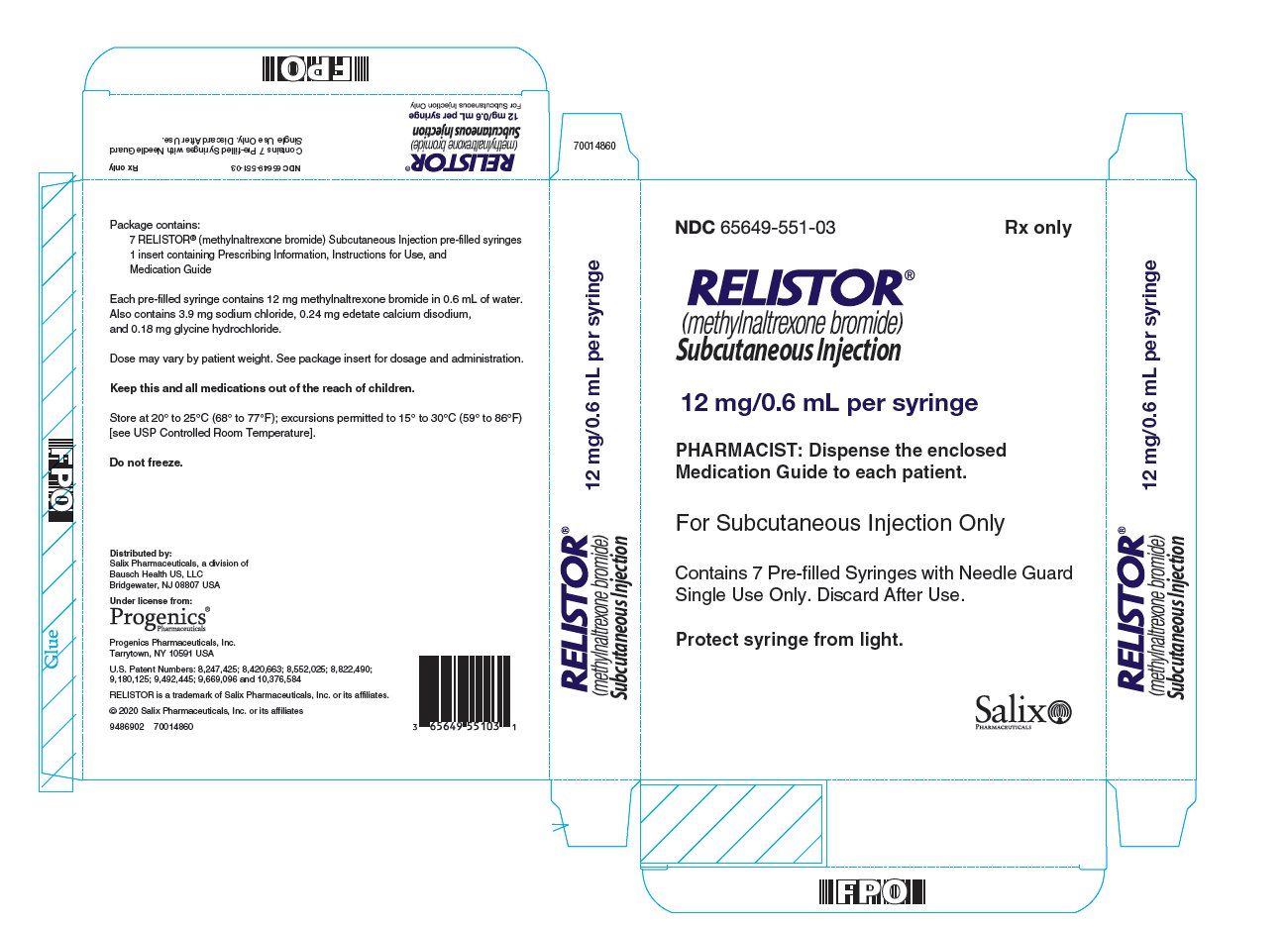
PRINCIPAL DISPLAY PANEL - 12 mg/0.6 mL NDC 65649-551-03 Rx only RELISTOR ® (methylnaltrexone bromide) Subcutaneous Injection 12 mg/0.6 ml per syringe PHARMACIST: Dispense the enclosed Medication Guide to each patient. For Subcutaneous Injection Only Contains 7 Pre-filled Syringes with Needle Guard Single Use Only. Discard after use. Protect syringe from light. Salix Pharmaceuticals carton
PRINCIPAL DISPLAY PANEL - 8 mg/0.4 mL NDC 65649-552-04 Rx only RELISTOR ® (methylnaltrexone bromide) Subcutaneous Injection 8 mg/0.4 mL per syringe PHARMACIST: Dispense the enclosed Medication Guide to each patient. For Subcutaneous Injection Only Contains 7 Pre-filled Syringes with Needle Guard Single Use Only. Discard after use. Protect syringe from light. carton
PRINCIPAL DISPLAY PANEL – 150 mg Tablets NDC 65649-150-90 RELISTOR ® (methylnaltrexone bromide) Tablets 150 mg Dispense the accompanying Medication Guide to each patient. Rx only 90 Tablets tablet label