
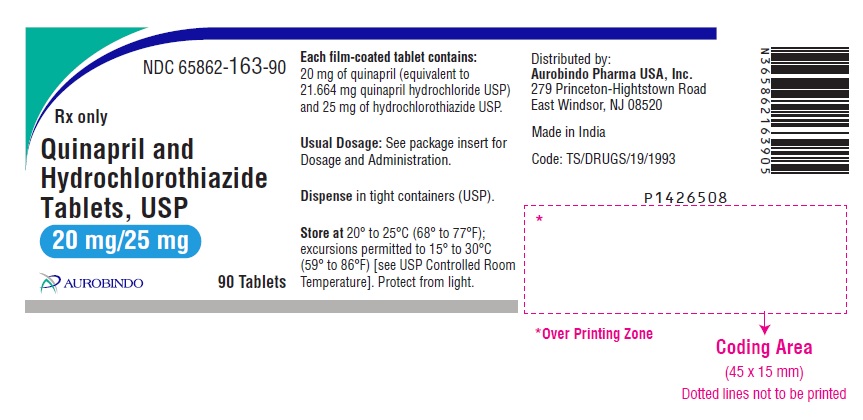
Quinapril Hydrochloride/Hydrochlorothiazide 20 mg; 25 mg Tablet, Film Coated, 90-count
Past resolved recalls for this product (1)
🆔 Identity & classification
Where does this data come from?
🏭 Manufacturer & labeler
Where does this data come from?
🩺 Clinical
Hydrochlorothiazide is used alone or in combination with other medications to treat high blood pressure. Hydrochlorothiazide is used to treat edema (fluid retention; excess fluid held in body tissues) caused by various medical problems, including heart, kidney, and liver disease and to treat edema caused by using certain medications including estrogen and corticosteroids. Hydrochlorothiazide is in a class of medications called diuretics ('water pills'). It works by causing the kidneys to get rid of unneeded water and salt from the body into the urine. High blood pressure is a common condition...
Read the full MedlinePlus article ↗This is a prescription tablet taken by mouth that combines two active ingredients commonly used together to help manage high blood pressure. Quinapril hydrochloride is an ACE inhibitor that works by relaxing blood vessels, while hydrochlorothiazide is a thiazide diuretic that reduces fluid in the body. Together, these ingredients are typically used to help lower and control blood pressure in people with hypertension.
Patient education
Supplement & herbal interactions
Where does this data come from?
Ask a licensed pharmacist directly — free, answered by our team.
💊 What it looks like
Where does this data come from?
🧪 Inactive Ingredients / Excipients
Inactive ingredients, also called excipients, are components of the drug product other than the active ingredient. They may include fillers, dyes, coatings, preservatives, flavors, or other formulation ingredients.
💡 Tap an ingredient (hover on desktop) to see what it is and why it’s used.
-
UNII 68401960MK
Crospovidone is a synthetic polymer made from polyvinylpyrrolidone. It acts as a disintegrant, helping tablets break apart quickly in the stomach so the medicine dissolves and absorbs into the body.
-
UNII 1K09F3G675
Ferric oxide red is an inorganic iron compound used as a colorant in medicines. It gives tablets, capsules, or other dosage forms a red or reddish tint for identification and appearance.
-
UNII EX438O2MRT
Ferric oxide yellow is a naturally occurring iron compound used as a colorant in medications. It gives tablets, capsules, and other forms a yellow or golden hue for identification and appearance.
-
UNII RFW2ET671P
Hydroxypropyl cellulose is a plant-derived thickening agent made from cellulose. It acts as a binder to hold tablet ingredients together and as a film-former to coat tablets or control how fast the medicine releases.
-
UNII 0VUT3PMY82
Hypromellose 2910 is a plant-derived thickening agent made from cellulose. In medicines, it forms protective coatings on tablets or capsules, controls how fast the drug releases, and thickens liquid formulations.
-
UNII 1IVH67816N
Hypromellose 2910 is a plant-derived cellulose compound used as a thickener and film-former in medicines. It helps control how quickly the medication dissolves and creates protective coatings on tablets or capsules.
-
UNII EWQ57Q8I5X
Lactose monohydrate is a natural sugar derived from milk. It serves as a filler and binder in tablets and capsules, helping create the proper size, texture, and consistency of the medicine.
-
UNII 0E53J927NA
Magnesium carbonate is a mineral powder used in medicines as a filler to add bulk and as a buffer to help regulate acidity in the formulation.
-
UNII 70097M6I30
Magnesium stearate is a salt made from magnesium and stearic acid, a fatty substance. It's used in tablets and capsules as a lubricant and glidant to help ingredients flow smoothly during manufacturing and prevent sticking.
-
UNII B697894SGQ
Polyethylene glycol 400 is a clear, thick liquid made from petroleum-derived polymers. It acts as a solvent and humectant in medicines, helping dissolve active ingredients and retain moisture in the formulation.
-
UNII U725QWY32X
Povidone K30 is a synthetic polymer made from petroleum. It acts as a binder to hold tablet ingredients together and as a disintegrant to help the tablet break apart in the stomach so the medicine can be absorbed.
-
UNII 15FIX9V2JP
Titanium dioxide is a bright white mineral powder commonly used as a colorant and opacifying agent. It makes pills and tablets white or lighter in color and helps make coatings non-transparent.
12 inactive ingredients listed in the exact product block matched to this NDC.
Where does this data come from?
ingredient classCode="IACT" elements from the exact product block matched by this NDC. Label-section narrative from DailyMed / the openFDA label index is shown separately when available.Inactive ingredient FAQ
Are inactive ingredients the same for every manufacturer?
Why might an inactive ingredient be missing?
Can inactive ingredients matter?
💲 Pricing
A drug doesn't have one price. Each row is a different public payment system, and none is what you'd pay at the counter — that depends on your insurance. The ⓘ on each row explains what it measures.
| Price system | Per ea | Per package |
|---|---|---|
| Retail pharmacies payNADAC · weekly | $0.345 | $31.02 / 90 tablets |
| Medicaid paysCMS SDUD · 12 mo | No recent Medicaid claims on file for this NDC — rare and low-volume NDCs are suppressed in the public data. | |
| Medicare drug plans payPart D · Q2 2026 | $0.7253 | $65.28 / 90 tablets |
Where does this data come from?
🔁 Therapeutic equivalents
| Product | Labeler | Pack | NADAC/unit | TE | Status | Price vs. this |
|---|---|---|---|---|---|---|
| Quinapril Hydrochloride/Hydrochlorothiazide 20 mg/1; 25 mgthis 65862-0163-90 | Aurobindo | 90 tablets | $0.345 | — | FDA listed | — |
| Quinapril HCL and Hydrochlorothiazide 20 mg/1; 25 mg 43386-0712-03 | Lupin | 30 tablets | — | AB | FDA listed | — |
| Quinapril and Hydrochlorothiazide 20 mg/1; 25 mg 62135-0669-90 | Chartwell | 90 tablets | — | AB | FDA listed | — |
| Quinapril and Hydrochlorothiazide 20/25 20 mg/1; 25 mg 69097-0831-05 | Cipla | 90 tablets | — | — | FDA listed | — |
Where does this data come from?
⏳ Availability & generic status
The FDA lists approved generic versions of this medicine, but that does not always mean a pharmacy can get one today. Patent rules, launch agreements, supply and pricing can affect when generics actually arrive.
Where does this data come from?
🔬 Reported adverse events (FAERS)
Top reported reactions
Age at onset
Reporter sex
Serious outcomes
Where does this data come from?
📦 Packaging — all sizes for this product
| Package NDC | Description | Per unit | Per pack | Marketing start | Status |
|---|---|---|---|---|---|
| 65862-0163-90 You're viewing this | 90 TABLET, FILM COATED in 1 BOTTLE (65862-163-90) | $0.3447 / ea | $31.03 | 2007-08-24 | Active |
| 65862-0163-59 | 5000 TABLET, FILM COATED in 1 BAG (65862-163-59) | — | — | — | Active |
You're viewing the smallest of 2 pack sizes for this product.
Pack size FAQ
What quantity is in NDC 65862-0163-90?
What is the difference between NDC 65862-0163-90 and NDC 65862-0163-59?
What NDC number is used to bill for this package of Quinapril Hydrochloride/Hydrochlorothiazide 20 mg; 25 mg Tablet, Film Coated?
Prices are the latest CMS NADAC pharmacy acquisition cost per NDC; per-pack figures are per-unit × pack quantity, shown only when the pack is denominated in the same measure NADAC prices.
🧭 About this NDC listing & data coverage
What "drug for further processing" means
FDA lists this package under the "drug for further processing" marketing category: Aurobindo Pharma Limited supplies it to other companies for further processing or repackaging (blister cards that are later repackaged or co-packaged are a common example). The units themselves are a finished dosage form — which is why pricing or Medicaid data can still appear — but this exact package code may not be the presentation a retail pharmacy dispenses.
What data is (and isn’t) available for this NDC — tap to expand
| NDC identity (package / product / labeler codes) | ✓ Available |
| Labeler | ✓ Available |
| Product & package description | ✓ Available |
| Marketing category & status | ✓ Available |
| Active ingredient / dosage form / route | ✓ Available |
| FDA label (SPL via DailyMed) | ✓ Available |
| Package photos | ✓ Available |
| Inactive ingredients (structured) | ✓ Available |
| NADAC pharmacy acquisition price (CMS) | ✓ Available |
| Orange Book / therapeutic-equivalence data | — Not published for this NDC Applies only to products approved under an NDA/ANDA; many listings are out of scope. |
| HCPCS J-code billing crosswalk | — Not published for this NDC Most self-administered / retail products have no J-code — that is normal. |
| Medicaid utilization (CMS SDUD) | — Not published for this NDC CMS reports utilization only for NDCs with Medicaid claims above its privacy threshold. |
Questions about this listing
Is this NDC FDA-approved?
Is the NDC printed on the package the same as the 11-digit billing NDC?
What do the three segments of this NDC mean?
Is this package still being marketed?
Does this product come in other package sizes?
Who lists this product with the FDA?
Where does this data come from?
📄 Full FDA label FDA SPL
🚨 Boxed Warning ▾
WARNING: FETAL TOXICITY When pregnancy is detected, discontinue quinapril and hydrochlorothiazide as soon as possible. Drugs that act directly on the renin-angiotensin system can cause injury and death to the developing fetus. See WARNINGS: Fetal Toxicity
🎯 Indications and Usage ▾
INDICATIONS AND USAGE Hypertension Quinapril and hydrochlorothiazide tablets are indicated for the treatment of hypertension, to lower blood pressure. Lowering blood pressure reduces the risk of fatal and nonfatal cardiovascular events, primarily strokes and myocardial infarctions. These benefits have been seen in controlled trials of antihypertensive drugs from a wide variety of pharmacologic classes including the class to which this drug principally belongs.
There are no controlled trials demonstrating risk reduction with quinapril and hydrochlorothiazide tablets. Control of high blood pressure should be part of comprehensive cardiovascular risk management, including, as appropriate, lipid control, diabetes management, antithrombotic therapy, smoking cessation, exercise, and limited sodium intake. Many patients will require more than one drug to achieve blood pressure goals.
For specific advice on goals and management, see published guidelines, such as those of the National High Blood Pressure Education Program’s Joint National Committee on Prevention, Detection, Evaluation, and Treatment of High Blood Pressure (JNC). Numerous antihypertensive drugs, from a variety of pharmacologic classes and with different mechanisms of action, have been shown in randomized controlled trials to reduce cardiovascular morbidity and mortality, and it can be concluded that it is blood pressure reduction, and not some other pharmacologic property of the drugs, that is largely responsible for those benefits.
The largest and most consistent cardiovascular outcome benefit has been a reduction in the risk of stroke, but reductions in myocardial infarction and cardiovascular mortality also have been seen regularly. Elevated systolic or diastolic pressure causes increased cardiovascular risk, and the absolute risk increase per mmHg is greater at higher blood pressures, so that even modest reductions of severe hypertension can provide substantial benefit. Relative risk reduction from blood pressure reduction is similar across populations with varying absolute risk, so the absolute benefit is greater in patients who are at higher risk independent of their hypertension (for example, patients with diabetes or hyperlipidemia), and such patients would be expected to benefit from more aggressive treatment to a lower blood pressure goal.
Some antihypertensive drugs have smaller blood pressure effects (as monotherapy) in black patients, and many antihypertensive drugs have additional approved indications and effects (e.g., on angina, heart failure, or diabetic kidney disease). These considerations may guide selection of therapy. This fixed combination is not indicated for the initial therapy of hypertension (see DOSAGE AND ADMINISTRATION ).
In using quinapril and hydrochlorothiazide tablets, consideration should be given to the fact that another angiotensin-converting enzyme inhibitor, captopril, has caused agranulocytosis, particularly in patients with renal impairment or collagen-vascular disease. Available data are insufficient to show that quinapril does not have a similar risk (see WARNINGS: Neutropenia/Agranulocytosis ). Angioedema in Black Patients Black patients receiving ACE inhibitor monotherapy have been reported to have a higher incidence of angioedema compared to non-blacks.
It should also be noted that in controlled clinical trials, ACE inhibitors have an effect on blood pressure that is less in black patients than in non-blacks.
⏱️ Dosage and Administration ▾
DOSAGE AND ADMINISTRATION As individual monotherapy, quinapril is an effective treatment of hypertension in once-daily doses of 10 mg to 80 mg and hydrochlorothiazide is effective in doses of 12.5 mg to 50 mg. In clinical trials of quinapril/hydrochlorothiazide combination therapy using quinapril doses of 2.5 mg to 40 mg and hydrochlorothiazide doses of 6.25 mg to 25 mg, the antihypertensive effects increased with increasing dose of either component. The side effects (see WARNINGS ) of quinapril are generally rare and apparently independent of dose; those of hydrochlorothiazide are a mixture of dose-dependent phenomena (primarily hypokalemia) and dose-independent phenomena (e.g., pancreatitis), the former much more common than the latter.
Therapy with any combination of quinapril and hydrochlorothiazide will be associated with both sets of dose-independent side effects, but regimens that combine low doses of hydrochlorothiazide with quinapril produce minimal effects on serum potassium. In clinical trials of quinapril and hydrochlorothiazide tablets, the average change in serum potassium was near zero in subjects who received HCTZ 6.25 mg in the combination, and the average subject who received 10 mg to 40 mg/12.5 mg to 25 mg experienced a milder reduction in serum potassium than that experienced by the average subject receiving the same dose of hydrochlorothiazide monotherapy.
To minimize dose-independent side effects, it is usually appropriate to begin combination therapy only after a patient has failed to achieve the desired effect with monotherapy. Therapy Guided by Clinical Effect Patients whose blood pressures are not adequately controlled with quinapril monotherapy may instead be given quinapril and hydrochlorothiazide tablets 10 mg/12.5 mg or 20 mg/12.5 mg. Further increases of either or both components could depend on clinical response.
The hydrochlorothiazide dose should generally not be increased until 2 to 3 weeks have elapsed. Patients whose blood pressures are adequately controlled with 25 mg of daily hydrochlorothiazide, but who experience significant potassium loss with this regimen, may achieve blood pressure control with less electrolyte disturbance if they are switched to quinapril and hydrochlorothiazide tablets 10 mg/12.5 mg or 20 mg/12.5 mg. Replacement Therapy For convenience, patients who are adequately treated with 20 mg of quinapril and 25 mg of hydrochlorothiazide and experience no significant electrolyte disturbances may instead wish to receive quinapril and hydrochlorothiazide tablets 20 mg/25 mg.
Use in Renal Impairment Regimens of therapy with quinapril and hydrochlorothiazide tablets need not take account of renal function as long as the patient’s creatinine clearance is >30 mL/min/1.73 m 2 (serum creatinine roughly ≤3 mg/dL or 265 µmol/L). In patients with more severe renal impairment, loop diuretics are preferred to thiazides. Therefore, quinapril and hydrochlorothiazide tablets are not recommended for use in these patients.
⛔ Contraindications ▾
CONTRAINDICATIONS Quinapril and hydrochlorothiazide tablets are contraindicated in patients who are hypersensitive to quinapril or hydrochlorothiazide and in patients with a history of angioedema related to previous treatment with an ACE inhibitor. Quinapril and hydrochlorothiazide tablets are contraindicated in combination with a neprilysin inhibitor (e.g., sacubitril). Do not administer quinapril and hydrochlorothiazide tablets within 36 hours of switching to or from sacubitril/valsartan, a neprilysin inhibitor (see WARNINGS and PRECAUTIONS ).
Because of the hydrochlorothiazide components, this product is contraindicated in patients with anuria or hypersensitivity to other sulfonamide-derived drugs. Do not co-administer quinapril and hydrochlorothiazide tablets with aliskiren: in patients with diabetes.
⚠️ Warnings ▾
WARNINGS Anaphylactoid and Possibly Related Reactions Presumably because angiotensin converting inhibitors affect the metabolism of eicosanoids and polypeptides, including endogenous bradykinin, patients receiving ACE inhibitors (including quinapril) may be subject to a variety of adverse reactions, some of them serious. Head and Neck Angioedema Angioedema of the face, extremities, lips, tongue, glottis, and larynx has been reported in patients treated with ACE inhibitors and has been seen in 0.1% of patients receiving quinapril.
In two similarly sized US postmarketing quinapril trials that, combined, enrolled over 3,000 black patients and over 19,000 non-blacks, angioedema was reported in 0.3% and 0.55% of blacks (in Study 1 and 2, respectively) and 0.39% and 0.17% of non-blacks. Angioedema associated with laryngeal edema can be fatal. If laryngeal stridor or angioedema of the face, tongue, or glottis occurs, treatment with quinapril and hydrochlorothiazide should be discontinued immediately, the patient treated in accordance with accepted medical care, and carefully observed until the swelling disappears.
In instances where swelling is confined to the face and lips, the condition generally resolves without treatment; antihistamines may be useful in relieving symptoms. Where there is involvement of the tongue, glottis, or larynx likely to cause airway obstruction, emergency therapy including, but not limited to, subcutaneous epinephrine solution 1:1000 (0.3 to 0.5 mL) should be promptly administered ( see PRECAUTIONS and ADVERSE REACTIONS ). Patients taking concomitant mammalian target of rapamycin (mTOR inhibitor) (e.g., temsirolimus) therapy or a neprilysin inhibitor may be at increased risk for angioedema.
Intestinal Angioedema Intestinal angioedema has been reported in patients treated with ACE inhibitors. These patients presented with abdominal pain (with or without nausea or vomiting); in some cases there was no prior history of facial angioedema and C-1 esterase levels were normal. The angioedema was diagnosed by procedures including abdominal CT scan or ultrasound, or at surgery, and symptoms resolved after stopping the ACE inhibitor.
Intestinal angioedema should be included in the differential diagnosis of patients on ACE inhibitors presenting with abdominal pain. Patients With a History of Angioedema Patients with a history of angioedema unrelated to ACE inhibitor therapy may be at increased risk of angioedema while receiving an ACE inhibitor (see also CONTRAINDICATIONS ). Anaphylactoid Reactions During Desensitization Two patients undergoing desensitizing treatment with Hymenoptera venom while receiving ACE inhibitors sustained life-threatening anaphylactoid reactions.
In the same patients, these reactions were avoided when ACE inhibitors were temporarily withheld, but they reappeared upon inadvertent challenge. Anaphylactoid Reactions During Membrane Exposure Anaphylactoid reactions have been reported in patients dialyzed with high-flux membranes and treated concomitantly with an ACE inhibitor. Anaphylactoid reactions have also been reported in patients undergoing low-density lipoprotein apheresis with dextran sulfate absorption.
Hepatic Failure Rarely, ACE inhibitors have been associated with a syndrome that starts with cholestatic jaundice and progresses to fulminant hepatic necrosis and (sometimes) death. The mechanism of this syndrome is not understood. Patients receiving ACE inhibitors who develop jaundice or marked elevations of hepatic enzymes should discontinue the ACE inhibitor and receive appropriate medical follow-up.
Hypotension Quinapril and hydrochlorothiazide can cause symptomatic hypotension, probably not more frequently than either monotherapy. It was reported in 1.2% of 1,571 patients receiving quinapril and hydrochlorothiazide during clinical trials. Like other ACE inhibitors, quinapril has been only rarely associated with hypotension in uncomplicated hypertensive patients.
Symptomatic hypotensi…
🤒 Adverse Reactions ▾
ADVERSE REACTIONS Quinapril and hydrochlorothiazide has been evaluated for safety in 1571 patients in controlled and uncontrolled studies. Of these, 498 were given quinapril plus hydrochlorothiazide for at least 1 year, with 153 patients extending combination therapy for over 2 years. In clinical trials with quinapril and hydrochlorothiazide, no adverse experience specific to the combination has been observed.
Adverse experiences that have occurred have been limited to those that have been previously reported with quinapril or hydrochlorothiazide. Adverse experiences were usually mild and transient, and there was no relationship between side effects and age, sex, race, or duration of therapy. Discontinuation of therapy because of adverse effects was required in 2.1% in patients in controlled studies.
The most common reasons for discontinuation of therapy with quinapril and hydrochlorothiazide were cough (1%; see PRECAUTIONS ) and headache (0.7%). Adverse experiences probably or possibly related to therapy or of unknown relationship to therapy occurring in 1% or more of the 943 patients treated with quinapril plus hydrochlorothiazide in controlled trials are shown below. Percent of Patients in Controlled Trials Quinapril/HCTZ N = 943 Placebo N = 100 Headache 6.7 30 Dizziness 4.8 4 Coughing 3.2 2 Fatigue 2.9 3 Myalgia 2.4 5 Viral Infection 1.9 4 Rhinitis 2 3 Nausea and/or Vomiting 1.8 6 Abdominal Pain 1.7 4 Back Pain 1.5 2 Diarrhea 1.4 1 Upper Respiratory Infection 1.3 4 Insomnia 1.2 2 Somnolence 1.2 0 Bronchitis 1.2 1 Dyspepsia 1.2 2 Asthenia 1.1 1 Pharyngitis 1.1 2 Vasodilatation 1 1 Vertigo 1 2 Chest Pain 1 2 Clinical adverse experiences probably, possibly, or definitely related or of uncertain relationship to therapy occurring in ≥0.5% to <1% (except as noted) of the patients treated with quinapril/HCTZ in controlled and uncontrolled trials (N=1571) and less frequent, clinically significant events seen in clinical trials or postmarketing experience (the rarer events are in italics) include (listed by body system): BODY AS A WHOLE: Asthenia, Malaise CARDIOVASCULAR: Palpitation, Tachycardia, Heart Failure, Hyperkalemia, Myocardial Infarction, Cerebrovascular Accident, Hypertensive Crisis, Angina Pectoris, Orthostatic Hypotension, Cardiac Rhythm Disturbance GASTROINTESTINAL: Mouth or Throat Dry, Gastrointestinal Hemorrhage, Pancreatitis, Abnormal Liver Function Tests NERVOUS/PSYCHIATRIC: Nervousness, Vertigo, Paresthesia RESPIRATORY: Sinusitis, Dyspnea INTEGUMENTARY: Pruritus, Sweating Increased, Erythema Multiforme, Exfoliative Dermatitis, Photosensitivity Reaction, Alopecia, Pemphigus UROGENITAL SYSTEM: OTHER: Acute Renal Failure, Impotence Agranulocytosis, Thrombocytopenia, Arthralgia Angioedema: Angioedema has been reported in 0.1% of patients receiving quinapril (0.1%) (see WARNINGS ).
Postmarketing Experience The following serious nonfatal adverse events, regardless of their relationship to quinapril and HCTZ combination tablets, have been reported during extensive postmarketing experience: Non-melanoma Skin Cancer: Hydrochlorothiazide is associated with an increased risk of non-melanoma skin cancer. In a study conducted in the Sentinel System, increased risk was predominantly for squamous cell carcinoma (SCC) and in white patients taking large cumulative doses. The increased risk for SCC in the overall population was approximately 1 additional case per 16,000 patients per year, and for white patients taking a cumulative dose of ≥50,000 mg the risk increase was approximately 1 additional SCC case for every 6,700 patients per year.
BODY AS A WHOLE: Shock, accidental injury, neoplasm, cellulitis, ascites, generalized edema, hernia and anaphylactoid reaction. CARDIOVASCULAR SYSTEM: Bradycardia, cor pulmonale, vasculitis, and deep vein thrombosis. DIGESTIVE SYSTEM: Gastrointestinal carcinoma, cholestatic jaundice, hepatitis, esophagitis, vomiting, and diarrhea.
EYE DISORDERS: Acute myopia and acute angle closure glaucoma (see…
🔄 Drug Interactions ▾
Drug Interactions Agents Increasing Serum Potassium Coadministration of quinapril and hydrochlorothiazide with other drugs that raise serum potassium levels may result in hyperkalemia. Monitor serum potassium in such patients. Lithium Increased serum lithium levels and symptoms of lithium toxicity have been reported in patients receiving ACE inhibitors during therapy with lithium.
Because renal clearance of lithium is reduced by thiazides, the risk of lithium toxicity is presumably raised further when, as in therapy with quinapril and hydrochlorothiazide, a thiazide diuretic is coadministered with the ACE inhibitor. Quinapril and hydrochlorothiazide and lithium should be coadministered with caution, and frequent monitoring of serum lithium levels is recommended. Dual Blockade of the Renin-Angiotensin System (RAS) Dual blockade of the RAS with angiotensin receptor blockers, ACE inhibitors, or aliskiren is associated with increased risks of hypotension, hyperkalemia, and changes in renal function (including acute renal failure) compared to monotherapy.
Most patients receiving the combination of two RAS inhibitors do not obtain any additional benefit compared to monotherapy. In general, avoid combined use of RAS inhibitors. Closely monitor blood pressure, renal function and electrolytes in patients on quinapril and hydrochlorothiazide and other agents that affect the RAS.
Do not co-administer aliskiren with quinapril and hydrochlorothiazide in patients with diabetes. Avoid concomitant use of aliskiren with quinapril and hydrochlorothiazide in patients with renal impairment (GFR <60 mL/min/1.73 m 2 ). Tetracycline and Other Drugs That Interact with Magnesium Simultaneous administration of tetracycline with quinapril reduced the absorption of tetracycline by approximately 28% to 37%, possibly due to the high magnesium content in quinapril tablets.
This interaction should be considered if coprescribing quinapril and tetracycline or other drugs that interact with magnesium. Gold Nitritoid reactions (symptoms include facial flushing, nausea, vomiting, and hypotension) have been reported rarely in patients on therapy with injectable gold (sodium aurothiomalate) and concomitant ACE inhibitor therapy. Non-Steroidal Anti-Inflammatory Agents including Selective Cyclooxygenase-2 Inhibitors (COX-2 Inhibitors) In patients who are elderly, volume-depleted (including those on diuretic therapy), or with compromised renal function, co-administration of NSAIDs, including selective COX-2 inhibitors, with ACE inhibitors, including quinapril, may result in deterioration of renal function, including possible acute renal failure.
These effects are usually reversible. Monitor renal function periodically in patients receiving quinapril and NSAID therapy. The antihypertensive effect of ACE inhibitors, including quinapril may be attenuated by NSAIDs.
Agents that Inhibit mTOR or Other Drugs Known to Cause Angioedema: Patients taking concomitant mTOR inhibitor (e.g., temsirolimus) therapy or a neprilysin inhibitor may be at increased risk for angioedema . Other Agents Drug interaction studies of quinapril and other agents showed: Multiple dose therapy with propranolol or cimetidine has no effect on the pharmacokinetics of single doses of quinapril. The anticoagulant effect of a single dose of warfarin (measured by prothrombin time) was not significantly changed by quinapril coadministration twice daily.
Digoxin: Thiazide-induced electrolyte disturbances, i.e. hypokalemia, hypomagnesemia, increase the risk of digoxin toxicity, which may lead to fatal arrhythmic events (See PRECAUTIONS ). No pharmacokinetic interaction was observed when single doses of quinapril and hydrochlorothiazide were administered concomitantly. When administered concurrently, the following drugs may interact with thiazide diuretics.
Alcohol, Barbiturates, or Narcotics—potentiation of orthostatic hypotension may occur. Antidiabetic Drugs (oral hypoglycemic agents and insulin)—dosage adju…
🧒 Pediatric Use ▾
Pediatric Use Neonates with a history of in utero exposure to quinapril and hydrochlorothiazide If oliguria or hypotension occurs, direct attention toward support of blood pressure and renal perfusion. Exchange transfusions or dialysis may be required as a means of reversing hypotension and/or substituting for disordered renal function. Removal of quinapril, which crosses the placenta, from the neonatal circulation is not significantly accelerated by these means.
Safety and effectiveness of quinapril and hydrochlorothiazide in children have not been established.
🧓 Geriatric Use ▾
Geriatric Use Clinical studies of quinapril hydrochloride/hydrochlorothiazide did not include sufficient numbers of subjects aged 65 and over to determine whether they respond differently from younger subjects. Other reported clinical experience has not identified differences in responses between the elderly and younger patients. In general, dose selection for an elderly patient should be cautious, usually starting at the low end of the dosing range, reflecting the greater frequency of decreased hepatic, renal, or cardiac function, and of concomitant disease or other drug therapy.
🆘 Overdosage ▾
OVERDOSAGE No specific information is available on the treatment of overdosage with quinapril and hydrochlorothiazide or quinapril monotherapy; treatment should be symptomatic and supportive. Therapy with quinapril and hydrochlorothiazide should be discontinued, and the patient should be observed. Dehydration, electrolyte imbalance, and hypotension should be treated by established procedures.
The oral median lethal dose of quinapril/hydrochlorothiazide in combination ranges from 1063/664 to 4640/2896 mg/kg in mice and rats. Doses of 1440 to 4280 mg/kg of quinapril cause significant lethality in mice and rats. In single-dose studies of hydrochlorothiazide, most rats survived doses up to 2.75 g/kg.
Data from human overdoses of ACE inhibitors are scanty; the most likely manifestation of human quinapril overdosage is hypotension. In human hydrochlorothiazide overdose, the most common signs and symptoms observed have been those of dehydration and electrolyte depletion (hypokalemia, hypochloremia, hyponatremia). If digitalis has also been administered, hypokalemia may accentuate cardiac arrhythmias.
Laboratory determinations of serum levels of quinapril and its metabolites are not widely available, and such determinations have, in any event, no established role in the management of quinapril overdose. No data are available to suggest physiological maneuvers (e.g., maneuvers to change the pH of the urine) that might accelerate elimination of quinapril and its metabolites. Hemodialysis and peritoneal dialysis have little effect on the elimination of quinapril and quinaprilat.
Angiotensin II could presumably serve as a specific antagonist-antidote in the setting of quinapril overdose, but angiotensin II is essentially unavailable outside of scattered research facilities. Because the hypotensive effect of quinapril is achieved through vasodilation and effective hypovolemia, it is reasonable to treat quinapril overdose by infusion of normal saline solution.
🧬 Clinical Pharmacology ▾
CLINICAL PHARMACOLOGY Mechanism of Action The principal metabolite of quinapril, quinaprilat, is an inhibitor of ACE activity in human subjects and animals. ACE is peptidyl dipeptidase that catalyzes the conversion of angiotensin I to the vasoconstrictor, angiotensin II. The effect of quinapril in hypertension appears to result primarily from the inhibition of circulating and tissue ACE activity, thereby reducing angiotensin II formation.
Quinapril inhibits the elevation in blood pressure caused by intravenously administered angiotensin I, but has no effect on the pressor response to angiotensin II, norepinephrine, or epinephrine. Angiotensin II also stimulates the secretion of aldosterone from the adrenal cortex, thereby facilitating renal sodium and fluid reabsorption. Reduced aldosterone secretion by quinapril may result in a small increase in serum potassium.
In controlled hypertension trials, treatment with quinapril alone resulted in mean increases in potassium of 0.07 mmol/L (see PRECAUTIONS ). Removal of angiotensin II negative feedback on renin secretion leads to increased plasma renin activity (PRA). While the principal mechanism of antihypertensive effect is thought to be through the renin-angiotensin-aldosterone system, quinapril exerts antihypertensive actions even in patients with low renin hypertension.
Quinapril was an effective antihypertensive in all races studied, although it was somewhat less effective in blacks (usually a predominantly low renin group) than in non-blacks. ACE is identical to kininase II, an enzyme that degrades bradykinin, a potent peptide vasodilator; whether increased levels of bradykinin play a role in the therapeutic effect of quinapril remains to be elucidated. Hydrochlorothiazide is a thiazide diuretic.
Thiazides affect the renal tubular mechanisms of electrolyte reabsorption, directly increasing excretion of sodium and chloride in approximately equivalent amounts. Indirectly, the diuretic action of hydrochlorothiazide reduces plasma volume, with consequent increases in plasma renin activity, increases in aldosterone secretion, increases in urinary potassium loss, and decreases in serum potassium. The renin-aldolsterone link is mediated by angiotensin, so coadministration of an ACE inhibitor tends to reverse the potassium loss associated with these diuretics.
The mechanism of the antihypertensive effect of thiazides is unknown. Pharmacokinetics and Metabolism The rate and extent of absorption of quinapril and hydrochlorothiazide from quinapril and hydrochlorothiazide tablets are not different, respectively, from the rate and extent of absorption of quinapril and hydrochlorothiazide from immediate-release monotherapy formulations, either administered concurrently or separately. Following oral administration of quinapril monotherapy tablets, peak plasma quinapril concentrations are observed within 1 hour.
Based on recovery of quinapril and its metabolites in urine, the extent of absorption is at least 60%. The absorption of hydrochlorothiazide is somewhat slower (1 to 2.5 hours) and more complete (50% to 80%). The rate of quinapril absorption was reduced by 14% when quinapril and hydrochlorothiazide tablets were administered with a high-fat meal as compared to fasting, while the extent of absorption was not affected.
The rate of hydrochlorothiazide absorption was reduced by 12% when quinapril and hydrochlorothiazide tablets were administered with a high-fat meal, while the extent of absorption was not significantly affected. Therefore, quinapril and hydrochlorothiazide may be administered without regard to food. Following absorption, quinapril is deesterified to its major active metabolite, quinaprilat (about 38% of oral dose), and to other minor inactive metabolites.
Following multiple oral dosing of quinapril, there is an effective accumulation half-life of quinaprilat of approximately 3 hours, and peak plasma quinaprilat concentrations are observed approximately 2 hours postdose. Ap…
📦 How Supplied / Storage and Handling ▾
HOW SUPPLIED Quinapril and Hydrochlorothiazide Tablets, USP 10 mg/12.5 mg are Pink colored, scored, oval shaped, biconvex, film-coated tablets debossed with ‘D’ on scored side and ‘18’ on other side. Bottles of 90 NDC 65862-161-90 Quinapril and Hydrochlorothiazide Tablets, USP 20 mg/12.5 mg are Pink colored, scored, round shaped, biconvex, film-coated tablets debossed with ‘D’ on scored side and ‘19’ on other side. Bottles of 30 NDC 65862-162-30 Bottles of 90 NDC 65862-162-90 Quinapril and Hydrochlorothiazide Tablets, USP 20 mg/25 mg are Pink colored, round shaped, biconvex, film-coated tablets debossed with ‘D’ on one side and ‘20’ on other side.
Bottles of 90 NDC 65862-163-90 Store at 20° to 25°C (68° to 77°F); excursions permitted to 15° to 30°C (59° to 86°F) [see USP Controlled Room Temperature]. Protect from light. Distributed by: Aurobindo Pharma USA, Inc.
279 Princeton-Hightstown Road East Windsor, NJ 08520 Manufactured by: Aurobindo Pharma Limited Hyderabad–500 032, India Revised: 05/2022
📋 Description ▾
DESCRIPTION Quinapril and hydrochlorothiazide tablets, USP are fixed-combination tablet that combines an angiotensin-converting enzyme (ACE) inhibitor, quinapril hydrochloride, and a thiazide diuretic, hydrochlorothiazide. Quinapril hydrochloride is chemically described as [3S-[2[R*(R*)], 3R*]]-2-[2-[[1-(ethoxycarbonyl)-3-phenylpropyl]amino]-1-oxopropyl]-1,2,3,4-tetrahydro-3-isoquinolinecarboxylic acid, monohydrochloride. Its molecular formula is C 25 H 30 N 2 O 5 .
HCl and its structural formula is: Quinapril hydrochloride USP is a white to off-white amorphous powder that is freely soluble in aqueous solvents. Hydrochlorothiazide is chemically described as: 6-Chloro-3,4-dihydro-2H-1,2,4-benzothiadiazine-7-sulfonamide 1,1-dioxide. Its molecular formula is C 7 H 8 ClN 3 O 4 S 2 and its structural formula is: Hydrochlorothiazide USP is a white to off-white, crystalline powder which is slightly soluble in water but freely soluble in sodium hydroxide solution.
Quinapril and hydrochlorothiazide tablets, USP are available for oral use as fixed combination tablets in three strengths of quinapril with hydrochlorothiazide: 10 mg (equivalent to 10.832 mg quinapril hydrochloride USP) with 12.5 mg (quinapril and hydrochlorothiazide 10/12.5), 20 mg (equivalent to 21.664 mg quinapril hydrochloride USP) with 12.5 mg (quinapril and hydrochlorothiazide 20/12.5), and 20 mg (equivalent to 21.664 mg quinapril hydrochloride USP) with 25 mg (quinapril and hydrochlorothiazide 20/25). The strength of the quinapril hydrochloride component is in terms of quinapril.
Inactive ingredients: lactose monohydrate, magnesium carbonate, crospovidone, povidone, magnesium stearate, hypromellose, hydroxypropyl cellulose, polyethylene glycol 400, titanium dioxide, iron oxide red and iron oxide yellow. Quinapril Hydrochloride Chemical Structure Hydrochlorothiazide Chemical Structure
💬 Information for Patients ▾
Information for Patients Angioedema Angioedema, including laryngeal edema, can occur with treatment with ACE inhibitors, especially following the first dose. Tell patients receiving quinapril and hydrochlorothiazide to immediately report any signs or symptoms suggesting angioedema (swelling of face, eyes, lips, or tongue, or difficulty in breathing) and to temporarily discontinue quinapril and hydrochlorothiazide until after consulting with the prescribing physician. Pregnancy Tell female patients of childbearing age about the consequences of exposure to quinapril and hydrochlorothiazide during pregnancy.
Discuss treatment options with women planning to become pregnant. Ask patients to report pregnancies to their physicians as soon as possible. Symptomatic Hypotension Tell patients receiving quinapril and hydrochlorothiazide that lightheadedness can occur, especially during the first days of therapy, and to report it to the prescribing physician.
Tell the patient if syncope occurs, discontinue quinapril and hydrochlorothiazide until the physician has been consulted. Tell patients that inadequate fluid intake, excessive perspiration, diarrhea, or vomiting can lead to an excessive fall in blood pressure because of reduction in fluid volume, with the same consequences of lightheadedness and possible syncope. Tell patients planning to undergo major surgery and/ or general or spinal anesthesia to inform their physicians that they are taking an ACE inhibitor.
Hyperkalemia Tell patients receiving quinapril and hydrochlorothiazide not to use potassium supplements or salt substitutes containing potassium without consulting the prescribing physician. Neutropenia Tell patients to promptly report any indication of infection (e.g., sore throat, fever) which could be a sign of neutropenia. Non-melanoma Skin Cancer: Instruct patients taking hydrochlorothiazide to protect skin from the sun and undergo regular skin cancer screening.
NOTE: As with many other drugs, certain advice to patients being treated with quinapril is warranted. This information is intended to aid in the safe and effective use of this medication. It is not a disclosure of all possible adverse or intended effects.