
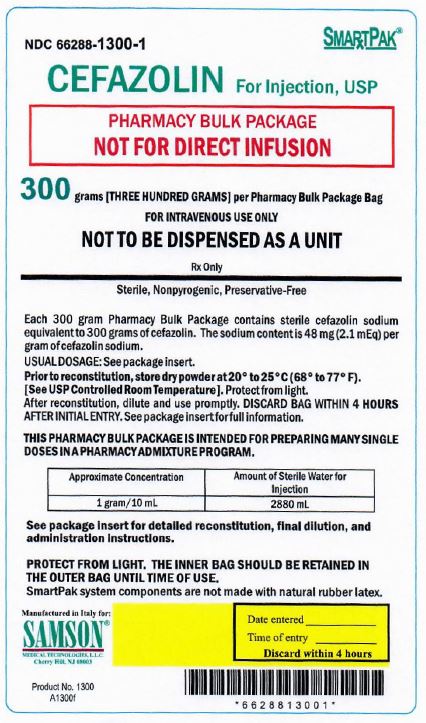
CEFAZOLIN 300 g Injection, Powder, Lyophilized, For Solution, 1 injection
🆔 Identity & classification
Where does this data come from?
🏷️ RxNorm drug class
This medicine belongs to the Cephalosporin Antibacterial class.
Where does this data come from?
🏭 Manufacturer & labeler
Where does this data come from?
🩺 Clinical
Cefazolin injection is used to treat certain infections caused by bacteria. Cefazolin injection also may be used around the time of surgery in order to prevent the patient from getting an infection. Cefazolin injection is in a class of medications called cephalosporin antibiotics. It works by killing bacteria. Antibiotics such as cefazolin injection will not work for colds, flu, or other viral infections. Taking antibiotics when they are not needed may cause them not to work later when you do have an infection from bacteria.
Read the full MedlinePlus article ↗- Cefazolin treats a wide range of serious bacterial infections — things like pneumonia, urinary tract infections, skin infections, bone and joint infections, and even bloodstream in...
- What kinds of infections does cefazolin treat?
- No, cefazolin only comes as an injection. It's either given directly into a vein (IV) or into a muscle (IM), depending on the product being used. A nurse or other healthcare profes...
- How will I receive cefazolin — do I take a pill?
Patient education
Supplement & herbal interactions
Cefazolin may be associated with lower levels of 7 nutrients — worth a chat with your pharmacist, not a cause for alarm.
Where does this data come from?
Ask a licensed pharmacist directly — free, answered by our team.
🧪 Inactive Ingredients / Excipients
Inactive ingredients, also called excipients, are components of the drug product other than the active ingredient. They may include fillers, dyes, coatings, preservatives, flavors, or other formulation ingredients.
Where does this data come from?
IACT rows and label-wide narrative are kept separate; availability and product-level specificity depend on the submitted label.Inactive ingredient FAQ
Are inactive ingredients the same for every manufacturer?
Why might an inactive ingredient be missing?
Can inactive ingredients matter?
💲 Pricing
A drug doesn't have one price. Each row is a different public payment system, and none is what you'd pay at the counter — that depends on your insurance. The ⓘ on each row explains what it measures.
| Price system | Per mL | Per package |
|---|---|---|
| Retail pharmacies payNADAC · weekly | Not in the retail survey — common for institutional, discontinued, or low-volume packs. | |
| Medicaid paysCMS SDUD · 12 mo | No recent Medicaid claims on file for this NDC — rare and low-volume NDCs are suppressed in the public data. | |
| Medicare drug plans payPart D · Q2 2026 | $9.33 | — |
| Medicare Part B allowsASP · J0690 | $0.796 / J0690 unit | — |
Where does this data come from?
🧾 Billing & reimbursement
Where does this data come from?
🔁 Therapeutic equivalents
| Product | Labeler | Pack | NADAC/unit | TE | Status | Price vs. this |
|---|---|---|---|---|---|---|
| Cefazolin 10 g 00143-9261-10 | Hikma | 10 vials | — | AP | FDA listed | — |
| Cefazolin 20 g 00143-9665-10 | Hikma | 1 injection | — | AP | FDA listed | — |
| Cefazolin 10 g 00143-9983-03 | Hikma | 10 vials | — | AP | FDA listed | — |
| Cefazolin 10 g 00781-3452-95 | Sandoz | 10 vials | — | AP | FDA listed | — |
| Cefazolin 10 g 44567-0708-10 | WG | 10 vials | — | — | FDA listed | — |
| Cefazolin 10 g 60505-6143-04 | Apotex | 10 vials | — | AP | FDA listed | — |
| Cefazolin 10 g 60505-6244-04 | Apotex | 10 vials | — | AP | FDA listed | — |
| Cefazolin 10 g 63323-0238-61 | Fresenius | 10 vials | — | — | FDA listed | — |
| Cefazolin 100 g 66288-1100-01 | Samson | 1 injection | — | — | FDA listed | — |
| Cefazolin 300 gthis 66288-1300-01 | Samson | 1 injection | — | — | FDA listed | — |
| Cefazolin 10 g 72572-0056-10 | Civica, | 10 vials | — | AP | FDA listed | — |
Where does this data come from?
⏳ Availability & generic status
This product is an FDA-approved generic. Other versions of the same drug are listed under Therapeutic equivalents, least expensive first.
Where does this data come from?
📊 Medicare Part D spend CMS · PART D · 2026 (Q1)
🔬 Reported adverse events (FAERS)
Top reported reactions
Age at onset
Reporter sex
Serious outcomes
Where does this data come from?
📦 Packaging — all sizes for this product
| Package NDC | Description | Marketing start | Status |
|---|---|---|---|
| 66288-1300-01 You're viewing this | 1 INJECTION, POWDER, LYOPHILIZED, FOR SOLUTION in 1 BAG (66288-1300-1) | 2007-01-01 | Active |
🧭 About this NDC listing & data coverage
What data is (and isn’t) available for this NDC — tap to expand
| NDC identity (package / product / labeler codes) | ✓ Available |
| Labeler | ✓ Available |
| Product & package description | ✓ Available |
| Marketing category & status | ✓ Available |
| Active ingredient / dosage form / route | ✓ Available |
| FDA label (SPL via DailyMed) | ✓ Available |
| Package photos | ✓ Available |
| Inactive ingredients (structured) | — Not published for this NDC The labeler did not submit a structured excipient list, or no SPL is available. |
| NADAC pharmacy acquisition price (CMS) | — Not published for this NDC CMS publishes NADAC only for NDCs reported in its retail-pharmacy survey. |
| Orange Book / therapeutic-equivalence data | — Not published for this NDC Applies only to products approved under an NDA/ANDA; many listings are out of scope. |
| HCPCS J-code billing crosswalk | ✓ Available |
| Medicaid utilization (CMS SDUD) | — Not published for this NDC CMS reports utilization only for NDCs with Medicaid claims above its privacy threshold. |
Questions about this listing
Why is there no price listed?
Is the NDC printed on the package the same as the 11-digit billing NDC?
What do the three segments of this NDC mean?
Is this package still being marketed?
Who lists this product with the FDA?
Do I need a prescription for this product?
Does this product have a billing J-code?
Where does this data come from?
📄 Full prescribing information FDA SPL
🎯 Indications and Usage ▾
1 INDICATIONS AND USAGE To reduce the development of drug-resistant bacteria and maintain the effectiveness of cefazolin and other antibacterial drugs, cefazolin should be used only to treat or prevent infections that are proven or strongly suspected to be caused by susceptible bacteria. When culture and susceptibility information are available, they should be considered in selecting or modifying antibacterial therapy. In the absence of such data, local epidemiology and susceptibility patterns may contribute to the empiric selection of therapy.
Cefazolin for Injection is indicated for the treatment of the following infections when caused by susceptible bacteria. Cefazolin for Injection, USP is a cephalosporin antibacterial indicated in the treatment of the following infections caused by susceptible isolates of the designated microorganisms: Respiratory tract infections ( 1.1 ); urinary tract infections ( 1.2 ); skin and skin structure infections ( 1.3 ); biliary tract infections ( 1.4 ); bone and joint infections ( 1.5 ); genital infections ( 1.6 ); septicemia ( 1.7 ); endocarditis ( 1.8 ); and perioperative prophylaxis ( 1.9 ).
1.1Respiratory Tract Infections Respiratory tract infections due to Streptococcus pneumoniae , Staphylococcus aureus and Streptococcus pyogenes . Injectable benzathine penicillin is considered the drug of choice in treatment and prevention of streptococcal infections, including the prophylaxis of rheumatic fever. Cefazolin is effective in the eradication of streptococci from the nasopharynx; however, data establishing the efficacy of cefazolin in the subsequent prevention of rheumatic fever are not available.
1.2Urinary Tract Infections Urinary tract infections due to Escherichia coli and Proteus mirabilis.
1.3Skin and Skin Structure Infections Skin and skin structure infections due to S. aureus , S. pyogenes , and Streptococcus agalactiae .
1.4Biliary Tract Infections Biliary infections due to E. coli , various isolates of streptococci, P. mirabilis , and S. aureus .
1.5Bone and Joint Infections Bone and joint infections due to S. aureus .
1.6Genital Infections Genital infections due to E. coli and P. mirabilis.
1.7Septicemia Septicemia due to S. pneumoniae , S. aureus , P. mirabilis, and E. coli.
1.8Endocarditis Endocarditis due to S. aureus and S. pyogenes.
1.9Perioperative Prophylaxis The prophylactic administration of cefazolin preoperatively, intraoperatively, and postoperatively may reduce the incidence of certain postoperative infections in patients undergoing surgical procedures which are classified as contaminated or potentially contaminated (e.g., vaginal hysterectomy, and cholecystectomy in high-risk patients such as those older than 70 years, with acute cholecystitis, obstructive jaundice, or common duct bile stones). The perioperative use of cefazolin may also be effective in surgical patients in whom infection at the operative site would present a serious risk (e.g., during open-heart surgery and prosthetic arthroplasty).
If there are signs of infection, specimens for cultures should be obtained for the identification of the causative organism so that appropriate therapy may be instituted.
⏱️ Dosage and Administration ▾
2 DOSAGE AND ADMINISTRATION Cefazolin for Injection USP, Pharmacy Bulk Package bag SmartPak ® should not be used in patients who require less than a 250 mg dose of Cefazolin. THIS PHARMACY BULK PACKAGE REQUIRES RECONSTITUTION WITH STERILE WATER FOR INJECTION, USP TO A CONCENTRATION OF 100 mg per mL AND FURTHER DILUTION IN 50 mL OF A COMPATIBLE SOLUTION. THIS IS A PHARMACY BULK PACKAGE - NOT FOR DIRECT INJECTION For intravenous use only over approximately 30 minutes.
( 2 ) THIS IS A PHARMACY BULK PACKAGE NOT FOR DIRECT INJECTION. Cefazolin for Injection USP, Pharmacy Bulk Package bag SmartPak ® should not be used in patients who require less than a 250 mg dose of cefazolin ( 2.1 ) Recommended Dosing Schedule in Adult Patients with CrCl Greater Than or Equal to 55 mL/min ( 2.1 ) Site and Type of Infection Dose Frequency Moderate to severe infections 500 mg to 1 gram Every 6 to 8 hours Mild infections caused by susceptible gram-positive cocci 250 mg to 500 mg Every 8 hours Acute, uncomplicated urinary tract infections 1 gram Every 12 hours Pneumococcal pneumonia 500 mg Every 12 hours Severe, life-threatening infections (e.g., endocarditis, septicemia)* 1 gram to 1.5 grams Every 6 hours Perioperative prophylaxis 1 gram to 2 grams ½ to 1 hour prior to start of surgery 500 mg to 1 gram During surgery for lengthy procedures 500 mg to 1 gram Every 6 to 8 hours for 24 hours postoperatively *In rare instances, doses of up to 12 grams of cefazolin per day have been used. Cefazolin for Injection USP, Pharmacy Bulk Package bag SmartPak ® should not be used in patients who require less than a 250 mg dose of cefazolin ( 2.1 )
2.1Adult Population Cefazolin for Injection USP, Pharmacy Bulk Package bag SmartPak ® should not be used in patients who require less than a 250 mg dose of Cefazolin. Cefazolin for Injection should be reconstituted with Sterile Water for Injection, USP to a concentration of 100 mg per mL and further diluted in 50 mL of a compatible solution. The recommended adult dosages are outlined in Table 1 .
Cefazolin for Injection should be administered intravenously (IV) over approximately 30 minutes. Table 1: Recommended Dosing Schedule in Adult Patients with CrCl Greater Than or Equal to 55 mL/min. *In rare instances, doses up to 12 grams of cefazolin per day have been used. Site and Type of Infection Dose Frequency Moderate to severe infections 500 mg to 1gram Every 6 to 8 hours Mild infections caused by susceptible gram-positive cocci 250 mg to 500 mg Every 8 hours Acute, uncomplicated urinary tract infections 1 gram Every 12 hours Pneumococcal pneumonia 500 mg Every 12 hours Severe, life- threatening infections (e.g., endocarditis, septicemia)* 1 gram to 1.5 grams Every 6 hours
2.2Perioperative Prophylactic Use Cefazolin for Injection USP, Pharmacy Bulk Package bag SmartPak ® should not be used in patients who require less than a 250 mg dose of cefazolin. To prevent postoperative infection in contaminated or potentially contaminated surgery, recommended doses are: 1 gram to 2 grams I.V. administered ½ hour to 1 hour prior to the start of surgery. For lengthy operative procedures (e.g., 2 hours or more), 500 mg to 1 gram I.V. during surgery (administration modified depending on the duration of the operative procedure).
500 mg to 1 gram I.V. every 6 to 8 hours for 24 hours postoperatively. It is important that (i) the preoperative dose be given just (½ to 1 hour) prior to the start of surgery so that adequate antibacterial concentrations are present in the serum and tissues at the time of initial surgical incision; and (ii) cefazolin may be administered, if necessary, at appropriate intervals during surgery to provide sufficient concentrations of the antibacterial drug at the anticipated moments of greatest exposure to infective organisms.
The prophylactic administration of cefazolin should usually be discontinued within a 24-hour period after the surgical procedure. In surgery where the occurrence of infection may be…
💊 Dosage Forms and Strengths ▾
3 DOSAGE FORMS AND STRENGTHS 100 grams Cefazolin for Injection, USP, Pharmacy Bulk Package bag SmartPak ® 300 grams Cefazolin for Injection, USP, Pharmacy Bulk Package bag SmartPak ® THIS IS A PHARMACY BULK PACKAGE – NOT FOR DIRECT INJECTION Pharmacy Bulk Package bags, 100 grams and 300 grams ( 3 ) THIS IS A PHARMACY BULK PACKAGE – NOT FOR DIRECT INJECTION
⛔ Contraindications ▾
4 CONTRAINDICATIONS Hypersensitivity to cefazolin or other cephalosporin class antibacterial drugs, penicillins or other beta-lactams ( 4.1 )
4.1Hypersensitivity to Cefazolin or the Cephalosporin Class of Antibacterial Drugs, Penicillins or Other Beta-lactams Cefazolin for Injection, USP is contraindicated in patients who have a history of immediate hypersensitivity reactions (e.g., anaphylaxis, serious skin reactions) to cefazolin or the cephalosporin class of antibacterial drugs, penicillins or other beta-lactams [see Warnings and Precautions ( 5.1 ) ].
⚠️ Warnings and Cautions ▾
5 WARNINGS AND PRECAUTIONS Hypersensitivity reactions: Cross-hypersensitivity may occur in up to 10% of patients with a history of penicillin allergy. If an allergic reaction occurs, discontinue the drug. ( 5.1 ) Use in patients with renal impairment: Cefazolin for Injection USP, Pharmacy Bulk Package bag SmartPak ® should not be used in patients who require less than a 250 mg dose of cefazolin: Dose adjustment required for patients with CrCl less than 55 mL/min.
( 5.2 ) Clostridium difficile -associated diarrhea: May range from mild diarrhea to fatal colitis. Evaluate if diarrhea occurs. ( 5.3 )
5.1Hypersensitivity Reactions to Cefazolin, Cephalosporins, Penicillins or Other Beta-lactams Serious and occasionally fatal hypersensitivity (anaphylactic) reactions have been reported in patients receiving beta-lactam antibacterial drugs. Before therapy with Cefazolin for Injection, USP is instituted, careful inquiry should be made to determine whether the patient has had previous immediate hypersensitivity reactions to cefazolin, cephalosporins, penicillins, or carbapenems. Exercise caution if this product is to be given to penicillin-sensitive patients because cross-hypersensitivity among beta-lactam antibacterial drugs has been clearly documented and may occur in up to 10% of patients with a history of penicillin allergy.
If an allergic reaction to Cefazolin for Injection, USP occurs, discontinue the drug.
5.2Use in Patients with Renal Impairment Cefazolin for Injection USP – Pharmacy Bulk Package bags SmartPak ® should not be used in renally impaired patients who require less than a 250 mg dose of cefazolin. As with other beta-lactam antibacterial drugs, seizures may occur if inappropriately high doses are administered to patients with impaired renal function (creatinine clearance less than 55 mL/minute) [see Dosage and Administration ( 2.3 ) ].
5.3Clostridium difficile -associated Diarrhea Clostridium difficile associated diarrhea (CDAD) has been reported with the use of nearly all antibacterial agents, including cefazolin and may range in severity from mild diarrhea to fatal colitis. Treatment with antibacterial agents alters the normal flora of the colon leading to overgrowth of C. difficile . C. difficile produces toxins A and B, which contribute to the development of CDAD.
Hypertoxin- producing isolates of C. difficile cause increased morbidity and mortality, as these infections can be refractory to antimicrobial therapy and may require colectomy. CDAD must be considered in all patients who present with diarrhea following antibacterial drug use. Careful medical history is necessary since CDAD has been reported to occur over two months after the administration of antibacterial agents.
If CDAD is suspected or confirmed, ongoing antibacterial drug use not directed against C. difficile may need to be discontinued. Appropriate fluid and electrolyte management, protein supplementation, antibacterial drug treatment of C. difficile , and surgical evaluation should be instituted as clinically indicated.
5.4Risk of Development of Drug-resistant Bacteria Prescribing Cefazolin for Injection, USP in the absence of proven or strongly suspected bacterial infection or a prophylactic indication is unlikely to provide benefit to the patient and increases the risk of the development of drug-resistant bacteria. As with other antimicrobials, prolonged use of Cefazolin for Injection, USP may result in overgrowth of nonsusceptible microorganisms. Repeated evaluation of the patient's condition is essential.
Should superinfection occur during therapy, appropriate measures should be taken.
5.5Drug/Laboratory Test Interactions Urinary Glucose The administration of cefazolin may result in a false-positive reaction with glucose in the urine when using CLINITEST ® tablets. It is recommended that glucose tests based on enzymatic glucose oxidase reactions (e.g., CLINISTIX ® ) be used. Coombs' Test Positive direct Coombs tests have been reported durin…
🤒 Adverse Reactions ▾
6 ADVERSE REACTIONS The following serious adverse reactions to cefazolin are described below and elsewhere in the labeling: Hypersensitivity reactions [See Warnings and Precautions ( 5.1 ) ] Clostridium difficile -associated diarrhea [see Warnings and Precautions ( 5.3 ) ] Most common adverse reactions: gastrointestinal (nausea, vomiting, diarrhea) and allergic reactions (anaphylaxis, urticaria, skin rash). ( 6 ) To report SUSPECTED ADVERSE REACTIONS, contact Samson Medical Technologies, L.L.C. at 1-877-418-3600 or FDA at 1-800-FDA-1088 or www.fda.gov/medwatch
6.1Clinical Trials Experience The following adverse reactions were reported from clinical trials: Gastrointestinal: Diarrhea, oral candidiasis (oral thrush), mouth ulcers, vomiting, nausea, stomach cramps, epigastric pain, heartburn, flatus, anorexia, and pseudomembranous colitis. Onset of pseudomembranous colitis symptoms may occur during or after antibacterial treatment [see Warnings and Precautions ( 5.3 )]. Allergic: Anaphylaxis, eosinophilia, urticaria, itching, drug fever, skin rash, Stevens-Johnson syndrome.
Hematologic: Neutropenia, leukopenia, thrombocytopenia, thrombocythemia. Hepatic: Transient rise in SGOT, SGPT, and alkaline phosphatase levels has been observed. As with other cephalosporins, reports of hepatitis have been received.
Renal: As with other cephalosporins, reports of increased BUN and creatinine levels, as well as renal failure, have been received. Local Reactions: Instances of phlebitis have been reported at site of injection. Some induration has occurred.
Other Reactions: Pruritus (including genital, vulvar and anal pruritus, genital moniliasis, and vaginitis). Dizziness, fainting, lightheadedness, confusion, weakness, tiredness, hypotension, somnolence and headache.
6.2Cephalosporin-class Adverse Reactions In addition to the adverse reactions listed above that have been observed in patients treated with cefazolin, the following adverse reactions and altered laboratory tests have been reported for cephalosporin-class antibacterials: Stevens-Johnson syndrome, erythema multiforme, toxic epidermal necrolysis, renal impairment, toxic nephropathy, aplastic anemia, hemolytic anemia, hemorrhage, hepatic impairment including cholestasis and pancytopenia.
🔄 Drug Interactions ▾
7 DRUG INTERACTIONS Probenecid may decrease renal tubular secretion of cephalosporins when used concurrently, resulting in increased and more prolonged cephalosporin blood levels. Probenecid may decrease renal tubular secretion of cephalosporins when used concurrently, resulting in increased and more prolonged cephalosporin blood concentrations. ( 7 )
🔄 Drug / Laboratory Test Interactions ▾
5.5Drug/Laboratory Test Interactions Urinary Glucose The administration of cefazolin may result in a false-positive reaction with glucose in the urine when using CLINITEST ® tablets. It is recommended that glucose tests based on enzymatic glucose oxidase reactions (e.g., CLINISTIX ® ) be used. Coombs' Test Positive direct Coombs tests have been reported during treatment with cefazolin, In hematologic studies or in transfusion-cross-matching procedures when antiglobulin tests are performed on the minor side or in Coombs' testing of newborns whose mothers have received cephalosporin antibacterial drugs before parturition, it should be recognized that a positive Coombs' test may be due to the drug.
👥 Use in Specific Populations ▾
8 USE IN SPECIFIC POPULATIONS Pediatric Use: Cefazolin for Injection USP – Pharmacy Bulk Package bag, SmartPak ® should not be used in pediatric patients who require less than a 250 mg dose of cefazolin. ( 8.4 ) Renal Impairment: Cefazolin for Injection USP – Pharmacy Bulk Package bag SmartPak ® should not be used in renally impaired patients who require less than a 250 mg dose of cefazolin. Lower daily dosage of Cefazolin for Injection is required in patients with impaired renal function (creatinine clearance less than 55 mL/min.) ( 8.6 )
8.1Pregnancy Pregnancy Category B . Reproduction studies have been performed in rats, mice, and rabbits at doses of 2000, 4000 and 240 mg/kg/day or 1-3 times the maximum recommended human dose on a body surface area basis. There was no evidence of impaired fertility or harm to the fetus due to cefazolin.
8.2Labor and Delivery When cefazolin has been administered prior to caesarean section, drug concentrations in cord blood have been approximately one quarter to one third of maternal drug levels. The drug appears to have no adverse effect on the fetus.
8.3Nursing Mothers Cefazolin is present in very low concentrations in the milk of nursing mothers. Caution should be exercised when cefazolin is administered to a nursing woman.
8.4Pediatric Use Cefazolin for Injection USP, Pharmacy Bulk Package bag, SmartPak ® should not be used in pediatric patients who require less than a 250 mg adult of cefazolin.
8.5Geriatric Use Of the 920 subjects who received cefazolin in clinical studies, 313 (34%) were 65 years and over, while 138 (15%) were 75 years and over. No overall differences in safety or effectiveness were observed between these subjects and younger subjects. Other reported clinical experience has not identified differences in responses between the elderly and younger patients, but greater sensitivity of some older individuals cannot be ruled out.
This drug is known to be substantially excreted by the kidney, and the risk of toxic reactions to this drug may be greater in patients with impaired renal function. Because elderly patients are more likely to have decreased renal function, care should be taken in dose selection, and it may be useful to monitor renal function [see Dosage and Administration ( 2.3 ) and Warnings and Precautions ( 5.2 ) ].
8.6Patients with Renal Impairment Cefazolin for Injection USP, Pharmacy Bulk Package bag, SmartPak ® should not be used in patients with renal impairment who require less than a 250 mg dose of Cefazolin. When cefazolin is administered to patients with low urinary output because of impaired renal function (creatinine clearance less than 55 mL/minute), lower daily dosage is required [see Dosage and Administration ( 2.3 ) and Warnings and Precautions ( 5.2 ) ].
🤰 Pregnancy ▾
8.1Pregnancy Pregnancy Category B . Reproduction studies have been performed in rats, mice, and rabbits at doses of 2000, 4000 and 240 mg/kg/day or 1-3 times the maximum recommended human dose on a body surface area basis. There was no evidence of impaired fertility or harm to the fetus due to cefazolin.
🧒 Pediatric Use ▾
8.4Pediatric Use Cefazolin for Injection USP, Pharmacy Bulk Package bag, SmartPak ® should not be used in pediatric patients who require less than a 250 mg adult of cefazolin.
🧓 Geriatric Use ▾
8.5Geriatric Use Of the 920 subjects who received cefazolin in clinical studies, 313 (34%) were 65 years and over, while 138 (15%) were 75 years and over. No overall differences in safety or effectiveness were observed between these subjects and younger subjects. Other reported clinical experience has not identified differences in responses between the elderly and younger patients, but greater sensitivity of some older individuals cannot be ruled out.
This drug is known to be substantially excreted by the kidney, and the risk of toxic reactions to this drug may be greater in patients with impaired renal function. Because elderly patients are more likely to have decreased renal function, care should be taken in dose selection, and it may be useful to monitor renal function [see Dosage and Administration ( 2.3 ) and Warnings and Precautions ( 5.2 ) ].
🧬 Clinical Pharmacology ▾
12 CLINICAL PHARMACOLOGY
12.1Mechanism of Action Cefazolin is an antibacterial drug [see Microbiology ( 12.4 ) ].
12.2Pharmacodynamics The pharmacokinetic/pharmacodynamic relationship for cefazolin has not been evaluated in patients.
12.3Pharmacokinetics Studies have shown that following intravenous administration of cefazolin to normal volunteers, mean serum concentrations peaked at approximately 185 mcg/mL and were approximately 4 mcg/mL at 8 hours for a 1 gram dose. The serum half-life for cefazolin is approximately 1.8 hours following IV administration. In a study, using normal volunteers, of constant intravenous infusion with dosages of 3.5 mg/kg for 1 hour (approximately 250 mg) and 1.5 mg/kg the next 2 hours (approximately 100 mg), cefazolin produced a steady serum level at the third hour of approximately 28 mcg/mL.
Plasma pharmacokinetic parameters of cefazolin in normal volunteers (N=12) following a single 15-minute intravenous infusion of 2 grams of Cefazolin for Injection, USP are summarized in Table 3 . Table 3: Mean (Standard Deviation) Plasma Pharmacokinetic Parameters of Cefazolin in Normal Volunteers *T max reported as median( range) N = number of subjects observed; C max = maximum plasma concentration; T max = time to maximum plasma concentration; AUC 0-inf = area under the plasma concentration-time curve extrapolated to infinity; t ½ = apparent plasma terminal elimination half-life; CL = total clearance; V z = volume of distribution N C max (mcg/mL) T max * (h) AUC 0-inf (mcg*h/mL) t ½ (h) CL (L/h) V z (L) Single 2 g Dose as a 15-Minute I.V.
Infusion 12 280.9 (45.9) 0.25 (0.25-0.33) 509.9 (89.3) 2.01 (0.28) 4.03 (0.68) 11.5 (1.53) Studies in patients hospitalized with infections indicate that cefazolin produces mean peak serum levels approximately equivalent to those seen in normal volunteers. Bile levels in patients without obstructive biliary disease can reach or exceed serum levels by up to five times; however, in patients with obstructive biliary disease, bile levels of cefazolin are considerably lower than serum levels (< 1.0 mcg/mL). In synovial fluid, the cefazolin concentration becomes comparable to that reached in serum at about 4 hours after drug administration.
Studies of cord blood show prompt transfer of cefazolin across the placenta. Cefazolin is present in very low concentrations in the milk of nursing mothers. Cefazolin is excreted unchanged in the urine.
In the first 6 hours approximately 60% of the drug is excreted in the urine and this increases to 70% to 80% within 24 hours.
12.4Microbiology PHARMACY BULK PACKAGE - NOT FOR DIRECT INFUSION To reduce the development of drug-resistant bacteria and maintain the effectiveness of cefazolin and other antibacterial drugs, cefazolin should be used only to treat or prevent infections that are proven or strongly suspected to be caused by bacteria. ( 12.4 ) Mechanism of Action Cefazolin is a bactericidal agent that acts by inhibition of bacterial cell wall synthesis. Resistance Predominant mechanisms of bacterial resistance to cephalosporins include the presence of extended-spectrum beta-lactamases and enzymatic hydrolysis.
Antimicrobial Activity Cefazolin has been shown to be active against most isolates of the following microorganisms both in vitro and in clinical infections as described in the INDICATIONS AND USAGE ( 1 ) section. Gram-Positive Bacteria Staphylococcus aureus Staphylococcus epidermidis Streptococcus agalactiae Streptococcus pneumoniae Streptococcus pyogenes Methicillin-resistant staphylococci are uniformly resistant to cefazolin, Gram-Negative Bacteria Escherichia coli Proteus mirabilis Most isolates of indole positive Proteus ( Proteus vulgaris ), Enterobacter spp. , Morganella morganii, Providencia rettgeri , Serratia spp. and Pseudomonas spp. are resistant to cefazolin.
Susceptibility Testing For specific information regarding susceptibility test interpretive criteria and associated test methods and quality control standards r…
🧬 Mechanism of Action ▾
12.1Mechanism of Action Cefazolin is an antibacterial drug [see Microbiology ( 12.4 ) ].
📦 How Supplied / Storage and Handling ▾
16 HOW SUPPLIED/STORAGE AND HANDLING Cefazolin for Injection, USP, is available in the following SmartPak ® Pharmacy Bulk Packages bags: 100 grams * One Pharmacy Bulk Package bag Product No. 1100 NDC 66288-1100-1 300 grams ** One Pharmacy Bulk Package bag Product No. 1300 NDC 66288-1300-1 *Each 100 gram Pharmacy Bulk Package bag contains sterile cefazolin sodium equivalent to 100 grams of cefazolin. **Each 300 gram Pharmacy Bulk Package bag contains sterile cefazolin sodium equivalent to 300 grams of cefazolin.
SmartPak ® system components are not made with natural rubber latex. As with other cephalosporins, cefazolin tends to darken depending on storage conditions within the stated recommendations; however, product potency is not adversely affected. Storage Conditions Prior to reconstitution, store dry powder at 20° to 25° C (68° to77° F). [See USP Controlled Room Temperature].
Protect From Light.
📋 Description ▾
11 DESCRIPTION Cefazolin for Injection USP, Pharmacy Bulk Package bag SmartPak ® should not be used in patients who require less than a 250 mg dose of cefazolin. Cefazolin for Injection, USP, is a sterile, lyophilized, semisynthetic cephalosporin for intravenous administration. It is the sodium salt of 3-{[(5-methyl-1,3,4-thiadiazol-2-yl)thio]-methyl}-8-oxo-7- [2-(1 H -tetrazol-1-yl)acetamido]-5-thia-1-azabicyclo [4.2.0]oct-2-ene-2-carboxylic acid.
Each Pharmacy Bulk Package contains 48 mg (2.1 mEq) of sodium per 1 gram of cefazolin sodium. Cefazolin for Injection, USP, is supplied in 100 grams and 300 grams SmartPak ® Pharmacy Bulk Packages bags equivalent. Each SmartPak ® Pharmacy Bulk Package bag contains cefazolin sodium equivalent to 100 grams or 300 grams of cefazolin.
BEFORE ADMINISTRATION, THIS PHARMACY BULK PACKAGE REQUIRES RECONSTITUTION USING STERILE WATER FOR INJECTION, USP TO A CONCENTRATION OF 100 mg per mL AND FURTHER DILUTION IN 50 mL OF A COMPATIBLE SOLUTION AND INFUSED INTRAVENOUSLY. A Pharmacy Bulk Package is a container of a sterile preparation for intravenous use that contains many single doses. The contents are intended for use in a pharmacy admixture service and are restricted to the preparation of admixtures for intravenous infusion.
The molecular formula is C 14 H 13 N 8 NaO 4 S 3 . The molecular weight is 476.49. The structural formula is as follows: The pH of the reconstituted solution is between 4 and 6.
Structural Formula
💬 Information for Patients ▾
17 PATIENT COUNSELING INFORMATION Patients should be advised that allergic reactions, including serious allergic reactions could occur and that serious reactions require immediate treatment and discontinuation of cefazolin. Patients should report to their health care provider any previous allergic reactions to cefazolin, cephalosporins, penicillins or other similar antibacterials. Patients should be advised that diarrhea is a common problem caused by antibiotics, which usually ends when the antibiotic is discontinued.
Sometimes after starting treatment with antibacterials, patients can develop watery and bloody stools (with or without stomach cramps and fever) even as late as two or more months after having taken the last dose of the antibacterials. If this occurs, patients should contact a physician as soon as possible. Patients should be counseled that antibacterial drugs including cefazolin, should only be used to treat bacterial infections.
They do not treat viral infections (e.g., the common cold). When cefazolin is prescribed to treat a bacterial infection, patients should be told that although it is common to feel better early in the course of therapy, the medication should be taken exactly as directed. Skipping doses or not completing the full course of therapy may: (1) decrease the effectiveness of the immediate treatment, and (2) increase the likelihood that bacteria will develop resistance and will not be treatable by cefazolin or other antibacterial drugs in the future.
Rx only SmartPak is a registered trademark of Samson Medical Technologies, L.L.C. Clinitest is a registered trademark of Siemens Medical Solutions Diagnostics. Clinistix is a registered trademark of Bayer Healthcare LLC.
C1100i Manufactured for SAMSON MEDICAL TECHNOLOGIES, L.L.C. Cherry Hill, NJ 08003 by ACS Dobfar S.p.A. 20067 Tribiano (Milano) Italy