
Remodulin treprostinil 8 mg/20mL Injection, Solution — NDC 66302-114-01 (Billing 66302-0114-01)
This is a package of Remodulin treprostinil 8 mg/20mL Injection, Solution from United Therapeutics Corporation, marketed since Sep 2023 and currently FDA-listed. It is this product's only package size.
NDC database record
One package, one record: these facts belong to NDC 66302-114-01 alone.
- Record
- FDA NDC Directory package listing · Human prescription drug
- Code segments
- 66302 labeler · 114 product · 01 package
- Package marketed since
- Sep 28, 2023
- Sample package
- No — commercial package
- Listing certified through
- Dec 31, 2027
- Barcode (UPC-A, from the NDC)
- 3 6630211401 3
- FDA record last changed
- Oct 8, 2026
Identity & classification
Regulatory identifiers FDA, NLM and CMS codes for this package
Drug-database identifiers Medi-Span GPI and First Databank GCN / HICL / AHFS classification
- GSN (GCN sequence number): 088092
- GCN: 58175
- HICL (First Databank): 023650
- AHFS class code: 48:48.28.00
- RxCUI (RxNorm): 349407
Where does this data come from?
- FDA openFDA NDC Directory · synced Oct 1, 2026
- FDA label on DailyMed · label index refreshed Oct 6, 2026
- RxNorm (NLM RxNav) · catalog refreshed Oct 1, 2026
- Medi-Span GPI (licensed)
- First Databank (licensed) · refreshed Oct 1, 2026
RxNorm drug class
This medicine belongs to the Prostacycline Vasodilator class.
Where does this data come from?
- RxClass (NLM) · catalog refreshed Oct 1, 2026
Clinical
Treprostinil injection is used to treat certain kinds of pulmonary arterial hypertension (PAH; high blood pressure in the vessels carrying blood to the lungs, causing shortness of breath, dizziness, and tiredness). Treprostinil injection is also used to treat PAH when another medication (epoprostenol) did not help or could not be tolerated. Treprostinil may improve the ability to exercise and slow the worsening of symptoms in patients with PAH. Treprostinil is in a class of medications called vasodilators and platelet-aggregation inhibitors. It works by relaxing the blood vessels, including th...
Read the full MedlinePlus article ↗- It's used to treat pulmonary arterial hypertension — that's high blood pressure in the arteries that supply your lungs, which makes it hard for your heart to pump blood through the...
- What is treprostinil injection actually used for?
- No — treprostinil injection is not a pill. It's delivered as a continuous infusion through a small pump that runs 24 hours a day. Most people receive it through a tiny catheter pla...
- How does this medication get into my body? Do I take a pill?
Patient education
Supplement & herbal interactions
Some supplements/herbs that may interact with Treprostinil — tap one for details:
Treprostinil (Inh) may be associated with lower levels of 1 nutrient — worth a chat with your pharmacist, not a cause for alarm.
Where does this data come from?
- MedlinePlus (NLM) · refreshed Oct 1, 2026
- FDA label on DailyMed · label index refreshed Oct 6, 2026
Ask a licensed pharmacist directly — free, answered by our team.
Pricing
A drug doesn't have one price. Each row is a different public payment system, and none is what you'd pay at the counter — that depends on your insurance. The ⓘ on each row explains what it measures.
| Price system | Per mL | Per package |
|---|---|---|
| Retail pharmacies payNADAC · weekly | Not in the retail survey — common for institutional, discontinued, or low-volume packs. | |
| Medicaid paysCMS SDUD · 12 mo | No recent Medicaid claims on file for this NDC — rare and low-volume NDCs are suppressed in the public data. | |
| Medicare drug plans payPart D · quarterly | No Part D plan price is available for this NDC in our data. | |
| Medicare Part B allowsASP · J3285 | $54.740 / J3285 unit | — |
Where does this data come from?
- CMS NADAC weekly file
- CMS ASP pricing files · refreshed Sep 20, 2026
- CMS Medicaid State Drug Utilization Data · refreshed Oct 8, 2026
- CMS Part D plan pricing files · refreshed Sep 24, 2026
- VA National Acquisition Center price file
Billing & reimbursement
Where does this data come from?
- CMS ASP NDC-HCPCS crosswalk · refreshed Sep 22, 2026
- DMEPDAC NDC-HCPCS crosswalk
- openFDA NSDE billing units · refreshed Oct 7, 2026
Packaging — all sizes for this product
| Package NDC | Description | Marketing start | Marketing end | Status |
|---|---|---|---|---|
| 66302-0114-01 You're viewing this Main listing | 1 VIAL in 1 BOX / 20 mL in 1 VIAL | 2023-09-28 | — | Active |
Therapeutic equivalents
| Product | Labeler | Pack | NADAC/unit | TE | Status | Price vs. this |
|---|---|---|---|---|---|---|
| Remodulin 8 mg/20mLthis 66302-0114-01 | United | 1 vial | — | — | FDA listed | — |
Where does this data come from?
- FDA openFDA NDC Directory · synced Oct 1, 2026
- FDA Orange Book · refreshed Oct 3, 2026
- CMS NADAC weekly file
Availability & generic status
The FDA lists approved generic versions of this medicine, but that does not always mean a pharmacy can get one today. Patent rules, launch agreements, supply and pricing can affect when generics actually arrive.
Why the date isn’t exact: Generic timing can change because patents may be challenged, settled, licensed, added, removed, or worked around with a narrower label — and FDA approval does not always mean a pharmacy can get the generic today.
🛈 What do these terms mean?
- Patent
- Legal protection listed in the Orange Book that may delay generic approval or launch. Issued by the U.S. Patent & Trademark Office.
- Substance patent
- Covers the active drug molecule itself — the hardest to design around. A generic generally can’t launch until it expires.
- Formulation (product) patent
- Covers a specific formulation or dosage form. A generic can sometimes work around it with a different formulation.
- Method-of-use patent
- A patent covering one specific approved use of the drug — not necessarily the whole molecule. A generic can sometimes launch with a “skinny label” that carves out the protected use and keeps the others.
- Skinny label
- A generic label that omits a still-patented use when the FDA allows it — letting a generic reach the market for the unprotected uses.
- Exclusivity
- FDA-granted marketing protection, separate from patents — e.g. 5-yr new chemical entity, 7-yr orphan drug, or a +6-month pediatric extension.
- Paragraph IV
- A generic applicant’s formal challenge to a listed patent. It can potentially lead to earlier generic entry, but often involves litigation or a settlement.
- RLD / RS
- Reference Listed Drug — the brand product the FDA uses as the reference for generic applications. Reference Standard — the product the FDA expects generics to compare against in bioequivalence testing.
- TE / AB rating
- FDA therapeutic-equivalence rating. An AB rating generally means the FDA considers a generic therapeutically equivalent to — and substitutable for — the brand.
- LOE (loss of exclusivity)
- The latest patent or exclusivity currently listed — the loss-of-exclusivity / latest-listed-protection date shown on this page. Paragraph-IV challenges and settlements can move the real date earlier; FDA approval and a manufacturer’s decision to market can move it later.
Built from the FDA Orange Book. The bars above are scaled to each protection’s expiry; the red LOE marker is the last one to lapse.
| Patent | Type | Use code | Expires |
|---|---|---|---|
| US 8653137 ↗ | Method of use | U-1437 | Sep 5, 2028 |
| US 8653137 ↗ | Method of use | U-1437 | Sep 5, 2028 |
| US 8658694 ↗ | Method of use | U-1437 | Sep 5, 2028 |
| US 8658694 ↗ | Method of use | U-1437 | Sep 5, 2028 |
| US 7999007 ↗ | Method of use | U-1437 | Mar 29, 2029 |
| US 8653137 ↗ | Method of use | U-1437 | Sep 5, 2028 |
| US 8658694 ↗ | Method of use | U-1437 | Sep 5, 2028 |
| US 8658694 ↗ | Method of use | U-1437 | Sep 5, 2028 |
| US 7999007 ↗ | Method of use | U-1437 | Mar 29, 2029 |
| US 7999007 ↗ | Method of use | U-1437 | Mar 29, 2029 |
| US 8653137 ↗ | Method of use | U-1437 | Sep 5, 2028 |
| US 8658694 ↗ | Method of use | U-1437 | Sep 5, 2028 |
| US 8653137 ↗ | Method of use | U-1437 | Sep 5, 2028 |
| US 8658694 ↗ | Method of use | U-1437 | Sep 5, 2028 |
| US 8653137 ↗ | Method of use | U-1437 | Sep 5, 2028 |
| US 8658694 ↗ | Method of use | U-1437 | Sep 5, 2028 |
| US 8653137 ↗ | Method of use | U-1437 | Sep 5, 2028 |
| US 7999007 ↗ | Method of use | U-1437 | Mar 29, 2029 |
| US 7999007 ↗ | Method of use | U-1437 | Mar 29, 2029 |
| US 7999007 ↗ | Method of use | U-1437 | Mar 29, 2029 |
| US 7999007 ↗ | Method of use | U-1437 | Mar 29, 2029 |
| US 8653137 ↗ | Method of use | U-1437 | Sep 5, 2028 |
| US 7999007 ↗ | Method of use | U-1437 | Mar 29, 2029 |
| US 8658694 ↗ | Method of use | U-1437 | Sep 5, 2028 |
| US 11723887 ↗ | Drug substance | — | Dec 15, 2028 |
| US 11723887 ↗ | Drug substance | — | Dec 15, 2028 |
| US 11723887 ↗ | Drug substance | — | Dec 15, 2028 |
| US 11723887 ↗ | Drug substance | — | Dec 15, 2028 |
| US 9593066 ↗ | Drug substance | — | Dec 15, 2028 |
| US 9593066 ↗ | Drug substance | — | Dec 15, 2028 |
| US 9593066 ↗ | Drug substance | — | Dec 15, 2028 |
| US 9593066 ↗ | Drug substance | — | Dec 15, 2028 |
| US 11723887 ↗ | Drug substance | — | Dec 15, 2028 |
| US 9593066 ↗ | Drug substance | — | Dec 15, 2028 |
| US 9593066 ↗ | Drug substance | — | Dec 15, 2028 |
| US 9593066 ↗ | Drug substance | — | Dec 15, 2028 |
| US 11723887 ↗ | Drug substance | — | Dec 15, 2028 |
| US 11723887 ↗ | Drug substance | — | Dec 15, 2028 |
| US 11723887 ↗ | Drug substance | — | Dec 15, 2028 |
| US 9593066 ↗ | Drug substance | — | Dec 15, 2028 |
Is there a generic version of REMODULIN 8 MG/20 ML VIAL?
The FDA approved a generic — why can’t I get it at my pharmacy yet?
Why do different websites show different generic release dates?
What does “FDA listed” mean?
What does a patent or protection date mean here?
What does “current Orange Book estimate” mean?
Can a generic come out before the last patent expires?
Can a generic come out after the listed dates?
What is the difference between patents and exclusivity?
Why are there multiple patent dates?
Where does this data come from?
- FDA Orange Book · refreshed Oct 3, 2026
Inactive Ingredients / Excipients
Inactive ingredients, also called excipients, are components of the drug product other than the active ingredient. They may include fillers, dyes, coatings, preservatives, flavors, or other formulation ingredients.
🧪 Avoiding an ingredient? See Treprostinil Injection inactive ingredients by manufacturer: every current product's list side by side, so you can ask your pharmacy for the version that does not list it.
💡 Tap an ingredient (hover on desktop) to see what it is and why it’s used.
-
UNII QTT17582CB
A strong acid used to adjust and maintain the proper pH level in liquid medicines, ensuring stability and preventing breakdown of active ingredients.
-
UNII GGO4Y809LO
Metacresol is a preservative derived from coal tar or petroleum. It prevents bacterial and fungal growth in liquid medicines, helping keep the product safe and stable during storage.
-
UNII 451W47IQ8X
Sodium chloride is common table salt. It's used in medicines as a buffer to maintain proper pH, as a filler to add bulk, or to adjust the osmotic balance in liquid formulations.
-
UNII 55X04QC32I
A strong alkaline chemical used to adjust and maintain the pH balance of liquid medicines. It helps keep the medicine stable and ensures it stays effective during storage.
-
UNII B22547B95K
A salt derived from citric acid that helps maintain the proper acid-base balance in the medicine. It's used as a buffer to keep the product stable and at the right pH level.
-
UNII 059QF0KO0R
Water is a liquid solvent that dissolves and mixes ingredients together in liquid medicines, syrups, and injections. It helps distribute the active drug evenly throughout the product.
6 inactive ingredients listed in the exact product block matched to this NDC.
Where does this data come from?
ingredient classCode="IACT" elements from the exact product block matched by this NDC. Label-section narrative from DailyMed / the openFDA label index is shown separately when available.- FDA label on DailyMed · label index refreshed Oct 6, 2026
- FDA openFDA NDC Directory · synced Oct 1, 2026
Inactive ingredient FAQ
Are inactive ingredients the same for every manufacturer?
Why might an inactive ingredient be missing?
Can inactive ingredients matter?
Manufacturer & labeler
More NDCs from United Therapeutics Corporation labeler code 66302
- Unituxin DINUTUXIMAB 3.5 mg/mL Injection NDC 66302-014-01
- Remodulin treprostinil 20 mg/20mL Injection, Solution NDC 66302-101-01
- Remodulin treprostinil 50 mg/20mL Injection, Solution NDC 66302-102-01
- Remodulin treprostinil 100 mg/20mL Injection, Solution NDC 66302-105-01
- Remodulin treprostinil 200 mg/20mL Injection, Solution NDC 66302-110-01
- Sterile Diluent for Remodulin water 1 mL/mL Injection, Solution NDC 66302-150-50
- TYVASO treprostinil 1.74 mg/2.9mL Inhalant NDC 66302-206-01
- Orenitram treprostinil .125 mg Tablet, Extended Release NDC 66302-300-01
- Orenitram treprostinil .25 mg Tablet, Extended Release NDC 66302-302-01
- Orenitram treprostinil 1 mg Tablet, Extended Release NDC 66302-310-01
- Orenitram treprostinil 2.5 mg Tablet, Extended Release NDC 66302-325-01
Where does this data come from?
- FDA openFDA NDC Directory · synced Oct 1, 2026
- Drugs@FDA
Full prescribing information FDA SPL
🎯 Indications and Usage ▾
1 INDICATIONS AND USAGE Remodulin is a prostacyclin mimetic indicated for: Treatment of pulmonary arterial hypertension (PAH; WHO Group 1) to diminish symptoms associated with exercise. Studies establishing effectiveness included patients with NYHA Functional Class II-IV symptoms and etiologies of idiopathic or heritable PAH (58%), PAH associated with congenital systemic-to-pulmonary shunts (23%), or PAH associated with connective tissue diseases (19%). ( 1.1 ) Patients who require transition from epoprostenol, to reduce the rate of clinical deterioration.
The risks and benefits of each drug should be carefully considered prior to transition. ( 1.2 )
1.1Pulmonary Arterial Hypertension Remodulin is indicated for the treatment of pulmonary arterial hypertension (PAH; WHO Group 1) to diminish symptoms associated with exercise. Studies establishing effectiveness included patients with NYHA Functional Class II-IV symptoms and etiologies of idiopathic or heritable PAH (58%), PAH associated with congenital systemic-to-pulmonary shunts (23%), or PAH associated with connective tissue diseases (19%) [see Clinical Studies (14.1) ] .
1.2Pulmonary Arterial Hypertension in Patients Requiring Transition from Epoprostenol In patients with PAH requiring transition from epoprostenol, Remodulin is indicated to diminish the rate of clinical deterioration. Consider the risks and benefits of each drug prior to transition.
⏱️ Dosage and Administration ▾
2 DOSAGE AND ADMINISTRATION PAH WHO Group 1 in patients with NYHA Class II-IV symptoms : Initial dose for patients new to prostacyclin infusion therapy: 1.25 ng/kg/min; increase based on clinical response (increments of 1.25 ng/kg/min per week for the first 4 weeks of treatment, later 2.5 ng/kg/min per week). Avoid abrupt cessation. ( 2.2 , 2.4 ) Mild to moderate hepatic insufficiency: Decrease initial dose to 0.625 ng/kg/min.
Severe hepatic insufficiency: No studies performed. ( 2.5 ) Transition from Epoprostenol : Increase the Remodulin dose gradually as the epoprostenol dose is decreased, based on constant observation of response. ( 2.7 ) Administration : Continuous subcutaneous infusion is the preferred mode.
Use intravenous (IV) infusion if subcutaneous infusion is not tolerated. ( 2.1 , 2.6 )
2.1General Remodulin can be administered with or without further dilution with Sterile Diluent for Remodulin or similar approved high-pH glycine diluent (e.g., Sterile Diluent for Flolan or Sterile Diluent for Epoprostenol), Sterile Water for Injection, or 0.9% Sodium Chloride Injection prior to administration. See Table 1 below for storage and administration time limits for the different diluents. Diluted Remodulin has been shown to be stable at ambient temperature when stored for up to 14 days using high-pH glycine diluent at concentrations as low as 0.004 mg/mL (4,000 ng/mL).
Table 1: Selection of Diluent Diluent Storage Limits Administration Limits None See Section 16 16 weeks at 40°C Sterile Diluents for Remodulin, Flolan, or Epoprostenol 14 days at room temperature 48 hours at 40°C Sterile Water for Injection 0.9% Sodium Chloride for Injection 4 hours at room temperature or 24 hours refrigerated 48 hours at 40°C
2.2Initial Dose for Patients New to Prostacyclin Infusion Therapy Remodulin is indicated for subcutaneous (SC) or intravenous (IV) use only as a continuous infusion. Remodulin is preferably infused subcutaneously, but can be administered by a central intravenous line if the subcutaneous route is not tolerated because of severe site pain or reaction. The infusion rate is initiated at 1.25 ng/kg/min.
If this initial dose cannot be tolerated because of systemic effects, reduce the infusion rate to 0.625 ng/kg/min.
2.3Initial Dose for Patients Transitioning to an Implantable Intravenous Infusion Pump The initial dose of Remodulin should be the same as the current dose the patient is receiving using the external infusion pump at the time of transition.
2.4Dosage Adjustments The goal of chronic dosage adjustments is to establish a dose at which PAH symptoms are improved, while minimizing excessive pharmacologic effects of Remodulin (headache, nausea, emesis, restlessness, anxiety, and infusion site pain or reaction). The infusion rate should be increased in increments of 1.25 ng/kg/min per week for the first four weeks of treatment and then 2.5 ng/kg/min per week for the remaining duration of infusion, depending on clinical response. Dosage adjustments may be undertaken more often if tolerated.
Avoid abrupt cessation of infusion [see Warnings and Precautions (5.2) ] . Restarting a Remodulin infusion within a few hours after an interruption can be done using the same dose rate. Interruptions for longer periods may require the dose of Remodulin to be re-titrated.
2.5Patients with Hepatic Insufficiency In patients with mild or moderate hepatic insufficiency, decrease the initial dose of Remodulin to 0.625 ng/kg/min ideal body weight. Remodulin has not been studied in patients with severe hepatic insufficiency [see Warnings and Precautions (5.3) , Use in Specific Populations (8.6) , and Clinical Pharmacology (12.3) ] .
2.6Administration Inspect parenteral drug products for particulate matter and discoloration prior to administration whenever solution and container permit. If either particulate matter or discoloration is noted, do not use. Preparation Remodulin is administered by subcutaneous or intravenous infusion at a ca… [Excerpted — this section continues on DailyMed.]
💊 Dosage Forms and Strengths ▾
3 DOSAGE FORMS AND STRENGTHS 20-mL vial containing 2 mg treprostinil (0.1 mg per mL). 20-mL vial containing 4 mg treprostinil (0.2 mg per mL). 20-mL vial containing 8 mg treprostinil (0.4 mg per mL).
20-mL vial containing 20 mg treprostinil (1 mg per mL). 20-mL vial containing 50 mg treprostinil (2.5 mg per mL). 20-mL vial containing 100 mg treprostinil (5 mg per mL).
20-mL vial containing 200 mg treprostinil (10 mg per mL). 20-mL vial containing 400 mg treprostinil (20 mg per mL). Remodulin is supplied in 20-mL vials containing 2 mg (0.1 mg/mL), 4 mg (0.2 mg/mL), 8 mg (0.4 mg/mL), 20 mg (1 mg/mL), 50 mg (2.5 mg/mL), 100 mg (5 mg/mL), 200 mg (10 mg/mL), or 400 mg (20 mg/mL) of treprostinil.
( 3 )
⛔ Contraindications ▾
4 CONTRAINDICATIONS None None
⚠️ Warnings and Cautions ▾
5 WARNINGS AND PRECAUTIONS Chronic intravenous infusions delivered using an external infusion pump with an indwelling central venous catheter are associated with the risk of blood stream infections (BSIs) and sepsis, which may be fatal. ( 5.1 ) Do not abruptly lower the dose or withdraw dosing. ( 5.2 ) Remodulin may cause symptomatic hypotension. ( 5.4 ) Remodulin inhibits platelet aggregation and increases the risk of bleeding. ( 5.5 )
5.1Risk of Catheter-Related Bloodstream Infection Chronic intravenous infusions of Remodulin delivered using an external infusion pump with an indwelling central venous catheter are associated with the risk of blood stream infections (BSIs) and sepsis, which may be fatal. Therefore, continuous subcutaneous infusion is the preferred mode of administration. In an open-label study of IV treprostinil (n=47) using an external infusion pump, there were seven catheter-related line infections during approximately 35 patient years, or about 1 BSI event per 5 years of use.
A CDC survey of seven sites that used IV treprostinil for the treatment of PAH found approximately 1 BSI (defined as any positive blood culture) event per 3 years of use. Administration of IV Remodulin with a high pH glycine diluent has been associated with a lower incidence of BSIs when compared to neutral diluents (sterile water, 0.9% sodium chloride) when used along with catheter care guidelines. In an open-label study of an implantable pump (n=60), there were two blood stream infections (BSIs) related to the implant procedure during approximately 265 patient years.
5.2Worsening PAH upon Abrupt Withdrawal or Sudden Large Dose Reduction Avoid abrupt withdrawal or sudden large reductions in dosage of Remodulin, which may result in worsening of PAH symptoms.
5.3Patients with Hepatic Insufficiency Titrate Remodulin slowly in patients with hepatic insufficiency, because such patients will likely be exposed to greater systemic concentrations relative to patients with normal hepatic function [see Dosage and Administration (2.5) , Use in Specific Populations (8.6) , and Clinical Pharmacology (12.3) ] .
5.4Risk of Symptomatic Hypotension Treprostinil is a pulmonary and systemic vasodilator. In patients with low systemic arterial pressure, treatment with Remodulin may produce symptomatic hypotension.
5.5Risk of Bleeding Remodulin inhibits platelet aggregation and increases the risk of bleeding.
🤒 Adverse Reactions ▾
6 ADVERSE REACTIONS The following adverse reactions are discussed elsewhere in labeling: Infections associated with intravenous administration [see Warnings and Precautions (5.1) ] . Most common adverse reactions (incidence >3%) reported in clinical studies with Remodulin: subcutaneous infusion site pain and reaction, headache, diarrhea, nausea, jaw pain, vasodilatation, edema, and hypotension. ( 6.1 ) To report SUSPECTED ADVERSE REACTIONS, contact United Therapeutics Corp. at 1-866-458-6479 or contact FDA at 1-800-FDA-1088 or www.fda.gov/medwatch.
6.1Clinical Trials Experience Because clinical trials are conducted under widely varying conditions, adverse reaction rates observed in the clinical trials of a drug cannot be directly compared to rates in the clinical trials of another drug and may not reflect the rates observed in practice. Adverse Events with Subcutaneously Administered Remodulin Patients receiving Remodulin as a subcutaneous infusion reported a wide range of adverse events, many potentially related to the underlying disease (dyspnea, fatigue, chest pain, right ventricular heart failure, and pallor).
During clinical trials with subcutaneous infusion of Remodulin, infusion site pain and reaction were the most common adverse events among those treated with Remodulin. Infusion site reaction was defined as any local adverse event other than pain or bleeding/bruising at the infusion site and included symptoms such as erythema, induration, or rash. Infusion site reactions were sometimes severe and could lead to discontinuation of treatment.
Table 3: Percentages of Subjects Reporting Subcutaneous Infusion Site Adverse Events Reaction Pain Placebo Remodulin Placebo Remodulin Severe 1 38 2 39 Requiring narcotics based on prescriptions for narcotics, not actual use NA medications used to treat infusion site pain were not distinguished from those used to treat site reactions NA 1 32 Leading to discontinuation 0 3 0 7 Other adverse events included diarrhea, jaw pain, edema, vasodilatation, and nausea, and these are generally considered to be related to the pharmacologic effects of Remodulin, whether administered subcutaneously or intravenously.
Adverse Reactions during Chronic Dosing Table 4 lists adverse reactions that occurred at a rate of at least 3% more frequent in patients treated with subcutaneous Remodulin than with placebo in controlled trials in PAH. Table 4: Adverse Reactions in Controlled 12-Week Studies of Subcutaneous Remodulin and at least 3% more frequent than on Placebo Adverse Reaction Remodulin (N=236) Percent of Patients Placebo (N=233) Percent of Patients Infusion Site Pain 85 27 Infusion Site Reaction 83 27 Headache 27 23 Diarrhea 25 16 Nausea 22 18 Rash 14 11 Jaw Pain 13 5 Vasodilatation 11 5 Edema 9 3 Reported adverse reactions (at least 3% more frequent on drug than on placebo) are included with the exception of those too general to be informative, and those not plausibly attributable to the use of the drug, because they were associated with the condition being treated or are very common in the treated population.
While hypotension occurred in both groups, the event was experienced twice as frequently in the Remodulin group as compared to the placebo group (4% in Remodulin treatment group versus 2% in placebo-controlled group). As a potent vasodilator, hypotension is possible with the administration of Remodulin. The safety of Remodulin was also studied in a long-term, open-label extension study in which 860 patients were dosed for a mean duration of 1.6 years, with a maximum exposure of 4.6 years.
Twenty-nine (29%) percent achieved a dose of at least 40 ng/kg/min (max: 290 ng/kg/min). The safety profile during this chronic dosing study was similar to that observed in the 12-week placebo-controlled study except for the following suspected adverse drug reactions (occurring in at least 3% of patients): anorexia, vomiting, infusion site infection, asthenia, and abdominal pain. Adverse Events Attributab… [Excerpted — this section continues on DailyMed.]
🔄 Drug Interactions ▾
7 DRUG INTERACTIONS Remodulin dosage adjustment may be necessary if inhibitors or inducers of CYP2C8 are added or withdrawn. ( 7.1 )
7.1Effect of CYP2C8 Inhibitors and Inducers on Treprostinil Dose adjustment of treprostinil may be necessary when co-administered with CYP2C8 inducers or inhibitors. Human pharmacokinetic studies with an oral formulation of treprostinil (treprostinil diolamine) indicated that co-administration of the cytochrome P450 (CYP) 2C8 enzyme inhibitor gemfibrozil increases exposure (both C max and AUC) to treprostinil. Co-administration of the CYP2C8 enzyme inducer rifampin decreases exposure to treprostinil.
It has not been determined if the changes in exposure of treprostinil with inhibitors or inducers of CYP2C8 observed for the oral administration of treprostinil would be similar for treprostinil administered via the parenteral route [see Clinical Pharmacology (12.3) ].
👥 Use in Specific Populations ▾
8 USE IN SPECIFIC POPULATIONS
8.1Pregnancy Risk Summary Limited case reports of treprostinil use in pregnant women are insufficient to inform a drug-associated risk of adverse developmental outcomes. However, there are risks to the mother and the fetus associated with pulmonary arterial hypertension (see Clinical Considerations ) . In animal studies, no adverse reproductive and developmental effects were seen in rats at about 123 and 48 times the human exposure based on C max and AUC, respectively.
In rabbits, external fetal and soft tissue malformations and skeletal malformations were observed at about 7 and 5 times the human exposure based on C max and AUC, respectively ( see Data ). The estimated background risk of major birth defects and miscarriage for the indicated populations is unknown. All pregnancies have a background risk of birth defect, loss, or other adverse outcomes.
In the U.S. general population, the estimated background risk of major birth defects and miscarriage in clinically recognized pregnancies is 2 to 4% and 15 to 20%, respectively. Clinical Considerations Disease-associated maternal and embryo-fetal risk Pulmonary arterial hypertension is associated with an increased risk of maternal and fetal mortality. Data Animal reproduction studies have been conducted with treprostinil via continuous subcutaneous administration and with treprostinil diolamine administered orally.
In pregnant rats, continuous subcutaneous infusions of treprostinil during organogenesis and late gestational development, at doses as high as 900 ng treprostinil/kg/min (about 117 times the starting human subcutaneous infusion rate, on a ng/m 2 basis and about 16 times the average rate achieved in clinical trials), resulted in no evidence of harm to the fetus. In pregnant rabbits, effects of continuous subcutaneous infusions of treprostinil during organogenesis were limited to an increased incidence of fetal skeletal variations (bilateral full rib or right rudimentary rib on lumbar 1) associated with maternal toxicity (reduction in body weight and food consumption) at a dose of 150 ng treprostinil/kg/min (about 41 times the starting human subcutaneous infusion rate, on a ng/m 2 basis, and 5 times the average rate used in clinical trials).
In rats, continuous subcutaneous infusion of treprostinil from implantation to the end of lactation, at doses of up to 450 ng treprostinil/kg/min, did not affect the growth and development of offspring. In studies with orally administered treprostinil diolamine, no adverse effect doses for fetal viability/growth, fetal development (teratogenicity), and postnatal development were determined in rats. In pregnant rats, no evidence of harm to the fetus was observed following oral administration of treprostinil diolamine at the highest dose tested (20 mg/kg/day), which represents about 123 and 48 times the human exposure, when based on C max and AUC of the average subcutaneous infusion rate achieved in clinical trials, respectively.
In pregnant rabbits, external fetal and soft tissue malformations and fetal skeletal malformation occurred. The dose at which no adverse effects were seen (0.5 mg/kg/day) represents about 7 and 5 times the human exposure, when based on C max and AUC of the average subcutaneous infusion rate achieved in clinical trials, respectively. No treprostinil treatment-related effects on labor and delivery were seen in animal studies.
Animal reproduction studies are not always predictive of human response.
8.2Lactation Risk Summary There are no data on the presence of treprostinil in human milk, the effects on the breastfed infant, or the effects on milk production.
8.4Pediatric Use Safety and effectiveness in pediatric patients have not been established. Clinical studies of Remodulin did not include sufficient numbers of patients aged ≤16 years to determine whether they respond differently from older patients.
8.5Geriatric Use Clinical studies of Remodulin did not include sufficient nu… [Excerpted — this section continues on DailyMed.]
🤰 Pregnancy ▾
8.1Pregnancy Risk Summary Limited case reports of treprostinil use in pregnant women are insufficient to inform a drug-associated risk of adverse developmental outcomes. However, there are risks to the mother and the fetus associated with pulmonary arterial hypertension (see Clinical Considerations ) . In animal studies, no adverse reproductive and developmental effects were seen in rats at about 123 and 48 times the human exposure based on C max and AUC, respectively.
In rabbits, external fetal and soft tissue malformations and skeletal malformations were observed at about 7 and 5 times the human exposure based on C max and AUC, respectively ( see Data ). The estimated background risk of major birth defects and miscarriage for the indicated populations is unknown. All pregnancies have a background risk of birth defect, loss, or other adverse outcomes.
In the U.S. general population, the estimated background risk of major birth defects and miscarriage in clinically recognized pregnancies is 2 to 4% and 15 to 20%, respectively. Clinical Considerations Disease-associated maternal and embryo-fetal risk Pulmonary arterial hypertension is associated with an increased risk of maternal and fetal mortality. Data Animal reproduction studies have been conducted with treprostinil via continuous subcutaneous administration and with treprostinil diolamine administered orally.
In pregnant rats, continuous subcutaneous infusions of treprostinil during organogenesis and late gestational development, at doses as high as 900 ng treprostinil/kg/min (about 117 times the starting human subcutaneous infusion rate, on a ng/m 2 basis and about 16 times the average rate achieved in clinical trials), resulted in no evidence of harm to the fetus. In pregnant rabbits, effects of continuous subcutaneous infusions of treprostinil during organogenesis were limited to an increased incidence of fetal skeletal variations (bilateral full rib or right rudimentary rib on lumbar 1) associated with maternal toxicity (reduction in body weight and food consumption) at a dose of 150 ng treprostinil/kg/min (about 41 times the starting human subcutaneous infusion rate, on a ng/m 2 basis, and 5 times the average rate used in clinical trials).
In rats, continuous subcutaneous infusion of treprostinil from implantation to the end of lactation, at doses of up to 450 ng treprostinil/kg/min, did not affect the growth and development of offspring. In studies with orally administered treprostinil diolamine, no adverse effect doses for fetal viability/growth, fetal development (teratogenicity), and postnatal development were determined in rats. In pregnant rats, no evidence of harm to the fetus was observed following oral administration of treprostinil diolamine at the highest dose tested (20 mg/kg/day), which represents about 123 and 48 times the human exposure, when based on C max and AUC of the average subcutaneous infusion rate achieved in clinical trials, respectively.
In pregnant rabbits, external fetal and soft tissue malformations and fetal skeletal malformation occurred. The dose at which no adverse effects were seen (0.5 mg/kg/day) represents about 7 and 5 times the human exposure, when based on C max and AUC of the average subcutaneous infusion rate achieved in clinical trials, respectively. No treprostinil treatment-related effects on labor and delivery were seen in animal studies.
Animal reproduction studies are not always predictive of human response.
🧒 Pediatric Use ▾
8.4Pediatric Use Safety and effectiveness in pediatric patients have not been established. Clinical studies of Remodulin did not include sufficient numbers of patients aged ≤16 years to determine whether they respond differently from older patients.
🧓 Geriatric Use ▾
8.5Geriatric Use Clinical studies of Remodulin did not include sufficient numbers of patients aged 65 and over to determine whether they respond differently from younger patients. In general, dose selection for an elderly patient should be cautious, reflecting the greater frequency of decreased hepatic, renal, or cardiac function, and of concomitant disease or other drug therapy.
🆘 Overdosage ▾
10 OVERDOSAGE Signs and symptoms of overdose with Remodulin during clinical trials are extensions of its dose-limiting pharmacologic effects and include flushing, headache, hypotension, nausea, vomiting, and diarrhea. Most events were self-limiting and resolved with reduction or withholding of Remodulin. In controlled clinical trials using an external infusion pump, seven patients received some level of overdose and in open-label follow-on treatment seven additional patients received an overdose; these occurrences resulted from accidental bolus administration of Remodulin, errors in pump programmed rate of administration, and prescription of an incorrect dose.
In only two cases did excess delivery of Remodulin produce an event of substantial hemodynamic concern (hypotension, near-syncope). One pediatric patient was accidentally administered 7.5 mg of Remodulin via a central venous catheter. Symptoms included flushing, headache, nausea, vomiting, hypotension, and seizure-like activity with loss of consciousness lasting several minutes.
The patient subsequently recovered.
🧬 Clinical Pharmacology ▾
12 CLINICAL PHARMACOLOGY
12.1Mechanism of Action The major pharmacologic actions of treprostinil are direct vasodilation of pulmonary and systemic arterial vascular beds, and inhibition of platelet aggregation.
12.2Pharmacodynamics In animals, the vasodilatory effects reduce right and left ventricular afterload and increase cardiac output and stroke volume. Other studies have shown that treprostinil causes a dose-related negative inotropic and lusitropic effect. No major effects on cardiac conduction have been observed.
Treprostinil produces vasodilation and tachycardia. Single doses of treprostinil up to 84 mcg by inhalation produce modest and short-lasting effects on QTc, but this is apt to be an artifact of the rapidly changing heart rate. Treprostinil administered by the subcutaneous or intravenous routes has the potential to generate concentrations many-fold greater than those generated via the inhaled route; the effect on the QTc interval when treprostinil is administered parenterally has not been established.
12.3Pharmacokinetics The pharmacokinetics of continuous subcutaneous Remodulin are linear over the dose range of 2.5 to 125 ng/kg/min (corresponding to plasma concentrations of about 260 pg/mL to 18,250 pg/mL) and can be described by a two-compartment model. Dose proportionality at infusion rates greater than 125 ng/kg/min has not been studied. Subcutaneous and intravenous administration of Remodulin demonstrated bioequivalence at steady state at a dose of 10 ng/kg/min.
Absorption Remodulin is relatively rapidly and completely absorbed after subcutaneous infusion, with an absolute bioavailability approximating 100%. Steady-state concentrations occurred in approximately 10 hours. Concentrations in patients treated with an average dose of 9.3 ng/kg/min were approximately 2,000 ng/L.
Distribution The volume of distribution of the drug in the central compartment is approximately 14 L/70 kg ideal body weight. Remodulin at in vitro concentrations well above what is clinically relevant was 91% bound to human plasma protein. Metabolism and Excretion Treprostinil is substantially metabolized by the liver, primarily by CYP2C8.
In a study conducted in healthy volunteers using [ 14 C] treprostinil, 79% and 13% of the subcutaneous dose was recovered in the urine and feces, respectively, over 10 days. Only 4% was excreted as unchanged treprostinil in the urine. Five metabolites were detected in the urine, ranging from 10% to 16% and representing 64% of the dose administered.
Four of the metabolites are products of oxidation of the 3-hydroxyloctyl side chain and one is a glucuroconjugated derivative (treprostinil glucuronide). The identified metabolites do not appear to have activity. The elimination of treprostinil (following subcutaneous administration) is biphasic, with a terminal elimination half-life of approximately 4 hours using a two-compartment model.
Systemic clearance is approximately 30 L/hour for a 70 kg person. Based on in vitro studies treprostinil does not inhibit or induce major CYP enzymes. Specific Populations Hepatic Insufficiency In patients with portopulmonary hypertension and mild (n=4) or moderate (n=5) hepatic insufficiency, Remodulin at a subcutaneous dose of 10 ng/kg/min for 150 minutes had a C max that was 2-fold and 4-fold, respectively, and an AUC 0- ∞ that was 3-fold and 5-fold, respectively, values observed in healthy subjects.
Clearance in patients with hepatic insufficiency was reduced by up to 80% compared to healthy adults. Renal Impairment In patients with severe renal impairment requiring dialysis (n=8), administration of a single 1 mg dose of orally administered treprostinil pre- and post-dialysis resulted in an AUC 0-inf that was not significantly altered compared to healthy subjects. Drug Interaction Studies Effect of CYP2C8 Inhibitors and Inducers on Treprostinil Co-administration of an oral formulation of treprostinil (treprostinil diolamine) with gemfibrozil (600 mg twice a day), a C… [Excerpted — this section continues on DailyMed.]
🧬 Mechanism of Action ▾
12.1Mechanism of Action The major pharmacologic actions of treprostinil are direct vasodilation of pulmonary and systemic arterial vascular beds, and inhibition of platelet aggregation.
📦 How Supplied / Storage and Handling ▾
16 HOW SUPPLIED/STORAGE AND HANDLING Remodulin is supplied in 20-mL multidose vials as sterile solutions in water for injection, individually packaged in cartons. Unopened vials of Remodulin are stable until the date indicated when stored at 25°C (77°F), with excursions permitted to 2°C to 30°C (36°F to 86°F). A single vial of Remodulin should be used for no more than 30 days after the initial introduction into the vial.
Remodulin Injection is supplied as: Remodulin Concentration NDC 2 mg / 20 mL 0.1 mg/mL 66302-111-01 4 mg / 20 mL 0.2 mg/mL 66302-112-01 8 mg / 20 mL 0.4 mg/mL 66302-114-01 20 mg / 20 mL 1 mg/mL 66302-101-01 50 mg / 20 mL 2.5 mg/mL 66302-102-01 100 mg / 20 mL 5 mg/mL 66302-105-01 200 mg / 20 mL 10 mg/mL 66302-110-01 400 mg / 20 mL 20 mg/mL 66302-120-01 Sterile Diluent for Remodulin is supplied separately as: 50-mL vial, carton of 1 (NDC 66302-150-50).
📦 Storage and Handling ▾
Sterile Diluent for Remodulin is supplied separately as: 50-mL vial, carton of 1 (NDC 66302-150-50).
📋 Description ▾
11 DESCRIPTION Remodulin (treprostinil) Injection is a sterile solution of treprostinil, a prostacyclin mimetic, formulated for subcutaneous or intravenous administration. Remodulin is supplied in 20-mL multidose vials in eight strengths, containing 2 mg (0.1 mg/mL), 4 mg (0.2 mg/mL), 8 mg (0.4 mg/mL), 20 mg (1 mg/mL), 50 mg (2.5 mg/mL), 100 mg (5 mg/mL), 200 mg (10 mg/mL), or 400 mg (20 mg/mL) of treprostinil. Each mL also contains 5.3 mg sodium chloride (except for the 10 mg/mL and 20 mg/mL strengths, which contain 4.0 mg sodium chloride), 3 mg metacresol, 6.3 mg sodium citrate dihydrate, and water for injection.
Sodium hydroxide and hydrochloric acid may be added to adjust pH between 6.0 and 7.2. Treprostinil is chemically stable at room temperature and neutral pH. Treprostinil is (1 R ,2 R ,3a S ,9a S )-[[2,3,3a,4,9,9a-hexahydro-2-hydroxy-1-[(3 S )-3-hydroxyoctyl]-1 H -benz[ f ]inden-5-yl]oxy]acetic acid.
Treprostinil has a molecular weight of 390.52 and a molecular formula of C 23 H 34 O 5 . The structural formula of treprostinil is: Sterile Diluent for Remodulin is a high-pH (pH~10.4) glycine diluent supplied in a 50-mL vial containing 50 mL of Sterile Diluent for Remodulin. Each vial contains 94 mg glycine, 73.3 mg sodium chloride, sodium hydroxide (to adjust pH), and water for injection.
Chemical Structure
💬 Information for Patients ▾
17 PATIENT COUNSELING INFORMATION Interruption of Therapy Advise patients and caregivers to seek medical attention if they experience signs or symptoms of abrupt withdrawal of therapy or suspect a pump malfunction [see Warnings and Precautions (5.2) ] . Overdose Inform patients and their caregivers to seek medical attention if they experience signs or symptoms of Remodulin overdose [see Overdosage (10) ] .
🧬 Pharmacokinetics ▾
12.3Pharmacokinetics The pharmacokinetics of continuous subcutaneous Remodulin are linear over the dose range of 2.5 to 125 ng/kg/min (corresponding to plasma concentrations of about 260 pg/mL to 18,250 pg/mL) and can be described by a two-compartment model. Dose proportionality at infusion rates greater than 125 ng/kg/min has not been studied. Subcutaneous and intravenous administration of Remodulin demonstrated bioequivalence at steady state at a dose of 10 ng/kg/min.
Absorption Remodulin is relatively rapidly and completely absorbed after subcutaneous infusion, with an absolute bioavailability approximating 100%. Steady-state concentrations occurred in approximately 10 hours. Concentrations in patients treated with an average dose of 9.3 ng/kg/min were approximately 2,000 ng/L.
Distribution The volume of distribution of the drug in the central compartment is approximately 14 L/70 kg ideal body weight. Remodulin at in vitro concentrations well above what is clinically relevant was 91% bound to human plasma protein. Metabolism and Excretion Treprostinil is substantially metabolized by the liver, primarily by CYP2C8.
In a study conducted in healthy volunteers using [ 14 C] treprostinil, 79% and 13% of the subcutaneous dose was recovered in the urine and feces, respectively, over 10 days. Only 4% was excreted as unchanged treprostinil in the urine. Five metabolites were detected in the urine, ranging from 10% to 16% and representing 64% of the dose administered.
Four of the metabolites are products of oxidation of the 3-hydroxyloctyl side chain and one is a glucuroconjugated derivative (treprostinil glucuronide). The identified metabolites do not appear to have activity. The elimination of treprostinil (following subcutaneous administration) is biphasic, with a terminal elimination half-life of approximately 4 hours using a two-compartment model.
Systemic clearance is approximately 30 L/hour for a 70 kg person. Based on in vitro studies treprostinil does not inhibit or induce major CYP enzymes. Specific Populations Hepatic Insufficiency In patients with portopulmonary hypertension and mild (n=4) or moderate (n=5) hepatic insufficiency, Remodulin at a subcutaneous dose of 10 ng/kg/min for 150 minutes had a C max that was 2-fold and 4-fold, respectively, and an AUC 0- ∞ that was 3-fold and 5-fold, respectively, values observed in healthy subjects.
Clearance in patients with hepatic insufficiency was reduced by up to 80% compared to healthy adults. Renal Impairment In patients with severe renal impairment requiring dialysis (n=8), administration of a single 1 mg dose of orally administered treprostinil pre- and post-dialysis resulted in an AUC 0-inf that was not significantly altered compared to healthy subjects. Drug Interaction Studies Effect of CYP2C8 Inhibitors and Inducers on Treprostinil Co-administration of an oral formulation of treprostinil (treprostinil diolamine) with gemfibrozil (600 mg twice a day), a CYP2C8 enzyme inhibitor, doubles the AUC and C max of treprostinil in healthy adults.
Co-administration of an oral formulation of treprostinil (treprostinil diolamine) with rifampin (600 mg/day), a CYP2C8 enzyme inducer, decreases AUC of treprostinil by 22%. Effect of Treprostinil on Cytochrome P450 Enzymes In vitro studies of human hepatic microsomes showed that treprostinil does not inhibit cytochrome P450 (CYP) isoenzymes CYP1A2, CYP2A6, CYP2C8, CYP2C9, CYP2C19, CYP2D6, CYP2E1, and CYP3A. Additionally, treprostinil does not induce CYP1A2, CYP2B6, CYP2C9, CYP2C19, and CYP3A isoenzymes.
Effect of Other Drugs on Treprostinil Human pharmacokinetic studies with an oral formulation of treprostinil (treprostinil diolamine) indicated that co-administration of the cytochrome P450 (CYP) 2C8 enzyme inhibitor gemfibrozil increases exposure (both C max and AUC) to treprostinil. Co-administration of the CYP2C8 enzyme inducer rifampin decreases exposure to treprostinil. Drug interaction studies have been carried out with treprostin… [Excerpted — this section continues on DailyMed.]
🧬 Pharmacodynamics ▾
12.2Pharmacodynamics In animals, the vasodilatory effects reduce right and left ventricular afterload and increase cardiac output and stroke volume. Other studies have shown that treprostinil causes a dose-related negative inotropic and lusitropic effect. No major effects on cardiac conduction have been observed.
Treprostinil produces vasodilation and tachycardia. Single doses of treprostinil up to 84 mcg by inhalation produce modest and short-lasting effects on QTc, but this is apt to be an artifact of the rapidly changing heart rate. Treprostinil administered by the subcutaneous or intravenous routes has the potential to generate concentrations many-fold greater than those generated via the inhaled route; the effect on the QTc interval when treprostinil is administered parenterally has not been established.
🔬 Clinical Studies ▾
14 CLINICAL STUDIES
14.1Clinical Trials in Pulmonary Arterial Hypertension (PAH) Two 12-week, multicenter, randomized, double-blind studies compared continuous subcutaneous infusion of Remodulin to placebo in a total of 470 patients with NYHA Class II (11%), III (81%), or IV (7%) PAH. PAH was idiopathic/heritable in 58% of patients, associated with connective tissue diseases in 19%, and the result of congenital systemic-to-pulmonary shunts in 23%. The mean age was 45 (range 9 to 75 years).
About 81% were female and 84% were Caucasian. Pulmonary hypertension had been diagnosed for a mean of 3.8 years. The primary endpoint of the studies was change in 6-minute walking distance, a standard measure of exercise capacity.
There were many assessments of symptoms related to heart failure, but local discomfort and pain associated with Remodulin may have substantially unblinded those assessments. The 6-minute walking distance and an associated subjective measurement of shortness of breath during the walk (Borg dyspnea score) were administered by a person not participating in other aspects of the study. Remodulin was administered as a subcutaneous infusion, described in Section 2, DOSAGE AND ADMINISTRATION, and the dose averaged 9.3 ng/kg/min at Week 12.
Few subjects received doses greater than 40 ng/kg/min. Background therapy, determined by the investigators, could include anticoagulants, oral vasodilators, diuretics, digoxin, and oxygen, but not an endothelin receptor antagonist or epoprostenol. The two studies were identical in design and conducted simultaneously, and the results were analyzed both pooled and individually.
Hemodynamic Effects As shown in Table 5, chronic therapy with Remodulin resulted in small hemodynamic changes consistent with pulmonary and systemic vasodilation. Table 5: Hemodynamics during Chronic Administration of Remodulin in Patients with PAH in 12-Week Studies Hemodynamic Parameter Baseline Mean change from baseline at Week 12 Remodulin (N=204-231) Placebo (N=215-235) Remodulin (N=163-199) Placebo (N=182-215) CI, cardiac index; PAPm, mean pulmonary arterial pressure; PVRI, pulmonary vascular resistance indexed; RAPm, mean right atrial pressure; SAPm, mean systemic arterial pressure; SVRI, systemic vascular resistance indexed; SvO 2 , mixed venous oxygen saturation; HR, heart rate CI (L/min/m 2 ) 2.4 ± 0.88 2.2 ± 0.74 +0.12 ±
0.58Denotes statistically significant difference between Remodulin and placebo, p<0.05. -0.06 ±
0.55PAPm (mmHg) 62 ± 17.6 60 ± 14.8 -2.3 ± 7.3 +0.7 ±
8.5RAPm (mmHg) 10 ± 5.7 10 ± 5.9 -0.5 ± 5.0 +1.4 ±
4.8PVRI (mmHg/L/min/m 2 ) 26 ± 13 25 ± 13 -3.5 ± 8.2 +1.2 ±
7.9SVRI (mmHg/L/min/m 2 ) 38 ± 15 39 ± 15 -3.5 ± 12 -0.80 ± 12 SvO 2 (%) 62 ± 100 60 ± 11 +2.0 ± 10 -1.4 ±
8.8SAPm (mmHg) 90 ± 14 91 ± 14 -1.7 ± 12 -1.0 ± 13 HR (bpm) 82 ± 13 82 ± 15 -0.5 ± 11 -0.8 ± 11 Clinical Effects The effect of Remodulin on 6-minute walk, the primary endpoint of the 12-week studies, was small and did not achieve conventional levels of statistical significance. For the combined populations, the median change from baseline on Remodulin was 10 meters and the median change from baseline on placebo was 0 meters from a baseline of approximately 345 meters. Although it was not the primary endpoint of the study, the Borg dyspnea score was significantly improved by Remodulin during the 6-minute walk, and Remodulin also had a significant effect, compared with placebo, on an assessment that combined walking distance with the Borg dyspnea score.
Remodulin also consistently improved indices of dyspnea, fatigue, and signs and symptoms of pulmonary hypertension, but these indices were difficult to interpret in the context of incomplete blinding to treatment assignment resulting from infusion site symptoms.
14.2Flolan-To-Remodulin Transition Study In an 8-week, multicenter, randomized, double-blind, placebo-controlled study, patients on stable doses of Flolan were randomly withdrawn from Flolan to placebo or Remodulin… [Excerpted — this section continues on DailyMed.]
🧪 Nonclinical Toxicology ▾
13 NONCLINICAL TOXICOLOGY
13.1Carcinogenesis, Mutagenesis, Impairment of Fertility A two-year rat carcinogenicity study was performed with treprostinil inhalation at target doses of 5.26, 10.6, and 34.1 mcg/kg/day. There was no evidence for carcinogenic potential associated with treprostinil inhalation in rats at systemic exposure levels up to about 34 and 1 times the human exposure, when based on C max and AUC of the average subcutaneous infusion rate achieved in clinical trials, respectively. In vitro and in vivo genetic toxicology studies did not demonstrate any mutagenic or clastogenic effects of treprostinil.
Treprostinil sodium did not affect fertility or mating performance of male or female rats given continuous subcutaneous (sc) infusions at rates of up to 450 ng treprostinil/kg/min [about 59 times the recommended starting human sc infusion rate (1.25 ng/kg/min) and 8 times the average rate (9.3 ng/kg/min) achieved in clinical trials, on a ng/m 2 basis]. In this study, males were dosed from 10 weeks prior to mating and through the 2-week mating period. Females were dosed from 2 weeks prior to mating until gestational day 6.
Treprostinil diolamine did not demonstrate any carcinogenic effects in mouse or rat carcinogenicity studies. Oral administration of treprostinil diolamine to Tg.rasH2 mice at 0, 5, 10, and 20 mg/kg/day in males and 0, 3, 7.5, and 15 mg/kg/day in females daily for 26 weeks did not significantly increase the incidence of tumors. The exposures, when based on AUC, obtained at the highest dose levels used in males and females are about 7- and 15-fold, respectively, the human exposure of the average subcutaneous infusion rate achieved in clinical trials.
Oral administration of treprostinil diolamine to Sprague Dawley rats at 0, 1, 3, and 10 mg/kg/day daily for 104 weeks did not significantly increase the incidence of tumors. The exposures obtained at the highest dose levels used in males and females are about 18- and 26-fold, respectively, the human exposure of the average subcutaneous infusion rate achieved in clinical trials. Treprostinil diolamine was tested in vivo in a rat micronucleus assay and did not induce an increased incidence of micronucleated polychromatic erythrocytes.
📄 Carcinogenesis, Mutagenesis, Impairment of Fertility ▾
13.1Carcinogenesis, Mutagenesis, Impairment of Fertility A two-year rat carcinogenicity study was performed with treprostinil inhalation at target doses of 5.26, 10.6, and 34.1 mcg/kg/day. There was no evidence for carcinogenic potential associated with treprostinil inhalation in rats at systemic exposure levels up to about 34 and 1 times the human exposure, when based on C max and AUC of the average subcutaneous infusion rate achieved in clinical trials, respectively. In vitro and in vivo genetic toxicology studies did not demonstrate any mutagenic or clastogenic effects of treprostinil.
Treprostinil sodium did not affect fertility or mating performance of male or female rats given continuous subcutaneous (sc) infusions at rates of up to 450 ng treprostinil/kg/min [about 59 times the recommended starting human sc infusion rate (1.25 ng/kg/min) and 8 times the average rate (9.3 ng/kg/min) achieved in clinical trials, on a ng/m 2 basis]. In this study, males were dosed from 10 weeks prior to mating and through the 2-week mating period. Females were dosed from 2 weeks prior to mating until gestational day 6.
Treprostinil diolamine did not demonstrate any carcinogenic effects in mouse or rat carcinogenicity studies. Oral administration of treprostinil diolamine to Tg.rasH2 mice at 0, 5, 10, and 20 mg/kg/day in males and 0, 3, 7.5, and 15 mg/kg/day in females daily for 26 weeks did not significantly increase the incidence of tumors. The exposures, when based on AUC, obtained at the highest dose levels used in males and females are about 7- and 15-fold, respectively, the human exposure of the average subcutaneous infusion rate achieved in clinical trials.
Oral administration of treprostinil diolamine to Sprague Dawley rats at 0, 1, 3, and 10 mg/kg/day daily for 104 weeks did not significantly increase the incidence of tumors. The exposures obtained at the highest dose levels used in males and females are about 18- and 26-fold, respectively, the human exposure of the average subcutaneous infusion rate achieved in clinical trials. Treprostinil diolamine was tested in vivo in a rat micronucleus assay and did not induce an increased incidence of micronucleated polychromatic erythrocytes.
📄 Package Label / Principal Display Panel ▾
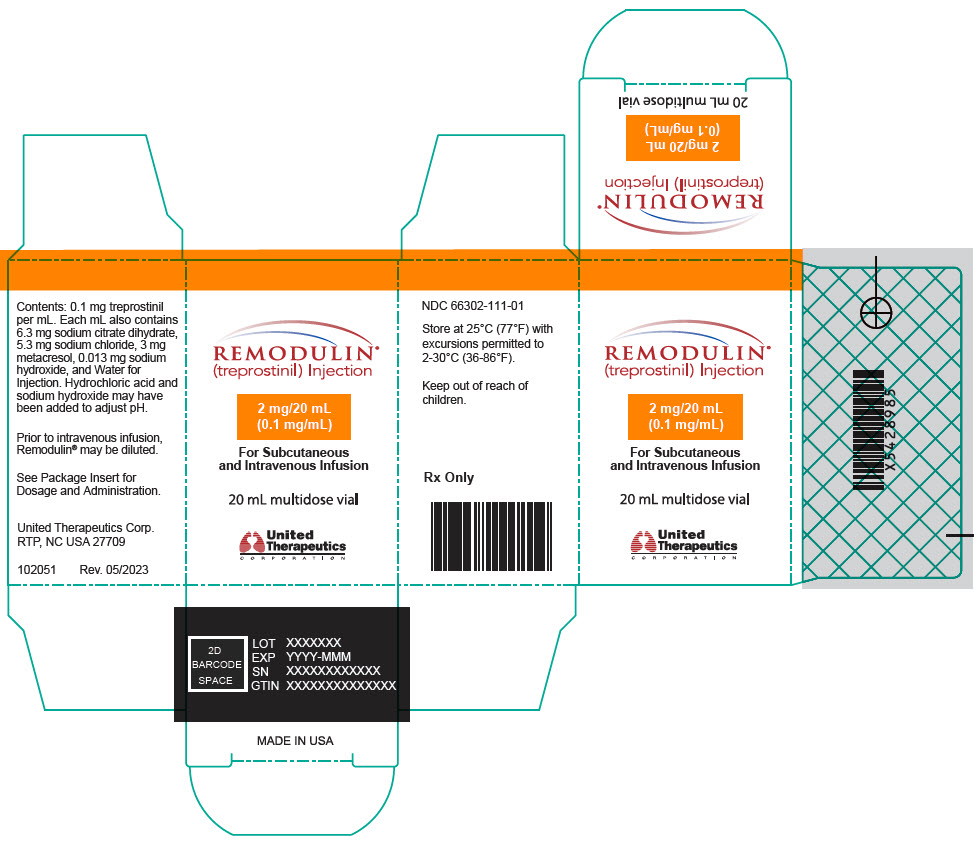
PRINCIPAL DISPLAY PANEL - 0.1 mg/mL Vial Carton REMODULIN ® (treprostinil) Injection 2 mg/20 mL (0.1 mg/mL) For Subcutaneous and Intravenous Infusion 20 mL multidose vial United Therapeutics CORPORATION PRINCIPAL DISPLAY PANEL - 0.1 mg/mL Vial Carton
PRINCIPAL DISPLAY PANEL - 0.2 mg/mL Vial Carton REMODULIN ® (treprostinil) Injection 4 mg/20 mL (0.2 mg/mL) For Subcutaneous and Intravenous Infusion 20 mL multidose vial United Therapeutics CORPORATION PRINCIPAL DISPLAY PANEL - 0.2 mg/mL Vial Carton
PRINCIPAL DISPLAY PANEL - 0.4 mg/mL Vial Carton REMODULIN ® (treprostinil) Injection 8 mg/20 mL (0.4 mg/mL) For Subcutaneous and Intravenous Infusion 20 mL multidose vial United Therapeutics CORPORATION PRINCIPAL DISPLAY PANEL - 0.4 mg/mL Vial Carton
PRINCIPAL DISPLAY PANEL - 1 mg/mL Vial Carton REMODULIN ® (treprostinil) Injection 20 mg/20 mL (1 mg/mL) For Subcutaneous and Intravenous Infusion 20 mL multidose vial United Therapeutics CORPORATION PRINCIPAL DISPLAY PANEL - 1 mg/mL Vial Carton
PRINCIPAL DISPLAY PANEL - 2.5 mg/mL Vial Carton REMODULIN ® (treprostinil) Injection 50 mg/20 mL (2.5 mg/mL) For Subcutaneous and Intravenous Infusion 20 mL multidose vial United Therapeutics CORPORATION PRINCIPAL DISPLAY PANEL - 2.5 mg/mL Vial Carton
PRINCIPAL DISPLAY PANEL - 5 mg/mL Vial Carton REMODULIN ® (treprostinil) Injection 100 mg/20 mL (5 mg/mL) For Subcutaneous and Intravenous Infusion 20 mL multidose vial United Therapeutics CORPORATION PRINCIPAL DISPLAY PANEL - 5 mg/mL Vial Carton
PRINCIPAL DISPLAY PANEL - 10 mg/mL Vial Carton REMODULIN ® (treprostinil) Injection 200 mg/20 mL (10 mg/mL) For Subcutaneous and Intravenous Infusion 20 mL multidose vial United Therapeutics CORPORATION PRINCIPAL DISPLAY PANEL - 10 mg/mL Vial Carton
PRINCIPAL DISPLAY PANEL - 20 mg/mL Vial Carton REMODULIN ® (treprostinil) Injection 400 mg/20 mL (20 mg/mL) For Subcutaneous and Intravenous Infusion 20 mL multidose vial United Therapeutics CORPORATION PRINCIPAL DISPLAY PANEL - 20 mg/mL Vial Carton
PRINCIPAL DISPLAY PANEL - 50 mL Vial Carton NDC 66302-150-50 STERILE DILUENT FOR REMODULIN ® 1 x 50 mL VIAL Contains drug diluent for use only with intravenous infusion of REMODULIN ® (treprostinil) Injection Each vial contains 94 mg glycine, 73.3 mg sodium chloride, sodium hydroxide (added to adjust pH), and Water for Injection. For dilution information see package insert for REMODULIN ® (treprostinil) Injection. Store at 20°C to 25°C (68°F to 77°F), excursions permitted to 15°C to 30°C (59°F to 86°F) [See USP Controlled Room Temperature].
DO NOT FREEZE PRINCIPAL DISPLAY PANEL - 50 mL Vial Carton
Medicare Part D spend CMS · PART D · 2026 (Q1)
Reported adverse events (FAERS)
Top reported reactions
Age at onset
Reporter sex
Serious outcomes
Where does this data come from?
About this NDC listing & data coverage
What data is (and isn’t) available for this NDC — tap to expand
| NDC identity (package / product / labeler codes) | ✓ Available |
| Labeler | ✓ Available |
| Product & package description | ✓ Available |
| Marketing category & status | ✓ Available |
| Active ingredient / dosage form / route | ✓ Available |
| FDA label (SPL via DailyMed) | ✓ Available |
| Package photos | ✓ Available |
| Inactive ingredients (structured) | ✓ Available |
| NADAC pharmacy acquisition price (CMS) | — Not published for this NDC CMS publishes NADAC only for NDCs reported in its retail-pharmacy survey. |
| Orange Book / therapeutic-equivalence data | ✓ Available |
| HCPCS J-code billing crosswalk | ✓ Available |
| Medicaid utilization (CMS SDUD) | — Not published for this NDC CMS reports utilization only for NDCs with Medicaid claims above its privacy threshold. |