
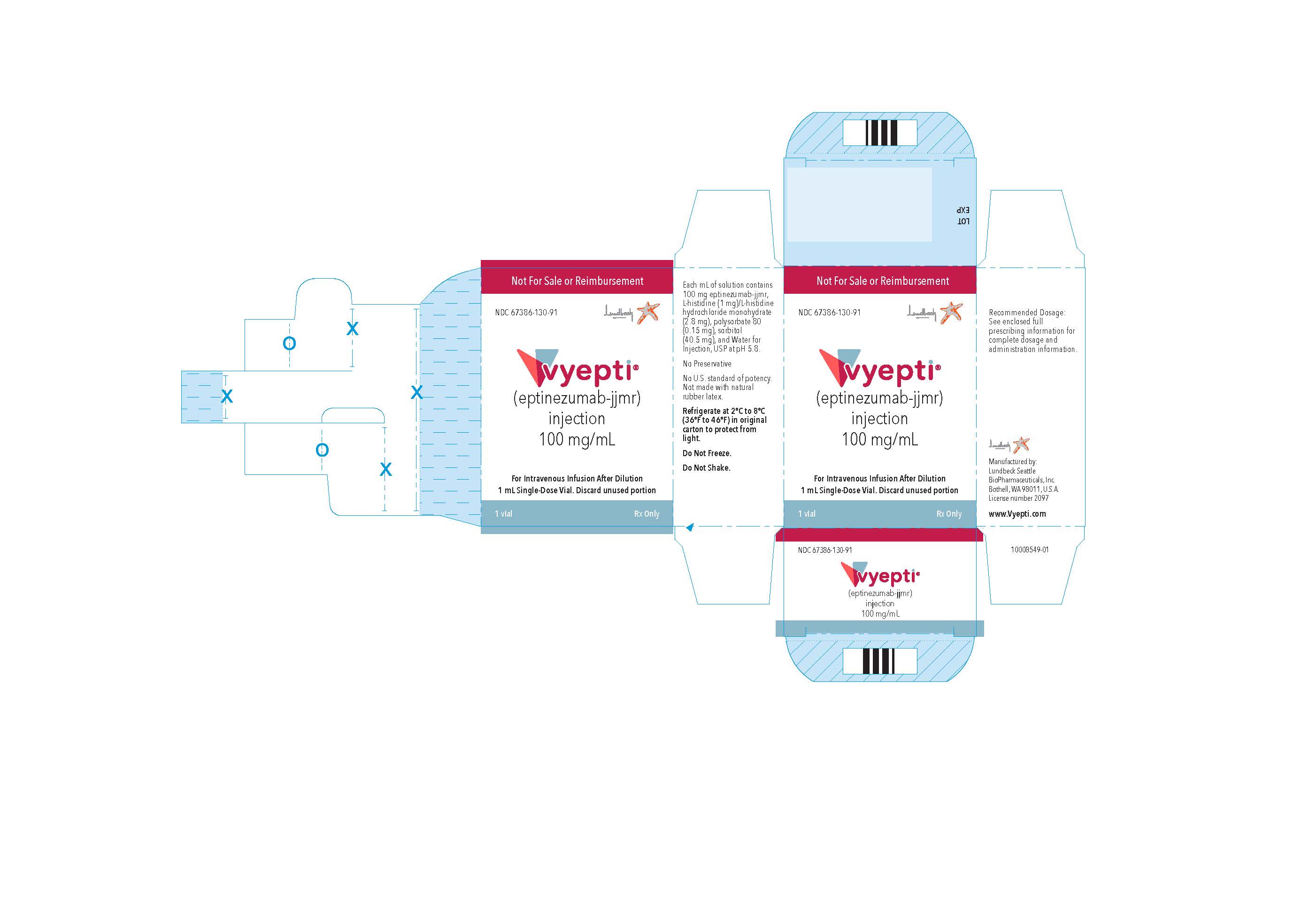
Vyepti eptinezumab-jjmr 100 mg/mL Injection, 1 vial — NDC 67386-130-91 (Billing 67386-0130-91)
This is a package of 1 vial of Vyepti eptinezumab-jjmr 100 mg/mL Injection from Lundbeck Pharmaceuticals LLC, marketed since Feb 2020 and currently FDA-listed.
NDC database record
One package, one record: these facts belong to NDC 67386-130-91 alone.
- Record
- FDA NDC Directory package listing · Human prescription drug
- Code segments
- 67386 labeler · 130 product · 91 package
- Package marketed since
- Apr 1, 2023
- Sample package
- Yes — professional sample, not for sale
- Listing certified through
- Dec 31, 2027
- Barcode (UPC)
- 0367386130517
- FDA record last changed
- Sep 3, 2026
Identity & classification
Regulatory identifiers FDA, NLM and CMS codes for this package
Drug-database identifiers Medi-Span GPI and First Databank GCN / HICL / AHFS classification
- GSN (GCN sequence number): 080773
- GCN: 47744
- HICL (First Databank): 046372
- AHFS class code: 28:32.12.00
- RxCUI (RxNorm): 2283049
Where does this data come from?
- FDA openFDA NDC Directory · synced Oct 8, 2026
- FDA label on DailyMed · label index refreshed Oct 8, 2026
- RxNorm (NLM RxNav) · catalog refreshed Oct 8, 2026
- Medi-Span GPI (licensed)
- First Databank (licensed) · refreshed Oct 8, 2026
RxNorm drug class
This medicine belongs to the Calcitonin Gene-related Peptide Antagonist class.
Where does this data come from?
- RxClass (NLM) · catalog refreshed Oct 8, 2026
Clinical
Eptinezumab-jjmr injection is used to help prevent migraine headaches (severe, throbbing headaches that may cause nausea and sensitivity to sound or light). Eptinezumab-jjmr injection is in a class of medications called monoclonal antibodies. It works by blocking the action of a certain natural substance in the body that causes migraine headaches.
Read the full MedlinePlus article ↗- Vyepti is a preventive treatment, not a rescue medicine. That means it won't stop a migraine that's already started. Instead, it works in the background to reduce how often migrain...
- What exactly does Vyepti do — is it supposed to stop a migraine or prevent one?
- Vyepti is given as an IV infusion once every 3 months — so just four visits a year. Each infusion takes about 30 minutes and is done in a clinical setting like your doctor's office...
- How often do I need to come in for the infusion?
Patient education
Supplement & herbal interactions
Where does this data come from?
- MedlinePlus (NLM) · refreshed Oct 8, 2026
- FDA label on DailyMed · label index refreshed Oct 8, 2026
Ask a licensed pharmacist directly — free, answered by our team.
Pricing
A drug doesn't have one price. Each row is a different public payment system, and none is what you'd pay at the counter — that depends on your insurance. The ⓘ on each row explains what it measures.
| Price system | Per each | Per package |
|---|---|---|
| Retail pharmacies payNADAC · weekly | Not in the retail survey — common for institutional, discontinued, or low-volume packs. | |
| Medicaid paysCMS SDUD · 12 mo | No recent Medicaid claims on file for this NDC — rare and low-volume NDCs are suppressed in the public data. | |
| Medicare drug plans payPart D · quarterly | No Part D plan price is available for this NDC in our data. | |
Where does this data come from?
- CMS NADAC weekly file
- CMS ASP pricing files · refreshed Sep 20, 2026
- CMS Medicaid State Drug Utilization Data · refreshed Oct 9, 2026
- CMS Part D plan pricing files · refreshed Sep 24, 2026
- VA National Acquisition Center price file
Packaging — all sizes for this product
| Package NDC | Description | Marketing start | Marketing end | Status |
|---|---|---|---|---|
| 67386-0130-51 67386-130-51 Main listing | 1 VIAL, SINGLE-DOSE in 1 CARTON / 1 mL in 1 VIAL, SINGLE-DOSE | 2020-02-21 | — | Active |
| 67386-0130-91 You're viewing this | 1 VIAL, SINGLE-DOSE in 1 CARTON / 1 mL in 1 VIAL, SINGLE-DOSE Sample | 2023-04-01 | — | Active |
This pack shows little to no recent Medicaid volume — a different pack size carries most fills. See all packs ↓
Pack size FAQ
What quantity is in this package?
How does this package differ from NDC 67386-0130-51?
What NDC number is used to bill for this package of Vyepti eptinezumab-jjmr 100 mg/mL Injection?
Therapeutic equivalents
| Product | Labeler | Pack | NADAC/unit | TE | Status | Price vs. this |
|---|---|---|---|---|---|---|
| Vyepti 100 mg/mLthis 67386-0130-91 | Lundbeck | 1 vial | — | — | FDA listed | — |
Where does this data come from?
- FDA openFDA NDC Directory · synced Oct 8, 2026
- FDA Purple Book · refreshed Oct 5, 2026
- CMS NADAC weekly file
Availability & biosimilar status
Biologics have no small-molecule generics; biosimilar competition is tracked in the FDA Purple Book.
Why the date isn’t exact: Biosimilar timing can change because patents may be challenged, settled, licensed, added or removed, and litigation can move the real date earlier or later.
🛈 What do these terms mean?
- Biologic patent
- A patent the reference product’s maker has publicly listed. A biosimilar generally can’t launch until these expire — unless they’re invalidated or resolved in a settlement.
- Reference-product exclusivity
- A flat 12 years of FDA market protection from the biologic’s first licensure (the BPCIA). No biosimilar can be licensed before it ends, regardless of patents.
- Interchangeable exclusivity
- The first interchangeable biosimilar can earn a period as the only interchangeable version (pharmacists can substitute it without the prescriber).
- Earliest biosimilar (LOE)
- The latest of all the dates above — the soonest a biosimilar can realistically reach the market. Litigation and settlements can move it earlier.
Biologics have no small-molecule “generics” — competition comes from FDA-licensed biosimilars, tracked in the FDA Purple Book.
| Code | What it grants | Expires |
|---|---|---|
| RefProduct | Reference-product exclusivity (12-year, BPCIA) — no biosimilar can be licensed before this date | Feb 21, 2032 |
Is there a biosimilar for VYEPTI 100 MG/ML VIAL?
Why do different websites show different biosimilar dates?
Can a biosimilar launch before the last patent expires?
What does “current Purple Book estimate” mean?
What does “FDA listed” mean?
What does a patent or protection date mean here?
Where does this data come from?
- FDA Purple Book · refreshed Oct 5, 2026
Inactive Ingredients / Excipients
Inactive ingredients, also called excipients, are components of the drug product other than the active ingredient. They may include fillers, dyes, coatings, preservatives, flavors, or other formulation ingredients.
🧪 Avoiding an ingredient? See Eptinezumab-jjmr Injection inactive ingredients by manufacturer: every current product's list side by side, so you can ask your pharmacy for the version that does not list it.
💡 Tap an ingredient (hover on desktop) to see what it is and why it’s used.
-
UNII 4QD397987E
An amino acid used as a buffer and stabilizer in medications. It helps maintain the pH balance and protects the active drug from breaking down during storage and use.
-
UNII X573657P6P
Histidine monohydrochloride monohydrate is an amino acid salt used as a buffer in medicines. It helps maintain the proper acidity level of liquid formulations to keep the drug stable and effective.
-
UNII 6OZP39ZG8H
Polysorbate 80 is a synthetic emulsifier derived from sorbitol and oleic acid. It helps mix oil and water-based ingredients together in medications and improves how the product disperses in the body.
-
UNII 506T60A25R
Sorbitol is a natural sugar alcohol derived from glucose. It serves as a sweetener, humectant, and bulking agent in medications to improve taste and help maintain moisture in the product.
-
UNII 059QF0KO0R
Water is a liquid solvent that dissolves and mixes ingredients together in liquid medicines, syrups, and injections. It helps distribute the active drug evenly throughout the product.
5 inactive ingredients listed in the exact product block matched to this NDC.
Where does this data come from?
ingredient classCode="IACT" elements from the exact product block matched by this NDC. Label-section narrative from DailyMed / the openFDA label index is shown separately when available.- FDA label on DailyMed · label index refreshed Oct 8, 2026
- FDA openFDA NDC Directory · synced Oct 8, 2026
Inactive ingredient FAQ
Are inactive ingredients the same for every manufacturer?
Why might an inactive ingredient be missing?
Can inactive ingredients matter?
Manufacturer & labeler
More NDCs from Lundbeck Pharmaceuticals LLC labeler code 67386
- Sabril vigabatrin 500 mg Tablet, Film Coated NDC 67386-111-01
- SABRIL vigabatrin 50 mg/mL Powder, For Solution NDC 67386-211-65
- Onfi clobazam 2.5 mg/mL Suspension NDC 67386-313-21
- Onfi clobazam 10 mg Tablet NDC 67386-314-01
- Onfi clobazam 20 mg Tablet NDC 67386-315-01
- Xenazine tetrabenazine 12.5 mg Tablet NDC 67386-421-01
- Xenazine tetrabenazine 25 mg Tablet NDC 67386-422-01
Where does this data come from?
- FDA openFDA NDC Directory · synced Oct 8, 2026
- Drugs@FDA
Full prescribing information FDA SPL
🎯 Indications and Usage ▾
1 INDICATIONS AND USAGE VYEPTI is indicated for the preventive treatment of migraine in adults. VYEPTI is a calcitonin gene-related peptide antagonist indicated for the preventive treatment of migraine in adults ( 1 )
⏱️ Dosage and Administration ▾
2 DOSAGE AND ADMINISTRATION Must dilute before use. For intravenous infusion only ( 2.1 , 2.2 ) Recommended dosage is 100 mg as an intravenous infusion over approximately 30 minutes every 3 months. Some patients may benefit from a dosage of 300 mg every 3 months ( 2.1 , 2.3 ) Dilute only in 100 mL of 0.9% Sodium Chloride Injection ( 2.2 )
2.1Recommended Dosing The recommended dosage is 100 mg administered by intravenous infusion every 3 months. Some patients may benefit from a dosage of 300 mg administered by intravenous infusion every 3 months.
2.2Dilution Instructions VYEPTI requires dilution prior to administration. Dilute only in 100 mL 0.9% Sodium Chloride Injection, USP. The infusion bags must be made of polyvinyl chloride (PVC), polyethylene (PE), or polyolefin (PO).
Use appropriate aseptic technique when preparing VYEPTI solution for intravenous infusion. VYEPTI single-dose vials contain no preservative; discard unused portion remaining in the vial. Dilution 100 mg dose: To prepare the solution, withdraw 1 mL of VYEPTI from a single-dose vial using a sterile needle and syringe.
Inject the 1 mL content into a 100 mL bag of 0.9% Sodium Chloride Injection, USP. 300 mg dose: To prepare the solution, withdraw 1 mL of VYEPTI from each of 3 single-dose vials using a sterile needle and syringe. Inject the resulting 3 mL content into a 100 mL bag of 0.9% Sodium Chloride Injection, USP.
Storage and Handling of Diluted Product Gently invert the VYEPTI solution to mix completely. Do not shake. Following dilution, VYEPTI solution must be infused within 8 hours.
During this time, VYEPTI solution should be stored at room temperature, 20°C to 25°C (68°F to 77°F). Do not freeze.
2.3Infusion Administration Instructions Parenteral drug products should be inspected visually for particulate matter and discoloration prior to administration, whenever solution and container permit. Do not use if the liquid contains visible particulate matter or is cloudy or discolored [see Dosage Forms and Strengths (3) ] . No other medications should be administered through the infusion set or mixed with VYEPTI.
VYEPTI is for intravenous infusion only; infuse over approximately 30 minutes. Do not administer VYEPTI as an intravenous push or bolus injection. Use an intravenous infusion set with a 0.2 micron or 0.22 micron in-line or add-on sterile filter.
After the infusion is complete, flush the line with 20 mL of 0.9% Sodium Chloride Injection, USP.
💊 Dosage Forms and Strengths ▾
3 DOSAGE FORMS AND STRENGTHS VYEPTI is a clear to slightly opalescent, colorless to brownish-yellow solution available as follows: Injection: 100 mg/mL in a single-dose vial Injection: 100 mg/mL solution in a single-dose vial ( 3 )
⛔ Contraindications ▾
4 CONTRAINDICATIONS VYEPTI is contraindicated in patients with serious hypersensitivity to eptinezumab-jjmr or to any of the excipients in VYEPTI. Reactions have included anaphylaxis and angioedema [see Warnings and Precautions (5.1) ] . VYEPTI is contraindicated in patients with serious hypersensitivity to eptinezumab-jjmr or to any of the excipients ( 4)
⚠️ Warnings and Cautions ▾
5 WARNINGS AND PRECAUTIONS Hypersensitivity Reactions: If a hypersensitivity reaction occurs, consider discontinuing VYEPTI and initiate appropriate therapy ( 5.1 ) Constipation with Serious Complications: Serious complications of constipation may occur ( 5.2 ) Hypertension: New-onset or worsening of pre-existing hypertension may occur ( 5.3 ) Raynaud’s Phenomenon: New-onset or worsening of pre-existing Raynaud’s phenomenon may occur ( 5.4 )
5.1Hypersensitivity Reactions Hypersensitivity reactions, including angioedema, urticaria, facial flushing, dyspnea, and rash, have occurred with VYEPTI in clinical trials and in the postmarketing setting. Most hypersensitivity reactions occurred during infusion and were not serious, but often led to discontinuation or required treatment. Serious hypersensitivity reactions may occur.
Cases of anaphylaxis have been reported in the postmarketing setting. If a hypersensitivity reaction occurs, consider discontinuing VYEPTI and institute appropriate therapy [see Contraindications (4) and Patient Counseling Information (17) ] .
5.2Constipation with Serious Complications Constipation with serious complications has been reported following the use of monoclonal antibody CGRP antagonists, including VYEPTI, in the postmarketing setting. There were cases with monoclonal antibody CGRP antagonists that required hospitalization, including cases where surgery was necessary. In a majority of these cases, the onset of constipation was reported after the first dose; however, patients have also presented with constipation later on in treatment.
The monoclonal antibody CGRP antagonist was discontinued in many of the reported cases of constipation with serious complications. Monitor patients treated with VYEPTI for severe constipation and manage as clinically appropriate. The concurrent use of medications that reduce gastrointestinal motility may increase the risk for more severe constipation and the potential for constipation-related complications.
5.3Hypertension Development of hypertension and worsening of pre-existing hypertension have been reported following the use of CGRP antagonists, including VYEPTI, in the postmarketing setting. Some of the patients who developed new-onset hypertension had risk factors for hypertension. There were cases requiring initiation of pharmacological treatment for hypertension, and in some cases hospitalization.
Hypertension may occur at any time during treatment, but was most frequently reported within 7 days of therapy initiation. The CGRP antagonist was discontinued in many of the reported cases. Monitor patients treated with VYEPTI for new-onset hypertension or worsening of pre-existing hypertension, and consider whether discontinuation of VYEPTI is warranted if evaluation fails to establish an alternative etiology or blood pressure is inadequately controlled.
5.4Raynaud’s Phenomenon Development of Raynaud’s phenomenon and recurrence or worsening of pre-existing Raynaud’s phenomenon have been reported in the postmarketing setting following the use of CGRP antagonists. In reported cases with monoclonal antibody CGRP antagonists, symptom onset occurred a median of 71 days following dosing. Many of the cases reported serious outcomes, including hospitalizations and disability, generally related to debilitating pain.
In most reported cases, discontinuation of the CGRP antagonist resulted in resolution of symptoms. VYEPTI should be discontinued if signs or symptoms of Raynaud’s phenomenon develop, and patients should be evaluated by a healthcare provider if symptoms do not resolve. Patients with a history of Raynaud’s phenomenon should be monitored for, and informed about the possibility of, worsening or recurrence of signs and symptoms.
🤒 Adverse Reactions ▾
6 ADVERSE REACTIONS The following clinically significant adverse reactions are described elsewhere in the labeling: Hypersensitivity Reactions [see Warnings and Precautions (5.1) ] . Constipation with Serious Complications [see Warnings and Precautions (5.2)] Hypertension [see Warnings and Precautions (5.3) ] Raynaud’s Phenomenon [see Warnings and Precautions (5.4) ] The most common adverse reactions (≥2% and 2% or greater than placebo) were nasopharyngitis and hypersensitivity ( 6.1 ) To report SUSPECTED ADVERSE REACTIONS, contact Lundbeck at 1-800-455-1141 or FDA at 1-800-FDA-1088 or www.fda.gov/medwatch.
6.1Clinical Trials Experience Because clinical trials are conducted under widely varying conditions, adverse reaction rates observed in the clinical trials of a drug cannot be directly compared to rates in the clinical trials of another drug and may not reflect the rates observed in clinical practice. The safety of VYEPTI was evaluated in 2076 patients with migraine who received at least one dose of VYEPTI, representing 1615 patient-years of exposure; of these, 1524 patients were exposed to 100 mg or 300 mg. Across all doses, 1872 patients were exposed for at least 6 months and 991 patients were exposed for 12 months.
In the placebo-controlled clinical studies (Study 1 and Study 2) of 1372 patients, 579 patients received at least one dose of VYEPTI 100 mg, 574 patients received at least one dose of VYEPTI 300 mg, and 588 patients received placebo [see Clinical Studies (14) ] . Approximately 86% were female, 89% were white, and the mean age was 40.4 years at study entry. The most common (incidence at least 2% and at least 2% greater than placebo) adverse reactions in the clinical trials for the preventive treatment of migraine were nasopharyngitis and hypersensitivity.
Table 1 summarizes the adverse reactions that occurred during Study 1 and Study 2. Table 1. Adverse Reactions Occurring with an Incidence of at Least 2% for VYEPTI and at Least 2% Greater than Placebo in Studies 1 and 2 Adverse Reactions VYEPTI 100 mg N=579% VYEPTI 300 mg N=574% Placebo N=588% Nasopharyngitis 6 8 6 Hypersensitivity reactions* 1 2 0 * Hypersensitivity reactions includes multiple related adverse event terms, such as hypersensitivity, pruritus, and flushing/hot flush that occurred on the day of dosing.
In Study 1 and Study 2, 1.9% of patients treated with VYEPTI discontinued treatment because of adverse reactions [see Warnings and Precautions (5.1) ] . In study 3, the safety profile observed in 480 patients who were randomized and treated (238 to VYEPTI 100 mg and 242 to placebo) was consistent with the safety profile observed in the two pivotal placebo-controlled studies with VYEPTI (Study 1 and 2).
6.2Postmarketing Experience The following adverse reactions have been identified during postapproval use of VYEPTI. Because these reactions are reported voluntarily from a population of uncertain size, it is not always possible to reliably estimate their frequency or establish a causal relationship to drug exposure. Gastrointestinal Disorders: Constipation [see Warnings and Precautions (5.2) ] General Disorders and Administration Site Conditions: Fatigue Immune System Disorders: Anaphylaxis [see Contraindications (4) and Warnings and Precautions (5.1) ] Vascular Disorders: Hypertension [see Warnings and Precautions (5.3) ] , Raynaud’s phenomenon [see Warnings and Precautions (5.4) ]
👥 Use in Specific Populations ▾
8 USE IN SPECIFIC POPULATIONS
8.1Pregnancy Pregnancy Exposure Registry There is a pregnancy exposure registry that monitors pregnancy outcomes in women exposed to VYEPTI during pregnancy. Healthcare providers are encouraged to register pregnant patients, or pregnant women may enroll themselves in the registry by calling 1-855-810-8549 or by contacting the company at www.vyeptipregnancyregistry.lundbeck.com. Risk Summary There are no adequate data on developmental risks associated with the use of VYEPTI in pregnant women.
No adverse developmental effects were observed following administration of eptinezumab-jjmr to pregnant animals at doses greater than those used clinically [see Data] . In the U.S. general population, the estimated background risk of major birth defects and miscarriages in clinically recognized pregnancies is 2%-4% and 15%-20%, respectively. The estimated rate of major birth defects (2.2%-2.9%) and miscarriage (17%) among deliveries to women with migraine are similar to rates reported in women without migraine.
Clinical Considerations Disease-Associated Maternal and/or Embryo/Fetal Risk Published data have suggested that women with migraine may be at increased risk of preeclampsia and gestational hypertension during pregnancy. Data Animal Data When eptinezumab-jjmr (0, 75, or 150 mg/kg) was administered weekly to female rats and rabbits by intravenous injection throughout organogenesis, no adverse effects on embryofetal development were observed. The higher dose tested (150 mg/kg) is 30 times the maximum recommended human dose (MRHD) of 300 mg, on a body weight basis (mg/kg).
When eptinezumab-jjmr (0, 75, or 150 mg/kg) was administered weekly to female rats throughout pregnancy and lactation, no adverse effects on pre- and postnatal development were observed. The higher dose tested (150 mg/kg) is 30 times the MRHD, on a mg/kg basis.
8.2Lactation Risk Summary There are no data on the presence of eptinezumab-jjmr in human milk, the effects on the breastfed infant, or the effects on milk production. The developmental and health benefits of breastfeeding should be considered along with the mother’s clinical need for VYEPTI and any potential adverse effects on the breastfed infant from VYEPTI or from the underlying maternal condition.
8.4Pediatric Use Safety and effectiveness in pediatric patients have not been established.
8.5Geriatric Use Clinical studies of VYEPTI did not include sufficient numbers of patients aged 65 and over to determine whether they respond differently from younger patients.
🤰 Pregnancy ▾
8.1Pregnancy Pregnancy Exposure Registry There is a pregnancy exposure registry that monitors pregnancy outcomes in women exposed to VYEPTI during pregnancy. Healthcare providers are encouraged to register pregnant patients, or pregnant women may enroll themselves in the registry by calling 1-855-810-8549 or by contacting the company at www.vyeptipregnancyregistry.lundbeck.com. Risk Summary There are no adequate data on developmental risks associated with the use of VYEPTI in pregnant women.
No adverse developmental effects were observed following administration of eptinezumab-jjmr to pregnant animals at doses greater than those used clinically [see Data] . In the U.S. general population, the estimated background risk of major birth defects and miscarriages in clinically recognized pregnancies is 2%-4% and 15%-20%, respectively. The estimated rate of major birth defects (2.2%-2.9%) and miscarriage (17%) among deliveries to women with migraine are similar to rates reported in women without migraine.
Clinical Considerations Disease-Associated Maternal and/or Embryo/Fetal Risk Published data have suggested that women with migraine may be at increased risk of preeclampsia and gestational hypertension during pregnancy. Data Animal Data When eptinezumab-jjmr (0, 75, or 150 mg/kg) was administered weekly to female rats and rabbits by intravenous injection throughout organogenesis, no adverse effects on embryofetal development were observed. The higher dose tested (150 mg/kg) is 30 times the maximum recommended human dose (MRHD) of 300 mg, on a body weight basis (mg/kg).
When eptinezumab-jjmr (0, 75, or 150 mg/kg) was administered weekly to female rats throughout pregnancy and lactation, no adverse effects on pre- and postnatal development were observed. The higher dose tested (150 mg/kg) is 30 times the MRHD, on a mg/kg basis.
🧒 Pediatric Use ▾
8.4Pediatric Use Safety and effectiveness in pediatric patients have not been established.
🧓 Geriatric Use ▾
8.5Geriatric Use Clinical studies of VYEPTI did not include sufficient numbers of patients aged 65 and over to determine whether they respond differently from younger patients.
🧬 Clinical Pharmacology ▾
12 CLINICAL PHARMACOLOGY
12.1Mechanism of Action Eptinezumab-jjmr is a humanized monoclonal antibody that binds to calcitonin gene-related peptide (CGRP) ligand and blocks its binding to the receptor.
12.2Pharmacodynamics The relationship between the pharmacodynamic activity and the mechanism(s) by which eptinezumab-jjmr exerts its clinical effects is unknown.
12.3Pharmacokinetics Eptinezumab-jjmr exhibits linear pharmacokinetics and exposure increases proportionally with doses from 100 mg to 300 mg after intravenous administration. Steady-state plasma concentration is attained after the first dose with a once every 3-month dosing schedule. Distribution The central volume of distribution (Vc) for eptinezumab-jjmr is approximately 3.7 liters.
Metabolism & Elimination Eptinezumab-jjmr is expected to be degraded by proteolytic enzymes into small peptides and amino acids. The apparent clearance of eptinezumab-jjmr was 0.006 L/h, and the terminal elimination half-life was approximately 27 days. Specific Populations A population pharmacokinetic analysis assessing the effects of age, race, sex, and body weight did not suggest any clinically significant impact of these covariates on eptinezumab exposures.
Patients with Renal or Hepatic Impairment No dedicated studies were conducted to assess the effects of renal or hepatic impairment on the pharmacokinetics of eptinezumab-jjmr. However, hepatic or renal impairment is not expected to affect the pharmacokinetics of eptinezumab-jjmr. A population pharmacokinetic analysis of integrated data from eptinezumab-jjmr clinical studies did not reveal clinically significant impact on pharmacokinetics of patients with hepatic or renal impairment.
Drug Interaction Studies P450 Enzymes Eptinezumab-jjmr is not metabolized by cytochrome P450 enzymes; therefore, interactions with concomitant medications that are substrates, inducers, or inhibitors of cytochrome P450 enzymes are unlikely. Sumatriptan The co-administration of a single dose of 300 mg eptinezumab-jjmr administered as an intravenous infusion (over a period of 1 hour ± 15 min) with a single dose of 6 mg sumatriptan administered subcutaneously did not significantly influence the pharmacokinetics of eptinezumab-jjmr or sumatriptan.
12.6Immunogenicity The observed incidence of anti-drug antibodies is highly dependent on the sensitivity and specificity of the assay. Differences in assay methods preclude meaningful comparisons of the incidence of anti-drug antibodies in the studies described below with the incidence of anti-drug antibodies in other studies, including those of eptinezumab-jjmr. In patients receiving VYEPTI 100 mg or 300 mg every 3 months, the incidence of anti-eptinezumab-jjmr antibody development in Study 1 (up to 56 weeks) was 20.6% (92/447), and 41.3% (38/92) of those patients developed anti-eptinezumab-jjmr neutralizing antibodies.
In Study 2 (up to 32 weeks), the incidence of anti-eptinezumab-jjmr antibody development was 18.3% (129/706), and 34.9% (45/129) of those patients developed anti-eptinezumab-jjmr neutralizing antibodies. In an open-label study with 84 weeks of treatment, 18% (23/128) of patients developed anti-eptinezumab-jjmr antibodies, and 39% (9/23) of those patients developed anti-eptinezumab-jjmr neutralizing antibodies. Although the results from both studies showed no clear evidence of an impact from development of anti-eptinezumab-jjmr antibodies, including neutralizing antibodies, on the safety and efficacy profiles of VYEPTI, the available data are too limited to make definitive conclusions.
🧬 Mechanism of Action ▾
12.1Mechanism of Action Eptinezumab-jjmr is a humanized monoclonal antibody that binds to calcitonin gene-related peptide (CGRP) ligand and blocks its binding to the receptor.
📦 How Supplied / Storage and Handling ▾
16 HOW SUPPLIED/STORAGE AND HANDLING
16.1How Supplied VYEPTI (eptinezumab-jjmr) injection is a clear to slightly opalescent, colorless to brownish-yellow solution supplied as: Carton containing one 100 mg/mL single-dose vial - NDC 67386-130-51.
16.2Storage and Handling Store refrigerated at 2°C to 8°C (36°F to 46°F) in the original carton to protect from light until time of use. Do not freeze or shake. The vial stopper is not made with natural rubber latex.
📋 Description ▾
11 DESCRIPTION Eptinezumab-jjmr is a humanized immunoglobulin G1 (IgG1) monoclonal antibody specific for calcitonin gene-related peptide (CGRP) ligand. Eptinezumab-jjmr has an approximate molecular weight of 143 kD. Eptinezumab-jjmr is produced in Pichia pastoris yeast cells by recombinant DNA technology.
VYEPTI (eptinezumab-jjmr) injection is a sterile, preservative-free, clear to slightly opalescent, colorless to brownish-yellow solution, for intravenous infusion. VYEPTI is supplied as a 100 mg/mL single-dose vial. Each mL contains 100 mg eptinezumab-jjmr formulated in L-histidine (1 mg), L-histidine hydrochloride monohydrate (2.8 mg), polysorbate 80 (0.15 mg), sorbitol (40.5 mg), and Water for Injection, USP, at a pH of 5.8.
💬 Information for Patients ▾
17 PATIENT COUNSELING INFORMATION Advise the patient to read the FDA-approved patient labeling (Patient Information). Hypersensitivity Reactions Inform patients about the signs and symptoms of hypersensitivity reactions and that these reactions can occur with VYEPTI. Advise patients to contact their healthcare provider immediately if signs or symptoms of hypersensitivity reactions occur [see Warnings and Precautions (5.1) ] .
Constipation with Serious Complications Inform patients that constipation with serious complications can occur with VYEPTI. Advise patients to contact their healthcare providers if they experience severe constipation [see Warnings and Precautions (5.2 )]. Hypertension Inform patients that hypertension can develop or pre-existing hypertension can worsen with VYEPTI, and that they should contact their healthcare provider if they experience elevation in their blood pressure [see Warnings and Precautions (5.3) ] .
Raynaud’s Phenomenon Inform patients that Raynaud’s phenomenon can develop or worsen with VYEPTI. Advise patients to discontinue VYEPTI treatment and contact their healthcare provider if they experience signs or symptoms of Raynaud’s phenomenon [see Warnings and Precautions (5.4) ] . Pregnancy Exposure Registry Advise patients that there is a pregnancy exposure registry that monitors pregnancy outcomes in women exposed to VYEPTI during pregnancy [see Use in Specific Populations (8.1) ] .
Lactation Inform patients to notify their healthcare provider if they are breastfeeding or plan to breastfeed [see Use in Specific Populations (8.2) ] . Manufactured by: Lundbeck Seattle BioPharmaceuticals, Inc. 11804 North Creek Parkway South Bothell, WA 98011 USA U.S.
License No. 2097 Vyepti is a registered trademark of Lundbeck Seattle BioPharmaceuticals, Inc. Lundbeck logo
🧬 Pharmacokinetics ▾
12.3Pharmacokinetics Eptinezumab-jjmr exhibits linear pharmacokinetics and exposure increases proportionally with doses from 100 mg to 300 mg after intravenous administration. Steady-state plasma concentration is attained after the first dose with a once every 3-month dosing schedule. Distribution The central volume of distribution (Vc) for eptinezumab-jjmr is approximately 3.7 liters.
Metabolism & Elimination Eptinezumab-jjmr is expected to be degraded by proteolytic enzymes into small peptides and amino acids. The apparent clearance of eptinezumab-jjmr was 0.006 L/h, and the terminal elimination half-life was approximately 27 days. Specific Populations A population pharmacokinetic analysis assessing the effects of age, race, sex, and body weight did not suggest any clinically significant impact of these covariates on eptinezumab exposures.
Patients with Renal or Hepatic Impairment No dedicated studies were conducted to assess the effects of renal or hepatic impairment on the pharmacokinetics of eptinezumab-jjmr. However, hepatic or renal impairment is not expected to affect the pharmacokinetics of eptinezumab-jjmr. A population pharmacokinetic analysis of integrated data from eptinezumab-jjmr clinical studies did not reveal clinically significant impact on pharmacokinetics of patients with hepatic or renal impairment.
Drug Interaction Studies P450 Enzymes Eptinezumab-jjmr is not metabolized by cytochrome P450 enzymes; therefore, interactions with concomitant medications that are substrates, inducers, or inhibitors of cytochrome P450 enzymes are unlikely. Sumatriptan The co-administration of a single dose of 300 mg eptinezumab-jjmr administered as an intravenous infusion (over a period of 1 hour ± 15 min) with a single dose of 6 mg sumatriptan administered subcutaneously did not significantly influence the pharmacokinetics of eptinezumab-jjmr or sumatriptan.
🧬 Pharmacodynamics ▾
12.2Pharmacodynamics The relationship between the pharmacodynamic activity and the mechanism(s) by which eptinezumab-jjmr exerts its clinical effects is unknown.
🔬 Clinical Studies ▾
14 CLINICAL STUDIES The efficacy of VYEPTI was evaluated in three randomized, multicenter, placebo-controlled double-blind studies that enrolled patients with episodic and chronic migraine who were eligible for preventive treatment of migraine. In Study 1, which included patients with episodic migraine, and Study 2, which included patients with chronic migraine, either 100 mg or 300 mg VYEPTI was administered by intravenous infusion every 3 months. In Study 3, 100 mg VYEPTI was administered as a single intravenous infusion to patients with episodic or chronic migraine who were eligible for preventive migraine treatment and who had a concurrent migraine.
Study 1: Episodic Migraine Study 1 (NCT02559895) included adults with a history of episodic migraine (4 to 14 headache days per month, of which at least 4 were migraine days). A total of 665 patients were randomized to receive placebo (N=222), 100 mg VYEPTI (N=221), or 300 mg VYEPTI (N=222) every 3 months for 12 months. Patients were allowed to use concurrent acute migraine or headache medications, including migraine-specific medications (i.e., triptans, ergotamine derivatives), during the trial.
The study excluded patients with a history of cardiovascular disease (hypertension, ischemic heart disease), neurological disease, or cerebrovascular disease. The primary efficacy endpoint was the change from baseline in mean monthly migraine days over Months 1-3. Secondary endpoints included the percentages of patients with 50% or greater, and 75% or greater reductions from baseline in monthly migraine days over Months 1-3.
Patients had a median age of 39 years (range: 18 to 71 years), 84% were female, and 84% were white. The mean migraine frequency at baseline was approximately 8.6 migraine days per month and was similar across treatment groups. VYEPTI treatment demonstrated statistically significant improvements compared to placebo for the primary efficacy endpoint, as shown in Table 2; secondary endpoints are also summarized in Table 2.
Table 2. Efficacy Endpoint Results in Study 1 VYEPTI 100 mg N=221 VYEPTI 300 mg N=222 Placebo N=222 Monthly Migraine Days (MMD) – Months 1-3 Change from baseline -3.9 -4.3 -3.2 Difference from placebo -0.7 -1.1 p -value 0.018 <0.001 ≥50% MMD responders – Months 1-3 % Responders 49.8% 56.3% 37.4% Difference from placebo 12.4% 18.9% p - value 0.009* <0.001 ≥75% MMD responders – Months 1-3 % Responders 22.2% 29.7% 16.2% Difference from placebo 6.0% 13.5% p -value NS** <0.001 * Nominal statistical significance ** NS = Not statistically significant Figure 1 shows the mean change from baseline in average monthly migraine days in Study 1.
Patients treated with VYEPTI at both doses had greater mean decreases from baseline in mean monthly migraine days over Months 1-3 compared to placebo-treated patients. Figure 1. Change from Baseline in Monthly Migraine Days in Study 1 Figure 2 shows the distribution of change from baseline in mean monthly migraine days through Month 3 by treatment group in 2-day increments.
Figure 2. Distribution of Change from Baseline in Mean Monthly Migraine Days over Months 1 to 3 by Treatment Group in Study 1 Figure 3 demonstrates that greater percentages of placebo-treated patients had migraines on most days during the first 7 days of treatment compared to VYEPTI-treated patients in Study 1. Figure 3.
Percentage of Patients with a Migraine from Day -1 (Day Prior to Infusion) to Day 7 in Study 1 Study 2: Chronic Migraine Study 2 (NCT02974153) included adults with a history of chronic migraine (15 to 26 headache days per month, of which at least 8 were migraine days). A total of 1072 patients were randomized and received placebo (N=366), 100 mg VYEPTI (N=356), or 300 mg VYEPTI (N=350) every 3 months for 6 months. Patients were allowed to use and to continue an established stable regimen of acute migraine or headache preventive medication (except onabotulinumtoxinA).
Patients with a dual diagnosis of chronic migraine and medication ove… [Excerpted — this section continues on DailyMed.]
🧪 Nonclinical Toxicology ▾
13 NONCLINICAL TOXICOLOGY
13.1Carcinogenesis, Mutagenesis, Impairment of Fertility Carcinogenesis The carcinogenic potential of eptinezumab-jjmr has not been assessed. Mutagenesis Genetic toxicology studies of eptinezumab-jjmr have not been conducted. Impairment of Fertility When eptinezumab-jjmr (0, 75, or 150 mg/kg) was administered weekly by intravenous injection to male and female rats prior to and during mating and continuing in females to gestation day 3-4, no adverse effects on fertility were observed.
The higher dose tested (150 mg/kg) is 30 times the maximum recommended human dose of 300 mg, on a body weight basis (mg/kg).
📄 Carcinogenesis, Mutagenesis, Impairment of Fertility ▾
13.1Carcinogenesis, Mutagenesis, Impairment of Fertility Carcinogenesis The carcinogenic potential of eptinezumab-jjmr has not been assessed. Mutagenesis Genetic toxicology studies of eptinezumab-jjmr have not been conducted. Impairment of Fertility When eptinezumab-jjmr (0, 75, or 150 mg/kg) was administered weekly by intravenous injection to male and female rats prior to and during mating and continuing in females to gestation day 3-4, no adverse effects on fertility were observed.
The higher dose tested (150 mg/kg) is 30 times the maximum recommended human dose of 300 mg, on a body weight basis (mg/kg).
📄 Patient Package Insert ▾
PATIENT PACKAGE INSERT PATIENT INFORMATION VYEPTI ® (vye ep' tee) (eptinezumab-jjmr) injection, for intravenous use What is VYEPTI? VYEPTI is a prescription medicine used for the preventive treatment of migraine in adults. It is not known if VYEPTI is safe and effective in children.
Do not receive VYEPTI if you are allergic to eptinezumab-jjmr or any of the ingredients in VYEPTI. See the end of this Patient Information leaflet for a complete list of ingredients in VYEPTI. Before you receive VYEPTI, tell your healthcare provider about all of your medical conditions, including if you: have high blood pressure. have circulation problems in your fingers and toes. are pregnant or plan to become pregnant.
It is not known if VYEPTI will harm your unborn baby. Pregnancy Registry : There is a pregnancy registry for women who take VYEPTI. The purpose of this registry is to collect information about the health of you and your baby.
You may enroll yourself by calling 1-855-810-8549 or by visiting www.vyeptipregnancyregistry.lundbeck.com . Or you may talk to your healthcare provider about how you can take part in this registry. are breastfeeding or plan to breastfeed. It is not known if VYEPTI passes into your breast milk.
Talk to your healthcare provider about the best way to feed your baby while using VYEPTI. Tell your healthcare provider about all the medicines you take , including prescription and over-the-counter medicines, vitamins, and herbal supplements. How will I receive VYEPTI?
VYEPTI will be given by a healthcare provider in a healthcare setting. VYEPTI is given by intravenous (IV) infusion in your vein. VYEPTI will be given over 30 minutes every 3 months.
If you have questions about your infusion schedule, ask your healthcare provider. What are the possible side effects of VYEPTI? VYEPTI may cause serious side effects, including: Allergic reactions.
Allergic reactions can happen after receiving VYEPTI. Call your healthcare provider or get emergency medical help right away if you have any of the following symptoms of an allergic reaction: o rash o swelling of your face, lips, tongue or throat o trouble breathing o hives o redness in your face Constipation with serious complications. Severe constipation can happen after receiving VYEPTI.
In some cases, people have been hospitalized. Contact your healthcare provider if you have severe constipation or constipation is associated with symptoms such as severe or constant belly pain, vomiting, swelling of belly, or bloating. High blood pressure.
High blood pressure or worsening of high blood pressure can happen after receiving VYEPTI. Contact your healthcare provider if you have an increase in blood pressure. Raynaud’s phenomenon.
A type of circulation problem can worsen or happen after receiving VYEPTI. Raynaud’s phenomenon can lead to your fingers or toes feeling numb, cool, or painful, or changing color from pale, to blue, to red. Contact your healthcare provider if these symptoms occur.
The most common side effects of VYEPTI include: stuffy nose and scratchy throat allergic reactions These are not all of the possible side effects of VYEPTI. Call your doctor for medical advice about side effects. You may report side effects to FDA at 1-800-FDA-1088.
General information about the safe and effective use of VYEPTI. Medicines are sometimes prescribed for purposes other than those listed in the Patient Information leaflet. You can ask your pharmacist or healthcare provider for information about VYEPTI that is written for health professionals.
What are the ingredients in VYEPTI? Active ingredient : eptinezumab-jjmr Inactive ingredients : L-histidine, L-histidine hydrochloride monohydrate, polysorbate 80, sorbitol, and Water for Injection. The vial stopper is not made with natural rubber latex.
Manufactured by: Lundbeck Seattle BioPharmaceuticals, Inc., 11804 North Creek Parkway South, Bothell, WA 98011 US License Number: 2097 Vyepti is a registered trademark of Lundbeck Seattle BioPharma… [Excerpted — this section continues on DailyMed.]
📄 Recent Major Changes ▾
Warnings and Precautions ( 5.2 ) 06/2026
📄 Package Label / Principal Display Panel ▾
PRINCIPAL DISPLAY PANEL NDC 67386-130-51 VYEPTITM (vye ep' tee) (eptinezumab-jjmr) injection, for intravenous use 100 mg/mL NDC 67386-130-51 VYEPTITM (vye ep' tee) (eptinezumab-jjmr) injection, for intravenous use 100 mg/mL injection, for intravenous use 100 mg/mL
PRINCIPAL DISPLAY PANEL NDC 67386-130-91 VYEPTITM (vye ep' tee) (eptinezumab-jjmr) injection, for intravenous use 100 mg/mL Professional Sample Professional Sample NDC 67386-130-91 VYEPTITM (vye ep' tee) (eptinezumab-jjmr) njection, for intravenous use 100 mg/mL Professional Sample
Medicaid utilization by pack size
Medicare Part D spend CMS · PART D · 2026 (Q1)
Reported adverse events (FAERS)
Top reported reactions
Age at onset
Reporter sex
Serious outcomes
Where does this data come from?
About this NDC listing & data coverage
What data is (and isn’t) available for this NDC — tap to expand
| NDC identity (package / product / labeler codes) | ✓ Available |
| Labeler | ✓ Available |
| Product & package description | ✓ Available |
| Marketing category & status | ✓ Available |
| Active ingredient / dosage form / route | ✓ Available |
| FDA label (SPL via DailyMed) | ✓ Available |
| Package photos | ✓ Available |
| Inactive ingredients (structured) | ✓ Available |
| NADAC pharmacy acquisition price (CMS) | — Not published for this NDC CMS publishes NADAC only for NDCs reported in its retail-pharmacy survey. |
| Orange Book / therapeutic-equivalence data | ✓ Available |
| HCPCS J-code billing crosswalk | — Not published for this NDC Most self-administered / retail products have no J-code — that is normal. |
| Medicaid utilization (CMS SDUD) | — Not published for this NDC CMS reports utilization only for NDCs with Medicaid claims above its privacy threshold. |