
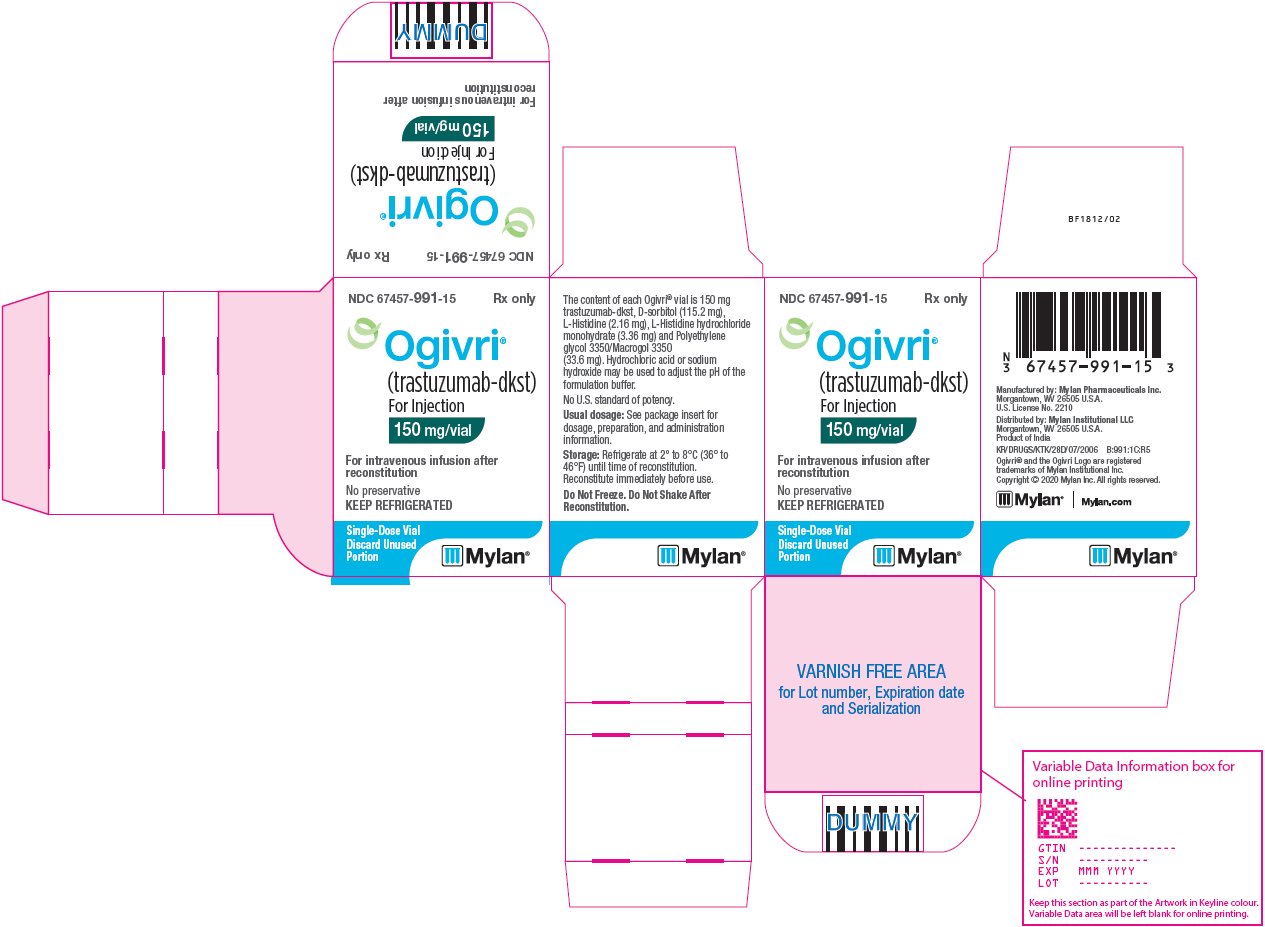
OGIVRI trastuzumab 150 mg/7.4mL Injection, Powder, Lyophilized, For Solution — NDC 67457-991-15 (Billing 67457-0991-15)
This is a package of OGIVRI trastuzumab 150 mg/7.4mL Injection, Powder, Lyophilized, For Solution from Mylan Institutional LLC, marketed since Nov 2019 and currently FDA-listed, this package's marketing is listed to end Feb 2027. It is this product's only package size.
NDC database record
One package, one record: these facts belong to NDC 67457-991-15 alone.
- Record
- FDA NDC Directory package listing · Human prescription drug
- Code segments
- 67457 labeler · 991 product · 15 package
- Package marketed since
- Nov 29, 2019
- Package marketing ended
- Feb 28, 2027
- Sample package
- No — commercial package
- Barcode (UPC-A, from the NDC)
- 3 6745799115 3
- FDA record last changed
- Oct 8, 2026
Identity & classification
Regulatory identifiers FDA, NLM and CMS codes for this package
Drug-database identifiers Medi-Span GPI and First Databank GCN / HICL / AHFS classification
- GSN (GCN sequence number): 080182
- GCN: 46888
- GPI-14 (Medi-Span): 21170070302108
- HICL (First Databank): 044673
- AHFS class code: 10:00.00.00
Where does this data come from?
- FDA openFDA NDC Directory · synced Oct 8, 2026
- FDA label on DailyMed · label index refreshed Oct 8, 2026
- RxNorm (NLM RxNav) · catalog refreshed Oct 1, 2026
- Medi-Span GPI (licensed)
- First Databank (licensed) · refreshed Oct 8, 2026
Clinical
Fam-trastuzumab deruxtecan-nxki injection is used to treat a certain type of breast cancer that cannot be removed by surgery, that has spread to other parts of the body, or has come back after another breast cancer treatment. It is also used to treat certain types of gastric cancer (cancer of the stomach) in adults that has spread to nearby tissues or to other parts of the body after receiving another treatment. Fam-trastuzumab deruxtecan-nxki injection is also used to treat a certain type of non-small cell lung cancer (NSCLC) in adults that cannot be removed by surgery or that has spread to o...
Read the full MedlinePlus article ↗- Trastuzumab is a targeted cancer treatment — specifically a monoclonal antibody — that goes after cancer cells with too much of a protein called HER2 on their surface. If your tumo...
- What exactly is trastuzumab and why was I prescribed it?
- Trastuzumab is given through an IV infusion at a clinic or infusion center, never at home. Your first infusion takes about 90 minutes. If that goes well, later infusions can be sho...
- How will I receive this medication — will it hurt?
Patient education
Supplement & herbal interactions
Where does this data come from?
- MedlinePlus (NLM) · refreshed Oct 8, 2026
- FDA label on DailyMed · label index refreshed Oct 8, 2026
Ask a licensed pharmacist directly — free, answered by our team.
Pricing
A drug doesn't have one price. Each row is a different public payment system, and none is what you'd pay at the counter — that depends on your insurance. The ⓘ on each row explains what it measures.
| Price system | Per mL | Per package |
|---|---|---|
| Retail pharmacies payNADAC · weekly | Not in the retail survey — common for institutional, discontinued, or low-volume packs. | |
| Medicaid paysCMS SDUD · 12 mo | No recent Medicaid claims on file for this NDC — rare and low-volume NDCs are suppressed in the public data. | |
| Medicare drug plans payPart D · quarterly | No Part D plan price is available for this NDC in our data. | |
| Medicare Part B allowsASP · Q5114 | $31.945 / Q5114 unit | — |
Where does this data come from?
- CMS NADAC weekly file
- CMS ASP pricing files · refreshed Sep 20, 2026
- CMS Medicaid State Drug Utilization Data · refreshed Oct 8, 2026
- CMS Part D plan pricing files · refreshed Sep 24, 2026
- VA National Acquisition Center price file
Billing & reimbursement
Where does this data come from?
- CMS ASP NDC-HCPCS crosswalk · refreshed Sep 22, 2026
- DMEPDAC NDC-HCPCS crosswalk
- openFDA NSDE billing units · refreshed Oct 7, 2026
Packaging — all sizes for this product
| Package NDC | Description | Marketing start | Marketing end | Status |
|---|---|---|---|---|
| 67457-0991-15 You're viewing this Main listing | 1 VIAL in 1 CARTON / 15 mL in 1 VIAL | 2019-11-29 | Feb 28, 2027 | Active |
Therapeutic equivalents
| Product | Labeler | Pack | NADAC/unit | TE | Status | Price vs. this |
|---|---|---|---|---|---|---|
| Ogivri 150 mg/7.4mLthis 67457-0991-15 | Mylan | 1 vial | — | — | FDA listed | — |
| Ogivri 150 mg/7.4mL 83257-0001-11 | Biocon | 1 vial | — | — | FDA listed | — |
| Herceptin 150 mg/7.4mL 50242-0132-01 | Genentech, | 1 vial | — | — | FDA listed | — |
Where does this data come from?
- FDA openFDA NDC Directory · synced Oct 8, 2026
- FDA Purple Book · refreshed Oct 5, 2026
- CMS NADAC weekly file
Availability & biosimilar status
6 biosimilars are FDA-licensed for this reference biologic — see the list below. (Biologics have no small-molecule generics.)
Why the date isn’t exact: Biosimilar timing can change because patents may be challenged, settled, licensed, added or removed, and litigation can move the real date earlier or later.
🛈 What do these terms mean?
- Biologic patent
- A patent the reference product’s maker has publicly listed. A biosimilar generally can’t launch until these expire — unless they’re invalidated or resolved in a settlement.
- Reference-product exclusivity
- A flat 12 years of FDA market protection from the biologic’s first licensure (the BPCIA). No biosimilar can be licensed before it ends, regardless of patents.
- Interchangeable exclusivity
- The first interchangeable biosimilar can earn a period as the only interchangeable version (pharmacists can substitute it without the prescriber).
- Earliest biosimilar (LOE)
- The latest of all the dates above — the soonest a biosimilar can realistically reach the market. Litigation and settlements can move it earlier.
Biologics have no small-molecule “generics” — competition comes from FDA-licensed biosimilars, tracked in the FDA Purple Book.
| Patent | Type | Use code | Expires |
|---|---|---|---|
| US 8,574,869 ↗ | Biologic patent | — | Jul 8, 2028 |
| US 10,662,237 ↗ | Biologic patent | — | Aug 7, 2031 |
| US 10,808,037 ↗ | Biologic patent | — | Jul 8, 2028 |
| US 11,078,294 ↗ | Biologic patent | — | Jul 8, 2028 |
| Code | What it grants | Expires |
|---|---|---|
| RefProduct | Reference-product exclusivity (12-year, BPCIA) — no biosimilar can be licensed before this date | Dec 1, 2029 |
Is there a biosimilar for OGIVRI 150 MG VIAL?
Why do different websites show different biosimilar dates?
Can a biosimilar launch before the last patent expires?
What does “current Purple Book estimate” mean?
What does “FDA listed” mean?
What does a patent or protection date mean here?
Where does this data come from?
- FDA Purple Book · refreshed Oct 5, 2026
Inactive Ingredients / Excipients
Inactive ingredients, also called excipients, are components of the drug product other than the active ingredient. They may include fillers, dyes, coatings, preservatives, flavors, or other formulation ingredients.
🧪 Avoiding an ingredient? See Trastuzumab Injection inactive ingredients by manufacturer: every current product's list side by side, so you can ask your pharmacy for the version that does not list it.
💡 Tap an ingredient (hover on desktop) to see what it is and why it’s used.
-
UNII 4QD397987E
An amino acid used as a buffer and stabilizer in medications. It helps maintain the pH balance and protects the active drug from breaking down during storage and use.
-
UNII 1D5Q932XM6
An amino acid salt used in medicines as a buffer and pH regulator. It helps maintain the proper acidity level in liquid formulations to keep the drug stable and effective.
-
UNII G2M7P15E5P
Polyethylene glycol 3350 is a synthetic polymer used as a solvent, humectant, and thickening agent in medicines. It helps dissolve other ingredients, retain moisture in the product, and achieve the desired consistency.
-
UNII 506T60A25R
Sorbitol is a natural sugar alcohol derived from glucose. It serves as a sweetener, humectant, and bulking agent in medications to improve taste and help maintain moisture in the product.
4 inactive ingredients listed in the exact product block matched to this NDC.
Where does this data come from?
ingredient classCode="IACT" elements from the exact product block matched by this NDC. Label-section narrative from DailyMed / the openFDA label index is shown separately when available.- FDA label on DailyMed · label index refreshed Oct 8, 2026
- FDA openFDA NDC Directory · synced Oct 8, 2026
Inactive ingredient FAQ
Are inactive ingredients the same for every manufacturer?
Why might an inactive ingredient be missing?
Can inactive ingredients matter?
Manufacturer & labeler
More NDCs from Mylan Institutional LLC labeler code 67457
- PACLITAXEL 100 mg/20mL Injection, Powder, Lyophilized, For Suspension NDC 67457-937-50
- Acetaminophen 1000 mg/100mL Injection, Solution NDC 67457-940-10
- daptomycin 500 mg/10mL Injection, Powder, Lyophilized, For Solution NDC 67457-941-15
- Iron Sucrose 50 mg/2.5mL Injection, Solution NDC 67457-957-99
- Sugammadex 100 mg/mL Injection, Solution NDC 67457-969-02
- Sugammadex 100 mg/mL Injection, Solution NDC 67457-970-05
- Naloxone Hydrochloride 1 mg/mL Injection, Solution NDC 67457-992-02
- Regadenoson .4 mg/5mL Injection NDC 67457-994-05
- Sodium nitroprusside 25 mg/mL Injection, Solution, Concentrate NDC 67457-999-02
Where does this data come from?
- FDA openFDA NDC Directory · synced Oct 8, 2026
- Drugs@FDA
Full prescribing information FDA SPL
🚨 Boxed Warning ▾
WARNING: CARDIOMYOPATHY, INFUSION REACTIONS, EMBRYO-FETAL TOXICITY, and PULMONARY TOXICITY Cardiomyopathy Administration of trastuzumab products can result in sub-clinical and clinical cardiac failure. The incidence and severity was highest in patients receiving trastuzumab with anthracycline-containing chemotherapy regimens. Evaluate left ventricular function in all patients prior to and during treatment with Ogivri.
Discontinue Ogivri treatment in patients receiving adjuvant therapy and withhold Ogivri in patients with metastatic disease for clinically significant decrease in left ventricular function [see Dosage and Administration (2.3) and Warnings and Precautions (5.1) ] . Infusion Reactions; Pulmonary Toxicity Administration of trastuzumab products can result in serious and fatal infusion reactions and pulmonary toxicity. Symptoms usually occur during or within 24 hours of administration.
Interrupt Ogivri infusion for dyspnea or clinically significant hypotension. Monitor patients until symptoms completely resolve. Discontinue Ogivri for anaphylaxis, angioedema, interstitial pneumonitis, or acute respiratory distress syndrome [see Warnings and Precautions (5.2 , 5.4) ] .
Embryo-Fetal Toxicity Exposure to trastuzumab products during pregnancy can result in oligohydramnios and oligohydramnios sequence manifesting as pulmonary hypoplasia, skeletal abnormalities, and neonatal death. Advise patients of these risks and the need for effective contraception [see Warnings and Precautions (5.3) and Use in Specific Populations (8.1 , 8.3) ] . WARNING: CARDIOMYOPATHY, INFUSION REACTIONS, EMBRYO-FETAL TOXICITY, and PULMONARY TOXICITY See full prescribing information for complete boxed warning.
Cardiomyopathy: trastuzumab products can result in subclinical and clinical cardiac failure manifesting as CHF, and decreased LVEF, with greatest risk when administered concurrently with anthracyclines. Evaluate cardiac function prior to and during treatment. Discontinue Ogivri for cardiomyopathy.
( 2.3 , 5.1 ) Infusion Reactions, Pulmonary Toxicity: Discontinue Ogivri for anaphylaxis, angioedema, interstitial pneumonitis, or acute respiratory distress syndrome. ( 5.2 , 5.4 ) Embryo-Fetal Toxicity: Exposure to trastuzumab products during pregnancy can result in oligohydramnios, in some cases complicated by pulmonary hypoplasia and neonatal death. Advise patients of these risks and the need for effective contraception.
( 5.3 , 8.1 , 8.3 )
🎯 Indications and Usage ▾
1 INDICATIONS AND USAGE Ogivri is a HER2/neu receptor antagonist indicated for: • The treatment of HER2-overexpressing breast cancer. ( 1.1 , 1.2 ) • The treatment of HER2-overexpressing metastatic gastric or gastroesophageal junction adenocarcinoma. ( 1.3 ) Select patients for therapy based on an FDA-approved companion diagnostic for a trastuzumab product ( 1 , 2.1 ).
1.1Adjuvant Breast Cancer Ogivri is indicated for adjuvant treatment of HER2 overexpressing node positive or node negative (ER/PR negative or with one high risk feature [see Clinical Studies (14.1) ] ) breast cancer • as part of a treatment regimen consisting of doxorubicin, cyclophosphamide, and either paclitaxel or docetaxel • as part of a treatment regimen with docetaxel and carboplatin • as a single agent following multi-modality anthracycline based therapy. Select patients for therapy based on an FDA-approved companion diagnostic for a trastuzumab product [see Dosage and Administration (2.1) ].
1.2Metastatic Breast Cancer Ogivri is indicated: • In combination with paclitaxel for first-line treatment of HER2-overexpressing metastatic breast cancer • As a single agent for treatment of HER2-overexpressing breast cancer in patients who have received one or more chemotherapy regimens for metastatic disease. Select patients for therapy based on an FDA-approved companion diagnostic for a trastuzumab product [see Dosage and Administration (2.1) ].
1.3Metastatic Gastric Cancer Ogivri is indicated, in combination with cisplatin and capecitabine or 5-fluorouracil, for the treatment of patients with HER2-overexpressing metastatic gastric or gastroesophageal junction adenocarcinoma who have not received prior treatment for metastatic disease. Select patients for therapy based on an FDA-approved companion diagnostic for a trastuzumab product [see Dosage and Administration (2.1) ] .
⏱️ Dosage and Administration ▾
2 DOSAGE AND ADMINISTRATION For intravenous (IV) infusion only. Do not administer as an IV push or bolus. ( 2.2 ) Do not substitute Ogivri (trastuzumab-dkst) for or with ado-trastuzumab emtansine.
( 2.2 ) Perform HER2 testing using FDA-approved tests by laboratories with demonstrated proficiency. ( 1 , 2.1 ) Adjuvant Treatment of HER2-Overexpressing Breast Cancer ( 2.2 ) Administer at either: • Initial dose of 4 mg/kg over 90 minute IV infusion, then 2 mg/kg over 30 minute IV infusion weekly for 12 weeks (with paclitaxel or docetaxel) or 18 weeks (with docetaxel and carboplatin). One week after the last weekly dose of Ogivri, administer 6 mg/kg as an IV infusion over 30 to 90 minutes every three weeks to complete a total of 52 weeks of therapy, or • Initial dose of 8 mg/kg over 90 minutes IV infusion, then 6 mg/kg over 30 to 90 minutes IV infusion every three weeks for 52 weeks.
Metastatic HER2-Overexpressing Breast Cancer ( 2.2 ) • Initial dose of 4 mg/kg as a 90 minute IV infusion followed by subsequent weekly doses of 2 mg/kg as 30 minute IV infusions. Metastatic HER2-Overexpressing Gastric Cancer ( 2.2 ) • Initial dose of 8 mg/kg over 90 minutes IV infusion, followed by 6 mg/kg over 30 to 90 minutes IV infusion every 3 weeks.
2.1Patient Selection Select patients based on HER2 protein overexpression or HER2 gene amplification in tumor specimens [see Indications and Usage (1) and Clinical Studies (14) ] . Assessment of HER2 protein overexpression and HER2 gene amplification should be performed using FDA-approved tests specific for breast or gastric cancers by laboratories with demonstrated proficiency. Information on the FDA-approved tests for the detection of HER2 protein overexpression and HER2 gene amplification is available at: http://www.fda.gov/CompanionDiagnostics.
Assessment of HER2 protein overexpression and HER2 gene amplification in metastatic gastric cancer should be performed using FDA-approved tests specifically for gastric cancers due to differences in gastric vs. breast histopathology, including incomplete membrane staining and more frequent heterogeneous expression of HER2 seen in gastric cancers. Improper assay performance, including use of suboptimally fixed tissue, failure to utilize specified reagents, deviation from specific assay instructions, and failure to include appropriate controls for assay validation, can lead to unreliable results.
2.2Recommended Doses and Schedules • Do not administer as an intravenous push or bolus. Do not mix Ogivri with other drugs. • Do not substitute Ogivri (trastuzumab-dkst) for or with ado-trastuzumab emtansine. Adjuvant Treatment, Breast Cancer: Administer according to one of the following doses and schedules for a total of 52 weeks of Ogivri therapy: During and following paclitaxel, docetaxel, or docetaxel and carboplatin: • Initial dose of 4 mg/kg as an intravenous infusion over 90 minutes then at 2 mg/kg as an intravenous infusion over 30 minutes weekly during chemotherapy for the first 12 weeks (paclitaxel or docetaxel) or 18 weeks (docetaxel and carboplatin). • One week following the last weekly dose of Ogivri, administer Ogivri at 6 mg/kg as an intravenous infusion over 30 to 90 minutes every three weeks.
As a single agent within three weeks following completion of multi-modality, anthracycline-based chemotherapy regimens: • Initial dose at 8 mg/kg as an intravenous infusion over 90 minutes • Subsequent doses at 6 mg/kg as an intravenous infusion over 30 to 90 minutes every three weeks [see Dosage and Administration (2.3) ] . • Extending adjuvant treatment beyond one year is not recommended [see Adverse Reactions (6.1) ] . Metastatic Treatment, Breast Cancer: • Administer Ogivri, alone or in combination with paclitaxel, at an initial dose of 4 mg/kg as a 90-minute intravenous infusion followed by subsequent once weekly doses of 2 mg/kg as 30-minute intravenous infusions until disease progression.
Metastatic Gastric Cancer: • Administer Ogivri at an initial dose… [Excerpted — this section continues on DailyMed.]
💊 Dosage Forms and Strengths ▾
3 DOSAGE FORMS AND STRENGTHS • For injection: 150 mg of Ogivri as an off-white to pale yellow lyophilized powder in a single-dose vial. • For injection: 420 mg of Ogivri as an off-white to pale yellow lyophilized powder in a multiple-dose vial supplied with a separate vial containing 20 mL of Bacteriostatic Water for Injection (BWFI), to be used as a diluent. • For injection: 420 mg of Ogivri as an off-white to pale yellow lyophilized powder in a multiple-dose vial. No diluent is provided. • For Injection: 150 mg lyophilized powder in a single-dose vial for reconstitution ( 3 ) • For Injection: 420 mg lyophilized powder in a multiple-dose vial for reconstitution supplied with a separate vial containing 20 mL of Bacteriostatic Water for Injection, USP, to be used as a diluent.
( 3 ) • For Injection: 420 mg lyophilized powder in a multiple-dose vial for reconstitution. No diluent is provided. ( 3 )
⛔ Contraindications ▾
4 CONTRAINDICATIONS None. • None. ( 4 )
⚠️ Warnings and Cautions ▾
5 WARNINGS AND PRECAUTIONS • Exacerbation of Chemotherapy-Induced Neutropenia. ( 5.5 , 6.1 )
5.1Cardiomyopathy Trastuzumab products can cause left ventricular cardiac dysfunction, arrhythmias, hypertension, disabling cardiac failure, cardiomyopathy, and cardiac death [see Boxed Warning: Cardiomyopathy ] . Trastuzumab products can also cause asymptomatic decline in left ventricular ejection fraction (LVEF). There is a 4 to 6 fold increase in the incidence of symptomatic myocardial dysfunction among patients receiving trastuzumab products as a single agent or in combination therapy compared with those not receiving trastuzumab products.
The highest absolute incidence occurs when a trastuzumab product is administered with an anthracycline. Withhold Ogivri for ≥ 16% absolute decrease in LVEF from pre-treatment values or an LVEF value below institutional limits of normal and ≥ 10% absolute decrease in LVEF from pretreatment values [see Dosage and Administration (2.3) ] . The safety of continuation or resumption of Ogivri in patients with trastuzumab product-induced left ventricular cardiac dysfunction has not been studied.
Patients who receive anthracycline after stopping Ogivri may also be at increased risk of cardiac dysfunction [see Drug Interactions (7) and Clinical Pharmacology (12.3) ] . Cardiac Monitoring Conduct thorough cardiac assessment, including history, physical examination, and determination of LVEF by echocardiogram or MUGA scan. The following schedule is recommended: • Baseline LVEF measurement immediately prior to initiation of Ogivri • LVEF measurements every 3 months during and upon completion of Ogivri • Repeat LVEF measurement at 4 week intervals if Ogivri is withheld for significant left ventricular cardiac dysfunction [see Dosage and Administration (2.3) ] • LVEF measurements every 6 months for at least 2 years following completion of Ogivri as a component of adjuvant therapy.
In Study 1, 15% (158/1031) of patients discontinued trastuzumab due to clinical evidence of myocardial dysfunction or significant decline in LVEF after a median follow-up duration of 8.7 years in the AC-TH (anthracycline, cyclophosphamide, paclitaxel, and trastuzumab) arm. In Study 3 (one-year trastuzumab treatment), the number of patients who discontinued trastuzumab due to cardiac toxicity at 12.6 months median duration of follow-up was 2.6% (44/1678). In Study 4, a total of 2.9% (31/1056) of patients in the TCH (docetaxel, carboplatin, trastuzumab) arm (1.5% during the chemotherapy phase and 1.4% during the monotherapy phase) and 5.7% (61/1068) of patients in the AC-TH arm (1.5% during the chemotherapy phase and 4.2% during the monotherapy phase) discontinued trastuzumab due to cardiac toxicity.
Among 64 patients receiving adjuvant chemotherapy (Studies 1 and 2) who developed congestive heart failure, one patient died of cardiomyopathy, one patient died suddenly without documented etiology and 33 patients were receiving cardiac medication at last follow-up. Approximately 24% of the surviving patients had recovery to a normal LVEF (defined as ≥ 50%) and no symptoms on continuing medical management at the time of last follow-up. Incidence of congestive heart failure is presented in Table 1.
The safety of continuation or resumption of Ogivri in patients with trastuzumab product-induced left ventricular cardiac dysfunction has not been studied. Table 1 Incidence of Congestive Heart Failure in Adjuvant Breast Cancer Studies Incidence of CHF Study Regimen Trastuzumab Control 1 & 2 Median follow-up duration for studies 1 and 2 combined was 8.3 years in the AC → TH arm. AC Anthracycline (doxorubicin) and cyclophosphamide. → Paclitaxel + Trastuzumab 3.2% (64/2000) Includes 1 patient with fatal cardiomyopathy and 1 patient with sudden death without documented etiology.
1.3% (21/1655) 3 Includes NYHA II-IV and cardiac death at 12.6 months median duration of follow-up in the one-year trastuzumab arm. Chemo →Trastuzumab 2% (30/1678) 0.3% (5/170… [Excerpted — this section continues on DailyMed.]
🤒 Adverse Reactions ▾
6 ADVERSE REACTIONS The following adverse reactions are discussed in greater detail in other sections of the label: • Cardiomyopathy [see Warnings and Precautions (5.1) ] • Infusion Reactions [see Warnings and Precautions (5.2) ] • Embryo-Fetal Toxicity [see Warnings and Precautions (5.3) ] • Pulmonary Toxicity [see Warnings and Precautions (5.4) ] • Exacerbation of Chemotherapy-induced Neutropenia [see Warnings and Precautions (5.5) ] The most common adverse reactions in patients receiving trastuzumab products in the adjuvant and metastatic breast cancer setting are fever, nausea, vomiting, infusion reactions, diarrhea, infections, increased cough, headache, fatigue, dyspnea, rash, neutropenia, anemia, and myalgia.
Adverse reactions requiring interruption or discontinuation of trastuzumab product treatment include CHF, significant decline in left ventricular cardiac function, severe infusion reactions, and pulmonary toxicity [see Dosage and Administration (2.3) ] . In the metastatic gastric cancer setting, the most common adverse reactions (≥ 10%) that were increased (≥ 5% difference) in patients receiving trastuzumab as compared to patients receiving chemotherapy alone were neutropenia, diarrhea, fatigue, anemia, stomatitis, weight loss, upper respiratory tract infections, fever, thrombocytopenia, mucosal inflammation, nasopharyngitis, and dysgeusia.
The most common adverse reactions which resulted in discontinuation of trastuzumab treatment in the absence of disease progression were infection, diarrhea, and febrile neutropenia. Adjuvant Breast Cancer • Most common adverse reactions (≥ 5%) are headache, diarrhea, nausea, and chills. ( 6.1 ) Metastatic Breast Cancer • Most common adverse reactions (≥ 10%) are fever, chills, headache, infection, congestive heart failure, insomnia, cough, and rash.
( 6.1 ) Metastatic Gastric Cancer • Most common adverse reactions (≥ 10%) are neutropenia, diarrhea, fatigue, anemia, stomatitis, weight loss, upper respiratory tract infections, fever, thrombocytopenia, mucosal inflammation, nasopharyngitis, and dysgeusia. ( 6.1 ) To report SUSPECTED ADVERSE REACTIONS, contact Mylan at 1-877-446-3679 (1-877-4-INFO-RX) or FDA at 1-800-FDA-1088 or www.fda.gov/medwatch.
6.1Clinical Trials Experience Because clinical trials are conducted under widely varying conditions, adverse reaction rates observed in the clinical trials of a drug cannot be directly compared to rates in the clinical trials of another drug and may not reflect the rates observed in practice. Adjuvant Breast Cancer Studies The data below reflect exposure to one-year trastuzumab therapy across three randomized, open-label studies, Studies 1, 2, and 3, with (n = 3678) or without (n = 3363) trastuzumab in the adjuvant treatment of breast cancer.
The data summarized in Table 3 below, from Study 3, reflect exposure to trastuzumab in 1678 patients; the median treatment duration was 51 weeks and median number of infusions was 18. Among the 3386 patients enrolled in the observation and one-year trastuzumab arms of Study 3 at a median duration of follow-up of 12.6 months in the trastuzumab arm, the median age was 49 years (range: 21 to 80 years), 83% of patients were Caucasian, and 13% were Asian. Table 3 Adverse Reactions for Study 3 Median follow-up duration of 12.6 months in the one-year trastuzumab treatment arm. , All Grades The incidence of Grade 3 or higher adverse reactions was < 1% in both arms for each listed term.
Adverse Reaction One year Trastuzumab (n = 1678) Observation (n = 1708) Cardiac Hypertension 64 (4%) 35 (2%) Dizziness 60 (4%) 29 (2%) Ejection Fraction Decreased 58 (3.5%) 11 (0.6%) Palpitations 48 (3%) 12 (0.7%) Cardiac Arrhythmias Higher level grouping term. 40 (3%) 17 (1%) Cardiac Failure Congestive 30 (2%) 5 (0.3%) Cardiac Failure 9 (0.5%) 4 (0.2%) Cardiac Disorder 5 (0.3%) 0 (0%) Ventricular Dysfunction 4 (0.2%) 0 (0%) Respiratory Thoracic Mediastinal Disorders Cough 81 (5%) 34 (2%) Influenza 70 (4%) 9 (0.5%) Dyspnea… [Excerpted — this section continues on DailyMed.]
🔄 Drug Interactions ▾
7 DRUG INTERACTIONS Patients who receive anthracycline after stopping trastuzumab products may be at increased risk of cardiac dysfunction because of trastuzumab’s long washout period based on population PK analysis [see Clinical Pharmacology (12.3) ] . If possible, physicians should avoid anthracycline-based therapy for up to 7 months after stopping trastuzumab products. If anthracyclines are used, the patient’s cardiac function should be monitored carefully.
👥 Use in Specific Populations ▾
8 USE IN SPECIFIC POPULATIONS Females and Males of Reproductive Potential: Verify the pregnancy status of females prior to initiation of Ogivri ( 8.3 ). *Biosimilar means that the biological product is approved based on data demonstrating that it is highly similar to an FDA-approved biological product, known as a reference product, and that there are no clinically meaningful differences between the biosimilar product and the reference product. Biosimilarity of Ogivri has been demonstrated for the condition(s) of use (e.g. indication(s), dosing regimen(s)), strength(s), dosage form(s), and route(s) of administration described in its Full Prescribing Information.
8.1Pregnancy Risk Summary Trastuzumab products can cause fetal harm when administered to a pregnant woman. In post-marketing reports, use of trastuzumab during pregnancy resulted in cases of oligohydramnios and of oligohydramnios sequence, manifesting as pulmonary hypoplasia, skeletal abnormalities, and neonatal death (see Data ) . Apprise the patient of the potential risks to a fetus.
There are clinical considerations if a trastuzumab product is used in a pregnant woman or if a patient becomes pregnant within 7 months following the last dose of a trastuzumab product (see Clinical Considerations ) . The estimated background risk of major birth defects and miscarriage for the indicated population is unknown. In the U.S. general population, the estimated background risk of major birth defects and miscarriage in clinically recognized pregnancies is 2% to 4% and 15% to 20%, respectively.
Clinical Considerations Fetal/Neonatal Adverse Reactions Monitor women who received Ogivri during pregnancy or within 7 months prior to conception for oligohydramnios. If oligohydramnios occurs, perform fetal testing that is appropriate for gestational age and consistent with community standards of care. Data Human Data In post-marketing reports, use of trastuzumab during pregnancy resulted in cases of oligohydramnios and of oligohydramnios sequence, manifesting in the fetus as pulmonary hypoplasia, skeletal abnormalities and neonatal death.
These case reports described oligohydramnios in pregnant women who received trastuzumab either alone or in combination with chemotherapy. In some case reports, amniotic fluid index increased after trastuzumab was stopped. In one case, trastuzumab therapy resumed after amniotic index improved, and oligohydramnios recurred.
Animal Data In studies where trastuzumab was administered to pregnant cynomolgus monkeys during the period of organogenesis at doses up to 25 mg/kg given twice weekly (up to 25 times the recommended weekly human dose of 2 mg/kg), trastuzumab crossed the placental barrier during the early (Gestation Days 20 to 50) and late (Gestation Days 120 to 150) phases of gestation. The resulting concentrations of trastuzumab in fetal serum and amniotic fluid were approximately 33% and 25%, respectively, of those present in the maternal serum but were not associated with adverse developmental effects.
8.2Lactation Risk Summary There is no information regarding the presence of trastuzumab products in human milk, the effects on the breastfed infant, or the effects on milk production. Published data suggest human IgG is present in human milk but does not enter the neonatal and infant circulation in substantial amounts. Trastuzumab was present in the milk of lactating Cynomolgus monkeys but not associated with neonatal toxicity (see Data ) .
Consider the developmental and health benefits of breastfeeding along with the mother’s clinical need for Ogivri treatment and any potential adverse effects on the breastfed child from Ogivri or from the underlying maternal condition. This consideration should also take into account the trastuzumab product wash out period of 7 months [see Clinical Pharmacology (12.3) ] . Data In lactating cynomolgus monkeys, trastuzumab was present in breast milk at about 0.3% of maternal serum concentrations after pre-(beginning… [Excerpted — this section continues on DailyMed.]
🤰 Pregnancy ▾
8.1Pregnancy Risk Summary Trastuzumab products can cause fetal harm when administered to a pregnant woman. In post-marketing reports, use of trastuzumab during pregnancy resulted in cases of oligohydramnios and of oligohydramnios sequence, manifesting as pulmonary hypoplasia, skeletal abnormalities, and neonatal death (see Data ) . Apprise the patient of the potential risks to a fetus.
There are clinical considerations if a trastuzumab product is used in a pregnant woman or if a patient becomes pregnant within 7 months following the last dose of a trastuzumab product (see Clinical Considerations ) . The estimated background risk of major birth defects and miscarriage for the indicated population is unknown. In the U.S. general population, the estimated background risk of major birth defects and miscarriage in clinically recognized pregnancies is 2% to 4% and 15% to 20%, respectively.
Clinical Considerations Fetal/Neonatal Adverse Reactions Monitor women who received Ogivri during pregnancy or within 7 months prior to conception for oligohydramnios. If oligohydramnios occurs, perform fetal testing that is appropriate for gestational age and consistent with community standards of care. Data Human Data In post-marketing reports, use of trastuzumab during pregnancy resulted in cases of oligohydramnios and of oligohydramnios sequence, manifesting in the fetus as pulmonary hypoplasia, skeletal abnormalities and neonatal death.
These case reports described oligohydramnios in pregnant women who received trastuzumab either alone or in combination with chemotherapy. In some case reports, amniotic fluid index increased after trastuzumab was stopped. In one case, trastuzumab therapy resumed after amniotic index improved, and oligohydramnios recurred.
Animal Data In studies where trastuzumab was administered to pregnant cynomolgus monkeys during the period of organogenesis at doses up to 25 mg/kg given twice weekly (up to 25 times the recommended weekly human dose of 2 mg/kg), trastuzumab crossed the placental barrier during the early (Gestation Days 20 to 50) and late (Gestation Days 120 to 150) phases of gestation. The resulting concentrations of trastuzumab in fetal serum and amniotic fluid were approximately 33% and 25%, respectively, of those present in the maternal serum but were not associated with adverse developmental effects.
🧒 Pediatric Use ▾
8.4Pediatric Use The safety and effectiveness of trastuzumab products in pediatric patients have not been established.
🧓 Geriatric Use ▾
8.5Geriatric Use Trastuzumab has been administered to 386 patients who were 65 years of age or over (253 in the adjuvant treatment and 133 in metastatic breast cancer treatment settings). The risk of cardiac dysfunction was increased in geriatric patients as compared to younger patients in both those receiving treatment for metastatic disease in Studies 5 and 6, or adjuvant therapy in Studies 1 and 2. Limitations in data collection and differences in study design of the 4 studies of trastuzumab in adjuvant treatment of breast cancer preclude a determination of whether the toxicity profile of trastuzumab in older patients is different from younger patients.
The reported clinical experience is not adequate to determine whether the efficacy improvements (ORR, TTP, OS, DFS) of trastuzumab treatment in older patients is different from that observed in patients < 65 years of age for metastatic disease and adjuvant treatment. In Study 7 (metastatic gastric cancer), of the 294 patients treated with trastuzumab, 108 (37%) were 65 years of age or older, while 13 (4.4%) were 75 and over. No overall differences in safety or effectiveness were observed.
🆘 Overdosage ▾
10 OVERDOSAGE There is no experience with overdosage in human clinical trials. Single doses higher than 8 mg/kg have not been tested.
🧬 Clinical Pharmacology ▾
12 CLINICAL PHARMACOLOGY
12.1Mechanism of Action The HER2 (or c-erbB2) proto-oncogene encodes a transmembrane receptor protein of 185 kDa, which is structurally related to the epidermal growth factor receptor. Trastuzumab products have been shown, in both in vitro assays and in animals, to inhibit the proliferation of human tumor cells that overexpress HER2. Trastuzumab products are mediators of antibody-dependent cellular cytotoxicity (ADCC).
In vitro , trastuzumab product-mediated ADCC has been shown to be preferentially exerted on HER2 overexpressing cancer cells compared with cancer cells that do not overexpress HER2.
12.2Pharmacodynamics Cardiac Electrophysiology The effects of trastuzumab on electrocardiographic (ECG) endpoints, including QTc interval duration, were evaluated in patients with HER2 positive solid tumors. Trastuzumab had no clinically relevant effect on the QTc interval duration and there was no apparent relationship between serum trastuzumab concentrations and change in QTcF interval duration in patients with HER2 positive solid tumors.
12.3Pharmacokinetics The pharmacokinetics of trastuzumab were evaluated in a pooled population pharmacokinetic (PK) model analysis of 1,582 subjects with primarily breast cancer and metastatic gastric cancer (MGC) receiving intravenous trastuzumab. Total trastuzumab clearance increases with decreasing concentrations due to parallel linear and non-linear elimination pathways. Although the average trastuzumab exposure was higher following the first cycle in breast cancer patients receiving the three-weekly schedule compared to the weekly schedule of trastuzumab, the average steady-state exposure was essentially the same at both dosages.
The average trastuzumab exposure following the first cycle and at steady state as well as the time to steady state was higher in breast cancer patients compared to MGC patients at the same dosage; however, the reason for this exposure difference is unknown. Additional predicted trastuzumab exposure and PK parameters following the first trastuzumab cycle and at steady state exposure are described in Tables 7 and 8, respectively. Population PK based simulations indicate that following discontinuation of trastuzumab, concentrations in at least 95% of breast cancer patients and MGC patients will decrease to approximately 3% of the population predicted steady-state trough serum concentration (approximately 97% washout) by 7 months [see Warnings and Precautions (5.1) and Use in Specific Populations (8.1 , 8.3) ] .
Table 7 Population Predicted Cycle 1 PK Exposures (Median with 5 th to 95 th Percentiles) in Breast Cancer and MGC Patients Schedule Primary tumor type N C min (µg/mL) C max (µg/mL) AUC 0-21days (µg.day/mL) 8 mg/kg + 6 mg/kg q3w Breast cancer 1195 29.4 (5.8 to 59.5) 178 (117 to 291) 1373 (736 to 2245) MGC 274 23.1 (6.1 to50.3) 132 (84.2 to 225) 1109 (588 to 1938) 4 mg/kg + 2 mg/kg qw Breast cancer 1195 37.7 (12.3 to 70.9) 88.3 (58 to 144) 1066 (586 to 1754) Table 8 Population Predicted Steady State PK Exposures (Median with 5 th to 95 th Percentiles) in Breast Cancer and MGC Patients Schedule Primary tumor type N C min,ss Steady-state trough serum concentration of trastuzumab (µg/mL) C max,ss Maximum steady-state serum concentration of trastuzumab (µg/mL) AUC ss , 0-21days (µg.day/mL) Time to steady-state (week) Total CL range at steady-state (L/day) 8 mg/kg + 6 mg/kg q3w Breast cancer 1195 47.4 (5 to 115) 179 (107 to 309) 1794 (673 to 3618) 12 0.173 to 0.283 MGC 274 32.9 (6.1 to 88.9) 131 (72.5 to 251) 1338 (557 to 2875) 9 0.189 to 0.337 4 mg/kg + 2 mg/kg qw Breast cancer 1195 66.1 (14.9 to 142) 109 (51.0 to 209) 1765 (647 to 3578) 12 0.201 to 0.244 Specific Populations Based on a population pharmacokinetic analysis, no clinically significant differences were observed in the pharmacokinetics of trastuzumab based on age (<65 (n = 1294); ≥65 (n = 288)), race (Asian (n = 264); non-Asian (n = 1324)) and renal impairment (mild (creatinine… [Excerpted — this section continues on DailyMed.]
🧬 Mechanism of Action ▾
12.1Mechanism of Action The HER2 (or c-erbB2) proto-oncogene encodes a transmembrane receptor protein of 185 kDa, which is structurally related to the epidermal growth factor receptor. Trastuzumab products have been shown, in both in vitro assays and in animals, to inhibit the proliferation of human tumor cells that overexpress HER2. Trastuzumab products are mediators of antibody-dependent cellular cytotoxicity (ADCC).
In vitro , trastuzumab product-mediated ADCC has been shown to be preferentially exerted on HER2 overexpressing cancer cells compared with cancer cells that do not overexpress HER2.
📦 How Supplied / Storage and Handling ▾
16 HOW SUPPLIED/STORAGE AND HANDLING
16.1How Supplied Ogivri (trastuzumab-dkst) for injection 420 mg/vial is supplied in a multiple-dose vial as an off-white to pale yellow lyophilized sterile powder, under vacuum. Each carton contains one multiple-dose vial of Ogivri and one vial (20 mL) of Bacteriostatic Water for Injection (BWFI), USP, containing 1.1% benzyl alcohol as a preservative. NDC 67457-847-44 Ogivri (trastuzumab-dkst) for injection 420 mg/vial is supplied in a multiple-dose vial as an off-white to pale yellow lyophilized sterile powder, under vacuum.
Each carton contains one multiple-dose vial of Ogivri. No diluent is provided. NDC 67457-845-20 Ogivri (trastuzumab-dkst) for injection 150 mg/vial is supplied in a single-dose vial as an off-white to pale yellow lyophilized sterile powder, under vacuum.
Each carton contains one single-dose vial of Ogivri. NDC 67457-991-15
16.2Storage Store Ogivri vials in the refrigerator at 2° to 8°C (36° to 46°F) until time of reconstitution.
📋 Description ▾
11 DESCRIPTION Trastuzumab-dkst is a humanized IgG1 kappa monoclonal antibody that selectively binds with high affinity to the extracellular domain of the human epidermal growth factor receptor 2 protein, HER2. Trastuzumab-dkst is produced by recombinant DNA technology in a mammalian cell (Chinese Hamster Ovary) culture. Ogivri (trastuzumab-dkst) for injection is a sterile, off-white to pale yellow, preservative-free lyophilized powder with a cake-like appearance, for injection, for intravenous administration.
Each multiple-dose vial of Ogivri delivers 420 mg trastuzumab-dkst, D-sorbitol (322.6 mg), L-Histidine (6.0 mg), Histidine hydrochloride monohydrate (9.4 mg) and Polyethylene glycol 3350/Macrogol 3350 (94.1 mg). Hydrochloric acid or sodium hydroxide may be used to adjust the pH of the formulation buffer. Reconstitution with 20 mL of the appropriate diluent (BWFI or SWFI) yields a solution containing 21 mg/mL trastuzumab-dkst that delivers 20 mL (420 mg trastuzumab-dkst), at a pH of approximately 6.
If Ogivri is reconstituted with SWFI without preservative, the reconstituted solution is considered single-dose. Each single-dose vial of Ogivri delivers 150 mg trastuzumab-dkst, D-sorbitol (115.2 mg), L-Histidine (2.16 mg), L-Histidine hydrochloride monohydrate (3.36 mg) and Polyethylene glycol 3350/Macrogol 3350 (33.6 mg). Hydrochloric acid or sodium hydroxide may be used to adjust the pH of the formulation buffer.
Reconstitution with 7.4 mL of sterile water for injection (SWFI) yields a solution containing 21 mg/mL trastuzumab-dkst that delivers 7.15 mL (150 mg trastuzumab-dkst), at a pH of approximately 6.
💬 Information for Patients ▾
17 PATIENT COUNSELING INFORMATION Cardiomyopathy • Advise patients to contact a health care professional immediately for any of the following: new onset or worsening shortness of breath, cough, swelling of the ankles/legs, swelling of the face, palpitations, weight gain of more than 5 pounds in 24 hours, dizziness or loss of consciousness [see Boxed Warning: Cardiomyopathy ] . Embryo-Fetal Toxicity • Advise pregnant women and females of reproductive potential that Ogivri exposure during pregnancy or within 7 months prior to conception can result in fetal harm.
Advise female patients to contact their healthcare provider with a known or suspected pregnancy [see Use in Specific Populations (8.1) ]. • Advise females of reproductive potential to use effective contraception during treatment and for 7 months following the last dose of Ogivri [see Use in Specific Populations (8.3) ] . Ogivri ® and the Ogivri Logo are registered trademarks of Mylan Institutional Inc., a Viatris Company. © 2021 Viatris Inc. Manufactured by: Mylan Pharmaceuticals Inc.
Morgantown, WV 26505 U.S.A. US License No. 2210 KR/DRUGS/KTK/28D/07/2006 KR/DRUGS/KTK/28/0456/2019 B:TRAS4224B:R6
🧬 Pharmacokinetics ▾
12.3Pharmacokinetics The pharmacokinetics of trastuzumab were evaluated in a pooled population pharmacokinetic (PK) model analysis of 1,582 subjects with primarily breast cancer and metastatic gastric cancer (MGC) receiving intravenous trastuzumab. Total trastuzumab clearance increases with decreasing concentrations due to parallel linear and non-linear elimination pathways. Although the average trastuzumab exposure was higher following the first cycle in breast cancer patients receiving the three-weekly schedule compared to the weekly schedule of trastuzumab, the average steady-state exposure was essentially the same at both dosages.
The average trastuzumab exposure following the first cycle and at steady state as well as the time to steady state was higher in breast cancer patients compared to MGC patients at the same dosage; however, the reason for this exposure difference is unknown. Additional predicted trastuzumab exposure and PK parameters following the first trastuzumab cycle and at steady state exposure are described in Tables 7 and 8, respectively. Population PK based simulations indicate that following discontinuation of trastuzumab, concentrations in at least 95% of breast cancer patients and MGC patients will decrease to approximately 3% of the population predicted steady-state trough serum concentration (approximately 97% washout) by 7 months [see Warnings and Precautions (5.1) and Use in Specific Populations (8.1 , 8.3) ] .
Table 7 Population Predicted Cycle 1 PK Exposures (Median with 5 th to 95 th Percentiles) in Breast Cancer and MGC Patients Schedule Primary tumor type N C min (µg/mL) C max (µg/mL) AUC 0-21days (µg.day/mL) 8 mg/kg + 6 mg/kg q3w Breast cancer 1195 29.4 (5.8 to 59.5) 178 (117 to 291) 1373 (736 to 2245) MGC 274 23.1 (6.1 to50.3) 132 (84.2 to 225) 1109 (588 to 1938) 4 mg/kg + 2 mg/kg qw Breast cancer 1195 37.7 (12.3 to 70.9) 88.3 (58 to 144) 1066 (586 to 1754) Table 8 Population Predicted Steady State PK Exposures (Median with 5 th to 95 th Percentiles) in Breast Cancer and MGC Patients Schedule Primary tumor type N C min,ss Steady-state trough serum concentration of trastuzumab (µg/mL) C max,ss Maximum steady-state serum concentration of trastuzumab (µg/mL) AUC ss , 0-21days (µg.day/mL) Time to steady-state (week) Total CL range at steady-state (L/day) 8 mg/kg + 6 mg/kg q3w Breast cancer 1195 47.4 (5 to 115) 179 (107 to 309) 1794 (673 to 3618) 12 0.173 to 0.283 MGC 274 32.9 (6.1 to 88.9) 131 (72.5 to 251) 1338 (557 to 2875) 9 0.189 to 0.337 4 mg/kg + 2 mg/kg qw Breast cancer 1195 66.1 (14.9 to 142) 109 (51.0 to 209) 1765 (647 to 3578) 12 0.201 to 0.244 Specific Populations Based on a population pharmacokinetic analysis, no clinically significant differences were observed in the pharmacokinetics of trastuzumab based on age (<65 (n = 1294); ≥65 (n = 288)), race (Asian (n = 264); non-Asian (n = 1324)) and renal impairment (mild (creatinine clearance [CLcr] 60 to 90 mL/min) (n = 636) or moderate (CLcr 30 to 60 mL/min) (n = 133)).
The pharmacokinetics of trastuzumab products in patients with severe renal impairment, end-stage renal disease with or without hemodialysis, or hepatic impairment is unknown. Drug Interaction Studies There have been no formal drug interaction studies performed with trastuzumab products in humans. Clinically significant interactions between trastuzumab and concomitant medications used in clinical trials have not been observed.
Paclitaxel and doxorubicin Concentrations of paclitaxel and doxorubicin and their major metabolites (i.e., 6-α hydroxyl-paclitaxel [POH], and doxorubicinol [DOL], respectively) were not altered in the presence of trastuzumab when used as combination therapy in clinical trials. Trastuzumab concentrations were not altered as part of this combination therapy. Docetaxel and carboplatin When trastuzumab was administered in combination with docetaxel or carboplatin, neither the plasma concentrations of docetaxel or carboplatin nor the plasma concentrations… [Excerpted — this section continues on DailyMed.]
🧬 Pharmacodynamics ▾
12.2Pharmacodynamics Cardiac Electrophysiology The effects of trastuzumab on electrocardiographic (ECG) endpoints, including QTc interval duration, were evaluated in patients with HER2 positive solid tumors. Trastuzumab had no clinically relevant effect on the QTc interval duration and there was no apparent relationship between serum trastuzumab concentrations and change in QTcF interval duration in patients with HER2 positive solid tumors.
🔬 Clinical Studies ▾
14 CLINICAL STUDIES
14.1Adjuvant Breast Cancer The safety and efficacy of trastuzumab in women receiving adjuvant chemotherapy for HER2 overexpressing breast cancer were evaluated in an integrated analysis of two randomized, open-label, clinical trials (Studies 1 and 2) with a total of 4063 women at the protocol-specified final overall survival analysis, a third randomized, open-label, clinical trial (Study 3) with a total of 3386 women at definitive Disease-Free Survival analysis for one-year trastuzumab treatment versus observation, and a fourth randomized, open-label clinical trial with a total of 3222 patients (Study 4).
Studies 1 and 2 In Studies 1 and 2, breast tumor specimens were required to show HER2 overexpression (3+ by IHC) or gene amplification (by FISH). HER2 testing was verified by a central laboratory prior to randomization (Study 2) or was required to be performed at a reference laboratory (Study 1). Patients with a history of active cardiac disease based on symptoms, abnormal electrocardiographic, radiologic, or left ventricular ejection fraction findings or uncontrolled hypertension (diastolic > 100 mm Hg or systolic > 200 mm Hg) were not eligible.
Patients were randomized (1:1) to receive doxorubicin and cyclophosphamide followed by paclitaxel (AC → paclitaxel) alone or paclitaxel plus trastuzumab (AC → paclitaxel + trastuzumab). In both trials, patients received four 21-day cycles of doxorubicin 60 mg/m 2 and cyclophosphamide 600 mg/m 2 . Paclitaxel was administered either weekly (80 mg/m 2 ) or every 3 weeks (175 mg/m 2 ) for a total of 12 weeks in Study 1; paclitaxel was administered only by the weekly schedule in Study 2.
Trastuzumab was administered at 4 mg/kg on the day of initiation of paclitaxel and then at a dose of 2 mg/kg weekly for a total of 52 weeks. Trastuzumab treatment was permanently discontinued in patients who developed congestive heart failure, or persistent/recurrent LVEF decline [see Dosage and Administration (2.3) ] . Radiation therapy, if administered, was initiated after the completion of chemotherapy.
Patients with ER+ and/or PR+ tumors received hormonal therapy. The primary endpoint of the combined efficacy analysis was Disease-Free Survival (DFS), defined as the time from randomization to recurrence, occurrence of contralateral breast cancer, other second primary cancer, or death. The secondary endpoint was overall survival (OS).
A total of 3752 patients were included in the joint efficacy analysis of the primary endpoint of DFS following a median follow-up of 2.0 years in the AC → paclitaxel + trastuzumab arm. The pre-planned final OS analysis from the joint analysis included 4063 patients and was performed when 707 deaths had occurred after a median follow-up of 8.3 years in the AC → paclitaxel + trastuzumab arm. The data from both arms in Study 1 and two of the three study arms in Study 2 were pooled for efficacy analyses.
The patients included in the primary DFS analysis had a median age of 49 years (range, 22 to 80 years; 6% > 65 years), 84% were white, 7% black, 4% Hispanic, and 4% Asian/Pacific Islander. Disease characteristics included 90% infiltrating ductal histology, 38% T1, 744 91% nodal involvement, 27% intermediate and 66% high grade pathology, and 53% ER+ and/or PR+ tumors. Similar demographic and baseline characteristics were reported for the efficacy evaluable population, after 8.3 years of median follow-up in the AC → paclitaxel + trastuzumab arm.
Study 3 In Study 3, breast tumor specimens were required to show HER2 overexpression (3+ by IHC) or gene amplification (by FISH) as determined at a central laboratory. Patients with node-negative disease were required to have ≥ T1c primary tumor. Patients with a history of congestive heart failure or LVEF < 55%, uncontrolled arrhythmias, angina requiring medication, clinically significant valvular heart disease, evidence of transmural infarction on ECG, poorly controlled hypertension (systolic > 180 mm Hg or diastoli… [Excerpted — this section continues on DailyMed.]
🧪 Nonclinical Toxicology ▾
13 NONCLINICAL TOXICOLOGY
13.1Carcinogenesis, Mutagenesis, Impairment of Fertility Trastuzumab products have not been tested for carcinogenic potential. No evidence of mutagenic activity was observed when trastuzumab was tested in the standard Ames bacterial and human peripheral blood lymphocyte mutagenicity assays, at concentrations of up to 5000 mcg/mL. In an in vivo micronucleus assay, no evidence of chromosomal damage to mouse bone marrow cells was observed following bolus intravenous doses of up to 118 mg/kg of trastuzumab.
A fertility study was conducted in female cynomolgus monkeys at doses up to 25 times the weekly recommended human dose of 2 mg/kg of trastuzumab and has revealed no evidence of impaired fertility, as measured by menstrual cycle duration and female sex hormone levels.
📄 Carcinogenesis, Mutagenesis, Impairment of Fertility ▾
13.1Carcinogenesis, Mutagenesis, Impairment of Fertility Trastuzumab products have not been tested for carcinogenic potential. No evidence of mutagenic activity was observed when trastuzumab was tested in the standard Ames bacterial and human peripheral blood lymphocyte mutagenicity assays, at concentrations of up to 5000 mcg/mL. In an in vivo micronucleus assay, no evidence of chromosomal damage to mouse bone marrow cells was observed following bolus intravenous doses of up to 118 mg/kg of trastuzumab.
A fertility study was conducted in female cynomolgus monkeys at doses up to 25 times the weekly recommended human dose of 2 mg/kg of trastuzumab and has revealed no evidence of impaired fertility, as measured by menstrual cycle duration and female sex hormone levels.
📄 Recent Major Changes ▾
Dosage and Administration ( 2.4 ) 12/2020 Dosage Forms and Strengths ( 3 ) 12/2020
📄 Package Label / Principal Display Panel ▾
PRINCIPAL DISPLAY PANEL - 420 mg/vial NDC 67457-847-44 Rx only Ogivri ® (trastuzumab-dkst) For Injection 420 mg/vial For intravenous infusion after reconstitution No preservative KEEP REFRIGERATED Multiple-Dose Vial Contents: Each carton contains one 420 mg vial of Ogivri and one vial containing 20 mL of Bacteriostatic Water for Injection, USP (1.1% benzyl alcohol). The content of each Ogivri ® vial is 420 mg trastuzumab-dkst, D-sorbitol (322.6 mg), L-Histidine (6.0 mg), L-Histidine hydrochloride monohydrate (9.4 mg) and Polyethylene glycol 3350/Macrogol 3350 (94.1 mg).
Hydrochloric acid or sodium hydroxide may be used to adjust the pH of the formulation buffer. No U.S. standard of potency. Bacteriostatic Water for Injection, USP is a sterile water containing 1.1% benzyl alcohol as an antimicrobial preservative packaged in a multi-use vial.
The diluent is pH 4.5 to 7. Store in refrigerator at 2° to 8°C (36° to 46°F) until time of reconstitution. Reconstitution, Dosage, and Administration: Do not use if vacuum is not present.
See prescribing information for dosage, preparation, and administration. Reconstitute with 20 mL Bacteriostatic Water for Injection (BWFI), USP (0.9% to 1.1% benzyl alcohol) to yield a multiple-dose solution containing 21 mg/mL trastuzumab-dkst that delivers 20 mL (420 mg trastuzumab-dkst). Do Not Shake.
Store reconstituted solution in refrigerator at 2° to 8°C (36° to 46°F). Do not Freeze. Discard unused reconstituted solution after 28 days.
Do Not Freeze. Do Not Shake Reconstituted Solution. KEEP REFRIGERATED Ogivri ® and the Ogivri Logo are registered trademarks of Mylan Institutional Inc.
Copyright © 2020 Mylan Inc. All rights reserved. Manufactured by: Mylan Pharmaceuticals Inc.
Morgantown, WV 26505 U.S.A. U.S. License No.
2210 Distributed by: Mylan Institutional LLC Morgantown, WV 26505 U.S.A. Product of India KR/DRUGS/KTK/28D/07/2006 KR/DRUGS/KTK/28/0456/2019 B:847:2KC:R14 Mylan.com Ogivri for Injection 420 mg/vial Carton Label
PRINCIPAL DISPLAY PANEL – 420 mg/vial NDC 67457-845-20 Rx only Ogivri ® (trastuzumab-dkst) For Injection 420 mg/vial For intravenous infusion after reconstitution No preservative KEEP REFRIGERATED Multiple-Dose Vial Contents: Each carton contains one 420 mg vial of Ogivri. The content of each Ogivri ® vial is 420 mg trastuzumab-dkst, D-sorbitol (322.6 mg), L-Histidine (6.0 mg), L-Histidine hydrochloride monohydrate (9.4 mg) and Polyethylene glycol 3350/Macrogol 3350 (94.1 mg). Hydrochloric acid or sodium hydroxide may be used to adjust the pH of the formulation buffer.
No U.S. standard of potency. Store in refrigerator at 2° to 8°C (36° to 46°F) until time of reconstitution. Reconstitution, Dosage, and Administration: Do not use if vacuum is not present.
See prescribing information for dosage, preparation, and administration. Reconstitute with 20 mL Bacteriostatic Water for Injection (BWFI), USP (0.9% to 1.1% benzyl alcohol) to yield a multiple-dose solution containing 21 mg/mL trastuzumab-dkst that delivers 20 mL (420 mg trastuzumab-dkst). Do Not Shake.
Store reconstituted solution in refrigerator at 2° to 8°C (36° to 46°F). Do not Freeze. Discard unused reconstituted solution after 28 days.
Do Not Freeze. Do Not Shake Reconstituted Solution. KEEP REFRIGERATED Manufactured by: Mylan Pharmaceuticals Inc.
Morgantown, WV 26505 U.S.A. U.S. License No.
2210 Distributed by: Mylan Institutional LLC Morgantown, WV 26505 U.S.A. Product of India KR/DRUGS/KTK/28D/07/2006 B:845:1C:R1 Ogivri ® and the Ogivri Logo are registered trademarks of Mylan Institutional Inc. Copyright © 2020 Mylan Inc.
All rights reserved. Mylan.com Ogivri for Injection 420 mg/vial Carton Label
PRINCIPAL DISPLAY PANEL – 150 mg/vial NDC 67457-991-15 Rx only Ogivri ® (trastuzumab-dkst) For Injection 150 mg/vial For intravenous infusion after reconstitution No preservative KEEP REFRIGERATED Single-Dose Vial Discard Unused Portion The content of each Ogivri ® vial is 150 mg trastuzumab-dkst, D-sorbitol (115.2 mg),… [Excerpted — this section continues on DailyMed.]
Medicare Part D spend CMS · PART D · 2026 (Q1)
Reported adverse events (FAERS)
Top reported reactions
Age at onset
Reporter sex
Serious outcomes
Where does this data come from?
About this NDC listing & data coverage
What data is (and isn’t) available for this NDC — tap to expand
| NDC identity (package / product / labeler codes) | ✓ Available |
| Labeler | ✓ Available |
| Product & package description | ✓ Available |
| Marketing category & status | ✓ Available |
| Active ingredient / dosage form / route | ✓ Available |
| FDA label (SPL via DailyMed) | ✓ Available |
| Package photos | ✓ Available |
| Inactive ingredients (structured) | ✓ Available |
| NADAC pharmacy acquisition price (CMS) | — Not published for this NDC CMS publishes NADAC only for NDCs reported in its retail-pharmacy survey. |
| Orange Book / therapeutic-equivalence data | ✓ Available |
| HCPCS J-code billing crosswalk | ✓ Available |
| Medicaid utilization (CMS SDUD) | — Not published for this NDC CMS reports utilization only for NDCs with Medicaid claims above its privacy threshold. |