
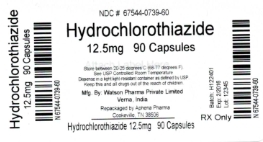
Hydrochlorothiazide 12.5 mg Capsule, Gelatin Coated, 90-count — NDC 67544-739-60 (Billing 67544-0739-60)
This is a package of 90 capsules of Hydrochlorothiazide 12.5 mg Capsule, Gelatin Coated from Aphena Pharma Solutions - Tennessee, LLC, marketed since Dec 1996 and currently FDA-listed. It is this product's only package size.
NDC database record
One package, one record: these facts belong to NDC 67544-739-60 alone.
- Record
- FDA NDC Directory package listing · Human prescription drug
- Code segments
- 67544 labeler · 739 product · 60 package
- Package marketed since
- Oct 21, 2014
- Sample package
- No — commercial package
- Listing certified through
- Dec 31, 2026
- Billing quantity
- 90 EA per package
- Barcode (UPC-A, from the NDC)
- 3 6754473960 6
- FDA record last changed
- Jul 24, 2026
Identity & classification
Regulatory identifiers FDA, NLM and CMS codes for this package
Drug-database identifiers Medi-Span GPI and First Databank GCN / HICL / AHFS classification
- GSN (GCN sequence number): 029832
- GCN: 34820
- GPI-14 (Medi-Span): 37600040000110
- HICL (First Databank): 003649
- AHFS class code: 24:36.20.00
- RxCUI (RxNorm): 199903
Where does this data come from?
- FDA openFDA NDC Directory · synced Oct 8, 2026
- FDA label on DailyMed · label index refreshed Oct 6, 2026
- RxNorm (NLM RxNav) · catalog refreshed Oct 1, 2026
- Medi-Span GPI (licensed)
- First Databank (licensed) · refreshed Oct 8, 2026
RxNorm drug class
This medicine belongs to the Thiazide Diuretic class.
Where does this data come from?
- RxClass (NLM) · catalog refreshed Oct 1, 2026
Clinical
Hydrochlorothiazide is used alone or in combination with other medications to treat high blood pressure. Hydrochlorothiazide is used to treat edema (fluid retention; excess fluid held in body tissues) caused by various medical problems, including heart, kidney, and liver disease and to treat edema caused by using certain medications including estrogen and corticosteroids. Hydrochlorothiazide is in a class of medications called diuretics ('water pills'). It works by causing the kidneys to get rid of unneeded water and salt from the body into the urine. High blood pressure is a common condition...
Read the full MedlinePlus article ↗- It lowers high blood pressure, which helps reduce the risk of strokes and heart attacks. Some products, such as Inzirqo and the tablets, are also used for swelling from conditions...
- Take it by mouth exactly as prescribed, usually once a day. For swelling, your prescriber may have you take it only some days of the week. Food slightly lowers absorption, so ask m...
- Dizziness, lightheadedness when standing, stomach upset, headache and weakness are the usual ones. Stand up slowly, and be careful with alcohol since it can worsen dizziness. Use s...
- Call for eye pain or sudden vision changes, severe rash or blistering, trouble breathing, severe stomach pain, yellow skin or eyes, or unusual bruising or infections. Also call for...
Patient education
Supplement & herbal interactions
Some supplements/herbs that may interact with Hydrochlorothiazide — tap one for details:
Hydrochlorothiazide may be associated with lower levels of 8 nutrients — worth a chat with your pharmacist, not a cause for alarm.
Where does this data come from?
- MedlinePlus (NLM) · refreshed Oct 1, 2026
- FDA label on DailyMed · label index refreshed Oct 6, 2026
Ask a licensed pharmacist directly — free, answered by our team.
Pricing
A drug doesn't have one price. Each row is a different public payment system, and none is what you'd pay at the counter — that depends on your insurance. The ⓘ on each row explains what it measures.
| Price system | Per each | Per package |
|---|---|---|
| Retail pharmacies payNADAC · weekly | Not in the retail survey — common for institutional, discontinued, or low-volume packs. | |
| Medicaid paysCMS SDUD · 12 mo | No recent Medicaid claims on file for this NDC — rare and low-volume NDCs are suppressed in the public data. | |
| Medicare drug plans payPart D · Q2 2026 | $0.0976 | $8.78 / 90 capsules |
Where does this data come from?
- CMS NADAC weekly file
- CMS ASP pricing files · refreshed Sep 20, 2026
- CMS Medicaid State Drug Utilization Data · refreshed Oct 8, 2026
- CMS Part D plan pricing files · refreshed Sep 24, 2026
- VA National Acquisition Center price file
Packaging — all sizes for this product
| Package NDC | Description | Marketing start | Marketing end | Status |
|---|---|---|---|---|
| 67544-0739-60 You're viewing this Main listing | 90 CAPSULE, GELATIN COATED in 1 PACKAGE | 2014-10-21 | — | Active |
Therapeutic equivalents
| Product | Labeler | Pack | NADAC/unit | TE | Status | Price vs. this |
|---|---|---|---|---|---|---|
| Hydrochlorothiazide 12.5 mg 00591-0347-01 | Actavis | 100 capsules | $0.028 | AB | Availability likely | — |
| hydrochlorothiazide 12.5 mg 29300-0130-01 | Unichem | 100 capsules | $0.028 | AB | Availability likely | — |
| Hydrochlorothiazide 12.5 mg 50228-0146-01 | ScieGen | 100 capsules | $0.028 | AB | Availability likely | — |
| Hydrochlorothiazide 12.5 mg 50268-0404-15 | AvPAK | 50 capsules | $0.028 | AB | Availability likely | — |
| Hydrochlorothiazide 12.5 mg 57237-0002-01 | Rising | 100 capsules | $0.028 | AB | Availability likely | — |
| hydrochlorothiazide 12.5 mg 60687-0683-01 | American | 100 capsules | $0.028 | AB | Availability likely | — |
| Hydrochlorothiazide 12.5 mg 69367-0219-01 | Westminster | 100 capsules | $0.028 | AB | Availability likely | — |
| Hydrochlorothiazide 12.5 mg 00615-8344-05 | NCS | 15 capsules | — | AB | FDA listed | — |
| hydrochlorothiazide 12.5 mg 35356-0807-30 | Quality | 30 capsules | — | AB | Discontinued | — |
| Hydrochlorothiazide 12.5 mg 42708-0027-30 | QPharma, | 30 capsules | — | AB | FDA listed | — |
| hydrochlorothiazide 12.5 mg 42708-0086-30 | QPharma | 30 capsules | — | AB | FDA listed | — |
| hydrochlorothiazide 12.5 mg 46708-0438-10 | Alembic | 100 capsules | — | — | FDA listed | — |
| hydrochlorothiazide 12.5 mg 50090-0724-00 | A-S | 30 capsules | — | AB | FDA listed | — |
| Hydrochlorothiazide 12.5 mg 50090-6987-00 | A-S | 30 capsules | — | AB | FDA listed | — |
| Hydrochlorothiazide 12.5 mg 50090-6988-00 | A-S | 90 capsules | — | AB | FDA listed | — |
| hydrochlorothiazide 12.5 mg 51655-0522-26 | Northwind | 90 capsules | — | AB | FDA listed | — |
| Hydrochlorothiazide 12.5 mg 51655-0616-26 | Northwind | 90 capsules | — | AB | FDA listed | — |
| hydrochlorothiazide 12.5 mg 62332-0070-10 | Alembic | 100 capsules | — | — | FDA listed | — |
| Hydrochlorothiazide 12.5 mg 63187-0548-07 | Proficient | 7 capsules | — | AB | FDA listed | — |
| Hydrochlorothiazide 12.5 mg 63629-8498-01 | Bryant | 500 capsules | — | AB | FDA listed | — |
| Hydrochlorothiazide 12.5 mg 65862-0113-01 | Aurobindo | 100 capsules | — | AB | FDA listed | — |
| Hydrochlorothiazide 12.5 mgthis 67544-0739-60 | Aphena | 90 capsules | — | AB | FDA listed | — |
| Hydrochlorothiazide 12.5 mg 68788-7683-01 | Preferred | 100 capsules | — | AB | FDA listed | — |
| Hydrochlorothiazide 12.5 mg 68788-8862-01 | Preferred | 100 capsules | — | AB | FDA listed | — |
| Hydrochlorothiazide 12.5 mg 70518-2550-00 | REMEDYREPACK | 30 capsules | — | AB | FDA listed | — |
| hydrochlorothiazide 12.5 mg 71205-0161-07 | Proficient | 7 capsules | — | AB | FDA listed | — |
| Hydrochlorothiazide 12.5 mg 71205-0589-30 | Proficient | 30 capsules | — | AB | FDA listed | — |
| Hydrochlorothiazide 12.5 mg 71205-0980-00 | Proficient | 100 capsules | — | AB | FDA listed | — |
| hydrochlorothiazide 12.5 mg 71335-0067-01 | Bryant | 30 capsules | — | AB | FDA listed | — |
| Hydrochlorothiazide 12.5 mg 71335-0770-01 | Bryant | 30 capsules | — | AB | FDA listed | — |
| Hydrochlorothiazide 12.5 mg 71335-1713-01 | Bryant | 30 capsules | — | AB | FDA listed | — |
| Hydrochlorothiazide 12.5 mg 71610-0500-60 | Aphena | 90 capsules | — | AB | FDA listed | — |
| Hydrochlorothiazide 12.5 mg 71610-0697-60 | Aphena | 90 capsules | — | AB | FDA listed | — |
| Hydrochlorothiazide 12.5 mg 72162-1528-05 | Bryant | 500 capsules | — | AB | FDA listed | — |
| Hydrochlorothiazide 12.5 mg 72789-0176-30 | PD-Rx | 30 capsules | — | AB | FDA listed | — |
| hydrochlorothiazide 12.5 mg 68788-4192-01 | Preferred | 100 capsules | — | AB | FDA listed | — |
Where does this data come from?
- FDA openFDA NDC Directory · synced Oct 8, 2026
- FDA Orange Book · refreshed Oct 3, 2026
- CMS NADAC weekly file
Availability & generic status
FDA-approved generic versions are listed, and recent pricing/market data suggests they may be available — see Therapeutic equivalents.
Where does this data come from?
- FDA Orange Book · refreshed Oct 3, 2026
What it looks like
Where does this data come from?
- FDA label on DailyMed · label index refreshed Oct 6, 2026
Inactive Ingredients / Excipients
Inactive ingredients, also called excipients, are components of the drug product other than the active ingredient. They may include fillers, dyes, coatings, preservatives, flavors, or other formulation ingredients.
🧪 Avoiding an ingredient? See Hydrochlorothiazide inactive ingredients by manufacturer: every current product's list side by side, so you can ask your pharmacy for the version that does not list it.
💡 Tap an ingredient (hover on desktop) to see what it is and why it’s used.
-
UNII 767IP0Y5NH
A synthetic red colorant used to give medicines their color. It helps patients identify their medication and makes the product visually appealing.
-
UNII 35SW5USQ3G
A synthetic yellow dye used to color medicines. It helps make tablets, capsules, and liquids visually distinct so patients can easily identify their medication.
-
UNII H3R47K3TBD
FD&C Blue No. 1 is a synthetic blue dye approved for use in foods and medicines. It serves as a colorant to give the medication its distinctive appearance and help with product identification.
-
UNII L06K8R7DQK
A synthetic blue dye approved by the FDA for use in medications and foods. It serves as a colorant to make pills and liquids visually distinct and easier to identify.
-
UNII WZB9127XOA
A synthetic red dye used to color medications and make them easier to identify. It serves as a colorant in tablets, capsules, and liquid formulations.
-
UNII XM0M87F357
A dark iron oxide compound that gives medicines their black or dark color. It's used as a colorant in tablets and capsules to help identify the product and make it visually distinctive.
-
UNII 2G86QN327L
Gelatin is a protein derived from animal collagen, commonly used in medicines as a gelling agent and capsule material. It helps create soft or hard capsule shells that hold and release medication, and can also thicken liquid formulations.
-
UNII EWQ57Q8I5X
Lactose monohydrate is a natural sugar derived from milk. It serves as a filler and binder in tablets and capsules, helping create the proper size, texture, and consistency of the medicine.
-
UNII 70097M6I30
Magnesium stearate is a salt made from magnesium and stearic acid, a fatty substance. It's used in tablets and capsules as a lubricant and glidant to help ingredients flow smoothly during manufacturing and prevent sticking.
-
UNII ETJ7Z6XBU4
Silicon dioxide is a naturally occurring mineral used as a glidant and anti-caking agent. It helps powder ingredients flow smoothly and prevents clumping during manufacturing and storage.
-
UNII O8232NY3SJ
A plant-based carbohydrate derived from corn kernels. It acts as a filler to add bulk, a binder to hold ingredients together, and a disintegrant to help the tablet break apart in your stomach for absorption.
-
UNII 15FIX9V2JP
Titanium dioxide is a bright white mineral powder commonly used as a colorant and opacifying agent. It makes pills and tablets white or lighter in color and helps make coatings non-transparent.
12 inactive ingredients listed in the exact product block matched to this NDC.
Where does this data come from?
ingredient classCode="IACT" elements from the exact product block matched by this NDC. Label-section narrative from DailyMed / the openFDA label index is shown separately when available.- FDA label on DailyMed · label index refreshed Oct 6, 2026
- FDA openFDA NDC Directory · synced Oct 8, 2026
Inactive ingredient FAQ
Are inactive ingredients the same for every manufacturer?
Why might an inactive ingredient be missing?
Can inactive ingredients matter?
Manufacturer & labeler
More NDCs from Aphena Pharma Solutions - Tennessee, LLC labeler code 67544
Where does this data come from?
- FDA openFDA NDC Directory · synced Oct 8, 2026
- Drugs@FDA
Full prescribing information FDA SPL
🎯 Indications and Usage ▾
INDICATIONS AND USAGE Hydrochlorothiazide is indicated in the management of hypertension either as the sole therapeutic agent, or in combination with other antihypertensives. Unlike potassium sparing combination diuretic products, hydrochlorothiazide may be used in those patients in whom the development of hyperkalemia cannot be risked, including patients taking ACE inhibitors. Usage in Pregnancy: The routine use of diuretics in an otherwise healthy woman is inappropriate and exposes mother and fetus to unnecessary hazard.
Diuretics do not prevent development of toxemia of pregnancy, and there is no satisfactory evidence that they are useful in the treatment of developed toxemia. Edema during pregnancy may arise from pathological causes or from the physiologic and mechanical consequences of pregnancy. Diuretics are indicated in pregnancy when edema is due to pathologic causes, just as they are in the absence of pregnancy.
Dependent edema in pregnancy resulting from restriction of venous return by the expanded uterus is properly treated through elevation of the lower extremities and use of support hose; use of diuretics to lower intravascular volume in this case is illogical and unnecessary. There is hypervolemia during normal pregnancy which is harmful to neither the fetus nor the mother (in the absence of cardiovascular disease), but which is associated with edema, including generalized edema in the majority of pregnant women. If this edema produces discomfort, increased recumbency will often provide relief.
In rare instances this edema may cause extreme discomfort which is not relieved by rest. In these cases a short course of diuretics may provide relief and may be appropriate.
⏱️ Dosage and Administration ▾
DOSAGE AND ADMINISTRATION For Control of Hypertension: The adult initial dose of hydrochlorothiazide is one capsule given once daily whether given alone or in combination with other antihypertensives. Total daily doses greater than 50 mg are not recommended.
⛔ Contraindications ▾
CONTRAINDICATIONS Hydrochlorothiazide is contraindicated in patients with anuria. Hypersensitivity to this product or other sulfonamide derived drugs is also contraindicated.
⚠️ Warnings ▾
WARNINGS Acute Myopia and Secondary Angle-Closure Glaucoma: Hydrochlorothiazide, a sulfonamide, can cause an idiosyncratic reaction, resulting in acute transient myopia and acute angle-closure glaucoma. Symptoms include acute onset of decreased visual acuity or ocular pain and typically occur within hours to weeks of drug initiation. Untreated acute angle-closure glaucoma can lead to permanent vision loss.
The primary treatment is to discontinue hydrochlorothiazide as rapidly as possible. Prompt medical or surgical treatments may need to be considered if the intraocular pressure remains uncontrolled. Risk factors for developing acute angle-closure glaucoma may include a history of sulfonamide or penicillin allergy.
Diabetes and Hypoglycemia: Latent diabetes mellitus may become manifest and diabetic patients given thiazides may require adjustment of their insulin dose. Renal Disease: Cumulative effects of the thiazides may develop in patients with impaired renal function. In such patients, thiazides may precipitate azotemia.
🤒 Adverse Reactions ▾
ADVERSE REACTIONS The adverse reactions associated with hydrochlorothiazide have been shown to be dose related. In controlled clinical trials, the adverse events reported with doses of 12.5 mg hydrochlorothiazide once daily were comparable to placebo. The following adverse reactions have been reported for doses of hydrochlorothiazide 25 mg and greater and, within each category, are listed in the order of decreasing severity.
Body as a whole: Weakness. Cardiovascular: Hypotension including orthostatic hypotension (may be aggravated by alcohol, barbiturates, narcotics or antihypertensive drugs). Digestive: Pancreatitis, jaundice (intrahepatic cholestatic jaundice), diarrhea, vomiting, sialadenitis, cramping, constipation, gastric irritation, nausea, anorexia.
Hematologic: Aplastic anemia, agranulocytosis, leukopenia, hemolytic anemia, thrombocytopenia. Hypersensitivity: Anaphylactic reactions, necrotizing angiitis (vasculitis and cutaneous vasculitis), respiratory distress including pneumonitis and pulmonary edema, photosensitivity, fever, urticaria, rash, purpura. Metabolic: Electrolyte imbalance (see PRECAUTIONS ), hyperglycemia, glycosuria, hyperuricemia.
Musculoskeletal: Muscle spasm. Nervous System/Psychiatric: Vertigo, paresthesia, dizziness, headache, restlessness. Renal: Renal failure, renal dysfunction, interstitial nephritis (see WARNINGS ).
Skin: Erythema multiforme including Stevens-Johnson syndrome, exfoliative dermatitis including toxic epidermal necrolysis, alopecia. Special Senses: Transient blurred vision, xanthopsia. Urogenital: Impotence.
Whenever adverse reactions are moderate or severe, thiazide dosage should be reduced or therapy withdrawn.
🤰 Pregnancy ▾
Pregnancy: Teratogenic Effects: Pregnancy Category B: Studies in which hydrochlorothiazide was orally administered to pregnant mice and rats during their respective periods of major organogenesis at doses up to 3000 and 1000 mg hydrochlorothiazide/kg, respectively, provided no evidence of harm to the fetus. There are, however, no adequate and well-controlled studies in pregnant women. Because animal reproduction studies are not always predictive of human response, this drug should be used during pregnancy only if clearly needed.
Nonteratogenic Effects: Thiazides cross the placental barrier and appear in cord blood. There is a risk of fetal or neonatal jaundice, thrombocytopenia, and possibly other adverse reactions that have occurred in adults. Nursing Mothers: Thiazides are excreted in breast milk.
Because of the potential for serious adverse reactions in nursing infants, a decision should be made whether to discontinue nursing or to discontinue hydrochlorothiazide, taking into account the importance of the drug to the mother.
🧒 Pediatric Use ▾
Pediatric Use: Safety and effectiveness in pediatric patients have not been established.
🆘 Overdosage ▾
OVERDOSAGE The most common signs and symptoms observed are those caused by electrolyte depletion (hypokalemia, hypochloremia, hyponatremia) and dehydration resulting from excessive diuresis. If digitalis has also been administered, hypokalemia may accentuate cardiac arrhythmias. In the event of overdosage, symptomatic and supportive measures should be employed.
Emesis should be induced or gastric lavage performed. Correct dehydration, electrolyte imbalance, hepatic coma and hypotension by established procedures. If required, give oxygen or artificial respiration for respiratory impairment.
The degree to which hydrochlorothiazide is removed by hemodialysis has not been established. The oral LD 50 of hydrochlorothiazide is greater than 10 g/kg in the mouse and rat.
🧬 Clinical Pharmacology ▾
CLINICAL PHARMACOLOGY Hydrochlorothiazide blocks the reabsorption of sodium and chloride ions, and it thereby increases the quantity of sodium traversing the distal tubule and the volume of water excreted. A portion of the additional sodium presented to the distal tubule is exchanged there for potassium and hydrogen ions. With continued use of hydrochlorothiazide and depletion of sodium, compensatory mechanisms tend to increase this exchange and may produce excessive loss of potassium, hydrogen and chloride ions.
Hydrochlorothiazide also decreases the excretion of calcium and uric acid, may increase the excretion of iodide and may reduce glomerular filtration rate. Metabolic toxicities associated with excessive electrolyte changes caused by hydrochlorothiazide have been shown to be dose-related. Pharmacokinetics and Metabolism: Hydrochlorothiazide is well absorbed (65% to 75%) following oral administration.
Absorption of hydrochlorothiazide is reduced in patients with congestive heart failure. Peak plasma concentrations are observed within 1 to 5 hours of dosing, and range from 70 to 490 ng/mL following oral doses of 12.5 to 100 mg. Plasma concentrations are linearly related to the administered dose.
Concentrations of hydrochlorothiazide are 1.6 to 1.8 times higher in whole blood than in plasma. Binding to serum proteins has been reported to be approximately 40% to 68%. The plasma elimination half-life has been reported to be 6 to 15 hours.
Hydrochlorothiazide is eliminated primarily by renal pathways. Following oral doses of 12.5 to 100 mg, 55% to 77% of the administered dose appears in urine and greater than 95% of the absorbed dose is excreted in urine as unchanged drug. In patients with renal disease, plasma concentrations of hydrochlorothiazide are increased and the elimination half-life is prolonged.
When hydrochlorothiazide is administered with food, its bioavailability is reduced by 10%, the maximum plasma concentration is reduced by 20%, and the time to maximum concentration increases from 1.6 to 2.9 hours. Pharmacodynamics: Acute antihypertensive effects of thiazides are thought to result from a reduction in blood volume and cardiac output, secondary to a natriuretic effect, although a direct vasodilatory mechanism has also been proposed. With chronic administration, plasma volume returns toward normal, but peripheral vascular resistance is decreased.
The exact mechanism of the antihypertensive effect of hydrochlorothiazide is not known. Thiazides do not affect normal blood pressure. Onset of action occurs within 2 hours of dosing, peak effect is observed at about 4 hours, and activity persists for up to 24 hours.
Clinical Studies: In an 87 patient 4-week double-blind, placebo controlled, parallel group trial, patients who received hydrochlorothiazide had reductions in seated systolic and diastolic blood pressure that were significantly greater than those seen in patients who received placebo. In published placebo-controlled trials comparing 12.5 mg of hydrochlorothiazide to 25 mg, the 12.5 mg dose preserved most of the placebo-corrected blood pressure reduction seen with 25 mg.
📦 How Supplied / Storage and Handling ▾
HOW SUPPLIED Hydrochlorothiazide Capsules, USP are #4 Teal Opaque/White Opaque two piece hard gelatin capsules imprinted with WATSON 347 and 12.5 mg in black ink. They are supplied in bottles of 100 and 500. Bottles of 100 are supplied with child resistant closures.
Dispense in a tight, light-resistant container as defined in the USP. Keep out of reach of children. Store at 20°- 25°C (68°-77°F). [See USP controlled room temperature.] Protect from light, moisture, freezing, -20°C (-4°F).
Keep container tightly closed. Rx only For all medical inquiries contact: WATSON Medical Communications Parsippany, NJ 07054 USA 800-272-5525 Manufactured By: Watson Pharma Private Limited Verna, Salcette Goa 403 722 INDIA Distributed By: Watson Pharma, Inc. Parsippany, NJ 07054 USA Revised: October 2011 174788-3
📋 Description ▾
DESCRIPTION Hydrochlorothiazide Capsules, USP, 12.5 mg is the 3,4-dihydro derivative of chlorothiazide. Its chemical name is 6-chloro-3,4-dihydro-2 H -1,2,4-benzothiadiazine-7-sulfonamide 1,1-dioxide. Its empirical formula is C 7 H 8 ClN 3 O 4 S 2 ; its molecular weight is 297.74; and its structural formula is: It is a white, or practically white, crystalline powder which is slightly soluble in water, but freely soluble in sodium hydroxide solution.
Hydrochlorothiazide is supplied as 12.5 mg capsules for oral use. Inactive ingredients: colloidal silicon dioxide, corn starch, lactose monohydrate, magnesium stearate. Gelatin capsules contain D&C Red No.
28, D&C Yellow No. 10, FD&C Blue No. 1, gelatin, titanium dioxide.
The capsules are printed with edible ink containing black iron oxide, D&C Yellow No. 10, FD&C Blue No. 1, FD&C Blue No.
2, FD&C Red No. 40. Hydrochlorothiazide Capsules, USP, 12.5 mg is the 3,4-dihydro derivative of chlorothiazide.
Its chemical name is 6-chloro-3,4-dihydro-2H-1,2,4-benzothiadiazine-7-sulfonamide 1,1-dioxide. Its empirical formula is C7H8ClN3O4S2; its molecular weight is 297.74; and its structural formula is:
⚠️ Precautions ▾
PRECAUTIONS Electrolyte and Fluid Balance Status: In published studies, clinically significant hypokalemia has been consistently less common in patients who received 12.5 mg of hydrochlorothiazide than in patients who received higher doses. Nevertheless, periodic determination of serum electrolytes should be performed in patients who may be at risk for the development of hypokalemia. Patients should be observed for signs of fluid or electrolyte disturbances, i.e., hyponatremia, hypochloremic alkalosis, and hypokalemia and hypomagnesemia.
Warning signs or symptoms of fluid and electrolyte imbalance include dryness of mouth, thirst, weakness, lethargy, drowsiness, restlessness, muscle pains or cramps, muscular fatigue, hypotension, oliguria, tachycardia, and gastrointestinal disturbances such as nausea and vomiting. Hypokalemia may develop, especially with brisk diuresis when severe cirrhosis is present, during concomitant use of corticosteroid or adrenocorticotropic hormone (ACTH) or after prolonged therapy. Interference with adequate oral electrolyte intake will also contribute to hypokalemia.
Hypokalemia and hypomagnesemia can provoke ventricular arrhythmias or sensitize or exaggerate the response of the heart to the toxic effects of digitalis. Hypokalemia may be avoided or treated by potassium supplementation or increased intake of potassium rich foods. Dilutional hyponatremia is life-threatening and may occur in edematous patients in hot weather; appropriate therapy is water restriction rather than salt administration, except in rare instances when the hyponatremia is life-threatening.
In actual salt depletion, appropriate replacement is the therapy of choice. Hyperuricemia: Hyperuricemia or acute gout may be precipitated in certain patients receiving thiazide diuretics. Impaired Hepatic Function: Thiazides should be used with caution in patients with impaired hepatic function.
They can precipitate hepatic coma in patients with severe liver disease. Parathyroid Disease: Calcium excretion is decreased by thiazides, and pathologic changes in the parathyroid glands, with hypercalcemia and hypophosphatemia, have been observed in a few patients on prolonged thiazide therapy. Drug Interactions: When given concurrently the following drugs may interact with thiazide diuretics: Alcohol, barbiturates, or narcotics - potentiation of orthostatic hypotension may occur.
Antidiabetic drugs - (oral agents and insulin) dosage adjustment of the antidiabetic drug may be required. Other antihypertensive drugs - additive effect or potentiation. Cholestyramine and colestipol resins - Cholestyramine and colestipol resins bind the hydrochlorothiazide and reduce its absorption from the gastrointestinal tract by up to 85 and 43 percent, respectively.
Corticosteroid, ACTH – intensified electrolyte depletion, particularly hypokalemia. Pressor amines (e.g., norepinephrine) - possible decreased response to pressor amines but not sufficient to preclude their use. Skeletal muscle relaxants, nondepolarizing (e.g., tubocurarine) - possible increased responsiveness to the muscle relaxant.
Lithium - generally should not be given with diuretics. Diuretic agents reduce the renal clearance of lithium and greatly increase the risk of lithium toxicity. Refer to the package insert for lithium preparations before use of such preparations with hydrochlorothiazide.
Non-steroidal anti-inflammatory drugs - In some patients, the administration of a non-steroidal anti-inflammatory agent can reduce the diuretic, natriuretic, and antihypertensive effects of loop, potassium-sparing and thiazide diuretics. When hydrochlorothiazide and non-steroidal anti-inflammatory agents are used concomitantly, the patients should be observed closely to determine if the desired effect of the diuretic is obtained. Drug/Laboratory Test Interactions - Thiazides should be discontinued before carrying out tests for parathyroid function (see PRECAUTIONS, General ).
Carcinogenesis, Mutagenesis, Im… [Excerpted — this section continues on DailyMed.]
🧬 Pharmacokinetics ▾
Pharmacokinetics and Metabolism: Hydrochlorothiazide is well absorbed (65% to 75%) following oral administration. Absorption of hydrochlorothiazide is reduced in patients with congestive heart failure. Peak plasma concentrations are observed within 1 to 5 hours of dosing, and range from 70 to 490 ng/mL following oral doses of 12.5 to 100 mg.
Plasma concentrations are linearly related to the administered dose. Concentrations of hydrochlorothiazide are 1.6 to 1.8 times higher in whole blood than in plasma. Binding to serum proteins has been reported to be approximately 40% to 68%.
The plasma elimination half-life has been reported to be 6 to 15 hours. Hydrochlorothiazide is eliminated primarily by renal pathways. Following oral doses of 12.5 to 100 mg, 55% to 77% of the administered dose appears in urine and greater than 95% of the absorbed dose is excreted in urine as unchanged drug.
In patients with renal disease, plasma concentrations of hydrochlorothiazide are increased and the elimination half-life is prolonged. When hydrochlorothiazide is administered with food, its bioavailability is reduced by 10%, the maximum plasma concentration is reduced by 20%, and the time to maximum concentration increases from 1.6 to 2.9 hours.
🧬 Pharmacodynamics ▾
Pharmacodynamics: Acute antihypertensive effects of thiazides are thought to result from a reduction in blood volume and cardiac output, secondary to a natriuretic effect, although a direct vasodilatory mechanism has also been proposed. With chronic administration, plasma volume returns toward normal, but peripheral vascular resistance is decreased. The exact mechanism of the antihypertensive effect of hydrochlorothiazide is not known.
Thiazides do not affect normal blood pressure. Onset of action occurs within 2 hours of dosing, peak effect is observed at about 4 hours, and activity persists for up to 24 hours.
🔬 Clinical Studies ▾
Clinical Studies: In an 87 patient 4-week double-blind, placebo controlled, parallel group trial, patients who received hydrochlorothiazide had reductions in seated systolic and diastolic blood pressure that were significantly greater than those seen in patients who received placebo. In published placebo-controlled trials comparing 12.5 mg of hydrochlorothiazide to 25 mg, the 12.5 mg dose preserved most of the placebo-corrected blood pressure reduction seen with 25 mg.
📄 Package Label / Principal Display Panel ▾
PRINCIPAL DISPLAY PANEL - 12.5mg NDC 67544-739 Hydrochlorothiazide 12.5mg - Rx Only Bottle Label 12.5mg
Medicare Part D spend CMS · PART D · 2026 (Q1)
About this NDC listing & data coverage
What data is (and isn’t) available for this NDC — tap to expand
| NDC identity (package / product / labeler codes) | ✓ Available |
| Labeler | ✓ Available |
| Product & package description | ✓ Available |
| Marketing category & status | ✓ Available |
| Active ingredient / dosage form / route | ✓ Available |
| FDA label (SPL via DailyMed) | ✓ Available |
| Package photos | ✓ Available |
| Inactive ingredients (structured) | ✓ Available |
| NADAC pharmacy acquisition price (CMS) | — Not published for this NDC CMS publishes NADAC only for NDCs reported in its retail-pharmacy survey. |
| Orange Book / therapeutic-equivalence data | ✓ Available |
| HCPCS J-code billing crosswalk | — Not published for this NDC Most self-administered / retail products have no J-code — that is normal. |
| Medicaid utilization (CMS SDUD) | — Not published for this NDC CMS reports utilization only for NDCs with Medicaid claims above its privacy threshold. |