
Sivextro tedizolid phosphate 200 mg Tablet, Film Coated, 6-count — NDC 67919-041-05 (Billing 67919-0041-05)
This is a package of 6 tablets of Sivextro tedizolid phosphate 200 mg Tablet, Film Coated from Merck Sharp & Dohme LLC, marketed since Jun 2014 and currently FDA-listed; retail pharmacies pay about $475.79 per tablet (NADAC).
NDC database record
One package, one record: these facts belong to NDC 67919-041-05 alone.
- Record
- FDA NDC Directory package listing · Human prescription drug
- Code segments
- 67919 labeler · 041 product · 05 package
- Package marketed since
- Jun 20, 2014
- Sample package
- No — commercial package
- Listing certified through
- Dec 31, 2027
- Billing quantity
- 6 EA per package
- Barcode (UPC-A, from the NDC)
- 3 6791904105 1
- FDA record last changed
- Jul 24, 2026
Identity & classification
Regulatory identifiers FDA, NLM and CMS codes for this package
Drug-database identifiers Medi-Span GPI and First Databank GCN / HICL / AHFS classification
- GSN (GCN sequence number): 072478
- GCN: 36704
- GPI-14 (Medi-Span): 16230070200320
- HICL (First Databank): 041209
- AHFS class code: 08:12.28.24
- RxCUI (RxNorm): 1540862
Where does this data come from?
- FDA openFDA NDC Directory · synced Oct 8, 2026
- FDA label on DailyMed · label index refreshed Oct 8, 2026
- RxNorm (NLM RxNav) · catalog refreshed Oct 1, 2026
- Medi-Span GPI (licensed)
- First Databank (licensed) · refreshed Oct 8, 2026
RxNorm drug class
This medicine belongs to the Oxazolidinone Antibacterial class.
Where does this data come from?
- RxClass (NLM) · catalog refreshed Oct 1, 2026
Clinical
- It treats acute bacterial skin and skin structure infections caused by certain susceptible bacteria, including MRSA. It only works on bacterial infections, not viral ones.
- Sivextro tablets are taken once a day, with or without food, usually for 6 days in adults. You can also get it by IV. If you miss a dose, take it as soon as you can unless your nex...
- The most common are nausea, headache, diarrhea, vomiting and dizziness. IV use can cause irritation at the infusion site. Most are manageable, but let me or your doctor know if the...
- Call if you have severe or lasting diarrhea, which can happen with antibiotics. Also get help right away if you have signs of serotonin syndrome, especially if you take other medic...
Patient education
Supplement & herbal interactions
Some supplements/herbs that may interact with Tedizolid Phosphate — tap one for details:
Tedizolid Phosphate may be associated with lower levels of 7 nutrients — worth a chat with your pharmacist, not a cause for alarm.
Where does this data come from?
- MedlinePlus (NLM) · refreshed Oct 8, 2026
- FDA label on DailyMed · label index refreshed Oct 8, 2026
Ask a licensed pharmacist directly — free, answered by our team.
Pricing
A drug doesn't have one price. Each row is a different public payment system, and none is what you'd pay at the counter — that depends on your insurance. The ⓘ on each row explains what it measures.
| Price system | Per ea | Per package |
|---|---|---|
| Retail pharmacies payNADAC · weekly | $475.790 | $2,854.74 / 6 tablets |
| Medicaid paysCMS SDUD · 12 mo | No recent Medicaid claims on file for this NDC — rare and low-volume NDCs are suppressed in the public data. | |
| Medicare drug plans payPart D · Q2 2026 | $485.10 | $2,910.62 / 6 tablets |
Where does this data come from?
- CMS NADAC weekly file · file of Oct 7, 2026
- CMS ASP pricing files · refreshed Sep 20, 2026
- CMS Medicaid State Drug Utilization Data · refreshed Oct 8, 2026
- CMS Part D plan pricing files · refreshed Sep 24, 2026
- VA National Acquisition Center price file
Packaging — all sizes for this product
| Package NDC | Description | Per unit | Per pack | Marketing start | Marketing end | Status |
|---|---|---|---|---|---|---|
| 67919-0041-01 67919-041-01 | 30 TABLET, FILM COATED in 1 BOTTLE | — | — | 2014-06-20 | — | Active |
| 67919-0041-02 67919-041-02 | 1 BLISTER PACK in 1 CARTON / 6 TABLET, FILM COATED in 1 BLISTER PACK | — | — | 2014-06-20 | — | Active |
| 67919-0041-04 67919-041-04 Main listing | 30 TABLET, FILM COATED in 1 BOTTLE | $475.79 / ea | $14,273.70 | 2014-06-20 | — | Active |
| 67919-0041-05 You're viewing this | 1 BLISTER PACK in 1 CARTON / 6 TABLET, FILM COATED in 1 BLISTER PACK | $475.79 / ea | $2,854.74 | 2014-06-20 | — | Active |
This pack effectively ties for the lowest per-ea cost of the 2 priced pack sizes ($475.79 NADAC).
This pack shows little to no recent Medicaid volume — the 30 tablets pack carries most fills. See all packs ↓
Pack size FAQ
What quantity is in this package?
How does this package differ from NDC 67919-0041-02?
What NDC number is used to bill for this package of Sivextro tedizolid phosphate 200 mg Tablet, Film Coated?
Prices are the latest CMS NADAC pharmacy acquisition cost per NDC; per-pack figures are per-unit × pack quantity, shown only when the pack is denominated in the same measure NADAC prices.
Therapeutic equivalents
| Product | Labeler | Pack | NADAC/unit | TE | Status | Price vs. this |
|---|---|---|---|---|---|---|
| Sivextro 200 mgthis 67919-0041-05 | Merck | 6 tablets | $475.790 | — | Availability likely | — |
Where does this data come from?
- FDA openFDA NDC Directory · synced Oct 8, 2026
- FDA Orange Book · refreshed Oct 3, 2026
- CMS NADAC weekly file · file of Oct 7, 2026
Availability & generic status
We did not find an FDA-approved generic match for this exact strength, form and route. Patent/protection dates below may affect future generic timing.
Why the date isn’t exact: Generic timing can change because patents may be challenged, settled, licensed, added, removed, or worked around with a narrower label — and FDA approval does not always mean a pharmacy can get the generic today.
🛈 What do these terms mean?
- Patent
- Legal protection listed in the Orange Book that may delay generic approval or launch. Issued by the U.S. Patent & Trademark Office.
- Substance patent
- Covers the active drug molecule itself — the hardest to design around. A generic generally can’t launch until it expires.
- Formulation (product) patent
- Covers a specific formulation or dosage form. A generic can sometimes work around it with a different formulation.
- Method-of-use patent
- A patent covering one specific approved use of the drug — not necessarily the whole molecule. A generic can sometimes launch with a “skinny label” that carves out the protected use and keeps the others.
- Skinny label
- A generic label that omits a still-patented use when the FDA allows it — letting a generic reach the market for the unprotected uses.
- Exclusivity
- FDA-granted marketing protection, separate from patents — e.g. 5-yr new chemical entity, 7-yr orphan drug, or a +6-month pediatric extension.
- Paragraph IV
- A generic applicant’s formal challenge to a listed patent. It can potentially lead to earlier generic entry, but often involves litigation or a settlement.
- RLD / RS
- Reference Listed Drug — the brand product the FDA uses as the reference for generic applications. Reference Standard — the product the FDA expects generics to compare against in bioequivalence testing.
- TE / AB rating
- FDA therapeutic-equivalence rating. An AB rating generally means the FDA considers a generic therapeutically equivalent to — and substitutable for — the brand.
- LOE (loss of exclusivity)
- The latest patent or exclusivity currently listed — the loss-of-exclusivity / latest-listed-protection date shown on this page. Paragraph-IV challenges and settlements can move the real date earlier; FDA approval and a manufacturer’s decision to market can move it later.
Built from the FDA Orange Book. The bars above are scaled to each protection’s expiry; the red LOE marker is the last one to lapse.
| Patent | Type | Use code | Expires |
|---|---|---|---|
| US 8426389 ↗ | Drug substance | U-282 | Dec 31, 2030 |
| US 8420676 ↗ | Drug substance | U-282 | Feb 23, 2028 |
| US 7816379 ↗ | Drug substance | U-2507 | Jun 20, 2028 |
| US 9624250 ↗ | Drug substance | U-2507 | Feb 3, 2030 |
| US 9988406 ↗ | Drug product | — | Feb 3, 2030 |
| US 10442829 ↗ | Drug substance | — | Feb 3, 2030 |
| US 10065947 ↗ | Drug product | — | Feb 3, 2030 |
| Code | What it grants | Expires |
|---|---|---|
| NPP | New Patient Population | Apr 4, 2028 |
Is there a generic version of SIVEXTRO 200 MG TABLET?
The FDA approved a generic — why can’t I get it at my pharmacy yet?
Why do different websites show different generic release dates?
What does “FDA listed” mean?
What does a patent or protection date mean here?
What does “current Orange Book estimate” mean?
Can a generic come out before the last patent expires?
Can a generic come out after the listed dates?
What is the difference between patents and exclusivity?
Why are there multiple patent dates?
Where does this data come from?
- FDA Orange Book · refreshed Oct 3, 2026
What it looks like
Where does this data come from?
- FDA label on DailyMed · label index refreshed Oct 8, 2026
Inactive Ingredients / Excipients
Inactive ingredients, also called excipients, are components of the drug product other than the active ingredient. They may include fillers, dyes, coatings, preservatives, flavors, or other formulation ingredients.
🧪 Avoiding an ingredient? See Tedizolid inactive ingredients by manufacturer: every current product's list side by side, so you can ask your pharmacy for the version that does not list it.
💡 Tap an ingredient (hover on desktop) to see what it is and why it’s used.
-
UNII 68401960MK
Crospovidone is a synthetic polymer made from polyvinylpyrrolidone. It acts as a disintegrant, helping tablets break apart quickly in the stomach so the medicine dissolves and absorbs into the body.
-
UNII EX438O2MRT
Ferric oxide yellow is a naturally occurring iron compound used as a colorant in medications. It gives tablets, capsules, and other forms a yellow or golden hue for identification and appearance.
-
UNII 70097M6I30
Magnesium stearate is a salt made from magnesium and stearic acid, a fatty substance. It's used in tablets and capsules as a lubricant and glidant to help ingredients flow smoothly during manufacturing and prevent sticking.
-
UNII 3OWL53L36A
A natural sugar alcohol derived from seaweed or synthesized in the lab. It's used as a filler to add bulk, a sweetener in sugar-free formulas, and a disintegrant to help tablets break apart in the stomach.
-
UNII OP1R32D61U
Microcrystalline cellulose is a purified form of cellulose, a natural fiber from plant sources. It acts as a binder and filler in tablets and capsules, helping hold ingredients together and give the medicine its shape and size.
-
UNII 3WJQ0SDW1A
Polyethylene glycol is a synthetic liquid or solid polymer used in medicines as a solvent, lubricant, and humectant. It helps dissolve active ingredients, reduces friction during manufacturing, and retains moisture in the final product.
-
UNII 532B59J990
Polyvinyl alcohol is a synthetic polymer made from plant-derived materials. It's used as a binder to hold ingredients together, a film-former in coatings, and a thickener in liquid formulations.
-
UNII FZ989GH94E
Povidone is a synthetic polymer made from a plastic-like material. It acts as a binder to hold tablet ingredients together and as a disintegrant to help the tablet break apart in your stomach so the medicine can be absorbed.
-
UNII 7SEV7J4R1U
A powder made from a naturally occurring mineral. In medicines, talc works as a glidant and anti-caking agent, helping tablets and capsules flow smoothly during manufacturing and preventing clumping.
-
UNII 15FIX9V2JP
Titanium dioxide is a bright white mineral powder commonly used as a colorant and opacifying agent. It makes pills and tablets white or lighter in color and helps make coatings non-transparent.
10 inactive ingredients listed in the exact product block matched to this NDC.
Where does this data come from?
ingredient classCode="IACT" elements from the exact product block matched by this NDC. Label-section narrative from DailyMed / the openFDA label index is shown separately when available.- FDA label on DailyMed · label index refreshed Oct 8, 2026
- FDA openFDA NDC Directory · synced Oct 8, 2026
Inactive ingredient FAQ
Are inactive ingredients the same for every manufacturer?
Why might an inactive ingredient be missing?
Can inactive ingredients matter?
Manufacturer & labeler
More NDCs from Merck Sharp & Dohme LLC labeler code 67919
Where does this data come from?
- FDA openFDA NDC Directory · synced Oct 8, 2026
- Drugs@FDA
Full prescribing information FDA SPL
🎯 Indications and Usage ▾
1 INDICATIONS AND USAGE SIVEXTRO is an oxazolidinone antibacterial indicated for the treatment of acute bacterial skin and skin structure infections (ABSSSI) caused by designated susceptible microorganisms in adult and pediatric patients (at least 26 weeks gestational age and weighing at least 1 kg) ( 1.1 ) Usage to Reduce Development of Drug-Resistant Bacteria To reduce the development of drug-resistant bacteria and maintain the effectiveness of SIVEXTRO and other antibacterial drugs, SIVEXTRO should be used only to treat or prevent infections that are proven or strongly suspected to be caused by bacteria.
1.1Acute Bacterial Skin and Skin Structure Infections SIVEXTRO ® is indicated for the treatment of acute bacterial skin and skin structure infections (ABSSSI) caused by susceptible isolates of the following gram-positive microorganisms: Staphylococcus aureus (including methicillin-resistant [MRSA] and methicillin-susceptible [MSSA] isolates), Streptococcus pyogenes , Streptococcus agalactiae , Streptococcus anginosus Group (including Streptococcus anginosus , Streptococcus intermedius , and Streptococcus constellatus ), and Enterococcus faecalis , in adult and pediatric patients (at least 26 weeks gestational age and weighing at least 1 kg).
1.2Usage to Reduce Development of Drug-Resistant Bacteria To reduce the development of drug-resistant bacteria and maintain the effectiveness of SIVEXTRO and other antibacterial drugs, SIVEXTRO should be used only to treat or prevent infections that are proven or strongly suspected to be caused by bacteria. When culture and susceptibility information are available, they should be considered in selecting or modifying antibacterial therapy. In the absence of such data, local epidemiology and susceptibility patterns may contribute to the empiric selection of therapy.
⏱️ Dosage and Administration ▾
2 DOSAGE AND ADMINISTRATION Do not administer SIVEXTRO Tablets to pediatric patients weighing less than 35 kg. ( 2.1 ) Adult Patients Intravenous and Oral Dosage : 200 mg administered once daily orally or as an intravenous (IV) infusion over 1 hour for 6 days as specified in Table 1 in the full prescribing information. ( 2.2 ) Pediatric Patients Intravenous Dosage (at least 26 weeks gestational age and weighing at least 1 kg): Weight-based dosing as an intravenous infusion as specified in Table 2 in the full prescribing information.
( 2.3 ) Pediatric Patients Oral Dosage (weighing greater than or equal to 35 kg): Weight-based dosing as an oral tablet administered once daily as specified in Table 3 in the full prescribing information. ( 2.3 )
2.1Important Administration Instructions for Pediatric Patients Weighing Less than 35 kg Do not administer SIVEXTRO Tablets to pediatric patients weighing less than 35 kg [see Dosage and Administration 2.3 ].
2.2Recommended Dosage for Adult Patients The recommended dosage of SIVEXTRO is 200 mg administered once daily for six (6) days either as an oral tablet (with or without food) or as an intravenous (IV) infusion in adult patients. The recommended dosage and administration of SIVEXTRO in adult patients are described in Table 1 . Table 1: Recommended Dosage of SIVEXTRO for Adult Patients Infection Route Dose Frequency Infusion Time Duration of Treatment Acute Bacterial Skin and Skin Structure Infections (ABSSSI) Intravenous 200 mg Once daily 1 hour 6 days Oral 200 mg Once daily Not Applicable No dose adjustment is necessary when changing from intravenous to oral SIVEXTRO.
2.3Recommended Dosage for Pediatric Patients Recommended Dosage of SIVEXTRO for Injection for Pediatric Patients: Intravenous Dosage The recommended intravenous dosage of SIVEXTRO for Injection for pediatric patients (at least 26 weeks gestational age and weighing at least 1 kg) is presented in Table 2 . Table 2: Recommended Intravenous Dosage of SIVEXTRO for Injection for Pediatric Patients Weight Band (kg) Dose Frequency Infusion Time Duration of Treatment Pediatric Patients Weighing Less than 2 kg 1 to less than 2 Recommended Dosage for 1 kg to less than 2 kg is based on actual body weight.
3 mg/kg Twice daily 1 hour 6 days Pediatric Patients Weighing at Least 2 kg 2 to less than 3 6 mg Twice daily 1 hour 6 days 3 to less than 6 12 mg 6 to less than 10 20 mg 10 to less than 14 30 mg 14 to less than 20 40 mg 20 to less than 35 60 mg Pediatric Patients Weighing at Least 35 kg Greater than or equal to 35 200 mg Once daily 1 hour 6 days Recommended Dosage of SIVEXTRO Tablets for Pediatric Patients: Oral Dosage The recommended oral dosage of SIVEXTRO Tablets for pediatric patients is presented in Table 3 . SIVEXTRO Tablets can be administered with or without food.
Do not administer SIVEXTRO Tablets to pediatric patients weighing less than 35 kg. Table 3: Recommended Oral Tablet Dosage of SIVEXTRO for Pediatric Patients Weight Band (kg) Dose Frequency Duration of Treatment Greater than or equal to 35 200 mg Once daily 6 days No dose adjustment is necessary when changing from intravenous to oral SIVEXTRO.
2.4Recommendations Regarding Missed Doses(s) For Once Daily Oral Dosing of SIVEXTRO Tablets If patients miss a dose, administer the dose as soon as possible anytime up to 8 hours prior to their next scheduled dose. If less than 8 hours remain before the next dose, instruct the patients to wait until their next scheduled dose.
2.5Preparation and Administration of Intravenous Solution SIVEXTRO is supplied as a sterile, lyophilized powder for injection in single-dose vials of 200 mg. Each 200 mg vial must be reconstituted with Sterile Water for Injection and subsequently diluted with 0.9% Sodium Chloride Injection, USP or 5% Dextrose Injection, USP. SIVEXTRO vials contain no antimicrobial preservatives and are intended for single dose only.
Discard any unused portion. Preparation of SIVEXTRO for Injection Parenteral drug… [Excerpted — this section continues on DailyMed.]
💊 Dosage Forms and Strengths ▾
3 DOSAGE FORMS AND STRENGTHS SIVEXTRO 200 mg tablet is a yellow film-coated oval tablet; each tablet is debossed with "TZD" on one side and "200" on the other side. SIVEXTRO for Injection is a sterile, white to off-white lyophilized powder for injection in single-dose vials of 200 mg. Each 200 mg vial must be reconstituted with Sterile Water for Injection and subsequently diluted with 0.9% Sodium Chloride Injection, USP or 5% Dextrose Injection, USP.
For injection: 200 mg, sterile, lyophilized powder in single-dose vial for reconstitution for intravenous infusion. ( 3 ) Tablet: 200 mg ( 3 )
⛔ Contraindications ▾
4 CONTRAINDICATIONS None. None ( 4 )
⚠️ Warnings and Cautions ▾
5 WARNINGS AND PRECAUTIONS Serotonin Syndrome: Monitor patients taking SIVEXTRO concomitantly with serotonergic agents for signs of serotonin syndrome. If signs or symptoms of serotonin syndrome occur, consider discontinuing SIVEXTRO and/or concomitant serotonergic agents. ( 5.1 ) Patients with neutropenia: The safety and efficacy of SIVEXTRO in patients with neutropenia (neutrophil counts <1000 cells/mm 3 ) have not been adequately evaluated.
In an animal model of infection, the antibacterial activity of SIVEXTRO was reduced in the absence of granulocytes. Consider alternative therapies in neutropenic patients. ( 5.2 ) Clostridioides difficile -Associated Diarrhea: Evaluate if diarrhea occurs.
( 5.3 )
5.1Serotonin Syndrome Spontaneous reports of serotonin syndrome have been observed with the co-administration of oxazolidinones, including SIVEXTRO, and serotonergic agents. Commonly used serotonergic agents include serotonin reuptake inhibitors, serotonin-norepinephrine reuptake inhibitors, tricyclic antidepressants, buspirone, serotonin 5-HT1 receptor agonists (triptans), and opioids, including meperidine. Symptoms associated with serotonin syndrome may include hyperthermia, diaphoresis, agitation, hyperreflexia, clonus, pyrexia, opsoclonus, muscle rigidity, tremor, and hypertonia.
Monitor patients for the emergence of serotonin syndrome with the concomitant use of SIVEXTRO and serotonergic agents. If signs or symptoms of serotonin syndrome occur, consider discontinuing SIVEXTRO and/or concomitant serotonergic agents as clinically appropriate and initiate supportive treatment. Inform patients of the increased risk of serotonin syndrome when SIVEXTRO is used concomitantly with serotonergic agents.
5.2Patients with Neutropenia The safety and efficacy of SIVEXTRO in patients with neutropenia (neutrophil counts <1000 cells/mm 3 ) have not been adequately evaluated. In an animal model of infection, the antibacterial activity of SIVEXTRO was reduced in the absence of granulocytes [see Clinical Pharmacology (12.2) ] . Alternative therapies should be considered when treating patients with neutropenia and ABSSSI.
5.3Clostridioides difficile -Associated Diarrhea Clostridioides difficile -associated diarrhea (CDAD) has been reported for nearly all systemic antibacterial agents including SIVEXTRO, with severity ranging from mild diarrhea to fatal colitis. Treatment with antibacterial agents can alter the normal flora of the colon and may permit overgrowth of C. difficile . C. difficile produces toxins A and B which contribute to the development of CDAD.
Hypertoxin producing strains of C. difficile cause increased morbidity and mortality, as these infections can be refractory to antibacterial therapy and may require colectomy. CDAD must be considered in all patients who present with diarrhea following antibacterial drug use. Careful medical history is necessary because CDAD has been reported to occur more than two months after the administration of antibacterial agents.
If CDAD is suspected or confirmed, antibacterial use not directed against C. difficile should be discontinued, if possible. Appropriate measures such as fluid and electrolyte management, protein supplementation, antibacterial treatment of C. difficile , and surgical evaluation should be instituted as clinically indicated.
5.4Development of Drug-Resistant Bacteria Prescribing SIVEXTRO in the absence of a proven or strongly suspected bacterial infection or prophylactic indication is unlikely to provide benefit to the patient and increases the risk of the development of drug-resistant bacteria.
🤒 Adverse Reactions ▾
6 ADVERSE REACTIONS The following clinically significant adverse reactions are described elsewhere in the labeling: Serotonin Syndrome [see Warnings and Precautions (5.1) ] Clostridioides difficile -Associated Diarrhea [see Warnings and Precautions (5.3) ] The most common adverse reactions (≥2%) in adult patients are nausea, headache, diarrhea, infusion- or injection-related adverse reactions, vomiting, and dizziness. ( 6.1 ) The most common adverse reactions (>2%) in pediatric patients (12 years to less than 18 years of age) are phlebitis and increased hepatic transaminases.
( 6.1 ) The most common adverse reactions (>2%) in pediatric patients (less than 12 years of age) are infusion- or injection-related adverse reactions and vomiting. ( 6.1 ) To report SUSPECTED ADVERSE REACTIONS, contact Merck Sharp & Dohme LLC at 1-877-888-4231 or FDA at 1-800-FDA-1088 or www.fda.gov/medwatch .
6.1Clinical Trials Experience Because clinical trials are conducted under widely varying conditions, adverse reaction rates observed in clinical trials of a drug cannot be compared directly to rates from clinical trials of another drug and may not reflect rates observed in practice. Clinical Trials Experience in Adult Patients Adverse reactions were evaluated for 1425 adult patients treated with SIVEXTRO in two Phase 2 and four Phase 3 clinical trials (three Phase 3 trials for 6 days of therapy and one Phase 3 trial for 7-21 days of therapy).
The median age of adult patients treated with SIVEXTRO in the Phase 2 and Phase 3 trials was 44 years, ranging between 17 and 94 years old. The majority of adult patients treated with SIVEXTRO were male (66%) and White (67%). Serious Adverse Reactions and Adverse Reactions Leading to Discontinuation in Adults Serious adverse reactions occurred in 37/1425 (2.6%) of adult patients treated with SIVEXTRO and in 25/1000 (2.5%) of adult patients treated with the comparator.
SIVEXTRO was discontinued due to an adverse reaction in 14/1425 (1%) of adult patients and the comparator was discontinued due to an adverse reaction in 13/1000 (1.3%) of adult patients. Most Common Adverse Reactions in Adults The most common adverse reactions in adult patients treated with SIVEXTRO were nausea (7.1%), headache (4.5%), diarrhea (3.6%), vomiting (2.7%), and dizziness (1.6%). The median time of onset of adverse reactions was 5 days for both SIVEXTRO and linezolid with 12% occurring on the second day of treatment in both treatment groups.
Table 5 lists selected adverse reactions occurring in at least 2% of adult patients treated with SIVEXTRO in clinical trials. Table 5: Selected Adverse Reactions Occurring in ≥2% of Adult Patients Receiving SIVEXTRO in the Pooled Phase 3 ABSSSI Clinical Trials Adverse Reactions Pooled Phase 3 ABSSSI Clinical Trials SIVEXTRO (200 mg oral/intravenous once daily for 6 days) (N=1037) Linezolid (600 mg oral/intravenous twice daily for 10 days) (N=1000) Gastrointestinal Disorders Nausea 7% 10% Diarrhea 4% 5% Vomiting 3% 5% Nervous System Disorder Headache 5% 5% Dizziness 2% 2% Infusion- or Injection-Related Adverse Reactions Includes adverse reactions in the following body system or organ classes: General disorders and administration site conditions, infections and infestations, injury, poisoning and procedural complications, and vascular disorders, including but not limited to, phlebitis, injection- or infusion-site pain, injection- or infusion-site swelling, injection-site reaction, injection-site erythema, injection-site induration, and infusion-related reaction.
4% 2% The following selected adverse reactions were reported in SIVEXTRO-treated adult patients at a rate of less than 2% in these clinical trials: Blood and Lymphatic System Disorders: anemia Cardiovascular: palpitations, tachycardia Eye Disorders: asthenopia, vision blurred, visual impairment, vitreous floaters Immune System Disorders: drug hypersensitivity Infections and Infestations: Clostridioides difficile colitis, oral candidiasis, vu… [Excerpted — this section continues on DailyMed.]
🔄 Drug Interactions ▾
7 DRUG INTERACTIONS SIVEXTRO (when administered orally) can increase the plasma concentrations of orally administered Breast Cancer Resistance Protein (BCRP) substrates. Monitor for adverse reactions related to the concomitant BCRP substrates if coadministration cannot be avoided. ( 7 , 12.3 ) SIVEXTRO has the potential for interaction with serotonergic agents. ( 5.1 , 7 )
7.1Membrane Transporters Orally administered SIVEXTRO inhibits Breast Cancer Resistance Protein (BCRP) in the intestine, which can increase the plasma concentrations of orally administered BCRP substrates, and the potential for adverse reactions. If possible, an interruption in the treatment of the co-administered BCRP substrate medicinal product should be considered during treatment with SIVEXTRO, especially for BCRP substrates with a narrow therapeutic index (e.g., methotrexate or topotecan). If coadministration cannot be avoided, monitor for adverse reactions related to the concomitantly administered BCRP substrates, including rosuvastatin [see Clinical Pharmacology (12.3) ].
7.2Serotonergic Agents In postmarketing experience, there have been reports of serotonin syndrome in patients taking SIVEXTRO with serotonergic agents [see Warnings and Precautions (5.1) and Clinical Pharmacology (12.3) ] .
👥 Use in Specific Populations ▾
8 USE IN SPECIFIC POPULATIONS Pregnancy: Based on animal data, SIVEXTRO may cause fetal harm. Advise pregnant women of the potential risks to a fetus. ( 8.1 )
8.1Pregnancy Risk Summary Based on animal reproduction studies, SIVEXTRO may cause fetal harm when administered to pregnant women. The available data on the use of SIVEXTRO in pregnant women are insufficient to evaluate for a drug-associated risk of major birth defects, miscarriage, or adverse maternal or fetal outcomes. Advise pregnant women of the potential risks to a fetus.
Fetal developmental toxicities were observed in mice and rats treated with SIVEXTRO. In embryo-fetal studies in mice and rats, tedizolid phosphate was shown to produce fetal developmental toxicities in mice and maternal toxicity and fetal developmental toxicities in rats. Tedizolid phosphate administered orally during organogenesis to pregnant animals was associated with reduced fetal weights and an increased incidence of costal cartilage anomalies in the absence of maternal toxicity in mice; and maternal toxicity, decreased fetal weights, and increased skeletal variations in rats at plasma exposures approximately 4 and 6 times respectively, the human plasma exposure at the maximum recommended human dose (MRHD) of 200 mg/day.
In female rats administered tedizolid phosphate during organogenesis through lactation, there was no evidence of fetal toxicity, developmental delays, or impaired reproduction in the offspring at plasma exposures approximately equivalent to the human plasma exposure at the MRHD. (see Data ) The estimated background risk of major birth defects and miscarriage for the indicated population is unknown. All pregnancies have a background risk of birth defect, loss, or other adverse outcomes.
In the U.S. general population, the estimated background risk of major birth defects and miscarriage in clinically recognized pregnancies is 2-4% and 15-20%, respectively. Data Animal Data In an embryo-fetal development study, tedizolid phosphate administered orally to pregnant mice at doses of 1, 5, and 25 mg/kg/day during organogenesis (Gestational Day [GD] 6 to GD15) was associated with fetal developmental effects occurring in the absence of maternal toxicity, including reduced fetal weights and an increased incidence of costal cartilage anomalies at the high dose (approximately 4-times the human plasma exposure at the MRHD based on plasma AUC comparison).
Tedizolid phosphate administered orally at doses of 2.5, 5, and 15 mg/kg/day to pregnant rats during organogenesis (GD6 through GD17) was associated with maternal toxicity (reduced maternal body weights), decreased fetal weights, and increased skeletal variations including reduced ossification of the sternebrae, vertebrae, and skull at the high dose of 15 mg/kg/day (approximately 6-times the human plasma exposure at the MRHD based on plasma AUC comparison). The doses not associated with fetal toxicity in mice and maternal and fetal toxicity in rats were 5 and 2.5 mg/kg/day respectively (for both species approximately equivalent to the human plasma exposure at the MRHD based on plasma AUC comparison).
In a pre-postnatal study, oral tedizolid phosphate administered to female rats at doses of 1.25, 2.5, and 3.75 mg/kg/day during gestation and lactation (GD6 through Lactational Day 20) was not associated with maternal toxicity, fetal toxicity, developmental delays, or impaired reproduction at doses up to the high dose of 3.75 mg/kg/day (approximately equivalent to the human plasma exposure at the MRHD based on plasma AUC comparison).
8.2Lactation Risk Summary There is no information on the presence of tedizolid in human milk. Tedizolid is present in rat milk. When a drug is present in animal milk, it is likely that the drug will be present in human milk.
There are no data on the effects of SIVEXTRO on the breastfed child or on milk production. The developmental and health benefits of breastfeeding should be considered along with the mother's… [Excerpted — this section continues on DailyMed.]
🤰 Pregnancy ▾
8.1Pregnancy Risk Summary Based on animal reproduction studies, SIVEXTRO may cause fetal harm when administered to pregnant women. The available data on the use of SIVEXTRO in pregnant women are insufficient to evaluate for a drug-associated risk of major birth defects, miscarriage, or adverse maternal or fetal outcomes. Advise pregnant women of the potential risks to a fetus.
Fetal developmental toxicities were observed in mice and rats treated with SIVEXTRO. In embryo-fetal studies in mice and rats, tedizolid phosphate was shown to produce fetal developmental toxicities in mice and maternal toxicity and fetal developmental toxicities in rats. Tedizolid phosphate administered orally during organogenesis to pregnant animals was associated with reduced fetal weights and an increased incidence of costal cartilage anomalies in the absence of maternal toxicity in mice; and maternal toxicity, decreased fetal weights, and increased skeletal variations in rats at plasma exposures approximately 4 and 6 times respectively, the human plasma exposure at the maximum recommended human dose (MRHD) of 200 mg/day.
In female rats administered tedizolid phosphate during organogenesis through lactation, there was no evidence of fetal toxicity, developmental delays, or impaired reproduction in the offspring at plasma exposures approximately equivalent to the human plasma exposure at the MRHD. (see Data ) The estimated background risk of major birth defects and miscarriage for the indicated population is unknown. All pregnancies have a background risk of birth defect, loss, or other adverse outcomes.
In the U.S. general population, the estimated background risk of major birth defects and miscarriage in clinically recognized pregnancies is 2-4% and 15-20%, respectively. Data Animal Data In an embryo-fetal development study, tedizolid phosphate administered orally to pregnant mice at doses of 1, 5, and 25 mg/kg/day during organogenesis (Gestational Day [GD] 6 to GD15) was associated with fetal developmental effects occurring in the absence of maternal toxicity, including reduced fetal weights and an increased incidence of costal cartilage anomalies at the high dose (approximately 4-times the human plasma exposure at the MRHD based on plasma AUC comparison).
Tedizolid phosphate administered orally at doses of 2.5, 5, and 15 mg/kg/day to pregnant rats during organogenesis (GD6 through GD17) was associated with maternal toxicity (reduced maternal body weights), decreased fetal weights, and increased skeletal variations including reduced ossification of the sternebrae, vertebrae, and skull at the high dose of 15 mg/kg/day (approximately 6-times the human plasma exposure at the MRHD based on plasma AUC comparison). The doses not associated with fetal toxicity in mice and maternal and fetal toxicity in rats were 5 and 2.5 mg/kg/day respectively (for both species approximately equivalent to the human plasma exposure at the MRHD based on plasma AUC comparison).
In a pre-postnatal study, oral tedizolid phosphate administered to female rats at doses of 1.25, 2.5, and 3.75 mg/kg/day during gestation and lactation (GD6 through Lactational Day 20) was not associated with maternal toxicity, fetal toxicity, developmental delays, or impaired reproduction at doses up to the high dose of 3.75 mg/kg/day (approximately equivalent to the human plasma exposure at the MRHD based on plasma AUC comparison).
🧒 Pediatric Use ▾
8.4Pediatric Use The safety and effectiveness of SIVEXTRO for the treatment of ABSSSI have been established in pediatric patients at least 26 weeks gestational age and weighing at least 1 kg. Use of SIVEXTRO for the treatment of ABSSSI is supported by evidence from adequate and well-controlled studies in adults with additional pharmacokinetic and safety data in pediatric patients from birth (includes neonates at least 26 weeks gestational age) to less than 18 years of age [see Adverse Reactions (6.1) , Clinical Pharmacology (12.3) , and Clinical Studies (14.1) ] .
The safety and effectiveness of SIVEXTRO in pediatric patients less than 26 weeks gestational age and weighing less than 1 kg have not been established.
🧓 Geriatric Use ▾
8.5Geriatric Use Clinical studies of SIVEXTRO did not include sufficient numbers of subjects aged 65 and over to determine whether they respond differently from younger subjects. No overall differences in pharmacokinetics were observed between elderly subjects and younger subjects.
🆘 Overdosage ▾
10 OVERDOSAGE In the event of overdosage, SIVEXTRO should be discontinued and general supportive treatment given. Hemodialysis does not result in meaningful removal of tedizolid from systemic circulation.
🧬 Clinical Pharmacology ▾
12 CLINICAL PHARMACOLOGY
12.1Mechanism of Action Tedizolid is an antibacterial drug [see Microbiology (12.4) ] .
12.2Pharmacodynamics The AUC/minimum inhibitory concentration (MIC) was shown to best correlate with tedizolid activity in animal infection models. In the mouse thigh infection model of S. aureus , antistaphylococcal killing activity was impacted by the presence of granulocytes. In granulocytopenic mice (neutrophil count <100 cells/mL), bacterial stasis was achieved at a human-equivalent dose of approximately 2000 mg/day; whereas, in non-granulocytopenic animals, stasis was achieved at a human-equivalent dose of approximately 100 mg/day.
The safety and efficacy of SIVEXTRO for the treatment of neutropenic patients (neutrophil counts <1000 cells/mm 3 ) have not been evaluated. Cardiac Electrophysiology In a randomized, positive- and placebo-controlled crossover thorough QTc study, 48 enrolled subjects were administered a single oral dose of SIVEXTRO at a therapeutic dose of 200 mg, SIVEXTRO at a supratherapeutic dose of 1200 mg, placebo, and a positive control; no significant effects of SIVEXTRO on heart rate, electrocardiogram morphology, PR, QRS, or QT interval were detected.
Therefore, SIVEXTRO does not affect cardiac repolarization.
12.3Pharmacokinetics Tedizolid phosphate is a prodrug that is converted by phosphatases to tedizolid, the microbiologically active moiety, following oral and intravenous administration. Only the pharmacokinetic profile of tedizolid is discussed further due to negligible systemic exposure of tedizolid phosphate following oral and intravenous administration. Following multiple once-daily oral or intravenous administration, steady-state concentrations are achieved within approximately three days with tedizolid accumulation of approximately 30% (tedizolid half-life of approximately 12 hours).
Pharmacokinetic (PK) parameters of tedizolid following oral and intravenous administration of 200 mg once daily tedizolid phosphate in adults are shown in Table 8 . Table 8: Mean (Standard Deviation) Tedizolid Pharmacokinetic Parameters Following Single and Multiple Oral and Intravenous Administration of 200 mg Once-Daily Tedizolid Phosphate in Adults Pharmacokinetic Parameters of Tedizolid C max , maximum concentration; T max , time to reach C max ; AUC, area under the concentration-time curve; CL, systemic clearance; CL/F, apparent oral clearance Oral Intravenous Single Dose Steady State Single Dose Steady State C max (mcg/mL) 2.0 (0.7) 2.2 (0.6) 2.3 (0.6) 3.0 (0.7) T max (hr) Median (range) 2.5 (1.0 - 8.0) 3.5 (1.0 - 6.0) 1.1 (0.9 - 1.5) 1.2 (0.9 - 1.5) AUC (mcg ∙ hr/mL) AUC is AUC 0- ∞ (AUC from time 0 to infinity) for single-dose administration and AUC 0-24 (AUC from time 0 to 24 hours) for multiple-dose administration 23.8 (6.8) 25.6 (8.5) 26.6 (5.2) 29.2 (6.2) CL or CL/F (L/hr) 7.5 (2.3) 6.9 (1.7) 6.4 (1.2) 5.9 (1.4) Absorption Peak plasma tedizolid concentrations are achieved within approximately 3 hours following oral administration of the oral tablet under fasting conditions or at the end of the 1 hour intravenous infusion of tedizolid phosphate.
The absolute bioavailability of the oral tablet is approximately 91% and no dosage adjustment is necessary between intravenous and oral administration. Tedizolid phosphate (oral tablet) may be administered with or without food as total systemic exposure (AUC 0-∞ ) is unchanged between fasted and fed (high-fat, high-calorie) conditions. Distribution Protein binding of tedizolid to human plasma proteins is approximately 70 to 90%.
The mean steady state volume of distribution of tedizolid in healthy adults following a single intravenous dose of tedizolid phosphate 200 mg ranged from 67 to 80 L (approximately twice total body water). Tedizolid penetrates into the interstitial space fluid of adipose and skeletal muscle tissue with exposure similar to free drug exposure in plasma. Elimination Metabolism Other than tedizolid, which accounts for approxi… [Excerpted — this section continues on DailyMed.]
🧬 Mechanism of Action ▾
12.1Mechanism of Action Tedizolid is an antibacterial drug [see Microbiology (12.4) ] .
📦 How Supplied / Storage and Handling ▾
16 HOW SUPPLIED/STORAGE AND HANDLING
16.1Tablets SIVEXTRO Tablets are yellow film-coated oval tablets containing 200 mg of tedizolid phosphate; each tablet is debossed with "TZD" on one side and "200" on the other side. They are supplied as follows: HDPE bottles of 30 tablets with child-resistant closure (NDC 67919-041-04) Unit dose blister packs of 6 tablets (NDC 67919-041-05)
16.2For Injection SIVEXTRO is supplied as a sterile, white to off-white lyophilized powder for injection in single-dose vials of 200 mg. Each 200 mg vial must be reconstituted with Sterile Water for Injection and subsequently diluted with 0.9% Sodium Chloride Injection, USP or 5% Dextrose Injection, USP. They are supplied as follows: Package of ten 200 mg single-dose vials (NDC 67919-040-02)
16.3Storage and Handling SIVEXTRO Tablets and SIVEXTRO for Injection should be stored at 20°C to 25°C (68°F to 77°F); excursions permitted to 15°C to 30°C (59°F to 86°F) [see USP Controlled Room Temperature]. Discard any unused portion of the single-dose vials.
📦 Storage and Handling ▾
16.1Tablets SIVEXTRO Tablets are yellow film-coated oval tablets containing 200 mg of tedizolid phosphate; each tablet is debossed with "TZD" on one side and "200" on the other side. They are supplied as follows: HDPE bottles of 30 tablets with child-resistant closure (NDC 67919-041-04) Unit dose blister packs of 6 tablets (NDC 67919-041-05)
16.2For Injection SIVEXTRO is supplied as a sterile, white to off-white lyophilized powder for injection in single-dose vials of 200 mg. Each 200 mg vial must be reconstituted with Sterile Water for Injection and subsequently diluted with 0.9% Sodium Chloride Injection, USP or 5% Dextrose Injection, USP. They are supplied as follows: Package of ten 200 mg single-dose vials (NDC 67919-040-02)
16.3Storage and Handling SIVEXTRO Tablets and SIVEXTRO for Injection should be stored at 20°C to 25°C (68°F to 77°F); excursions permitted to 15°C to 30°C (59°F to 86°F) [see USP Controlled Room Temperature]. Discard any unused portion of the single-dose vials.
📋 Description ▾
11 DESCRIPTION SIVEXTRO (tedizolid phosphate), a phosphate prodrug, is converted to tedizolid in the presence of phosphatases. Tedizolid phosphate has the chemical name [(5 R )-(3-{3-Fluoro-4-[6-(2-methyl-2 H -tetrazol- 5-yl) pyridin-3-yl]phenyl}-2-oxooxazolidin- 5-yl]methyl hydrogen phosphate. Its empirical formula is C 17 H 16 FN 6 O 6 P and its molecular weight is 450.32.
Its structural formula is: Tedizolid phosphate is a white to yellow solid and is administered orally or by intravenous infusion. The pharmacologically active moiety, tedizolid, is an antibacterial agent of the oxazolidinone class. SIVEXTRO Tablets contain 200 mg of tedizolid phosphate, and the following inactive ingredients: crospovidone, magnesium stearate, mannitol, microcrystalline cellulose, and povidone.
In addition, the film coating contains the following inactive ingredients: polyethylene glycol/macrogol, polyvinyl alcohol, talc, titanium dioxide, and yellow iron oxide. SIVEXTRO for Injection is a sterile, white to off-white sterile lyophilized powder supplied in a clear glass single-dose vial. Each vial contains 200 mg of tedizolid phosphate and the inactive ingredient, mannitol (105 mg).
Sodium hydroxide and hydrochloric acid are used as needed for pH adjustment. When reconstituted as directed with 4 mL of Sterile Water for Injection, each mL contains 50 mg of tedizolid phosphate. The pH of the reconstituted solution is 7.4 to 8.1.
Chemical Structure
💬 Information for Patients ▾
17 PATIENT COUNSELING INFORMATION Advise the patient to read the FDA-approved patient labeling (Patient Information). Serotonin Syndrome Advise patients to inform their healthcare provider if they are taking serotonergic agents and of the increased risk of serotonin syndrome when SIVEXTRO is used concomitantly with serotonergic agents [see Warnings and Precautions (5.1) ] . Potentially Serious Adverse Reactions Advise patients that diarrhea is a common problem caused by antibacterial drugs including SIVEXTRO and usually resolves when the drug is discontinued.
Sometimes after starting treatment with antibacterial drugs, patients can develop frequent watery and bloody stools (with or without stomach cramps and fever) even as late as two or more months after having taken the last dose of the antibacterial drug and may be a sign of a more serious intestinal infection [see Warnings and Precautions (5.2) and Adverse Reactions (6.1) ] . If this occurs, patients should contact their healthcare provider as soon as possible. Antibacterial Resistance Patients should be counseled that antibacterial drugs including SIVEXTRO should only be used to treat bacterial infections.
They do not treat viral infections (e.g., the common cold). When SIVEXTRO is prescribed to treat a bacterial infection, patients should be told that although it is common to feel better early in the course of therapy, the medication should be taken exactly as directed. Skipping doses or not completing the full course of therapy may (1) decrease the effectiveness of the immediate treatment and (2) increase the likelihood that bacteria will develop resistance and will not be treatable by SIVEXTRO or other antibacterial drugs in the future [see Warnings and Precautions (5.4) ] .
Administration with Food Inform patients that SIVEXTRO Tablets may be taken with or without food and without any dietary restrictions [see Dosage and Administration (2.2 , 2.3) and Clinical Pharmacology (12.3) ] . Missed Doses Inform patients that if they miss a SIVEXTRO oral dose, they should take the dose as soon as possible anytime up to 8 hours prior to their next scheduled dose. If less than 8 hours remains before the next dose, then they should wait until their next scheduled dose.
Patients should take the prescribed number of doses [see Dosage and Administration (2.2 , 2.3) ] . Embryo-Fetal Toxicity Based on animal data, advise pregnant women and females of reproductive potential of the potential risk of SIVEXTRO to a fetus. Advise females to inform their healthcare provider of a known or suspected pregnancy [see Use in Specific Populations (8.1) ].
🧬 Pharmacokinetics ▾
12.3Pharmacokinetics Tedizolid phosphate is a prodrug that is converted by phosphatases to tedizolid, the microbiologically active moiety, following oral and intravenous administration. Only the pharmacokinetic profile of tedizolid is discussed further due to negligible systemic exposure of tedizolid phosphate following oral and intravenous administration. Following multiple once-daily oral or intravenous administration, steady-state concentrations are achieved within approximately three days with tedizolid accumulation of approximately 30% (tedizolid half-life of approximately 12 hours).
Pharmacokinetic (PK) parameters of tedizolid following oral and intravenous administration of 200 mg once daily tedizolid phosphate in adults are shown in Table 8 . Table 8: Mean (Standard Deviation) Tedizolid Pharmacokinetic Parameters Following Single and Multiple Oral and Intravenous Administration of 200 mg Once-Daily Tedizolid Phosphate in Adults Pharmacokinetic Parameters of Tedizolid C max , maximum concentration; T max , time to reach C max ; AUC, area under the concentration-time curve; CL, systemic clearance; CL/F, apparent oral clearance Oral Intravenous Single Dose Steady State Single Dose Steady State C max (mcg/mL) 2.0 (0.7) 2.2 (0.6) 2.3 (0.6) 3.0 (0.7) T max (hr) Median (range) 2.5 (1.0 - 8.0) 3.5 (1.0 - 6.0) 1.1 (0.9 - 1.5) 1.2 (0.9 - 1.5) AUC (mcg ∙ hr/mL) AUC is AUC 0- ∞ (AUC from time 0 to infinity) for single-dose administration and AUC 0-24 (AUC from time 0 to 24 hours) for multiple-dose administration 23.8 (6.8) 25.6 (8.5) 26.6 (5.2) 29.2 (6.2) CL or CL/F (L/hr) 7.5 (2.3) 6.9 (1.7) 6.4 (1.2) 5.9 (1.4) Absorption Peak plasma tedizolid concentrations are achieved within approximately 3 hours following oral administration of the oral tablet under fasting conditions or at the end of the 1 hour intravenous infusion of tedizolid phosphate.
The absolute bioavailability of the oral tablet is approximately 91% and no dosage adjustment is necessary between intravenous and oral administration. Tedizolid phosphate (oral tablet) may be administered with or without food as total systemic exposure (AUC 0-∞ ) is unchanged between fasted and fed (high-fat, high-calorie) conditions. Distribution Protein binding of tedizolid to human plasma proteins is approximately 70 to 90%.
The mean steady state volume of distribution of tedizolid in healthy adults following a single intravenous dose of tedizolid phosphate 200 mg ranged from 67 to 80 L (approximately twice total body water). Tedizolid penetrates into the interstitial space fluid of adipose and skeletal muscle tissue with exposure similar to free drug exposure in plasma. Elimination Metabolism Other than tedizolid, which accounts for approximately 95% of the total radiocarbon AUC in plasma, there are no other significant circulating metabolites in humans.
There was no degradation of tedizolid in human liver microsomes indicating tedizolid is unlikely to be a substrate for hepatic CYP450 enzymes. In vitro studies showed that conjugation of tedizolid is mediated via multiple sulfotransferase (SULT) isoforms (SULT1A1, SULT1A2, and SULT2A1). Excretion Following single oral administration of 14C-labeled tedizolid phosphate under fasted conditions in adult healthy volunteers, the majority of elimination occurred via the liver, with 82% of the radioactive dose recovered in feces and 18% in urine, primarily as a non-circulating and microbiologically inactive sulfate conjugate.
Most of the elimination of tedizolid (>85%) occurs within 96 hours. Less than 3% of the tedizolid phosphate-administered dose is excreted in feces and urine as unchanged tedizolid. Specific Populations Based on the population pharmacokinetic analysis, there are no clinically relevant demographic or clinical patient factors (including age, gender, race, ethnicity, weight, body mass index, and measures of renal or liver function) that impact the pharmacokinetics of tedizolid.
Patients with Hepatic Impairment Following admi… [Excerpted — this section continues on DailyMed.]
🧬 Pharmacodynamics ▾
12.2Pharmacodynamics The AUC/minimum inhibitory concentration (MIC) was shown to best correlate with tedizolid activity in animal infection models. In the mouse thigh infection model of S. aureus , antistaphylococcal killing activity was impacted by the presence of granulocytes. In granulocytopenic mice (neutrophil count <100 cells/mL), bacterial stasis was achieved at a human-equivalent dose of approximately 2000 mg/day; whereas, in non-granulocytopenic animals, stasis was achieved at a human-equivalent dose of approximately 100 mg/day.
The safety and efficacy of SIVEXTRO for the treatment of neutropenic patients (neutrophil counts <1000 cells/mm 3 ) have not been evaluated. Cardiac Electrophysiology In a randomized, positive- and placebo-controlled crossover thorough QTc study, 48 enrolled subjects were administered a single oral dose of SIVEXTRO at a therapeutic dose of 200 mg, SIVEXTRO at a supratherapeutic dose of 1200 mg, placebo, and a positive control; no significant effects of SIVEXTRO on heart rate, electrocardiogram morphology, PR, QRS, or QT interval were detected.
Therefore, SIVEXTRO does not affect cardiac repolarization.
🔬 Clinical Studies ▾
14 CLINICAL STUDIES
14.1Acute Bacterial Skin and Skin Structure Infections Adults A total of 1333 adults with acute bacterial skin and skin structure infections (ABSSSI) were randomized in two multicenter, multinational, double-blind, non-inferiority trials. Both trials compared SIVEXTRO 200 mg once daily for 6 days versus linezolid 600 mg every 12 hours for 10 days. In Trial 1, patients were treated with oral therapy, while in Trial 2, patients could receive oral therapy after a minimum of one day of intravenous therapy.
Patients with cellulitis/erysipelas, major cutaneous abscess, or wound infection were enrolled in the trials. Patients with wound infections could have received aztreonam and/or metronidazole as adjunctive therapy for gram-negative bacterial coverage, if needed. The intent-to-treat (ITT) patient population included all randomized patients.
In Trial 1, 332 patients with ABSSSI were randomized to SIVEXTRO and 335 patients were randomized to linezolid. The majority (91%) of patients treated with SIVEXTRO in Trial 1 were less than 65 years old with a median age of 43 years (range: 18 to 86 years). Patients treated with SIVEXTRO were predominantly male (61%) and White (84%); 13% had BMI ≥35 kg/m 2 , 8% had diabetes mellitus, 35% were current or recent intravenous drug users, and 2% had moderate to severe renal impairment.
The overall median surface area of infection was 188 cm 2 . The types of ABSSSI included were cellulitis/erysipelas (41%), wound infection (29%), and major cutaneous abscess (30%). In addition to local signs and symptoms of infection, patients were also required to have at least one regional or systemic sign of infection at baseline, defined as lymphadenopathy (87% of patients), temperature 38°C or higher (16% of patients), white blood cell count greater than 10,000 cells/mm 3 or less than 4000 cells/mm 3 (42%), or 10% or more band forms on white blood cell differential (4%).
The primary endpoint in Trial 1 was early clinical response defined as no increase from baseline lesion area at 48-72 hours after the first dose and oral temperature of ≤37.6°C, confirmed by a second temperature measurement within 24 hours in the ITT population. In Trial 2, 332 patients with ABSSSI were randomized to SIVEXTRO and 334 patients were randomized to linezolid. The majority (87%) of patients treated with SIVEXTRO in Trial 2 were less than 65 years old with a median age of 46 years (range: 17 to 86 years).
Patients treated with SIVEXTRO were predominantly male (68%) and White (86%); 16% had BMI ≥35 kg/m 2 , 10% had diabetes mellitus, 20% were current or recent intravenous drug users, and 4% had moderate to severe renal impairment. The overall median surface area of infection was 231 cm 2 . The types of ABSSSI included were cellulitis/erysipelas (50%), wound infection (30%), and major cutaneous abscess (20%).
In addition to local signs and symptoms of infection, patients were also required to have at least one regional or systemic sign of infection at baseline, defined as lymphadenopathy (71% of patients), temperature 38°C or higher (31% of patients), white blood cell count greater than 10,000 cells/mm 3 or less than 4000 cells/mm 3 (53%), or 10% or more band forms on white blood cell differential (16%). The primary endpoint in Trial 2 was early clinical response defined as at least a 20% decrease from baseline lesion area at 48-72 hours after the first dose in the ITT population ( Table 10 ).
Table 10: Early Clinical Response in the ITT Adult Patient Population SIVEXTRO (200 mg) Linezolid (1200 mg) Treatment Difference (2-sided 95% CI) CI=confidence interval No increase in lesion surface area from baseline and oral temperature of ≤37.6°C, confirmed by a second temperature measurement within 24 hours at 48-72 hours Primary endpoint for Trial 1; sensitivity analysis for Trial 2 Trial 1, N 332 335 Responder, n (%) 264 (79.5) 266 (79.4) 0.1 (-6.1, 6.2) Trial 2, N 332 334 Responder, n (%) 286 (86.1) 281 (84.1) 2.0 (-3.… [Excerpted — this section continues on DailyMed.]
🧪 Nonclinical Toxicology ▾
13 NONCLINICAL TOXICOLOGY
13.1Carcinogenesis, Mutagenesis, Impairment of Fertility Carcinogenicity Long-term carcinogenicity studies have not been conducted with tedizolid phosphate. Mutagenesis Tedizolid phosphate was negative for genotoxicity in all in vitro assays (bacterial reverse mutation (Ames), Chinese hamster lung (CHL) cell chromosomal aberration) and in all in vivo tests (mouse bone marrow micronucleus, rat liver unscheduled DNA synthesis). Tedizolid, generated from tedizolid phosphate after metabolic activation ( in vitro and in vivo ), was also tested for genotoxicity.
Tedizolid was positive in an in vitro CHL cell chromosomal aberration assay, but negative for genotoxicity in other in vitro assays (Ames, mouse lymphoma mutagenicity) and in vivo in a mouse bone marrow micronucleus assay. Impairment of Fertility In a fertility study, oral tedizolid phosphate administered in doses of 5, 15, and 50 mg/kg/day for 28 days before mating and during mating to male rats had no adverse effects on the fertility or reproductive performance, including spermatogenesis, at the maximum tested dose (50 mg/kg/day) with a plasma tedizolid AUC approximately 5-fold greater than the plasma AUC value in humans at the maximum recommended human dose (MRHD).
Tedizolid phosphate administered in doses of 2.5, 5, and 15 mg/kg/day for 14 days before mating, during mating, and until Gestation Day (GD)7 to female rats also had no adverse effects on the fertility or reproductive performance at doses up to the maximum tested dose of 15 mg/kg/day (approximately 4-fold higher than exposures in humans at the MRHD based on plasma AUC comparison).
13.2Animal Toxicology and/or Pharmacology Repeated-oral and intravenous dosing of tedizolid phosphate in rats in 1 month and 3 month toxicology studies produced dose- and time-dependent bone marrow hypocellularity (myeloid, erythroid, and megakaryocyte), with associated reduction in circulating RBCs, WBCs, and platelets. These effects showed evidence of reversibility and occurred at plasma tedizolid exposure levels (AUC) ≥6-fold greater than the plasma exposure associated with the human therapeutic dose. In a 1-month immunotoxicology study in rats, repeated oral dosing of tedizolid phosphate was shown to significantly reduce splenic B cells and T cells and reduce plasma IgG titers.
These effects occurred at plasma tedizolid exposure levels (AUC) ≥3-fold greater than the expected human plasma exposure associated with the therapeutic dose.
📄 Carcinogenesis, Mutagenesis, Impairment of Fertility ▾
13.1Carcinogenesis, Mutagenesis, Impairment of Fertility Carcinogenicity Long-term carcinogenicity studies have not been conducted with tedizolid phosphate. Mutagenesis Tedizolid phosphate was negative for genotoxicity in all in vitro assays (bacterial reverse mutation (Ames), Chinese hamster lung (CHL) cell chromosomal aberration) and in all in vivo tests (mouse bone marrow micronucleus, rat liver unscheduled DNA synthesis). Tedizolid, generated from tedizolid phosphate after metabolic activation ( in vitro and in vivo ), was also tested for genotoxicity.
Tedizolid was positive in an in vitro CHL cell chromosomal aberration assay, but negative for genotoxicity in other in vitro assays (Ames, mouse lymphoma mutagenicity) and in vivo in a mouse bone marrow micronucleus assay. Impairment of Fertility In a fertility study, oral tedizolid phosphate administered in doses of 5, 15, and 50 mg/kg/day for 28 days before mating and during mating to male rats had no adverse effects on the fertility or reproductive performance, including spermatogenesis, at the maximum tested dose (50 mg/kg/day) with a plasma tedizolid AUC approximately 5-fold greater than the plasma AUC value in humans at the maximum recommended human dose (MRHD).
Tedizolid phosphate administered in doses of 2.5, 5, and 15 mg/kg/day for 14 days before mating, during mating, and until Gestation Day (GD)7 to female rats also had no adverse effects on the fertility or reproductive performance at doses up to the maximum tested dose of 15 mg/kg/day (approximately 4-fold higher than exposures in humans at the MRHD based on plasma AUC comparison).
📄 Patient Package Insert ▾
Patient Information SIVEXTRO ® (sih-vex-tro) (tedizolid phosphate) tablets What you need to know about SIVEXTRO Before you take this medicine, be sure you understand what it is for and how to take it safely. Keep this information. If you have questions about this medicine, ask your healthcare provider or pharmacist.
Every time you get a refill, look at the Patient Information sheet that comes with it. There may be new information. Remember that your healthcare provider has prescribed this medicine only for you.
Never give it to anyone else. What is SIVEXTRO? SIVEXTRO tablet is for adults and for children weighing at least 77 pounds (35 kg) who have a skin infection or an infection in the tissue below the skin.
SIVEXTRO is an antibiotic that works by stopping the growth of certain bacteria. SIVEXTRO tablet is not for use in children weighing less than 77 pounds (35 kg). What should I tell my healthcare provider before taking SIVEXTRO?
Medical Conditions Tell your healthcare provider if you: have diarrhea or have ever had diarrhea while taking antibiotics. Tell your healthcare provider, even if you had diarrhea that occurred up to 2 months after you took the antibiotic. are allergic to tedizolid phosphate or any of the ingredients in SIVEXTRO. See the end of this Patient Information for a complete list of ingredients in SIVEXTRO. are pregnant or plan to get pregnant, tell your healthcare provider if you become pregnant while taking SIVEXTRO.
It is not known if SIVEXTRO will harm your baby while you are pregnant. You and your healthcare provider should decide together if you will take SIVEXTRO. are breastfeeding or plan to breastfeed, tell your healthcare provider before you take SIVEXTRO. It is not known if SIVEXTRO passes into your breast milk.
You and your healthcare provider should decide together if you will take SIVEXTRO or breastfeed. Are you taking other medicines? SIVEXTRO can affect the way other medicines work, and other medicines can affect how SIVEXTRO works.
Some medicines cannot be taken with SIVEXTRO at all. Your healthcare provider will tell you if it is safe to take SIVEXTRO with other medicines. It is especially important to tell your healthcare provider if you take any of the following medicines : Methotrexate (for cancer or rheumatoid arthritis) Topotecan (for cancer) Rosuvastatin (for cholesterol) Depression or anxiety medicines Migraine headache medicines called triptans Prescription pain medicines Tell your healthcare provider about all of the medicines you take, including prescription and over-the-counter medicines, vitamins, and herbal and dietary supplements.
Know the medicines you take. Keep a list of them and show the list to your healthcare provider and pharmacist when you get a new medicine. How do I take SIVEXTRO?
Do not give SIVEXTRO tablets to children weighing less than 77 pounds (35 kg). Take SIVEXTRO exactly how your healthcare provider tells you to take it. Take 1 SIVEXTRO tablet 1 time each day.
Take SIVEXTRO for 6 days, at the same time every day . Take SIVEXTRO by mouth, with or without food. What if I forget to take SIVEXTRO?
If you miss a dose, take the missed dose as soon as you remember. If it is less than 8 hours until your next dose, skip the missed dose and take the next tablet at the time you usually take it. Do not take 2 doses of SIVEXTRO at the same time to make up for a missed dose.
If you are not sure how to take SIVEXTRO, call your healthcare provider or pharmacist. Take all 6 tablets to finish your SIVEXTRO, even if you have missed a dose. If you do not finish your medicine, SIVEXTRO may not work.
You may get sick again and the remaining bacteria may be harder to treat. What are the possible side effects of SIVEXTRO? SIVEXTRO may cause serious side effects, including : Serotonin syndrome.
Taking SIVEXTRO with certain other medicines can cause a potentially life-threatening problem called serotonin syndrome. See “ Are you taking other medicines? ”. Call your healthcare provid… [Excerpted — this section continues on DailyMed.]
📄 Recent Major Changes ▾
Indications and Usage ( 1.1 , 1.2 ) 4/2025 Dosage and Administration ( 2.1 , 2.2 , 2.3 , 2.4 , 2.5 , 2.6 , 2.7 ) 4/2025 Warnings and Precautions ( 5.1 ) 2/2026
📄 Package Label / Principal Display Panel ▾
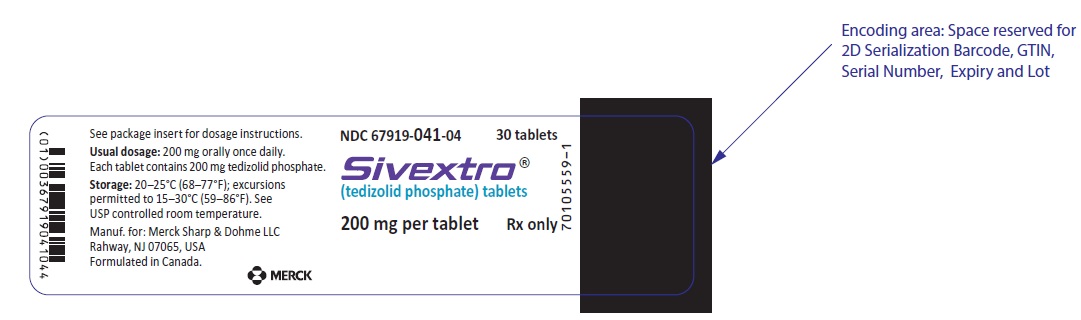
PRINCIPAL DISPLAY PANEL - 200 mg Tablet Bottle Label NDC 67919-041-04 30 tablets Sivextro ® (tedizolid phosphate) tablets 200 mg per tablet Rx only Principal Display Panel - 200 mg Tablet Bottle Label
PRINCIPAL DISPLAY PANEL - 200 mg Tablet Blister Pack Carton NDC 67919-041-05 6 tablets Sivextro ® (tedizolid phosphate) tablets 200 mg per tablet Rx only Principal Display Panel - 200 mg Tablet Blister Pack Carton
PRINCIPAL DISPLAY PANEL - 200 mg Vial Carton NDC 67919-040-02 10 single-dose vials Sivextro ® (tedizolid phosphate) for injection 200 mg per vial For Intravenous Infusion Must be reconstituted and further diluted prior to administration by intravenous infusion. Sterile Rx only Principal Display Panel - 200 mg Vial Carton