
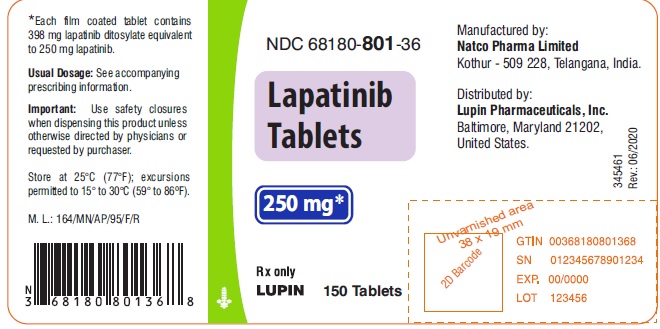
Lapatinib 250 mg Tablet, 150-count — NDC 68180-801-36 (Billing 68180-0801-36)
This is a package of 150 tablets of Lapatinib 250 mg Tablet from Lupin Pharmaceuticals, Inc., marketed since Sep 2020 and currently FDA-listed. It is this product's only package size.
NDC database record
One package, one record: these facts belong to NDC 68180-801-36 alone.
- Record
- FDA NDC Directory package listing · Human prescription drug
- Code segments
- 68180 labeler · 801 product · 36 package
- Package marketed since
- Sep 29, 2020
- Sample package
- No — commercial package
- Listing certified through
- Dec 31, 2026
- Billing quantity
- 150 EA per package
- Barcode (UPC)
- 0368180801368
- Medicaid fills, this package
- 78 prescriptions in the last four reported quarters
- FDA record last changed
- Jul 24, 2026
Identity & classification
Regulatory identifiers FDA, NLM and CMS codes for this package
Drug-database identifiers Medi-Span GPI and First Databank GCN / HICL / AHFS classification
- GSN (GCN sequence number): 062364
- GCN: 98140
- GPI-14 (Medi-Span): 21533026100320
- HICL (First Databank): 034541
- AHFS class code: 10:00.00.00
- RxCUI (RxNorm): 672149
Where does this data come from?
- FDA openFDA NDC Directory · synced Oct 1, 2026
- FDA label on DailyMed · label index refreshed Oct 5, 2026
- RxNorm (NLM RxNav) · catalog refreshed Oct 1, 2026
- Medi-Span GPI (licensed)
- First Databank (licensed) · refreshed Oct 1, 2026
RxNorm drug class
This medicine belongs to the Kinase Inhibitor class.
Where does this data come from?
- RxClass (NLM) · catalog refreshed Oct 1, 2026
Clinical
Lapatinib is used with capecitabine (Xeloda) to treat a certain type of advanced breast cancer in people who have already been treated with other chemotherapy medications. Lapatinib is also used with letrozole (Femara) to treat a certain type of breast cancer in postmenopausal women (women who have experienced a change of life; end of menstrual periods) that has spread to other parts of the body. Lapatinib is in a class of medications called kinase inhibitors. It works by blocking the action of the abnormal protein that signals cancer cells to multiply. This helps stop or slow the spread of ca...
Read the full MedlinePlus article ↗- It treats certain HER2-positive breast cancers. It is used with capecitabine for advanced or metastatic disease after other treatments, or with letrozole in postmenopausal women wh...
- Take it by mouth once a day, all the tablets together, at least an hour before or an hour after a meal. Food changes how much drug your body absorbs, so keep the timing consistent....
- Diarrhea is the most common, along with nausea, vomiting, rash, hand-foot skin reaction, and fatigue. Diarrhea often starts early, so tell your care team at the first loose stool;...
- Call right away for yellow skin or eyes, dark urine, severe or lasting diarrhea, new cough or trouble breathing, fainting or a racing heartbeat, swelling or breathlessness, or a bl...
Patient education
Supplement & herbal interactions
Some supplements/herbs that may interact with Lapatinib — tap one for details:
Where does this data come from?
- MedlinePlus (NLM) · refreshed Oct 1, 2026
- FDA label on DailyMed · label index refreshed Oct 5, 2026
Ask a licensed pharmacist directly — free, answered by our team.
Pricing
A drug doesn't have one price. Each row is a different public payment system, and none is what you'd pay at the counter — that depends on your insurance. The ⓘ on each row explains what it measures.
| Price system | Per each | Per package |
|---|---|---|
| Retail pharmacies payNADAC · weekly | Not in the retail survey — common for institutional, discontinued, or low-volume packs. | |
| Medicaid paysCMS SDUD · 12 mo | $31.31 | $4,697.00 / 150 tablets |
| Medicare drug plans payPart D · Q2 2026 | $36.67 | $5,500.01 / 150 tablets |
Where does this data come from?
- CMS NADAC weekly file
- CMS ASP pricing files · refreshed Sep 20, 2026
- CMS Medicaid State Drug Utilization Data · through Q1 2026
- CMS Part D plan pricing files · refreshed Sep 24, 2026
- VA National Acquisition Center price file
Packaging — all sizes for this product
| Package NDC | Description | Marketing start | Marketing end | Status |
|---|---|---|---|---|
| 68180-0801-36 You're viewing this Main listing | 150 TABLET in 1 BOTTLE | 2020-09-29 | — | Active |
Therapeutic equivalents
| Product | Labeler | Pack | NADAC/unit | TE | Status | Price vs. this |
|---|---|---|---|---|---|---|
| Tykerb 250 mg 00078-0671-19 | Novartis | 150 tablets | — | AB | FDA listed | — |
| Lapatinib 250 mg 00480-3237-51 | Teva | 150 tablets | — | AB | FDA listed | — |
| Lapatinib 250 mg 42291-0035-15 | AvKARE | 150 tablets | — | AB | FDA listed | — |
| Lapatinib 250 mgthis 68180-0801-36 | Lupin | 150 tablets | — | AB | FDA listed | — |
Where does this data come from?
- FDA openFDA NDC Directory · synced Oct 1, 2026
- FDA Orange Book · refreshed Oct 3, 2026
- CMS NADAC weekly file
Availability & generic status
This product is an FDA-approved generic. Other versions of the same drug are listed under Therapeutic equivalents, least expensive first.
Where does this data come from?
- FDA Orange Book · refreshed Oct 3, 2026
What it looks like
Where does this data come from?
- FDA label on DailyMed · label index refreshed Oct 5, 2026
Inactive Ingredients / Excipients
Inactive ingredients, also called excipients, are components of the drug product other than the active ingredient. They may include fillers, dyes, coatings, preservatives, flavors, or other formulation ingredients.
🧪 Avoiding an ingredient? See Lapatinib inactive ingredients by manufacturer: every current product's list side by side, so you can ask your pharmacy for the version that does not list it.
💡 Tap an ingredient (hover on desktop) to see what it is and why it’s used.
-
UNII H77VEI93A8
A synthetic yellow dye used to color medications. It helps identify the drug and make it visually distinctive, with no effect on how the medicine works.
-
UNII 3NXW29V3WO
Hypromellose is a plant-based thickener made from cellulose. It's used in medicines as a binder to hold ingredients together, a coating for tablets, and a thickener for liquids.
-
UNII 1DI56QDM62
A natural fatty substance from soybeans that helps mix oil and water-based ingredients together. It acts as an emulsifier and lubricant in medicines to improve texture and help the product break down properly in your body.
-
UNII 70097M6I30
Magnesium stearate is a salt made from magnesium and stearic acid, a fatty substance. It's used in tablets and capsules as a lubricant and glidant to help ingredients flow smoothly during manufacturing and prevent sticking.
-
UNII 7T9FYH5QMK
A plant-derived powder that serves as a binder and filler in tablets and capsules. It helps hold ingredients together, adds bulk, and aids in smooth tablet disintegration when swallowed.
-
UNII B697894SGQ
Polyethylene glycol 400 is a clear, thick liquid made from petroleum-derived polymers. It acts as a solvent and humectant in medicines, helping dissolve active ingredients and retain moisture in the formulation.
-
UNII 6OZP39ZG8H
Polysorbate 80 is a synthetic emulsifier derived from sorbitol and oleic acid. It helps mix oil and water-based ingredients together in medications and improves how the product disperses in the body.
-
UNII 532B59J990
Polyvinyl alcohol is a synthetic polymer made from plant-derived materials. It's used as a binder to hold ingredients together, a film-former in coatings, and a thickener in liquid formulations.
-
UNII U725QWY32X
Povidone K30 is a synthetic polymer made from petroleum. It acts as a binder to hold tablet ingredients together and as a disintegrant to help the tablet break apart in the stomach so the medicine can be absorbed.
-
UNII H8AV0SQX4D
A modified starch derived from potato or corn starch. It absorbs water quickly and helps tablets or capsules break apart and dissolve in the stomach, acting as a disintegrant to ensure the medicine releases its active ingredients properly.
-
UNII 7SEV7J4R1U
A powder made from a naturally occurring mineral. In medicines, talc works as a glidant and anti-caking agent, helping tablets and capsules flow smoothly during manufacturing and preventing clumping.
-
UNII 15FIX9V2JP
Titanium dioxide is a bright white mineral powder commonly used as a colorant and opacifying agent. It makes pills and tablets white or lighter in color and helps make coatings non-transparent.
-
UNII TTV12P4NEE
Xanthan gum is a thickening and stabilizing ingredient made from fermented corn or other sugars. It's added to medicines to improve texture, prevent separation of liquids and solids, and help the product stay consistent.
13 inactive ingredients listed in the exact product block matched to this NDC.
Where does this data come from?
ingredient classCode="IACT" elements from the exact product block matched by this NDC. Label-section narrative from DailyMed / the openFDA label index is shown separately when available.- FDA label on DailyMed · label index refreshed Oct 5, 2026
- FDA openFDA NDC Directory · synced Oct 1, 2026
Inactive ingredient FAQ
Are inactive ingredients the same for every manufacturer?
Why might an inactive ingredient be missing?
Can inactive ingredients matter?
Manufacturer & labeler
More NDCs from Lupin Pharmaceuticals, Inc. labeler code 68180
- Amlodipine, Valsartan and Hydrochlorothiazide 10 mg; 160 mg; 25 mg Tablet, Film Coated NDC 68180-774-02
- Amlodipine, Valsartan and Hydrochlorothiazide 10 mg; 320 mg; 25 mg Tablet, Film Coated NDC 68180-775-02
- Zolpidem Tartrate 6.25 mg Tablet, Extended Release NDC 68180-779-01
- Zolpidem Tartrate 12.5 mg Tablet, Extended Release NDC 68180-780-01
- Rufinamide 40 mg/mL Suspension NDC 68180-797-01
- Potassium Chloride 10 meq Capsule, Coated, Extended Release NDC 68180-799-01
- Rufinamide 200 mg Tablet, Film Coated NDC 68180-803-06
- Rufinamide 400 mg Tablet, Film Coated NDC 68180-804-16
- Lanthanum Carbonate 500 mg Tablet, Chewable NDC 68180-819-42
- Lanthanum Carbonate 750 mg Tablet, Chewable NDC 68180-820-46
- Lanthanum Carbonate 1000 mg Tablet, Chewable NDC 68180-821-47
- Fyavolv Norethindrone Acetate and Ethinyl Estradiol .0025 mg; .5 mg Tablet, Film Coated NDC 68180-827-09
Where does this data come from?
- FDA openFDA NDC Directory · synced Oct 1, 2026
- Drugs@FDA
Full prescribing information FDA SPL
🚨 Boxed Warning ▾
WARNING: HEPATOTOXICITY Hepatotoxicity has been observed in clinical trials and postmarketing experience. The hepatotoxicity may be severe and deaths have been reported. Causality of the deaths is uncertain [see Warnings and Precautions (5.2)].
WARNING: HEPATOTOXICITY See full prescribing information for complete boxed warning. Hepatotoxicity has been observed in clinical trials and postmarketing experience. The hepatotoxicity may be severe and deaths have been reported.
Causality of the deaths is uncertain. (5.2)
🎯 Indications and Usage ▾
1 INDICATIONS AND USAGE Lapatinib tablets are kinase inhibitor indicated in combination with: ( 1 ) capecitabine for the treatment of patients with advanced or metastatic breast cancer whose tumors overexpress human epidermal growth factor receptor 2 (HER2) and who have received prior therapy, including an anthracycline, a taxane, and trastuzumab. Limitations of Use: Patients should have disease progression on trastuzumab prior to initiation of treatment with lapatinib tablets in combination with capecetabine. letrozole for the treatment of postmenopausal women with hormone receptor-positive metastatic breast cancer that overexpresses the HER2 receptor for whom hormonal therapy is indicated.
Lapatinib tablets in combination with an aromatase inhibitor has not been compared to a trastuzumab-containing chemotherapy regimen for the treatment of metastatic breast cancer. Lapatinib tablet is a kinase inhibitor indicated in combination with: ( 1 ) capecitabine for the treatment of patients with advanced or metastatic breast cancer whose tumors overexpress human epidermal growth factor receptor 2 (HER2) and who have received prior therapy, including an anthracycline, a taxane, and trastuzumab. Limitations of Use : Patients should have disease progression on trastuzumab prior to initiation of treatment with lapatinib tablets in combination with capecitabine. letrozole for the treatment of postmenopausal women with hormone receptor-positive metastatic breast cancer that overexpresses the HER2 receptor for whom hormonal therapy is indicated.
Lapatinib tablets in combination with an aromatase inhibitor have not been compared to a trastuzumab-containing chemotherapy regimen for the treatment of metastatic breast cancer.
⏱️ Dosage and Administration ▾
2 DOSAGE AND ADMINISTRATION The recommended dosage of lapatinib tablets for advanced or metastatic breast cancer is 1,250 mg (5 tablets) given orally once daily on Days 1 to 21 continuously in combination with capecitabine 2,000 mg/m 2 /day (administered orally in 2 doses approximately 12 hours apart) on Days 1 to 14 in a repeating 21- day cycle. ( 2.1 ) The recommended dose of lapatinib tablets for hormone receptor-positive, HER2-positive metastatic breast cancer is 1,500 mg (6 tablets) given orally once daily continuously in combination with letrozole.
When lapatinib tablets are coadministered with letrozole, the recommended dose of letrozole is 2.5 mg once daily. ( 2.1) Lapatinib tablets should be taken at least one hour before or one hour after a meal. However, capecitabine should be taken with food or within 30 minutes after food.
( 2.1 ) Lapatinib tablets should be taken once daily. Do not divide daily doses of lapatinib tablets. ( 2.1, 12.3 ) Modify dose for cardiac and other toxicities, severe hepatic impairment, diarrhea, and CYP3A4 drug interactions.
( 2.2 )
2.1Recommended Dosing HER2-Positive Metastatic Breast Cancer : The recommended dose of lapatinib tablets is 1,250 mg given orally once daily on Days 1 to 21 continuously in combination with capecitabine 2,000 mg/m 2 /day (administered orally in 2 doses approximately 12 hours apart) on Days 1 to 14 in a repeating 21-day cycle. Lapatinib tablets should be taken at least one hour before or one hour after a meal. The dose of lapatinib tablets should be once daily (5 tablets administered all at once); dividing the daily dose is not recommended [see Clinical Pharmacology (12.3)] .
Capecitabine should be taken with food or within 30 minutes after food. If a day’s dose is missed, the patient should not double the dose the next day. Treatment should be continued until disease progression or unacceptable toxicity occurs.
Hormone Receptor-Positive, HER2-Positive Metastatic Breast Cancer: The recommended dose of lapatinib tablets is 1,500 mg given orally once daily continuously in combination with letrozole. When coadministered with lapatinib tablets, the recommended dose of letrozole is 2.5 mg once daily. Lapatinib tablets should be taken at least one hour before or one hour after a meal.
The dose of lapatinib tablets should be once daily (6 tablets administered all at once); dividing the daily dose is not recommended [ see Clinical Pharmacology (12.3) ].
2.2Dose Modification Guidelines Cardiac Events : Lapatinib tablets should be discontinued in patients with a decreased left ventricular ejection fraction (LVEF) that is Grade 2 or greater by National Cancer Institute Common Terminology Criteria for Adverse Events (NCI CTCAE v3.0), and in patients with an LVEF that drops below the institution’s lower limit of normal (LLN) [see Warnings and Precautions (5.1 ) and Adverse Reactions (6.1 )]. Lapatinib tablets in combination with capecitabine may be restarted at a reduced dose (1,000 mg/day) and in combination with letrozole may be restarted at a reduced dose of 1,250 mg/day after a minimum of 2 weeks if the LVEF recovers to normal and the patient is asymptomatic.
Hepatic Impairment : Patients with severe hepatic impairment (Child-Pugh Class C) should have their dose of lapatinib tablets reduced. A dose reduction from 1,250 mg/day to 750 mg/day (HER2-positive metastatic breast cancer indication) or from 1,500 mg/day to 1,000 mg/day (hormone receptor- positive, HER2-positive breast cancer indication) in patients with severe hepatic impairment is predicted to adjust the area under the curve (AUC) to the normal range and should be considered. However, there are no clinical data with this dose adjustment in patients with severe hepatic impairment.
Diarrhea : Lapatinib should be interrupted in patients with diarrhea which is NCI CTCAE Grade 3 or Grade 1 or 2 with complicating features (moderate to severe abdominal cramping, nausea or vomiting greater than or equal to NCI CTCAE Gra… [Excerpted — this section continues on DailyMed.]
💊 Dosage Forms and Strengths ▾
3 DOSAGE FORMS AND STRENGTHS 250 mg tablets — orange colored, oval shaped, film-coated tablets, debossed “NTL” on one side and plain on another side. 250 mg tablets ( 3 )
⛔ Contraindications ▾
4 CONTRAINDICATIONS Lapatinib tablets are contraindicated in patients with known severe hypersensitivity (e.g., anaphylaxis) to this product or any of its components. Known severe hypersensitivity (e.g., anaphylaxis) to this product or any of its components. ( 4 )
⚠️ Warnings and Cautions ▾
5 WARNINGS AND PRECAUTIONS Decreases in left ventricular ejection fraction (LVEF) have been reported. Confirm normal LVEF before starting lapatinib tablets and continue evaluations during treatment. ( 5.1 ) Lapatinib has been associated with hepatotoxicity.
Monitor liver function tests before initiation of treatment, every 4 to 6 weeks during treatment, and as clinically indicated. Discontinue and do not restart lapatinib tablets if patients experience severe changes in liver function tests. ( 5.2 ) Dose reduction in patients with severe hepatic impairment should be considered.
( 2.2 , 5.3 , 8.7 ) Diarrhea, including severe diarrhea, has been reported during treatment. Manage with antidiarrheal agents, and replace fluids and electrolytes if severe. ( 5.4 ) Lapatinib has been associated with interstitial lung disease and pneumonitis.
Discontinue lapatinib tablets if patients experience severe pulmonary symptoms. ( 5.5 ) Lapatinib may prolong the QT interval in some patients. Consider electrocardiogram (ECG) and electrolyte monitoring.
( 5.6 , 12.2 ) Severe cutaneous reactions have been reported. Discontinue lapatinib tablets if life-threatening reactions are suspected. ( 5.7 ) Lapatinib tablets can cause fetal harm.
Advise patients of the potential risk to the fetus and to use effective contraception. ( 5.8 , 8.1 , 8.3 ).
5.1Decreased Left Ventricular Ejection Fraction Lapatinib tablets has been reported to decrease LVEF [see Adverse Reactions (6.1 ) ]. In clinical trials, the majority (greater than 57%) of LVEF decreases occurred within the first 12 weeks of treatment; however, data on long-term exposure are limited. Caution should be taken if lapatinib tablets are to be administered to patients with conditions that could impair left ventricular function.
LVEF should be evaluated in all patients prior to initiation of treatment with lapatinib tablets to ensure that the patient has a baseline LVEF that is within the institution's normal limits. LVEF should continue to be evaluated during treatment with lapatinib tablets to ensure that LVEF does not decline below the institution's normal limits [see Dosage and Administration (2.2) ].
5.2Hepatotoxicity Hepatotoxicity [alanine aminotransferase (ALT) or aspartate aminotransferase (AST) greater than 3 times the upper limit of normal (ULN) and total bilirubin greater than 2 times the ULN] has been observed in clinical trials (less than 1% of patients) and postmarketing experience. The hepatotoxicity may be severe and deaths have been reported. Causality of the deaths is uncertain.
The hepatotoxicity may occur days to several months after initiation of treatment. Liver function tests (transaminases, bilirubin, and alkaline phosphatase) should be monitored before initiation of treatment, every 4 to 6 weeks during treatment, and as clinically indicated. If changes in liver function are severe, therapy with lapatinib tablets should be discontinued and patients should not be retreated with lapatinib tablets [see Adverse Reactions (6.1 )].
5.3Patients with Severe Hepatic Impairment If lapatinib tablets are to be administered to patients with severe pre existing hepatic impairment, dose reduction should be considered [see Dosage and Administration (2.2) and Use in Specific Populations (8.7) ]. In patients who develop severe hepatotoxicity while on therapy, lapatinib tablets should be discontinued and patients should not be retreated with lapatinib tablets [see Warnings and Precautions (5.2)].
5.4Diarrhea Diarrhea has been reported during treatment with lapatinib [see Adverse Reactions(6.1)]. The diarrhea may be severe, and deaths have been reported. Diarrhea generally occurs early during treatment with lapatinib with almost half of those patients with diarrhea first experiencing it within 6 days.
This usually lasts 4 to 5 days. Lapatinib-induced diarrhea is usually low-grade, with severe diarrhea of NCI CTCAE Grades 3 and 4 occurring in less than 10% and less than 1% of patients, respec… [Excerpted — this section continues on DailyMed.]
🤒 Adverse Reactions ▾
6 ADVERSE REACTIONS The most common (greater than 20%) adverse reactions during treatment with lapatinib tablets plus capecitabine were diarrhea, palmar-plantar erythrodysesthesia, nausea, rash, vomiting, and fatigue. The most common (greater than or equal to 20%) adverse reactions during treatment with lapatinib tablets plus letrozole were diarrhea, rash, nausea, and fatigue. ( 6.1 ) To report SUSPECTED ADVERSE REACTIONS, contact Lupin Pharmaceuticals, Inc. at 1-800-399-2561 or FDA at 1-800-FDA-1088 or www.fda.gov/medwatch .
6.1Clinical Trials Experience Because clinical trials are conducted under widely varying conditions, adverse reaction rates observed in the clinical trials of a drug cannot be directly compared to rates in the clinical trials of another drug and may not reflect the rates observed in practice. HER2-Positive Metastatic Breast Cancer: The safety of lapatinib tablets has been evaluated in more than 12,000 patients in clinical trials. The efficacy and safety of lapatinib tablets in combination with capecitabine in breast cancer was evaluated in 198 patients in a randomized, Phase 3 trial [see Clinical Studies (14.1 )].
Adverse reactions, which occurred in at least 10% of patients in either treatment arm and were higher in the combination arm, are shown in Table 1. The most common adverse reactions (greater than or equal to 20%) during therapy with lapatinib tablets plus capecitabine were gastrointestinal (diarrhea, nausea, and vomiting), dermatologic (palmar-plantar erythrodysesthesia and rash), and fatigue. Diarrhea was the most common adverse reaction resulting in discontinuation of study medication.
The most common Grades 3 and 4 adverse reactions (NCI CTCAE v3.0) were diarrhea and palmar-plantar erythrodysesthesia. Selected laboratory abnormalities are shown in Table 2. Table 1.
Adverse Reactions Occurring in Greater Than or Equal to 10% of Patients a NCI CTCAE v3.0. b Grade 3 dermatitis acneiform was reported in less than 1% of patients in the group receiving lapatinib tablets plus capecitabine. Lapatinib Tablets 1,250 mg/day + Capecitabine 2,000 mg/m 2 /day (N = 198) Capecitabine 2,500 mg/m 2 /day (N=191) Reactions All Grades a Grade 3 Grade 4 All Grades a Grade 3 Grade 4 % % % % % % Gastrointestinal disorders Diarrhea 65 13 1 40 10 0 Nausea 44 2 0 43 2 0 Vomiting 26 2 0 21 2 0 Stomatitis 14 0 0 11 <1 0 Dyspepsia 11 <1 0 3 0 0 Skin and subcutaneous tissue disorders Palmar-plantar erythrodysesthesia 53 12 0 51 14 0 Rash b 28 2 0 14 1 0 Dry skin 10 0 0 6 0 0 General disorders and administration site conditions Mucosal inflammation 15 0 0 12 2 0 Musculoskeletal and connective tissue disorders Pain in extremity 12 1 0 7 <1 0 Back pain 11 1 0 6 <1 0 Respiratory, thoracic, and mediastinal disorders Dyspnea 12 3 0 8 2 0 Psychiatric disorders Insomnia 10 <1 0 6 0 0 Table 2: Selected Laboratory Abnormalities Abbreviations: ALT, alanine aminotransferase; AST, aspartate aminotransferase. a NCI CTCAE v3.0.
Lapatinib Tablets 1,250 mg/day + Capecitabine 2,000 mg/m 2 /day Capecitabine 2,500 mg/m 2 /day All Grades a Grade 3 Grade 4 All Grades a Grade 3 Grade 4 Parameters % % % % % % Hematologic Hemoglobin 56 <1 0 53 1 0 Platelets 18 <1 0 17 <1 <1 Neutrophils 22 3 <1 31 2 1 Hepatic Total Bilirubin 45 4 0 30 3 0 AST 49 2 <1 43 2 0 ALT 37 2 0 33 1 0 Hormone Receptor-Positive, Metastatic Breast Cancer : In a randomized, Phase 3 clinical trial of patients (N = 1286) with hormone receptor-positive, metastatic breast cancer, who had not received chemotherapy for their metastatic disease, patients received letrozole with or without lapatinib tablets.
In this trial, the safety profile of lapatinib tablets was consistent with previously reported results from trials of lapatinib tablets in the advanced or metastatic breast cancer population. Adverse reactions, which occurred in at least 10% of patients in either treatment arm and were higher in the combination arm are shown in Table 3. Selected laboratory abnormalities are shown… [Excerpted — this section continues on DailyMed.]
🔄 Drug Interactions ▾
7 DRUG INTERACTIONS Lapatinib tablets are likely to increase exposure to concomitantly administered drugs which are substrates of CYP3A4, CYP2C8, or P-glycoprotein (ABCB1). (7.1) Avoid strong CYP3A4 inhibitors. If unavoidable, consider dose reduction of lapatinib tablets in patients coadministered a strong CYP3A4 inhibitor.
(2.2, 7.2) Avoid strong CYP3A4 inducers. If unavoidable, consider gradual dose increase of lapatinib tablets in patients coadministered a strong CYP3A4 inducer. (2.2, 7.2)
7.1Effects of Lapatinib on Drug-Metabolizing Enzymes and Drug Transport Systems Lapatinib inhibits CYP3A4, CYP2C8, and P-glycoprotein (P-gp, ABCB1) in vitro at clinically relevant concentrations and is a weak inhibitor of CYP3A4 in vivo. Caution should be exercised and dose reduction of the concomitant substrate drug should be considered when dosing lapatinib tablets concurrently with medications with narrow therapeutic windows that are substrates of CYP3A4, CYP2C8, or P-gp. Lapatinib did not significantly inhibit the following enzymes in human liver microsomes: CYP1A2, CYP2C9, CYP2C19, and CYP2D6 or UGT enzymes in vitro, however, the clinical significance is unknown.
Midazolam : Following coadministration of lapatinib tablets and midazolam (CYP3A4 substrate), 24-hour systemic exposure (AUC) of orally administered midazolam increased 45%, while 24-hour AUC of intravenously administered midazolam increased 22%. Paclitaxel: In cancer patients receiving lapatinib tablets and paclitaxel (CYP2C8 and P-gp substrate), 24-hour systemic exposure (AUC) of paclitaxel was increased 23%. This increase in paclitaxel exposure may have been underestimated from the in vivo evaluation due to study design limitations.
Digoxin: Following coadministration of lapatinib tablets and digoxin (P-gp substrate), systemic AUC of an oral digoxin dose increased approximately 2.8-fold. Serum digoxin concentrations should be monitored prior to initiation of lapatinib tablets and throughout coadministration. If digoxin serum concentration is greater than 1.2 ng/mL, the digoxin dose should be reduced by half.
7.2Drugs That Inhibit or Induce Cytochrome P450 3A4 Enzymes Lapatinib undergoes extensive metabolism by CYP3A4, and concomitant administration of strong inhibitors or inducers of CYP3A4 alter lapatinib concentrations significantly (see Ketoconazole and Carbamazepine sections, below) . Dose adjustment of lapatinib should be considered for patients who must receive concomitant strong inhibitors or concomitant strong inducers of CYP3A4 enzymes [see Dosage and Administration (2.2) ] . Ketoconazole: In healthy subjects receiving ketoconazole, a CYP3A4 inhibitor, at 200 mg twice daily for 7 days, systemic exposure (AUC) to lapatinib was increased to approximately 3.6-fold of control and half-life increased to 1.7-fold of control.
Carbamazepine: In healthy subjects receiving the CYP3A4 inducer, carbamazepine, at 100 mg twice daily for 3 days and 200 mg twice daily for 17 days, systemic exposure (AUC) to lapatinib was decreased approximately 72%.
7.3Drugs That Inhibit Drug Transport Systems Lapatinib is a substrate of the efflux transporter P-glycoprotein (P-gp, ABCB1). If lapatinib tablets are administered with drugs that inhibit P-gp, increased concentrations of lapatinib are likely, and caution should be exercised.
7.4Acid-Reducing Agents The aqueous solubility of lapatinib is pH dependent, with higher pH resulting in lower solubility. However, esomeprazole, a proton pump inhibitor, administered at a dose of 40 mg once daily for 7 days, did not result in a clinically meaningful reduction in lapatinib steady-state exposure.
👥 Use in Specific Populations ▾
8 USE IN SPECIFIC POPULATIONS Lactation: Advise not to breastfeed. ( 8.2 ) Females and Males of Reproductive Potential: Verify the pregnancy status of females prior to initiation of lapatinib tablets. ( 8.3 )
8.1Pregnancy Risk Summary Based on findings in animal studies and its mechanism of action, lapatinib tablets can cause fetal harm when administered to a pregnant woman [see Clinical Pharmacology (12.1)]. There are no available human data to inform of the drug-associated risks. In an animal reproduction study, administration of lapatinib to pregnant rats during organogenesis and through lactation led to death of offspring within the first 4 days after birth at maternal exposures that were ≥ 3.3 times the human clinical exposure based on AUC following 1,250 mg dose of lapatinib plus capecitabine.
When administered to pregnant animals during the period of organogenesis, lapatinib caused fetal anomalies (rats) or abortions (rabbits) at maternally toxic doses. (see Data). Advise pregnant women and females of reproductive potential of the potential risk to the fetus.
The background risk of major birth defects and miscarriage for the indicated population is unknown; however, in the U.S. general population, the estimated background risk of major birth defects is 2% to 4% and of miscarriage is 15% to 20% of clinically recognized pregnancies. Data Animal Data In embryo-fetal development studies in rats and rabbits, pregnant animals received oral doses of lapatinib at 30, 60, and 120 mg/kg/day during the period of organogenesis. Minor anomalies (left-sided umbilical artery, cervical rib, and precocious ossification) occurred in rats at the maternally toxic dose of 120 mg/kg/day (approximately 6.4 times the human clinical exposure based on AUC following 1,250 mg dose of lapatinib plus capecitabine).
In rabbits, lapatinib was associated with maternal toxicity at 60 and 120 mg/kg/day (approximately 0.07 and 0.2 times the human clinical exposure, respectively, based on AUC following 1,250 mg dose of lapatinib plus capecitabine) and abortions at 120 mg/kg/day. Maternal toxicity was associated with decreased fetal body weights and minor skeletal variations. In a pre- and post-natal development study, rats were given oral doses of 20, 60, and 120 mg/kg/day during gestation through lactation up to weaning.
In rats, doses of 60 and 120 mg/kg/day (approximately 3.3 and 6.4 times the human clinical exposure, respectively, based on AUC following 1,250 mg dose of lapatinib plus capecitabine) led to decrease in F1 postnatal survival (91% and 34% of the pups died by the fourth day after birth, at 60 and 120 mg/kg/day, respectively).
8.2Lactation Risk Summary There are no data on the presence of lapatinib in human milk, or its effects on the breastfed child, or milk production. Because of the potential for serious adverse reactions in a breastfed child from lapatinib tablets, advise lactating women not to breastfeed during treatment with lapatinib tablets and for 1 week after the last dose.
8.3Females and Males of Reproductive Potential Pregnancy Testing Verify the pregnancy status of females of reproductive potential prior to the initiation of lapatinib tablets. Contraception Females Based on findings in animal studies, lapatinib tablets can cause fetal harm when administered to a pregnant woman [see Use in Specific Populations (8.1)] . Advise females of reproductive potential to use effective contraception during treatment with lapatinib tablets and for 1 week after the last dose.
Males Based on findings in animal reproduction studies, advise male patients with female partners of reproductive potential to use effective contraception during treatment with lapatinib tablets and for 1 week after the last dose [see Use in Specific Populations (8.1)].
8.4Pediatric Use The safety and effectiveness of lapatinib tablets in pediatric patients have not been established.
8.5Geriatric Use Of the total number of metastatic breast cancer patients in clini… [Excerpted — this section continues on DailyMed.]
🤰 Pregnancy ▾
8.1Pregnancy Risk Summary Based on findings in animal studies and its mechanism of action, lapatinib tablets can cause fetal harm when administered to a pregnant woman [see Clinical Pharmacology (12.1)]. There are no available human data to inform of the drug-associated risks. In an animal reproduction study, administration of lapatinib to pregnant rats during organogenesis and through lactation led to death of offspring within the first 4 days after birth at maternal exposures that were ≥ 3.3 times the human clinical exposure based on AUC following 1,250 mg dose of lapatinib plus capecitabine.
When administered to pregnant animals during the period of organogenesis, lapatinib caused fetal anomalies (rats) or abortions (rabbits) at maternally toxic doses. (see Data). Advise pregnant women and females of reproductive potential of the potential risk to the fetus.
The background risk of major birth defects and miscarriage for the indicated population is unknown; however, in the U.S. general population, the estimated background risk of major birth defects is 2% to 4% and of miscarriage is 15% to 20% of clinically recognized pregnancies. Data Animal Data In embryo-fetal development studies in rats and rabbits, pregnant animals received oral doses of lapatinib at 30, 60, and 120 mg/kg/day during the period of organogenesis. Minor anomalies (left-sided umbilical artery, cervical rib, and precocious ossification) occurred in rats at the maternally toxic dose of 120 mg/kg/day (approximately 6.4 times the human clinical exposure based on AUC following 1,250 mg dose of lapatinib plus capecitabine).
In rabbits, lapatinib was associated with maternal toxicity at 60 and 120 mg/kg/day (approximately 0.07 and 0.2 times the human clinical exposure, respectively, based on AUC following 1,250 mg dose of lapatinib plus capecitabine) and abortions at 120 mg/kg/day. Maternal toxicity was associated with decreased fetal body weights and minor skeletal variations. In a pre- and post-natal development study, rats were given oral doses of 20, 60, and 120 mg/kg/day during gestation through lactation up to weaning.
In rats, doses of 60 and 120 mg/kg/day (approximately 3.3 and 6.4 times the human clinical exposure, respectively, based on AUC following 1,250 mg dose of lapatinib plus capecitabine) led to decrease in F1 postnatal survival (91% and 34% of the pups died by the fourth day after birth, at 60 and 120 mg/kg/day, respectively).
🧒 Pediatric Use ▾
8.4Pediatric Use The safety and effectiveness of lapatinib tablets in pediatric patients have not been established.
🧓 Geriatric Use ▾
8.5Geriatric Use Of the total number of metastatic breast cancer patients in clinical studies of lapatinib tablets in combination with capecitabine (N = 198), 17% were 65 years of age and older, and 1% were 75 years of age and older. Of the total number of hormone receptor-positive, HER2-positive metastatic breast cancer patients in clinical studies of lapatinib tablets in combination with letrozole (N = 642), 44% were 65 years of age and older, and 12% were 75 years of age and older. No overall differences in safety or effectiveness were observed between elderly subjects and younger subjects, and other reported clinical experience has not identified differences in responses between the elderly and younger patients, but greater sensitivity of some older individuals cannot be ruled out.
🆘 Overdosage ▾
10 OVERDOSAGE There is no known antidote for overdoses of lapatinib tablets. The maximum oral doses of lapatinib that have been administered in clinical trials are 1,800 mg once daily. More frequent ingestion of lapatinib tablets could result in serum concentrations exceeding those observed in clinical trials and could result in increased toxicity.
Therefore, missed doses should not be replaced and dosing should resume with the next scheduled daily dose. Asymptomatic and symptomatic cases of overdose have been reported. The doses ranged from 2,500 to 9,000 mg daily and where reported, the duration varied between 1 and 17 days.
Symptoms observed include lapatinib-associated events [see Adverse Reactions (6.1) ] and in some cases sore scalp, sinus tachycardia (with otherwise normal ECG), and/or mucosal inflammation . Because lapatinib is not significantly renally excreted and is highly bound to plasma proteins, hemodialysis would not be expected to be an effective method to enhance the elimination of lapatinib. Treatment of overdose with lapatinib tablets should consist of general supportive measures.
🧬 Clinical Pharmacology ▾
12 CLINICAL PHARMACOLOGY
12.1Mechanism of Action Lapatinib is a 4-anilinoquinazoline kinase inhibitor of the intracellular tyrosine kinase domains of both Epidermal Growth Factor Receptor (EGFR [ErbB1]) and of Human Epidermal Receptor Type 2 (HER2 [ErbB2]) receptors (estimated K i app values of 3nM and 13nM, respectively) with a dissociation half-life of greater than or equal to 300 minutes. Lapatinib inhibits ErbB-driven tumor cell growth in vitro and in various animal models. An additive effect was demonstrated in an in vitro study when lapatinib and 5-FU (the active metabolite of capecitabine) were used in combination in the 4-tumor cell lines tested.
The growth inhibitory effects of lapatinib were evaluated in trastuzumab-conditioned cell lines. Lapatinib retained significant activity against breast cancer cell lines selected for long-term growth in trastuzumab-containing medium in vitro. These in vitro findings suggest non-cross-resistance between these two agents.
Hormone receptor-positive breast cancer cells (with ER [Estrogen Receptor] and/or PgR [Progesterone Receptor]) that coexpress the HER2 tend to be resistant to established endocrine therapies. Similarly, hormone receptor-positive breast cancer cells that initially lack EGFR or HER2 upregulate these receptor proteins as the tumor becomes resistant to endocrine therapy.
12.2Pharmacodynamics Cardiac Electrophysiology The effect of lapatinib on the QT-interval was evaluated in a single-blind, placebo-controlled, single sequence (placebo and active treatment) crossover study in patients with advanced solid tumors (N = 58). During the 4-day treatment period, three doses of matching placebo were administered 12 hours apart in the morning and evening on Day 1 and in the morning on Day 2. This was followed by three doses of lapatinib 2,000 mg (1.3 – 1.6 times the recommended dosage) administered in the same way.
Measurements, including ECGs and pharmacokinetic samples were done at baseline and at the same time points on Day 2 and Day 4. In the evaluable population of subjects who had complete dosing and ECG assessments (N = 37), the maximum mean ΔΔQTcF (90% CI) of 8.75 ms (4.08, 13.42) was observed 10 hours after ingestion of the third dose of lapatinib 2000 mg. The ΔΔQTcF exceeded the 5 ms threshold and the upper bound 90% CIs exceeded the 10 ms threshold at multiple time points.
There was a concentration-dependent increase in QTcF effects [see Warnings and Precautions (5.6)].
12.3Pharmacokinetics Absorption: Absorption following oral administration of lapatinib tablets is incomplete and variable. Serum concentrations appear after a median lag time of 0.25 hours (range 0 to 1.5 hour). Peak plasma concentrations (C max ) of lapatinib are achieved approximately 4 hours after administration.
Daily dosing of lapatinib tablets results in achievement of steady-state within 6 to 7 days, indicating an effective half-life of 24 hours. At the dose of 1,250 mg daily, steady state geometric mean [95% confidence interval (CI)] values of C max were 2.43 mcg/mL (1.57 to 3.77 mcg/mL) and AUC were 36.2 mcg.h/mL (23.4 to 56 mcg.h/mL). Divided daily doses of lapatinib tablets resulted in approximately 2-fold higher exposure at steady-state (steady-state AUC) compared to the same total dose administered once daily.
Systemic exposure to lapatinib is increased when administered with food. Lapatinib AUC values were approximately 3- and 4-fold higher (C max approximately 2.5- and 3-fold higher) when administered with a low-fat (5% fat-500 calories) or with a high-fat (50% fat-1000 calories) meal, respectively. Distribution: Lapatinib is highly bound (greater than 99%) to albumin and alpha-1 acid glycoprotein.
In vitro studies indicate that lapatinib is a substrate for the transporters breast cancer-resistance protein (BCRP, ABCG2) and P-glycoprotein (P-gp, ABCB1). Lapatinib has also been shown to inhibit P-gp, BCRP, and the hepatic uptake transporter OATP 1B1, in vitro at clinically relevan… [Excerpted — this section continues on DailyMed.]
🧬 Mechanism of Action ▾
12.1Mechanism of Action Lapatinib is a 4-anilinoquinazoline kinase inhibitor of the intracellular tyrosine kinase domains of both Epidermal Growth Factor Receptor (EGFR [ErbB1]) and of Human Epidermal Receptor Type 2 (HER2 [ErbB2]) receptors (estimated K i app values of 3nM and 13nM, respectively) with a dissociation half-life of greater than or equal to 300 minutes. Lapatinib inhibits ErbB-driven tumor cell growth in vitro and in various animal models. An additive effect was demonstrated in an in vitro study when lapatinib and 5-FU (the active metabolite of capecitabine) were used in combination in the 4-tumor cell lines tested.
The growth inhibitory effects of lapatinib were evaluated in trastuzumab-conditioned cell lines. Lapatinib retained significant activity against breast cancer cell lines selected for long-term growth in trastuzumab-containing medium in vitro. These in vitro findings suggest non-cross-resistance between these two agents.
Hormone receptor-positive breast cancer cells (with ER [Estrogen Receptor] and/or PgR [Progesterone Receptor]) that coexpress the HER2 tend to be resistant to established endocrine therapies. Similarly, hormone receptor-positive breast cancer cells that initially lack EGFR or HER2 upregulate these receptor proteins as the tumor becomes resistant to endocrine therapy.
📦 How Supplied / Storage and Handling ▾
16 HOW SUPPLIED/STORAGE AND HANDLING Lapatinib tablets 250 mg are orange colored, oval shaped, film-coated tablets, debossed “NTL” on one side and plain on another side and are available in: Bottles of 150 tablets: NDC 68180-801-36 Store at 25°C (77°F); excursions permitted to 15° to 30°C (59° to 86°F) [see USP Controlled Room Temperature].
📋 Description ▾
11 DESCRIPTION Lapatinib is a small molecule and a member of the 4-anilinoquinazoline class of kinase inhibitors. It is present as the ditosylate salt, with chemical name N -(3 chloro-4-[(3-fluorophenyl)methyl]oxy}phenyl)-6-[5-({[2-(methylsulfonyl)ethyl]amino}methyl)-2-furanyl]-4-quinazolinamine bis(4-methylbenzenesulfonate). It has the molecular formula C 29 H 26 ClFN 4 O 4 S (C 7 H 8 O 3 S) 2 and a molecular weight of 925.48 g/mol.
Lapatinib ditosylate has the following chemical structure: Lapatinib is a yellow solid, and its solubility in water is 0.007 mg/mL and in 0.1N HCl is 0.001 mg/mL at 25°C. Each 250 mg lapatinib film coated tablet contains 398 mg lapatinib ditosylate equivalent to 250 mg lapatinib free base. The inactive ingredients of lapatinib tablets are: FD & C Yellow # 6/Sunset yellow FCF Aluminum lake, hypromellose, lecithin (soy), magnesium stearate, microcrystalline cellulose, polyethylene glycol, polysorbate 80, polyvinyl alcohol, povidone, sodium starch glycolate, talc, titanium dioxide, xanthan gum. lapatinib chemical structure
💬 Information for Patients ▾
17 PATIENT COUNSELING INFORMATION Advise the patient to read the FDA-approved patient labeling (Patient Information). Inform patients of the following: Decreased Left Ventricular Ejection Fraction (LVEF) Lapatinib tablets have been reported to decrease left ventricular ejection fraction which may result in shortness of breath, palpitations, and/or fatigue [see Warnings and Precautions (5.1 ) ]. Advise patients to inform their healthcare provider if they develop these symptoms while taking lapatinib tablets.
Hepatotoxicity and Hepatic Impairment Periodic laboratory testing will be performed while taking lapatinib tablets. Advise patients to report signs and symptoms of liver dysfunction to their healthcare provider right away [see Warnings and Precautions (5.2 )]. Diarrhea Lapatinib tablets often causes diarrhea which may be severe in some cases [see Warnings and Precautions (5.4) ].
Instruct patients on how to manage and/or prevent diarrhea and to inform their healthcare provider immediately if there is any change in bowel patterns or severe diarrhea occurs during treatment with lapatinib tablets. Interstitial Lung Disease/Pneumonitis Advise patients to report pulmonary signs or symptoms indicative of ILD or pneumonitis [see Warnings and Precautions (5.5 )] Severe Cutaneous Reactions Advise patients to report severe cutaneous reactions to their healthcare provider if they develop these symptoms while taking lapatinib tablets [see Warnings and Precautions (5.7 )].
Drug and Food Interactions Lapatinib tablets may interact with many drugs; therefore, advise patients to report to their healthcare provider the use of any other prescription or nonprescription medication or herbal products [see Drug Interactions (7 )]. Lapatinib tablets may interact with grapefruit. Advise patients not to take lapatinib tablets with grapefruit products [see Dosage and Administration (2.2 ), Drug Interactions (7.2 )].
Dosing Administration Lapatinib tablets should be taken at least one hour before or one hour after a meal, in contrast to capecitabine which should be taken with food or within 30 minutes after food. The dose of Lapatinib tablets should be taken once daily. Dividing the daily dose is not recommended [see Dosage and Administration (2.1 )].
Embryo-Fetal Toxicity Inform female patients of the risk to a fetus and potential loss of the pregnancy. Advise females to inform their healthcare provider if they are pregnant or become pregnant [see Use in Specific Populations (8.1 )]. Advise females of reproductive potential to use effective contraception during treatment with Lapatinib tablets and for 1 week after the last dose.
Advise male patients with female partners of reproductive potential to use effective contraception during treatment and for 1 week following the last dose [see Warning and Precautions (5.8 ) and Use in Specific Populations (8.1 , 8.3 )]. Lactation Advise patients not to breastfeed during treatment and for 1 week after the last dose of lapatinib tablets [see Use in Specific Populations (8.2 )] Manufactured by: Natco Pharma Limited India Distributed by: Lupin Pharmaceuticals, Inc. Naples, FL 34108 United States.
Rev.: 06/2025 Medication Guide PATIENT INFORMATION LAPATINIB (la-PA-ti-nib) tablets What are lapatinib tablets? Lapatinib tablets are prescription medicine used: with the medicine capecitabine to treat people with breast cancer that is advanced or that has spread to other parts of the body (metastatic), and: that is HER2-positive (tumors that produce large amounts of a protein called human epidermal growth factor receptor-2), and who have already had certain other breast cancer treatments Before taking lapatinib tablets with capecitabine, your breast cancer should have gotten worse (progressed) with the medicine trastuzumab. with the medicine letrozole to treat women who: have gone through the change of life (postmenopausal), and who have metastatic breast cancer that is hormone receptor-positive, HER2-positive, and ho… [Excerpted — this section continues on DailyMed.]
🧬 Pharmacokinetics ▾
12.3Pharmacokinetics Absorption: Absorption following oral administration of lapatinib tablets is incomplete and variable. Serum concentrations appear after a median lag time of 0.25 hours (range 0 to 1.5 hour). Peak plasma concentrations (C max ) of lapatinib are achieved approximately 4 hours after administration.
Daily dosing of lapatinib tablets results in achievement of steady-state within 6 to 7 days, indicating an effective half-life of 24 hours. At the dose of 1,250 mg daily, steady state geometric mean [95% confidence interval (CI)] values of C max were 2.43 mcg/mL (1.57 to 3.77 mcg/mL) and AUC were 36.2 mcg.h/mL (23.4 to 56 mcg.h/mL). Divided daily doses of lapatinib tablets resulted in approximately 2-fold higher exposure at steady-state (steady-state AUC) compared to the same total dose administered once daily.
Systemic exposure to lapatinib is increased when administered with food. Lapatinib AUC values were approximately 3- and 4-fold higher (C max approximately 2.5- and 3-fold higher) when administered with a low-fat (5% fat-500 calories) or with a high-fat (50% fat-1000 calories) meal, respectively. Distribution: Lapatinib is highly bound (greater than 99%) to albumin and alpha-1 acid glycoprotein.
In vitro studies indicate that lapatinib is a substrate for the transporters breast cancer-resistance protein (BCRP, ABCG2) and P-glycoprotein (P-gp, ABCB1). Lapatinib has also been shown to inhibit P-gp, BCRP, and the hepatic uptake transporter OATP 1B1, in vitro at clinically relevant concentrations. Metabolism: Lapatinib undergoes extensive metabolism, primarily by CYP3A4 and CYP3A5, with minor contributions from CYP2C19 and CYP2C8 to a variety of oxidated metabolites, none of which accounts for more than 14% of the dose recovered in the feces or 10% of lapatinib concentration in plasma.
Elimination: At clinical doses, the terminal phase half-life following a single dose was 14.2 hours; accumulation with repeated dosing indicates an effective half-life of 24 hours. Elimination of lapatinib is predominantly through metabolism by CYP3A4/5 with negligible ( less than 2%) renal excretion. Recovery of parent lapatinib in feces accounts for a median of 27% (range 3 % to 67%) of an oral dose.
Effects of Age, Gender, or Race: Studies of the effects of age, gender, or race on the pharmacokinetics of lapatinib have not been performed.
🧬 Pharmacodynamics ▾
12.2Pharmacodynamics Cardiac Electrophysiology The effect of lapatinib on the QT-interval was evaluated in a single-blind, placebo-controlled, single sequence (placebo and active treatment) crossover study in patients with advanced solid tumors (N = 58). During the 4-day treatment period, three doses of matching placebo were administered 12 hours apart in the morning and evening on Day 1 and in the morning on Day 2. This was followed by three doses of lapatinib 2,000 mg (1.3 – 1.6 times the recommended dosage) administered in the same way.
Measurements, including ECGs and pharmacokinetic samples were done at baseline and at the same time points on Day 2 and Day 4. In the evaluable population of subjects who had complete dosing and ECG assessments (N = 37), the maximum mean ΔΔQTcF (90% CI) of 8.75 ms (4.08, 13.42) was observed 10 hours after ingestion of the third dose of lapatinib 2000 mg. The ΔΔQTcF exceeded the 5 ms threshold and the upper bound 90% CIs exceeded the 10 ms threshold at multiple time points.
There was a concentration-dependent increase in QTcF effects [see Warnings and Precautions (5.6)].
🔬 Clinical Studies ▾
14 CLINICAL STUDIES
14.1HER2-Positive Metastatic Breast Cancer The efficacy and safety of lapatinib tablets in combination with capecitabine in breast cancer were evaluated in a randomized, Phase 3 trial. Patients eligible for enrollment had HER2 (ErbB2) overexpressing (IHC 3+ or IHC 2+ confirmed by FISH), locally advanced or metastatic breast cancer, progressing after prior treatment that included anthracyclines, taxanes, and trastuzumab. Patients were randomized to receive either lapatinib tablets 1,250 mg once daily (continuously) plus capecitabine 2,000 mg/m 2 /day on Days 1 - 14 every 21 days, or to receive capecitabine alone at a dose of 2,500 mg/m 2 /day on Days 1 - 14 every 21 days.
The endpoint was time to progression (TTP). TTP was defined as time from randomization to tumor progression or death related to breast cancer. Based on the results of a pre-specified interim analysis, further enrollment was discontinued.
Three hundred and ninety-nine (399) patients were enrolled in this study. The median age was 53 years and 14% were older than 65 years. Ninety-one percent (91%) were Caucasian.
Ninety-seven percent (97%) had stage IV breast cancer, 48% were estrogen receptor+ (ER+) or progesterone receptor+ (PR+), and 95% were ErbB2 IHC 3+ or IHC 2+ with FISH confirmation. Approximately 95% of patients had prior treatment with anthracyclines, taxanes, and trastuzumab. Efficacy analyses 4 months after the interim analysis are presented in Table 6, Figure 1, and Figure 2.
Table 6: Efficacy Results TTP=Time to progression. CI = Confidence Interval a The time from last tumor assessment to the data cut-off date was greater than 100 days in approximately 30% of patients in the independent assessment. The pre-specified assessment interval was 42 or 84 days.
Independent Assessment a Investigator Assessment Lapatinib Tablets 1,250 mg/day+ Capecitabine 2,000 mg/m 2 /day Capecitabine 2,500 mg/m 2 /day Lapatinib Tablets 1,250 mg/day+ Capecitabine 2,000 mg/m 2 /day Capecitabine 2,500 mg/m 2 /day (N=198) (N=201) (N=198) (N=201) Number of TTP events 82 102 121 126 Median TTP, weeks (25 th , 75 th , percentile), weeks 27.1 (17.4, 49.4) 18.6 (9.1, 36.9) 23.9 (12.0, 44.0) 18.3 (6.9, 35.7) Hazard Ratio (HR) (95% CI) P value 0.57 (0.43, 0.77) 0.00013 0.72 (0.56, 0.92) 0.00762 Response Rate (%) (95% CI) 23.7 (18.0, 30.3) 13.9 (9.5, 19.5) 31.8 (25.4, 38.8) 17.4 (12.4, 23.4) Figure 1: Kaplan-Meier Estimates for Independent Review Panel-evaluated Time to Progression Figure 2: Kaplan-Meier Estimates for Investigator Assessment Time to Progression At the time of above efficacy analysis, the (OS) data were not mature (32% events).
However, based on the TTP results, the study was unblinded and patients receiving capecitabine alone were allowed to cross over to treatment with lapatinib tablets plus capecitabine. The survival data were followed for an additional 2 years to be mature and the analysis is summarized in Table 7. Table 7: Overall Survival Data Abbreviation CI, confidence interval.
Lapatinib Tablets 1,250 mg/day+ Capecitabine 2,000 mg/m 2 / day (N=207) Capecitabine 2,500 mg/m 2 /day (N=201) Overall Survival Died 76% 82% Median Overall Survival (weeks) 75.0
65.9Hazard ratio, 95% CI (P value) 0.89 (0.71, 1.10) 0.276 Clinical Studies Describing Limitations of Use : In two randomized trials, lapatinib tablets- based chemotherapy regimens have been shown to be less effective than trastuzumab-based chemotherapy regimens. The first randomized, open-label study compared the safety and efficacy of lapatinib tablets in combination with capecitabine relative to trastuzumab in combination with capecitabine in women with HER2-positive metastatic breast cancer (N=540). The study was stopped early based on the findings of a pre-planned interim analysis showing a low incidence of CNS events (primary endpoint) and superior efficacy of the trastuzumab plus capecitabine.
The median progression-free survival was 6.6 months in the group receiving lapatinib tabl… [Excerpted — this section continues on DailyMed.]
🧪 Nonclinical Toxicology ▾
13 NONCLINICAL TOXICOLOGY
13.1Carcinogenesis, Mutagenesis, Impairment of Fertility In carcinogenicity studies, lapatinib was administered orally for up to 104 weeks at doses of 75 and 150 mg/kg/day in male mice and 75, 150, and 300 mg/kg/day in female mice (approximately 0.7 to 2 times the expected human clinical exposure based on AUC for a clinical dose of 1,250 mg/day plus capecitabine) and 60, 120, 240 and 500 mg/kg/day (approximately 0.6 to 2.3 times the expected human clinical exposure based on AUC) in male rats, and 20, 60, and 180 mg/kg/day (approximately 1.4 to 10 times the expected human clinical exposure based on AUC for a clinical dose of 1,250 mg/day plus capecitabine) in female rats.
There was no evidence of carcinogenicity in mice. In male rats, there was an increased incidence of whole body combined hemangiomas and hemangiosarcomas. Lapatinib was not clastogenic or mutagenic in the Chinese hamster ovary chromosome aberration assay, microbial mutagenesis (Ames) assay, human peripheral lymphocyte chromosome aberration assay or the in vivo rat bone marrow chromosome aberration assay at single doses up to 2,000 mg/kg.
There were no effects on male or female rat mating or fertility at doses up to 120 mg/kg/day in females and 180 mg/kg/day in males (approximately 6.4 times and 2.6 times the expected human clinical exposure based on AUC following 1,250-mg dose of lapatinib plus capecitabine, respectively). The effect of lapatinib on human fertility is unknown. However, when female rats were given oral doses of lapatinib during breeding and through the first 6 days of gestation, a significant decrease in the number of live fetuses was seen at 120 mg/kg/day and in the fetal body weights at greater than or equal to 60 mg/kg/day (approximately 6.4 times and 3.3 times the expected human clinical exposure based on AUC following 1,250- mg dose of lapatinib plus capecitabine, respectively).
13.2Animal Toxicology and/or Pharmacology In 104-week repeat-dose studies in rodents, severe skin lesions that led to lethality were seen at the highest doses tested (300 mg/kg/day) in male mice and female rats. There was also an increase in renal infarcts and papillary necrosis in female rats at greater than or equal to 60 mg/kg/day and greater than or equal to180 mg/kg/day, respectively (approximately 7 and 10 times the expected human clinical exposure based on AUC, respectively). The relevance of these findings for humans is uncertain .
📄 Carcinogenesis, Mutagenesis, Impairment of Fertility ▾
13.1Carcinogenesis, Mutagenesis, Impairment of Fertility In carcinogenicity studies, lapatinib was administered orally for up to 104 weeks at doses of 75 and 150 mg/kg/day in male mice and 75, 150, and 300 mg/kg/day in female mice (approximately 0.7 to 2 times the expected human clinical exposure based on AUC for a clinical dose of 1,250 mg/day plus capecitabine) and 60, 120, 240 and 500 mg/kg/day (approximately 0.6 to 2.3 times the expected human clinical exposure based on AUC) in male rats, and 20, 60, and 180 mg/kg/day (approximately 1.4 to 10 times the expected human clinical exposure based on AUC for a clinical dose of 1,250 mg/day plus capecitabine) in female rats.
There was no evidence of carcinogenicity in mice. In male rats, there was an increased incidence of whole body combined hemangiomas and hemangiosarcomas. Lapatinib was not clastogenic or mutagenic in the Chinese hamster ovary chromosome aberration assay, microbial mutagenesis (Ames) assay, human peripheral lymphocyte chromosome aberration assay or the in vivo rat bone marrow chromosome aberration assay at single doses up to 2,000 mg/kg.
There were no effects on male or female rat mating or fertility at doses up to 120 mg/kg/day in females and 180 mg/kg/day in males (approximately 6.4 times and 2.6 times the expected human clinical exposure based on AUC following 1,250-mg dose of lapatinib plus capecitabine, respectively). The effect of lapatinib on human fertility is unknown. However, when female rats were given oral doses of lapatinib during breeding and through the first 6 days of gestation, a significant decrease in the number of live fetuses was seen at 120 mg/kg/day and in the fetal body weights at greater than or equal to 60 mg/kg/day (approximately 6.4 times and 3.3 times the expected human clinical exposure based on AUC following 1,250- mg dose of lapatinib plus capecitabine, respectively).
📄 Package Label / Principal Display Panel ▾
PACKAGE LABEL.PRINCIPAL DISPLAY PANEL 150 Tablets NDC 68180-801-36 250 mg RX Only Each film coated tablet contains 398 mg lapatinib ditosylate equivalent to 250 mg lapatinib. Usual Dosage : See accompanying prescribing information. Important : Use safety closures when dispensing this product unless otherwise directed by physicians or requested by purchaser.
Store at 25°C (77°F); excursions permitted to 15° to 30°C (59° to 86°F). lapatinib-label lapatinib-label-2
Medicaid utilization & spend
Medicare Part D spend CMS · PART D · 2026 (Q1)
Reported adverse events (FAERS)
Top reported reactions
Reporter sex
Serious outcomes
Where does this data come from?
About this NDC listing & data coverage
What data is (and isn’t) available for this NDC — tap to expand
| NDC identity (package / product / labeler codes) | ✓ Available |
| Labeler | ✓ Available |
| Product & package description | ✓ Available |
| Marketing category & status | ✓ Available |
| Active ingredient / dosage form / route | ✓ Available |
| FDA label (SPL via DailyMed) | ✓ Available |
| Package photos | ✓ Available |
| Inactive ingredients (structured) | ✓ Available |
| NADAC pharmacy acquisition price (CMS) | — Not published for this NDC CMS publishes NADAC only for NDCs reported in its retail-pharmacy survey. |
| Orange Book / therapeutic-equivalence data | ✓ Available |
| HCPCS J-code billing crosswalk | — Not published for this NDC Most self-administered / retail products have no J-code — that is normal. |
| Medicaid utilization (CMS SDUD) | ✓ Available |