
acamprosate calcium 333 mg Tablet, Delayed Release, 500-count — NDC 68382-569-05 (Billing 68382-0569-05)
This is a package of 500 tablets of acamprosate calcium 333 mg Tablet, Delayed Release from Zydus Pharmaceuticals (USA) Inc., marketed since Jun 2017 and currently FDA-listed.
NDC database record
One package, one record: these facts belong to NDC 68382-569-05 alone.
- Record
- FDA NDC Directory package listing · Human prescription drug
- Code segments
- 68382 labeler · 569 product · 05 package
- Package marketed since
- Jun 1, 2017
- Sample package
- No — commercial package
- Listing certified through
- Dec 31, 2026
- Barcode (UPC-A, from the NDC)
- 3 6838256905 9
- FDA record last changed
- Jul 24, 2026
Identity & classification
Regulatory identifiers FDA, NLM and CMS codes for this package
Drug-database identifiers Medi-Span GPI and First Databank GCN / HICL / AHFS classification
- GSN (GCN sequence number): 025600
- GCN: 36441
- GPI-14 (Medi-Span): 62802010200620
- HICL (First Databank): 010731
- AHFS class code: 91:02.00.00
- RxCUI (RxNorm): 835726
Where does this data come from?
- FDA openFDA NDC Directory · synced Oct 8, 2026
- FDA label on DailyMed · label index refreshed Oct 8, 2026
- RxNorm (NLM RxNav) · catalog refreshed Oct 1, 2026
- Medi-Span GPI (licensed)
- First Databank (licensed) · refreshed Oct 8, 2026
RxNorm drug class
This medicine belongs to the Drugs used in alcohol dependence class.
Where does this data come from?
- RxClass (NLM) · catalog refreshed Oct 1, 2026
Clinical
- It helps people with alcohol dependence stay off alcohol after they have already stopped drinking. It works best alongside counseling and support, not on its own. It does not treat...
- You swallow the tablets by mouth, usually three times a day. You can take them with or without food. If you eat three meals a day, taking them with meals is a handy routine. Follow...
- The label says treatment should continue if you relapse. Talk with your prescriber and your support team so you can get back on track.
- Diarrhea is the most common, and nausea, gas, dizziness, trouble sleeping and dry mouth can happen too. Many people can manage mild ones, but tell me or your doctor if they bother...
Patient education
Supplement & herbal interactions
Where does this data come from?
- MedlinePlus (NLM) · refreshed Oct 8, 2026
- FDA label on DailyMed · label index refreshed Oct 8, 2026
Ask a licensed pharmacist directly — free, answered by our team.
Pricing
A drug doesn't have one price. Each row is a different public payment system, and none is what you'd pay at the counter — that depends on your insurance. The ⓘ on each row explains what it measures.
| Price system | Per each | Per package |
|---|---|---|
| Retail pharmacies payNADAC · weekly | Not in the retail survey — common for institutional, discontinued, or low-volume packs. | |
| Medicaid paysCMS SDUD · 12 mo | No recent Medicaid claims on file for this NDC — rare and low-volume NDCs are suppressed in the public data. | |
| Medicare drug plans payPart D · Q2 2026 | $0.6813 | $340.65 / 500 tablets |
Where does this data come from?
- CMS NADAC weekly file
- CMS ASP pricing files · refreshed Sep 20, 2026
- CMS Medicaid State Drug Utilization Data · refreshed Oct 8, 2026
- CMS Part D plan pricing files · refreshed Sep 24, 2026
- VA National Acquisition Center price file
Packaging — all sizes for this product
| Package NDC | Description | Per unit | Per pack | Marketing start | Marketing end | Status |
|---|---|---|---|---|---|---|
| 68382-0569-01 68382-569-01 | 100 TABLET, DELAYED RELEASE in 1 BOTTLE | — | — | 2017-06-01 | — | Active |
| 68382-0569-05 You're viewing this | 500 TABLET, DELAYED RELEASE in 1 BOTTLE | — | — | 2017-06-01 | — | Active |
| 68382-0569-06 68382-569-06 | 30 TABLET, DELAYED RELEASE in 1 BOTTLE | — | — | 2017-06-01 | — | Active |
| 68382-0569-10 68382-569-10 | 1000 TABLET, DELAYED RELEASE in 1 BOTTLE | — | — | 2017-06-01 | — | Active |
| 68382-0569-16 68382-569-16 | 90 TABLET, DELAYED RELEASE in 1 BOTTLE | — | — | 2017-06-01 | — | Active |
| 68382-0569-28 68382-569-28 Main listing | 180 TABLET, DELAYED RELEASE in 1 BOTTLE | $0.5891 / ea | $106.03 | 2017-06-01 | — | Active |
You're viewing one of 6 pack sizes for this product.
This pack shows little to no recent Medicaid volume — the 180 tablets pack carries most fills. See all packs ↓
Pack size FAQ
What quantity is in this package?
How does this package differ from NDC 68382-0569-06?
What NDC number is used to bill for this package of acamprosate calcium 333 mg Tablet, Delayed Release?
Prices are the latest CMS NADAC pharmacy acquisition cost per NDC; per-pack figures are per-unit × pack quantity, shown only when the pack is denominated in the same measure NADAC prices.
Therapeutic equivalents
| Product | Labeler | Pack | NADAC/unit | TE | Status | Price vs. this |
|---|---|---|---|---|---|---|
| Acamprosate Calcium 333 mg 00378-6333-80 | Mylan | 180 tablets | $0.589 | AB | Availability likely | — |
| Acamprosate Calcium 333 mg 00904-7213-04 | Major | 1 tablet | $0.589 | AB | Availability likely | — |
| Acamprosate Calcium 333 mg 60687-0121-25 | American | 1 tablet | $0.589 | AB | Availability likely | — |
| Acamprosate Calcium 333 mg 69452-0353-25 | Bionpharma | 180 tablets | $0.589 | AB | Availability likely | — |
| Acamprosate Calcium 333 mg 70069-0860-18 | Somerset | 180 tablets | $0.589 | AB | Availability likely | — |
| Acamprosate Calcium 333 mg 00615-8560-39 | NCS | 30 tablets | — | AB | FDA listed | — |
| acamprosate calcium 333 mgthis 68382-0569-05 | Zydus | 500 tablets | — | AB | FDA listed | — |
| Acamprosate Calcium 333 mg 68462-0435-11 | Glenmark | 10 tablets | — | AB | FDA listed | — |
| acamprosate calcium 333 mg 70518-4616-00 | REMEDYREPACK | 1 tablet | — | AB | FDA listed | — |
| acamprosate calcium 333 mg 70771-1057-00 | Zydus | 1000 tablets | — | AB | FDA listed | — |
| Acamprosate Calcium 333 mg 00615-8660-39 | NCS | 30 tablets | — | AB | FDA listed | — |
Where does this data come from?
- FDA openFDA NDC Directory · synced Oct 8, 2026
- FDA Orange Book · refreshed Oct 3, 2026
- CMS NADAC weekly file
Availability & generic status
This product is an FDA-approved generic. Other versions of the same drug are listed under Therapeutic equivalents, least expensive first.
Where does this data come from?
- FDA Orange Book · refreshed Oct 3, 2026
What it looks like
Where does this data come from?
- FDA label on DailyMed · label index refreshed Oct 8, 2026
Inactive Ingredients / Excipients
Inactive ingredients, also called excipients, are components of the drug product other than the active ingredient. They may include fillers, dyes, coatings, preservatives, flavors, or other formulation ingredients.
🧪 Avoiding an ingredient? See Acamprosate inactive ingredients by manufacturer: every current product's list side by side, so you can ask your pharmacy for the version that does not list it.
💡 Tap an ingredient (hover on desktop) to see what it is and why it’s used.
-
UNII OP1R32D61U
Microcrystalline cellulose is a purified form of cellulose, a natural fiber from plant sources. It acts as a binder and filler in tablets and capsules, helping hold ingredients together and give the medicine its shape and size.
-
UNII 70097M6I30
Magnesium stearate is a salt made from magnesium and stearic acid, a fatty substance. It's used in tablets and capsules as a lubricant and glidant to help ingredients flow smoothly during manufacturing and prevent sticking.
-
UNII 1CS02G8656
Methacrylic acid is a synthetic polymer used as a coating material and binder in tablets and capsules. It helps control how and where the medication releases in the digestive system.
-
UNII Q662QK8M3B
Polyethylene glycol 8000 is a synthetic polymer made from ethylene oxide. It acts as a binder and filler in tablets and capsules, helping hold ingredients together and add bulk to the medicine.
-
UNII RDH86HJV5Z
Povidone K90 is a synthetic polymer made from a chemical called vinyl pyrrolidone. It acts as a binder to hold pill ingredients together and as a dispersant to help the medicine break down and dissolve properly in your body.
-
UNII ETJ7Z6XBU4
Silicon dioxide is a naturally occurring mineral used as a glidant and anti-caking agent. It helps powder ingredients flow smoothly and prevents clumping during manufacturing and storage.
-
UNII 8MDF5V39QO
A white powder form of baking soda that acts as a buffer and pH regulator in medicines. It helps maintain the right acid-base balance and may aid tablet disintegration.
-
UNII 368GB5141J
A detergent and foaming agent derived from coconut or palm oil. In medications, it helps break down and mix oil and water-based ingredients, aids in tablet disintegration, and improves how the drug dissolves and spreads in the mouth or digestive system.
-
UNII 5856J3G2A2
A starch-based powder made from potatoes and processed with sodium. It acts as a disintegrant, helping the tablet or capsule break apart quickly in the stomach so the medicine can be absorbed.
-
UNII 7SEV7J4R1U
A powder made from a naturally occurring mineral. In medicines, talc works as a glidant and anti-caking agent, helping tablets and capsules flow smoothly during manufacturing and preventing clumping.
10 inactive ingredients listed in the exact product block matched to this NDC.
Where does this data come from?
ingredient classCode="IACT" elements from the exact product block matched by this NDC. Label-section narrative from DailyMed / the openFDA label index is shown separately when available.- FDA label on DailyMed · label index refreshed Oct 8, 2026
- FDA openFDA NDC Directory · synced Oct 8, 2026
Inactive ingredient FAQ
Are inactive ingredients the same for every manufacturer?
Why might an inactive ingredient be missing?
Can inactive ingredients matter?
Manufacturer & labeler
More NDCs from Zydus Pharmaceuticals (USA) Inc. labeler code 68382
- Verapamil hydrochloride 180 mg Tablet NDC 68382-562-01
- Verapamil hydrochloride 240 mg Tablet NDC 68382-563-01
- metoprolol succinate 25 mg Tablet, Extended Release NDC 68382-564-01
- metoprolol succinate 50 mg Tablet, Extended Release NDC 68382-565-01
- metoprolol succinate 100 mg Tablet, Extended Release NDC 68382-566-01
- metoprolol succinate 200 mg Tablet, Extended Release NDC 68382-567-01
- Liothyronine sodium 5 ug Tablet NDC 68382-582-01
- Liothyronine sodium 25 ug Tablet NDC 68382-583-01
- Liothyronine sodium 50 ug Tablet NDC 68382-584-01
- perphenazine 2 mg Tablet NDC 68382-591-01
- perphenazine 4 mg Tablet NDC 68382-592-01
- perphenazine 8 mg Tablet NDC 68382-593-01
Where does this data come from?
- FDA openFDA NDC Directory · synced Oct 8, 2026
- Drugs@FDA
Full prescribing information FDA SPL
🎯 Indications and Usage ▾
1 INDICATIONS AND USAGE Acamprosate calcium delayed-release tablets are indicated for the maintenance of abstinence from alcohol in patients with alcohol dependence who are abstinent at treatment initiation ( 1 , 14 ). Treatment with acamprosate calcium delayed-release tablets should be part of a comprehensive management program that includes psychosocial support ( 1 ). Acamprosate calcium delayed-release tablets are indicated for the maintenance of abstinence from alcohol in patients with alcohol dependence who are abstinent at treatment initiation.
Treatment with acamprosate calcium delayed-release tablets should be part of a comprehensive management program that includes psychosocial support. The efficacy of acamprosate calcium delayed-release tablets in promoting abstinence has not been demonstrated in subjects who have not undergone detoxification and not achieved alcohol abstinence prior to beginning acamprosate calcium delayed-release tablets treatment. The efficacy of acamprosate calcium delayed-release tablets in promoting abstinence from alcohol in polysubstance abusers has not been adequately assessed.
⏱️ Dosage and Administration ▾
2 DOSAGE AND ADMINISTRATION Recommended dose: 666 mg (two 333 mg tablets) taken three times daily ( 2 ). Dose reduction to one 333 mg tablet taken three times daily for patients with moderate renal impairment (creatinine clearance 30 to 50 mL/min) ( 2.1 ). Acamprosate calcium delayed-release tablets are contraindicated in patients with severe renal impairment (creatinine clearance of ≤30 mL/min) ( 2.1 , 4.2 , 5.1 , 8.6 , 12.3 ).
The recommended dose of acamprosate calcium delayed-release tablets is two 333 mg tablets (each dose should total 666 mg) taken three times daily. A lower dose may be effective in some patients. Although dosing may be done without regard to meals, dosing with meals was employed during clinical trials and is suggested in those patients who regularly eat three meals daily.
Treatment with acamprosate calcium delayed-release tablets should be initiated as soon as possible after the period of alcohol withdrawal, when the patient has achieved abstinence, and should be maintained if the patient relapses. Acamprosate calcium delayed-release tablets should be used as part of a comprehensive psychosocial treatment program.
2.1Dosage in Renal Impairment For patients with moderate renal impairment (creatinine clearance of 30 to 50 mL/min), a starting dose of one 333 mg tablet taken three times daily is recommended. Acamprosate calcium delayed-release tablets are contraindicated in patients with severe renal impairment (creatinine clearance of ≤30 mL/min) [ see Contraindications (4.2) , Warnings and Precautions (5.1) , Use in Specific Populations (8.6) , and Clinical Pharmacology (12.3) ].
💊 Dosage Forms and Strengths ▾
3 DOSAGE FORMS AND STRENGTHS Enteric-coated tablets, 333 mg ( 3 ). Acamprosate Calcium Delayed-release Tablets, 333 mg are white to off-white, round, biconvex, beveled edge, enteric coated tablets, debossed with ‘569’ on one side and plain on the other side.
⛔ Contraindications ▾
4 CONTRAINDICATIONS Acamprosate calcium is contraindicated in patients who previously have exhibited hypersensitivity to acamprosate calcium or any of its components ( 4.1 ). Acamprosate calcium is contraindicated in patients with severe renal impairment ( 4.2 ).
4.1Hypersensitivity to Acamprosate Calcium Acamprosate calcium is contraindicated in patients who previously have exhibited hypersensitivity to acamprosate calcium or any of its components.
4.2Severe Renal Impairment Acamprosate calcium is contraindicated in patients with severe renal impairment (creatinine clearance of ≤30 mL/min) [ see Dosage and Administration (2.1) , Warnings and Precautions (5.1) , Use in Specific Populations (8.6) , and Clinical Pharmacology (12.3) ].
⚠️ Warnings and Cautions ▾
5 WARNINGS AND PRECAUTIONS Dose reduction is required for patients with moderate renal impairment ( 5.1 ). Monitor patients for depression or suicidal ideation and prompt patients, families, and caregivers to report such symptoms to the health care provider ( 5.2 ).
5.1Renal Impairment Treatment with acamprosate calcium in patients with moderate renal impairment (creatinine clearance of 30 to 50 mL/min) requires a dose reduction [ see Dosage and Administration (2.1) ]. Acamprosate calcium is contraindicated in patients with severe renal impairment (creatinine clearance of ≤30 mL/min) [ see Dosage and Administration (2.1) , Contraindications (4.2) , Use in Specific Populations (8.6) , and Clinical Pharmacology (12.3) ].
5.2Suicidality and Depression In controlled clinical trials of acamprosate calcium, adverse events of a suicidal nature (suicidal ideation, suicide attempts, completed suicides) were infrequent overall, but were more common in acamprosate calcium-treated patients than in patients treated with placebo (1.4% vs. 0.5% in studies of 6 months or less; 2.4% vs. 0.8% in year-long studies).
Completed suicides occurred in 3 of 2272 (0.13%) patients in the pooled acamprosate group from all controlled studies and 2 of 1962 patients (0.10%) in the placebo group. Adverse events coded as "depression" were reported at similar rates in acamprosate calcium-treated and placebo-treated patients. Although many of these events occurred in the context of alcohol relapse, and the interrelationship between alcohol dependence, depression and suicidality is well-recognized and complex, no consistent pattern of relationship between the clinical course of recovery from alcoholism and the emergence of suicidality was identified.
Alcohol-dependent patients, including those patients being treated with acamprosate calcium, should be monitored for the development of symptoms of depression or suicidal thinking. Families and caregivers of patients being treated with acamprosate calcium should be alerted to the need to monitor patients for the emergence of symptoms of depression or suicidality, and to report such symptoms to the patient's health care provider.
5.3Alcohol Withdrawal Use of acamprosate calcium does not eliminate or diminish withdrawal symptoms.
🤒 Adverse Reactions ▾
6 ADVERSE REACTIONS Common adverse events that occurred in any acamprosate calcium treatment group at a rate of 3% or greater and greater than the placebo group in controlled clinical trials with spontaneously reported adverse events are: accidental injury, asthenia, pain, anorexia, diarrhea, flatulence, nausea, anxiety, depression, dizziness, dry mouth, insomnia, paresthesia, pruritus and sweating ( 6.1 ). To report SUSPECTED ADVERSE REACTIONS, contact Zydus Pharmaceuticals USA Inc. at 1-877-993-8779 or FDA at 1-800-FDA-1088 or www.fda.gov/medwatch.
6.1Clinical Trials Experience Because clinical trials are conducted under widely varying conditions, adverse reaction rates observed in the clinical trials of a drug cannot be directly compared to rates in the clinical trials of another drug and may not reflect the rates observed in clinical practice. Clinically significant serious adverse reactions associated with acamprosate calcium described elsewhere in labeling include suicidality and depression and acute kidney failure [ see Warnings and Precautions (5.2), and Adverse Reactions (6.2) ].
The adverse event data described below reflect the safety experience in over 7000 patients exposed to acamprosate calcium for up to one year, including over 2000 acamprosate calcium-exposed patients who participated in placebo-controlled trials. Adverse Events Leading to Discontinuation In placebo-controlled trials of 6 months or less, 8% of acamprosate calcium-treated patients discontinued treatment due to an adverse event, as compared to 6% of patients treated with placebo. In studies longer than 6 months, the discontinuation rate due to adverse events was 7% in both the placebo-treated and the acamprosate calcium-treated patients.
Only diarrhea was associated with the discontinuation of more than 1% of patients (2% of acamprosate calcium-treated vs. 0.7% of placebo-treated patients). Other events, including nausea, depression, and anxiety, while accounting for discontinuation in less than 1% of patients, were nevertheless more commonly cited in association with discontinuation in acamprosate calcium-treated patients than in placebo-treated patients.
Common Adverse Events Reported in Controlled Trials Common adverse events were collected spontaneously in some controlled studies and using a checklist in other studies. The overall profile of adverse events was similar using either method. Table 1 shows those events that occurred in any acamprosate calcium treatment group at a rate of 3% or greater and greater than the placebo group in controlled clinical trials with spontaneously reported adverse events.
The reported frequencies of adverse events represent the proportion of individuals who experienced, at least once, a treatment-emergent adverse event of the type listed, without regard to the causal relationship of the events to the drug. Table 1. Events Occurring at a Rate of at Least 3% and Greater than Placebo in any Acamprosate Calcium Treatment Group in Controlled Clinical Trials with Spontaneously Reported Adverse Events.
Body System / Preferred Term Number of Patients (%) with Events Acamprosate Calcium 1332 mg / day Acamprosate Calcium 1998 mg / day includes 258 patients treated with acamprosate calcium 2000 mg/day, using a different dosage strength and regimen. Acamprosate Calcium Pooled includes all patients in the first two columns as well as 83 patients treated with acamprosate calcium 3000 mg/day, using a different dosage strength and regimen. Placebo Number of patients in Treatment Group 397 1539 2019 1706 Number (%) of patients with an AE 248 ( 62 %) 910 ( 59 %) 1231 ( 61 %) 955 ( 56 %) Body as a Whole 121 ( 30 %) 513 ( 33 %) 685 ( 34 %) 517 ( 30 %) Accidental Injury includes events coded as “fracture” by sponsor; 17 (4%) 44 (3%) 70 (3%) 52 (3%) Asthenia 29 (7%) 79 (5%) 114 (6%) 93 (5%) Pain 6 (2%) 56 (4%) 65 (3%) 55 (3%) Digestive System 85 ( 21 %) 440 ( 29 %) 574 ( 28 %) 344 ( 20 %) Anorexia 20 (5%) 35 (2%) 57 (3%) 44 (3%) D… [Excerpted — this section continues on DailyMed.]
🔄 Drug Interactions ▾
7 DRUG INTERACTIONS Acamprosate does not affect the pharmacokinetics of alcohol. The pharmacokinetics of acamprosate are not affected by alcohol, diazepam, or disulfiram, and clinically important interactions between naltrexone and acamprosate were not observed [ see Clinical Pharmacology (12.3) ].
👥 Use in Specific Populations ▾
8 USE IN SPECIFIC POPULATIONS Pregnancy: Acamprosate calcium should be used during pregnancy only if the potential benefit justifies the potential risk to the fetus ( 8.1 ). Nursing Mothers: Caution should be exercised when acamprosate calcium is administered to a nursing woman ( 8.3 ). Renal Impairment: Dose reduction required for moderate renal impairment; contraindicated in severe renal impairment ( 2.1 , 4.2 , 5.1 , 8.6 , 12.3 )
8.1Pregnancy Teratogenic effects: Acamprosate calcium has been shown to be teratogenic in rats when given in doses that are approximately equal to the human dose (on a mg/m 2 basis) and in rabbits when given in doses that are approximately 3 times the human dose (on a mg/m 2 basis). Acamprosate calcium produced a dose-related increase in the number of fetuses with malformations in rats at oral doses of 300 mg/kg/day or greater (approximately equal to the maximum recommended human daily (MRHD) oral dose on a mg/m 2 basis).
The malformations included hydronephrosis, malformed iris, retinal dysplasia, and retroesophageal subclavian artery. No findings were observed at an oral dose of 50 mg/kg/day (approximately one-fifth the MRHD oral dose on a mg/m 2 basis). An increased incidence of hydronephrosis was also noted in Burgundy Tawny rabbits at oral doses of 400 mg/kg/day or greater (approximately 3 times the MRHD oral dose on a mg/m 2 basis).
No developmental effects were observed in New Zealand white rabbits at oral doses up to 1000 mg/kg/day (approximately 8 times the MRHD oral dose on a mg/m 2 basis). The findings in animals should be considered in relation to known adverse developmental effects of ethyl alcohol, which include the characteristics of fetal alcohol syndrome (craniofacial dysmorphism, intrauterine and postnatal growth retardation, retarded psychomotor and intellectual development) and milder forms of neurological and behavioral disorders in humans.
There are no adequate and well controlled studies in pregnant women. Acamprosate calcium should be used during pregnancy only if the potential benefit justifies the potential risk to the fetus. Nonteratogenic effects: A study conducted in pregnant mice that were administered acamprosate calcium by the oral route starting on Day 15 of gestation through the end of lactation on postnatal day 28 demonstrated an increased incidence of still-born fetuses at doses of 960 mg/kg/day or greater (approximately 2 times the MRHD oral dose on a mg/m 2 basis).
No effects were observed at a dose of 320 mg/kg/day (approximately one-half the MRHD dose on a mg/m 2 basis).
8.2Labor and Delivery The potential for acamprosate calcium to affect the duration of labor and delivery is unknown.
8.3Nursing Mothers In animal studies, acamprosate was excreted in the milk of lactating rats dosed orally with acamprosate calcium. The concentration of acamprosate in milk compared to blood was 1.3:1. It is not known whether acamprosate is excreted in human milk. Because many drugs are excreted in human milk, caution should be exercised when acamprosate calcium is administered to a nursing woman.
8.4Pediatric Use The safety and efficacy of acamprosate calcium have not been established in the pediatric population.
8.5Geriatric Use Forty-one of the 4234 patients in double-blind, placebo-controlled, clinical trials of acamprosate calcium were 65 years of age or older, while none were 75 years of age or over. There were too few patients in the ≥65 age group to evaluate any differences in safety or effectiveness for geriatric patients compared to younger patients. This drug is known to be substantially excreted by the kidney, and the risk of toxic reactions to this drug may be greater in patients with impaired renal function.
Because elderly patients are more likely to have decreased renal function, care should be taken in dose selection, and it may be useful to monitor renal function [ see Clinical Pharmacology (12.3) , Adverse Reactions (6.1) , and Dosage and Administration… [Excerpted — this section continues on DailyMed.]
🤰 Pregnancy ▾
8.1Pregnancy Teratogenic effects: Acamprosate calcium has been shown to be teratogenic in rats when given in doses that are approximately equal to the human dose (on a mg/m 2 basis) and in rabbits when given in doses that are approximately 3 times the human dose (on a mg/m 2 basis). Acamprosate calcium produced a dose-related increase in the number of fetuses with malformations in rats at oral doses of 300 mg/kg/day or greater (approximately equal to the maximum recommended human daily (MRHD) oral dose on a mg/m 2 basis).
The malformations included hydronephrosis, malformed iris, retinal dysplasia, and retroesophageal subclavian artery. No findings were observed at an oral dose of 50 mg/kg/day (approximately one-fifth the MRHD oral dose on a mg/m 2 basis). An increased incidence of hydronephrosis was also noted in Burgundy Tawny rabbits at oral doses of 400 mg/kg/day or greater (approximately 3 times the MRHD oral dose on a mg/m 2 basis).
No developmental effects were observed in New Zealand white rabbits at oral doses up to 1000 mg/kg/day (approximately 8 times the MRHD oral dose on a mg/m 2 basis). The findings in animals should be considered in relation to known adverse developmental effects of ethyl alcohol, which include the characteristics of fetal alcohol syndrome (craniofacial dysmorphism, intrauterine and postnatal growth retardation, retarded psychomotor and intellectual development) and milder forms of neurological and behavioral disorders in humans.
There are no adequate and well controlled studies in pregnant women. Acamprosate calcium should be used during pregnancy only if the potential benefit justifies the potential risk to the fetus. Nonteratogenic effects: A study conducted in pregnant mice that were administered acamprosate calcium by the oral route starting on Day 15 of gestation through the end of lactation on postnatal day 28 demonstrated an increased incidence of still-born fetuses at doses of 960 mg/kg/day or greater (approximately 2 times the MRHD oral dose on a mg/m 2 basis).
No effects were observed at a dose of 320 mg/kg/day (approximately one-half the MRHD dose on a mg/m 2 basis).
🧒 Pediatric Use ▾
8.4Pediatric Use The safety and efficacy of acamprosate calcium have not been established in the pediatric population.
🧓 Geriatric Use ▾
8.5Geriatric Use Forty-one of the 4234 patients in double-blind, placebo-controlled, clinical trials of acamprosate calcium were 65 years of age or older, while none were 75 years of age or over. There were too few patients in the ≥65 age group to evaluate any differences in safety or effectiveness for geriatric patients compared to younger patients. This drug is known to be substantially excreted by the kidney, and the risk of toxic reactions to this drug may be greater in patients with impaired renal function.
Because elderly patients are more likely to have decreased renal function, care should be taken in dose selection, and it may be useful to monitor renal function [ see Clinical Pharmacology (12.3) , Adverse Reactions (6.1) , and Dosage and Administration (2.1) ].
🆘 Overdosage ▾
10 OVERDOSAGE In all reported cases of acute overdosage with acamprosate calcium (total reported doses of up to 56 grams of acamprosate calcium), the only symptom that could be reasonably associated with acamprosate calcium was diarrhea. Hypercalcemia has not been reported in cases of acute overdose. A risk of hypercalcemia should be considered in chronic overdosage only. Treatment of overdose should be symptomatic and supportive.
🧬 Clinical Pharmacology ▾
12 CLINICAL PHARMACOLOGY
12.1Mechanism of Action The mechanism of action of acamprosate in maintenance of alcohol abstinence is not completely understood. Chronic alcohol exposure is hypothesized to alter the normal balance between neuronal excitation and inhibition. In vitro and in vivo studies in animals have provided evidence to suggest acamprosate may interact with glutamate and GABA neurotransmitter systems centrally, and has led to the hypothesis that acamprosate restores this balance.
12.2Pharmacodynamics Pharmacodynamic studies have shown that acamprosate calcium reduces alcohol intake in alcohol-dependent animals in a dose-dependent manner and that this effect appears to be specific to alcohol and the mechanisms of alcohol dependence. Acamprosate calcium has negligible observable central nervous system (CNS) activity in animals outside of its effects on alcohol dependence, exhibiting no anticonvulsant, antidepressant, or anxiolytic activity. The administration of acamprosate calcium is not associated with the development of tolerance or dependence in animal studies.
Acamprosate calcium did not produce any evidence of withdrawal symptoms in patients in clinical trials at therapeutic doses. Post marketing data, collected retrospectively outside the U.S. have provided no evidence of acamprosate calcium abuse or dependence. Acamprosate calcium is not known to cause alcohol aversion and does not cause a disulfiram-like reaction as a result of ethanol ingestion.
12.3Pharmacokinetics Absorption The absolute bioavailability of acamprosate calcium after oral administration is about 11%. Steady-state plasma concentrations of acamprosate are reached within 5 days of dosing. Steady-state peak plasma concentrations after acamprosate calcium doses of 2 x 333 mg tablets three times daily average 350 ng/mL and occur at 3-8 hours post-dose.
Coadministration of acamprosate calcium with food decreases bioavailability as measured by C max and AUC, by approximately 42% and 23%, respectively. The food effect on absorption is not clinically significant and no adjustment of dose is necessary. Distribution The volume of distribution for acamprosate following intravenous administration is estimated to be 72-109 liters (approximately 1 L/kg ).
Plasma protein binding of acamprosate is negligible. Metabolism Acamprosate does not undergo metabolism. Elimination After oral dosing of 2 x 333 mg of acamprosate calcium, the terminal half-life ranges from approximately 20-33 hours.
Following oral administration of acamprosate calcium, the major route of excretion is via the kidneys as acamprosate. Special Populations Gender: Acamprosate calcium does not exhibit any significant pharmacokinetic differences between male and female subjects. Age: The pharmacokinetics of acamprosate calcium have not been evaluated in a geriatric population.
However, since renal function diminishes in elderly patients and acamprosate is excreted unchanged in urine, acamprosate plasma concentrations are likely to be higher in the elderly population compared to younger adults. Pediatrics: The pharmacokinetics of acamprosate calcium have not been evaluated in a pediatric population. Renal Impairment : Peak plasma concentrations after administration of a single dose of 2 x 333 mg acamprosate calcium delayed-release tablets to patients with moderate or severe renal impairment were about 2-fold and 4-fold higher, respectively, compared to healthy subjects.
Similarly, elimination half-life was about 1.8-fold and 2.6-fold longer, respectively, compared to healthy subjects. There is a linear relationship between creatinine clearance values and total apparent plasma clearance, renal clearance and plasma half-life of acamprosate. A dose of 1 x 333 mg acamprosate calcium delayed-release tablets, three times daily, is recommended in patients with moderate renal impairment (creatinine clearance of 30-50 mL/min, [ see Use in Specific Populations (8.6) ].
Acamprosate calcium is contraind… [Excerpted — this section continues on DailyMed.]
🧬 Mechanism of Action ▾
12.1Mechanism of Action The mechanism of action of acamprosate in maintenance of alcohol abstinence is not completely understood. Chronic alcohol exposure is hypothesized to alter the normal balance between neuronal excitation and inhibition. In vitro and in vivo studies in animals have provided evidence to suggest acamprosate may interact with glutamate and GABA neurotransmitter systems centrally, and has led to the hypothesis that acamprosate restores this balance.
📦 How Supplied / Storage and Handling ▾
16 HOW SUPPLIED/STORAGE AND HANDLING Acamprosate Calcium Delayed-release Tablets, 333 mg are white to off-white, round, biconvex, beveled edge, enteric coated tablets, debossed with '569' on one side and plain on the other side and are supplied as follows: NDC 68382-569-06 in bottles of 30 tablets with child-resistant closure NDC 68382-569-16 in bottles of 90 tablets with child-resistant closure NDC 68382-569-01 in bottles of 100 tablets with child-resistant closure NDC 68382-569-28 in bottles of 180 tablets with child-resistant closure NDC 68382-569-05 in bottles of 500 tablets NDC 68382-569-10 in bottles of 1000 tablets Storage and Handling Store at 20° to 25°C (68° to 77°F) [See USP Controlled Room Temperature].
Dispense in a tight container (USP).
📋 Description ▾
11 DESCRIPTION Acamprosate calcium, USP is supplied in an enteric-coated tablet for oral administration. Acamprosate calcium, USP is a synthetic compound with a chemical structure similar to that of the endogenous amino acid homotaurine, which is a structural analogue of the amino acid neurotransmitter γ-aminobutyric acid and the amino acid neuromodulator taurine. Its chemical name is calcium acetylaminopropane sulfonate.
Its chemical formula is C 10 H 20 N 2 O 8 S 2 Ca and molecular weight is 400.5. Its structural formula is: Acamprosate calcium, USP is a white or almost white powder. It is freely soluble in water, practically insoluble in alcohol and in methylene chloride.
Each acamprosate calcium delayed-release tablet intended for oral administration contains 333 mg of acamprosate calcium, USP equivalent to 300 mg of acamprosate. In addition, each tablet contains the following inactive ingredients: colloidal anhydrous silica, methacrylic acid copolymer type c, magnesium stearate, microcrystalline cellulose, polyethylene glycol, povidone, sodium bicarbonate, sodium lauryl sulfate, sodium starch glycolate and talc. Sulfites were used in the synthesis of the drug substance and traces of residual sulfites may be present in the drug product. figure
💬 Information for Patients ▾
17 PATIENT COUNSELING INFORMATION
17.1Information for Patients Physicians are advised to discuss the following issues with patients for whom they prescribe acamprosate calcium delayed-release tablets. Renal Impairment A lower dose is recommended for patients with moderate renal impairment. Acamprosate calcium delayed-release tablets are contraindicated in patients with severe renal impairment (creatinine clearance of ≤30 mL/min) [ see Dosage and Administration (2.1) , Contraindications (4.2) , Warnings and Precautions (5.1) and Use in Specific Populations (8.6) ].
Suicidality and Depression Families and caregivers of patients being treated with acamprosate calcium delayed-release tablets should be alerted to the need to monitor patients for the emergence of symptoms of depression or suicidality, and to report such symptoms to the patient's health care provider [ see Warnings and Precautions (5.2 )]. Alcohol Withdrawal Use of acamprosate calcium delayed-release tablets does not eliminate or diminish withdrawal symptoms [ see Warnings and Precautions (5.3) ]. Pregnancy and Breast Feeding Advise patients to notify their physician if they become pregnant or intend to become pregnant during therapy.
Advise patients to notify their physician if they are breast-feeding. Relapse to Drinking Advise patients to continue acamprosate calcium delayed-release tablets therapy as directed, even in the event of relapse and remind them to discuss any renewed drinking with their physicians. Advise patients that acamprosate calcium delayed-release tablets has been shown to help maintain abstinence only when used as a part of a treatment program that includes counseling and support.
Call your doctor for medical advice about side effects. You may report side effects to FDA at 1-800-FDA-1088. Manufactured by: Zydus Lifesciences Ltd., Baddi, India Distributed by: Zydus Pharmaceuticals ( USA) Inc.
Pennington, NJ 08534 Rev.: 10/22
17.1Information for Patients Physicians are advised to discuss the following issues with patients for whom they prescribe acamprosate calcium delayed-release tablets. Renal Impairment A lower dose is recommended for patients with moderate renal impairment. Acamprosate calcium delayed-release tablets are contraindicated in patients with severe renal impairment (creatinine clearance of ≤30 mL/min) [ see Dosage and Administration (2.1) , Contraindications (4.2) , Warnings and Precautions (5.1) and Use in Specific Populations (8.6) ].
Suicidality and Depression Families and caregivers of patients being treated with acamprosate calcium delayed-release tablets should be alerted to the need to monitor patients for the emergence of symptoms of depression or suicidality, and to report such symptoms to the patient's health care provider [ see Warnings and Precautions (5.2 )]. Alcohol Withdrawal Use of acamprosate calcium delayed-release tablets does not eliminate or diminish withdrawal symptoms [ see Warnings and Precautions (5.3) ]. Pregnancy and Breast Feeding Advise patients to notify their physician if they become pregnant or intend to become pregnant during therapy.
Advise patients to notify their physician if they are breast-feeding. Relapse to Drinking Advise patients to continue acamprosate calcium delayed-release tablets therapy as directed, even in the event of relapse and remind them to discuss any renewed drinking with their physicians. Advise patients that acamprosate calcium delayed-release tablets has been shown to help maintain abstinence only when used as a part of a treatment program that includes counseling and support.
Call your doctor for medical advice about side effects. You may report side effects to FDA at 1-800-FDA-1088. Manufactured by: Zydus Lifesciences Ltd., Baddi, India Distributed by: Zydus Pharmaceuticals ( USA) Inc.
Pennington, NJ 08534 Rev.: 10/22
🍼 Nursing Mothers ▾
8.3Nursing Mothers In animal studies, acamprosate was excreted in the milk of lactating rats dosed orally with acamprosate calcium. The concentration of acamprosate in milk compared to blood was 1.3:1. It is not known whether acamprosate is excreted in human milk. Because many drugs are excreted in human milk, caution should be exercised when acamprosate calcium is administered to a nursing woman.
🧬 Pharmacokinetics ▾
12.3Pharmacokinetics Absorption The absolute bioavailability of acamprosate calcium after oral administration is about 11%. Steady-state plasma concentrations of acamprosate are reached within 5 days of dosing. Steady-state peak plasma concentrations after acamprosate calcium doses of 2 x 333 mg tablets three times daily average 350 ng/mL and occur at 3-8 hours post-dose.
Coadministration of acamprosate calcium with food decreases bioavailability as measured by C max and AUC, by approximately 42% and 23%, respectively. The food effect on absorption is not clinically significant and no adjustment of dose is necessary. Distribution The volume of distribution for acamprosate following intravenous administration is estimated to be 72-109 liters (approximately 1 L/kg ).
Plasma protein binding of acamprosate is negligible. Metabolism Acamprosate does not undergo metabolism. Elimination After oral dosing of 2 x 333 mg of acamprosate calcium, the terminal half-life ranges from approximately 20-33 hours.
Following oral administration of acamprosate calcium, the major route of excretion is via the kidneys as acamprosate. Special Populations Gender: Acamprosate calcium does not exhibit any significant pharmacokinetic differences between male and female subjects. Age: The pharmacokinetics of acamprosate calcium have not been evaluated in a geriatric population.
However, since renal function diminishes in elderly patients and acamprosate is excreted unchanged in urine, acamprosate plasma concentrations are likely to be higher in the elderly population compared to younger adults. Pediatrics: The pharmacokinetics of acamprosate calcium have not been evaluated in a pediatric population. Renal Impairment : Peak plasma concentrations after administration of a single dose of 2 x 333 mg acamprosate calcium delayed-release tablets to patients with moderate or severe renal impairment were about 2-fold and 4-fold higher, respectively, compared to healthy subjects.
Similarly, elimination half-life was about 1.8-fold and 2.6-fold longer, respectively, compared to healthy subjects. There is a linear relationship between creatinine clearance values and total apparent plasma clearance, renal clearance and plasma half-life of acamprosate. A dose of 1 x 333 mg acamprosate calcium delayed-release tablets, three times daily, is recommended in patients with moderate renal impairment (creatinine clearance of 30-50 mL/min, [ see Use in Specific Populations (8.6) ].
Acamprosate calcium is contraindicated in patients with severe renal impairment (creatinine clearance of ≤30 mL/min) [ see Dosage and Administration (2.1), Contraindications (4.2) , Warnings and Precautions (5.1) , and Use in Specific Populations (8.6) ]. Hepatic Impairment : Acamprosate is not metabolized by the liver and the pharmacokinetics of acamprosate calcium are not altered in patients with mild to moderate hepatic impairment (groups A and B of the Child-Pugh classification). No adjustment of dosage is recommended in such patients.
Alcohol-dependent subjects : A cross-study comparison of acamprosate calcium at doses of 2 x 333 mg three times daily indicated similar pharmacokinetics between alcohol-dependent subjects and healthy subjects. Drug-Drug Interactions Acamprosate had no inducing potential on the cytochrome CYP1A2 and 3A4 systems, and in vitro inhibition studies suggest that acamprosate does not inhibit in vivo metabolism mediated by cytochrome CYP1A2, 2C9, 2C19, 2D6, 2E1, or 3A4. The pharmacokinetics of acamprosate calcium were unaffected when co-administered with alcohol, disulfiram or diazepam.
Similarly, the pharmacokinetics of ethanol, diazepam and nordiazepam, imipramine and desipramine, naltrexone and 6-beta naltrexol were unaffected following co-administration with acamprosate calcium. However, co-administration of acamprosate calcium with naltrexone led to a 33% increase in the C max and a 25% increase in the AUC of acamprosate. No adjustment of dosage is recommended in such… [Excerpted — this section continues on DailyMed.]
🧬 Pharmacodynamics ▾
12.2Pharmacodynamics Pharmacodynamic studies have shown that acamprosate calcium reduces alcohol intake in alcohol-dependent animals in a dose-dependent manner and that this effect appears to be specific to alcohol and the mechanisms of alcohol dependence. Acamprosate calcium has negligible observable central nervous system (CNS) activity in animals outside of its effects on alcohol dependence, exhibiting no anticonvulsant, antidepressant, or anxiolytic activity. The administration of acamprosate calcium is not associated with the development of tolerance or dependence in animal studies.
Acamprosate calcium did not produce any evidence of withdrawal symptoms in patients in clinical trials at therapeutic doses. Post marketing data, collected retrospectively outside the U.S. have provided no evidence of acamprosate calcium abuse or dependence. Acamprosate calcium is not known to cause alcohol aversion and does not cause a disulfiram-like reaction as a result of ethanol ingestion.
🔬 Clinical Studies ▾
14 CLINICAL STUDIES The efficacy of acamprosate calcium in the maintenance of abstinence was supported by three clinical studies involving a total of 998 patients who were administered at least one dose of acamprosate calcium or placebo as an adjunct to psychosocial therapy. Each study was a double-blind, placebo-controlled trial in alcohol-dependent patients who had undergone inpatient detoxification and were abstinent from alcohol on the day of randomization. Study durations ranged from 90 days to 360 days.
Acamprosate calcium proved superior to placebo in maintaining abstinence, as indicated by a greater percentage of subjects being assessed as continuously abstinent throughout treatment. In a fourth study, the efficacy of acamprosate calcium was evaluated in alcoholics, including patients with a history of polysubstance abuse and patients who had not undergone detoxification and were not required to be abstinent at baseline. This study failed to demonstrate superiority of acamprosate calcium over placebo.
🧪 Nonclinical Toxicology ▾
13 NONCLINICAL TOXICOLOGY
13.3Carcinogenesis, Mutagenesis, Impairment of Fertility Dietary administration of acamprosate calcium for 2 years to Sprague-Dawley rats at doses of 25, 100 and 400 mg/kg/day (up to 3 times the maximum recommended human daily (MRHD) oral dose on an AUC basis) and CD-1 mice at doses of 400, 1200 and 3600 mg/kg/day (up to 25 times the MRHD on an AUC basis) showed no evidence of increased tumor incidence. Acamprosate calcium was negative in all genetic toxicology studies conducted. Acamprosate calcium demonstrated no evidence of genotoxicity in an in vitro bacterial reverse point mutation assay (Ames assay) or an in vitro mammalian cell gene mutation test using Chinese Hamster Lung V79 cells.
No clastogenicity was observed in an in vitro chromosomal aberration assay in human lymphocytes and no chromosomal damage detected in an in vivo mouse micronucleus assay. Acamprosate calcium had no effect on fertility after treatment for 70 days prior to mating in male rats and for 14 days prior to mating, throughout mating, gestation and lactation in female rats at doses up to 1000 mg/kg/day (approximately 4 times the MRHD oral dose on a mg/m 2 basis). In mice, acamprosate calcium administered orally for 60 days prior to mating and throughout gestation in females at doses up to 2400 mg/kg/day (approximately 5 times the MRHD oral dose on a mg/m 2 basis) had no effect on fertility.
📄 Package Label / Principal Display Panel ▾
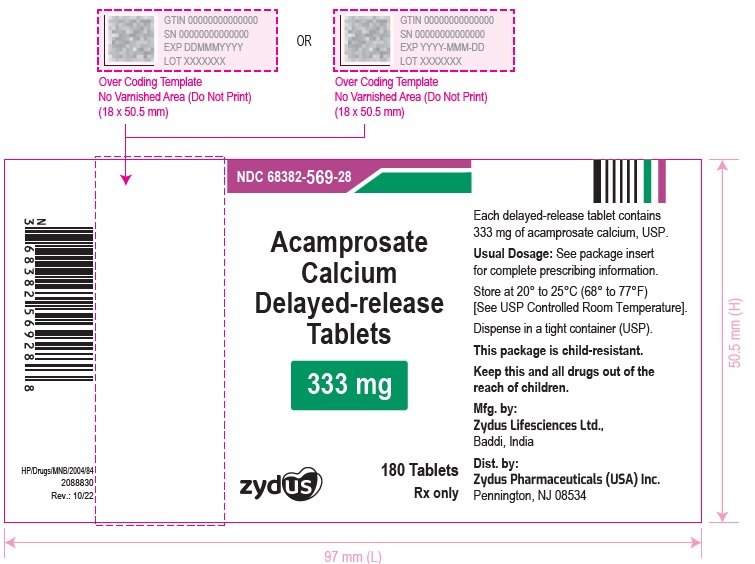
PACKAGE LABEL.PRINCIPAL DISPLAY PANEL NDC 68382-569-28 in bottles of 180 tablets Acamprosate Calcium Delayed-release Tablets 333 mg Rx only Zydus figure
Medicaid utilization by pack size
Medicare Part D spend CMS · PART D · 2026 (Q1)
About this NDC listing & data coverage
What data is (and isn’t) available for this NDC — tap to expand
| NDC identity (package / product / labeler codes) | ✓ Available |
| Labeler | ✓ Available |
| Product & package description | ✓ Available |
| Marketing category & status | ✓ Available |
| Active ingredient / dosage form / route | ✓ Available |
| FDA label (SPL via DailyMed) | ✓ Available |
| Package photos | ✓ Available |
| Inactive ingredients (structured) | ✓ Available |
| NADAC pharmacy acquisition price (CMS) | — Not published for this NDC CMS publishes NADAC only for NDCs reported in its retail-pharmacy survey. |
| Orange Book / therapeutic-equivalence data | ✓ Available |
| HCPCS J-code billing crosswalk | — Not published for this NDC Most self-administered / retail products have no J-code — that is normal. |
| Medicaid utilization (CMS SDUD) | — Not published for this NDC CMS reports utilization only for NDCs with Medicaid claims above its privacy threshold. |