
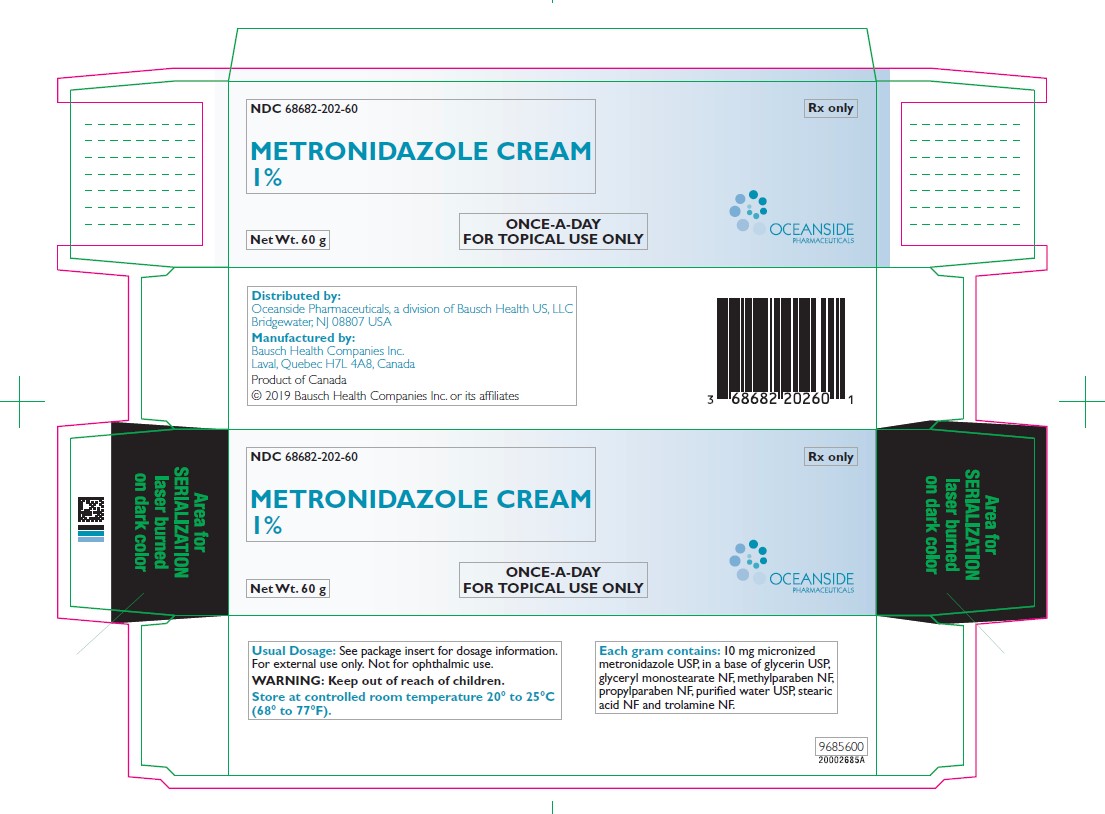
Metronidazole 10 mg/60g Cream, 60 g
🆔 Identity & classification
Where does this data come from?
🏷️ RxNorm drug class
This medicine belongs to the Nitroimidazole Antimicrobial class.
Where does this data come from?
🏭 Manufacturer & labeler
Where does this data come from?
🩺 Clinical
Metronidazole topical is used to treat rosacea (a skin disease that causes redness, flushing, and pimples on the face). Metronidazole is in a class of medications called nitroimidazole antimicrobials. It works by stopping the growth of bacteria.
Read the full MedlinePlus article ↗- This is one of the most important things to know about metronidazole. If you drink alcohol — or consume products containing propylene glycol — while taking it, you can have a prett...
- Why do I have to avoid alcohol while taking this?
- Yes, completely normal and actually really important. Trichomoniasis is a sexually transmitted infection, so even if your partner has no symptoms, they can still carry the parasite...
- My partner and I both have to take this for trichomoniasis — is that normal?
Patient education
Supplement & herbal interactions
Some supplements/herbs that may interact with Metronidazole — tap one for details:
Metronidazole may be associated with lower levels of 7 nutrients — worth a chat with your pharmacist, not a cause for alarm.
Where does this data come from?
Ask a licensed pharmacist directly — free, answered by our team.
🧪 Inactive Ingredients / Excipients
Inactive ingredients, also called excipients, are components of the drug product other than the active ingredient. They may include fillers, dyes, coatings, preservatives, flavors, or other formulation ingredients.
💡 Tap an ingredient (hover on desktop) to see what it is and why it’s used.
-
UNII PDC6A3C0OX
Glycerin is a clear, thick liquid derived from plant oils or fats. It acts as a humectant to retain moisture, a sweetener, and a solvent in medications.
-
UNII 230OU9XXE4
A waxy substance made from glycerin and stearic acid that acts as an emulsifier to blend oily and watery ingredients together. It also helps thicken and stabilize the medicine's texture.
-
UNII A2I8C7HI9T
Methylparaben is a preservative derived from benzoic acid that prevents growth of bacteria, fungi, and mold in medicines. It extends the product's shelf life and maintains safety during storage.
-
UNII Z8IX2SC1OH
Propylparaben is a chemical preservative used to prevent bacterial and fungal growth in medicines and personal care products. It helps extend shelf life and maintain product safety during storage.
-
UNII 4ELV7Z65AP
Stearic acid is a fatty acid derived from plant or animal sources. It acts as a binder and lubricant in tablets and capsules, helping them hold together and flow smoothly during manufacturing.
-
UNII 9O3K93S3TK
Trolamine is an alkaline compound used as a pH buffer and emulsifier in medicines. It helps neutralize acids, stabilize formulations, and enable mixing of oil and water-based ingredients.
-
UNII 059QF0KO0R
Water is a liquid solvent that dissolves and mixes ingredients together in liquid medicines, syrups, and injections. It helps distribute the active drug evenly throughout the product.
7 inactive ingredients listed in the exact product block matched to this NDC.
Where does this data come from?
ingredient classCode="IACT" elements from the exact product block matched by this NDC. Label-section narrative from DailyMed / the openFDA label index is shown separately when available.Inactive ingredient FAQ
Are inactive ingredients the same for every manufacturer?
Why might an inactive ingredient be missing?
Can inactive ingredients matter?
💲 Pricing
A drug doesn't have one price. Each row is a different public payment system, and none is what you'd pay at the counter — that depends on your insurance. The ⓘ on each row explains what it measures.
| Price system | Per g | Per package |
|---|---|---|
| Retail pharmacies payNADAC · weekly | Not in the retail survey — common for institutional, discontinued, or low-volume packs. | |
| Medicaid paysCMS SDUD · 12 mo | No recent Medicaid claims on file for this NDC — rare and low-volume NDCs are suppressed in the public data. | |
| Medicare drug plans payPart D · quarterly | No Part D plan price is available for this NDC in our data. | |
Where does this data come from?
🔁 Therapeutic equivalents
| Product | Labeler | Pack | NADAC/unit | TE | Status | Price vs. this |
|---|---|---|---|---|---|---|
| Noritate 10 mg/60g 00187-5202-60 | Bausch | 1 tube | — | — | FDA listed | — |
| Metronidazole 10 mg/60gthis 68682-0202-60 | Oceanside | 60 g | — | — | FDA listed | — |
Where does this data come from?
⏳ Availability & generic status
FDA-approved generic versions are listed, and recent pricing/market data suggests they may be available — see Therapeutic equivalents.
Where does this data come from?
📊 Medicare Part D spend CMS · PART D · 2026 (Q1)
🔬 Reported adverse events (FAERS)
Top reported reactions
Age at onset
Reporter sex
Serious outcomes
Where does this data come from?
📦 Packaging — all sizes for this product
| Package NDC | Description | Marketing start | Status |
|---|---|---|---|
| 68682-0202-60 You're viewing this | 60 g in 1 TUBE (68682-202-60) | 2023-08-01 | Active |
🧭 About this NDC listing & data coverage
What data is (and isn’t) available for this NDC — tap to expand
| NDC identity (package / product / labeler codes) | ✓ Available |
| Labeler | ✓ Available |
| Product & package description | ✓ Available |
| Marketing category & status | ✓ Available |
| Active ingredient / dosage form / route | ✓ Available |
| FDA label (SPL via DailyMed) | ✓ Available |
| Package photos | ✓ Available |
| Inactive ingredients (structured) | ✓ Available |
| NADAC pharmacy acquisition price (CMS) | — Not published for this NDC CMS publishes NADAC only for NDCs reported in its retail-pharmacy survey. |
| Orange Book / therapeutic-equivalence data | — Not published for this NDC Applies only to products approved under an NDA/ANDA; many listings are out of scope. |
| HCPCS J-code billing crosswalk | — Not published for this NDC Most self-administered / retail products have no J-code — that is normal. |
| Medicaid utilization (CMS SDUD) | — Not published for this NDC CMS reports utilization only for NDCs with Medicaid claims above its privacy threshold. |
Questions about this listing
Why is there no price listed?
Is the NDC printed on the package the same as the 11-digit billing NDC?
What do the three segments of this NDC mean?
Is this package still being marketed?
Who lists this product with the FDA?
Do I need a prescription for this product?
Where does this data come from?
📄 Full prescribing information FDA SPL
🎯 Indications and Usage ▾
INDICATIONS AND USAGE METRONIDAZOLE CREAM is indicated for the topical treatment of inflammatory lesions and erythema of rosacea.
⏱️ Dosage and Administration ▾
DOSAGE AND ADMINISTRATION Areas to be treated should be cleansed before application of METRONIDAZOLE CREAM . Apply and rub in a thin film of METRONIDAZOLE CREAM once daily to entire affected area(s). Patients may use cosmetics after application of METRONIDAZOLE CREAM .
⛔ Contraindications ▾
CONTRAINDICATIONS METRONIDAZOLE CREAM is contraindicated in those patients with a history of hypersensitivity to metronidazole or to any other ingredient in this formulation.
🤒 Adverse Reactions ▾
ADVERSE REACTIONS Safety data from 302 patients who used METRONIDAZOLE CREAM (n=200) or vehicle control (n=102) once daily in clinical trials and experienced an adverse event considered to be treatment related include: application site reaction ( METRONIDAZOLE CREAM 1, vehicle 1), condition aggravated ( METRONIDAZOLE CREAM 1, vehicle 0), paresthesia ( METRONIDAZOLE CREAM 0, vehicle 1), acne ( METRONIDAZOLE CREAM 1, vehicle 0), dry skin ( METRONIDAZOLE CREAM 0, vehicle 2). The majority of adverse reactions were mild to moderate in severity.
Two patients treated with METRONIDAZOLE CREAM once daily discontinued treatment because of adverse events: one for a severe flare of comedonal acne and one for rosacea aggravated. Additional clinical adverse effects reported spontaneously since the drug was marketed are uncommon and include tingling or numbness of extremities, allergic reactions, skin and eye irritation, rash, headache, nausea and dry mouth. To report SUSPECTED ADVERSE REACTIONS, contact Oceanside Pharmaceuticals at 1-800-321-4576 or FDA at 1-800-FDA-1088 or www.fda.gov/medwatch .
🔄 Drug Interactions ▾
Drug Interactions: Oral metronidazole has been reported to potentiate the anticoagulant effect of coumarin and warfarin resulting in a prolongation of prothrombin time. Drug interactions should be kept in mind when METRONIDAZOLE CREAM is prescribed for patients who are receiving anticoagulant treatment, although they are less likely to occur with topical metronidazole administration because of low absorption. (See CLINICAL PHARMACOLOGY , Pharmacokinetics . )
🤰 Pregnancy ▾
Pregnancy: Teratogenic Effects: There are no adequate and well-controlled studies with the use of METRONIDAZOLE CREAM in pregnant women. Metronidazole crosses the placental barrier and enters the fetal circulation rapidly. No fetotoxicity was observed after oral administration of metronidazole to rats or mice at 200 and 20 times, respectively, the expected clinical dose.
However, oral metronidazole has shown carcinogenic activity in rodents. Because animal reproduction studies are not always predictive of human response, METRONIDAZOLE CREAM should be used during pregnancy only if clearly needed.
🧒 Pediatric Use ▾
Pediatric Use: Safety and effectiveness in pediatric patients have not been established.
🧬 Clinical Pharmacology ▾
CLINICAL PHARMACOLOGY Pharmacokinetics: When a one gram dose of METRONIDAZOLE CREAM , 1%, was applied in a single application to the face of 16 healthy volunteers, low concentrations of metronidazole were detected in the plasma of 7 of the volunteers. The mean±SD C max of metronidazole was 27.6±7.3 ng/mL, which is about 1% of the value reported for a single 250 mg oral dose of metronidazole. The time to maximum plasma concentration (T max ) in the volunteers with detectable metronidazole was 8-12 hours after topical application.
Pharmacodynamics: The mechanisms by which metronidazole acts in reducing inflammatory lesions of rosacea are unknown. Clinical Studies: Safety and efficacy of METRONIDAZOLE CREAM were evaluated in two randomized vehicle-controlled clinical studies for the treatment of rosacea, which excluded patients who had nodules, moderate or severe rhinophyma, dense telangiectases, plaque-like facial edema or ocular involvement and those who had a history of not responding to metronidazole therapy for rosacea. Of the patients included in the efficacy database (n=416), there were 142 men and 274 women.
Endpoint efficacy data comparisons for patients treated with daily METRONIDAZOLE CREAM or vehicle applications are listed below. Inflammatory Lesion Counts and Erythema Severity Scores in Two Clinical Trials for Rosacea METRONIDAZOLE CREAM Vehicle Study 1 Study 2 Study 1 Study 2 N Result N Result N Result N Result Papules + Pustules Count Baseline 89 15 92 19 50 18 49 17 Week 10 80 7* 82 8 45 15 41 12 Reduction 49%* 58%* 17% 30% Papules Count Baseline 89 13 92 17 50 15 49 15 Week 10 80 7* 82 7 45 12 41 11 Reduction 41%* 55%* 14% 28% Erythema Score Baseline 89 2.2 92 2.3 50 2.2 49
2.2Week 10 80 1.3* 82 1.4* 45 1.7 40
1.8Reduction 42%* 40%* 25% 19% *Statistically significant differences between METRONIDAZOLE CREAM and vehicle groups with p≤0.05. Erythema scores: 0=none, 1=mild, 2=moderate and 3=severe. Safety Studies: Studies of contact sensitization (n=258), phototoxicity (n=21), and photocontact sensitization (n=29) of METRONIDAZOLE CREAM were conducted. No evidence of sensitization or phototoxicity was seen in these studies.
📦 How Supplied / Storage and Handling ▾
HOW SUPPLIED Cream - 60 g aluminum tube - NDC 68682-202-60. Keep out of reach of children. Storage: Store at controlled room temperature 20° to 25°C (68° to 77°F).
📦 Storage and Handling ▾
Storage: Store at controlled room temperature 20° to 25°C (68° to 77°F).
📋 Description ▾
DESCRIPTION METRONIDAZOLE CREAM, 1% , contains metronidazole USP. Chemically, metronidazole is 2-methyl-5-nitro-1 H -imidazole-1-ethanol. The molecular formula for metronidazole is C 6 H 9 N 3 O 3 .
It has the following structural formula: Metronidazole has a molecular weight of 171.16. It is a white to pale yellow crystalline powder. It is slightly soluble in alcohol and has a solubility in water of 10 mg/mL at 20°C.
Metronidazole is a member of the imidazole class of antibacterial agents and is classified as an antiprotozoal and antibacterial agent. METRONIDAZOLE CREAM is an emollient cream; each gram contains 10 mg micronized metronidazole USP, in a base of glycerin USP, glyceryl monostearate NF, methylparaben NF, propylparaben NF, purified water USP, stearic acid NF and trolamine NF. Noritate Chemical Structure
💬 Information for Patients ▾
Information for Patients: Patients using METRONIDAZOLE CREAM should receive the following information and instructions: 1. This medication is to be used as directed. 2.
It is for external use only. 3. Avoid contact with the eyes.
4. Cleanse affected area(s) before applying METRONIDAZOLE CREAM . 5.
This medication should not be used for any disorder other than that for which it is prescribed. 6. Patients should report any adverse reaction to their physician.