
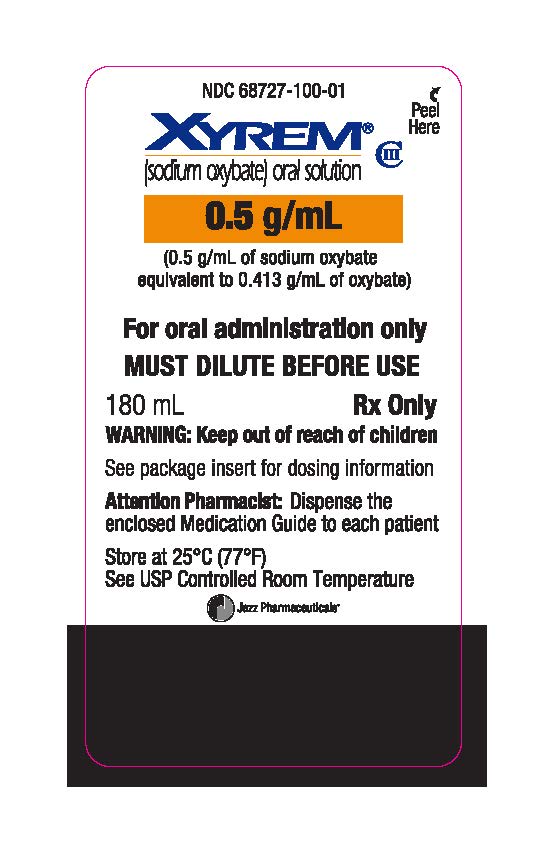
Xyrem sodium oxybate .5 g/mL Solution, 180 mL — NDC 68727-100-01 (Billing 68727-0100-01)
This is a package of 180 mL of Xyrem sodium oxybate .5 g/mL Solution from Jazz Pharmaceuticals, Inc., marketed since Jul 2002 and currently FDA-listed. It is this product's only package size.
NDC database record
One package, one record: these facts belong to NDC 68727-100-01 alone.
- Record
- FDA NDC Directory package listing · Human prescription drug
- Code segments
- 68727 labeler · 100 product · 01 package
- Package marketed since
- Jul 17, 2002
- Sample package
- No — commercial package
- Listing certified through
- Dec 31, 2026
- Billing quantity
- 180 mL per package
- Barcode (UPC-A, from the NDC)
- 3 6872710001 5
- Medicaid fills, this package
- 1,280 prescriptions in the last four reported quarters
- FDA record last changed
- Jul 24, 2026
Identity & classification
Regulatory identifiers FDA, NLM and CMS codes for this package
Drug-database identifiers Medi-Span GPI and First Databank GCN / HICL / AHFS classification
- GSN (GCN sequence number): 050813
- GCN: 18104
- GPI-14 (Medi-Span): 62450060202020
- HICL (First Databank): 012346
- AHFS class code: 28:20.80.00
- RxCUI (RxNorm): 349482
Where does this data come from?
- FDA openFDA NDC Directory · synced Oct 8, 2026
- FDA label on DailyMed · label index refreshed Oct 8, 2026
- RxNorm (NLM RxNav) · catalog refreshed Oct 8, 2026
- Medi-Span GPI (licensed)
- First Databank (licensed) · refreshed Oct 8, 2026
RxNorm drug class
This medicine belongs to the Central Nervous System Depressant class.
Where does this data come from?
- RxClass (NLM) · catalog refreshed Oct 8, 2026
Clinical
Calcium, magnesium, potassium, and sodium oxybate is used to treat attacks of cataplexy (episodes of muscle weakness that begin suddenly and last for a short time) and excessive daytime sleepiness in adults and children 7 years of age and older who have narcolepsy (a sleep disorder that may cause extreme sleepiness, sudden uncontrollable urge to sleep during daily activities, and cataplexy). Calcium, magnesium, potassium, and sodium oxybate is also used to treat adults who have idiopathic hypersomnia (IH; a sleep disorder that may cause excessive daytime sleepiness and uncontrollable urge to s...
Read the full MedlinePlus article ↗- That's a great question, and the answer depends on which product you're prescribed. If you're on Xyrem or the generic oral solution, yes — you do need two doses spaced about 2.5 to...
- Why do I have to take two doses in the middle of the night — can't I just take it all at once?
- No — alcohol and sodium oxybate absolutely cannot be mixed, even if there are hours between them. Combining the two dramatically increases the risk of your breathing slowing down d...
- Can I have a glass of wine with dinner if I take my dose hours later at bedtime?
Patient education
Supplement & herbal interactions
Some supplements/herbs that may interact with Sodium Oxybate — tap one for details:
Where does this data come from?
- MedlinePlus (NLM) · refreshed Oct 8, 2026
- FDA label on DailyMed · label index refreshed Oct 8, 2026
Ask a licensed pharmacist directly — free, answered by our team.
Pricing
A drug doesn't have one price. Each row is a different public payment system, and none is what you'd pay at the counter — that depends on your insurance. The ⓘ on each row explains what it measures.
| Price system | Per mL | Per package |
|---|---|---|
| Retail pharmacies payNADAC · weekly | Not in the retail survey — common for institutional, discontinued, or low-volume packs. | |
| Medicaid paysCMS SDUD · 12 mo | $39.92 | $7,185.29 / 180 ml |
| Medicare drug plans payPart D · Q2 2026 | $42.29 | $7,612.18 / 180 ml |
Where does this data come from?
- CMS NADAC weekly file
- CMS ASP pricing files · refreshed Sep 20, 2026
- CMS Medicaid State Drug Utilization Data · through Q1 2026
- CMS Part D plan pricing files · refreshed Sep 24, 2026
- VA National Acquisition Center price file
Packaging — all sizes for this product
| Package NDC | Description | Marketing start | Marketing end | Status |
|---|---|---|---|---|
| 68727-0100-01 You're viewing this Main listing | 180 mL in 1 BOTTLE, PLASTIC | 2002-07-17 | — | Active |
Therapeutic equivalents
| Product | Labeler | Pack | NADAC/unit | TE | Status | Price vs. this |
|---|---|---|---|---|---|---|
| sodium oxybate .5 g/mL 00054-9628-57 | Hikma | 180 ml | — | AA | FDA listed | — |
| sodium oxybate .5 g/mL 31722-0891-18 | Camber | 1 bottle | — | AA | FDA listed | — |
| Sodium Oxybate 500 mg/mL 65162-0065-87 | Amneal | 1 bottle | — | AA | FDA listed | — |
| Xyrem .5 g/mLthis 68727-0100-01 | Jazz | 180 ml | — | AA | FDA listed | — |
| sodium oxybate .5 g/mL 72865-0349-18 | XLCare | 1 bottle | — | AA | FDA listed | — |
Where does this data come from?
- FDA openFDA NDC Directory · synced Oct 8, 2026
- FDA Orange Book · refreshed Oct 3, 2026
- CMS NADAC weekly file
Availability & generic status
The FDA lists approved generic versions of this medicine, but that does not always mean a pharmacy can get one today. Patent rules, launch agreements, supply and pricing can affect when generics actually arrive.
Why the date isn’t exact: Generic timing can change because patents may be challenged, settled, licensed, added, removed, or worked around with a narrower label — and FDA approval does not always mean a pharmacy can get the generic today.
🛈 What do these terms mean?
- Patent
- Legal protection listed in the Orange Book that may delay generic approval or launch. Issued by the U.S. Patent & Trademark Office.
- Substance patent
- Covers the active drug molecule itself — the hardest to design around. A generic generally can’t launch until it expires.
- Formulation (product) patent
- Covers a specific formulation or dosage form. A generic can sometimes work around it with a different formulation.
- Method-of-use patent
- A patent covering one specific approved use of the drug — not necessarily the whole molecule. A generic can sometimes launch with a “skinny label” that carves out the protected use and keeps the others.
- Skinny label
- A generic label that omits a still-patented use when the FDA allows it — letting a generic reach the market for the unprotected uses.
- Exclusivity
- FDA-granted marketing protection, separate from patents — e.g. 5-yr new chemical entity, 7-yr orphan drug, or a +6-month pediatric extension.
- Paragraph IV
- A generic applicant’s formal challenge to a listed patent. It can potentially lead to earlier generic entry, but often involves litigation or a settlement.
- RLD / RS
- Reference Listed Drug — the brand product the FDA uses as the reference for generic applications. Reference Standard — the product the FDA expects generics to compare against in bioequivalence testing.
- TE / AB rating
- FDA therapeutic-equivalence rating. An AB rating generally means the FDA considers a generic therapeutically equivalent to — and substitutable for — the brand.
- LOE (loss of exclusivity)
- The latest patent or exclusivity currently listed — the loss-of-exclusivity / latest-listed-protection date shown on this page. Paragraph-IV challenges and settlements can move the real date earlier; FDA approval and a manufacturer’s decision to market can move it later.
Built from the FDA Orange Book. The bars above are scaled to each protection’s expiry; the red LOE marker is the last one to lapse.
| Patent | Type | Use code | Expires |
|---|---|---|---|
| US 10213400 ↗ | Method of use | U-2499 | Mar 15, 2033 |
| US 9486426 ↗ | Method of use | U-1532 | Mar 15, 2033 |
| US 9050302 ↗ | Method of use | U-1532 | Mar 15, 2033 |
| US 8772306 ↗ | Method of use | U-1532 | Mar 15, 2033 |
| US 11986446 ↗ | Method of use | U-3324 | Mar 15, 2033 |
| US 10864181 ↗ | Method of use | U-1532 | Mar 15, 2033 |
| US 11253494 ↗ | Method of use | U-3323 | Mar 15, 2033 |
| US 11253494 ↗ | Method of use | U-3324 | Mar 15, 2033 |
| US 8772306*PED ↗ | Drug product | — | Sep 15, 2033 |
| US 9486426*PED ↗ | Drug product | — | Sep 15, 2033 |
| US 9050302*PED ↗ | Drug product | — | Sep 15, 2033 |
| US 11253494*PED ↗ | Drug product | — | Sep 15, 2033 |
| US 10213400*PED ↗ | Drug product | — | Sep 15, 2033 |
| US 10864181*PED ↗ | Drug product | — | Sep 15, 2033 |
| Code | What it grants | Expires |
|---|---|---|
| ODE-231 | Orphan Drug Exclusivity (7-year) | Oct 26, 2025 |
| PED | Pediatric Exclusivity (+6 months) | Apr 26, 2026 |
Is there a generic version of XYREM 500 MG/ML ORAL SOLUTION?
The FDA approved a generic — why can’t I get it at my pharmacy yet?
Why do different websites show different generic release dates?
What does “FDA listed” mean?
What does a patent or protection date mean here?
What does “current Orange Book estimate” mean?
Can a generic come out before the last patent expires?
Can a generic come out after the listed dates?
What is the difference between patents and exclusivity?
Why are there multiple patent dates?
Where does this data come from?
- FDA Orange Book · refreshed Oct 3, 2026
Inactive Ingredients / Excipients
Inactive ingredients, also called excipients, are components of the drug product other than the active ingredient. They may include fillers, dyes, coatings, preservatives, flavors, or other formulation ingredients.
🧪 Avoiding an ingredient? See Sodium Oxybate inactive ingredients by manufacturer: every current product's list side by side, so you can ask your pharmacy for the version that does not list it.
Where does this data come from?
IACT rows and label-wide narrative are kept separate; availability and product-level specificity depend on the submitted label.- FDA label on DailyMed · label index refreshed Oct 8, 2026
- FDA openFDA NDC Directory · synced Oct 8, 2026
Inactive ingredient FAQ
Are inactive ingredients the same for every manufacturer?
Why might an inactive ingredient be missing?
Can inactive ingredients matter?
Manufacturer & labeler
More NDCs from Jazz Pharmaceuticals, Inc. labeler code 68727
- XYWAV calcium, magnesium, potassium, and sodium oxybates .5 g/mL; .5 g/mL; .5 g/mL; .5 g/mL Solution NDC 68727-150-01
- Modeyso dordaviprone 125 mg Capsule NDC 68727-250-01
- ZEPZELCA Lurbinectedin .5 mg/mL Injection, Powder, Lyophilized, For Solution NDC 68727-712-01
- VYXEOS (daunorubicin and cytarabine) liposome 100 mg/20mL; 44 mg/20mL Injection, Powder, Lyophilized, For Suspension NDC 68727-745-01
- DEFITELIO defibrotide sodium 80 mg/mL Injection, Solution NDC 68727-800-01
- Rylaze asparaginase erwinia chrysanthemi (recombinant)-rywn 20 mg/mL Injection NDC 68727-900-03
Where does this data come from?
- FDA openFDA NDC Directory · synced Oct 8, 2026
- Drugs@FDA
Full prescribing information FDA SPL
🚨 Boxed Warning ▾
WARNING: CENTRAL NERVOUS SYSTEM DEPRESSION and ABUSE AND MISUSE. • Central Nervous System Depression Xyrem (sodium oxybate) is a CNS depressant. In clinical trials at recommended doses, obtundation and clinically significant respiratory depression occurred in adult patients treated with Xyrem [see Warnings and Precautions ( 5.1 )]. Many patients who received Xyrem during clinical trials in narcolepsy were receiving central nervous system stimulants [see Clinical Trials ( 14 )]. • Abuse and Misuse Xyrem ® (sodium oxybate) is the sodium salt of gamma-hydroxybutyrate (GHB).
Abuse or misuse of illicit GHB, either alone or in combination with other CNS depressants, is associated with CNS adverse reactions, including seizure, respiratory depression, decreases in the level of consciousness, coma, and death [see Warnings and Precautions ( 5.2 )]. Because of the risks of CNS depression and abuse and misuse, Xyrem is available only through a restricted program under a Risk Evaluation and Mitigation Strategy (REMS) called the XYWAV and XYREM REMS [see Warnings and Precautions ( 5.3 )]. WARNING: CENTRAL NERVOUS SYSTEM (CNS) DEPRESSION and ABUSE AND MISUSE.
See full prescribing information for complete boxed warning. Central Nervous System Depression • Xyrem is a CNS depressant, and respiratory depression can occur with Xyrem use ( 5.1 , 5.4 ) Abuse and Misuse • Xyrem is the sodium salt of gamma-hydroxybutyrate (GHB). Abuse or misuse of illicit GHB is associated with CNS adverse reactions, including seizure, respiratory depression, decreased consciousness, coma, and death ( 5.2 , 9.2 ) Xyrem is available only through a restricted program called the XYWAV and XYREM REMS ( 5.3 )
🎯 Indications and Usage ▾
1 INDICATIONS AND USAGE Xyrem is indicated for the treatment of cataplexy or excessive daytime sleepiness (EDS) in patients 7 years of age and older with narcolepsy. Xyrem is a central nervous system depressant indicated for the treatment of cataplexy or excessive daytime sleepiness (EDS) in patients 7 years of age and older with narcolepsy ( 1 ).
⏱️ Dosage and Administration ▾
2 DOSAGE AND ADMINISTRATION Dosage for Adult Patients • Initiate dosage at 4.5 g per night orally, divided into two doses ( 2.1 ). • Titrate to effect in increments of 1.5 g per night at weekly intervals (0.75 g at bedtime and 0.75 g taken 2.5 to 4 hours later) ( 2.1 ). • Recommended dosage range: 6 g to 9 g per night orally ( 2.1 ). Total Nightly Dose Take at Bedtime Take 2.5 to 4 Hours Later 4.5 g per night 2.25 g 2.25 g 6 g per night 3 g 3 g 7.5 g per night 3.75 g 3.75 g 9 g per night 4.5 g 4.5 g Dosage for Pediatric Patients (7 years of Age and Older) • The recommended starting dosage, titration regimen, and maximum total nightly dosage are based on body weight (2.2 ).
Important Administration Information • Prepare both doses prior to bedtime; dilute each dose with approximately ¼ cup of water in pharmacy-provided containers ( 2.3 ). • Allow 2 hours after eating before dosing ( 2.3 ). • Take each dose while in bed and lie down after dosing ( 2.3 ). Patients with Hepatic Impairment Recommended starting dosage is one-half of the original dosage per night administered orally, divided into two doses ( 2.4 ).
2.1Adult Dosing Information The recommended starting dosage is 4.5 grams (g) per night administered orally, divided into two doses: 2.25 g at bedtime and 2.25 g taken 2.5 to 4 hours later (see Table 1). Increase the dosage by 1.5 g per night at weekly intervals (additional 0.75 g at bedtime and 0.75 g taken 2.5 to 4 hours later) to the effective dosage range of 6 g to 9 g per night orally. The dosage may be gradually titrated based on efficacy and tolerability.
Doses higher than 9 g per night have not been studied and should not ordinarily be administered. Table 1: Recommended Adult Xyrem Dose Regimen (g = grams) If a Patient’s Total Nightly Dose is: Take at Bedtime: Take 2.5 to 4 Hours Later: 4.5 g per night 2.25 g 2.25 g 6 g per night 3 g 3 g 7.5 g per night 3.75 g 3.75 g 9 g per night 4.5 g 4.5 g
2.2Pediatric Dosing Information Xyrem is administered orally twice nightly. The recommended starting pediatric dosage, titration regimen, and maximum total nightly dosage are based on patient weight, as specified in Table 2. The dosage may be gradually titrated based on efficacy and tolerability.
Table 2: Recommended Pediatric Xyrem Dosage for Patients 7 Years of Age and Older* Patient Weight Initial Dosage Maximum Weekly Dosage Increase Maximum Recommended Dosage Take at Bedtime: Take 2.5 to 4 Hours Later: Take at Bedtime: Take 2.5 to 4 Hours Later: Take at Bedtime: Take 2.5 to 4 Hours Later: <20 kg** There is insufficient information to provide specific dosing recommendations for patients who weigh less than 20 kg. 20 kg to <30 kg ≤1 g ≤1 g 0.5 g 0.5 g 3 g 3 g 30 kg to <45 kg ≤1.5 g ≤1.5 g 0.5 g 0.5 g 3.75 g 3.75 g ≥45 kg ≤2.25 g ≤2.25 g 0.75 g 0.75 g 4.5 g 4.5 g * For patients who sleep more than 8 hours per night, the first dose of Xyrem may be given at bedtime or after an initial period of sleep. ** If Xyrem is used in patients 7 years of age and older who weigh less than 20 kg, a lower starting dosage, lower maximum weekly dosage increases, and lower total maximum nightly dosage should be considered.
Note: Some patients may achieve better responses with unequal doses at bedtime and 2.5 to 4 hours later.
2.3Important Administration Instructions for All Patients The total nightly dosage of Xyrem is divided into two doses. Prepare both doses of Xyrem prior to bedtime. Prior to ingestion, each dose of Xyrem should be diluted with approximately ¼ cup (approximately 60 mL) of water in the empty pharmacy containers provided.
Take the first nightly dose of Xyrem at least 2 hours after eating [see Clinical Pharmacology ( 12.3 )] . Take the second nightly dose 2.5 to 4 hours after the first dose. Patients should take both doses of Xyrem while in bed and lie down immediately after dosing, and remain in bed following ingestion of each dose.
Xyrem may cause patients to fall asleep abruptly without first feeling drowsy [see Adverse… [Excerpted — this section continues on DailyMed.]
💊 Dosage Forms and Strengths ▾
3 DOSAGE FORMS AND STRENGTHS Xyrem is a clear to slightly opalescent oral solution, in a concentration of 0.5 g per mL (0.5 g/mL of sodium oxybate equivalent to 0.413 g/mL of oxybate). Oral solution, 0.5 g per mL ( 3 )
⛔ Contraindications ▾
4 CONTRAINDICATIONS Xyrem is contraindicated for use in: • combination with sedative hypnotics [see Warnings and Precautions ( 5.1 )] . • combination with alcohol [see Warnings and Precautions ( 5.1 )] . • patients with succinic semialdehyde dehydrogenase deficiency [see Clinical Pharmacology ( 12.3 )] . • In combination with sedative hypnotics or alcohol ( 4 ) • Succinic semialdehyde dehydrogenase deficiency ( 4 )
⚠️ Warnings and Cautions ▾
5 WARNINGS AND PRECAUTIONS • CNS depression: Use caution when considering the concurrent use of Xyrem with other CNS depressants ( 5.1 ). • Caution patients against hazardous activities requiring complete mental alertness or motor coordination within the first 6 hours of dosing or after first initiating treatment until certain that Xyrem does not affect them adversely ( 5.1 ). • Depression and suicidality: Monitor patients for emergent or increased depression and suicidality ( 5.5 ). • Confusion/Anxiety: Monitor for impaired motor/cognitive function ( 5.6 ). • Parasomnias: Evaluate episodes of sleepwalking ( 5.7 ). • High sodium content in Xyrem: Monitor patients with heart failure, hypertension, or impaired renal function ( 5.8 ).
5.1Central Nervous System Depression Xyrem is a central nervous system (CNS) depressant. In adult clinical trials at recommended doses, obtundation and clinically significant respiratory depression occurred in patients treated with Xyrem. Xyrem is contraindicated in combination with alcohol and sedative hypnotics.
The concurrent use of Xyrem with other CNS depressants, including but not limited to opioid analgesics, benzodiazepines, sedating antidepressants or antipsychotics, sedating anti-epileptic drugs, general anesthetics, muscle relaxants, and/or illicit CNS depressants, may increase the risk of respiratory depression, hypotension, profound sedation, syncope, and death. If use of these CNS depressants in combination with Xyrem is required, dose reduction or discontinuation of one or more CNS depressants (including Xyrem) should be considered.
In addition, if short-term use of an opioid (e.g., post- or perioperative) is required, interruption of treatment with Xyrem should be considered. Healthcare providers should caution patients about operating hazardous machinery, including automobiles or airplanes, until they are reasonably certain that Xyrem does not affect them adversely (e.g., impair judgment, thinking, or motor skills). Patients should not engage in hazardous occupations or activities requiring complete mental alertness or motor coordination, such as operating machinery or a motor vehicle or flying an airplane, for at least 6 hours after taking Xyrem.
Patients should be queried about CNS depression‐related events upon initiation of Xyrem therapy and periodically thereafter. Xyrem is available only through a restricted program under a REMS [see Warnings and Precautions ( 5.3 )] .
5.2Abuse and Misuse Xyrem is a Schedule III controlled substance. The active ingredient of Xyrem, sodium oxybate or gamma-hydroxybutyrate (GHB), is a Schedule I controlled substance. Abuse of illicit GHB, either alone or in combination with other CNS depressants, is associated with CNS adverse reactions, including seizure, respiratory depression, decreases in the level of consciousness, coma, and death.
The rapid onset of sedation, coupled with the amnestic features of Xyrem, particularly when combined with alcohol, has proven to be dangerous for the voluntary and involuntary user (e.g., assault victim). Because illicit use and abuse of GHB have been reported, physicians should carefully evaluate patients for a history of drug abuse and follow such patients closely, observing them for signs of misuse or abuse of GHB (e.g., increase in size or frequency of dosing, drug-seeking behavior, feigned cataplexy) [see Drug Abuse and Dependence ( 9.2 )].
Xyrem is available only through a restricted program under a REMS [see Warnings and Precautions ( 5.3 )] .
5.3XYWAV and XYREM REMS Xyrem is available only through a restricted distribution program called the XYWAV and XYREM REMS because of the risks of central nervous system depression and abuse and misuse [see Warnings and Precautions ( 5.1 , 5.2 )] . Notable requirements of the XYWAV and XYREM REMS include the following: • Healthcare Providers who prescribe Xyrem are specially certified • Xyrem will be dispensed only by the central pharmacy that is specially certifie… [Excerpted — this section continues on DailyMed.]
🤒 Adverse Reactions ▾
6 ADVERSE REACTIONS The following clinically significant adverse reactions appear in other sections of the labeling: • CNS depression [see Warnings and Precautions ( 5.1 )] • Abuse and Misuse [see Warnings and Precautions ( 5.2 )] • Respiratory Depression and Sleep-Disordered Breathing [see Warnings and Precautions ( 5.4 )] • Depression and Suicidality [see Warnings and Precautions ( 5.5 )] • Other Behavioral or Psychiatric Adverse Reactions [see Warnings and Precautions ( 5.6 )] • Parasomnias [see Warnings and Precautions ( 5.7 )] • Use in Patients Sensitive to High Sodium Intake [see Warnings and Precautions ( 5.8 )] Most common adverse reactions in adults (≥5% and at least twice the incidence with placebo) were nausea, dizziness, vomiting, somnolence, enuresis, and tremor ( 6.1 ).
Most common adverse reactions in pediatric patients (≥5%) were nausea, enuresis, vomiting, headache, weight decreased, decreased appetite, dizziness, and sleepwalking ( 6.1 ). To report SUSPECTED ADVERSE REACTIONS, contact Jazz Pharmaceuticals, Inc. at 1-800-520-5568, or FDA at 1-800-FDA-1088 or www.fda.gov/Medwatch .
6.1Clinical Trials Experience Because clinical trials are conducted under widely varying conditions, adverse reaction rates observed in the clinical trials of a drug cannot be directly compared to rates in the clinical trials of another drug and may not reflect the rates observed in clinical practice. Adult Patients Xyrem was studied in three placebo-controlled clinical trials (Trials N1, N3, and N4, described in Sections 14.1 and 14.2 ) in 611 patients with narcolepsy (398 subjects treated with Xyrem, and 213 with placebo).
A total of 781 patients with narcolepsy were treated with Xyrem in controlled and uncontrolled clinical trials. Section 6.1 and Table 4 present adverse reactions from three pooled, controlled trials (N1, N3, N4) in patients with narcolepsy. Adverse Reactions Leading to Treatment Discontinuation: Of the 398 patients with narcolepsy treated with Xyrem, 10.3% of patients discontinued because of adverse reactions compared with 2.8% of patients receiving placebo.
The most common adverse reaction leading to discontinuation was nausea (2.8%). The majority of adverse reactions leading to discontinuation began during the first few weeks of treatment. Commonly Observed Adverse Reactions in Controlled Clinical Trials: The most common adverse reactions (incidence ≥5% and twice the rate seen with placebo) in patients treated with Xyrem were nausea, dizziness, vomiting, somnolence, enuresis, and tremor.
Adverse Reactions Occurring at an Incidence of 2% or Greater: Table 4 lists adverse reactions that occurred at a frequency of 2% or more in any treatment group for three controlled trials and were more frequent in any Xyrem treatment group than with placebo. Adverse reactions are summarized by dose at onset. Nearly all patients in these studies initiated treatment at 4.5 g per night.
In patients who remained on treatment, adverse reactions tended to occur early and to diminish over time. Table 4 Adverse Reactions Occurring in ≥2% of Adult Patients and More Frequently with Xyrem than Placebo in Three Controlled Trials (N1, N3, N4) by Body System and Dose at Onset Adverse Reaction Placebo (n=213) % Xyrem 4.5g (n=185) % Xyrem 6g (n=258) % Xyrem 9g (n=178) % ANY ADVERSE REACTION 62 45 55 70 GASTROINTESTINAL DISORDERS Nausea 3 8 13 20 Vomiting 1 2 4 11 Diarrhea 2 4 3 4 Abdominal pain upper 2 3 1 2 Dry mouth 2 1 2 1 GENERAL DISORDERS AND ADMINISTRATIVE SITE CONDITIONS Pain 1 1 <1 3 Feeling drunk 1 0 <1 3 Edema peripheral 1 3 0 0 MUSCULOSKELETAL AND CONNECTIVE TISSUE DISORDERS Cataplexy 1 1 1 2 Muscle spasms 2 2 <1 2 Pain in extremity 1 3 1 1 NERVOUS SYSTEM DISORDERS Dizziness 4 9 11 15 Somnolence 4 1 3 8 Tremor 0 0 2 5 Disturbance in attention 0 1 0 4 Paresthesia 1 2 1 3 Sleep paralysis 1 0 1 3 PSYCHIATRIC DISORDERS Disorientation 1 1 2 3 Irritability 1 0 <1 3 Sleepwalking 0 0 0 3 Anxiety 1 1 1 2 RENAL AND URINARY DISORDERS Enuresis… [Excerpted — this section continues on DailyMed.]
🔄 Drug Interactions ▾
7 DRUG INTERACTIONS • Concomitant use with divalproex sodium: An initial reduction in Xyrem dose of at least 20% is recommended ( 2.5 , 7.2 ).
7.1Alcohol, Sedative Hypnotics, and CNS Depressants Xyrem is contraindicated for use in combination with alcohol or sedative hypnotics. Use of other CNS depressants may potentiate the CNS-depressant effects of Xyrem [see Warnings and Precautions ( 5.1 )] .
7.2Divalproex Sodium Concomitant use of Xyrem with divalproex sodium results in an increase in systemic exposure to GHB, which was shown to cause a greater impairment on some tests of attention and working memory in a clinical study [see Clinical Pharmacology ( 12.3 )] . An initial dose reduction of Xyrem is recommended when used concomitantly with divalproex sodium [see Dosage and Administration ( 2.5 )] . Prescribers are advised to monitor patient response closely and adjust dose accordingly if concomitant use of Xyrem and divalproex sodium is warranted.
👥 Use in Specific Populations ▾
8 USE IN SPECIFIC POPULATIONS • Pregnancy: Based on animal data, may cause fetal harm ( 8.1 ). • Geriatric patients: Monitor for impaired motor and/or cognitive function when taking Xyrem ( 8.5 ).
8.1Pregnancy Risk Summary There are no adequate data on the developmental risk associated with the use of sodium oxybate in pregnant women. Oral administration of sodium oxybate to pregnant rats (150, 350, or 1,000 mg/kg/day) or rabbits (300, 600, or 1,200 mg/kg/day) throughout organogenesis produced no clear evidence of developmental toxicity; however, oral administration to rats throughout pregnancy and lactation resulted in increased stillbirths and decreased offspring postnatal viability and growth, at a clinically relevant dose [see Data] .
In the U.S. general population, the estimated background risk of major birth defects and miscarriage in clinically recognized pregnancies is 2-4% and 15-20%, respectively. The background risk of major birth defects and miscarriage for the indicated population is unknown. Clinical Considerations Labor or Delivery Xyrem has not been studied in labor or delivery.
In obstetric anesthesia using an injectable formulation of sodium oxybate, newborns had stable cardiovascular and respiratory measures but were very sleepy, causing a slight decrease in Apgar scores. There was a fall in the rate of uterine contractions 20 minutes after injection. Placental transfer is rapid and gamma-hydroxybutyrate (GHB) has been detected in newborns at delivery after intravenous administration of GHB to mothers.
Subsequent effects of sodium oxybate on later growth, development, and maturation in humans are unknown. Data Animal Data Oral administration of sodium oxybate to pregnant rats (150, 350, or 1,000 mg/kg/day) or rabbits (300, 600, or 1,200 mg/kg/day) throughout organogenesis produced no clear evidence of developmental toxicity. The highest doses tested in rats and rabbits were approximately 1 and 3 times, respectively, the maximum recommended human dose (MRHD) of 9 g per night on a body surface area (mg/m 2 ) basis.
Oral administration of sodium oxybate (150, 350, or 1,000 mg/kg/day) to rats throughout pregnancy and lactation resulted in increased stillbirths and decreased offspring postnatal viability and body weight gain at the highest dose tested. The no-effect dose for pre- and post-natal developmental toxicity in rats is less than the MRHD on a mg/m 2 basis.
8.2Lactation Risk Summary GHB is excreted in human milk after oral administration of sodium oxybate. There is insufficient information on the risk to a breastfed infant, and there is insufficient information on milk production in nursing mothers. The developmental and health benefits of breastfeeding should be considered along with the mother's clinical need for Xyrem and any potential adverse effects on the breastfed infant from Xyrem or from the underlying maternal condition.
8.4Pediatric Use The safety and effectiveness of Xyrem in the treatment of cataplexy or excessive daytime sleepiness in pediatric patients (7 years of age and older) with narcolepsy have been established in a double-blind, placebo-controlled, randomized-withdrawal study [see Adverse Reactions ( 6.1 ) and Clinical Studies ( 14.3 )] . In the pediatric clinical trial with Xyrem administration in patients with narcolepsy, serious adverse reactions of central sleep apnea and oxygen desaturation documented by polysomnography evaluation; depression; suicidal ideation; neuropsychiatric reactions including acute psychosis, confusion, and anxiety; and parasomnias, including sleepwalking, have been reported [see Warnings and Precautions ( 5.4 , 5.5 , 5.6 , 5.7 ) and Adverse Reactions ( 6.1 )] .
Safety and effectiveness of Xyrem in pediatric patients below the age of 7 years have not been established. Juvenile Animal Toxicity Data In a study in which sodium oxybate (0, 100, 300, or 900 mg/kg/day) was orally administered to rats during the juvenile period of development (postnatal days 21… [Excerpted — this section continues on DailyMed.]
🤰 Pregnancy ▾
8.1Pregnancy Risk Summary There are no adequate data on the developmental risk associated with the use of sodium oxybate in pregnant women. Oral administration of sodium oxybate to pregnant rats (150, 350, or 1,000 mg/kg/day) or rabbits (300, 600, or 1,200 mg/kg/day) throughout organogenesis produced no clear evidence of developmental toxicity; however, oral administration to rats throughout pregnancy and lactation resulted in increased stillbirths and decreased offspring postnatal viability and growth, at a clinically relevant dose [see Data] .
In the U.S. general population, the estimated background risk of major birth defects and miscarriage in clinically recognized pregnancies is 2-4% and 15-20%, respectively. The background risk of major birth defects and miscarriage for the indicated population is unknown. Clinical Considerations Labor or Delivery Xyrem has not been studied in labor or delivery.
In obstetric anesthesia using an injectable formulation of sodium oxybate, newborns had stable cardiovascular and respiratory measures but were very sleepy, causing a slight decrease in Apgar scores. There was a fall in the rate of uterine contractions 20 minutes after injection. Placental transfer is rapid and gamma-hydroxybutyrate (GHB) has been detected in newborns at delivery after intravenous administration of GHB to mothers.
Subsequent effects of sodium oxybate on later growth, development, and maturation in humans are unknown. Data Animal Data Oral administration of sodium oxybate to pregnant rats (150, 350, or 1,000 mg/kg/day) or rabbits (300, 600, or 1,200 mg/kg/day) throughout organogenesis produced no clear evidence of developmental toxicity. The highest doses tested in rats and rabbits were approximately 1 and 3 times, respectively, the maximum recommended human dose (MRHD) of 9 g per night on a body surface area (mg/m 2 ) basis.
Oral administration of sodium oxybate (150, 350, or 1,000 mg/kg/day) to rats throughout pregnancy and lactation resulted in increased stillbirths and decreased offspring postnatal viability and body weight gain at the highest dose tested. The no-effect dose for pre- and post-natal developmental toxicity in rats is less than the MRHD on a mg/m 2 basis.
🧒 Pediatric Use ▾
8.4Pediatric Use The safety and effectiveness of Xyrem in the treatment of cataplexy or excessive daytime sleepiness in pediatric patients (7 years of age and older) with narcolepsy have been established in a double-blind, placebo-controlled, randomized-withdrawal study [see Adverse Reactions ( 6.1 ) and Clinical Studies ( 14.3 )] . In the pediatric clinical trial with Xyrem administration in patients with narcolepsy, serious adverse reactions of central sleep apnea and oxygen desaturation documented by polysomnography evaluation; depression; suicidal ideation; neuropsychiatric reactions including acute psychosis, confusion, and anxiety; and parasomnias, including sleepwalking, have been reported [see Warnings and Precautions ( 5.4 , 5.5 , 5.6 , 5.7 ) and Adverse Reactions ( 6.1 )] .
Safety and effectiveness of Xyrem in pediatric patients below the age of 7 years have not been established. Juvenile Animal Toxicity Data In a study in which sodium oxybate (0, 100, 300, or 900 mg/kg/day) was orally administered to rats during the juvenile period of development (postnatal days 21 through 90), mortality was observed at the two highest doses tested. Deaths occurred during the first week of dosing and were associated with clinical signs (including decreased activity and respiratory rate) consistent with the pharmacological effects of the drug.
Reduced body weight gain in males and females and delayed sexual maturation in males were observed at the highest dose tested. The no-effect dose for adverse effects in juvenile rats is associated with plasma exposures (AUC) less than that at the maximum recommended human dose (9 g/night).
🧓 Geriatric Use ▾
8.5Geriatric Use Clinical studies of Xyrem in patients with narcolepsy did not include sufficient numbers of subjects age 65 years and older to determine whether they respond differently from younger subjects. In controlled trials in another population, 39 (5%) of 874 patients were 65 years or older. Discontinuations of treatment due to adverse reactions were increased in the elderly compared to younger adults (21% vs.
19%). Frequency of headaches was markedly increased in the elderly (39% vs. 19%).
The most common adverse reactions were similar in both age categories. In general, dose selection for an elderly patient should be cautious, usually starting at the low end of the dosing range, reflecting the greater frequency of decreased hepatic, renal, or cardiac function, and of concomitant disease or other drug therapy.
🆘 Overdosage ▾
10 OVERDOSAGE
10.1Human Experience Information regarding overdose with Xyrem is derived largely from reports in the medical literature that describe symptoms and signs in individuals who have ingested GHB illicitly. In these circumstances the co-ingestion of other drugs and alcohol was common, and may have influenced the presentation and severity of clinical manifestations of overdose. In adult clinical trials two cases of overdose with Xyrem were reported.
In the first case, an estimated dose of 150 g, more than 15 times the maximum recommended dose, caused a patient to be unresponsive with brief periods of apnea and to be incontinent of urine and feces. This individual recovered without sequelae. In the second case, death was reported following a multiple drug overdose consisting of Xyrem and numerous other drugs.
10.2Signs and Symptoms Information about signs and symptoms associated with overdosage with Xyrem derives from reports of illicit use of GHB. Patient presentation following overdose is influenced by the dose ingested, the time since ingestion, the co-ingestion of other drugs and alcohol, and the fed or fasted state. Patients have exhibited varying degrees of depressed consciousness that may fluctuate rapidly between a confusional, agitated combative state with ataxia and coma.
Emesis (even when obtunded), diaphoresis, headache, and impaired psychomotor skills have been observed. No typical pupillary changes have been described to assist in diagnosis; pupillary reactivity to light is maintained. Blurred vision has been reported.
An increasing depth of coma and acidosis have been observed at higher doses. Myoclonus and tonic-clonic seizures have been reported. Respiration may be unaffected or compromised in rate and depth.
Cheyne-Stokes respiration and apnea have been observed. Bradycardia and hypothermia may accompany unconsciousness, as well as muscular hypotonia, but tendon reflexes remain intact.
10.3Recommended Treatment of Overdose General symptomatic and supportive care should be instituted immediately, and gastric decontamination may be considered if co-ingestants are suspected. Because emesis may occur in the presence of obtundation, appropriate posture (left lateral recumbent position) and protection of the airway by intubation may be warranted. Although the gag reflex may be absent in deeply comatose patients, even unconscious patients may become combative to intubation, and rapid-sequence induction (without the use of sedative) should be considered.
Vital signs and consciousness should be closely monitored. The bradycardia reported with GHB overdose has been responsive to atropine intravenous administration. No reversal of the central depressant effects of Xyrem can be expected from naloxone or flumazenil administration.
The use of hemodialysis and other forms of extracorporeal drug removal have not been studied in GHB overdose, but have been reported in cases of acidosis associated with GHB ingestions of 125 g or greater; however, due to the rapid metabolism of sodium oxybate, these measures may not be warranted.
10.4Poison Control Center As with the management of all cases of drug overdosage, the possibility of multiple drug ingestion should be considered. The healthcare provider is encouraged to collect urine and blood samples for routine toxicologic screening, and to consult with a regional poison control center (1-800-222-1222) for current treatment recommendations.
🧬 Clinical Pharmacology ▾
12 CLINICAL PHARMACOLOGY
12.1Mechanism of Action Xyrem is a CNS depressant. The mechanism of action of Xyrem in the treatment of narcolepsy is unknown. Sodium oxybate is the sodium salt of gamma-hydroxybutyrate (GHB), an endogenous compound and metabolite of the neurotransmitter GABA.
It is hypothesized that the therapeutic effects of Xyrem on cataplexy and excessive daytime sleepiness are mediated through GABA B actions at noradrenergic and dopaminergic neurons, as well as at thalamocortical neurons.
12.3Pharmacokinetics Pharmacokinetics of GHB are nonlinear and are similar following single or repeat dosing of Xyrem. Absorption Following oral administration of Xyrem, GHB is absorbed rapidly across the clinical dose range, with an absolute bioavailability of about 88%. The average peak plasma concentrations (C max ) following administration of each of the two 2.25 g doses given under fasting conditions 4 hours apart were similar.
The average time to peak plasma concentration (T max ) ranged from 0.5 to 1.25 hours. Following oral administration of Xyrem, the plasma levels of GHB increased more than dose-proportionally, with blood levels increasing 3.7 ‐ fold as total daily dose is doubled from 4.5 g to 9 g. Single doses greater than 4.5 g have not been studied.
Effect of Food Administration of Xyrem immediately after a high-fat meal resulted in delayed absorption (average T max increased from 0.75 hr to 2 hr) and a reduction in C max of GHB by a mean of 59% and of systemic exposure (AUC) by 37%. Distribution GHB is a hydrophilic compound with an apparent volume of distribution averaging 190 mL/kg to 384 mL/kg. At GHB concentrations ranging from 3 mcg/mL to 300 mcg/mL, less than 1% is bound to plasma proteins.
Elimination Metabolism Animal studies indicate that metabolism is the major elimination pathway for GHB, producing carbon dioxide and water via the tricarboxylic acid (Krebs) cycle and secondarily by beta-oxidation. The primary pathway involves a cytosolic NADP + -linked enzyme, GHB dehydrogenase, that catalyzes the conversion of GHB to succinic semialdehyde, which is then biotransformed to succinic acid by the enzyme succinic semialdehyde dehydrogenase. Succinic acid enters the Krebs cycle where it is metabolized to carbon dioxide and water.
A second mitochondrial oxidoreductase enzyme, a transhydrogenase, also catalyzes the conversion to succinic semialdehyde in the presence of α-ketoglutarate. An alternate pathway of biotransformation involves β-oxidation via 3,4-dihydroxybutyrate to carbon dioxide and water. No active metabolites have been identified.
Excretion The clearance of GHB is almost entirely by biotransformation to carbon dioxide, which is then eliminated by expiration. On average, less than 5% of unchanged drug appears in human urine within 6 to 8 hours after dosing. Fecal excretion is negligible.
GHB has an elimination half-life of 0.5 to 1 hour. Specific Populations Geriatric Patients There is limited experience with Xyrem in the elderly. Results from a pharmacokinetic study (n=20) in another studied population indicate that the pharmacokinetic characteristics of GHB are consistent among younger (age 48 to 64 years) and older (age 65 to 75 years) adults.
Pediatric Patients The pharmacokinetics of sodium oxybate were evaluated in pediatric patients from 7 to 17 years of age (n=29). The pharmacokinetic characteristics of sodium oxybate were shown to be similar in adults and pediatric patients. Body weight was found to be the major intrinsic factor affecting oxybate pharmacokinetics.
Male and Female Patients In a study of 18 female and 18 male healthy adult volunteers, no gender differences were detected in the pharmacokinetics of GHB following a single Xyrem oral dose of 4.5 g. Racial or Ethnic Groups There are insufficient data to evaluate any pharmacokinetic differences among races. Patients with Renal Impairment No pharmacokinetic study in patients with renal impairment has been conducted.
Patients with… [Excerpted — this section continues on DailyMed.]
🧬 Mechanism of Action ▾
12.1Mechanism of Action Xyrem is a CNS depressant. The mechanism of action of Xyrem in the treatment of narcolepsy is unknown. Sodium oxybate is the sodium salt of gamma-hydroxybutyrate (GHB), an endogenous compound and metabolite of the neurotransmitter GABA.
It is hypothesized that the therapeutic effects of Xyrem on cataplexy and excessive daytime sleepiness are mediated through GABA B actions at noradrenergic and dopaminergic neurons, as well as at thalamocortical neurons.
📦 How Supplied / Storage and Handling ▾
16 HOW SUPPLIED/STORAGE AND HANDLING
16.1How Supplied Xyrem is a clear to slightly opalescent oral solution. Each prescription includes one bottle of Xyrem with attached press in bottle adaptor, an oral measuring device (plastic syringe), and a Medication Guide. The pharmacy provides two empty containers with child-resistant caps with each Xyrem shipment.
Each amber bottle contains Xyrem oral solution at a concentration of 0.5 g per mL (0.5 g/mL of sodium oxybate equivalent to 0.413 g/mL of oxybate) and has a child-resistant cap. One 180 mL bottle NDC 68727-100-01
16.2Storage Keep out of reach of children. Xyrem should be stored at 25°C (77°F); excursions permitted to 15°C to 30°C (59°F to 86°F) (see USP Controlled Room Temperature). Dispense in tight containers. Solutions prepared following dilution should be consumed within 24 hours.
16.3Handling and Disposal Xyrem is a Schedule III drug under the Controlled Substances Act. Xyrem should be handled according to state and federal regulations. It is safe to dispose of Xyrem down the sanitary sewer.
📋 Description ▾
11 DESCRIPTION Sodium oxybate, a CNS depressant, is the active ingredient in Xyrem. The chemical name for sodium oxybate is sodium 4-hydroxybutyrate. The molecular formula is C 4 H 7 NaO 3 , and the molecular weight is 126.09 g/mole.
The chemical structure is: Sodium oxybate is a white to off-white, crystalline powder that is very soluble in aqueous solutions. Each mL of Xyrem contains 0.5 g of sodium oxybate (equivalent to 0.413 g/mL of oxybate) in USP Purified Water, neutralized to pH 7.5 with malic acid. chemical structure
💬 Information for Patients ▾
17 PATIENT COUNSELING INFORMATION Advise the patient and/or caregiver to read the FDA-approved patient labeling (Medication Guide and Instructions for Use). Central Nervous System Depression Inform patients and/or caregivers that Xyrem can cause central nervous system depression, including respiratory depression, hypotension, profound sedation, syncope, and death. Instruct patients to not engage in activities requiring mental alertness or motor coordination, including operating hazardous machinery, for at least 6 hours after taking Xyrem.
Instruct patients and/or their caregivers to inform their healthcare providers of all the medications they take [see Warnings and Precautions ( 5.1 )]. Abuse and Misuse Inform patients and/or caregivers that the active ingredient of Xyrem is gamma-hydroxybutyrate (GHB), which is associated with serious adverse reactions with illicit use and abuse [see Warnings and Precautions ( 5.2 )]. XYWAV and XYREM REMS Xyrem is available only through a restricted program called the XYWAV and XYREM REMS [see Warnings and Precautions ( 5.3 )].
Inform the patient and/or caregiver of the following notable requirements: • Xyrem is dispensed only by the central pharmacy • Xyrem will be dispensed and shipped only to patients enrolled in the XYWAV and XYREM REMS Xyrem is available only from the central pharmacy participating in the program. Therefore, provide patients and/or caregivers with the telephone number and website for information on how to obtain the product. Alcohol or Sedative Hypnotics Advise patients and/or caregivers that alcohol and other sedative hypnotics should not be taken with Xyrem [see Contraindications ( 4 )] .
Sedation Inform patients and/or caregivers that the patient is likely to fall asleep quickly after taking Xyrem (often within 5 and usually within 15 minutes), but the time it takes to fall asleep can vary from night to night. The sudden onset of sleep, including in a standing position or while rising from bed, has led to falls complicated by injuries, in some cases requiring hospitalization [see Adverse Reactions ( 6.2 )] . Instruct patients and/or caregivers that the patient should remain in bed following ingestion of the first and second nightly doses.
Instruct patients and/or caregivers that the patient should not take their second nightly dose until 2.5 to 4 hours after the first dose [see Dosage and Administration ( 2.3 )] . Food Effects on Xyrem Inform patients and/or caregivers that the first nightly dose should be taken at least 2 hours after eating. Respiratory Depression and Sleep-Disordered Breathing Inform patients that Xyrem may impair respiratory drive, especially in patients with compromised respiratory function, and may cause apnea [see Warnings and Precautions ( 5.4 )] .
Depression and Suicidality Instruct patients and/or caregivers to contact a healthcare provider immediately if the patient develops depressed mood, markedly diminished interest or pleasure in usual activities, significant change in weight and/or appetite, psychomotor agitation or retardation, increased fatigue, feelings of guilt or worthlessness, slowed thinking or impaired concentration, or suicidal ideation [see Warnings and Precautions ( 5.5 )] . Other Behavioral or Psychiatric Adverse Reactions Inform patients and/or caregivers that Xyrem can cause behavioral or psychiatric adverse reactions, including confusion, anxiety, and psychosis.
Instruct them to notify their healthcare provider if any of these types of symptoms occur [see Warnings and Precautions ( 5.6 )]. Sleepwalking Instruct patients and/or caregivers that Xyrem has been associated with sleepwalking and other behaviors during sleep, and to contact their healthcare provider if this occurs [see Warnings and Precautions ( 5.7 )] . Sodium Intake Instruct patients and/or caregivers that Xyrem contains a significant amount of sodium and patients who are sensitive to sodium intake (e.g., those with heart failure, hypertension, or renal impai… [Excerpted — this section continues on DailyMed.]
💬 Medication Guide ▾
MEDICATION GUIDE XYREM ® (ZĪE-rem) (sodium oxybate) oral solution, CIII Read this Medication Guide carefully before you start or your child starts taking XYREM and each time you get or your child gets a refill. There may be new information. This information does not take the place of talking to your doctor about your or your child’s medical condition or treatment.
What is the most important information I should know about XYREM? • XYREM is a central nervous system (CNS) depressant. Taking XYREM with other CNS depressants such as medicines used to make you or your child fall asleep, including opioid analgesics, benzodiazepines, sedating antidepressants, antipsychotics, sedating anti-epileptic medicines, general anesthetics, muscle relaxants, alcohol, or street drugs, may cause serious medical problems, including: o trouble breathing (respiratory depression) o low blood pressure (hypotension) o changes in alertness (drowsiness) o fainting (syncope) o death Ask your doctor if you are not sure if you are, or your child is, taking a medicine listed above. • XYREM is a federal controlled substance (CIII).
The active ingredient of XYREM is a form of gamma-hydroxybutyrate (GHB) that is also a federal controlled substance (CI). Abuse of illegal GHB, either alone or with other CNS depressants may cause serious medical problems, including: o seizure o trouble breathing (respiratory depression) o changes in alertness (drowsiness) o coma o death Call your doctor right away if you have or your child has any of these serious side effects. • Anyone who takes XYREM should not do anything that requires them to be fully awake or is dangerous, including driving a car, using heavy machinery, or flying an airplane, for at least 6 hours after taking XYREM.
Those activities should not be done until you know how XYREM affects you or your child. • Keep XYREM in a safe place to prevent abuse and misuse. Selling or giving away XYREM may harm others, and is against the law. Tell your doctor if you have ever abused or been dependent on alcohol, prescription medicines, or street drugs. • Because of the risk of CNS depression, abuse, and misuse, XYREM is available only by prescription, and filled through the central pharmacy in the XYWAV and XYREM REMS.
You or your child must be enrolled in the XYWAV and XYREM REMS to receive XYREM. For information on how to receive XYREM visit www.XYWAVXYREMREMS.COM . Before you receive or your child receives XYREM, your doctor or pharmacist will make sure that you understand how to take XYREM safely and effectively.
If you have any questions about XYREM, ask your doctor or call the XYWAV and XYREM REMS at 1-866-997-3688. What is XYREM? XYREM is a prescription medicine used to treat the following symptoms in people 7 years of age or older with narcolepsy: • sudden onset of weak or paralyzed muscles (cataplexy), or • excessive daytime sleepiness (EDS) It is not known if XYREM is safe and effective in children less than 7 years of age.
Do not take XYREM if you or your child: • takes other sleep medicines or sedatives (medicines that cause sleepiness) • drinks alcohol • has a rare problem called succinic semialdehyde dehydrogenase deficiency Before taking XYREM, tell your doctor about all medical conditions, including if you or your child: • have a history of drug abuse. • have short periods of not breathing while sleeping (sleep apnea) • has trouble breathing or has lung problems. You or your child may have a higher chance of having serious breathing problems when taking XYREM. • have or had depression or has tried to harm yourself or themselves.
You or your child should be watched carefully for new symptoms of depression. • has or had behavior or other psychiatric problems such as: o anxiety o feeling more suspicious (paranoia) o acting aggressive o seeing or hearing things that are not real (hallucinations) o being out of touch with reality (psychosis) o agitation • have liver problems • are on a salt-restricted diet. XYREM… [Excerpted — this section continues on DailyMed.]
🧬 Pharmacokinetics ▾
12.3Pharmacokinetics Pharmacokinetics of GHB are nonlinear and are similar following single or repeat dosing of Xyrem. Absorption Following oral administration of Xyrem, GHB is absorbed rapidly across the clinical dose range, with an absolute bioavailability of about 88%. The average peak plasma concentrations (C max ) following administration of each of the two 2.25 g doses given under fasting conditions 4 hours apart were similar.
The average time to peak plasma concentration (T max ) ranged from 0.5 to 1.25 hours. Following oral administration of Xyrem, the plasma levels of GHB increased more than dose-proportionally, with blood levels increasing 3.7 ‐ fold as total daily dose is doubled from 4.5 g to 9 g. Single doses greater than 4.5 g have not been studied.
Effect of Food Administration of Xyrem immediately after a high-fat meal resulted in delayed absorption (average T max increased from 0.75 hr to 2 hr) and a reduction in C max of GHB by a mean of 59% and of systemic exposure (AUC) by 37%. Distribution GHB is a hydrophilic compound with an apparent volume of distribution averaging 190 mL/kg to 384 mL/kg. At GHB concentrations ranging from 3 mcg/mL to 300 mcg/mL, less than 1% is bound to plasma proteins.
Elimination Metabolism Animal studies indicate that metabolism is the major elimination pathway for GHB, producing carbon dioxide and water via the tricarboxylic acid (Krebs) cycle and secondarily by beta-oxidation. The primary pathway involves a cytosolic NADP + -linked enzyme, GHB dehydrogenase, that catalyzes the conversion of GHB to succinic semialdehyde, which is then biotransformed to succinic acid by the enzyme succinic semialdehyde dehydrogenase. Succinic acid enters the Krebs cycle where it is metabolized to carbon dioxide and water.
A second mitochondrial oxidoreductase enzyme, a transhydrogenase, also catalyzes the conversion to succinic semialdehyde in the presence of α-ketoglutarate. An alternate pathway of biotransformation involves β-oxidation via 3,4-dihydroxybutyrate to carbon dioxide and water. No active metabolites have been identified.
Excretion The clearance of GHB is almost entirely by biotransformation to carbon dioxide, which is then eliminated by expiration. On average, less than 5% of unchanged drug appears in human urine within 6 to 8 hours after dosing. Fecal excretion is negligible.
GHB has an elimination half-life of 0.5 to 1 hour. Specific Populations Geriatric Patients There is limited experience with Xyrem in the elderly. Results from a pharmacokinetic study (n=20) in another studied population indicate that the pharmacokinetic characteristics of GHB are consistent among younger (age 48 to 64 years) and older (age 65 to 75 years) adults.
Pediatric Patients The pharmacokinetics of sodium oxybate were evaluated in pediatric patients from 7 to 17 years of age (n=29). The pharmacokinetic characteristics of sodium oxybate were shown to be similar in adults and pediatric patients. Body weight was found to be the major intrinsic factor affecting oxybate pharmacokinetics.
Male and Female Patients In a study of 18 female and 18 male healthy adult volunteers, no gender differences were detected in the pharmacokinetics of GHB following a single Xyrem oral dose of 4.5 g. Racial or Ethnic Groups There are insufficient data to evaluate any pharmacokinetic differences among races. Patients with Renal Impairment No pharmacokinetic study in patients with renal impairment has been conducted.
Patients with Hepatic Impairment The pharmacokinetics of GHB in 16 cirrhotic patients, half without ascites (Child’s Class A) and half with ascites (Child’s Class C), were compared to the kinetics in 8 subjects with normal hepatic function after a single Xyrem oral dose of 25 mg/kg. AUC values were double in the cirrhotic patients, with apparent oral clearance reduced from 9.1 mL/min/kg in healthy adults to 4.5 and 4.1 mL/min/kg in Class A and Class C patients, respectively. Elimination half-life was significantly lo… [Excerpted — this section continues on DailyMed.]
🔬 Clinical Studies ▾
14 CLINICAL STUDIES The efficacy of Xyrem for the treatment of cataplexy or excessive daytime sleepiness (EDS) in patients 7 years of age and older with narcolepsy has been established in the following adequate and well-controlled trials: • Cataplexy in adult narcolepsy in Trials N1 and N2 [see Clinical Studies ( 14.1 )] • Excessive Daytime Sleepiness (EDS) in adult narcolepsy in Trials N3 and N4 [see Clinical Studies ( 14.2 )] • Cataplexy and EDS in pediatric narcolepsy in Trial N5 [see Clinical Studies ( 14.3 )]
14.1Cataplexy in Adult Narcolepsy The effectiveness of Xyrem in the treatment of cataplexy was established in two randomized, double-blind, placebo-controlled, multicenter, parallel-group trials (Trials N1 and N2) in patients with narcolepsy (see Table 5). In Trials N1 and N2, 85% and 80% of patients, respectively, were also being treated with CNS stimulants. The high percentages of concomitant stimulant use make it impossible to assess the efficacy and safety of Xyrem independent of stimulant use.
In each trial, the treatment period was 4 weeks and the total nightly Xyrem doses ranged from 3 g to 9 g, with the total nightly dose administered as two equal doses. The first dose each night was taken at bedtime and the second dose was taken 2.5 to 4 hours later. There were no restrictions on the time between food consumption and dosing.
Trial N1 enrolled 136 narcoleptic patients with moderate to severe cataplexy (median of 21 cataplexy attacks per week) at baseline. Prior to randomization, medications with possible effects on cataplexy were withdrawn, but stimulants were continued at stable doses. Patients were randomized to receive placebo, Xyrem 3 g per night, Xyrem 6 g per night, or Xyrem 9 g per night.
Trial N2 was a randomized-withdrawal trial with 55 narcoleptic patients who had been taking open-label Xyrem for 7 to 44 months prior to study entry. To be included, patients were required to have a history of at least 5 cataplexy attacks per week prior to any treatment for cataplexy. Patients were randomized to continued treatment with Xyrem at their stable dose (ranging from 3 g to 9 g per night) or to placebo for 2 weeks.
Trial N2 was designed specifically to evaluate the continued efficacy of sodium oxybate after long-term use. The primary efficacy measure in Trials N1 and N2 was the frequency of cataplexy attacks. Table 5 Median Number of Cataplexy Attacks in Trials N1 and N2 Trial/Dosage Group Baseline Median Change from Baseline Comparison to Placebo (p-value) Trial N1 (Prospective, Randomized, Parallel Group Trial) (median attacks/week) Placebo (n=33) 20.5 -4 – Xyrem 6 g per night (n=31) 23.0 -10 0.0451 Xyrem 9 g per night (n=33) 23.5 -16 0.0016 Trial N2 (Randomized-Withdrawal Trial) (median attacks/2 weeks) Placebo (n=29) 4.0 21 – Xyrem (n=26) 1.9 0 <0.001 In Trial N1, both the 6 g and 9 g per night Xyrem doses resulted in statistically significant reductions in the frequency of cataplexy attacks.
The 3 g per night dose had little effect. In Trial N2, patients randomized to placebo after discontinuing long-term open-label Xyrem therapy experienced a significant increase in cataplexy attacks (p<0.001), providing evidence of long-term efficacy of Xyrem. In Trial N2, the response was numerically similar for patients treated with doses of 6 g to 9 g per night, but there was no effect seen in patients treated with doses less than 6 g per night, suggesting little effect at these doses.
14.2Excessive Daytime Sleepiness in Adult Narcolepsy The effectiveness of Xyrem in the treatment of excessive daytime sleepiness in patients with narcolepsy was established in two randomized, double-blind, placebo-controlled trials (Trials N3 and N4) (see Tables 6 to 8). Seventy-eight percent of patients in Trial N3 were also being treated with CNS stimulants. Trial N3 was a multicenter randomized, double-blind, placebo-controlled, parallel-group trial that evaluated 228 patients with moderate to severe symptoms at entry into the s… [Excerpted — this section continues on DailyMed.]
🔒 Drug Abuse and Dependence ▾
9 DRUG ABUSE AND DEPENDENCE
9.1Controlled Substance Xyrem is a Schedule III controlled substance under the Federal Controlled Substances Act. Non-medical use of Xyrem could lead to penalties assessed under the higher Schedule I controls.
9.2Abuse Xyrem (sodium oxybate), the sodium salt of GHB, produces dose-dependent central nervous system effects, including hypnotic and positive subjective reinforcing effects. The onset of effect is rapid, enhancing its potential for abuse or misuse. Drug abuse is the intentional non-therapeutic use of a drug product or substance, even once, for its desirable psychological or physiological effects.
Misuse is the intentional use, for therapeutic purposes of a drug by an individual in a way other than prescribed by a health care provider or for whom it was not prescribed. Drug misuse and abuse may occur with or without progression to addiction. Drug addiction is a cluster of behavioral, cognitive, and physiological phenomena that may include a strong desire to take the drug, difficulties in controlling drug use (e.g., continuing drug use despite harmful consequences, giving a higher priority to drug use than other activities and obligations), and possible tolerance or physical dependence.
The rapid onset of sedation, coupled with the amnestic features of GHB, particularly when combined with alcohol, has proven to be dangerous for the voluntary and involuntary user (e.g., assault victim). Illicit GHB is abused in social settings primarily by young adults. Some of the doses estimated to be abused are in a similar dosage range to that used for treatment of patients with cataplexy.
GHB has some commonalities with ethanol over a limited dose range, and some cross tolerance with ethanol has been reported as well. Cases of severe dependence and craving for GHB have been reported when the drug is taken around the clock. Patterns of abuse indicative of dependence include: 1) the use of increasingly large doses, 2) increased frequency of use, and 3) continued use despite adverse consequences.
Because illicit use and abuse of GHB have been reported, physicians should carefully evaluate patients for a history of drug abuse and follow such patients closely, observing them for signs of misuse or abuse of GHB (e.g., increase in size or frequency of dosing, drug-seeking behavior, feigned cataplexy). Dispose of Xyrem according to state and federal regulations. It is safe to dispose of Xyrem down the sanitary sewer.
9.3Dependence Physical dependence is a state that develops as a result of physiological adaptation in response to repeated drug use, manifested by withdrawal signs and symptoms after abrupt discontinuation or a significant dose reduction of a drug. There have been case reports of withdrawal, ranging from mild to severe, following discontinuation of illicit use of GHB at frequent repeated doses (18 g to 250 g per day) in excess of the recommended dosage range. Signs and symptoms of GHB withdrawal following abrupt discontinuation included insomnia, restlessness, anxiety, psychosis, lethargy, nausea, tremor, sweating, muscle cramps, tachycardia, headache, dizziness, rebound fatigue and sleepiness, confusion, and, particularly in the case of severe withdrawal, visual hallucinations, agitation, and delirium.
These symptoms generally abated in 3 to 14 days. In cases of severe withdrawal, hospitalization may be required. The discontinuation effects of Xyrem have not been systematically evaluated in controlled clinical trials.
In the clinical trial experience with Xyrem in narcolepsy/cataplexy patients at recommended doses, two patients reported anxiety and one reported insomnia following abrupt discontinuation at the termination of the clinical trial; in the two patients with anxiety, the frequency of cataplexy had increased markedly at the same time. Tolerance Tolerance is a physiological state characterized by a reduced response to a drug after repeated administration (i.e., a higher dose of a drug is… [Excerpted — this section continues on DailyMed.]
🔒 Controlled Substance ▾
9.1Controlled Substance Xyrem is a Schedule III controlled substance under the Federal Controlled Substances Act. Non-medical use of Xyrem could lead to penalties assessed under the higher Schedule I controls.
🧪 Nonclinical Toxicology ▾
13 NONCLINICAL TOXICOLOGY
13.1Carcinogenesis, Mutagenesis, Impairment of Fertility Carcinogenesis Administration of sodium oxybate to rats at oral doses of up to 1,000 mg/kg/day for 83 (males) or 104 (females) weeks resulted in no increase in tumors. Plasma exposure (AUC) at the highest dose tested was 2 times that in humans at the maximum recommended human dose (MRHD) of 9 g per night. The results of 2-year carcinogenicity studies in mouse and rat with gamma-butyrolactone, a compound that is metabolized to sodium oxybate in vivo , showed no clear evidence of carcinogenic activity.
The plasma AUCs of sodium oxybate achieved at the highest doses tested in these studies were less than that in humans at the MRHD. Mutagenesis Sodium oxybate was negative in the in vitro bacterial gene mutation assay, an in vitro chromosomal aberration assay in mammalian cells, and in an in vivo rat micronucleus assay. Impairment of Fertility Oral administration of sodium oxybate (150, 350, or 1,000 mg/kg/day) to male and female rats prior to and throughout mating and continuing in females through early gestation resulted in no adverse effects on fertility.
The highest dose tested is approximately equal to the MRHD on a mg/m 2 basis.
📄 Carcinogenesis, Mutagenesis, Impairment of Fertility ▾
13.1Carcinogenesis, Mutagenesis, Impairment of Fertility Carcinogenesis Administration of sodium oxybate to rats at oral doses of up to 1,000 mg/kg/day for 83 (males) or 104 (females) weeks resulted in no increase in tumors. Plasma exposure (AUC) at the highest dose tested was 2 times that in humans at the maximum recommended human dose (MRHD) of 9 g per night. The results of 2-year carcinogenicity studies in mouse and rat with gamma-butyrolactone, a compound that is metabolized to sodium oxybate in vivo , showed no clear evidence of carcinogenic activity.
The plasma AUCs of sodium oxybate achieved at the highest doses tested in these studies were less than that in humans at the MRHD. Mutagenesis Sodium oxybate was negative in the in vitro bacterial gene mutation assay, an in vitro chromosomal aberration assay in mammalian cells, and in an in vivo rat micronucleus assay. Impairment of Fertility Oral administration of sodium oxybate (150, 350, or 1,000 mg/kg/day) to male and female rats prior to and throughout mating and continuing in females through early gestation resulted in no adverse effects on fertility.
The highest dose tested is approximately equal to the MRHD on a mg/m 2 basis.
📖 Instructions for Use ▾
Instructions for Use XYREM ® (ZĪE-rem) (sodium oxybate) oral solution, CIII Read this Instructions for Use carefully before you (or your child) start taking XYREM and each time you (or your child) get a refill. There may be new information. This information does not take the place of talking to your doctor about your (or your child’s) medical condition or treatment.
Important Information: • You will need to split your (or your child’s) prescribed XYREM dose into 2 separate pharmacy containers for mixing. • You will need to mix XYREM with water before you take or give your child the dose. • Safely store the prepared XYREM doses and take within 24 hours after mixing. If the prepared dose was not taken within this time, throw the mixture away. See “Throwing away (disposing of) XYREM” section below for instructions about how to safely throw away XYREM. • Both XYREM doses should be taken while in bed. • The pharmacy containers may be rinsed out with water and emptied into the sink drain.
Supplies you will need for mixing and taking (or giving your child) XYREM. See Figure A: • Bottle of XYREM medicine • Dosing syringe for measuring and dispensing the XYREM dose • Measuring cup that is able to measure about ¼ cup of water (not provided with the XYREM shipment) • 2 empty pharmacy containers with child-resistant caps for mixing, storing, and taking the XYREM doses • Alarm clock (not pictured which may be included in the first shipment) • Medication Guide Figure A Step 1: Setup • Take the XYREM bottle, syringe, and pharmacy containers out of the shipping box. • Take the syringe out of the plastic wrapper.
Use only the syringe provided with the XYREM prescription. • Fill a measuring cup (not provided) with about ¼ cup of water available for mixing your dose. • Make sure the pharmacy containers are empty. • Open both pharmacy containers by holding the tab under the cap and turning counterclockwise (to the left). See Figure B. Figure B Remove the tamper evident band by pulling at the perforations and then remove the bottle cap from the XYREM bottle by pushing down while turning the cap counterclockwise.
See Figure C. Figure C Step 2. Prepare the first XYREM dose (prepare before bedtime) Place the XYREM bottle on a hard, flat surface and grip the bottle with one hand and firmly press the syringe into the center opening of the bottle with the other hand.
See Figure D. Figure D Pull back on the plunger until the medicine flows into the syringe and the liquid level is lined up with the marking on the syringe that matches you or your child’s dose. See Figure E.
Figure E Note: The XYREM medicine will not flow into the syringe unless you keep the bottle upright. Figure F shows an example of drawing up a XYREM dose of 2.25 g. Figure G shows an example if an air space forms when drawing up the dose.
Figure F Figure G Note: If an air space forms between the plunger and the liquid when drawing up the medicine, line up the liquid level with the marking on the syringe that matches your or your child’s dose. See Figure G above. • After you draw up the first divided XYREM dose, remove the syringe from the opening of the XYREM bottle. • Empty all of the medicine from the syringe into one of the provided empty pharmacy containers by pushing down on the plunger until it stops. See Figure H.
Figure H • Using a measuring cup, pour about ¼ cup of water into the pharmacy container. Be careful to add only water to the pharmacy container and not more XYREM. • All shipped bottles of XYREM contain the concentrated medicine. Water for mixing the medicine is not provided in the shipment. • After mixing the medicine and water in the provided pharmacy container, place the child-resistant cap on the filled pharmacy container and turn the cap clockwise (to the right) until it clicks and locks into its child-resistant position.
See Figure I. • Caution: the pharmacy container cap is reversible with a non-child resistant side. See Figure J. Make sure the child-resistant si… [Excerpted — this section continues on DailyMed.]
📄 Package Label / Principal Display Panel ▾
PACKAGE/LABEL PRINCIPAL DISPLAY PANEL bottle-label
Medicaid utilization & spend
Medicare Part D spend CMS · PART D · 2026 (Q1)
Reported adverse events (FAERS)
Top reported reactions
Age at onset
Reporter sex
Serious outcomes
Where does this data come from?
About this NDC listing & data coverage
What data is (and isn’t) available for this NDC — tap to expand
| NDC identity (package / product / labeler codes) | ✓ Available |
| Labeler | ✓ Available |
| Product & package description | ✓ Available |
| Marketing category & status | ✓ Available |
| Active ingredient / dosage form / route | ✓ Available |
| FDA label (SPL via DailyMed) | ✓ Available |
| Package photos | ✓ Available |
| Inactive ingredients (structured) | — Not published for this NDC The labeler did not submit a structured excipient list, or no SPL is available. |
| NADAC pharmacy acquisition price (CMS) | — Not published for this NDC CMS publishes NADAC only for NDCs reported in its retail-pharmacy survey. |
| Orange Book / therapeutic-equivalence data | ✓ Available |
| HCPCS J-code billing crosswalk | — Not published for this NDC Most self-administered / retail products have no J-code — that is normal. |
| Medicaid utilization (CMS SDUD) | ✓ Available |