
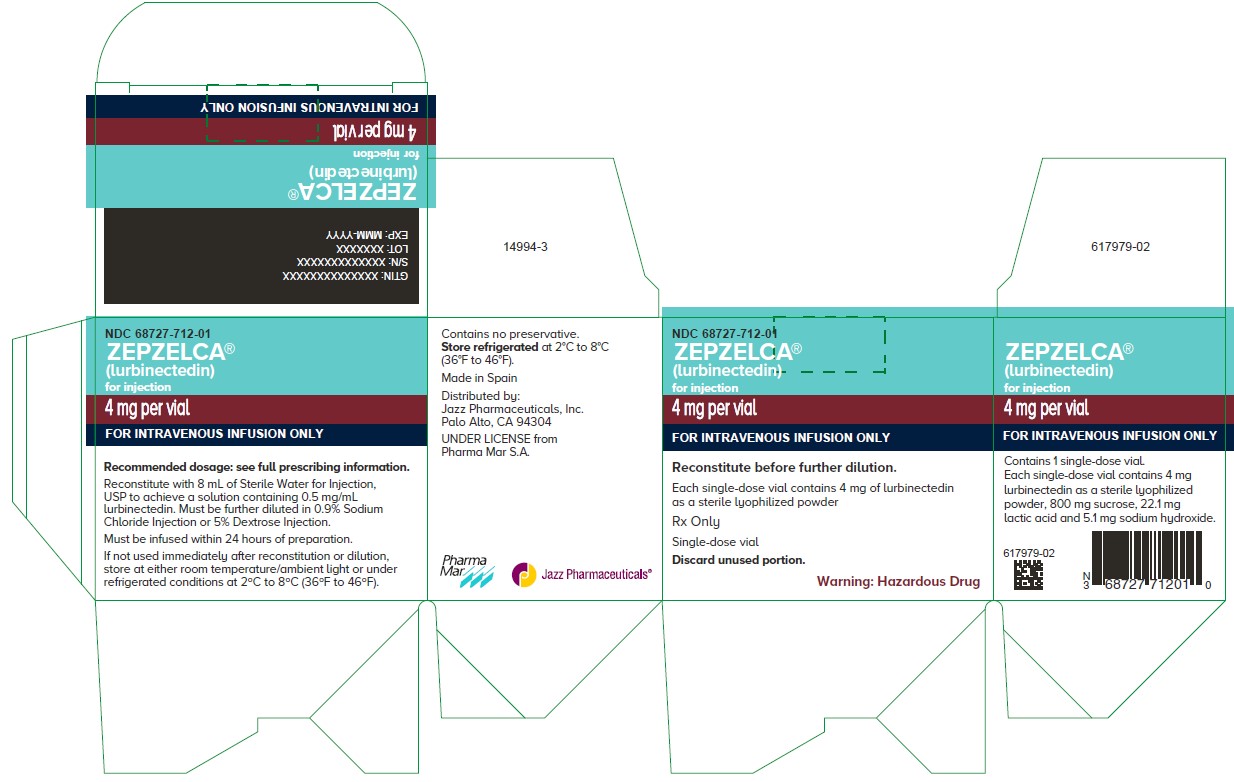
ZEPZELCA Lurbinectedin .5 mg/mL Injection, Powder, Lyophilized, For Solution, 8 mL — NDC 68727-712-01 (Billing 68727-0712-01)
This is a package of 8 mL of ZEPZELCA Lurbinectedin .5 mg/mL Injection, Powder, Lyophilized, For Solution from Jazz Pharmaceuticals, Inc., marketed since Jun 2020 and currently FDA-listed. It is this product's only package size.
NDC database record
One package, one record: these facts belong to NDC 68727-712-01 alone.
- Record
- FDA NDC Directory package listing · Human prescription drug
- Code segments
- 68727 labeler · 712 product · 01 package
- Package marketed since
- Jun 15, 2020
- Sample package
- No — commercial package
- Listing certified through
- Dec 31, 2027
- Barcode (UPC-A, from the NDC)
- 3 6872771201 0
- Medicaid fills, this package
- 1,194 prescriptions in the last four reported quarters
- FDA record last changed
- Jul 24, 2026
Identity & classification
Regulatory identifiers FDA, NLM and CMS codes for this package
Drug-database identifiers Medi-Span GPI and First Databank GCN / HICL / AHFS classification
- GSN (GCN sequence number): 081197
- GCN: 48241
- GPI-14 (Medi-Span): 21100024002120
- HICL (First Databank): 046626
- AHFS class code: 10:00.00.00
- RxCUI (RxNorm): 2374733
Where does this data come from?
- FDA openFDA NDC Directory · synced Oct 1, 2026
- FDA label on DailyMed · label index refreshed Oct 5, 2026
- RxNorm (NLM RxNav) · catalog refreshed Oct 1, 2026
- Medi-Span GPI (licensed)
- First Databank (licensed) · refreshed Oct 1, 2026
RxNorm drug class
This medicine belongs to the Alkylating Drug class.
Where does this data come from?
- RxClass (NLM) · catalog refreshed Oct 1, 2026
Clinical
Lurbinectedin injection is used to treat certain types of small cell lung cancer (SCLC). Lurbinectedin injection is in a class of medications called alkylating agents. It works by slowing or stopping the growth of cancer cells in your body.
Read the full MedlinePlus article ↗- It treats small cell lung cancer in adults. It can be used with atezolizumab as maintenance treatment of extensive-stage disease, or on its own when the cancer has progressed after...
- You get it as an IV infusion at a clinic over about an hour, usually every 3 weeks. Your team may use a central line to protect your veins and will give anti-nausea medicine first.
- Tiredness, nausea, vomiting, poor appetite, constipation or diarrhea, and muscle aches are common. Blood counts often drop too, which is why you will have regular blood tests.
- Call right away for fever, chills or signs of infection, unusual bleeding or bruising, severe muscle pain or weakness, or pain, redness or swelling where the IV is placed. Low bloo...
Patient education
Supplement & herbal interactions
Some supplements/herbs that may interact with Lurbinectedin — tap one for details:
Lurbinectedin may be associated with lower levels of 1 nutrient — worth a chat with your pharmacist, not a cause for alarm.
Where does this data come from?
- MedlinePlus (NLM) · refreshed Oct 1, 2026
- FDA label on DailyMed · label index refreshed Oct 5, 2026
Ask a licensed pharmacist directly — free, answered by our team.
Pricing
A drug doesn't have one price. Each row is a different public payment system, and none is what you'd pay at the counter — that depends on your insurance. The ⓘ on each row explains what it measures.
| Price system | Per mL | Per package |
|---|---|---|
| Retail pharmacies payNADAC · weekly | Not in the retail survey — common for institutional, discontinued, or low-volume packs. | |
| Medicaid paysCMS SDUD · 12 mo | $7,019.96 | $56,159.71 / 8 ml |
| Medicare drug plans payPart D · quarterly | No Part D plan price is available for this NDC in our data. | |
| Medicare Part B allowsASP · J9223 | $215.950 / J9223 unit | — |
Where does this data come from?
- CMS NADAC weekly file
- CMS ASP pricing files · refreshed Sep 20, 2026
- CMS Medicaid State Drug Utilization Data · through Q4 2025
- CMS Part D plan pricing files · refreshed Sep 24, 2026
- VA National Acquisition Center price file
Billing & reimbursement
Where does this data come from?
- CMS ASP NDC-HCPCS crosswalk · refreshed Sep 22, 2026
- DMEPDAC NDC-HCPCS crosswalk
- openFDA NSDE billing units · refreshed Sep 7, 2026
Packaging — all sizes for this product
| Package NDC | Description | Marketing start | Marketing end | Status |
|---|---|---|---|---|
| 68727-0712-01 You're viewing this Main listing | 8 mL in 1 VIAL, SINGLE-DOSE | 2020-06-15 | — | Active |
Therapeutic equivalents
| Product | Labeler | Pack | NADAC/unit | TE | Status | Price vs. this |
|---|---|---|---|---|---|---|
| Zepzelca .5 mg/mLthis 68727-0712-01 | Jazz | 8 ml | — | — | FDA listed | — |
Where does this data come from?
- FDA openFDA NDC Directory · synced Oct 1, 2026
- FDA Orange Book · refreshed Oct 3, 2026
- CMS NADAC weekly file
Availability & generic status
We did not find an FDA-approved generic match for this exact strength, form and route. Patent/protection dates below may affect future generic timing.
Why the date isn’t exact: Generic timing can change because patents may be challenged, settled, licensed, added, removed, or worked around with a narrower label — and FDA approval does not always mean a pharmacy can get the generic today.
🛈 What do these terms mean?
- Patent
- Legal protection listed in the Orange Book that may delay generic approval or launch. Issued by the U.S. Patent & Trademark Office.
- Substance patent
- Covers the active drug molecule itself — the hardest to design around. A generic generally can’t launch until it expires.
- Formulation (product) patent
- Covers a specific formulation or dosage form. A generic can sometimes work around it with a different formulation.
- Method-of-use patent
- A patent covering one specific approved use of the drug — not necessarily the whole molecule. A generic can sometimes launch with a “skinny label” that carves out the protected use and keeps the others.
- Skinny label
- A generic label that omits a still-patented use when the FDA allows it — letting a generic reach the market for the unprotected uses.
- Exclusivity
- FDA-granted marketing protection, separate from patents — e.g. 5-yr new chemical entity, 7-yr orphan drug, or a +6-month pediatric extension.
- Paragraph IV
- A generic applicant’s formal challenge to a listed patent. It can potentially lead to earlier generic entry, but often involves litigation or a settlement.
- RLD / RS
- Reference Listed Drug — the brand product the FDA uses as the reference for generic applications. Reference Standard — the product the FDA expects generics to compare against in bioequivalence testing.
- TE / AB rating
- FDA therapeutic-equivalence rating. An AB rating generally means the FDA considers a generic therapeutically equivalent to — and substitutable for — the brand.
- LOE (loss of exclusivity)
- The latest patent or exclusivity currently listed — the loss-of-exclusivity / latest-listed-protection date shown on this page. Paragraph-IV challenges and settlements can move the real date earlier; FDA approval and a manufacturer’s decision to market can move it later.
Built from the FDA Orange Book. The bars above are scaled to each protection’s expiry; the red LOE marker is the last one to lapse.
| Patent | Type | Use code | Expires |
|---|---|---|---|
| US 12324806 ↗ | Method of use | U-4212 | May 29, 2040 |
| US 12433890 ↗ | Method of use | U-4305 | May 29, 2040 |
| US 7763615 ↗ | Drug substance | U-4299 | Dec 13, 2029 |
| US 12440490 ↗ | Method of use | U-4252 | May 29, 2040 |
| US 7763615 ↗ | Drug substance | U-2836 | Dec 13, 2029 |
| Code | What it grants | Expires |
|---|---|---|
| I-977 | New indication (3-year) | Oct 2, 2028 |
| ODE-304 | Orphan Drug Exclusivity (7-year) | Jun 15, 2027 |
Is there a generic version of ZEPZELCA 4 MG VIAL?
The FDA approved a generic — why can’t I get it at my pharmacy yet?
Why do different websites show different generic release dates?
What does “FDA listed” mean?
What does a patent or protection date mean here?
What does “current Orange Book estimate” mean?
Can a generic come out before the last patent expires?
Can a generic come out after the listed dates?
What is the difference between patents and exclusivity?
Why are there multiple patent dates?
Where does this data come from?
- FDA Orange Book · refreshed Oct 3, 2026
What it looks like
Where does this data come from?
- FDA label on DailyMed · label index refreshed Oct 5, 2026
Inactive Ingredients / Excipients
Inactive ingredients, also called excipients, are components of the drug product other than the active ingredient. They may include fillers, dyes, coatings, preservatives, flavors, or other formulation ingredients.
🧪 Avoiding an ingredient? See Lurbinectedin Injection inactive ingredients by manufacturer: every current product's list side by side, so you can ask your pharmacy for the version that does not list it.
💡 Tap an ingredient (hover on desktop) to see what it is and why it’s used.
-
2.76 mg / 1 mL
UNII 33X04XA5AT
Lactic acid is a naturally occurring organic acid derived from milk or plant sources. It lowers and maintains pH in formulations, helps preserve the product, and can enhance ingredient stability and absorption.
-
.64 mg / 1 mL
UNII 55X04QC32I
A strong alkaline chemical used to adjust and maintain the pH balance of liquid medicines. It helps keep the medicine stable and ensures it stays effective during storage.
-
100 mg / 1 mL
UNII C151H8M554
A natural sugar derived from sugar cane or sugar beets. It's used as a sweetener, filler, and binder to improve taste, add bulk, and help hold tablet or capsule ingredients together.
-
1 mL / 1 mL
UNII 059QF0KO0R
Water is a liquid solvent that dissolves and mixes ingredients together in liquid medicines, syrups, and injections. It helps distribute the active drug evenly throughout the product.
4 inactive ingredients listed in the exact product block matched to this NDC.
Where does this data come from?
ingredient classCode="IACT" elements from the exact product block matched by this NDC. Label-section narrative from DailyMed / the openFDA label index is shown separately when available.- FDA label on DailyMed · label index refreshed Oct 5, 2026
- FDA openFDA NDC Directory · synced Oct 1, 2026
Inactive ingredient FAQ
Are inactive ingredients the same for every manufacturer?
Why might an inactive ingredient be missing?
Can inactive ingredients matter?
Manufacturer & labeler
More NDCs from Jazz Pharmaceuticals, Inc. labeler code 68727
- Xyrem sodium oxybate .5 g/mL Solution NDC 68727-100-01
- XYWAV calcium, magnesium, potassium, and sodium oxybates .5 g/mL; .5 g/mL; .5 g/mL; .5 g/mL Solution NDC 68727-150-01
- Modeyso dordaviprone 125 mg Capsule NDC 68727-250-01
- VYXEOS (daunorubicin and cytarabine) liposome 100 mg/20mL; 44 mg/20mL Injection, Powder, Lyophilized, For Suspension NDC 68727-745-01
- DEFITELIO defibrotide sodium 80 mg/mL Injection, Solution NDC 68727-800-01
- Rylaze asparaginase erwinia chrysanthemi (recombinant)-rywn 20 mg/mL Injection NDC 68727-900-03
- ZIIHERA zanidatamab-hrii 50 mg/mL Injection, Powder, Lyophilized, For Solution NDC 68727-950-02
Where does this data come from?
- FDA openFDA NDC Directory · synced Oct 1, 2026
- Drugs@FDA
Full prescribing information FDA SPL
🎯 Indications and Usage ▾
1 INDICATIONS AND USAGE ZEPZELCA is an alkylating drug indicated: • in combination with atezolizumab or atezolizumab and hyaluronidase-tqjs, for the maintenance treatment of adult patients with extensive-stage small cell lung cancer whose disease has not progressed after first-line induction therapy with atezolizumab or atezolizumab and hyaluronidase-tqjs, carboplatin and etoposide. ( 1.1 ) • For the treatment of adult patients with metastatic small cell lung cancer (SCLC) with disease progression on or after platinum-based chemotherapy.
( 1.2 ) This indication is approved under accelerated approval based on overall response rate and duration of response. Continued approval for this indication may be contingent upon verification and description of clinical benefit in a confirmatory trial(s). ( 1.2 )
1.1Extensive-Stage Small Cell Lung Cancer ZEPZELCA, in combination with atezolizumab or atezolizumab and hyaluronidase-tqjs, is indicated for the maintenance treatment of adult patients with extensive-stage small cell lung cancer (ES-SCLC) whose disease has not progressed after first-line induction therapy with atezolizumab or atezolizumab and hyaluronidase-tqjs, carboplatin and etoposide.
1.2Metastatic Small Cell Lung Cancer ZEPZELCA is indicated for the treatment of adult patients with metastatic small cell lung cancer (SCLC) with disease progression on or after platinum-based chemotherapy. This indication is approved under accelerated approval based on overall response rate and duration of response [see Clinical Studies (14) ] . Continued approval for this indication may be contingent upon verification and description of clinical benefit in a confirmatory trial(s).
⏱️ Dosage and Administration ▾
2 DOSAGE AND ADMINISTRATION • Recommended Dosage : 3.2 mg/m 2 administered intravenously every 21 days until disease progression or unacceptable toxicity. • Administration via a central venous line is recommended to reduce the risk of extravasation that can cause tissue necrosis requiring debridement ( 5.3 ) • Administer ZEPZELCA as an intravenous infusion over 60 minutes. • To reduce the risk of nausea, administer corticosteroids and serotonin agonists prior to Cycle 1 and consider use for subsequent cycles. ( 2.5 ) • To reduce the risk of febrile neutropenia during treatment with ZEPZELCA in combination with atezolizumab or atezolizumab and hyaluronidase-tqjs, administer granulocyte colony-stimulating factor (G-CSF) [Refer to Prescribing Information]. • Moderate Hepatic Impairment : Recommended dosage is 1.6 mg/m 2 administered intravenously every 21 days until disease progression or unacceptable toxicity.
( 2.4 , 8.6 ) • Severe Hepatic Impairment : Avoid use of ZEPZELCA. If use cannot be avoided, the recommended dosage is 1.6 mg/m 2 administered intravenously every 21 days until disease progression or unacceptable toxicity. ( 2.4 , 8.6 )
2.1Recommended Dosage The recommended dosage of ZEPZELCA as a single-agent and as a combination with atezolizumab or atezolizumab and hyaluronidase-tqjs is 3.2 mg/m 2 by intravenous infusion over 60 minutes every 21 days until disease progression or unacceptable toxicity [see Dosage and Administration (2.4) ]. Initiate treatment with ZEPZELCA only if absolute neutrophil count (ANC) is at least 1,500 cells/mm 3 and platelet count is at least 100,000/mm 3 . ZEPZELCA with Intravenous Atezolizumab or atezolizumab and hyaluronidase-tqjs When administering ZEPZELCA on the same day as atezolizumab or atezolizumab and hyaluronidase-tqjs, administer the chosen atezolizumab drug first.
For the recommended dosage of atezolizumab or atezolizumab and hyaluronidase-tqjs refer to the respective Prescribing Information. If discontinuation of atezolizumab or atezolizumab and hyaluronidase-tqjs is required due to an immune-related severe adverse event, treatment with ZEPZELCA may be continued at the same dose as a single agent. If immune toxicity does not resolve or recurs despite discontinuation of atezolizumab, permanently discontinue ZEPZELCA.
2.2Dosage Modifications for Adverse Reactions The recommended dose reductions for adverse reactions are listed in Table 1. Permanently discontinue ZEPZELCA in patients who require a dose interruption of greater than two weeks and in patients who are unable to tolerate 2 mg/m 2 every 21 days. Table 1: Dose Reduction for ZEPZELCA for Adverse Reactions Dose Reduction Total Dose First Second 2.6 mg/m 2 every 21 days 2 mg/m 2 every 21 days Dosage modifications for ZEPZELCA for adverse reactions are presented in Table 2.
Table 2: Dosage Modifications for ZEPZELCA for Adverse Reactions a National Cancer Institute Common Terminology Criteria for Adverse Events (NCI CTCAE) version 4.0. b Patients who have not received primary prophylaxis of G-CSF with isolated Grade 4 neutropenia (neutrophil count less than 500 cells/mm 3 ) may receive G-CSF prophylaxis rather than undergo lurbinectedin dose reduction. Adverse Reaction Severity a Dosage Modification Neutropenia b [see Warnings and Precautions (5.1) ] Grade 4 or Any grade febrile neutropenia • Withhold ZEPZELCA until absolute neutrophil count (ANC) is ≥ 1500/mm 3 • Resume ZEPZELCA at a reduced dose Thrombocytopenia [see Warnings and Precautions (5.1) ] Grade 3 with bleeding or Grade 4 • Withhold ZEPZELCA until platelet ≥ 100,000/mm 3 • Resume ZEPZELCA at reduced dose Hepatotoxicity [see Warnings and Precautions (5.2) ] Grade 2 • Withhold ZEPZELCA until Grade ≤ 1 • Resume ZEPZELCA at same dose Grade ≥ 3 • Withhold ZEPZELCA until Grade ≤ 1 • Resume ZEPZELCA at reduced dose or permanently discontinue Rhabdomyolysis [see Warnings and Precautions (5.4) ] Grade 2 • Withhold ZEPZELCA until Grade ≤ 1 • Resume ZEPZELCA at same dose… [Excerpted — this section continues on DailyMed.]
💊 Dosage Forms and Strengths ▾
3 DOSAGE FORMS AND STRENGTHS For injection: 4 mg of lurbinectedin as a sterile, preservative-free, white to off-white lyophilized powder in a single-dose vial for reconstitution prior to intravenous infusion. For injection: 4 mg lyophilized powder in a single-dose vial. ( 3 )
⛔ Contraindications ▾
4 CONTRAINDICATIONS None. None. ( 4 )
⚠️ Warnings and Cautions ▾
5 WARNINGS AND PRECAUTIONS • Myelosuppression : Monitor blood counts prior to each administration. Initiate treatment with ZEPZELCA only if baseline neutrophil count is ≥ 1,500 cells/mm 3 and platelet count is ≥ 100,000/mm 3 . For neutrophil count less than 500 cells/mm 3 or any value less than lower limit of normal, administer G-CSF.
Withhold, reduce the dose, or permanently discontinue ZEPZELCA based on severity. ( 5.1 ) • Hepatotoxicity : Monitor liver function tests prior to initiating ZEPZELCA, periodically during treatment and as clinically indicated. Withhold, reduce the dose, or permanently discontinue ZEPZELCA based on severity.
( 5.2 ) • Extravasation Resulting in Tissue Necrosis : Consider use of a central venous catheter to reduce the risk of extravasation. Monitor patients for signs and symptoms of extravasation during the ZEPZELCA infusion. If extravasation occurs, immediately discontinue the infusion, remove the infusion catheter, and monitor for signs and symptoms of tissue necrosis.
( 5.3 ) • Rhabdomyolysis : Monitor creatine phosphokinase (CPK) prior to initiating ZEPZELCA and periodically during treatment as clinically indicated. Withhold, reduce the dose, or permanently discontinue ZEPZELCA based on severity. ( 5.4 ) • Embryo-Fetal Toxicity : Can cause fetal harm.
Advise females and males of reproductive potential of the potential risk to a fetus and to use an effective method of contraception. ( 5.5 )
5.1Myelosuppression ZEPZELCA can cause severe and fatal myelosuppression including febrile neutropenia and sepsis, thrombocytopenia and anemia. Administer ZEPZELCA only to patients with baseline neutrophil count of at least 1,500 cells/mm 3 and platelet count of at least 100,000/mm 3 . To reduce the risk of febrile neutropenia during treatment with ZEPZELCA in combination with atezolizumab or atezolizumab and hyaluronidase-tqjs, administer granulocyte colony-stimulating factor (G-CSF) [refer to Prescribing Information] .
Monitor blood counts including neutrophils, red blood cells and platelets prior to each ZEPZELCA administration. For neutrophil count less than 500 cells/mm 3 or any value less than lower limit of normal, administer G-CSF. Withhold, reduce the dose, or permanently discontinue ZEPZELCA based on severity [see Dosage and Administration (2.2) ] .
ZEPZELCA with Intravenous Atezolizumab In the IMforte study [see Adverse Reactions (6.1) ] , primary prophylaxis of G-CSF was administered to 84% of patients. Based on laboratory values, decreased neutrophils occurred in 36%, including 18% Grade 3 or Grade 4 in patients who received ZEPZELCA in combination with atezolizumab. The median time to onset of Grade 3 and 4 decreased neutrophil cells was 31 days and a median duration of 10 days.
Febrile neutropenia occurred in 1.7%. Sepsis occurred in 1%. There were 7 fatal infections: pneumonia (n=3), sepsis (n=3), and febrile neutropenia (n=1).
Based on laboratory values, decreased platelets occurred in 54%, including 15% Grade 3 or Grade 4 in patients who received ZEPZELCA in combination with atezolizumab. The median time to onset of Grade 3 and 4 decreased platelet cells was 31 days and a median duration of 12 days. Based on laboratory values, decreased hemoglobin occurred in 51%, including 13% Grade 3 or Grade 4 in patients who received ZEPZELCA in combination with atezolizumab.
The median time to onset of Grade 3 and 4 decreased hemoglobin was 64 days and a median duration of 8 days. ZEPZELCA as a Single Agent In clinical studies of 554 patients with advanced solid tumors receiving ZEPZELCA as a single agent [see Adverse Reactions (6.1) ] , Grade 3 or 4 neutropenia occurred in 41% of patients, with a median time to onset of 15 days and a median duration of 7 days. Febrile neutropenia occurred in 7% of patients.
Sepsis occurred in 2% of patients and was fatal in 1% (all cases occurred in patients with solid tumors other than SCLC). Grade 3 or 4 thrombocytopenia occurred in 10%, with a median time to onset… [Excerpted — this section continues on DailyMed.]
🤒 Adverse Reactions ▾
6 ADVERSE REACTIONS The following clinically significant adverse reactions are described elsewhere in the labeling: • Myelosuppression [see Warnings and Precautions (5.1) ] • Hepatotoxicity [see Warnings and Precautions (5.2) ] • Extravasation Resulting in Tissue Necrosis [see Warnings and Precautions (5.3) ] • Rhabdomyolysis [see Warnings and Precautions (5.4) ] The most common adverse reactions for ZEPZELCA as a single agent, including laboratory abnormalities, (≥ 20%) are leukopenia, lymphopenia, fatigue, anemia, neutropenia, increased creatinine, increased alanine aminotransferase, increased glucose, thrombocytopenia, nausea, decreased appetite, musculoskeletal pain, decreased albumin, constipation, dyspnea, decreased sodium, increased aspartate aminotransferase, vomiting, cough, decreased magnesium and diarrhea.
( 6.1 ) The most common adverse reactions, for ZEPZELCA in combination with atezolizumab including laboratory abnormalities, (≥ 30%) are: decreased lymphocytes, decreased platelets, decreased hemoglobin, decreased neutrophils, nausea, and fatigue/asthenia. ( 6.1 ) To report SUSPECTED ADVERSE REACTIONS, contact Jazz Pharmaceuticals, Inc. at 1-800-520-5568 or FDA at 1-800-FDA-1088 or www.fda.gov/medwatch.
6.1Clinical Trials Experience Because clinical trials are conducted under widely varying conditions, adverse reaction rates observed in the clinical trials of a drug cannot be directly compared to rates in the clinical trials of another drug and may not reflect the rates observed in practice. The safety population described in the WARNINGS AND PRECAUTIONS reflects exposure to ZEPZELCA in combination with intravenous atezolizumab in the IMforte study [see Clinical Studies (14.1) ] , in 242 patients with extensive stage small cell lung cancer (ES-SCLC) whose disease had not progressed after initial therapy with atezolizumab, carboplatin, and etoposide.
Patients received ZEPZELCA 3.2 mg/m 2 intravenously (IV) in combination with atezolizumab 1200 mg IV every 21 days until disease progression or unacceptable toxicity. Among 242 patients who received ZEPZELCA in combination with intravenous atezolizumab, 34% were exposed for 6 months or longer and 8% were exposed for greater than one year. The most common adverse reactions (≥ 30%), including laboratory abnormalities, in patients who received ZEPZELCA with atezolizumab were decreased lymphocytes, decreased platelets, decreased hemoglobin, decreased neutrophils, nausea, and fatigue/asthenia.
The pooled safety population described in the WARNINGS AND PRECAUTIONS also reflects exposure to ZEPZELCA as a single agent at a dose of 3.2 mg/m 2 intravenously every 21 days in 554 patients with advanced solid tumors. Among 554 patients who received ZEPZELCA, including 105 patients with small cell lung cancer (SCLC) in PM1183-B-005-14 (Study B-005), 24% were exposed for 6 months or longer and 5% were exposed for greater than one year. The most common adverse reactions for ZEPZELCA as a single agent, (Study B-005), including laboratory abnormalities, (≥ 20%) are leukopenia, lymphopenia, fatigue, anemia, neutropenia, increased creatinine, increased alanine aminotransferase, increased glucose, thrombocytopenia, nausea, decreased appetite, musculoskeletal pain, decreased albumin, constipation, dyspnea, decreased sodium, increased aspartate aminotransferase, vomiting, cough, decreased magnesium and diarrhea.
Extensive-Stage Small Cell Lung Cancer (IMforte) The safety of ZEPZELCA in combination with intravenous (IV) atezolizumab was evaluated in IMforte [see Clinical Studies (14) ] . Patients received intravenous ZEPZELCA 3.2 mg/m 2 in combination with intravenous atezolizumab 1200 mg on Day 1 of each 21-day cycle until disease progression or unacceptable toxicity. Primary prophylaxis of G-CSF was administered to 84% of patients.
Among 242 patients who received ZEPZELCA with atezolizumab, the median duration of exposure to lurbinectedin was 4.1 months, 33% were exposed for 6 months or lo… [Excerpted — this section continues on DailyMed.]
🔄 Drug Interactions ▾
7 DRUG INTERACTIONS Effect of Other Drugs on ZEPZELCA : Avoid coadministration with strong or a moderate CYP3A inhibitors and strong CYP3A inducers. ( 7.1 )
7.1Effect of Other Drugs on ZEPZELCA Strong and Moderate CYP3A Inhibitors Coadministration of ZEPZELCA with a strong or a moderate CYP3A inhibitor increases lurbinectedin systemic exposure [see Clinical Pharmacology (12.3) ], which may increase the incidence and severity of adverse reactions to ZEPZELCA. Avoid grapefruit and Seville oranges during ZEPZELCA treatment, as these contain strong or moderate inhibitors of CYP3A. Avoid coadministration of ZEPZELCA with strong or moderate CYP3A inhibitors.
If coadministration cannot be avoided, reduce the dose of ZEPZELCA [see Dosage and Administration (2.3) ] . Strong CYP3A Inducers Avoid coadministration of ZEPZELCA with strong CYP3A inducers. Coadministration of ZEPZELCA with a strong CYP3A inducer may decrease lurbinectedin systemic exposure, which may decrease the efficacy of ZEPZELCA [see Clinical Pharmacology (12.3) ].
👥 Use in Specific Populations ▾
8 USE IN SPECIFIC POPULATIONS • Lactation : Advise not to breastfeed. ( 8.2 ) • Hepatic Impairment : Avoid use of ZEPZELCA in patients with severe hepatic impairment. In patients with moderate hepatic impairment, reduce the dose of ZEPZELCA. ( 8.6 )
8.1Pregnancy Risk Summary Based on animal data and its mechanism of action [see Clinical Pharmacology (12.1) ] , ZEPZELCA can cause fetal harm when administered to a pregnant woman. There are no available data to inform the risk of ZEPZELCA use in pregnant women. Intravenous administration of a single lurbinectedin dose (approximately 0.2 times the 3.2 mg/m 2 clinical dose) to pregnant rats during the period of organogenesis caused embryolethality (see Data) .
Advise pregnant women of the potential risk to a fetus. The estimated background risk of major birth defects and miscarriage for the indicated population is unknown. All pregnancies have a background risk of birth defect, loss, or other adverse outcomes.
In the U.S. general population, the estimated background risk of major birth defects and miscarriage in clinically recognized pregnancies is 2 to 4% and 15 to 20%, respectively. Data Animal Data In a reproductive toxicity study, administration of a single lurbinectedin dose of 0.6 mg/m 2 (approximately 0.2 times of the human dose of 3.2 mg/m 2 ) to pregnant rats on Gestation Day 10 resulted in 100% post-implantation loss.
8.2Lactation Risk Summary There are no data on the presence of lurbinectedin in human milk or its effects on the breastfed child or on milk production. Because of the potential for serious adverse reactions from ZEPZELCA in breastfed children, advise women not to breastfeed during treatment with ZEPZELCA and for 2 weeks after the last dose.
8.3Females and Males of Reproductive Potential ZEPZELCA can cause embryolethality at doses lower than the human dose of 3.2 mg/m 2 [see Use in Specific Populations (8.1) ] . Pregnancy Testing Verify the pregnancy status of females of reproductive potential prior to initiating ZEPZELCA. Contraception Females Advise female patients of reproductive potential to use effective contraception during treatment with ZEPZELCA and for 7 months after the last dose.
Males Advise males with a female sexual partner of reproductive potential to use effective contraception during treatment with ZEPZELCA and for 4 months after the last dose.
8.4Pediatric Use The safety and effectiveness of ZEPZELCA in pediatric patients have not been established.
8.5Geriatric Use ZEPZELCA with Intravenous Atezolizumab Of the 242 patients with ES-SCLC treated with ZEPZELCA and atezolizumab in IMforte, 124 (51%) patients were 65 years of age and older, while 29 (12%) patients were 75 years of age and older. No overall differences in effectiveness were observed between older and younger patients. There was no overall difference in the incidence of serious adverse reactions in patients ≥ 65 years of age and patients < 65 years of age (33% vs.
29%, respectively). There was a higher incidence of Grade 3 or 4 adverse reactions in patients ≥ 65 years of age compared to younger patients (45% vs. 31%, respectively).
ZEPZELCA as a Single Agent Of the 105 patients with SCLC administered ZEPZELCA in clinical studies, 37 (35%) patients were 65 years of age and older, while 9 (9%) patients were 75 years of age and older. No overall difference in effectiveness was observed between patients aged 65 and older and younger patients. There was a higher incidence of serious adverse reactions in patients ≥ 65 years of age than in patients < 65 years of age (49% vs.
26%, respectively). The serious adverse reactions most frequently reported in patients ≥ 65 years of age were related to myelosuppression and consisted of febrile neutropenia (11%), neutropenia (11%), thrombocytopenia (8%), and anemia (8%) [see Adverse Reactions (6.1) ] . There was a higher incidence of Grade 3 or 4 adverse reactions in patients ≥ 65 years of age compared to younger patients (76% vs.
50%, respect… [Excerpted — this section continues on DailyMed.]
🤰 Pregnancy ▾
8.1Pregnancy Risk Summary Based on animal data and its mechanism of action [see Clinical Pharmacology (12.1) ] , ZEPZELCA can cause fetal harm when administered to a pregnant woman. There are no available data to inform the risk of ZEPZELCA use in pregnant women. Intravenous administration of a single lurbinectedin dose (approximately 0.2 times the 3.2 mg/m 2 clinical dose) to pregnant rats during the period of organogenesis caused embryolethality (see Data) .
Advise pregnant women of the potential risk to a fetus. The estimated background risk of major birth defects and miscarriage for the indicated population is unknown. All pregnancies have a background risk of birth defect, loss, or other adverse outcomes.
In the U.S. general population, the estimated background risk of major birth defects and miscarriage in clinically recognized pregnancies is 2 to 4% and 15 to 20%, respectively. Data Animal Data In a reproductive toxicity study, administration of a single lurbinectedin dose of 0.6 mg/m 2 (approximately 0.2 times of the human dose of 3.2 mg/m 2 ) to pregnant rats on Gestation Day 10 resulted in 100% post-implantation loss.
🧒 Pediatric Use ▾
8.4Pediatric Use The safety and effectiveness of ZEPZELCA in pediatric patients have not been established.
🧓 Geriatric Use ▾
8.5Geriatric Use ZEPZELCA with Intravenous Atezolizumab Of the 242 patients with ES-SCLC treated with ZEPZELCA and atezolizumab in IMforte, 124 (51%) patients were 65 years of age and older, while 29 (12%) patients were 75 years of age and older. No overall differences in effectiveness were observed between older and younger patients. There was no overall difference in the incidence of serious adverse reactions in patients ≥ 65 years of age and patients < 65 years of age (33% vs.
29%, respectively). There was a higher incidence of Grade 3 or 4 adverse reactions in patients ≥ 65 years of age compared to younger patients (45% vs. 31%, respectively).
ZEPZELCA as a Single Agent Of the 105 patients with SCLC administered ZEPZELCA in clinical studies, 37 (35%) patients were 65 years of age and older, while 9 (9%) patients were 75 years of age and older. No overall difference in effectiveness was observed between patients aged 65 and older and younger patients. There was a higher incidence of serious adverse reactions in patients ≥ 65 years of age than in patients < 65 years of age (49% vs.
26%, respectively). The serious adverse reactions most frequently reported in patients ≥ 65 years of age were related to myelosuppression and consisted of febrile neutropenia (11%), neutropenia (11%), thrombocytopenia (8%), and anemia (8%) [see Adverse Reactions (6.1) ] . There was a higher incidence of Grade 3 or 4 adverse reactions in patients ≥ 65 years of age compared to younger patients (76% vs.
50%, respectively).
🧬 Clinical Pharmacology ▾
12 CLINICAL PHARMACOLOGY
12.1Mechanism of Action Lurbinectedin is an alkylating drug that binds guanine residues in the minor groove of DNA, forming adducts and resulting in a bending of the DNA helix towards the major groove. Adduct formation triggers a cascade of events that can affect the subsequent activity of DNA binding proteins, including some transcription factors, and DNA repair pathways, resulting in perturbation of the cell cycle and eventual cell death. Lurbinectedin inhibited human monocyte activity in vitro and reduced macrophage infiltration in implanted tumors in mice.
12.2Pharmacodynamics Lurbinectedin exposure-response relationships and the pharmacodynamic time-course for efficacy have not been fully characterized. Increased incidence of Grade 4 neutropenia and Grade ≥ 3 thrombocytopenia were observed with increased lurbinectedin exposure. Cardiac Electrophysiology No large mean increase in QTc (i.e., > 20 ms) was detected at the recommended dose of 3.2 mg/m 2 .
12.3Pharmacokinetics Following the approved recommended dosage, geometric mean (%CV) of plasma C max and AUC 0-inf , were 107 µg/L (79%) and 551 µg•h/L (94%), respectively. No accumulation of lurbinectedin in plasma is observed upon administrations every 3 weeks. Distribution The volume of distribution of lurbinectedin at steady state is 504 L (39%).
Plasma protein binding is approximately 99%, to both albumin and α-1-acid glycoprotein. Elimination The terminal half-life of lurbinectedin is 51 hours. Total plasma clearance of lurbinectedin is 11 L/h (50%).
Metabolism Lurbinectedin is metabolized by CYP3A in vitro. Excretion After a single dose of radiolabeled lurbinectedin, 89% of the radioactivity was recovered in feces (< 0.2% unchanged) and 6% in urine (1% unchanged). Specific Populations No clinically significant differences in the pharmacokinetics of lurbinectedin were identified based on age (18-85 years), sex, body weight (39-154 kg), or mild to moderate renal impairment (CLcr 30 to 89 mL/min).
The effects of severe renal impairment (CLcr < 30 mL/min) on the pharmacokinetics of lurbinectedin have not been studied. Hepatic Impairment No clinically significant differences in the pharmacokinetics of lurbinectedin were identified for patients with mild hepatic impairment (total bilirubin ≤ ULN and AST > ULN or total bilirubin 1 to 1.5 × ULN and any AST) compared to that of patients with normal hepatic function. No clinically significant differences in the pharmacokinetics of lurbinectedin were identified for patients with moderate hepatic impairment (total bilirubin > 1.5 to 3 × ULN and any AST) who received a lurbinectedin dose of 1.6 mg/m 2 compared to that of patients with mild hepatic impairment who received a dose of 3.2 mg/m 2 .
No clinically significant differences in the pharmacokinetics of lurbinectedin were identified for patients with severe hepatic impairment (total bilirubin > 3 × ULN) who received a lurbinectedin dose of 1.6 mg/m 2 compared to that of patients with mild hepatic impairment who received a dose of 3.2 mg/m 2 . Drug Interactions Studies Clinical Studies and Model-Informed Approaches Effects of CYP3A Inhibitors on Lurbinectedin Strong CYP3A inhibitors: Coadministration of itraconazole (200 mg once daily) increased the systemic exposure (AUC) of total lurbinectedin by 2.7-fold and unbound lurbinectedin by 2.4‑fold.
Moderate CYP3A inhibitors: Coadministration of verapamil (80 mg every 8 hours) and erythromycin (500 mg every 6 hours) is predicted to increase lurbinectedin AUC by 2.3-fold and 2.1-fold, respectively. Weak CYP3A inhibitors: Coadministration of fluvoxamine (150 mg every 12 hours) is predicted to increase lurbinectedin AUC by 1.3-fold. Effects of CYP3A Inducers on Lurbinectedin Coadministration of bosentan (a moderate CYP3A inducer) decreased systemic exposure (AUC) of total lurbinectedin by 20% and unbound lurbinectedin by 19%.
These changes are not considered clinically relevant. In Vitro Studies Cytochrome P… [Excerpted — this section continues on DailyMed.]
🧬 Mechanism of Action ▾
12.1Mechanism of Action Lurbinectedin is an alkylating drug that binds guanine residues in the minor groove of DNA, forming adducts and resulting in a bending of the DNA helix towards the major groove. Adduct formation triggers a cascade of events that can affect the subsequent activity of DNA binding proteins, including some transcription factors, and DNA repair pathways, resulting in perturbation of the cell cycle and eventual cell death. Lurbinectedin inhibited human monocyte activity in vitro and reduced macrophage infiltration in implanted tumors in mice.
📦 How Supplied / Storage and Handling ▾
16 HOW SUPPLIED/STORAGE AND HANDLING How Supplied ZEPZELCA (lurbinectedin) for injection is supplied as a sterile, preservative-free, white to off-white lyophilized powder in a single-dose clear glass vial. Each carton (NDC 68727-712-01) contains 4 mg in one single-dose vial. Storage and Handling Store refrigerated at 2°C to 8°C (36°F to 46°F). ZEPZELCA is a hazardous drug. Follow applicable special handling and disposal procedures 1 .
📋 Description ▾
11 DESCRIPTION ZEPZELCA is an alkylating drug. The chemical name of ZEPZELCA (lurbinectedin) is (1’R,6R,6aR,7R,13S,14S,16R)-8,14-dihydroxy-6’,9-dimethoxy-4,10,23-trimethyl-19-oxo-2’,3’,4’,6,7,9’,12,13,14,16-decahydro-6aH-spiro[7,13-azano-6,16-(epithiopropanooxymethano) [1,3]dioxolo[7,8]isoquinolino[3,2-b][3]benzazocine-20,1’-pyrido[3,4-b]indol]-5-yl acetate. The molecular formula is C 41 H 44 N 4 O 10 S.
The molecular weight is 784.87g/mol, and the chemical structure is: ZEPZELCA for injection 4 mg is supplied as a lyophilized powder in a single-dose vial for reconstitution for intravenous use. The ZEPZELCA lyophilized formulation is comprised of 4 mg lurbinectedin, sucrose (800 mg), lactic acid (22.1 mg), and sodium hydroxide (5.1 mg). Before use, the lyophilizate is reconstituted by addition of 8 mL Sterile Water for Injection USP, yielding a solution containing 0.5 mg/mL lurbinectedin (the calculated concentration is 0.47 mg/mL based on the final volume of 8.5 mL). chemical structure
💬 Information for Patients ▾
17 PATIENT COUNSELING INFORMATION Advise the patient to read the FDA-approved patient labeling (Patient Information). Myelosuppression Advise patients that ZEPZELCA can cause myelosuppression. Inform patients about the signs and symptoms of myelosuppression and to immediately contact their healthcare provider if signs or symptoms occur [see Warnings and Precautions (5.1) ] .
Hepatotoxicity Advise patients that ZEPZELCA can cause hepatotoxicity and to contact their healthcare provider immediately if signs or symptoms occur [see Warnings and Precautions (5.2) ] . Extravasation Resulting in Tissue Necrosis Advise patients that administration of ZEPZELCA through a central venous catheter is recommended because extravasation of ZEPZELCA can cause skin and soft tissue injury, including necrosis requiring debridement. Advise patients to contact their healthcare provider immediately for signs or symptoms of extravasation.
The time to onset of necrosis after extravasation may vary [see Warnings and Precautions (5.3) ] . Rhabdomyolysis Advise patients that rhabdomyolysis has been reported with the use of ZEPZELCA and to contact their healthcare provider immediately for signs and symptoms of rhabdomyolysis [see Warnings and Precautions (5.4) ] . Embryo-Fetal Toxicity • Advise pregnant women and females of reproductive potential of the potential risk to a fetus.
Advise females to inform their healthcare provider of a known or suspected pregnancy [see Warnings and Precautions (5.5) , Use in Specific Populations (8.1) ] . • Advise females of reproductive potential to use effective contraception during treatment with ZEPZELCA and for 7 months after the last dose [see Use in Specific Populations (8.3) ] . • Advise males with female partners of reproductive potential to use effective contraception during treatment with ZEPZELCA and for 4 months after the last dose [see Use in Specific Populations (8.3) ] .
Lactation Advise women not to breastfeed during treatment with ZEPZELCA and for at least 2 weeks after the last dose [see Use in Specific Populations (8.2) ] . Drug Interactions Advise patients to inform their healthcare providers of all concomitant medications, herbal and dietary supplements. Advise patients to avoid grapefruit products and Seville oranges during treatment with ZEPZELCA [see Drug Interactions (7.1) ] .
Distributed by: Jazz Pharmaceuticals, Inc. Palo Alto, CA 94306 Under license from Pharma Mar, S.A. Protected by U.S.
Patent No. 7,763,615
🧬 Pharmacokinetics ▾
12.3Pharmacokinetics Following the approved recommended dosage, geometric mean (%CV) of plasma C max and AUC 0-inf , were 107 µg/L (79%) and 551 µg•h/L (94%), respectively. No accumulation of lurbinectedin in plasma is observed upon administrations every 3 weeks. Distribution The volume of distribution of lurbinectedin at steady state is 504 L (39%).
Plasma protein binding is approximately 99%, to both albumin and α-1-acid glycoprotein. Elimination The terminal half-life of lurbinectedin is 51 hours. Total plasma clearance of lurbinectedin is 11 L/h (50%).
Metabolism Lurbinectedin is metabolized by CYP3A in vitro. Excretion After a single dose of radiolabeled lurbinectedin, 89% of the radioactivity was recovered in feces (< 0.2% unchanged) and 6% in urine (1% unchanged). Specific Populations No clinically significant differences in the pharmacokinetics of lurbinectedin were identified based on age (18-85 years), sex, body weight (39-154 kg), or mild to moderate renal impairment (CLcr 30 to 89 mL/min).
The effects of severe renal impairment (CLcr < 30 mL/min) on the pharmacokinetics of lurbinectedin have not been studied. Hepatic Impairment No clinically significant differences in the pharmacokinetics of lurbinectedin were identified for patients with mild hepatic impairment (total bilirubin ≤ ULN and AST > ULN or total bilirubin 1 to 1.5 × ULN and any AST) compared to that of patients with normal hepatic function. No clinically significant differences in the pharmacokinetics of lurbinectedin were identified for patients with moderate hepatic impairment (total bilirubin > 1.5 to 3 × ULN and any AST) who received a lurbinectedin dose of 1.6 mg/m 2 compared to that of patients with mild hepatic impairment who received a dose of 3.2 mg/m 2 .
No clinically significant differences in the pharmacokinetics of lurbinectedin were identified for patients with severe hepatic impairment (total bilirubin > 3 × ULN) who received a lurbinectedin dose of 1.6 mg/m 2 compared to that of patients with mild hepatic impairment who received a dose of 3.2 mg/m 2 . Drug Interactions Studies Clinical Studies and Model-Informed Approaches Effects of CYP3A Inhibitors on Lurbinectedin Strong CYP3A inhibitors: Coadministration of itraconazole (200 mg once daily) increased the systemic exposure (AUC) of total lurbinectedin by 2.7-fold and unbound lurbinectedin by 2.4‑fold.
Moderate CYP3A inhibitors: Coadministration of verapamil (80 mg every 8 hours) and erythromycin (500 mg every 6 hours) is predicted to increase lurbinectedin AUC by 2.3-fold and 2.1-fold, respectively. Weak CYP3A inhibitors: Coadministration of fluvoxamine (150 mg every 12 hours) is predicted to increase lurbinectedin AUC by 1.3-fold. Effects of CYP3A Inducers on Lurbinectedin Coadministration of bosentan (a moderate CYP3A inducer) decreased systemic exposure (AUC) of total lurbinectedin by 20% and unbound lurbinectedin by 19%.
These changes are not considered clinically relevant. In Vitro Studies Cytochrome P450 (CYP) enzymes : Lurbinectedin is not an inhibitor of CYP1A2, CYP2B6, CYP2C8, CYP2C9, CYP2C19, CYP2D6, CYP2E1, or CYP3A4. Lurbinectedin is not an inducer of CYP1A2 or CYP3A4.
Transporter systems: Lurbinectedin is a substrate of MDR1, but is not a substrate of OATB1P1, OATP1B3, OCT1, or MATE1. Lurbinectedin inhibits MDR1, OATP1B1, OATP1B3, and OCT1 but not BCRP, BSEP, MATE1, OAT1, OAT3, or OCT2.
🧬 Pharmacodynamics ▾
12.2Pharmacodynamics Lurbinectedin exposure-response relationships and the pharmacodynamic time-course for efficacy have not been fully characterized. Increased incidence of Grade 4 neutropenia and Grade ≥ 3 thrombocytopenia were observed with increased lurbinectedin exposure. Cardiac Electrophysiology No large mean increase in QTc (i.e., > 20 ms) was detected at the recommended dose of 3.2 mg/m 2 .
🔬 Clinical Studies ▾
14 CLINICAL STUDIES
14.1Extensive-Stage Small Cell Lung Cancer The efficacy of ZEPZELCA in combination with intravenous (IV) atezolizumab was evaluated in IMforte (NCT05091567), a randomized, multicenter, open-label study in patients with first-line extensive-stage small cell lung cancer (ES-SCLC). Patients were eligible if their disease had not progressed after completion of four cycles of atezolizumab, carboplatin and etoposide (induction treatment) and their Eastern Cooperative Oncology Group (ECOG) performance status was 0 or 1. The trial excluded patients with CNS metastases, history of autoimmune disease, or administration of systemic immunosuppressive medications within 1 week prior to enrollment.
Unless contraindicated, primary prophylaxis with granulocyte colony-stimulating factor (G-CSF) was mandated for patients assigned to the ZEPZELCA with atezolizumab arm. The trial randomized 483 patients who had not experienced disease progression following the completion of 4 cycles of intravenous atezolizumab with carboplatin and etoposide 1:1 to one of the following treatment arms: • ZEPZELCA 3.2 mg/m 2 IV with atezolizumab 1200 mg IV once every 3 weeks until disease progression or unacceptable toxicity, or • Atezolizumab 1200 mg IV once every 3 weeks until disease progression or unacceptable toxicity Randomization was stratified by ECOG performance status prior to randomization (0 vs.
1), lactate dehydrogenase (LDH) (≤ ULN vs. > ULN) prior to randomization, presence of liver metastases prior to initial study enrollment (yes vs. no), and prior receipt of prophylactic cranial irradiation (yes vs. no). The major efficacy outcome measures were overall survival (OS) and progression-free survival (PFS) by Independent Review Facility (IRF) per RECIST v1.1. A total of 483 patients were randomized, including 242 to the ZEPZELCA with atezolizumab arm and 241 to the atezolizumab arm.
The median age was 66 years (range 35 to 85); 63% male; 82% White, 13% Asian, 0.8% were Black or African American; 7% were of Hispanic or Latino ethnicity; and 98% were current or previous smokers. Baseline ECOG performance status was 0 (43%) or 1 (57%). Efficacy results are presented in Table 7 and Figures 1 and 2.
Table 7: Efficacy Results from IMforte 1 Measured from the time of randomization 2 Stratified by ECOG performance status, LDH level, presence of liver metastases and prior receipt of prophylactic cranial irradiation 3 Based on the two-sided stratified log-rank test 4 As determined by IRF 5 per RECIST v1.1 (Response Evaluation Criteria in Solid Tumors v1.1) 6 Compared to the allocated alpha of 0.0313 (two-sided) for this interim OS analysis. 7 Compared to the allocated alpha of 0.001 (two- sided) for this final PFS analysis.
CI=confidence interval ZEPZELCA with Atezolizumab N=242 Atezolizumab N=241 Overall Survival 1 Deaths (%) 113 (47%) 136 (56%) Median, months 13.2 10.6 (95% CI) (11.9, 16.4) (9.5, 12.2) Hazard ratio 2 (95% CI) 0.73 (0.57, 0.95) p-value 3, 6 0.0174 Progression-Free Survival 1,4,5 Number of events (%) 174 (72%) 202 (84%) Median, months 5.4 2.1 (95% CI) (4.2, 5.8) (1.6, 2.7) Hazard ratio 2 (95% CI) 0.54 (0.43, 0.67) p-value 3, 7 < 0.0001 Figure 1: Progression Free survival Curve in IMforte Figure 2: Kaplan-Meier Plot of Overall Survival in IMforte Figure 1 Figure 2
14.2Metastatic Small Cell Lung Cancer PM1183-B-005-14 (Study B-005; NCT02454972) is a multicenter, open-label, multi-cohort trial evaluating ZEPZELCA as a single agent in patients with advanced or metastatic solid tumors. A cohort of patients with small cell lung cancer (SCLC) with disease progression on or after platinum-based chemotherapy received ZEPZELCA 3.2 mg/m 2 by intravenous infusion every 21 days (one cycle). Patients received a median of 4 cycles of ZEPZELCA (range 1 to 24 cycles).
The trial excluded patients with central nervous system (CNS) involvement, grade ≥ 3 dyspnea, daily intermittent oxygen requirement, hepatitis or cirrhosis, and immunocompromis… [Excerpted — this section continues on DailyMed.]
🧪 Nonclinical Toxicology ▾
13 NONCLINICAL TOXICOLOGY
13.1Carcinogenesis, Mutagenesis, Impairment of Fertility Carcinogenicity testing of lurbinectedin has not been performed. Lurbinectedin is genotoxic to mammalian cells in the presence and absence of metabolic activation. Lurbinectedin was not mutagenic in vitro in a bacterial reverse mutation (Ames) assay.
Fertility studies with lurbinectedin were not performed. There were no findings in reproductive organs in general toxicology studies in rats, dogs, or monkeys; however, the highest doses and exposures in these studies were all at levels lower than those at the human dose of 3.2 mg/m 2 .
📄 Carcinogenesis, Mutagenesis, Impairment of Fertility ▾
13.1Carcinogenesis, Mutagenesis, Impairment of Fertility Carcinogenicity testing of lurbinectedin has not been performed. Lurbinectedin is genotoxic to mammalian cells in the presence and absence of metabolic activation. Lurbinectedin was not mutagenic in vitro in a bacterial reverse mutation (Ames) assay.
Fertility studies with lurbinectedin were not performed. There were no findings in reproductive organs in general toxicology studies in rats, dogs, or monkeys; however, the highest doses and exposures in these studies were all at levels lower than those at the human dose of 3.2 mg/m 2 .
📚 References ▾
15 REFERENCES 1. "OSHA Hazardous Drugs." OSHA. http://www.osha.gov/SLTC/hazardousdrugs/index.html
📄 Patient Package Insert ▾
Patient Package Insert PATIENT INFORMATION ZEPZELCA ® (zep zel' kah) (lurbinectedin) for injection What is ZEPZELCA? ZEPZELCA may be used to treat adults with a kind of lung cancer called small cell lung cancer (SCLC): • ZEPZELCA may be used in combination with atezolizumab or atezolizumab and hyaluronidase-tqjs as maintenance treatment when your lung cancer: o is a type called “extensive-stage”, which means it has spread or grown, and o has not progressed after first treatment with atezolizumab or atezolizumab and hyaluronidase-tqjs and the chemotherapy medicines carboplatin and etoposide. • ZEPZELCA may be used when your lung cancer: o has spread to other parts of the body (metastatic), and o you have received treatment with chemotherapy that contains platinum, and it did not work or is no longer working.
It is not known if ZEPZELCA is safe and effective in children. Before receiving ZEPZELCA, tell your healthcare provider about all of your medical conditions, including if you: • have liver or kidney problems. • are pregnant or plan to become pregnant. ZEPZELCA can harm your unborn baby.
Females who are able to become pregnant: o Your healthcare provider should do a pregnancy test before you start treatment with ZEPZELCA. o You should use effective birth control (contraception) during treatment with and for 7 months after your last dose of ZEPZELCA. o Tell your healthcare provider right away if you become pregnant or think that you are pregnant during treatment with ZEPZELCA. Males with female partners who are able to become pregnant should use effective birth control during treatment with and for 4 months after your last dose of ZEPZELCA. • are breastfeeding or plan to breastfeed.
It is not known if ZEPZELCA passes into your breastmilk. Do not breastfeed during treatment with ZEPZELCA and for 2 weeks after your last dose of ZEPZELCA. Talk to your healthcare provider about the best way to feed your baby during treatment with ZEPZELCA.
Tell your healthcare provider about all the medicines you take, including prescription and over-the-counter medicines, vitamins, and herbal supplements. Certain other medicines may affect how ZEPZELCA works. Know the medicines you take.
Keep a list of them to show your healthcare provider and pharmacist when you get a new medicine. How will I receive ZEPZELCA? • ZEPZELCA is given by an intravenous (IV) infusion into a vein over 60 minutes. • ZEPZELCA is usually given every 21 days. • Before each treatment with ZEPZELCA, you may receive medicines to help prevent nausea and vomiting or make it less severe. • Your healthcare provider will decide how long you will continue treatment with ZEPZELCA. • Your healthcare provider may do certain tests during your treatment with ZEPZELCA to check you for side effects, and to see how well you respond to the treatment.
What should I avoid while using ZEPZELCA? • Avoid eating or drinking grapefruit, Seville oranges, or products that contain grapefruit juice and Seville oranges during treatment with ZEPZELCA. What are the possible side effects of ZEPZELCA? ZEPZELCA can cause serious side effects, including: • Low blood cell counts.
Low blood counts including low neutrophil counts (neutropenia) and low platelet counts (thrombocytopenia) are common with ZEPZELCA, and can also be severe. Some people with low white blood cell counts may get fever, or an infection throughout the body (sepsis), that can cause death. Your healthcare provider should do blood tests before you receive each treatment with ZEPZELCA to check your blood cell counts.
Tell your healthcare provider right away if you develop: o fever or any other signs of infection o unusual bruising or bleeding o tiredness o pale colored skin • Liver problems. Increased liver function tests are common with ZEPZELCA and can also be severe. Your healthcare provider should do blood tests to check your liver function before you start and during treatment with ZEPZELCA.
Tell your healthcare provider right away if y… [Excerpted — this section continues on DailyMed.]
📄 Recent Major Changes ▾
Indications of Usage, Extensive-Stage Small Cell Lung Cancer ( 1.1 ) 10/2025 Dosage and Administration ( 2.1 ) 10/2025 Dosage and Administration ( 2.3 ) 04/2025 Dosage and Administration ( 2.4 ) 04/2025 Dosage and Administration ( 2.5 ) 10/2025 Dosage and Administration ( 2.6 ) 10/2025 Warnings and Precautions ( 5 ) 02/2026
📄 Package Label / Principal Display Panel ▾
PACKAGE/LABEL PRINCIPAL DISPLAY PANEL Carton: NDC 68727-712-01 ZEPZELCA (lurbinectedin) for injection 4 mg per vial FOR INTRAVENOUS INFUSION ONLY Reconstitute before further dilution. Each single-dose vial contains 4 mg of lurbinectedin as a sterile lyophilized powder Rx Only Single-dose vial Discard unused portion. Caution: Cytotoxic agent carton
Package/Label Display Panel Vial: NDC 68727-712-01 ZEPZELCA (lurbinectedin) for injection 4 mg per vial FOR INTRAVENOUS INFUSION ONLY Single-Dose Vial. Discard unused portion. vial
Medicaid utilization & spend
Medicare Part D spend CMS · PART D · 2026 (Q1)
Reported adverse events (FAERS)
Top reported reactions
Age at onset
Reporter sex
Serious outcomes
Where does this data come from?
About this NDC listing & data coverage
What data is (and isn’t) available for this NDC — tap to expand
| NDC identity (package / product / labeler codes) | ✓ Available |
| Labeler | ✓ Available |
| Product & package description | ✓ Available |
| Marketing category & status | ✓ Available |
| Active ingredient / dosage form / route | ✓ Available |
| FDA label (SPL via DailyMed) | ✓ Available |
| Package photos | ✓ Available |
| Inactive ingredients (structured) | ✓ Available |
| NADAC pharmacy acquisition price (CMS) | — Not published for this NDC CMS publishes NADAC only for NDCs reported in its retail-pharmacy survey. |
| Orange Book / therapeutic-equivalence data | ✓ Available |
| HCPCS J-code billing crosswalk | ✓ Available |
| Medicaid utilization (CMS SDUD) | ✓ Available |