
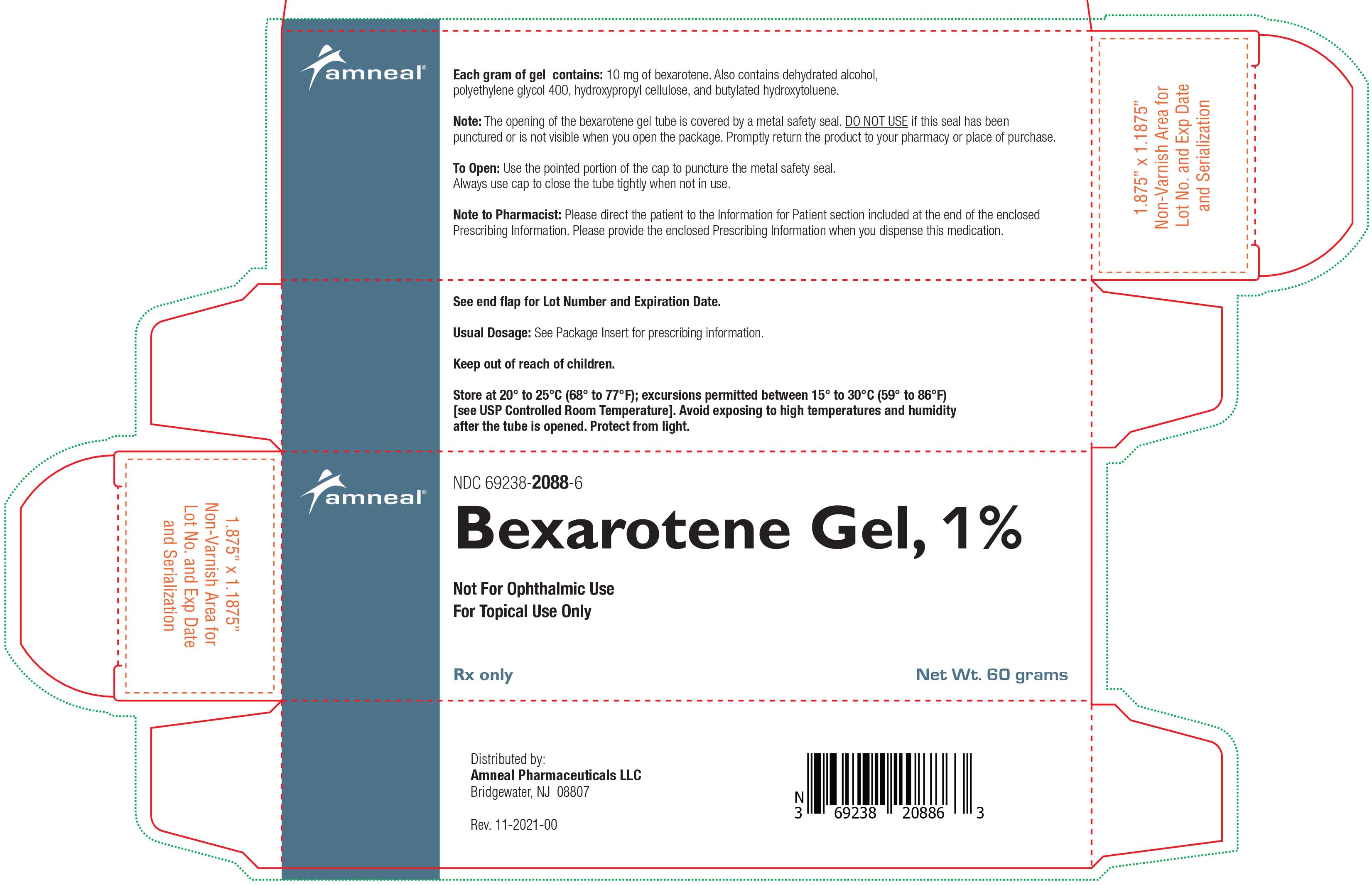
Bexarotene 10 mg/g Gel — NDC 69238-2088-6 (Billing 69238-2088-06)
This is a package of Bexarotene 10 mg/g Gel from Amneal Pharmaceuticals NY LLC, marketed since May 2022 and currently FDA-listed. It is this product's only package size.
NDC database record
One package, one record: these facts belong to NDC 69238-2088-6 alone.
- Record
- FDA NDC Directory package listing · Human prescription drug
- Code segments
- 69238 labeler · 2088 product · 6 package
- Package marketed since
- May 4, 2022
- Sample package
- No — commercial package
- Listing certified through
- Dec 31, 2027
- Barcode (UPC)
- 0369238208863
- Medicaid fills, this package
- 137 prescriptions in the last four reported quarters
- FDA record last changed
- Oct 8, 2026
Identity & classification
Regulatory identifiers FDA, NLM and CMS codes for this package
Drug-database identifiers Medi-Span GPI and First Databank GCN / HICL / AHFS classification
- GSN (GCN sequence number): 045771
- GCN: 89921
- GPI-14 (Medi-Span): 90376220004020
- HICL (First Databank): 020832
- AHFS class code: 10:00.00.00
- RxCUI (RxNorm): 308724
Where does this data come from?
- FDA openFDA NDC Directory · synced Oct 8, 2026
- FDA label on DailyMed · label index refreshed Oct 8, 2026
- RxNorm (NLM RxNav) · catalog refreshed Oct 1, 2026
- Medi-Span GPI (licensed)
- First Databank (licensed) · refreshed Oct 8, 2026
RxNorm drug class
This medicine belongs to the Retinoid class.
Where does this data come from?
- RxClass (NLM) · catalog refreshed Oct 1, 2026
Clinical
Topical bexarotene is used to treat cutaneous T-cell lymphoma (CTCL, a type of lymphoma [cancer] that attacks the skin that could not be treated with other medications. Bexarotene is in a class of medications called retinoids. It works by stopping the growth of cancer cells.
Read the full MedlinePlus article ↗- Bexarotene is used to treat cutaneous T-cell lymphoma — a type of cancer that mainly shows up in the skin. The capsule form (Targretin or generic bexarotene) is for people who've a...
- Bexarotene capsules significantly raise blood fat levels — especially triglycerides — in most patients, and very high triglycerides can cause a serious condition called pancreatiti...
- Why do I need so many blood tests while taking the capsules?
- This is one of the most critical things about bexarotene — it causes serious birth defects and absolutely cannot be used during pregnancy. You'll need a negative pregnancy test bef...
Patient education
Supplement & herbal interactions
Some supplements/herbs that may interact with Bexarotene — tap one for details:
Where does this data come from?
- MedlinePlus (NLM) · refreshed Oct 8, 2026
- FDA label on DailyMed · label index refreshed Oct 8, 2026
Ask a licensed pharmacist directly — free, answered by our team.
Pricing
A drug doesn't have one price. Each row is a different public payment system, and none is what you'd pay at the counter — that depends on your insurance. The ⓘ on each row explains what it measures.
| Price system | Per g | Per package |
|---|---|---|
| Retail pharmacies payNADAC · weekly | Not in the retail survey — common for institutional, discontinued, or low-volume packs. | |
| Medicaid paysCMS SDUD · 12 mo | $338.56 | $20,313.72 / 60 g |
| Medicare drug plans payPart D · Q2 2026 | $328.76 | $19,725.38 / 60 g |
Where does this data come from?
- CMS NADAC weekly file
- CMS ASP pricing files · refreshed Sep 20, 2026
- CMS Medicaid State Drug Utilization Data · through Q4 2025
- CMS Part D plan pricing files · refreshed Sep 24, 2026
- VA National Acquisition Center price file
Packaging — all sizes for this product
| Package NDC | Description | Marketing start | Marketing end | Status |
|---|---|---|---|---|
| 69238-2088-06 You're viewing this Main listing | 1 TUBE in 1 CARTON / 60 g in 1 TUBE | 2022-05-04 | — | Active |
Therapeutic equivalents
| Product | Labeler | Pack | NADAC/unit | TE | Status | Price vs. this |
|---|---|---|---|---|---|---|
| Targretin 1 g/100g 00187-5525-60 | Bausch | 1 tube | — | AB | FDA listed | — |
| Bexarotene 10 mg/gthis 69238-2088-06 | Amneal | 1 tube | — | AB | FDA listed | — |
Where does this data come from?
- FDA openFDA NDC Directory · synced Oct 8, 2026
- FDA Orange Book · refreshed Oct 3, 2026
- CMS NADAC weekly file
Availability & generic status
This product is an FDA-approved generic. Other versions of the same drug are listed under Therapeutic equivalents, least expensive first.
Where does this data come from?
- FDA Orange Book · refreshed Oct 3, 2026
What it looks like
Where does this data come from?
- FDA label on DailyMed · label index refreshed Oct 8, 2026
Inactive Ingredients / Excipients
Inactive ingredients, also called excipients, are components of the drug product other than the active ingredient. They may include fillers, dyes, coatings, preservatives, flavors, or other formulation ingredients.
🧪 Avoiding an ingredient? See Bexarotene inactive ingredients by manufacturer: every current product's list side by side, so you can ask your pharmacy for the version that does not list it.
💡 Tap an ingredient (hover on desktop) to see what it is and why it’s used.
-
UNII 3K9958V90M
A liquid solvent derived from fermentation or chemical synthesis. In medicines, alcohol dissolves active ingredients, helps preserve the product, and improves how the body absorbs certain drugs.
-
UNII 1P9D0Z171K
BHT is a synthetic antioxidant that prevents fats and oils in medicines from breaking down and becoming rancid. It helps keep the product stable and effective during storage.
-
UNII 9XZ8H6N6OH
A plant-based cellulose derivative used as a binder to hold tablet ingredients together, a thickener in liquids, and a coating agent to control how fast the medicine dissolves.
-
UNII B697894SGQ
Polyethylene glycol 400 is a clear, thick liquid made from petroleum-derived polymers. It acts as a solvent and humectant in medicines, helping dissolve active ingredients and retain moisture in the formulation.
4 inactive ingredients listed in the exact product block matched to this NDC.
Where does this data come from?
ingredient classCode="IACT" elements from the exact product block matched by this NDC. Label-section narrative from DailyMed / the openFDA label index is shown separately when available.- FDA label on DailyMed · label index refreshed Oct 8, 2026
- FDA openFDA NDC Directory · synced Oct 8, 2026
Inactive ingredient FAQ
Are inactive ingredients the same for every manufacturer?
Why might an inactive ingredient be missing?
Can inactive ingredients matter?
Manufacturer & labeler
More NDCs from Amneal Pharmaceuticals NY LLC labeler code 69238
- Propranolol Hydrochloride 10 mg Tablet NDC 69238-2077-1
- Propranolol Hydrochloride 20 mg Tablet NDC 69238-2078-1
- Propranolol Hydrochloride 40 mg Tablet NDC 69238-2079-1
- Propranolol Hydrochloride 60 mg Tablet NDC 69238-2080-1
- Propranolol Hydrochloride 80 mg Tablet NDC 69238-2081-1
- Indomethacin 50 mg Suppository NDC 69238-2086-3
- Famotidine 40 mg/5mL Powder, For Suspension NDC 69238-2090-4
- Emtricitabine and Tenofovir Disoproxil Fumarate 100 mg; 150 mg Tablet, Film Coated NDC 69238-2092-3
- Emtricitabine and Tenofovir Disoproxil Fumarate 133 mg; 200 mg Tablet, Film Coated NDC 69238-2093-3
- Emtricitabine and Tenofovir Disoproxil Fumarate 167 mg; 250 mg Tablet, Film Coated NDC 69238-2094-3
- Emtricitabine and Tenofovir Disoproxil Fumarate 200 mg; 300 mg Tablet, Film Coated NDC 69238-2095-3
- Naloxone Hydrochloride 4 mg/.1mL Spray NDC 69238-2104-7
Where does this data come from?
- FDA openFDA NDC Directory · synced Oct 8, 2026
- Drugs@FDA
Full prescribing information FDA SPL
🎯 Indications and Usage ▾
INDICATIONS AND USAGE Bexarotene gel, 1% is indicated for the topical treatment of cutaneous lesions in patients with CTCL (Stage IA and IB) who have refractory or persistent disease after other therapies or who have not tolerated other therapies.
⏱️ Dosage and Administration ▾
DOSAGE AND ADMINISTRATION Bexarotene gel, 1% should be initially applied once every other day for the first week. The application frequency should be increased at weekly intervals to once daily, then twice daily, then three times daily and finally four times daily according to individual lesion tolerance. Generally, patients were able to maintain a dosing frequency of two to four times per day.
Most responses were seen at dosing frequencies of two times per day and higher. If application site toxicity occurs, the application frequency can be reduced. Should severe irritation occur, application of drug can be temporarily discontinued for a few days until the symptoms subside.
See CONTRAINDICATIONS: Pregnancy . Sufficient gel should be applied to cover the lesion with a generous coating. The gel should be allowed to dry before covering with clothing.
Because unaffected skin may become irritated, application of the gel to normal skin surrounding the lesions should be avoided. In addition, do not apply the gel near mucosal surfaces of the body. A response may be seen as soon as four weeks after initiation of therapy but most patients require longer application.
With continued application, further benefit may be attained. The longest onset time for the first response among the responders was 392 days based on the Composite Assessment of Index Lesion Severity in the multicenter study. In clinical trials, bexarotene gel, 1% was applied for up to 172 weeks.
Bexarotene gel, 1% should be continued as long as the patient is deriving benefit. Occlusive dressings should not be used with bexarotene gel, 1%. BEXAROTENE GEL, 1% IS A TOPICAL THERAPY AND IS NOT INTENDED FOR SYSTEMIC USE.
BEXAROTENE GEL, 1% HAS NOT BEEN STUDIED IN COMBINATION WITH OTHER CTCL THERAPIES.
⛔ Contraindications ▾
CONTRAINDICATIONS Bexarotene gel, 1% is contraindicated in patients with a known hypersensitivity to bexarotene or other components of the product. PREGNANCY Bexarotene gel, 1% may cause fetal harm when administered to a pregnant woman. Bexarotene gel must not be given to a pregnant woman or a woman who intends to become pregnant.
If a woman becomes pregnant while taking bexarotene gel, bexarotene gel must be stopped immediately and the woman given appropriate counseling. Bexarotene caused malformations when administered orally to pregnant rats during days 7 to 17 of gestation. Developmental abnormalities included incomplete ossification at 4 mg/kg/day and cleft palate, depressed eye bulge/microphthalmia, and small ears at 16 mg/kg/day.
At doses greater than 10 mg/kg/day, bexarotene caused developmental mortality. The no-effect oral dose in rats was 1 mg/kg/day. Plasma bexarotene concentrations in patients with CTCL applying bexarotene gel, 1% were generally less than one hundredth the C max associated with dysmorphogenesis in rats, although some patients had C max levels that were approximately one eighth the concentration associated with dysmorphogenesis in rats.
Women of child-bearing potential should be advised to avoid becoming pregnant when bexarotene gel is used. The possibility that a woman of child-bearing potential is pregnant at the time therapy is instituted should be considered. A negative pregnancy test (e.g., serum beta-human chorionic gonadotropin, beta-HCG) with a sensitivity of at least 50 mIU/L should be obtained within one week prior to bexarotene gel therapy, and the pregnancy test must be repeated at monthly intervals while the patient remains on bexarotene gel.
Effective contraception must be used for one month prior to the initiation of therapy, during therapy and for at least one month following discontinuation of therapy; it is recommended that two reliable forms of contraception be used simultaneously unless abstinence is the chosen method. Male patients with sexual partners who are pregnant, possibly pregnant, or who could become pregnant must use condoms during sexual intercourse while applying bexarotene gel and for at least one month after the last dose of drug. Bexarotene gel therapy should be initiated on the second or third day of a normal menstrual period.
No more than a one month supply of bexarotene gel should be given to the patient so that the results of pregnancy testing can be assessed and counseling regarding avoidance of pregnancy and birth defects can be reinforced.
🤒 Adverse Reactions ▾
ADVERSE REACTIONS The safety of bexarotene gel has been assessed in clinical studies of 117 patients with CTCL who received bexarotene gel for up to 172 weeks. In the multicenter open-label study, 50 patients with CTCL received bexarotene gel for up to 98 weeks. The mean duration of therapy for these 50 patients was 199 days.
The most common adverse events reported with an incidence at the application site of at least 10% in patients with CTCL were rash, pruritus, skin disorder, and pain. Adverse events leading to dose reduction or study drug discontinuation in at least two patients were rash, contact dermatitis, and pruritus. Of the 49 patients (98%) who experienced any adverse event, most experienced events categorized as mild (9 patients, 18%) or moderate (27 patients, 54%).
There were 12 patients (24%) who experienced at least one moderately severe adverse event. The most common moderately severe events were rash (7 patients, 14%) and pruritus (3 patients, 6%). Only one patient (2%) experienced a severe adverse event (rash).
In the patients with CTCL receiving bexarotene gel, adverse events reported regardless of relationship to study drug at an incidence of ≥5% are presented in Table 1. A similar safety profile for bexarotene gel was demonstrated in the Phase I-II program. For the 67 patients enrolled in the Phase I-II program, the mean duration of treatment was 436 days (range 12 to 1,203 days).
As in the multicenter study, the most common adverse events regardless of relationship to study drug in the Phase I-II program were rash (78%), pain (40%), and pruritus (40%). Table 1. Incidence of All Adverse Events* and Application Site Adverse Events with Incidence ≥5% for All Application Frequencies of Bexarotene Gel in the Multicenter CTCL Study All Adverse Events Application Site Adverse Events COSTART 5 Body System/Preferred Term N = 50 n (%) N = 50 n (%) Skin and Appendages Contact Dermatitis 1 7 (14) 4 (8) Exfoliative Dermatitis 3 (6) 0 Pruritus 2 18 (36) 9 (18) Rash 3 36 (72) 28 (56) Maculopapular Rash 3 (6) 0 Skin Disorder (NOS) 4 13 (26) 9 (18) Sweating 3 (6) 0 Body as a Whole Asthenia 3 (6) 0 Headache 7 (14) 0 Infection 9 (18) 0 Pain 15 (30) 9 (18) Cardiovascular Edema 5 (10) 0 Peripheral Edema 3 (6) 0 Hemic and Lymphatic Leukopenia 3 (6) 0 Lymphadenopathy 3 (6) 0 WBC Abnormal 3 (6) 0 Metabolic and Nutritional Hyperlipemia 5 (10) 0 Nervous Paresthesia 3 (6) 3 (6) Respiratory Cough Increased 3 (6) 0 Pharyngitis 3 (6) 0 * Regardless of association with treatment Includes Investigator terms such as: 1 Contact dermatitis, irritant contact dermatitis, irritant dermatitis 2 Pruritus, itching, itching of lesion 3 Erythema, scaling, irritation, redness, rash, dermatitis 4 Skin inflammation, excoriation, sticky or tacky sensation of skin; NOS = Not Otherwise Specified To report SUSPECTED ADVERSE REACTIONS, contact Amneal Pharmaceuticals at 1-877-835-5472 or FDA at 1-800-FDA-1088 or www.fda.gov/medwatch.com
🔄 Drug Interactions ▾
DRUG-DRUG INTERACTIONS Patients who are applying bexarotene gel should not concurrently use products that contain DEET ( N,N -diethyl- m -toluamide), a common component of insect repellent products. An animal toxicology study showed increased DEET toxicity when DEET was included as part of the formulation. No formal studies to evaluate drug interactions with bexarotene have been conducted.
Bexarotene oxidative metabolites appear to be formed through cytochrome P450 3A4. On the basis of the metabolism of bexarotene by cytochrome P450 3A4, concomitant ketoconazole, itraconazole, erythromycin and grapefruit juice could increase bexarotene plasma concentrations. Similarly, based on data that gemfibrozil increases bexarotene concentrations following oral bexarotene administration, concomitant gemfibrozil could increase bexarotene plasma concentrations.
However, due to the low systemic exposure to bexarotene after low to moderately intense gel regimens (see CLINICAL PHARMACOLOGY ), increases that occur are unlikely to be of sufficient magnitude to result in adverse effects. No drug interaction data are available on concomitant administration of bexarotene gel and other CTCL therapies.
🧒 Pediatric Use ▾
Pediatric Use Safety and effectiveness in pediatric patients have not been established.
🧓 Geriatric Use ▾
Geriatric Use Of the total patients with CTCL in clinical studies of bexarotene gel, 62% were under 65 years and 38% were 65 years or older. No overall differences in safety were observed between patients 65 years of age or older and younger patients, but greater sensitivity of some older individuals to bexarotene gel cannot be ruled out. Responses to bexarotene gel were observed across all age group decades, without preference for any individual age group decade.
🆘 Overdosage ▾
OVERDOSAGE Systemic toxicity following acute overdosage with topical application of bexarotene gel is unlikely because of low systemic plasma levels observed with normal therapeutic doses. There is no specific antidote for overdosage. There has been no experience with acute overdose of bexarotene gel in humans. Any overdose with bexarotene gel should be treated with supportive care for the signs and symptoms exhibited by the patient.
🧬 Clinical Pharmacology ▾
CLINICAL PHARMACOLOGY Mechanism of Action Bexarotene selectively binds and activates retinoid X receptor subtypes (RXRα, RXRβ, RXRγ). RXRs can form heterodimers with various receptor partners such as retinoic acid receptors (RARs), vitamin D receptor, thyroid receptor, and peroxisome proliferator activator receptors (PPARs). Once activated, these receptors function as transcription factors that regulate the expression of genes that control cellular differentiation and proliferation.
Bexarotene inhibits the growth in vitro of some tumor cell lines of hematopoietic and squamous cell origin. It also induces tumor regression in vivo in some animal models. The exact mechanism of action of bexarotene in the treatment of cutaneous T-cell lymphoma (CTCL) is unknown.
Pharmacokinetics General Plasma concentrations of bexarotene were determined during clinical studies in patients with CTCL or following repeated single or multiple-daily dose applications of bexarotene gel, 1% for up to 132 weeks. Plasma bexarotene concentrations were generally less than 5 ng/mL and did not exceed 55 ng/mL. However, only two patients with very intense dosing regimens (> 40% BSA lesions and QID dosing) were sampled.
Plasma bexarotene concentrations and the frequency of detecting quantifiable plasma bexarotene concentrations increased with increasing percent body surface area treated and increasing quantity of bexarotene gel applied. The sporadically observed and generally low plasma bexarotene concentrations indicated that, in patients receiving doses of low to moderate intensity, there is a low potential for significant plasma concentrations following repeated application of bexarotene gel. Bexarotene is highly bound (>99%) to plasma proteins.
The plasma proteins to which bexarotene binds have not been elucidated, and the ability of bexarotene to displace drugs bound to plasma proteins and the ability of drugs to displace bexarotene binding have not been studied (see PRECAUTIONS: Protein Binding ). The uptake of bexarotene by organs or tissues has not been evaluated. Metabolism Four bexarotene metabolites have been identified in plasma following oral administration of bexarotene: 6- and 7-hydroxy-bexarotene and 6- and 7-oxo-bexarotene.
In vitro studies suggest that cytochrome P450 3A4 is the major cytochrome P450 responsible for formation of the oxidative metabolites and that the oxidative metabolites may be glucuronidated. The oxidative metabolites are active in in vitro assays of retinoid receptor activation, but the relative contribution of the parent and any metabolites to the efficacy and safety of bexarotene gel is unknown. Elimination The renal elimination of bexarotene and its metabolites was examined in patients with Type 2 diabetes mellitus following oral administration of bexarotene.
Neither bexarotene nor its metabolites were excreted in urine in appreciable amounts. SPECIAL POPULATIONS Elderly, Gender, Race: Because of a large number of immeasurable plasma concentrations (< 1ng/mL), any potential pharmacokinetic differences between Special Populations could not be assessed. Pediatric: Studies to evaluate bexarotene pharmacokinetics in the pediatric population have not been conducted (see PRECAUTIONS: Pediatric Use ).
Renal Insufficiency: No formal studies have been conducted with bexarotene gel in patients with renal insufficiency. Urinary elimination of bexarotene and its known metabolites is a minor excretory pathway (<1% of an orally administered dose), but because renal insufficiency can result in significant protein binding changes, pharmacokinetics may be altered in patients with renal insufficiency (see PRECAUTIONS: Renal Insufficiency ). Hepatic Insufficiency: No specific studies have been conducted with bexarotene gel in patients with hepatic insufficiency.
Because less than 1% of the dose of oral bexarotene is excreted in the urine unchanged and there is in vitro evidence of extensive hepatic contribution to bexarotene elimination, h… [Excerpted — this section continues on DailyMed.]
🧬 Mechanism of Action ▾
Mechanism of Action Bexarotene selectively binds and activates retinoid X receptor subtypes (RXRα, RXRβ, RXRγ). RXRs can form heterodimers with various receptor partners such as retinoic acid receptors (RARs), vitamin D receptor, thyroid receptor, and peroxisome proliferator activator receptors (PPARs). Once activated, these receptors function as transcription factors that regulate the expression of genes that control cellular differentiation and proliferation.
Bexarotene inhibits the growth in vitro of some tumor cell lines of hematopoietic and squamous cell origin. It also induces tumor regression in vivo in some animal models. The exact mechanism of action of bexarotene in the treatment of cutaneous T-cell lymphoma (CTCL) is unknown.
📦 How Supplied / Storage and Handling ▾
HOW SUPPLIED Bexarotene gel, 1% is supplied as a clear, colorless gelled solution free from lumps and foreign matter with homogeneous consistency packaged in white aluminum tubes with a white pointed cap fitted on it containing 60 g (600 mg active bexarotene). 60 g tube ..............................................................................................NDC 69238-2088-6 Store at 20° to 25°C (68° to 77°F); excursions permitted between 15° to 30°C (59° to 86°F) [see USP Controlled Room Temperature]. Avoid exposing to high temperatures and humidity after the tube is opened.
Protect from light. Distributed by: Amneal Pharmaceuticals, LLC Bridgewater, NJ 08807 Rev. 11-2021-00
📋 Description ▾
DESCRIPTION Bexarotene gel, 1% contains bexarotene and is intended for topical application only. Bexarotene is a member of a subclass of retinoids that selectively activate retinoid X receptors (RXRs). These retinoid receptors have biologic activity distinct from that of retinoic acid receptors (RARs).
The chemical name is 4-[1-(3,5,5,8,8-pentamethyl-5,6,7,8-tetrahydronaphthalen-2-yl)ethenyl] benzoic acid, and the structural formula is as follows: Bexarotene is a white to off-white powder with a molecular weight of 348.478 and a molecular formula of C 24 H 28 O 2 . It is practically insoluble in water, slightly soluble in methanol, sparingly soluble in acetone, soluble in dimethyl sulfoxide, slightly soluble in ethanol and very slightly soluble in vegetable oil. Bexarotene gel, 1% is a clear gelled solution containing 1.0% (w/w) bexarotene in a base of dehydrated alcohol, polyethylene glycol 400, hydroxypropyl cellulose, and butylated hydroxytoluene.
Structural Formula
⚠️ Precautions ▾
PRECAUTIONS Pregnancy . See CONTRAINDICATIONS General: Bexarotene gel should be used with caution in patients with a known hypersensitivity to other retinoids. No clinical instances of cross-reactivity have been noted.
Vitamin A Supplementation: In clinical studies, patients were advised to limit vitamin A intake to ≤15,000 IU/day. Because of the relationship of bexarotene to vitamin A, patients should be advised to limit vitamin A supplements to avoid potential additive toxic effects. Photosensitivity: Retinoids as a class have been associated with photosensitivity.
In vitro assays indicate that bexarotene is a potential photosensitizing agent. There were no reports of photosensitivity in patients in the clinical studies. Patients should be advised to minimize exposure to sunlight and artificial ultraviolet light during the use of bexarotene gel.
Information for Patients Please see accompanying “ Patient’s Instructions for Use ” DRUG-DRUG INTERACTIONS Patients who are applying bexarotene gel should not concurrently use products that contain DEET ( N,N -diethyl- m -toluamide), a common component of insect repellent products. An animal toxicology study showed increased DEET toxicity when DEET was included as part of the formulation. No formal studies to evaluate drug interactions with bexarotene have been conducted.
Bexarotene oxidative metabolites appear to be formed through cytochrome P450 3A4. On the basis of the metabolism of bexarotene by cytochrome P450 3A4, concomitant ketoconazole, itraconazole, erythromycin and grapefruit juice could increase bexarotene plasma concentrations. Similarly, based on data that gemfibrozil increases bexarotene concentrations following oral bexarotene administration, concomitant gemfibrozil could increase bexarotene plasma concentrations.
However, due to the low systemic exposure to bexarotene after low to moderately intense gel regimens (see CLINICAL PHARMACOLOGY ), increases that occur are unlikely to be of sufficient magnitude to result in adverse effects. No drug interaction data are available on concomitant administration of bexarotene gel and other CTCL therapies. RENAL INSUFFICIENCY No formal studies have been conducted with bexarotene gel in patients with renal insufficiency.
Urinary elimination of bexarotene and its known metabolites is a minor excretory pathway for bexarotene (<1% of an orally administered dose), but because renal insufficiency can result in significant protein binding changes, and bexarotene is >99% protein bound, pharmacokinetics may be altered in patients with renal insufficiency. HEPATIC INSUFFICIENCY No specific studies have been conducted with bexarotene gel in patients with hepatic insufficiency. Because less than 1% of the dose of oral bexarotene is excreted in the urine unchanged and there is in vitro evidence of extensive hepatic contribution to bexarotene elimination, hepatic impairment would be expected to lead to greatly decreased clearance.
PROTEIN BINDING Bexarotene is highly bound (>99%) to plasma proteins. The plasma proteins to which bexarotene binds have not been elucidated, and the ability of bexarotene to displace drugs bound to plasma proteins and the ability of drugs to displace bexarotene binding have not been studied. CARCINOGENESIS, MUTAGENESIS, IMPAIRMENT OF FERTILITY Long-term studies in animals to assess the carcinogenic potential of bexarotene have not been conducted.
Bexarotene was not mutagenic to bacteria (Ames assay) or mammalian cells (mouse lymphoma assay). Bexarotene was not clastogenic in vivo (micronucleus test in mice). No formal fertility studies were conducted with bexarotene.
Bexarotene caused testicular degeneration when oral doses of 1.5 mg/kg/day were given to dogs for 91 days. Use in Nursing Mothers It is not known whether bexarotene is excreted in human milk. Because many drugs are excreted in human milk and because of the potential for serious adverse reactions in nursing infants from bexarotene, a decision should be… [Excerpted — this section continues on DailyMed.]
🍼 Nursing Mothers ▾
Use in Nursing Mothers It is not known whether bexarotene is excreted in human milk. Because many drugs are excreted in human milk and because of the potential for serious adverse reactions in nursing infants from bexarotene, a decision should be made whether to discontinue nursing or to discontinue the drug, taking into account the importance of the drug to the mother.
🧬 Pharmacokinetics ▾
Pharmacokinetics General Plasma concentrations of bexarotene were determined during clinical studies in patients with CTCL or following repeated single or multiple-daily dose applications of bexarotene gel, 1% for up to 132 weeks. Plasma bexarotene concentrations were generally less than 5 ng/mL and did not exceed 55 ng/mL. However, only two patients with very intense dosing regimens (> 40% BSA lesions and QID dosing) were sampled.
Plasma bexarotene concentrations and the frequency of detecting quantifiable plasma bexarotene concentrations increased with increasing percent body surface area treated and increasing quantity of bexarotene gel applied. The sporadically observed and generally low plasma bexarotene concentrations indicated that, in patients receiving doses of low to moderate intensity, there is a low potential for significant plasma concentrations following repeated application of bexarotene gel. Bexarotene is highly bound (>99%) to plasma proteins.
The plasma proteins to which bexarotene binds have not been elucidated, and the ability of bexarotene to displace drugs bound to plasma proteins and the ability of drugs to displace bexarotene binding have not been studied (see PRECAUTIONS: Protein Binding ). The uptake of bexarotene by organs or tissues has not been evaluated. Metabolism Four bexarotene metabolites have been identified in plasma following oral administration of bexarotene: 6- and 7-hydroxy-bexarotene and 6- and 7-oxo-bexarotene.
In vitro studies suggest that cytochrome P450 3A4 is the major cytochrome P450 responsible for formation of the oxidative metabolites and that the oxidative metabolites may be glucuronidated. The oxidative metabolites are active in in vitro assays of retinoid receptor activation, but the relative contribution of the parent and any metabolites to the efficacy and safety of bexarotene gel is unknown. Elimination The renal elimination of bexarotene and its metabolites was examined in patients with Type 2 diabetes mellitus following oral administration of bexarotene.
Neither bexarotene nor its metabolites were excreted in urine in appreciable amounts. SPECIAL POPULATIONS Elderly, Gender, Race: Because of a large number of immeasurable plasma concentrations (< 1ng/mL), any potential pharmacokinetic differences between Special Populations could not be assessed. Pediatric: Studies to evaluate bexarotene pharmacokinetics in the pediatric population have not been conducted (see PRECAUTIONS: Pediatric Use ).
Renal Insufficiency: No formal studies have been conducted with bexarotene gel in patients with renal insufficiency. Urinary elimination of bexarotene and its known metabolites is a minor excretory pathway (<1% of an orally administered dose), but because renal insufficiency can result in significant protein binding changes, pharmacokinetics may be altered in patients with renal insufficiency (see PRECAUTIONS: Renal Insufficiency ). Hepatic Insufficiency: No specific studies have been conducted with bexarotene gel in patients with hepatic insufficiency.
Because less than 1% of the dose of oral bexarotene is excreted in the urine unchanged and there is in vitro evidence of extensive hepatic contribution to bexarotene elimination, hepatic impairment would be expected to lead to greatly decreased clearance (see PRECAUTIONS: Hepatic Insufficiency ). DRUG-DRUG INTERACTIONS No formal studies to evaluate drug interactions with bexarotene or bexarotene gel have been conducted. Bexarotene oxidative metabolites appear to be formed through cytochrome P450 3A4.
Drugs that affect levels or activity of cytochrome P450 3A4 may potentially affect the disposition of bexarotene. Concomitant gemfibrozil was associated with increased bexarotene concentrations following oral administration of bexarotene.
🔬 Clinical Studies ▾
CLINICAL STUDIES Bexarotene gel was evaluated for the treatment of patients with early stage (Stage IA-IIA) CTCL in one multicenter, open-label, clinical trial as well as in a Phase I-II program (dose-seeking trials with different response criteria than the multicenter trial). These clinical studies enrolled a total of 117 patients. In the multicenter, open-label clinical trial, bexarotene gel was evaluated for the treatment of patients with early stage CTCL who were refractory to, intolerant to, or reached a response plateau for at least six months on at least two prior therapies.
The study was conducted in the U.S., Canada, Europe, and Australia and enrolled a total of 50 patients; 46% of these patients were male, 80% were Caucasian, and the median age was 64 years (range 13 to 85). Bexarotene gel was also evaluated for the treatment of patients with CTCL in a U.S. Phase I-II program involving patients with early stage CTCL.
This program enrolled a total of 67 patients; 55% of these patients were male, 85% were Caucasian, and the median age was 61 years (range 30 to 87). In the multicenter, open-label clinical trial, considering prior systemic, irradiation, and topical treatments, patients had been exposed to a median of three prior therapies (range 2 to 7). All patients failed at least two treatments; the majority (68%) of patients were either refractory to two or more therapies or were refractory to one therapy and intolerant to at least one therapy.
Patients were treated with Bexarotene gel 1% for a planned 16-week period with an option to continue provided that no unacceptable toxicity was occurring. Tumor response was assessed in the multicenter study by observation of up to five baseline-defined index lesions using a Composite Assessment of Index Lesion Disease Severity (CA). This endpoint was based on a summation of the grades, for all index lesions, of erythema, scaling, plaque elevation, hypopigmentation or hyperpigmentation, and area of involvement.
New cutaneous lesions or tumors and extracutaneous disease manifestations were not considered in response or disease progression assessments. All tumor responses required confirmation over at least two assessments separated by at least four weeks. A partial response was defined as an improvement of at least 50% in the index lesions.
A complete clinical response required complete disappearance of the index lesions, but did not require confirmation by biopsy. Bexarotene gel produced an overall response rate of 26% (13/50) with a corresponding exact 95% confidence interval from 14.6% to 40.3% by the Composite Assessment of Index Lesion Severity. For the Stage IA and IB patients, the response rate was 28% (13/47) with a corresponding exact 95% confidence interval from 15.6% to 42.6%.
For the Stage II patients the response rate was 0% (0/3). Two percent of patients (1/50) had a clinical complete response. The median time to best response on the Composite Assessment of Index Lesion Severity (n=13) was 85 days (range: 36 to 154).
The rate of relapse in responding patients by the Composite Assessment of Index Lesion Severity was 23% (3/13) over a median observation period of 149 days (range 56 to 342). Fourteen patients developed new lesions in untreated areas (14/50; 28%). Four patients developed clinically abnormal lymph nodes (≥ 1cm diam) (4/50; 8%).
One patient developed a cutaneous tumor (1/50; 2%). The Phase I-II program (dose-seeking trials with different response criteria than the multicenter trial) was supportive of the multicenter study results.
📄 Carcinogenesis, Mutagenesis, Impairment of Fertility ▾
CARCINOGENESIS, MUTAGENESIS, IMPAIRMENT OF FERTILITY Long-term studies in animals to assess the carcinogenic potential of bexarotene have not been conducted. Bexarotene was not mutagenic to bacteria (Ames assay) or mammalian cells (mouse lymphoma assay). Bexarotene was not clastogenic in vivo (micronucleus test in mice).
No formal fertility studies were conducted with bexarotene. Bexarotene caused testicular degeneration when oral doses of 1.5 mg/kg/day were given to dogs for 91 days.
📖 Instructions for Use ▾
Bexarotene (bex ar' oh teen) Gel, 1% Patient’s Instructions for Use (For Topical Use Only) To help you get the full benefits from this medicine, you should read this leaflet carefully and ask your doctor to explain anything you do not understand. What are the most important things I should know about bexarotene gel? Do not use bexarotene gel if you are pregnant or if you plan to become pregnant.
Bexarotene gel may harm your fetus (unborn baby). You should contact your doctor immediately if you believe or suspect you are pregnant while you are using bexarotene gel and until one month after you stop using bexarotene gel. If you are capable of becoming pregnant, you must have a pregnancy test, within one week before you start bexarotene gel therapy and monthly while you are using bexarotene gel, confirming you are not pregnant.
You must use effective contraception (birth control) continuously starting one month before beginning treatment with bexarotene gel until one month after you stop using bexarotene gel. It is recommended that two reliable forms of contraception be used together. If you are male and your partner is pregnant or capable of becoming pregnant, you should discuss with your doctor the precautions you should take.
What is bexarotene gel? Bexarotene gel contains bexarotene. Bexarotene gel belongs to a class of medicines known as retinoids.
What are the uses for bexarotene gel? This medicine is used to treat the skin problems arising from a disease called cutaneous T-cell lymphoma, or CTCL. Your health care provider has prescribed bexarotene for the topical treatment of the cutaneous T-cell lymphoma (CTCL), or mycosis fungoides (MF), lesions (sometimes referred to as patches or plaques) on your skin.
Your doctor must instruct you on the proper use of bexarotene gel. The following instructions will help you successfully begin and continue your treatment. Do not use bexarotene gel if you are allergic to this medicine.
Do not use bexarotene gel if you are pregnant or believe you may be pregnant. If you have any of the following conditions, make sure you have discussed them with your doctor before you start to take this medicine. If you are breast feeding.
If you are allergic to retinoid medications (for example: Accutane ® [isotretinoin], Soriatane ® [acitretin], Tegison ® [etretinate], Vesinoid ® [tretinoin]). When should you be extra careful while using bexarotene gel? Because vitamin A in large doses may cause some side effects which are similar to those seen in patients applying bexarotene gel, do not take more than the recommended daily dietary allowance of vitamin A (4,000 to 5,000 International Units).
If you take vitamins, check the label to see how much vitamin A they contain. If you are not sure, ask your doctor or pharmacist. Your skin may become more sensitive to sunlight while using this medicine.
Minimize exposure to sunlight and do not use a sunlamp. WARNINGS For external use only. DO NOT apply the gel on or near mucosal surfaces of the body such as eyes, nostrils, mouth, lips, vagina, tip of the penis, rectum, or anus.
DO NOT use insect repellents containing DEET ( N,N -diethyl- m -toluamide) or other products containing DEET while using bexarotene gel. Keep out of reach of children. Product contains alcohol and should be kept away from open flame.
DO NOT use bexarotene gel if you are pregnant or breastfeeding. Speak to your health care provider if you have any questions or need more information. HOW TO APPLY Apply bexarotene gel to your CTCL lesions using a clean washed finger.
Place a generous coating of gel over the entire surface of each lesion. You should not apply gel to the healthy skin around the lesion. The extra effort you take in carefully applying the gel only to the area of the CTCL lesion will help to lessen any irritation or redness that may occur.
Proper application should leave some gel visible on the surface of the lesion when you are finished with the application. Immediately following… [Excerpted — this section continues on DailyMed.]
📄 Package Label / Principal Display Panel ▾
PRINCIPAL DISPLAY PANEL carton tube
Medicaid utilization & spend
Medicare Part D spend CMS · PART D · 2026 (Q1)
About this NDC listing & data coverage
What data is (and isn’t) available for this NDC — tap to expand
| NDC identity (package / product / labeler codes) | ✓ Available |
| Labeler | ✓ Available |
| Product & package description | ✓ Available |
| Marketing category & status | ✓ Available |
| Active ingredient / dosage form / route | ✓ Available |
| FDA label (SPL via DailyMed) | ✓ Available |
| Package photos | ✓ Available |
| Inactive ingredients (structured) | ✓ Available |
| NADAC pharmacy acquisition price (CMS) | — Not published for this NDC CMS publishes NADAC only for NDCs reported in its retail-pharmacy survey. |
| Orange Book / therapeutic-equivalence data | ✓ Available |
| HCPCS J-code billing crosswalk | — Not published for this NDC Most self-administered / retail products have no J-code — that is normal. |
| Medicaid utilization (CMS SDUD) | ✓ Available |