
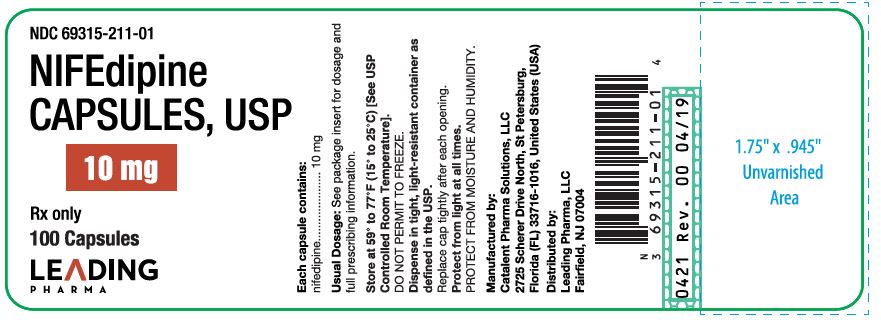
NIFEdipine 10 mg Capsule, 100-count
🆔 Identity & classification
Where does this data come from?
🏷️ RxNorm drug class
This medicine belongs to the Dihydropyridine Calcium Channel Blocker class.
Where does this data come from?
🏭 Manufacturer & labeler
Where does this data come from?
🩺 Clinical
Nifedipine is used to treat high blood pressure and to control angina (chest pain). Nifedipine is in a class of medications called calcium-channel blockers. It lowers blood pressure by relaxing the blood vessels so the heart does not have to pump as hard. It controls chest pain by increasing the supply of blood and oxygen to the heart. High blood pressure is a common condition and when not treated, can cause damage to the brain, heart, blood vessels, kidneys and other parts of the body. Damage to these organs may cause heart disease, a heart attack, heart failure, stroke, kidney failure, loss...
Read the full MedlinePlus article ↗- Nifedipine relaxes and widens your blood vessels. If you have high blood pressure, that widening makes it easier for your heart to pump, which brings your numbers down and lowers y...
- What exactly is nifedipine supposed to do for me?
- It depends on your form. If you're taking the extended-release tablet, a high-fat meal can noticeably increase the amount of drug that gets into your bloodstream. That doesn't mean...
- Does it matter if I take nifedipine with food?
Patient education
Supplement & herbal interactions
Some supplements/herbs that may interact with Nifedipine — tap one for details:
Nifedipine may be associated with lower levels of 2 nutrients — worth a chat with your pharmacist, not a cause for alarm.
Where does this data come from?
Ask a licensed pharmacist directly — free, answered by our team.
💊 What it looks like
Where does this data come from?
🧪 Inactive Ingredients / Excipients
Inactive ingredients, also called excipients, are components of the drug product other than the active ingredient. They may include fillers, dyes, coatings, preservatives, flavors, or other formulation ingredients.
💡 Tap an ingredient (hover on desktop) to see what it is and why it’s used.
-
UNII H77VEI93A8
A synthetic yellow dye used to color medications. It helps identify the drug and make it visually distinctive, with no effect on how the medicine works.
-
UNII 2G86QN327L
Gelatin is a protein derived from animal collagen, commonly used in medicines as a gelling agent and capsule material. It helps create soft or hard capsule shells that hold and release medication, and can also thicken liquid formulations.
-
UNII PDC6A3C0OX
Glycerin is a clear, thick liquid derived from plant oils or fats. It acts as a humectant to retain moisture, a sweetener, and a solvent in medications.
-
UNII AV092KU4JH
A natural oil extracted from peppermint plants. It's used as a flavoring agent to mask bitter tastes and add a refreshing mint flavor to medicines, making them easier to take.
-
UNII 3WJQ0SDW1A
Polyethylene glycol is a synthetic liquid or solid polymer used in medicines as a solvent, lubricant, and humectant. It helps dissolve active ingredients, reduces friction during manufacturing, and retains moisture in the final product.
-
UNII 58QVG85GW3
A synthetic polymer made from vinyl acetate and phthalic acid. It coats tablets and capsules to control when and where the medicine dissolves in the digestive system, protecting the contents from stomach acid.
-
UNII 6DC9Q167V3
Propylene glycol is a clear liquid derived from petroleum or vegetable sources. It acts as a solvent, humectant, and preservative in medicines, helping dissolve active ingredients and maintain product stability.
-
UNII SB8ZUX40TY
Saccharin sodium is an artificial sweetener made from saccharin salt. It's added to medicines to improve taste, especially in liquid formulations for children or bitter drugs.
-
UNII 15FIX9V2JP
Titanium dioxide is a bright white mineral powder commonly used as a colorant and opacifying agent. It makes pills and tablets white or lighter in color and helps make coatings non-transparent.
-
UNII 059QF0KO0R
Water is a liquid solvent that dissolves and mixes ingredients together in liquid medicines, syrups, and injections. It helps distribute the active drug evenly throughout the product.
10 inactive ingredients listed in the exact product block matched to this NDC.
Where does this data come from?
ingredient classCode="IACT" elements from the exact product block matched by this NDC. Label-section narrative from DailyMed / the openFDA label index is shown separately when available.Inactive ingredient FAQ
Are inactive ingredients the same for every manufacturer?
Why might an inactive ingredient be missing?
Can inactive ingredients matter?
💲 Pricing
A drug doesn't have one price. Each row is a different public payment system, and none is what you'd pay at the counter — that depends on your insurance. The ⓘ on each row explains what it measures.
| Price system | Per ea | Per package |
|---|---|---|
| Retail pharmacies payNADAC · weekly | $0.258 | $25.78 / 100 capsules |
| Medicaid paysCMS SDUD · 12 mo | $0.4058 | $40.58 / 100 capsules |
| Medicare drug plans payPart D · Q2 2026 | $0.3881 | $38.81 / 100 capsules |
Where does this data come from?
🔁 Therapeutic equivalents
| Product | Labeler | Pack | NADAC/unit | TE | Status | Price vs. this |
|---|---|---|---|---|---|---|
| Nifedipine 10 mg 00904-7229-61 | Major | 100 capsules | $0.258 | AB | Availability likely | — |
| Nifedipine 10 mg 23155-0194-01 | Heritage | 100 capsules | $0.258 | AB | Availability likely | — |
| Nifedipine 10 mg 62135-0739-90 | Chartwell | 90 capsules | $0.258 | AB | Availability likely | — |
| NIFEdipine 10 mgthis 69315-0211-01 | Leading | 100 capsules | $0.258 | AB | Discontinued | — |
| Nifedipine 10 mg 55154-0196-00 | Cardinal | 10 capsules | — | AB | FDA listed | — |
| Nifedipine 10 mg 66267-0831-04 | NuCare | 4 capsules | — | AB | FDA listed | — |
| Nifedipine 10 mg 70518-4625-00 | REMEDYREPACK | 50 capsules | — | AB | FDA listed | — |
| Nifedipine 10 mg 72789-0219-08 | PD-Rx | 8 capsules | — | AB | FDA listed | — |
Where does this data come from?
⏳ Availability & generic status
This product is an FDA-approved generic. Other versions of the same drug are listed under Therapeutic equivalents, least expensive first.
Where does this data come from?
🗺️ Medicaid utilization & spend
📊 Medicare Part D spend CMS · PART D · 2026 (Q1)
📦 Packaging — all sizes for this product
| Package NDC | Description | Marketing start | Status |
|---|---|---|---|
| 69315-0211-01 You're viewing this | 100 CAPSULE in 1 BOTTLE, PLASTIC (69315-211-01) | 2018-10-02 | Inactivated by FDA |
🧭 About this NDC listing & data coverage
What data is (and isn’t) available for this NDC — tap to expand
| NDC identity (package / product / labeler codes) | ✓ Available |
| Labeler | ✓ Available |
| Product & package description | ✓ Available |
| Marketing category & status | ✓ Available |
| Active ingredient / dosage form / route | ✓ Available |
| FDA label (SPL via DailyMed) | ✓ Available |
| Package photos | ✓ Available |
| Inactive ingredients (structured) | ✓ Available |
| NADAC pharmacy acquisition price (CMS) | ✓ Available |
| Orange Book / therapeutic-equivalence data | ✓ Available |
| HCPCS J-code billing crosswalk | — Not published for this NDC Most self-administered / retail products have no J-code — that is normal. |
| Medicaid utilization (CMS SDUD) | ✓ Available |
Questions about this listing
What does the discontinued status mean for this NDC?
Is the NDC printed on the package the same as the 11-digit billing NDC?
What do the three segments of this NDC mean?
Who lists this product with the FDA?
Do I need a prescription for this product?
Where does this data come from?
📄 Full prescribing information FDA SPL
🎯 Indications and Usage ▾
INDICATIONS AND USAGE Vasospastic Angina Nifedipine capsules, USP (nifedipine) is indicated for the management of vasospastic angina confirmed by any of the following criteria: 1) classical pattern of angina at rest accompanied by ST segment elevation, 2) angina or coronary artery spasm provoked by ergonovine, or 3) angiographically demonstrated coronary artery spasm. In those patients who have had angiography, the presence of significant fixed obstructive disease is not incompatible with the diagnosis of vasospastic angina, provided that the above criteria are satisfied.
Nifedipine capsules, USP may also be used where the clinical presentation suggests a possible vasospastic component but where vasospasm has not been confirmed, e.g., where pain has a variable threshold on exertion or when angina is refractory to nitrates and/or adequate doses of beta-blockers. Chronic Stable Angina (Classical Effort-Associated Angina) Nifedipine capsules, USP is indicated for the management of chronic stable angina (effort-associated angina) without evidence of vasospasm in patients who remain symptomatic despite adequate doses of beta-blockers and/or organic nitrates or who cannot tolerate those agents.
In chronic stable angina (effort-associated angina), nifedipine capsules, USP has been effective in controlled trials of up to eight weeks duration in reducing angina frequency and increasing exercise tolerance, but confirmation of sustained effectiveness and evaluation of long-term safety in these patients are incomplete. Controlled studies in small numbers of patients suggest concomitant use of nifedipine capsules, USP and beta-blocking agents may be beneficial in patients with chronic stable angina, but available information is not sufficient to predict with confidence the effects of concurrent treatment, especially in patients with compromised left ventricular function or cardiac conduction abnormalities.
When introducing such concomitant therapy, care must be taken to monitor blood pressure closely since severe hypotension can occur from the combined effects of the drugs. (See WARNINGS ).
Vasospastic Angina Nifedipine capsules, USP (nifedipine) is indicated for the management of vasospastic angina confirmed by any of the following criteria: 1) classical pattern of angina at rest accompanied by ST segment elevation, 2) angina or coronary artery spasm provoked by ergonovine, or 3) angiographically demonstrated coronary artery spasm. In those patients who have had angiography, the presence of significant fixed obstructive disease is not incompatible with the diagnosis of vasospastic angina, provided that the above criteria are satisfied.
Nifedipine capsules, USP may also be used where the clinical presentation suggests a possible vasospastic component but where vasospasm has not been confirmed, e.g., where pain has a variable threshold on exertion or when angina is refractory to nitrates and/or adequate doses of beta-blockers.
Chronic Stable Angina (Classical Effort-Associated Angina) Nifedipine capsules, USP is indicated for the management of chronic stable angina (effort-associated angina) without evidence of vasospasm in patients who remain symptomatic despite adequate doses of beta-blockers and/or organic nitrates or who cannot tolerate those agents. In chronic stable angina (effort-associated angina), nifedipine capsules, USP has been effective in controlled trials of up to eight weeks duration in reducing angina frequency and increasing exercise tolerance, but confirmation of sustained effectiveness and evaluation of long-term safety in these patients are incomplete.
Controlled studies in small numbers of patients suggest concomitant use of nifedipine capsules, USP and beta-blocking agents may be beneficial in patients with chronic stable angina, but available information is not sufficient to predict with confidence the effects of concurrent treatment, especially in patients with compromised left ventricular function or cardiac cond…
⏱️ Dosage and Administration ▾
DOSAGE AND ADMINISTRATION The dosage of nifedipine needed to suppress angina and that can be tolerated by the patient must be established by titration. Excessive doses can result in hypotension. Therapy should be initiated with the 10 mg capsule.
The starting dose is one 10 mg capsule, swallowed whole, 3 times/day. The usual effective dose range is 10 to 20 mg three times daily. Some patients, especially those with evidence of coronary artery spasm, respond only to higher doses, more frequent administration, or both.
In such patients, doses of 20 to 30 mg three or four times daily may be effective. Doses above 120 mg daily are rarely necessary. More than 180 mg per day is not recommended.
In most cases, nifedipine titration should proceed over a 7 to 14 day period so that the physician can assess the response to each dose level and monitor the blood pressure before proceeding to higher doses. If symptoms so warrant, titration may proceed more rapidly provided that the patient is assessed frequently. Based on the patient’s physical activity level, attack frequency, and sublingual nitroglycerin consumption, the dose of nifedipine may be increased from 10 mg t.i.d. to 20 mg t.i.d. and then to 30 mg t.i.d. over a three-day period.
In hospitalized patients under close observation, the dose may be increased in 10 mg increments over four- to six-hour periods as required to control pain and arrhythmias due to ischemia. A single dose should rarely exceed 30 mg. Avoid co-administration of nifedipine with grapefruit juice (see CLINICAL PHARMACOLOGY and PRECAUTIONS: Other Interactions ).
No “rebound effect” has been observed upon discontinuation of nifedipine. However, if discontinuation of nifedipine is necessary, sound clinical practice suggests that the dosage should be decreased gradually with close physician supervision. Co-Administration with other Antianginal Drugs Sublingual nitroglycerin may be taken as required for the control of acute manifestations of angina, particularly during nifedipine titration.
See PRECAUTIONS , Drug Interactions , for information on co-administration of nifedipine with beta-blockers or long-acting nitrates.
⛔ Contraindications ▾
CONTRAINDICATIONS Known hypersensitivity reaction to nifedipine.
⚠️ Warnings ▾
WARNINGS Excessive Hypotension Although, in most patients, the hypotensive effect of nifedipine is modest and well tolerated, occasional patients have had excessive and poorly tolerated hypotension. These responses have usually occurred during initial titration or at the time of subsequent upward dosage adjustment. Although patients have rarely experienced excessive hypotension on nifedipine alone, this may be more common in patients on concomitant beta-blocker therapy.
Although not approved for this purpose, nifedipine capsules and other immediate-release nifedipine capsules have been used (orally and sublingually) for acute reduction of blood pressure. Several well-documented reports describe cases of profound hypotension, myocardial infarction, and death when immediate-release nifedipine was used in this way. Nifedipine capsules should not be used for the acute reduction of blood pressure.
Severe hypotension and/or increased fluid volume requirements have been reported in patients receiving nifedipine together with a beta-blocking agent who underwent coronary artery bypass surgery using high dose fentanyl anesthesia. The interaction with high dose fentanyl appears to be due to the combination of nifedipine and a beta-blocker, but the possibility that it may occur with nifedipine alone, with low doses of fentanyl, in other surgical procedures, or with other narcotic analgesics cannot be ruled out. In nifedipine treated patients where surgery using high dose fentanyl anesthesia is contemplated, the physician should be aware of these potential problems and, if the patient’s condition permits, sufficient time (at least 36 hours) should be allowed for nifedipine to be washed out of the body prior to surgery.
Increased Angina and/or Myocardial Infarction Rarely, patients, particularly those who have severe obstructive coronary artery disease, have developed well documented increased frequency, duration, and/or severity of angina or acute myocardial infarction on starting nifedipine or at the time of dosage increase. The mechanism of this effect is not established. Several well-controlled, randomized trials studied the use of immediate-release nifedipine in patients who had just sustained myocardial infarctions.
In none of these trials did immediaterelease nifedipine appear to provide any benefit. In some of the trials, patients who received immediate-release nifedipine had significantly worse outcomes than patients who received placebo. Nifedipine capsules should not be administered within the first week or two after myocardial infarction and they should also be avoided in the setting of acute coronary syndrome (when infarction may be imminent).
Use in Essential Hypertension Nifedipine capsules 10 mg and other immediate-release nifedipine capsules have also been used for the long-term control of essential hypertension, although nifedipine capsules have not been approved for this purpose and no properly controlled studies have been conducted to define an appropriate dose or dose interval for such treatment. Nifedipine capsules should not be used for the control of essential hypertension. Beta-Blocker Withdrawal Patients recently withdrawn from beta-blockers may develop a withdrawal syndrome with increased angina, probably related to increased sensitivity to catecholamines.
Initiation of nifedipine treatment will not prevent this occurrence and might be expected to exacerbate it by provoking reflex catecholamine release. There have been occasional reports of increased angina in a setting of beta-blocker withdrawal and nifedipine initiation. It is important to taper beta-blockers if possible, rather than stopping them abruptly before beginning nifedipine.
Congestive Heart Failure Rarely, patients, usually those receiving a beta-blocker, have developed heart failure after beginning nifedipine. Patients with tight aortic stenosis may be at greater risk for such an event, as the unloading effect of nifedipine would be expected to be of…
🤒 Adverse Reactions ▾
ADVERSE REACTIONS In multiple-dose United States and foreign controlled studies in which adverse reactions were reported spontaneously, adverse effects were frequent but generally not serious and rarely required discontinuation of therapy or dosage adjustment. Most were expected consequences of the vasodilator effects of nifedipine. Adverse Effect Nifedipine (%) (N=226) Placebo (%) (N=235) Dizziness, lightheadedness, giddiness 27 15 Flushing, heat sensation 25 8 Headache 23 20 Weakness 12 10 Nausea, heartburn 11 8 Muscle cramps, tremor 8 3 Peripheral edema 7 1 Nervousness, mood changes 7 4 Palpitation 7 5 Dyspnea, cough, wheezing 6 3 Nasal congestion, sore throat 6 8 There is also a large uncontrolled experience in over 2100 patients in the United States.
Most of the patients had vasospastic or resistant angina pectoris, and about half had concomitant treatment with beta-adrenergic blocking agents. The most common adverse events were: Incidence Approximately 10% Cardiovascular: peripheral edema Central Nervous System: dizziness or lightheadedness Gastrointestinal: nausea Systemic: headache and flushing, weakness Incidence Approximately 5% Cardiovascular: transient hypotension Incidence 2% or Less Cardiovascular: palpitation Respiratory: nasal and chest congestion, shortness of breath Gastrointestinal: diarrhea, constipation, cramps, flatulence Musculoskeletal: inflammation, joint stiffness, muscle cramps Central Nervous System: shakiness, nervousness, jitteriness, sleep disturbances, blurred vision, difficulties in balance Other: dermatitis, pruritus, urticaria, fever, sweating, chills, sexual difficulties Incidence Approximately 0.5% Cardiovascular: syncope (mostly with initial dosing and/or an increase in dose), erythromelalgia Incidence Less Than 0.5% Hematologic: thrombocytopenia, anemia, leukopenia, purpura Gastrointestinal: allergic hepatitis Face and Throat: angioedema (mostly oropharyngeal edema with breathing difficulty in a few patients), gingival hyperplasia CNS: depression, paranoid syndrome Special Senses: transient blindness at the peak of plasma level, tinnitus Urogenital: nocturia, polyuria Other: arthritis with ANA (+), exfoliative dermatitis, gynecomastia Musculoskeletal: myalgia Several of these side effects appear to be dose related.
Peripheral edema occurred in about one in 25 patients at doses less than 60 mg per day and in about one patient in eight at 120 mg per day or more. Transient hypotension, generally of mild to moderate severity and seldom requiring discontinuation of therapy, occurred in one of 50 patients at less than 60 mg per day and in one of 20 patients at 120 mg per day or more. Very rarely, introduction of nifedipine therapy was associated with an increase in anginal pain, possibly due to associated hypotension.
Transient unilateral loss of vision has also occurred. In addition, more serious adverse events were observed, not readily distinguishable from the natural history of the disease in these patients. It remains possible, however, that some or many of these events were drug related.
Myocardial infarction occurred in about 4% of patients and congestive heart failure or pulmonary edema in about 2%. Ventricular arrhythmias or conduction disturbances each occurred in fewer than 0.5% of patients. In a subgroup of over 1000 patients receiving nifedipine with concomitant beta-blocker therapy, the pattern and incidence of adverse experiences were not different from that of the entire group of nifedipine treated patients.
(See PRECAUTIONS ). In a subgroup of approximately 250 patients with a diagnosis of congestive heart failure as well as angina pectoris (about 10% of the total patient population), dizziness or lightheadedness, peripheral edema, headache, or flushing each occurred in one in eight patients. Hypotension occurred in about one in 20 patients.
Syncope occurred in approximately one patient in 250. Myocardial infarction or symptoms of congestive heart failure each occurred in about…
🔄 Drug Interactions ▾
Drug Interactions Beta-adrenergic blocking agents: (See INDICATIONS AND USAGE and WARNINGS ). Experience in over 1400 patients in a non-comparative clinical trial has shown that concomitant administration of nifedipine and beta-blocking agents is usually well tolerated, but there have been occasional literature reports suggesting that the combination may increase the likelihood of congestive heart failure, severe hypotension or exacerbation of angina. Long-acting nitrates: Nifedipine may be safely co-administered with nitrates, but there have been no controlled studies to evaluate the antianginal effectiveness of this combination.
Digitalis: Since there have been isolated reports of patients with elevated digoxin levels, and there is a possible interaction between digoxin and nifedipine, it is recommended that digoxin levels be monitored when initiating, adjusting, and discontinuing nifedipine to avoid possible over- or under-digitalization. Quinidine: There have been rare reports of an interaction between quinidine and nifedipine (with a decreased plasma level of quinidine). Coumarin anticoagulants: There have been rare reports of increased prothrombin time in patients taking coumarin anticoagulants to whom nifedipine was administered.
However, the relationship to nifedipine therapy is uncertain. Cimetidine: A study in six healthy volunteers has shown a significant increase in peak nifedipine plasma levels (80%) and area-under-the-curve (74%) after a one week course of cimetidine at 1000 mg per day and nifedipine at 40 mg per day. Ranitidine produced smaller, non-significant increases.
The effect may be mediated by the known inhibition of cimetidine on hepatic cytochrome P-450, the enzyme system probably responsible for the first-pass metabolism of nifedipine. If nifedipine therapy is initiated in a patient currently receiving cimetidine, cautious titration is advised. Nifedipine is metabolized by CYP3A4.
Co-administration of nifedipine with phenytoin, an inducer of CYP3A4, lowers the systemic exposure to nifedipine by approximately 70%. Avoid co-administration of nifedipine with phenytoin or any known CYP3A4 inducer or consider an alternative antihypertensive therapy. CYP3A inhibitors such as fluconazole, itraconazole, clarithromycin, erythromycin, nefazodone, fluoxetine, saquinavir, indinavir, and nelfinavir may result in increased exposure to nifedipine when co-administered.
Careful monitoring and dose adjustment may be necessary; consider initiating nifedipine at the lowest dose available if given concomitantly with these medications.
🤰 Pregnancy ▾
Pregnancy Nifedipine has been shown to produce teratogenic findings in rats and rabbits, including digital anomalies similar to those reported for phenytoin. Digital anomalies have been reported to occur with other members of the dihydropyridine class and are possibly a result of compromised uterine blood flow. Nifedipine administration was associated with a variety of embryotoxic, placentotoxic, and fetotoxic effects, including stunted fetuses (rats, mice, rabbits), rib deformities (mice), cleft palate (mice), small placentas and underdeveloped chorionic villi (monkeys), embryonic and fetal deaths (rats, mice, rabbits), and prolonged pregnancy/decreased neonatal survival (rats; not evaluated in other species).
On a mg/kg basis, all of the doses associated with the teratogenic embryotoxic or fetotoxic effects in animals were higher (5 to 50 times) than the maximum recommended human dose of 120 mg/day. On a mg/m 2 basis, some doses were higher and some were lower than the maximum recommended human dose but all were within an order of magnitude of it. The doses associated with placentotoxic effects in monkeys were equivalent to or lower than the maximum recommended human dose on a mg/m2 basis.
There are no adequate and well-controlled studies in pregnant women. Nifedipine should be used during pregnancy only if the potential benefit justifies the potential risk.
🧒 Pediatric Use ▾
Pediatric Use Safety and effectiveness in pediatric patients have not been established. Use in pediatric population is not recommended.
🧓 Geriatric Use ▾
Geriatric Use Age appears to have a significant effect on the pharmacokinetics of nifedipine. The clearance is decreased resulting in a higher AUC in the elderly. These changes are not due to changes in renal function (see CLINICAL PHARMACOLOGY, Pharmacokinetics ).
🆘 Overdosage ▾
OVERDOSAGE Experience with nifedipine overdosage is limited. Generally, overdosage with nifedipine leading to pronounced hypotension calls for active cardiovascular support including monitoring of cardiovascular and respiratory function, elevation of extremities, and judicious use of calcium infusion, pressor agents and fluids. Clearance of nifedipine would be expected to be prolonged in patients with impaired liver function.
Since nifedipine is highly protein bound, dialysis is not likely to be of any benefit; however, plasmapheresis may be beneficial.
🧬 Clinical Pharmacology ▾
CLINICAL PHARMACOLOGY Nifedipine is a calcium ion influx inhibitor (slow-channel blocker or calcium ion antagonist) and inhibits the transmembrane influx of calcium ions into cardiac muscle and smooth muscle. The contractile processes of cardiac muscle and vascular smooth muscle are dependent upon the movement of extracellular calcium ions into these cells through specific ion channels. Nifedipine selectively inhibits calcium ion influx across the cell membrane of cardiac muscle and vascular smooth muscle without changing serum calcium concentrations.
Mechanism of Action The precise means by which this inhibition relieves angina has not been fully determined, but includes at least the following two mechanisms: Relaxation and Prevention of Coronary Artery Spasm Nifedipine dilates the main coronary arteries and coronary arterioles, both in normal and ischemic regions, and is a potent inhibitor of coronary artery spasm, whether spontaneous or ergonovine-induced. This property increases myocardial oxygen delivery in patients with coronary artery spasm, and is responsible for the effectiveness of nifedipine in vasospastic (Prinzmetal’s or variant) angina.
Whether this effect plays any role in classical angina is not clear, but studies of exercise tolerance have not shown an increase in the maximum exercise rate-pressure product, a widely accepted measure of oxygen utilization. This suggests that, in general, relief of spasm or dilation of coronary arteries is not an important factor in classical angina. Reduction of Oxygen Utilization Nifedipine regularly reduces arterial pressure at rest and at a given level of exercise by dilating peripheral arterioles and reducing the total peripheral resistance (afterload) against which the heart works.
This unloading of the heart reduces myocardial energy consumption and oxygen requirements and probably accounts for the effectiveness of nifedipine in chronic stable angina. Pharmacokinetics and Metabolism Nifedipine is rapidly and fully absorbed after oral administration. The drug is detectable in serum 10 minutes after oral administration, and peak blood levels occur in approximately 30 minutes.
Bioavailability is proportional to dose from 10 to 30 mg; half-life does not change significantly with dose. There is little difference in relative bioavailability when nifedipine capsules are given orally and either swallowed whole, bitten and swallowed, or bitten and held sublingually. However, biting through the capsule prior to swallowing does result in slightly earlier plasma concentrations (27 ng/mL 10 minutes after 10 mg), than if capsules are swallowed intact.
Nifedipine is highly bound by serum proteins. Nifedipine is extensively converted to inactive metabolites and approximately 80 percent of nifedipine and metabolites are eliminated via the kidneys. The elimination half-life of nifedipine is approximately two hours.
Since hepatic biotransformation is the predominant route for the disposition of nifedipine, the pharmacokinetics may be altered in patients with chronic liver disease. Patients with hepatic impairment (liver cirrhosis) have a longer disposition half-life and higher bioavailability of nifedipine than healthy volunteers. The degree of serum protein binding of nifedipine is high (92–98%).
Protein binding may be greatly reduced in patients with renal or hepatic impairment. Following intravenous administration, clearance of nifedipine was decreased by 33% in elderly healthy subjects relative to young healthy subjects. Hemodynamics Like other slow-channel blockers, nifedipine exerts a negative inotropic effect on isolated myocardial tissue.
This is rarely, if ever, seen in intact animals or man, probably because of reflex responses to its vasodilating effects. In man, nifedipine causes decreased peripheral vascular resistance and a fall in systolic and diastolic pressure, usually modest (5 to 10 mm Hg systolic), but sometimes larger. There is usually a small increase in heart rate, a…
🧬 Mechanism of Action ▾
Mechanism of Action The precise means by which this inhibition relieves angina has not been fully determined, but includes at least the following two mechanisms: Relaxation and Prevention of Coronary Artery Spasm Nifedipine dilates the main coronary arteries and coronary arterioles, both in normal and ischemic regions, and is a potent inhibitor of coronary artery spasm, whether spontaneous or ergonovine-induced. This property increases myocardial oxygen delivery in patients with coronary artery spasm, and is responsible for the effectiveness of nifedipine in vasospastic (Prinzmetal’s or variant) angina.
Whether this effect plays any role in classical angina is not clear, but studies of exercise tolerance have not shown an increase in the maximum exercise rate-pressure product, a widely accepted measure of oxygen utilization. This suggests that, in general, relief of spasm or dilation of coronary arteries is not an important factor in classical angina. Reduction of Oxygen Utilization Nifedipine regularly reduces arterial pressure at rest and at a given level of exercise by dilating peripheral arterioles and reducing the total peripheral resistance (afterload) against which the heart works.
This unloading of the heart reduces myocardial energy consumption and oxygen requirements and probably accounts for the effectiveness of nifedipine in chronic stable angina.
📦 How Supplied / Storage and Handling ▾
HOW SUPPLIED Nifedipine capsules USP, 10 mg: Each opaque orange soft gelatin capsule, imprinted N10, contains nifedipine USP, packaged in bottles of 100: 10 mg (NDC 69315-211-01). Store at 59° to 77°F (15° to 25°C) [See USP Controlled Room Temperature]. DO NOT PERMIT TO FREEZE.
Dispense in a tight, light-resistant container as defined in the USP. PROTECT FROM MOISTURE AND HUMIDITY. Manufactured by: Catalent Pharma Solutions, LLC 2725 Scherer Drive North, St Petersburg, Florida (FL) 33716-1016, United States (USA).
Distributed by: Leading Pharma, LLC Fairfield, NJ 07004. Rev. 02 12/19 Logo
📋 Description ▾
DESCRIPTION Nifedipine capsules, USP (nifedipine) is an antianginal drug belonging to a class of pharmacological agents, the calcium channel blockers. Nifedipine is 3,5 pyridinedicarboxylic acid, 1,4-dihydro-2,6-dimethyl-4-(2-nitrophenyl)-, dimethyl ester, C 17 H 18 N 2 O 6 , and has the structural formula: Nifedipine is a yellow crystalline substance, practically insoluble in water but soluble in ethanol. It has a molecular weight of 346.3.
Nifedipine capsules, USP are formulated as soft gelatin capsules for oral administration each containing 10 mg nifedipine. Inert ingredients in the formulations are: glycerin, peppermint oil, polyethylene glycol, saccharin sodium, gelatin, FD&C Yellow #6, titanium dioxide, ink white opacode (WB) NSP‑78-18022 (comprises of: polyethylene glycol/macrogol, polyvinyl acetate phthalate, titanium dioxide, propylene glycol) and water. Chem Structure